
Your Call
Which of today’s featured (educationally captioned) images do you like best? Why? This blog post took more than 3 hours to prepare. Perhaps take a few moments to leave a comment 🙂
My Calls
Thanks to the few who commented at the Ten More Reasons to Join a San Diego 2027 IPT blog post here. Four of the ten featured images were mentioned among the favorites with #7 (the Heermann’s Gull with the studio gray background) and #10 (the Brandt’s Cormorant with nesting material) each getting two nods. My two favorites are #2, the pink/purple/blue Western Gull and #9, the backlit American White Pelican. Each because of the quality of the light.
Nearly Comprehensive YouTube Video Guide: Shutter Speeds for Bird Photography
After visualizing the image that you wish to create, the very first step in the photographic process involves determining and setting a shutter speed that will get the job done.
View, bookmark, and study this 46-minute video and learn about choosing a suitable shutter speed for all types of bird photography — for static subjects, for flight, and for various types of action. Not to mention for creating the pleasingly blurred images that I love. There is so much info in this 46 minutes video that serious bird photographers will wish to bookmark it for study. Beginning and intermediate photographers should do the same and watch it once a day for two months until they master the principles involved. Scroll down to see the succinct summary below.
Master the concepts presented in the video and below and learn to expose to the right and you will be well on your way to becoming an excellent bird photographer.
What’s Up?
The first Stick Marsh IPT was a huge success. Alvin “Red” Stevens, Michael De Rosa, and newbie Drew Salmon (say the “L” please), all improved tremendously and wound up with dozens of superb images. You will see many of those photos in the Before and After YouTube video coming soon. As Red had done before the IPT, Drew came to Indian Lake Estates with Bob Eastman and me for two additional days of bird photography, image review, and Photoshop instruction. He is having an absolute blast of a time.
With Bob Eastman doing 90% of the work, Drew helping out, and me supervising, a new perch was erected in the North Marsh yesterday. It has been christened, Bob’s North Perch. We are hoping that it might work well for Red-Shouldered Hawk and Crested Caracara. Huge thanks as always to Mr. B-O-B Bob.
Today is Thursday 12 March 2026. The less than ideal forecast is for a breeze from the SSW with mostly cloudy skies. That after at least ten perfect sunny mornings with an east breeze or wind. The three of us will be heading down to the lake early after checking on the two Great Horned Owl chicks that seem to be getting bigger every day. Whatever you opt to do I hope that you too choose to have fun and enjoy life. Please remember that happiness is a choice — Byron Katie, The Work.Com
If an item — a Delkin flash card or reader, a Levered-clamp FlexShooter Pro, or a Wimberley lens plate or low foot — for example, that is available from B&H and/or Bedfords, is also available in the BAA Online Store, it would be great, and greatly appreciated, if you would opt to purchase from us. We will match or beat any price. Please remember also to use my B&H affiliate links or to earn 3% cash back at Bedford by using the BIRDSASART discount code at checkout for your major gear purchases. Doing either often earns you free guides and/or discounts. And always earns my great appreciation.
Gear Questions and Advice
Too many folks attending BAA IPTs and dozens of photographers whom I see in the field and on BirdPhotographer’s.Net, are — out of ignorance — using the wrong gear, especially when it comes to tripods and more especially, tripod heads. And the same is true in spades when ordering new camera bodies or lenses. My advice will often save you some serious money and may help you avoid making a seriously bad choice. Please know that I am always glad to answer your gear questions via e-mail.. If you are desperate, you can try me on my cell at 863-221-2372. Please leave a message and shoot me a text if I do not pick up.
IPT Updates
I was thrilled to learn that multiple Homer IPT veteran will be joining the second 2027 San Diego IPT and that long-ago IPT veteran Jon Sostarich and multiple IPT veteran Mike De Rosa will be attending the first 2027 Homer IPT and both songbird days. See the complete details here.
San Diego IPT #1: 4 1/2 DAYS: WED 6 JAN thru the morning session on SUN 10 JAN 2027: $2699.00. Deposit: $699.00. Limit: 5 photographers.
San Diego IPT #2: 4 1/2 DAYS: TEUS 19 JAN thru the morning session on SAT 23 JAN 2027: $2699.00. Limit: 5 photographers/Openings: 4.
Anchor Point Songbird Days: WED 10 FEB & TUES 11 FEB 2027. Full day: $500/day.
Homer IPT #1: FRI 12 FEB 2027 through the full day on TUES 16 FEB 2027. Five days/20 hours on the boat: $5900.00. Limit 5 photographers/Openings: 2
Homer IPT #2: WED 17 FEB 2027 through the full day on SUN 21 FEB 2027. Five days/20 hours on the boat: $5900.00. Limit 5 photographers/Openings: 2
Dates for the three 2027 Stick Marsh IPTs will be announced here soon.
|
|
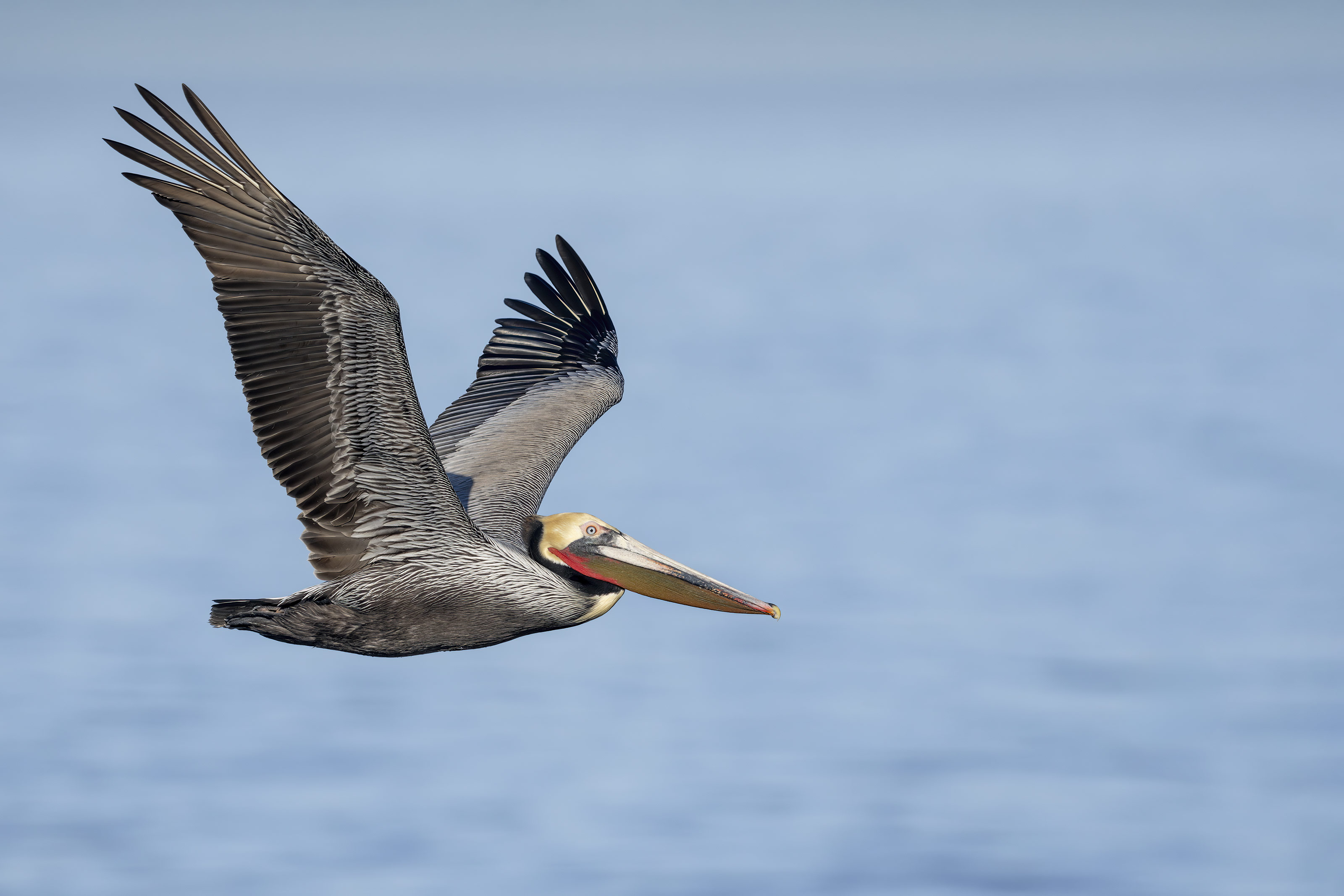
This image was created by yours truly on 15 January 2026 at La Jolla, CA on a 2026 San Diego Extended AirBnB IPT. Standing on the sidewalk by the Bridge Club I used the Wide/AF-C with Bird-Eye/Face Detection performed perfectly. Click on the image to enjoy the larger, inexplicably sharper high-res version. Image #1: Pacific race Brown Pelican wings up flight |
Birds in Flight
Ideal: 1/3200 or 1/4000 sec. or faster.
|
|
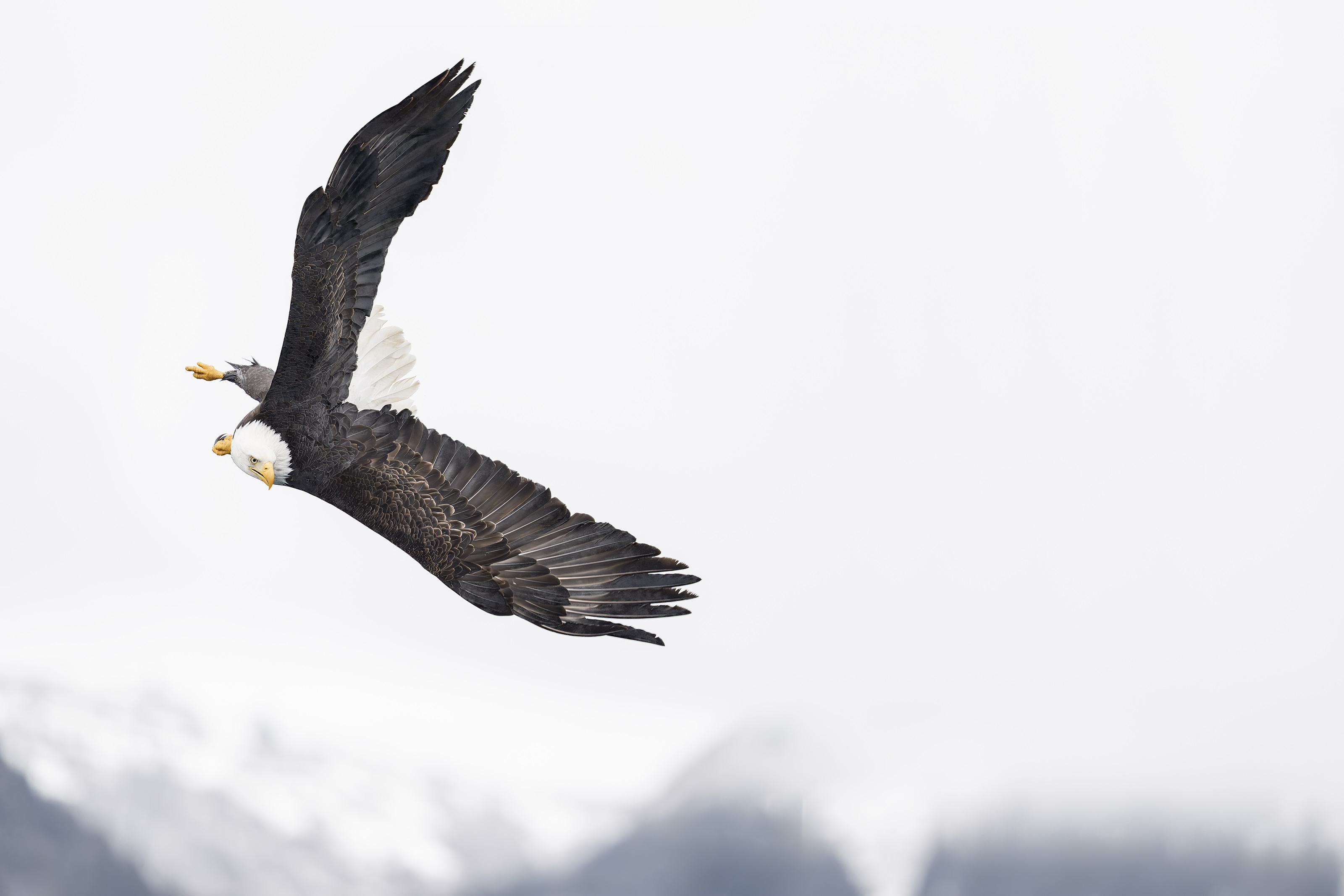
This image was created on 18 February 2026 by yours truly at Kachemak Bay, Homer, AK. Standing on the deck of our work/eagle boat, I used the handheld Sony FE 300mm f/2.8 GM OSS Lens (Sony E) and The Latest Greatest Sony Flagship Body, the a1 II Mirrorless Camera. The exposure was determined via Zebras with ISO on the Thumb Wheel. ISO 4000: 1/3200 sec. at f/2.8 (wide open) in Manual mode. AWB at 3:35:51am on a cloudy afternoon. Wide/AF-C with Bird Eye/Face Detection enabled performed perfectly. Image #2: Bald Eagle adult beginning dive — dorsal view with mountain background |
Birds in Flight
Ideal: 1/3200 or 1/4000 sec. or faster.
|
|
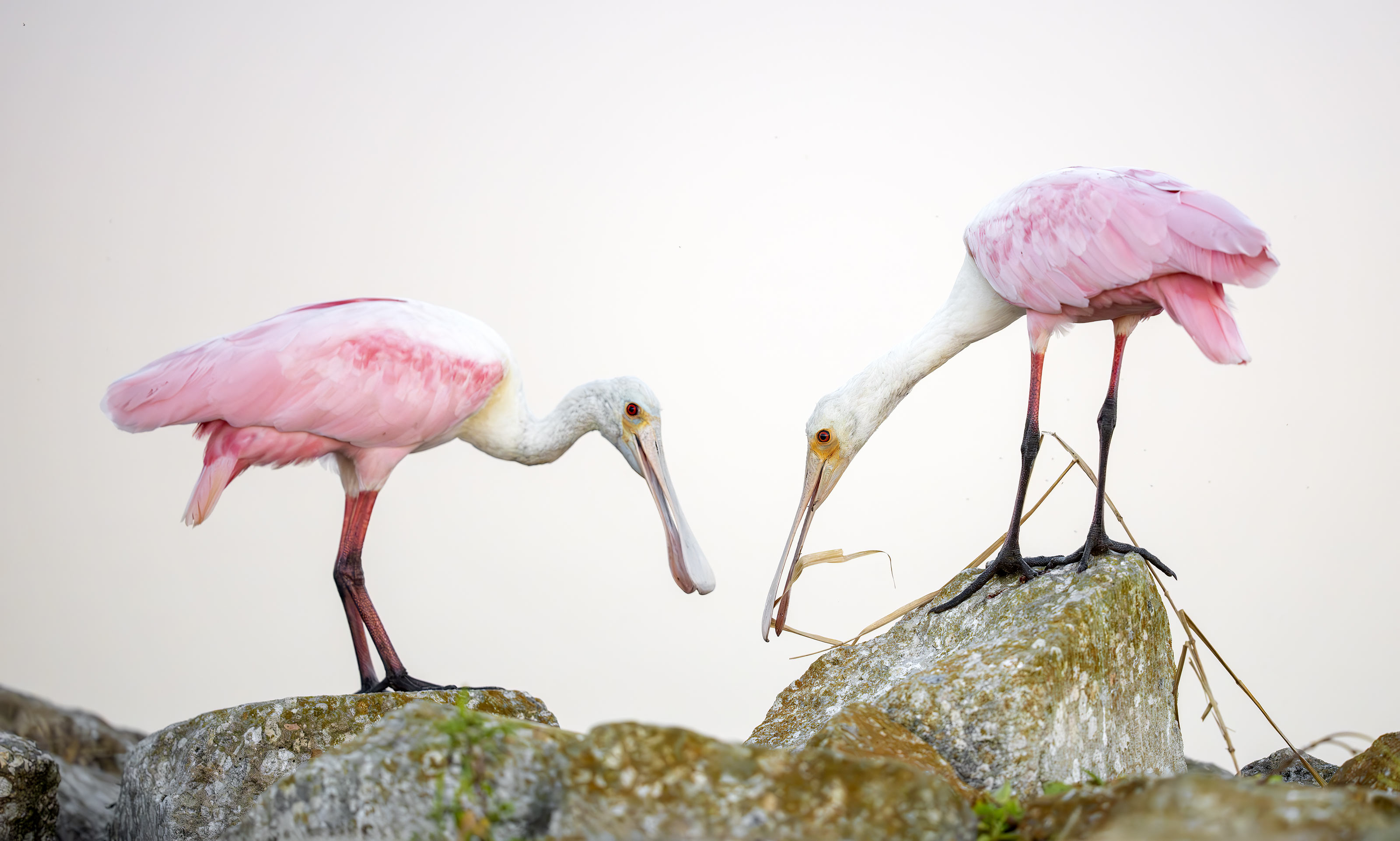
This image was created on 6 March by yours truly on a Stick Marsh/Roseate Spoonbill IPT. Seated on a milk crate I used the handheld Sony FE 300mm f/2.8 GM OSS Lens (Sony E) and The Latest Greatest Sony Flagship Body, the a1 II Mirrorless Camera. The exposure was determined via Zebras with ISO on the Thumb Wheel. ISO 10,000 (!): 1/1600 sec. at f/2.8 (wide open) in Manual mode. AWB at 6:41:15am just before the sun came over a cloud on the eastern horizon. Wide/AF-C with Bird Eye/Face Detection enabled performed perfectly. Image #3: Young Roseate Spoonbill playing with dried grass stalk |
Birds Moving Slowly (as when preening, walking or swimming)
Ideal: 1/2000, 1/1600, 1/1250, or 1/1000 sec.
Usually acceptable: 1/800, 1/640, 1/500, or 1/400 sec. will often be sufficient.
Usually risky: 1/320 to 1/250 sec. You might get one or two sharp ones in a series.
I was at the high end of the scale here as I was set up for flight photography. 1/800 or 1/1000 second would likely have been fine here.
Note the relatively clean look of this ISO 10,000 image! That thanks to the superb sensor of the Sony a-1 II and my double noise reduction technique as detailed in the Digital Basics III Video Series and the Digital Basics IV Video Series.
|
|
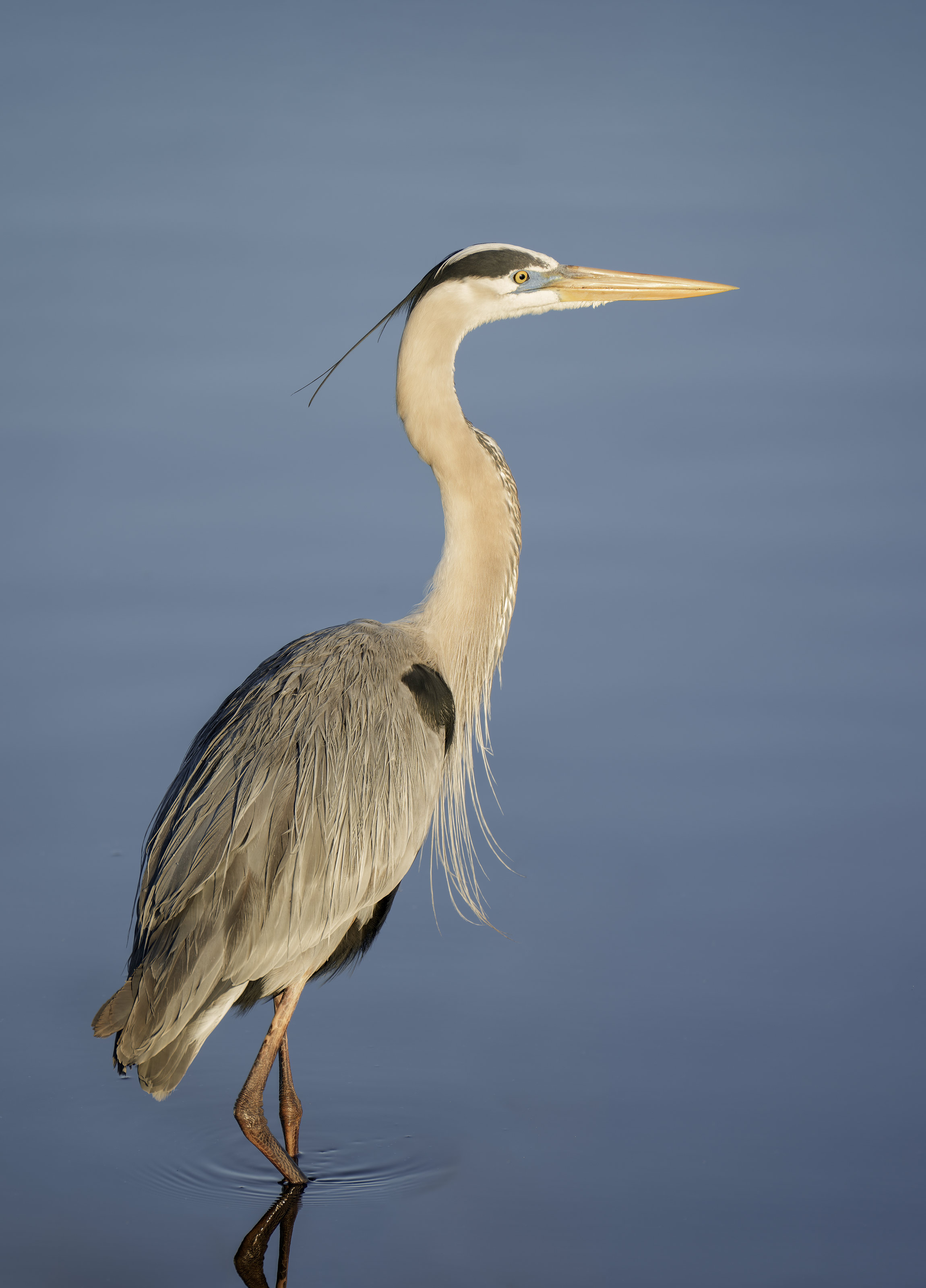
This image was created on 8 March 2026 on a Stick Marsh/Roseate Spoonbill IPT by Alvin “Red” Stevens of Birmingham, AL. Standing at full height near the rock breakwater he used the handheld Sony FE 70-200mm f/2.8 GM OSS II lens with the Sony FE 2x Teleconverter (at 400mm) and The Latest Greatest Sony Flagship Body, the a1 II Mirrorless Camera. The exposure was determined by Zebras with ISO on the rear wheel — ISO 50 (!): 1/80 second (!) at f/5.6 (wide open) in Manual mode. AWB at 8:11:54am on a sunny morning. Wide/AF-C with Bird-Eye/Face Detection performed perfectly. Click on the image to enjoy the larger, inexplicably sharper high-res version. Image #4: Great Blue Heron in early morning light |
A Common Operator Error
At times, less than experienced bird photographers choose a shutter speed that is far too slow. I was very proud of Red when I saw him making this image as he was doing his best to get on sun angle and properly working vertically. As I reviewed his images I was surprised to see so many unsharp photos. When I looked at the EXIF, I was stunned to see that he was working at a very slow 1/80 second at 400mm. It is amazing that he was able to create several very sharp images. The old maxim, use a shutter speed of at least 1 over the focal length would have served him well here by getting him to 1/400 second. Working at an ISO of 50 on a sunny should have alerted him that something was amiss. Granted, this image was made on Red’s tenth ever day of bird photography. But he knows full well that picking a suitable shutter speed was step #1 in the process.
Check out some of Reds first images in the Red From Birmingham’s First Bird Photographs. Honest! The Astounding Success of an 80-Year Old 100% Beginner blog post here.
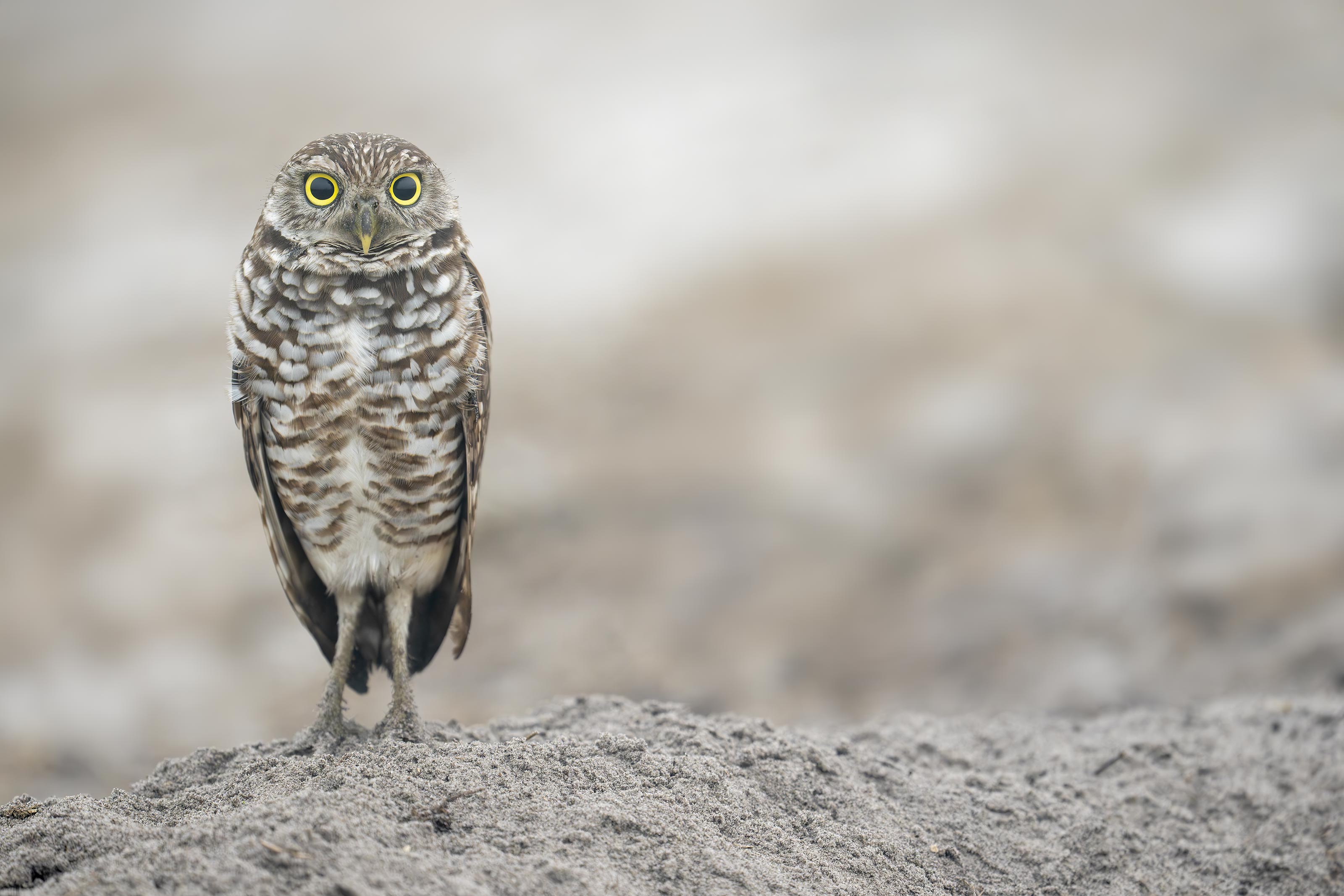
In the same vein, when I reviewed Drew’s Burrowing Owl images on Wednesday morning I was stunned to see about 1500 consecutive soft images. After putting a card in my a-1 ii/tripod-mounted 600mm lens rig (as below), Drew had a false sense of security: he had borrowed my 300mm f/2.8 GM lens with the 1.4X TC and was working at only 1/100 second at ISO 125 in foggy bright conditions; handholding at 420mm, he should have been working at at least 1/500 second.
Drew eventually switched to 1/250 second and made lots of sharp images.
I am 99.99% sure that both Red and Drew learned an important lesson by screwing up and will study everything I’ve written here and elsewhere on choosing a suitable shutter speed. And each will remember to consider them more carefully in the future.
|
|
This image was created by yours truly on 11 March at Joe Overstreet Landing, FL. Crouching a bit on a sand ridge adjacent to a low barbed wire fence, I used the shortened Center Tracking: Zone/AF-C with Bird-Eye/Face Detection performed perfectly. Click on the image to enjoy the larger, inexplicably sharper high-res version. Image #5: Burrowing Owl on sand ridge near nest |
Working Static Subjects on a Sturdy Tripod
When working static subjects with a long lens securely mounted on a sturdy tripod, folks using excellent sharpness techniques should be fine at 1/60 second and on occasion, have some success at 1/30 second and rarely as low as 1/8 second (the latter while employing the self-timer or a remote release).
Shutter Speeds for Bird Photography
Below are my general recommendations for focal lengths up to 600mm. When adding teleconverters to long lenses you need to up your shutter speeds, unless you are on a sturdy tripod with a Levered-clamp FlexShooter Pro.
Exact shutter speeds will vary depending on the skill and sharpness techniques of the photographer, and again, on the focal length they are using. Again, in general, the longer the focal length the faster the shutter speed you will need (all else being equal).
Birds in flight
Ideal: 1/3200 or 1/4000 sec. or faster.
Usually acceptable: 1/2500 sec.
Sometimes you can get away with shutter speeds ranging from 1/1600 to 1/2000 sec.
On occasion, only when caught with your pants down, you might come up with something sharp at 1/1250, 1/1000, 1/800, 1/640, 1/500 sec., or even slower. But those are never recommended for flight.
Note: folks who want razor sharp wingtips when doing flight photography on small, fast species recommend a shutter speed of 1/8000 sec.
Birds in action
Ideal: 1/2000 or 1/2500 sec. is usually plenty unless the action is violent. With lots of light, go with 1/3200 or 1/4000 sec .
Usually acceptable: 1/1600 or 1/1250 sec.
In a pinch (such as in extreme low light conditions), you can often come up sharp at 1/1000, 1/800, 1/640, 1/500, or even 1/400 sec..
Birds moving slowly (as when preening, walking or swimming)
Ideal: 1/2000, 1/1600, 1/1250, or 1/1000 sec.
Usually acceptable: 1/800, 1/640, 1/500, or 1/400 sec. will often be sufficient.
Usually risky: 1/320 to 1/250 sec. You might get one or two sharp ones in a series.
Static Subjects/Lens Unsupported (hand holding, lens not braced)
Most folks can be assured of sharp results with a shutter speed of 1/1000 sec. or faster. Folks with superb hand holding sharpness techniques and do well at 1/800, 1/640, 1/500 sec. or even slower on occasion.
Static Subjects/Lens Supported (knee or foot pod technique, braced in some way as on a fence or with the lens hood on the ground, or best of all on a tripod).
1/500, 1/400, 1/320, or 1/250, or even 1/200 sec should work well (as long as the bird is not moving).
Folks with excellent sharpness technique should be fine down to 1/60 sec. or even slower (even when working at 1200mm).
Working Static Subjects on a Sturdy Tripod
When working static subjects with a long lens securely mounted on a sturdy tripod, folks using excellent sharpness techniques should be fine at 1/60 second and on occasion, have some success at 1/30 second and rarely as low as 1/8 second (the latter while employing the self-timer or a remote release). Double or triple all of the above if working on a monopod as they are not nearly as stable as a good tripod.
Shutter Speeds for Pleasing Blurs
For decades, the classic blur speed has been 1/15th second. Remember that at a given shutter speed, the degree of blurring will increase as the distance to the subject decreases. All of that dependent of course on the speed and behavior of the subject and the skill of the person doing the panning. Faster shutter speeds ranging from 1/20 to 1/125 sec. (or faster) can work with birds flying or running by at close range. Slower shutter speeds in the range of 1/2 to 1/13 sec. can produce spectacular images on occasion. The slower the shutter speed you employ the fewer keepers you will have but your chances of creating a contest winner will increase.
Typos
With all blog posts, feel free to e-mail or to leave a comment regarding any typos or errors.








Leave a Reply