
Traveling by Air? Think Tank — the Only Way to Go!
View the video to learn how to safely pack your camera gear for air travel in a Think Tank Rolling Bag using Carhartt Men’s Cuffed Beanies, hockey socks, and some old athletic socks. There is no need to waste your money on LensCoat BodyBags or Lens Pouches; they offer less shock and moisture protection and cost a lot more than the woolen watch caps and hockey socks that I use.
Correction
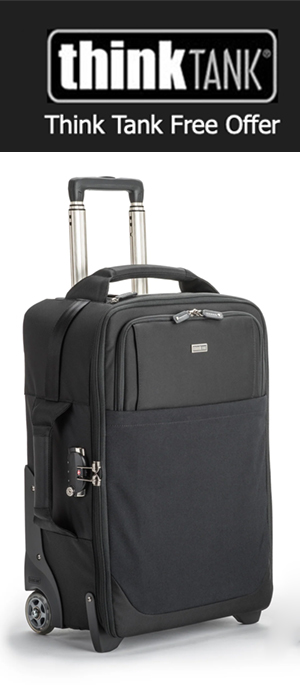
I always get these two great rolling bags confused. And that is exactly what I what I did in the video. The bag in the video is actually the (slightly larger) ThinkTank Airport SecurityTM V3.0.
ThinkTank Airport SecurityTM V3.0 & Airport International™ V3.0
I am blessed to own both the ThinkTank Airport SecurityTM V3.0 (I use it on most of my trips) and the slightly smaller Airport InternationalTM V3.0 rolling bag. Both are fabulous roll-aboard carry-ons: they are roomy and sturdy and will protect your gear if you are forced to check your camera gear on a small aircraft. To learn more about or to purchase ThinkTank products, click here, and then scroll down and click on “Airport Rollers.” When you order merchandise totaling $50 or more you will be asked at check-out to choose an item as a gift from Think Tank. After 25 years of hard service, Think Tank kindly replaced my original ThinkTank Airport SecurityTM V3.0 roller.
The Airport Security V3.0 is larger, designed for U.S. domestic carry-on limits, while the Airport International V3.0 is slightly smaller, built to fit stricter international carry-on dimensions, with the Security bag maximizing space within U.S. guidelines and the International version offering less room to meet global standards, so always check your airline’s specific rules before flying. If you own a large fast super-telephoto lens or several super-telephotos zooms, the larger bag is generally best. The Think Tank rollers are the industry standard. Think Tank also offers additional airport rollers and a wide variety of photography backpacks, camera bags, digital holsters, rain covers, and more. Click here to check out their huge collection of great gear.
The third generation of Think Tank’s award winning rolling bags redefine the gold standard for photo transport cases!
Dedicated padded laptop and tablet compartments located in a lockable pocket.
TSA-accepted zipper locks for the main compartment, and high-strength coated cable and combination lock for the laptop compartment and securing your bag to an immovable object.
Rain Cover, Laptop Sleeve, Tripod Attachment, & Divider System
|
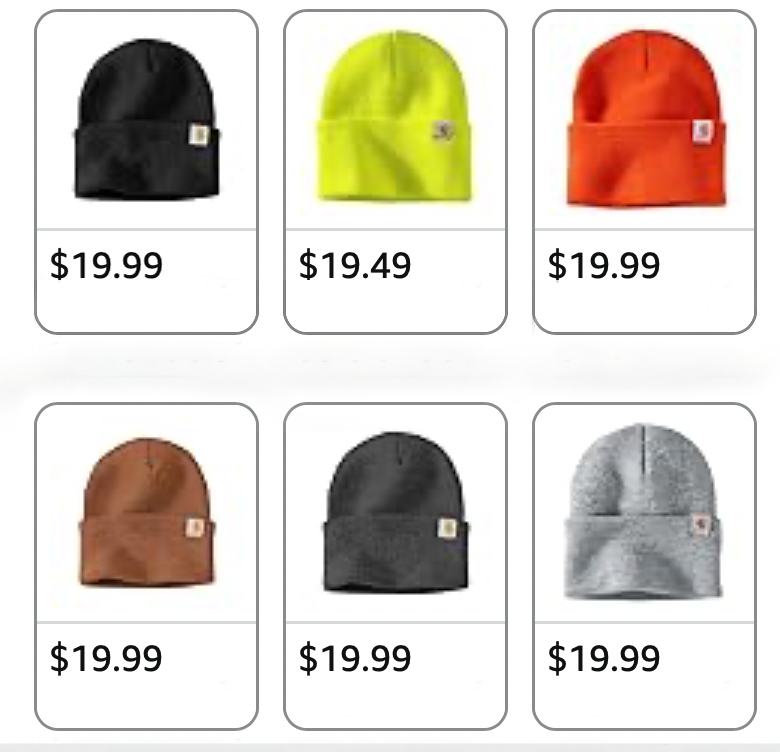
Carhartt Men’s Woolen Watch Caps
I have been using woolen watch caps to store my cameras, small lenses, and teleconverters in my Think Tank bags for several decades. They offer maximum protection from impact damage and moisture (the latter provided you do not drop everything in a lake or the ocean). Each camera is protected by two watch caps. The TCs go in single caps. For the past several years I have been using the Carhartt Men’s Knit Cuffed Beanies in a variety of colors and patterns.
You can order yours here.
|
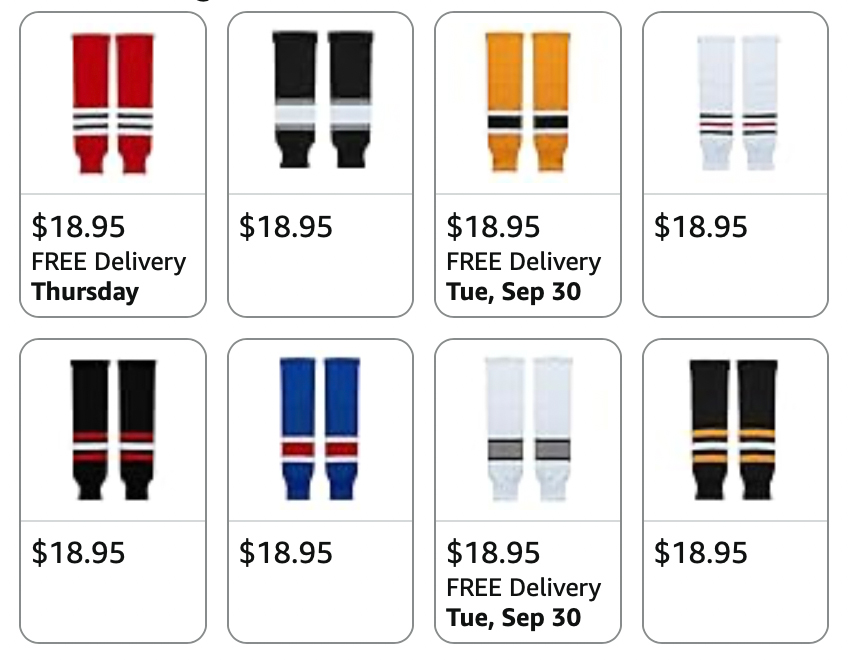
Hockey Socks
In a similar fashion, I have been using hockey socks for my intermediate telephoto and telephoto lens when packing them for travel. You need to sew or have the bottoms sewn closed. They work great for many lenses including the 70-200s, the 80- and 100-400s, the 300mm f/2.8s, the 180- and 200-600s, and the 200- and 400-800 zooms as well. I recommend these: EALER HSK Series Multiple Colors Knit Hockey Socks Junior To Senior. Order yours by clicking here.
|
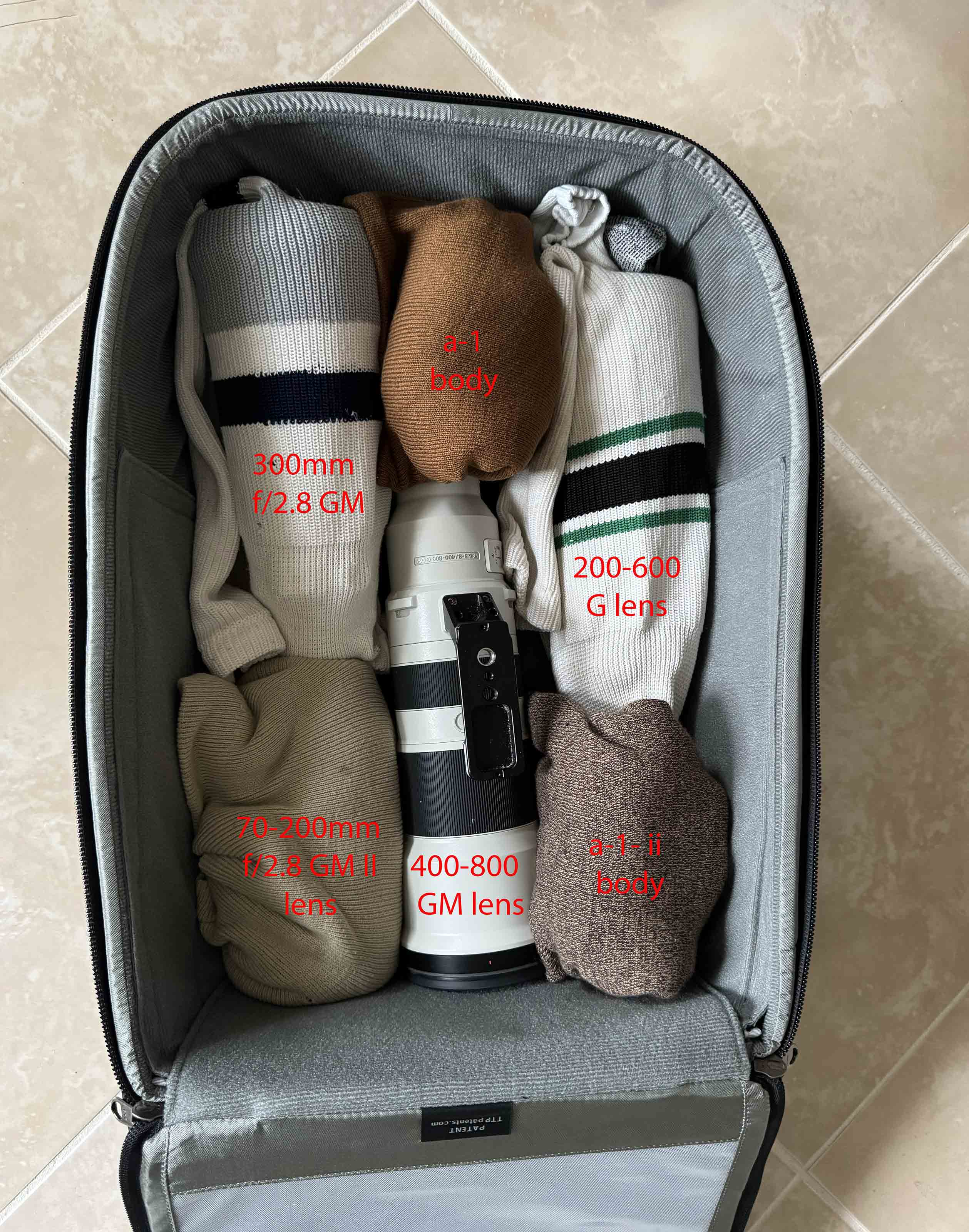
The First Level
The 400-800 is placed in the center. The 200-600 and the 300mm f/2.8 GM are alongside the 4-8 in hockey socks. The 70-200 f/2.8 GM is double hatted as are the two camera bodies. Remember that the lens hoods go into your checked bag or bags along with your tripod.
|
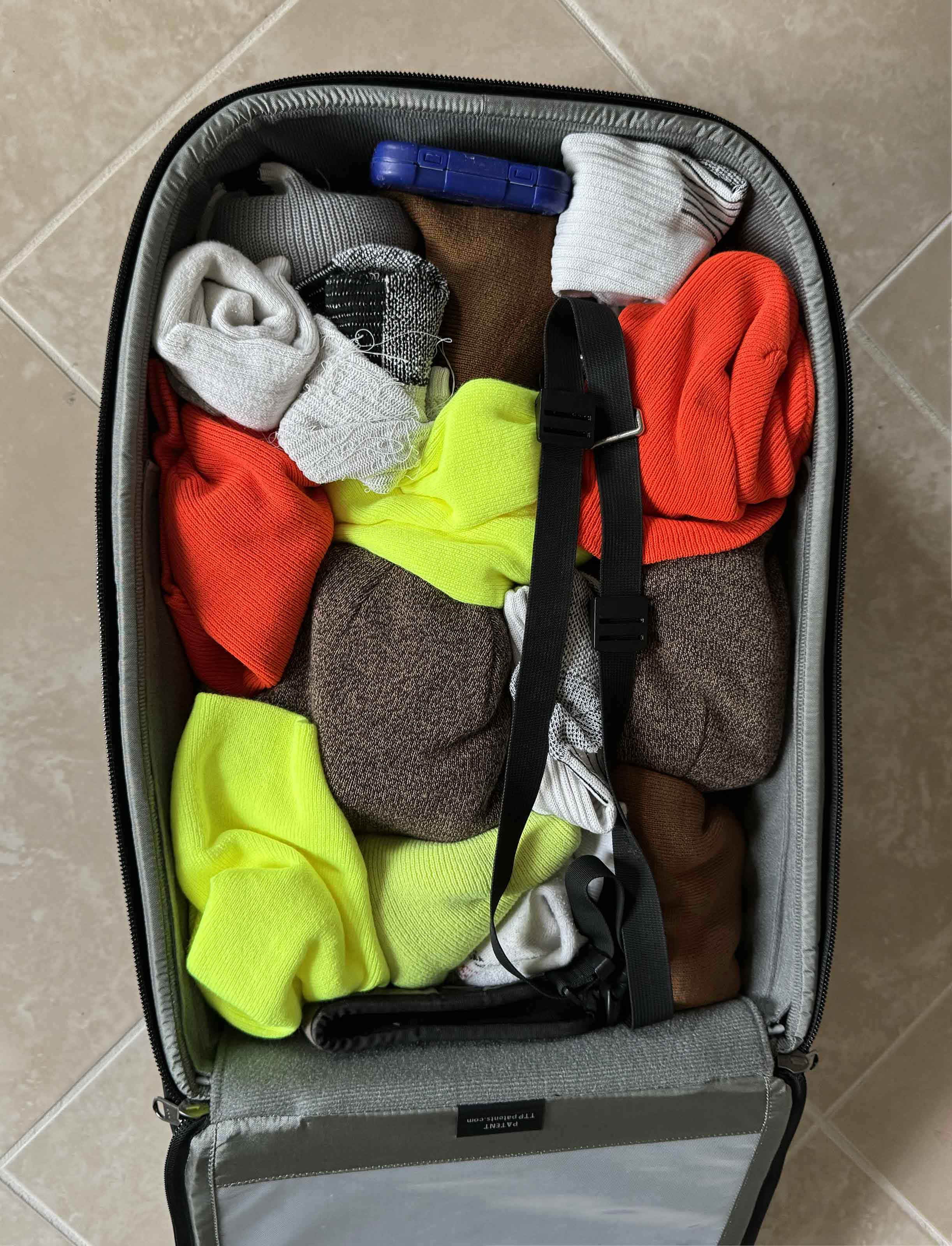
The Fully Packed Bag
Extra camera batteries go in old athletic socks as do the two lens feet with their Wimberley Lens Plates. The two additional camera bodies are double hatted while each of the five teleconverters go in single watch caps. The blue thing is the Delkin CF Memory Tote (for my extra Delkin flash cards). The strap is the Black Rapid Curve Breathe Camera Strap.
I should have mentioned in the video that if your bag is not full you should add a sweatshirt or two to prevent stuff from moving around.
|
|
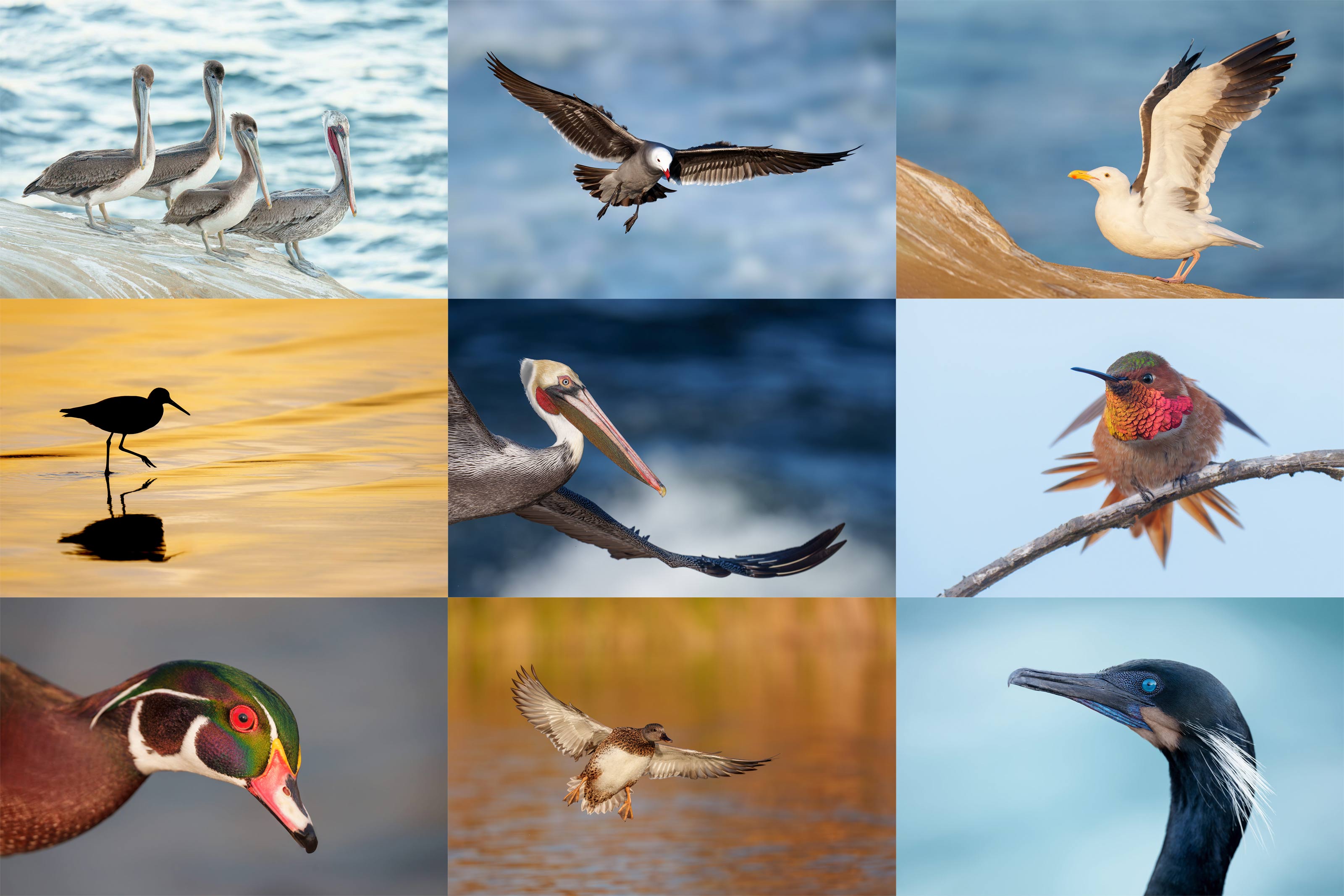
San Diego offers an incredible variety of attractive avian subjects, including and especially the Pacific race of Brown Pelican. Clockwise from top left back to center: juvenile and sub-adult Brown Pelicans; Heermann’s Gull; Western Gull; Allen’s Hummingbird; Brandt’s Cormorant; Gadwall hen; Wood Duck drake; Willet; Brown Pelican tight flight. Click on the composite to enjoy a larger version. |
The 2026 San Diego Brown Pelicans (and more!) IPTs
San Diego IPT #1: 4 1/2 DAYS: THURS 8 JAN thru the morning session on MON 12 JAN 2026: $2599.00. Deposit: $699.00. Limit: 6 photographers/4 openings.
San Diego IPT #2: 4 1/2 DAYS: FRI 16 JAN thru the morning session on TUES 20 JAN 2026: $2599.00. Limit: 6 photographers.
Morning BAA In-the-Field Instructional Sessions (ITFIS) followed by brunch and an Image Review & Photoshop session: $449.00/per session
Available dates: JAN 14 & 15, 2026. Please get in touch with questions or to register with an e-mail to samandmayasgrandpa@att.net and please shoot me a text to 863-221-2372.
AirBnB accommodations and ground transport with the leader are available for both IPTs and for In the Field Instructional Sessions on a first come, first served basis. Please e-mail for details and information on personalized pre- and post-IPT morning sessions.
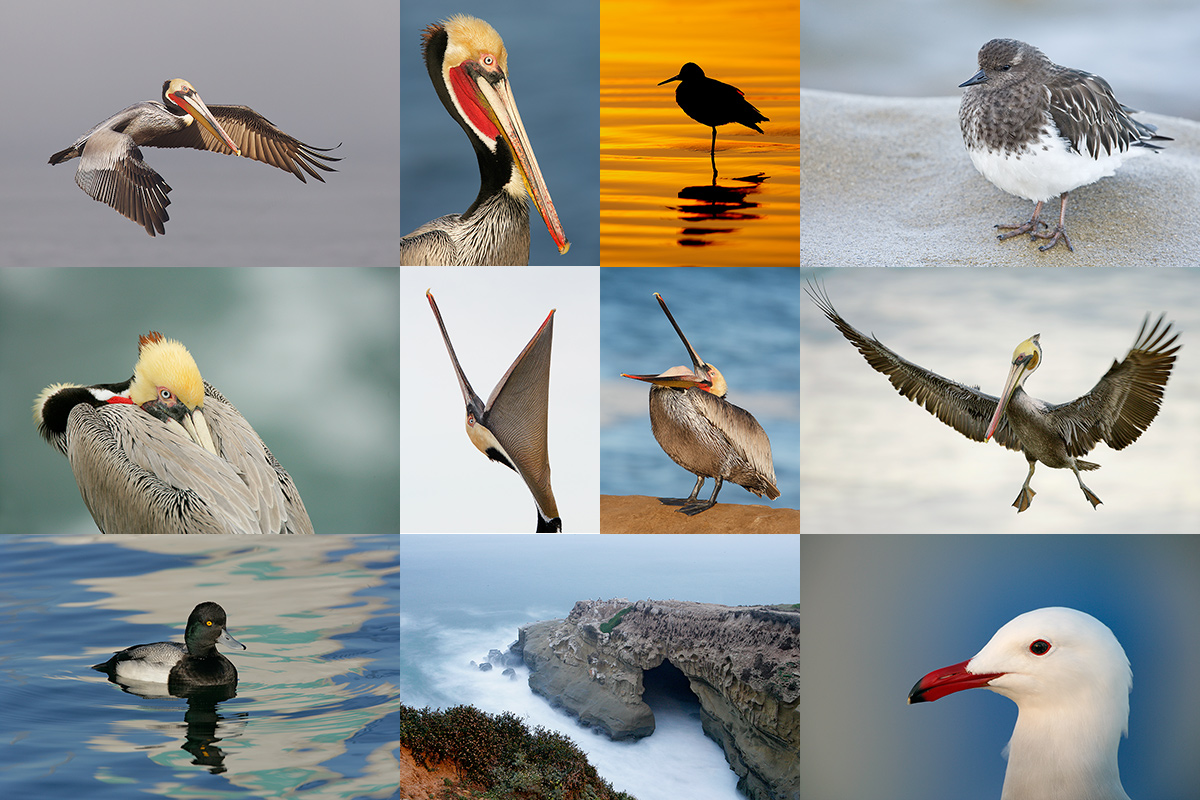
Join me in San Diego to photograph the spectacular breeding plumage Brown Pelicans with their fire-engine red and olive green bill pouches; Brandt’s (nesting) and Double-crested Cormorants; breeding plumage Wood and Ring-necked Ducks; other duck species possible including Lesser Scaup, Redhead, Northern Shoveler and Surf Scoter; a variety of gulls including Western, California, and the gorgeous Heermann’s, all in full breeding plumage; shorebirds including Marbled Godwit, Willet, Sanderling and Black-bellied Plover; many others are possible including Least, Western, and Spotted Sandpiper, Whimbrel, Black and Ruddy Turnstone, Semipalmated Plover, and Surfbird; Harbor Seals and California Sea Lions (both depending on the current regulations and restrictions). And as you can see by studying the IPT cards, there are some nice bird-scape and landscape opportunities as well. Not to mention a ton of excellent flight photography opportunities and instruction.
Please note: where permitted and on occasion, ducks and gulls may be attracted (or re-located) with offerings of grains or bread.
|
|
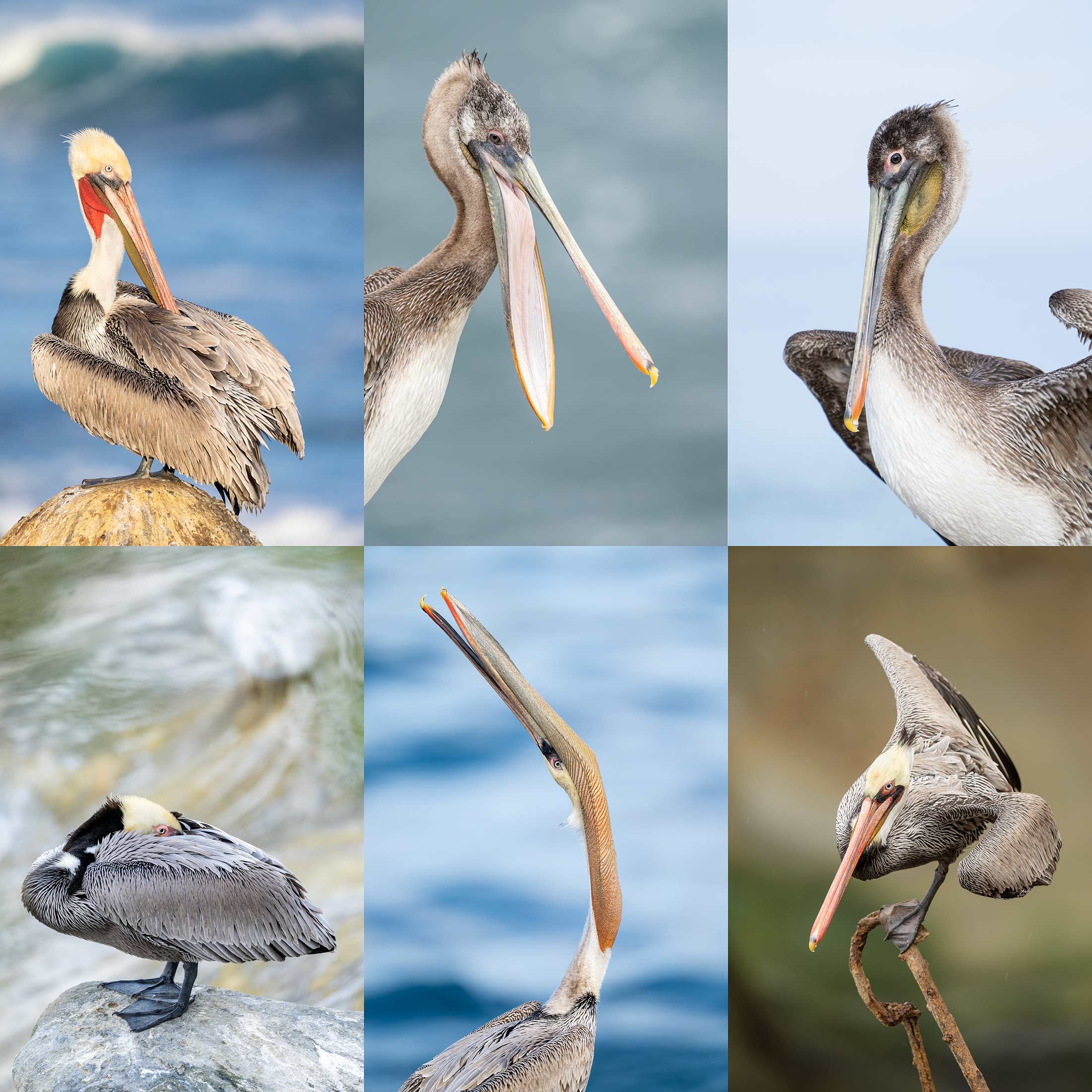
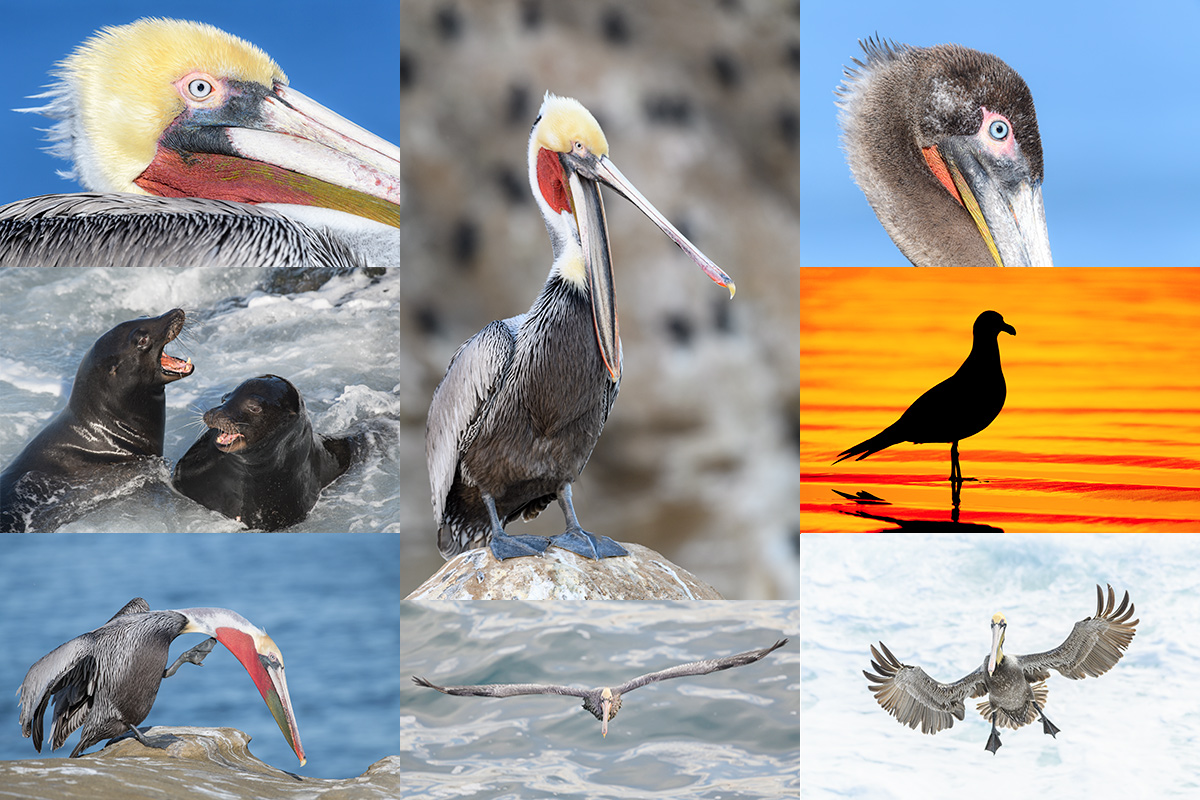
San Diego offers a wealth of very attractive natural history subjects, including and especially the Pacific race of California Brown Pelican. With annual visits spanning more than four decades, I have lots of photographic experience there … Click on the composite to enjoy a larger version. |
Learning Exposure, Whether You Like It Or Not
Whether you like it or not, we will be beating the subject of exposure like a dead horse. In every new situation, you will hear my thoughts on exposure along with my thoughts on both Nikon and Canon histograms and SONY Zebras. Whether you like it or not, you will learn to work in manual mode so that you can get the right exposure every time (as long as a bird gives you ten seconds with the light constant). Or two seconds with SONY zebras … And you will learn what to do when the light is changing constantly. What you learn about exposure will be one of the great takeaways on every IPT.
|
|
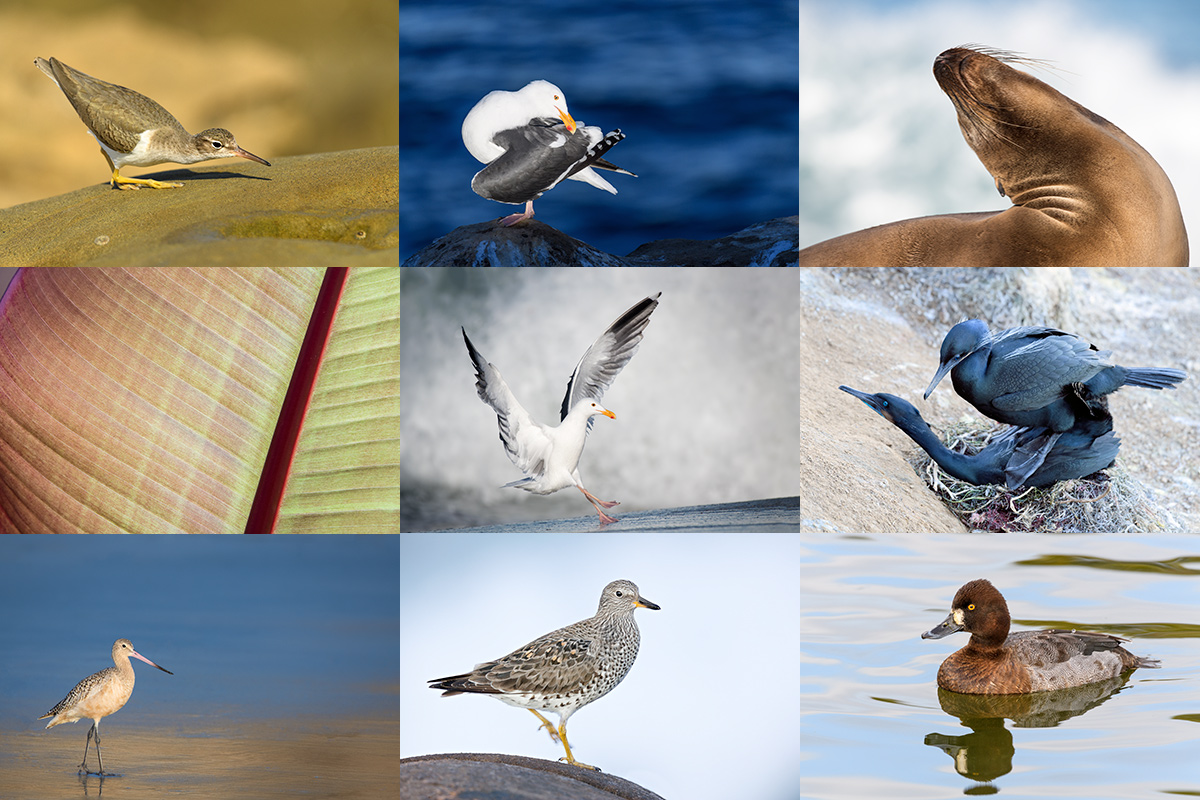
Though the pelicans will be the stars of the show on this IPT, there will be many other handsome and captivating subjects in wonderful settings. Click on the composite to enjoy a larger version. |
It Ain’t Just Pelicans
With gorgeous subjects just sitting there waiting to have their pictures taken, photographing the pelicans on the cliffs is about as easy as nature photography gets. With the winds from the east almost every morning, there is usually some excellent flight photography, at times with 70-200mm lenses! And the pelicans are almost always doing something interesting: preening, scratching, bill pouch cleaning, or squabbling. And then there are those crazy head throws that are thought to be a form of intra-flock communication. You will be guided as to how to make the best of those opportunities. Depending on the weather, the local conditions, and the tides, there are a variety of other fabulous photo chances available in and around San Diego. Each IPT will include one or two duck sessions.
|
|
|
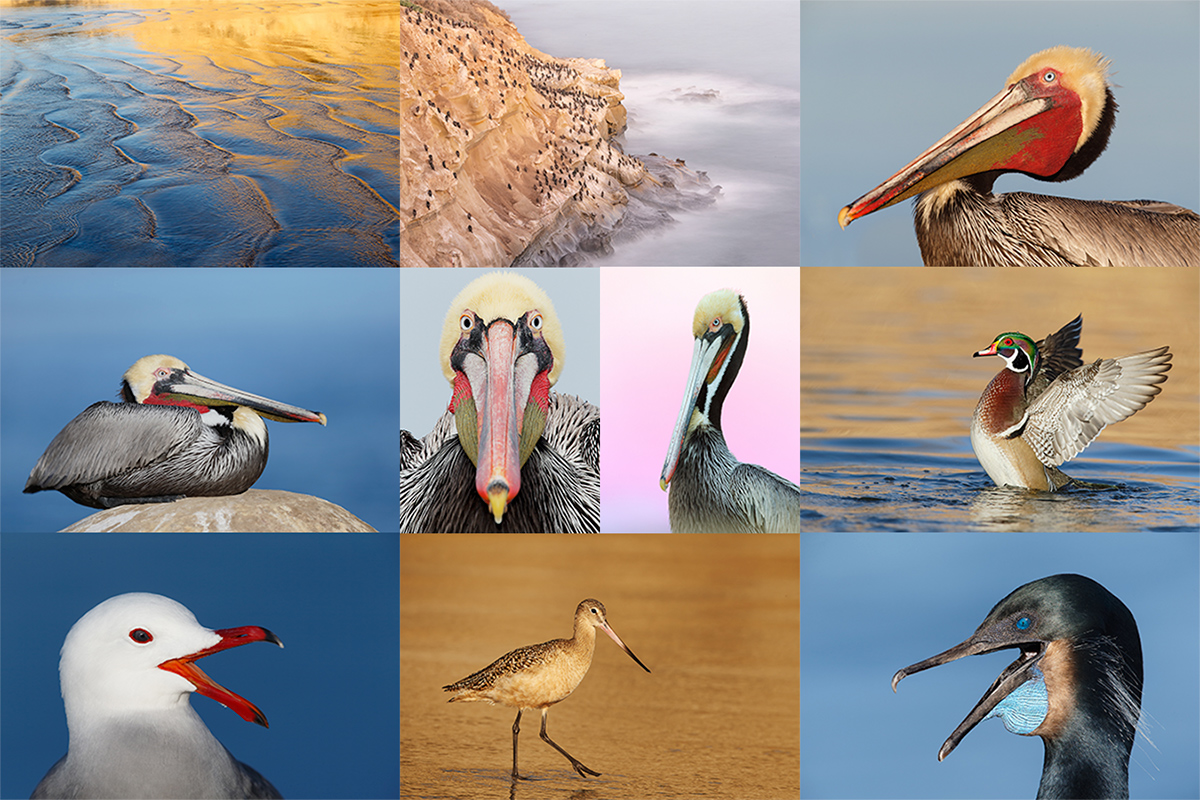
Did I mention that there are lots of great birds and natural history subjects in San Diego in winter? Click on the composite to enjoy a larger version. |
The San Diego Details
These IPTs will include five 3-hour morning photo sessions, four 1 1/2-hour afternoon photo sessions, and four working brunches (included) that will include image review and Photoshop sessions. On rare cloudy days, we may — at the leader’s discretion, stay out in the morning for a long session and skip that afternoon shoot. To ensure early starts, breakfasts will be your responsibility. And so that we can get some sleep, dinners will be on your own as well. In the extremely unlikely event that Goldfish Point is closed due to local ordinance (or whimsy) — that has never happened in the past fifty years, I will of course do my very best to maximize our photographic opportunities.
AirBnB Details
I have reservations for a wonderful AirBnB. I am able to cancel for free no later than 5 December 2025. Staying at an IPT AirBnB maximizes learning and allows for more time in the field. The cost of your private room in a lovely home will be $150/night. Explore the possibility of arriving early and/or staying on for additional photography sessions by getting in touch via e-mail. Brunch is on me. Dinners are provided for $25/day. I am an excellent chef and the food is both healthy and of high quality.
|
|
San Diego offers a wealth of very attractive natural history subjects, including and especially the Pacific race of California Brown Pelican. With annual visits spanning more than four decades, I have lots of photographic experience there. Click on the composite to enjoy a larger version. |
Deposit Info
A $699 deposit (plus half the cost of your lodging and meals) is required to hold your slot for one of the 2026 San Diego IPTs. You can send a check (made out to “BIRDS AS ART”) to us here: BIRDS AS ART, PO Box 7245, Indian Lake Estates, FL, 33855, or call Jim or Jennifer at the office with a credit card at 863-692-0906. Your balance, payable only by check, is due two months before the trip.
|
|
|
Variety is surely the spice of life in San Diego. Click on the composite to enjoy a larger version. |
Getting Up Early and Staying Out Late
On all BIRDS AS ART IPTS including and especially the San Diego IPT, we get into the field early to take advantage of unique and often spectacular lighting conditions and we stay out late to maximize the chances of killer light and glorious sunset silhouette situations. We often arrive at the cliffs a full hour before anyone else shows up to check out the landscape and seascape opportunities.
Typos
With all blog posts, feel free to e-mail or to leave a comment regarding any typos or errors.







Leave a Reply