
Sony 400mm f/2.8 GM OSS Lens with Extras!
Price reduced $1000.00 on 22 December 2025!
BIRDS AS ART Record Low Price (by far!)
IPT veteran Stan Driscoll is offering a Sony 400mm f/2.8 GM OSS Lens in near-mint to like-new condition for the BAA record low price of $7798.00 (was $8798.00). The sale includes the rear lens cap, the lens strap, the lens trunk, the matching LensCoat, the 3.39 inch long 400mm Zemlin One Piece Lens Hood, the Zemlin Lens Cap, and insured ground shipping via major courier to lower-48 US addresses only. Your new gear will not be shipped until your check clears unless other arrangements are made. Photos are available upon request by e-mail (as below).
Please contact Stan via e-mail or by phone at (910) 409-2362 (Eastern time).
I purchased my Sony 400mm f/2.8 three years ago to complement my 600mm f/4. Stan is selling his and downsizing to the 300mm f/2.8 GM because he is not getting any younger. Somewhat strangely, it is far easier for me to handhold the 4 ounces lighter, much smaller, and better balanced 400 f/2.8 than it is to handhold the 600mm f/4. The 400 f/2.8 is superb for large mammals and for flight with or without the 1.4X teleconverter. Being able to handhold this lens is a huge plus. That said, I use it a lot on the monopod for low light flight photography. And no matter the conditions, you can’t beat the f/2.8 Bokeh!
The Sony 400mm f/2.8 lens sells new right now for $13,399.00 at B&H and there are used copies in lesser condition there going for as high as $10,917.95 (here). Save an amazing $5,601.00 by grabbing Stan’s might-as-well-be-new 400mm GM lens right now. artie
Sample 400mm f/2.8 GM Images
The 400mm f/2.8 is great for birds, scenic photography, and mammals, especially the large ones for those who live out West.
|
|
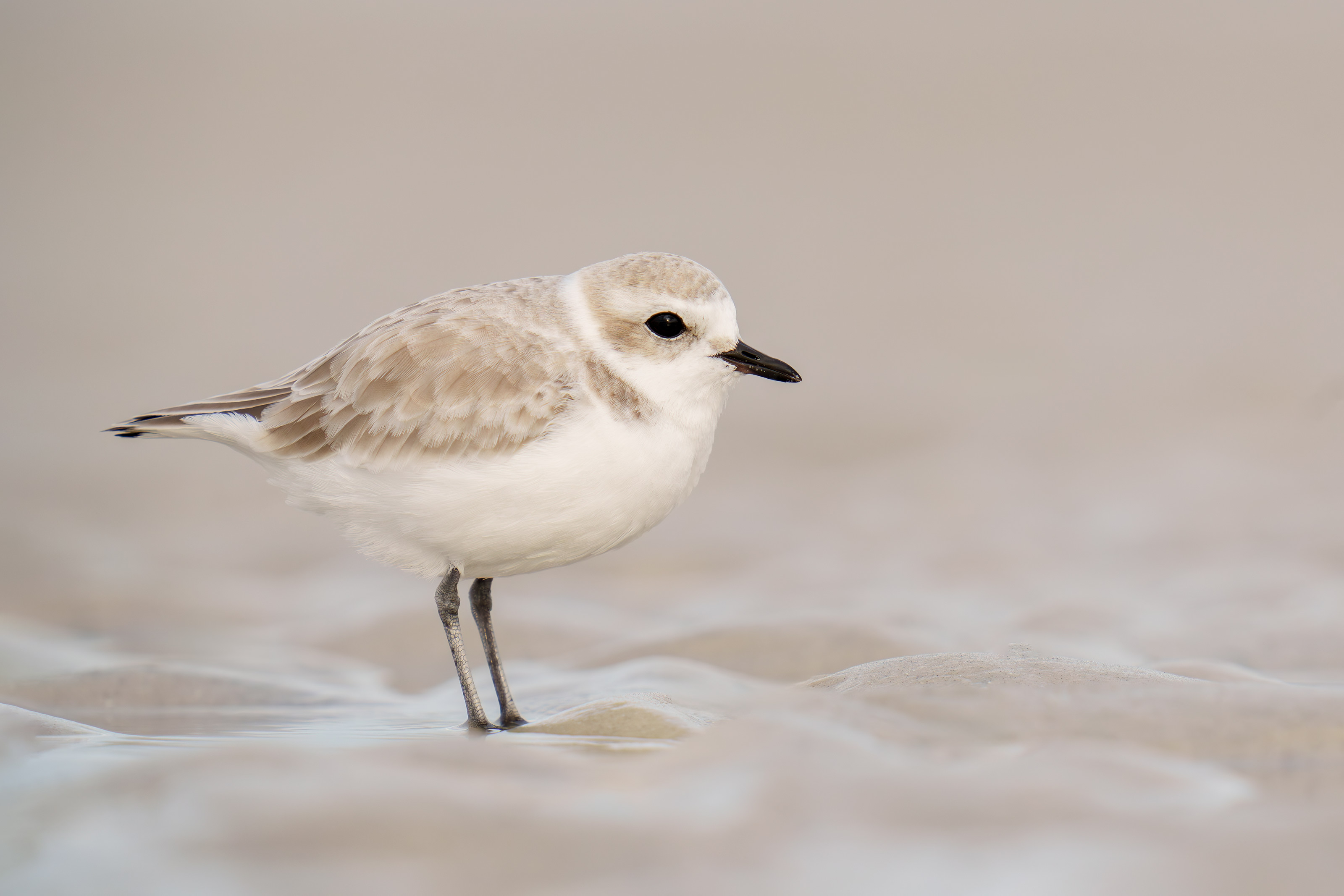
This image was created on 16 November 2023 at Fort DeSoto Park. Seated on damp sand, I used the foot-pod technique with the hand held Sony FE 400mm f/2.8 GM OSS lens with the Sony FE 2.0x Teleconverter and The One, the Sony Alpha 1 Mirrorless Digital Camera). The exposure was determined via Zebra technology with ISO on the Thumb Dial. ISO 600: 1/1250 sec. at f/6.3 (stopped down 1/3 stop) in Manual mode. AWB at 8:10:17am on a cloudy morning. Tracking: Zone AF-C with Bird Face/Eye detection enabled performed to perfection. Be sure to click on the image to enjoy a high-res version. Image #1: Snowy plover (probably worn first winter plumage) on lugworm burrow mounds |
A Snowy Dreamy Plover
I have very little if any memory of creating this image. Last year, a dear friend from the Cape May, NJ days, Julian Hough, an expat Brit, asked me if I had this exact shot — non breeding, not an adult. He needed it for an article he is doing on Kentish and Snowy Plovers for his local Connecticut bird club journal. I found several old ones that fit the bill but was not happy with the quality. Then, I found this one. We were both thrilled.
If you enjoy really good writing, check out Julian’s blog here. He calls it Naturescape Images/The Anglo-American Birding of Julian Hough. The guest post, allegedly written by his son Alex, is a hoot. He does not post often but his writing is superb and I enjoy hearing what he has to say whenever I visit.
As for the photo, I love the soft light, the gentle curves of the worm hills, and the matching color of the subject and the background.
|
|
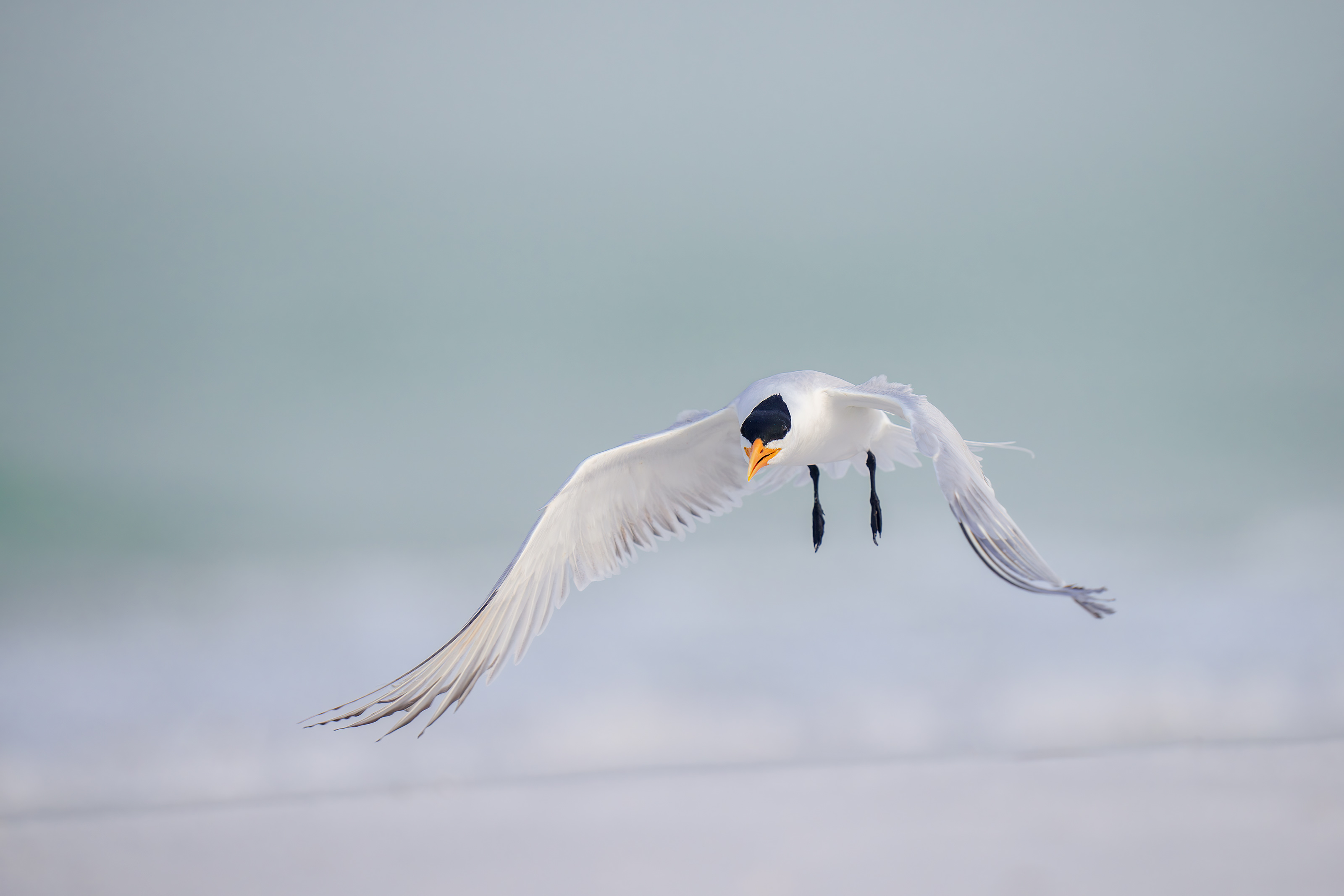
This image was created on 15 April 2024 at Fort DeSoto Park. Seated on dry sand, I used the handheld Sony FE 400mm f/2.8 GM OSS lens and The One, the Sony Alpha 1 Mirrorless Digital Camera). The exposure was determined via Zebra technology with ISO on the Thumb Dial. ISO 800: 1/4000 sec. at f/3.2 (stopped down 1/3 stop) in Manual mode. AWB at 8:22:49am on a hazy, partly sunny morning. Zone AF-C with Bird Face/Eye detection enabled performed to perfection. Be sure to click on the image to enjoy a high-res version. Image #2: Royal Tern breeding plumage in flight |
The Knee-pod Rest Position
When hand holding super-telephoto lenses for flight photography, sitting can be a great option. By resting your left forearm atop your left knee, you only need to raise your big lens a few inches to get the viewfinder to your eye. Not having to raise the big lens from your side greatly reduces potential fatigue. In addition, it moves the background farther from the subject.
|
|
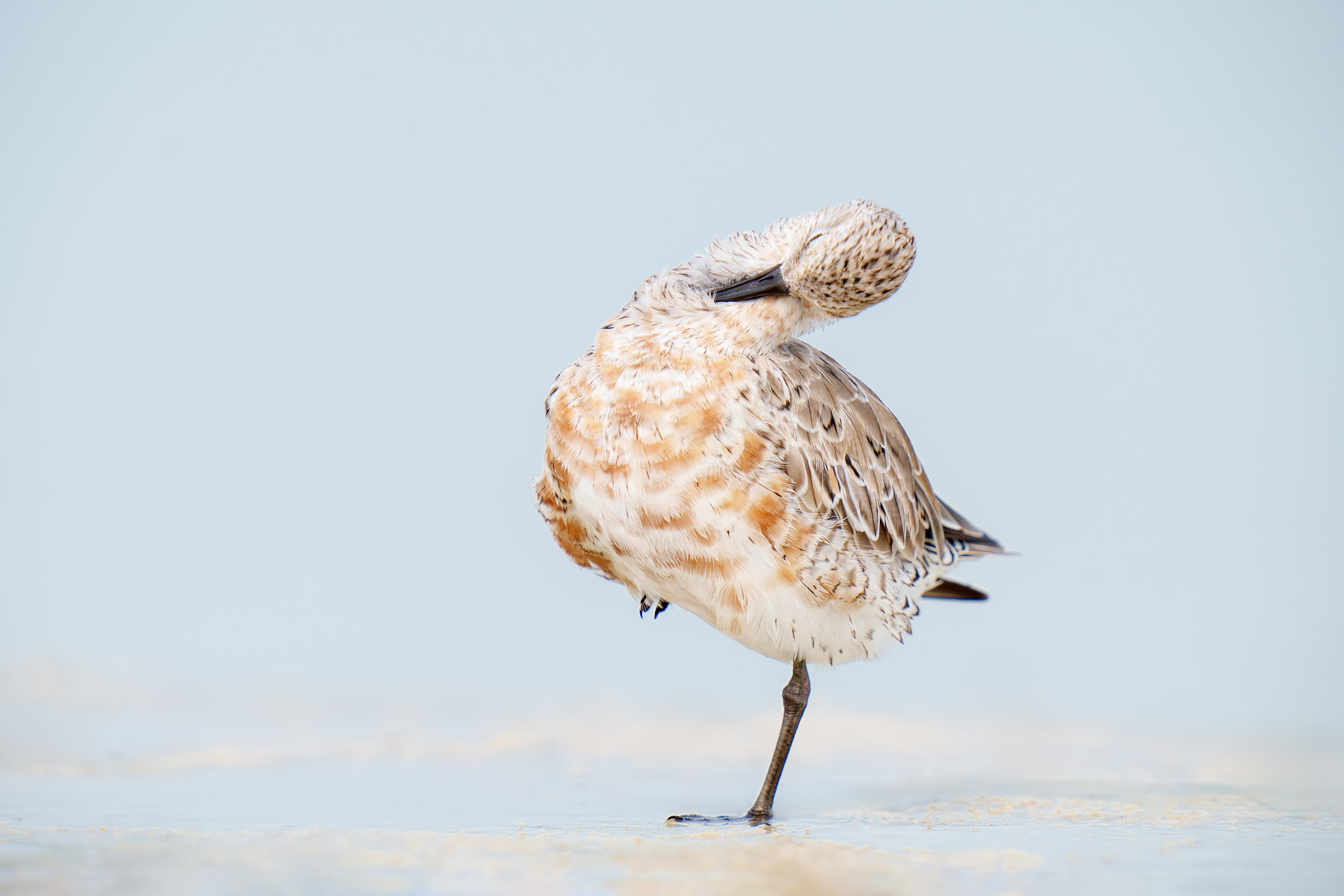
This image was created on 15 April 2024 at Fort DeSoto Park. Seated on damp sand, I used the foot-pod technique with the hand held Sony FE 400mm f/2.8 GM OSS lens with the Sony FE 2.0x Teleconverter and The One, the Sony Alpha 1 Mirrorless Digital Camera). The exposure was determined via Zebra technology with ISO on the Thumb Dial. ISO 1000: 1/1000 sec. at f/6.3 (stopped down 1/3 stop) in Manual mode. AWB at 10:15:53am on a cloudy morning. Tracking: Zone AF-C with Bird Face/Eye detection enabled performed to perfection. Be sure to click on the image to enjoy a high-res version. Image #3: Red Knot molting into breeding plumage — preening neck |
Wintering Red Knots
Some North American populations of this species winter as far south as southern Argentina while some birds remain along the Gulf coast’s of North America. In some years, flocks of as many as two hundred can be fond at Fort De Soto Park from November through early spring. In late April and early May, some individuals are molting into their handsome breeding finery with brick red breasts and spangled silver and black upperparts. They breed only above the Arctic Circle, most often on Banks, Victoria, and Baffin Islands in northern Canada.
|
|
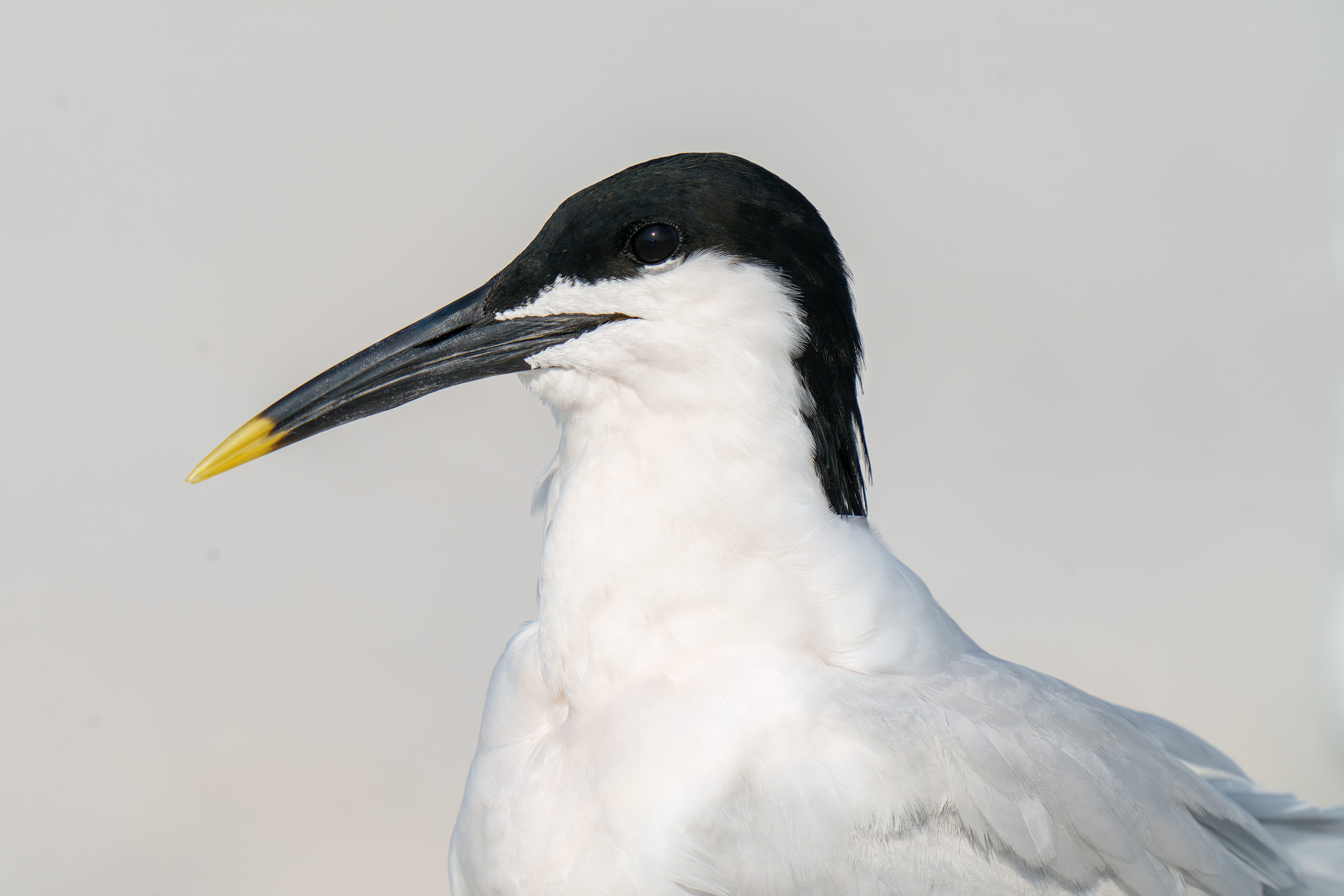
This image was created on 16 April 2024 at Fort DeSoto Park. Seated on damp sand, I used the knee-pod technique with the hand held Sony FE 400mm f/2.8 GM OSS lens with the Sony FE 2.0x Teleconverter and The One, the Sony Alpha 1 Mirrorless Digital Camera). The exposure was determined via Zebra technology with ISO on the Thumb Dial. ISO 800: 1/1600 sec. at f/9 (stopped down 1 1/3 stops) in Manual mode. AWB at 9:19:47am on a cloudy morning. Tracking: Zone AF-C with Bird Face/Eye detection enabled performed to perfection. Be sure to click on the image to enjoy a high-res version. Image #4: Sandwich Tern in breeding plumage — head portrait — unusually long bill |
Stopping Down at Close Range
When working close to the Minimum Focusing Distance (MFD) of a lens, consider going to a smaller aperture to so that you have enough depth-of-field to cover the subject. Remember that at a given aperture, depth-of-field increases quickly as the distance to the subject increases.
|
|
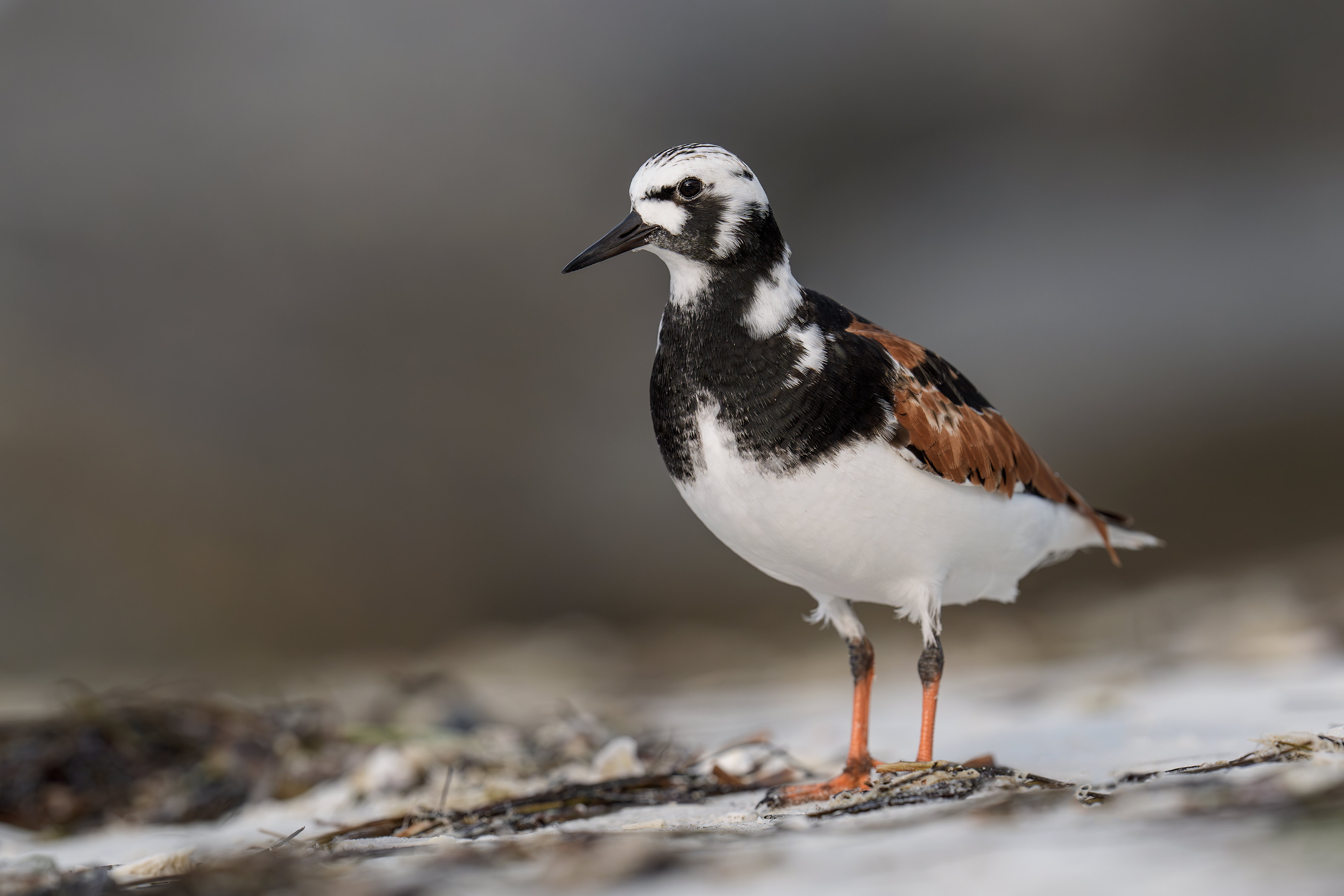
This image was created on 1 May 2024 at Fort DeSoto Park. Seated on dry sand, I used the toe-pod technique with the handheld Sony FE 400mm f/2.8 GM OSS lens and The One, the Sony Alpha 1 Mirrorless Digital Camera). The exposure was determined via Zebra technology with ISO on the Thumb Dial. ISO 1000: 1/2000 sec. at f/5.6 (stopped down 2 stops!) in Manual mode. AWB at 8:19:06am on cloudy morning. Tracking: Zone AF-C with Bird Face/Eye detection enabled performed to perfection. Be sure to click on the image to enjoy a high-res version. Image #5: Ruddy Turnstone in breeding plumage |
Full Breeding Plumage
Several species of shorebirds including but not limited to Black-bellied Plover, Ruddy Turnstone, Sanderling, Dunlin, Short-billed Dowitcher, Western Sandpiper, and the aforementioned Red Knot, complete molting by late April or May and on occasion, can be found and photographed at Fort DeSoto. For me, each find is a treasure. A RUTU this richly colored is almost surely a male.
Do not ask me why I stopped down two stops for this one. That said, this image is beyond incredibly sharp..
|
|
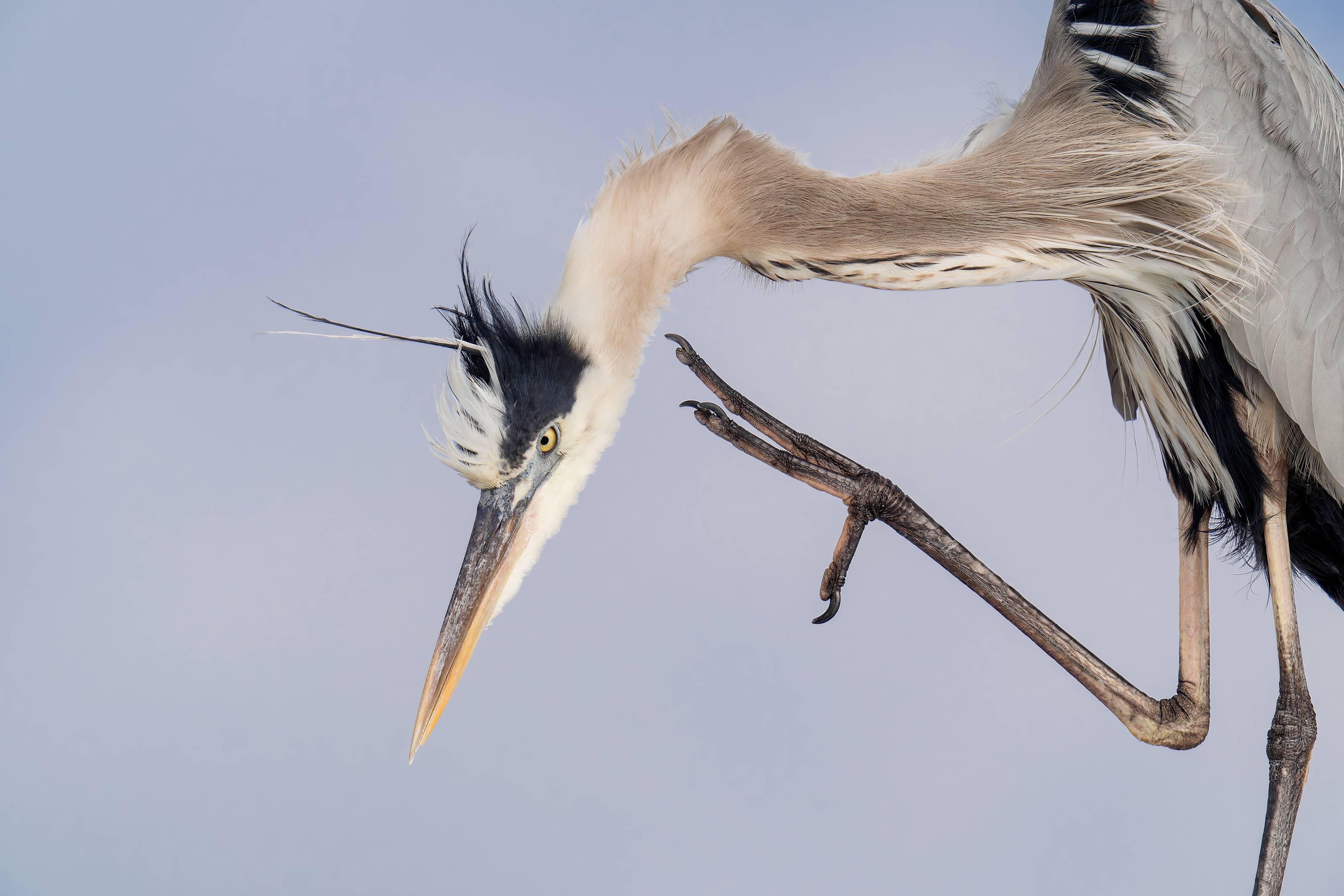
This image was created on 1 May 2024 at Fort DeSoto Park. Seated on dry sand, I used the toe-pod technique with the handheld Sony FE 400mm f/2.8 GM OSS lens with the Sony FE 1.4x Teleconverter and The One, the Sony Alpha 1 Mirrorless Digital Camera). The exposure was determined via Zebra technology with ISO on the Thumb Dial. ISO 1600: 1/2000 sec. at f/8 (stopped down 2 stops!) in Manual mode. AWB at 8:50:14am on a cloudy morning. Tracking: Zone AF-C with Bird Face/Eye detection enabled performed to perfection. Be sure to click on the image to enjoy a high-res version. Image #6: Great Blue Heron scratching |
Shooting Up
There are several locations at Fort DeSoto where you can get right below the birds and shoot up at a variety of herons and egrets. Several types of images can be made when you find the right bird in the right spot. Stopping down is generally a good plan though in this instance with a side view of a scratching great blue, it was not entirely necessary.
|
|
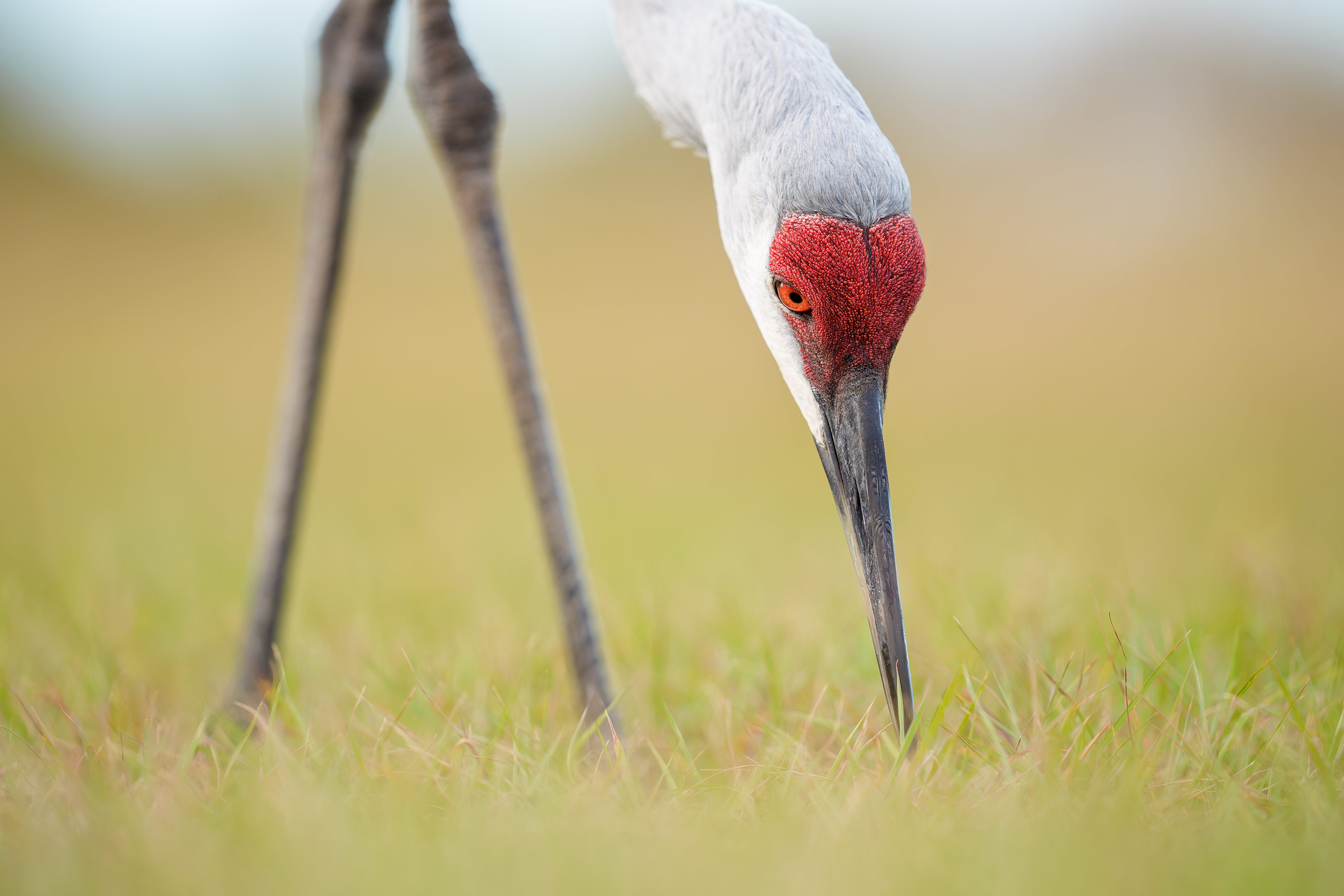
This image was created on 14 December 2024 down by the lake near my home at Indian Lake Estates, FL. Seated on a pillow on the South Peninsula, I used the toe-pod technique with the handheld Sony FE 400mm f/2.8 GM OSS lens and the ridiculously amazing Sony a9 III Mirrorless Camera. The exposure was determined via Zebra technology with ISO on the Thumb Dial. ISO 2000. 1/2000 sec. at f/2.8 (wide open) in Manual mode. When evaluated in RawDigger, the raw file exposure was determined to be dead-solid perfect. AWB at 8:06:41am on a partly cloudy morning. Tracking: Zone AF-C with Bird Face/Eye detection enabled performed to perfection. Be sure to click on the image to enjoy a high-res version. Image #7: Sandhill Crane adult foraging |
Nosybody
We had set up a road kill cafe on the South Peninsula cafe but the wind was less than ideal. The light clouds were a blessing. The Turkey Vultures came in first followed by hordes of Black Vultures. A local pair of cranes moseyed on over and gave the vultures what for. At times they blocked our flight shots. I was seated on the grass when one of the foraging cranes wandered over to me; I put the lens on my toes and worked off the rear screen.
Without my reading glasses, I relied on Tracking Zone to render the eye tack sharp. I love the sharp eye with everything else in the frame blurred by the f/2.8 aperture and the point blank working distance.
|
|
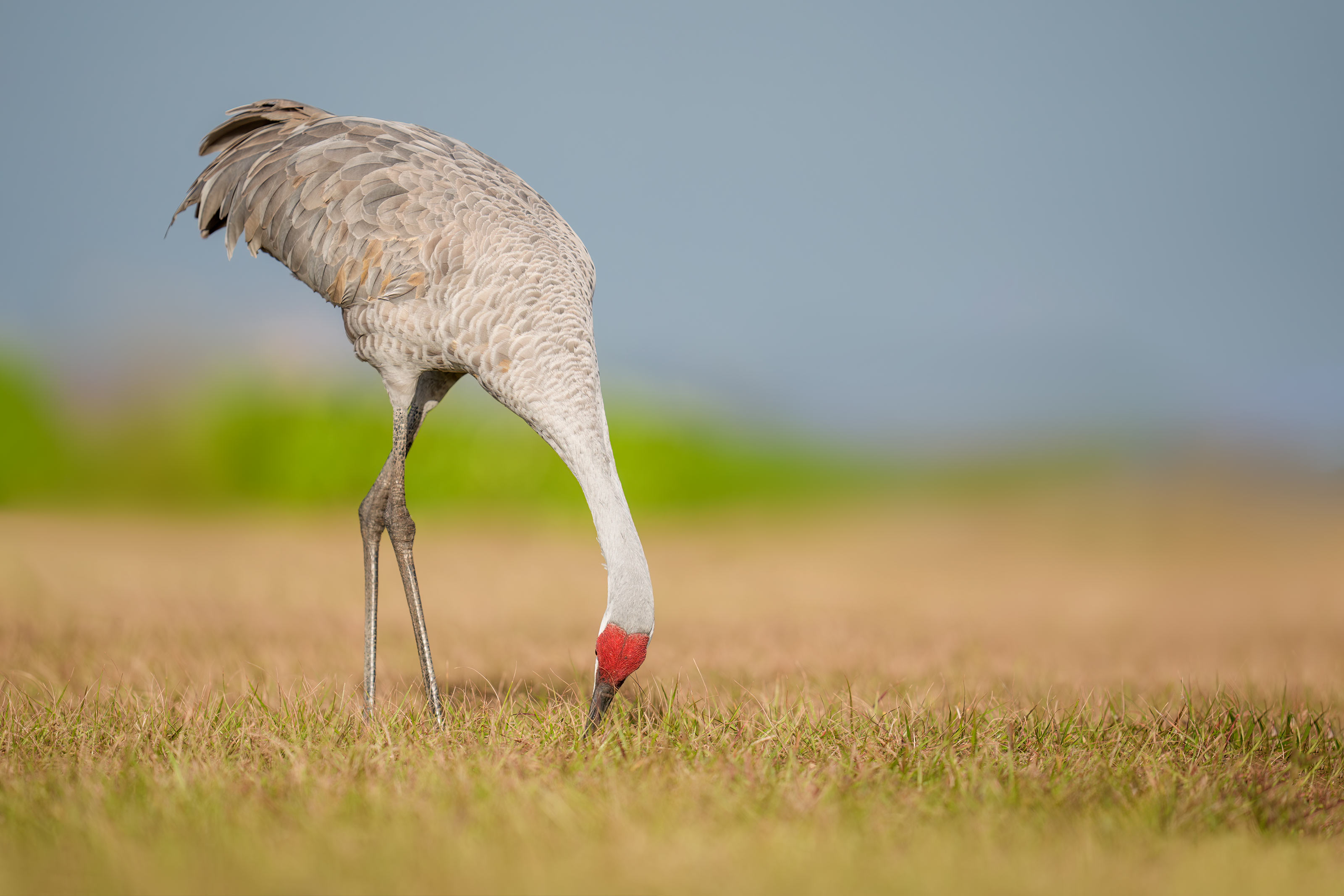
This image was also created on 14 December 2024 down by the lake near my home at Indian Lake Estates, FL. Crouching on the slope that leads down to a canal, I used the handheld Sony FE 400mm f/2.8 GM OSS lens and the ridiculously amazing Sony a9 III Mirrorless Camera. The exposure was determined via Zebra technology with ISO on the Thumb Dial. ISO 250. 1/4000 sec. at f/2.8 (wide open) in Manual mode. When evaluated in RawDigger, the raw file exposure was determined to be dead-solid perfect. AWB at 8:43:43am on a then sunny morning. Tracking: Expand Spot AF/C with Bird Face/Eye detection enabled performed to perfection. Be sure to click on the image to enjoy a high-res version. Image #8: Sandhill Crane foraging |
Change of Strategy
Once the sun came out for good, I worked my way down the slope to the canal between the South Field and the South Peninsula in an effort to photograph the crane from a low perspective and include the wicked storm cloud to the west in background. As for the head angle, I am more and more liking the view of the top of a crane’s head with just a sliver of one eye visible.
Whatever your definition of bokeh (or how you pronounce it), you will likely consider the soft, sweet background in this image something to die for.
|
|
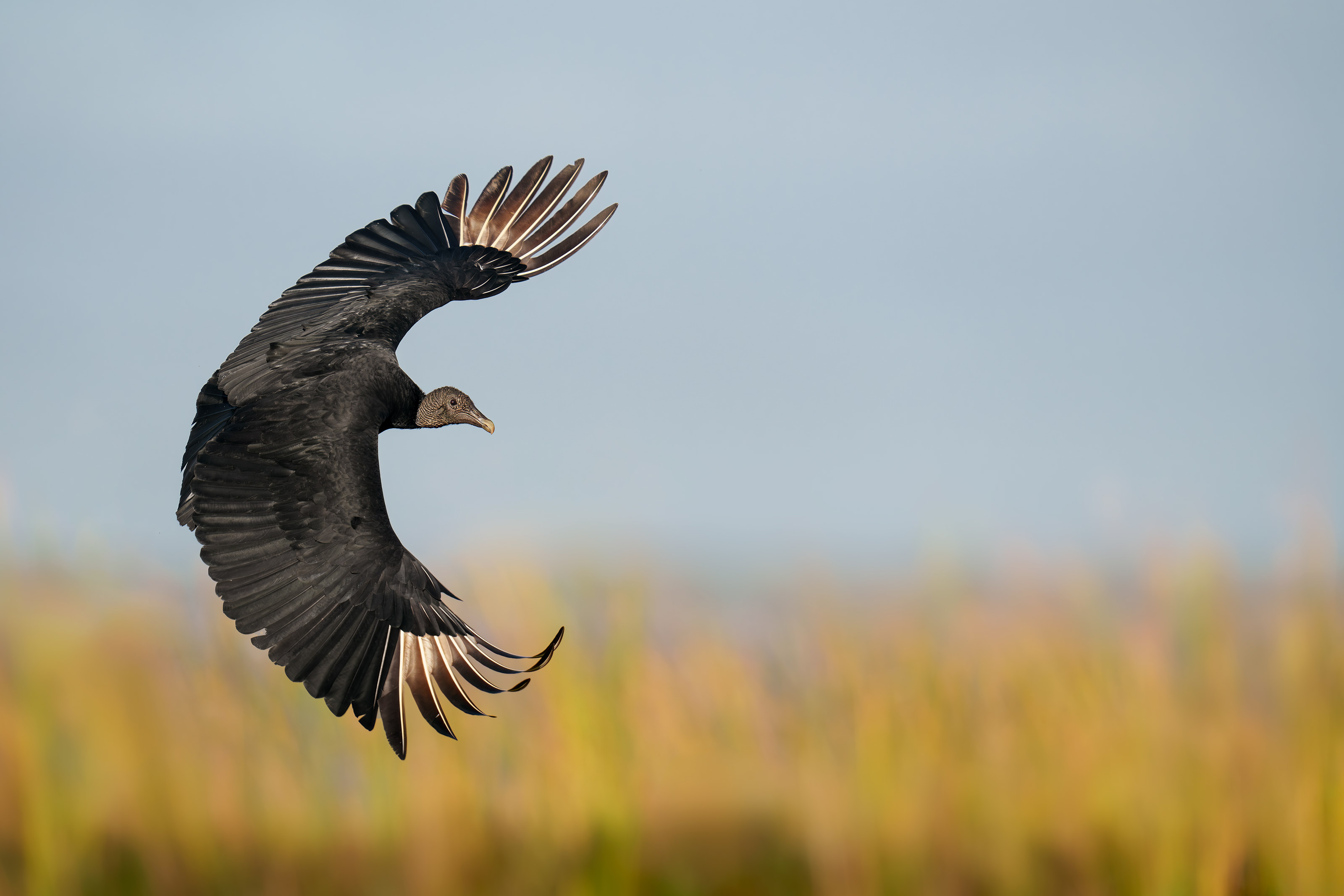
This image was also created on 16 December 2024 down by the lake near my home at Indian Lake Estates, FL. Again working from the driver’s seat of my SUV, I used the handheld Sony FE 400mm f/2.8 GM OSS lens Wide AF-C with Bird Face/Eye detection enabled performed to perfection. Be sure to click on the image to enjoy a high-res version. Image #9: Black Vulture dorsal view — turning in flight |
Dorsal View/Wings Forward
The combination of flight pose and wing position in Image #9 is one of my very favorites. If you can think of a good name to describe this flight pose, please leave it in a comment.
|
|
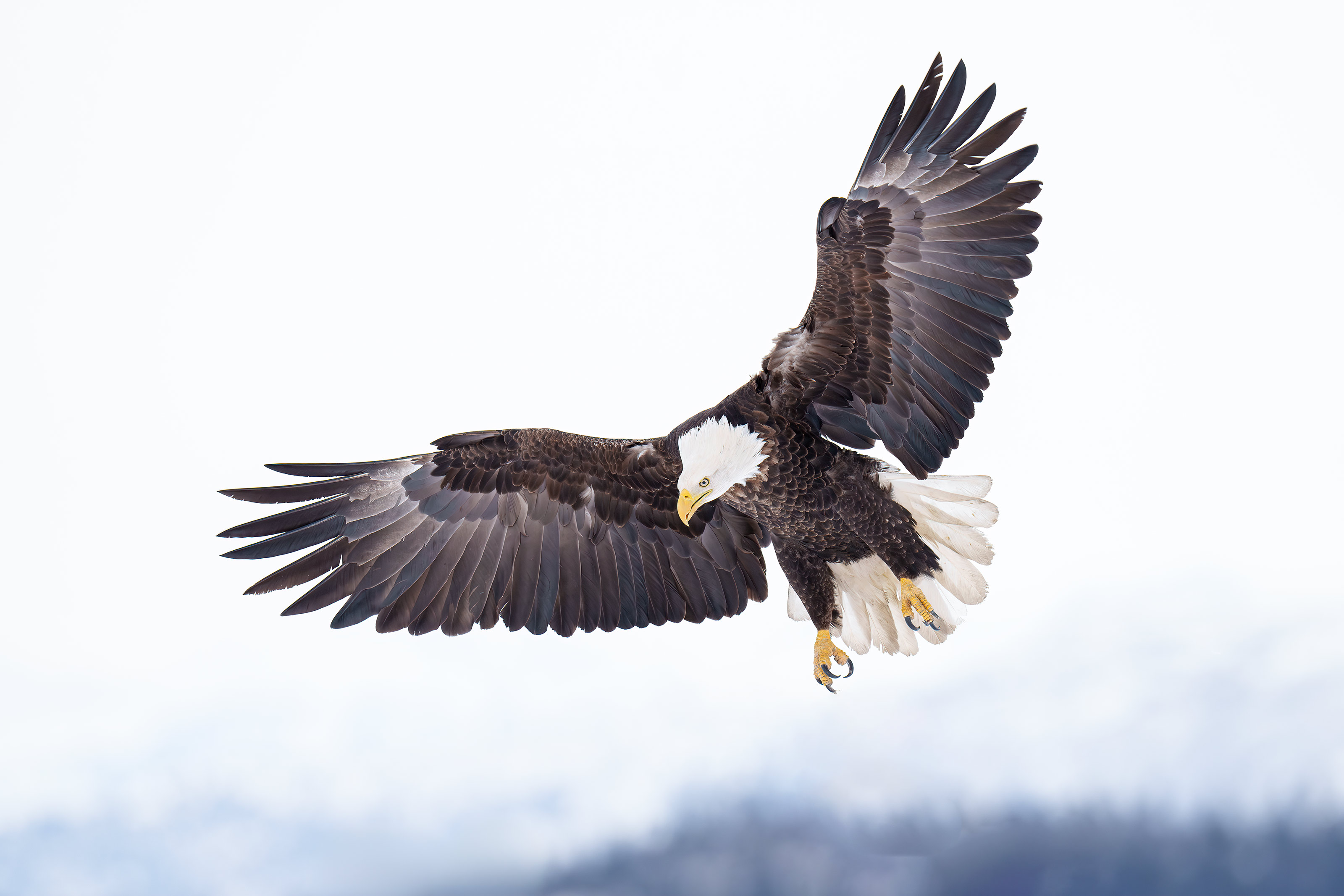
This image was created on 21 February 2023. Seated on fresh snow, I used the handheld Sony FE 400mm f/2.8 GM OSS lens and The One, the Sony Alpha 1 Mirrorless Digital Camera). The exposure was determined via Zebra technology with ISO on the Thumb Dial. ISO 2000. 1/2500 sec. at f4 (stopped down 1-stop) in Manual mode. When evaluated in RawDigger, the raw file brightness was determined to be perfect (ho hum). AWB at 11:04:37am on cloudy morning. Tracking: Zone/AF-C with Bird Face/Eye detection enabled performed to perfection. Be sure to click on the image to enjoy a high-res version. Image #10: Bald Eagle adult braking to land |
Adding to the White Sky
The 400mm was just wide enough to include a strip of woods and a snow-covered mountain in this frame. The full braking to land pose is beyond perfect. If you would like to join me in Homer in 2027, please get in touch via e-mail.
|
|
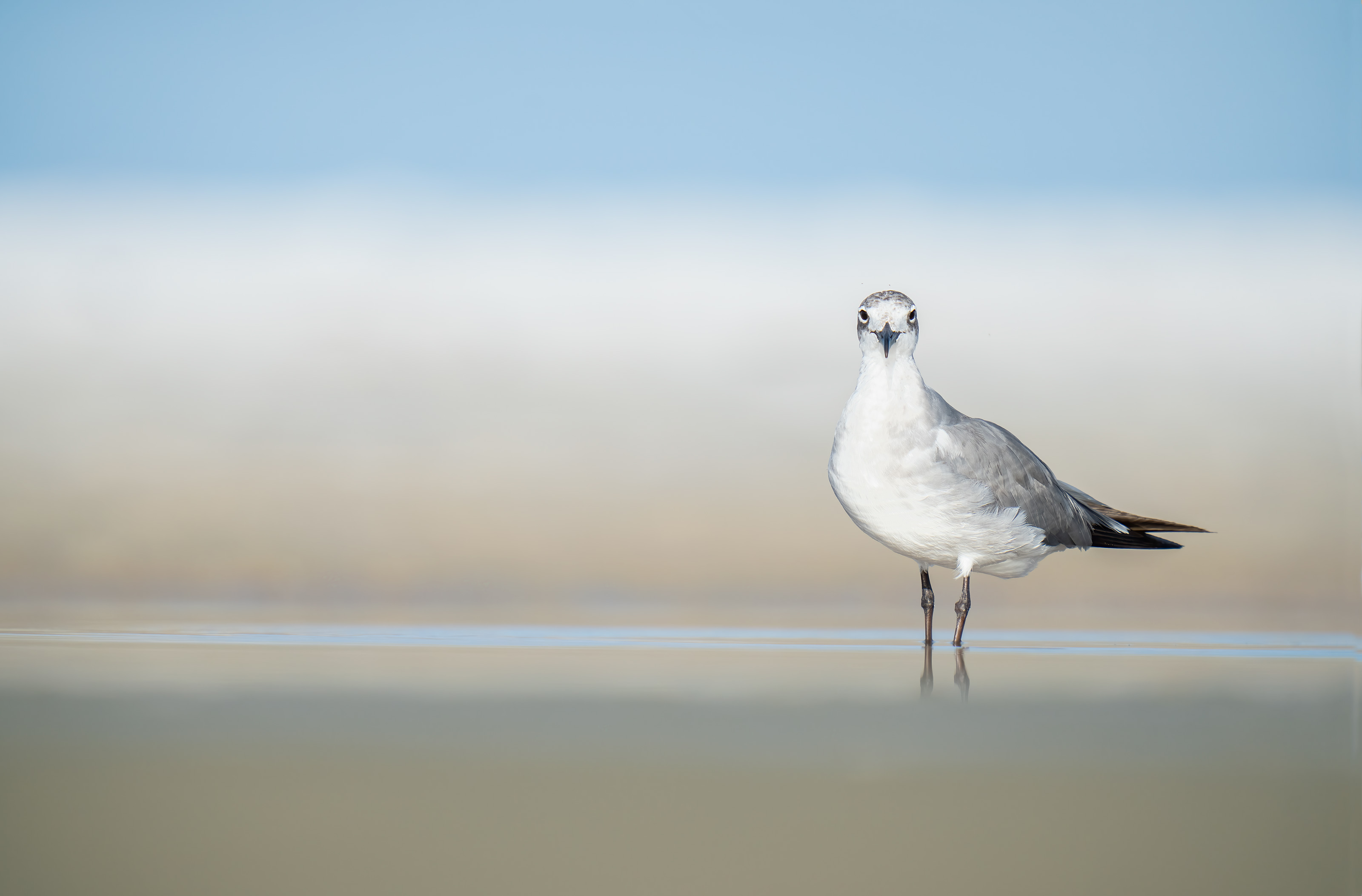
This image was created on 7 June 2022 at Fort DeSoto Park in Tierra Verde, FL. While seated on damp sand, I used the handheld Sony FE 400mm f/2.8 GM OSS lens with the Sony FE 2x Teleconverter and The One, the Sony Alpha 1 Mirrorless Digital Camera). The exposure was determined via Zebra technology with ISO on the Thumb Dial. ISO 800. 1/2500 sec. at f/5.6 (wide open) in Manual mode. When evaluated in RawDigger, the raw file brightness was determined to be dead-solid perfect. AWB at 8:16:24am as a cloud covered the sun. Tracking: Spot S AF-C with Bird Face/Eye detection enabled performed to perfection. Be sure to click on the image to enjoy a high-res version. Image #11: Laughing Gull in basic (non-breeding plumage) |
An Afterthought …
When you create a really nice image, you usually know it as soon as you press the shutter button. You are excited and cannot wait to see the image on your computer. After working some shorebirds, it began to cloud over. I walked away from the pool to chat with a young guy with a Sony 600 f/4. When I turned around and saw this plain looking Laughing Gull, I sat down, flipped out the rear screen, set the exposure, created a few rather small-in-the-frame images, and thought nothing of them. When this one on my the laptop, I fell in love with the super-low angle, the down-the-lens-barrel stare, and the suffused layers of earth toned colors offset by the lovely blue of the Gulf.
This image was created with the bottom of the lens hood placed right on the dried mud.
Typos
With all blog posts, feel free to e-mail or to leave a comment regarding any typos or errors.









I really enjoyed the monochromatic image of the plover!
Hi Artie,
As always great images with the 400 2.8. I love the last (wonderful soft light, Bokeh is amazing, and the low perspective all makes it really lovely). I still have mine 400, but it gets little use compared to the other Sony long lenses. I periodically say to myself that I am going to let it go, but just can’t do it saying there will always be another opportunity. I did take it to the Falklands 2 years ago, not wanting to travel with the 600, and I am glad I did. Easier to pack and perfect lens for the penguins and other tame birds.
As always, thanks for your ongoing blog. I check it out regularly.
Happy Hollidays,
Frank Sheets
PS, I will be in San Diego next week to spend some time at La Jolla. Hope the pelicans will be showing some color, but a bit early.
For image # 9: Butterfly pose??