
Flight Potpourri and Flight Photography Tips
I always wanted to be a very good flight photographer but for the most part, dSLR autofocus was not quite up to snuff. Thus, I am grateful to be alive at a time when mirrorless AF technology has made astronomical strides. And, as most of you know, I firmly believe that Sony has led the way and currently offers the very best system for those like me who are passionate about photographing birds. If you enjoy the tips that accompany today’s eight featured flight photographs, you will surely want to purchase a copy of The Complete and Quintessential Guide to Photographing Birds in Flight by Arthur Morris and Arash Hazeghi. Click the link or scroll down for details.
Your Call?
Be sure to click on each image to enlarge it. Study the light, the wing position, and the flight pose. Then leave a comment letting us know which two of today’s flight shots you think are the strongest and why you liked them.
ps: What do you think of the two headless flight shots?
What’s Up?
Tuesday was that kind of day. When I arranged Bob Eastman’s flight from Minneapolis to San Diego, I mis-typed his birthday :-(. After driving six hours through freezing rain he made it to the airport. Twice he was red-flagged and sent back out through security. On his third attempt, with his third boarding pass, he finally was able to get on the plane. The good news is that though the plane was a bit late, it did not crash — Bob is deathly afraid of flying.
On Sunday I ordered an iPhone 17+ to be picked up at the Verizon Store in Fashion Valley in San Diego. Easy, right?
I hit the sack at 7:30pm on Monday, woke at 12:30, and could not get back to sleep for a while. I had the alarm set for 3:30am. I finally did fall asleep and woke at 3:00. I noticed that my old iPhone was dead. I put it on the charger but it would not charge. Jim got me to the airport in plenty of time and my flight was uneventful. I met Bob and we picked up a big SUV and drove straight to the Verizon Store. A nice lady named Sandra located my order and my phone and handed it to me, and I was good to go. Almost.
I had gotten online on my laptop and was checking e-mails when an e-mail arrived from Verizon with this Subject line: You have successfully cancelled your order. What??? Nearly two hours later I walked out of the store but my phone would not activate perhaps because of the “cancelled” order. I was only 15 minutes late for my appointment with Dr. Cliff Oliver. We discussed my recent blood work results and best of all, he and his S-O Annie managed to charge my old phone and get my new phone activated. Bob and I had a great dinner at Beaumont’s in Pacific Beach (PB) and by the time I got back to Cliff’s all of my data had downloaded from the cloud. So, a happy ending.
Today is Wednesday 7 January 2026. Bob and I will be headed to La Jolla to check on the cormorants and the pelicans this morning. We pick up multiple IPT veteran and great friend Kevin and his S-O, Colleen, at SAN just before lunch. Kevin’s North Dakota photography friend Nora and her husband Doug (a non-photographer) will be arriving at the AirBnB this afternoon for the first IPT. I will be setting up her brand new a-1 ii and teaching her to use it; that should take about ten minutes. Anyhoo, I hope that you too choose to have a wonderful and productive day and that you have fun too. Please remember that happiness is a choice — Byron Katie, The Work.Com (and as discussed in yesterday’s blog post).
If an item — a Delkin flash card or reader, a Levered-clamp FlexShooter Pro, or a Wimberley lens plate or low foot — for example, that is available from B&H and/or Bedfords, is also available in the BAA Online Store, it would be great, and greatly appreciated, if you would opt to purchase from us. We will match or beat any price. Please remember also to use my B&H affiliate links or to earn 3% cash back at Bedford by using the BIRDSASART discount code at checkout for your major gear purchases. Doing either often earns you free guides and/or discounts. And always earns my great appreciation.
Gear Questions and Advice
Too many folks attending BAA IPTs and dozens of photographers whom I see in the field and on BirdPhotographer’s.Net, are — out of ignorance — using the wrong gear, especially when it comes to tripods and more especially, tripod heads. And the same is true in spades when ordering new camera bodies or lenses. My advice will often save you some serious money and may help you avoid making a seriously bad choice. Please know that I am always glad to answer your gear questions via e-mail.. If you are desperate, you can try me on my cell at 863-221-2372. Please leave a message and shoot me a text if I do not pick up.
|
|
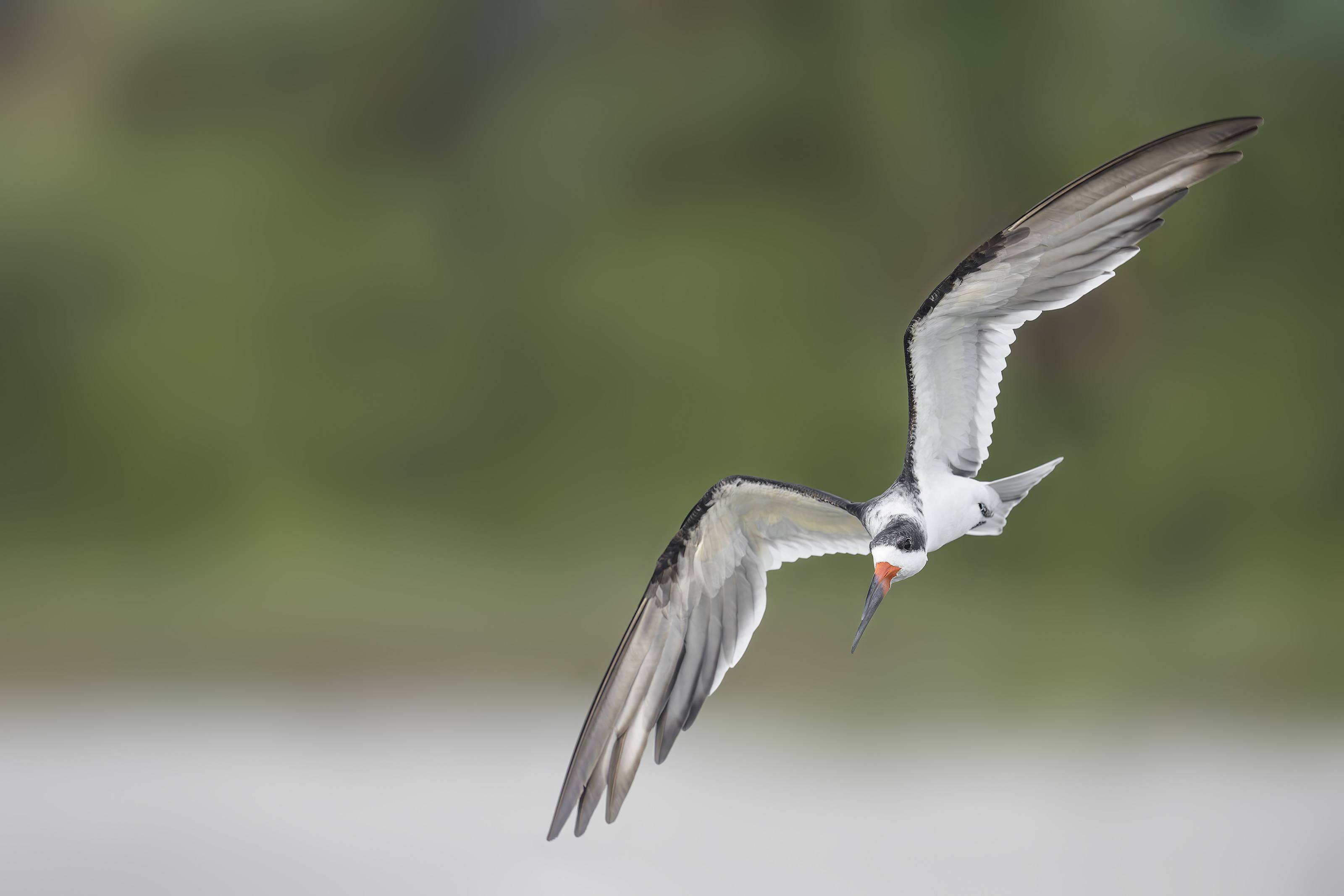
This image was created on 30 November 2025 at Sebastian Inlet by yours truly. Standing at full height in the water at Northwest Cove I used the Robus RC-5570 Vantage Series 3 Carbon Fiber Tripod/Levered-Clamp FlexShooter Pro-mounted Sony FE 600mm f/4 GM OSS lens and the Latest Greatest Sony Flagship Body, the a1 II Mirrorless Camera. The exposure was determined by Zebras with ISO on the rear wheel: ISO 1600: 1/4000 second at f/4 (wide open) in Manual mode. AWB at 8:07:12am on a cloudy morning. Wide/AF-C with Bird Eye/Face Detection enabled performed perfectly. Click on the image to enjoy the larger, inexplicably sharper high-res version. Image #1: Back Skimmer first winter in flight |
In Low Light Put Your Teleconverters (TCs) in Your Fanny Pack
With some birds in the Northwest Cove, I never even thought about adding the 1.4X Teleconverter.
Joining the Flock Flight Tip
When you see a group of gulls and terns roosting on the beach or in shallow water and note that other birds are flying in to join them, position yourself with the wind behind you, strive to get as close to them as possible without flushing the flock, and then get to work!
|
|
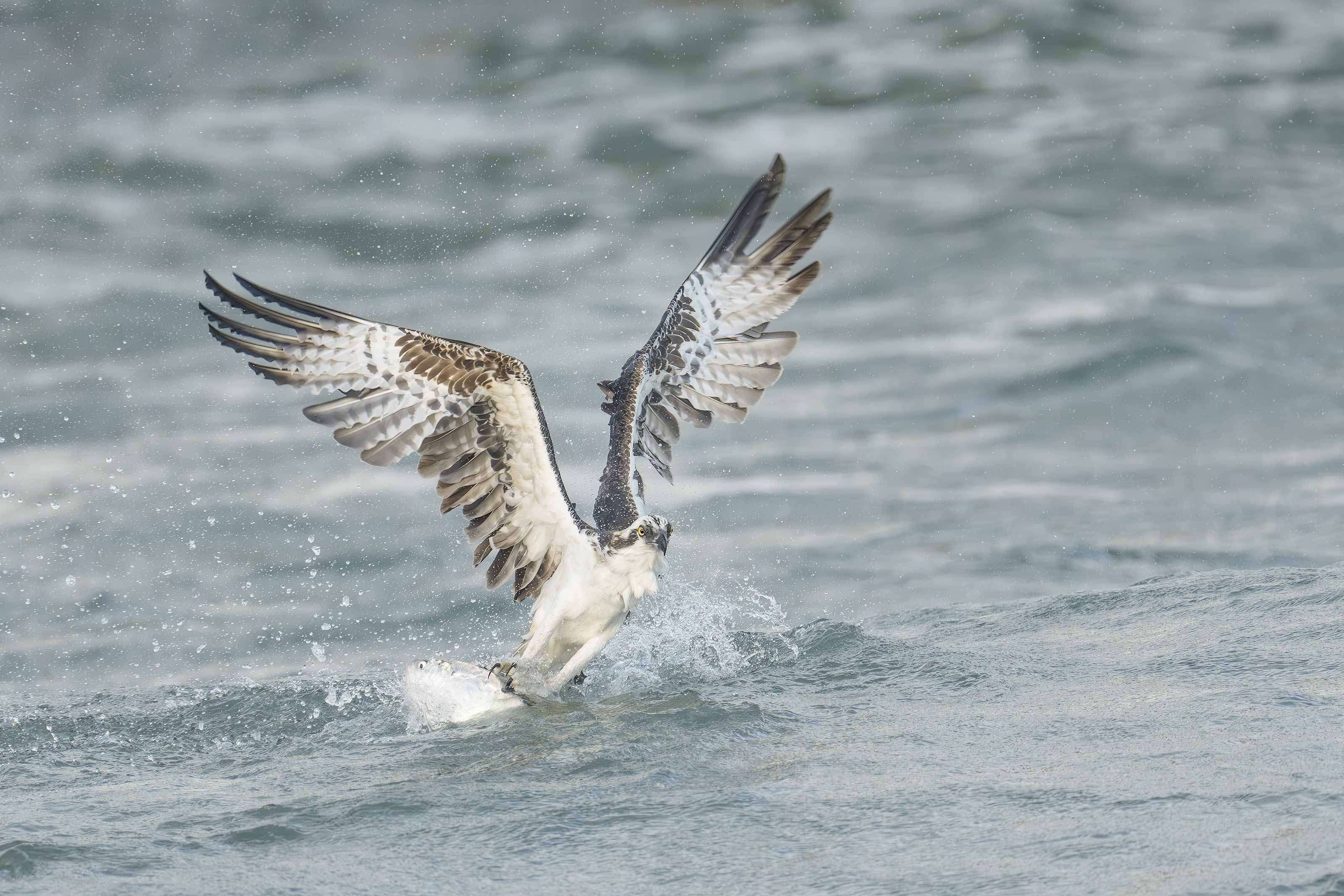
This image was created on 30 November 2025 at Sebastian Inlet by yours truly. Standing at full height near the base of the South Jetty I used the Robus RC-5570 Vantage Series 3 Carbon Fiber Tripod/Levered-Clamp FlexShooter Pro-mounted Sony FE 600mm f/4 GM OSS lens with the Sony FE 1.4x Teleconverter and the Latest Greatest Sony Flagship Body, the a1 II Mirrorless Camera. The exposure was determined by Zebras with Exposure Compensation (EC) on the thumb wheel in Manual mode. ISO 3200: 1/2500 sec. at f/4 (wide open). AWB at 9:29:20 am on a very cloudy morning. Center Tracking: Zone/AF-C with Bird Eye/Face Detection enabled performed perfectly. Click on the image to enjoy the larger, inexplicably sharper high-res version. Image #2: Osprey emerging with Yellowfin Menhaden in its talons |
Know When and Why to Add the 1.4X Teleconverter
Rarely do I see anyone at Sebastian Inlet using a 600mm f/4 lens with the 1.4X TC in place. Rarely will you see me at Sebastian Inlet using my 600mm f/4 lens without the 1.4X TC in place? When you cannot get closer physically my firm belief is that it is far better to add the 1.4X TC to get more pixels on the subject than to shoot the bare 600mm and then crop.
|
|
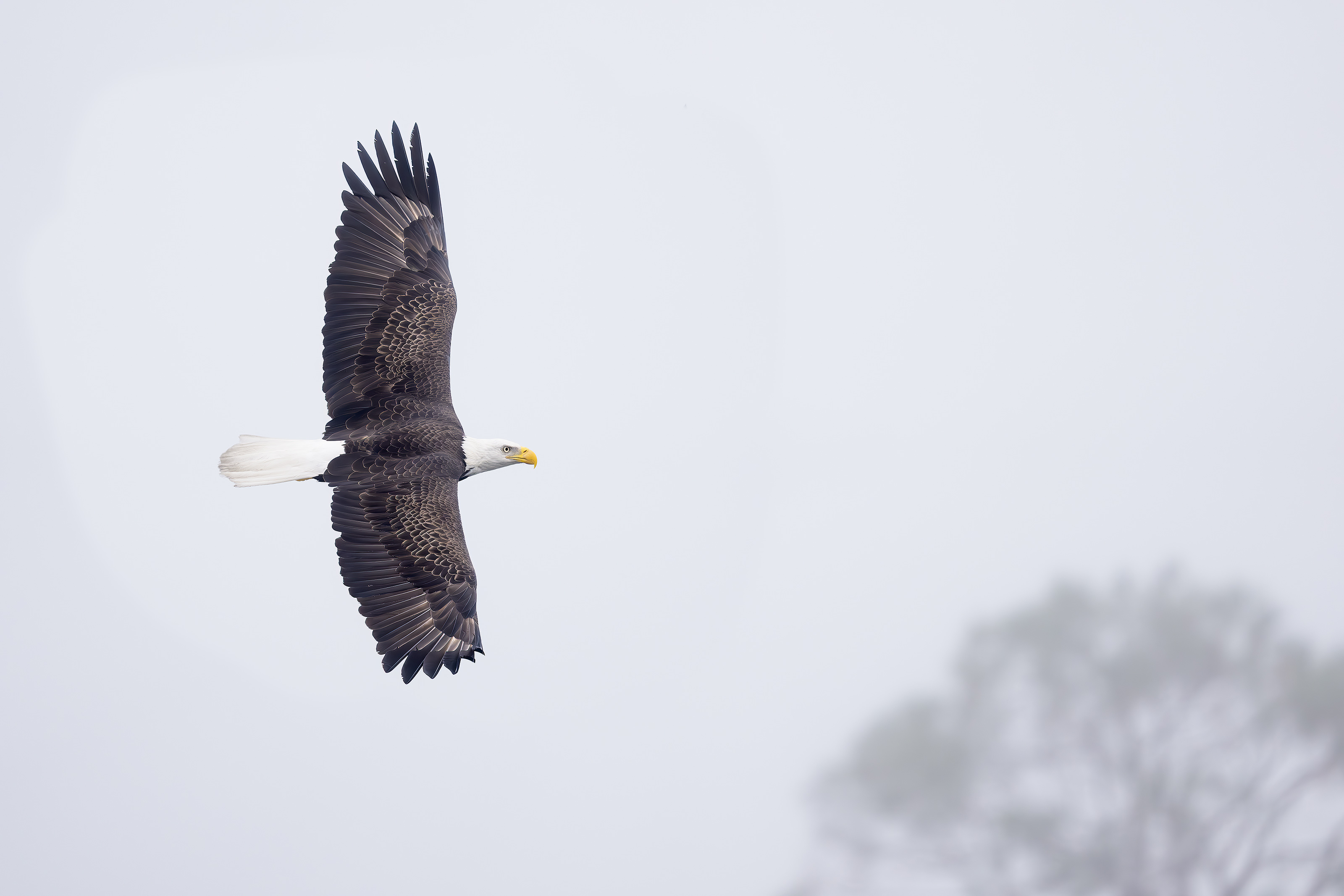
This image was created on 19 December 2025 down by the lake near my home at Indian Lake Estates, FL. Standing on the South Field I used the handheld Sony FE 300mm f/2.8 GM OSS Lens (Sony E) and The Latest Greatest Sony Flagship Body, the a1 II Mirrorless Camera. Exposure determined via Zebras with ISO on the Thumb Wheel. ISO 2000: 1/2500 sec. at f/2.8 (wide open) in Manual mode. AWB at 8:06:59am on a foggy morning. Wide/AF-C with Bird Eye/Face Detection enabled performed perfectly. Image #3: Bald Eagle in flight — dorsal view |
When There’s No Light, Grab Your Fastest Lens
With dense fog, an f/2.8 lens was the obvious choice. As I can no longer hold the 400mm f/2.8 GM lens, the 300mm f/2.8 was the obvious choice. I exited the car and with a south wind, positioned myself to the south of the perch tree. When the bird took flight, I made a few nice frames. In the original frame, the eagle was flying away from the out of focus tree. You can see the complete image optimization in Volume IV of the Digital Basics IV Video Series.
|
|
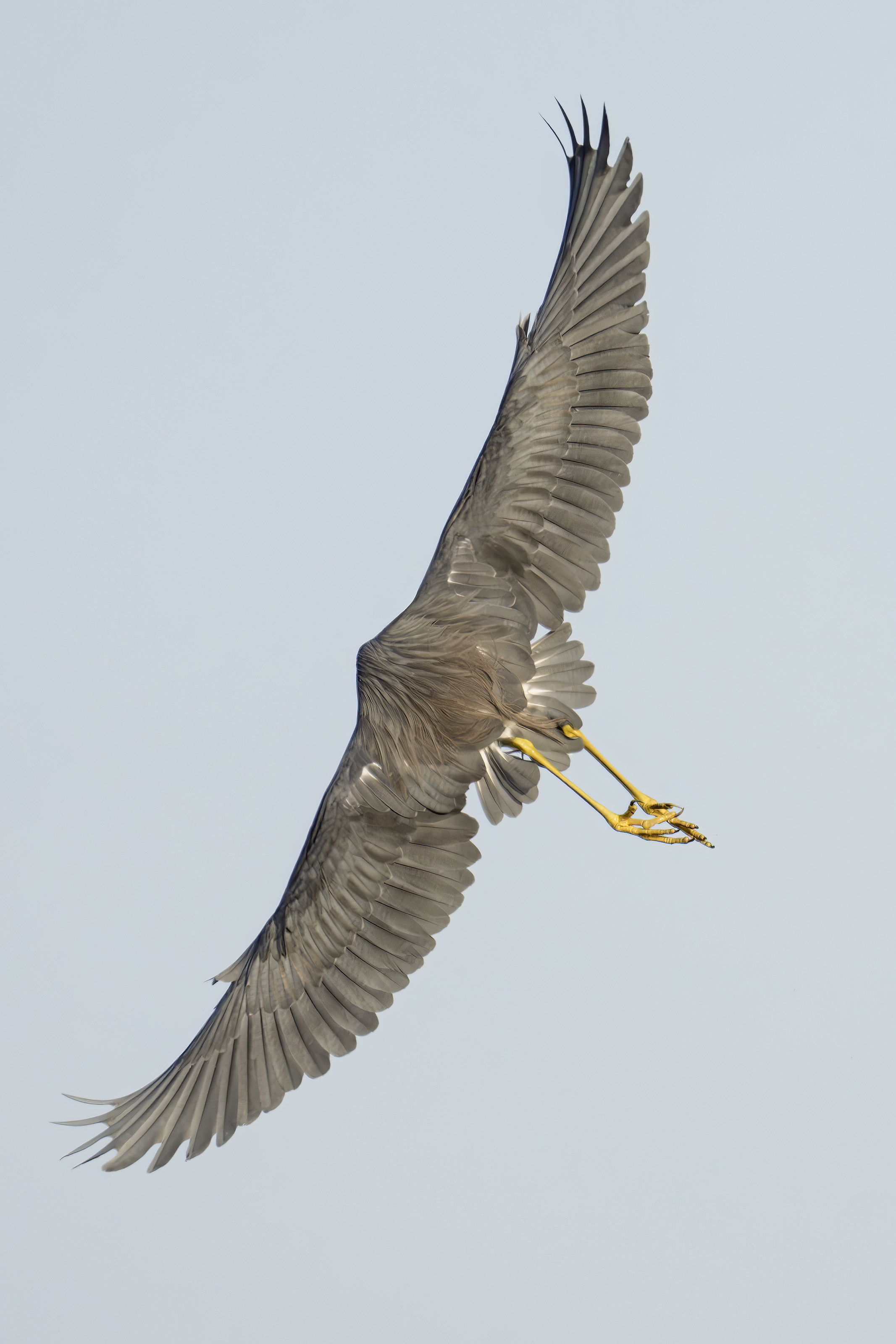
This image was created on 23 December 2025 down by the lake near my home at Indian Lake Estates, FL. Walking west on the pier, I used the handheld Sony FE 200-600mm f/5.6-6.3 G OSS lens (at 600mm) and The Latest Greatest Sony Flagship Body, the a1 II Mirrorless Camera). The exposure was determined by Zebras with ISO on the rear wheel. ISO 1600: 1/4000 second at f/6.3 (wide open) in Manual mode. AWB at 8:13:33am on a cloudy morning. Wide/AF-C with Bird-Eye/Face Detection performed perfectly. Click on the image to enjoy the larger, inexplicably sharper high-res version. Image #4: Tricolored Heron turning hard right in flight
|
You Must Always See the Bird’s Face. Or Not?
The word on the street is that in order for a bird photograph to succeed you must have a good look at the subject’s face and eyes. Except when you don’t.
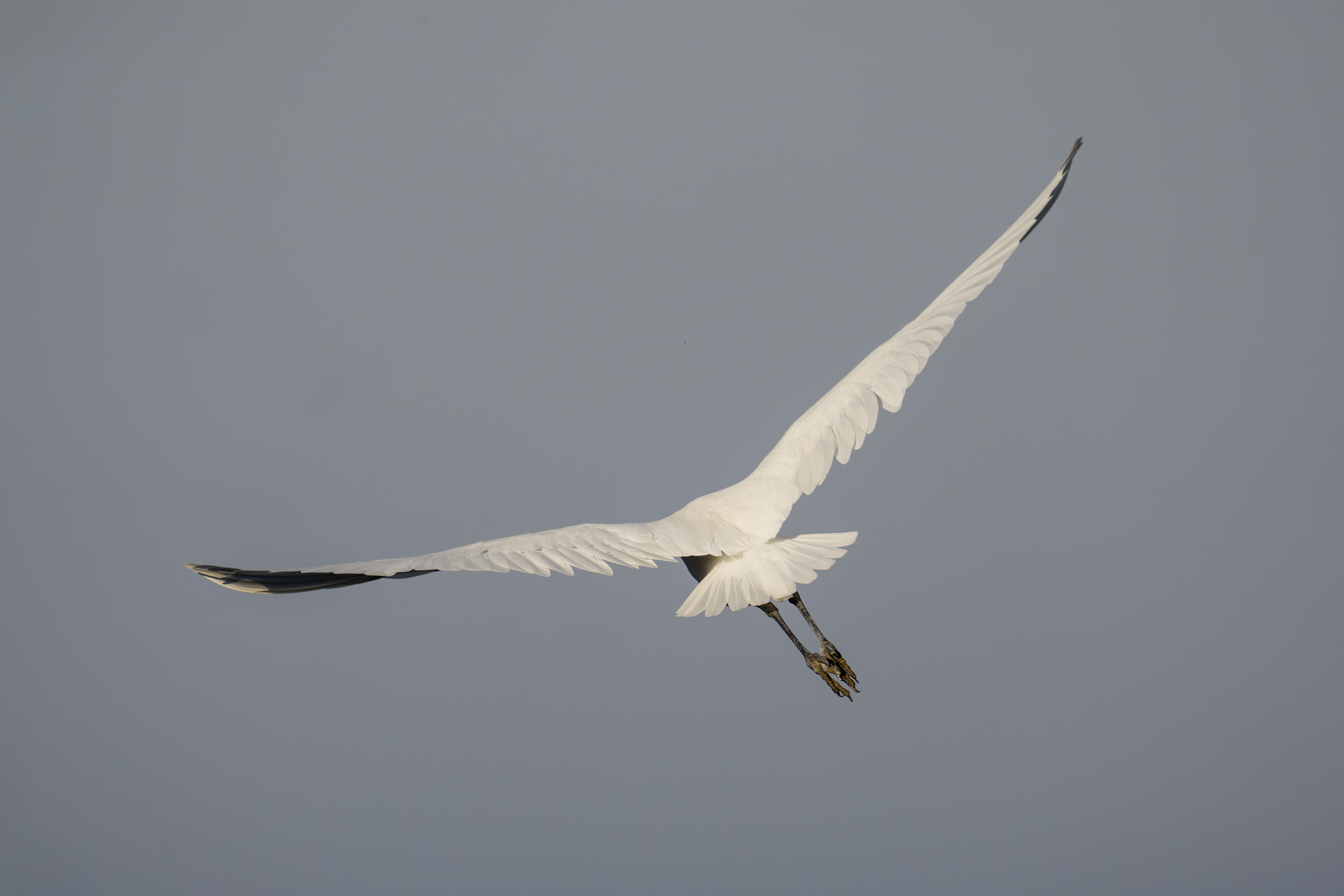
|
|
This image was created on 26 December 2025 down by the lake near my home. Walking on the pier, I used the hand held Sony FE 200-600mm f/5.6-6.3 G OSS lens with the Sony FE 1.4x Teleconverter (at 840mm) and the and The Latest Greatest Flagship Body, the Sony a1 II Mirrorless Camera. Exposure determined via Zebras with ISO on the Thumb Wheel. ISO 1250: 1/4000 sec. at f/9 (wide open) in Manual mode. AWB at 8:23:52 am on a variably sunny morning. Wide/AF-C with Bird Eye/Face Detection enabled performed perfectly. Image #5: Cattle Egret flying away |
A Viable Flight Rig: The Sony 200-600 Plus the 1.4X TC
Thanks to Eugen Dolan who taught me at Sebastian Inlet last fall that the 200-600 with the 1.4X TC can be used for flight on sunny days. He led the way by example! For folks on a budget a used Sony a-1 with the 200-600 and a 1.4X teleconverter in your pocket can serve as their workhorse super-telephoto lens. Hello Bob Eastman! He is a prime example of a skilled bird photographer using only his trusty 200-600 and an original a-1.
|
|
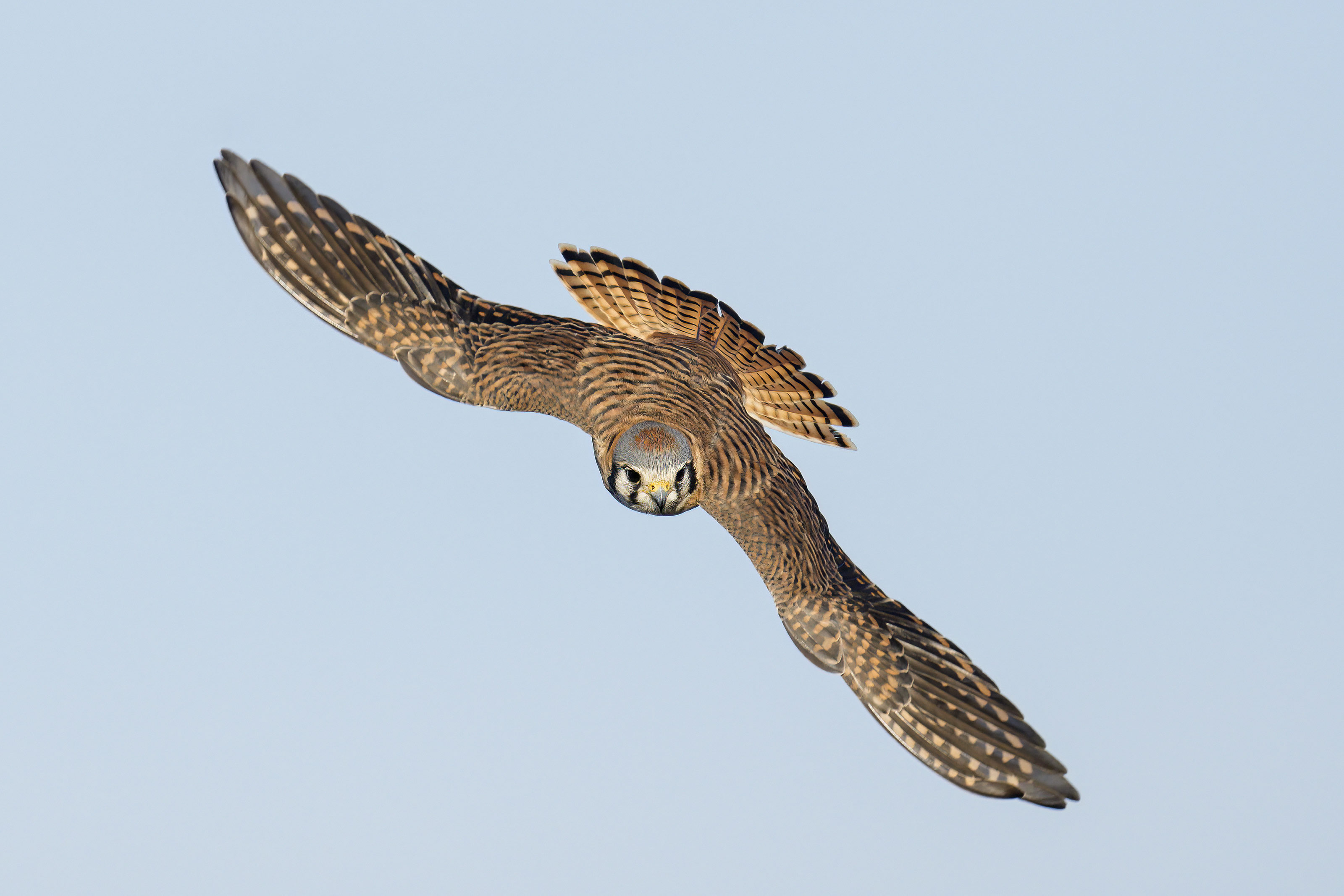
This image was created on 2 January 2026 by yours truly by the boat ramp in the South Field. Seated in the front seat of my SUV I used the BLUBB-supported Sony FE 600mm f/4 GM OSS lens with the Sony FE 1.4x Teleconverter and the Latest Greatest Sony Flagship Body, the a1 II Mirrorless Camera. The exposure was determined by Zebras with ISO on the rear wheel. ISO 1250: 1/4000 second at f/6.3 (wide open) in Manual mode. AWB at 8:31:44 am on a variably sunny morning. Wide/AF-C with Bird Eye/Face Detection enabled performed perfectly. Click on the image to enjoy the larger, inexplicably sharper high-res version. Image #6: American Kestrel female diving |
Find a Cooperative Bird
As mentioned recently, most kestrels are extremely skittish. If you even slow your car down a bit, they take flight. For whatever reason, this individual was quite tolerant. As I was positioning my vehicle, I assumed that the bird would take flight. It did not. I stayed with it for nearly an hour as it dove off the utility wire and captured bugs and spiders. It would dive down, grab something, and fly back up to the wire. I moved the car many times and this lady never once reacted.
Shooting Flight Off the BLUBB Ain’t Easy!
But for a very few seconds, handholding the 600mm f/4 lens is no longer a feasible option for me. But I needed the speed and the reach, so I rolled the window up and supported the lens on the BLUBB. Relying in part on Pre-Capture, I slumped down in the driver’s seat, half-pressed the shutter button, and fired when the bird dove off the wire. After it hit the ground, I would sit up and try to get on the bird as it took flight. Not easy at all so I was surprised that I was able to make a few decent images. I got one nice one with a spider in the bird’s bill that I will share with you here at some point.
Though some may disagree, I feel that it is best to set the Direct Manual Focus switch to OFF when working on the BLUBB to avoid the possibility of throwing off the autofocus.
|
|
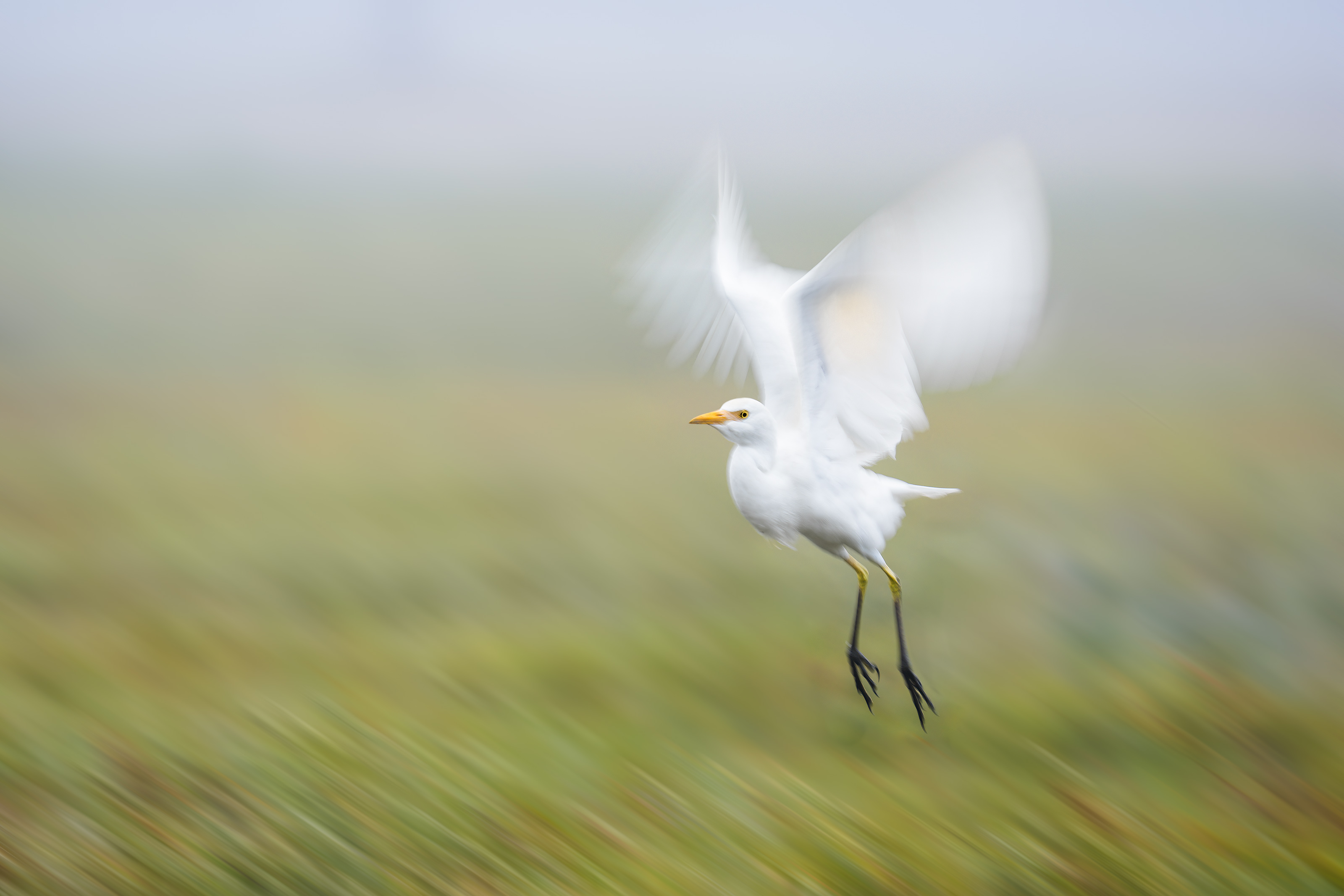
This image was created on 4 January 2026 by yours truly down by the lake near my home. Seated in the front seat of my SUV I used the Sony FE 200-600mm f/5.6-6.3 G OSS lens (at 500mm) and The Latest Greatest Sony Flagship Body, the a1 II Mirrorless Camera). The exposure was determined by Zebras with ISO on the rear wheel. ISO 160: 1/60 second at f/6.3 (wide open) in Manual mode. AWB at 8:40:47 am on a very foggy morning. Tracking: Zoone AF-C with Bird-Eye/Face Detection performed perfectly. Click on the image to enjoy the larger, inexplicably sharper high-res version. Image #7: Cattle Egret taking flight blur
|
Understanding the Wind
On Sunday past, there was thick fog with a NW wind. I spent an hour with a foraging flock of Cattle Egrets doing mostly flight blurs as they moved north time and time again in search of tiny gnats. The key was to drive a big circle around the flock and angle the car to the southwest so that the wind was behind me with the birds flying and taking off toward me as they always do. I created more than 1900 images and made one or two nice ones.
|
|
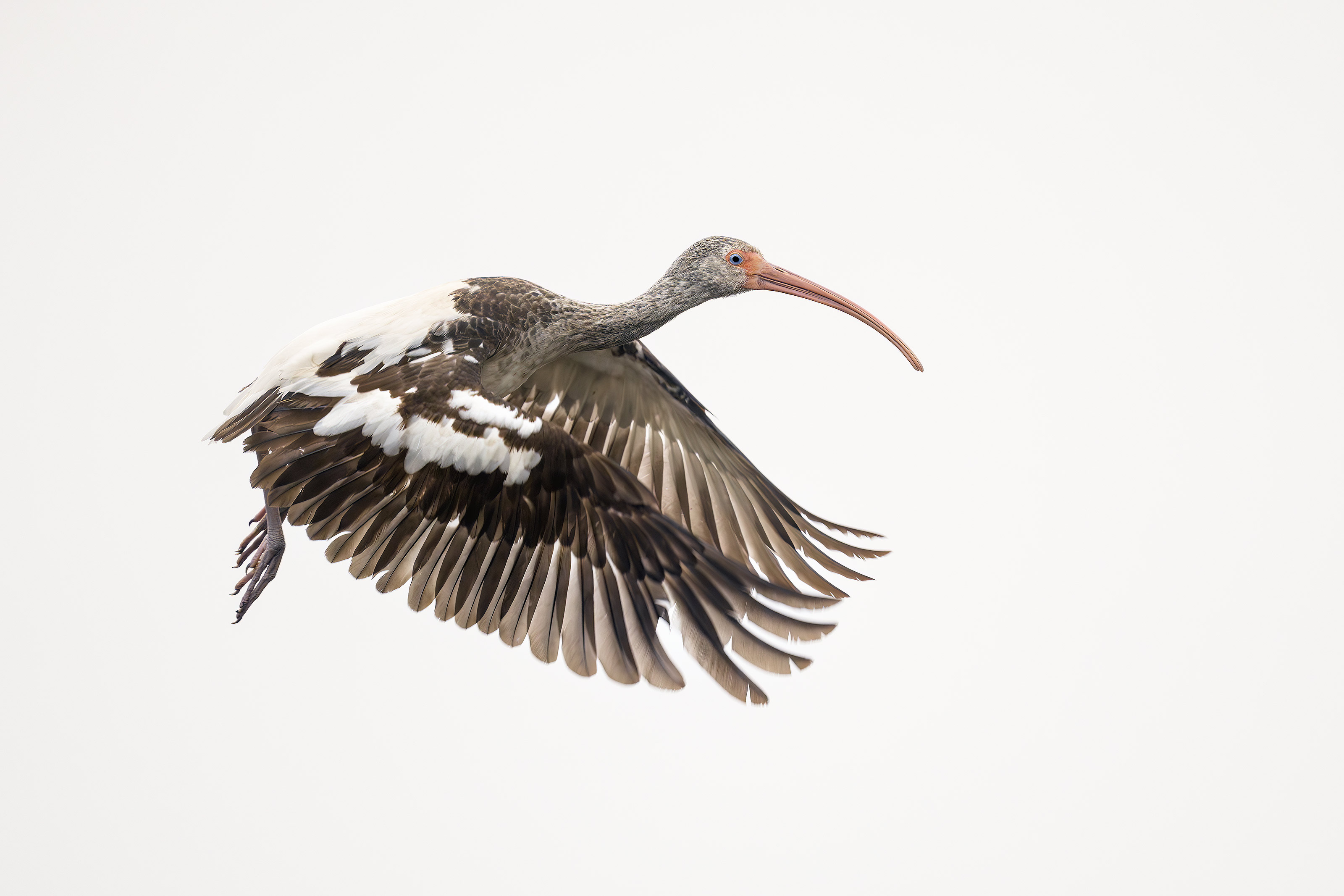
This image was created on 5 January 2026 down by the lake near my home at Indian Lake Estates, FL. Working from the front seat of my SUV that was positioned quite near the pier, I used Sony FE 300mm f/2.8 GM OSS Lens (Sony E) with the Sony FE 1.4x Teleconverter and The Latest Greatest Sony Flagship Body, the a1 II Mirrorless Camera. Exposure determined via Zebras with ISO on the Thumb Wheel. ISO 2000: 1/2500 sec. at f/4 (wide open) in Manual mode. AWB at 8:06:05am on a completely foggy morning. Wide/AF-C with Bird Eye/Face Detection enabled performed perfectly. Image #8: White Ibis juvenile taking flight from the pier railing |
Take the BLUBB Off the Door Frame for Handheld Flight
If I am going to handhold for flight (or action) with an intermediate telephoto or telephoto zoom lens, the first thing that I do is grab the BLUBB and place it on the front passenger seat. Why? The Big Lens Ultimate Beanbag is so large that if it is in place it will restrict movement and hinder your panning.
Understanding the Wind
This bird was perched on the pier railing just to the norh of my position. With a nice wind from the south, I knew that if it took flight it would not fly directly away from me. Again, Pre-Capture enables me to work these situations with great confidence.
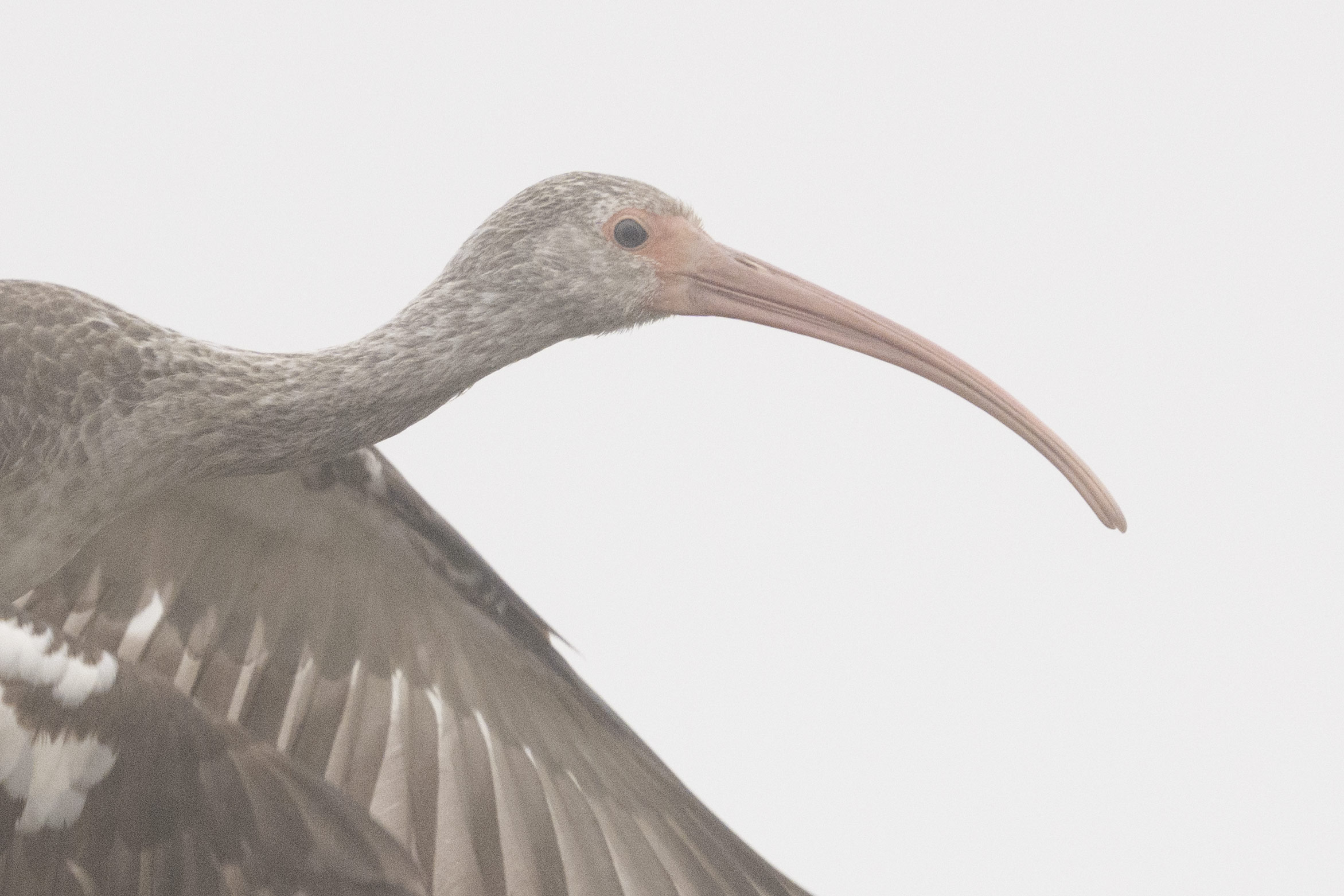
|
|
This is a tight crop of the properly exposed raw file for Image #8. Image #8A: White Ibis juvenile taking flight from the pier railing |
Washed Out, Dull, Flat, and Lifeless
Properly exposed-to-the-right raw files should look washed out, dull, flat, and lifeless while exhibiting subdued colors at best. Especially those created in cloudy, foggy, or low light conditions. Exposing to the right ensures lots of detail across the board and the raw files are easily brought to life with just a few slider adjustments. The complete image optimization of this raw file will be detailed in Volume V of the Digital Basics IV Video Series.
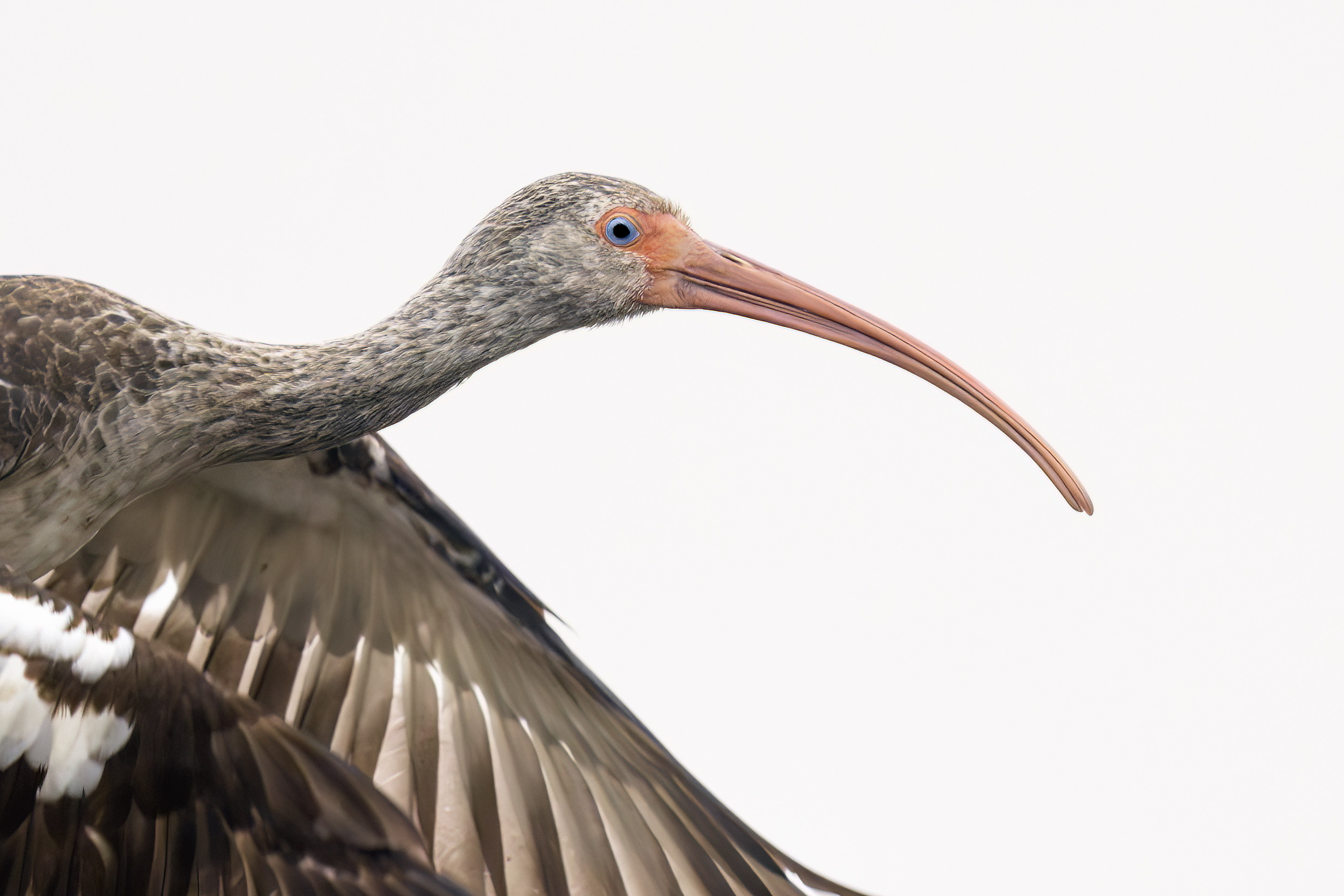
|
|
This is a similar tight crop of the optimized .TIF file for Image #8. Image #8B: White Ibis juvenile taking flight from the pier railing |
Wow to the Eye Doctor Masking!
When I first brought the raw file into Adobe Camera Raw I was not convinced that this bird had the beautiful light blue iris. But when I painted an ACR mask with a small brush and moved the exposure slider to the right I could see a hint of blue. Next was to decrease the Color Temperature (cooler = more blue) and increase the Saturation. Next was to paint another mask and darken the pupil. Again, the complete image optimization of this raw file will be detailed in Volume V of the Digital Basics IV Video Series.
|
|
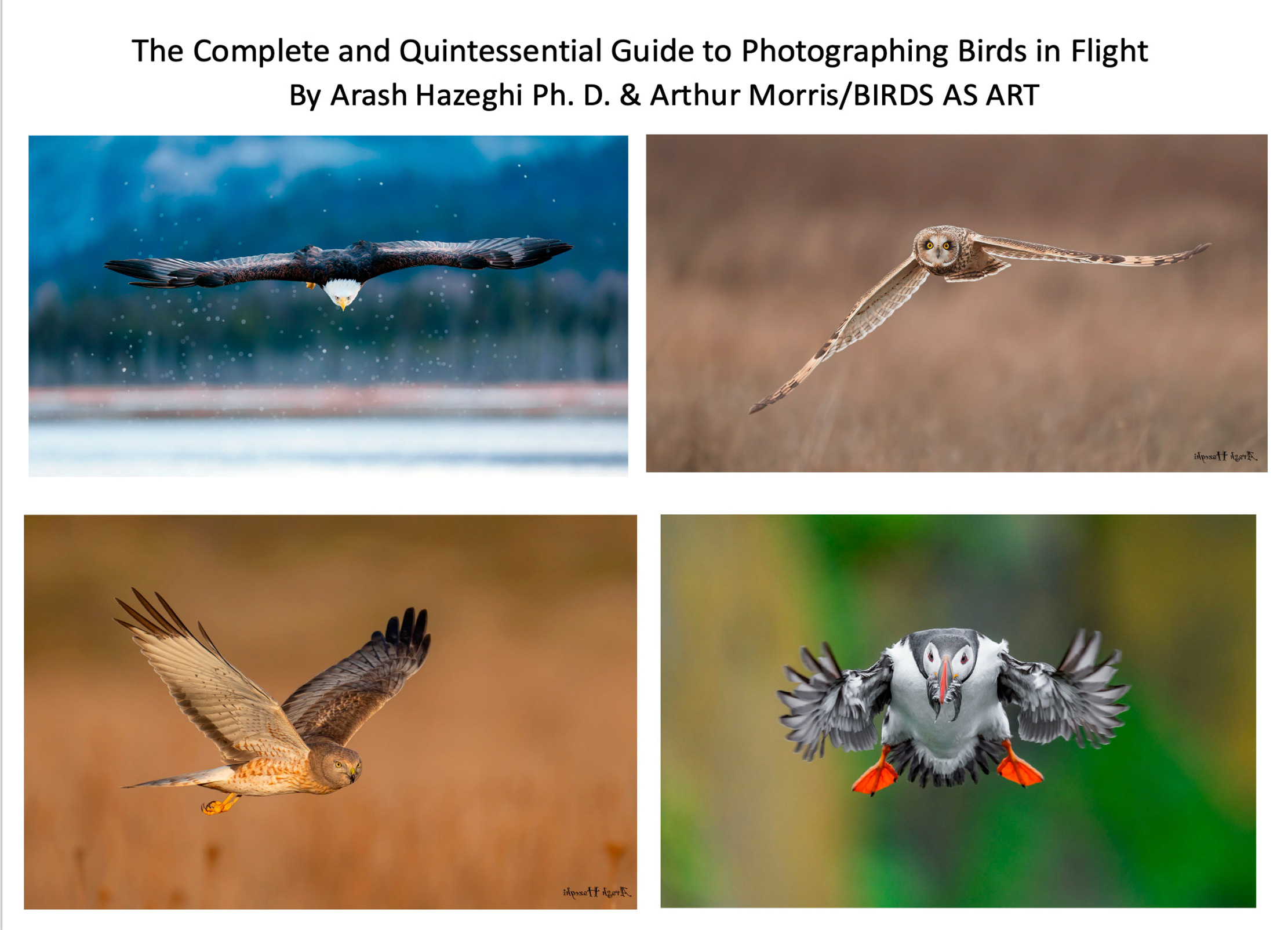
The title says it all. Purchase your copy here. The Complete and Quintessential Guide to Photographing Birds in Flight
|
The Complete and Quintessential Guide to Photographing Birds in Flight: $99.00
I had long dreamed of becoming a great flight photographer. When using dSLR gear, making sharp images was a huge problem. Most of the time, the camera bodies simply were not up to snuff. Things have changed dramatically with mirrorless technology. The high-end mirrorless camera bodies now feature science fiction-like autofocus systems and frame rates of 30, 40, and even 125 fps. Nowadays, getting the eye sharp is no longer a problem. The problem more often involves selecting the strongest image from a long series of sharp images.
The truth, however, is that there is a lot more than owning a Canon EOS R1, a Nikon Z9, or a Sony a-1 ii to consistently creating great photographs of birds in flight. Some of the biggest factors to success include gear choice, shooting strategies, and understanding the importance of sky conditions and wind speed and direction. Once you have the techniques and technical aspects down pat and can routinely create sharp images, learning the importance of flight poses, wing positions, backgrounds, and subject placement and image design enable you to create and then select superb flight images. And you guessed it, each of those topics and tons more are covered in detail in The Complete and Quintessential Guide to Photographing Birds in Flight.
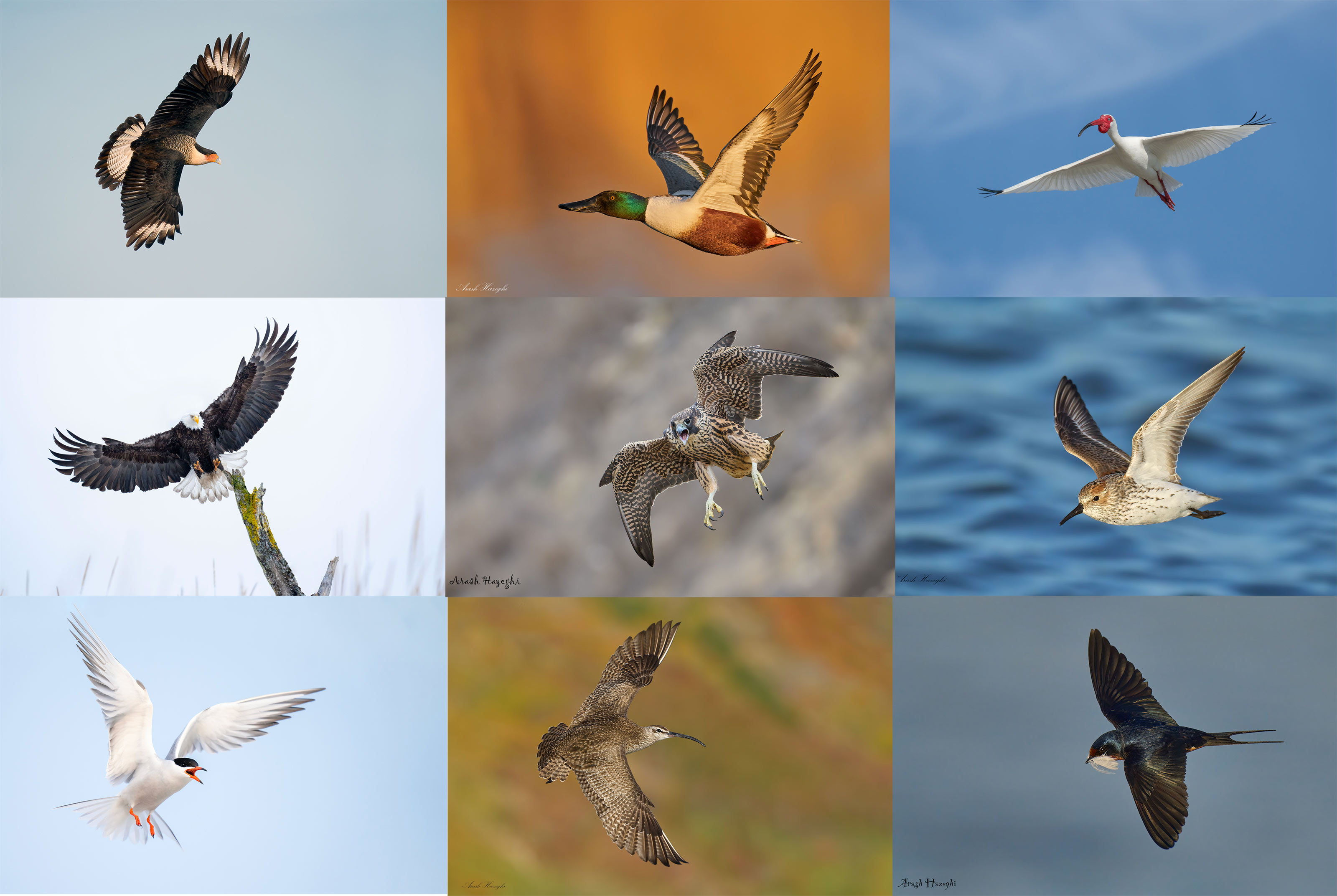
The guide consists of 267 pages and 21,013 words. There are 82 illustrative photos scattered throughout the text, two screen captures, and a 112-image gallery that includes examples created by Canon, Nikon, and mostly Sony gear. As seen above, each of the 194 inspirational photos is labeled with an educational caption.
You can purchase your copy here for $99.00.
Arash Hazeghi
Arash Hazeghi, Ph.D. is a principal electron device engineer. He received his Ph.D. degree in Electrical Engineering in 2011, from Stanford University, Stanford, California. His pioneering research on Carbon Nanotubes has been cited many times. In the past decade, Arash Hazeghi has been a major contributor to the research and the development of some of the most cutting-edge technologies introduced by Silicon Valley’s most reputable names including SanDisk, Intel and Apple.
More relevant here is that he is widely recognized as one of the world’s best birds in flight photographers. He specializes in raptors and the technical aspects of bird photography.
|
|
Flight photography is a skill that can be studied, practiced, and learned. Improve your skills by studying The Complete and Quintessential Guide to Photographing Birds in Flight |
The Complete and Quintessential Guide to Photographing Birds in Flight
By Arash Hazeghi Ph.D., and Arthur Morris/BIRDS AS ART
What you will learn (about):
-
1- Weight and handholding super-telephoto lenses.
2- Weight and handholding intermediate telephoto and telephotos zoom lenses.
3- Choosing the right flight photography lens or lenses for you.
4- The importance of focal length for flight photography.
5- The importance of lens speed (the maximum aperture for flight photography.
6- Choosing between fixed focal lengths and zoom lenses for flight photography.
7- The importance of AF speed and performance for flight photography.
8- Handholding tips and techniques.
9- Shooting flight off a tripod with the Levered-clamp FlexShooter Pro.
10- Flight poses and wing positions.
11- Why artie changed his mind about the 400mm f/2.8 lenses for flight and more.
12- The advantages and disadvantages of using teleconverters for flight photography.
13- Why to stay away from off-brand lenses.
14- Understanding the importance of wind direction and speed for flight photography.
15- The relationship between sky conditions and wind direction and how it affects flight photography.
16- Creating flight silhouettes in wind-against-sun conditions.
17- The importance of being on sun angle for flight photography (and avoiding harsh shadows).
18- Tips on doing flight photography in cloudy, foggy, or overcast conditions.
19- About the direction of light in cloudy, foggy, or overcast conditions and how it affects flight photography.
20- How your understanding of bird behavior can dramatically improve your flight photography.
21- Tips on attracting birds for flight photography.
22- What to do when your camera’s AF system is temporarily blind.
23- The vital importance of pre-focusing.
24- How Direct Manual Focus can help you with flight photography.
25- The importance of shooting aggressively when doing flight photography.
26- Everything that you need to know with regards to rest positions for flight photography.
27- The importance of getting low when doing flight in many situations.
28- Getting the right exposure when doing flight photography.
29_ Why to use Manual mode 95% of the time for flight.
30- Tips on finding the bird in the frame, acquiring focus, and tracking the bird in flight.
31- How to set and best utilize your lens’s image stabilization feature (and why).
32- Setting the focus range limiter switch on your flight lens or lenses.
33- To choose the best shutter speed for photographing birds in flight.
34- The vital importance of pre-focusing. And yes, this is so important that it is on the list twice.
You can see four sample pages in the blog post here. And you can purchase your copy here.
Typos
With all blog posts, feel free to e-mail or to leave a comment regarding any typos or errors.







This game is ending in a tie between 6 and 7. Love the dorsal view, fanned tail and intense stare of the kestrel. The cattle egret blur with the sharp eye is just special and very artistic.
Thanks, Pugs. ILE has not been sucking lately.
Much love to you and Michelle.
artie
#7 cattle egret is my fave. Sharp face while all else is blurred shows motion and a beautiful background. The diagonals of the blurred grass and soft green is lovely. Wings up too.
Thank you kindly. I love when folks like the blurs that I love.
a
I like 1 & 6. 1 is your signature OOF background and sharp bird. 2, color and subject.
Thanks J Marr. The kestrel is certainly special and I love to photograph the 3-4 month old skimmers in FL as I imagine that I might have photographed one of them as a chick or a fledgling at Nickerson Beach the previous August.
with love, artie