
Your Call?
Which is the strongest of today’s four featured images. Why did you make your choice? My preference, in the next blog post, might surprise you.
How I Picked the Four Best Photos From 1206 Images. By Arthur Morris/BIRDS AS ART
Sit beside me for this 20-minute video as I pick the best images from a variably cloudy morning session at Indian Lake Estates, FL. With the high frame-rates and the amazing AF systems of today’s high-end mirrorless camera bodies, learning to quickly and efficiently select your strongest images is a necessary skill. Learn how I succeeded in a challenging situation when caught with my pants down in today’s blog post.
What’s Up?
The clouds were welcome on Friday morning past. I created 1206 photos; three of my four favorites were made in a 45-second window — two of those in the same second. The latter pair of images were made when I was caught with my pants down, a lens far less than ideal for the situation. Learn and enjoy the full story in the YouTube video as I pick my keepers from a fairly challenging, variably cloudy, 1206-image morning.
The forecast cold front was delayed by a day., It was 53°F on Saturday morning with not much wind from the north and blessed cloudy. “Stumpy,” the Sandhill Crane with what I can only describe as a club foot — his left foot has no toes, was on the hill just north of the parking circle by the pier displaying with his mate. My best image of the morning was one of a pre-copulatory stand. My best images from yesterday will be shared here soon.
Today is Sunday 1 February 2026. At 5:30am, the temperature is 26°F and is supposed to drop one more degree by the time I get down to the lake. With clear skies and a brisk NW wind, I have zero expectations for this morning. In my quarter century of living at ILE, the previous record low was 31°F. The vast orange groves will suffer badly as the sub-freezing temperatures are on tap for the next two mornings. I am hoping to work on Volume V of the Digital Basics IV Video Series later this morning. I hope that you too choose to have a wonderful and productive day and that you have fun too. And please remember that happiness is a choice — Byron Katie, The Work.Com (and as discussed in depth here recently).
If an item — a Delkin flash card or reader, a Levered-clamp FlexShooter Pro, or a Wimberley lens plate or low foot — for example, that is available from B&H and/or Bedfords, is also available in the BAA Online Store, it would be great, and greatly appreciated, if you would opt to purchase from us. We will match or beat any price. Please remember also to use my B&H affiliate links or to earn 3% cash back at Bedford by using the BIRDSASART discount code at checkout for your major gear purchases. Doing either often earns you free guides and/or discounts. And always earns my great appreciation.
Gear Questions and Advice
Too many folks attending BAA IPTs and dozens of photographers whom I see in the field and on BirdPhotographer’s.Net, are — out of ignorance — using the wrong gear, especially when it comes to tripods and more especially, tripod heads. And the same is true in spades when ordering new camera bodies or lenses. My advice will often save you some serious money and may help you avoid making a seriously bad choice. Please know that I am always glad to answer your gear questions via e-mail. If you are desperate, you can try me on my cell at 863-221-2372. Please leave a message and shoot me a text if I do not pick up.
Sony FE 90mm F2.8 Macro G OSS
Price reduced $100.00 on 29 JAN 2027
Used Gear Page regular, IPT Veteran, and BAA friend Dane Johnson is offering a Sony FE 90mm F2.8 Macro G OSS, in like-new condition for $598.00 (was $698.00). There are no dings or dents, or signs of wear on the lens barrel, and the front element is pristine. The sale includes the original product box, the manuals, the USA warranty card, the lens shade, the front and rear lens caps, the lens case, and insured ground shipping via major courier to lower-48 US addresses only. Your item will not ship until your check clears unless other arrangements are made.
Please contact Dane by phone at 559-593-0989 (Pacific Time zone) or via email at e-mail.
This great macro lens sells new at B&H for $1,048.00. Save a handsome $450.00 by grabbing Dane’s pretty much new lens today. artie
G Lens, Macro Versatility
Get up close and personal with the 1:1 magnification ratio of the full-frame compatible Sony FE 90mm f/2.8 Macro G OSS Lens. As a G series lens, it perfectly balances sharpness and bokeh and, as a macro lens, close and controlled focusing performance is prioritized with advanced AF and intuitive handling.
Close-Up Capabilities
True macro design affords a life-size, 1:1 magnification ratio along with an 11″ minimum focusing distance for working with close-up subjects. The focusing distance and magnification scale is printed on top of the lens to aid in more technical applications. The focus range limiter switch allows you constrain the usable focus range between 11-19.7″, 19.7″-infinity, or full. This lens’ focusing ring can be slid forwards and backwards to quickly shift between manual to autofocus modes. The internal focusing design maintains the overall lens length during use, benefitting focus accuracy and ease of use when working distance is a concern.
G Series Optical Design
Two extra-low dispersion elements, including one Super ED element, are featured in the lens design to reduce chromatic aberrations and color fringing for improved clarity and color neutrality.
One aspherical element helps reduce astigmatism, field curvature, coma, and other monochromatic aberrations. The Nano AR Coating has been applied to reduce surface reflections, flare, and ghosting for increased contrast and color rendering in strong lighting conditions. The Rounded nine-blade diaphragm contributes to a pleasing bokeh quality when employing selective focus techniques.
Above by B&H and Sony.
|
|
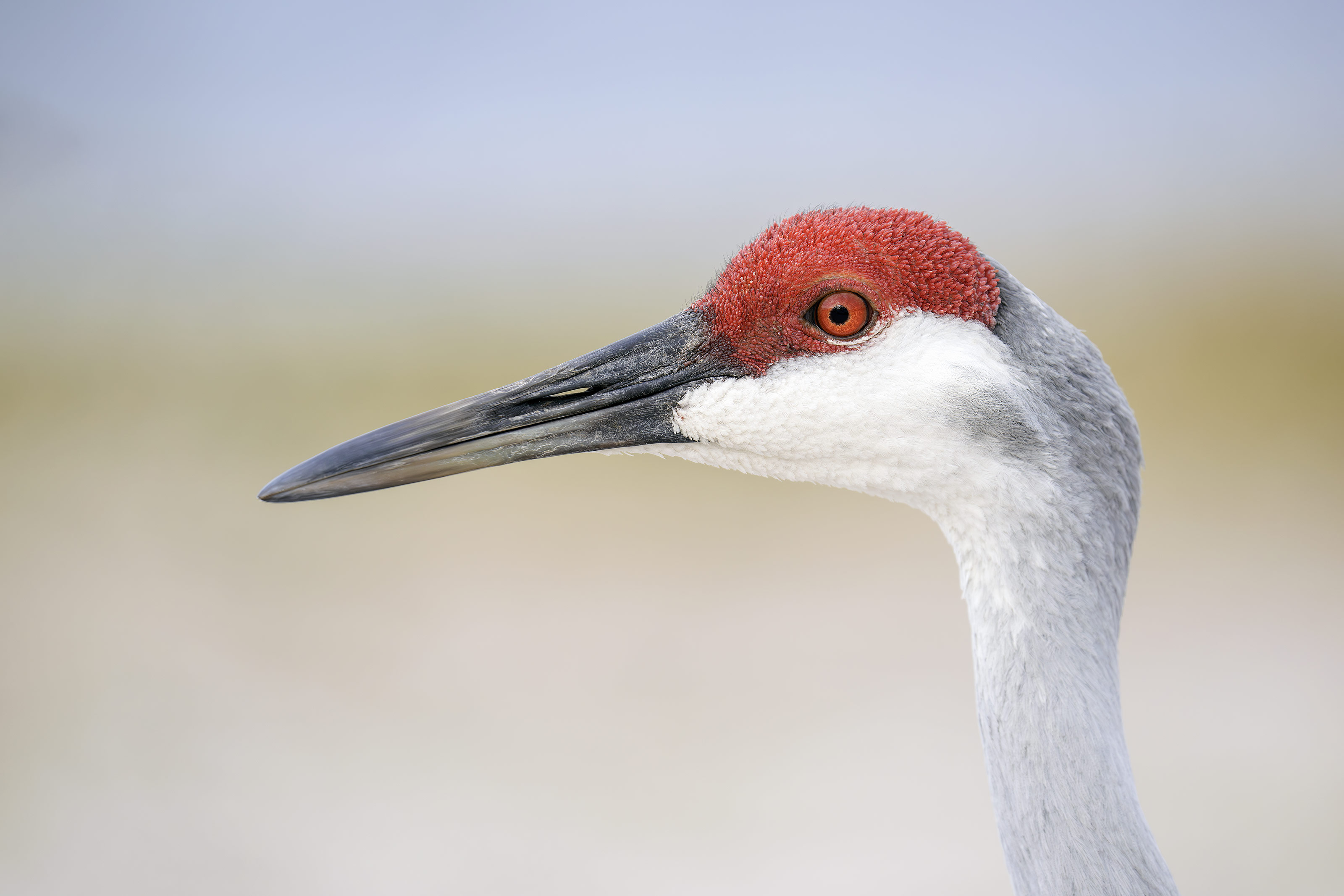
This image was created on 30 January 2026 by yours truly at Indian Lake Estates, FL. Standing on sand beach south of the pier, I used the handheld Sony FE 200-600mm f/5.6-6.3 G OSS lens (at 553mm) and The Latest Greatest Sony Flagship Body, the a1 II Mirrorless Camera. The exposure was determined using Zebra technology with ISO on the Thumb Dial. ISO 1600. 1/800 second at f/6.3 (wide-open) in Manual Mode. AWB at 8:26:25am on a then cloudy morning. Tracking: Zone/AF-C with Bird-Eye/Face Detection performed perfectly. Click on the image to enjoy the larger, inexplicably sharper high-res version. Image #1: Sandhill Crane head portrait in soft light
|
Soft Light and Soft Backgrounds
Friday began cloudy dark so I did not head down to the lake until after 8:00am when things began to brighten up. With an a-1 ii on both the 400-800 and my 200-600, I opted for the 2-6 early on as the cranes are tame and the light levels were low. Selecting a reasonable shutter speed for a given situation is the first step in the photographic process. Choosing an intermediate shutter speed — 1/800 second, allowed me to expose to the right with a more than reasonable ISO of 1600. I like the perfectly square head angle that left the eye and the bill tip sharp. And I love the soft light and the completely defocused background. The word on the street is that you cannot achieve lovely soft backgrounds with slow lenses like the 2-6, f/6.3 at the long end, or the 4-8, f/8 at the long end. Folks need to realize that the distance from the subject to the background has far more effect on the background than the aperture.
|
|
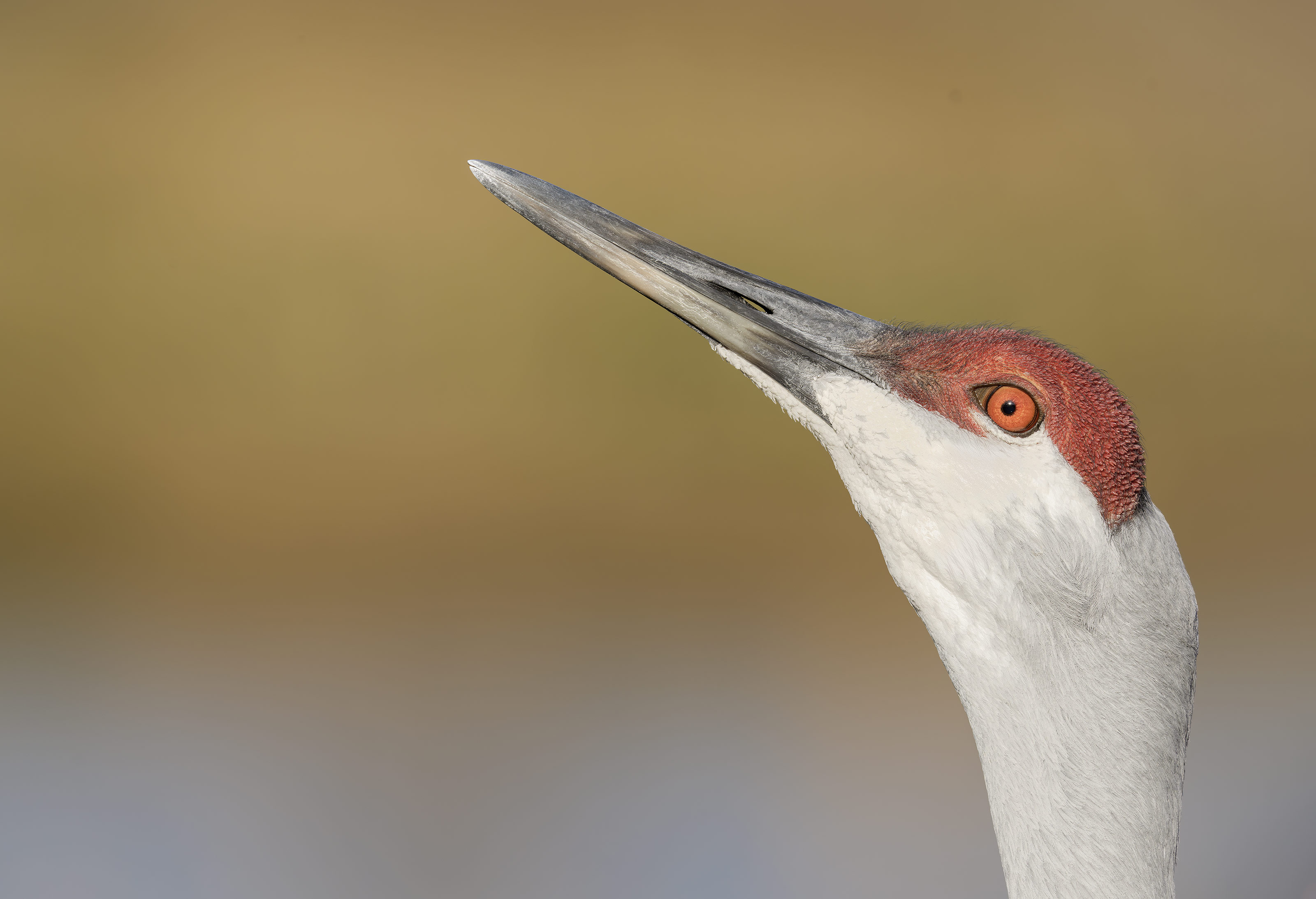
This image was also created on 30 January 2026 by yours truly at Indian Lake Estates, FL. Seated in the driver’s seat of my SUV just north of the boat ramp, I used the BLUBB-supported Sony FE 400-800mm f/6.3-8 G OSS lens (Sony E) (at 720mm) and The Latest Greatest Sony Flagship Body, the a1 II Mirrorless Camera. The exposure was determined via Zebras with ISO on the Thumb Wheel. ISO 800: 1/1250 sec. at f/9 (stopped down 1/3-stop) in Manual mode. AWB at 8:54:56am on then party sunny morning. Tracking: Zone/AF-C with Bird-Eye/Face Detection performed perfectly. Click on the image to enjoy the larger, inexplicably sharper high-res version. Image #2: Sandhill Crane female sky pointing |
Mis-reading the Situation
I am not sure why, but when the female crane began looking up at the sky I assumed that she was looking at a bird flying by overhead. As the sun was peeking through the clouds, I went to f/9 to add just a bit more depth of field at close range. I was stunned when the female turned to the north and walked in that direction while spreading her wings I knew that she was inviting the male to copulate. He accepted and I was caught with my pants down.
|
|
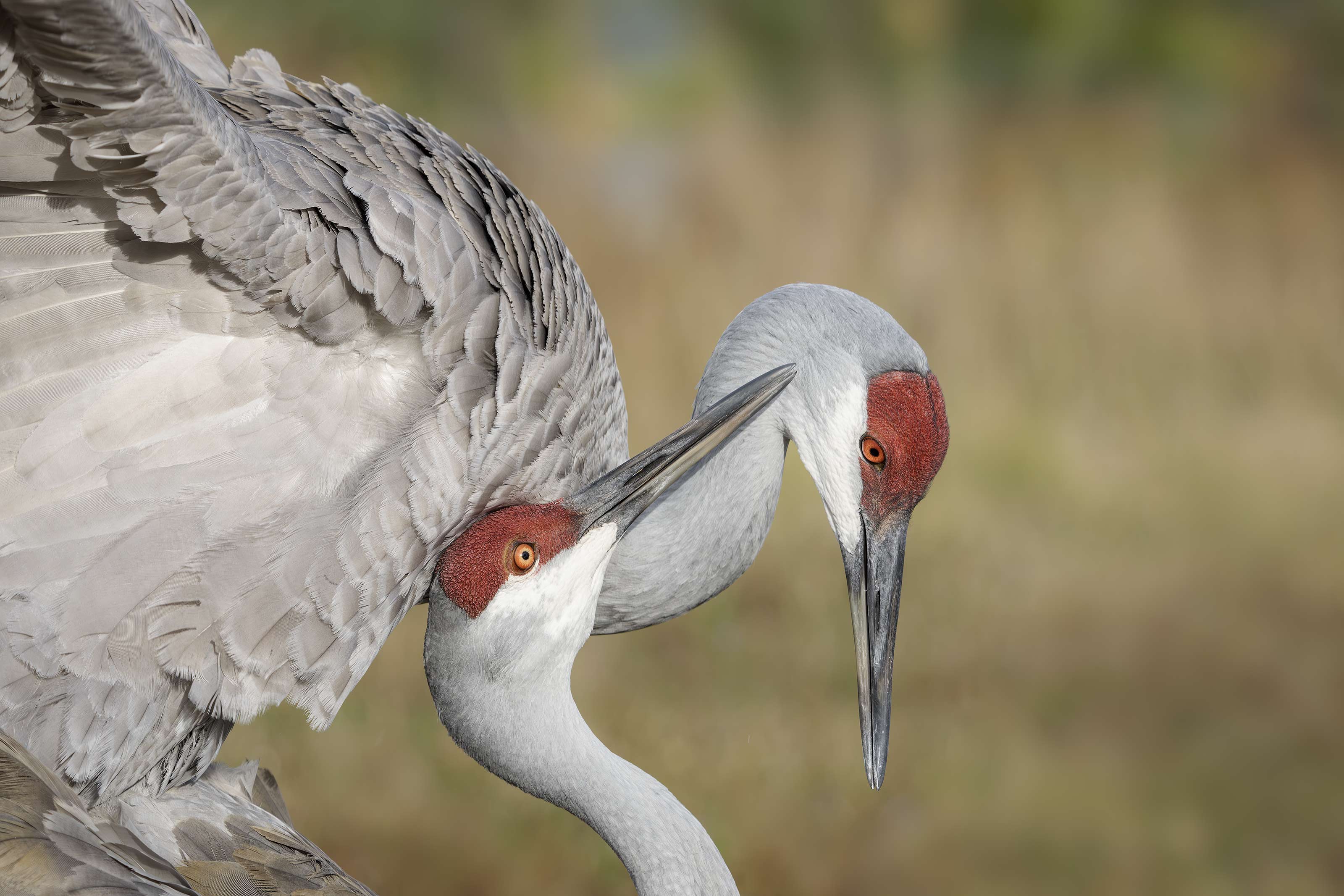
This image was also created on 30 January 2026 by yours truly at Indian Lake Estates, FL. Seated in the driver’s seat of my SUV just north of the boat ramp, I used the BLUBB-supported Sony FE 400-800mm f/6.3-8 G OSS lens (Sony E) (at 400mm) and The Latest Greatest Sony Flagship Body, the a1 II Mirrorless Camera. The exposure was determined via Zebras with ISO on the Thumb Wheel. ISO 800: 1/800 sec. at f/9 (stopped down 1/3-stop) in Manual mode. AWB at 8:55:30 am on then cloudy morning. Tracking: Zone/AF-C with Bird-Eye/Face Detection performed perfectly. Click on the image to enjoy the larger, inexplicably sharper high-res version. Image #3: Sandhill Cranes copulating — intimate heads portrait |
What to Do?
The birds were facing away from me as they began to copulate. On the surface, it seemed that the 400 to 800 lens was too long. As the birds turned to face north, I zoomed out to the max (400mm). And as a cloud had covered the sun, I halved my shutter speed. The most important things that I did were to acquire focus, press and hold the shutter button, and trust the AF system in a near-impossible situation.
As you see in the video at the 13:59 mark, the first images in the series were all terrible. The birds however, chose to help me out by turning slightly to the northeast. Adapting quickly and shooting aggressively resulted in two very special and intimate images.
|
|
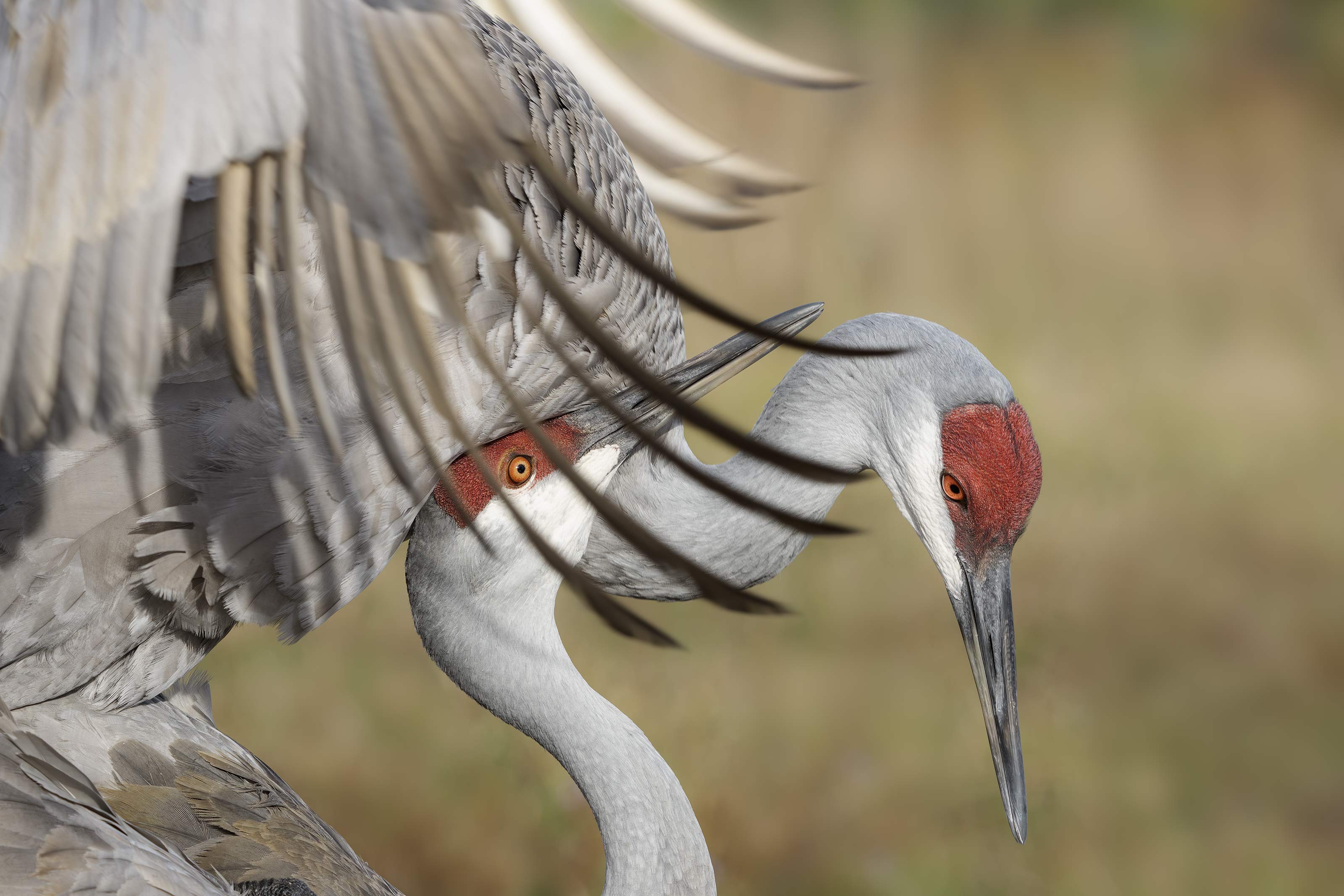
This image was also created on 30 January 2026 by yours truly at Indian Lake Estates, FL. Seated in the driver’s seat of my SUV just north of the boat ramp, I used the BLUBB-supported Sony FE 400-800mm f/6.3-8 G OSS lens (Sony E) (at 400mm) and The Latest Greatest Sony Flagship Body, the a1 II Mirrorless Camera. The exposure was determined via Zebras with ISO on the Thumb Wheel. ISO 800: 1/800 sec. at f/9 (stopped down 1/3-stop) in Manual mode. AWB at 8:55:30 am on then cloudy morning. Tracking: Zone/AF-C with Bird-Eye/Face Detection performed perfectly. Click on the image to enjoy the larger, inexplicably sharper high-res version. Image #4: Sandhill Cranes copulating — intimate heads portrait with wing flap |
Peeking Through the Primary Feathers
When a bird is flapping its wings, often after bathing, it is not uncommon to come up with an image where an eye is totally clear of the splayed primary feathers. I’ve made similar images of a single crane flapping in place, but never one of a copulating pair with the eye of the female perfectly visible behind the male’s primary feathers. One perfect image is always a blessing.
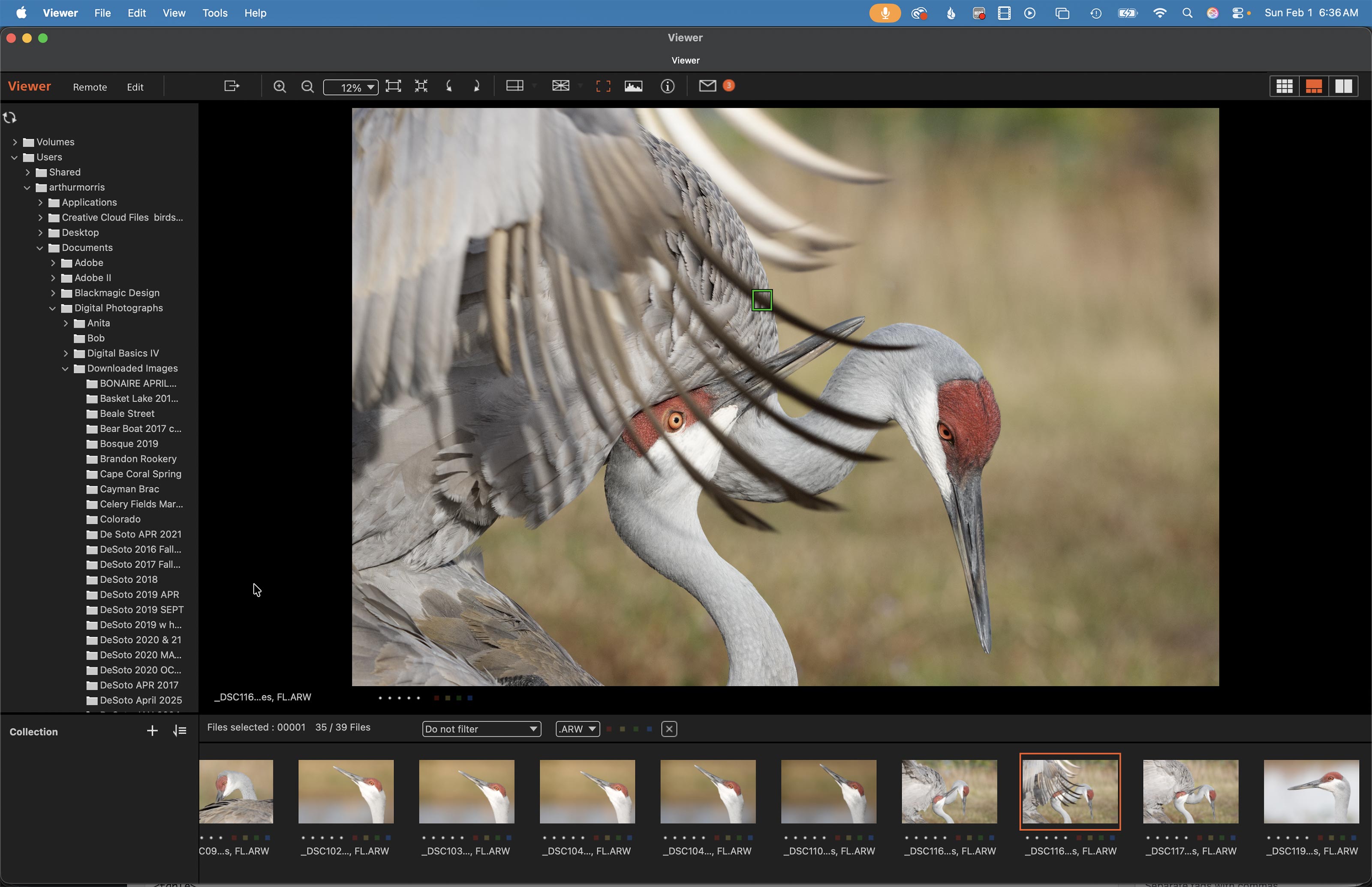
|
|
Note the location of the tiny green AF square on the middle of the male’s first primary. That is not where the system focused … The IEDT Viewer screen capture |
Kudos to the a-1 ii AF System
Though Viewer, part of Sony’s Imaging Edge Desktop (IEDT) program, showed that the active AF point was on the middle of the male’s first primary, it clearly was not; the eyes of both cranes are sharp. This proves my long-held belief that the systems that record the position of the AF point with high end mirrorless camera bodies is often not capable of keeping up with the actual location of the AF point, especially in extremely challenging situations.
|
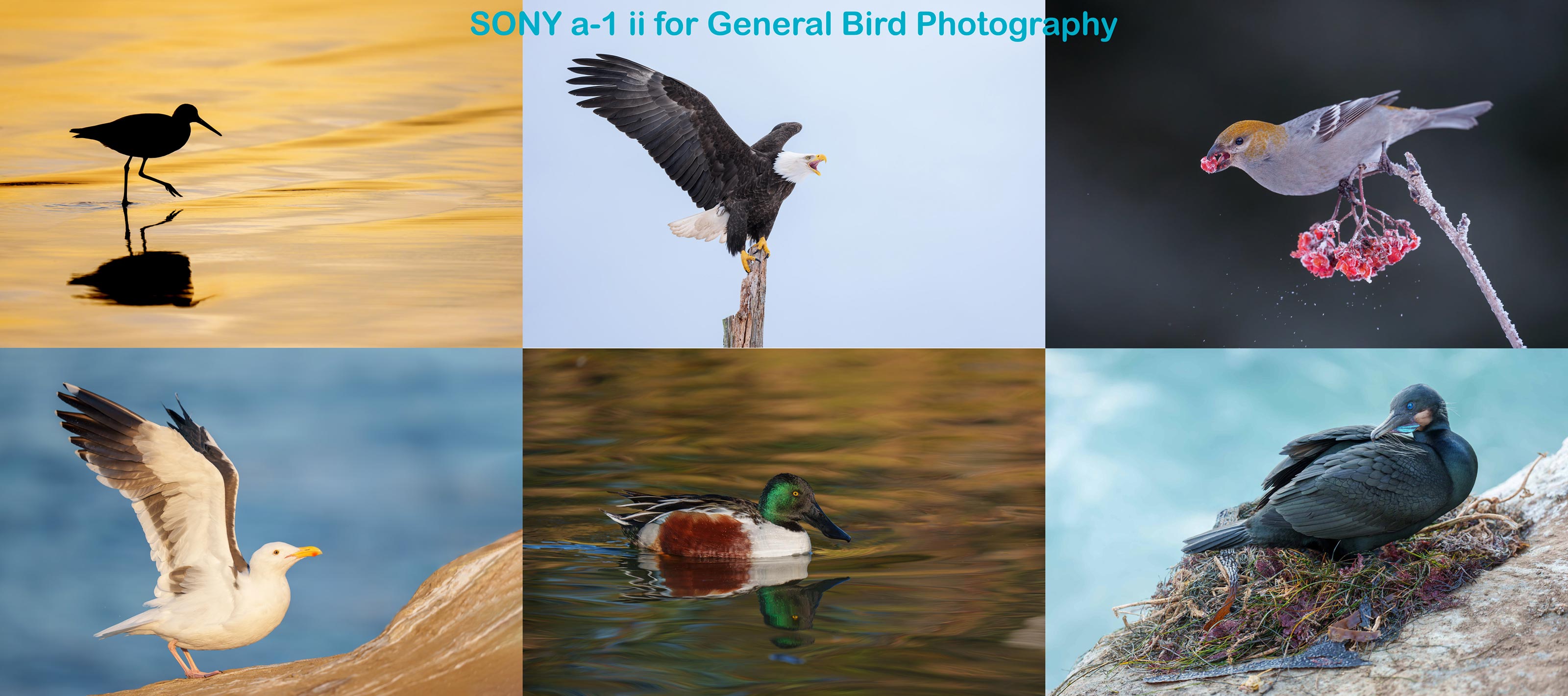
Composite #1: All with the a-1 ii Mirrorless Camera body.
|
The a-1 ii for General Bird Photography
I have found that eye-tracking for general bird photography with the a-1 ii is far, far better than with the original Sony a-1. It grabs the eye and tracks it faster and far more consistently and focus is rarely lost, even with backgrounds other than sky.
|
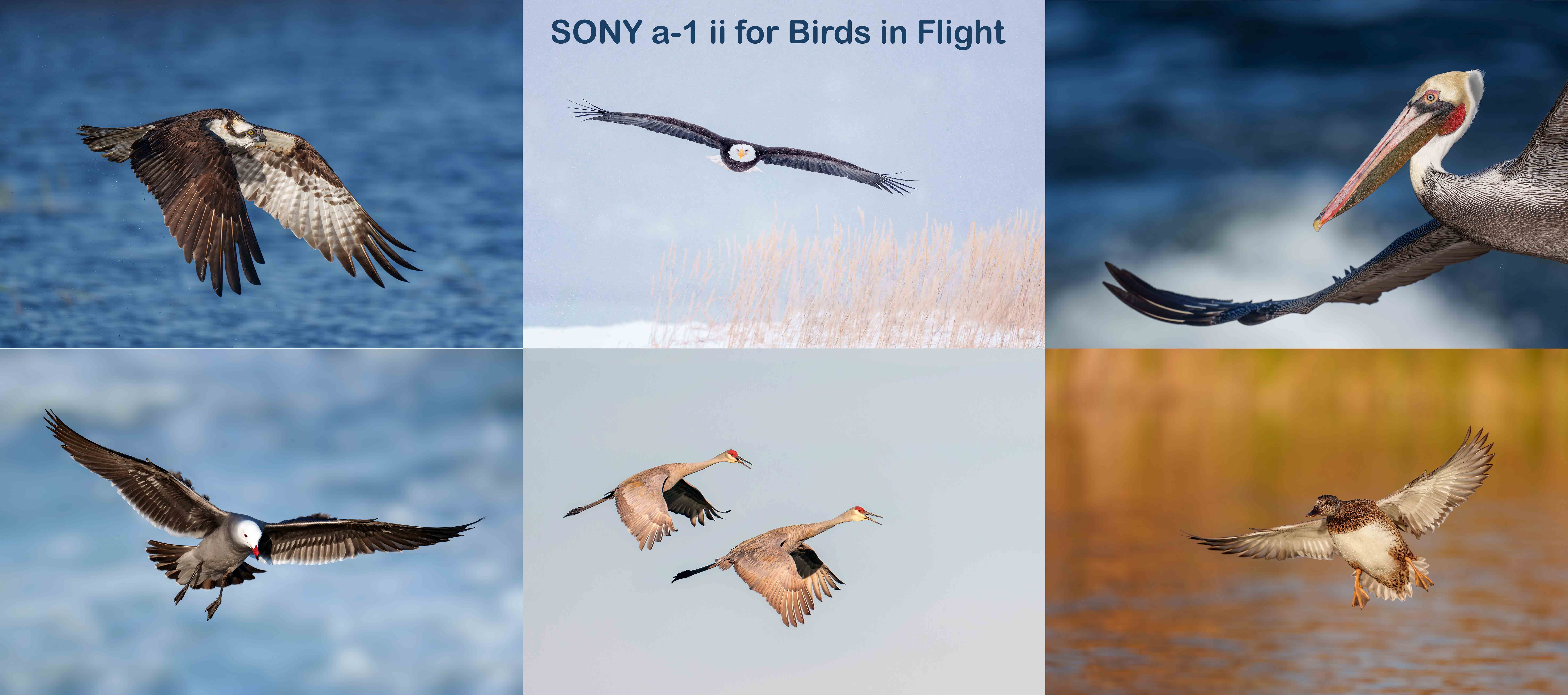
Composite #2: All with the a-1 ii Mirrorless Camera body.
|
The a-1 ii for Birds in Flight
For birds in flight, the a-1 ii Mirrorless Camera body has no equal. As Arash Hazeghi says, “It is better than the a-1.” When I am late getting on a bird in flight, I have consistently been amazed at how often the AF system of the a-1 ii finds and tracks the bird’s eye.
|
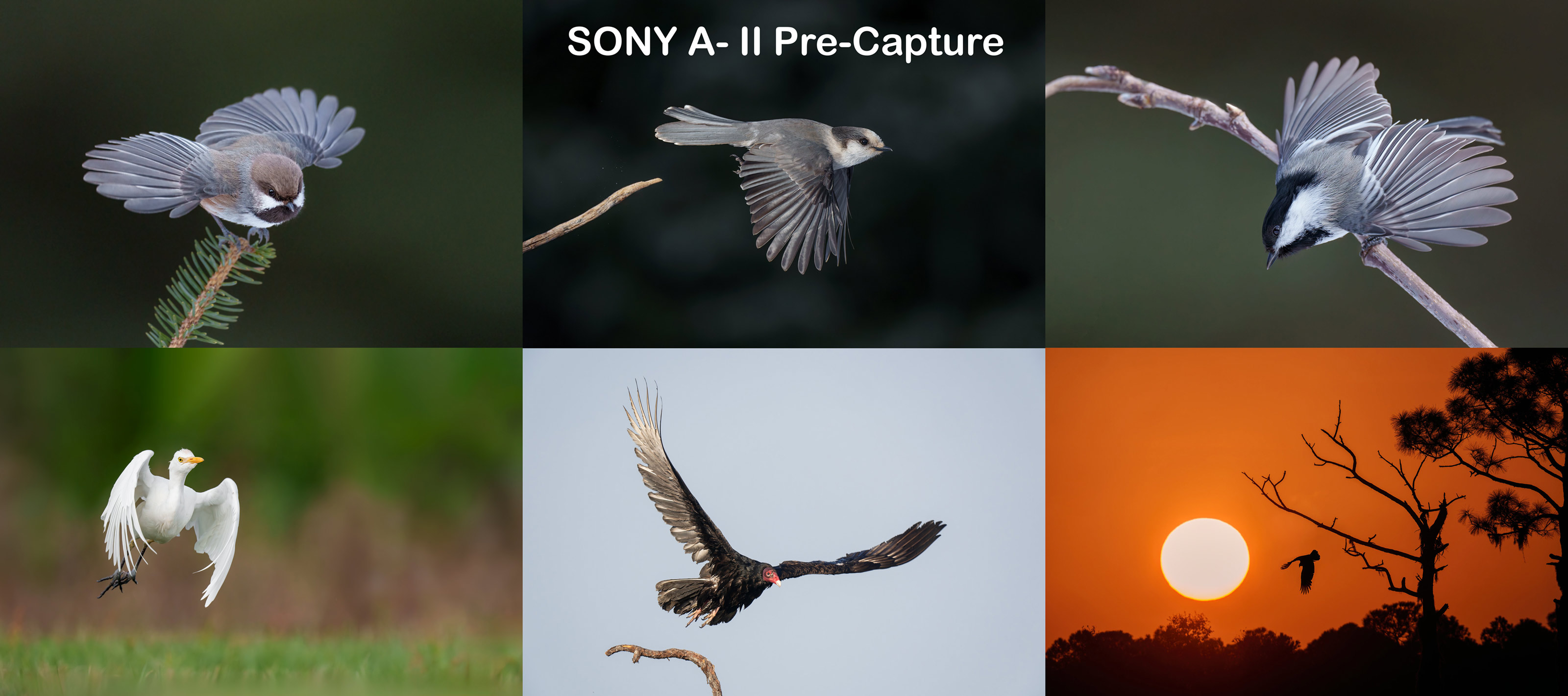
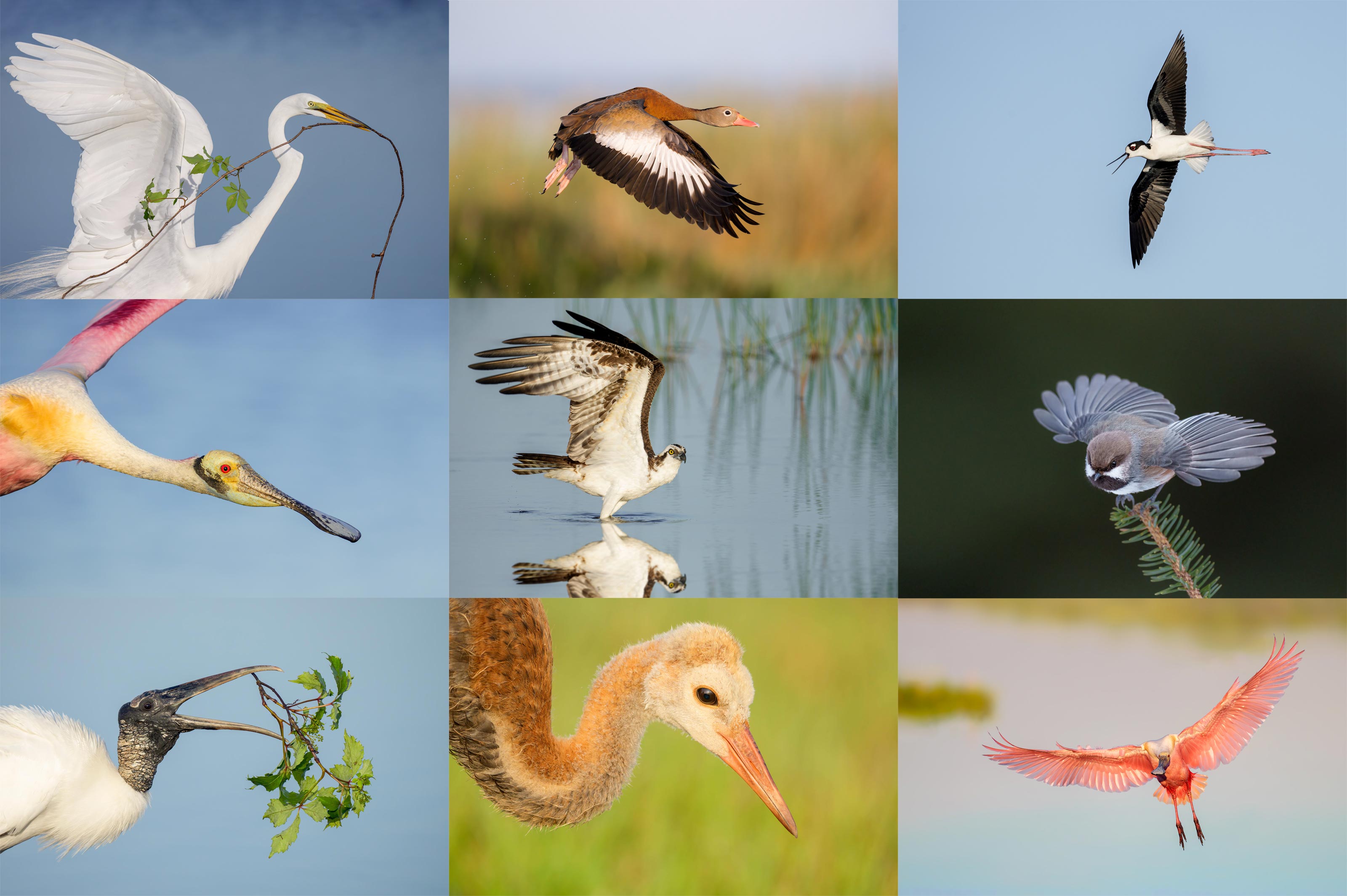
Composite #3: All the result of using Pre-Capture with the a-1 ii Mirrorless Camera body.
|
Pre-Capture with the Sony a-1 ii
When it comes to Pre-Capture with the a-1 ii Mirrorless Camera body, Arash and I agree 100%. And with my slower reflexes, Pre-Capture is more important for me than it is for Arash. Understand that in each of the images in Composite #3, I did not push the shutter button until after the bird took flight!
|
All with the a-1 ii Mirrorless Camera body.
|
Purchasing or Upgrading to a Sony a-1 ii
The Sony a-1 ii e-Mail Set-up and Info Guide
I now own and use two Sony a-1 ii bodies. Every day that I use them, the more I am amazed by speed and accuracy of the Bird Face-Eye tracking in AF-C and the overall performance of the camera.
Aside from the improved ergonomics as compared to the a-1, other nice features include the fact that the rear screen tilts both ways — the lack of a tilting rear screen on the original a-1 always ticked me off. Pre-capture has proven to be a huge plus almost exclusively for take-off flight images. In my opinion, the Speed Boost feature is a total waste for bird photography because you should always be utilizing the maximum frame rate. In addition, the resolution on the rear monitor has been improved dramatically. I must mention again that Bird Face-Eye tracking on the a-1 ii is vastly improved as compared to both the a-1 and the a9 iii and that the 51MP files are to die for.
So, the big question is, is the a-1 ii “worth” a gear upgrade. Remembering that I can never know whether or not something is worth it to you, I can say that I was not floored when first using my a-1 ii. The differences between the a-1 ii and the original a-1, seemed to be neither huge nor eye-opening. But over time, I have come to realize that I was 100% wrong. The huge difference between the new camera body and the a9 iii is, of course, the 51MP a-1 raw files (as compared to the 24MP files rendered by the a9 iii).
The price of a new a-1 is $5,898.00. The price of a new a-1 ii is $1,100.00 more: $6,998.00. As the a-1 ii is clearly far superior for bird photography to the original a-1, the choice for folks new to Sony or for those upgrading from lesser Sony camera bodies is an easy one. Prices for used a-1 bodies has not dropped drastically as I anticipated. At this point, a-1 folks who like showing flight and action and can afford an a-1 ii, are advised to purchase an a-1 ii. Please remember that life is short; we only get one ride on the merry-go-round.
If you do purchase an a-1 ii, be sure to use one of my two affiliate links so that you will receive my a-1 ii settings (in the form of a CAMSEa1ii.DAT file), the Buttons and Dials Guide, and an Info Sheet for free. Using my links will never cost you one penny and may actually save you some money. Folks who do not purchase their new a-i using my B&H link or from Bedfords here and entering the BIRDSASART discount code at checkout will be able to purchase the a-1 ii guide for $244.93. If you are at all confused and do not want to screw up your order, please get in touch via e-mail. If you would like to chat about upgrading, shoot me a text to 863-221-2372 and LMK a good time to call you.
Typos
With all blog posts, feel free to e-mail or to leave a comment regarding any typos or errors.











As I scrolled, my favorite was image #1 over #2, due to the soft colors of the background. Then I got to #3. Ooh, new favorite – loved the intimate pose, but then I got to #4. Winner! The peek thru the feathers while maintaining eye contact with both subjects takes the cake. So in order of preference: #4, #3, #1, #2.
Thanks, Tom. You are the best. Your comment put a big smile on my face.
with love, artie
Here’s a request. Could you please make a video explaining “zebras”. I have a Canon but I have always been curious. You refer to them quite often.
Artie
Thank you on the picking your keepers I have learned over time how to so thank you my friend. My Favorite is #4, the one with the eye looking thru the primaries. The Turkey Vultures are feasting in areas of Florida I bet now after your historic cold. It is getting you ready for Homer 🙂
Always with love b
Thanks, Bob. On Sunday morning it was so cold that I was thinking about Homer. And I had my lined jeans on!
much love and see you when I get back from Homer.
a