
What’s Up?
The last morning of the recently concluded IPT was amazing. When we arrived in the dark (as usual) there was, as had been predicted, a 20mph NW wind in our faces. Not good for incoming spoonbills. By the time the skies brightened, the wind speed — miraculously, had dropped considerably and the direction had switched to the NE! Perfect.
Nora Kane, Steve Shore, and Kevin Hice were all happy at the conclusion of the second Stick Marsh IPT as everyone learned a ton and ended up with many dozens of superb images along with about 15 screen captured image optimizations of their best work. Kevin and Colleen continued on to Indian Lake Estates for a short visit before they begin driving back to their new home in Indiana.
We have an embarrassment of riches here at ILE. After discovering a new pair of small crane chicks last evening, we now have four families with seven young ranging from the week-old chicks we came across last night to the colt at the north end of the lakefront. Not to mention the eagle family with two fledged young and the Barred Owl pair. The Black-bellied Whistling Ducks should be frequenting the bay south of the pier quite soon. And oh, I almost forgot that a male Snail Kite has been hanging around the pier regularly and catching snails. We are hoping that it finds a mate soon. Bob and Kevin waded out into the lake yesterday afternoon to put up a skinny perch for the kite …
Today is Tuesday 31 March 2026. Bob Eastman, Kevin, and I will be headed down to the lake early. The forecast is for early cloudy with a gentle wind from the east.
It is likely that Bob Eastman will be heading home on Wednesday to look after his brother who is having heart surgery very soon. I will miss Bob greatly as he is a great friend and his help has been invaluable. Good luck of course to his brother. Kevin and Colleen and I are planning on visiting Wakodahatchee Wetlands on Wednesday morning.
If an item — a Delkin flash card or reader, a Levered-clamp FlexShooter Pro, or a Wimberley lens plate or low foot — for example, that is available from B&H and/or Bedfords, is also available in the BAA Online Store, it would be great, and greatly appreciated, if you would opt to purchase from us. We will match or beat any price. Please remember also to use my B&H affiliate links or to earn 3% cash back at Bedford by using the BIRDSASART discount code at checkout for your major gear purchases. Doing either often earns you free guides and/or discounts. And always earns my great appreciation.
Gear Questions and Advice
Too many folks attending BAA IPTs and dozens of photographers whom I see in the field and on BirdPhotographer’s.Net, are — out of ignorance — using the wrong gear, especially when it comes to tripods and more especially, tripod heads. And the same is true in spades when ordering new camera bodies or lenses. My advice will often save you some serious money and may help you avoid making a seriously bad choice. Please know that I am always glad to answer your gear questions via e-mail. If you are in a hurry, you can try me on my cell at 863-221-2372. Please leave a message and shoot me a text if I do not pick up.
IPT Updates
I was thrilled to learn that multiple Homer IPT veteran Chris Loffredo will be joining the second 2027 San Diego IPT and that long-ago IPT veteran Jon Sostarich and multiple IPT veteran Mike De Rosa will be attending the first 2027 Homer IPT and both songbird days. See the complete details here.
San Diego IPT #1: 4 1/2 DAYS: WED 6 JAN thru the morning session on SUN 10 JAN 2027: $2699.00. Deposit: $699.00. Limit: 5 photographers.
San Diego IPT #2: 4 1/2 DAYS: TEUS 19 JAN thru the morning session on SAT 23 JAN 2027: $2699.00. Limit: 5 photographers/Openings: 4.
Anchor Point Songbird Days: WED 10 FEB & TUES 11 FEB 2027. Full day: $500/day.
Homer IPT #1: FRI 12 FEB 2027 through the full day on TUES 16 FEB 2027. Five days/20 hours on the boat: $5900.00. Limit 5 photographers/Openings: 1
Homer IPT #2: WED 17 FEB 2027 through the full day on SUN 21 FEB 2027. Five days/20 hours on the boat: $5900.00. Limit 5 photographers/Openings: 2
Dates for the three 2027 Stick Marsh IPTs will be announced here soon.
|
|
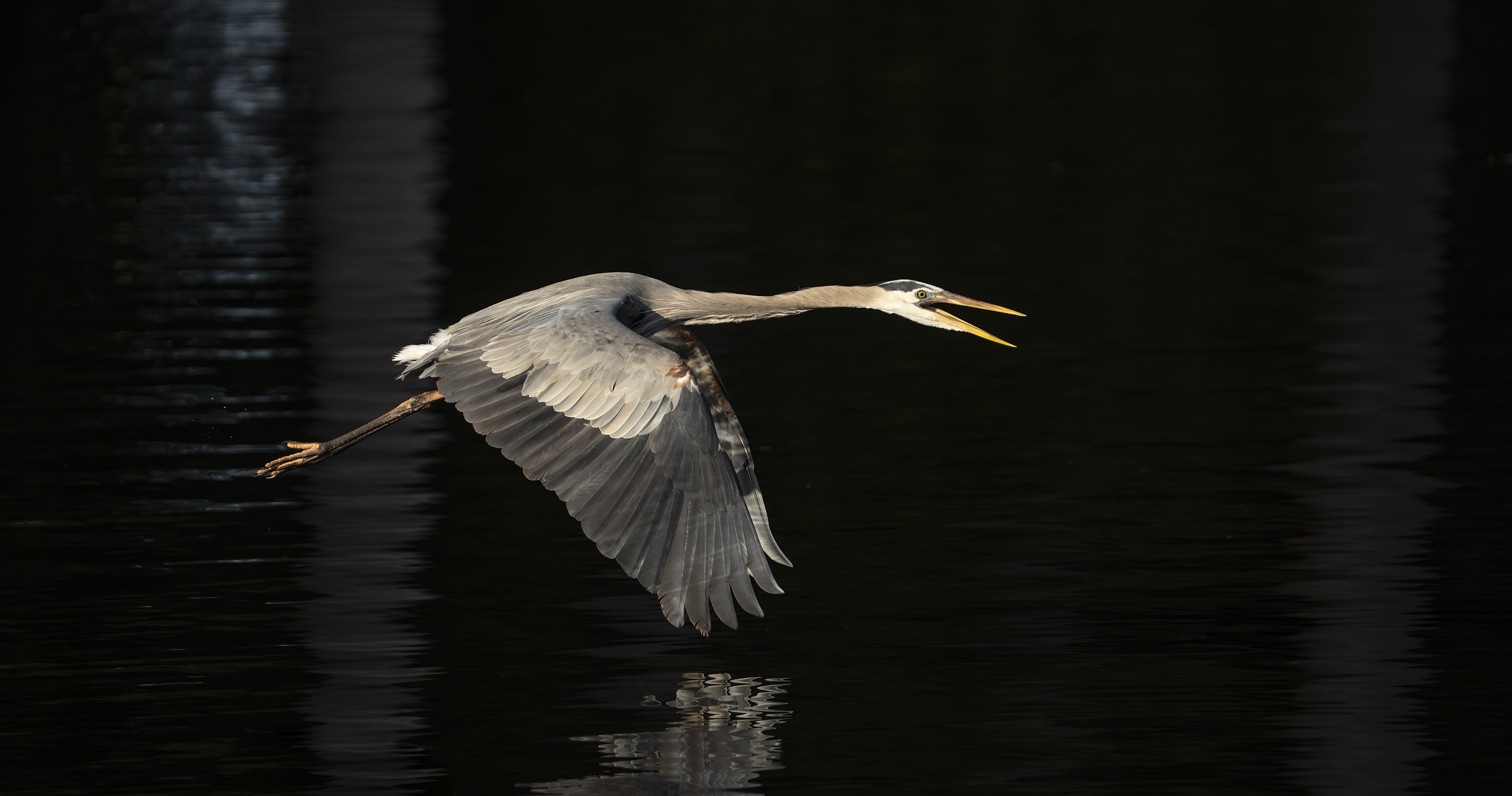
This image was created on 8 March 2026 at Fellsmere, FL on the first 2026 Stick Marsh IPT by my good friend and assistant Bob Eastman. Standing at full height he used the handheld Sony FE 200-600mm f/5.6-6.3 G OSS lens (at 600mm) and The One, the Sony Alpha 1 Mirrorless digital camera. ) The exposure was determined using Zebra technology with ISO on the Thumb Dial. ISO 500. 1/4000 second at f/6.3 (wide-open) in Manual Mode. AWB at 8:00:29am on sunny morning. Tracking: Spot (XS) AF-C with Bird Face/Eye Detection performed perfectly. Be sure to click on the image to enjoy a high-res version. Image #1: Great Blue Heron flying low over black water
|
The Stick Marsh IPTs: They Ain’t Just For Spoonbills!
While the point blank incoming Roseate Spoonbills are surely the stars of the show at Stick Marsh in spring, there is lots more to photograph. Great blues rarely come to the airboat ramp but those who explore the area a bit will surely get to photograph this species. Most years, in addition to the spoonies, we usually get some good or great chances on Great Egret, Cattle Egret, Snowy Egret, Little Blue Heron, Anhinga, Wood Stork, White Ibis, Limpkin, Double-crested Cormorant, both vulture species, Osprey, Snail Kite, Boat-tailed Grackle, Fish Crow, Red-bellied Woodpecker, and Palm Warbler. This year two Brown Pelicans posed at the bottom of the airboat ramp. Afternoons at Sebastian Inlet can offer a variety of shorebirds including Ruddy Turnstone, Willet, Semipalmated Sandpiper, and Sanderling. Many of the species we see at Stick Marsh are present as well. In addition, you can add Royal, Forster’s and Caspian Tern along with Ring-billed and Lesser Black-back Gulls. Not to mention some pretty cool landscape opportunities.
|
|
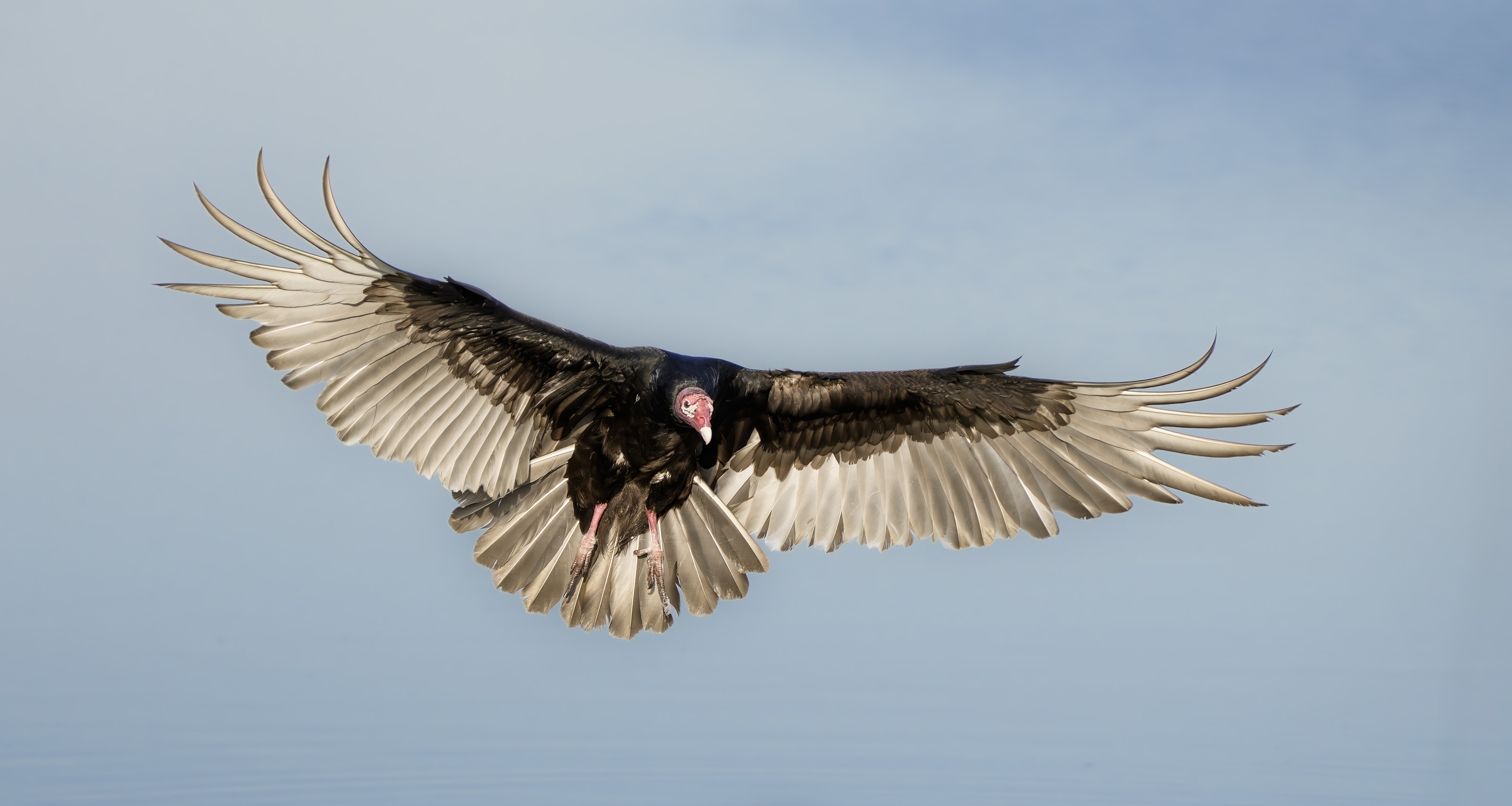
This image was created on 25 March 2026 by Nora Boyd at Fellsmere, FL on the second 2026 Stick Marsh IPT. Seated on a milk crate topped by an old pillow, she used the handheld Sony FE 70-200mm f/2.8 GM OSS II Lens with the Sony FE 2x Teleconverter (at 178mm) and The Latest Greatest Sony Flagship Body, the a1 II Mirrorless Camera. The exposure was determined via Zebras with ISO on the Thumb Wheel. ISO 1600: 1/3200 sec. at f/5.6 (wide open) in Manual mode. AWB at 8:46:35am on a sunny morning. Wide AF-C with Bird Eye/Face Detection enabled performed perfectly. Image #2: Turkey Vulture braking to land |
Kudos to Nora!
On her second 2026 IPT (San Diego and Stick Marsh), Nora Kane continued to develop her bird photography skills. She made the best by far Turkey Vulture image by zooming out perfectly and nailing both the focus and the exposure.
|
|
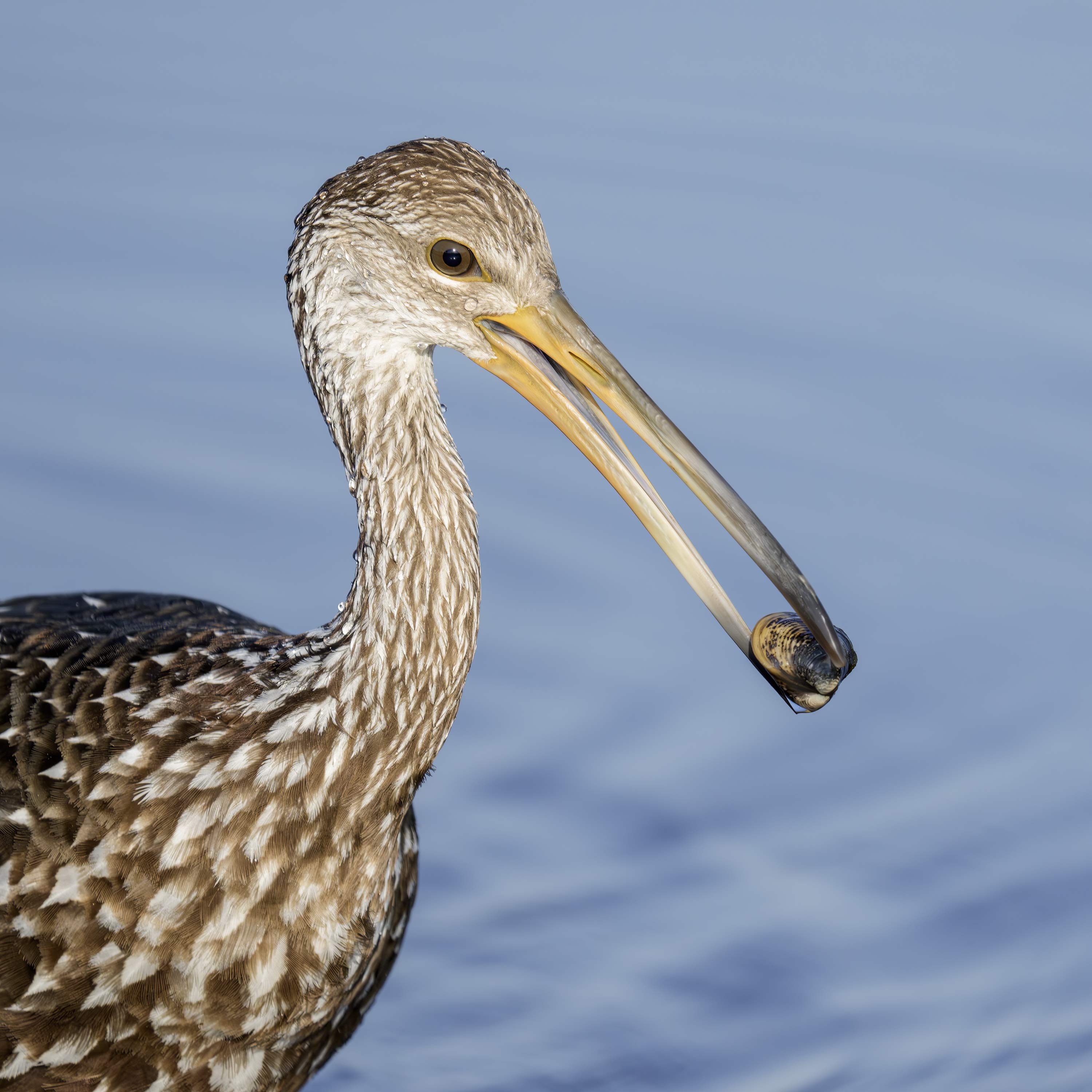
This image was created on 25 March 2026 by yours truly at Fellsmere, FL on the second 2026 Stick Marsh IPT. Seated on a pillow, I used the lowered Robus RCM-439 4-Section Carbon Fiber Monopod, 65/Wimberley MonoGimbal Head-supported Sony FE 400-800mm f/6.3-8 G OSS lens (Sony E) (at 800mm) and The Latest Greatest Sony Flagship Body, the a1 II Mirrorless Camera. The exposure was determined via Zebras with ISO on the Thumb Wheel. ISO 2000: 1/2500 sec. at f/8 (wide open) in Manual mode. AWB at 8:58:53am on a sunny morning. Wide/AF-C with Bird-Eye/Face Detection performed perfectly. Click on the image to enjoy the larger, inexplicably sharper high-res version. Image #3: Limpkin with freshwater clam |
When the Light is Bright, Think Tight
As 9:00am approaches on clear sunny mornings, the quality of light is diminished to some degree. You have to deal with harsh shadows and bluer (cool) light. My strategy has always been to get close physically and then think tight and get right on sun angle. Having the sun right behind you with your shadow pointing right at the subject eliminates most of the shadows. This strategy paid off beautifully with this head portrait of a Limpkin. We had a Limpkin right in front of us most mornings on both 2026 Stick Marsh IPTs.
|
|
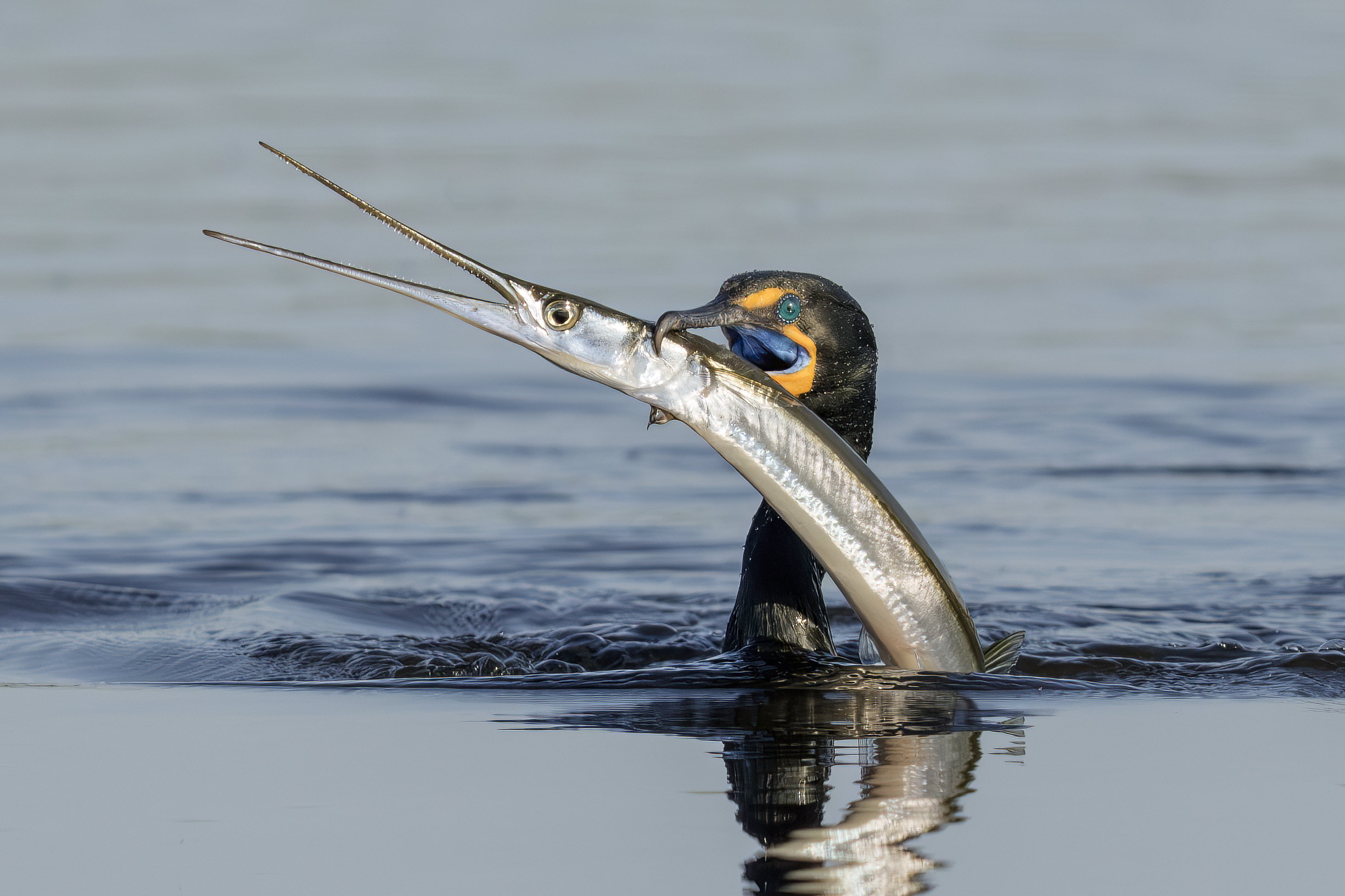
This image was created on 25 March 2026 at Fellsmere Grade Recreation Area, FL on the second Stick Marsh IPT. Seated on grass, I used the handheld Sony FE 400-800mm f/6.3-8 G OSS lens (Sony E) (at 800mm) and The Latest Greatest Sony Flagship Body, the a1 II Mirrorless Camera. The exposure was determined by Zebras with ISO on the rear wheel — ISO 1600: 1/3200 second at f/8 (wide open) in Manual mode. RawDigger showed that the exposure was perfect. AWB at 9::02:06am on then bright sunny morning. Tracking: Spot XS/AF-C with Bird-Eye/Face Detection performed perfectly. Click on the image to enjoy the larger, inexplicably sharper high-res version. Image #4: Double-crested Cormorant with Atlantic Needlefish |
400-800 Reach
While everyone in the group got on this bird and made some nice images, the 800mm reach of the Sony 4-8 got me lots more pixels on the subject and allowed for a healthy crop. This needlefish escaped but the cormorant caught another one that the bird subdued and swallowed whole. After making Image #4, I was standing by the rear hatch of my X5 when second needlefish went down the hatch. We had several similar chances on the ensuing days.
Watch Out!
As soon as I saw the cormorant struggling with the needlefish I called out to the group, “Watch out — do not overexpose the silver fish! The same is true when an Osprey grabs a Yellowfin Menhaden; you need to reduce the exposure one or two clicks, 13 to 2/3 of a stop to avoid toasting the silvery sides of the fish.
Atlantic Needlfish
“Atlantic Needlefish (Strongylura marina) can be found in freshwater in Florida, according to The Fisherman and the Florida Springs Institute. While they are typically marine and estuary species, they are known to venture into freshwater rivers, streams, and springs in Florida. Research also indicates that they can spawn in both freshwater and saltwater habitats.”
|
|
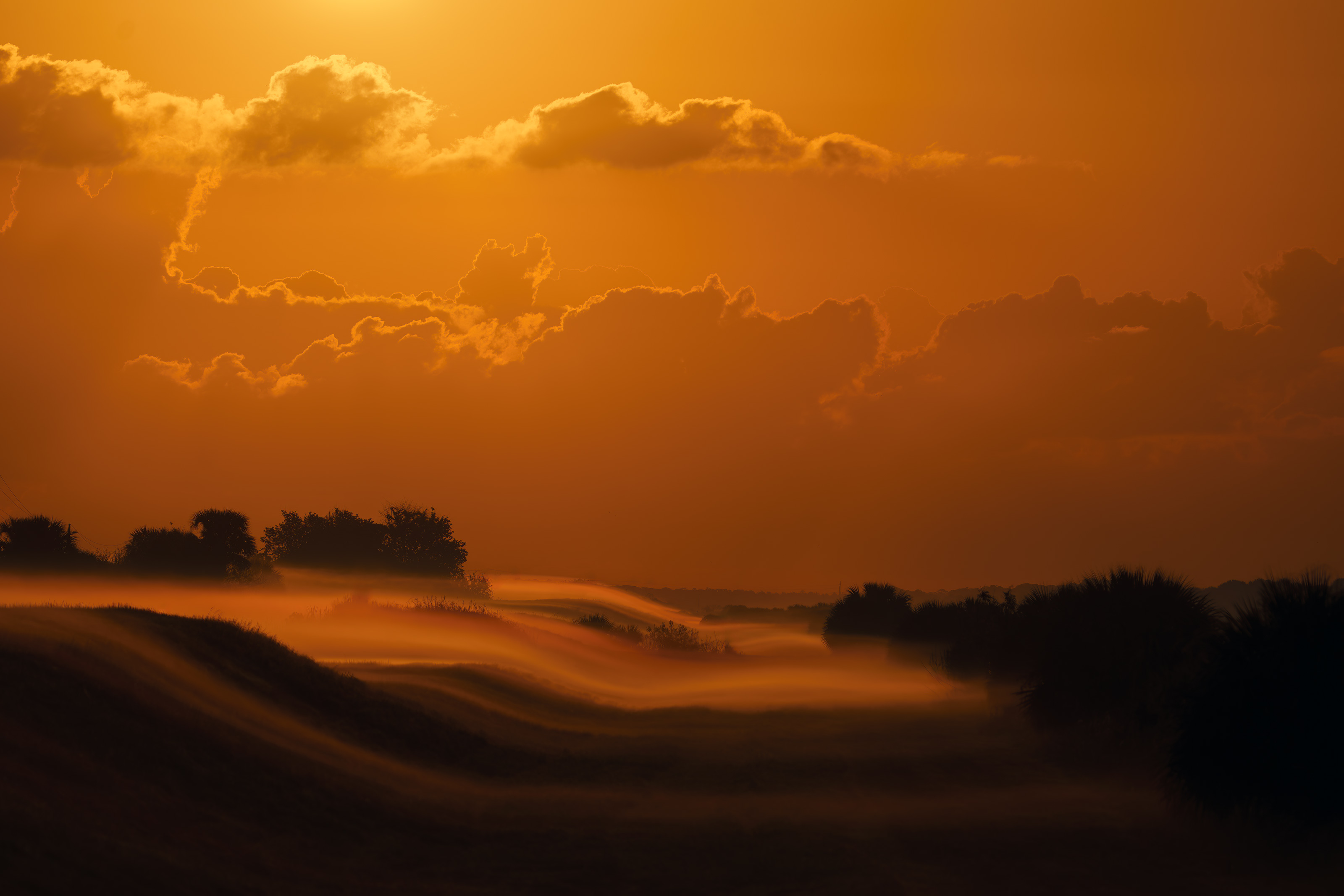
This image was created on 26 March 2026 at Fellsmere, FL on the second 2026 Stick Marsh IPT by my good friend and assistant Bob Eastman. Standing at full height he used the handheld Sony FE 200-600mm f/5.6-6.3 G OSS lens (at 344mm) and The One, the Sony Alpha 1 Mirrorless digital camera. ) The exposure was determined using Zebra technology with ISO on the Thumb Dial. ISO 100. 1/2500 second at f/6.3 (wide-open) in Manual Mode. AWB at 7:34:49am as the sun broke through the clouds and fog. Tracking: Spot (XS) AF-C with Bird Face/Eye Detection performed perfectly. Be sure to click on the image to enjoy a high-res version. Image #5: River of fog over canal
|
Telephoto Zoom Lenses for Landscape Pohtography
While many folks think of 16-35s and 24-105s for scenic photography, I have always enjoyed doing landscape photography with a telephoto zoom lens. Obviously Bob Eastman agrees. Bob is always on the move and is always ready with his trusty 200-600 and his venerable a-1. He moves around a lot in search of good stuff and is superb at finding new and different situations. With Image #5, he outdid himself!
|
|
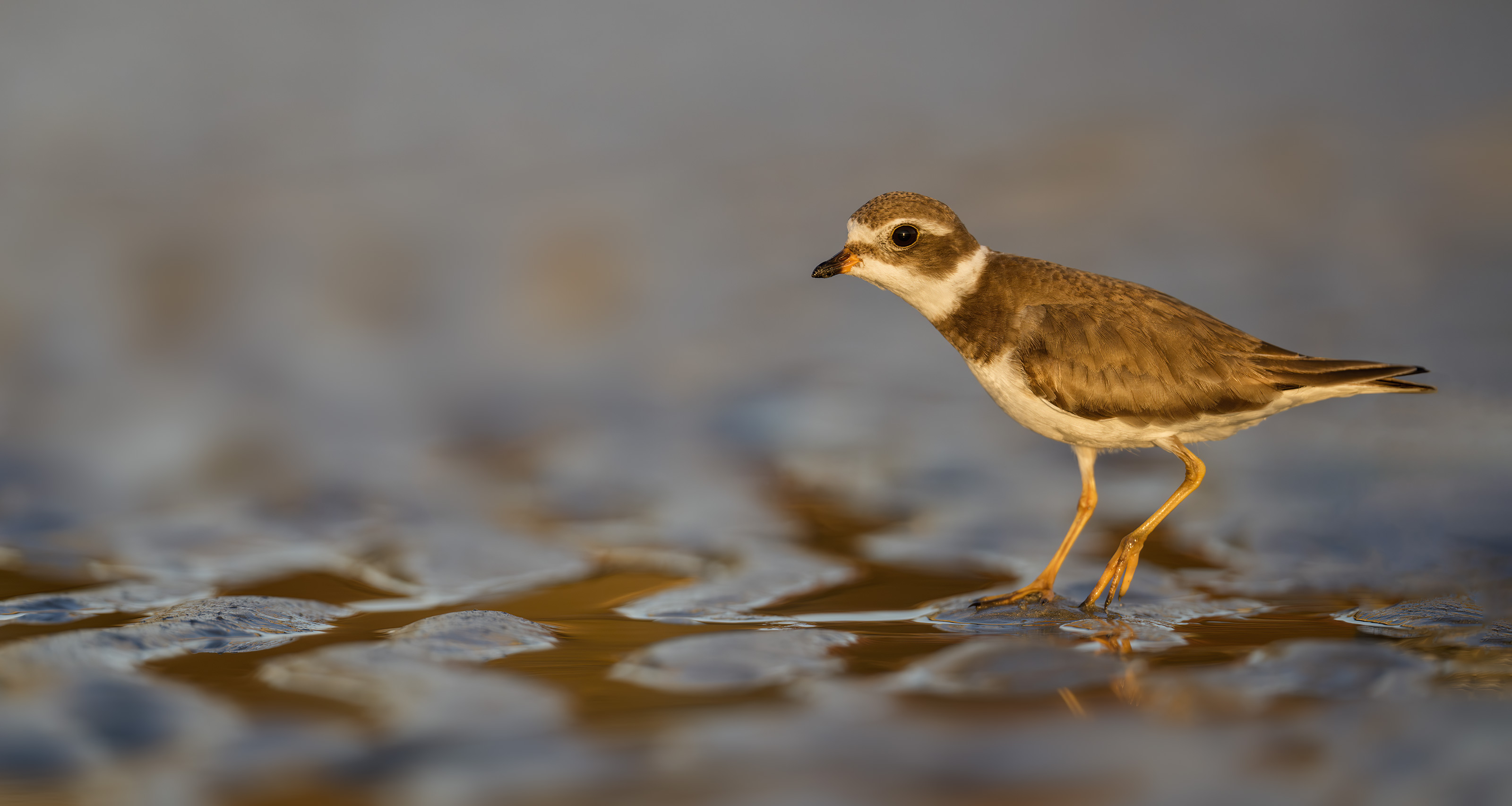
This image was created by my good friend Kevin Hice at Sebastian Inlet State Park on the second 2026 Stick Marsh IPT. Lying flat on wet mud (!) he used the handheld Sony FE 300mm f/2.8 GM OSS Lens (Sony E) with the Sony FE 1.4x Teleconverter (at 420mm) and the Latest Greatest Sony Flagship Body, the a1 II Mirrorless Camera. The exposure determined via Zebras with ISO on the Thumb Wheel. ISO 1000: 1/2000 sec. at f/4 (wide open) in Manual mode. AWB at 6:16:29pm on a cloudy-bright afternoon. Wide/AF-C with Bird Eye/Face Detection enabled performed perfectly. Click on the image to enjoy the larger, inexplicably sharper and warmer high-res version. Image #6: Semipalmated Plover looking alert |
Muddy Kevin!
On a low tide afternoon visit to Sebastian Inlet State Park, Kevin did not hesitate for one second. He lied flat down in the wet mud while handholding his 300mm f/4 GM at 420mm with the 1.4X TC. He had some good chances with the turnstones and the SEPLs. This was my favorite of his shorebird images. We created a Camtasia screen capture video of the image optimization during which we removed a large rock that merged with the bird’s tail.
|
|
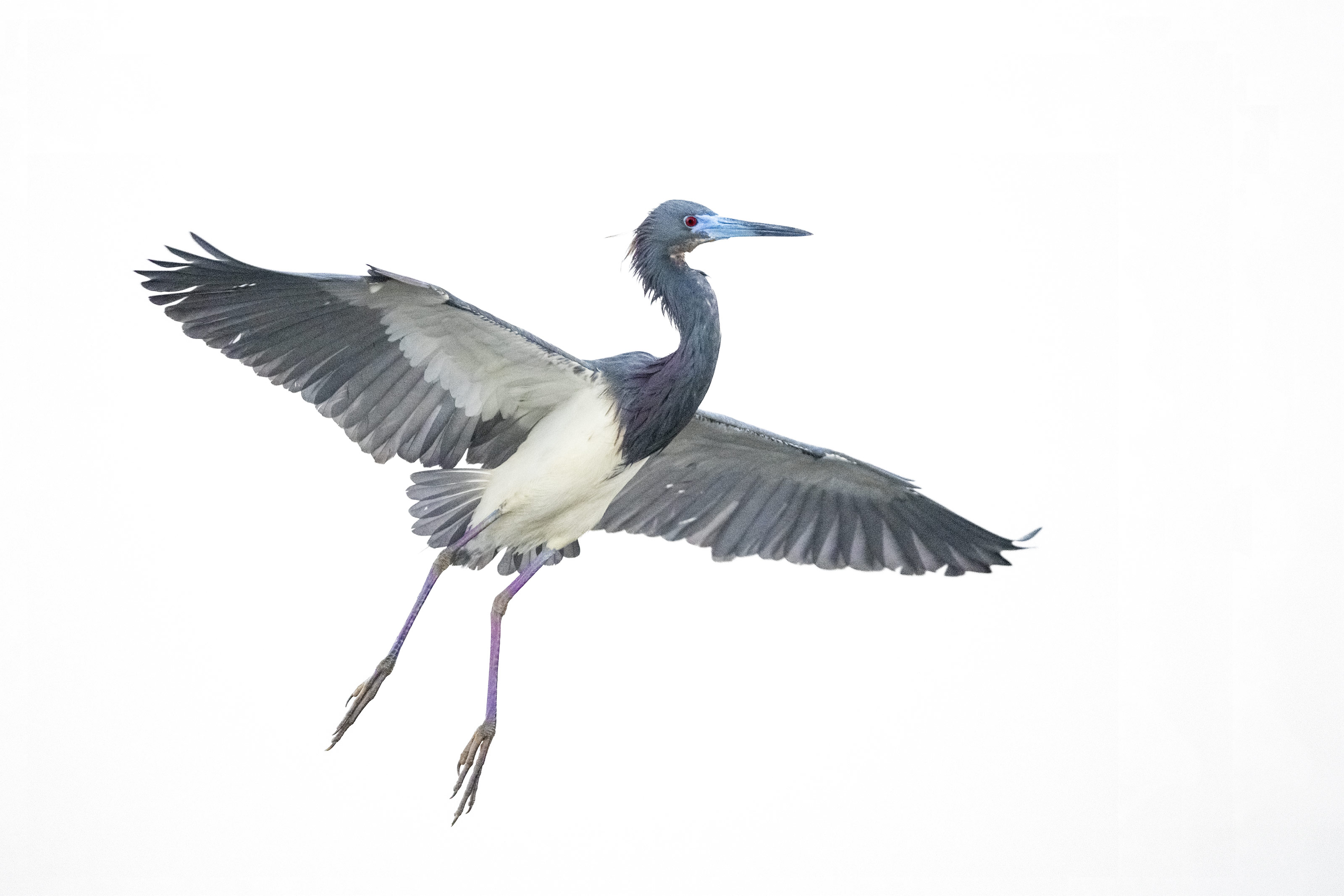
This image was created on 26 March 2026 at Fellsmere, FL on the second 2026 Stick Marsh IPT by my good friend and assistant Bob Eastman. Standing at full height he used the handheld Sony FE 200-600mm f/5.6-6.3 G OSS lens (at 344mm) and The One, the Sony Alpha 1 Mirrorless digital camera. ) The exposure was determined using Zebra technology with ISO on the Thumb Dial. ISO 8000. 1/1000 second at f/6.3 (wide-open) in Manual Mode. AWB at 7:19:18am on a then very cloudy, very dark morning. Tracking: Spot (XS) AF-C with Bird Face/Eye Detection performed perfectly. Be sure to click on the image to enjoy a high-res version. Image #7: Tricolored Heron — breeding plumage in flight
|
Mega Under-exposed Bob
This image was created pretty much in the dark. Though Bob sacrificed on shutter speed for flight at only 1/1000 seconds and used a very high ISO — 8000, this image was close to three stops underexposed. The result was a tremendous about of noise, especially color noise. So, I tried something new in Photoshop. I created an Adobe Camera Raw mask of the subject and played around with the Color Noise slider to completely eliminate the green and purple speckling that plagued the bird. Last, I created masks of the iris and the pupil to bring the eye to life. The basics of ACR masking are detailed in the Digital Basics IV Video Series. Better yet, save $86.00 and learn my complete and current digital workflow in The BIRDS AS ART Digital Basics Collection.
|
|
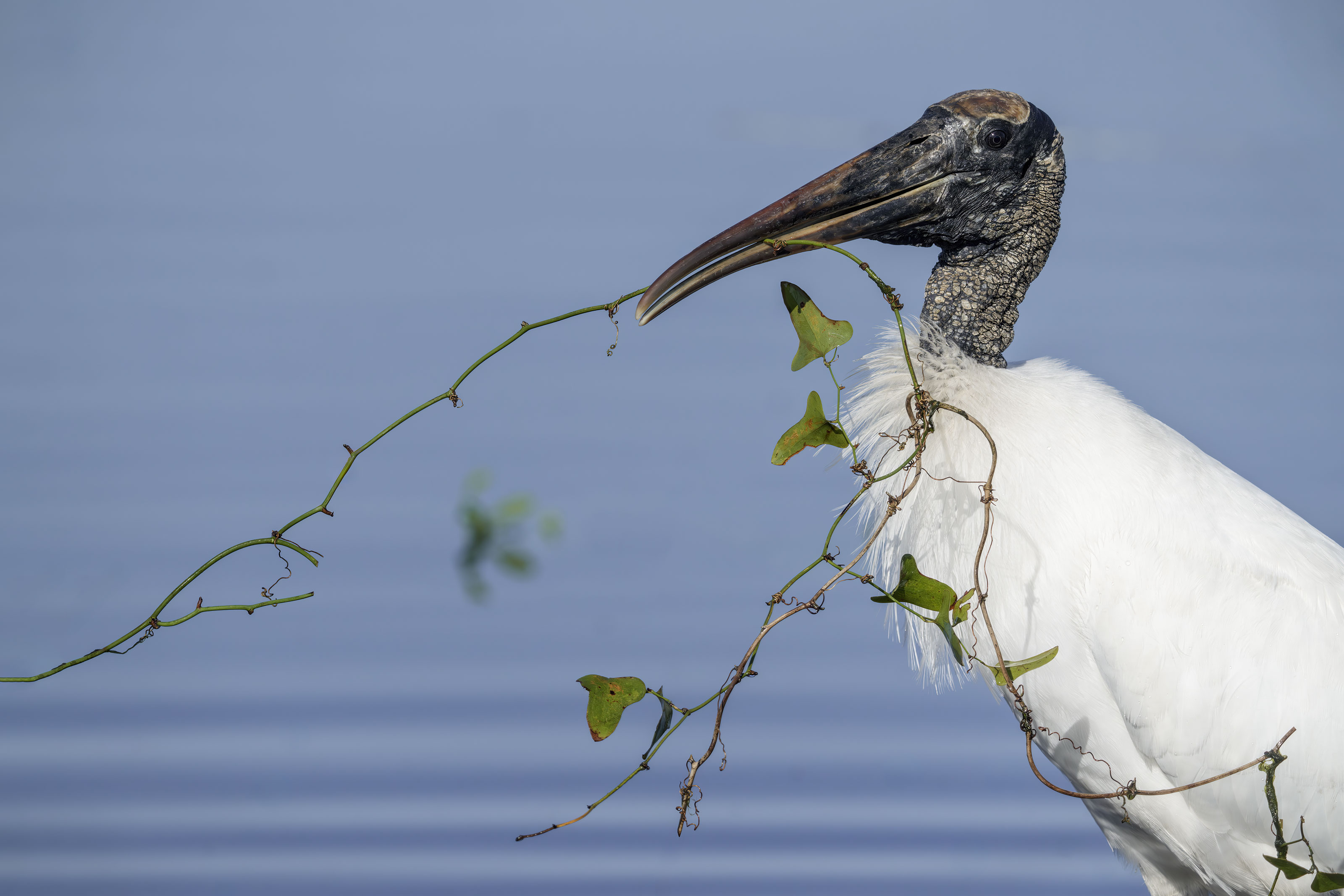
This image was created on 27 March 2026 by yours truly at Fellsmere, FL on the second 2026 Stick Marsh IPT. Seated on a milk crate topped by an old pillow I used the Robus RCM-439 4-Section Carbon Fiber Monopod, 65/Wimberley MonoGimbal Head-supported Sony FE 400-800mm f/6.3-8 G OSS lens (Sony E) with the Sony FE 1.4x Teleconverter (at 647mm) and The Latest Greatest Sony Flagship Body, the a1 II Mirrorless Camera. The exposure was determined using Zebra technology with ISO on the Thumb Dial. ISO 1600. 1/2500 second at f/11 (wide-open!) in Manual Mode. AWB at 9:38:46am on a bright sunny morning. Wide/AF-C with Bird-Eye/Face Detection performed perfectly. Click on the image to enjoy the larger, inexplicably sharper high-res version. Image #8: Wood Stork with nesting material |
1120mm at f/11. Or Not
Late on sunny mornings, I will often add a teleconverter and work at extremely long focal lengths like 1120 (with the 400-800) and 1200mm (with the 600mm f/4 and th 2X TC). As above, I strive to work tight and to stay right on sun angle to minimize harsh shadows. Though I did not need the 1.4X TC in this case to get to (only) 647mm, I did make some nice spoonbill head portraits at 1120mm. The image sharpness is astoundingly excellent.
|
|
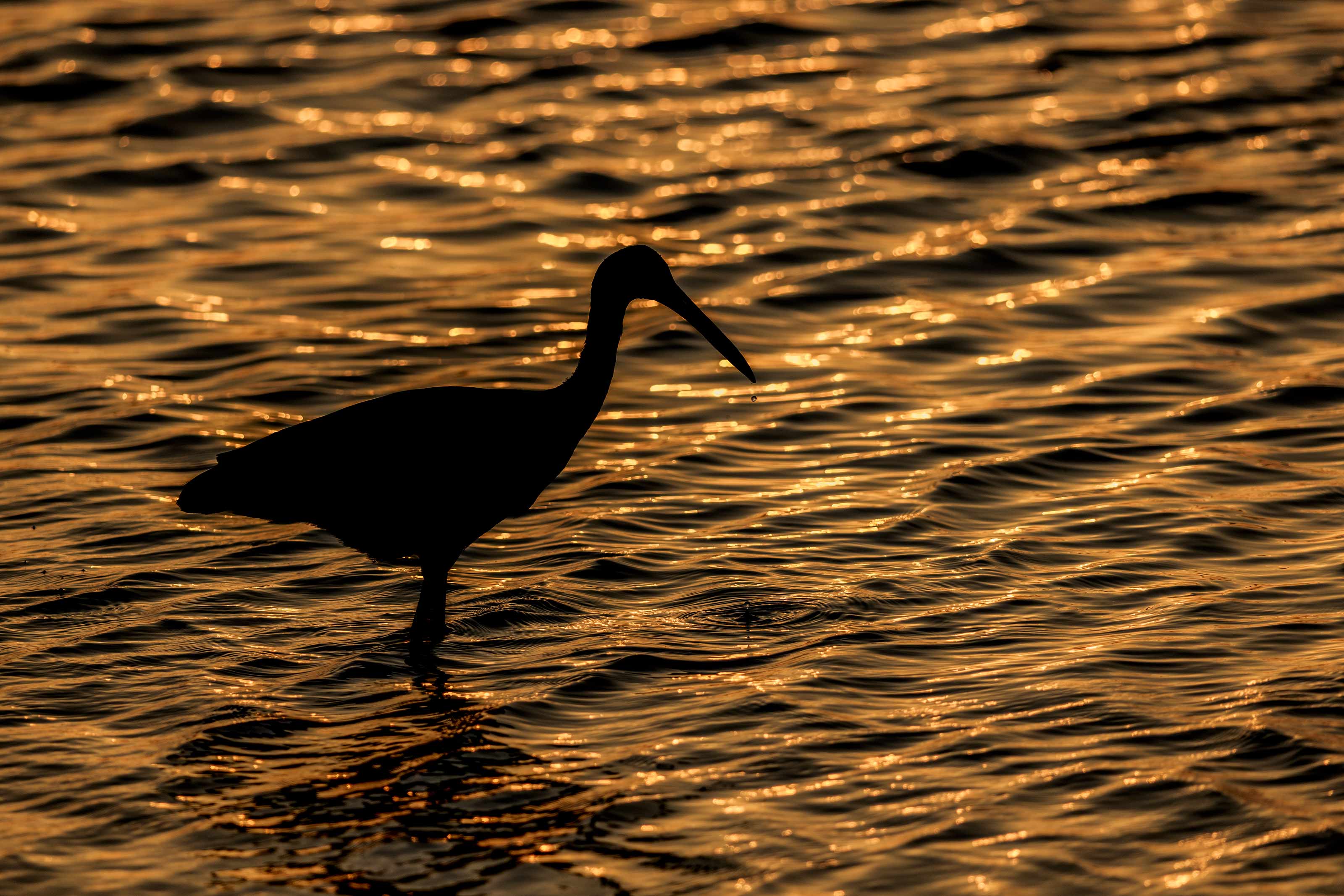
This image was created on 28 March 2026 by yours truly at Fellsmere, FL on the second 2026 Stick Marsh IPT. Standing at full height I used the Robus RCM-439 4-Section Carbon Fiber Monopod, 65/Wimberley MonoGimbal Head-supported Sony FE 400-800mm f/6.3-8 G OSS lens (Sony E) (at 566mm) and The Latest Greatest Sony Flagship Body, the a1 II Mirrorless Camera. The exposure was determined via Zebras with Exposure Compensation on the Thumb Wheel. Multi-metering +0.7 stops. AUTO ISO set ISO 640: 1/1600 sec. at f/7.1 (wide open at that focal length in Shutter Priority mode. AWB at 7:19:33pm on a variably cloudy afternoon just a few minutes before sunset. Wide/AF-C with Bird-Eye/Face Detection performed perfectly. Click on the image to enjoy the larger, inexplicably sharper high-res version. Image #9: Limpkin foraging silhouette |
Afternoons at Stick Marsh
On previous afternoon visits to Stick Marsh there had never been much going on. I always hope for a sunset so that we might create some nice silhouettes of the birds returning to the two colony islands. But that happened only once. Anyhoo, when we visited on Saturday evening we were pleasantly surprised to have several spoonbills fly in to bathe just before sunset. Along with the Limpkin in Image #9. As is usual, I love Shutter Priority Mode at sunrise and sunset.
|
|
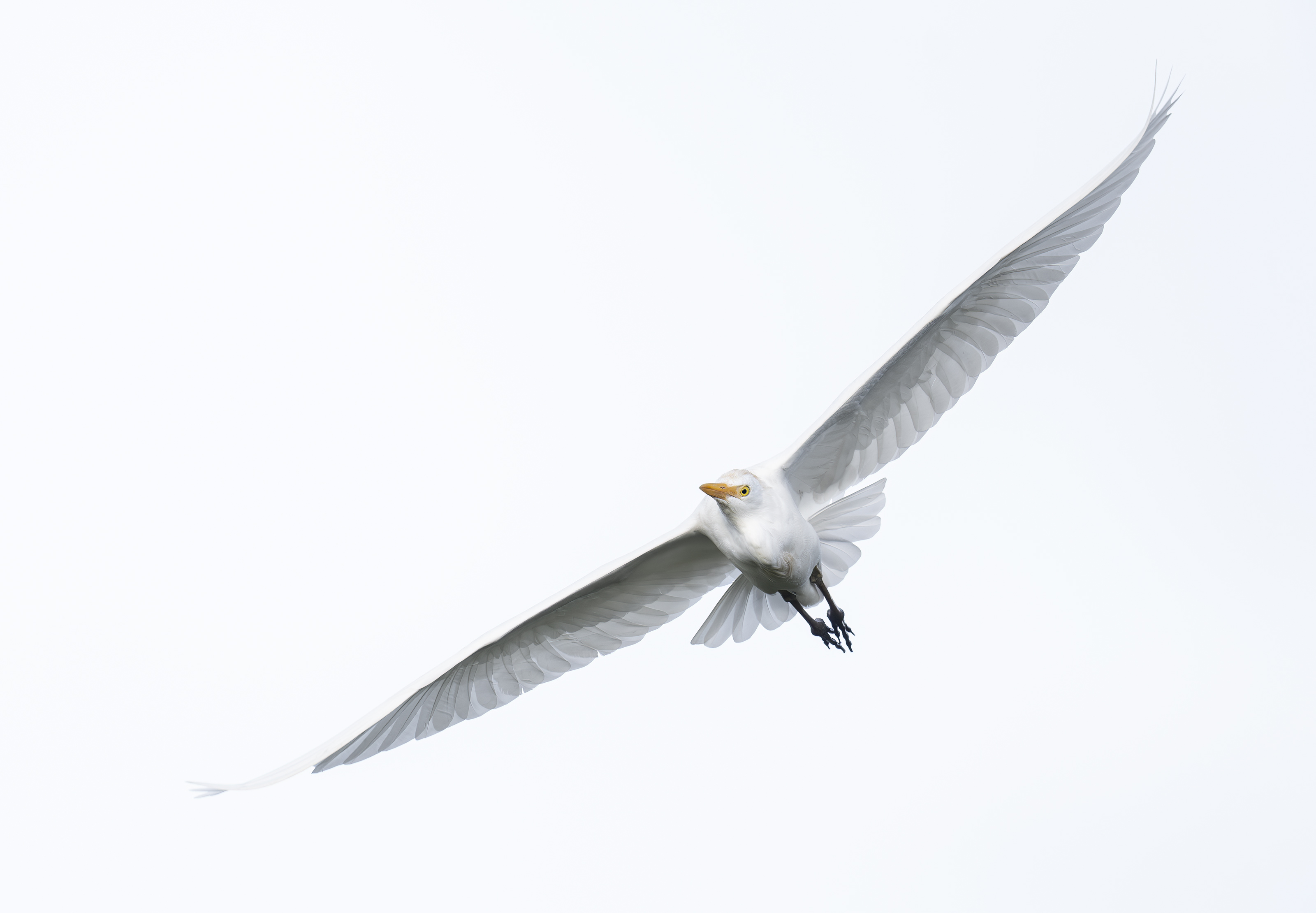
This image was created on 29 March by yours truly at Fellsmere, FL on the second 2026 Stick Marsh IPT. Standing at full height in a grassy hollow I used the Robus RC-5570 Vantage Series 3 Carbon Fiber Tripod/Levered-Clamp FlexShooter Pro-mounted Sony FE 600mm f/4 GM OSS lens with the Sony FE 1.4x Teleconverter and the Latest Greatest Sony Flagship Body, the a1 II Mirrorless Camera. The 8:41:58am on a cloudy morning. Wide/AF-C with Bird Eye/Face Detection enabled performed perfectly. Click on the image to enjoy the larger, inexplicably sharper high-res version. Image #10: Cattle Egret adult in flight |
Cattle Egrets and Dragonflies
We spent most of our last morning, Sunday am past, photographing some Cattle Egrets that were chasing, catching, and feasting on several species of small dragonflies (images here at some point). I alerted the group to be on the lookout for birds flying in to join the party; this white on white flight shot was my reward.
|
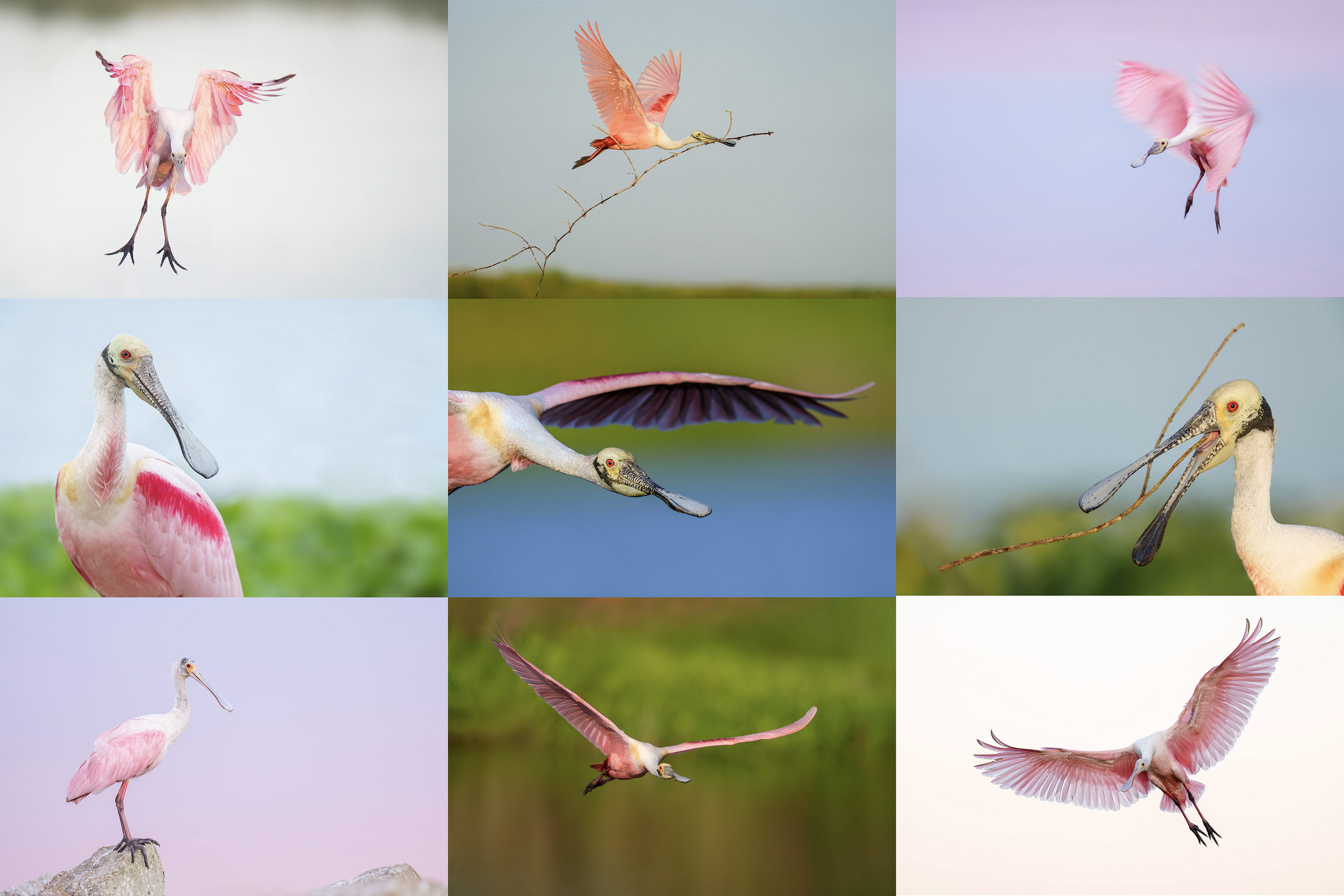
Stick Marsh Card One. Click on the composite to enjoy a larger version.Clockwise from upper left back around to the center: 1-year old spoonbill braking to land (400mm); spoonbill with nesting material; spoonbill braking to land blur (300mm) (300mm); spoonbill grabbing stick 840mm); 1-year spoonbill while sky flight (300mm); spoonbill with green background (300mm with 2X TC = 600mm); sub-adult spoonbill on rock in pink pre-dawn light; adult spoonbill looking back pose (840mm); and spoonbill tight flight (840mm) |
The 2027 Stick Marsh Roseate Spoonbills and More AirBnB IPTs
Stick Marsh IPT: #1: (ARR: WED 10 MAR. IPT #1: THURS 11 MAR thru the morning session on TUES 16 MAR 2027: 5 1/2 DAYS: $2,999.00**. (Limit 4 photographers)
Stick Marsh IPT: #2: (ARR: WED 17 MAR. IPT: THURS 18 MAR thru the morning session on TUES 23 MAR 2027: 5 1/2 DAYS: $2,999.00**. (Limit 4 photographers)
Stick Marsh IPT: #3: (ARR: WED 24 MAR. IPT: THURS 25 MAR thru the morning session on TUES 30 MAR 2027: 5 1/2 DAYS: $2,999.00.** (Limit 4 photographers)
On each trip there is a possibility of doing a morning session at Indian Lake Estates to photograph Sandhill Crane chicks and colts.
Sign up for back to back trips and enjoy a free morning session in between and a $500 discount. Do all three IPTs and enjoy two morning sessions and a $1,000 discount. Sign up for one IPT and add a single morning session at the end of your trip for only $500.00.
** For folks opting not to stay at the AirBnB the cost of the workshop will be $3499.00.
Questions? Please get in touch via e-mail and I will be glad to share the additional details with you.
AirBnB Details
We will be staying at the same great AirBnb that I used for Stick Marsh in 2025 & 2026, and Sebastian Inlet for a month in 2025 and two months in 2026. The modern, well equipped 5-bedroom AirBnB is located in Vero Lake Estates. It is 26 minutes from Stick Marsh, 26 minutes from Sebastian Inlet State Park (where we spend an afternoon or two) and 26 minutes from the Oar Restaurant where we hold the Thank You Dinner. The cost of the regular bedrooms (with a shared bath) is $150/night. The cost of the Presidential Suite — ideal for couples and/or those desiring a private bathroom, is $180/night.
Check out is at your leisure on all three IPTs only.
Stick Marsh, Where the Photography is Easy
Stick Marsh, where the living and the photography is easy. Photograph incoming Roseate Spoonbills in flight at point blank range with short and intermediate telephoto and telephoto zoom lenses. In 2026, folks used 70-200mm f/2.8 lenses (often with the 1.4X TC), 300mm f/2.8 lenses, and the Sony 400-800 G lenses. I used the Sony 300mm f/2.8 GM Lens, and the 400-800 G Lens. Longer lenses either on a tripod or hand held are ideal for the green background stuff and or when we make the short walk over the bridge. There will be endless flight photography opportunities with a variety of species. In addition to the spoonbills, we should have some excellent chances on Limpkin, Great Egret, Cattle Egret, Great Blue Heron, Little Blue Heron, Double-created Cormorant, Anhinga, Black and Turkey Vultures, and more. Folks with 500 and 600mm f/4 lenses will have lots of opportunities to hone their skills working on a tripod or hand holding.
BIRDS AS ART IPTs are quite different from most bird photography workshops offered today: I am teaching constantly. We do not simply take you to a good location and say, “There are the birds,” or “Incoming spoonbill low right.” We talk wind direction, exposure, light, sky conditions, flight paths, wind positions and flight paths, autofocus, image design, the available options, and tons more. Scroll down to see what you will learn.
There will be six morning photo sessions averaging three hours each. We start in the pre-dawn. The first five morning sessions will be followed by brunch (the cost is included). There will be four after brunch/after Instructor Nap Time image review/Photoshop sessions. There will be at least two in-the-field evening photo sessions. The deposit is $899.00 plus half the cost of your AirBnB lodging. Call Jim at the office any weekday at 863-692-0906 to pay by credit card. Balances must be paid by check. Dinners are $25/night. I am an excellent chef and the food is both healthy and of high quality. Rides with me may be available on a first come/first served basis may be available for $25/day. Ride with me and take a Uber from and to the airport and save the cost of a rental car.

|
Stick Marsh Card Two. Click on the composite to enjoy a larger version.Clockwise from upper left back around to the center: Great Egret landing sunset silhouette; spoonbill in flowers: spoonbill preening upper tail coverts; Anhinga calling; spoonbill stepping in soft light; Great Egret with nesting material; Wood Stork with nesting material; Anhinga with speared largemouth bass; and spoonbill flight head portrait. |
What You Will Learn on a Stick Marsh IPT
- 1- You will learn the basics and fine points of digital exposure. Nikon and Canon folks will learn to get the right exposure every time after making a single test exposure, and SONY folks will learn to use Zebras so that they can be sure of making excellent exposures before pressing the shutter button..
- 2- You will learn to work in Manual exposure mode even if you are scared of it.
- 3- You will surely learn to evaluate wind and sky conditions and understand how they affect bird photography.
- 4- You will learn the pro secrets that will help you to become a better flight photographer.
- 5- You will learn to zoom out in advance (because the birds are so close!) 🙂
- 6- You will learn how to approach free and wild birds without disturbing them.
- 7- You will learn to spot the good and the great situations.
- 8- You will learn to understand and predict bird behavior.
- 9- You will learn to design pleasing images by mastering your camera’s AF system.
- 10- You will learn to choose the best perspective.
- 11- You will learn to see and control your backgrounds.
- 12- You will learn to see and understand the light.
- 12- You will learn to see and create pleasing blurs in pre-dawn situations.
- 12- You will learn to be ready for the most likely event at all times.
And the best news is that you will be able to take everything you learn home with you so that you will be a better photographer wherever you are and whenever you photograph.
|
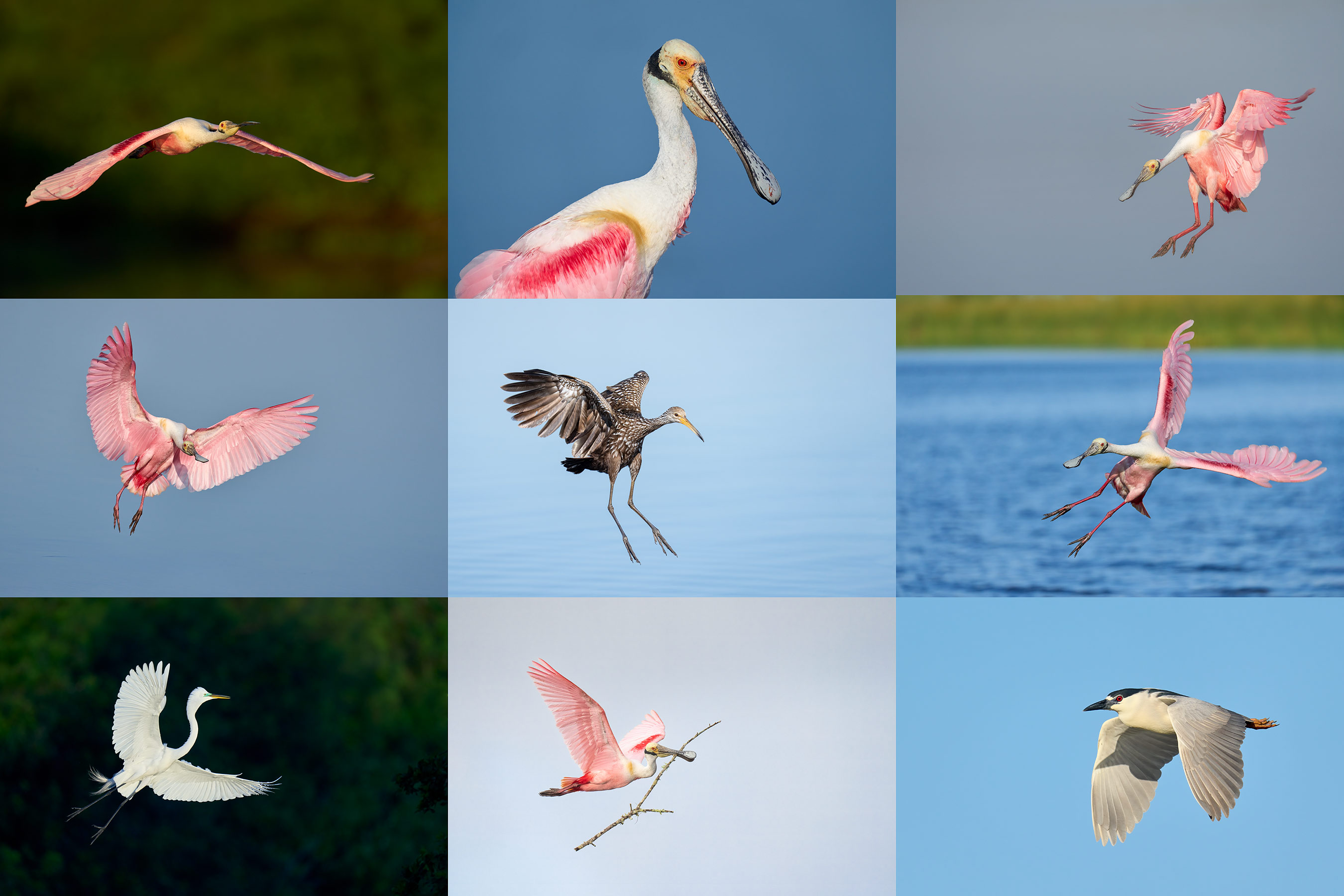
Stick Marsh Card Three. Click on the composite to enjoy a larger version.Clockwise from upper left back around to the center: spoonbill with mangrove background; spoonbill head and shoulders portrait; spoonbill braking to land; spoonbill dramatic landing pose; adult Black-crowned Night-Heron; spoonbill with nesting material; Great Egret returning to nest; incoming spoonbill; and Limpkin landing. |
Getting There
You can fly to Orlando International Airport (MCO) and rent a car or fly to Melbourne International Airport (MEL) and explore the possibility of airport pick-up and drop-off or a taxi or uber ride to and from the AirBnB for those who opt to ride with me. As above, rides with me are available for $25/day/person on an extremely limited space available basis. To avoid the cost of a rental car, be sure to book early.
Deposit Information
A non-refundable deposit by check is required to hold your spot. The amount will be $899.00 plus half the cost of the AirBnB lodging. Please contact me by e-mail to check on availability and then make the check out to:
BIRDS AS ART
And send it via US Mail to
BIRDS AS ART
PO Box 7245
Indian Lake Estates, FL 33855
Thank you kindly. Much love, artie
Typos
With all blog posts, feel free to e-mail or to leave a comment regarding any typos or errors.







Leave a Reply