
Your Call?
Which of today’s six featured images is your favorite? Why did you make your choice.
My Call
Despite the plethora of quality images in the Stick Marsh IPTs: They Ain’t Just For Spoonbills! blog post here, only a single person bothered to comment. Pat Fishburne and I agreed: the strongest image by far was the cormorant with the Atlantic Needlefish because of its uniqueness, sharpness, two perfect head angles, the fish’s open beak, and the cobalt blue mouth lining of the breeding plumage bird. That blog post took ten hours to prepare. Today’s took less than two.
Seeking Used Sony a-1 Camera Bodies
After selling both of my remaining a-1 bodies along with my Sony 12-28 and my 400m f/2.8 GM lens on the Used Gear page, I have several buyers interested in purchasing a used a-1 in excellent or better condition for a fair price, well more than you would get from B&H or any of the other companies that regularly purchase used gear. If you have an a-1 body that is sitting on a shelf gathering dust and would like to sell it, please get in touch via e-mail.
What’s Up?
April Fool’s Day came and went with nothing original from me this year. I did have a good day photographing birds down by the lake near my home at Indian Lake Estates, FL on Wednesday. Bob Eastman headed home to Wisconsin early that morning and amazingly, was home only 27 hours later after making 5 pit stops and otherwise driving straight through! He is an ironman. Kevin Hice and Colleen left early that same morning, headed for Stick Marsh, grabbed a hotel, headed back for more spoonbills on Thursday morning, and then began the drive back to their new home in Indiana.
On Monday afternoon Bob and Kevin — at my request, erected a perch for the Snail Kite. As usual, they did all the work while I supervised. They thought we should put the perch father from shore than I did. But since it’s my lake,and my marsh, I had the final say :-). After what I described as the perfect perch for this species, Bob went out and found two excellent ones. We went with the taller of the two. On Tuesday the bird ignored the perch completely. On Wednesday morning, it landed on the perch once. As I approached, it flew off. So, I set up on the edge of the bullrushes and waited. And waited and waited. Finally, it grabbed a snail north of the pier and flew right at the perch. I thought, “I am gonna be famous.” The bird, however, landed ten yards beyond the perch on some crushed reeds. I was totally blocked.
Thursday morning was the bomb. It was sitting on its favorite lamp post when some folks went out on the pier to fish. The bird took flight and grabbed a snail from the shallow water to the north of the pier. It flew to the perch. I hurried off the pier with the 600mm f/4/1.4X TC, a-1 II rig on the tripod, got in my SUV, and drove the short distance to the edge of the shoreline. Hiding behind some tall bullrushes I got out, grabbed my lens and the tripod, mounted the rig on the FlexShooter Pro, and peeked out from behind the tall reeds. The bird stayed! Photos soon.
Today is Friday 3 April 2026. I will be headed down to the lake early as I do virtually every morning when I am home. The forecast is for sunny at 8:00am with a good breeze from the east. Perfect for bird photography. Whatever you have in store, I hope that you too choose to have a happy and productive day.
If an item — a Delkin flash card or reader, a Levered-clamp FlexShooter Pro, or a Wimberley lens plate or low foot — for example, that is available from B&H and/or Bedfords, is also available in the BAA Online Store, it would be great, and greatly appreciated, if you would opt to purchase from us. We will match or beat any price. Please remember also to use my B&H affiliate links or to earn 3% cash back at Bedford by using the BIRDSASART discount code at checkout for your major gear purchases. Doing either often earns you free guides and/or discounts. And always earns my great appreciation.
Gear Questions and Advice
Too many folks attending BAA IPTs and dozens of photographers whom I see in the field and on BirdPhotographer’s.Net, are — out of ignorance — using the wrong gear, especially when it comes to tripods and more especially, tripod heads. And the same is true in spades when ordering new camera bodies or lenses. My advice will often save you some serious money and may help you avoid making a seriously bad choice. Please know that I am always glad to answer your gear questions via e-mail. If you are in a hurry, you can try me on my cell at 863-221-2372. Please leave a message and shoot me a text if I do not pick up.
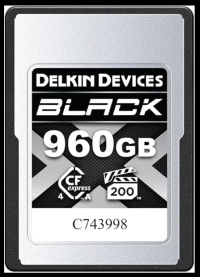
Delkin Devices 960GB BLACK CFexpress Type A 4.0 Memory Card
We are offering this great card for $100.00 less than B&H (plus the shipping)!
I have one of these cards in each of my a-1 ii camera bodies every day.
960GB Storage Capacity
PCIe Interface
Max Read Speed: 1830 MB/s
Max Write Speed: 1710 MB/s
Min Sustained Write Speed: 500 MB/s
Records Raw 8K, 6K, and 4K Video
Records High Bitrates and Frame Rates
Records Raw Photos and Rapid Bursts
Serialized for Added Protection
Temperature, Water, and Shock Proof
Combining strength, reliability, and performance, the 960GB BLACK CFexpress Type A 4.0 Memory Card from Delkin Devices features a storage capacity of 960GB and is designed for professional photographers, videographers, and high-end cinematic hosts. It is well-suited for raw and continuous burst photography as well as raw 8K, 6K, and 4K video at high bitrates and frame rates.
To help facilitate card usage in almost any environment as well as keeping your content safe, Delkin has built its BLACK Series with a rugged design that is water and shock proof, plus resistant to temperature extremes. In order to further enhance reliability and functionality, the BLACK Series is serialized and protected by a limited lifetime warranty and a 48-hour replacement guarantee upon registration with Delkin.
|
|
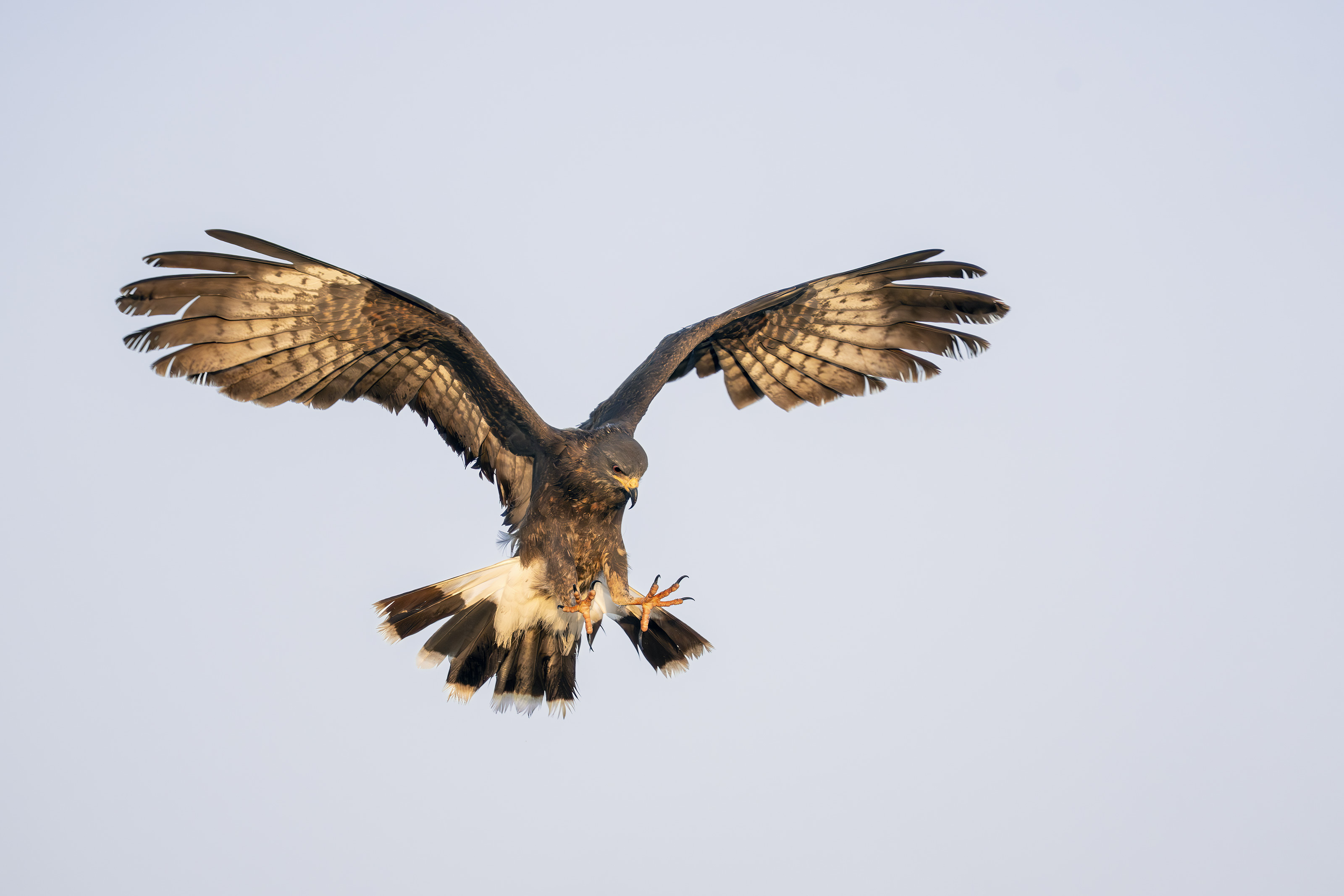
This image was created on 1 April 2026 at Indian Lake Estates, FL. Standing on the pier, I used the handheld Sony FE 300mm f/2.8 GM OSS Lens (Sony E) with the Sony FE 2x Teleconverter and the Latest Greatest Sony Flagship Body, the a1 II Mirrorless Camera. Exposure determined via Zebras with ISO on the Thumb Wheel. ISO 3200: 1/1600 sec. at f/5.6 (wide open) in Manual mode. RawDigger showed that the exposure was dead solid perfect: AWB at 7:33:43am just as the sun was coming above cloud on the eastern horizon. Wide/AF-C with Bird Eye/Face Detection enabled performed perfectly. Click on the image to enjoy the larger, inexplicably sharper high-res version. Image #1: Snail Kite — young male braking to land |
The Sony 600mm f/5.6 GM OSS Lens
Sony does not of course offer a the 600mm f/5.6 GM OSS lens. But, that is exactly what the Sony FE 300mm f/2.8 GM OSS lens with the FE 2x teleconverter is. This combo is light in weight — lighter in fact by almost one pound than the 200-600 G lens — 3.7 pounds vs. 4.65 pounds. The light weight and its small size make it eminently and easily hand-holdable for most folks. As I walked out onto the pier to photograph the kite (it is very active right at dawn), I thought, “How nice it is not to by lugging the 600mm f/4 and a tripod.” That despite the fact that the big lens would have saved me three clicks (one full stop) of ISO. Lastly, if you are capable of handholding a given lens at a given focal length comfortably for an extended flight shooting session, you will always do better than when shooting flight and action on a tripod. Not to mention that you are far more mobile; tripods slow us down exponentially.
|
|
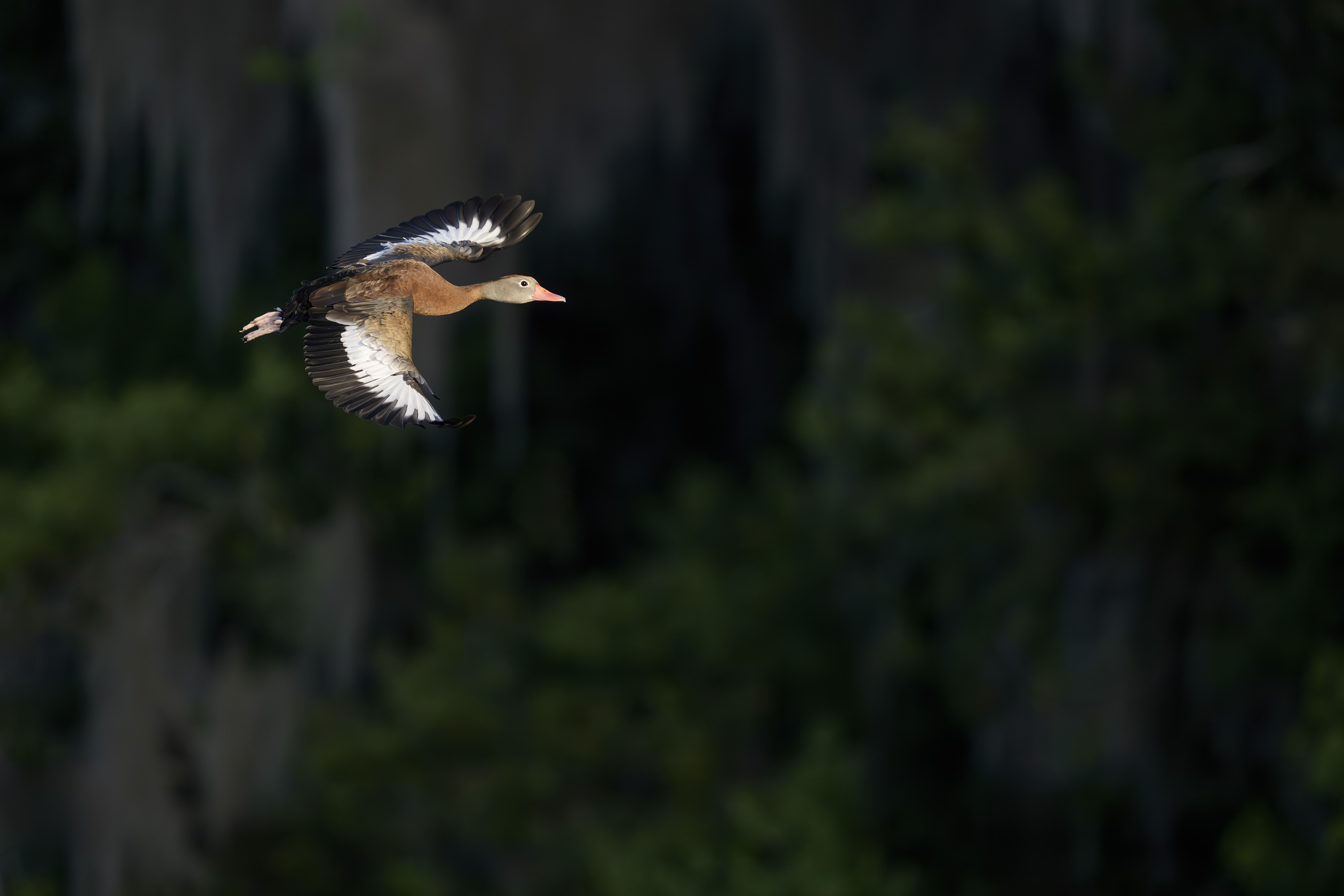
This image was also created on 1 April 2026 at Indian Lake Estates, FL. Standing on the grass alongside the North Canal near the natural Osprey nest, I used the handheld Sony FE 300mm f/2.8 GM OSS Lens (Sony E) with the Sony FE 2x Teleconverter and the Latest Greatest Sony Flagship Body, the a1 II Mirrorless Camera. Exposure determined via Zebras with ISO on the Thumb Wheel. ISO 3200: 1/2500 sec. at f/5.6 (wide open) in Manual mode. RawDigger showed that the exposure was dead solid perfect: AWB at 7:50:50am on a then sunny morning. Wide/AF-C with Bird Eye/Face Detection enabled performed perfectly. Click on the image to enjoy the larger, inexplicably sharper high-res version. Image #2: Black-bellied Whistling Duck in flight |
Can the Background be More Important than the Subject?
For my type of bird photography, the background is usually at least as (if not more) important as the subject. The shaded woodland with some moss hanging from the trees here makes the image for me. I love the rule of thirds image design and — don’t be shocked, this flying duck was side-lit, at least 45 degrees off sun-angle. Though I rarely use side light, doing so is almost always a necessity if you wish to place a sunlit subject against a nearly black shaded backdrop.
|
|
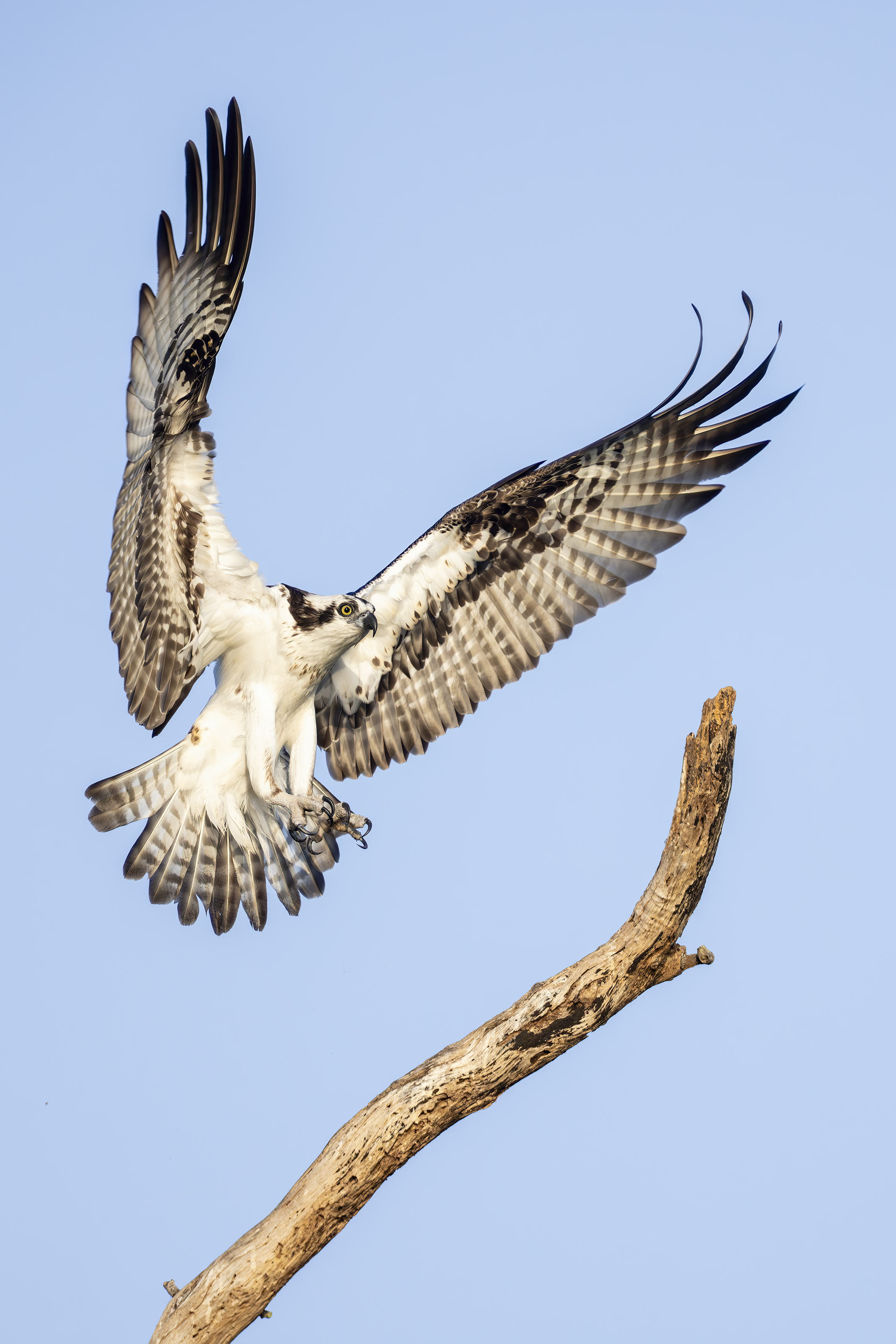
This image was also created on 1 April 2026 at Indian Lake Estates, FL. Still standing on the grass alongside the North Canal, I used the handheld Sony FE 300mm f/2.8 GM OSS Lens (Sony E) with the Sony FE 2x Teleconverter and the Latest Greatest Sony Flagship Body, the a1 II Mirrorless Camera. Exposure determined via Zebras with ISO on the Thumb Wheel. ISO 2500: 1/3200 sec. at f/5.6 (wide open) in Manual mode. RawDigger showed that the exposure was dead solid perfect plus a tiny bit with 1339 OvExp pixels (out of 51,000,000). As all of the OvExp pixels were in the GREEN channel, they were easily recovered during the raw conversion in Adobe Camera Raw. AWB at 7:51:42 am on a sunny morning. Wide/AF-C with Bird Eye/Face Detection enabled performed perfectly. Click on the image to enjoy the larger, inexplicably sharper high-res version. Image #3: Osprey landing on tall perch above its natural nest |
Underwing Illumination
When photographing birds in flight braking, strive for wing positions that leave the underwings evenly lit. In a perfect world, as with Image #3, there will be zero shadows. High frame-rate camera bodies of course increase your chances of success as does working as close to sun angle as you can get. For this one, I was about ten degrees off sun angle; to get right on sun angle I would have needed to be able to walk on water as the North Canal was just to my right. I benefited from the perfect wind direction for the season, ENE. Why “for the season”? The sun rises north of east at this time of year.
|
|
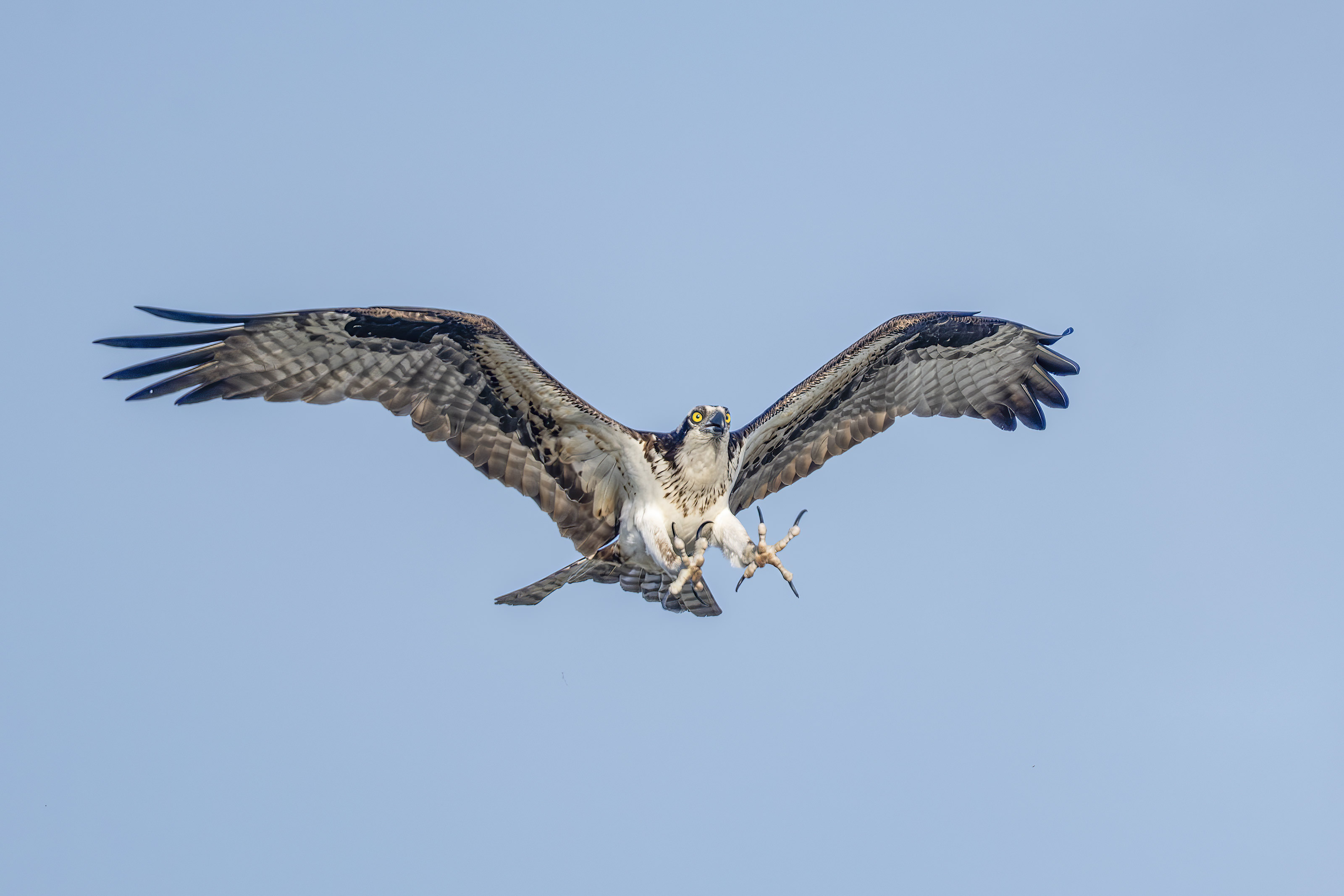
This image was also created on 1 April 2026 at Indian Lake Estates, FL. Seated in the front seat of my X5, I used the handheld Sony FE 300mm f/2.8 GM OSS Lens (Sony E) with the Sony FE 2x Teleconverter and the Latest Greatest Sony Flagship Body, the a1 II Mirrorless Camera. Exposure determined via Zebras with ISO on the Thumb Wheel. ISO 2000: 1/4000 sec. at f/5.6 (wide open) in Manual mode. RawDigger showed that the exposure was dead solid perfect plus a tiny bit with 1977 OvExp pixels (out of 51,000,000). As above, all of the OvExp pixels were in the GREEN channel and were easily recovered during the raw conversion in Adobe Camera Raw. AWB at 8:26:20am on a sunny morning. Wide/AF-C with Bird Eye/Face Detection enabled performed perfectly. Click on the image to enjoy the larger, inexplicably sharper high-res version. Image #4: Osprey attacking Black Vulture perched on a utility pole near its nest |
Understanding Bird Behavior and Then Getting Lucky
I was down by the lakeshore when I noticed an Osprey diving on a Black Vulture that was perched atop a utility pole not far from the Osprey’s nest platform. With an east wind, I needed to get east of the telephone pole in order to get on sun angle and have the Osprey flying toward me and toward the light. So, I hopped in the car, drove the short distance to Banyon Drive, and hung a u-turn. I was lucky that the vulture had not flown and that the Osprey made three more bombing runs before the vulture fled. On the second attack the Osprey actually struck the vulture in the back and ripped out a few feathers.
BLUBB Tip
I always use a BLUBB when working with the 600mm f4/ lens while in the driver’s seat of my SUV. When it looks as if I will be doing handheld flight photography from my vehicle, I will yank the BLUBB off the window (or the window frame) and place it atop the pillow on the front passenger seat. Those old pillows come in very handy at times. I keep one on the passenger seat and one in the foot well on that same side to cushion the hood of my 600 f/4.
The BLUBB is so large that it can hinder your tracking a bird in flight so I always remove it when shooting flight or action.
|
|
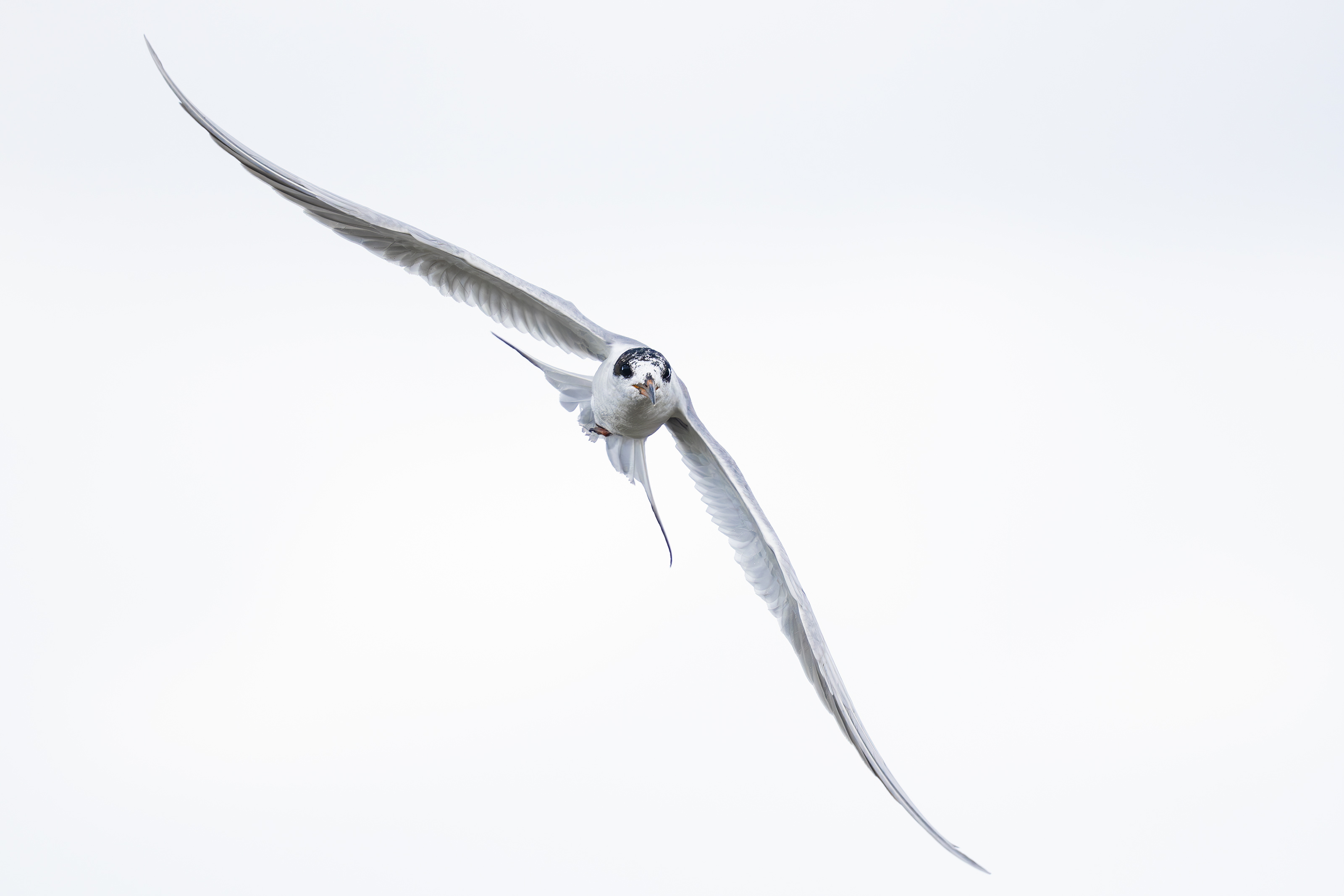
This image was also created on 1 April 2026 at Indian Lake Estates, FL. Again standing on the pier, I used the handheld Sony FE 300mm f/2.8 GM OSS Lens (Sony E) with the Sony FE 2x Teleconverter and the Latest Greatest Sony Flagship Body, the a1 II Mirrorless Camera. Exposure determined via Zebras with ISO on the Thumb Wheel. ISO 2000: 1/3200 sec. at f/5.6 (wide open) in Manual mode. RawDigger showed that the exposure of the bird was dead solid perfect: AWB at 2:21:14pm on a variably cloudy afternoon. Wide/AF-C with Bird Eye/Face Detection enabled performed perfectly. Click on the image to enjoy the larger, inexplicably sharper high-res version. Image #5: Forster’s Tern adult winter in flight |
An East Wind Afternoon Walk
On sunny afternoons with an east wind, I would never bother to take a lens on a shirtless Vitamin D walk on the pier as wind against sun conditions are generally problematic for bird photography (except at sunrise and sunset). But, with variably cloudy skies, I grabbed to 300/2X/a-1 ii rig and came away with a single decent image.
|
|
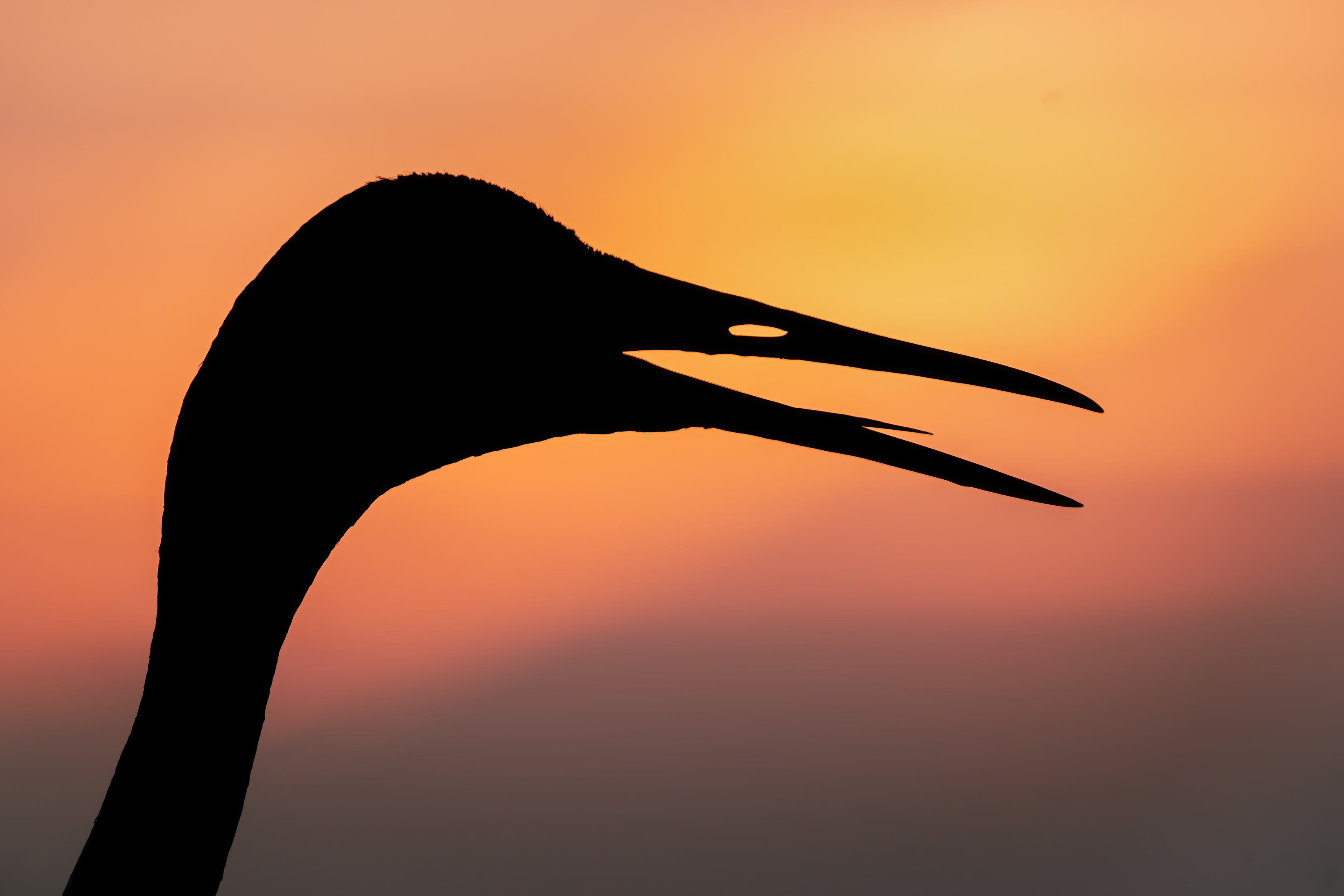
This image was also created on 1 April 2026 at Indian Lake Estates, FL. Seated on the sand beach south of the pier, I used the handheld Sony FE 300mm f/2.8 GM OSS Lens (Sony E) with the Sony FE 2x Teleconverter and the Latest Greatest Sony Flagship Body, the a1 II Mirrorless Camera. Wide/AF-C with Bird Eye/Face Detection enabled performed perfectly. Click on the image to enjoy the larger, inexplicably sharper high-res version. Image #6: Sandhill Crane with bill open at sunset |
Shutter Priority with AUTO ISO for Sunrise and Sunset Silhouettes with Sky Backgrounds
Shutter Priority with AUTO ISO and Exposure Compensation (EC) on a convenient dial is my go to method when creating silhouettes against colorful skies. Though there was a substantial cloud on the western horizon, there was some nice color above it. After checking all the perches and finding them empty, I decided to check the bay out of the pier. A crane was standing outside my vehicle with its bill open. In order to use the sky color as my background, I needed to get on the ground. I exited my vehicle and was delighted to see that the bird did not move and that it still had its bill open. Using Zebra Technology, I determined that +1.7 stops would yield a perfect raw file exposure. I used several ACR masks and a layer of Gaussian Blur to fine-tune the sky background.
|
|
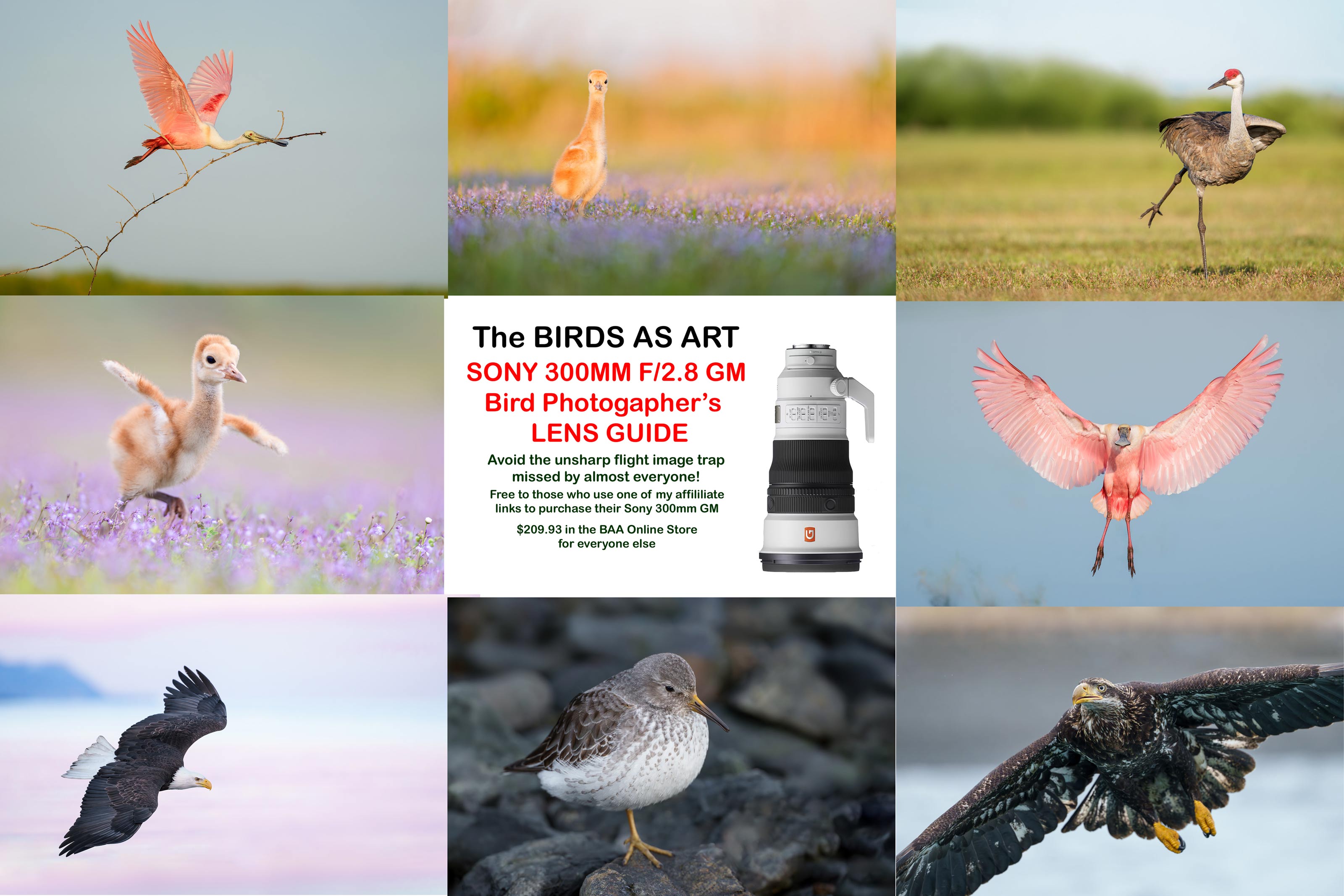
For those who did not use my link to purchase their Sony 300mm f/2.8 GM lens, you can order your a copy here for $209.93. Click on the image to enlarge and to be able to read the fine print. |
The BAA Sony 300mm f/2.8 Lens Guide
Impressed by my (or Pat’s) Sony FE 300mm f/2.8 GM OSS Lens (Sony E) images? Use either my Bedfords or B&H affiliate link to purchase your Sony 300mm f/2.8 GM lens and shoot me your receipt via e-mail and request a copy of the first-ever BAA Lens Guide. I thought that it would take only minutes to create this guide, but I was dead wrong. In the process of creating it, I learned a ton about the lens. And even better, I discovered a simple yet potentially fatal flaw that was resulting in sporadically unsharp flight images. The set-up fix is simple. Just be sure to use one of my affiliate links and get the guide for free.
If not, you can purchase a copy here for $209.93. Yes, it never hurts to use my links and it never costs you one penny more. And if you contact me via e-mail before you make a major purchase, I can often save you some money.
|
|
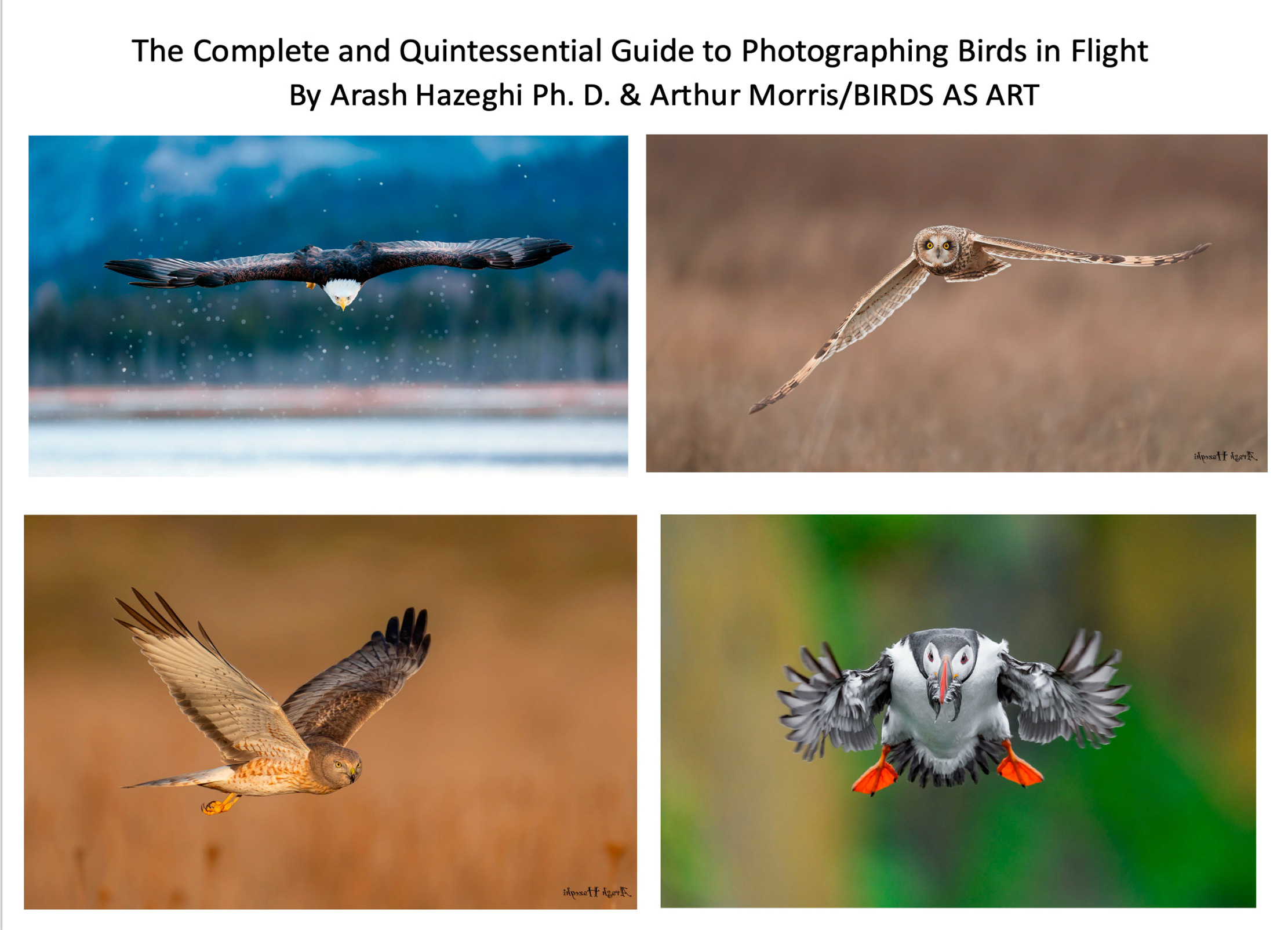
The title says it all. Purchase your copy here. The Complete and Quintessential Guide to Photographing Birds in Flight
|
The Complete and Quintessential Guide to Photographing Birds in Flight
I have long dreamed of becoming a great flight photographer. When using dSLR gear, making sharp images was a huge problem. Most of the time, the camera bodies simply were not up to snuff. Things have changed dramatically with mirrorless technology. The high-end mirrorless camera bodies now feature science fiction-like autofocus systems and frame rates of 30, 40, and even 125 fps. Nowadays, getting the eye sharp is no longer a problem. The problem more often involves selecting the strongest image from a long series of sharp images.
The truth, however, is that there is a lot more than owning a Canon EOS R1, a Nikon Z9, or a Sony a-1 ii to consistently creating great photographs of birds in flight. Some of the biggest factors to success include gear choice, shooting strategies, and understanding the importance of sky conditions and wind speed and direction. Once you have the techniques and technical aspects down pat and can routinely create sharp images, learning the importance of flight poses, wing positions, backgrounds, and subject placement and image design enable you to create and then select superb flight images. And you guessed it, each of those topics and tons more are covered in detail in The Complete and Quintessential Guide to Photographing Birds in Flight.
You can purchase your copy here.
|
|
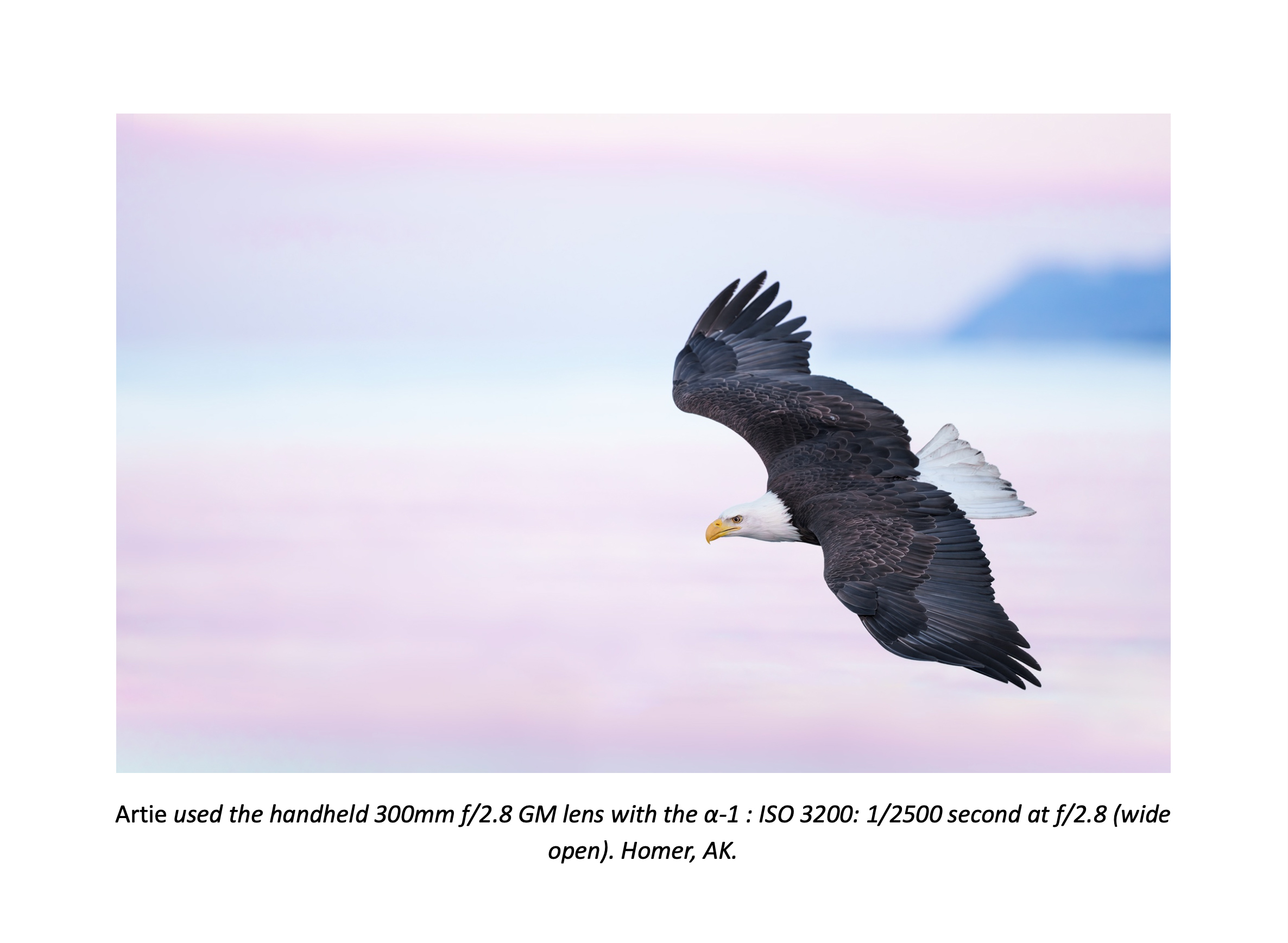
Sample Page #1. Image copyright 2024: Arthur Morris/BIRDS AS ART, the senior author. Page 28 of The Complete and Quintessential Guide to Photographing Birds in Flight |
Sample Page #1
|
|
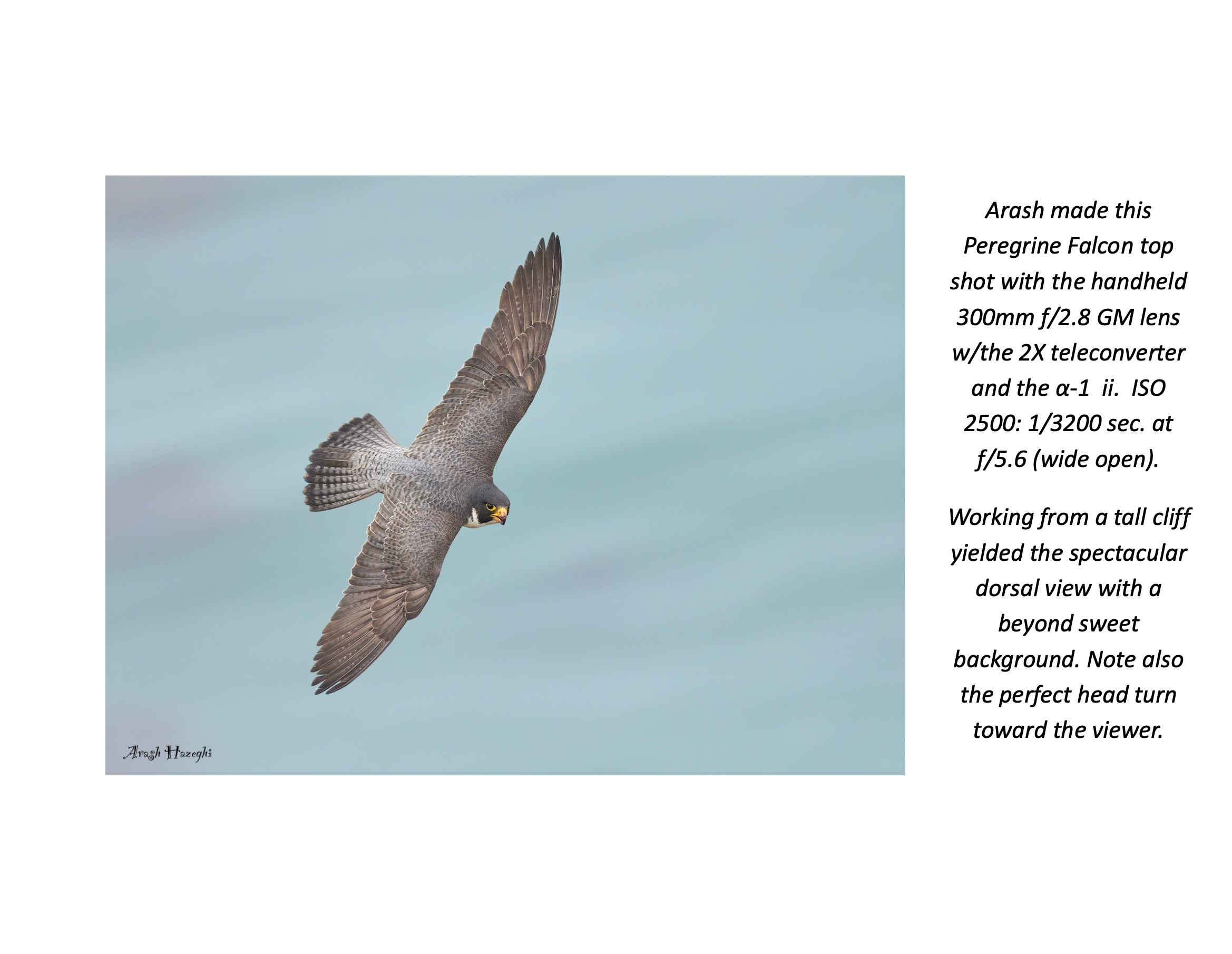
Image copyright 2025: Arash Hazeghi, the junior author. Page 237 of The Complete and Quintessential Guide to Photographing Birds in Flight |
Sample Page #2
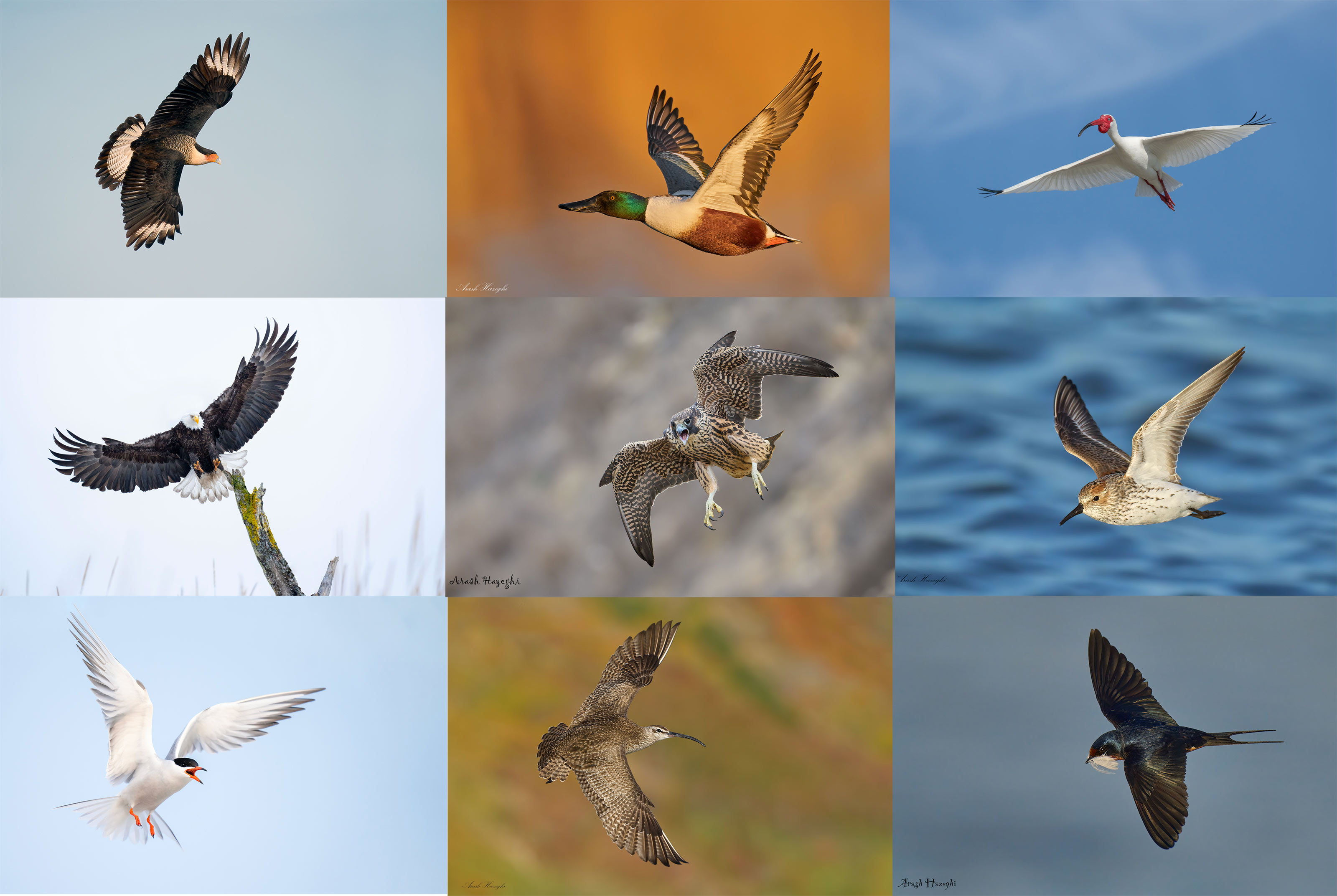
The guide consists of 267 pages, 21,013 words with two screen captures. There are 82 illustrative photos scattered throughout the text and a 112-image gallery that includes examples created by Canon, Nikon, and mostly Sony gear. As above, each of the 194 inspirational photos is labeled with an educational caption.
Arash Hazeghi
Arash Hazeghi, Ph.D. is a principal electron device engineer. He received his Ph.D. degree in Electrical Engineering in 2011, from Stanford University, Stanford, California. His pioneering research on Carbon Nanotubes has been cited many times. In the past decade, Arash Hazeghi has been a major contributor to the research and the development of some of the most cutting-edge technologies introduced by Silicon Valley’s most reputable names including SanDisk, Intel and Apple.
More relevant here is that he is widely recognized as one of the world’s best birds in flight photographers. He specializes in raptors and the technical aspects of bird photography.
|
|
Flight photography is a skill that can be studied, practiced, and learned. Learn to get better in The Complete and Quintessential Guide to Photographing Birds in Flight |
The Complete and Quintessential Guide to Photographing Birds in Flight
By Arash Hazeghi Ph.D., and Arthur Morris/BIRDS AS ART
What you will learn (about):
-
1- Weight and handholding super-telephoto lenses.
2- Weight and handholding intermediate telephoto and telephotos zoom lenses.
3- Choosing the right flight photography lens or lenses for you.
4- The importance of focal length for flight photography.
5- The importance of lens speed (the maximum aperture for flight photography.
6- Choosing between fixed focal lengths and zoom lenses for flight photography.
7- The importance of AF speed and performance for flight photography.
8- Handholding tips and techniques.
9- Shooting flight off a tripod with the Levered-clamp FlexShooter Pro.
10- Flight poses and wing positions.
11- Why artie changed his mind about the 400mm f/2.8 lenses for flight and more.
12- The advantages and disadvantages of using teleconverters for flight photography.
13- Why to stay away from off-brand lenses.
14- Understanding the importance of wind direction and speed for flight photography.
15- The relationship between sky conditions and wind direction and how it affects flight photography.
16- Creating flight silhouettes in wind-against-sun conditions.
17- The importance of being on sun angle for flight photography (and avoiding harsh shadows).
18- Tips on doing flight photography in cloudy, foggy, or overcast conditions.
19- About the direction of light in cloudy, foggy, or overcast conditions and how it affects flight photography.
20- How your understanding of bird behavior can dramatically improve your flight photography.
21- Tips on attracting birds for flight photography.
22- What to do when your camera’s AF system is temporarily blind.
23- The vital importance of pre-focusing.
24- How Direct Manual Focus can help you with flight photography.
25- The importance of shooting aggressively when doing flight photography.
26- Everything that you need to know with regards to rest positions for flight photography.
27- The importance of getting low when doing flight in many situations.
28- Getting the right exposure when doing flight photography.
29_ Why to use Manual mode 95% of the time for flight.
30- Tips on finding the bird in the frame, acquiring focus, and tracking the bird in flight.
31- How to set and best utilize your lens’s image stabilization feature (and why).
32- Setting the focus range limiter switch on your flight lens or lenses.
33- To choose the best shutter speed for photographing birds in flight.
34- The vital importance of pre-focusing. And yes, this is so important that it is on the list twice.
You can purchase your copy here.
Typos
With all blog posts, feel free to e-mail or to leave a comment regarding any typos or errors.







Fool me once, shame on you. Fool me twice, shame on me. Fool me six times! We call it art 🙂
My vote goes to #4. The claws make a powerful and intense image.
Without a doubt, my favorite is #3, the osprey in flight. I love the position of the wings and the branch in the foreground.
I like the DOF on the 5.6. #4 subject almost entirely in sharp focus, not to metion the others as well. Very enjoyable!