
My Thoughts
In the It’s a Toss-Up. What Was My Huge Mistake? blog post here, I promised share my thoughts on the two images. Few folks responded. All agreed that the line where the water met the beach that cut through the breast of the male tern was the big distraction. Had I gotten down on the ground and used the instep pod technique I would have eliminated the problem and the entire series of images would have been far more pleasing and intimate. Whenever I look at the images I could kick myself. My excuse at the time was that I did not have my rain pants on.
As for the comparing the two images, Image #1 offers a better look at the dorsal surface of the far wing and the male’s bill is above the line of demarcation. The second image features a great look at the underwing of the male’s near wing. In addition, there is much more tension in this photo as the male is reaching in for the cloacal kiss. Overall, I see Image #2 as the stronger photo as it is more dynamic. Kudos to David Pugsley for his incisive (as usual) comment.
Your Call?
Which of today’s featured images is your favorite? Why did you choose it?
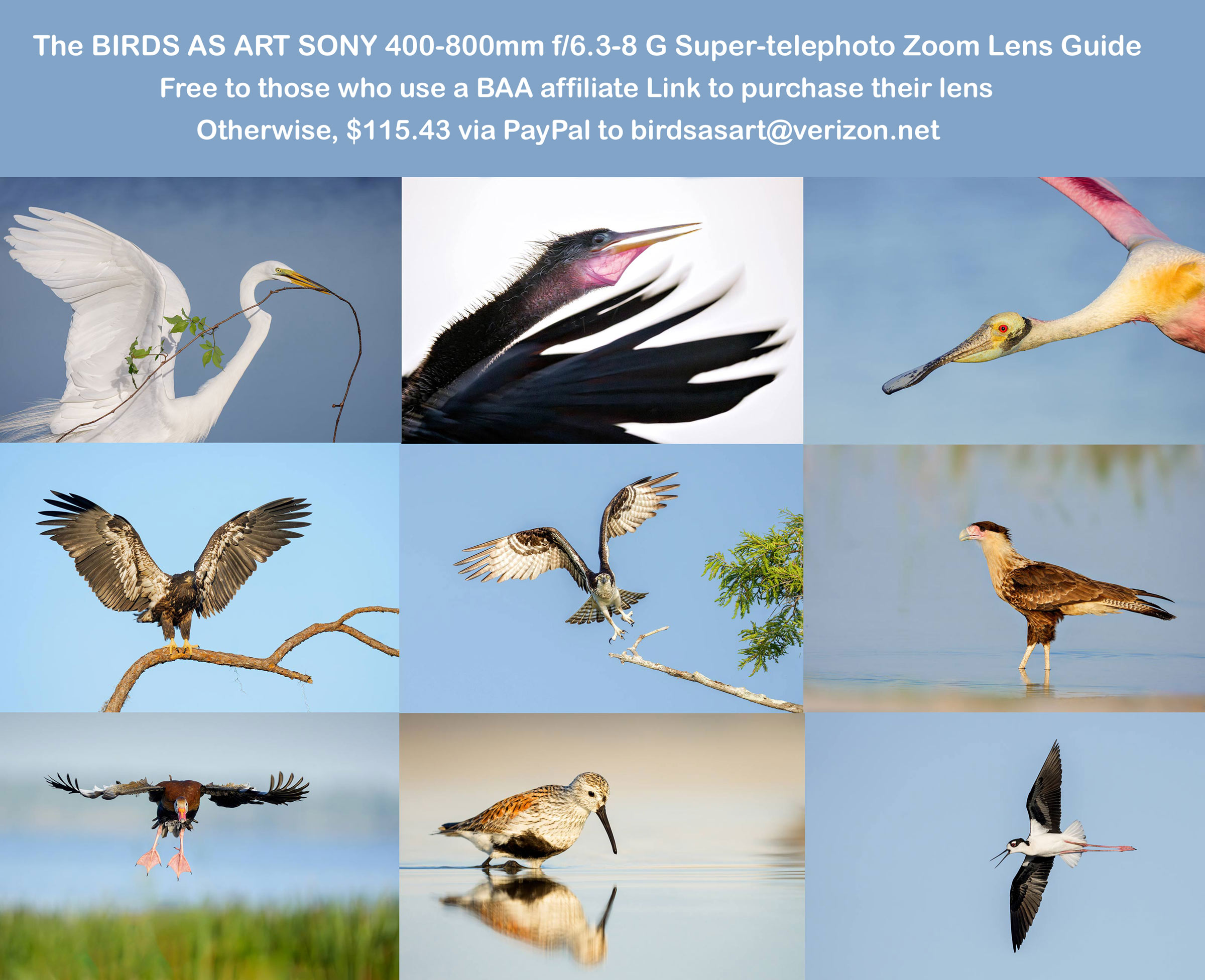
|
|
This guide is free to folks who use one of my two affiliate links to purchase their Sony 400-800 G lens. Otherwise, please send a PayPal for $115.43 to birdsasart@verizon.net and include the words “400-800 Lens Guide” in your e-mail. |
The BIRDS AS ART SONY 400-800mm f/6.3-9 G Super-telephoto Zoom Lens Guide
When I borrowed this lens from Sony, I assumed that at 5.45 pounds it was too heavy to handhold for long and that at f/8 at the long end (800mm,) it was too slow for most bird photography applications. In short, I did not want to like the lens. After a month of using it, I cannot live without it. After returning the loaner, I was miraculously able to get my own from Bedfords on 16 April 2025. In this guide I share everything that I have learned about using the 400-800. For best results, you need to know exactly what you are doing to get the most out of this zoom lens. It would be best, therefore, to consider and study the material in the guide so that you can begin making great images with your new lens.
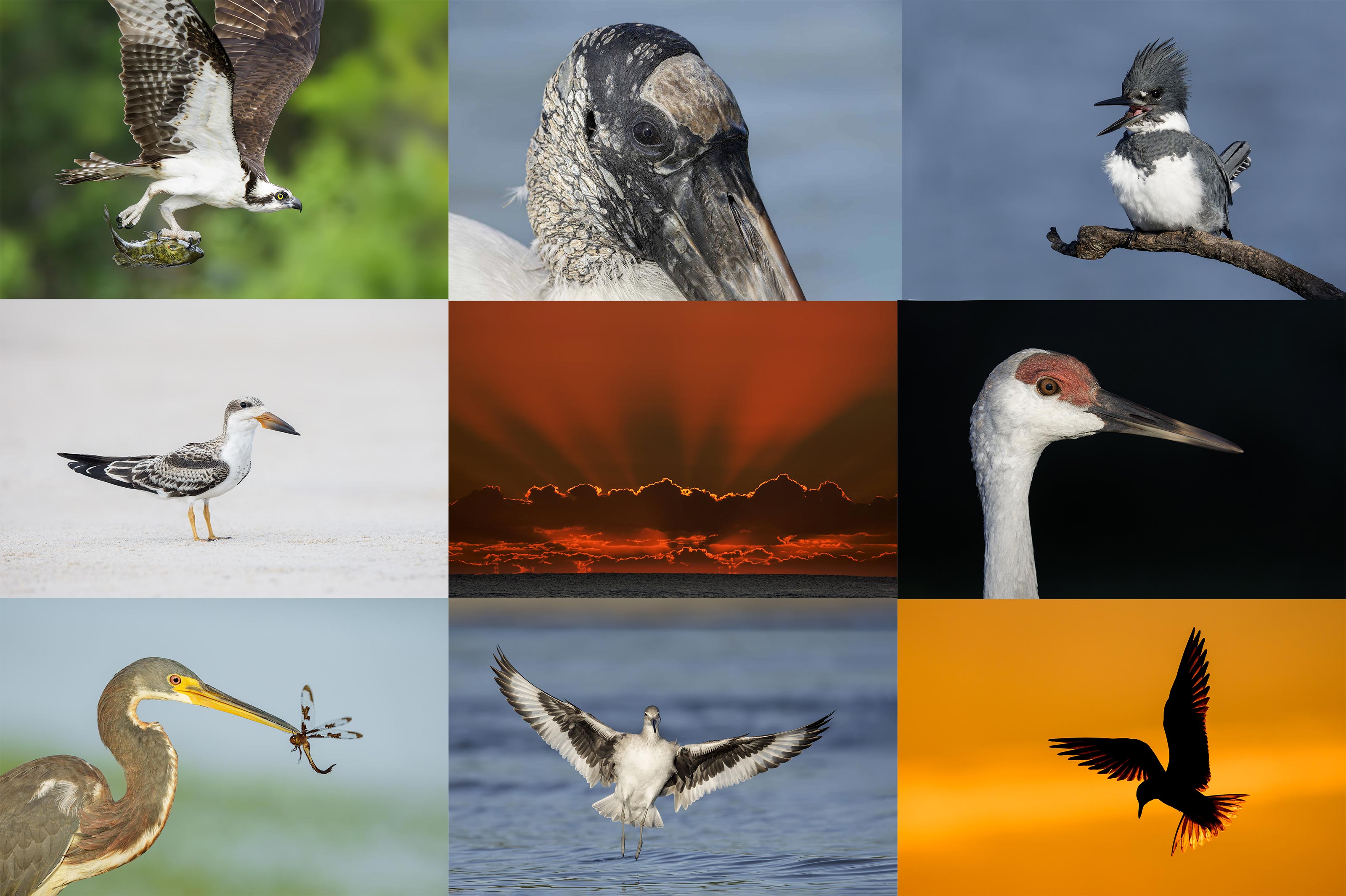
|
|
Free to folks who use one of my two affiliate links to purchase their Sony 400-800 G lens. Otherwise, please send a PayPal for $115.43 to birdsasart@verizon.net and include the words “400-800 Lens Guide” in your e-mail. |
What You Will Learn
You will learn how to deal with the relatively show apertures: f/6.3, f/7.1, and f/8 when working in Manual mode.
You will learn how to ensure that you are working at the widest aperture by working in Shutter Priority mode with AUTO ISO.
If you are able to hand hold the lens, you will learn proper hand holding techniques.
If you can’t, you will learn when, why, and how to employ other options. Those include:
1- The knee-pod, heel-pod, and toe-pod techniques
2- Using the lens on a monopod.
3- The best lens plate and low foot for your 4-8.
4- The best tripod and head for the 4-8 and how best to utilize them.
5- How to use the lens from your vehicle while supporting it on a BLUBB (or not and why not).
6- Detailed instructions on how to set and use the lens controls and buttons:
a- AF/MF
b- DMF Switch
c- Limit Range Switch
d- OSS (Optical Steady Shot) Switch
e- OSS Mode Switch
f- Focus Hold Buttons
The guide also includes a Hand Holding Shutter Speed Primer and an illustrative, educational, and inspiring 67-image gallery.
How to Get This Guide
This guide is free to folks who use one of my two affiliate links to purchase their Sony 400-800 G lens. Otherwise, please send a PayPal for $115.43 to birdsasart@verizon.net and include the words “400-800 Lens Guide” in your e-mail.
What’s Up?
Today is dark and cold (66°, down from the high eighties, and drizzling here on South Padre Island on the south Texas coast. The wind is 24mph from the NW. As soon as the rain quits, we will be headed to the Convention Center with hopes of a second migrant songbird fallout. Whatever you opt to do, I hope that you too choose to have fun and enjoy life. Please remember that happiness is a choice — Byron Katie, The Work.Com
If an item — a Delkin flash card or reader, a Levered-clamp FlexShooter Pro, or a Wimberley lens plate or low foot — for example, that is available from B&H and/or Bedfords, is also available in the BAA Online Store, it would be great, and greatly appreciated, if you would opt to purchase from us. We will match or beat any price. Please remember also to use my B&H affiliate links or to earn 3% cash back at Bedford by using the BIRDSASART discount code at checkout for your major gear purchases. Doing either often earns you free guides and/or discounts. And always earns my great appreciation.
Gear Questions and Advice
Too many folks attending BAA IPTs and dozens of photographers whom I see in the field and on BirdPhotographer’s.Net, are — out of ignorance — using the wrong gear, especially when it comes to tripods and more especially, tripod heads. And the same is true in spades when ordering new camera bodies or lenses. My advice will often save you some serious money and may help you avoid making a seriously bad choice. Please know that I am always glad to answer your gear questions via e-mail. If you are desperate, you can try me on my cell at 863-221-2372. Please leave a message and shoot me a text if I do not pick up.
|
|
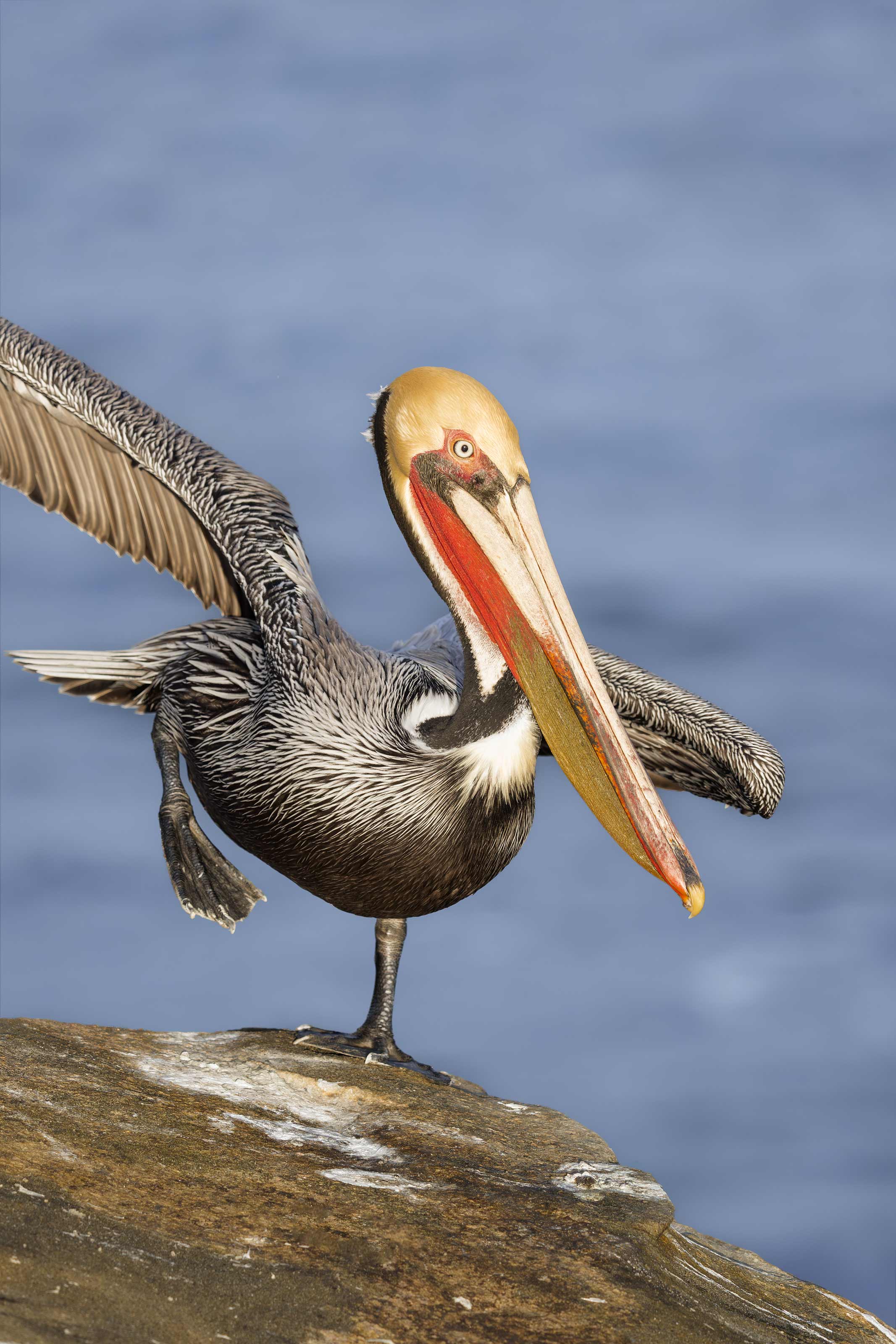
This image was created on 7 January 2026 by yours truly at La Jolla, CA on a San Diego Extended AirBnB IPT. Standing at full height on the lower ledge I used the Wide/AF-C with Bird-Eye/Face Detection performed perfectly. Click on the image to enjoy the larger, inexplicably sharper high-res version. Image #1: Brown Pelican Pacific-race stretching wing |
The Stars of the Show
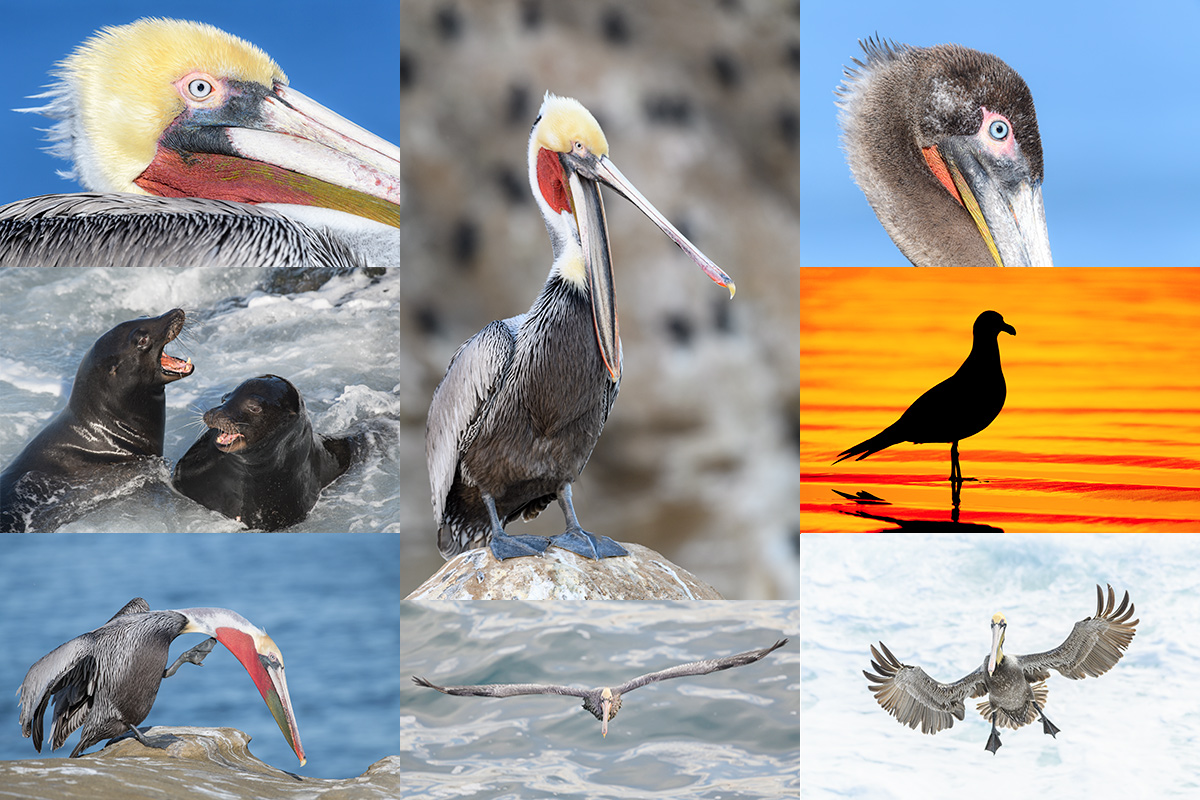
Though there are a great variety of avian subjects that are photographed on every San Diego IPT (along with a several species of marine mammals), it is important to remember that the Pacific race Brown Pelicans are indeed the stars of the show. The almost endless variety of plumages, ages, and behaviors are nothing short of remarkable. Though I have been photographing them for more than three decades, I am excited each and every morning that I head to La Jolla. The colors of the birds in full breeding plumage are boldly exquisite. And no, Mom, I do not have enough pelican pictures already.
|
|
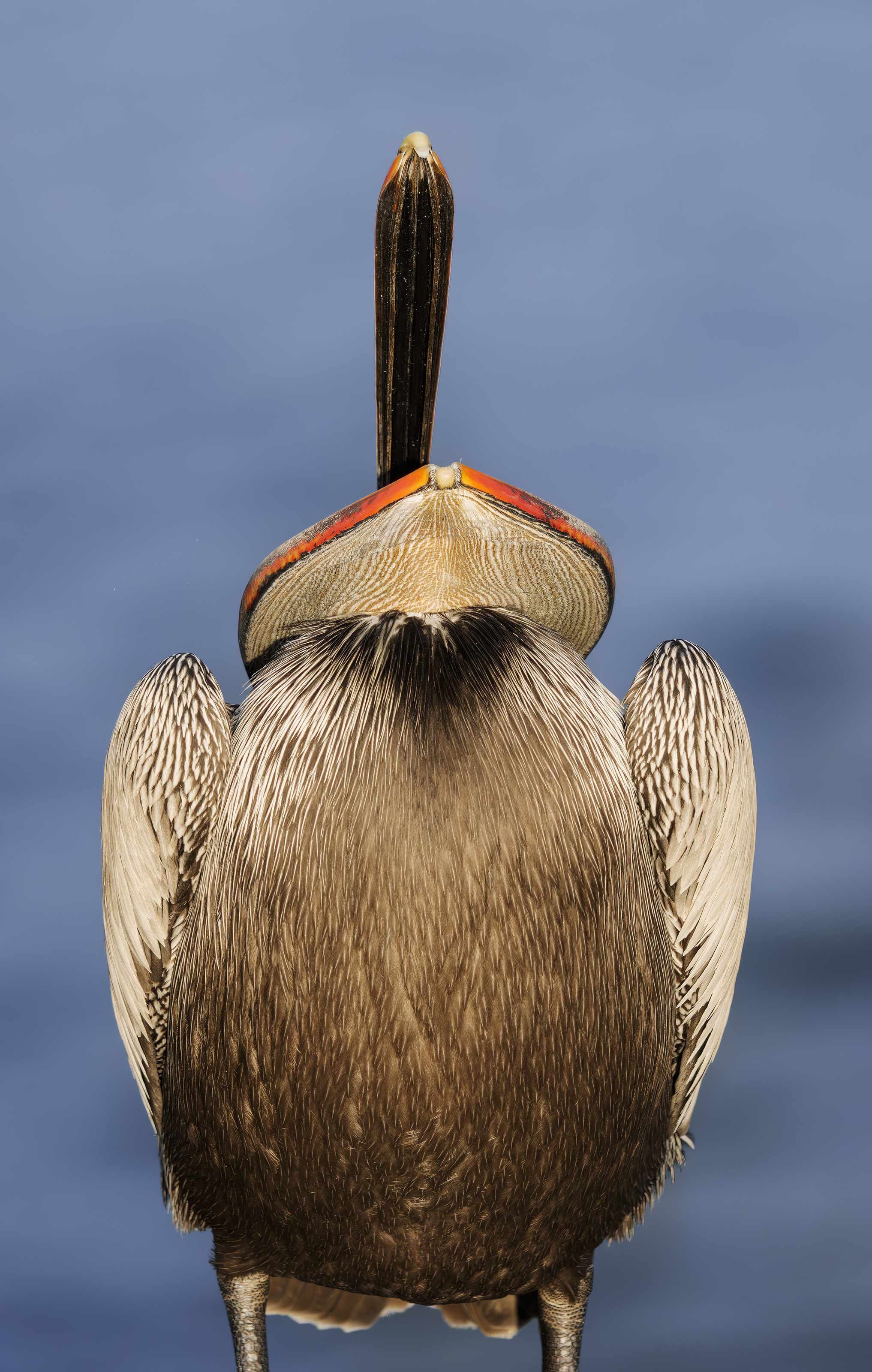
This image was also created on 7 January 2026 by yours truly at La Jolla, CA on a San Diego Extended AirBnB IPT. Standing at full height on the lower ledge I used the Wide/AF-C with Bird-Eye/Face Detection performed perfectly. Click on the image to enjoy the larger, inexplicably sharper high-res version. Image #2: Brown Pelican Pacific-race cleaning bill pouch |
Bill Pouch Cleaning
Sometimes before and sometimes after a head throw, all species of pelicans will often tilt their heads back while thrusting their necks and upper breasts into their bill (gular) pouches to clean and stretch them. They perform this unique maneuver by inverting the pouch, pulling it down over their neck and chest to shake out debris, remove scales, and maintain flexibility. This behavior, often called “glottis exposure,” can make the bird look like it is turning itself inside out.
You can see another, less abstract photo of this common behavior in the blog post here. This behavior is often a clue that the bird will be doing a head throw. One of the photographic problems is that most side view bill pouch cleaning images are best in horizontal format while most head throws work best as vertical captures. You either need to be really quick or zoom well out (if you are using a zoom lens).
|
|
This image was also created on 7 January 2026 by yours truly at La Jolla, CA on a San Diego Extended AirBnB IPT. Again, standing at full height on the lower ledge I used the Wide/AF-C with Bird-Eye/Face Detection performed perfectly. Click on the image to enjoy the larger, inexplicably sharper high-res version. Image #3: Brown Pelican Pacific-race over-the-shoulder portrait |
Stopping Down for Over-the-Shoulder Images
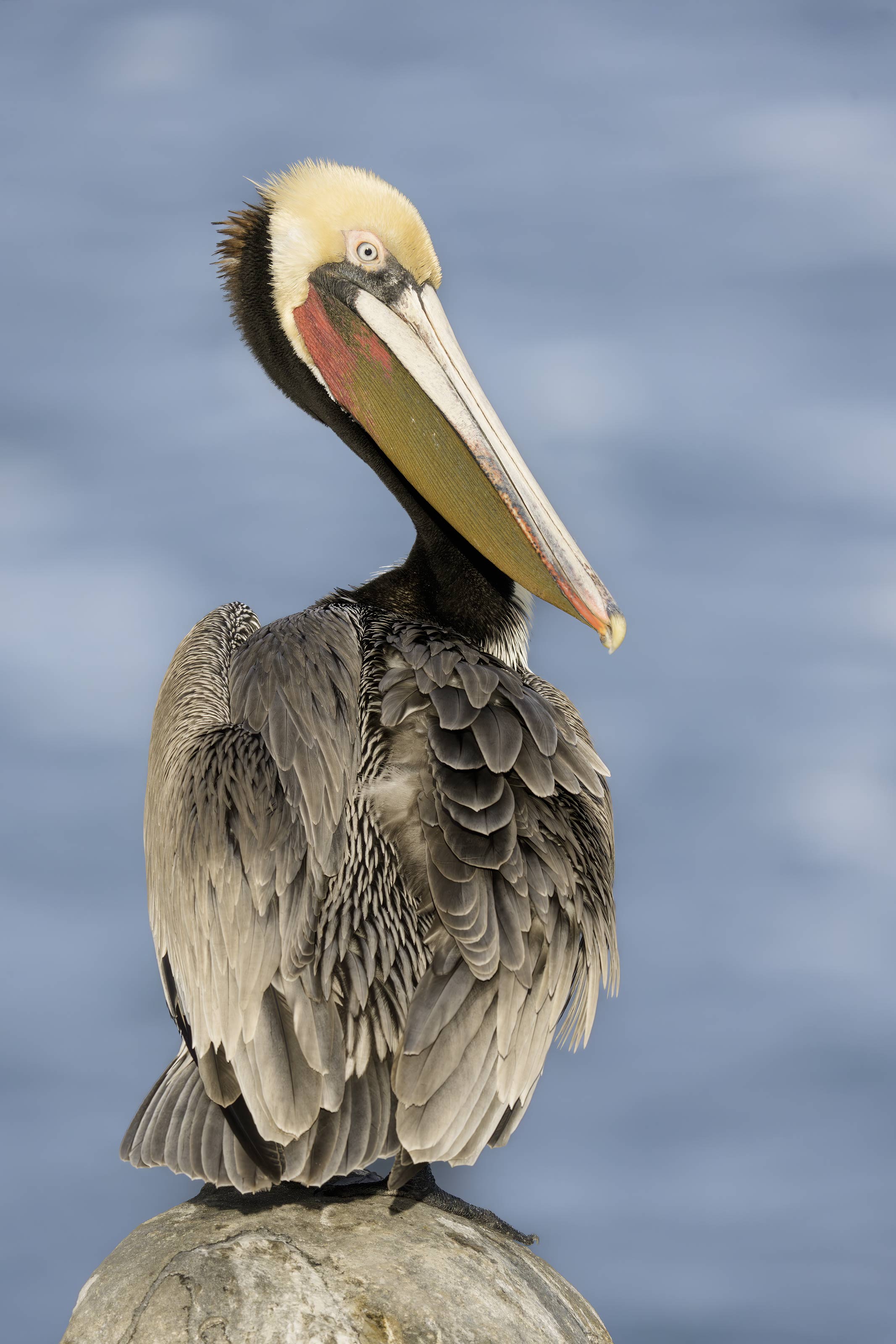
Proper technique here called for me to stop down at least to f/11 so that the additional depth of field would have sharpened the feathers on the bird’s back and folded wings. With the lens on a tripod and lots of light I could even have gone to 1/500 second at f/16, stopped down two full stops. This principle holds fast whenever you are doing over-the-shoulder work with large in the frame subjects. Do understand that stopping down will also increase background detail …
|
|
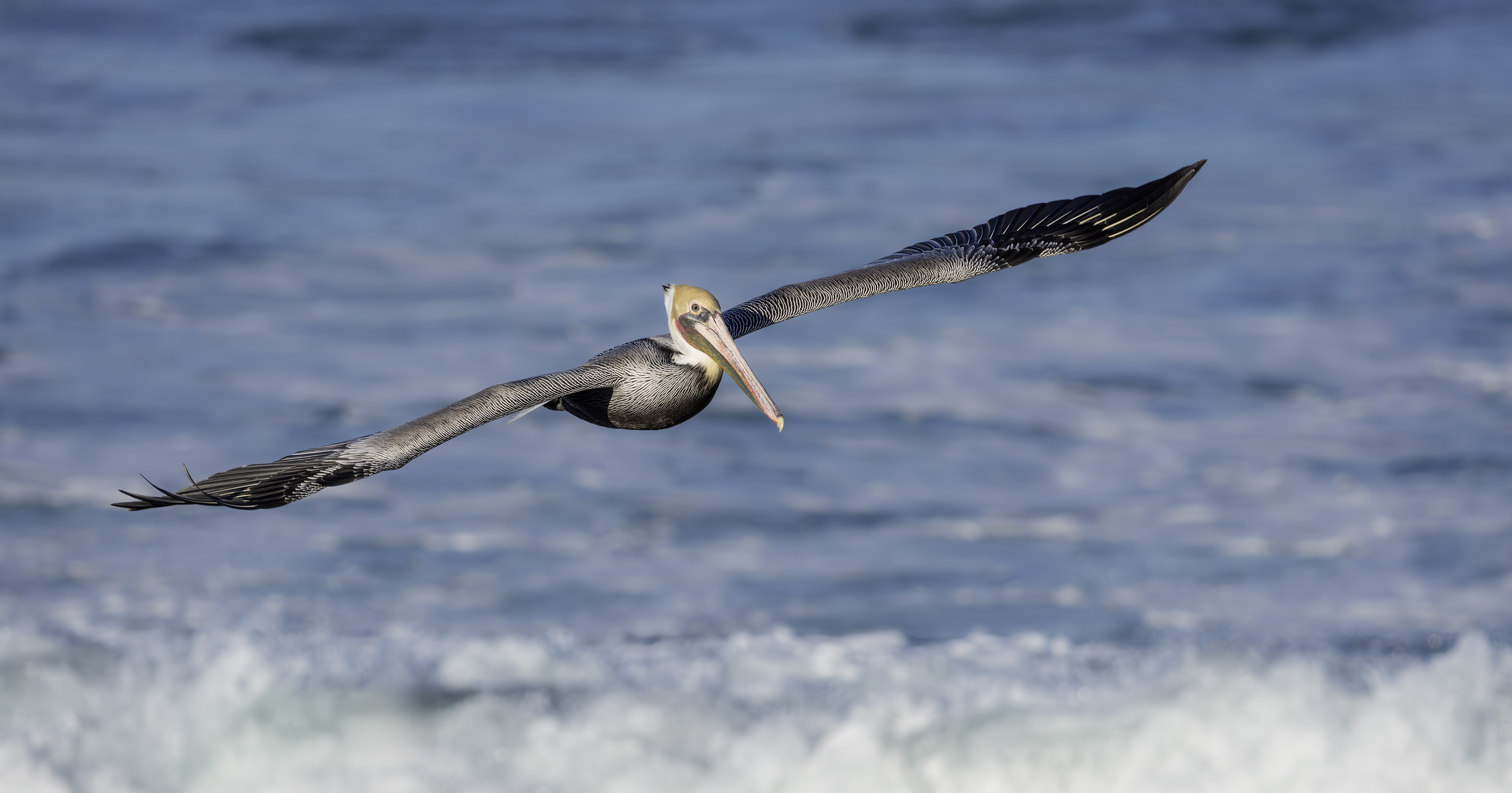
This image was created on 9 January 2026 by yours truly at La Jolla, CA on a San Diego Extended AirBnB IPT. Standing at full height on the lower ledge I used the Wide/AF-C with Bird-Eye/Face Detection performed perfectly. Click on the image to enjoy the larger, inexplicably sharper high-res version. Image #4: Brown Pelican Pacific-race in flight over breaking wave |
Horses for Courses
On the current Texas Coast trip, I have been using the 300mm f/2.8 GM lens almost exclusively for the songbirds and the 600mm f/4 GM lens on the mudflats. Last year I left the 600mm f/4 lens at home and used the 400-800 almost exclusively for the pelicans in La Jolla. The versatility of this lens makes it a great choice for the pelicans and the fact that it is most often sunny in San Diego makes the relatively slow f/8 maximum aperture a non-issue. Its great reach allows for tight head shots and makes it a great flight lens as well. Sony folks who do not own this lens will do fabulously well with the lighter, faster, hand-holdable Sony FE 200-600mm f/5.6-6.3 G OSS Lens.
There are lots of options for Canon folks including any version of the 100-400, the hugely popular Sony FE 200-600mm f/5.6-6.3 G OSS lens, or even the lens I love to trash, the Canon RF 200-800mm f/6.3-9 IS USM Lens (Canon RF). Nikon folks can go with any version of their 80 or 100 to 400 lenses or the superb Nikon NIKKOR Z 180-600mm f/5.6-6.3 VR lens (Nikon Z). Lastly, Olympus folks will find that the OM SYSTEM M. Zuiko 150-400mm f/4.5 TC 1.25 IS PRO lens was made for pelican photography!
|
|
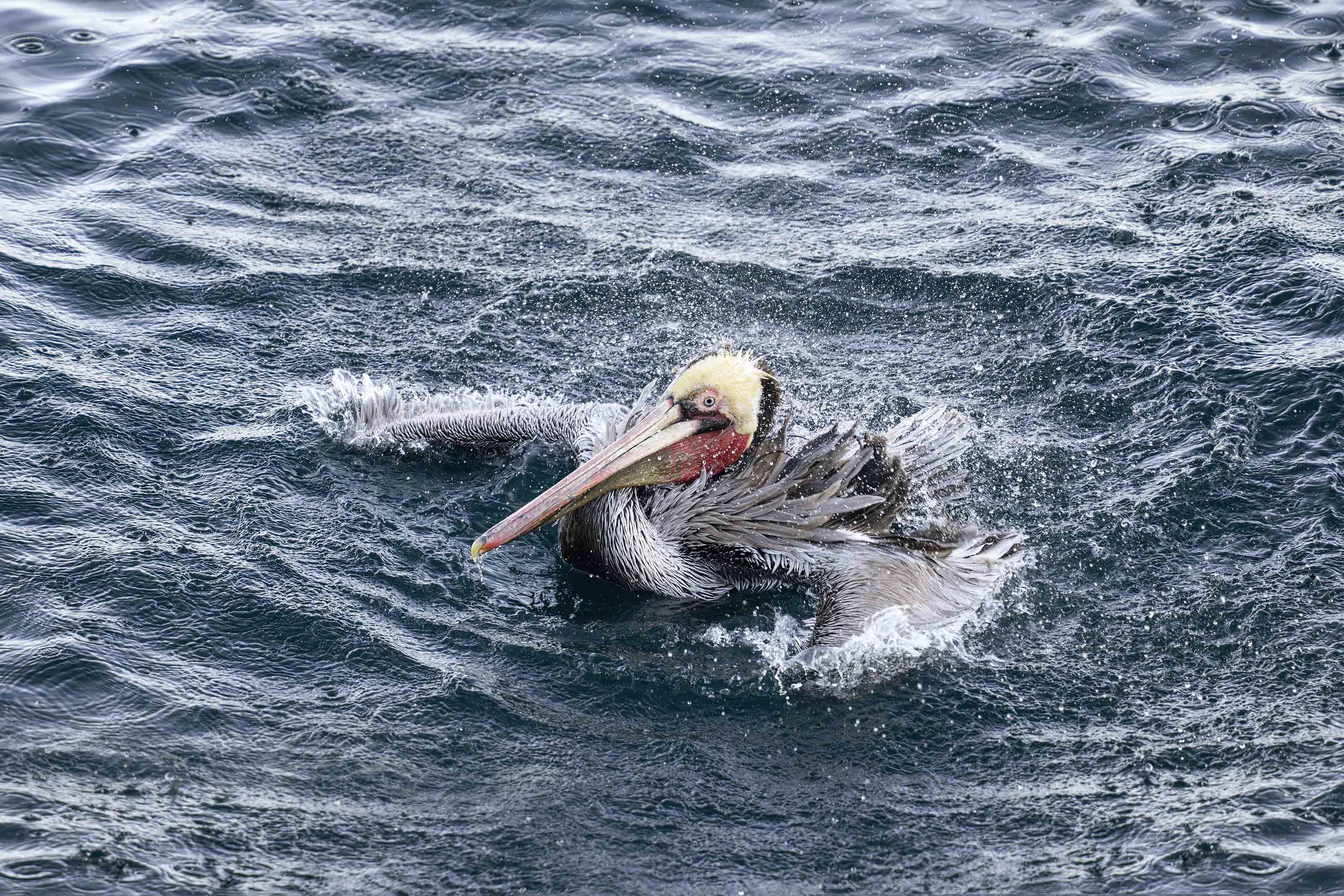
This image was created by yours truly on 15 January on at La Jolla, CA on a San Diego Extended AirBnB IPT. Standing at full height on the lower ledge, I used the hand held Sony FE 300mm f/2.8 GM OSS Lens (Sony E) with the Sony FE 2x Teleconverter and the Latest Greatest Sony Flagship Body, the a1 II Mirrorless Camera. ISO 3200. Exposure determined via Zebras with ISO on the Thumb Wheel; 1/1000 sec. at f/5.6 (wide open) in Manual mode. AWB at 7:33:40am in the shade of the cliff. Tracking: Zone/AF-C with Bird Eye/Face Detection enabled performed perfectly. Image #5: Brown Pelican Pacific-race bathing |
Taming the Blues
Notice the varied tones of BLUE in each of today’s featured images. That even though the background in each image is the Pacific Ocean. The very best way to learn to adjust the tonality, saturation, hue, and luminance of the BLUEs in your images is to attend a San Diego IPT as we do several image optimizations almost every day. The next best way is immediately below.

|
The BIRDS AS ART Digital Basics Collection: $199.00. |
The BIRDS AS ART Digital Basics Collection
The best news is that learning to use the tools and techniques that I use to improve your images is made fairly simple for those who purchase, use and study the Digital Basics offerings from BIRDS AS ART. One of the great skills that I have been blessed with is writing coherent how-to instructions that can be followed easily by a third grader. Learn to unlock the potential in your images by purchasing the Digital Basics Collection here. The collection includes the Digital Basics II PDF, and all the videos in the Digital Basics III and the Digital Basics IV Video Series.
The original Digital Basics file was created in the mid-aughts when I saw countless numbers of folks creating sharp, nicely designed, well exposed images and then ruining them in Photoshop. I sold enough copies at $20.00 a pop to pay for my $68,000 lap pool! As my workflow changed and improved, various versions of Digital Basics were created to help folks learn to improve their images at the computer during post processing. Save an incredible $86.00 by purchasing the Digital Basics Collection here. Folks who own one or two of the three afore-mentioned products are invited to contact me via e-maill for personalized discount information.
|
|
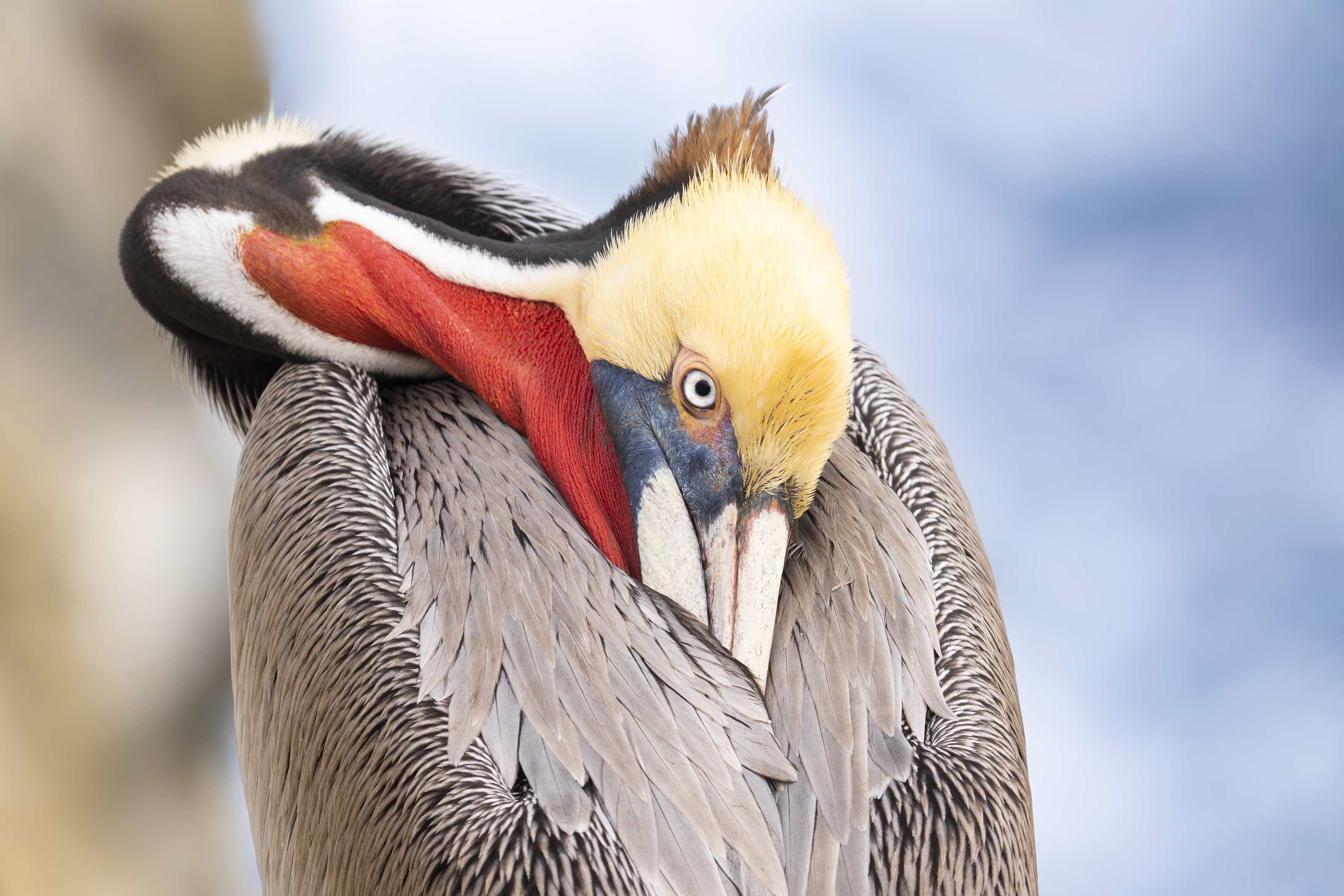
This image was created yours truly on 21 January 2026 at La Jolla, CA on a San Diego Extended AirBnB IPT. Standing at full height on the downhill sidewalk, I used the Tracking: Zone/AF-C with Bird-Eye/Face Detection performed perfectly. Click on the image to enjoy the larger, inexplicably sharper high-res version. Image #6: Brown Pelican Pacific-race resting |
1120mm
Regular visitors to the blog know that I have loved the Sony 400-800 lens ever since I got my hands on one early last spring. When working on a tripod, adding a 1.4X teleconverter gives you an effective focal length of 1120mm (albeit at f/11). The sharpness of the results are nothing short of astounding. Sony shooters who photograph birds need to consider this relatively inexpensive super-telephoto zoom lens even if they already own and use the fabulous 200-600 G lens. The two are totally different animals.
|
|
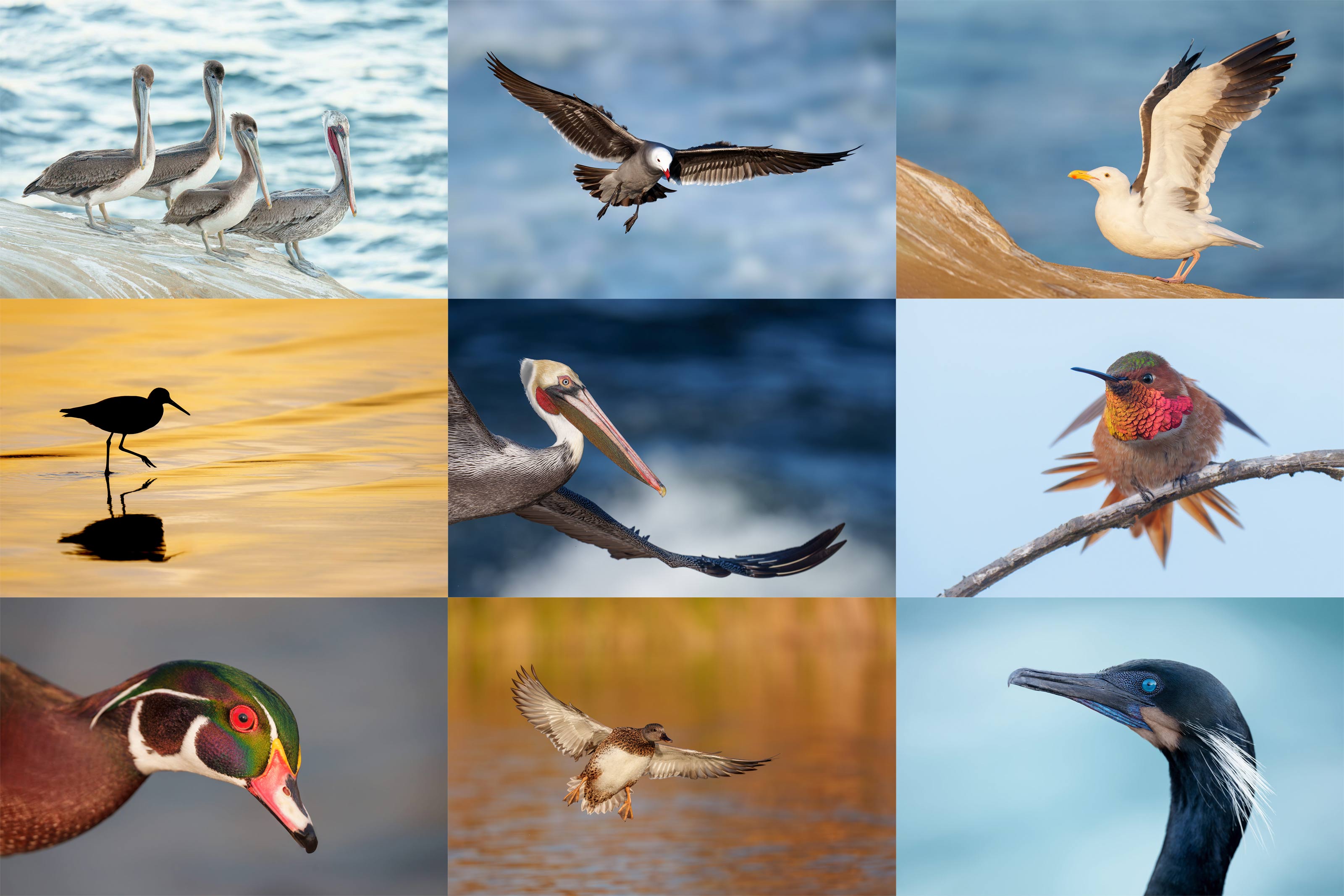
San Diego offers an incredible variety of attractive avian subjects, including and especially the Pacific race of Brown Pelican. Clockwise from top left back to center: juvenile and sub-adult Brown Pelicans; Heermann’s Gull; Western Gull; Allen’s Hummingbird; Brandt’s Cormorant; Gadwall hen; Wood Duck drake; Willet; Brown Pelican tight flight. Click on the composite to enjoy a larger version. |
The 2027 San Diego Brown Pelicans (and more!) IPTs
San Diego IPT #1: 4 1/2 DAYS: WED 6 JAN thru the morning session on SUN 10 JAN 2027: $2699.00. Deposit: $699.00. Limit: 4 photographers.
San Diego IPT #2: 4 1/2 DAYS: TEUS 19 JAN thru the morning session on SAT 23 JAN 2027: $2699.00. Limit: 4 photographers/Openings: 3.
AirBnB accommodations and ground transport with the leader are available for both IPTs and for the In-the-Field Instructional Sessions on a first come, first served basis. Please e-mail for details and information on personalized pre- and post-IPT morning sessions. Staying in the group AirBnB allows for increased learning and less travel for all.
Morning BAA In-the-Field Instructional Sessions (ITFIS) followed by brunch and an Image Review & Photoshop session: $499.00/per session
Available dates: JAN 11-20 2027. AirBnB accommodations possibly available for multiple sessions. Please get in touch with questions or to register with an e-mail to samandmayasgrandpa@att.net and please shoot me a text to 863-221-2372.
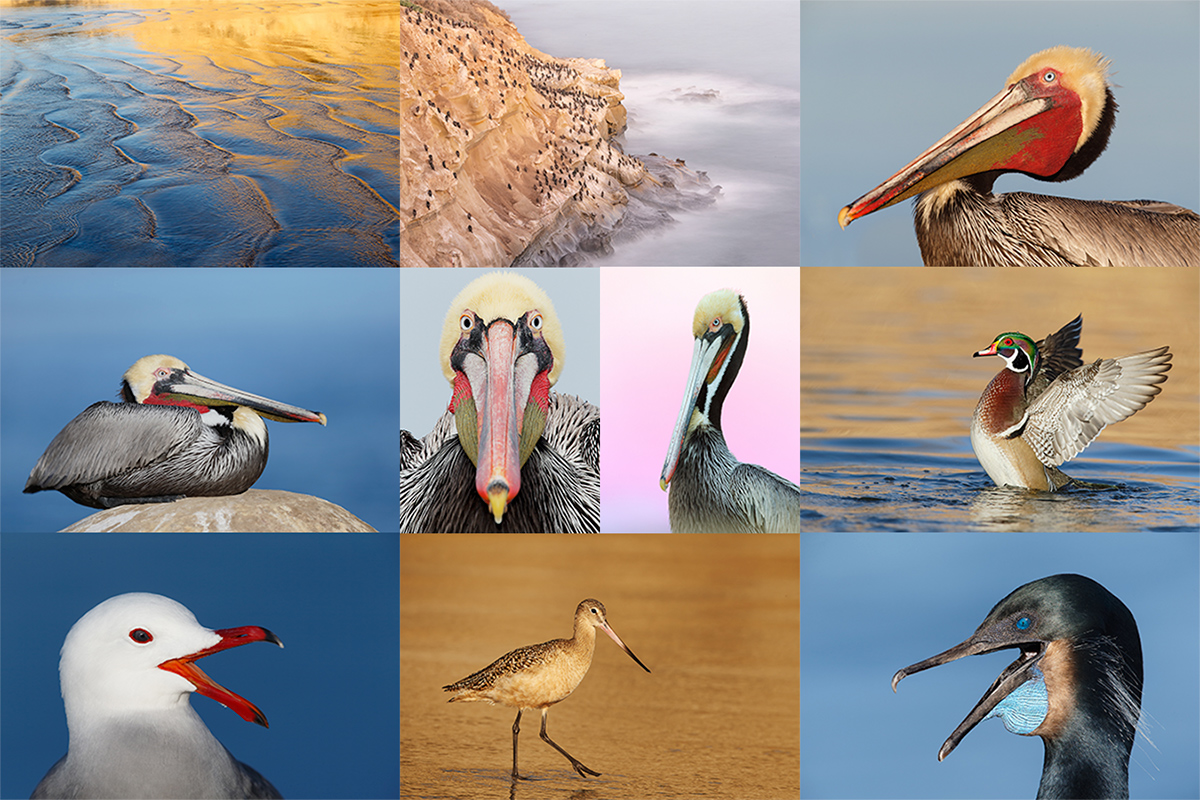
Join me in San Diego to photograph the spectacular breeding plumage Brown Pelicans with their fire-engine red and olive green bill pouches; Brandt’s (nesting) and Double-crested Cormorants; breeding plumage Wood and Ring-necked Ducks; other duck species possible including Lesser Scaup, Redhead, Northern Shoveler and Surf Scoter; a variety of gulls including Western, California, and the gorgeous Heermann’s, all in full breeding plumage; shorebirds including Marbled Godwit, Willet, Sanderling and Black-bellied Plover; many others are possible including Least, Western, and Spotted Sandpiper, Whimbrel, Black and Ruddy Turnstone, Semipalmated Plover, and Surfbird; Harbor Seals and California Sea Lions (both depending on the current regulations and restrictions). And as you can see by studying the IPT cards, there are some nice bird-scape and landscape opportunities as well. Not to mention a ton of excellent flight photography opportunities and instruction.
Please note: where permitted and on occasion, ducks and gulls may be attracted (or re-located) with offerings of grains or bread.
|
|
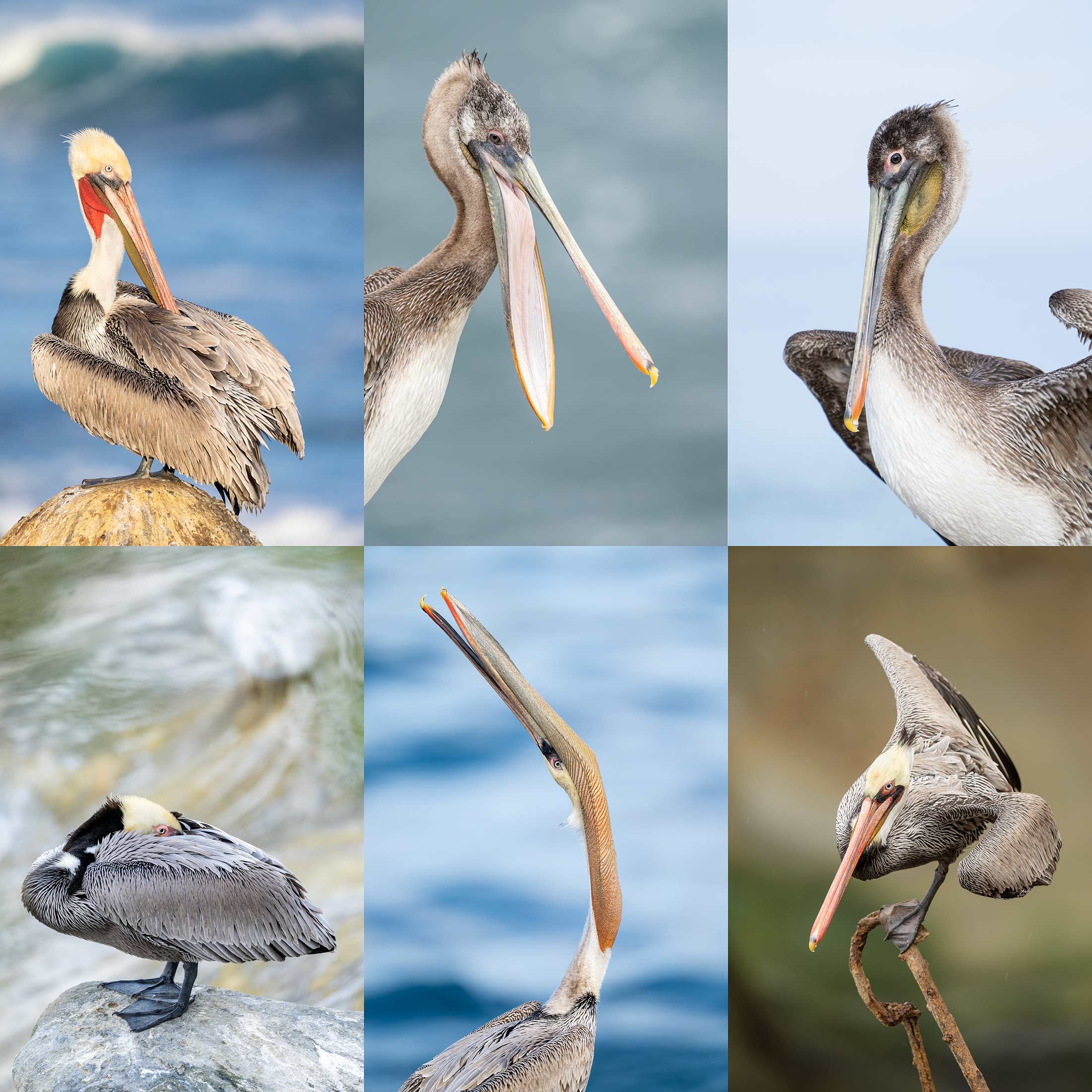
San Diego offers a wealth of very attractive natural history subjects, including and especially the Pacific race of California Brown Pelican. With annual visits spanning more than four decades, I have lots of photographic experience there … Click on the composite to enjoy a larger version. |
Learning Exposure, Whether You Like It Or Not
Whether you like it or not, we will be beating the subject of exposure like a dead horse. In every new situation, you will hear my thoughts on exposure along with my thoughts on both Nikon and Canon histograms and SONY Zebras. Whether you like it or not, you will learn to work in manual mode so that you can get the right exposure every time (as long as a bird gives you ten seconds with the light constant). Or two seconds with SONY zebras … And you will learn what to do when the light is changing constantly. What you learn about exposure will be one of the great takeaways on every IPT.
|
|
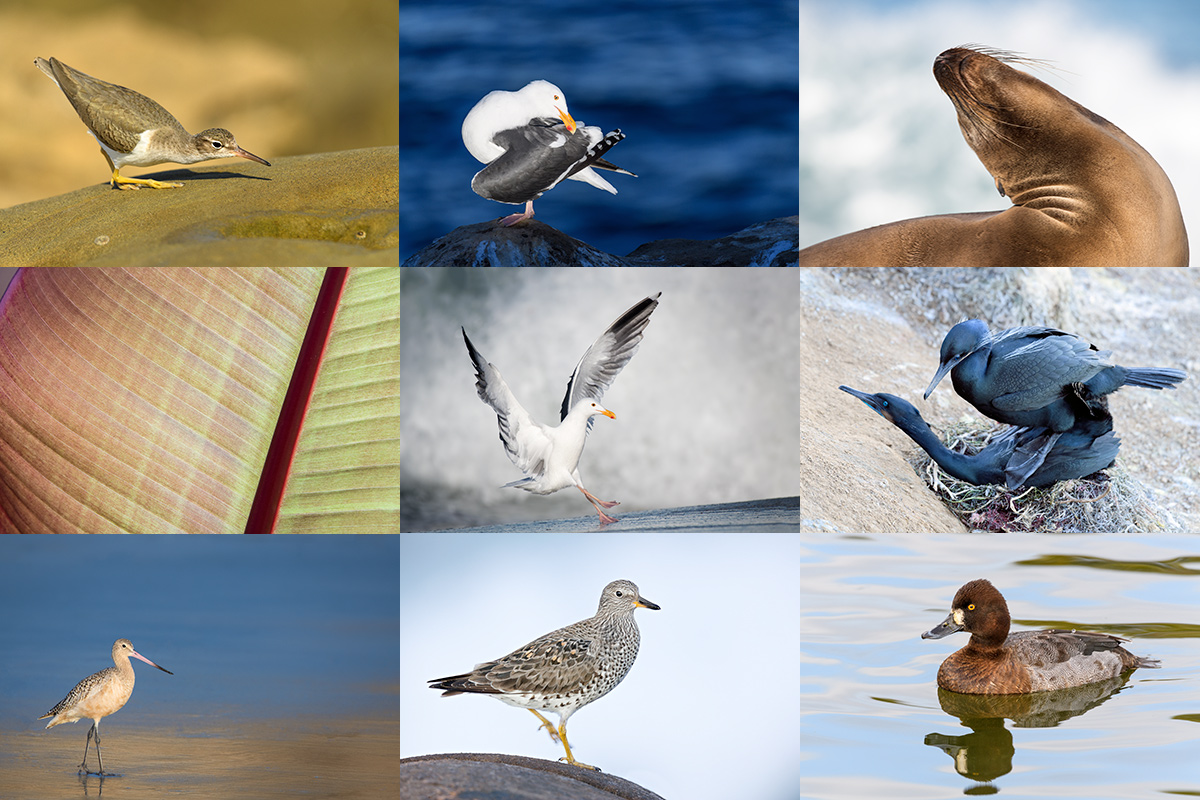
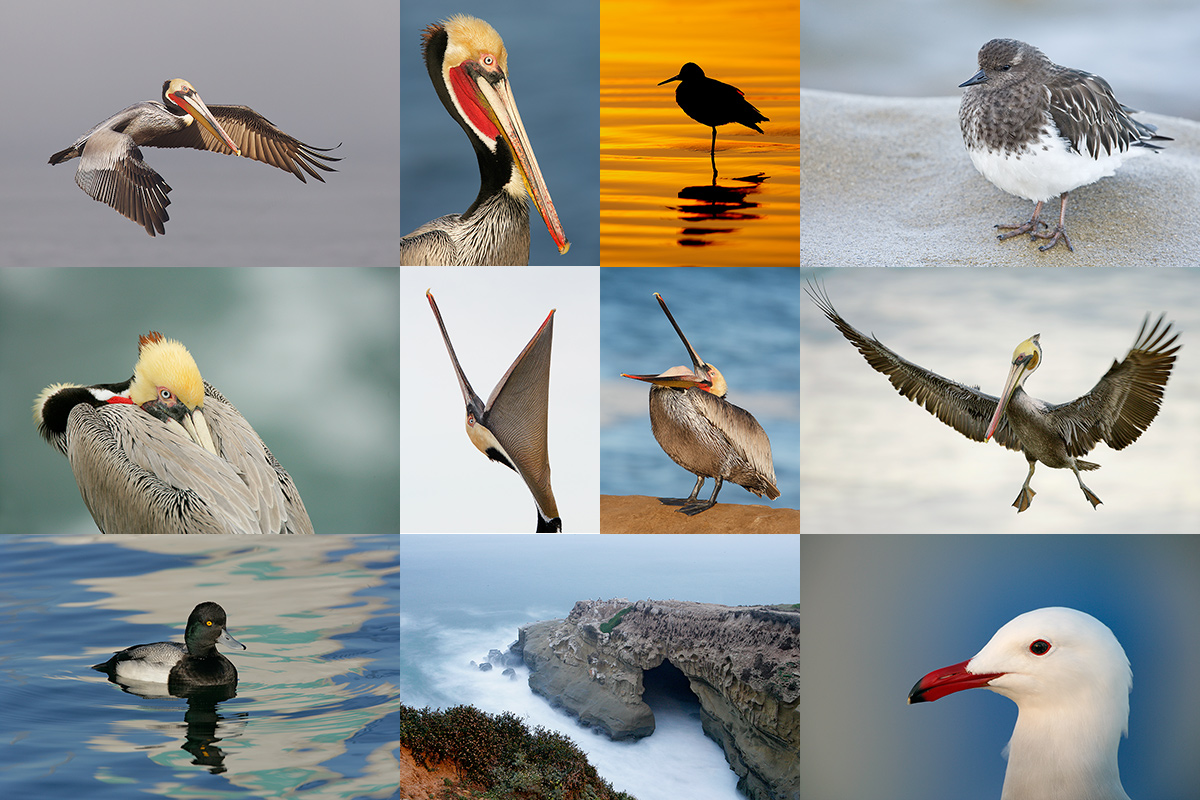
Though the pelicans will be the stars of the show on this IPT, there will be many other handsome and captivating subjects in wonderful settings. Click on the composite to enjoy a larger version. |
It Ain’t Just Pelicans
With gorgeous subjects just sitting there waiting to have their pictures taken, photographing the pelicans on the cliffs is about as easy as nature photography gets. With the winds from the east almost every morning, there is usually some excellent flight photography, at times with 70-200mm lenses! And the pelicans are almost always doing something interesting: preening, scratching, bill pouch cleaning, or squabbling. And then there are those crazy head throws that are thought to be a form of intra-flock communication. You will be guided as to how to make the best of those opportunities. Depending on the weather, the local conditions, and the tides, there are a variety of other fabulous photo chances available in and around San Diego. Each IPT will include one or two duck sessions.
|
|
|
Did I mention that there are lots of great birds and natural history subjects in San Diego in winter? Click on the composite to enjoy a larger version. |
The San Diego Details
These IPTs will include five 3-hour morning photo sessions, four 1 1/2-hour afternoon photo sessions, and four working brunches (included) that will include image review and Photoshop sessions. On rare cloudy days, we may — at the leader’s discretion, stay out in the morning for a long session and skip that afternoon shoot. To ensure early starts, breakfasts will be your responsibility. And so that we can get some sleep, dinners will be on your own as well. In the extremely unlikely event that Goldfish Point is closed due to local ordinance (or whimsy) — that has never happened in the past fifty years, I will of course do my very best to maximize our photographic opportunities.
|
|
San Diego offers a wealth of very attractive natural history subjects, including and especially the Pacific race of California Brown Pelican. With annual visits spanning more than four decades, I have lots of photographic experience there. Click on the composite to enjoy a larger version. |
Deposit Info
A $699 deposit plus half the cost of your AirBnB lodging is required to hold your slot for one of the 2027 San Diego IPT. You can send a check (made out to “BIRDS AS ART”) to us here: BIRDS AS ART, PO Box 7245, Indian Lake Estates, FL, 33855, or call Jim or Jennifer at the office with a credit card at 863-692-0906. Your balance, payable only by check, is due three months before the trip.
|
|
|
Variety is surely the spice of life in San Diego. Click on the composite to enjoy a larger version. |
Getting Up Early and Staying Out Late
On all BIRDS AS ART IPTS including and especially the San Diego IPT, we get into the field early to take advantage of unique and often spectacular lighting conditions and we stay out late to maximize the chances of killer light and glorious sunset silhouette situations. We often arrive at the cliffs a full hour before anyone else shows up to check out the landscape and seascape opportunities.
Typos
With all blog posts, feel free to e-mail or to leave a comment regarding any typos or errors.









Glad to see the blog is back!
Under “Bill Pouch Cleaning”: into their bill (gulag) pouches. I believe that should be “gular” pouch!
And under “Horses for Courses”: even the lens I love to trash, the Sony FE 200-600mm f/5.6-6.3 G OSS lens. I’m guessing that should be the Canon 200-800mm?
No. 2 for me due to unusual pose of the bird. #6 is a close second with the position of the head and those colors. Thanks for sharing.