
Your Calls
1- Which image do you most wish was yours?
2- Which image is the most creative?
3- Which image is the most dramatic?
4- Which image features the most interesting light?
Note: Copy editing, re-crafting, technical refinement, and formatting for this blog post were assisted by Gemini AI.
What’s Up?
With the intermittent heavy rains, there have been some large freshwater pools at Nickerson so we have enjoyed some fabulous photography. With cloudy bright skies and a wind from the east on Saturday morning past, I created 10,108 images of gulls, terns, and shorebirds. A tame Buff-breasted Sandpiper was the highlight of the morning. Since then, the pools have persisted but we’ve been dealing with wind against sun conditions so things have been tough.
Tomorrow is Tuesday 25 August 2026. The forecast is for WNW winds with clear skies. Not great. Whatever you opt to do, I hope that you choose to have fun and enjoy life. Please remember that happiness is a choice — Byron Katie – The Work.Com
If an item — a Delkin flash card or reader, a Levered-clamp FlexShooter Pro, or a Wimberley lens plate or low foot — for example, that is available from B&H and/or Bedfords, is also available in the BAA Online Store, it would be great, and greatly appreciated, if you would opt to purchase from us. We will match or beat any price. Please remember also to use my B&H affiliate links or to earn 3% cash back at Bedford by using the BIRDSASART discount code at checkout for your major gear purchases. Doing either often earns you free guides and/or discounts. And always earns my great appreciation.
Gear Questions and Advice
Too many folks attending BAA IPTs and dozens of photographers whom I see in the field and on BirdPhotographer’s.Net, are — out of ignorance — using the wrong gear, especially when it comes to tripods and more especially, tripod heads. And the same is true in spades when ordering new camera bodies or lenses. My advice will often save you some serious money and may help you avoid making a seriously bad choice. Please know that I am always glad to answer your gear questions via e-mail. If you are desperate, you can try me on my cell at 863-221-2372. Please leave a message and shoot me a text if I do not pick up.
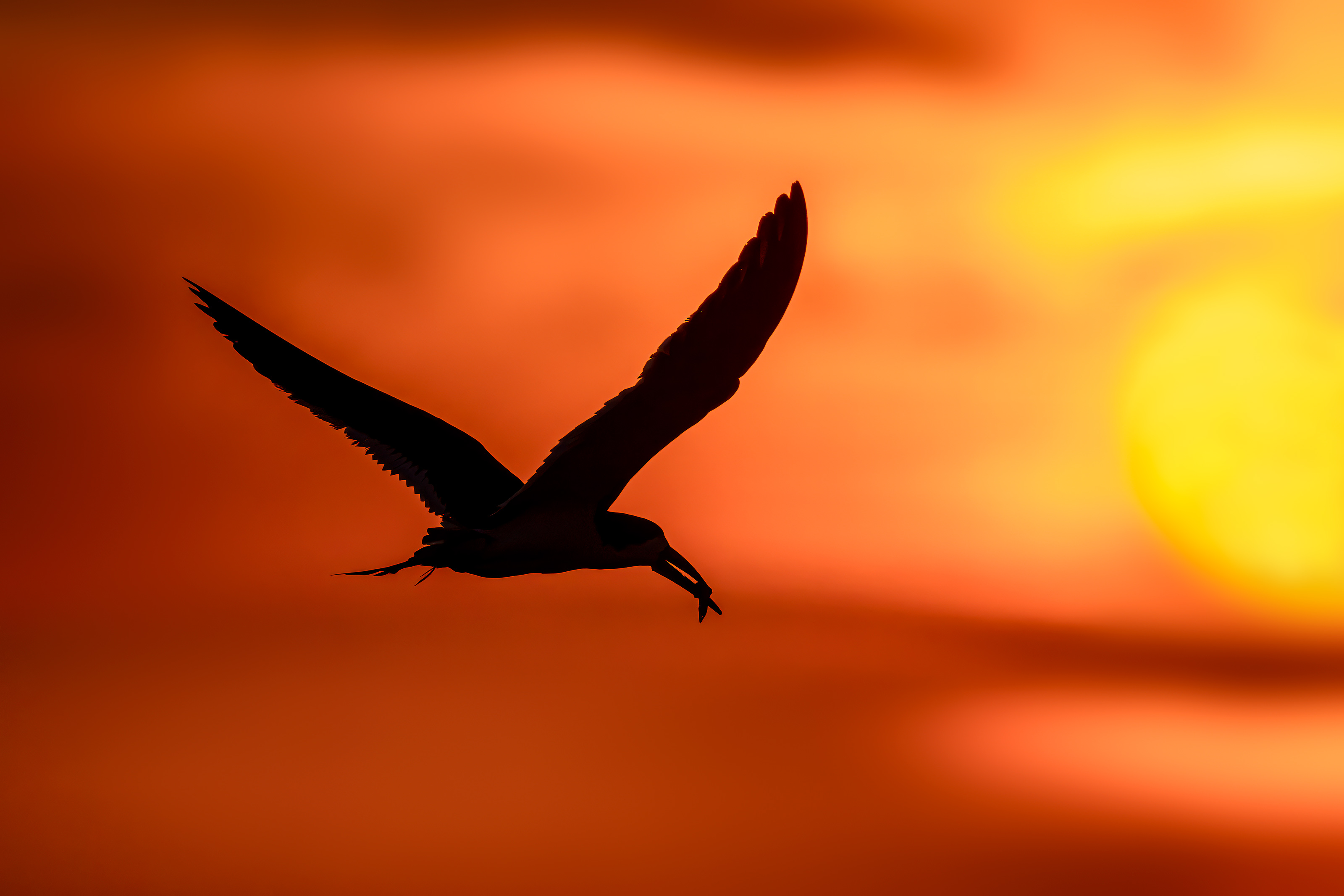
|
|
This image was created on 7 August 2026 at Nickerson Beach Park, Lido Beach, Long Island, NY. Seated on a Rubbermaid Roughneck Step-Stool, I used the hand held Sony FE 400-800mm f/6.3-8 G OSS lens (Sony E) (at 705mm) and The Latest Greatest Sony Flagship Body, the a1 II Mirrorless Camera. The exposure was determined by Zebras with Exposure Compensation (EC) on the Thumb Dial. Multi Metering -2.3 stops. AUTO ISO set ISO 2000: 1/32000 second! (not a typo) at f/8 (wide open) in Shutter Priority mode.. AWB at 6:10:21am right after sunrise. Wide/AF-C with Bird-Eye/Face Detection performed perfectly. Click on the image to enjoy the larger high-res version. Image #1: Black Skimmer with killifish at sunrise |
Sunball Photography
With clear morning skies and winds out of the south or west at Nickerson Beach, it is imperative to arrive early and focus on backlighting and silhouettes. As regular readers know, this is where Shutter Priority with Auto ISO and Exposure Compensation (EC) set to a convenient dial truly shines. When working with colorful skies, you’ll need to dial in positive EC. However, if the sun is likely to enter your frame, switch to negative EC—the brighter the sun, the darker your exposure needs to be to avoid completely blowing out the sun disk.
|
|
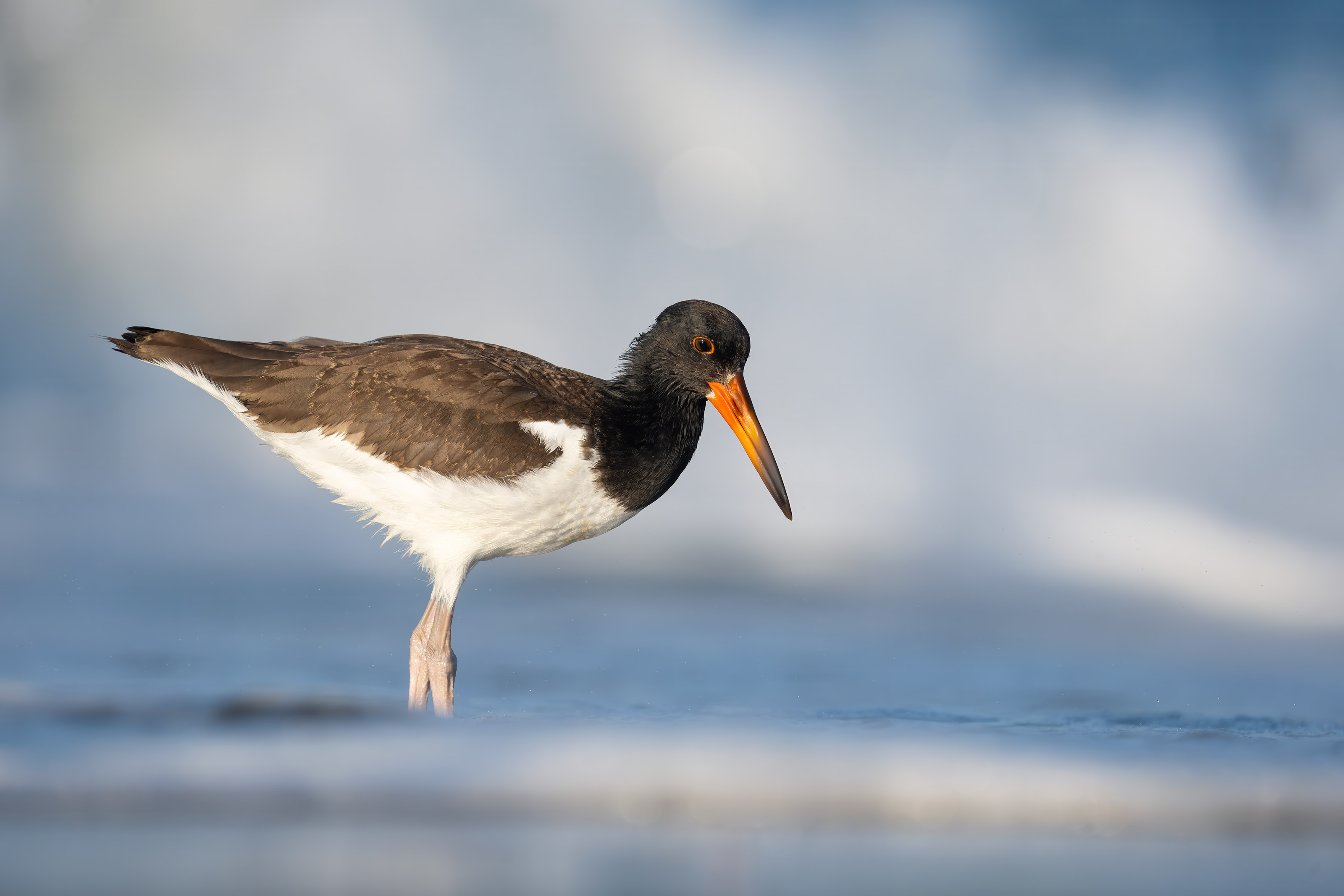
This image was also created on 7 August 2026 at Nickerson Beach Park, Lido Beach, Long Island, NY. Seated on a Rubbermaid Roughneck Step-Stool, I worked off the articulated rear screen using the toe-pod technique with the handheld Sony FE 400-800mm f/6.3-8 G OSS lens (Sony E) (at 800mm) and The Latest Greatest Sony Flagship Body, the a1 II Mirrorless Camera. The exposure was determined by Zebras with ISO on the rear wheel. ISO 1250: 1/2500 second at f/8 (wide open) in Manual mode. AWB at 7:12:16am on sunny morning. Tracking: Zone/AF-C with Bird-Eye/Face Detection performed perfectly. Click on the image to enjoy the larger high-res version. Image #2: American Oystercatcher juvenile in surf |
Wind Against Sun Shorebirds
Once the sun rises on clear mornings with south or west winds, traditional flight photography is pretty much out the window. However, because shorebirds are only impacted by very strong breezes, you will still have plenty of great opportunities for birds on the deck—down the sun angle and square to the back of the camera. By getting as low as possible, you’ll throw the background far out of focus, creating much greater subject separation than if you were standing.
|
|
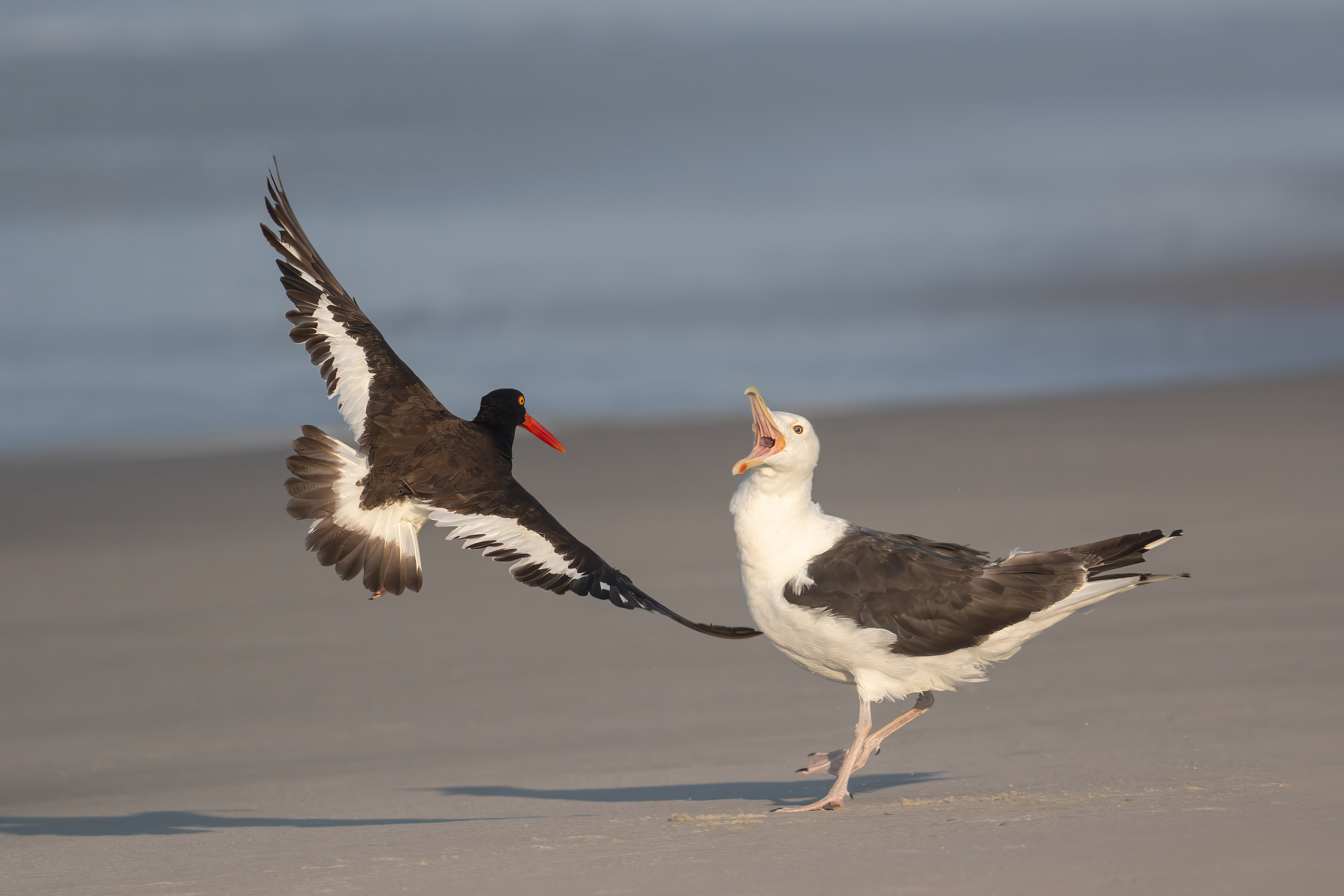
This image was created on 8 August 2026 at Nickerson Beach Park, Lido Beach, Long Island, NY. Seated on a Rubbermaid Roughneck Step-Stool, I used the hand held Sony FE 400-800mm f/6.3-8 G OSS lens (Sony E) (at 800mm) and The Latest Greatest Sony Flagship Body, the a1 II Mirrorless Camera. The exposure was determined by Zebras with ISO on the rear wheel. ISO 2000: 1/3200 second at f/9 (stopped down 1/3 stop in error) in Manual mode. AWB at 7:10:10am on sunny morning. Tracking: Zone/AF-C with Bird-Eye/Face Detection performed perfectly. Click on the image to enjoy the larger high-res version. Image #3: American Oystercatcher adult harassing adult Great Black-backed Gull |
It Never Hurts to Try for the Impossible Shot
I spotted the oystercatcher flying right at the gull at a great distance and knew exactly what was about to unfold. I raised the lens, but failed to pan quickly enough and mis-framed the action. Still, I held down the shutter button and captured six frames. The autofocus locked onto the attacking bird’s left wing, and while there was enough depth of field to cover the shorebird, it fell short of keeping the gull sharp.
Lately, I’ve been using Topaz Photo AI (within Topaz Labs Studio) and have been thoroughly impressed by its DeNoise and Sharpen modules. And Gigapixel has been great for enlarging sharp APS-C crop modes photos. Folks who use this link to purchase any of the aforementioned products are invited to send me their Topaz receipt via e-mail to receive a short free instructional video.
|
|
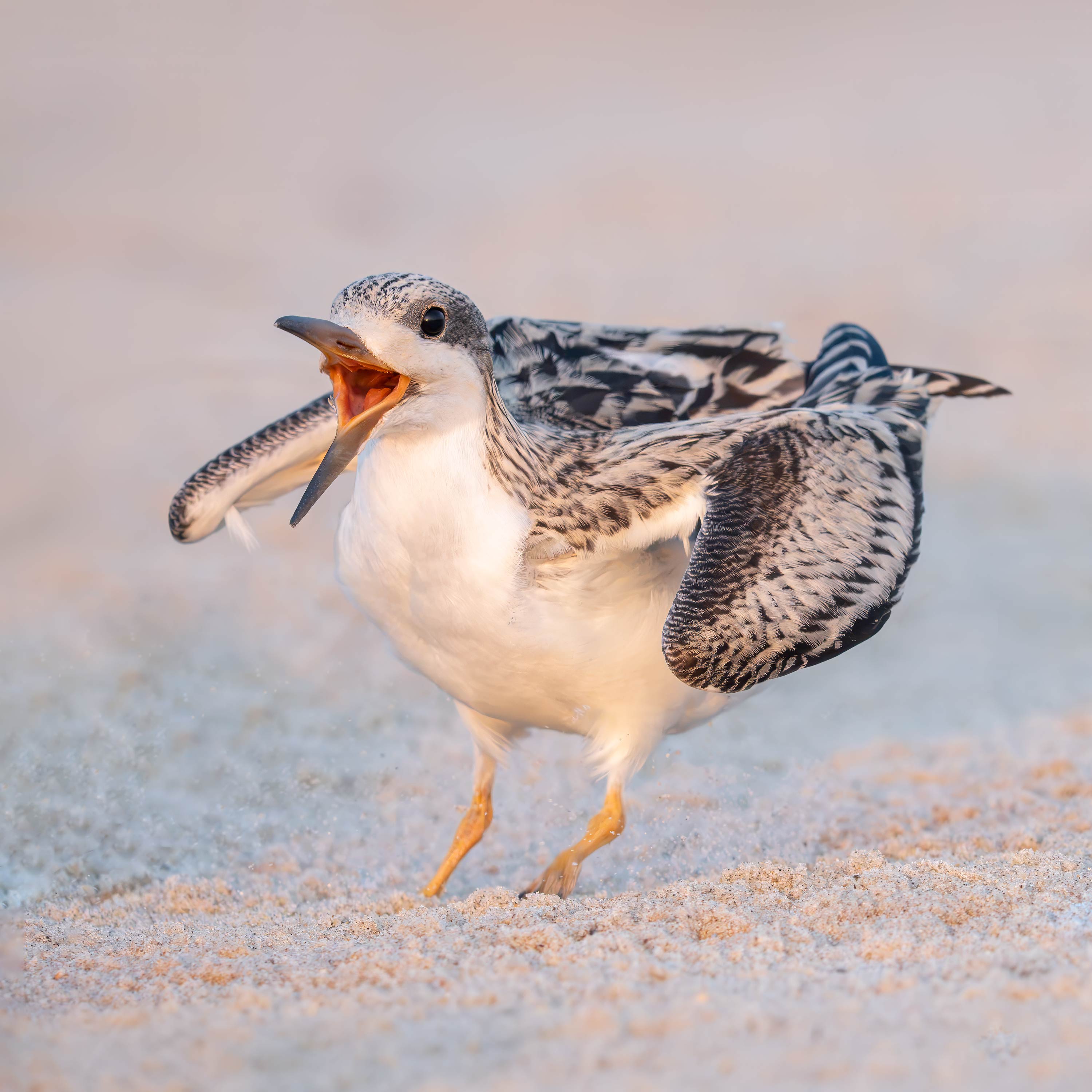
This image was created on 9 August 2026 at Nickerson Beach Park, Lido Beach, Long Island, NY. Seated on a Rubbermaid Roughneck Step-Stool, I used the hand held Sony FE 400-800mm f/6.3-8 G OSS lens (Sony E) (at 700mm) and The Latest Greatest Sony Flagship Body, the a1 II Mirrorless Camera. The exposure was determined by Zebras with Exposure Compensation (EC) on the Thumb Dial. Multi Metering +1.3 stops. AUTO ISO set ISO 5000: 1/1250 second! at f/8 (wide open) in Shutter Priority mode. AWB at 6:27:05am on a sunny morning. Wide/AF-C with Bird-Eye/Face Detection performed perfectly. Click on the image to enjoy the larger high-res version. Image #4: Black Skimmer large chick screaming at another |
Why Shutter Priority for This One
I was sitting on my life-changing Rubbermaid Roughneck Step-Stool facing east, trying for sunball flight images. As I turned to get up, I noticed a group of handsome young fledged skimmers resting on clean sand. Rather than taking the time to switch back to Manual mode, I simply dialed down the positive exposure compensation until I had just faint Zebras on the side of the bird’s upper breast. Remember: the right exposure is the right exposure, no matter which shooting mode gets you there.
|
|
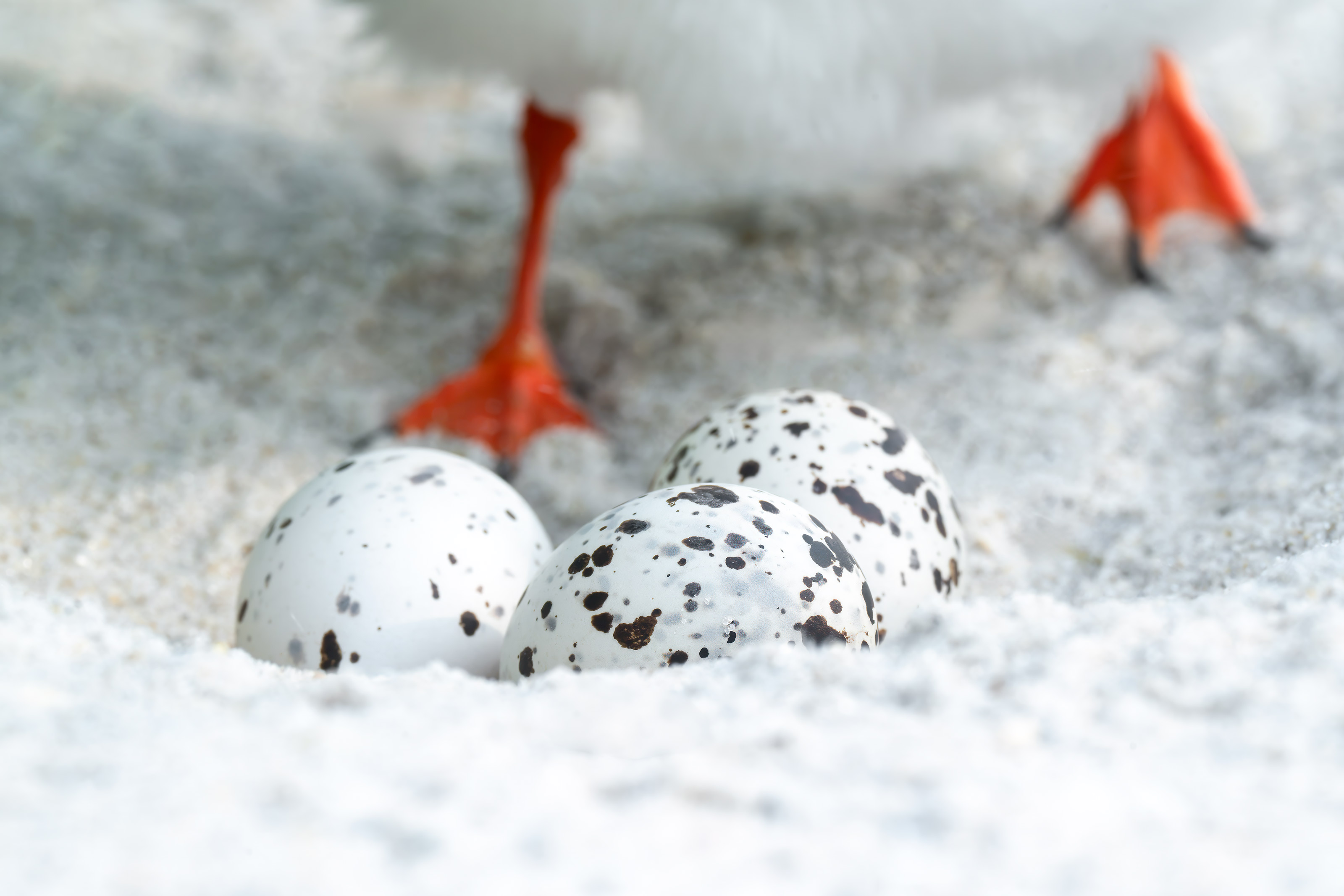
This image was created on 11 August 2026 at Nickerson Beach Park, Lido Beach, Long Island, NY. Seated on a Rubbermaid Roughneck Step-Stool, I used the Robus RC-5570 Vantage Series 3 Carbon Fiber Tripod/Levered-Clamp FlexShooter Pro-mounted Sony FE 600mm f/4 GM OSS lens with the Sony FE 2x Teleconverter and The Latest Greatest Sony Flagship Body, the a1 II Mirrorless Camera. ISO 1600. The exposure was determined by Zebras with ISO on the rear wheel: 1/250 second at f/16 (stopped down two full stops) in Manual mode. AWB at 8:29:59am on sunny morning. Manual Focus with Focus Peaking performed perfectly. Click on the image to enjoy the high-res version. Image #5: Adult Black Skimmer approaching nest scrape with three eggs |
Why f/16? and How I Got There
I had been photographing days-old skimmer chicks using Shutter Priority and Manual Focus when I decided to turn to check out the nest scrape just to my right. I wanted substantial depth of field to cover all three eggs. Rather than taking the time to switch over to Aperture Priority mode, I knew that in the bright conditions, I could get to a small aperture simply by lowering my shutter speed in Shutter Priority. Staying in Manual Focus, I watched as the red Focus Peaking painted the closest egg. When the adult stepped in to incubate, I held down the shutter button. Out of the series, I kept this single frame because the orange-red dorsal surface of the bird’s left foot added a welcome splash of color to a potentially dull scene.
|
|
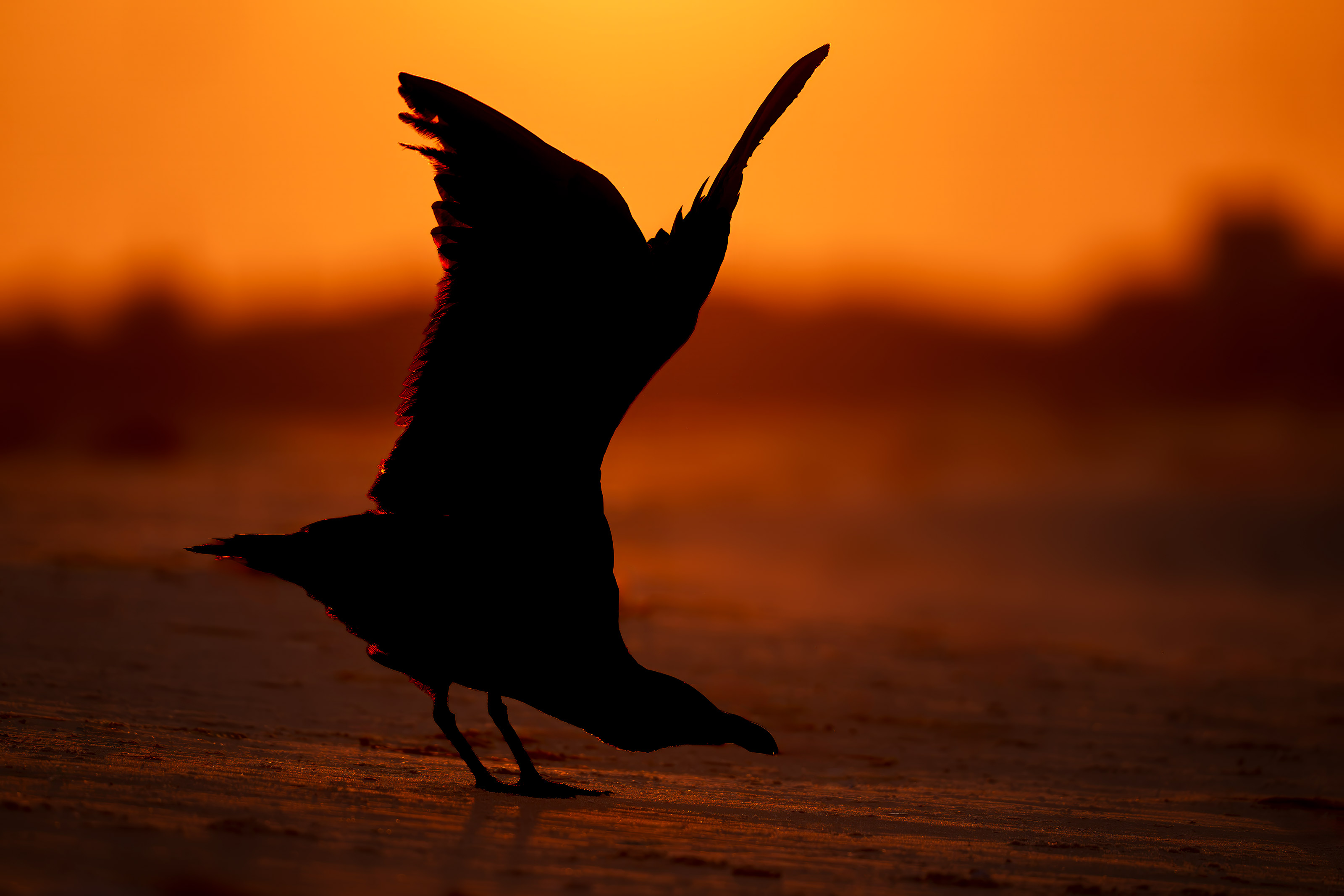
This image was created on 14 August 2026 at Nickerson Beach Park, Lido Beach, Long Island, NY. Seated on damp sand next to my Rubbermaid Roughneck Step-Stool, I used the handheld Sony FE 300mm f/2.8 GM OSS Lens (Sony E) with the Sony FE 2x Teleconverter and the Latest Greatest Sony Flagship Body, the a1 II Mirrorless Camera. ISO 800. The exposure was determined by Zebras with Exposure Compensation (EC) on the Thumb Dial. Multi Metering at zero. AUTO ISO set ISO 1000: 1/3200 second at f/5.6 (wide open) in Shutter Priority mode. AWB at 6:21:29am about ten minutes after sunrise. Tracking: Zone/AF-C with Bird Eye/Face Detection enabled performed perfectly. Image #6: Great Black-backed Gull red-light district silhouette |
The Red Light District
Wind-against-sun mornings during low tide offer fantastic opportunities, giving you plenty of pristine, open beach to isolate single roosting birds. Adding beach fog to the east is the real magic ingredient—it amplifies the color tenfold. The key to the shot is aligning your position so the sun is directly behind your subject. While this exposure would typically be a headache, Sony’s Zebra technology takes out all the guesswork. And under the right conditions, even group shots can yield spectacular results.
|
|
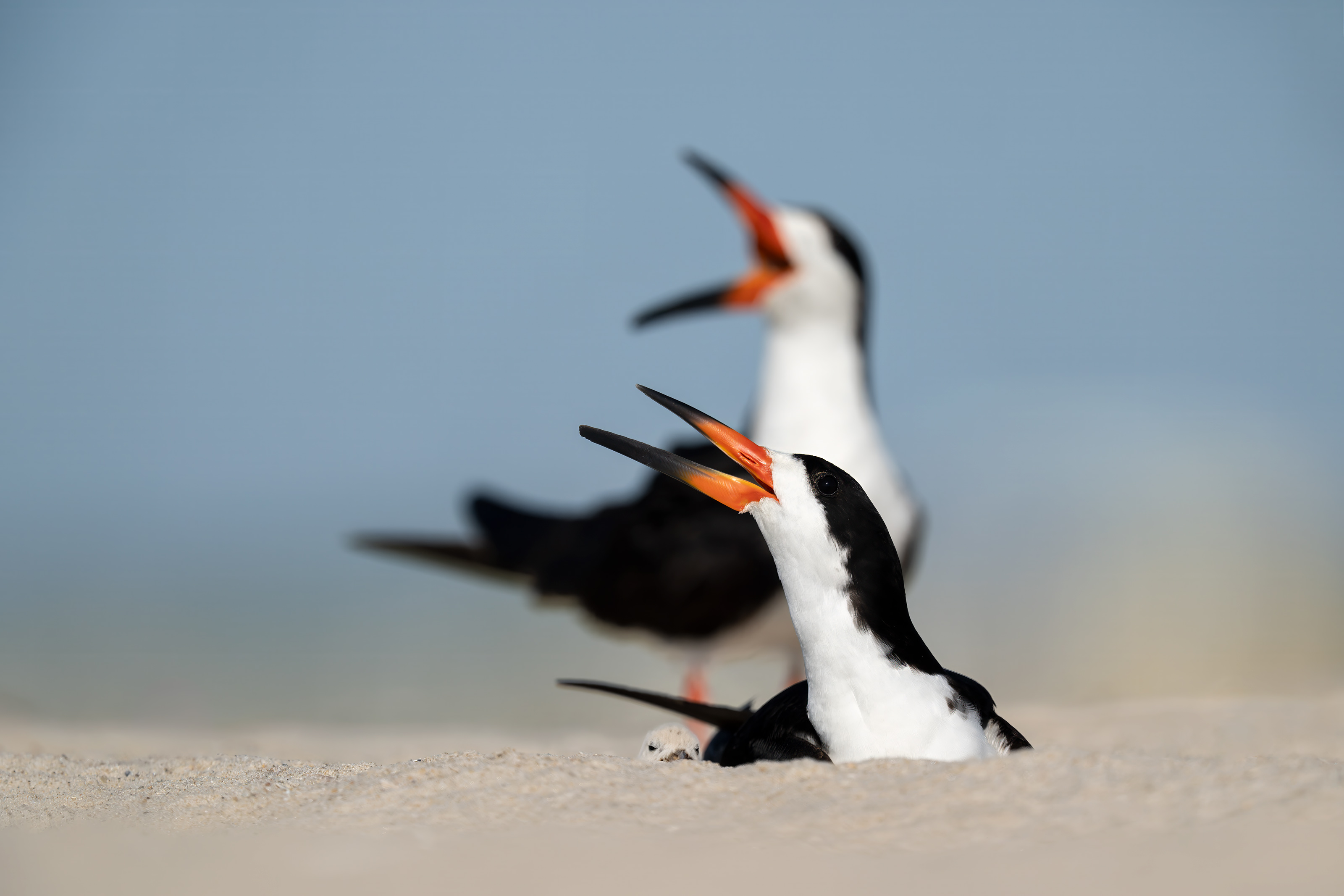
This image was created on 15 August 2026 at Nickerson Beach Park, Lido Beach, Long Island, NY. Seated on a Rubbermaid Roughneck Step-Stool and working off the articulated rear monitor, I used the toe-pod technique with the handheld Sony FE 600mm f/4 GM OSS lens with the Sony FE 1.4x Teleconverter, and The Latest Greatest Flagship Body, the Sony a1 II Mirrorless Camera. The exposure was determined by Zebras with ISO on the rear wheel. ISO 800: 1/5000 second at f/5.6 (wide open) in Manual mode. AWB at 8:34:33am on sunny morning. Tracking: Zone/AF-C with Bird-Eye/Face Detection performed perfectly. Click on the image to enjoy the high-res version. Image #7: Black Skimmer pair with chick in scrape on open beach screaming at a fly-by interloper |
Bright Sun Tip
No shocker here — by 8:30 AM under a clear sky, the sun is already bright (and cool) as compared to early morning light. The golden rule here is to get precisely on sun angle. I shot this frame for the interaction: two adults aggressively yelling at an encroaching skimmer. I didn’t even spot the chick in the crape until I had the file open for optimization!
Since my focal point was on the adult birds, the chick fell slightly in front of the depth of field. I put the chick’s head on its own layer with a Quick Mask and ran it through Super Focus in Topaz Photo AI. The tool works wonders on soft, out-of-focus areas while avoiding unnatural sharpening artifacts.
If you’d like to try Topaz Photo AI (including its DeNoise, Sharpen, and Gigapixel modules), click this link to purchase any of the aforementioned products and then send me your Topaz receipt via e-mail to receive a short free instructional video.
|
|
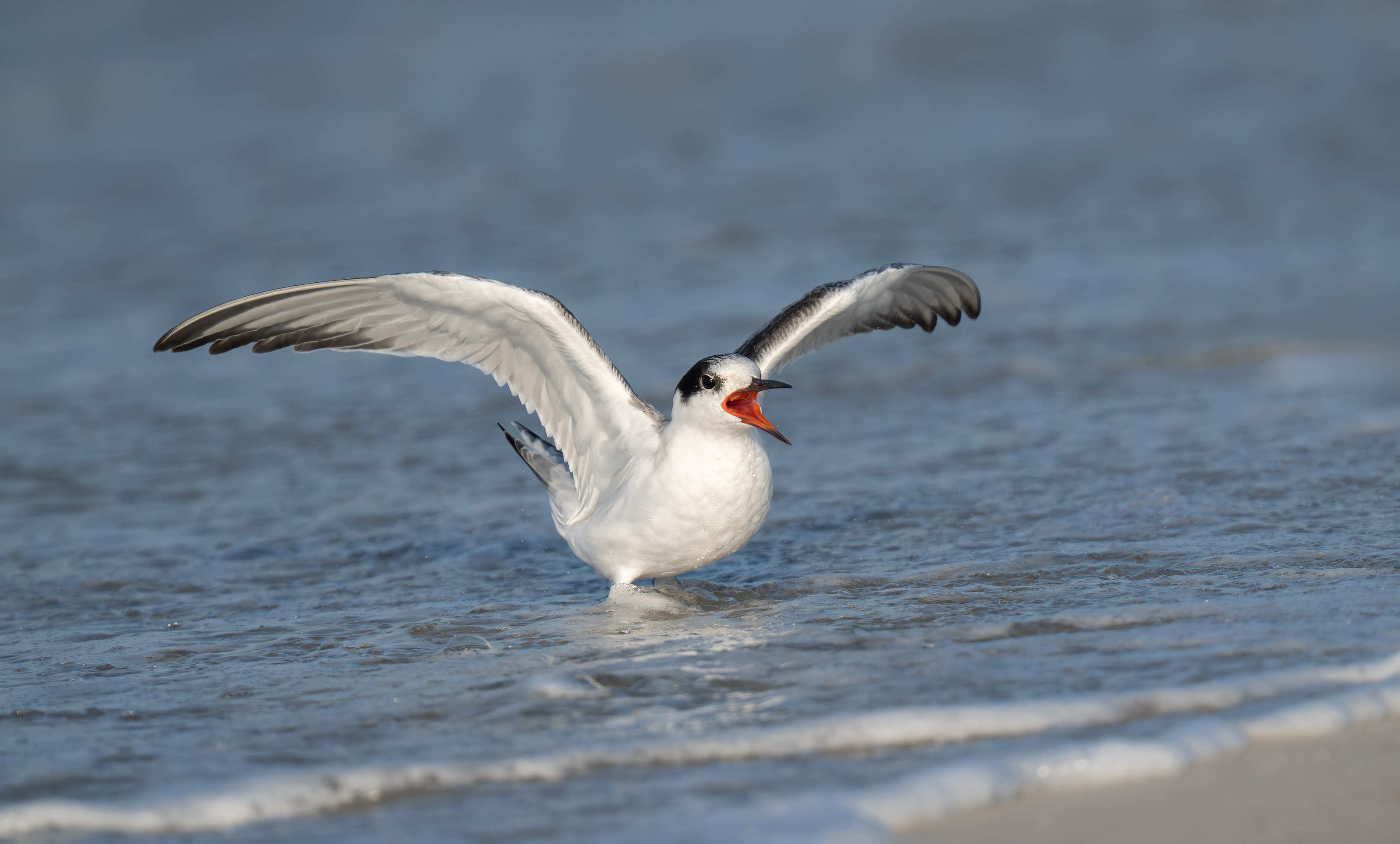
This image was created on 16 August 2026 at Nickerson Beach Park, Lido Beach, Long Island, NY. Seated on a Rubbermaid Roughneck Step-Stool, I used the handheld Sony FE 100-400mm f/4.5 GM OSS lens with the Sony FE 2x Teleconverter (at effective 744mm) and The Latest Greatest Sony Flagship Body, the a-1 II Mirrorless Camera. The exposure was determined by Zebras with ISO on the rear wheel. ISO 2000: 1/3200 second at f/9 (wide open) in Manual mode. AWB at 7:27:25am on sunny morning. Tracking; Zone/AF-C with Bird-Eye/Face Detection performed perfectly. Click on the image to enjoy the larger high-res version. Image #8: Common Tern juvenile landing in surf with wings raised |
Sometimes You Get Lucky
A rare east wind on a sunny morning had me sitting on the sand, working terns flying head-on in search of mole crabs. Out of nowhere, a handsome juvenile Common Tern dropped down right in front of me, right down sun angle. Luck is a wonderful thing, but it only takes you so far — you still need the field skills to react instantly, set a proper exposure, and lock in a sharp, well-balanced composition.
|
|
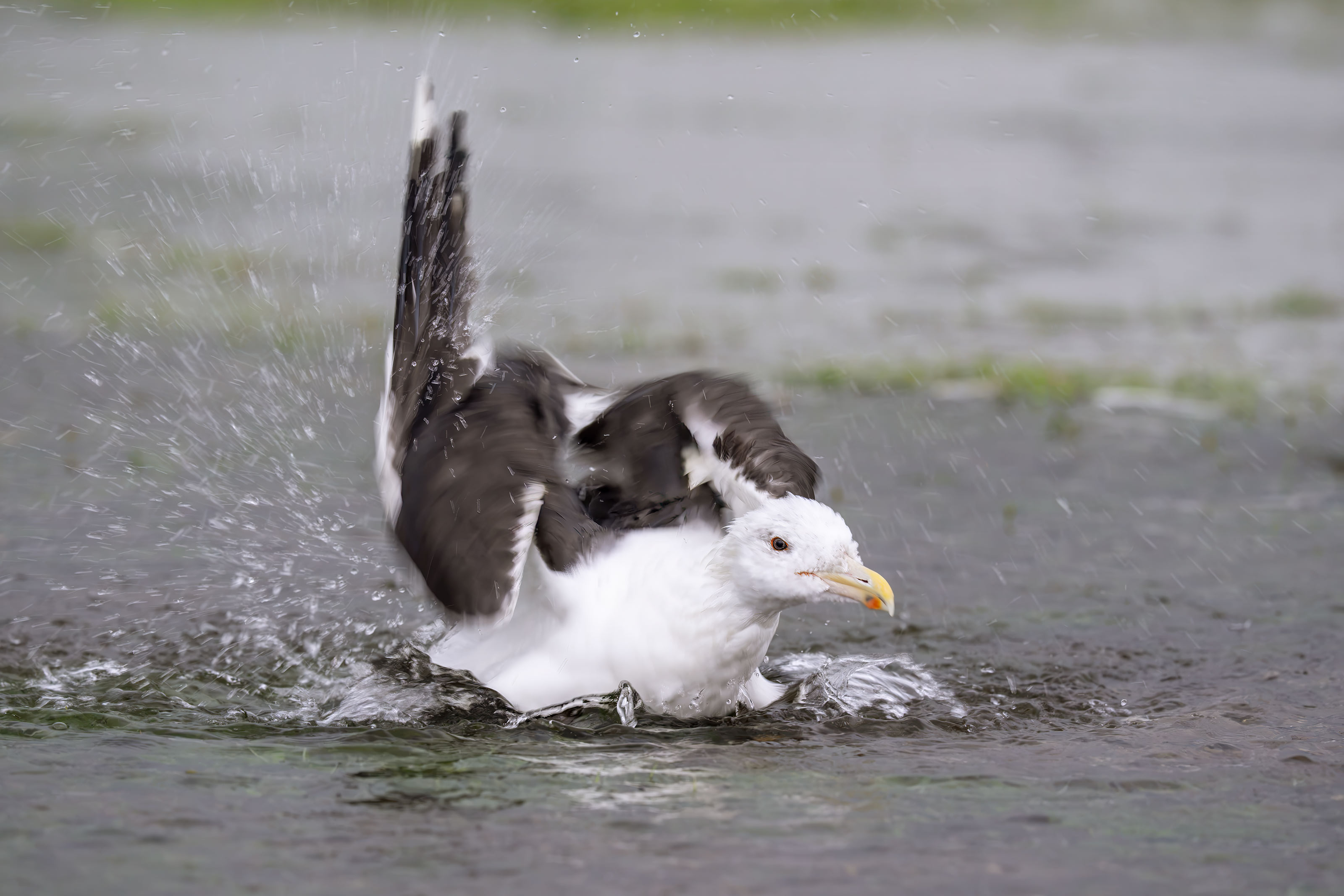
This image was created on 17 August 2026 at Nickerson Beach Park, Lido Beach, Long Island, NY. Seated in the front seat of my SUV I set up the tripod inside the vehicle and used the Robus RC-5570 Vantage Series 3 Carbon Fiber Tripod/Levered-Clamp FlexShooter Pro-mounted Sony FE 600mm f/4 GM OSS lens and The Latest Greatest Sony Flagship Body, the a1 II Mirrorless Camera. The exposure was determined by Zebras with ISO on the rear wheel. ISO 1600: 1/125 second at f/4 (wide open) in Manual mode. AWB at 6:55:52am on dark cloudy morning. Tracking; Zone/AF-C with Bird-Eye/Face Detection performed perfectly. Click on the image to enjoy the high-res version. Image #9: Great-black-backed Gull bathing in rain pool |
Giving Up is Always the Easiest Choice
Most folks wouldn’t have even left home in the pouring rain on the morning of August 17th. But I am not most folks, so I headed to Nickerson, arriving in the dark at 5:30 AM. As the rain began to let up, I drove around considering photographing gulls in the parking lot from my SUV, but held out for a better situation. When I found a large puddle near the toll booths, it was packed with bathing gulls, but the rain had picked up again.
I parked in the lee of the office building to grab my tripod and 600mm f/4, getting completely soaked in the process. Since I hadn’t brought a BLUBB on this trip, I set the tripod up inside the vehicle to handle the low light. I turned the car north so I could shoot comfortably out of the driver’s side window with the windblown rain (from the east) at my back.
I had a blast and came away with a few great frames. I was really pushing my luck at 1/125 second with a flapping bird, but as is often the case when you stick it out, I got lucky with a few razor-sharp eyes.
|
|
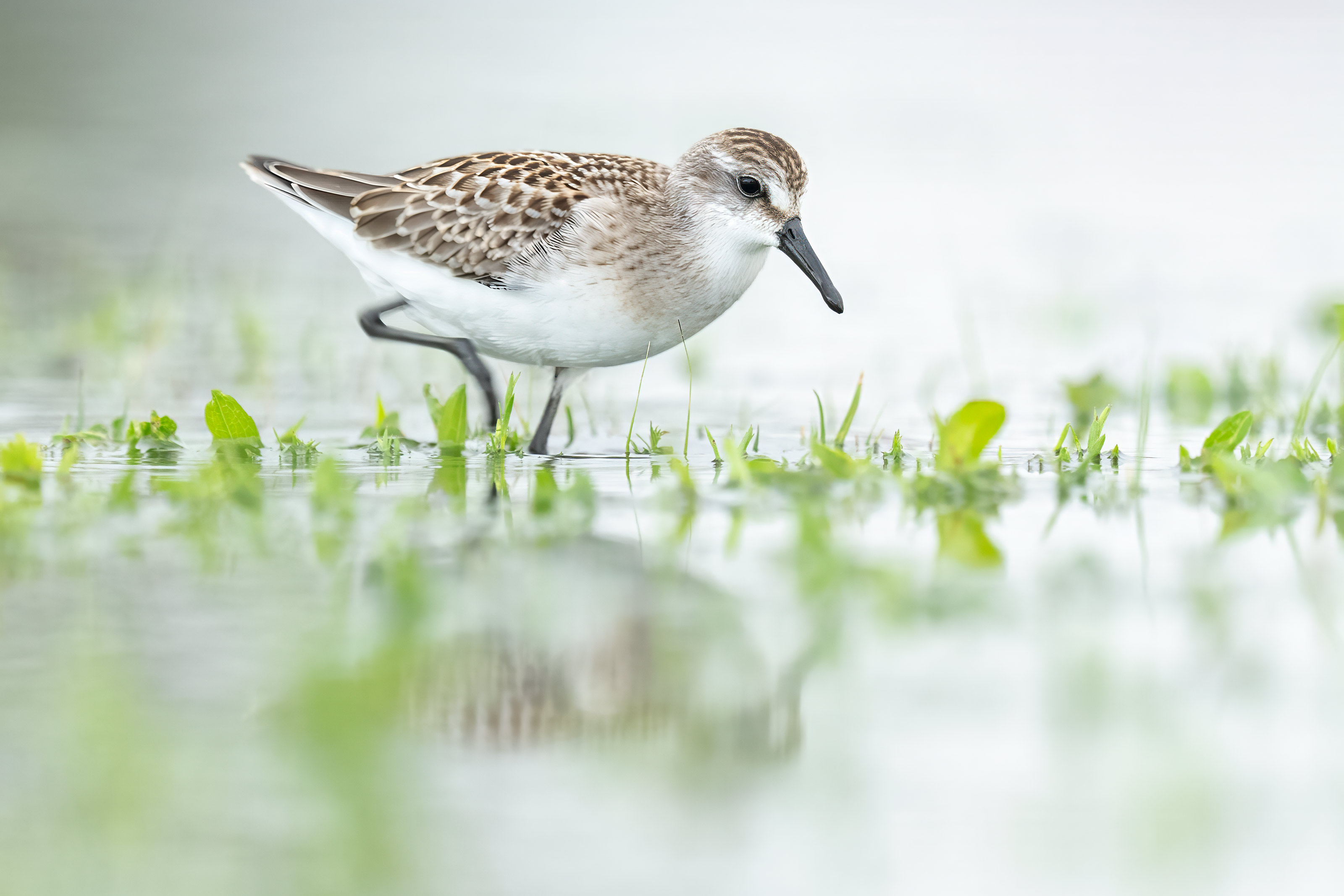
This image was created on 17 August 2026 at Nickerson Beach Park, Lido Beach, Long Island, NY. Seated on a Rubbermaid Roughneck Step-Stool and working off the articulated rear monitor, I used the flattened Robus RC-5570 Vantage Series 3 Carbon Fiber Tripod/Levered-Clamp FlexShooter Pro-mounted Sony FE 600mm f/4 GM OSS lens with the Sony FE 1.4x Teleconverter, and The Latest Greatest Flagship Body, the Sony a1 II Mirrorless Camera. The exposure was determined by Zebras with ISO on the rear wheel. ISO 2500: 1/500 second at f/5.6 (wide open) in Manual mode. AWB at 8:10:09am on a cloudy morning. Tracking: Zone/AF-C with Bird-Eye/Face Detection performed perfectly. Click on the image to enjoy the high-res version. Image #10: Semipalmated Sandpiper juvenile foraging in rain puddle |
As The Morning Brightened
As the light improved and the rain stopped, the gulls abandoned the pool, making way for foraging shorebirds — mostly adult Semipalmated Plovers. They were soon joined by a juvenile Lesser Yellowlegs and several small peeps. I stepped out of my vehicle, splayed my tripod legs flat, sat on my step-stool, leveled the Levered-Clamp FlexShooter Pro, added the 1.4X TC, and went to work — shooting with the east wind at my back in the lee of my vehicle.
Topaz Super Focus Solves Depth of Field Problems
When shooting wide open (a necessity in low light) with small birds near your lens’s Minimum Focusing Distance, depth of field is paper-thin. Even with critical focus locked on the eye, the wing and body feathers fall out of focus. The issue is even more pronounced with tiny, fuzzy beach-nesting chicks —their downy plumage simply lacks definition.
Enter Topaz Photo AI’s Super Focus module! I selected the soft, folded wing feathers using a Quick Mask, copied the selection to its own layer, and ran a pass of Super Focus. The software did a remarkable job restoring detail to the out-of-focus feathers without generating ugly artifacts.
As noted above, I have been I’ve been putting Topaz Photo AI through its paces for several weeks and been very impressed by both Denoise and Sharpen along with Topaz Gigapixel. Folks who use this link to purchase any of the aforementioned products are invited to send me their Topaz receipt via e-mail to receive a short free instructional video.
|
|
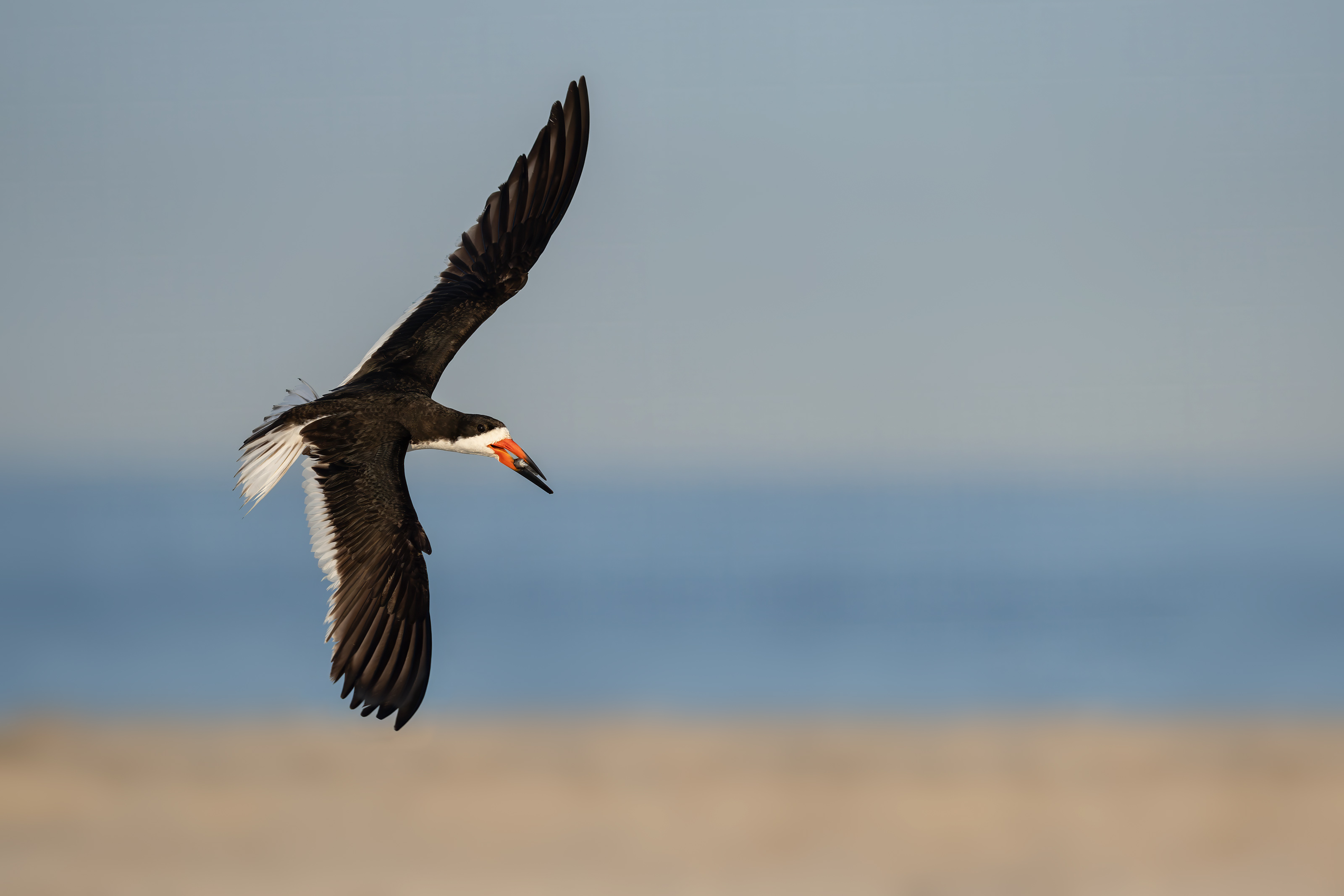
This image was created on 20 August 2026 at Nickerson Beach Park, Lido Beach, Long Island, NY. Seated on a Rubbermaid Roughneck Step-Stool, I used the hand held Sony FE 400-800mm f/6.3-8 G OSS lens (Sony E) (at 705mm) and The Latest Greatest Sony Flagship Body, the a1 II Mirrorless Camera. The exposure was determined by Zebras with ISO on the rear wheel. ISO 2000: 1/3200 second at f/8 (wide open) in Manual mode. AWB at 7:05:51am on sunny morning. Wide/AF-C with Bird-Eye/Face Detection performed perfectly. Click on the image to enjoy the larger high-res version. Image #11: Black Skimmer in flight with killifish for chick |
Looking for “Wrong Way” Flying Birds
On wind-against-sun mornings, scanning for birds flying the “wrong way” can pay huge dividends. I picked a spot where I might catch a rich Atlantic blue background. The plan worked out perfectly, and the small baitfish in the bird’s bill was an added bonus. On clear mornings with the wind blowing out of the west, the 400–800mm is always my go-to lens choice.
|
|
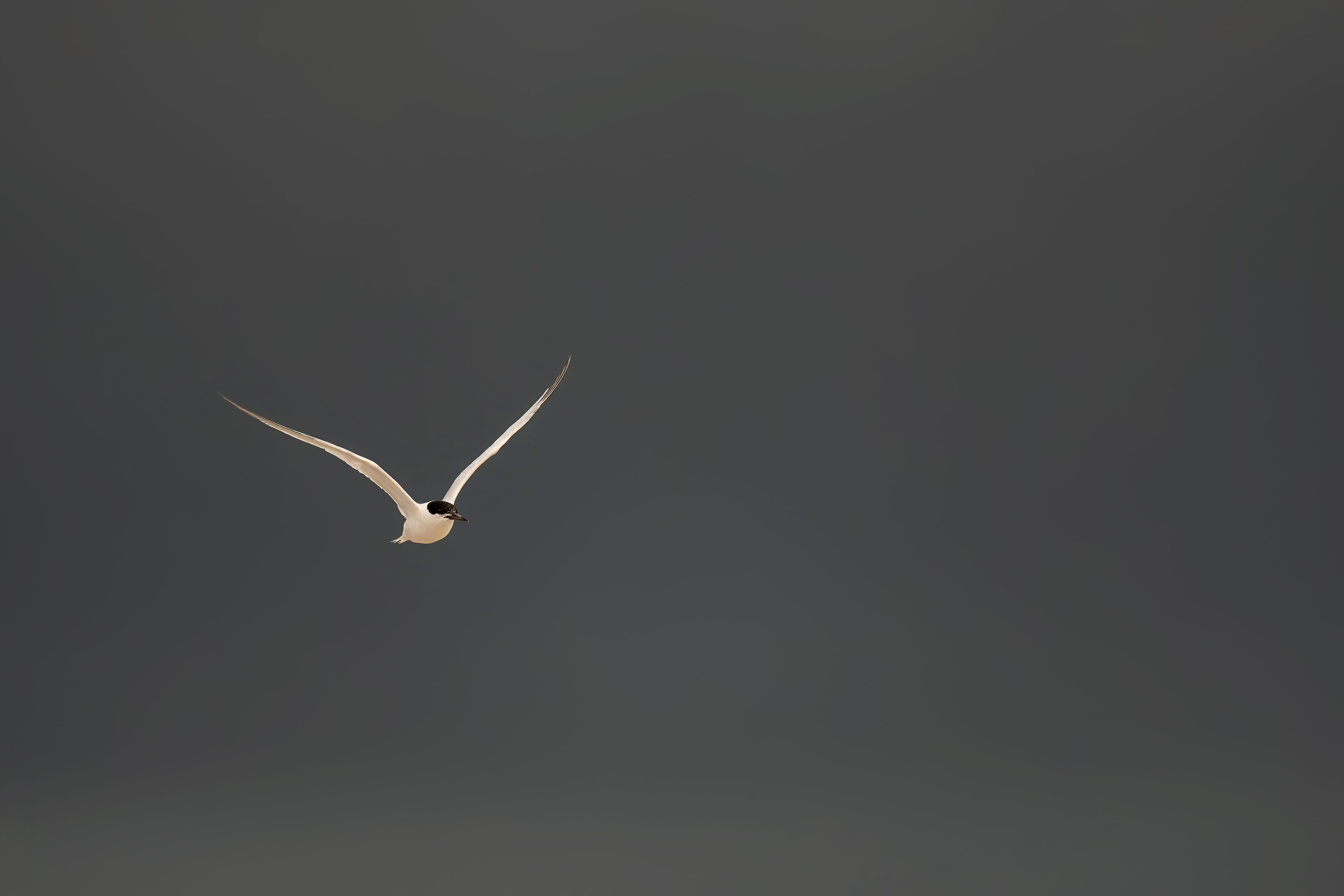
This image was created on 23 August 2026 at Nickerson Beach Park, Lido Beach, Long Island, NY. Standing on the beach at full height, I used the handheld Sony FE 600mm f/4 GM OSS lens and The Latest Greatest Flagship Body, the Sony a1 II Mirrorless Camera. The exposure was determined by Zebras with ISO on the rear wheel. ISO 3200: 1/2000 second at f/4 (wide open) in Manual mode. AWB at 7:03:10am six minutes before it began to rain. Wide/AF-C with Bird-Eye/Face Detection performed perfectly. Click on the image to enjoy the high-res version. Image #12: tern (probably a Roseate) in flight against black storm cloud |
Ice Rain Morning
The forecast for Lido Beach on Sunday morning called for heavy thunderstorms from 6:00 AM to 8:00 AM. So, naturally, we headed straight to the beach. With low early light levels, we were hoping for some explosive tern and skimmer blast-offs, but those never materialized. A storm sat well to the west, and for a moment, conditions seemed to brighten. Soon, however, the sky grew darker and darker. I prayed for a white bird to fly straight down my lens axis and got just two chances — this individual and an adult Common Tern.
Then the skies opened up. The wind picked up, and driving rain hit us like ice pellets. We were both drenched to the bone, every bit as wet as if we’d gone for a swim.
I had forgotten to grab a plastic bag before leaving the car, but my new constant beach companion — the Rubbermaid Roughneck Step-Stool—saved the day. Carrying the 600mm over my shoulder by the lens strap, I simply placed the step-stool atop my camera body; it stayed completely safe and dry all the way back to the X5. Best of all, my streak of photographing every single morning since arriving on Long Island remains intact!
Typos
With all blog posts, feel free to e-mail or to leave a comment regarding any typos or errors.









Hi Artie, glad you had a good / successful trip. I’d say my favorite is the image of the 3 eggs in front of the adult’s feet.
Thanks, Steve. I love that one too!
much love, artie
Great series as usual Artie, shorebirds on the beach never gets old. It’s always interesting to hear the rationale behind your images and this edition doesn’t disappoint.
I’d really love to have #10 in my portfolio…it’s exceptional with just the right amount of everything..a very pleasing composition with the muted reflection and light vegetation. otherwise, #5 is very nice also.
#5 has my vote for most creative. the lack of a face/complete body is a nice change and the bright legs in motion took my thoughts in the direction of parental protectiveness vs just eggs.
I like #9 as the most dramatic because the slow shutter speed and resulting water spiral uniquely conveys the gull’s bathing motion. having the eye spot on certainly helps.
I’m a sucker for dusk and dawn so #1 gets my pick for best light although the bird is facing slightly away. very rich color on this frame.
Thank you Misha! We think a lot alike! You are 100 about the head angle on the sunball shot.
much love, a
Hi Artie, outstanding images as always.
For my call, image #6 answers all 4 questions, in that I wish it was mine, most creative, most dramatic and the most interesting light.
It took great effort to capture that low angle image-placing the sunrise behind the Black Backed gull to get the silhouette. Having the gull raise its wings as if on cue. Positioning yourself was crucial, equipping yourself with the right equipment and knowledge how to use it, and to have it all come together at once is serendipitous.
My 2nd favorite image is the other colorful silhouette #1, Black Skimmer with Killifish at sunrise.
All of your images capture an intimate time in nature that take place every day, but remain unseen or unappreciated. Thanks for showing us what exceptional images are there to be had, right in front of us, and to motivate us all to try and emulate your spectacular images.
PS: Congrats on 24 consecutive days on the beach before sunrise…. these days its hard enough for me to be out there for one or two days in a row, at that time! Brian
Thanks a stack Brian. You are right — there is only spot spot to be when you have a chance at the Red Light district shot.
My sick stomach eventually put an end to my streak 🙁
much love, artie
Artie, just so many great images (no surprise there )
#1 for me for “wish it was mine.” To have a well exposed image with the sun ball in the frame is masterful and the sunrise colors are just beautiful! Most creative for me is #5 for the story the it tells so eloquently, and also # 11…to crate a superb flight image with wind against sun conditions requires imagination and creativity in field craft. Most dramatic is #1 for me too. Most interesting light is #12. I just love the beautifully lit tern against the black storm cloud. So well done!!! Thanks for sharing them all!
Thanks Jim! Your kind words are greatly appreciated — even though I agree 🙂
much love, artie
OK I’m late to the party but been busy. So here are my choices.
1. Wish it were mine: #10. For me I really like the soft color and simple beauty. My favorite.
2. Most creative: #10 again. It takes in the “ecology” of the enviroment in a great way. It appears to be at almost water level and even in the water a bit. But the greatest part for me is the reflection of the bird (can you tell I’m not very knowledgeable in my bird recognition) in the water. That is over the top for me and another reason I wish it were mine.
3. Most dramatic: #4. That’s an angry bird !!!
4. Most interesting light: #1. That sun rise or set is not just color but it seems as if I can actually see the muted sun itself. But #5 also. the perfect light on the eggs is terrific. Actually the picture itself also came in second in the wish it were mine. But so did #2.
Maybe I wish I could be half as good at this as Harry. (aka Artie)
Thanks for your kind words and thoughts, Red.
Have a great stay at the monastery!
with love, harry (Bosch)
Hello Artie, all great images. For me the Skimmer at sunrise checks three boxes for light, dramatic and wish it were mine. Image five for being the most creative. Right on without the feet would be rather mundane just the eggs.
Image ten with all the white in the background and white water. The green in the vegetation makes this one pop.
Also, like image seven being very dramatic can hear the birds screaming, lots of action in this one. Image two with those soft blues and low angle gives that heavenly effect.
Thanks, Kevin. Wonderful insights.
Lots of love for the water level peep photo!
You are the first to mention #2; it is a pretty strong photo but the competition is tough 🙂
best, a
What a great group of images. You are always trying different things and your recent video on culling though 6k images shows a lot of your work that goes into making the few keepers that you highlight here in the blog. My favorites are 1, 4 and 10. 1 dramatic color; 4 so cute, some action and great light and 10 so well balanced and tells a story. While a simple plain background is better than clutter and distraction, animals often live in places with clutter. This image the shows the habitat, frames the subjects all without being distracting.
Thanks, Chris. Great to have you visit. On days when I create six or ten thousand photos and make only a few good ones, I feel a bit guilty when I think of Jim Brandenburg’s Chased by the Light project where he shot only one photograph a day (on film!) for the 90 days between autumnal equinox and winter solstice. It resulted in a Nat Geo article and a book. I am proud to have a signed copy of the luxury edition with a wonderful inscription by Jim — “to the master, in the name of shared passion.’
with love, artie
Artie they are all great images. I love the creativity and simplicity of the eggs in image #5 and the low angle and soft background of the semipalmated sandpiper juvenile in image #10.
Thanks a stack, Monte. Much appreciated.
and much love, artie
#4is the one I wish was mine because you are at eye level and I love all things about bird chicks…wait, Who am I kidding, I wish they were ALL mine. # 12 is the most dramatic and also the most interesting light. #5and #7 are a tie for most creative.
As always, they are all wonderful!
Thanks, Sandy. You mentioned lots of my picks!
I will be sending you the San Diego info soon.
with love, artie
Your perseverance, skill, and vision clearly paid off in this series. The one I wish were mine, without a doubt, is #10. It’s unique and beautiful – everything about it is perfect. Number 5 – the chick eggs, comes in as a close second. It too is a very unique shot and maybe the most creative. The dramatic lighting and skill required to get #1 is impressive and I love it too. The serendipitous inclusion of the chick head in #7 really makes that image stand out in my opinion. Undoubtedly the lighting in #12 is also dramatic.
Thanks, Ellen. I am surprised that so many folks appreciated the flattened tripod photo! I love, love, love the eggs image. Without the approaching adult it would have been nothing despite my technical excellence. I thank him or her profusely.
Shutter Priority with negative EC works for the sunball shots but you must be specifically trying for them.
Everything else is spot on as well.
much love, artie
I agree with you completely about the chick egg image. Including just the feet of the adult and a tiny bit of body tells the story so dramatically. I love it too!
Thanks, Ellen. I was really happy when I saw the adult coming onto the nest.
much love, a
WOW!
Multiple standout images.
LOVE image 4 The Black skimmer chick. Such a plucky fellow!
Also Image 10 The Semipalmated Sandpiper Juvenile because of the beautiful soft reflective foreground!
Those would be in my portfolio and on my wall!
Would be proud of any of them if they were mine!
Mike Gotthelf
Thanks a ton Mike. You should partake more often! That skimmer chick was pissed at another one. And shorebirds have always been my #1 love.
a
Hi, Artie. Great images. My favorites are #1 Skimmer with Killifish at sunrise, #4 Screaming Skimmer Chick, #5 Three Eggs, and #12 Tern against storm cloud. To answer the questions:
– I wish #4 was mine. I have always wanted to capture sharp, clear close-up of tern/skimmer/oystercatcher chicks with some kind of expression
– Image #1 is most creative. The silhouette, the killifish, the orange contrasted with the yellow of the rising sun on the right side – they all work very well together.
– Most dramatic image is #3 Oystercatcher harassing Black-backed gull. However, the Oystercatcher is flying away, and its wingtip is merged with the gull – those two things bother me about the image.
– The dark storm cloud with the tern has to most dramatic light.
Thanks for your thoughtful comments, Mo! Should I reshape the wingtip in #3? I was really happy when I made #4!
with love, a
I can always find something to love about each image, be it the image itself or the perseverance exercised to create it. That said, I’ll take a crack and choose one for each of your questions.
1- Which image do you most wish was yours?
#10 for me – Love the low POV creating a velvety soft background AND foreground. The greenery takes it over the top.
2- Which image is the most creative?
I’d say #1 is most creative as most folks don’t even bother attempting such shots and the necessary post-processing.
3- Which image is the most dramatic?
For me #7 is most dramatic as, if you know bird behavior, you know exactly what is happening. At best a same-species intruder is near or, at worst, a predator is attempting to predate the chick. #3 is a close second, but no juvenile involvement puts #7 at the top.
4- Which image features the most interesting light?
Here I’ll go with #12 – hard to beat the drama of a white bird against a storm cloud. #4’s warm, early morning light is a close second.
Thanks a stack, Pugs. This is really on point: I can always find something to love about each image, be it the image itself or the perseverance exercised to create it. ” Tomorrow will mark 24 straight mornings at Nickerson arriving no later than 5:45am 🙂 With lots more to come.
much love and thanks again, a
Artie
Oh-Baby I am a lover of #1 the sunrise and #6 Red light district and #3 telling the story with the foot raised and the Gull screaming at the Catcher that something could happen. Wishing #1 was mine with the interesting light with the sun and colors. The rain puddle is pretty creative to me with the ghost like reflection as you had to be just the right height to capture it.
Love them all but the sunrise is killer for me. Seeing the world wake up and dance is always my time. #1 is a whole lot gooder then the rest imo.
Always with love b
Thank you East BobMan. You loves them sunrises! The flattened tripod for #10 was just the ticket! much love, a
#4 for me. Can’t give a specific reason for liking the image but I just love it.
Thanks, Jim! Me too.
with love, artie
I like #10. The green plants add welcome color to what would otherwise be a very drab scene.
Thank you kindly. Car as wind blocker 🙂
with love, artie
I am sure that the two of you were the only ones on the beach last Sunday morning when the forecast was for heavy thunderstorms! For me, image #1, the silhouette of the black skimmer flying at sunrise wins on several counts: (1) I wish it were mine, (2) it is the most dramatic of the images in this blog and (3) the spectacular light. It is also, in my opinion, the most creative. But, I’d also put #10, the semi-palmated sandpiper, in this category — I love the bird’s soft reflection in the rain puddle and the soft green vegetation.
Thanks Pat. Your top pick with the top vote getter 🙂
with love, artie