
Sony A7R VI for Birds in Flight; What the Specs Don’t Tell You
A Great YouTube Video by Arash Hazeghi
Thanks to Arash for what was for me, an eye opening video. He takes a deep dive into whether this new body is really as good as the a-1 ii.
Blog Post Summary
Both Patrick Sparkman and yours truly have quickly fallen in love with their Sony A7R VI bodies. Arash Hazeghi begs to differ. In this post you will see real world examples of what the camera with its 67MP files is capable of doing in the right hands.
What’s Up?
Though the photographic conditions at Sebastian have been — due to the ongoing bridge construction, the morning and afternoon high tides, nearly constant wind-against sun conditions, and the excessive runoff from last weeks torrential rains, have been abysmal at best, the three of us have been making some excellent photos. And Bags is learning a ton both in the field and at the computer. Even better — he has shared some great Photoshop tips with me.
Today is Tuesday 10 November 2026. It is 5:02am as I type. The three of us will be headed back to Sebastian Inlet later. Whatever you opt to do today, we hope that you choose to have fun and enjoy life. Please remember that happiness is a choice — Byron Katie – The Work.Com
If an item — a Delkin flash card or reader, a Levered-clamp FlexShooter Pro, or a Wimberley lens plate or low foot — for example, that is available from B&H and/or Bedfords, is also available in the BAA Online Store, it would be great, and greatly appreciated, if you would opt to purchase from us. We will match or beat any price. Please remember also to use my B&H affiliate links or to earn 3% cash back at Bedford by using the BIRDSASART discount code at checkout for your major gear purchases. Doing either often earns you free guides and/or discounts. And always earns my great appreciation.
Gear Questions and Advice
Too many folks attending BAA IPTs and dozens of photographers whom I see in the field and on BirdPhotographer’s.Net, are — out of ignorance — using the wrong gear, especially when it comes to tripods and more especially, tripod heads. And the same is true in spades when ordering new camera bodies or lenses. My advice will often save you some serious money and may help you avoid making a seriously bad choice. Please know that I am always glad to answer your gear questions via e-mail. If you are desperate, you can try me on my cell at 863-221-2372. Please leave a message and shoot me a text if I do not pick up.

B&H Simplified
To ensure that I get credit for your B&H purchases, you can always click here. The tracking is invisible. Using my affiliate links is greatly appreciated. And, with B&H, you can use your PayBoo card. You must use the website to order. You cannot get your free guides if you make a phone order. Once you have an item in your cart, you must complete the order within two hours. Huge thanks!
B&H
Many folks have written recently stating that they purchased a Sony a1 from B&H and would like their free membership in the Sony 1 Info and Updates Group, a $150.00 value. But when I check my affiliate account, their orders have not been there. When I let them know that I get credit for their B&H purchases only if they use one of the many B&H affiliate links on the blog or begin their searches with this link, they are always disappointed. If in doubt, please contact me via e-mail and request a BH link. I am always glad to help and to guide you to the right gear.

Bedfords Simplified
Click here to start your search. Choose standard shipping, and when you get to the payment page, enter BIRDSASART in the discount code box and hit apply. You will be upgraded to free second day air Fed-Ex and receive 3% cash back on your credit card once your stuff ships. Using either my affiliate links is greatly appreciated and will often earn you free guides or discounts. To receive a free guide or free entry into a Sony Set-up and Info Notes e-Mail group, you need to shoot me your receipt via e-mail. The B&H receipts need to include the order number.
Bedfords Amazing BAA Discount Policy
Folks who have fallen in love with Bedfords can always use the BIRDSASART coupon code at checkout to enjoy a post-purchase, 3% off-statement credit (excluding taxes and shipping charges) on orders paid with a credit card. The 3% credit will be refunded to the card you used for your purchase when your product ships. Be sure, also, to check the box for free shipping to enjoy free Second Day Air Fed-Ex. This offer does not apply to purchases of Classes, Gift Cards, or prior purchases.
You can visit the Bedfords website here, shoot Steve Elkins an e-mail, or text him on his cell phone at (479) 381-2592.
So, Why Does the Sony A7R VI Cost $2500.00 Less Than the A-1ii?
Having been using the A7R VI now for nearly two weeks, I’ve noticed that when panning with birds in flight (while properly using Electric Shutter) the image in the Electronic Viewfinder EVF) is not as smooth and stable as with the a-1 ii. The closer the subject and/or the longer the focal length, the more funky things get to some degree. To try to understand what I might be seeing, I dug deep into the technical specifications helped out by my two technologically gifted friends, Arash Hazeghi and Patrick Sparkman.
Differences
Readout Speeds
Because camera sensors can’t instantly grab all millions of pixels at the exact same microsecond, they read the pixel rows sequentially. Readout speed is simply the total time it takes the sensor to finish scanning and clearing the entire frame.
The readout time for the Sony a-1 ii is approximately 3.7 milliseconds (ms).
The readout time for the Sony A7R VI is approximately 18 milliseconds (ms).
With the stacked sensors of the a-1 ii, the “scanner” moves so blindingly fast that the entire frame is captured almost simultaneously. Fast-moving subjects — like a hummingbird’s wings or a diving falcon — are recorded cleanly without distortion.
The readout speed of the A7R VI, which is more than four times slower than the a-1 ii, may result in rolling shutter artifacts at times. With birds in flight, the wings and especially the wingtips will show funky vertical lines and other distortions. With hummingbirds, the wings will usually look totally whacky. In addition, when you are panning, vertical background elements such as trees will be slanted.
So how bad or noticeable has rolling shutter been for me so far — pretty much non-existent. That said I have not shot any peregrines or hummingbirds in flight.
Arash adds: Rolling shutter mostly impacts the background when panning. While an experienced photographer will usually not aim their lens at a bird flying against an urban background, this effect shows when you have trees, bushes or shrubs in the background. It won’t show if you have water or sand, so photographing on the beach you are unlikely to see this effect.
EVF Considerations
EVF refresh rate is how many times per second the display inside your camera’s electronic viewfinder (EVF) updates the image on the screen. It is measured in Hertz (Hz). You can think of it as a flipbook:
Low Refresh Rate (60 Hz): The camera updates the viewfinder image 60 times a second. For stationary subjects or slow moving birds, the image in the EVF looks fine. But if you pan quickly following a fast-moving bird, the display can feel jumpy, laggy, or jittery — making it hard to keep a flying target framed smoothly.
High Refresh Rate (120 Hz or higher): The viewfinder updates 120 times a second. Panning becomes silky smooth and the display looks and feels completely natural.
In short: A higher refresh rate gives you a smoother, real-time view of fast action, making it much easier to track fast-moving subjects across your frame.
Both the a-1 and the a-1 ii offer you a choice of 60 Hz (Standard) or 120 Hz (High). (Both the a-1 and the a-1 ii also offer 240Hz but most folks recommend against using that because it drops both the resolution and the size of the image in the EVF.)
Here is the difference: the a-1 ii prioritizes refresh rate over resolution. The a7R VI prioritizes resolution over frame rate. So, in order to maintain the 120 Hz refresh rate, the camera drops the resolution a bit. I have never noticed this — Arash always does. The A7R VI, however, does the opposite — it sacrifices the refresh rate while maintaining the resolution.
Choppy EVF Conclusion
The slower by more than four time readout speed of the A7R VI combined with the fact that the A7R VI opts to reduce the refresh rate may explain what I think I am seeing when panning to photograph flying birds, especially those that are flapping their wings and zooming by at close range — an ever-so-slightly choppier viewfinder experience. Here. however, is the rub: all of my flight images are sharp on the eye and I am convinced that when it comes to Bird Face-Eye tracking, the AF system of the A7R VI is at least as good as, and more likely, slightly better than it is with the a-1 ii.
Autofocus (AF) Calculations/Second
With both camera bodies set up optimally for flight, the a-1 ii performs 120 AF calculations/second, the A7R VI only 60. Arash theorizes that the A7R VI would not have any problems with birds flying from side to side in the frame, but might run into problems with birds flying at high speed directly at you. In the video he states that he would expect 30-40% more keepers with the a-1 ii than with the A7R VI. I have not run into that problem so far.
In his detailed YouTube video above, he concludes by stating that serious bird in flight shooters should stick with the a-1 ii if they are seeking to create a few holy grail flights shots. It is no shock, however, that Arash has made some very special flight shots with the new 67MP camera body.
Which Camera is Right For You?
As I said here previously, I really like the slightly more solid feel of the A7R VI and the louder shutter sound. At one point, however, I was thinking that I might return the camera. But having done lots of flight photography at Sebastian Inlet over the past three days, I am 100% sure that I will be keeping it along with my two a-1 II bodies, at least for now. With 32% more pixels and 15 or so percent more resolution, the A7R VI files are beyond superb and can stand up to healthier crops than the a-1 ii. To get even higher quality files, you can go to the mechanical shutter and switch from RAW: Compressed (30 fps) to RAW Lossless Compressed (10 fps) when doing macro, flowers, landscapes, or even bird-scapes.
Patrick Sparkman was asking me about the A7R VI and I told him that it might be a fabulous camera for him because not only does he shoot birds but he also does lots of macro photography and is quite skilled at high end astro photography as well. He’s been using it at La Jolla and around his home in San Diego for several days and loves his a7R VI even more than I love mine. He has not experienced any of the choppy viewfinder issues at all. Perhaps I am imagining things? That said, there is lots online about the issue.
After I sent an early draft of this piece for Patrick to review, he responded as follows:
While I haven’t experienced the slightly choppy EVF yet, I don’t think the sensor readout speed has anything to do with that. That would affect rolling shutter, but the jitter is probably caused by the EVF quality vs speed that you reference.
Arash responded:
I think you and Patrick might be mixing up two effects here:
The rolling shutter effect (aka the jello effect) in the EVF that is quite visible while panning is just basic math. The choppy EVF effects like frame rate drops and stutter are there too but are not caused by the slower readout speed.
I would think that 90 plus precent of the population will see the rolling shutter effect if they attach a long lens to the camera and pan quickly with it.
The second effect (viewfinder jitter) is something that younger photographers with 20/20 vision would likely see. The effect is there but not everyone may be sensitive to it.
Patrick continued:
I need to use the R6 [A7R VI] some more at La Jolla, but my first day with it was overwhelmingly positive. The eye focus is amazing and subjectively I think it is better with birds in flight as well. It feels like it consistently gets better focus on the eye as compared to the a-1 ii. It even tracks birds flying directly at me very well.
I will need to do ducks or the Brandt’s to be certain.
Arash adds:
To see the striking autofocus differences you would need to photograph something like a kestrel or falcon stooping at you at very high speed otherwise the difference in calculation cycles makes no difference. A Killdeer flying directly at you might show the differences as well.
As noted throughout, the brilliant Arash Hazeghi — who has a very discerning eye and views his images at 100% on a large quality monitor, sums things up by stating that really serious bird photographers should bypass the A7R VI and opt for the a-1 ii. Anyhoo, at this point, Patrick and I are not so sure that we agree with him on that. Perhaps we are dealing with a bit of new toy excitement.
If you are new to Sony and/or you are a generalist, and if you wish to save $2500.00, I am pretty sure that you would be quite happy with an A7R VI.
If you are an experienced bird photographer using the Sony system, do lots of flight photography, and own one Sony a-1 II body, you would likely do great with an A7R VI as a backup camera body and would certainly enjoy playing around with it and its 67 MP RAW files.
If you are using Canon or Nikon gear and are considering switching to Sony — and dot’t get me wrong, Sony is best by far for all but the most experienced bird photo photographers, the A7R VI might just be perfect for you, again while saving a handsome $2500.00.
In all the groups above, if you do some serious macro or scenic photography, there are more reasons for you to consider an A7R VI.
All who purchase an A7R VI are urged to use one of my two affiliate links. Please e-mail to learn about and consider your money saving options. Best of all, you will earn free copies of my CAMA7RVI.DAT file along with the matching Buttons and Dials guide and the A7R VI INFO sheet. Your new body will be set up perfectly for bird photography ten minutes after you take it out of the box, you will be ready to begin making great images.
If you decide on an a- ii, everything above remains true but for the fact that you will receive my latest a-1 ii CAMSET.DAT file.
Arash concludes by saying that after a few months of using the A7R VI it has been relegated to backup body status for him: The rolling shutter effect and especially the EVF jello effect are just too much for me. I would not recommend this camera to flight shooters if they can afford an a-1 or an a-1 ii.
|
|
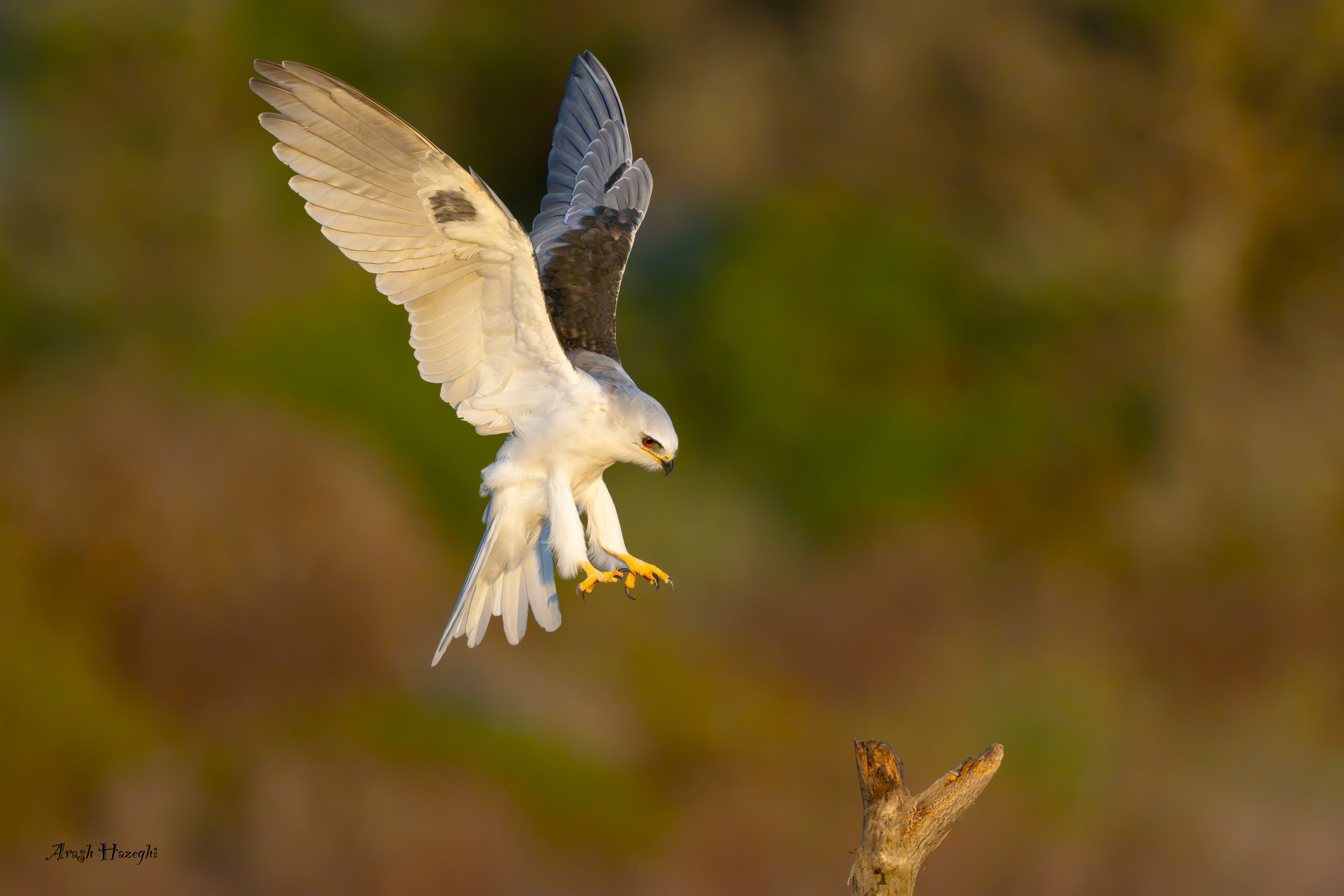
This image was created on 25 October 2026 by Arash Hazeghi at Half Moon Bay, CA. He used the handheld Sony FE 600mm f/6.3 GM OSS Lens (Sony E) with the Sony FE 1.4x Teleconverter (at 560mm) and the alleged poor man’s a-1 ii, the Sony a7R VI Mirrorless Camera. The exposure was determined via Zebras with ISO on the Thumb Wheel: ISO 2000: 1/3200 sec. at f/9 (wide open) in Manual mode. AWB at 6:01:33pm on a sunny afternoon. Wide/AF-C with Bird-Eye/Face Detection performed perfectly. Click on the image to enjoy the larger, inexplicably sharper high-res version. Image #1: White-tailed Kite in landing in sweet afternoon light |
Arash Hazeghi
Arash is surely one of the world’s best flight photographers and surely one of the most technologically knowledgeable. His A7R VI YouTube video that opens this blog blog opened my eyes as well. Thanks, Arash.
Like me, Arash enjoys experimenting with new Sony gear. His stunning kite image was create with the featherweight 600mm lens, the 1.4X TC, and the new A7R VI.
|
|
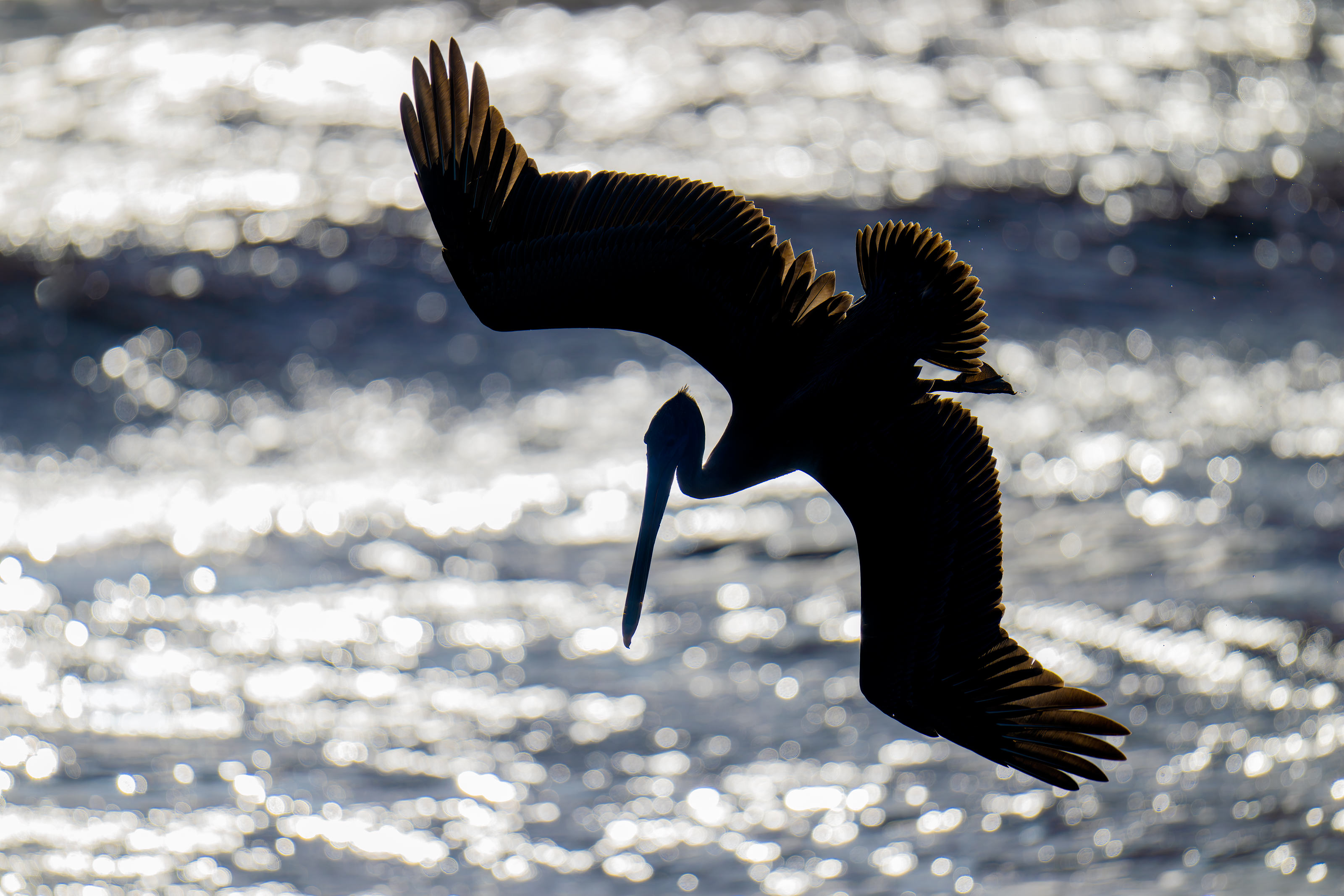
This image was created by yours truly on 4 November 2026 at Sebastian Inlet State Park with Steve Baglione. Bags flew down from Maine for two weeks of private In-the-Field Instructional sessions. Standing at full hight, I used the handheld Sony FE 100-400mm f/4.5 GM OSS Lens (Sony E) with the Sony FE 1.4x Teleconverter (at 560mm) and the alleged poor man’s a-1 ii, the Sony a7R VI Mirrorless Camera. The exposure was determined by Zebras with Exposure Compensation (EC) on the Thumb Dial. Multi Metering at 0. AUTO ISO set ISO 160: 1/4000 second at f/6.3 (wide open) in Shutter Priority mode. AWB at 8…16:14am on a partly sunny morning. Wide/AF-C with Bird-Eye/Face Detection performed perfectly. Click on the image to enjoy the larger, inexplicably sharper high-res version. Image #2: Brown Pelican diving/blasting highlights background |
Blasting Highlights Flight
In a perfect world I would have set the EC to -1.0 or even more stops but you never know exactly when a bird will diving into the brightest highlights. Anyhoo it look some fancy stepping in Photoshop to tone down the background.
For shooting into blasting highlights the AF system of the a- ii is superb and was a great improvement on the original a-1. I was thrilled to see that the A7R VI was at least as good if not a tad better. In Image #2, it tracked the diving pelican perfectly.
|
|
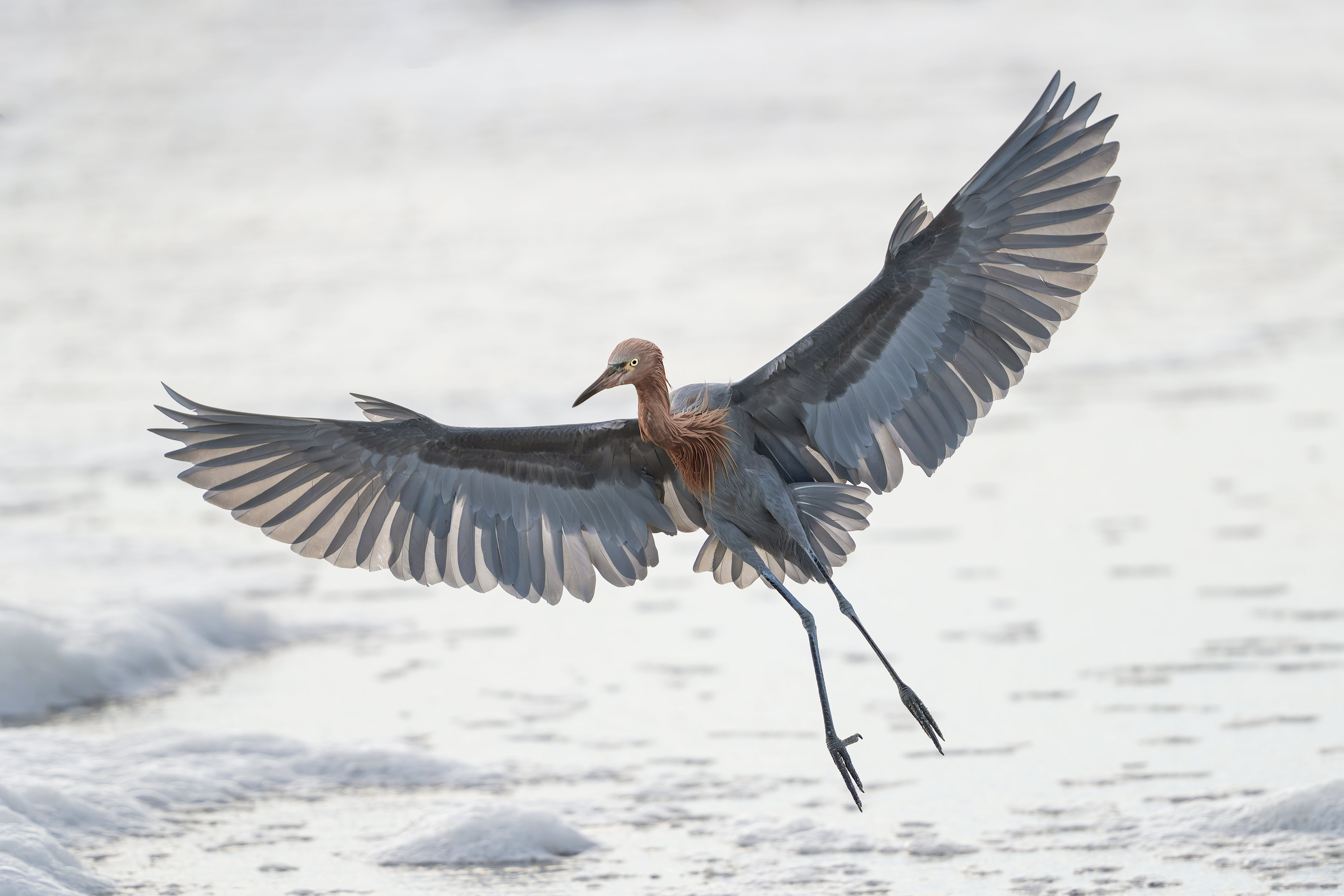
This image was created by yours truly on 5 November 2026 at Sebastian Inlet State Park with Steve Baglione. Bags flew down from Maine for two weeks of private In-the-Field Instructional sessions. Standing at full hight, I used the handheld Sony FE 300mm f/2.8 GM OSS Lens (Sony E) with the Sony FE 1.4x Teleconverter (at 420mm) and the alleged poor man’s a-1 ii, the Sony a7R VI Mirrorless Camera. The exposure was determined via Zebras with ISO on the Thumb Wheel: ISO 1000: 1/3200 sec. at f/4 (wide open) in Manual mode. AWB at 8:35:14am on a then cloudy morning. Wide/AF-C with Bird-Eye/Face Detection performed perfectly. Click on the image to enjoy the larger, inexplicably sharper high-res version. Image #3: Dark morph Reddish Egret landing in soft light |
Why the 300mm f/2.8 GM?
On our first morning, I loaned Steve Baglione the Sony 100-400 foot/4.5 GM Lens, a 1.4X TC, and one of my a- ii bodies. We customized the camera for him with shutter speed on the Thumb Dial and ISO on the Thumb Wheel, a la David Pugsley style. I taught him to use the camera in ten minutes and once we found some birds to photograph, he said, “This is way better than Canon.”
He actually used both of my affiliate links to purchase his Sony kit that same afternoon.
Without my 100-400 f/4.5 GM lens, which is ideal for Sebastian especially of you do the death march to the South Jetty, I went with the 300mm f/2.8 GM, the 1.4X TC, and the A7R VI. Without my zoom lens, I did lots of human zoomin’, adjusting the size of the bird in the frame by moving closer to it or farther away. Both Steve and I saw this bird flying in. Fortunately I had just a moment before switched from blurs to sharp.
|
|
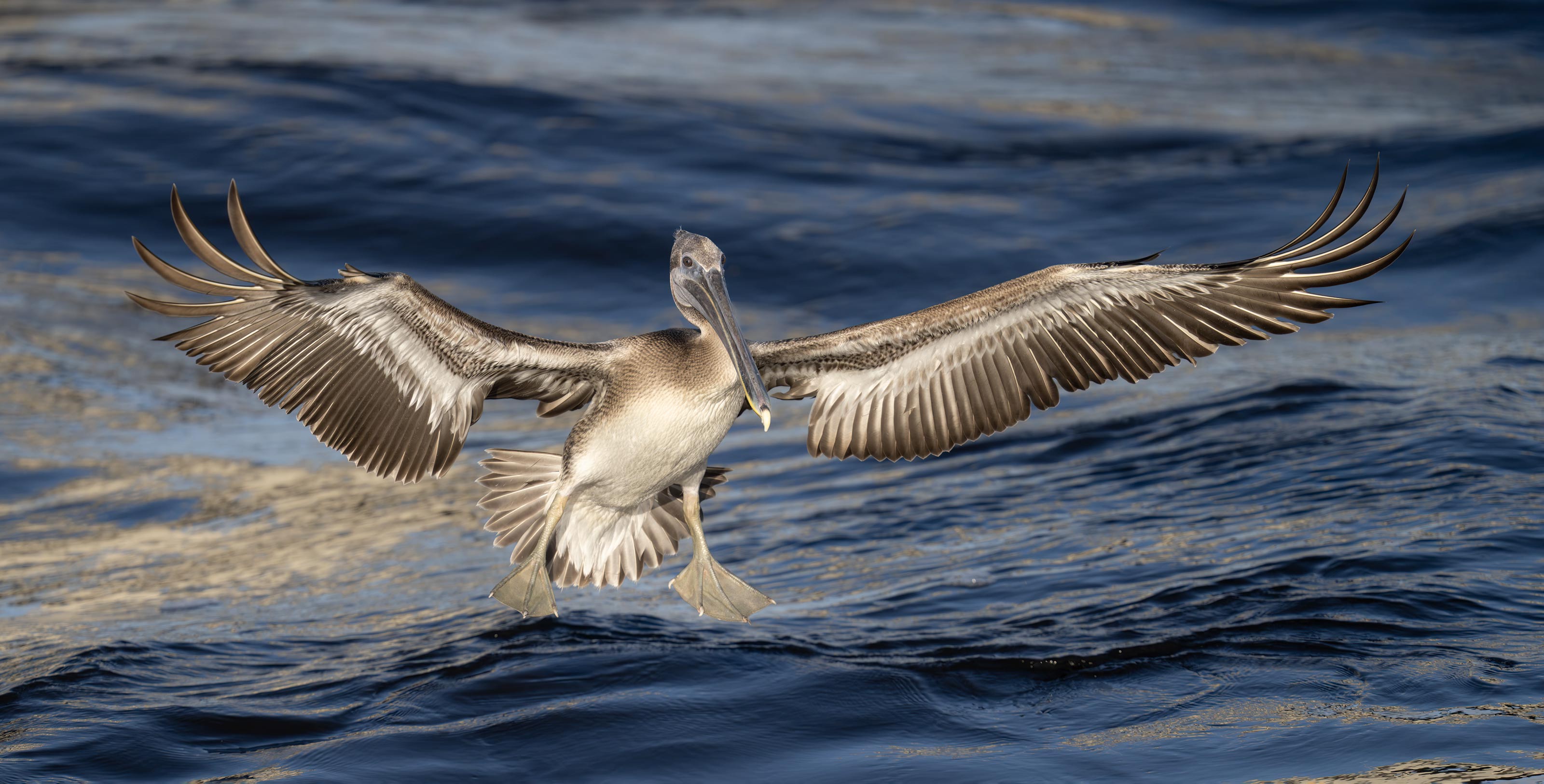
This image was created by yours truly on 5 November 2026 at Sebastian Inlet State Park with Steve Baglione. Bags flew down from Maine for two weeks of private In-the-Field Instructional sessions. Standing at full hight, I used the handheld Sony FE 300mm f/2.8 GM OSS Lens (Sony E) with the Sony FE 1.4x Teleconverter (at 420mm) and the alleged poor man’s a-1 ii, the Sony a7R VI Mirrorless Camera. The exposure was determined via Zebras with ISO on the Thumb Wheel: ISO 500: 1/4000 sec. at f/4 (wide open) in Manual mode. AWB at 8:53:27am on a then sunny morning. Wide/AF-C with Bird-Eye/Face Detection performed perfectly. Click on the image to enjoy the larger, inexplicably sharper high-res version. Image #4: Juvenile Brown Pelican braking to land |
Pelican Action
As soon as the sun broke through, we headed for the base of the jetty and enjoyed some excellent photography as the Brown Pelicans fished near the new fence that will keep folks out of the construction zone for the next six and one half years. As noted above, I was quite impressed with the Bird Face-Eye tracking of the new R7 series body.
The (very distracting) gray scuzz in the water is the result of runoff from the several days of record rains just before we arrived.
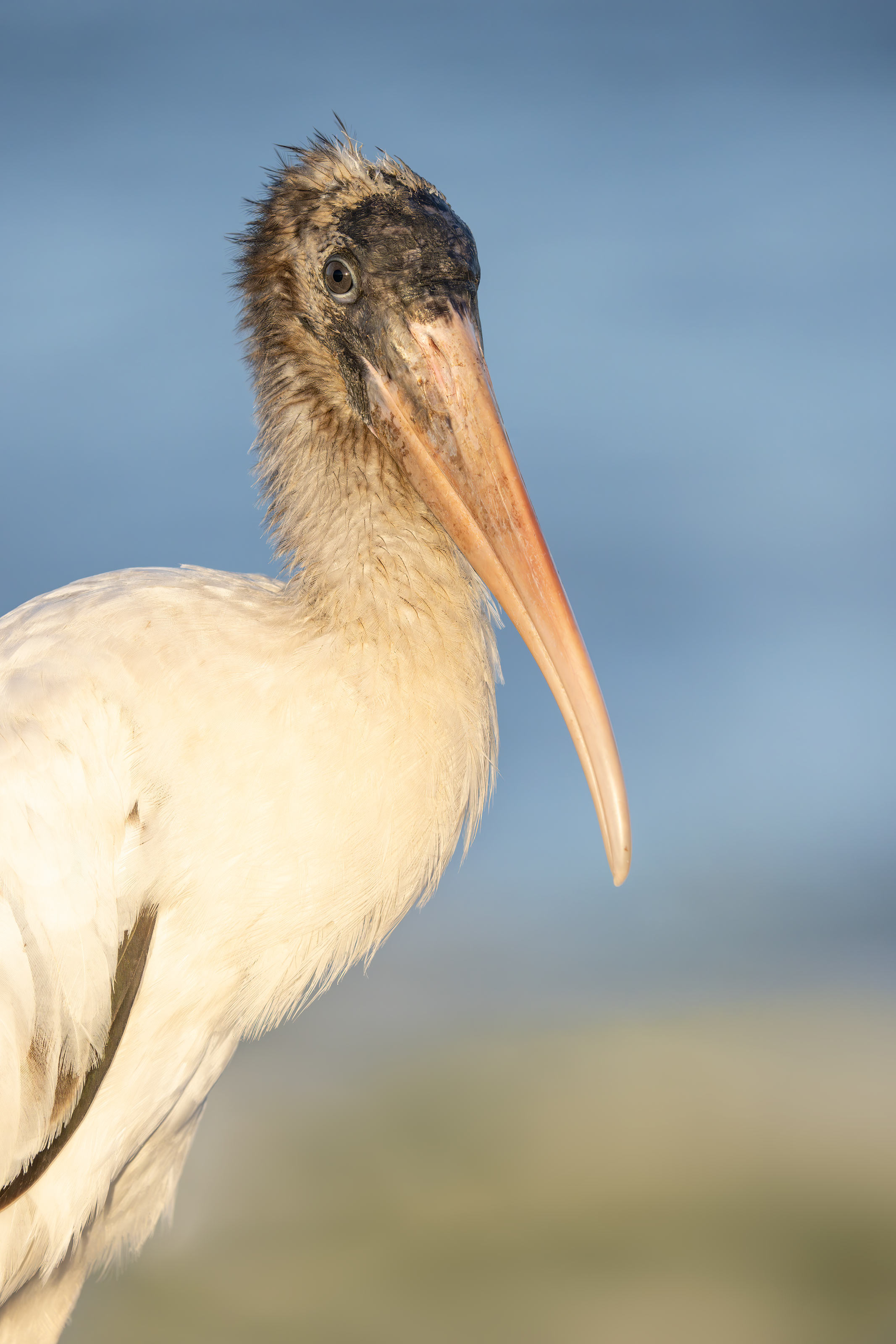
|
|
This image was created by yours truly on 6 November 2026 at Sebastian Inlet State Park with Steve Baglione. Bags flew down from Maine for two weeks of private In-the-Field Instructional sessions. Standing at full hight, I used the handheld Sony FE 400-800mm f/6.3-8 G OSS Lens (Sony E) (at 800mm) and the alleged poor man’s a-1 ii, the Sony a7R VI Mirrorless Camera The exposure was determined via Zebras with ISO on the Thumb Wheel: ISO 2500: 1/2500 sec. at f/8 (wide open) in Manual mode. AWB at 5:02:20pm on a sunny afternoon. Wide/AF-C with Bird-Eye/Face Detection performed perfectly. Click on the image to enjoy the larger, inexplicably sharper high-res version. Image #5: Wood Stork juvenile in late sweet light |
The Tilting Rear Screen!
One of the things that I loved most when transitioning from the original a-1 to the a-1 ii was the articulating rear monitor. The superb design and function was maintained with the A7R VI.
Standing at full height for this vertical image resulted in a very ugly background. I did not want to get down on the ground because I did not want to get sand on my hands (and then on the back of my new camera). So, I tilted out the rear monitor and worked with the camera held just above waist level. That left me with a backdrop of 2/3 Atlantic blue and 1/3 out of focus beach and beach wrack. In other words, perfect.
Note that I went with a faster-than-usual shutter speed for a static subject because holding the lens out in front of me at belt level is not the most stable shooting posture.
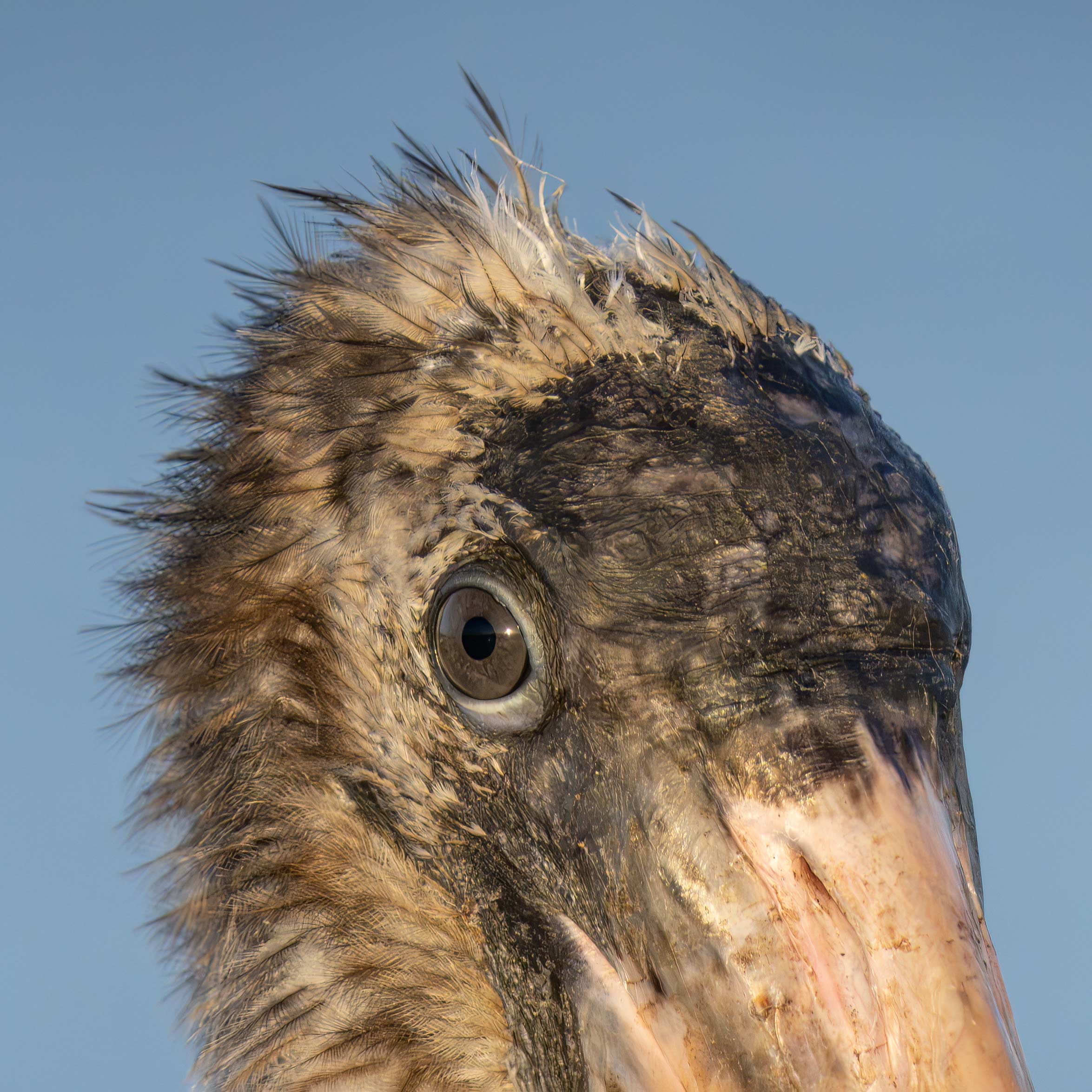
|
Image #5A: Unsharpened 100% crop of the Wood Stork juvenile in late sweet light image |
The 400-800 G Lens
I joke that the “G” stands for “good” as opposed to the GM — Grand Master, designation of the top of the line Sony lenses. I scoff when folks suggest that the 400-800 cannot produce images as sharp as those made with the 600mm f/4. Check out the unsharpened 100% crop above and let me know how it could possibly be any sharper.
And again, the 66 MP raw files of the A7R VI continue to
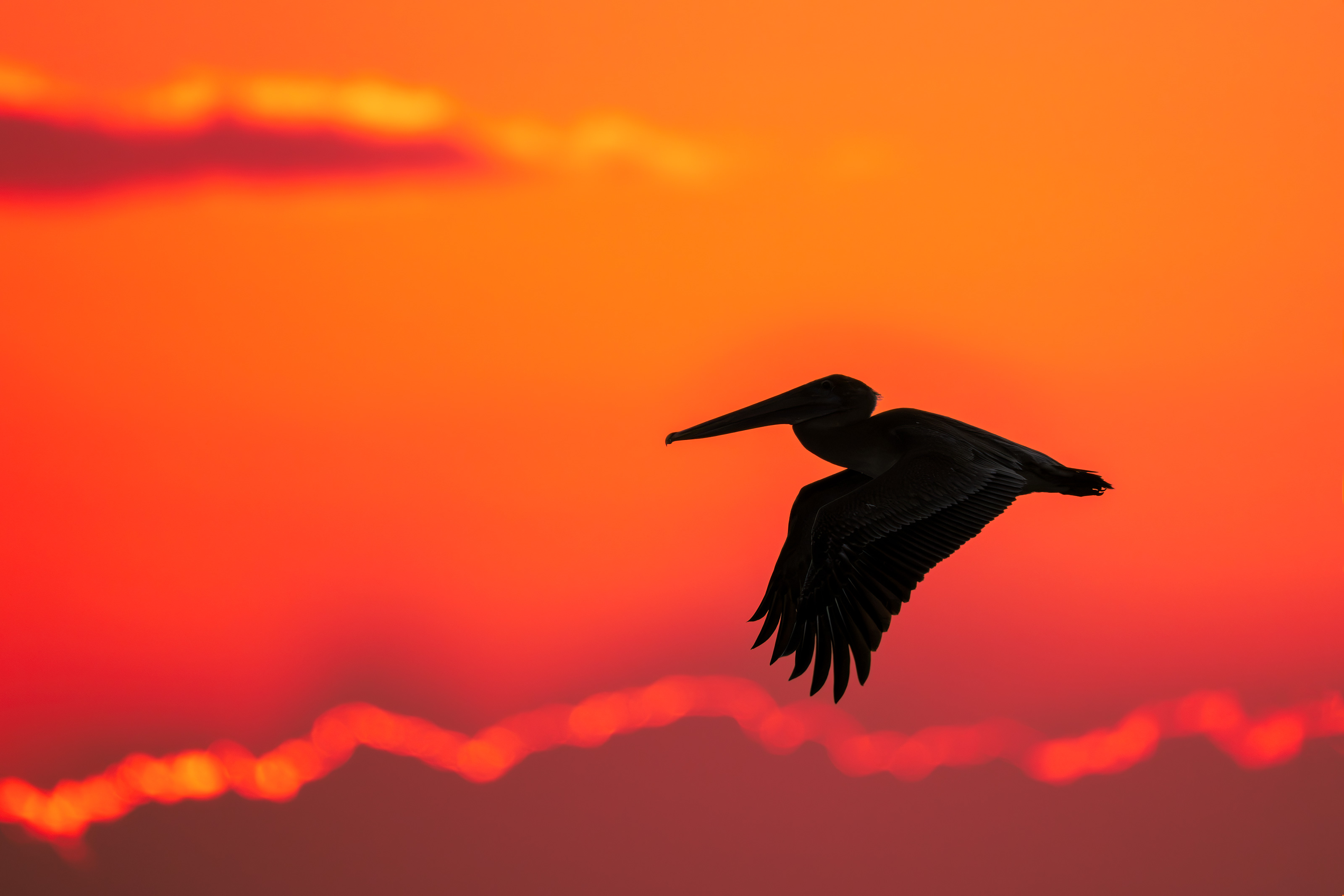
|
|
This image was created by yours truly on 6 November 2026 at Sebastian Inlet State Park with Steve Baglione. Bags flew down from Maine for two weeks of private In-the-Field Instructional sessions. Standing at full hight, I used the handheld Sony FE 400-800mm f/6.3-8 G OSS Lens (Sony E) and the alleged poor man’s a-1 ii, the Sony a7R VI Mirrorless Camera. The exposure was determined by Zebras with Exposure Compensation (EC) on the Thumb Dial. Multi Metering +1 stop. AUTO ISO set ISO 6400: 1/3200 second at f/8 (wide open) in Shutter Priority mode. AWB at 5:31:00pm on a partly cloudy evening. Wide/AF-C with Bird-Eye/Face Detection performed perfectly. Click on the image to enjoy the larger, inexplicably sharper high-res version. Image #6: Brown Pelican sunset silhouette — full downstroke flight |
Shutter Priority Mode
At the risk of beating a dead horse, Shutter Priority mode with AUTO ISO and Exposure Compensation (EC) on a convenient dial is superbly efficient when working with colorful skies at sunrise and sunset and equally deadly in the soft light of predawn at the beach where all the backgrounds are light-toned.
The 400-800 with the A7R VI is a fabulous combo. In recent months I have been handling the 4-8 easily for extended shooting sessions. A great new 400-800 YouTube video will be posted soon.
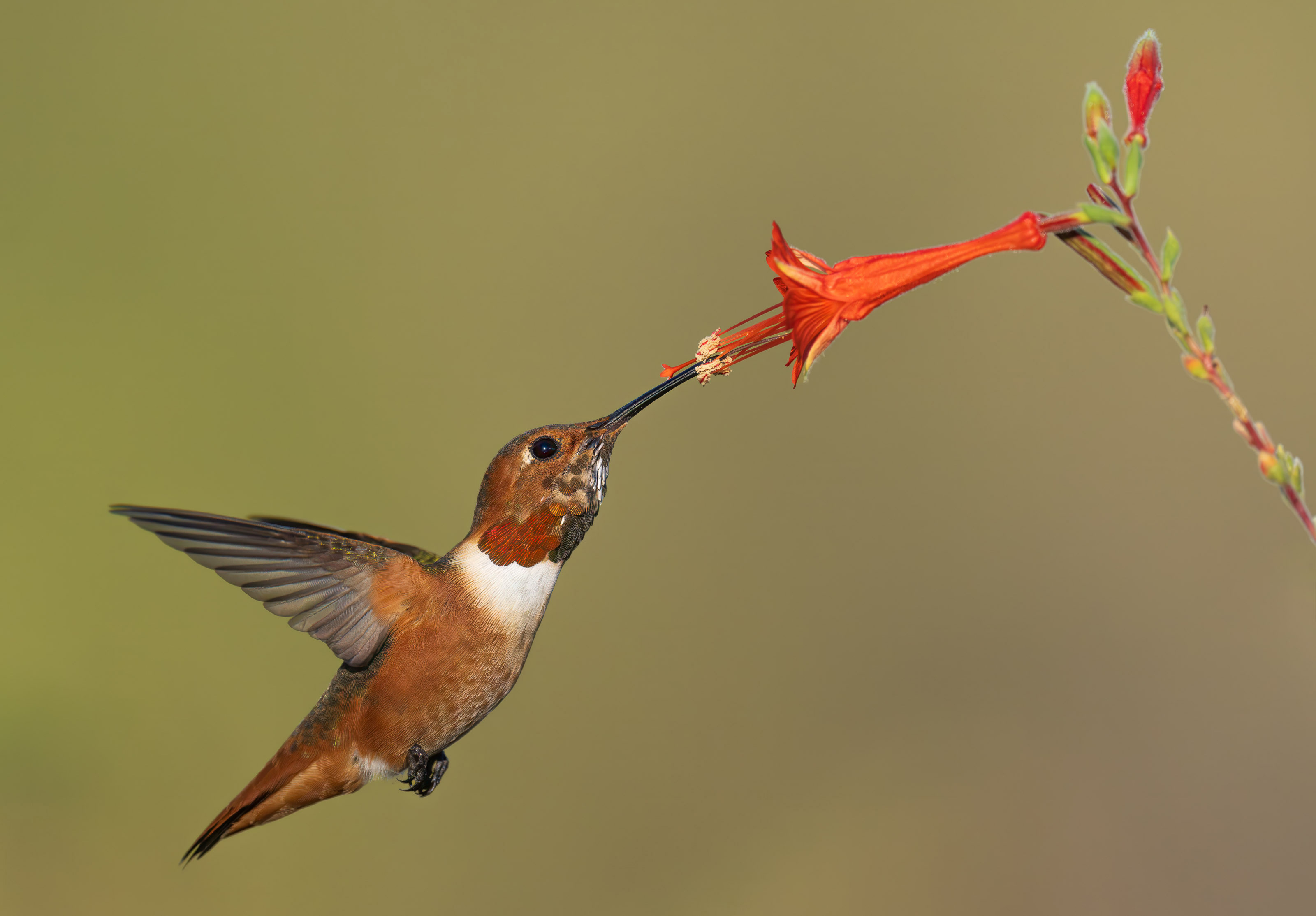
|
|
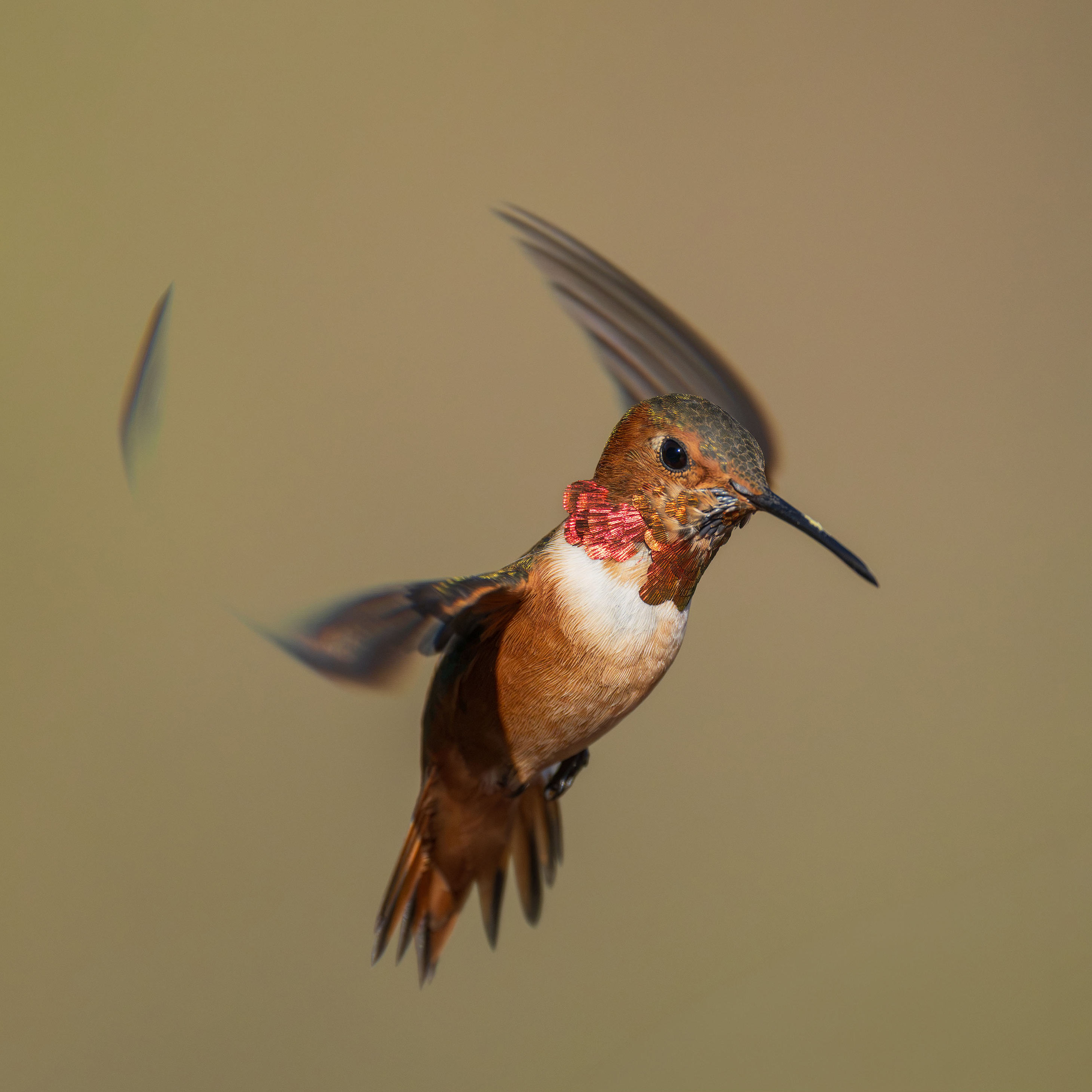
This image was created on 6 November 2026 by Patrick Sparkman in his backyard at San Diego, CA. He used the Robus RC-5570 Vantage Series 3 Carbon Fiber Tripod/Levered-Clamp FlexShooter Pro-mounted Sony FE 600mm f/4 GM OSS Lens with the Sony FE 1.4x Teleconverter (at 840mm) and the alleged poor man’s a-1 ii, the Sony a7R VI Mirrorless Camera. The exposure was determined via Zebras with ISO on the Thumb Wheel: ISO 2000: 1/8000 sec. at f/5.6 (wide open) in Manual mode. AWB at 3:10:13pm on a sunny afternoon. Wide/AF-C with Bird-Eye/Face Detection performed perfectly. Click on the image to enjoy the larger, inexplicably sharper high-res version. Image #7: Molting male Allen’s Hummingbird |
You Cannot Make Good Hummingbird Flight Photos with the A7R VI
The above is the word on the street. Judging by Patrick’s superb Allen’s Hummingb bird image above, I am guessing that that is not an absolute truth.
|
|
A stunningly good example of extreme rolling shutter. Image #8: Molting male Allen’s Hummingbird |
Thanks Patrick
Huge thanks to Patrick Sparkman for sharing this extreme example of rolling shutter with us here on the BAA blog. The good news is that he had to look long and hard to see any rolling shutter at all in hundreds of his hummingbird flight images.
|
|
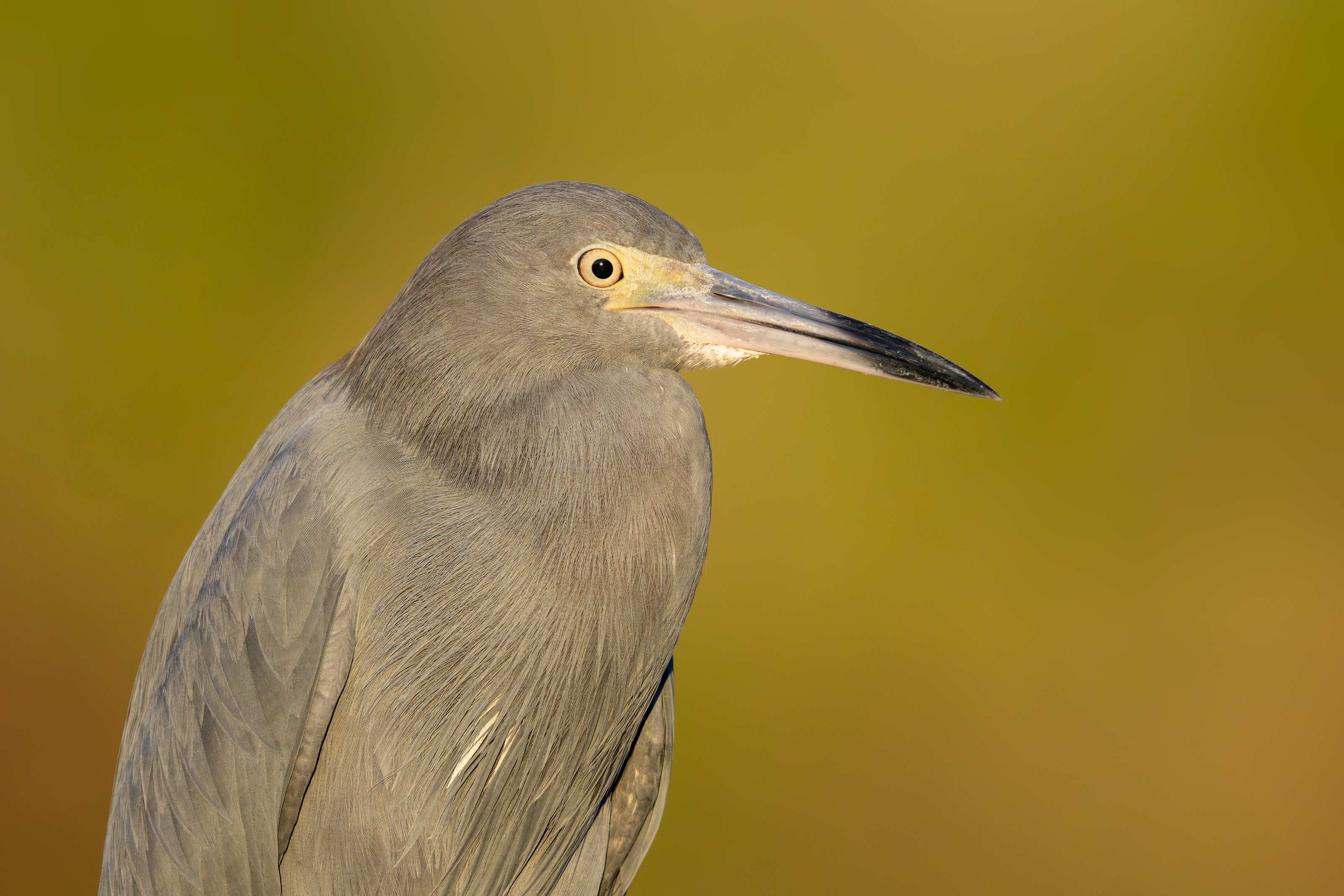
This image was created by yours truly on 8 November 2026 at Sebastian Inlet State Park with Steve Baglione. Bags flew down from Maine for two weeks of private In-the-Field Instructional sessions. Standing at full hight, I used the handheld Sony FE 400-800mm f/6.3-8 G OSS Lens (Sony E) (at 800mm) and the alleged poor man’s a-1 ii, the Sony a7R VI Mirrorless Camera (in APS-C crop mode/effective focal length = 1200mm). The exposure was determined via Zebras with ISO on the Thumb Wheel: ISO 2000: 1/1000 sec. at f/8 (wide open) in Manual mode. AWB at 5:14:24pm on a sunny afternoon. Wide/AF-C with Bird-Eye/Face Detection performed perfectly. Click on the image to enjoy the larger, inexplicably sharper high-res version. Image #9: Little Blue Heron adult in late sweet light |
A7R VI and APS-C Crop Mode
With its superb 67MP raw files, the A7R VI is the perfect crop mode camera.
Support BIRDS AS ART with your Everyday Online Shopping
Using the BAA Tip Jar Costs You Nothing
This You Tube video blog post took three hours to prepare not including the time spent photographing, picking my keepers, and optimizing the images. Consider using the BAA Tip Jar — it never costs you a single penny to help me out.
If you are like me, you enjoy the convenience of shopping online at Amazon without having to drive into town. The prices are competitive, and you can return anything you purchase for any reason (as long as you have not wrecked it).
If you enjoy learning from the blog posts, the YouTube videos, and the Instagram posts, or simply love being inspired by the images, the simplest and easiest way to support my efforts at BIRDS AS ART at no cost to you, is to use my generic Amazon link:
Whenever you make your routine household purchases — from groceries and coffee to backup batteries, household supplies, or electronics, making it a habit to click on our link first helps keep things running smoothly here. And again, it never costs you one penny to help me out.
Click here or on the Great (Photographic Accessory) Stuff tab on the lower, orange-yellow menu bar at the top of each blog post to learn about my favorite photo accessories. And more.
Typos
With all blog posts, feel free to e-mail or to leave a comment regarding any typos or errors.










While I’m normally not much of a fan of pelican shots, my favorite today is #6 for its color and composition. Second is #7.
This post nicely fleshes out and confirms what’s being said on other forums regarding these 2 Sony bodies.