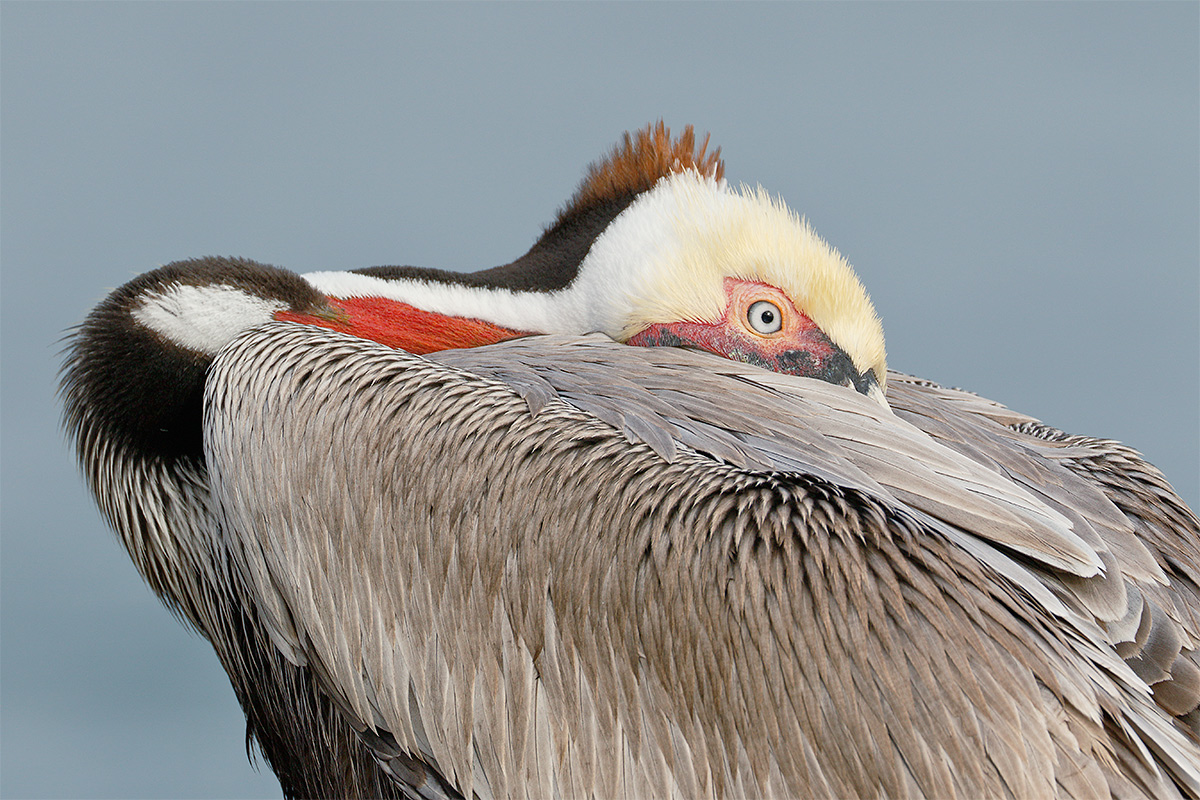
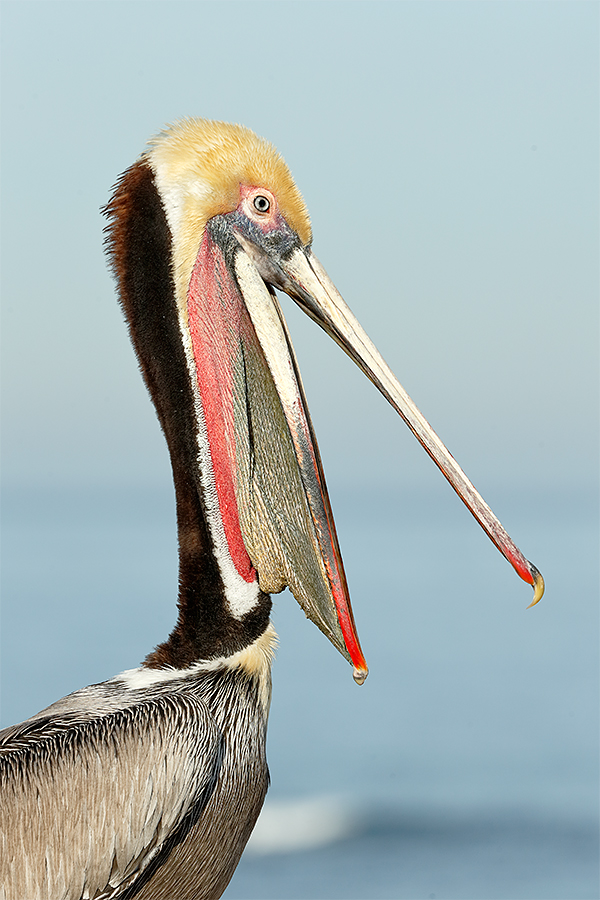
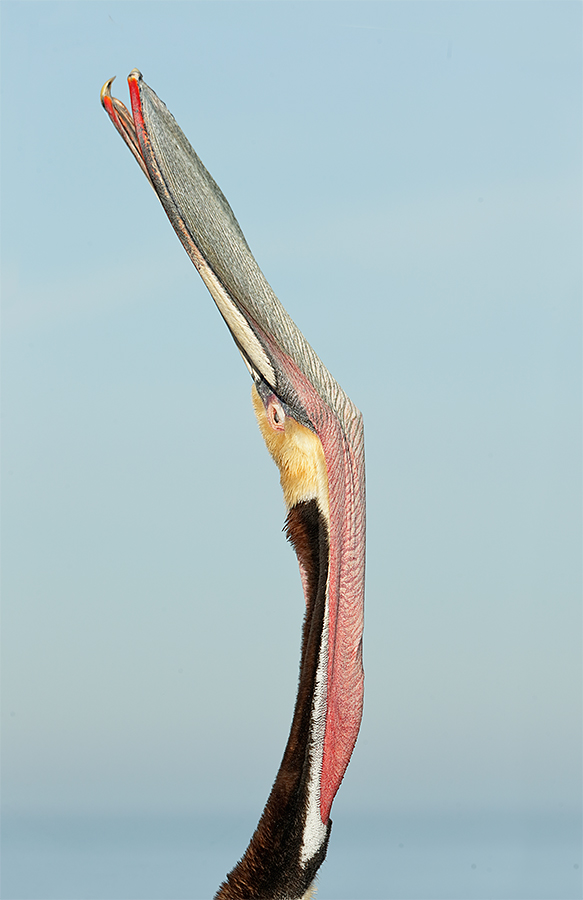
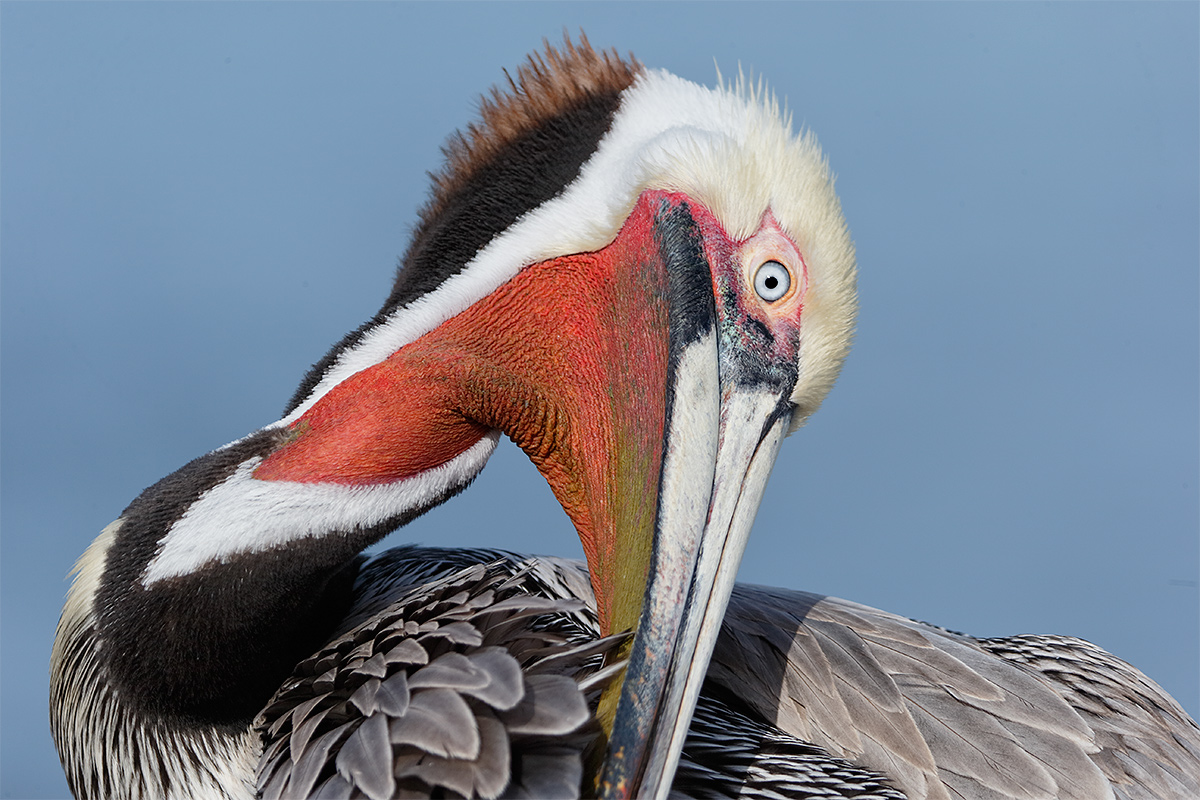
February 14th, 2015 What’s Up?
My keynote program at the CNPA Annual Meeting was well received as were Denise’s two programs. About 350 folks were in attendance at each. Funny that way back when I cut a Speech course repeatedly when I was scheduled to give my speech in fear of public speaking. That was in my senior year. I had been an undergraduate for six years, first on scholarship at Brooklyn Polytechnic Institute and then at Brooklyn College. On the last day of the term I showed up terrified and gave a short speech on my then love of golf as I needed a passing grade in order to graduate.
When I first met Denise I asked her to do a short program for an IPT group. She too was terrified. Finally she agreed. Now she does several programs each month and is a hugely popular and effective speaker as well as being the most creative photographer I know, both in the field and at her computer.
And we both love large audiences….
This post took about 1 1/2 hours to prepare and was published at 5:52am from my hotel room at the Marriott in Spartanburg, SC.
|

|
|
All of the images on the card were made on South Georgia. This remote wilderness island offers both spectacular scenery and hordes of tame wildlife and birds. From top left clockwise to the center: Southern Elephant Seal, courting King Penguin pair, King Penguin abstract, Grey-headed Albatross, King Penguin rookery on Salisbury Plain, Macaroni Penguin head portrait, King Penguin molting Okum Boy, Macaroni Penguin pair, King Penguin preening, Southern Elephant Seal yawning, the view of Gold Harbour from a Light-mantled Sooty Albatross nest.
Click on the image to see an extra large version.
|
Back to the Southern Ocean
South Georgia Expedition Voyage
I’ve been blessed. I’ve now made four trips to the Southern Ocean, three expeditions that visited the Falklands, South Georgia, and the Antarctic Peninsula, and one to the Falklands and South Georgia. Each was a truly amazing experience. South Georgia has been the star of the show each time: rugged snow covered peaks, tame and abundant wildlife including Southern Elephant Seal and Southern Fur Seal, and penguins: more King Penguins than you could ever have dreamed of. Gentoos. And my favorite, the golden-yellow spaghetti-topped Macaronis. With four trips to South Georgi under my belt, I have a pretty good idea about how to make great images at each of the iconic landings. In addition, we should have some pretty good flight photography sessions from the stern of the ship. I would love the chance to share my knowledge with you.
Do consider joining me in South Georgia next October for the trip of a lifetime. See here for the complete details.
Save $242
Register now for the South Georgia trip and receive a $242 on your return airfare. Please e-mail for details.
Please Remember to use our Affiliate Links 🙂
To show your appreciation for my continuing efforts here, we ask, as always, that you use our the B&H and Amazon affiliate links on the right side of the blog for all of your purchases. B&H is recommended for you major photography gear purchases, Amazon for your household, entertainment, and general purpose stuff. Please check the availability of all photographic accessories in the BIRDS AS ART Online Store, especially the Mongoose M3.6 tripod heads, Gitzo tripods, Wimberley heads and plates, LensCoats and accessories, and the like. We sell only what I have used, have tested, and can depend on. We will not sell you junk. We know what you need to make creating great images easy and fun. And we are always glad to answer your gear questions via e-mail. I just learned that my account was suspended during my absence; it should be up and running by Monday at the latest.
I would of course appreciate your using our B&H affiliate links for all of your major gear, video, and electronic purchases. For the photographic stuff mentioned in the paragraph above we, meaning BAA, would of course greatly appreciate your business. Here is a huge thank you to the many who have been using our links on a regular basis and visiting the BAA Online store as well.
|
|
|
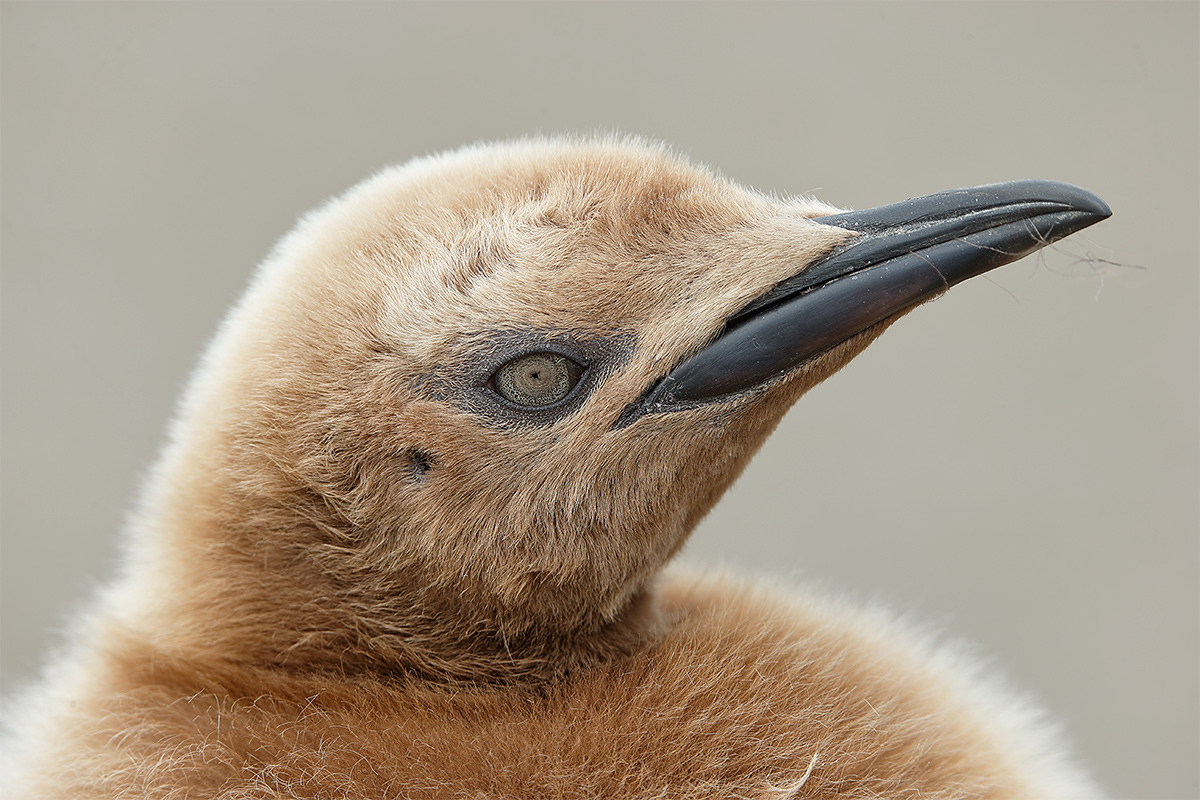
This image was created in cloudy conditions on Salisbury Plain, South Georgia with the Canon EF 300mm f/2.8L IS II USM lens, the Canon Extender EF 2X III, and the Canon EOS-1D X. ISO 400. Evaluative metering +1 stop: 1/200 sec. at f/7.1. Cloudy WB.
AI Servo/Rear Focus/Zone AF as framed was active at the moment of exposure. With this image the three AF points activated by the AF system were just forward of the eye. Click on the image to see a larger version.
Image #2
|
Head Angle Fine Points
In my not-so-humble opinion, the head angle in Image #2 in yesterday’s blog post was far superior to the head angle in Image #1 for the reasons enumerated by the vast majority. The bird in #1 looked far more alive (as did the eye), and, with the tip of the bill on the same plane as the eye, the entire length of the bill in #2 was in relatively sharp focus. Not so in #1 where, with the head actually turned slightly away from us,the tip of the bill was not at all sharp. As almost always, head angle with the bird turned a very few degrees toward us is best.
|

|
|
This image was created in cloudy conditions on December 25, 2014 at St. Andrews Bay, South Georgia with the hand held Canon EF 300mm f/2.8L IS II USM lens, the Canon Extender EF 2X III, and the Canon EOS-1D X. ISO 400. Evaluative metering +1 2/3 stops: 1/500 sec. at f/5.6. Auto WB.
Center AF point (manual selection)/AI Servo/Rear Focus AF active on the bird’s neck was active at the moment of exposure. Click on the image to see a larger version.
|
King Penguin T-Pose
The T-pose, also known as the blind pose or the reference pose is the default un-animated state of a 3D model upon which the animation is based. I do not think that this penguin had any video games or animations in mind as it emerged from the surf at St. Andrews Bay, South Georgia. See the original image in the animated GIF below.
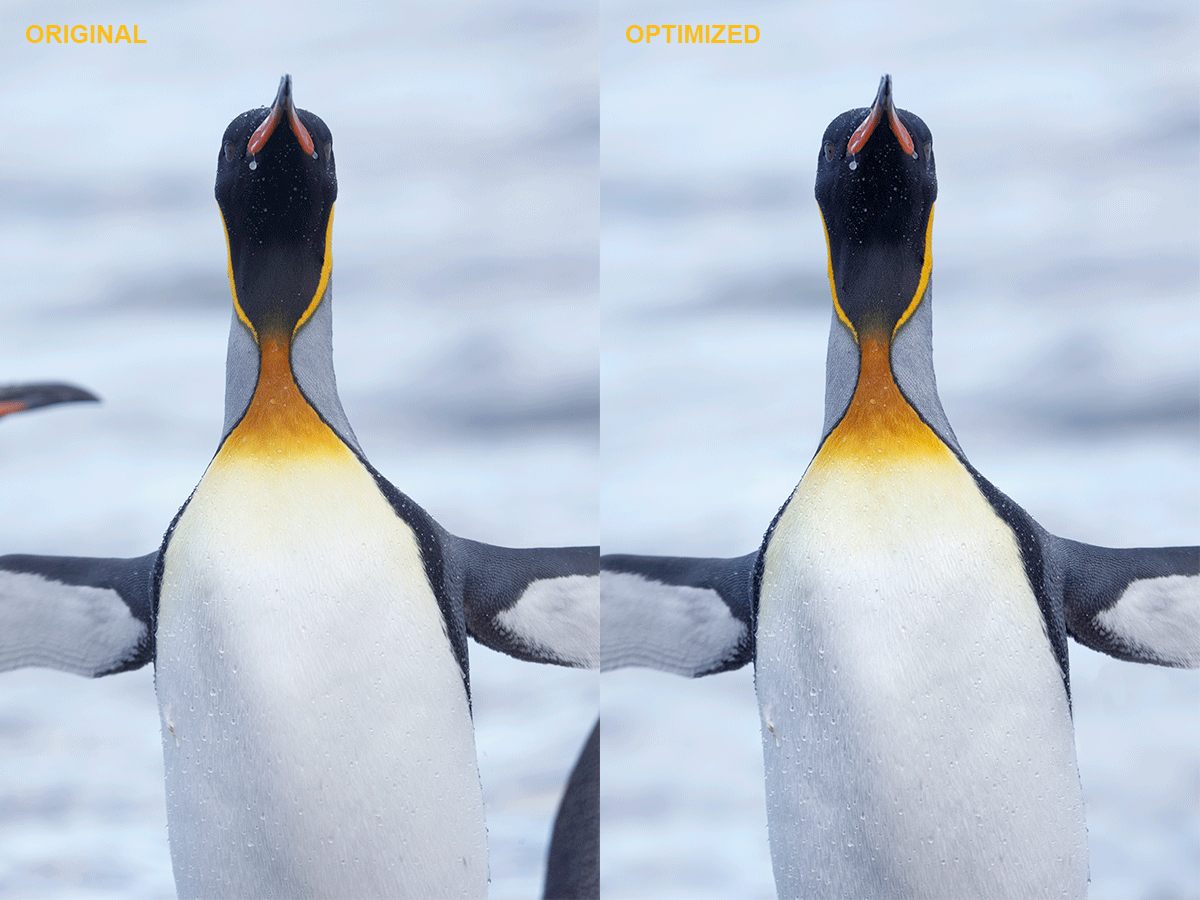
The “original” here is actually the converted TIFF file.
|
The Image Optimization
During the RAW conversion in DPP I first moved the brightness slider two clicks to the left to darken the image and then opened up the BLACKs by moving the Shadow Slider 3 to the right and toned down the highlights just a bit by moving the Highlight slider one click to the left.
Clean-up of the extraneous bird parts was done with the Clone Stamp Tool and the Patch Tool. To smooth out the repair work I put the whole image on its own layer, applied a 60-pixel Gaussian blur, and painted the effect in where needed using an Inverse(Black or Hide-all) mask. I did roughly the same thing to paint in my NIK 50-50 recipe on the bird only but used a 33% Opacity brush to apply the effect incrementally.
Digital Basics
Everything that I did to optimize both of today’s images is covered in detail in my Digital Basics File–written in my easy-to-follow, easy-to-understand style. Are you tired of making your images look worse in Photoshop? Digital Basics File is an instructional PDF that is sent via e-mail. It includes my complete digital workflow, dozens of great Photoshop tips, details on using all of my image clean-up tools, the use of Contrast Masks, several different ways of expanding and filling in canvas, all of my time-saving Keyboard Shortcuts, Quick Masking, Layer Masking, and NIK Color Efex Pro basics, Contrast Masks, Digital Eye Doctor techniques, using Gaussian Blurs, Tim Grey Dodge and Burn, a variety of ways to make selections, how to create time-saving actions, the Surface Blur (background noise reduction) settings as taught to me by Denise Ippolito, and tons more.
APTATS I & II
Learn the details of advanced Quick Masking techniques in APTATS I. Learn Advanced Layer Masking Techniques in APTATS II. Mention this blog post and apply a $5 discount to either with phone orders only. Buy both APTATS I and APTATS II and we will be glad to apply at $15 discount with phone orders only. Please call Jim or Jennifer at 863-692-0906 weekdays to order.
|
|
|
You can order your copy of “The Photographers’ Guide to Canon Digital Photo Professional 4.0” (aka the DPP 4 Raw Conversion eGuide) by Arash Hazeghi and Arthur Morris by clicking here.
|
The DPP 4 eGuide (PDF)
Learn how and why I and many other discerning photographers choose and use only DPP 4 to convert their Canon RAW files in the DPP 4 RAW Conversion Guide by Arash Hazeghi and yours truly. The latest version supports all of the newer Canon camera bodies and several older models including the EOS-7D and the EOS-1D Mark IV.
Facebook
Be sure to like and follow BAA on Facebook by clicking on the logo link upper right. Tanks a stack!
Support the BAA Blog. Support the BAA Bulletins: Shop B&H here!
We want and need to keep providing you with the latest free information, photography and Photoshop lessons, and all manner of related information. Show your appreciation by making your purchases immediately after clicking on any of our B&H or Amazon Affiliate links in this blog post. Remember, B&H ain’t just photography!
…..
Amazon.com
Those who prefer to support BAA by shopping with Amazon may use this link:
Amazon Canada
Many kind folks from north of the border, eh, have e-mailed stating that they would love to help us out by using one of our affiliate links but that living in Canada and doing so presents numerous problems. Now, they can help us out by using our Amazon Canada affiliate link by starting their searches by clicking here. Many thanks to those who have written.
Typos
In all blog posts and Bulletins, feel free to e-mail or to leave a comment regarding any typos or errors. Just be right :).
February 13th, 2015 What’s Up?
Jim drove me to Orlando Airport yesterday late morning. I went to Chili’s for lunch. I took my cold pouch out from between the two gel ice packs to inject for lunch. There was only one small problem. My insulin was on the shelf in my refrigerator at home :). I called WalMart in Spartanburg, SC and was able to order the three vials of insulin that I use every day. After my uneventful direct flight to Charlotte, NC I picked up my scrips with no problem.
Adam Jones presented a great program chock full of spectacular general nature images. The guy shoots everything and he is talented. My Keynote program, sponsored by Canon USA/Explorers of Light, is tomorrow morning. I still have a bit more work to do on it.
This blog post took about 1 hour to prepare. It was published at 4:59am from the CNPA Annual Meeting hotel in Spartanburg. Now I need to put the finishing touch on this morning’s program, “What Makes a Great Natural History Image.”
Neat
Like music? Check out ThePianoGuys’ “One Direction – What Makes You Beautiful” (5 Piano Guys, 1 piano) on You Tube here. Great sound and music but more incredible to listen and watch.
South Georgia October 2015
Do consider joining me in South Georgia next October for the trip of a lifetime. See here for the complete details.
Save $242
Register now for the South Georgia trip and receive a $242 on your return airfare. Please e-mail for details.
Please Remember to use our Affiliate Links 🙂
To show your appreciation for my continuing efforts here, we ask, as always, that you use our the B&H and Amazon affiliate links on the right side of the blog for all of your purchases. B&H is recommended for you major photography gear purchases, Amazon for your household, entertainment, and general purpose stuff. Please check the availability of all photographic accessories in the BIRDS AS ART Online Store, especially the Mongoose M3.6 tripod heads, Gitzo tripods, Wimberley heads and plates, LensCoats and accessories, and the like. We sell only what I have used, have tested, and can depend on. We will not sell you junk. We know what you need to make creating great images easy and fun. And we are always glad to answer your gear questions via e-mail. I just learned that my account was suspended during my absence; it should be up and running by Monday at the latest.
I would of course appreciate your using our B&H affiliate links for all of your major gear, video, and electronic purchases. For the photographic stuff mentioned in the paragraph above we, meaning BAA, would of course greatly appreciate your business. Here is a huge thank you to the many who have been using our links on a regular basis and visiting the BAA Online store as well.
I was Wrong in part: My Errors
Thanks to comments first left by first by John Armitrage and backed up by Steve Soderling the major premise of yesterday’s blog, that camera shake is greater with a crop factor camera, was incorrect. I was tricked (if you were) into this error because the shake appears much more evident when you are looking through the viewfinder of a crop factor camera than when you are looking through the viewfinder of a full frame or 1.3X crop factor camera. I apologize for my error.
Thanks to John and Steve for setting me straight. Note: I also appreciated Steve’s comments on 7D II resolution.
The principles discussed having to do with creating sharp images, however, remain good advice for folks hand holding telephoto lenses regardless of the camera that they are using. I do believe that my comments regarding 7D Mark II image quality and the other advantages of using a crop factor camera are indeed accurate. It was quite evident that Last night’s speaker, Canon Explorer of Light Adam Jones, concurs.
In addition to the error mentioned above I mistakenly noted that yesterday’s pelican image (sorry Prudence) was created with the 7D II when it was in fact created with the 1D X. That was an honest mistake.
Lately, there has been a slew of insightful comments.
|
|
|
This image was created in cloudy conditions on Salisbury Plain, South Georgia with the Canon EF 300mm f/2.8L IS II USM lens, the Canon Extender EF 2X III, and the Canon EOS-1D X. ISO 400. Evaluative metering +1 stop: 1/200 sec. at f/7.1. Cloudy WB.
AI Servo/Rear Focus/Zone AF as framed was active at the moment of exposure and nailed the bird’s eye. Click on the image to see a larger version.
Image #1
|
Head Angle Fine Points
Compare the two images presented here today. Which image has the better head angle? Why?
|
|
|
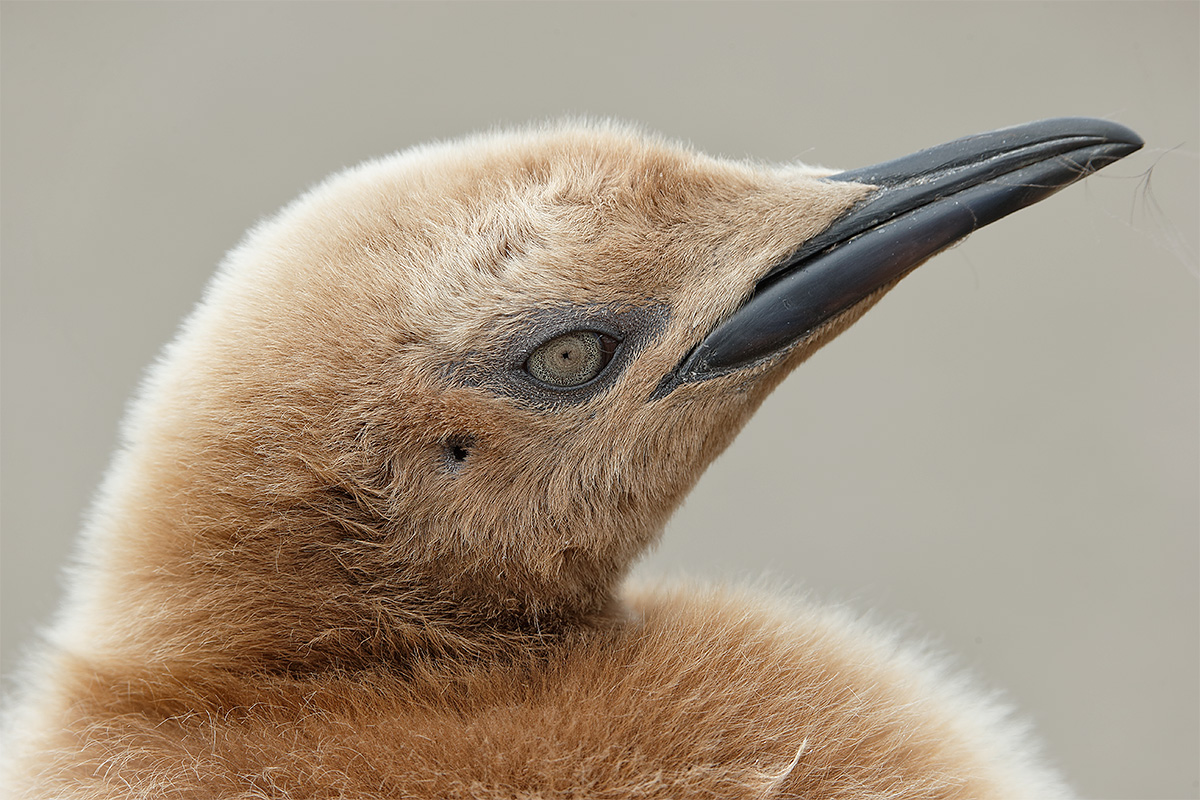
This image was created in cloudy conditions on Salisbury Plain, South Georgia with the Canon EF 300mm f/2.8L IS II USM lens, the Canon Extender EF 2X III, and the Canon EOS-1D X. ISO 400. Evaluative metering +1 stop: 1/200 sec. at f/7.1. Cloudy WB.
AI Servo/Rear Focus/Zone AF as framed was active at the moment of exposure. With this image the three AF points activated by the AF system were just forward of the eye. Click on the image to see a larger version.
Image #2
|
Oakum Boys
A young King Penguin–featured in today’s images–is known as an Oakum boy. “Oakum is a preparation of tarred fibre used in shipbuilding for caulking or packing the joints of timbers in wooden vessels…” (From Wikipedia here.) The color of the young penguins–this one about eight months old–resembled the color of oakum, thus their nickname.
My Opinion
In my humble opinion, one of the two head angles here is superb and one is lousy. Let’s see how many agree with me….
|
|
|
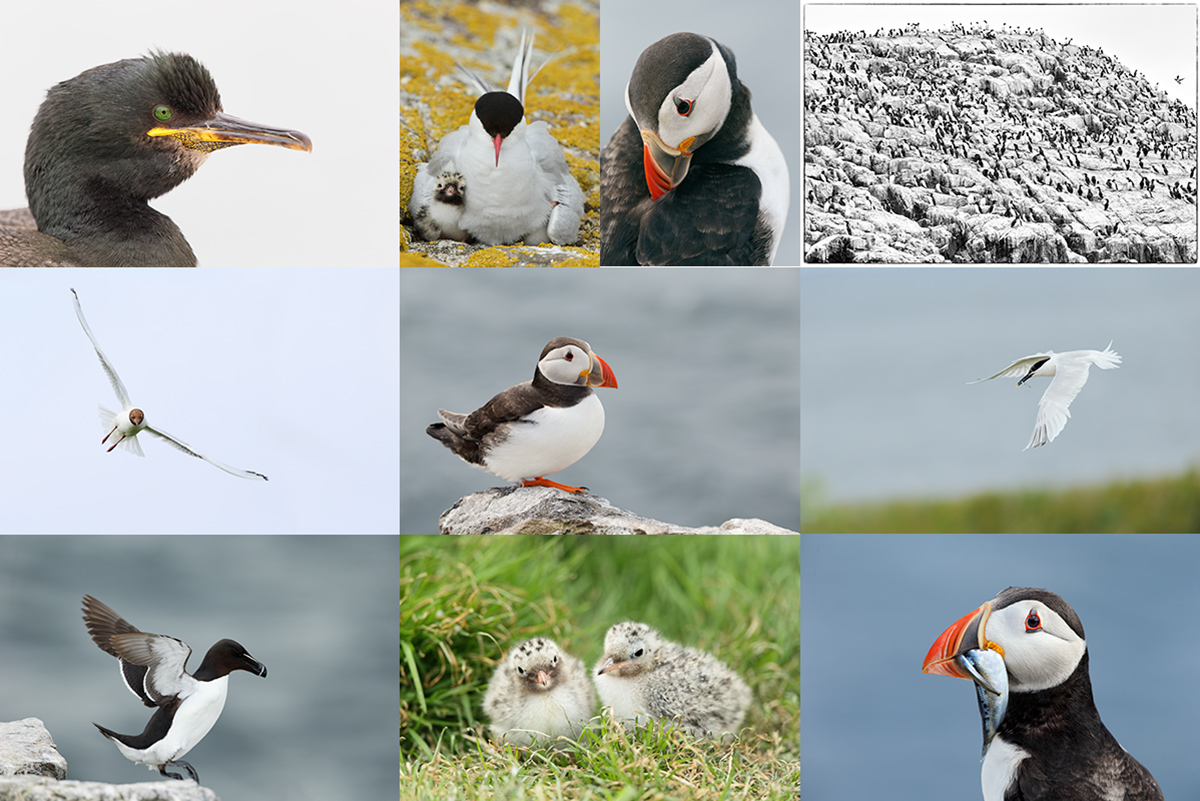
Images and card design copyright 2014: Arthur Morris/BIRDS AS ART. Click on the card to enjoy a spectacular larger version.
|
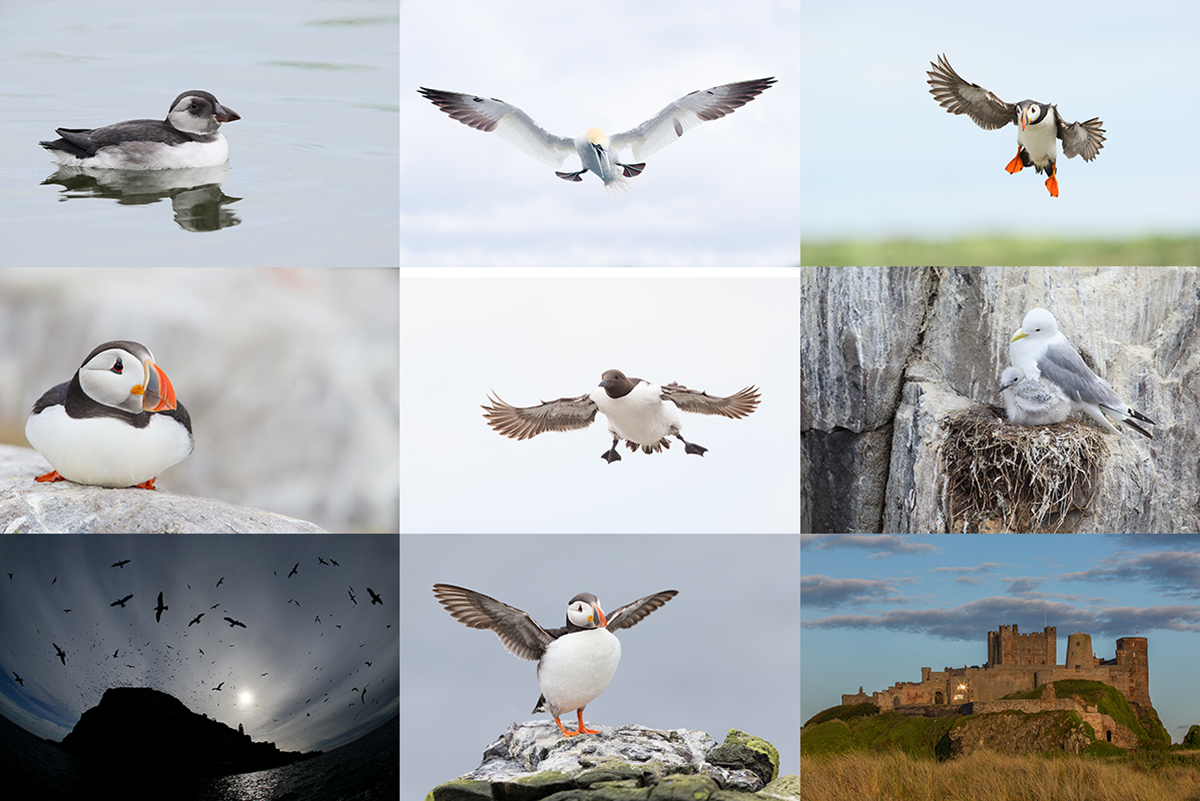
The 2015 UK Puffins and Gannets IPT
June 29 through July 5, 2015: $5499: Limit 10 photographers/Formerly sold out/Now: three openings due to two cancellations. Two great leaders: Denise Ippolito and Arthur Morris.
Due to a cancellation there are now two openings on this trip.
Here are the plans for next year: take a red eye from the east coast of the US on 28 June arriving in Edinburgh, Scotland on the morning of Monday 29 June (or simply meet us then either at the Edinburgh Airport (EDI) or later in the day at our cottages if you are driving your own vehicle either from the UK or from somewhere in Europe. Stay 7 nights in two gorgeous modern country cottages.
There are 5 days of planned puffin/seabird trips—weather permitting, and 1 full day of gannet photography with 2 sessions on the boat.
|
|
|
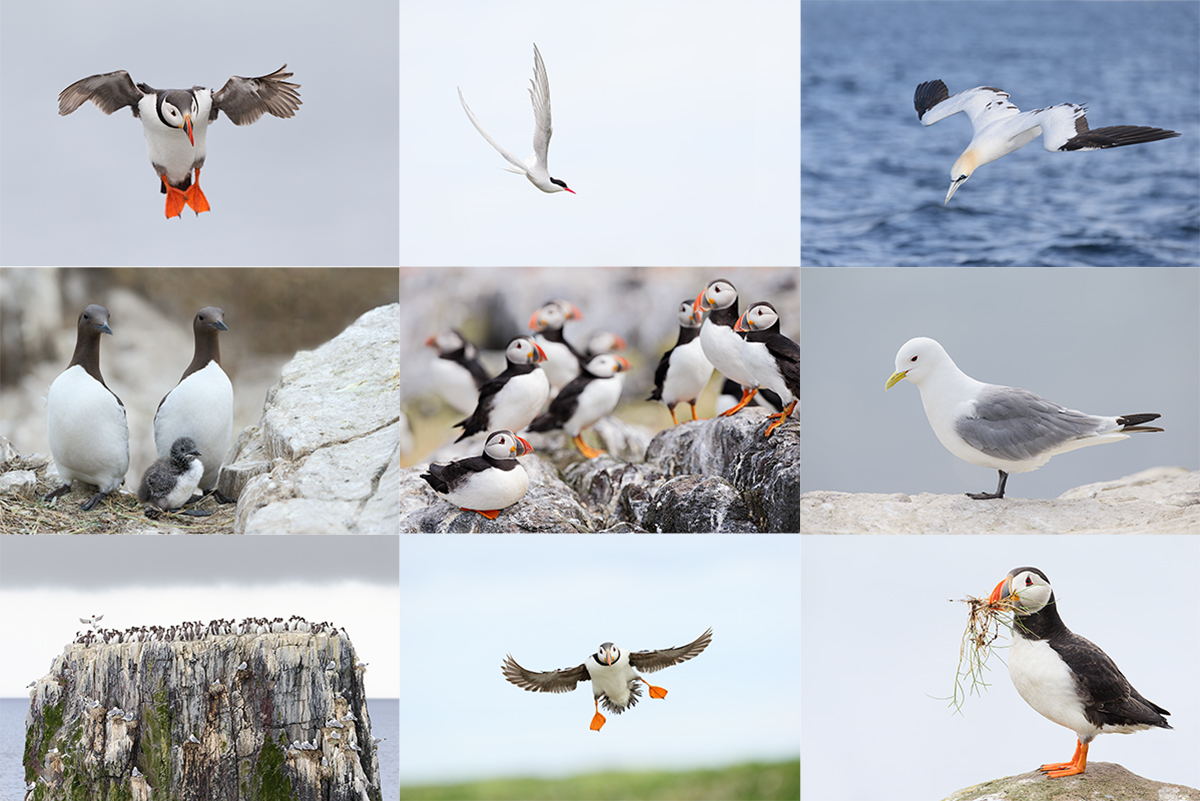
Images and card design copyright 2014: Arthur Morris/BIRDS AS ART. Click on the card to enjoy a spectacular larger version.
|
The Details
We will be staying in upscale country-side cottages that are beyond lovely with large living areas and lots of open space for image sharing and Photoshop lessons. The shared rooms are decent-sized, each with two roomy single beds and a private bathroom. See the single supplement info below.
All breakfasts, lunches and dinners are included. All 5 puffins boat lunches will need to be prepared in advance, taken with, and consumed at your leisure. I usually eat mine on the short boat trip from one island to the other. Also included is a restaurant lunch on the gannet boat day and a farewell fine dining thank you dinner. The cost of your National Heritage Trust is also included; that covers the twice a day landing fees.
Plan to fly home on the early morning of Monday 6 July or to continue your stay or travels.
|
|
|
Images and card design copyright 2014: Arthur Morris/BIRDS AS ART. Click on the card to enjoy a spectacular larger version. Scroll down to join us in the UK in 2015.
|
Single Supplement Info
The single supplement is $1475. As we will be renting a third cottage the $1475 is due with your deposit and is also non-refundable.
If you are good to go please send your $2,000 deposit check now to save a spot. The balance will be due on March 29, 2015. Please make your check out to “Arthur Morris” and send it to Arthur Morris/BIRDS AS ART, PO Box 7245, Indian Lake Estates, FL, 33855. If you cancel and the trip fills, we will be glad to apply a credit applicable to a future IPT for the full amount less a $100 processing fee. If we do not receive your check for the balance on or before the due date we will try to fill your spot from the waiting list. Whether or not your spot is filled, you will lose your deposit. If not, you can secure your spot by paying your balance.
We do hope that you can join us.
Facebook
Be sure to like and follow BAA on Facebook by clicking on the logo link upper right. Tanks a stack!
Support the BAA Blog. Support the BAA Bulletins: Shop B&H here!
We want and need to keep providing you with the latest free information, photography and Photoshop lessons, and all manner of related information. Show your appreciation by making your purchases immediately after clicking on any of our B&H or Amazon Affiliate links in this blog post. Remember, B&H ain’t just photography!
…..
Amazon.com
Those who prefer to support BAA by shopping with Amazon may use this link:
Amazon Canada
Many kind folks from north of the border, eh, have e-mailed stating that they would love to help us out by using one of our affiliate links but that living in Canada and doing so presents numerous problems. Now, they can help us out by using our Amazon Canada affiliate link by starting their searches by clicking here. Many thanks to those who have written.
February 12th, 2015 What’s Up?
I fly to Charolotte, NC this afternoon and then drive to Spartanburg, SC for the CNPA Annual Meeting. I have tons more on the 100-400II and the 7D II and lots more Southern Ocean and San Diego images to share with you here and will be doing that on a daily basis.
This blog post took about 1 1/2 hours to prepare. It was published at 4:46am from my home at Indian Lake Estates, FL.
CNPA
I will be presenting 3 programs at the Carolina Nature Photographer’s Annual Meeting, Friday thru Sunday. My keynote presentation, “What Makes a Great Natural History Image,” on Friday, is being generously sponsored by Canon USA/Explorers of Light. I hope to see many of you there. Be sure to say “hi” and get a hug. Learn more or register here.
|
|
|
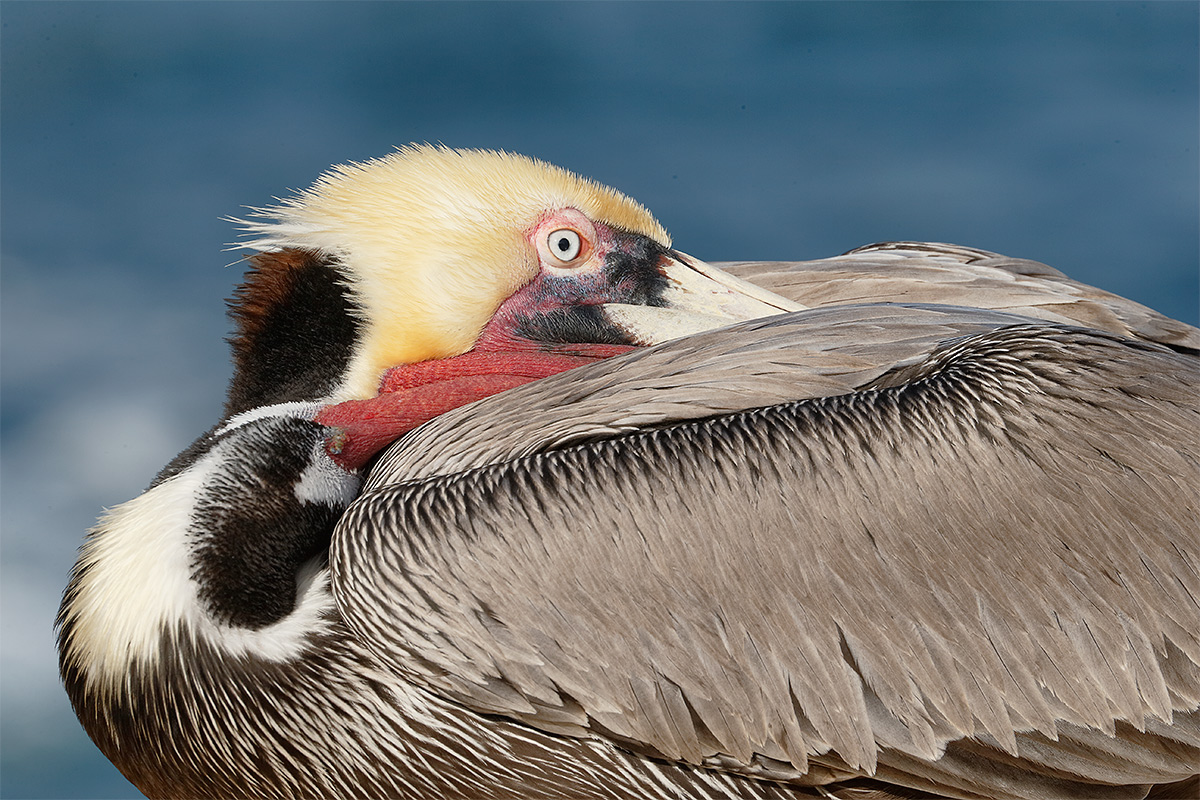
This image was created at La Jolla, CA on the recently concluded San Diego IPT with the hand held Canon EF 100-400mm f/4.5-5.6L IS II USM lens, the Canon Extender EF 1.4X III (at 560mm), and the Canon EOS-1D X. ISO 400. Evaluative metering at zero: 1/400 sec. at f/14 in Manual mode. Rig on the Black Rapid RS-7 Strap.
Important Note: I was 100% positive that this image was created with the 7D II but in fact it was created with the 1D X. I made the corrections above at about 11:50am on Thursday. Honest mistake. The fact is that I did not do much with the 7D II/1.4X III/100-400 II on the trip….
Center AF point (by necessity)/AI Servo Rear Focus AF on the bird’s eye and re-compose with both forearms resting on a rock at chest level for stability. Click here to see the latest version of the Rear Focus Tutorial. Click on the image to see a larger version.
|
Playing With Fire…
There is numerous internet chatter and even a BPN thread or two regarding unsharp 7D Mark II images. Many mention a distinct lack of sharpness when a 7D II is hand held with a telephoto lens and a 1.4X teleconverter. Read on to learn why these folks need to look in the mirror and strongly consider operator error….
For today’s image I was working fully zoomed in to 560mm. What folks are forgetting is that with the 1.6X crop factor of the 7D II the effective focal length works out to 896mm. That yields 17.92X magnification. Folks hand holding this combination are indeed playing with fire. Those who run around hand holding this combo who do not realize that they need to take extraordinary care to keep the lens completely still are doomed to failure in the form of unsharp images. Only those with superb sharpness techniques should even attempt to hand hold this combination. In most cases the use of high shutter speeds is recommended even if doing so requires setting higher ISOs.
It is mandatory that folks understand that the effects of camera and lens shake are a factor not of the effective focal length, but of the square of the focal length. This is also the reason that there are some internet reports that IS does not appear to be working properly when folks who have never used 1.6 crop factor cameras before the 7D II are hand holding telephoto and super-telephoto lenses for the first time when using a camera with a CMOS 22.4 × 15 pixel sensor. It is not the Image Stabilization, it is the square of the effective focal length that is the culprit….
Best would be to use this rig on a tripod topped by a Mongoose M 3.6. Note that even when working on tripod at long effective focal lengths you will need to employ both high shutter speeds and excellent sharpness techniques. See the section on Sharpness Techniques in The Art of Bird Photography II (ABP II: 916 pages, 900+ images on CD only).
To a lesser but still significant degree, the warning here also applies to those use the 7D II/100-400 combo without the addition of a TC: long effective focal lengths require the use of top-notch sharpness techniques even with the great 4-stop IS system of the new 1-4.
Image Questions
#1: Why f/14?
#2: Why no plus compensation in the relatively soft light?
Facebook
Be sure to like and follow BAA on Facebook by clicking on the logo link upper right. Tanks a stack!
Support the BAA Blog. Support the BAA Bulletins: Shop B&H here!
We want and need to keep providing you with the latest free information, photography and Photoshop lessons, and all manner of related information. Show your appreciation by making your purchases immediately after clicking on any of our B&H or Amazon Affiliate links in this blog post. Remember, B&H ain’t just photography!
…..
Amazon.com
Those who prefer to support BAA by shopping with Amazon may use this link:
Amazon Canada
Many kind folks from north of the border, eh, have e-mailed stating that they would love to help us out by using one of our affiliate links but that living in Canada and doing so presents numerous problems. Now, they can help us out by using our Amazon Canada affiliate link by starting their searches by clicking here. Many thanks to those who have written.
Typos
In all blog posts and Bulletins, feel free to e-mail or to leave a comment regarding any typos or errors. Just be right :).
February 11th, 2015 What’s Up?
A full day of work was interspersed with a nice swim, my core exercise program, and my first ice bath in two weeks. Then early to bed and early to rise. I have tons more on the 100-400II and the 7D II and lots more Southern Ocean and San Diego images to share with you here and will be doing that on a daily basis.
This blog post took about 3 hours to prepare. It was published at 5:25am from my home at Indian Lake Estates, FL.
CNPA
On Thursday I fly to Charlotte, NC and then drive to Spartanburg, SC to present 3 programs at the Carolina Nature Photographer’s Annual Meeting. My keynote presentation, “What Makes a Great Natural History Image,” is being generously sponsored by Canon USA/Explorers of Light. I hope to see many of you there. Be sure to say “hi” and get a hug. Learn more or register here.
IPT Updates
Click here for info on all currently scheduled IPTs. Please note that many are sold out.
Galapagos Photo-Cruise
With the recent cancellation of two spots, I am in dire need of putting a few more folks on the Samba for this incredible trip. Please contact me via e-mail to learn of the huge, ever-increasing 4-figure discount that I am offering. I need one male roommate and one couple. Happy campers only please :). In a hurry? Call me today, Wednesday, 11 FEB at 863-692-0906. See below for details.
Roseate Spoonbill/Hooptie Deux IPT
The Roseate Spoonbill/Hooptie Deux IPT is once again sold out with a waiting list.
The Palouse IPTs
IPT #2 is now sold out. There are two openings on the long-sold out #1 Palouse IPT.
South Georgia October 2015
Do consider joining me in South Georgia next October for the trip of a lifetime. See here for the complete details.
Save $242
Register now for the South Georgia trip and receive a $242 on your return airfare. Please e-mail for details.
Please Remember to use our Affiliate Links 🙂
To show your appreciation for my continuing efforts here, we ask, as always, that you use our the B&H and Amazon affiliate links on the right side of the blog for all of your purchases. B&H is recommended for you major photography gear purchases, Amazon for your household, entertainment, and general purpose stuff. Please check the availability of all photographic accessories in the BIRDS AS ART Online Store, especially the Mongoose M3.6 tripod heads, Gitzo tripods, Wimberley heads and plates, LensCoats and accessories, and the like. We sell only what I have used, have tested, and can depend on. We will not sell you junk. We know what you need to make creating great images easy and fun. And we are always glad to answer your gear questions via e-mail. I just learned that my account was suspended during my absence; it should be up and running by Monday at the latest.
I would of course appreciate your using our B&H affiliate links for all of your major gear, video, and electronic purchases. For the photographic stuff mentioned in the paragraph above we, meaning BAA, would of course greatly appreciate your business. Here is a huge thank you to the many who have been using our links on a regular basis and visiting the BAA Online store as well.
|
|
|
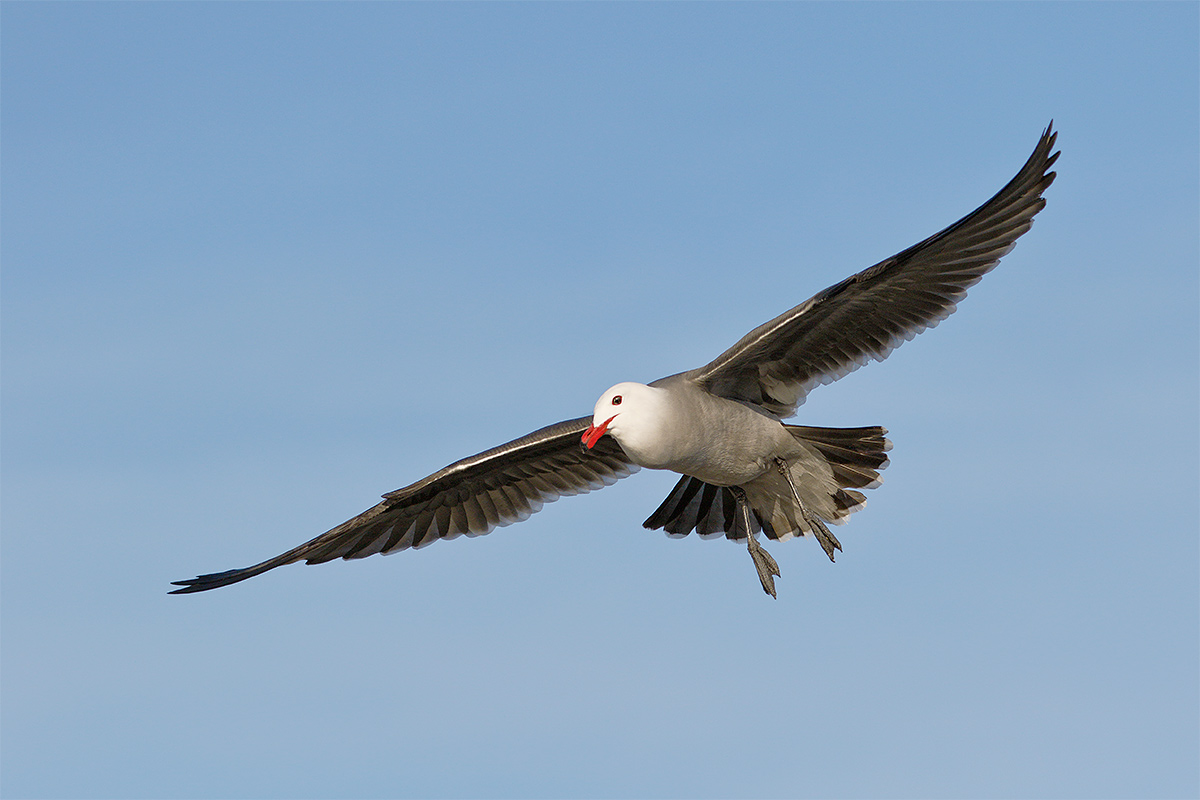
This image was created in sunny conditions at Coronado, CA with the hand held Canon EF 100-400mm f/4.5-5.6L IS II USM lens (at 158mm) and the Canon EOS 7D Mark II. ISO 400. Evaluative metering +1/3 stop off the blue sky: 1/3200 sec. at f/5.6 in Manual mode was spot on. AWB. After exposing for the WHITEs, the relatively dark underwings were lightened during the RAW conversion in DPP 4 by moving the Shadow slider to +4. Rig on the Black Rapid RS-7 Strap.
Central AF point (manual selection)/AI Servo (always best for moving subjects)/Shutter Button AF as framed was active at the moment of exposure. The latter is almost always best when hand holding. Click here to see the latest version of the Rear Focus Tutorial. Click on the image to see a larger version.
Image #1:Heerman’s Gull in flight
|
Canon 100-400 II-7D II/You Can’t Handle This Versatility!
In the hands of a competent, creative photographer the 100-400II/7D II combo can yield an almost incredible variety of images even on a simple late afternoon walk on the beach. All of the images in today’s blog post were created on the afternoon of Day 2 of the recently concluded San Diego IPT.
|
|
|
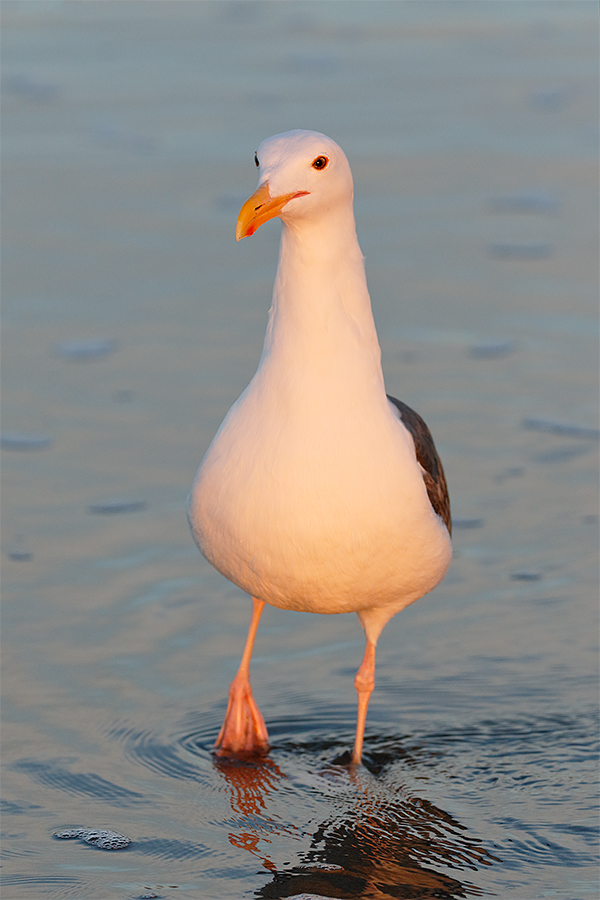
This image was created in cloudy bright conditions at Coronado Beach, CA with the hand held Canon EF 100-400mm f/4.5-5.6L IS II USM lens (at 241mm) and the Canon EOS 7D Mark II. ISO 800. Evaluative metering +1 stop in late-in-the-day sun: 1/640 sec. at f/5 in Manual mode was perfect. AWB. Rig on the Black Rapid RS-7 Strap.
AI Servo/Rear Focus/Zone AF as framed activated two AF points, four up and to the right of the center row that were active at the moment of exposure. The right-hand of those two AF points caught the tip of the bird’s bill and resulted in a sharp-on-the-eye image. Click here to see the latest version of the Rear Focus Tutorial. Click on the image to see a larger version.
Image #2: Adult Western Gull vertical in late afternoon light
|
Zone AF
I began experimenting with Zone AF on the San Diego IPT in an effort to overcome the problems resulting from the 7D II AF Grid Void. (Read more in the Two Things I Do Not Like About the 7D Mark II blog post.) See Image #2 in yesterday’s blog post here for another example. More coming soon.
Zone AF performed quite well in this image.
|
|
|
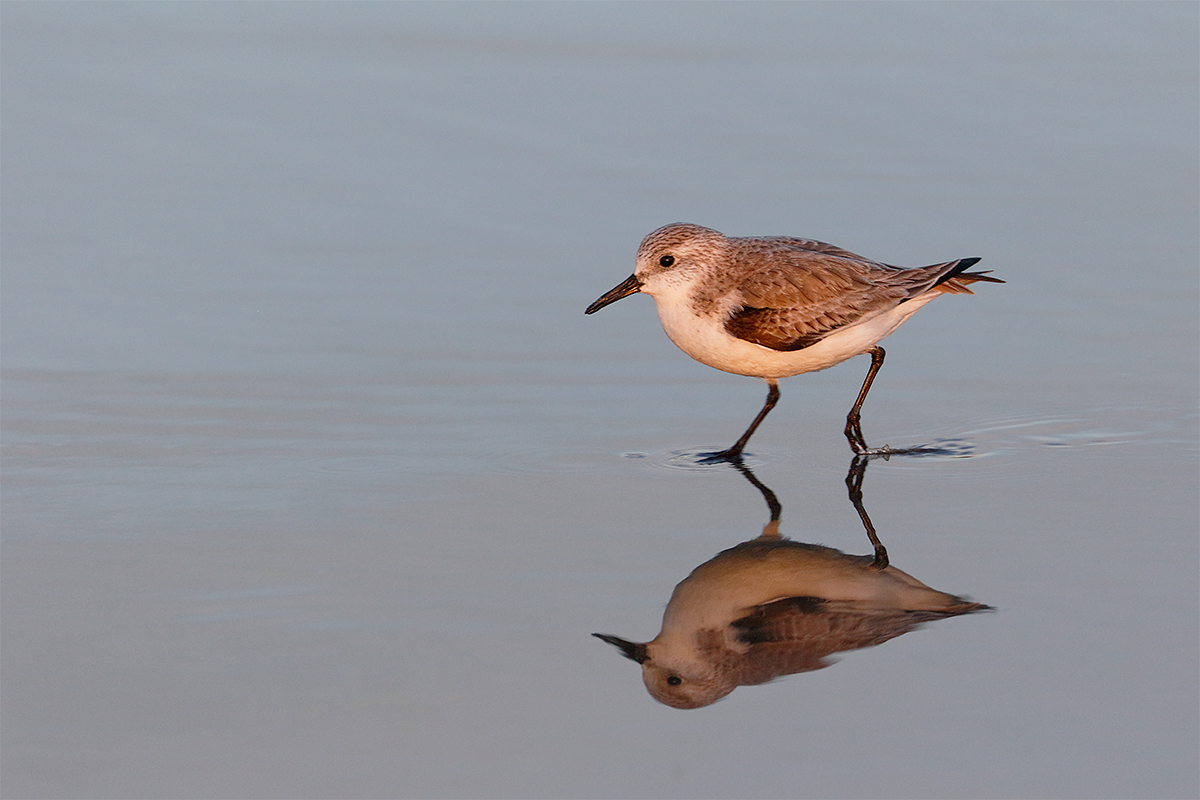
This image was created very late on a clear day at Coronado, CA with the hand held Canon EF 100-400mm f/4.5-5.6L IS II USM lens (at 400mm) and the Canon EOS 7D Mark II. ISO 800. Evaluative metering +1/3 stop: 1/1000 sec. at f/5.6 in Manual mode was a bit of an under-exposure. The image was lightened during conversion in DPP 4 with the Brightness slider. AWB. Rig on the Black Rapid RS-7 Strap.
One row below and two AF points to the right of the central AF point/AI Servo (always best with moving subjects)/Expand/Shutter Button AF as originally framed was active at the moment of exposure (the latter almost always best when hand holding). The active AF point fell on the lower reflection of the bird’s legs. Click on the image to see a larger version.
Image #3: First winter Sanderling running
|
The 7D II 1.6X Crop Factor
For me, the 7D Mark II crop factor is real. See the many previous comments and discussions. Having a hand holdable 640mm effective focal length lens when pursuing speedy subjects is a big advantage. AF is much more responsive when you do not have to add a 1.4X TC to the mix….
|
|
|
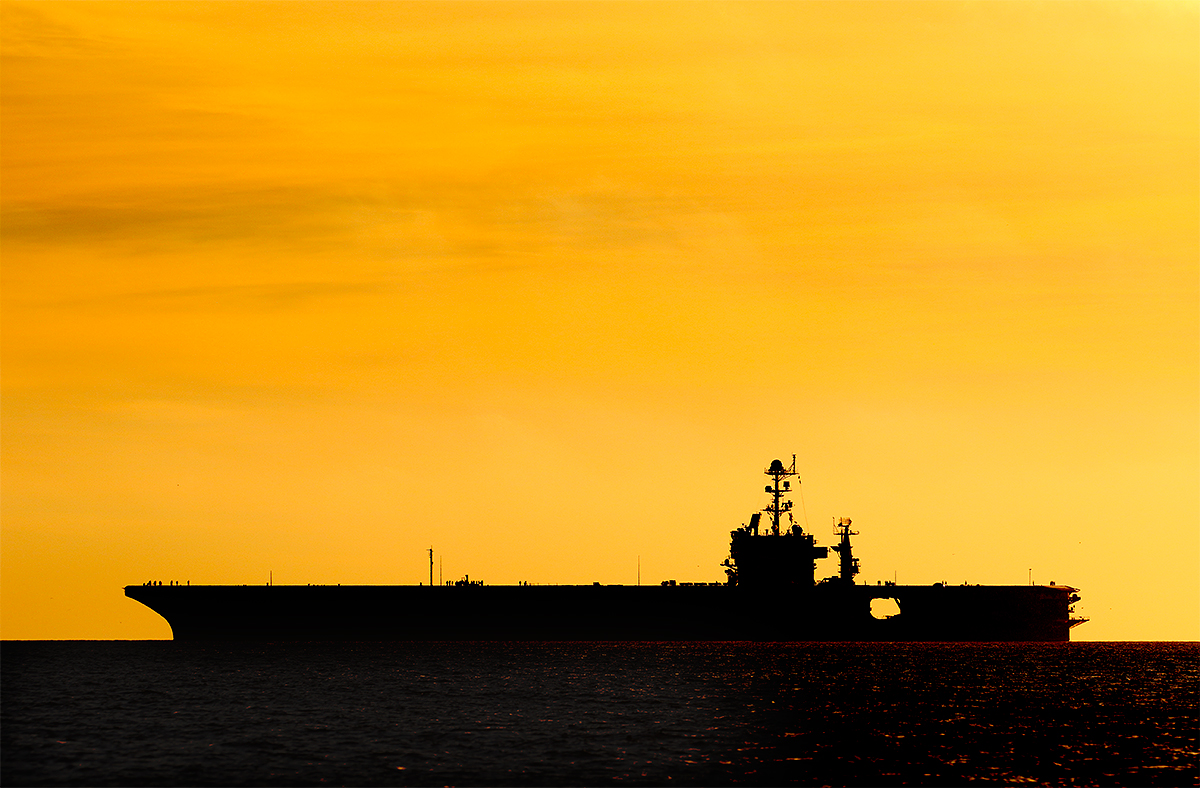
This image was created very late on a sunny afternoon at Coronado, CA with the hand held Canon EF 100-400mm f/4.5-5.6L IS II USM lens (at 241mm) and the Canon EOS 7D Mark II. ISO 800. Evaluative metering +1 2/3 stops: 1/1000 sec. at f/6.3 in Manual was perfect. Learn more about the correct exposure here below. Auto WB! Rig on the Black Rapid RS-7 Strap.
Center AF point/AI Servo/Expand/Rear Focus AF as framed was active at the moment of exposure. All potentially active AF points fell on the sky…. Again, see more below. Click here to see the latest version of the Rear Focus Tutorial. Click on the image to see a larger version.
Image #4: US carrier headed to sea
|
The Correct Exposure for Silhouettes
The correct exposure for silhouettes should leave the image on the rear LCD looking washed out. Period. A simple Levels adjustment here brought this image too life. If your silhouettes look great with rich colors on the back of the camera then they are well under-exposed. Under-exposures result in smaller file size, reduced image quality, and less data in the RAW file….
AF Explanation
As no active AF point was anywhere near the ship it would seem impossible that AF was active at the moment of exposure when this image was created. My explanation is that in some low contrast situations one of my Custom Case 3 parameter settings enables the system to “hold AF” long enough for you to create a sharp image.
I got a lot of work done on the 7D Mark II User’s Guide on the flights to and from San Diego and hope to have at least a pre-publication version available for sale no later than February 20. Yes, that’s 2015. 🙂
ABP II
If you cannot create a workable exposure with any subject in consistent light in ten seconds or less then you need to get yourself a copy of “The Art of Bird Photography II” and study the section entitled “Exposure Simplified.” ABP II: 916 pages, 900+ images, on CD only. Order yours here, save the file to your computer, and archive the CD.
|
|
|
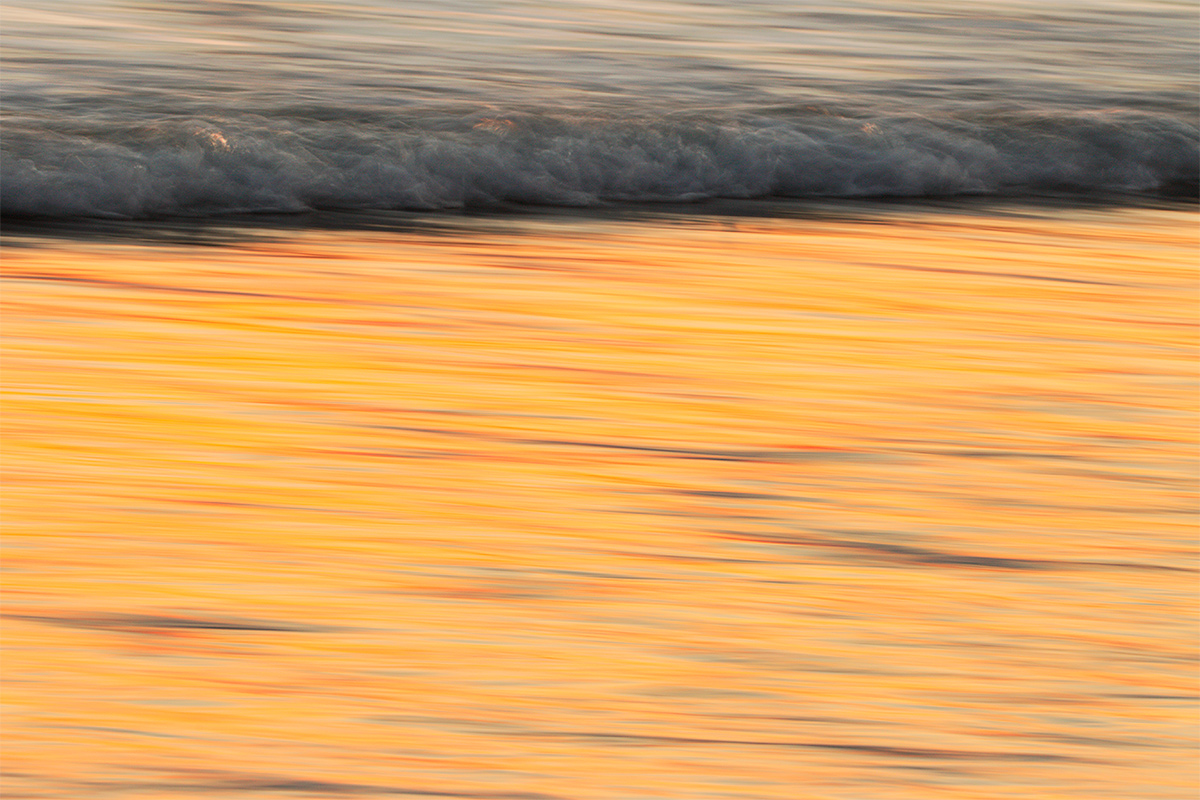
This image was created after sunset at Coronado, CA with the hand held Canon EF 100-400mm f/4.5-5.6L IS II USM lens (at 248mm) and the Canon EOS 7D Mark II. ISO 200. Evaluative metering +1 1/3 stops: 1/4 sec. at f/20 in Tv mode was perfect. Color temperature 9000K. Rig on the Black Rapid RS-7 Strap.
65-Point Automatic Selection/AI Servo/Rear Focus activated the two AF points just to the right of the central AF point as framed that were active at the moment of exposure (the latter almost always best when hand holding). Click here to see the latest version of the Rear Focus Tutorial. Click on the image to see a larger version.
Image #5: surf at sunset pleasing blur
|
Pleasing Blur Techniques
To create this image I went to a lower than usual ISO, set a slow shutter speed, and panned slowly during the exposure. Note that at f/20 I ran the risk of having to deal with lots of dust bunnies. Had I taken the time to turn off Highlight Tone Priority, I could have gotten down to ISO 100 at f/10. Better yet would have been to have had my Singh-Ray 3-stop ND in my pocket; had that been the case I could have easily been working at f/5.6. Note that Highlight Tone Priority should be enabled only by those converting their RAW files in DPP.
Singh-Ray Filters
Singh-Ray filters have been used by the world’s top photographers for many decades. Singh-Ray has been and is the name in quality filters. I often use both their 3-stop and 5-stop Neutral Density filters in both the 77mm and 82mm sizes) to attain slower shutter speeds in a variety of conditions including bright sun with the 5-stop ND. Toward that end, BIRDS AS ART is working with Singh-Ray to produce a 5-stop Neutral Density filter to to fit the filter drawers of Canon Super-telephoto lenses. Stayed tuned for info on that.
No other filter manufacturer comes close to matching the quality of Singh-Ray’s optical glass that is comparable to that used by NASA. And they continue to pioneer the most innovative products on the market like their ColorCombo polarizer, Vari-ND variable and Mor-Slo 15-stop neutral density filters. When you use their filters, you’ll create better, more dramatic images and, unlike other filters, with absolutely no sacrifice in image quality. All Singh-Ray filters are handcrafted in the USA.

Best News: 10% Discount/Code at checkout: artie10
To shop for a Singh-Ray Neutral Density Filter, click on “Neutral and color density,” choose the filter and size that you want, and then click on Add to Cart. Wait for a new screen to render. Then click on the text after “Have a coupon?” and type artie10 into the blank box. A healthy 10% discount will be applied to your total. In addition to enjoying the world’s best filter at 10% off you will be supporting my efforts here on the blog.
|
|
|
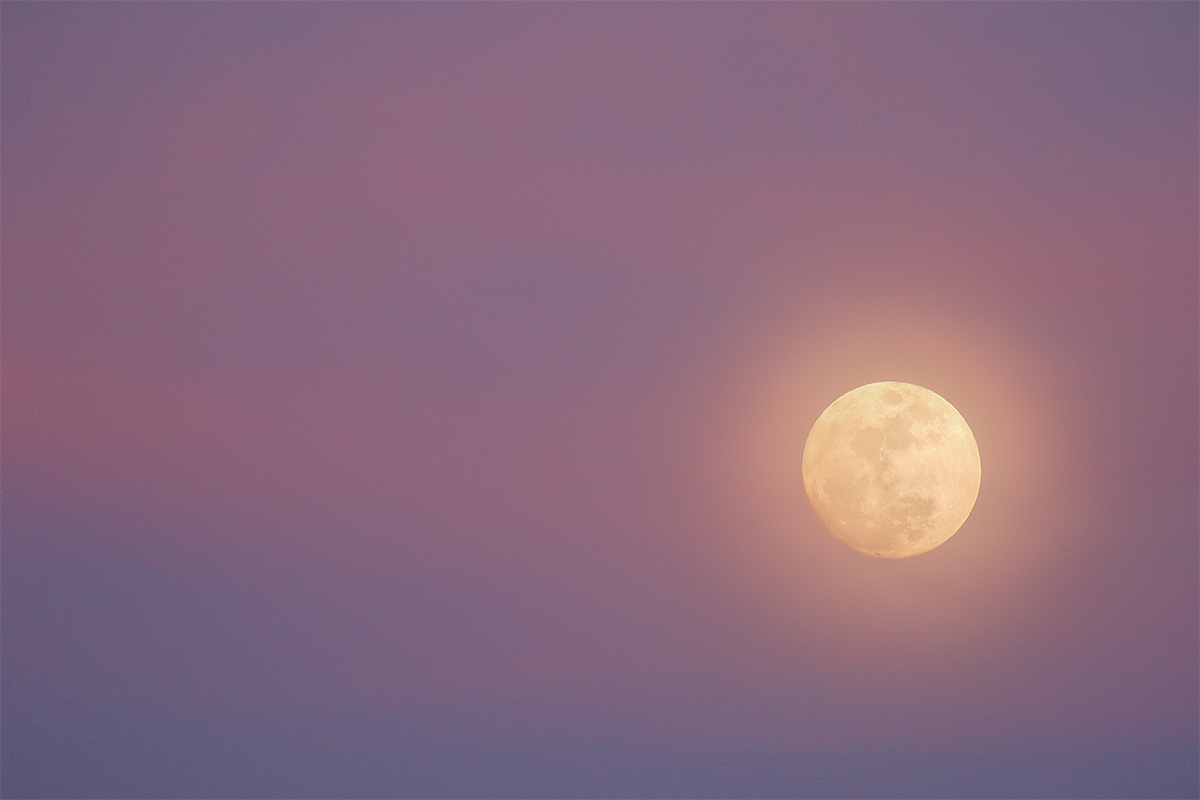
This image was created on the way back to the car well after sunset at Coronado, CA with the hand held Canon EF 100-400mm f/4.5-5.6L IS II USM lens (at 400mm) and the Canon EOS 7D Mark II. ISO 800. Evaluative metering +1/3 stop: 1/100 sec. at f/5.6 in Av mode was right on. Color temperature 9000K. Rig on the Black Rapid RS-7 Strap.
65-point/AI Servo/Rear Focus AF and re-compose. Click here to see the latest version of the Rear Focus Tutorial. Click on the image to see a larger version.
Image #6:full moon in pink sky
|
Being in the Zone
You will know when you are in the Creative Zone. It seems that there is a wonderful image practically everywhere that you look. On the way back to the vehicles I noticed that some light clouds surrounding the rising full moon gave the sky a magenta pink hue. The foggy halo around the moon added to my excitement. Those who were with me got excited too. The correct exposure here in Av mode avoided any blinkies on the sky.
|
|
|
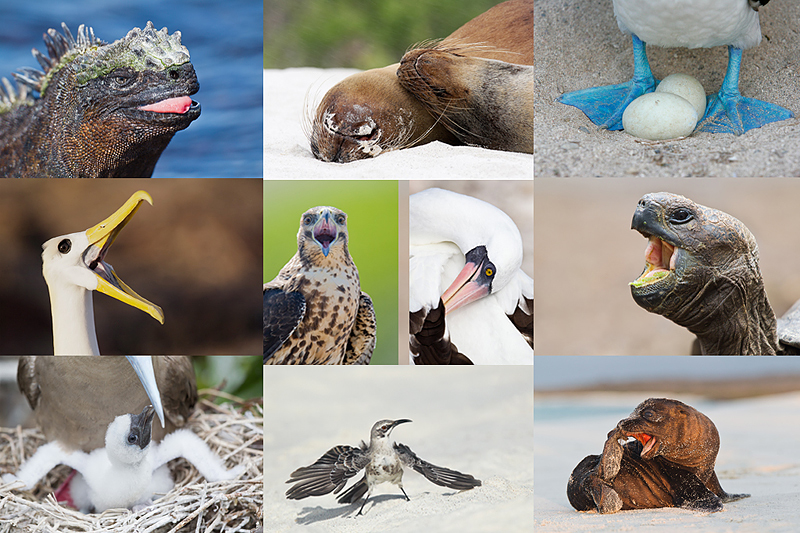
Do consider joining me for a once in a lifetime trip to the Galapagos archipelago in July, 2015.
|
GALAPAGOS Photo Cruise of a Lifetime IPT/The Complete Galapagos Photographic Experience. July 14-28, 2015 on the boat. 13 FULL and two half-days of photography: $12,499. Limit 14 including the leader:/Openings: 4.
My two-week Galapagos Photo-Cruises are without equal. The world’s best guide, a killer itinerary, a great boat (the Samba), and the best leader with eight Galapagos cruises under his belt. Pre-trip and pre-landing location-specific gear advice. In-the-field photo instruction and guidance. Jeez, I almost forgot: fine dining at sea!
The great spots that we will visit include Tower Island (including Prince Phillips Steps and Darwin Bay), Hood Island (including Punta Suarez, the world’s only nesting site of Waved Albatross, and Gardner Bay)—each of the preceding are world class wildlife photography designations that rank right up there with Antarctica, Africa, and Midway. We will also visit Fernandina, Puerto Ayora for the tortoises, Puerto Egas—James Bay, North Seymour and Isla Lobos for nesting Blue-footed Booby (most years), South Plaza, Floreana, and Urbina Bay, all spectacular in their own right. We visit every great spot on a single trip. Plus tons more. And there will he lots of opportunities to snorkel on sunny mid-days for those like me who wish to partake.
We will be the first boat on each island in the morning and the last boat to leave each island every afternoon. If we are blessed with overcast weather, we will often spend 5-6 hours at the best sites. And as noted above, mid-day snorkeling is an option on most sunny days depending on location. Note: some of the walks are a bit strenuous. Great images are possible on all landings with a hand held 70-200mm lens and a 1.4X teleconverter. I bring a longer lens ashore on most landings as that fits my style. I generally work with either the Canon 300mm f/2.8L IS or the Canon 200-400mm f/4 L IS with Internal Extender.
Do know that there is a NatureScapes Galapagos trip: one week for $8495. Thus, my trip represents a tremendous value; why go all that way and miss half of the great photographic locations?
The Logistics
Fly to Guayaquil, Ecuador on July 12, 2015. Travel insurance/rest day: July 13 (We may or may not offer a photo outing on the 13th). Fly to the archipelago on July 14 and board the Samba. Get off the boat on July 28. Fly to Guayacil that afternoon. Fly home on the early morning of July 29 unless you are staying on or going elsewhere (or catching a red-eye flight on the evening of the 28th).
$12,499 includes just about everything: all transfers, guide and park fees, all food on the boat, transfers and ground transportation, your flights to the archipelago, and three nights (double occupancy) in a top notch hotel in Guayacil. If you are good to go, a non-refundable deposit of $5,000 per person is due immediately. The second payment of $4,000 is not due until 11/1/14. The final payment of $3449 per person will be due on 2/1/15. A $200 discount will be applied to each of the balances for couples or friends who register at the same time.
Purchasing travel insurance within 2 weeks of our cashing your deposit check is strongly recommended. On my past two cruises a total of 5 folks were forced to cancel less than one week prior to the trip. My family and I use Travel Insurance Services and strongly recommend that you do the same.
Not included: your round trip airfare from your home to and from Guayacil, beverages on the boat, phone calls, your meals in Guayacil, personal items, and a $600/person cash tip for the crew and the guide—this works out to roughly $40/day to be shared by the 7 folks who will be waiting on us hand and foot every day for two weeks. The service is so wonderful that many folks choose to tip extra.
Please e-mail for the complete itinerary and for additional info and images. Please cut and paste “Galapagos 2015 Info Please) into the Subject line.
IPT Updates
Would you like to visit some of the great bird photography locations on the planet? Would you like to learn from the best? Click here and join us.
Typos
In all blog posts and Bulletins, feel free to e-mail or to leave a comment regarding any typos or errors. Just be right :).
|
|
|
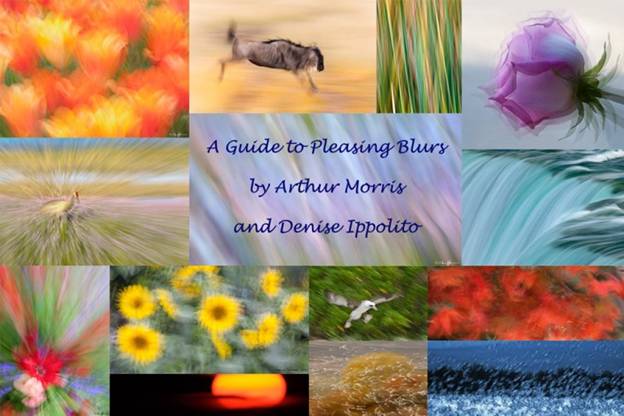
Learn the secrets of creating contest winning images in our “A Guide to Pleasing Blurs.”
|
A Guide to Pleasing Blurs
In our A Guide to Pleasing Blurs by Denise Ippolito and yours truly, we discuss just about every technique ever used mankind to create pleasingly blurred image. Ninety-nine point nine percent of pleasing blurs are not happy accidents. You can learn pretty much everything that there is to know about creating them in this instructive, well written, easy to follow guide.


If what you’ve learned here on the blog about theCanon EOS 7D Mark II has inspired you to purchase this great new camera body, please consider using the logo link above to support my efforts here in bringing you the latest, greatest educational materials on daily basis. Note: the 7D II is now in stock so no pre-ordering should be necessary.
If what you’ve learned here on the blog about the Canon EF 100-400mm f/4.5-5.6L IS II USM lens has inspired you to purchase this sharp, amazingly verstatile lens, please consider using the logo link above to support my efforts here in bringing you the latest, greatest educational materials on a daily basis.
Facebook
Be sure to like and follow BAA on Facebook by clicking on the logo link upper right. Tanks a stack!
Support the BAA Blog. Support the BAA Bulletins: Shop B&H here!
We want and need to keep providing you with the latest free information, photography and Photoshop lessons, and all manner of related information. Show your appreciation by making your purchases immediately after clicking on any of our B&H or Amazon Affiliate links in this blog post. Remember, B&H ain’t just photography!
…..
Amazon.com
Those who prefer to support BAA by shopping with Amazon may use this link:
Amazon Canada
Many kind folks from north of the border, eh, have e-mailed stating that they would love to help us out by using one of our affiliate links but that living in Canada and doing so presents numerous problems. Now, they can help us out by using our Amazon Canada affiliate link by starting their searches by clicking here. Many thanks to those who have written.
February 10th, 2015 Stuff
My San Diego to MCO flights were a breeze. After getting up before the 3am alarm I slept two hours on the first leg to DFW. With rain in Orlando getting my two checked bags took more than an hour. After a stop at Publix we (Jim and I) made it back to ILE just before 7pm. This blog post took 2 1/2 hours to put together and was published at 7:30am on Tuesday.
I have tons more on the 100-400II and the 7D II and lots more Southern Ocean and San Diego images to share with you here and will be doing that on a daily basis.
Roseate Spoonbill/Hooptie Deux IPT Opening
Due to a recent cancellation, there is a single opening on this IPT. Scroll down for details.
South Georgia October 2015
Do consider joining me in South Georgia next October for the trip of a lifetime. See here for the complete details.
Save $242
Register now for the South Georgia trip and receive a $242 on your return airfare. Please e-mail for details.
Please Remember to use our Affiliate Links 🙂
To show your appreciation for my continuing efforts here, we ask, as always, that you use our the B&H and Amazon affiliate links on the right side of the blog for all of your purchases. B&H is recommended for you major photography gear purchases, Amazon for your household, entertainment, and general purpose stuff. Please check the availability of all photographic accessories in the BIRDS AS ART Online Store, especially the Mongoose M3.6 tripod heads, Gitzo tripods, Wimberley heads and plates, LensCoats and accessories, and the like. We sell only what I have used, have tested, and can depend on. We will not sell you junk. We know what you need to make creating great images easy and fun. And we are always glad to answer your gear questions via e-mail. I just learned that my account was suspended during my absence; it should be up and running by Monday at the latest.
I would of course appreciate your using our B&H affiliate links for all of your major gear, video, and electronic purchases. For the photographic stuff mentioned in the paragraph above we, meaning BAA, would of course greatly appreciate your business. Here is a huge thank you to the many who have been using our links on a regular basis and visiting the BAA Online store as well.
|

|
|
This image was created in cloudy bright conditions at La Jolla, CA with the hand held Canon EF 100-400mm f/4.5-5.6L IS II USM lens (at 330mm) and the Canon EOS 7D Mark II. ISO 800. Evaluative metering at zero: 1/160 sec. at f/16 in Av mode was a bit of an under-exposure. The image was lightened during conversion in DPP 4. Rig on the Black Rapid RS-7 Strap.
One AF point to the left of the central AF point (manual selection)/AI Servo Rear Focus AF as framed was active at the moment of exposure (as is almost always best when hand holding). Click here to see the latest version of the Rear Focus Tutorial. Click on the image to see a larger version.
Image #1: foot of immature Western Gull
|
100-400 II Close Focus
The minimum focusing distance (MFD) of the new 100-400 II is an incredible .98 meters or 3.2 feet. This yields at magnification of .31X, by far the largest of any Canon telephoto lens, surpassing the old magnification champ, the Canon EF 300mm f/4L IS USM lens (.24X). Consider that my once-beloved old “toy lens,”, the Canon EF 400mm f/5.6L USM lens focused only down to 3.5 meters or 11.48 feet and you can begin to understand the incredible accomplishment of the Canon lens designers and engineers.
What does this do for nature photographers? It opens up a whole new world of potential subjects including butterflies, dragonflies, grasshoppers, mayflies, and many other medium-sized and large insects of various species, frogs and toads, a great variety of flowers, avian head portraits (without needing a TC), tight feather detail images, and yes, even tight foot fetish shots. Of a single gull foot. Like the image above of the foot of a young Western Gull.
Another often overlooked advantage of a smaller MFD i the ability to point the lens straight down at small subjects on the beach or the ground while standing. This often allows you to parallel the subject. In the past, with the Canon EF 70-200mm f/2.8L IS II USM lens (MFD 1.2 meters of 3.94 feet/.21X magnification), that was often impossible.
Please feel free to leave a comment listing other small subjects that I left off my list that can be photographed with the new 1-4.
4-Stop IS
The amazing 4-stop Image Stabilization system introduced with the Series II super-telephotos seems to have been improved with the 100-400 II. With the 7D II I was hand holding at effective 528mm. At 1/160 second. The old guideline of needed a shutter speed of 1 over the focal length is way out the window for those using decent sharpness techniques. Combine the great IS system with the mind-boggling sharpness of the new 1-4 and more new worlds are opened up for nature and wildlife photographers.
|
|
|
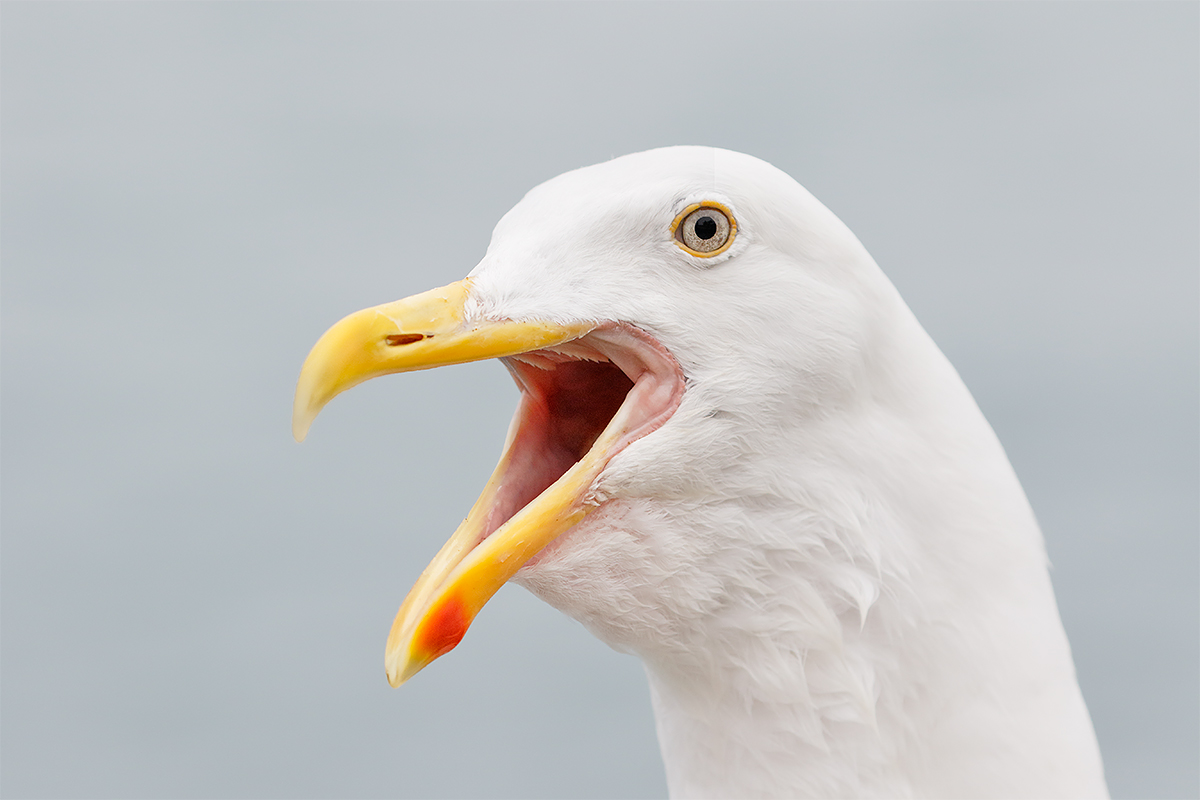
This image was also created in cloudy bright conditions at La Jolla, CA with the hand held Canon EF 100-400mm f/4.5-5.6L IS II USM lens (at 176mm) and the Canon EOS 7D Mark II. ISO 800. Evaluative metering +1 2/3 stops: 1/1000 sec. at f/7.1 in Manual mode was spot on. Rig on the Black Rapid RS-7 Strap.
Rear Focus/Zone AF selected an array of four AF points that fell on the bird’s bill and just below the bird’s eye. They were of course active at the moment of exposure (as is almost always best when hand holding). Click here to see the latest version of the Rear Focus Tutorial. Click on the image to see a larger version.
Image #2: head of screaming adult Western Gull
|
More 100-400 Versatility
Note here that the bird was so close that I needed to zoom out to 160mm…. Next time I will try zooming to 400mm and doing a real eyeball shot.
Image Question
Why f/7.1 for this image?
Your Favorite?
Please take a moment to let us know which of today’s two images is your favorite. Be sure to let us know why.
|
|
|
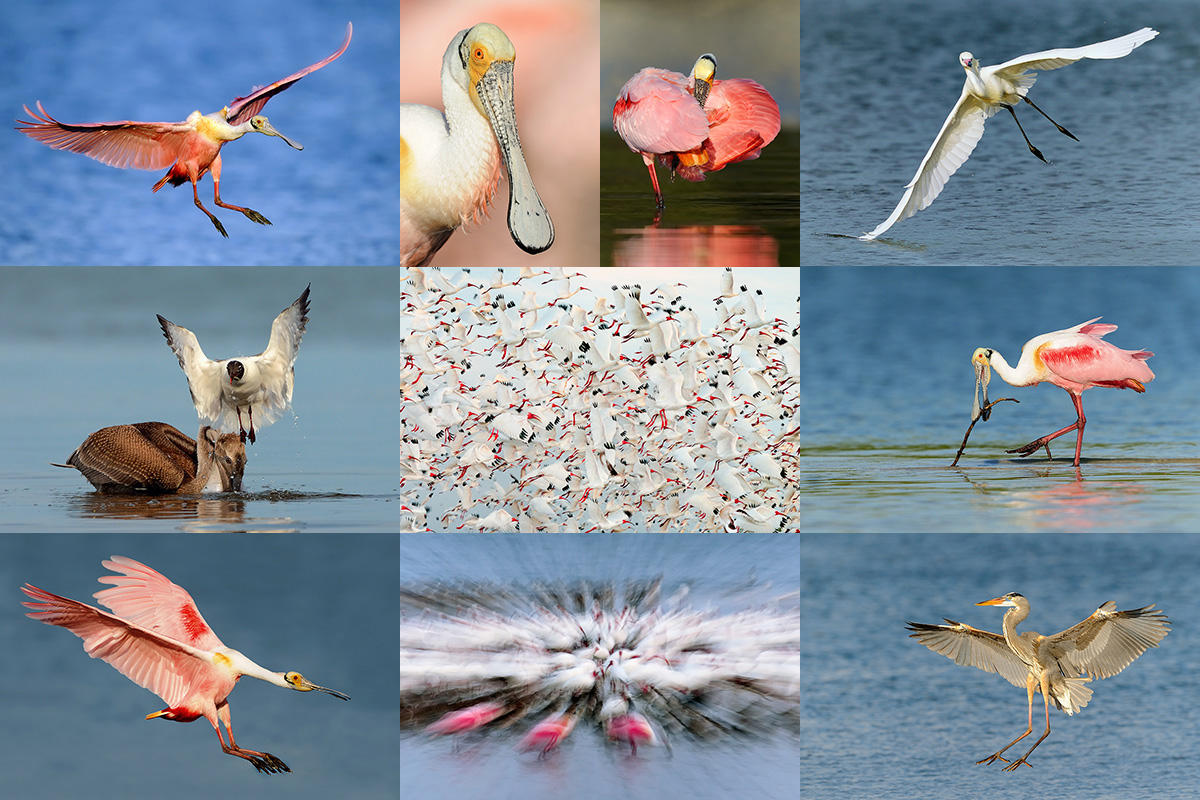
Images courtesy of and copyright Captain James Shadle (aka Froggie). All of the images here were created at Alafia Banks. Card creation and design by Arthur Morris/BIRDS AS ART.
|
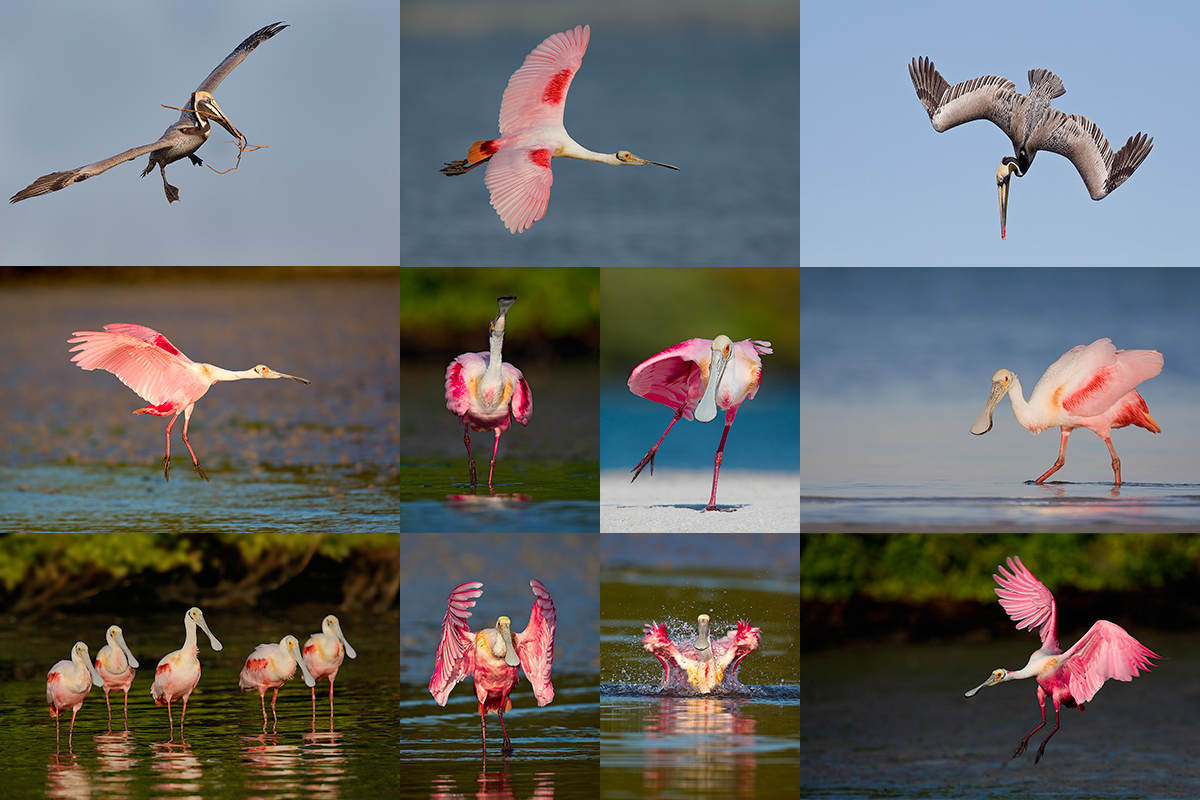
The Hooptie Deux/Roseate Spoonbills and More Instructional Photo-Tour via pontoon boat. 4 1/2 DAYs: $3200. SUN FEB 22 thru lunch on THUR FEB 26, 2015/Strict Limit: 6 photographers/Openings: 1.
Due to a cancellation we now have a single opening on this trip which sold out minutes after being announced.
Meet and greet on the evening of SAT 21 FEB. Two great leaders: Captain James Shadle (Nikon) and Canon Explorer of Light Emeritus Arthur Morris.
Roseate Spoonbill is one of if not the most sought after avian photographic subjects in Florida. They are generally hard to find and somewhat difficult to approach. They are relatively easy to find at Alafia Banks—heck, you can’t miss seeing them, but even there they can on some days be somewhat difficult to approach. On some days we may be able to get ridiculously close to them. The huge incentive to get out to Alafia Banks in mid-February is the chance to photograph this species at the height of its spectacular breeding plumage….
Weather permitting there will be nine boat trips: 5 mornings and 4 afternoons! Mornings to Alafia Banks for spoonbills and Brown Pelicans (with lots of flight photography with the birds likely carrying nesting material), cormorants, ibises (both Glossy and White in breeding plumage. Many of the White Ibises will be sporting their spectacular, distended, red, naked (un-feathered) throat pouches—typically larger in the females. In addition we will get to photograph egrets including Great and Reddish, both in full breeding plumage, shorebirds, and more. There will be lots of flight photography opportunities. Afternoon trips either to Alafia Banks for spoonbills and more or to a more sheltered inland rookery location for a variety of nesting birds. In the event of horrific weather artie will either take the group to Fort DeSoto or will conduct an image review/Photoshop session. This IPT includes five lunches that will be followed by small group image sharing and review and some over-the-shoulder Photoshop instruction.
Important Notes
We stay in Brandon, FL for this IPT. From our hotel there it is is only about 20 minutes to the dock. The plan is for all nine sessions to be by boat. For the Alafia Banks segments, Captain Shadle provides light weight chest waders as much of the photograph will be done while we are standing in fairly shallow water behind our tripods. We help you get in and out of the boat with your gear. This is likely not the best trip for folks with balance problems. Note however that some folks may opt to stay on the boat. They usually have lots of chances for flight photography of spoonbills and other species but are almost always pretty far away from the spoonbills that land.
I recently saw a similar trip advertised two months too late for breeding plumage spoonbills (and two months too late for most of the rest of the species in breeding plumage). 5 Days: $3200. With only four boat trips…. The Hooptie IPT represents an incredible opportunity and with 3 slots filled already the remaining three spots should fill very quickly. We hope that you can join us. Scroll down for registration info.
|
|
|
All of the images here were created at Alafia Banks in the month of February. Images copyright Arthur Morris/BIRDS AS ART. Card creation and design by Arthur Morris/BIRDS AS ART.
|
Hooptie IPT Registration Info
A $449 non-refundable deposit is required to hold your slot for this IPT. Your balance, payable only by check, will be due on 11/22/2014. If you cancel and the trip fills, we will be glad to apply a credit applicable to a future IPT for the full amount less a $100 processing fee. If we do not receive your check for the balance on or before the due date we will try to fill your spot from the waiting list. If your spot is filled, you will lose your deposit. If not, you can secure your spot by paying your balance.
Please print, complete, and sign the form that is linked to here and shoot it to us along with your deposit check (made out to “Arthur Morris.”) You can also leave your deposit with a credit card by calling the office at 863-692-0906. If you register by phone, please print, complete and sign the form as noted above and either mail it to us or e-mail the scan. If you have any questions, please feel free to contact me via e-mail.
Facebook
Be sure to like and follow BAA on Facebook by clicking on the logo link upper right. Tanks a stack!
Support the BAA Blog. Support the BAA Bulletins: Shop B&H here!
We want and need to keep providing you with the latest free information, photography and Photoshop lessons, and all manner of related information. Show your appreciation by making your purchases immediately after clicking on any of our B&H or Amazon Affiliate links in this blog post. Remember, B&H ain’t just photography!
…..
Amazon.com
Those who prefer to support BAA by shopping with Amazon may use this link:
Amazon Canada
Many kind folks from north of the border, eh, have e-mailed stating that they would love to help us out by using one of our affiliate links but that living in Canada and doing so presents numerous problems. Now, they can help us out by using our Amazon Canada affiliate link by starting their searches by clicking here. Many thanks to those who have written.
Typos
In all blog posts and Bulletins, feel free to e-mail or to leave a comment regarding any typos or errors. Just be right :).
February 9th, 2015 What’s Up?
Sunday was packing day. Or night 🙂 Lots to do. But I still found time to get out to the cliffs one last time. This blog post, which took about an hour to prepare, was published at 9:01PM Pacific time on Sunday evening, one minute after midnight (on Monday) in the east. I fly home early on Monday morning. Very early. The alarm is set for 3:00am PT.
There are two new openings on the long sold out Palouse #1 IPT. See below for details.
I will be sharing additional 100-400 images along with additional positives and a very few negatives on the new lens. I used the 100-400 II a lot on my San Diego trip with both the 1D X and the 7D II and on occasion, with the 1.4X III TC. I shot most of the morning on Thursday and then again on Saturday with the hand held 1-4 II and the 1D X. With great results. More images and more comments soon.
South Georgia October 2015
Do consider joining me in South Georgia next October for the trip of a lifetime. See here for the complete details.
Save $242
Register now for the South Georgia trip and receive a $242 on your return airfare. Please e-mail for details.
Please Remember to use our Affiliate Links 🙂
To show your appreciation for my continuing efforts here, we ask, as always, that you use our the B&H and Amazon affiliate links on the right side of the blog for all of your purchases. B&H is recommended for you major photography gear purchases, Amazon for your household, entertainment, and general purpose stuff. Please check the availability of all photographic accessories in the BIRDS AS ART Online Store, especially the Mongoose M3.6 tripod heads, Gitzo tripods, Wimberley heads and plates, LensCoats and accessories, and the like. We sell only what I have used, have tested, and can depend on. We will not sell you junk. We know what you need to make creating great images easy and fun. And we are always glad to answer your gear questions via e-mail. I just learned that my account was suspended during my absence; it should be up and running by Monday at the latest.
I would of course appreciate your using our B&H affiliate links for all of your major gear, video, and electronic purchases. For the photographic stuff mentioned in the paragraph above we, meaning BAA, would of course greatly appreciate your business. Here is a huge thank you to the many who have been using our links on a regular basis and visiting the BAA Online store as well.
|
|
|
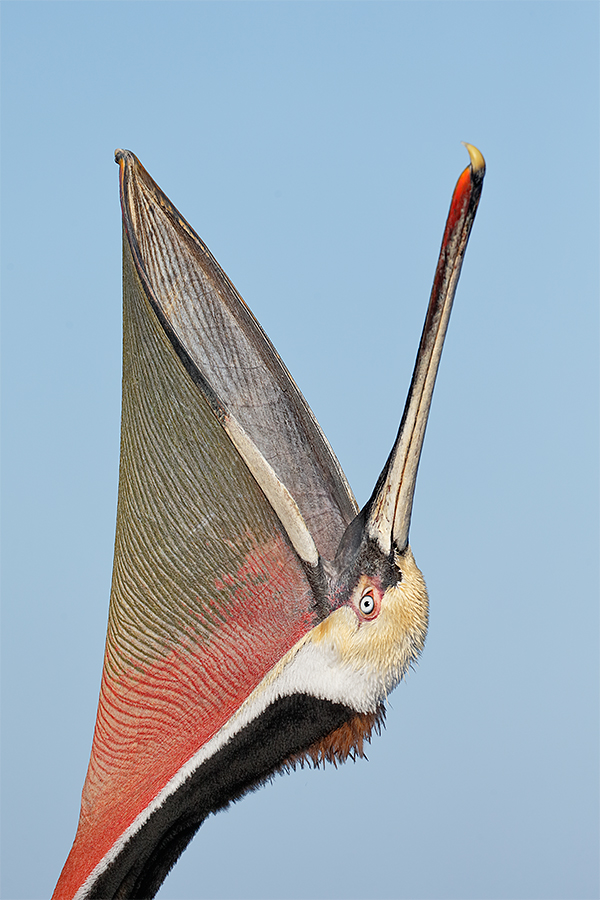
This image was created with the hand held Canon EF 100-400mm f/4.5-5.6L IS II USM lens (at 349mm) and the Canon EOS-1D X . ISO 400. Evaluative metering +2/3 stop: 1/2000 sec. at f/6.3 in Manual Mode. Rig on the Black Rapid RS-7 Strap.
One AF point below the center AF point/AI Servo Expand/shutter button AF was active at the moment of exposure (as is almost always best when hand holding). Click on the image to see a larger version.
|
Success After 10 Days and More Than Two Decades of Trying…
The last time that I created a La Jolla Pelican head throw image that I really liked was more than 25 years ago. The last one, on film, was a BBC Wildlife Photographer of the Year honored image. They ain’t easy. Every year I show up hoping to create another special one and this year was no exception. Many times on this trip every thing was lined up perfectly: clean background of Pacific blue or sky, square to the bird, exposure checked, shutter speed more than enough. Each time the bird would pull its bill pouch down over its neck–usually a sure sign that an elegant head throw was coming, and then quit just as I was thinking, “This is gonna be it. I am gonna be famous.”
Finally, on Sunday morning, February 8, 2015, everything was again set up perfectly. Only this time, after the bill pouch cleaning, the bird did what it was supposed to do. I made sure to go vertical and zoom out and created a series of four good ones. The first of those, is presented above. It was a very long drought…
Hand Holding the 100-400 II for Head Throws
I had thought that hand holding the 100-400 II for head throws would be more challenging than working with the 200-400 with the Internal TC on a tripod. I was wrong. Hand holding the much lighter lens allows for much freedom. By sitting and resting my left forearm on my left knee while waiting for the signs of an impending head toss I was able to completely avoid any fatigue.
|
|
|
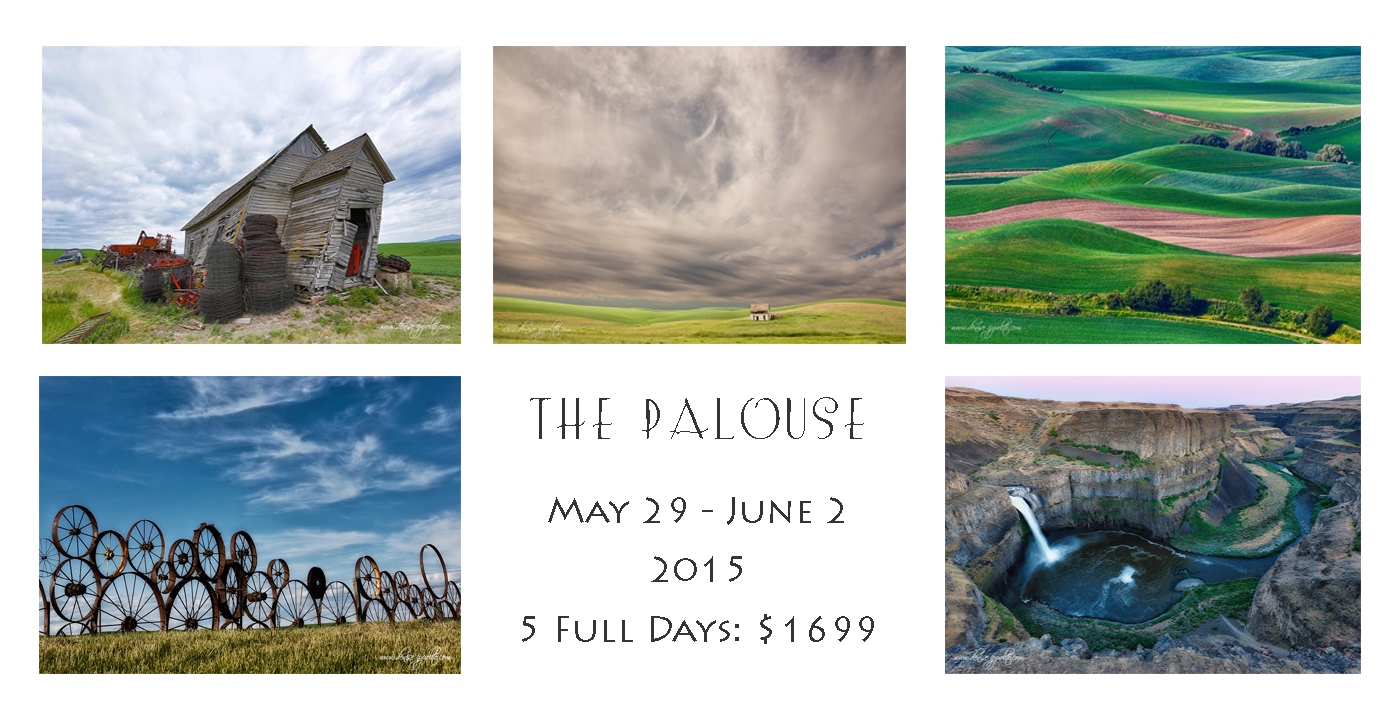
Card and design by Denise Ippolito. Scroll down here to see lots more of Denise’s Palouse images.
|
Palouse #1. The Palouse A Creative Adventure/BIRDS AS ART Instructional Photo-Tour (IPT)/Eastern Washington State. May 29-June 2, 2015/5 Full Days: $1699/Limit 12 photographers/Two openings due to a recent cancellation.
|
|
|
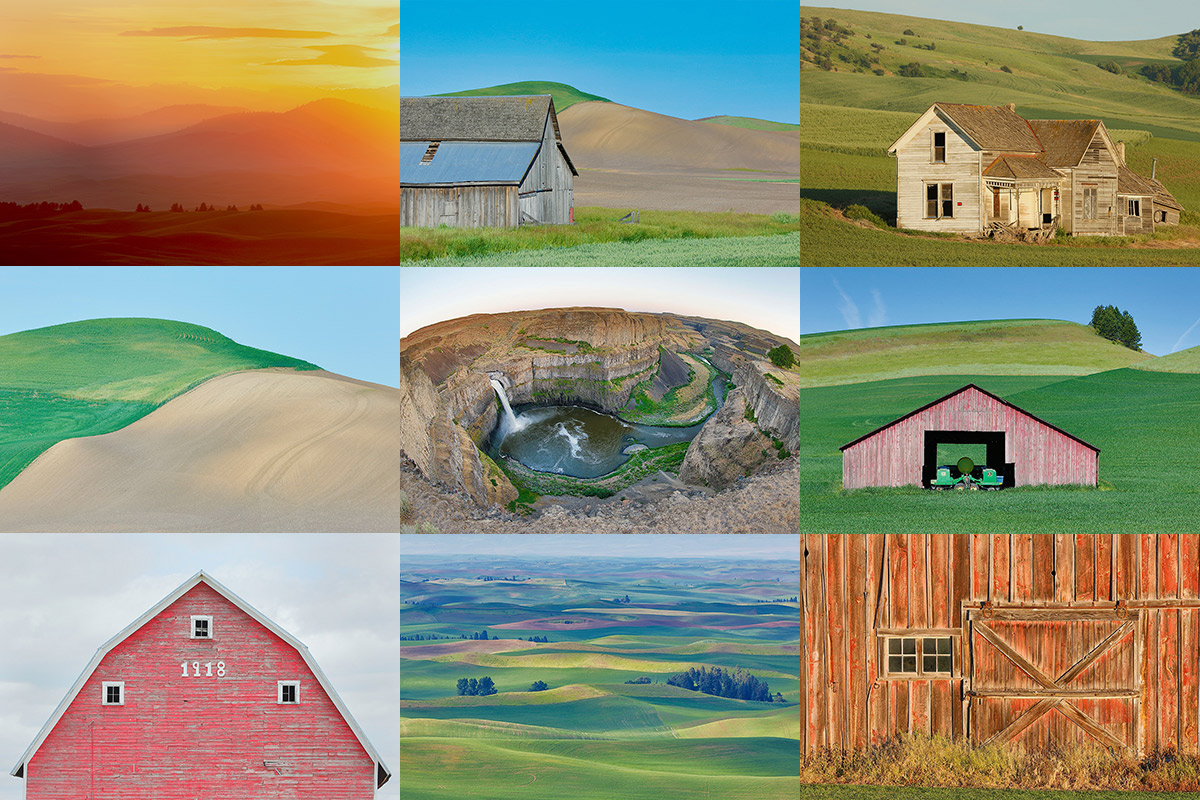
Card and design by Arthur Morris/BIRDS AS ART.
|
The Palouse A Creative Adventure/BIRDS AS ART Instructional Photo-Tour (IPT)/Eastern Washington State. June 5-9, 2015/5 Full Days: $1699/Limit 12 photographers/Openings 1.
Rolling farmlands provide a magical patchwork of textures and colors, especially when viewed from the top of Steptoe Butte where we will likely enjoy spectacular sunrises and possibly a nice sunset or two. We will photograph grand landscapes and mini-scenics of the rolling hills and farm fields. We will take you to some really neat old abandoned barns and farmhouses in idyllic settings. There is no better way to improve your compositional and image design skills and to develop your creativity than to join us for this trip. Two great leaders: Denise Ippolito and Arthur Morris. Photoshop and image sharing sessions when we have the time and energy…. We get up early and stay out late and the days are long.
After 6 days of back-breaking scouting work in early June 2014 we found all of the iconic locations and, in addition, lots of spectacular new old barns and breath-taking landforms and views. We will teach you what makes one situation prime and another seemingly similar one a waste of your time.
What’s included: In-the-field instruction, guidance, lessons, and inspiration, our newfound but very extensive knowledge of the area, all lunches, motel lobby breakfasts, and Photoshop and image sharing sessions when possible.
You will learn and hone both basic and advanced compositional and image design skills. You will learn to get the right exposure every time. You will learn to develop your creative eye. You will learn the basics of HDR (high dynamic range) photography. You will learn a variety of in-camera creative techniques; Canon 5D Mark III bodies are a plus. And most importantly you will learn to see the situation and to create a variety of top-notch images. Do see both of our blogs for lots more on that in the coming weeks. You will learn how the quality and direction of light combine to determine the success of your images. And–please don’t gasp–we will be working quite a bit with sidelight when creating landscapes. Lastly, we will be touching on infrared photography.
A non-refundable $699 deposit is due now. The balance will be due on January 29, 2015. If you cancel and the trip fills, we will be glad to apply a credit applicable to a future IPT for the full amount less a $100 processing fee. If we do not receive your check for the balance on or before the due date we will try to fill your spot from the waiting list. Whether or not your spot is filled, you will lose your deposit. If not, you can secure your spot by paying your balance.
With the unpredictable nature of the photography business, I have not said this often lately, but it seems quite likely that this one will fill up very quickly. Please let me know via e-mail that you will be joining us. Then you can either call Jim or Jennifer at 863-692-0906 during business hours or send us a check; the latter is preferred.
Please send your deposit check made out to “Arthur Morris” to us at Arthur Morris/BIRDS AS ART, PO Box 7245, Indian Lake Estates, FL, 33855. If you have any questions, please feel free to contact me via e-mail.
Facebook
Be sure to like and follow BAA on Facebook by clicking on the logo link upper right. Tanks a stack!
Support the BAA Blog. Support the BAA Bulletins: Shop B&H here!
We want and need to keep providing you with the latest free information, photography and Photoshop lessons, and all manner of related information. Show your appreciation by making your purchases immediately after clicking on any of our B&H or Amazon Affiliate links in this blog post. Remember, B&H ain’t just photography!
…..
Amazon.com
Those who prefer to support BAA by shopping with Amazon may use this link:
Amazon Canada
Many kind folks from north of the border, eh, have e-mailed stating that they would love to help us out by using one of our affiliate links but that living in Canada and doing so presents numerous problems. Now, they can help us out by using our Amazon Canada affiliate link by starting their searches by clicking here. Many thanks to those who have written.
Typos
In all blog posts and Bulletins, feel free to e-mail or to leave a comment regarding any typos or errors. Just be right :).
February 8th, 2015 Stuff
On Saturday morning I presented “A Bird Photographer’s Story” at the San Diego Museum of Natural History to kick off the opening of the spectacular Birds of the World exhibit. It was one of the more wonderful mornings of my life. More soon. This blog post, which took 3 hours to prepare, was published at 9:01PM Pacific time on Saturday evening, morning, one minute after midnight (on Sunday) in the east.
I will be sharing additional 100-400 images along with additional positives and a very few negatives on the new lens. I used the 100-400 II a lot on my San Diego trip with both the 1D X and the 7D II and on occasion, with the 1.4X III TC. I shot all morning in La Jolla on Thursday with the hand held 1-4II and the 1D X. With great results. Images and more comments soon.
South Georgia October 2015
Do consider joining me in South Georgia next October for the trip of a lifetime. See here for the complete details.
Save $242
Register now for the South Georgia trip and receive a $242 on your return airfare. Please e-mail for details.
Please Remember to use our Affiliate Links 🙂
To show your appreciation for my continuing efforts here, we ask, as always, that you use our the B&H and Amazon affiliate links on the right side of the blog for all of your purchases. B&H is recommended for you major photography gear purchases, Amazon for your household, entertainment, and general purpose stuff. Please check the availability of all photographic accessories in the BIRDS AS ART Online Store, especially the Mongoose M3.6 tripod heads, Gitzo tripods, Wimberley heads and plates, LensCoats and accessories, and the like. We sell only what I have used, have tested, and can depend on. We will not sell you junk. We know what you need to make creating great images easy and fun. And we are always glad to answer your gear questions via e-mail. I just learned that my account was suspended during my absence; it should be up and running by Monday at the latest.
I would of course appreciate your using our B&H affiliate links for all of your major gear, video, and electronic purchases. For the photographic stuff mentioned in the paragraph above we, meaning BAA, would of course greatly appreciate your business. Here is a huge thank you to the many who have been using our links on a regular basis and visiting the BAA Online store as well.
|
|
|
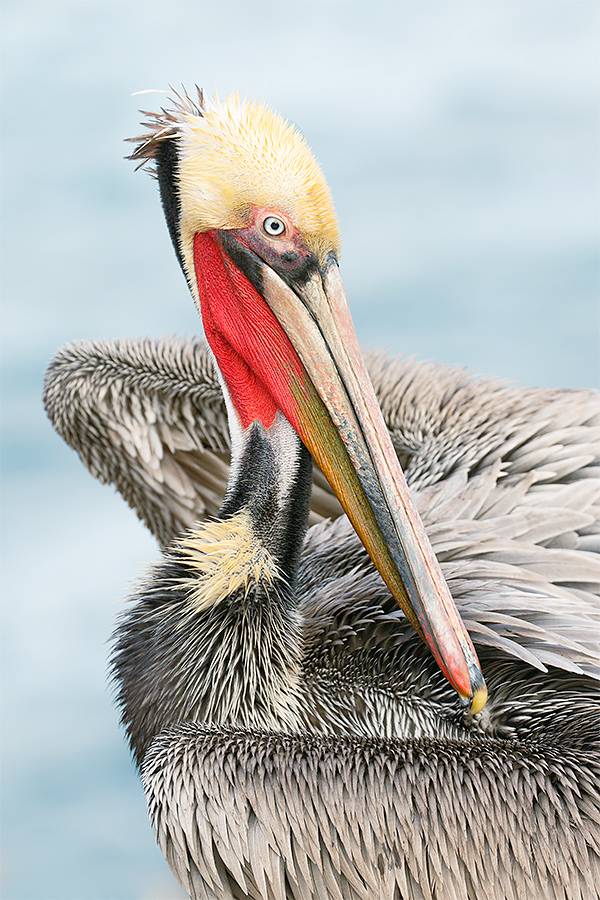
This image was created with the hand held Canon EF 100-400mm f/4.5-5.6L IS II USM lens (at 349mm) and the Canon EOS 7D Mark II. ISO 1600. Evaluative metering +1 stop as framed: 1/500 sec. at f/5.6 Manual mode. Rig on the Black Rapid RS-7 Strap.
Four AF points to the left of the central AF point (manual selection)/AI Servo Rear Focus AF as framed was active at the moment of exposure (as is almost always best when hand holding). Click here to see the latest version of the Rear Focus Tutorial. Click on the image to see a larger version.
Image #1
|
Stunning Color and Sharpness
All six of today’s images, created at La Jolla, CA on the recently concluded San Diego IPT with the 100-400 II and the 7D II, feature stunning sharpness and color. All created on February 4, 2015 in cloudy conditions.
If….
If the quality of the images here inspires you to purchase either or both the 7D Mark II and/or the 100-400 L IS II please use one of the B&H affiliate links that you see here.
|
|
|
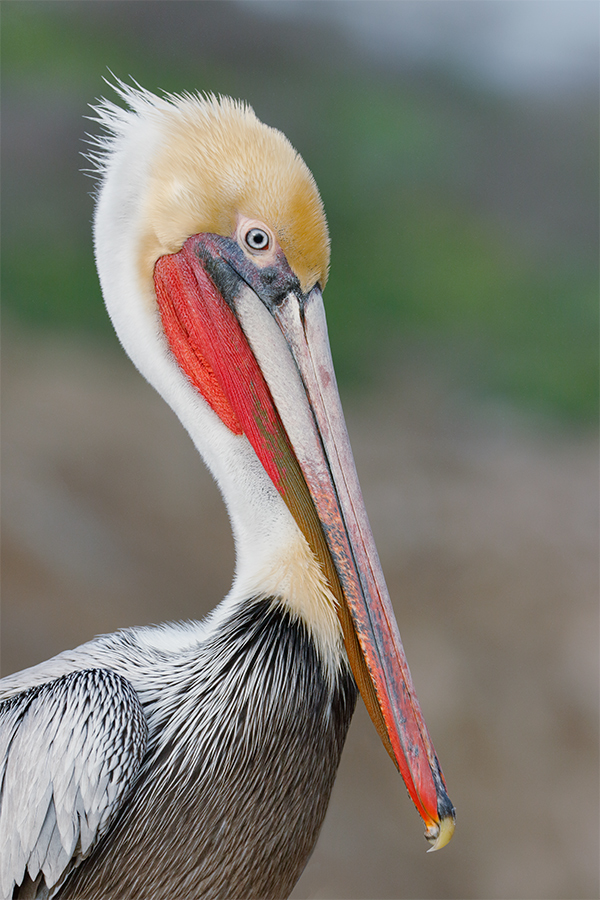
This image was created with the hand held Canon EF 100-400mm f/4.5-5.6L IS II USM lens (at 278mm) and the Canon EOS 7D Mark II. ISO 400. Evaluative metering at zero as framed: 1/1250 sec. at f/5.6 Manual mode. Rig on the Black Rapid RS-7 Strap.
One AF point to the left and two rows up from the central AF point/AI Servo Rear Focus/Expand AF as framed was active at the moment of exposure (as is almost always best when hand holding). Click here to see the latest version of the Rear Focus Tutorial. Click on the image to see a larger version.
Image #2
|
Clouds and Soft Light
Working on foggy or cloudy mornings allows you to work against distant green and brown cliff backgrounds. On sunny days, the only distant background available down sun angle is Pacific blue. Not bad but the colors of the pelican really rock against the earth tones.
|
|
|
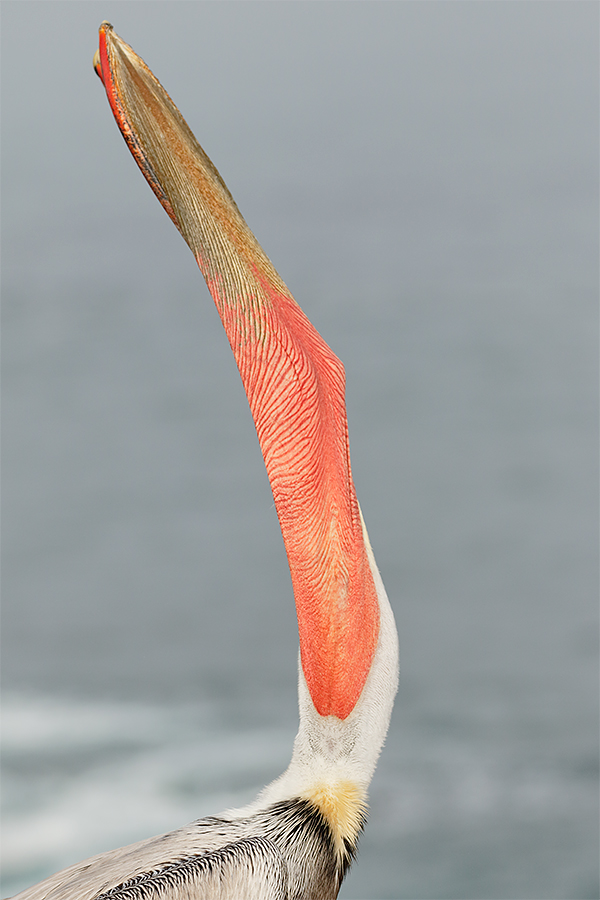
This image was created with the hand held Canon EF 100-400mm f/4.5-5.6L IS II USM lens (at 200mm) and the Canon EOS 7D Mark II. ISO 400. Evaluative metering +2/3 stop as framed: 1/1600 sec. at f/5.6 Manual mode. Rig on the Black Rapid RS-7 Strap.
One AF point to the left and two rows up from the central AF point/AI Servo Rear Focus/Expand AF as framed was active at the moment of exposure (as is almost always best when hand holding). Click here to see the latest version of the Rear Focus Tutorial. Click on the image to see a larger version.
Image #3
|
Zoom Out for Head Throws
Almost inevitably I cut off the end of the bill when photographing head throws. The trick is to zoom out a lot more than you think could possibly be necessary. As I did here.
|
|
|
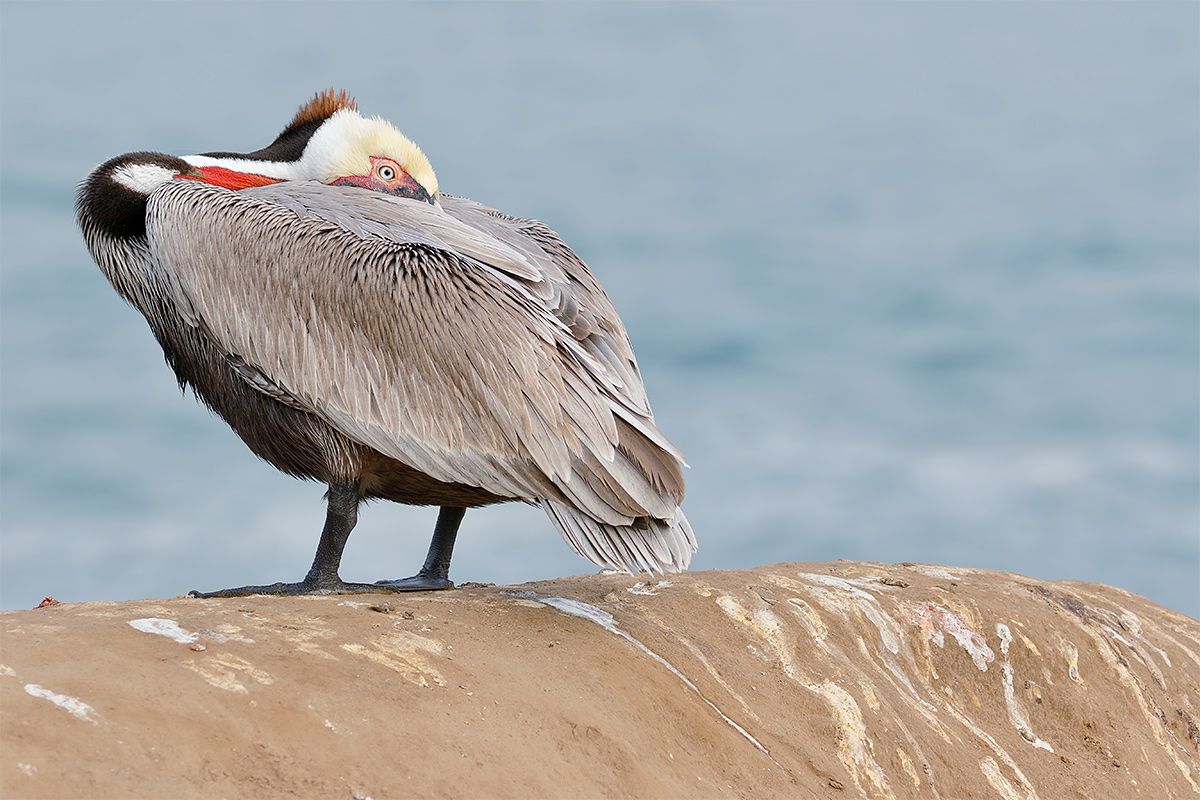
This image was created with the hand held <Canon EF 100-400mm f/4.5-5.6L IS II USM lens (at 182mm) and the Canon EOS 7D Mark II. ISO 400. Evaluative metering +1 stop as framed: 1/640 sec. at f/5.6 in Manual mode. Rig on the Black Rapid RS-7 Strap.
Center AF point/AI Servo Rear Focus AF on the bird’s eye and re-compose with elbows resting on a rock for stability. Click here to see the latest version of the Rear Focus Tutorial. Click on the image to see a larger version.
Image #4
|
Fairly Wide
Here, working at 182mm allowed me to include a considerable bit of the rock perch.
|
|
|
This image was created with the hand held Canon EF 100-400mm f/4.5-5.6L IS II USM lens (at 349mm) and the Canon EOS 7D Mark II. ISO 400. Evaluative metering +2/3 stop as framed: 1/500 sec. at f/9 in Manual mode. Rig on the Black Rapid RS-7 Strap.
Center AF point/AI Servo Rear Focus AF on the bird’s eye and re-compose with elbows resting on a rock for stability. Click here to see the latest version of the Rear Focus Tutorial. Click on the image to see a larger version.
Image #5
|
A Bit Tighter
For the image above, I zoomed in just a bit to 349mm. Note that with more magnification that I stopped down to f/9 for extra depth-of-field.
Image Questions
For images #4 & #5 how would having been able to get two inches lower have improved the images?
Adding the 1.4X III TC
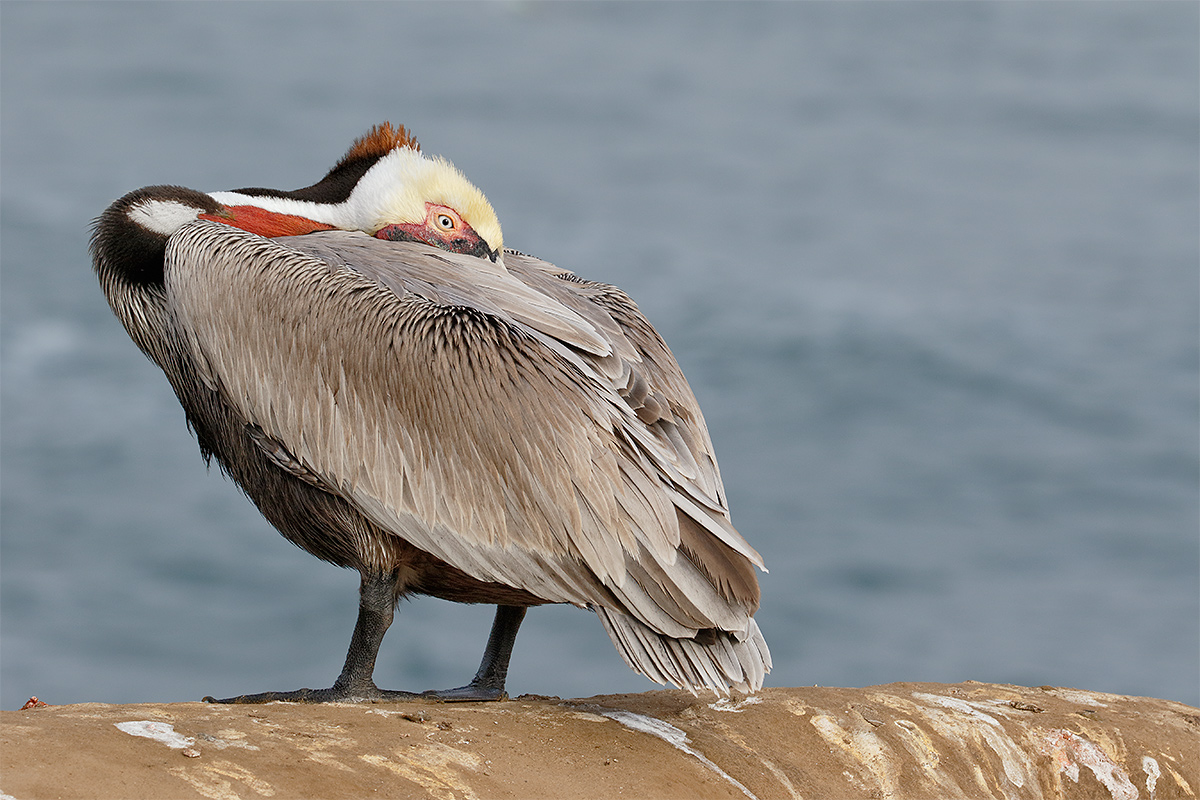
To create the classic sleeping head pelican portrait I added the 1.4X III TC and worked at 420mm.
Your Favorite?
Please take a moment to let us know which of today’s six images is your favorite and be sure to let us know why.
Facebook
Be sure to like and follow BAA on Facebook by clicking on the logo link upper right. Tanks a stack!
Support the BAA Blog. Support the BAA Bulletins: Shop B&H here!
We want and need to keep providing you with the latest free information, photography and Photoshop lessons, and all manner of related information. Show your appreciation by making your purchases immediately after clicking on any of our B&H or Amazon Affiliate links in this blog post. Remember, B&H ain’t just photography!
…..
Amazon.com
Those who prefer to support BAA by shopping with Amazon may use this link:
Amazon Canada
Many kind folks from north of the border, eh, have e-mailed stating that they would love to help us out by using one of our affiliate links but that living in Canada and doing so presents numerous problems. Now, they can help us out by using our Amazon Canada affiliate link by starting their searches by clicking here. Many thanks to those who have written.
Typos
In all blog posts and Bulletins, feel free to e-mail or to leave a comment regarding any typos or errors. Just be right :).
February 7th, 2015 Stuff
On Friday morning the very sweet Susan Carnahan who flew down from San Francisco for today’s program at the Natural History magazine and the Birds of the World exhibit opening joined Mike Gotthelf and me for a morning of photographic instruction. Inspired by the coastal fog we tried something new and different by visiting two of my favorite San Diego bird photography locations. My plan worked perfectly as we did quite well at both spots. That followed by a 90 minute working lunch at Deli-icious. More on that great eatery here soon.
This blog post, which took 1 1/2 hours to prepare, was published at 4:15am Pacific time on Saturday morning, 7:15am in the east.
I will be sharing 100-400 images along with additional positives and a very few negatives on the new lens. Promise. I used the 100-400 II a lot on this trip with both the 1D X and the 7D II and on occasion, with the 1.4X III TC. I shot all morning in La Jolla on Thursday with the hand held 1-4II and the 1D X. With great results. Images and comments soon.
South Georgia October 2015
Do consider joining me in South Georgia next October for the trip of a lifetime. See here for the complete details.
Save $242
Register now for the South Georgia trip and receive a $242 on your return airfare. Please e-mail for details.
Please Remember to use our Affiliate Links 🙂
To show your appreciation for my continuing efforts here, we ask, as always, that you use our the B&H and Amazon affiliate links on the right side of the blog for all of your purchases. B&H is recommended for you major photography gear purchases, Amazon for your household, entertainment, and general purpose stuff. Please check the availability of all photographic accessories in the BIRDS AS ART Online Store, especially the Mongoose M3.6 tripod heads, Gitzo tripods, Wimberley heads and plates, LensCoats and accessories, and the like. We sell only what I have used, have tested, and can depend on. We will not sell you junk. We know what you need to make creating great images easy and fun. And we are always glad to answer your gear questions via e-mail. I just learned that my account was suspended during my absence; it should be up and running by Monday at the latest.
I would of course appreciate your using our B&H affiliate links for all of your major gear, video, and electronic purchases. For the photographic stuff mentioned in the paragraph above we, meaning BAA, would of course greatly appreciate your business. Here is a huge thank you to the many who have been using our links on a regular basis and visiting the BAA Online store as well.
|
|
|
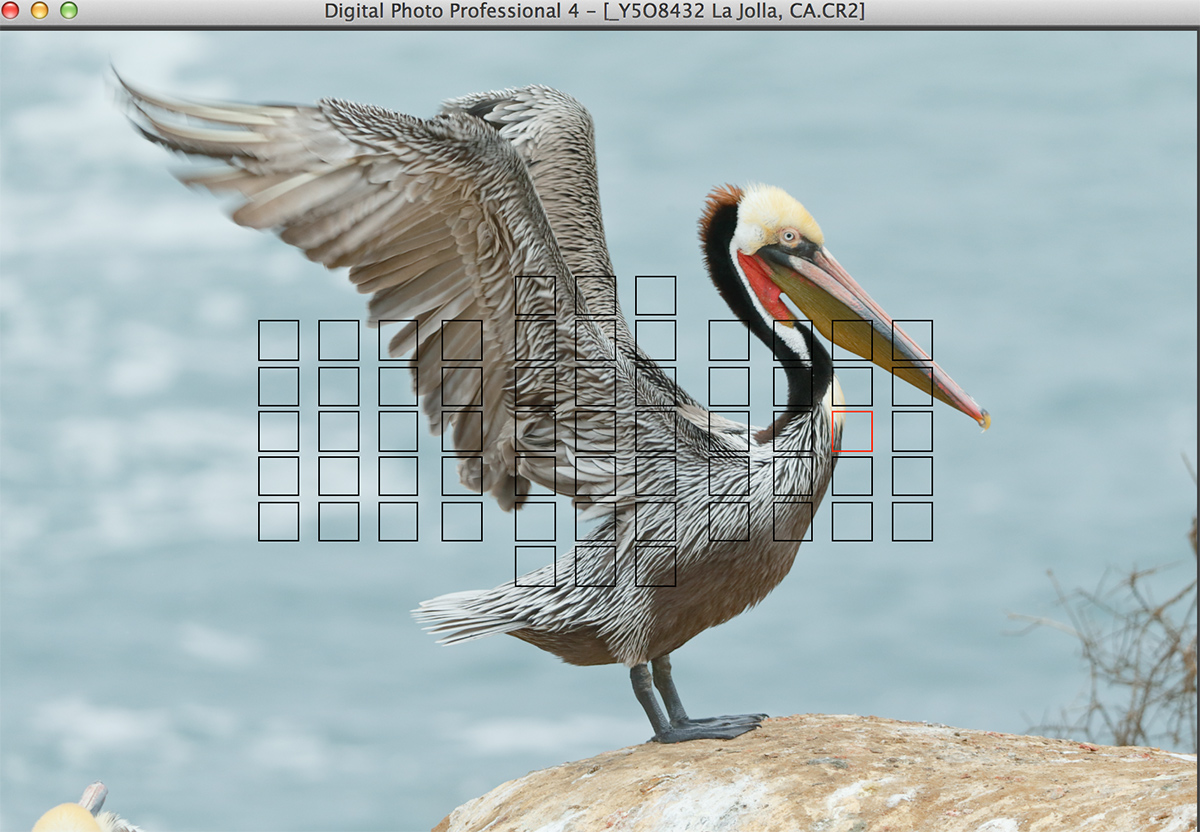
This image was created with the tripod-mounted Canon EF 200-400mm f/4L IS USM lens with Internal 1.4x Extender (at 320mm) and the Canon EOS-1D X . ISO 1600. Evaluative metering +2 2/3 stops off the grey sky: 1/500 sec. at f/5.6 was about 1/2 stop underexposure.
Four AF points to the right of the center AF point (manual selection)/AI Servo Shutter Button AF as framed was active at the moment of exposure. I have been switching between Rear Button and Shutter Button AF more and more recently. Click on the image to see a larger version.
This DPP 4 screen capture represents the original RAW file.
|
The Original
In the JPEG above that represents the image out-of-camera note the following problems:
1-the image is underexposed.
2-the bush in the lower right corner may be distracting to some. Including me.
3-the top of the 2nd pelican’s head in the lower left corner is distracting.
4-a bit more room in front of the bird would have been nice.
The Situation
I had been making images of this bird rubbing its face on its back with the bill horizontally oriented and pointing toward the tail. Thus the selected AF point as noted above…. I was working with the Internal TC engaged at 478mm. Sensing the flap, I quickly disengaged the TC, zoomed out, and created a series of only three images. I am not very good at holding the shutter button down to the metal when I should…. The third frame, presented here, the image with the wings swept fully back, was the winner.
Note that the active AF point is illuminated in red.
Universal Advice for Better Flight and Action Photography with a Zoom Lens…
Avoid clipping wingtips, feet, heads, and assorted body parts: zoom wider!
|
|
|
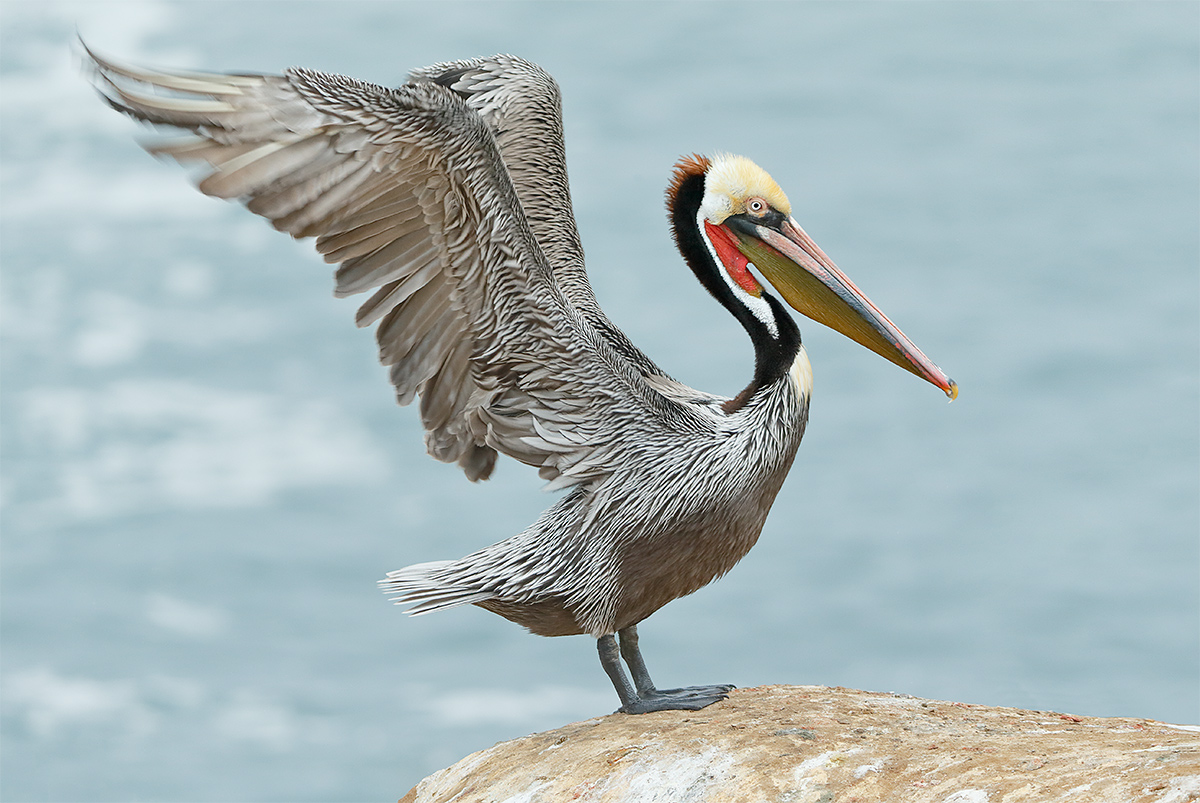
This image was created with the tripod-mounted Canon EF 200-400mm f/4L IS USM lens with Internal 1.4x Extender (at 320mm) and the Canon EOS-1D X . ISO 1600. Evaluative metering +2 2/3 stops off the grey sky: 1/500 sec. at f/5.6 was about 1/2 stop underexposure.
Four AF points to the right of the center AF point (manual selection)/AI Servo Rear Focus AF as framed was active at the moment of exposure. Click here to see the latest version of the Rear Focus Tutorial. Click on the image to see a larger version.
This JPEG represents the optimized master TIF file.
|
The Image Optimization
I lightened the image in DPP during the RAW conversion with the Brightness slider. I also applied Arash’s 1D X Noise Reduction values and opened up the darker tones with DPP’s amazing Shadow slider. Plus the usual.
In Photoshop I eliminated the intruding pelican head with Content aware fill. I employed the divide and conquer technique to separate the larger upper portion of the bush from the smaller lower portion. Then I selected the larger portion with the Patch Tool and executed Content Aware Fill. That left me to deal with the small layer of out-of-focus bush to deal with. I placed the whole image on its own layer and the used Denise Ippolito’s Protective Cloning on a Layer technique. This involves the use of both the Clone Stamp Tool and a Regular Layers Mask. I added canvas front by using using the crop tool method. I filled that in by using the Transform Tool to judiciously stretch the layer that I had selected from in front of the bird with the Rectangular Marquee Tool.
I did the usual Eye Doctor work on the bird’s eye> I selected the face and the bill with the Quick Selection Tool and sharpened that layer only with a Contrast Mask. The I selected the whole bird also with the Quick Selection Tool and applied a 50% layer of my NIK Color Efex Pro 50-50 Detail Extractor/Tonal Contrast recipe to that layer only.
Digital Basics
Everything that I did to optimize both of today’s images is covered in detail in my Digital Basics File–written in my easy-to-follow, easy-to-understand style. Are you tired of making your images look worse in Photoshop? Digital Basics File is an instructional PDF that is sent via e-mail. It includes my complete digital workflow, dozens of great Photoshop tips, details on using all of my image clean-up tools, the use of Contrast Masks, several different ways of expanding and filling in canvas, all of my time-saving Keyboard Shortcuts, Quick Masking, Layer Masking, and NIK Color Efex Pro basics, Contrast Masks, Digital Eye Doctor techniques, using Gaussian Blurs, Tim Grey Dodge and Burn, a variety of ways to make selections, how to create time-saving actions, the Surface Blur (background noise reduction) settings as taught to me by Denise Ippolito, and tons more.
APTATS I & II
Learn the details of advanced Quick Masking techniques in APTATS I. Learn Advanced Layer Masking Techniques in APTATS II. Mention this blog post and apply a $5 discount to either with phone orders only. Buy both APTATS I and APTATS II and we will be glad to apply at $15 discount with phone orders only. Please call Jim or Jennifer at 863-692-0906 weekdays to order.
|
|
|
You can order your copy of “The Photographers’ Guide to Canon Digital Photo Professional 4.0” (aka the DPP 4 Raw Conversion eGuide) by Arash Hazeghi and Arthur Morris by clicking here.
|
The DPP 4 eGuide (PDF)
Learn how and why I and many other discerning photographers choose and use only DPP 4 to convert their Canon RAW files in the DPP 4 RAW Conversion Guide by Arash Hazeghi and yours truly. The latest version supports all of the newer Canon camera bodies and several older models including the EOS-7D and the EOS-1D Mark IV.
Facebook
Be sure to like and follow BAA on Facebook by clicking on the logo link upper right. Tanks a stack!
Support the BAA Blog. Support the BAA Bulletins: Shop B&H here!
We want and need to keep providing you with the latest free information, photography and Photoshop lessons, and all manner of related information. Show your appreciation by making your purchases immediately after clicking on any of our B&H or Amazon Affiliate links in this blog post. Remember, B&H ain’t just photography!
…..
Amazon.com
Those who prefer to support BAA by shopping with Amazon may use this link:
Amazon Canada
Many kind folks from north of the border, eh, have e-mailed stating that they would love to help us out by using one of our affiliate links but that living in Canada and doing so presents numerous problems. Now, they can help us out by using our Amazon Canada affiliate link by starting their searches by clicking here. Many thanks to those who have written.
Typos
In all blog posts and Bulletins, feel free to e-mail or to leave a comment regarding any typos or errors. Just be right :).
February 6th, 2015 On Being Excellent
Here is a quote written by Melvin Tann, the brilliant exercise physiologist, MSc, LAc (Licensed Acupuncturist), and holistic health practitioner in Santa Ana, CA whom I have been working with. Melvin has successfully treated 10 San Diego Chargers, several other NFLers, a few top UFC fighters, and a host of world class athletes from various professional and collegiate sports. Often with beyond amazing results.
“To be unique should not be a stigma or be based on a desire to be different because of ego, but rather a choice to follow your passion that is based on a belief in oneself. Never compromise for mediocrity but strive for higher excellence.”
Those words really struck home with me. Feel free to share you thoughts on this quote.
If anyone would like to get in touch with Melvin regarding Zenergy health care, shoot me an e-mail and I will send you his contact info.
San Diego Natural History Museum Program & The Birds of the World Exhibit
At 9:00am on Saturday morning, February 7, 2015, I will be presenting “A Bird Photographer’s Story” at the San Diego Natural History Museum to kick off the Birds of the World photographic exhibit that will feature the images of about a dozen of the world’s top avian photographers. This program is being generously sponsored by the Canon Explorers of Light program. I am proud to say that both Denise Ippolito and I have six of our images (12 in all) hanging in the show. The exhibit opening will follow the program. Learn more here.
Stuff
This blog post, which took 1 1/2 hours to prepare, was published at 3:43am Pacific time on Friday morning, 6:43am in the east.
I will be sharing 100-400 images along with additional positives and a very few negatives on the new lens. I used the 100-400 on Sunday afternoon with the 100-400, the 7D II, and the 1.4X TC. I shot all morning in La Jolla yesterday with the hand held 1-4II and the 1D X. With great results. Images and comments soon.
South Georgia October 2015
Do consider joining me in South Georgia next October for the trip of a lifetime. See here for the complete details.
Save $242
Register now for the South Georgia trip and receive a $242 on your return airfare. Please e-mail for details.
Please Remember to use our Affiliate Links 🙂
To show your appreciation for my continuing efforts here, we ask, as always, that you use our the B&H and Amazon affiliate links on the right side of the blog for all of your purchases. B&H is recommended for you major photography gear purchases, Amazon for your household, entertainment, and general purpose stuff. Please check the availability of all photographic accessories in the BIRDS AS ART Online Store, especially the Mongoose M3.6 tripod heads, Gitzo tripods, Wimberley heads and plates, LensCoats and accessories, and the like. We sell only what I have used, have tested, and can depend on. We will not sell you junk. We know what you need to make creating great images easy and fun. And we are always glad to answer your gear questions via e-mail. I just learned that my account was suspended during my absence; it should be up and running by Monday at the latest.
I would of course appreciate your using our B&H affiliate links for all of your major gear, video, and electronic purchases. For the photographic stuff mentioned in the paragraph above we, meaning BAA, would of course greatly appreciate your business. Here is a huge thank you to the many who have been using our links on a regular basis and visiting the BAA Online store as well.
|
|
|
This 3-frame in-camera HDR image was created in La Jolla with the tripod-mounted Canon EF 70-200mm f/2.8L IS II lens (at 110mm) and the Canon EOS 7D Mark II DSLR Camera (Body Only). ISO 800. Evaluative metering + 1 stop: +/- Auto around 3.2 sec. at f/9 in Av mode. Color temperature: 4100K.
Rear Focus Zone AF as framed and release. Click here if you missed the Rear Focus Tutorial. Be sure to click on the image to see a larger version.
|
Rocking the Rocks
Multiple IPT veteran Mike Gotthelf and I began photographing the colorful patterns on the lower cliff face at about the same time, totally independent of each other. Then we collaborated. He was working too tight with horizontals. I suggested that he go wider and vertical and he did. Then he shared an image that included the triangular shaped rock in the upper left and the rock alone blew my socks off. I asked him how he got the rock to look so blue. “K 4100”
Like Mike, I had been using Art Vivid but the colors were way too garish, especially the REDs, GREENs, and YELLOWs. So I switched from Cloudy WB to the much cooler 4100 Kelvin and loved the results. Tip: if you like to use Art Vivid you can tone down the colors by setting a cooler White Balance.
I went with my typical indoor flower sharpness routine: Live View with 2-second timer. I cleaned up the sand a bit but opted to leave a few rocks on the beach.. Other than that the image looks pretty much as the JPEG did right out of camera.
The important lesson here is that finding beautiful patterns and textures is not enough; you need to learn to carefully consider the framing and the arrangement of the various elements of the composition.
Important Notice #1
As a couple was forced to cancel and forfeit their deposit I am in a position to offer substantial four-figure discounts to three additional folks. I have had several bites and no takers…. Please contact me immediately via e-mail for details.
|
|
|
Do consider joining me for a once in a lifetime trip to the Galapagos archipelago in July, 2015.
|
GALAPAGOS Photo Cruise of a Lifetime IPT/The Complete Galapagos Photographic Experience. July 14-28, 2015 on the boat. 13 FULL and two half-days of photography: $12,499. Limit 14 including the leader:/Openings: 4.
My two-week Galapagos Photo-Cruises are without equal. The world’s best guide, a killer itinerary, a great boat (the Samba), and the best leader with eight Galapagos cruises under his belt. Pre-trip and pre-landing location-specific gear advice. In-the-field photo instruction and guidance. Jeez, I almost forgot: fine dining at sea!
The great spots that we will visit include Tower Island (including Prince Phillips Steps and Darwin Bay), Hood Island (including Punta Suarez, the world’s only nesting site of Waved Albatross, and Gardner Bay)—each of the preceding are world class wildlife photography designations that rank right up there with Antarctica, Africa, and Midway. We will also visit Fernandina, Puerto Ayora for the tortoises, Puerto Egas—James Bay, North Seymour and Isla Lobos for nesting Blue-footed Booby (most years), South Plaza, Floreana, and Urbina Bay, all spectacular in their own right. We visit every great spot on a single trip. Plus tons more. And there will he lots of opportunities to snorkel on sunny mid-days for those like me who wish to partake.
We will be the first boat on each island in the morning and the last boat to leave each island every afternoon. If we are blessed with overcast weather, we will often spend 5-6 hours at the best sites. And as noted above, mid-day snorkeling is an option on most sunny days depending on location. Note: some of the walks are a bit strenuous. Great images are possible on all landings with a hand held 70-200mm lens and a 1.4X teleconverter. I bring a longer lens ashore on most landings as that fits my style. I generally work with either the Canon 300mm f/2.8L IS or the Canon 200-400mm f/4 L IS with Internal Extender.
Do know that there is a NatureScapes Galapagos trip: one week for $8495. Thus, my trip represents a tremendous value; why go all that way and miss half of the great photographic locations?
The Logistics
Fly to Guayacil, Ecuador on July 12, 2015. Travel insurance/rest day: July 13 (We may or may not offer a photo outing on the 13th). Fly to the archipelago on July 14 and board the Samba. Get off the boat on July 28. Fly to Guayacil that afternoon. Fly home on the early morning of July 29 unless you are staying on or going elsewhere (or catching a red-eye flight on the evening of the 28th).
$12,499 includes just about everything: all transfers, guide and park fees, all food on the boat, transfers and ground transportation, your flights to the archipelago, and three nights (double occupancy) in a top notch hotel in Guayacil. If you are good to go, a non-refundable deposit of $5,000 per person is due immediately. The second payment of $4,000 is not due until 11/1/14. The final payment of $3449 per person will be due on 2/1/15. A $200 discount will be applied to each of the balances for couples or friends who register at the same time.
Purchasing travel insurance within 2 weeks of our cashing your deposit check is strongly recommended. On my past two cruises a total of 5 folks were forced to cancel less than one week prior to the trip. My family and I use Travel Insurance Services and strongly recommend that you do the same.
Not included: your round trip airfare from your home to and from Guayacil, beverages on the boat, phone calls, your meals in Guayacil, personal items, and a $600/person cash tip for the crew and the guide—this works out to roughly $40/day to be shared by the 7 folks who will be waiting on us hand and foot every day for two weeks. The service is so wonderful that many folks choose to tip extra.
Please e-mail for the complete itinerary and for additional info and images. Please cut and paste “Galapagos 2015 Info Please) into the Subject line.
Important Notice #2
As often happens during IPTs I am days behind in answering some fairly important e-mails, especially those dealing with used photo gear for sale. I will do my best to catch up toward the end of the week.
Facebook
Be sure to like and follow BAA on Facebook by clicking on the logo link upper right. Tanks a stack!
Support the BAA Blog. Support the BAA Bulletins: Shop B&H here!
We want and need to keep providing you with the latest free information, photography and Photoshop lessons, and all manner of related information. Show your appreciation by making your purchases immediately after clicking on any of our B&H or Amazon Affiliate links in this blog post. Remember, B&H ain’t just photography!
…..
Amazon.com
Those who prefer to support BAA by shopping with Amazon may use this link:
Amazon Canada
Many kind folks from north of the border, eh, have e-mailed stating that they would love to help us out by using one of our affiliate links but that living in Canada and doing so presents numerous problems. Now, they can help us out by using our Amazon Canada affiliate link by starting their searches by clicking here. Many thanks to those who have written.
Typos
In all blog posts and Bulletins, feel free to e-mail or to leave a comment regarding any typos or errors. Just be right :).
February 5th, 2015 What’s Up
Wednesday was yet another great day. Today is the last morning of the IPT.
This blog post took more than four hours to assemble over the course of four days…. It was published at 5:49am Pacific time. Please note that I still have many exciting new images, tales, and lessons from my recently concluded Southern Oceans trip to share with you here over the course of the next few weeks and am looking forward to doing just that. Do consider joining me in South Georgia next October for the trip of a lifetime. See here for the complete details. In addition, I will surely be sharing more 100-400 images along with additional positives and a very vew negative on the new lens. I used the 100-400 yesterday afternoon with the 7D II and the 1.4X TC. Images and comments soon.
SAVE $242
Register now for the South Georgia trip and receive a $242 on your return airfare. Please e-mail for details.
Please Remember to use our Affiliate Links 🙂
To show your appreciation for my continuing efforts here, we ask, as always, that you use our the B&H and Amazon affiliate links on the right side of the blog for all of your purchases. B&H is recommended for you major photography gear purchases, Amazon for your household, entertainment, and general purpose stuff. Please check the availability of all photographic accessories in the BIRDS AS ART Online Store, especially the Mongoose M3.6 tripod heads, Gitzo tripods, Wimberley heads and plates, LensCoats and accessories, and the like. We sell only what I have used, have tested, and can depend on. We will not sell you junk. We know what you need to make creating great images easy and fun. And we are always glad to answer your gear questions via e-mail. I just learned that my account was suspended during my absence; it should be up and running by Monday at the latest.
I would of course appreciate your using our B&H affiliate links for all of your major gear, video, and electronic purchases. For the photographic stuff mentioned in the paragraph above we, meaning BAA, would of course greatly appreciate your business. Here is a huge thank you to the many who have been using our links on a regular basis and visiting the BAA Online store as well.
|
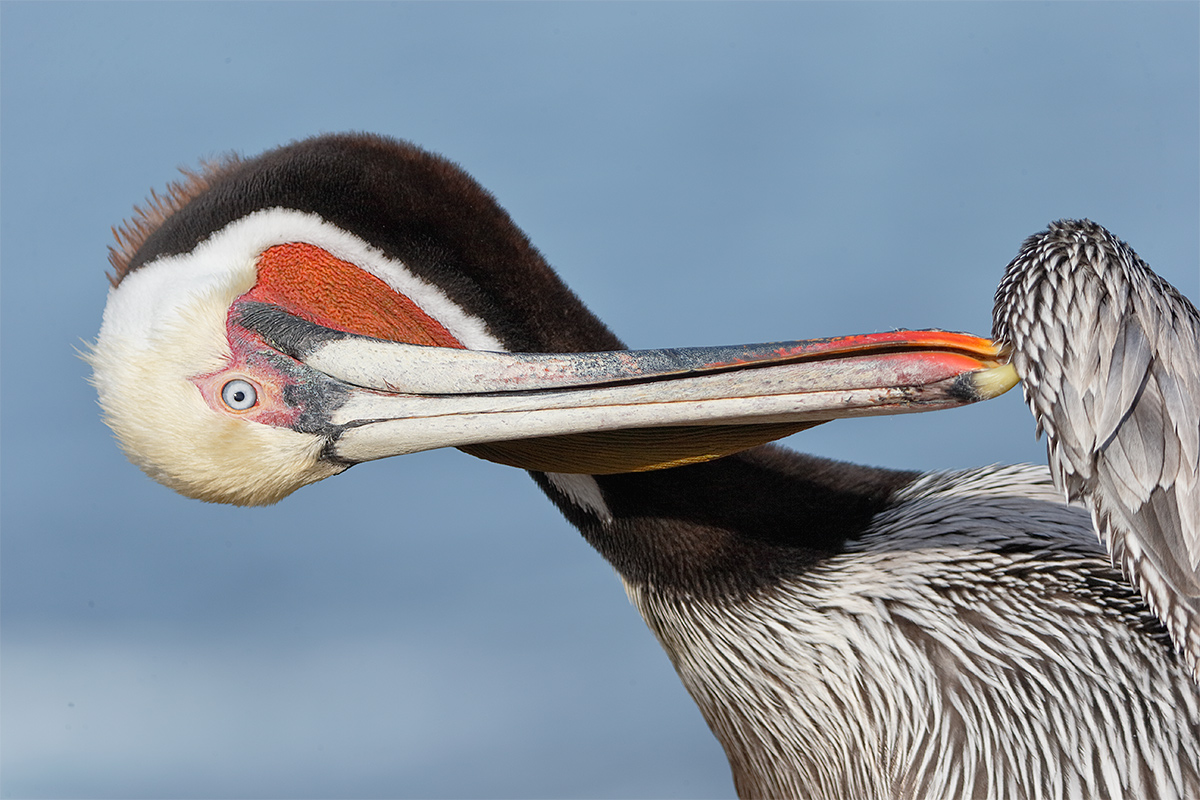
|
|
This image was created with the tripod-mounted Canon EF 200-400mm f/4L IS USM lens with Internal 1.4x Extender, the Canon Extender EF 1.4X III (at 529mm), and the Canon EOS-1D X . ISO 800. Evaluative metering +1/3 stop as framed: 1/800 sec. at f/8 in Manual mode.
Central AF point (by necessity)/AI Servo/Expand/Rear Focus on the bird’s eye and re-compose is tricky when hand holding as you need to stay absolutely still or risk throwing off accurate focus.Click here to see the latest version of the Rear Focus Tutorial. Click on the image to see a larger version.
|
Why?
“Why did you add the external TC when you were working only at 529mm? You could have done that with the lens and the the Internal TC engaged?”
I had mounted the external 1.4X III with the Internal TC already engaged to get me out to 784mm if and when I needed that.
Image Question
In this case, working wide open at f/8, I would have been much better off had the external TC not been in place. How would that have helped me make a somewhat sharper image here?
Note: removing the external 1.4X III TC loses you valuable time….
The Versatility Factor
The huge and obvious advantage of the 200-400 (or any zoom lens) at La Jolla is that you are able to vary your framing almost instantly by zooming in or out as needed. Add in the fact that you can with an extra 1.4X TC in your pocket work at focal lengths from 200 to 784mm and you have quite a versatile rig.
For this image and the image below, sensing that a head throw was imminent, I dis-engaged the internal extender so that I could more easily zoom wider.
Why are Head Throws Like Bosque Blast-offs?
At Bosque, I often state that the best images are created within the first 2 seconds of the birds blasting off. The best head throw images are created in the first second. They often begin with the bird’s stretching their bill pouch over their necks. If you are zoomed in even a bit, this needs to be a horizontal capture. Then almost instantly the bird raises its bill with the pouch fully distended. This is the instant that you want capture. But you need to be zoomed out and vertical. Here, I was about one second too late….
Note: a Brown Pelican head throw film image of mine with the bill pouch fully distended was honored in a BBC Wildlife Photographer of the Year competition early in this century. I think that IPT veteran Mike Gotthelf captured the magic moment with this head throw….
The Payoff!
Finally, the 784mm advantage got me an image that I loved. Being able to zoom in to 654mm was the key here so that I could zero in on the colors and textures of that gorgeous bill pouch.
San Diego Site Guide
A BAA Site Guide is the next best thing to being on an IPT. And they cost only fifty bucks; a lot less than an IPT! I share everything that I know about the five killer photography spots within 20 minutes of downtown San Diego. Learn where and how and when to photograph the amazing California race of Brown Pelican; Marbled Godwits against bright buff backgrounds; Wood Ducks, Lesser Scaup, and Ring-necked Duck at point blank range; and a variety of stunning gulls (including Heerman’s, Western, and California) both perched and in flight. You will learn where to go on what wind and what tides are best for each coastal location. As usual, I have held nothing back. You can get your copy of the San Diego Site Guide by clicking here; it will prove most useful to folks visiting in the colder months, but many of the locations are productive in other seasons as well, especially spring.
You can learn about our 13 other great Site Guides by clicking here.
|
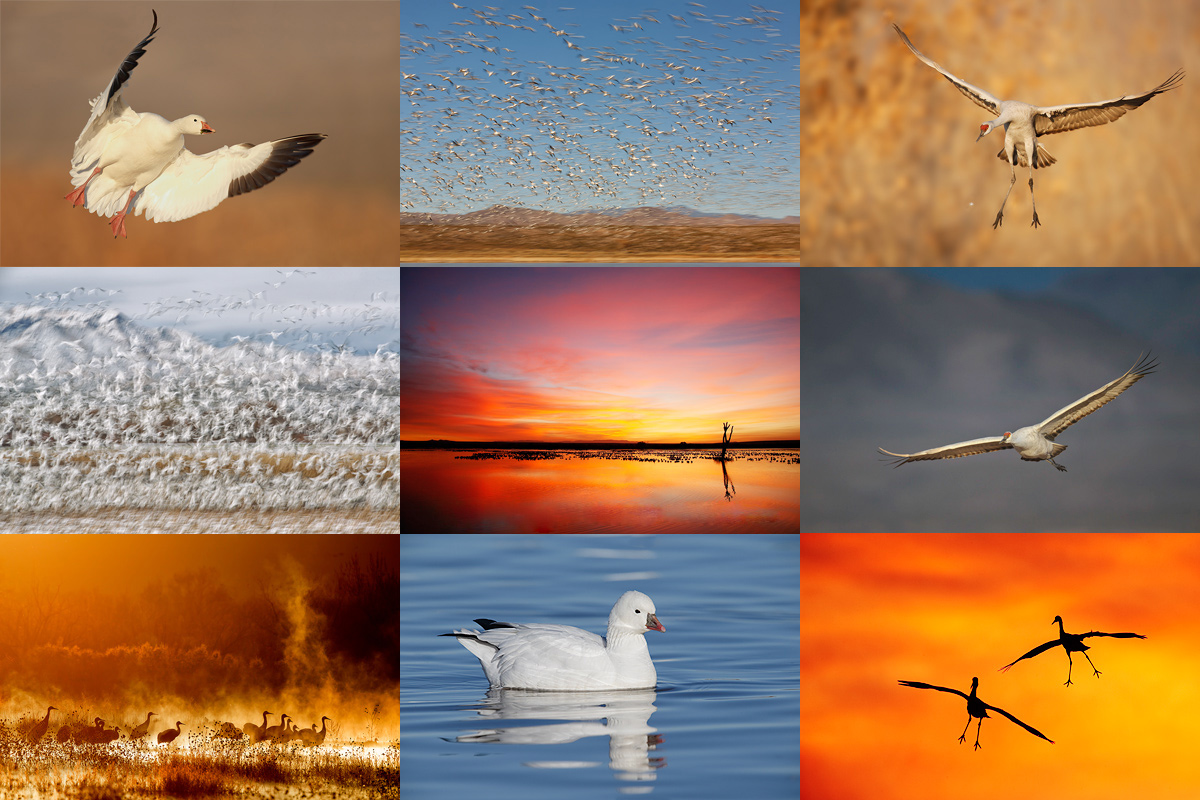
|
|
In 2015, we are offering a 3-DAY IPT before Thanksgiving and a 4-DAY IPT after the holiday. You can attend either and spend Thanksgiving Day with your family. Sign up for both and we will be glad to apply a $100 discount to your balance. We know that there are lots of less costly workshops being offered these days. Many of them are downright cheap. Please remember that you get exactly what you pay for. With us you will have two full time pros there for you every minute we are in the field. Together they have more than 28 seasons of experience at the refuge. If you want the finest in photographic instruction and want to be assured of being in the right spot at exactly the right time every day, do join us.
|
Bosque del Apache 2015 BIRDS AS ART/A Creative Adventure Instructional Photo-Tour (IPT). 3-FULL DAY IPT: NOV 22-24, 2015. $1149. Two great leaders: Denise Ippolito and Arthur Morris. Meet and greet and introductory slide program after dinner on your own at 7:00pm on SAT NOV 21.
Tens of thousands of Snow Geese, 10,000 Sandhill Cranes, ducks, amazing sunrises, sunsets, and blast-offs. Live, eat, and breathe photography with two of the world’s premier photographic educators at one of their very favorite photography locations on the planet. Top-notch in-the-field and Photoshop instruction. This will make 21 consecutive Novembers at Bosque for artie. This will be denise’s 7th workshop at the refuge. Nobody knows the place better than artie does. Join us to learn to think like a pro, to recognize situations and to anticipate them based on the weather, especially the sky conditions, the light, and the wind direction. Every time we make a move we will let you know why. When you head home being able to apply what you’ve learned on your home turf will prove to be invaluable.
This workshop includes 3 morning and 3 afternoon photography sessions, an inspirational introductory slide program after dinner on your own on Saturday, 11/21, all lunches, and after-lunch digital workflow, Photoshop, and image critiquing sessions.
There is never a strict itinerary on a Bosque IPT as each day is tailored to the local conditions at the time and to the weather. We are totally flexible in order to maximize both the photographic and learning opportunities. We are up early each day leaving the hotel by 5:30 am to be in position for sunrise. We usually photograph until about 10:30am. Then it is back to Socorro for lunch and then a classroom session with the group most days. We head back to the refuge at about 3:30pm each day and photograph until sunset. We will be photographing lots of Snow Geese and lots of Sandhill Cranes with the emphasis on expanding both your technical skills and your creativity.
A $449 non-refundable deposit is required to hold your slot for this IPT. Your balance, payable only by check, will be due on 7/25/2015. If you cancel and the trip fills, we will be glad to apply a credit applicable to a future IPT for the full amount less a $100 processing fee. If we do not receive your check for the balance on or before the due date we will try to fill your spot from the waiting list. Whether or not your spot is filled, you will lose your deposit. If not, you can secure your spot by paying your balance.
Please print, complete, and sign the form that is linked to here and shoot it to us along with your deposit check (made out to “Arthur Morris.”) You can also leave your deposit with a credit card by calling the office at 863-692-0906. If you register by phone, please print, complete and sign the form as noted above and either mail it to us or e-mail the scan. If you have any questions, please feel free to contact me via e-mail.
|
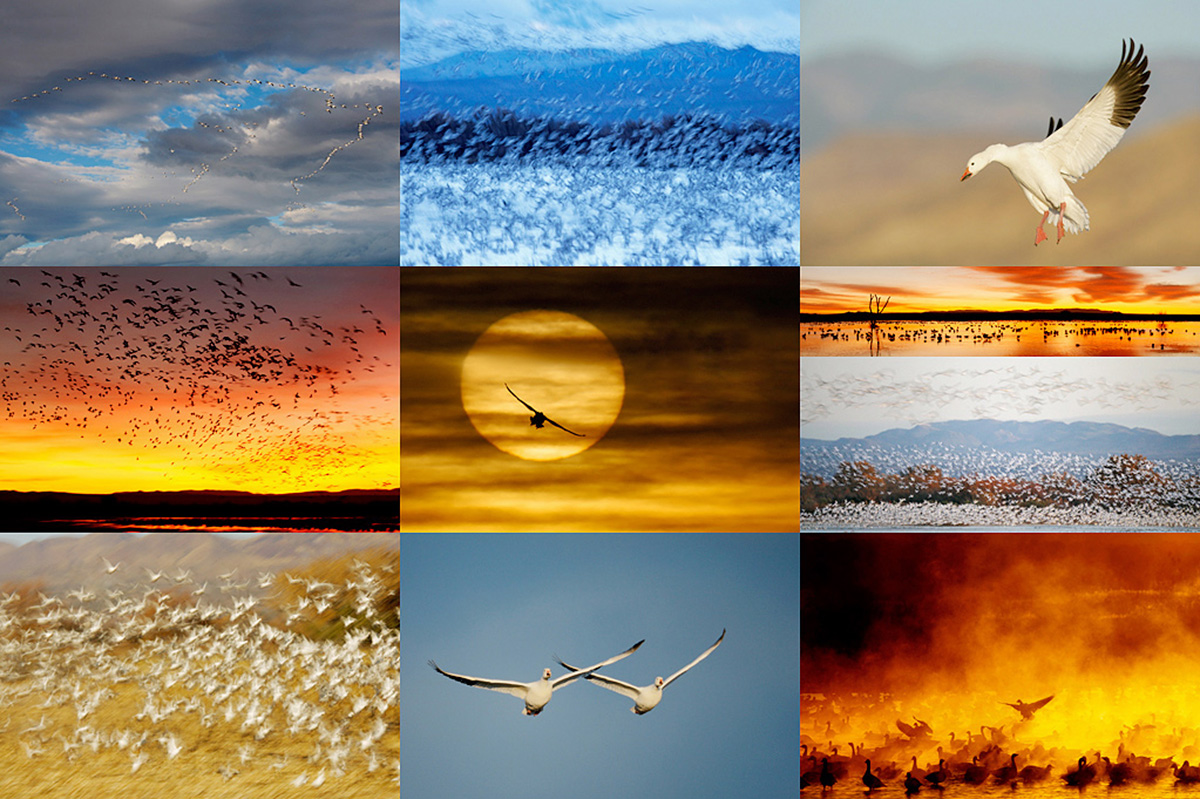
|
|
In 2015, we are offering a 3-DAY IPT before Thanksgiving and a 4-DAY IPT after the holiday. You can attend either and spend Thanksgiving Day with your family. Sign up for both and we will be glad to apply a $100 discount to your balance.
We know that there are lots of less costly workshops being offered these days. Please remember that you get exactly what you pay for. If you want the finest in photographic instruction and want to be assured of being in the right spot at exactly the right time, do join us.
|
Bosque del Apache 2015 BIRDS AS ART/A Creative Adventure Instructional Photo-Tour (IPT). 4-DAY IPT: (three full and two 1/2 DAYS) NOV 28-DEC 2, 2015. $1499. Two great leaders: Denise Ippolito and Arthur Morris. Meet and greet at 3pm on SAT NOV 28 followed by an afternoon photo session at the crane pools and the introductory slide program after dinner on your own.
Tens of thousands of Snow Geese, 10,000 Sandhill Cranes, ducks, amazing sunrises, sunsets, and blast-offs. Live, eat, and breathe photography with two of the world’s premier photographic educators at one of their very favorite photography locations on the planet. Top-notch in-the-field and Photoshop instruction. This will make 21 consecutive Novembers at Bosque for artie. This will be denise’s 7th workshop at the refuge. Nobody knows the place better than artie does. Join us to learn to think like a pro, to recognize situations and to anticipate them based on the weather, especially the sky conditions, the light, and the wind direction. Every time we make a move we will let you know why. When you head home being able to apply what you’ve learned on your home turf will prove to be invaluable.
This workshop includes 4 afternoon (11/28through 12/1), 4 morning (11/29 to 12/2) photography sessions, an inspirational introductory slide program after dinner on your own on Saturday, 11/28, all lunches, and after-lunch digital workflow, Photoshop, and image critiquing sessions.
There is never a strict itinerary on a Bosque IPT as each day is tailored to the local conditions at the time and to the weather. We are totally flexible in order to maximize both the photographic and learning opportunities. We are up early each day leaving the hotel by 5:30 am to be in position for sunrise. We usually photograph until about 10:30am. Then it is back to Socorro for lunch and then a classroom session with the group most days. We head back to the refuge at about 3:30pm each day and photograph until sunset. We will be photographing lots of Snow Geese and lots of Sandhill Cranes with the emphasis on expanding both your technical skills and your creativity.
A $599 non-refundable deposit is required to hold your slot for this IPT. Your balance, payable only by check, will be due on 7/25/2015. If you cancel and the trip fills, we will be glad to apply a credit applicable to a future IPT for the full amount less a $100 processing fee. If we do not receive your check for the balance on or before the due date we will try to fill your spot from the waiting list. Whether or not your spot is filled, you will lose your deposit. If not, you can secure your spot by paying your balance.
Please print, complete, and sign the form that is linked to here and shoot it to us along with your deposit check (made out to “Arthur Morris.”) You can also leave your deposit with a credit card by calling the office at 863-692-0906. If you register by phone, please print, complete and sign the form as noted above and either mail it to us or e-mail the scan. If you have any questions, please feel free to contact me via e-mail.
Facebook
Be sure to like and follow BAA on Facebook by clicking on the logo link upper right. Tanks a stack!
Support the BAA Blog. Support the BAA Bulletins: Shop B&H here!
We want and need to keep providing you with the latest free information, photography and Photoshop lessons, and all manner of related information. Show your appreciation by making your purchases immediately after clicking on any of our B&H or Amazon Affiliate links in this blog post. Remember, B&H ain’t just photography!
…..
Amazon.com
Those who prefer to support BAA by shopping with Amazon may use this link:
Amazon Canada
Many kind folks from north of the border, eh, have e-mailed stating that they would love to help us out by using one of our affiliate links but that living in Canada and doing so presents numerous problems. Now, they can help us out by using our Amazon Canada affiliate link by starting their searches by clicking here. Many thanks to those who have written.
Typos
In all blog posts and Bulletins, feel free to e-mail or to leave a comment regarding any typos or errors. Just be right :).
February 4th, 2015 Important Notice #1
As a couple was forced to cancel and forfeit their deposit I am in a position to offer substantial four-figure discounts to three additional folks. Please contact me immediately via e-mail for details.
|
|
|
Do consider joining me for a once in a lifetime trip to the Galapagos archipelago in July, 2015.
|
GALAPAGOS Photo Cruise of a Lifetime IPT/The Complete Galapagos Photographic Experience. July 14-28, 2015 on the boat. 13 FULL and two half-days of photography: $12,499. Limit 14 including the leader:/Openings: 4.
My two-week Galapagos Photo-Cruises are without equal. The world’s best guide, a killer itinerary, a great boat (the Samba), and the best leader with eight Galapagos cruises under his belt. Pre-trip and pre-landing location-specific gear advice. In-the-field photo instruction and guidance. Jeez, I almost forgot: fine dining at sea!
The great spots that we will visit include Tower Island (including Prince Phillips Steps and Darwin Bay), Hood Island (including Punta Suarez, the world’s only nesting site of Waved Albatross, and Gardner Bay)—each of the preceding are world class wildlife photography designations that rank right up there with Antarctica, Africa, and Midway. We will also visit Fernandina, Puerto Ayora for the tortoises, Puerto Egas—James Bay, North Seymour and Isla Lobos for nesting Blue-footed Booby (most years), South Plaza, Floreana, and Urbina Bay, all spectacular in their own right. We visit every great spot on a single trip. Plus tons more. And there will he lots of opportunities to snorkel on sunny mid-days for those like me who wish to partake.
We will be the first boat on each island in the morning and the last boat to leave each island every afternoon. If we are blessed with overcast weather, we will often spend 5-6 hours at the best sites. And as noted above, mid-day snorkeling is an option on most sunny days depending on location. Note: some of the walks are a bit strenuous. Great images are possible on all landings with a hand held 70-200mm lens and a 1.4X teleconverter. I bring a longer lens ashore on most landings as that fits my style. I generally work with either the Canon 300mm f/2.8L IS or the Canon 200-400mm f/4 L IS with Internal Extender.
Do know that there is a NatureScapes Galapagos trip: one week for $8495. Thus, my trip represents a tremendous value; why go all that way and miss half of the great photographic locations?
The Logistics
Fly to Guayacil, Ecuador on July 12, 2015. Travel insurance/rest day: July 13 (We may or may not offer a photo outing on the 13th). Fly to the archipelago on July 14 and board the Samba. Get off the boat on July 28. Fly to Guayacil that afternoon. Fly home on the early morning of July 29 unless you are staying on or going elsewhere (or catching a red-eye flight on the evening of the 28th).
$12,499 includes just about everything: all transfers, guide and park fees, all food on the boat, transfers and ground transportation, your flights to the archipelago, and three nights (double occupancy) in a top notch hotel in Guayacil. If you are good to go, a non-refundable deposit of $5,000 per person is due immediately. The second payment of $4,000 is not due until 11/1/14. The final payment of $3449 per person will be due on 2/1/15. A $200 discount will be applied to each of the balances for couples or friends who register at the same time.
Purchasing travel insurance within 2 weeks of our cashing your deposit check is strongly recommended. On my past two cruises a total of 5 folks were forced to cancel less than one week prior to the trip. My family and I use Travel Insurance Services and strongly recommend that you do the same.
Not included: your round trip airfare from your home to and from Guayacil, beverages on the boat, phone calls, your meals in Guayacil, personal items, and a $600/person cash tip for the crew and the guide—this works out to roughly $40/day to be shared by the 7 folks who will be waiting on us hand and foot every day for two weeks. The service is so wonderful that many folks choose to tip extra.
Please e-mail for the complete itinerary and for additional info and images. Please cut and paste “Galapagos 2015 Info Please) into the Subject line.
Important Notice #2
As often happens during IPTs I am days behind in answering some fairly important e-mails, especially those dealing with used photo gear for sale. I will do my best to catch up toward the end of the week.
Stuff
I will be sharing 100-400 images along with additional positives and a very few negatives on the new lens. I used the 100-400 on Sunday afternoon with the 100-400, the 7D II, and the 1.4X TC. Images and comments soon.
South Georgia October 2015
Do consider joining me in South Georgia next October for the trip of a lifetime. See here for the complete details.
Save $242
Register now for the South Georgia trip and receive a $242 on your return airfare. Please e-mail for details.
Please Remember to use our Affiliate Links 🙂
To show your appreciation for my continuing efforts here, we ask, as always, that you use our the B&H and Amazon affiliate links on the right side of the blog for all of your purchases. B&H is recommended for you major photography gear purchases, Amazon for your household, entertainment, and general purpose stuff. Please check the availability of all photographic accessories in the BIRDS AS ART Online Store, especially the Mongoose M3.6 tripod heads, Gitzo tripods, Wimberley heads and plates, LensCoats and accessories, and the like. We sell only what I have used, have tested, and can depend on. We will not sell you junk. We know what you need to make creating great images easy and fun. And we are always glad to answer your gear questions via e-mail. I just learned that my account was suspended during my absence; it should be up and running by Monday at the latest.
I would of course appreciate your using our B&H affiliate links for all of your major gear, video, and electronic purchases. For the photographic stuff mentioned in the paragraph above we, meaning BAA, would of course greatly appreciate your business. Here is a huge thank you to the many who have been using our links on a regular basis and visiting the BAA Online store as well.
February 3rd, 2015 What’s Up
We enjoyed a pretty much perfect day yesterday. Great weather, great light, and great birds. Not to mention a wonderful lunch and a 2-hour image review/editing/DPP/Photoshop session.
This blog post took about 1 hour to assemble. It was published at 5:08am Pacific time. Please note that I still have many exciting new images, tales, and lessons from my recently concluded Southern Oceans trip to share with you here over the course of the next few weeks and am looking forward to doing just that. Do consider joining me in South Georgia next October for the trip of a lifetime. See here for the complete details. In addition, I will surely be sharing more 100-400 images along with additional positives and a very few negative on the new lens. I used the 100-400 yesterday afternoon with the 7D II and the 1.4X TC. Images and comments soon.
SAVE $242
Register now for the South Georgia trip and receive a $242 on your return airfare. Please e-mail for details.
Please Remember to use our Affiliate Links 🙂
To show your appreciation for my continuing efforts here, we ask, as always, that you use our the B&H and Amazon affiliate links on the right side of the blog for all of your purchases. B&H is recommended for you major photography gear purchases, Amazon for your household, entertainment, and general purpose stuff. Please check the availability of all photographic accessories in the BIRDS AS ART Online Store, especially the Mongoose M3.6 tripod heads, Gitzo tripods, Wimberley heads and plates, LensCoats and accessories, and the like. We sell only what I have used, have tested, and can depend on. We will not sell you junk. We know what you need to make creating great images easy and fun. And we are always glad to answer your gear questions via e-mail. I just learned that my account was suspended during my absence; it should be up and running by Monday at the latest.
I would of course appreciate your using our B&H affiliate links for all of your major gear, video, and electronic purchases. For the photographic stuff mentioned in the paragraph above we, meaning BAA, would of course greatly appreciate your business. Here is a huge thank you to the many who have been using our links on a regular basis and visiting the BAA Online store as well.
|

|
|
This image was created in the shade of an oak tree on a clear day with the tripod-mounted Canon EF 200-400mm f/4L IS USM lens with Internal 1.4x Extender and the Canon EOS 7D Mark II with the internal TC engaged at 560mm. ISO 400. Evaluative metering +1 stop as framed : 1/200 sec. at f/5.6.
Central sensor/AI Servo Expand/Rear Focus AF as framed was active at the moment of exposure. Click here to see the latest version of the Rear Focus Tutorial. Click on the image to see a larger version.
|
BIRDS AS ART IPTs Deliver
We are killing on the San Diego IPT. We were where we needed to be on Sunday for all the right reasons. We were right where we needed to be on Monday morning and everything was perfect. Tons of learning and tons of great images (coming soon). On Monday afternoon we were once again in the perfect spot with the right wind, gorgeous light, a pretty sweet sunset, and lots more great images (coming soon).
The tripod-mounted 200-400 with the internal TC in place and the 7D II worked out just fine for the ducks. When they swam close, I was able to zoom out easily. At effective 896mm (18X magnification) this combo is simply too much for most folks to hand hold in situations like this; not so much because of the weight but because of the huge magnification and relatively slow shutter speeds…. In any case, I did just fine seated behind my lowered tripod with the lens on the Mongoose M3.6 tripod heads.
|
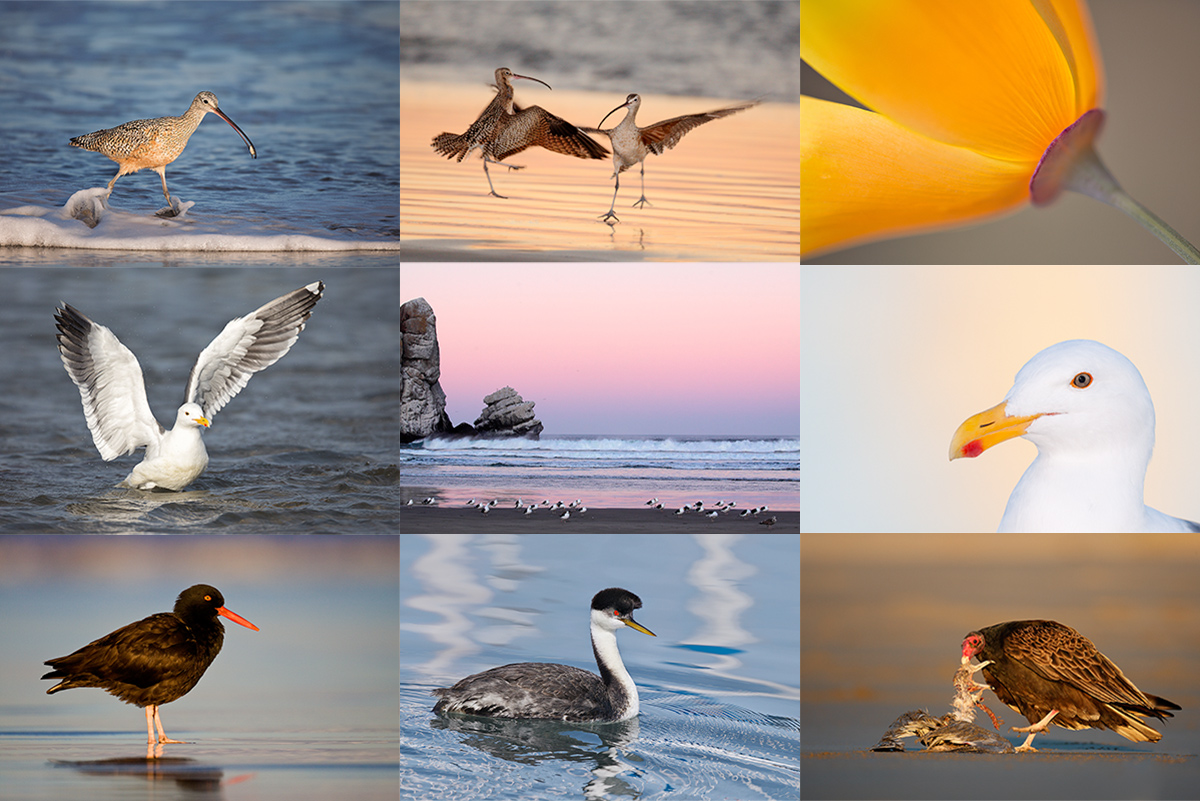
|
|
Morro Bay offers a wealth of very attractive natural history subjects in a variety of attractive settings. Do consider joining me there on the March 20-22, 2015 Canon Destination Workshop. Complete info and register here
|
BIRDS AS ART Morro Bay, CA Canon Live Learning EOS Destination Workshop
March 20-22, 2015: $1050
Borrow great Canon gear. Head home with a print or two. Learn from the best.
Continue reading Canon 200-400mm f/4L IS with Internal TC (engaged) and 7D Mark II Just Ducky
February 2nd, 2015 What’s Up
The IPT group graciously accepted Bill Griswold’s invitation to a Super Bowl party at his place. Bill and his wife put out a great spread of chips, and nuts, and guacamole, not to mention and endless supply of beer and fine wine. Thanks a huge stack to the Griswold family. I sprung for the pizza. As Mark Hodgson and multiple IPT veteran Mike Gotthelf were the only two rooting for the Patriots, congrats to them by the way, most of us were not too thrilled by the outcome. The 40-second confusion and the 2nd down and less than a yard call for a pass play were ridiculous at best. The Seahawks simply gave the game away.
This blog post took about 3 hours to assemble. I optimized the four images during what I am not calling the Stupid Bowl. It was published at 4:40 am Pacific time, which is 7:40am in the east. I still have many exciting new images, tales, and lessons from my recently concluded Southern Oceans trip to share with you here over the course of the next few weeks and am looking forward to doing just that. Do consider joining me in South Georgia next October for the trip of a lifetime. See here for the complete details. In addition, I will surely be sharing more 100-400 images along with additional positives and a very vew negative on the new lens. I will let you know how it goes with the 1.4X TC with both the 1D X and the 7D II. Just give me a bit of time 🙂
SAVE $242
Register now for the South Georgia trip and receive a $242 on your return airfare. Please e-mail for details.
Please Remember to use our Affiliate Links 🙂
To show your appreciation for my continuing efforts here, we ask, as always, that you use our the B&H and Amazon affiliate links on the right side of the blog for all of your purchases. B&H is recommended for you major photography gear purchases, Amazon for your household, entertainment, and general purpose stuff. Please check the availability of all photographic accessories in the BIRDS AS ART Online Store, especially the Mongoose M3.6 tripod heads, Gitzo tripods, Wimberley heads and plates, LensCoats and accessories, and the like. We sell only what I have used, have tested, and can depend on. We will not sell you junk. We know what you need to make creating great images easy and fun. And we are always glad to answer your gear questions via e-mail. I just learned that my account was suspended during my absence; it should be up and running by Monday at the latest.
I would of course appreciate your using our B&H affiliate links for all of your major gear, video, and electronic purchases. For the photographic stuff mentioned in the paragraph above we, meaning BAA, would of course greatly appreciate your business. Here is a huge thank you to the many who have been using our links on a regular basis and visiting the BAA Online store as well.
|
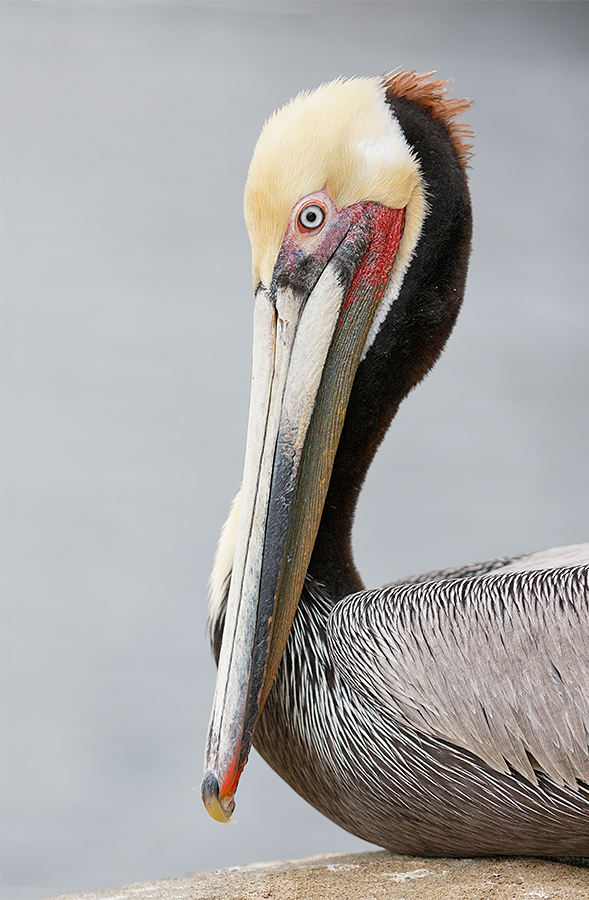
|
|
This image was created in wet, cloudy, drizzly conditions on January 30, 2015 at La Jolla, CA with the hand held Canon EF 70-200mm f/2.8L IS II USM lens (at 165mm ) and the Canon EOS 7D Mark II. ISO 1250. Evaluative metering +1 1/3 stops: 1/1000 sec. at f/2.8.
Two AF points up from the central AF point/AI Servo Surround Rear Focus AF as framed was active at the moment of exposure (as is always best when hand holding). Click here to see the latest version of the Rear Focus Tutorial. Click on the image to see a larger version.
|
The First Scouting Morning
On my first scouting morning, the day before I got my 100-400 II,it was cloudy dark. And by 9:30am the drizzle had gotten pretty heavy. So I quit. I brought down the 200-400 with the 1D X on a tripod and the 70-200 with the 7D Mark II on a Black Rapid RS-7 Strap. After making only a few frames with the big zoom I went hand held with the light rig for the rest of the morning.
Most of my images were made while seated as it is easier to approach the birds and easier to make sharp images. Why the latter? Rest the bottom of your left forearm on top of your left knee to form a “kneepod.” Great for hand holding.
|
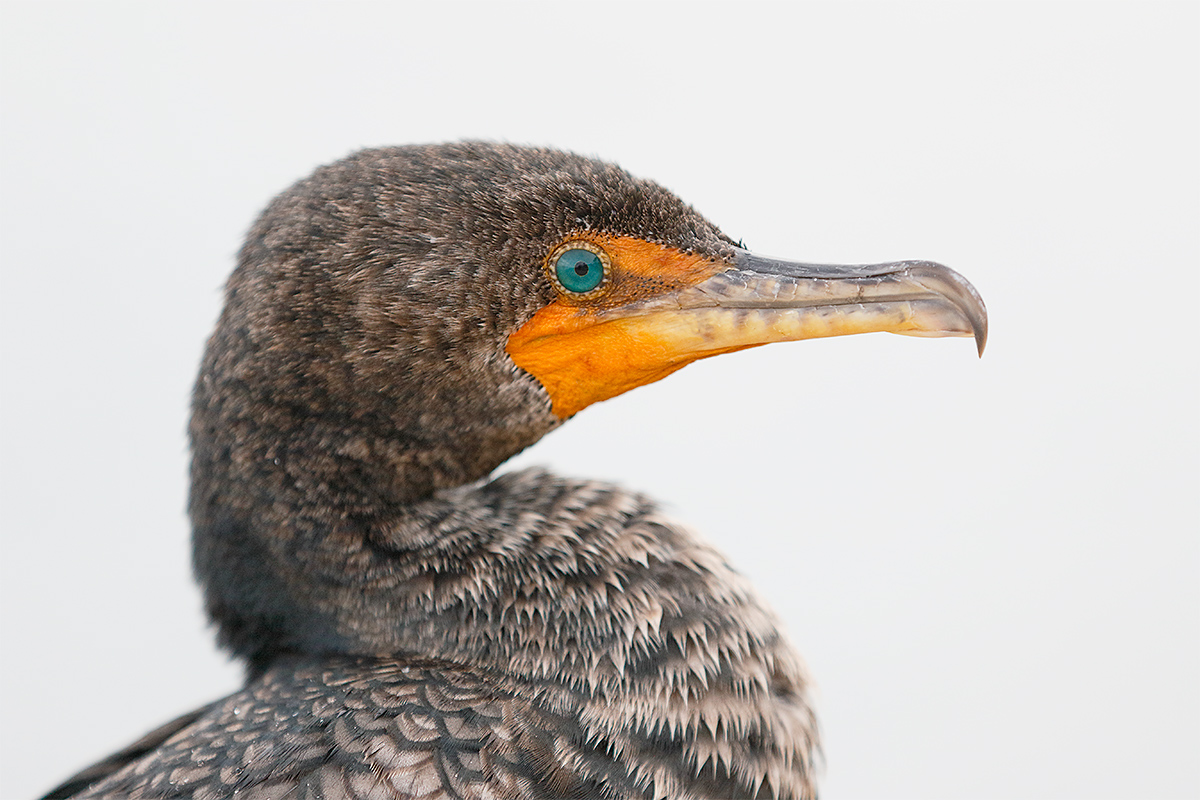
|
|
This image was created in wet, cloudy, drizzly conditions on January 30, 2015 at La Jolla, CA with the hand held Canon EF 70-200mm f/2.8L IS II USM lens (at 200mm ) and the Canon EOS 7D Mark II. ISO 800. Evaluative metering +1 2/3 stops: 1/640 sec. at f/2.8.
One AF point up from the central AF point/AI Servo Expand Rear Focus AF as framed was active at the moment of exposure (as is always best when hand holding). Click here to see the latest version of the Rear Focus Tutorial. Click on the image to see a larger version.
|
Getting Close
Stay low. Move slowly. Watch the birds’ behavior and learn their comfort levels. If they react to you at all, stay stil for a minute or two until they either relax or go back to doing what they were doing. You can move more freely and get a lot closer when you are hand holding than you can when working on a tripod. Again, as long as you get low, move slowly, and pay attention.
|
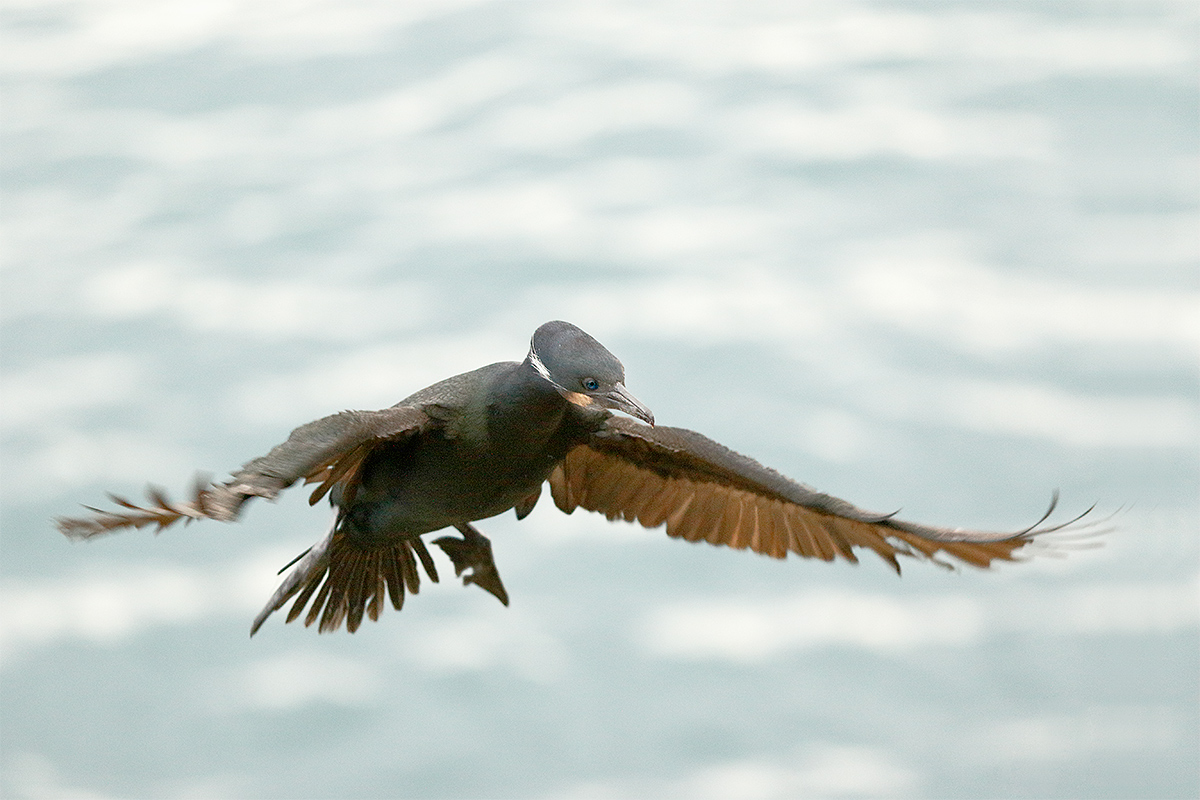
|
|
This image was created in wet, cloudy, drizzly conditions on January 30, 2015 at La Jolla, CA with the hand held Canon EF 70-200mm f/2.8L IS II USM lens (at 200mm ) and the Canon EOS 7D Mark II. ISO 1000. Evaluative metering + ]2 1/3 stops off the light blue water: 1/800 sec. at f/2.8 in Manual mode was somewhat of an under-exposure.
Central AF point (manual selection)/AI Servo Shutter Button AF as originally framed was active at the moment of exposure. Click on the image to see a larger version.
|
f/2.8 Rocks! The 100-400II Revelation
On the ride home I realized that when working in conditions with no light, i.e., cloudy, dreary, and dark, the versatile, reliable Canon EF 70-200mm f/2.8L IS II USM lens will most often be a better choice than the new Canon EF 100-400mm f/4.5-5.6L IS USM lens. It will save you two stops of ISO. But only 100% of the time. All of today’s avian images were made wide open at f/2.8 at ISOs ranging from 800 to 1250. With the 7D II and its 1.6 crop factor. I would not have wanted to been working at ISOs from 1600-2500 with the smaller pixel camera body….
In dark conditions, when you wish to hand hold, score one for the 70-200 II. That said, in brighter situations, I will always grab the 100-400II for greater reach regardless of camera body.
|
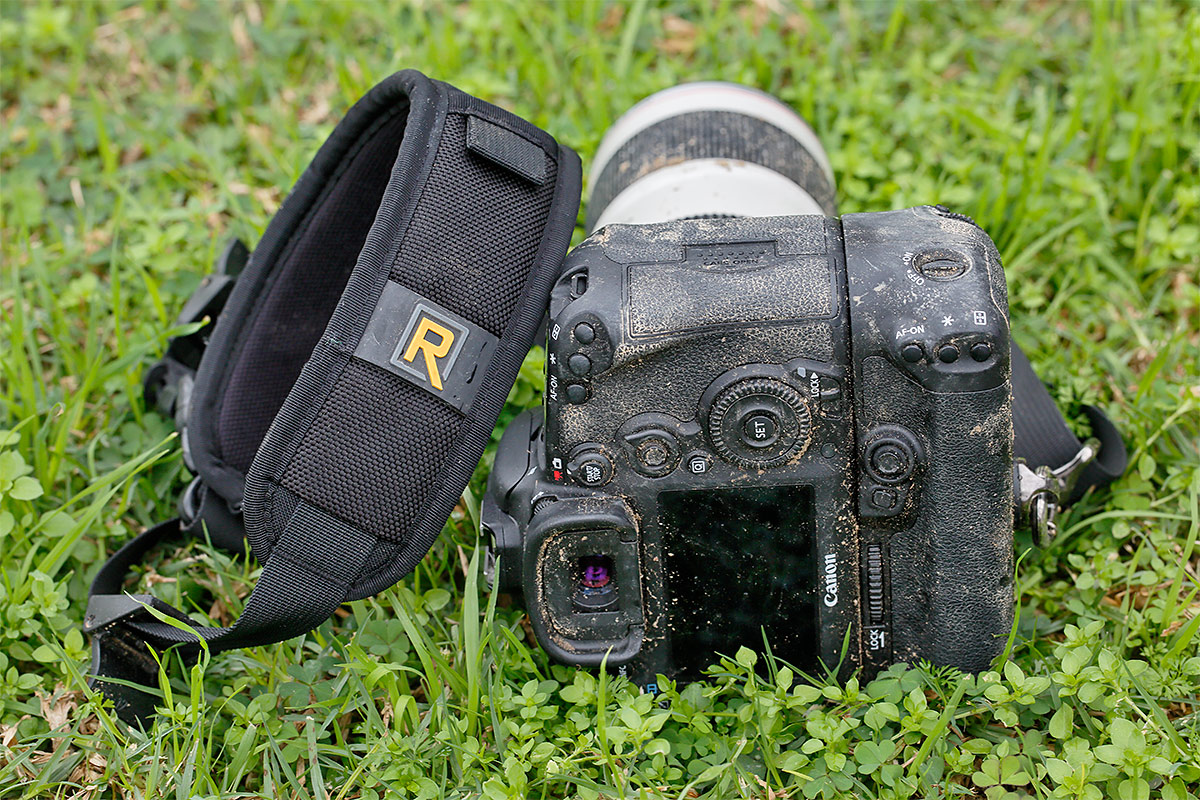
|
|
This image was created in cloudy conditions on January 30, 2015 at San Diego, CA with the hand held Canon EF 100mm f/2.8L Macro IS USM lens and the Canon EOS 5D Mark III DSLR Camera (Body Only) ISO 800. Evaluative metering -1/3 stop as framed: 1/125 sec. at f/8 in Av mode.
One AF point up from the central AF point (manual selection)/AI Servo Shutter Button AF as originally framed was active at the moment of exposure. Click on the image to see a larger version.
|
Getting Down and Dirty (and Wet) with the 7D II
When folks would see images of me crawling around in the sand or mud with a big lens, the would often e-mail” “Aren’t you gonna get sand or mud on your camera and lens?”
The answer: “Well yeah. My job is to create the best possible images. And if that requires getting my gear filthy, then I am there.”
Clean-up with a soft paint brush, and old t-shirt, Lens Clens (the main ingredient) and a Q-tip for the viewfinder. I apply Lens Clens liberally to the t-shirt and scrub the finish of the camera body to get rid of most of the mud from the ridges.
Surprising Note
I worked often in the drizzle on the big Southern Oceans Expedition with both the 7D II and one of my 1D X bodies. The 7D II preformed flawlessly. I did have a problem with one of my 1D X bodies which was acting funky on one landing for an hour or so. Because of the moisture, it would black out for a few minutes of time before coming back to life…. As most of you know, the pro bodies like the 1D X and the Mark IV are supposed to be better sealed against the weather than the pro-sumer bodies like the 7D II and the 5D III. Supposed to be….
San Diego Natural History Museum Program & The Birds of the World Exhibit
On Saturday morning, February 7, 2015 I will be presenting “A Bird Photographer’s Story” at 9am tomorrow at the San Diego Natural History Museum to kick off the Birds of the World photographic exhibit that will feature the images of about a dozen of the world’s top avian photographers. This program is being generously sponsored by the Canon Explorers of Light program. I am proud to say that both Denise Ippolito and I will have images hanging in the show. The exhibit opening will follow the program.
Friday Morning San Diego In-the-Field Photo Session: February 6, 2015: $299.
Open to all.
This small group workshop includes 3 hours of in-the-field Wood and Ring-necked Duck photography instruction and brunch with image review and Photoshop instruction.
|
|
|
Images courtesy of and copyright Captain James Shadle (aka Froggie). All of the images here were created at Alafia Banks. Card creation and design by Arthur Morris/BIRDS AS ART.
|
The Hooptie Deux/Roseate Spoonbills and More Instructional Photo-Tour via pontoon boat. 4 1/2 DAYs: $3200. SUN FEB 22 thru lunch on THUR FEB 26, 2015/Strict Limit: 6 photographers/Openings: 1.
Due to a cancellation we now have a single opening on this trip which sold out minutes after being announced.
Meet and greet on the evening of SAT 21 FEB. Two great leaders: Captain James Shadle (Nikon) and Canon Explorer of Light Emeritus Arthur Morris.
Roseate Spoonbill is one of if not the most sought after avian photographic subjects in Florida. They are generally hard to find and somewhat difficult to approach. They are relatively easy to find at Alafia Banks—heck, you can’t miss seeing them, but even there they can on some days be somewhat difficult to approach. On some days we may be able to get ridiculously close to them. The huge incentive to get out to Alafia Banks in mid-February is the chance to photograph this species at the height of its spectacular breeding plumage….
Weather permitting there will be nine boat trips: 5 mornings and 4 afternoons! Mornings to Alafia Banks for spoonbills and Brown Pelicans (with lots of flight photography with the birds likely carrying nesting material), cormorants, ibises (both Glossy and White in breeding plumage. Many of the White Ibises will be sporting their spectacular, distended, red, naked (un-feathered) throat pouches—typically larger in the females. In addition we will get to photograph egrets including Great and Reddish, both in full breeding plumage, shorebirds, and more. There will be lots of flight photography opportunities. Afternoon trips either to Alafia Banks for spoonbills and more or to a more sheltered inland rookery location for a variety of nesting birds. In the event of horrific weather artie will either take the group to Fort DeSoto or will conduct an image review/Photoshop session. This IPT includes five lunches that will be followed by small group image sharing and review and some over-the-shoulder Photoshop instruction.
Important Notes
We stay in Brandon, FL for this IPT. From our hotel there it is is only about 20 minutes to the dock. The plan is for all nine sessions to be by boat. For the Alafia Banks segments, Captain Shadle provides light weight chest waders as much of the photograph will be done while we are standing in fairly shallow water behind our tripods. We help you get in and out of the boat with your gear. This is likely not the best trip for folks with balance problems. Note however that some folks may opt to stay on the boat. They usually have lots of chances for flight photography of spoonbills and other species but are almost always pretty far away from the spoonbills that land.
I recently saw a similar trip advertised two months too late for breeding plumage spoonbills (and two months too late for most of the rest of the species in breeding plumage). 5 Days: $3200. With only four boat trips…. The Hooptie IPT represents an incredible opportunity and with 3 slots filled already the remaining three spots should fill very quickly. We hope that you can join us. Scroll down for registration info.
|
|
|
All of the images here were created at Alafia Banks in the month of February. Images copyright Arthur Morris/BIRDS AS ART. Card creation and design by Arthur Morris/BIRDS AS ART.
|
Hooptie IPT Registration Info
A $449 non-refundable deposit is required to hold your slot for this IPT. Your balance, payable only by check, will be due on 11/22/2014. If you cancel and the trip fills, we will be glad to apply a credit applicable to a future IPT for the full amount less a $100 processing fee. If we do not receive your check for the balance on or before the due date we will try to fill your spot from the waiting list. If your spot is filled, you will lose your deposit. If not, you can secure your spot by paying your balance.
Please print, complete, and sign the form that is linked to here and shoot it to us along with your deposit check (made out to “Arthur Morris.”) You can also leave your deposit with a credit card by calling the office at 863-692-0906. If you register by phone, please print, complete and sign the form as noted above and either mail it to us or e-mail the scan. If you have any questions, please feel free to contact me via e-mail.
Facebook
Be sure to like and follow BAA on Facebook by clicking on the logo link upper right. Tanks a stack!
Support the BAA Blog. Support the BAA Bulletins: Shop B&H here!
We want and need to keep providing you with the latest free information, photography and Photoshop lessons, and all manner of related information. Show your appreciation by making your purchases immediately after clicking on any of our B&H or Amazon Affiliate links in this blog post. Remember, B&H ain’t just photography!
…..
Amazon.com
Those who prefer to support BAA by shopping with Amazon may use this link:
Amazon Canada
Many kind folks from north of the border, eh, have e-mailed stating that they would love to help us out by using one of our affiliate links but that living in Canada and doing so presents numerous problems. Now, they can help us out by using our Amazon Canada affiliate link by starting their searches by clicking here. Many thanks to those who have written.
Typos
In all blog posts and Bulletins, feel free to e-mail or to leave a comment regarding any typos or errors. Just be right :).
February 1st, 2015 What’s Up?
I scouted La Jolla for the second straight morning, the morning of Saturday, January 31. It was my first outing with the new lens. There is good news and bad news. Read on. I met seven of the nine folks on the sold out plus one more San Diego IPT at 7:30pm for a meet and greet and an introductory session. (BAA always reserves the right to go one over the published limit.)
This blog post took about 3 hours to assemble. I thought that I published it at 9:12pm PT, 12:12am ET on Saturday from my hotel room in San Diego, but when I woke up on Sunday morning I saw that it was still an unpublished draft. I am, therefore, publishing it at 4:44am Pacific time, which is 7:44am in the east. I still have many exciting new images, tales, and lessons from my recently concluded Southern Oceans trip to share with you here over the course of the next few weeks and am looking forward to doing just that. Do consider joining me in South Georgia next October for the trip of a lifetime. See here for the complete details.
SAVE $242
Register now for the South Georgia trip and receive a $242 on your return airfare. Please e-mail for details.
Please Remember to use our Affiliate Links 🙂
To show your appreciation for my continuing efforts here, we ask, as always, that you use our the B&H and Amazon affiliate links on the right side of the blog for all of your purchases. B&H is recommended for you major photography gear purchases, Amazon for your household, entertainment, and general purpose stuff. Please check the availability of all photographic accessories in the BIRDS AS ART Online Store, especially the Mongoose M3.6 tripod heads, Gitzo tripods, Wimberley heads and plates, LensCoats and accessories, and the like. We sell only what I have used, have tested, and can depend on. We will not sell you junk. We know what you need to make creating great images easy and fun. And we are always glad to answer your gear questions via e-mail. I just learned that my account was suspended during my absence; it should be up and running by Monday at the latest.
I would of course appreciate your using our B&H affiliate links for all of your major gear, video, and electronic purchases. For the photographic stuff mentioned in the paragraph above we, meaning BAA, would of course greatly appreciate your business. Here is a huge thank you to the many who have been using our links on a regular basis and visiting the BAA Online store as well.
|
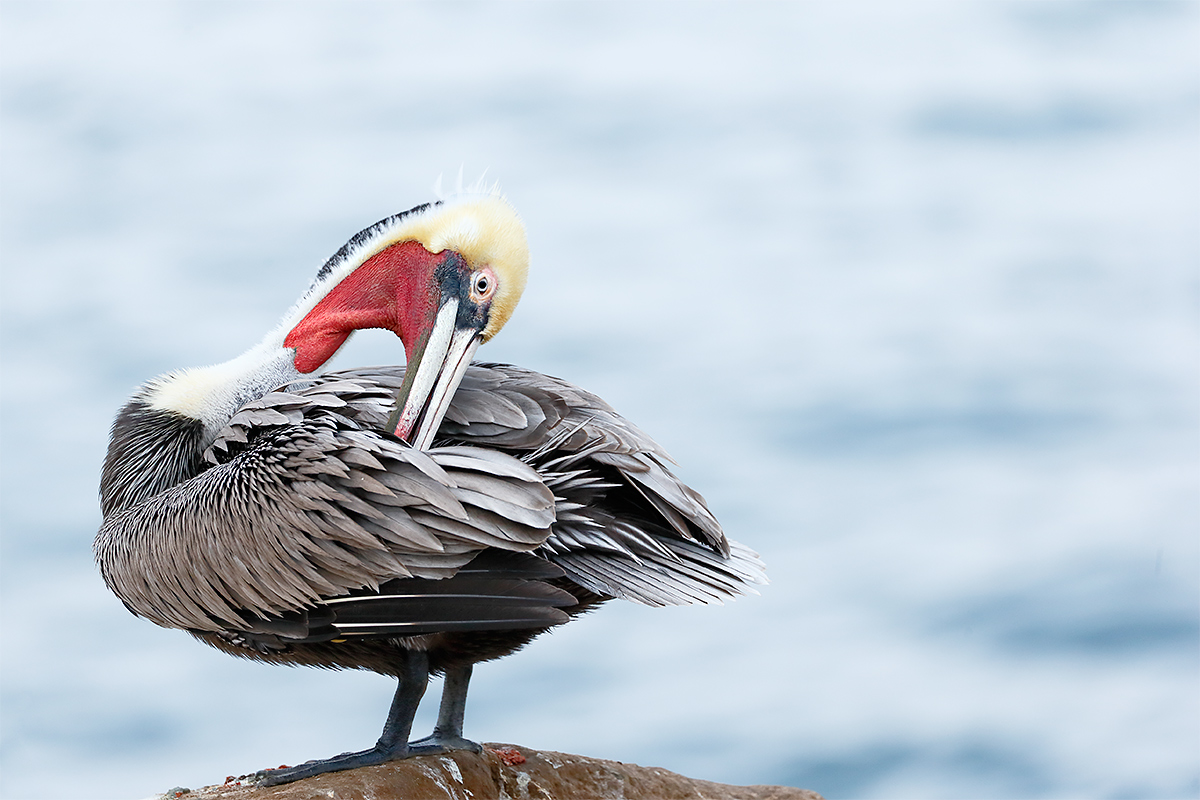
|
|
This image was created on the morning of January 31, 2015 at La Jolla, CA with the hand held Canon EF 100-400mm f/4.5-5.6L IS USM lens (at 349mm) and the Canon EOS-1D X . ISO 1600. Evaluative metering +1 stop as framed: 1/500 sec. at f/5.6. Rig on the Black Rapid RS-7 Strap.
Four AF points to the left of the central AF point (manual selection)/AI Servo Rear Focus AF as framed was active at the moment of exposure (as is almost always best when hand holding). Click here to see the latest version of the Rear Focus Tutorial. Click on the image to see a larger version.
Image #1: Brown Pelican preening
|
The Plan
As I exited my vehicle I decided to keep things simple: grab the new Canon EF 100-400mm f/4.5-5.6L IS USM lens and do the whole morning with that and the 1D X . I brought the tripod topped with the Mongoose M3.6 but after the first few images things brightened up and I went hand held for the rest of the session.
On the good news front I had forgotten that you can screw off the lens foot with the Wimberley P-20 lens plate attached to save a few ounces when hand-holding the 100-400 II. As I never use the foot as a brace when hand holding as as some folks do–it always seems to get in my way–that is a nice plus for me.
|
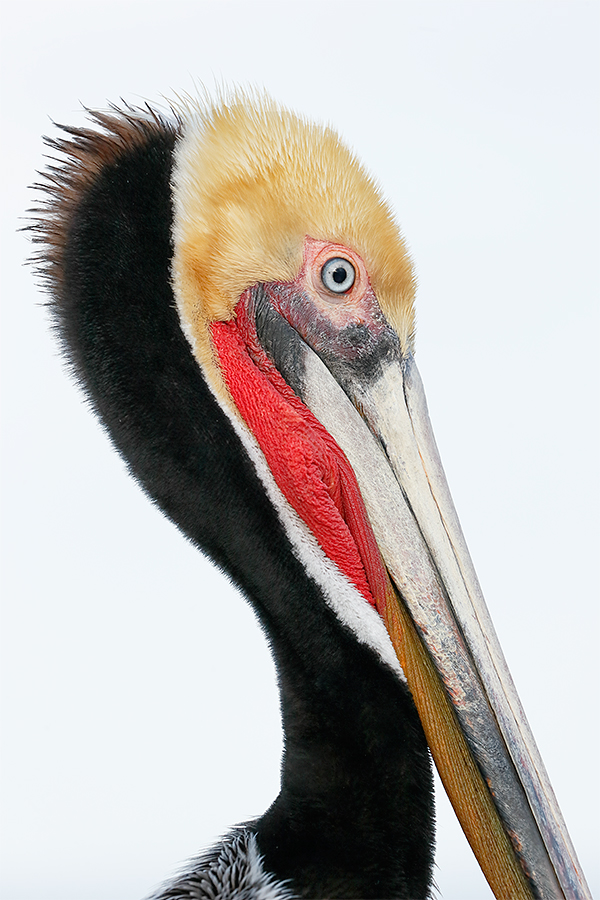
|
|
This image was created on the morning of January 31, 2015 at La Jolla, CA with the hand held Canon EF 100-400mm f/4.5-5.6L IS USM lens (at 400mm) and the Canon EOS-1D X . ISO 800. Evaluative metering +1 stop as framed: 1/640 sec. at f/8. Rig on the Black Rapid RS-7 Strap.
Two rows above and one AF point to the left of the central AF point/AI Servo/Surround Shutter button AF as framed was active at the moment of exposure (as is almost always best when hand holding). Click on the image to see a larger version.
Image #2: Brown Pelican/breeding plumage/tight vertical head portrait
|
Why the 1D X?
On my first scouting morning I made nearly every image with the 70-200mm f/2.8L IS II and the 7D Mark II. I had no problem filling the frame with that set-up so I knew that I would be more than fine with the 100-400 II and the 1D X. Judging by the image above, I was very correct. 🙂
Note the beautiful color and the sharpness, a tribute to the lens, the 1D X, and my processing skills. 🙂
|
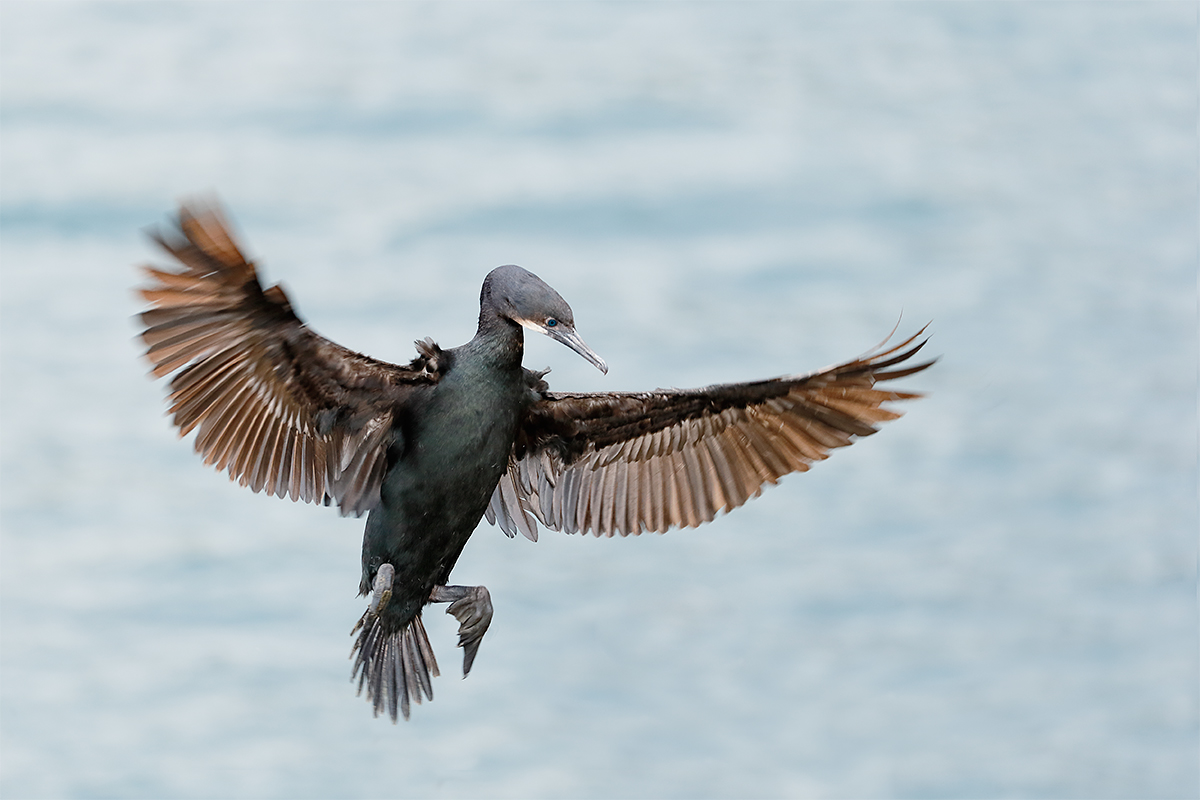
|
|
This image was created on the morning of January 31, 2015 at La Jolla, CA with the hand held Canon EF 100-400mm f/4.5-5.6L IS USM lens (at 400mm) and the Canon EOS-1D X . ISO 1600. Evaluative metering +3 stops off the very light blue water: 1/500 sec. at f/5.6. Rig on the Black Rapid RS-7 Strap.
Central AF point (manual selection)/AI Servo/Shutter button AF as originally framed was squarely on the bird’s neck and was of course active at the moment of exposure. Click on the image to see a larger version.
Image #3: Non-breeding Brandt’s Cormorant landing
|
1/500th Second for Flight?
Many excellent flight photographers recommend a minimum shutter speed of 1/1600 sec. Going back to the days of film, I have always–when I focus accurately–been able to create sharp-on-the eye images at 1/500 sec and in so called “lousy” light I would much rather work at 1/500 sec. at ISO 1600 than at 1/1600 sec. at ISO 5000 (if my math is correct)…. In other words, with most flying birds 1/500 sec. is fast enough to prevent motion blur on the head and to create a sharp eye. 1/1600 sec is great when you have the light to work with.
Here, I love having the blurred wing tips to go along with the sharp eye.
|
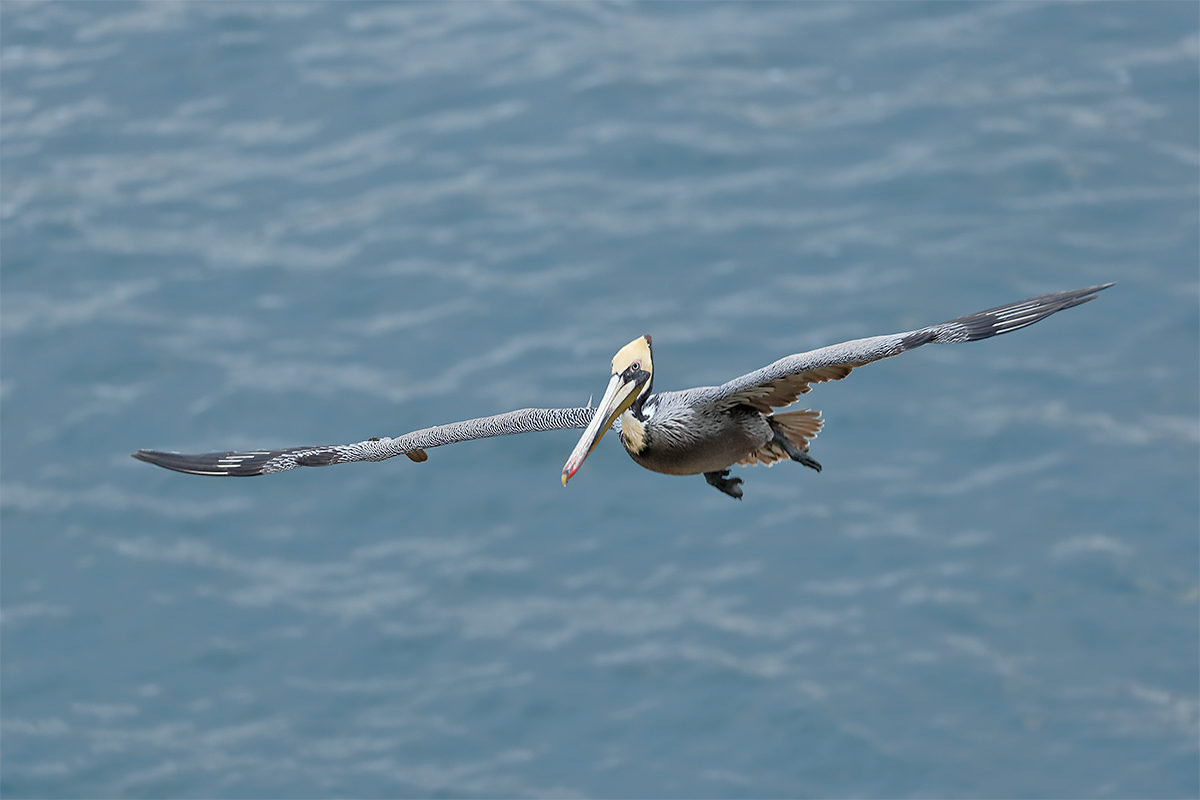
|
|
This image was created on the morning of January 31, 2015 at La Jolla, CA with the hand held Canon EF 100-400mm f/4.5-5.6L IS USM lens (at 400mm) and the Canon EOS-1D X . ISO 1600. Evaluative metering +2 stops off the very light blue water: 1/640 sec. at f/5.0. Rig on the Black Rapid RS-7 Strap.
Central AF point (manual selection)/AI Servo/Shutter button AF as originally framed was squarely on the bird’s neck and was of course active at the moment of exposure. Click on the image to see a larger version.
Image #4: Brown Pelican incoming flight
|
Lousy Light Exposure Question
Why +3 stops off the light blue water for the Brandt’s Cormorant image but only +2 stops off the same light blue water for the Brown Pelican flight image?
The Very Good
My new 100-400 II is exceedingly sharp. Contrast and color are just what I expect from Canon L glass. Except as noted below, the lens handles beautifully and balances perfectly with the 1D X as it will with the 7D II with the 7D Mark II and the Canon BG-E16 Battery Grip for the 7D Mark II.
The Ugly
I always cautioned folks purchasing the original 100-400 to check the smoothness of the push/pull zooming first thing out of the box. I advised that they set the loosey/tighty ring to smooth and turn point the lens toward the ground. Ideally, the lens would extend (zoom out) slowly due to gravity. I never thought that that might be a problem with a twist zoom design. I was wrong. I noticed right off the bat that the zoom was on the tight side. I did not even realize that there was a smooth/tight ring on the 100-400 II and I thought that my left wrist pain might have been clouding my evaluation. When I mentioned it to Patrick Sparkman who had joined me for the morning he suggest that I check the smooth/tight ring. That was a surprise. When I turned the ring all the way to loose I felt that the zoom was still much too tight. I had Patrick try it and he agreed. We compared it to the ease of zooming his Canon EF 70-300mm f/4-5.6 IS USM lens. No contest. The zoom on my brand new lens is way too tight. I will continue to use it until I finish up here on February 8. I would much rather get a new lens than have the present one repaired….
If you own a 100-400 II please leave a comment and let me know how you find the ease of zooming. Bad left wrist or not, one shouldn’t have to struggle to zoom in or out.
|
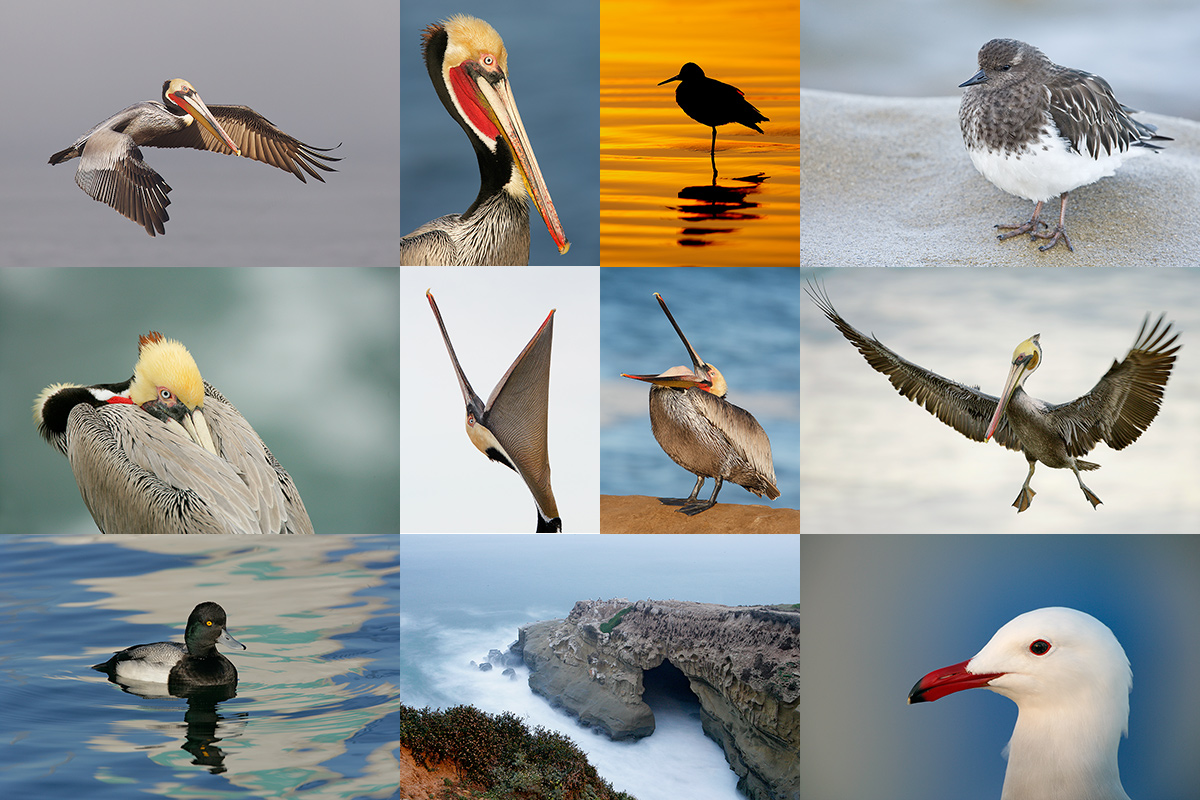
|
|
San Diego rocks!
|
San Diego Natural History Museum Program & The Birds of the World Exhibit
On Saturday morning, February 7, 2015 I will be presenting “A Bird Photographer’s Story” at the San Diego Natural History Museum to kick off the Birds of the World photographic exhibit that will feature the images of about a dozen of the world’s top avian photographers. This program,which is being generously sponsored by the Canon Explorers of Light program, will be free and open to the public. I am proud to say that both Denise Ippolito and I will have images hanging in the show. The exhibit opening is scheduled for later that same day, February 7, 2015. (Times TBA).
Friday Morning Add-on In-the-Field Photo Session: February 6, 2015: $299.
Open to all.
This workshop includes 3 hours of in-the-field pelican photography instruction and brunch with image review and Photoshop instruction.
|
|
|
Images courtesy of and copyright Captain James Shadle (aka Froggie). All of the images here were created at Alafia Banks. Card creation and design by Arthur Morris/BIRDS AS ART.
|
The Hooptie Deux/Roseate Spoonbills and More Instructional Photo-Tour via pontoon boat. 4 1/2 DAYs: $3200. SUN FEB 22 thru lunch on THUR FEB 26, 2015/Strict Limit: 6 photographers/Openings: 1.
Due to a cancellation we now have a single opening on this trip which sold out minutes after being announced.
Meet and greet on the evening of SAT 21 FEB. Two great leaders: Captain James Shadle (Nikon) and Canon Explorer of Light Emeritus Arthur Morris.
Roseate Spoonbill is one of if not the most sought after avian photographic subjects in Florida. They are generally hard to find and somewhat difficult to approach. They are relatively easy to find at Alafia Banks—heck, you can’t miss seeing them, but even there they can on some days be somewhat difficult to approach. On some days we may be able to get ridiculously close to them. The huge incentive to get out to Alafia Banks in mid-February is the chance to photograph this species at the height of its spectacular breeding plumage….
Weather permitting there will be nine boat trips: 5 mornings and 4 afternoons! Mornings to Alafia Banks for spoonbills and Brown Pelicans (with lots of flight photography with the birds likely carrying nesting material), cormorants, ibises (both Glossy and White in breeding plumage. Many of the White Ibises will be sporting their spectacular, distended, red, naked (un-feathered) throat pouches—typically larger in the females. In addition we will get to photograph egrets including Great and Reddish, both in full breeding plumage, shorebirds, and more. There will be lots of flight photography opportunities. Afternoon trips either to Alafia Banks for spoonbills and more or to a more sheltered inland rookery location for a variety of nesting birds. In the event of horrific weather artie will either take the group to Fort DeSoto or will conduct an image review/Photoshop session. This IPT includes five lunches that will be followed by small group image sharing and review and some over-the-shoulder Photoshop instruction.
Important Notes
We stay in Brandon, FL for this IPT. From our hotel there it is is only about 20 minutes to the dock. The plan is for all nine sessions to be by boat. For the Alafia Banks segments, Captain Shadle provides light weight chest waders as much of the photograph will be done while we are standing in fairly shallow water behind our tripods. We help you get in and out of the boat with your gear. This is likely not the best trip for folks with balance problems. Note however that some folks may opt to stay on the boat. They usually have lots of chances for flight photography of spoonbills and other species but are almost always pretty far away from the spoonbills that land.
I recently saw a similar trip advertised two months too late for breeding plumage spoonbills (and two months too late for most of the rest of the species in breeding plumage). 5 Days: $3200. With only four boat trips…. The Hooptie IPT represents an incredible opportunity and with 3 slots filled already the remaining three spots should fill very quickly. We hope that you can join us. Scroll down for registration info.
|
|
|
All of the images here were created at Alafia Banks in the month of February. Images copyright Arthur Morris/BIRDS AS ART. Card creation and design by Arthur Morris/BIRDS AS ART.
|
Hooptie IPT Registration Info
A $449 non-refundable deposit is required to hold your slot for this IPT. Your balance, payable only by check, will be due on 11/22/2014. If you cancel and the trip fills, we will be glad to apply a credit applicable to a future IPT for the full amount less a $100 processing fee. If we do not receive your check for the balance on or before the due date we will try to fill your spot from the waiting list. If your spot is filled, you will lose your deposit. If not, you can secure your spot by paying your balance.
Please print, complete, and sign the form that is linked to here and shoot it to us along with your deposit check (made out to “Arthur Morris.”) You can also leave your deposit with a credit card by calling the office at 863-692-0906. If you register by phone, please print, complete and sign the form as noted above and either mail it to us or e-mail the scan. If you have any questions, please feel free to contact me via e-mail.
Facebook
Be sure to like and follow BAA on Facebook by clicking on the logo link upper right. Tanks a stack!
Support the BAA Blog. Support the BAA Bulletins: Shop B&H here!
We want and need to keep providing you with the latest free information, photography and Photoshop lessons, and all manner of related information. Show your appreciation by making your purchases immediately after clicking on any of our B&H or Amazon Affiliate links in this blog post. Remember, B&H ain’t just photography!
…..
Amazon.com
Those who prefer to support BAA by shopping with Amazon may use this link:
Amazon Canada
Many kind folks from north of the border, eh, have e-mailed stating that they would love to help us out by using one of our affiliate links but that living in Canada and doing so presents numerous problems. Now, they can help us out by using our Amazon Canada affiliate link by starting their searches by clicking here. Many thanks to those who have written.
Typos
In all blog posts and Bulletins, feel free to e-mail or to leave a comment regarding any typos or errors. Just be right :).
January 31st, 2015 What’s Up?
I scouted La Jolla this morning, this being Friday, January 30. My very own 100-400 II arrived via Fed-Ex today. I began working on the new exercises prescribed by Melvin Tann. And I had my annual check-up with good friend Cliff Oliver. I meet most of the group tomorrow evening. One participant has a family function to attend, and one couple had their flight changed by Delta.
This blog post took about 4 hours to assemble. It was published at 9:12pm PT, 12:12am ET on Saturday from my hotel room in San Diego. I still have many exciting new images, tales, and lessons from my recently concluded Southern Oceans trip to share with you here over the course of the next few weeks and am looking forward to doing just that. Do consider joining me in South Georgia next October for the trip of a lifetime. See here for the complete details.
This Just In
Register now for the South Georgia trip and receive a $242 on your return airfare. Please e-mail for details.
Please Remember to use our Affiliate Links 🙂
To show your appreciation for my continuing efforts here, we ask, as always, that you use our the B&H and Amazon affiliate links on the right side of the blog for all of your purchases. B&H Is recommended for you major photography gear purchases, Amazon for your household, entertainment, and general purpose stuff. Please check the availability of all photographic accessories in the BIRDS AS ART Online Store, especially the Mongoose M3.6 tripod heads, Gitzo tripods, Wimberley heads and plates, LensCoats and accessories, and the like. We sell only what I have used, have tested, and can depend on. We will not sell you junk. We know what you need to make creating great images easy and fun. And we are always glad to answer your gear questions via e-mail. I just learned that my account was suspended during my absence; it should be up and running by Monday at the latest.
I would of course appreciate your using our B&H affiliate links for all of your major gear, video, and electronic purchases. For the photographic stuff mentioned in the paragraph above we, meaning BAA, would of course greatly appreciate your business. Here is a huge thank you to the many who have been using our links on a regular basis and visiting the BAA Online store as well.
|
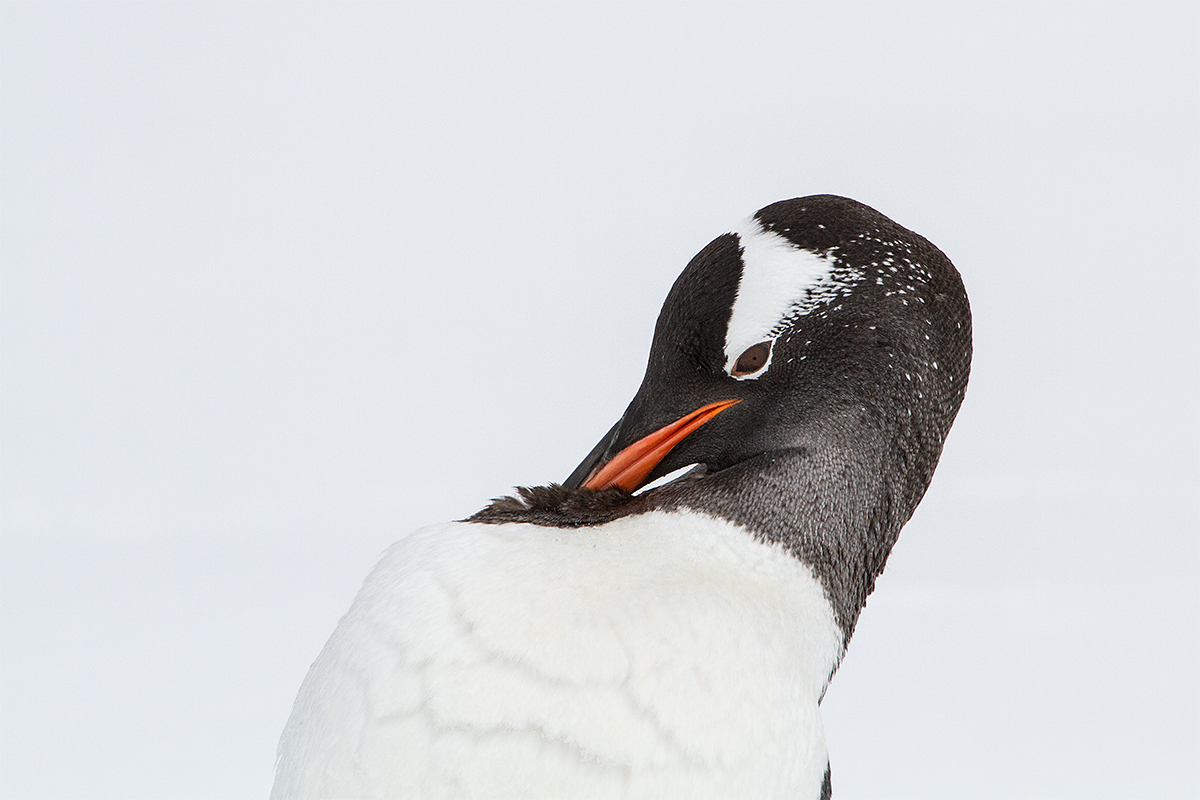
|
|
This image was created in cloudy conditions in early January, 2015 with the hand held, original version Canon 100-400mm L IS lens (at 365mm)–now replaced by the Canon EF 100-400mm f/4.5-5.6L IS II USM lens and the EOS-7D (now replaced by the
Canon EOS 7D Mark II). ISO 1600. Evaluative metering +2 stops: 1/1600 sec. at f/13 in Manual mode.
One sensor below the central sensor/AI Servo/Surround Shutter button AF was active at the moment of exposure. The active sensor was on the center of the bird’s bill.
Gentoo Penguin preening. Image courtesy of Sally-Sue South and copyright 2015 in the name of the artist.
|
Today’s Images
All of today’s images were created by Sally-Sue South of Montreal, Canada. (Note that the name has been changed to protect the innocent.) All were created with the original (much-maligned) 100-400 L IS and the much-maligned EOS-7D.
The Beginning
After speaking with group member Anil Sud, Sally-Sue approached me on Day Two of the Southern Oceans Expedition and said, “I am on this trip by myself. I would like learn photography. I know nothing. Can I be part of your group?” I quickly learned that Sally-Sue was very eager to learn and that her self-assessment was quite accurate. As it turns out, Sally Sue was Canada’s third ever female rocket scientist. Being a private person she did not want me to share that fact with the rest of the boys and girls. But by the end of the voyage everyone aboard knew that Sally-Sue Smith was indded a retired rocket scientist. Being recently retired she decided that she wanted to learn photography. As it turned out, lucky me….
“Sure,” I said, “I will see you on the stern with your gear in 20 minutes.
|
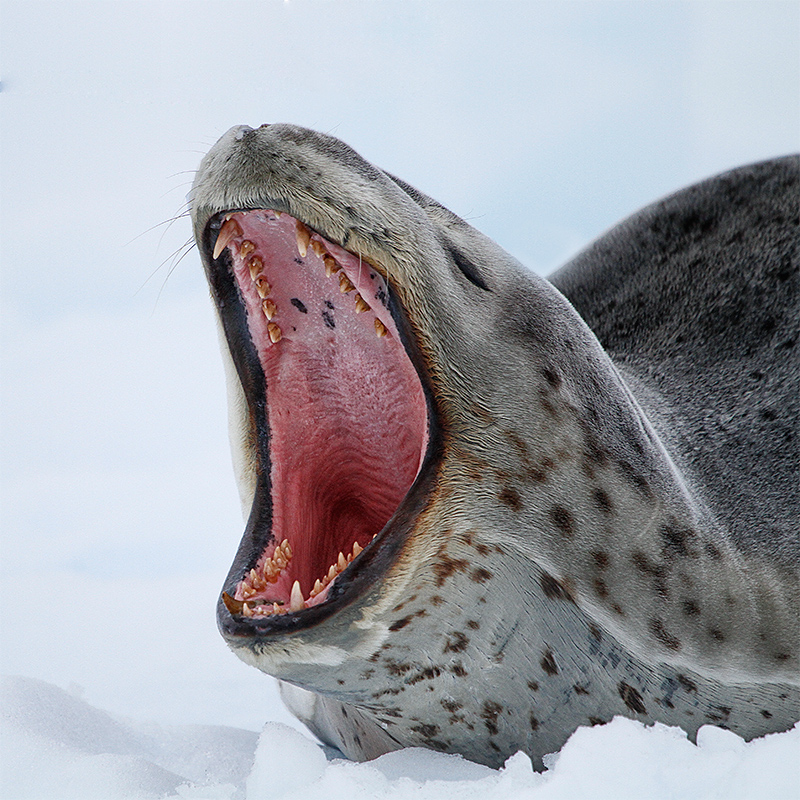
|
|
This image was created in cloudy conditions on January 3, 2015 with the hand held, original version Canon 100-400mm L IS lens at 400mm–now replaced by the Canon EF 100-400mm f/4.5-5.6L IS II USM lens and the EOS-7D (now replaced by the
Canon EOS 7D Mark II). ISO 800. Evaluative metering +2/3 stop: 1/800 sec. at f/5.6 in Manual mode.
Central sensor/Expand/AI Servo Shutter button AF as framed was active at the moment of exposure.
Leopard Seal yawning. Image courtesy of Sally-Sue South and copyright 2015 in the name of the artist.
|
Learning the Basics
Nearly all of our landings were so fantastic that most times the folks in my group hit the beach and disappeared. At times, Sally-Sue wandered off on her own, but she tagged along with me quite a bit. She needed to learn everything from the bottom up. AI Servo for moving subjects. One-Shot and re-compose for static subjects. Point your shadow at the bird on sunny days. Move the AF sensor for stronger image designs. Work in Manual mode. Check the histogram. Learn to expose to the right. Check for blinkies. Work in Manual mode. Rocket-scientist or not, the same lessons needed to be re-visited and re-taught. And then re-visited and re-taught again. And again.
Rocket scientists are generally quite bright. Sally-Sue was closer to bring brilliant but she was so enthralled with the penguins and the seals and the albatrosses and the ice and the caracaras that she forgot about the photography basics. Her biggest failing? Learning to make a single image and then check the histogram….
|
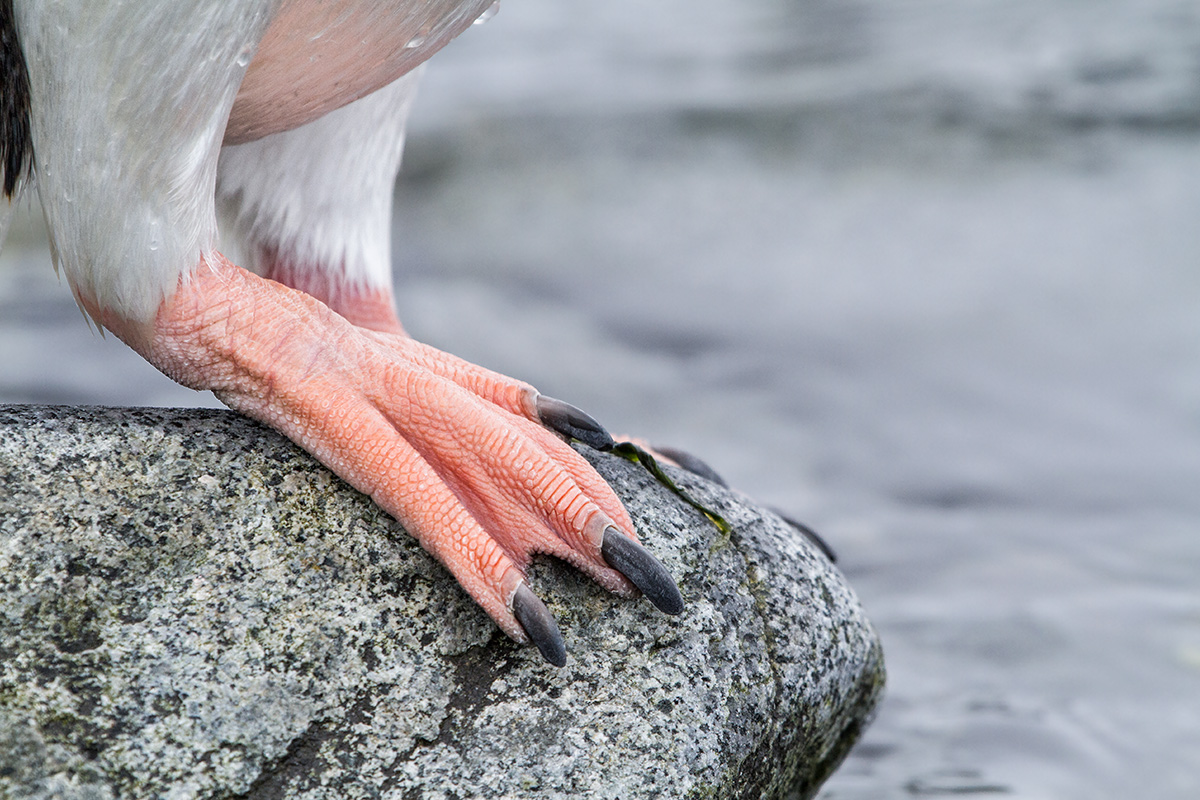
|
|
This image was created in cloudy conditions on January 4, 2015 with the hand held, original version Canon 100-400mm L IS lens (at 340mm)–now replaced by the Canon EF 100-400mm f/4.5-5.6L IS II USM lens and the EOS-7D (now replaced by the
Canon EOS 7D Mark II). ISO 800. Evaluative metering +2/3 stop: 1/640 sec. at f/8 in Manual mode.
Central sensor AI Servo/Expand/Shutter button AF as framed was active at the moment of exposure.
Gentoo penguin feet close-up. Image courtesy of Sally-Sue South and copyright 2015 in the name of the artist.
|
The 0.0000014% Keeper Rate
When I first started looking at Sally-Sue’s images, her success rate really was miniscule. Mis-framed images. Gross under- and over-exposures. Head and feet cut off. But most all of them were sharp. And as the days passed by, she wound up making some nice images. It was rewarding to see her determination starting to pay off. At times she reverted to her old self after becoming engrossed in the beauty of the wildlife and the scenery, but more and more often she began remembering to check her exposure and actually began moving the AF sensor around. Oh how she loved the central sensor at first…
|
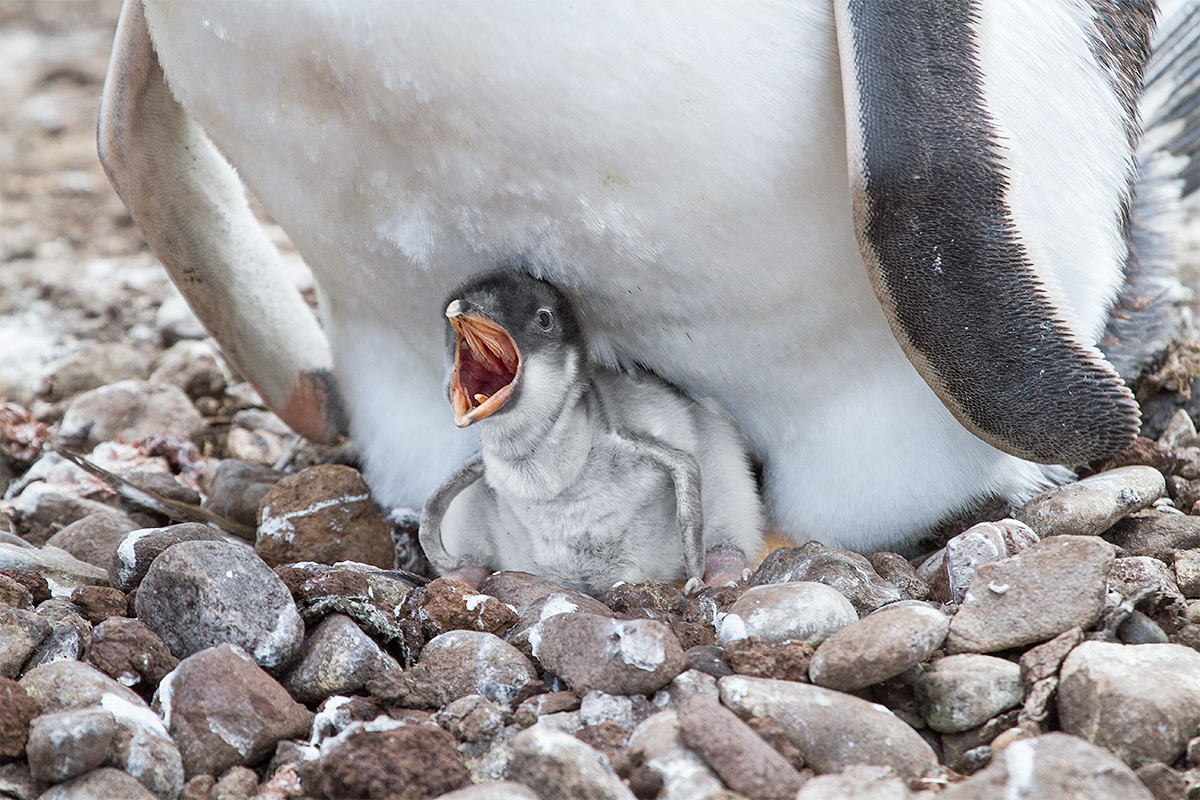
|
|
This image was created in cloudy bright conditions at one minute after noon on January 5, 2015 at Neko Harbor, Antarctica with the hand held original version Canon 100-400mm L IS lens (now replaced by the Canon EF 100-400mm f/4.5-5.6L IS II USM lens and the EOS-7D (now replaced by the
Canon EOS 7D Mark II). Evaluative metering +1/3 stop: 1/500 sec. at f/8 in Manual mode was somewhat of an underexposure.
Central sensor (manual selection) Shutter button AF as framed was active at the moment of exposure.
Gentoo Penguin chick in nest with adult. Image courtesy of Sally-Sue South and copyright 2015 in the name of the artist.
|
Independence, at least for a while…
While I opted to spend the entire afternoon of January 4 at Jougla Point, Antarctica, Sally-Sue visited briefly, never made it up to the shag colony where I spent several hours, and took a zodiac to Port Lockroy. While on the boardwalk to the post office there were lots of nesting gentoos pretty much at eye level.
All in all she did very nicely on her own and her exposures were not bad.
|
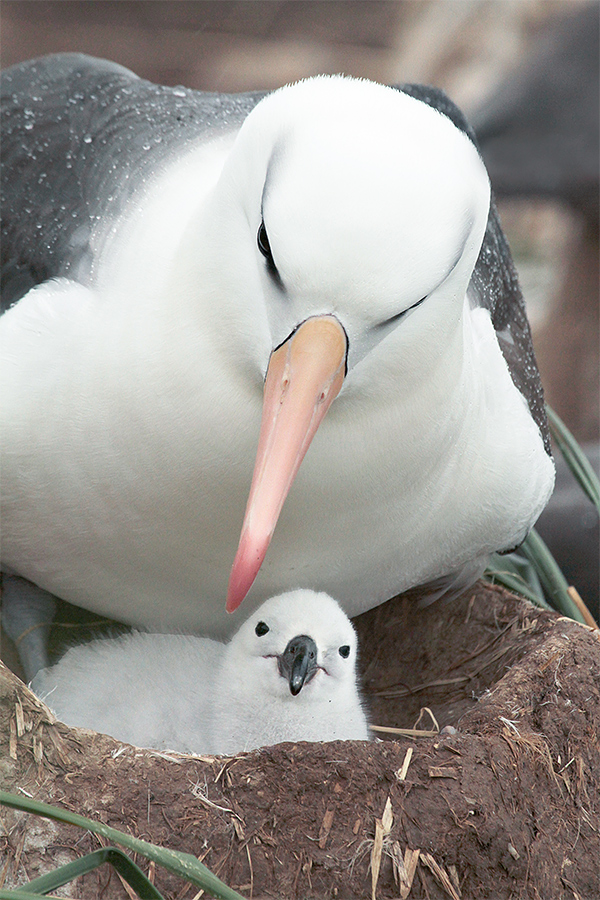
|
|
This image was created as a JPEG (the first four images were from RAW files) in cloudy , drizzly conditions on December 16, 2014 at Steeple Jason in the Falklands with the hand held, original version Canon 100-400mm L IS lens (at 400mm)–now replaced by the Canon EF 100-400mm f/4.5-5.6L IS II USM lens and the EOS-7D (now replaced by the
Canon EOS 7D Mark II). ISO 800. Evaluative metering +1 stop: 1/400 sec. at f/10 in Manual mode was close to 2 stops under-exposed.
Two sensors below the central sensor (manual selection) Shutter button AF was active at the moment of exposure. The active sensor was exactly where it should have been, squarely on the chick’s face.
|
Well Under-exposed JPEG
This image, from the beginning of the trip, was a big underexposure. But oh so cute. I was surprised that with just a few minutes in Photoshop that the JPEG was so easily optimized. Note that any 100-400 with any 7D gives you effective 640mm that can be effectively hand held by most folks. Including Sally-Sue.
The Lens Story
Several days into the trip Sally-Sue’s 100-400 was damaged beyond repair after being mis-handled on a landing. It had not been well padded enough. As you might surmise, it can be tough to get a new lens in the middle of the Southern Ocean. Expedition leader Hugh Rose had received his 100-400 II at an airport en-route to South America. He kindly sold his old 100-400 to Sally-Sue for the very fair price of $900 US. The story, however, does not end there. The captain of the Ortelius expressed an interest in photography. At the end of the trip, after talking to Sally-Sue, Hugh bought the lens back from her for $900 and sold it to the captain for the same price. As it turned out, Sally-Sue enjoyed the cheapest-ever lens rental.
After the trip Sally-Sue purchased the new 100-400 II and the 7D II. Both using my Amazon Canada link. Many thanks S-S S.
Sally-Sue’s Thoughts
After the trip Sally-Sue thanked me for my help. She said that she really enjoyed the camraderie of the group and that she was amazed by the Cheesemans’ expedition staff. She had been on a previous trip to Antarctica on which landings were cancelled on a whim. “The staff was amazing. They worked hard to get us in the right place at the right time in the right light for as long as possible. No matter the weather or the surf conditions. And the zodiac drivers were brilliant; they actually cared about the photographers and about getting the zodiacs in the exact right spot. Tim Carr, Hugh, Ron (Niebrugge), Greg (LaHaie), and Joe (Kaplan) were all great. And so, so knowledgable.”
She continued, “Best of all, was that my skills improved so much by the end of the trip that I had the courage to put five images in the Antarctica slide show. And everyone loved them.”
|
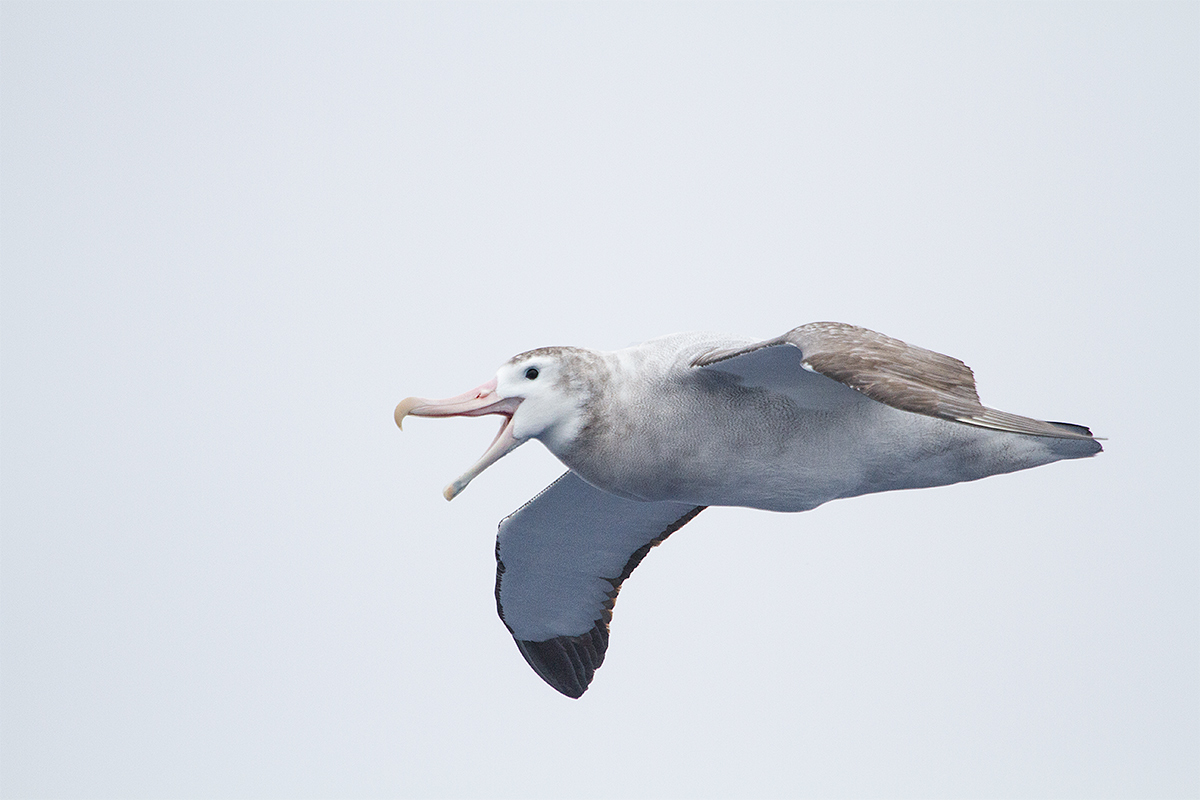
|
|
This image was created in cloudy conditions after lunch on January 7, 2015 in the Drake Passage with the hand held original version Canon 100-400mm L IS lens (at 380mm) now replaced by the Canon EF 100-400mm f/4.5-5.6L IS II USM lens and the EOS-7D (now replaced by the
Canon EOS 7D Mark II). Evaluative metering +1 1/3 stop: 1/2500 sec. at f/5.6 in Manual mode was somewhat of an underexposure. Sally-Sue did not listen 🙂
Central sensor (manual selection) Shutter button AF as framed was active at the moment of exposure.
Immature Wandering Albatross in flight from the ship. Image courtesy of Sally-Sue South and copyright 2015 in the name of the artist.
|
Kicking the Teacher’s Butt
My Drake Passage good weather karma held for yet another crossing. Sally-Sue created this image while I was standing right next to her. I missed the yawn. Nobody could recall ever seeing an image of a Wandering Albatross in flight with its bill open. Note: this is a young bird. Kudos to Sally-Sue for zooming out, for getting a sharp image in difficult conditions, and making a great image to end the trip.
I shared these six images with Patrick and Robin Sparkman last night at dinner. Patrick said,”Those are great Artie.” “Thanks,” I said, They are not mine. The were all created by a beginning student. When she came aboard she did not know which end of the lens to point at the bird. I would be proud to have any of them in my collection.”
What Can BIRDS AS ART Do for You?
Whether you are a stone cold beginner, or an experienced professional, we can teach you to create better images.
|
|
|
Do consider joining me for a once in a lifetime trip to the Galapagos archipelago in July, 2015.
|
GALAPAGOS Photo Cruise of a Lifetime IPT/The Complete Galapagos Photographic Experience. July 14-28, 2015 on the boat. 13 FULL and two half-days of photography: $12,499. Limit 14 including the leader:/Openings: 2.
I need to put one more happy camper on the boat. If you are serious about joining us and would like to save some big bucks, please get in touch via e-mail.
My two-week Galapagos Photo-Cruises are without equal. The world’s best guide, a killer itinerary, a great boat (the Samba), and the best leader with eight Galapagos cruises under his belt. Pre-trip and pre-landing location-specific gear advice. In-the-field photo instruction and guidance. Jeez, I almost forgot: fine dining at sea!
The great spots that we will visit include Tower Island (including Prince Phillips Steps and Darwin Bay), Hood Island (including Punta Suarez, the world’s only nesting site of Waved Albatross, and Gardner Bay)—each of the preceding are world class wildlife photography designations that rank right up there with Antarctica, Africa, and Midway. We will also visit Fernandina, Puerto Ayora for the tortoises, Puerto Egas—James Bay, North Seymour and Isla Lobos for nesting Blue-footed Booby (most years), South Plaza, Floreana, and Urbina Bay, all spectacular in their own right. We visit every great spot on a single trip. Plus tons more. And there will he lots of opportunities to snorkel on sunny mid-days for those like me who wish to partake.
We will be the first boat on each island in the morning and the last boat to leave each island every afternoon. If we are blessed with overcast weather, we will often spend 5-6 hours at the best sites. And as noted above, mid-day snorkeling is an option on most sunny days depending on location. Note: some of the walks are a bit strenuous. Great images are possible on all landings with a hand held 70-200mm lens and a 1.4X teleconverter. I bring a longer lens ashore on most landings as that fits my style. I generally work with either the Canon 300mm f/2.8L IS or the Canon 200-400mm f/4 L IS with Internal Extender.
Do know that there is a NatureScapes Galapagos trip: one week for $8495. Thus, my trip represents a tremendous value; why go all that way and miss half of the great photographic locations?
The Logistics
Fly to Guayacil, Ecuador on July 12, 2015. Travel insurance/rest day: July 13 (We may or may not offer a photo outing on the 13th). Fly to the archipelago on July 14 and board the Samba. Get off the boat on July 28. Fly to Guayacil that afternoon. Fly home on the early morning of July 29 unless you are staying on or going elsewhere (or catching a red-eye flight on the evening of the 28th).
$12,499 includes just about everything: all transfers, guide and park fees, all food on the boat, transfers and ground transportation, your flights to the archipelago, and three nights (double occupancy) in a top notch hotel in Guayacil. If you are good to go, a non-refundable deposit of $5,000 per person is due immediately. The second payment of $4,000 is not due until 11/1/14. The final payment of $3449 per person will be due on 2/1/15. A $200 discount will be applied to each of the balances for couples or friends who register at the same time.
Purchasing travel insurance within 2 weeks of our cashing your deposit check is strongly recommended. On my past two cruises a total of 5 folks were forced to cancel less than one week prior to the trip. My family and I use Travel Insurance Services and strongly recommend that you do the same.
Not included: your round trip airfare from your home to and from Guayacil, beverages on the boat, phone calls, your meals in Guayacil, personal items, and a $600/person cash tip for the crew and the guide—this works out to roughly $40/day to be shared by the 7 folks who will be waiting on us hand and foot every day for two weeks. The service is so wonderful that many folks choose to tip extra.
Please e-mail for the complete itinerary and for additional info and images. Please cut and paste “Galapagos 2015 Info Please) into the Subject line.
Facebook
Be sure to like and follow BAA on Facebook by clicking on the logo link upper right. Tanks a stack!
Support the BAA Blog. Support the BAA Bulletins: Shop B&H here!
We want and need to keep providing you with the latest free information, photography and Photoshop lessons, and all manner of related information. Show your appreciation by making your purchases immediately after clicking on any of our B&H or Amazon Affiliate links in this blog post. Remember, B&H ain’t just photography!
…..
Amazon.com
Those who prefer to support BAA by shopping with Amazon may use this link:
Amazon Canada
Many kind folks from north of the border, eh, have e-mailed stating that they would love to help us out by using one of our affiliate links but that living in Canada and doing so presents numerous problems. Now, they can help us out by using our Amazon Canada affiliate link by starting their searches by clicking here. Many thanks to those who have written.
Typos
In all blog posts and Bulletins, feel free to e-mail or to leave a comment regarding any typos or errors. Just be right :).
Facebook
Be sure to like and follow BAA on Facebook by clicking on the logo link upper right. Tanks a stack!
Support the BAA Blog. Support the BAA Bulletins: Shop B&H here!
We want and need to keep providing you with the latest free information, photography and Photoshop lessons, and all manner of related information. Show your appreciation by making your purchases immediately after clicking on any of our B&H or Amazon Affiliate links in this blog post. Remember, B&H ain’t just photography!
…..
Amazon.com
Those who prefer to support BAA by shopping with Amazon may use this link:
Amazon Canada
Many kind folks from north of the border, eh, have e-mailed stating that they would love to help us out by using one of our affiliate links but that living in Canada and doing so presents numerous problems. Now, they can help us out by using our Amazon Canada affiliate link by starting their searches by clicking here. Many thanks to those who have written.
Typos
In all blog posts and Bulletins, feel free to e-mail or to leave a comment regarding any typos or errors. Just be right :).
January 30th, 2015 An Amazing Morning
After getting to bed on the late side (for me) after my long east to west travel day I woke up at about 3:30am Pacific time. Still on eastern time, I guess. For surely the first time in 44 years of visiting San Diego, I “slept in.” I felt a tiny bit of sore throat on Wednesday evening and did not want to get sick again so I did some work, listened to lots of You Tube music, and read a bit. As I said “Amazing.” At least for me.
On You Tube:
They’re Playing Our Song [Original Broadway Cast recording/full album). I saw this twice on the Big White Way, once with Robert Klein and Luci Arnaz.
“They’re Playing Our Song” from the 1979 Tony Awards here. Robert Klein is crazy nuts and lovable but the irrepressible Luci Arnaz steals the scene with her dancing, her engergy, and her smile. And her dress.
LES MISERABLES 10th Anniversary Dream Cast. After the finale, 17 Jean Valjeans from various worldwide productions come on stage and sing snippets from One Day More before joining together for a last, moving, powerful rendition. I was privileged to see Les Mis three times on Broadway.
This blog post took about 1 1/2 hours to assemble. It was published at 10:08pm PT, 1:08am ET on Friday from my hotel room in San Diego. I still have many exciting new images, tales, and lessons from my recently concluded Southern Oceans trip to share with you here over the course of the next few weeks and am looking forward to doing just that. Do consider joining me in South Georgia next October for the trip of a lifetime. See here for the complete details.
Please Remember to use our Affiliate Links 🙂
To show your appreciation for my continuing efforts here, we ask, as always, that you use our the B&H and Amazon affiliate links on the right side of the blog for all of your purchases. B&H Is recommended for you major photography gear purchases, Amazon for your household, entertainment, and general purpose stuff. Please check the availability of all photographic accessories in the BIRDS AS ART Online Store, especially the Mongoose M3.6 tripod heads, Gitzo tripods, Wimberley heads and plates, LensCoats and accessories, and the like. We sell only what I have used, have tested, and can depend on. We will not sell you junk. We know what you need to make creating great images easy and fun. And we are always glad to answer your gear questions via e-mail. I just learned that my account was suspended during my absence; it should be up and running by Monday at the latest.
I would of course appreciate your using our B&H affiliate links for all of your major gear, video, and electronic purchases. For the photographic stuff mentioned in the paragraph above we, meaning BAA, would of course greatly appreciate your business. Here is a huge thank you to the many who have been using our links on a regular basis and visiting the BAA Online store as well.
|
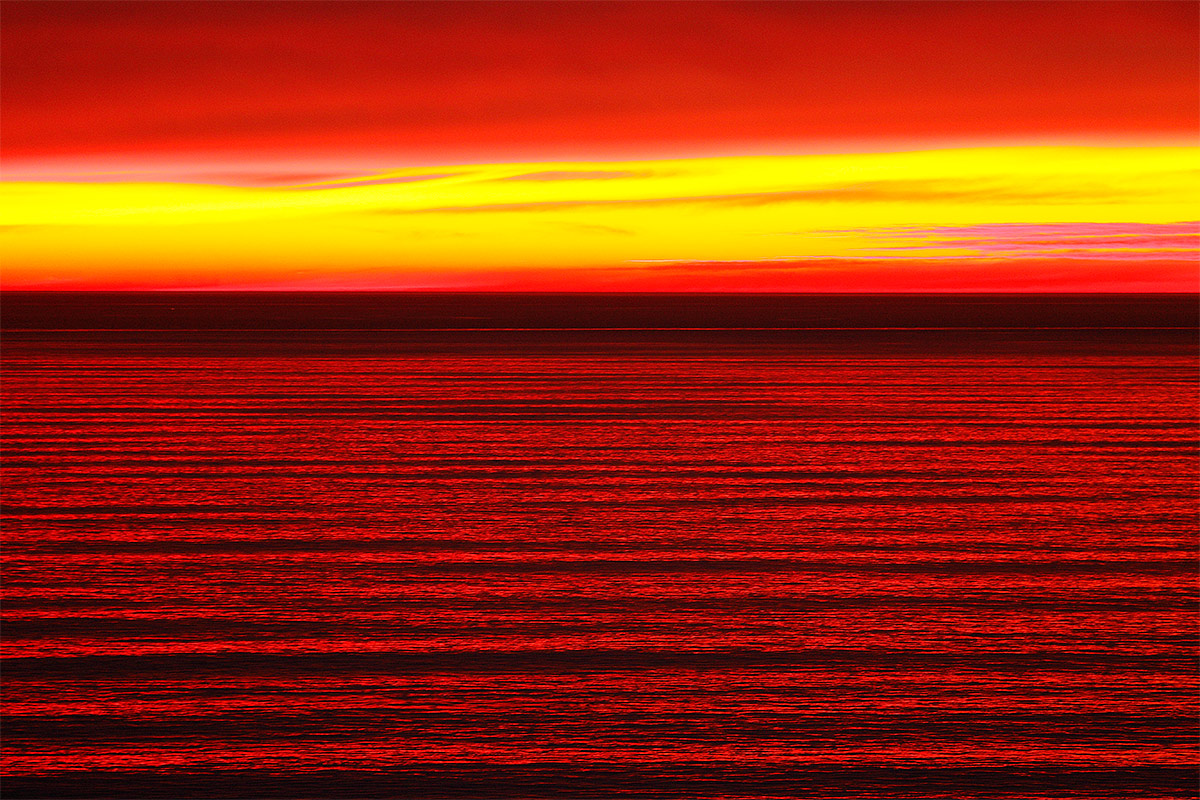
|
|
This image was created on January 29, 2015 at 5:36pm at the Southbound Interstate 5 Camp Pendleton Viewpoint with the hand held Canon EF 70-200mm f/2.8L IS II USM lens (at 200mm) and the Canon EOS 7D Mark II. ISO 400. Evaluative metering at zero: 1/30 sec. at f/2.8 in Av mode. WB = 8800K.
Central sensor/AI Servo Surround/Rear Focus AF 1/2 way into the frame and re-compose. Click here to see the latest version of the Rear Focus Tutorial. Click on the image to see a larger version.
|
The Situation
I drove from San Diego up to Santa Ana, CA and spent three hours with exercise physiologist Melvin Tann. Melvin works regularly on more than a dozen NFL players and many other notable professional athletes from a variety of sports. I pulled off Interstate 5 and stopped for a short nap before heading south again. It had been cloudy all day. At one point I glanced to my right and was shocked to see that the entire western sky was a glowing yellow-orange. I thought about getting off, driving west, and trying to get out to the beach. But alas,I kept driving. As I drove, the colors were becoming more and more intense. And I was more and more wishing that I had headed for some unknown beach.
As I-5 jogged west and then south the Pacific came into view on my right. And a spectacular view it was. The vast orange sky had dissipated but a swath of light sky just above the distant horizon left the ocean blood red. And then finally: Viewpoint: 2 miles. I parked, grabbed the 70-200, could not find my glasses, and used the camera’s lamp to set Av wide open. Plus 1/3 stop left some blinkies in the brightest portions of the sky so I went down to 0. I braced the lens against a signpost to make the images in this series as sharp as possible at 1/30 sec. The image above was the best of that lot.
|
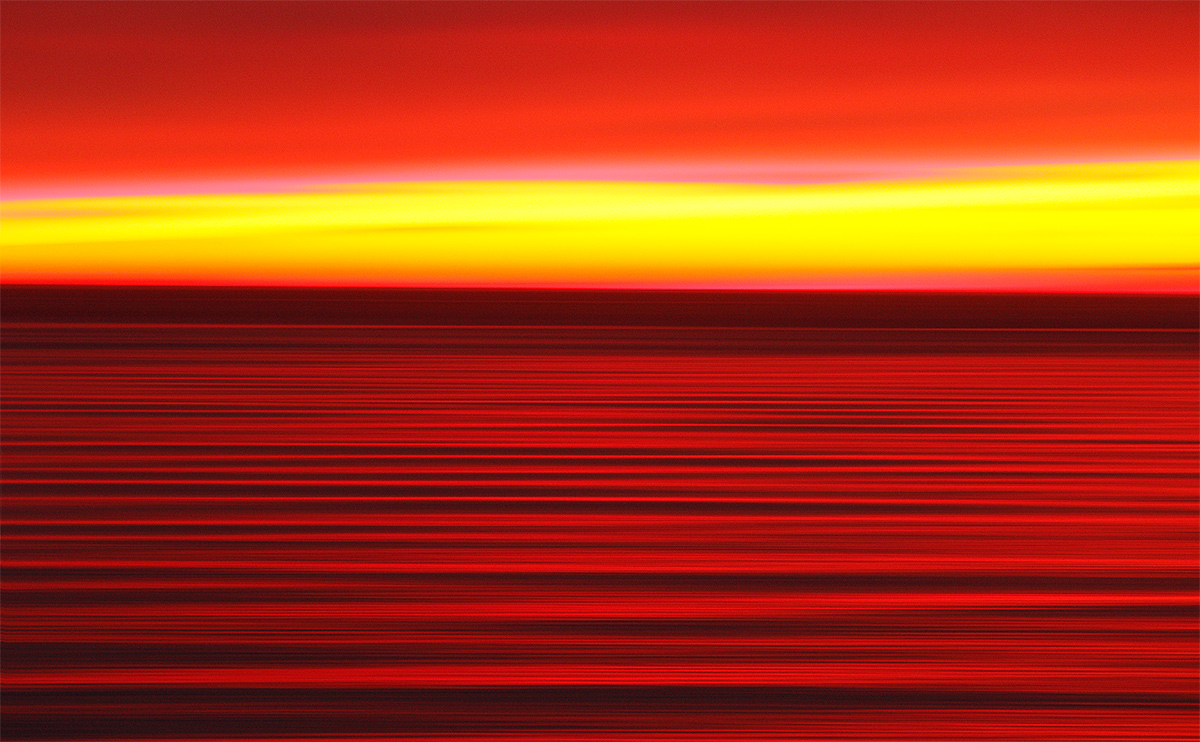
|
|
This image was created at 5:38pm on January 29, 2015 at the Southbound Interstate 5 Camp Pendleton Viewpoint with the hand held Canon EF 70-200mm f/2.8L IS II USM lens (at 200mm) and the Canon EOS 7D Mark II. ISO 400. Evaluative metering +2/3 stop: 1/6 sec at f/4.5 in Av mode. WB = 8800K.
Central sensor/AI Servo Surround/Rear Focus AF 1/3 of the way into the frame, re-compose, and pan left to right. Click here to see the latest version of the Rear Focus Tutorial. Click on the image to see a larger version.
|
Pan Blur
I wanted a slower shutter speed so I simply dialed in a smaller aperture without bothering to note the new shutter speed. Due to the blend blur effect I was able to go 2/3 stop lighter without getting any blinkies. I tried to pan as smoothly as possible. I made about a dozen images. Only one worked. In retrospect I should have been on a tripod with the Mongoose M3.6, locked the vertical pan, and then panned left to right. This would have assured the distinct streak lines that I got only in this image. Excuses: I was in a big rush as the light was fading fast and the colors were so beautiful that I was not thinking clearly.
Your Favorite?
Which image do you like best, the sharp one or the pan blur? Be sure to let us know why.
|
|
|
Learn the secrets of creating contest winning images in our “A Guide to Pleasing Blurs.”
|
A Guide to Pleasing Blurs
In our A Guide to Pleasing Blurs by Denise Ippolito and yours truly, we discuss just about every technique ever used mankind to create pleasingly blurred image. Ninety-nine point nine percent of pleasing blurs are not happy accidents. You can learn pretty much everything that there is to know about creating them in this instructive, well written, easy to follow guide.
|
|
|
Card and design by Denise Ippolito. Scroll down here to see lots more of Denise’s Palouse images.
|
Palouse #1. The Palouse A Creative Adventure/BIRDS AS ART Instructional Photo-Tour (IPT)/Eastern Washington State. May 29-June 2, 2015/5 Full Days: $1699/Limit 12 photographers/Sold Out with a wait list.
|
|
|
Card and design by Arthur Morris/BIRDS AS ART.
|
The Palouse A Creative Adventure/BIRDS AS ART Instructional Photo-Tour (IPT)/Eastern Washington State. June 5-9, 2015/5 Full Days: $1699/Limit 12 photographers/Openings 3.
Rolling farmlands provide a magical patchwork of textures and colors, especially when viewed from the top of Steptoe Butte where we will likely enjoy spectacular sunrises and possibly a nice sunset or two. We will photograph grand landscapes and mini-scenics of the rolling hills and farm fields. We will take you to some really neat old abandoned barns and farmhouses in idyllic settings. There is no better way to improve your compositional and image design skills and to develop your creativity than to join us for this trip. Two great leaders: Denise Ippolito and Arthur Morris. Photoshop and image sharing sessions when we have the time and energy…. We get up early and stay out late and the days are long.
After 6 days of back-breaking scouting work in early June 2014 we found all of the iconic locations and, in addition, lots of spectacular new old barns and breath-taking landforms and views. We will teach you what makes one situation prime and another seemingly similar one a waste of your time.
What’s included: In-the-field instruction, guidance, lessons, and inspiration, our newfound but very extensive knowledge of the area, all lunches, motel lobby breakfasts, and Photoshop and image sharing sessions when possible.
You will learn and hone both basic and advanced compositional and image design skills. You will learn to get the right exposure every time. You will learn to develop your creative eye. You will learn the basics of HDR (high dynamic range) photography. You will learn a variety of in-camera creative techniques; Canon 5D Mark III bodies are a plus. And most importantly you will learn to see the situation and to create a variety of top-notch images. Do see both of our blogs for lots more on that in the coming weeks. You will learn how the quality and direction of light combine to determine the success of your images. And–please don’t gasp–we will be working quite a bit with sidelight when creating landscapes. Lastly, we will be touching on infrared photography.
A non-refundable $699 deposit is due now. The balance will be due on January 29, 2015. If you cancel and the trip fills, we will be glad to apply a credit applicable to a future IPT for the full amount less a $100 processing fee. If we do not receive your check for the balance on or before the due date we will try to fill your spot from the waiting list. Whether or not your spot is filled, you will lose your deposit. If not, you can secure your spot by paying your balance.
With the unpredictable nature of the photography business, I have not said this often lately, but it seems quite likely that this one will fill up very quickly. Please let me know via e-mail that you will be joining us. Then you can either call Jim or Jennifer at 863-692-0906 during business hours or send us a check; the latter is preferred.
Please send your deposit check made out to “Arthur Morris” to us at Arthur Morris/BIRDS AS ART, PO Box 7245, Indian Lake Estates, FL, 33855. If you have any questions, please feel free to contact me via e-mail.
Facebook
Be sure to like and follow BAA on Facebook by clicking on the logo link upper right. Tanks a stack!
Support the BAA Blog. Support the BAA Bulletins: Shop B&H here!
We want and need to keep providing you with the latest free information, photography and Photoshop lessons, and all manner of related information. Show your appreciation by making your purchases immediately after clicking on any of our B&H or Amazon Affiliate links in this blog post. Remember, B&H ain’t just photography!
…..
Amazon.com
Those who prefer to support BAA by shopping with Amazon may use this link:
Amazon Canada
Many kind folks from north of the border, eh, have e-mailed stating that they would love to help us out by using one of our affiliate links but that living in Canada and doing so presents numerous problems. Now, they can help us out by using our Amazon Canada affiliate link by starting their searches by clicking here. Many thanks to those who have written.
Typos
In all blog posts and Bulletins, feel free to e-mail or to leave a comment regarding any typos or errors. Just be right :).
January 29th, 2015 What’s Up?
Up at 2:45am. Left the house at 5:30am. After getting TSA-Pre (checked-in) in Orlando my two flights went as smoothly as possible. I landed in San Diego at about 1:30pm. Unpacked, took a very short nap, answered some e-mails, and had dinner with friends Patrick and Robin Sparkman; Patrick loaned me his 600 II. Then a quick stop at Trader Joe’s for breakfast and a case of spring water. I was back in the room just after 9:30 Pacific time, 12:30am in Florida. I may sleep in tomorrow…. IAC, I decided to complete this short blog post before I hit the sack.
Today’s blog post took about 30 minutes to put together; talk about a day off. This one was published at 10:14pm PT, 1:14am ET on Thursday from my hotel room in San Diego. I still have many exciting new images, tales, and lessons from my recently concluded trip to share with you here over the course of the next few weeks and am looking forward to doing just that. Do consider joining me in South Georgia next October for the trip of a lifetime. See here for the complete details.
Please Remember to use our Affiliate Links 🙂
To show your appreciation for my continuing efforts here, we ask, as always, that you use our the B&H and Amazon affiliate links on the right side of the blog for all of your purchases. B&H Is recommended for you major photography gear purchases, Amazon for your household, entertainment, and general purpose stuff. Please check the availability of all photographic accessories in the BIRDS AS ART Online Store, especially the Mongoose M3.6 tripod heads, Gitzo tripods, Wimberley heads and plates, LensCoats and accessories, and the like. We sell only what I have used, have tested, and can depend on. We will not sell you junk. We know what you need to make creating great images easy and fun. And we are always glad to answer your gear questions via e-mail. I just learned that my account was suspended during my absence; it should be up and running by Monday at the latest.
I would of course appreciate your using our B&H affiliate links for all of your major gear, video, and electronic purchases. For the photographic stuff mentioned in the paragraph above we, meaning BAA, would of course greatly appreciate your business. Here is a huge thank you to the many who have been using our links on a regular basis and visiting the BAA Online store as well.
|
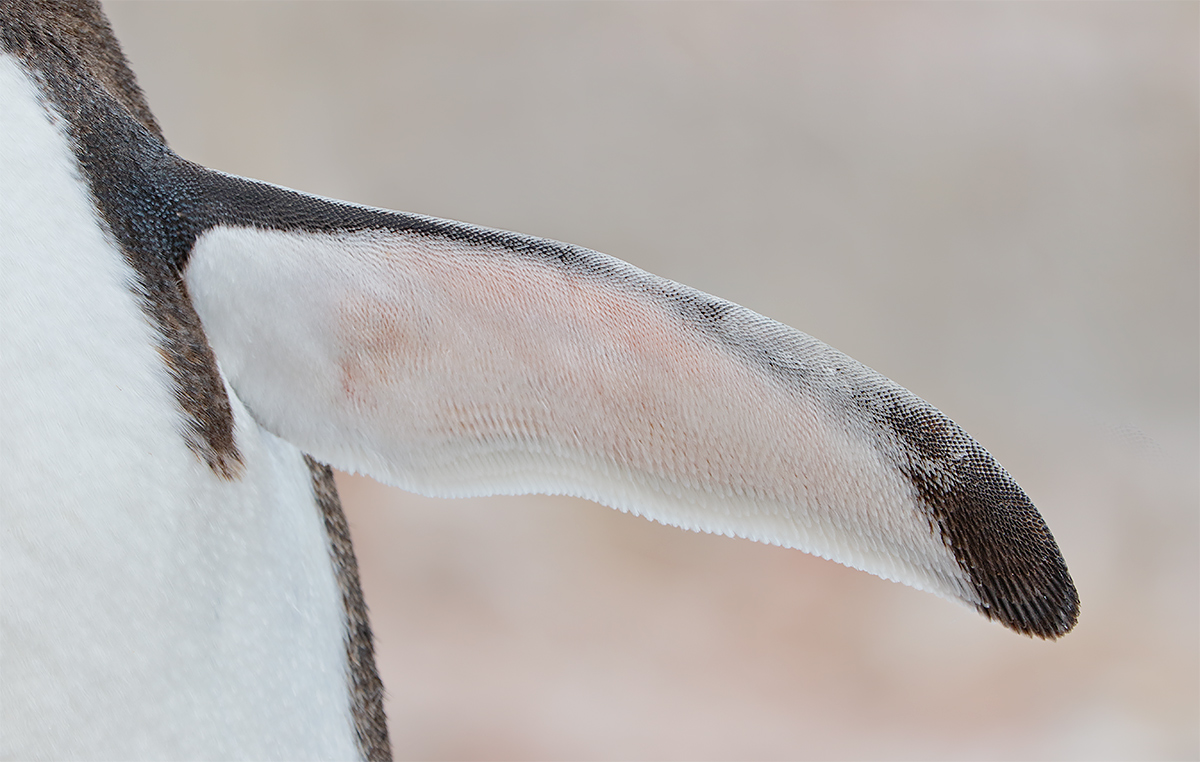
|
|
This image was created at 9:45am in cloudy conditions on January 5, 2015 at Neko Harbor, Antarctica tripod-mounted Canon EF 70-200mm f/2.8L IS II USM lens, the Canon Extender EF 2X III (at 400mm–effective 640), and the amazing Canon EOS 7D Mark II. ISO 400. Evaluative metering +1 stop: 1/500 sec. at f/8 in Manual mode.
Central sensor (manual selection) AI Servo/Rear Focus AF as framed was active at the moment of exposure. Click here to see the latest version of the Rear Focus Tutorial. Click on the image to see a larger version.
|
70-200/2X III TC/7D II Yields Flesh Pink on Krill Guano Pink
As noted here previously, the later into the trip we got the lighter I went. I made many landings in Antarctica with “only” the 70-200 II with both series III TCs and the 7D II. And made lots of wonderful images. Funny how that works…
I had been looking in vain for days for a situation where I could use the pink krill guano as background when suddenly an isolated Gentoo Penguin extended a wing and held the pose long enough for me to create about half a dozen image with the background I had been looking for. The flesh pink underside of the stretched wing was the perfect icing on the perfect cake.
|
|
|
All of the images on the card were made on South Georgia. This remote wilderness island offers both spectacular scenery and hordes of tame wildlife and birds. From top left clockwise to the center: Southern Elephant Seal, courting King Penguin pair, King Penguin abstract, Grey-headed Albatross, King Penguin rookery on Salisbury Plain, Macaroni Penguin head portrait, King Penguin molting Okum Boy, Macaroni Penguin pair, King Penguin preening, Southern Elephant Seal yawning, the view of Gold Harbour from a Light-mantled Sooty Albatross nest.
Click on the image to see an extra-large version.
|
The 2015 South Georgia Expedition Voyage
Why Sign Up Through BIRDS AS ART?
If you have been thinking and dreaming of finally visiting South Georgia, this is the trip for you. Quit dreaming and act now. Though I will not be an official leader on this trip, those who have traveled with me know that I cannot help but teach. I will make pre-trip gear recommendations. I will hold informal pre-landing briefings. In the same vein, everyone will receive a free copy of our Antarctica Site Guide once they are paid in full (July 2, 2015). I will be available on the ship to review your images,, answer questions, and conduct informal over-the shoulder Photoshop sessions. And best of all, everyone who signs up under the auspices of BAA are invited to tag along with me on the landings where I will be glad to offer invaluable in-the-field advice. And the same goes for the ship-board birds in flight and marine mammal photography opportunities.
Do join us. To learn how to be part of the BAA group please e-mail me with the words Antarctica/Extended Expedition BAA Info Please cut and pasted into the Subject line.
Important Notes
#1: If you fail to e-mail me as noted directly above, and register directly with CES you MUST let them know that you would like to be part of the BIRDS AS ART group.
#2: Joining the BIRDS AS ART group as above will not cost you one penny.
Click here for complete details and to learn about Cheesemans’ Ecology Safaris. Please e-mailor with any questions or try me on my personal line this weekend at 863-692-2806.
Facebook
Be sure to like and follow BAA on Facebook by clicking on the logo link upper right. Tanks a stack!
Support the BAA Blog. Support the BAA Bulletins: Shop B&H here!
We want and need to keep providing you with the latest free information, photography and Photoshop lessons, and all manner of related information. Show your appreciation by making your purchases immediately after clicking on any of our B&H or Amazon Affiliate links in this blog post. Remember, B&H ain’t just photography!
…..
Amazon.com
Those who prefer to support BAA by shopping with Amazon may use this link:
Amazon Canada
Many kind folks from north of the border, eh, have e-mailed stating that they would love to help us out by using one of our affiliate links but that living in Canada and doing so presents numerous problems. Now, they can help us out by using our Amazon Canada affiliate link by starting their searches by clicking here. Many thanks to those who have written.
Typos
In all blog posts and Bulletins, feel free to e-mail or to leave a comment regarding any typos or errors. Just be right :).
January 28th, 2015 What’s Up?
I actually set an alarm last night. For 3:30am. As is almost always the case, I woke well before the alarm. At 5:30am. Jim is taking me to the airport at about 5:30am this morning. My flight from Orlando (MCO) to San Diego (SAN)–with a connection in Dallas (DFW)–departs at 9:00am.
Today’s blog post took about 2 hours to prepare; thanks to Arash for his e-mail help. It was published at 3:11am from my home at Indian Lake Estates, FL. If you are one of the very few who missed the Canon Digital Learning Center “Bird Photography with Arthur Morris” seven video series, be sure to click here for a link and the complete details. I still have many exciting new images, tales, and lessons from my recently concluded trip to share with you here over the course of the next few weeks and am looking forward to doing just that. Do consider joining me in South Georgia next October for the trip of a lifetime. See here for the complete details.
Please Remember to use our Affiliate Links 🙂
To show your appreciation for my continuing efforts here, we ask, as always, that you use our the B&H and Amazon affiliate links on the right side of the blog for all of your purchases. B&H Is recommended for you major photography gear purchases, Amazon for your household, entertainment, and general purpose stuff. Please check the availability of all photographic accessories in the BIRDS AS ART Online Store, especially the Mongoose M3.6 tripod heads, Gitzo tripods, Wimberley heads and plates, LensCoats and accessories, and the like. We sell only what I have used, have tested, and can depend on. We will not sell you junk. We know what you need to make creating great images easy and fun. And we are always glad to answer your gear questions via e-mail. I just learned that my account was suspended during my absence; it should be up and running by Monday at the latest.
I would of course appreciate your using our B&H affiliate links for all of your major gear, video, and electronic purchases. For the photographic stuff mentioned in the paragraph above we, meaning BAA, would of course greatly appreciate your business. Here is a huge thank you to the many who have been using our links on a regular basis and visiting the BAA Online store as well.
Saved From the Darkness…
From Arash Hazeghi’s ‘s post here on BirdPhotographers.Net. Arash is one of seven moderators in BPN’s Avian Forum.
Because of the changing light this frame was significantly underexposed: I should have been at 1/1600sec at ISO 4000. Thanks, however, to DPP4 and the great imaging sensor of the 1DX, I was able to create a good quality output file.
You can see the optimized image file that Arash made from the well under-exposed original above immediately below.
|
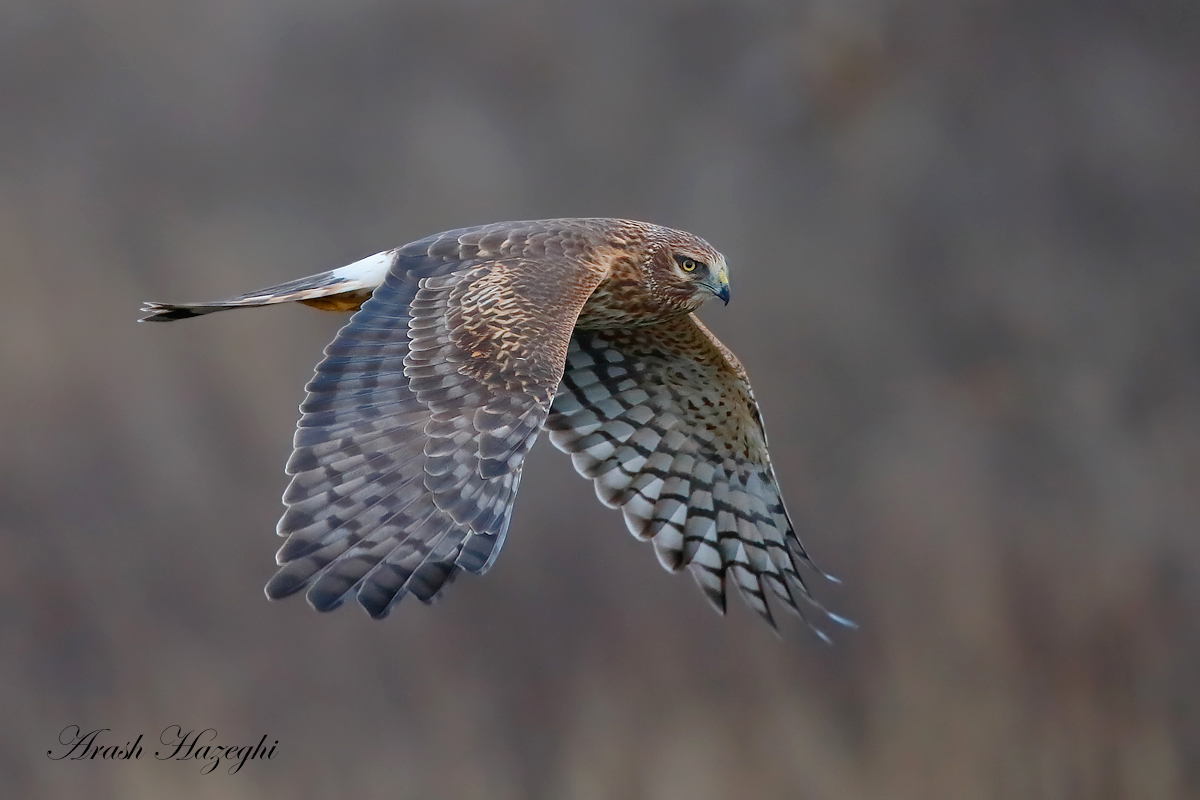
|
|
This is the optimized image that Arash created from the well under-exposed original above.
Image courtesy of and copyright 2014: Arash Hazeghi
|
The DPP 4 RAW Conversion
Arash lightened the image by moving the Brightness slider to +1.33 and opened up the shadows by moving the Shadow slider to +3. He moved the Highlight slider to -3 to protect the WHITEs of the raptor’s rump. Then he adjusted the Reduce chrominance noise slider to eliminate the color noise and lastly adjusted the Reduce luminance noise slider to suppress the graininess. BPN Member Willie asked a good question in Pane #3 of the thread regarding depth-of-field and flight photography. Arash gave the same answer that I would have given.
Even more amazing is the fact that today’s featured image was about a 60% crop….
Stuff…
At times, I run into beginners who use only JPEG capture. I always say, “With JPEGs, when you screw up, you are screwed. With RAW, you almost always have a chance….” As always, the proof–in the form of today’s featured image–is in the pudding.
The DPP 4 eGuide
The RAW file for this image was converted in DPP v4.1.50 that now supports the 7D Mark II along with image files from the 1D X, the 5D III, the 6D, the 7D, the EOS-1D Mark IV,and several other older Canon camera bodies as well. DPP is far more sophisticated and complex than the various iterations of DPP 3. Thus, Arash and I created a new, stand-alone eGuide for DPP 4, one that really simplifies things. As so much work and effort went into the creation of the DPP 4 eGuide, it does require a separate purchase. Learn more about this great guide by clicking here, or purchase a copy here.
Note: the Sharpness and Noise Reduction Charts have already been updated to include the recommended values for the 7D Mark II. We will be adding values for the Mark IV, the 7D, and likely for the 70D but those will require some time so please be patient as the his process will involve a lot of work on Arash’s part; the update will of course be free. Arash’s recommended values for both chrominance and luminance noise reduction are key to making successful RAW conversions in DPP. He developed these values–which are in nearly all cases much more aggressive than the values calculated by the program itself–after extensive testing of dozens of camera-specific RAW files.
|

|
|
Fort DeSoto in spring can be bird photographer’s heaven. And most of the birds are stupid tame.
|
Fort DeSoto in Spring/Breeding Plumage IPT: April 24-26, 2015. 3 FULL DAYs: $1099. Limit 8/Openings: 5.
Meet and Greet at 8pm on Thursday, April 23.
Join me at Fort DeSoto at the height of the breeding season for many of our target species: Laughing Gull, Royal Tern, Sandwich Tern, dark and light morph Reddish Egret, Great Egret, Tricolored Heron, and Yellow-crowned Night-Heron. In addition, we will have a good shot at photographing a variety of arctic-bound shorebird species in breeding plumage. We should have good chances with a variety of courtship behaviors including courtship feeding, courtship displays, pre-copulatory stands, and copulation.
On this IPT you will the learn basics and fine points of digital exposure and how to get the right exposure every time after making a single test exposure, how to approach free and wild birds without disturbing them, to understand and predict bird behavior, to identify many species of shorebirds, to spot the good situations, to choose the best perspective, to see and understand the light, and to design pleasing images by mastering your camera’s AF system. And you will learn learn how and why to work in Manual mode (even if you’re scared of it).
At lunch (included) we will review my images–folks learn a ton watching me edit–why keep this one and delete that one. If you opt to bring your laptop, we will take a look at five of your best images from the morning session. We will process a few of my images in Photoshop after converting them in DPP. That followed by Instructor Nap Time.
A $499 non-refundable deposit is required to hold you spot. The balance, $600 will be due on February 7, 2015. Please click here to read our cancellation policy. Then please print, read, and sign the necessary paperwork here and send it to us.
Facebook
Be sure to like and follow BAA on Facebook by clicking on the logo link upper right. Tanks a stack!
Support the BAA Blog. Support the BAA Bulletins: Shop B&H here!
We want and need to keep providing you with the latest free information, photography and Photoshop lessons, and all manner of related information. Show your appreciation by making your purchases immediately after clicking on any of our B&H or Amazon Affiliate links in this blog post. Remember, B&H ain’t just photography!
…..
Amazon.com
Those who prefer to support BAA by shopping with Amazon may use this link:
Amazon Canada
Many kind folks from north of the border, eh, have e-mailed stating that they would love to help us out by using one of our affiliate links but that living in Canada and doing so presents numerous problems. Now, they can help us out by using our Amazon Canada affiliate link by starting their searches by clicking here. Many thanks to those who have written.
Typos
In all blog posts and Bulletins, feel free to e-mail or to leave a comment regarding any typos or errors. Just be right :).
January 27th, 2015 What’s Up?
Another day, another swim; the pool was down another degrees to 73F after the another relatively cold night. How was the blizzard in the northeast? How cold is it where you are? Yesterday I made some more decent progress on the 7D Mark II User’s Guide. I hope to be able to offer a pre-publication version very soon. Today is packing day. I fly to San Diego tomorrow; Jim and I are leaving ILE at about 5:30am.
Today’s blog post took about 1 1/2 hours to prepare; it’s like another day off. It was published at 4:40am from my home at Indian Lake Estates, FL. If you are one of the very few who missed the Canon Digital Learning Center “Bird Photography with Arthur Morris” seven video series, be sure to click here for a link and the complete details. I still have many exciting new images, tales, and lessons from my recently concluded trip to share with you here over the course of the next few weeks and am looking forward to doing just that. Do consider joining me in South Georgia next October for the trip of a lifetime. See here for the complete details.
Please Remember to use our Affiliate Links 🙂
To show your appreciation for my continuing efforts here, we ask, as always, that you use our the B&H and Amazon affiliate links on the right side of the blog for all of your purchases. B&H Is recommended for you major photography gear purchases, Amazon for your household, entertainment, and general purpose stuff. Please check the availability of all photographic accessories in the BIRDS AS ART Online Store, especially the Mongoose M3.6 tripod heads, Gitzo tripods, Wimberley heads and plates, LensCoats and accessories, and the like. We sell only what I have used, have tested, and can depend on. We will not sell you junk. We know what you need to make creating great images easy and fun. And we are always glad to answer your gear questions via e-mail. I just learned that my account was suspended during my absence; it should be up and running by Monday at the latest.
I would of course appreciate your using our B&H affiliate links for all of your major gear, video, and electronic purchases. For the photographic stuff mentioned in the paragraph above we, meaning BAA, would of course greatly appreciate your business. Here is a huge thank you to the many who have been using our links on a regular basis and visiting the BAA Online store as well.
|

|
|
This image was created in sunny conditions at 9:55am on October 13, 2014 at Fort DeSoto Park with the hand held Canon EF 200-400mm f/4L IS USM lens with Internal 1.4x Extender and the amazing Canon EOS 7D Mark II. ISO 400. Evaluative metering +1/3 stop: 1/1600 sec. at f/9.
Central sensor/AI Servo Surround Rear Focus AF as framed was active at the moment of exposure. Click here to see the latest version of the Rear Focus Tutorial. Click on the image to see a larger version.
This is a modified DPP 4 screen capture. To view the AF points on a RAW file in DPP 4 hit Tools > AF point display settings > Show all AF points. Note: see below for an explanation of the small red and blue circles that I added in Photoshop with the almost-never-used Pen Tool.
|
A Picture is Worth a Thousand Words: The Canon EOS-7D Mark II AF Grid Void
In the January 18, 2015 blog post, Two Things I Do Not Like About the Canon EOS-7D Mark II, I wrote,
On previous EOS digital camera bodies with similar layouts the left, center, and right AF arrays were closer together. In addition, when you worked in either Expand AF area (the selected sensor plus as many as four surrounding AF points) or in Expand AF area: Surround (the selected sensor plus as many as eight surrounding AF points) and move the selected arrays of sensors across the boundary between the three AF arrays (left, center, and right) the transitions are seamless. For example, if you are in Expand AF area: Surround with the central sensor selected with a 1D X or a 5d III and you move the selected array of eight centers one click to the left you will still have nine active sensors, six in the central array and 3 in the left hand array.
That does not happen with the 7D II; the transitions are not seamless. You are fine when you move the selected block of sensors one click to the left (because the center block is wider at 5 X 5 with the 7D II than with either the 1D X or the 5D III where the center block of AF points is 3 across X 7 tall). But when you move the selected block of sensors two clicks to the left you will find yourself only with a 3 tall X 2 wide block of six active sensors. The block does not cross over to the left hand (4 X 5) array. One more click to the left and you again find yourself with a 2 X 3 block of of active sensors, this time in the left hand array.
With the widest-ever gap between the central block and the two outer blocks of sensors you are often left wanting. The exact spot that I want to put my array on is often in the void between the central block and one of the two outer blocks. For those who take great care as I do as to exactly where they place the array of active sensors, this often makes getting the exact composition that you want either more difficult or impossible.
Important note: the “AF grid void” problem that I detail immediately above is usually only encountered when you are tracking a slowly moving subject or when you are hand holding and need to keep AF active at the moment of exposure. If you are on a tripod working with a static subject then either One-Shot or Rear Button focus will enable you to come up with the exact composition that you want.
I am hoping that the “AF grid void” problem might one day be solved with a firmware update so that a 5-sensor array stays a 5-sensor array when you cross the void and a 9-sensor array stays a 9-sensor array when you go from the center array to one of the outer arrays….
The modified DPP 4 screen capture above explains exactly what I was talking about.
The illuminated red square indicates the active AF point that I selected manually. I added the small red circles to show the AF points that were active as a result of my being in AF Surround. (Note: the correct Canon designation for this AF Area Selection Mode is “AF point expansion (Manual selection, all surrounding points.)” In all of the relevant camera User’s Guides I shorten this to AF Surround.
The small blue circles that I added show the additional points that hope might be available via a firmware update. Wishful thinking?
San Diego Natural History Museum Program & The Birds of the World Exhibit
At 9:00am on Saturday morning, February 7, 2015 I will be presenting “A Bird Photographer’s Story” at the San Diego Natural History Museum to kick off the Birds of the World photographic exhibit that will feature the images of about a dozen of the world’s top avian photographers. This program,which is being generously sponsored by the Canon Explorers of Light program, will be free and open to the public. I am proud to say that both Denise Ippolito and I will have images hanging in the show. The exhibit opening is scheduled to follow the program. Click here for details.
Friday Morning In-the-Field Photo Session: February 6, 2015: $299.
Open to all.
This workshop includes 3 hours of in-the-field pelican photography instruction and brunch with image review and Photoshop instruction.
Selling Your Used Photo Gear Through BIRDS AS ART
Selling your used (or like-new) photo gear through the BAA Blog or via a BAA Online Bulletin is a great idea. We charge only a 5% commission. One of the more popular used gear for sale sites charges a minimum of 20% plus assorted fees! Yikes. The minimum item price here is $500 (or less for a $25 fee). If you are interested please e-mail with the words Items for Sale Info Request cut and pasted into the Subject line :). Stuff that is priced fairly–I offer free pricing advice, usually sells in no time flat. In the past few months, we have sold just about everything in sight. Do know that prices on some items like the EOS-1D Mark IV, the old Canon 500mm, the EOS-7D, and the original 400mm IS DO lens have been dropping steadily.
If you missed yesterday’s new listings and price reductions, see yesterday’s blog post or click here for the complete listings.
Used Gear Cautions
Though I am not in a position to post images of gear for sale here or elsewhere, prospective buyers are encouraged to request for photos of the gear that they are interested in purchasing via e-mail. Doing so will help to avoid any misunderstandings as to the condition of the gear. Sellers are advised to take care to photograph their used gear with care against clean backgrounds so that the stuff is represented accurately and in the best light; please pardon the pun :).
These Price Reductions Just In!
Nikon AF-S NIKKOR 200mm f/2G ED VR II Telephoto Lens: the world’s greatest portrait lens
Price reduced $600 on 1/27/2015!
Al Hart is offering a lightly used Nikon AF-S NIKKOR 200mm f/2G ED VR II Telephoto Lens for sale for the absurdly low price of $3399. The lens has no nicks, no scratches, no blemishes, and indeed, no marks of any kind; it is perfect both functionally and cosmetically. In fact, lens has been out of Al’s house only twice, to photograph shoot birds at local rehab sanctuary. The sale includes the CL-L1 ballistic nylon case, the HK-31 lens hood, the standard drop-in filter, the never-used lens strap, the RRS # LCF-15B lens plate, the lens manual, the original packaging, and insured ground shipping to US addresses. Payment by Paypal with the fee prepaid is acceptable. As is payment by U.S. postal money order or by certified check drawn on a U.S bank. The lens will ship only after the funds have cleared.
Interested folks can contact Al via e-mail or by phone at (248) 626 4706.
As the lens sells new for $5999, $3399 qualifies as a truly amazing price. You can learn more about the lens and find more reviews by clicking on the appropriate tab here. artie
This lens is also excellent for bird photography when you are working with relatively tame subjects birds and wish to blur the background. And here is a quote from a satisfied B&H customer:
This lens is the “Mohammad Ali” of portrait lenses. I can shoot with it in the middle of NYC Times Square and the background just blurs into a liquid swirl. Your photos will be so sharp they might cut you. From what I have experienced so far shooting with this lens I can safely say that it will remain in my possession until the great asteroid hits the Earth and destroys every other lens on the entire planet. Barry
Canon EF 70-200mm f/2.8L IS USM Mk II Lens
Price reduced $51 on 1/27/2015!
Muir Robertson is offering a used Canon EF 70-200mm f/2.8L IS USM Mk II lens in like-new condition for $1799. The sale includes the original box and accessories and includes a Really Right Stuff lens foot and insured ground shipping to lower 48 US addresses.
Interested folks please contact Muir first by e-mail and then by phone at 513-314-2471.
As regular readers know the 70-200 f/2.8L IS II lens is with me every time I head into the field. It is amazingly versatile. I use mine often alone and with either TC. artie
Canon EF 70-300mm f/4-5.6 L IS USM Lens (the white one with L series glass)
Price reduced $100 on 1/27/2015!
Muir Robertson is offering a used Canon EF 70-300mm f/4-5.6 L IS USM lens in excellent condition for $850. The sale includes the original box and comes with the optional Canon Tripod Mount Ring C ($164.95 at B&H), a RRS lens foot, and insured ground shipping to lower 48 US addresses. This lens is a great performer and if super fast f/2.8 isn’t critical, it is significantly lighter and smaller than the 70-200 F2.8 – perfect for travel.
Interested folks please contact Muir first by e-mail and then by phone at 513-314-2471.
I used this lens briefly in Norway to photograph jaegers in flight. It was ideal for the task: lightweight with super-fast and accurate focusing. artie
|
|
|
Images courtesy of and copyright Captain James Shadle (aka Froggie). All of the images here were created at Alafia Banks. Card creation and design by Arthur Morris/BIRDS AS ART.
|
The Hooptie Deux/Roseate Spoonbills and More Instructional Photo-Tour via pontoon boat. 4 1/2 DAYs: $3200. SUN FEB 22 thru lunch on THUR FEB 26, 2015/Strict Limit: 6 photographers/Openings: 1.
Due to a cancellation we now have a single opening on this trip which sold out minutes after being announced.
Meet and greet on the evening of SAT 21 FEB. Two great leaders: Captain James Shadle (Nikon) and Canon Explorer of Light Emeritus Arthur Morris.
Roseate Spoonbill is one of if not the most sought after avian photographic subjects in Florida. They are generally hard to find and somewhat difficult to approach. They are relatively easy to find at Alafia Banks—heck, you can’t miss seeing them, but even there they can on some days be somewhat difficult to approach. On some days we may be able to get ridiculously close to them. The huge incentive to get out to Alafia Banks in mid-February is the chance to photograph this species at the height of its spectacular breeding plumage….
Weather permitting there will be nine boat trips: 5 mornings and 4 afternoons! Mornings to Alafia Banks for spoonbills and Brown Pelicans (with lots of flight photography with the birds likely carrying nesting material), cormorants, ibises (both Glossy and White in breeding plumage. Many of the White Ibises will be sporting their spectacular, distended, red, naked (un-feathered) throat pouches—typically larger in the females. In addition we will get to photograph egrets including Great and Reddish, both in full breeding plumage, shorebirds, and more. There will be lots of flight photography opportunities. Afternoon trips either to Alafia Banks for spoonbills and more or to a more sheltered inland rookery location for a variety of nesting birds. In the event of horrific weather artie will either take the group to Fort DeSoto or will conduct an image review/Photoshop session. This IPT includes five lunches that will be followed by small group image sharing and review and some over-the-shoulder Photoshop instruction.
Important Notes
We stay in Brandon, FL for this IPT. From our hotel there it is is only about 20 minutes to the dock. The plan is for all nine sessions to be by boat. For the Alafia Banks segments, Captain Shadle provides light weight chest waders as much of the photography will be done while we are standing in fairly shallow water behind our tripods. We help you get in and out of the boat with your gear. This is likely not the best trip for folks with balance problems. Note however that some folks may opt to stay on the boat. They usually have lots of chances for flight photography of spoonbills and other species but are almost always pretty far away from the spoonbills that land.
I recently saw a similar trip advertised two months too late for breeding plumage spoonbills (and two months too late for most of the rest of the species in breeding plumage). 5 Days: $3200. With only four boat trips…. The Hooptie IPT represents an incredible opportunity and with 3 slots filled already the remaining three spots should fill very quickly. We hope that you can join us. Scroll down for registration info.
|
|
|
All of the images here were created at Alafia Banks in the month of February. Images copyright Arthur Morris/BIRDS AS ART. Card creation and design by Arthur Morris/BIRDS AS ART.
|
Hooptie IPT Registration Info
A $449 non-refundable deposit is required to hold your slot for this IPT. Your balance, payable only by check, will be due on 11/22/2014. If you cancel and the trip fills, we will be glad to apply a credit applicable to a future IPT for the full amount less a $100 processing fee. If we do not receive your check for the balance on or before the due date we will try to fill your spot from the waiting list. If your spot is filled, you will lose your deposit. If not, you can secure your spot by paying your balance.
Please print, complete, and sign the form that is linked to here and shoot it to us along with your deposit check (made out to “Arthur Morris.”) You can also leave your deposit with a credit card by calling the office at 863-692-0906. If you register by phone, please print, complete and sign the form as noted above and either mail it to us or e-mail the scan. If you have any questions, please feel free to contact me via e-mail.
Facebook
Be sure to like and follow BAA on Facebook by clicking on the logo link upper right. Tanks a stack!
Support the BAA Blog. Support the BAA Bulletins: Shop B&H here!
We want and need to keep providing you with the latest free information, photography and Photoshop lessons, and all manner of related information. Show your appreciation by making your purchases immediately after clicking on any of our B&H or Amazon Affiliate links in this blog post. Remember, B&H ain’t just photography!
…..
Amazon.com
Those who prefer to support BAA by shopping with Amazon may use this link:
Amazon Canada
Many kind folks from north of the border, eh, have e-mailed stating that they would love to help us out by using one of our affiliate links but that living in Canada and doing so presents numerous problems. Now, they can help us out by using our Amazon Canada affiliate link by starting their searches by clicking here. Many thanks to those who have written.
Typos
In all blog posts and Bulletins, feel free to e-mail or to leave a comment regarding any typos or errors. Just be right :).
January 26th, 2015 What’s Up?
Another day, another swim; the pool was down 3 degrees to 74F after the previous night’s cold front. Again, I made some decent progress on the 7D Mark II User’s Guide. Today’s blog post took about 2 1/2 hours to prepare. It was published at 7:10am from my home at Indian Lake Estates, FL. If you are one of the very few who missed the Canon Digital Learning Center “Bird Photography with Arthur Morris” seven video series, be sure to click here for a link and the complete details. I still have many exciting new images, tales, and lessons from my recently concluded trip to share with you here over the course of the next few weeks and am looking forward to doing just that. Do consider joining me in South Georgia next October for the trip of a lifetime
Please Remember to use our Affiliate Links 🙂
To show your appreciation for my continuing efforts here, we ask, as always, that you use our the B&H and Amazon affiliate links on the right side of the blog for all of your purchases. B&H Is recommended for you major photography gear purchases, Amazon for your household, entertainment, and general purpose stuff. Please check the availability of all photographic accessories in the BIRDS AS ART Online Store, especially the Mongoose M3.6 tripod heads, Gitzo tripods, Wimberley heads and plates, LensCoats and accessories, and the like. We sell only what I have used, have tested, and can depend on. We will not sell you junk. We know what you need to make creating great images easy and fun. And we are always glad to answer your gear questions via e-mail. I just learned that my account was suspended during my absence; it should be up and running by Monday at the latest.
I would of course appreciate your using our B&H affiliate links for all of your major gear, video, and electronic purchases. For the photographic stuff mentioned in the paragraph above we, meaning BAA, would of course greatly appreciate your business. Here is a huge thank you to the many who have been using our links on a regular basis and visiting the BAA Online store as well.
|
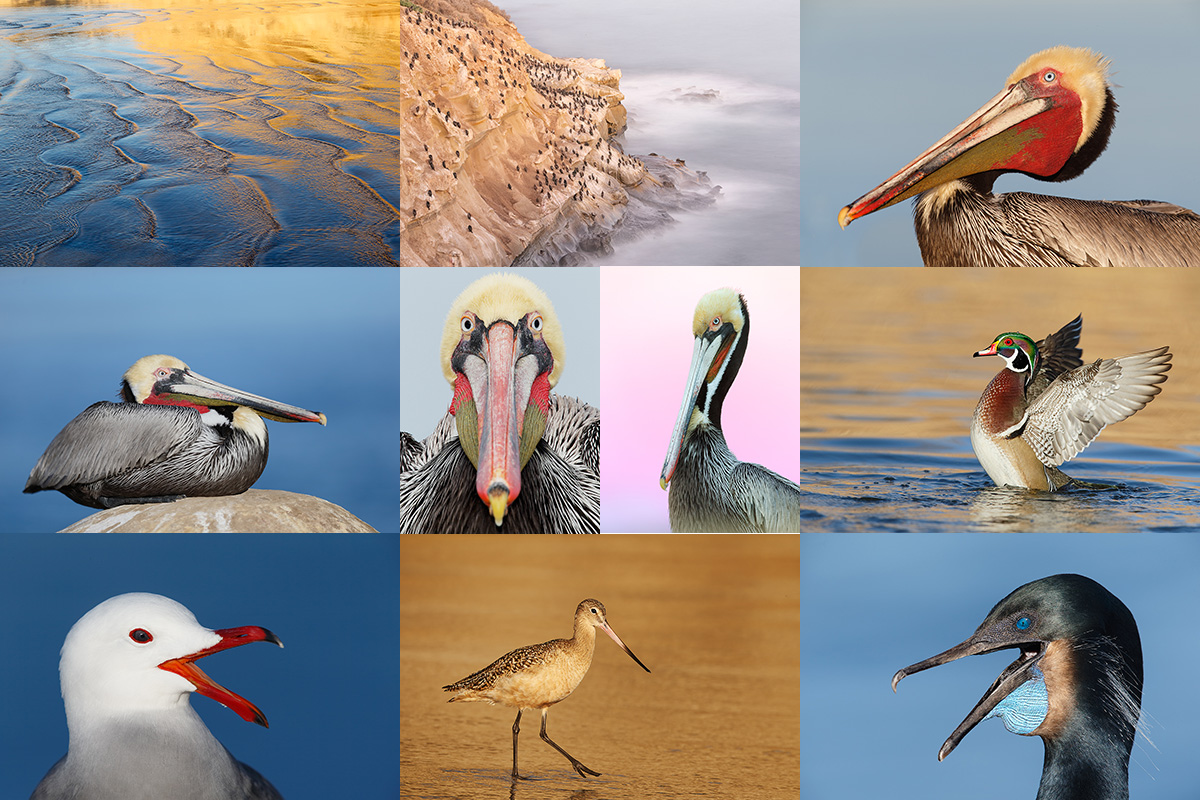
|
|
San Diego offers a wealth of very attractive natural history subjects. With annual visits spanning more than three decades I have lots of experience there….
|
San Diego Gear Bag
I am pretty sure that I have never been to San Diego without a 600 or a 500. Till this year.
Because of a mis-communication with my contact at B&H I did not have a brand new Canon EF 100-400mm f/4.5-5.6L IS II USM lens waiting for me when I got home from South America. It would be both conceivable and practical to do the whole San Diego trip with the 100-400 II, a 7D Mark II, and a 1D X. I am still scrambling to get my hands on a 100-400 II for the trip. If you know of a local camera store with one on the shelf, please shoot me their contact info via e-mail.
If I do get a 100-400II I am sure that there will be at least a morning or two when I head out with just the new lens, a camera body or two, and a 1.4X TC in my vest.
Note: We have LensCoats for the 100-400L IS II in stock in the BAA Online Store; purchase yours here.
I needed to carefully consider taking either the Canon EF 600mm f/4L IS II USM lens or the Canon EF 200-400mm f/4L IS USM lens with Internal 1.4x Extender.
The 600 II is great for the ducks, great for making super-tight images of pelican parts, and very good for shorebirds. The 200-400 is far more versatile allowing for virtually unlimited framing options. The pelicans are often quite close. The money shot with them is the head throw. When you have a perfect situation you often need to wait for the head toss. Those waits can be long ones. On the surface it would seem that hand holding the 100-400II would be best. But keeping even this relatively light lens raised for what might be a considerable period of time quickly gets old. I’d much prefer the 200-400 on a tripod.
In addition, with the 1.6 crop factor of the 7DII, I will be able to create the super-tight pelican stuff that I love either with the built-in TC alone or by adding an external Canon Extender EF 1.4X III to the mix. With both TCs and the 7DII I will be able to enjoy effective of equivalent (your choice of words) 1254.4mm, roughly the equal of the 600II/2X III/1D X combination (1200mm).
Taking all of the above into account we put the 200-400 into the lens trunk, put that into our old, large, dependable, well-taped-up, heavy duty cardboard shipping box, and sent it UPS-3 day to the San Diego hotel. Along with my hiking boots, my tripod, and my Mongoose M3.6 tripod head.
As getting the 100-400II is not a given, I am bringing the venerable and versatile Canon EF 70-200mm f/2.8L IS II USM lens. Great for the pelicans in flight or for a variety of bird-scapes and scenics with either camera body (or with a 5D Mark III).
Choices for Nikon Folks
Telephoto lens choices for Nikon folks, especially those using full frame bodies, are more difficult. If I were in that group, I would lean more towards bringing the 11.16 pound (sorry, big advantage to Canon there) Nikon AF-S NIKKOR 600mm f/4G ED VR AF lens than to bringing the Nikon AF-S NIKKOR 200-400mm f/4G ED VR II lens. I’d make sure, however, to have a Nikon AF-S NIKKOR 80-400mm f/4.5-5.6G ED VR lens on hand.
Those whose big lens is the Nikon AF-S NIKKOR 200-400mm f/4G ED VR II should bring along their Nikon AF-S NIKKOR 70-200mm f/2.8G ED VR II lens as well.
For Nikon folks using 1.5X crop factor cameras the choices are that much more difficult….
|
|
|
Though the pelicans will be the stars of the show on this IPT there will be many other handsome and captivating subjects in wonderful settings.
|
Auxiliary Lenses
Also along for the ride will be the Canon EF 24-70mm f/2.8L II and the Canon EF 16-35mm f/4L IS . I used each successfully on the Southern Ocean trip both on landings and from the zodiacs.
There were more than a few times on that trip when I wished that I had had the Canon EF 100mm f/2.8L Macro IS USM lens along and vowed to bring it on pretty much every trip that I make. When you are out in nature it is rare that something tiny and interesting does not catch your eye. The 100 macro IS will be in the bag.
As always, I will be traveling with three Canon 1.4X III TCs and two 2X III TCs.
Camera Bodies
I will have along two 1D X bodies, my 7D Mark II, and the 5D Mark III. I will likely use each of them at some point on the trip.
Singh-Ray Filters: In Case of Rainbows
Singh-Ray filters have been used by the world’s top photographers for many decades. Who? Art Wolfe, Tony Sweet, my new friend Ian Plant, my friend and oft-business partner, Denise Ippolito, Nevada Weir, Brenda Tharp, Cole Thompson, Chuck Kimmerle, and the late Galen Rowell among others. Singh-Ray has been and is the name in quality filters. I will have both my 77 and 82mm Singh-Ray Warming Polarizers in my vest in San Diego in case of rainbows.
No other filter manufacturer comes close to matching the quality of Singh-Ray’s optical glass that is comparable to that used by NASA. And they continue to pioneer the most innovative products on the market like their ColorCombo polarizer, Vari-ND variable and Mor-Slo 15-stop neutral density filters. When you use their filters, you’ll create better, more dramatic images and, unlike other filters, with absolutely no sacrifice in image quality. All Singh-Ray filters are handcrafted in the USA.
Best News: 10% Discount/Code at checkout: artie10
To shop for a Singh-Ray 5-Stop Mor-Slo Fliter (for example), click on the logo link above, click on “Neutral and color
Solid Neutral Density Filters (glass), then click on “Mor-Slo™ 5, 10, 15 and 20-Stop Solid Neutral Density Filters (glass),” choose the size and model, add to cart, and then checkout. At checkout, type artie10 into the “Have a coupon? Click here to enter your code” box, and a healthy 10% discount will be applied to your total. In addition to enjoying the world’s best filter at 10% off you will be supporting my efforts here on the blog.
Think Tank Rolling Bags
I will be using the larger of my two Think Tank rolling bags, the Airport Security™ V 2.0 Rolling Camera Bag. I used the slightly smaller of the two, the Airport International™ LE Classic for my Southern Ocean trip. I am going with the larger bag in anticipation of having a 100-400 II to bring home 🙂
Please click on my Think Tank affiliate link here to earn a free gift when you purchase a Think Tank Rolling Bag.
The Think Tank Glass Limo
The Think Tank Glass limo was so fantastic on the Southern Ocean trip that I am bringing it to San Diego even though there are very few long walks. I will be doing a blog post soon detailing how I use this great bag.
Please click on my Think Tank affiliate link here to earn a free gift when you purchase a Glass Limo.
The San Diego Site Guide
The San Diego Site Guide is, as all of our Site Guides are, the next best thing to being on an IPT. I share all the hard-earned secrets learned over three decades of birding and bird photography in and around America’s Finest City. Learn more or purchase here.
Delkin Flash Card Price Drops
Please note the new lower prices for Delkin flash cards:
32GB 700X CF Card: $54.99
64GB 700X CF Card: $84.99
128GB 700X CF Card: $194.99
32GB 1000X CF Card: $74.99
64GB 1000X CF Card: $99.95
128GB 1000X CF Card: $219.95
You can purchase yours at the new low prices above by calling Jim at 863-692-0906 or by clicking here.
Selling Your Used Photo Gear Through BIRDS AS ART
Selling your used (or like-new) photo gear through the BAA Blog or via a BAA Online Bulletin is a great idea. We charge only a 5% commission. One of the more popular used gear for sale sites charges a minimum of 20% plus assorted fees! Yikes. The minimum item price here is $500 (or less for a $25 fee). If you are interested please e-mail with the words Items for Sale Info Request cut and pasted into the Subject line :). Stuff that is priced fairly–I offer free pricing advice, usually sells in no time flat. In the past few months, we have sold just about everything in sight. Do know that prices on some items like the EOS-1D Mark IV, the old Canon 500mm, the EOS-7D, and the original 400mm IS DO lens have been dropping steadily.
Used Gear Cautions
Though I am not in a position to post images of gear for sale here or elsewhere, prospective buyers are encouraged to request for photos of the gear that they are interested in purchasing via e-mail. Doing so will help to avoid any misunderstandings as to the condition of the gear. Sellers are advised to take care to photograph their used gear with care against clean backgrounds so that the stuff is represented accurately and in the best light; please pardon the pun :).
These Price Reductions Just In!
Canon EF 600mm f/4L IS USM Lens, the “old six”
An Amazing Package for Someone Young and Strong. Or Old and Strong.
Price reduced $400 on 1/26/2015!
Gerald Barrack is offering a Canon EF 600mm f/4L IS USM lens for the record-low price of $5199, or $5399 with the 1.4X II and 2X II TCs thrown in. The lens is in very good condition with perfect glass and many dings and wear on the painted surface that do not affect function. Photos are available upon request. The lens was given a clean bill of health after a clean and check by Canon in Nov. 2014. The gear will be shipped only after your check clears unless other arrangements are made. The sale includes the lens trunk, the front leather hood, the rear lens cap, and insured ground shipping within the continental US.
Interested folks can contact Gerald via e-mail or try him on his cell at 201 638 3510 (Easter Time Zone).
The old six was my workhorse super-telephoto for too many years…. artie
Canon EOS-1D Mark IV/Lowest Price Ever!
Price reduced $301 on 1/26/2015!
Gerald is also offering a used Canon EOS 1D Mark IV body again for a record low price: $1599. The body is in very good to excellent condition and is in perfect working order having been check by CPS in November 2014. The body has several scuff and wear marks that do not affect function. Photos are available upon request.
The sale includes a Really Right Stuff mounting plate, the original Canon camera strap, the battery charger and an extra battery, the instruction manual, and insured ground shipping within the continental US. Interested folks can contact Gerald via e-mail or try him on his cell at 201 638 3510 (Easter Time Zone). The camera will be shipped only after your check clears unless other arrangements are made.
Two Mark IVs were my workhorse bodies for many years. artie
Used Sigma Zoom Super Telephoto 300-800mm f/5.6 EX DG APO IF HSM Autofocus Lens for Canon EOS
Price reduced $500 on 1/26/2015!
Beth Starr is offering a used Sigma Zoom Super Telephoto 300-800mm f/5.6 EX DG APO IF HSM Autofocus Lens for Canon EOS, aka The Sigmonster, in like-new condition. Used only 3-4 times: $4,999. The sale includes the original shipping box and the original lens case. Includes insured ground shipping in the continental US. You can call Beth on hee cell at 908-625-1589 or contact her via e-mail.
This is a superb lens for folks working from a vehicle with the lens supported by a BLUBB. James Shadle has used the Nikon mount version of this lens on a tripod for years to create many memorable images. Strong folks can save a bundle as this is a steal at $2,899 below the list price. artie
New Listings (1/25/2015)
Used Canon EF 300mm f/2.8L IS II USM Lens
Sale Pending
As predicted, Rod’s used Canon EF 300mm f/2.8L IS II USM Lens sold almost instantly for $5200.
Used Canon EF 500mm f/4L IS (Image Stabilizer) USM Lens
Brad Lincoln is offering a used Canon EF 500mm f/4L IS (Image Stabilizer) USM Lens in excellent condition for the lowest-ever-by-far price of $4199. The sale includes the front leather hood, the rear dust cap, the strap, the original case with keys, a Lens Coat, a Really Right Stuff 63A Lens Plate, the lens manual, the original warranty card, and insured shipping to US addresses only. The lens had Canon’s 11-Point EF Lens Maintenance Service in March 2014. Photos are available upon request via e-mail. The lens will be shipped only after your check clears unless other arrangements are made.
Folks can contact Brad by e-mail or reach him by phone at 1-703 440-5912, 6:00-9:00 pm Eastern Time. There are currently four of these lenses listed on the Used Photography Gear Page here at prices from as low as $4700 to as high as $5250; this is one is priced to sell instantly so best would be to e-mail Brad as it will be first come, first served.
The old five was at one time the world’s most popular telephoto lens. It still makes great images with both TCs. artie
Used Canon 400mm f/2.8L IS II Lens
Melissa Hahn is offering a used Canon 400mm f/2.8L IS II lens in mint condition for $8999. Original owner. The sale includes the lens hood, the E-180D front lens cover, the 400C lens trunk, the rear lens cap, the wide lens strap, a black LensCoat (an $89.99 value), a TravelCoat (a $59.95 value), and insured ground shipping to US addresses. The lens will ship only after your check clears. Glass and lens immaculate. The lens was very recently cleaned and checked by Canon. Photos are available upon request.
Interested folks can contact Melissa on here cell phone at 1-631-404-2965 (eastern time) or via e-mail.
This fast, super-sharp, relatively lightweight (8.49 pounds) super-telephoto lens (the Nikon version weighs 10.2 pounds) is a versatile lens for wildlife photographers. It creates super-sharp images with both the 1.4X III and the 2X III Extenders. It currently sells new at B&H for $10,499 and they are offering a used one for $9,899.95. You can save some significant bucks by grabbing Melissa’s lens now.
Used Canon EF 500mm f/4L IS II USM Lens
Zack Skochko is offering a used Canon EF 500mm f/4L IS II USM Lens in like-new condition for the amazingly low price of $7499. Save $2,000 right now. No marks, no blemishes, glass perfect. Request photos via e-mail as below. The sale includes the front leather hood, the rear dust cap, the strap, the original lens trunk, a Really Right Stuff replacement foot, the lens manual, the original warranty card, and insured shipping to US addresses only. The lens will be shipped only after your check clears unless other arrangements are made.
Folks can contact Zack by e-mail or reach him by phone at 703-965-7432, EST. Day and evenings OK.
Note: Used “new fives” are exceedingly rare. They sell new at B&H for $9499. B&H is offering a used old 500 (Item condition 9) for $6,299.95. This “new 500” is priced to sell instantly so please do not hesitate and risk being disappointed.
Used Canon EF 400mm f/5.6 L USM Lens
Bill Lloyd is offering a one year old used Canon EF 400mm f/5.6 L USM lens in excellent conditions with perfect glass and several minute, barely visible scratches for $949. The hood locks/unlocks smoothly and the focusing ring operates smoothly. Request photos via e-mail as below. The sale includes with the Canon LZ1132 Pouch and Strap (both unused), the lens Guide Sheet, the front and rear lens caps, the tripod mount ring AII(W), and insured shipping to US addresses only. The lens will be shipped only after your check clears unless other arrangements are made.
Folks can contact Bill via e-mail.
Though I put my beloved “toy lens” on the map about 2 decades ago, this versatile lightweight lens is still in production for good reason. It makes a great flight lens or a great starter lens. It is super sharp. 7D II folks can add a 1.4X III TC and enjoy tremendous reach (though I recommend using a good tripod and the Mongoose M3.6 with a teleconverter to ensure sharp images). The 400/5.6 sells new today at B&H for $1339.
Facebook
Be sure to like and follow BAA on Facebook by clicking on the logo link upper right. Tanks a stack!
Support the BAA Blog. Support the BAA Bulletins: Shop B&H here!
We want and need to keep providing you with the latest free information, photography and Photoshop lessons, and all manner of related information. Show your appreciation by making your purchases immediately after clicking on any of our B&H or Amazon Affiliate links in this blog post. Remember, B&H ain’t just photography!
…..
Amazon.com
Those who prefer to support BAA by shopping with Amazon may use this link:
Amazon Canada
Many kind folks from north of the border, eh, have e-mailed stating that they would love to help us out by using one of our affiliate links but that living in Canada and doing so presents numerous problems. Now, they can help us out by using our Amazon Canada affiliate link by starting their searches by clicking here. Many thanks to those who have written.
Typos
In all blog posts and Bulletins, feel free to e-mail or to leave a comment regarding any typos or errors. Just be right :).
|
|