
Six Months of Flight Photography on YouTube: Crucial Lessons from a 79-1/2 Year-Old Professional
I always wanted to master flight photography. With my Sony gear, I’m finally there. Check out this 25-minute video to see the portfolio I built in the six months leading up to my 80th birthday — proof that the pursuit of excellence never stops!
Your Calls?
Which is the single strongest flight image in the video? Why did you make your choice? Which of today’s five featured images do you like best? Why?
In the Last Blog Post
In the last blog post, my favorite photo was #3, the photo illustration. Most folks agreed as it featured the best of both originals.
Souped Up Super-Fast MacBook Pro M2 For Sale: Price Reduced $200.00 on 18 June
Huge Apple M5 Price Increase
Yesterday, Apple announced price increases in excess of $2500.00 on 16″ M5 MacBookPros. That increases the value of my killer M2 exponentially. If you have been dreaming of a faster laptop with tons of storage and 96GB of ram, you will want to beat the firm offer of $2300.00. You have till early July to act.
Yours truly is offering a used, 100% souped up, 2023 MacBook Pro M2 Max in excellent plus condition that was recently refurbished by Apple with a new Logic Board (motherboard) and a new Touch ID Board (track pad). The screen is also in excellent plus condition. Space Gray. Memory: 96GB. macOS Tahoe 26.4.1. Built in Liquid Retina XDR display. — 16-in (3456 X 2234). 8TB Solid State Hard Drive. Apple M2 Max with 12-core CPU, 38-core GPU (MAX Option). I pay the insured Fed-Ex ground shipping. Price: $2,800.00 (was #3,000) or the best offer by 10 July 2026. $2300 minimum offer. Buy it today for $3100.00. Pay by Zelle and we will ship it the next day.
You can see all the technical specifications here.
Virtually the same machine is being offered here for $3999.00. Plus the shipping.
Please contact artie via e-mail or by text to 863-221-2372.
What’s Up?
This post was originally published on Friday 26 June 2026. I decided to re-send the post notification this morning, Sunday 28 June in an effort to see if anyone out there is alive.
Wednesday morning was very tough with a brisk breeze from the west. I only created about 500 images but came up with a two frame miracle sequence. And I made a superb image from the pier at sunset. Thursday was a bit better with a wind from the south but things were still tough. On Friday and Saturday mornings I concentrated on creating water level images of the whistling ducks. It was quite challenging but I did create some stunners.
Today is Sunday 28 June 2026. The forecast is calling for sunny skies with a soft breeze from the ESE. This is much better than the past two weeks so I will head down early, see what develops, and hope to make one good one. Whatever you opt to do, I hope that you too choose to have fun and enjoy life. Please remember that happiness is a choice — Byron Katie, The Work.Com
If an item — a Delkin flash card or reader, a Levered-clamp FlexShooter Pro, or a Wimberley lens plate or low foot — for example, that is available from B&H and/or Bedfords, is also available in the BAA Online Store, it would be great, and greatly appreciated, if you would opt to purchase from us. We will match or beat any price. Please remember also to use my B&H affiliate links or to earn 3% cash back at Bedford by using the BIRDSASART discount code at checkout for your major gear purchases. Doing either often earns you free guides and/or discounts. And always earns my great appreciation.
Gear Questions and Advice
Too many folks attending BAA IPTs and dozens of photographers whom I see in the field and on BirdPhotographer’s.Net, are — out of ignorance — using the wrong gear, especially when it comes to tripods and more especially, tripod heads. And the same is true in spades when ordering new camera bodies or lenses. My advice will often save you some serious money and may help you avoid making a seriously bad choice. Please know that I am always glad to answer your gear questions via e-mail. If you are desperate, you can try me on my cell at 863-221-2372. Please leave a message and shoot me a text if I do not pick up.
|
|
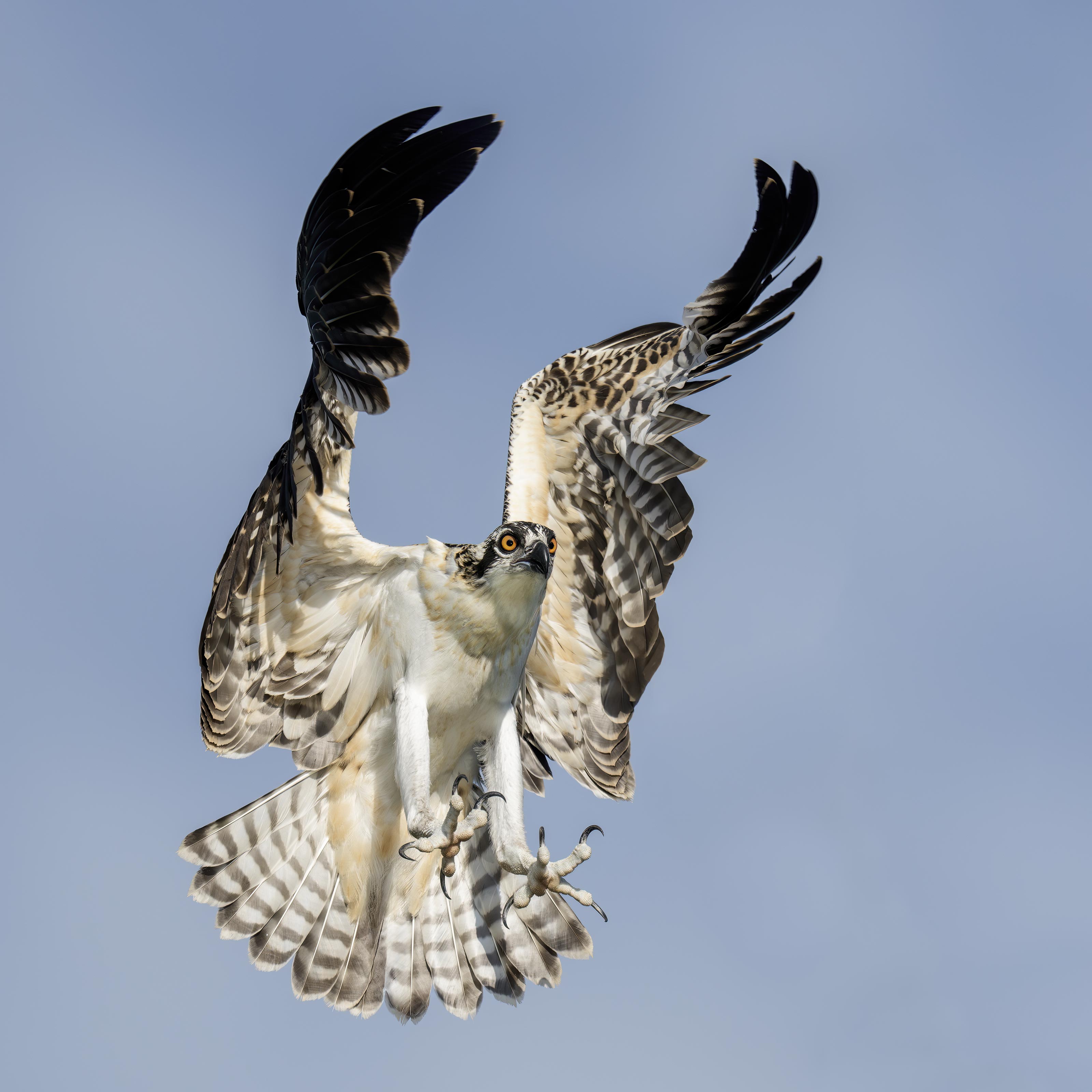
This image was created by yours truly on 12 June, 2026. Standing at full height, I used the Robus RC-5570 Vantage Series 3 Carbon Fiber Tripod/Levered-Clamp FlexShooter Pro-mounted Sony FE 600mm f/4 GM OSS lens with the Sony FE 1.4x Teleconverter, and The Latest Greatest Sony Flagship Body, the a1 II Mirrorless Camera. ISO 800. The exposure was determined by Zebras with ISO on the rear wheel: 1/4000 second at f/5.6 (wide open) in Manual mode. AWB at 8:32:55am on sunny morning. Wide/AF-C with Bird-Eye/Face Detection performed perfectly. Click on the image to enjoy the larger, inexplicably sharper high-res version. Image #1: Osprey — juvenile male on final approach |
Lucky Wind
Early on some south wind mornings two weeks ago there was actually a breeze from the east coming down the canal at the natural Osprey nest by the tangerine house. Lucky me.
Hand hold or Tripod for Flight?
If a lens is too heavy to hand hold, you gotta be on a tripod topped by a Levered-Clamp FlexShooter Pro. Set up the tripod tall enough so that you do not have to stoop down when shooting flight but not so tall the you cannot easily stay on birds landing in the water or on the ground. Lenses in this category for me include the Sony FE 600mm f/4 GM OSS and the Sony FE 400-800mm f/6.3-8 G OSS lens (Sony E).
Conversely, I pretty much never put the Sony FE 200-600mm f/5.6-6.3 G OSS lens or the Sony FE 300mm f/2.8 GM OSS Lens (Sony E) on a tripod. And my widest lens (!), the Sony FE 70-200mm f/2.8 GM OSS II is as light as a feather.
|
|
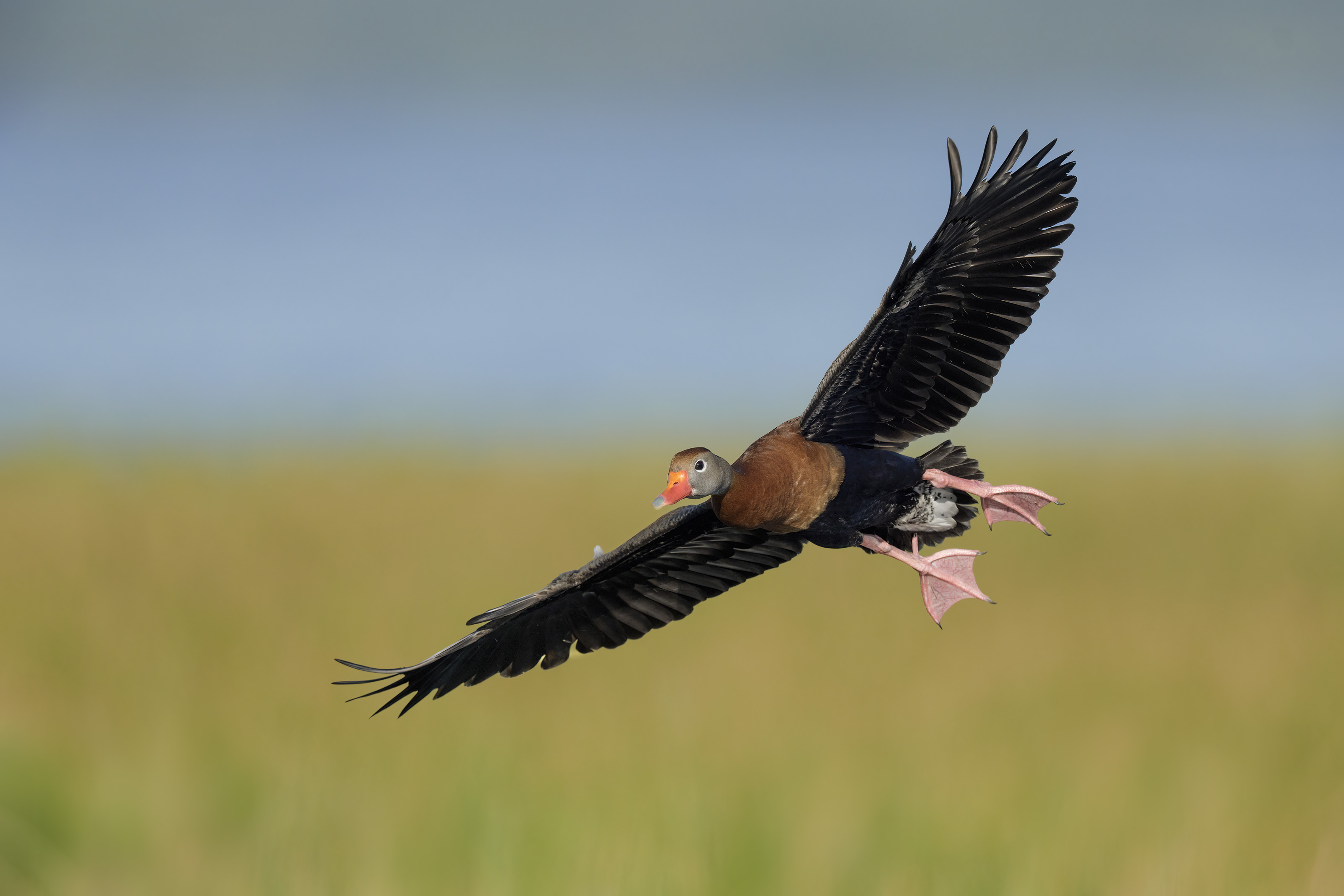
This image was created by yours truly on 16 June, 2026. Standing at full height, I used the Robus RC-5570 Vantage Series 3 Carbon Fiber Tripod/Levered-Clamp FlexShooter Pro-mounted Sony FE 600mm f/4 GM OSS lens with the Sony FE 1.4x Teleconverter, and The Latest Greatest Sony Flagship Body, the a1 II Mirrorless Camera. The exposure was determined by Zebras with ISO on the rear wheel. ISO 800: 1/4000 second at f/5.6 (wide open) in Manual mode. AWB at 8:07:02am early on sunny morning. Wide/AF-C with Bird-Eye/Face Detection performed perfectly. Click on the image to enjoy the larger, inexplicably sharper high-res version. Image #2: Black-bellied Whistling Duck on final approach |
Another Lucky Wind
Similarly, the forecast breezes from the SW materialized early on from the SE, a huge difference that made images like the one immediately above possible.
|
|
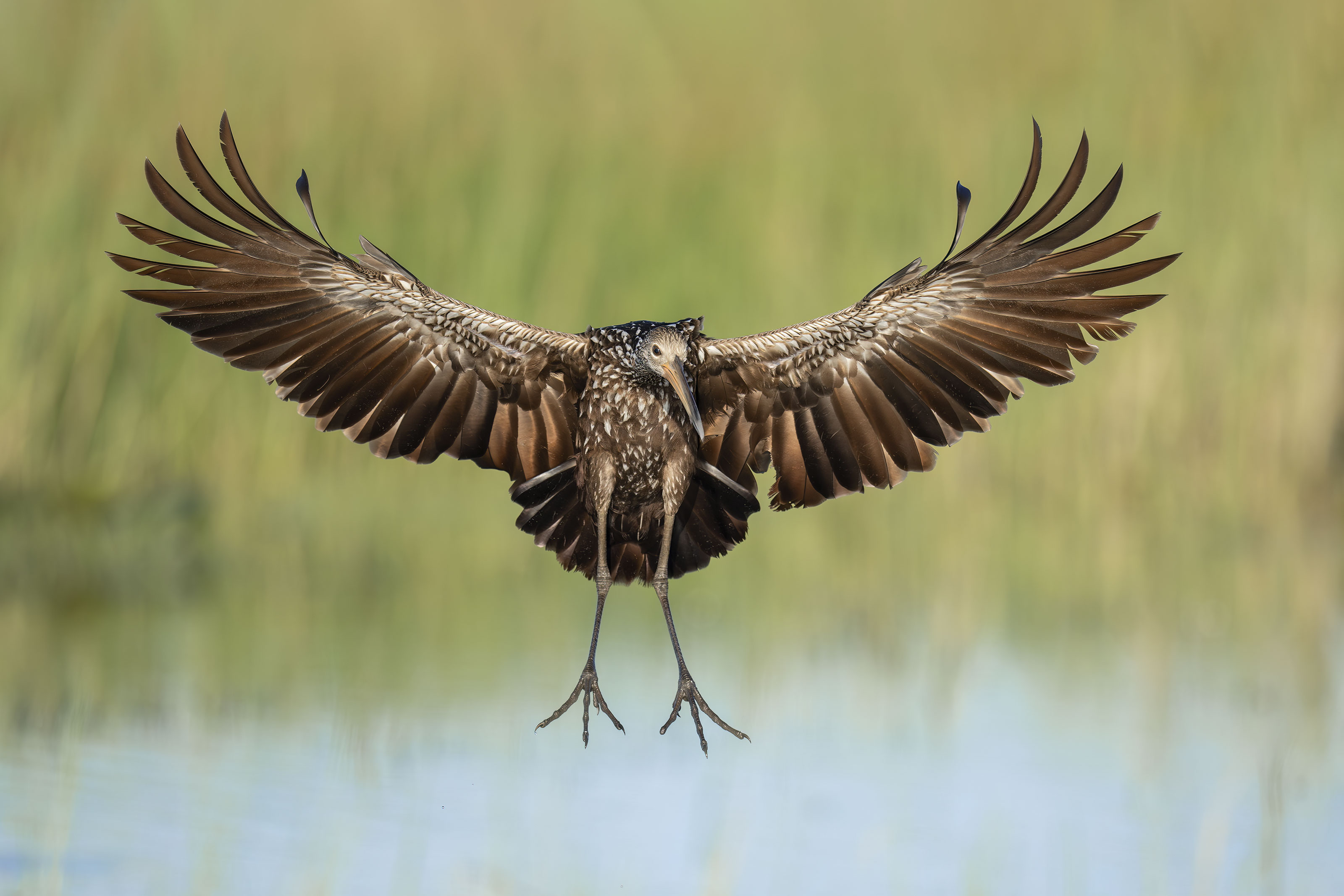
This image was created by yours truly on 21 June, 2026. Standing at full height, I used the Robus RC-5570 Vantage Series 3 Carbon Fiber Tripod/Levered-Clamp FlexShooter Pro-mounted Sony FE 600mm f/4 GM OSS lens and The Latest Greatest Sony Flagship Body, the a1 II Mirrorless Camera. The exposure was determined by Zebras with ISO on the rear wheel. ISO 1000: 1/4000 second at f/4 (wide open) in Manual mode. AWB at 7:36:22am early on sunny morning. Wide/AF-C with Bird-Eye/Face Detection performed perfectly. Click on the image to enjoy the larger, inexplicably sharper high-res version. Image #3: Limpkin — adult braking to land |
Birds Going Somewhere With a Purpose
Sometimes, even when the wind is wrong, a bird may fly right at you to get where it wants to. With a negligible breeze, this Limpkin landed right at me. When I saw it coming, I quickly added one click of ISO for the darker-than-a-whistling-duck subject and toggled out of APS-C mode.
|
|
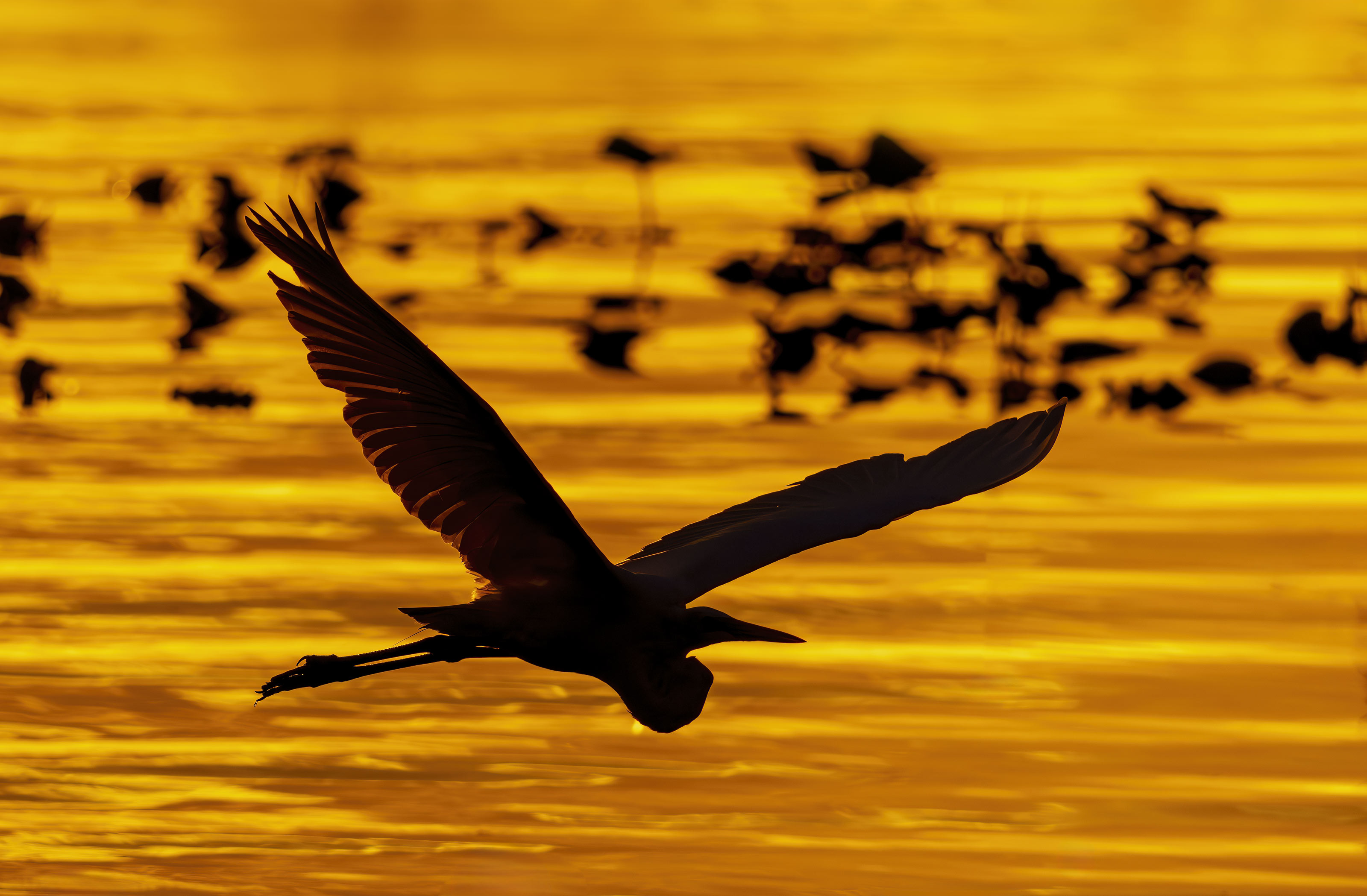
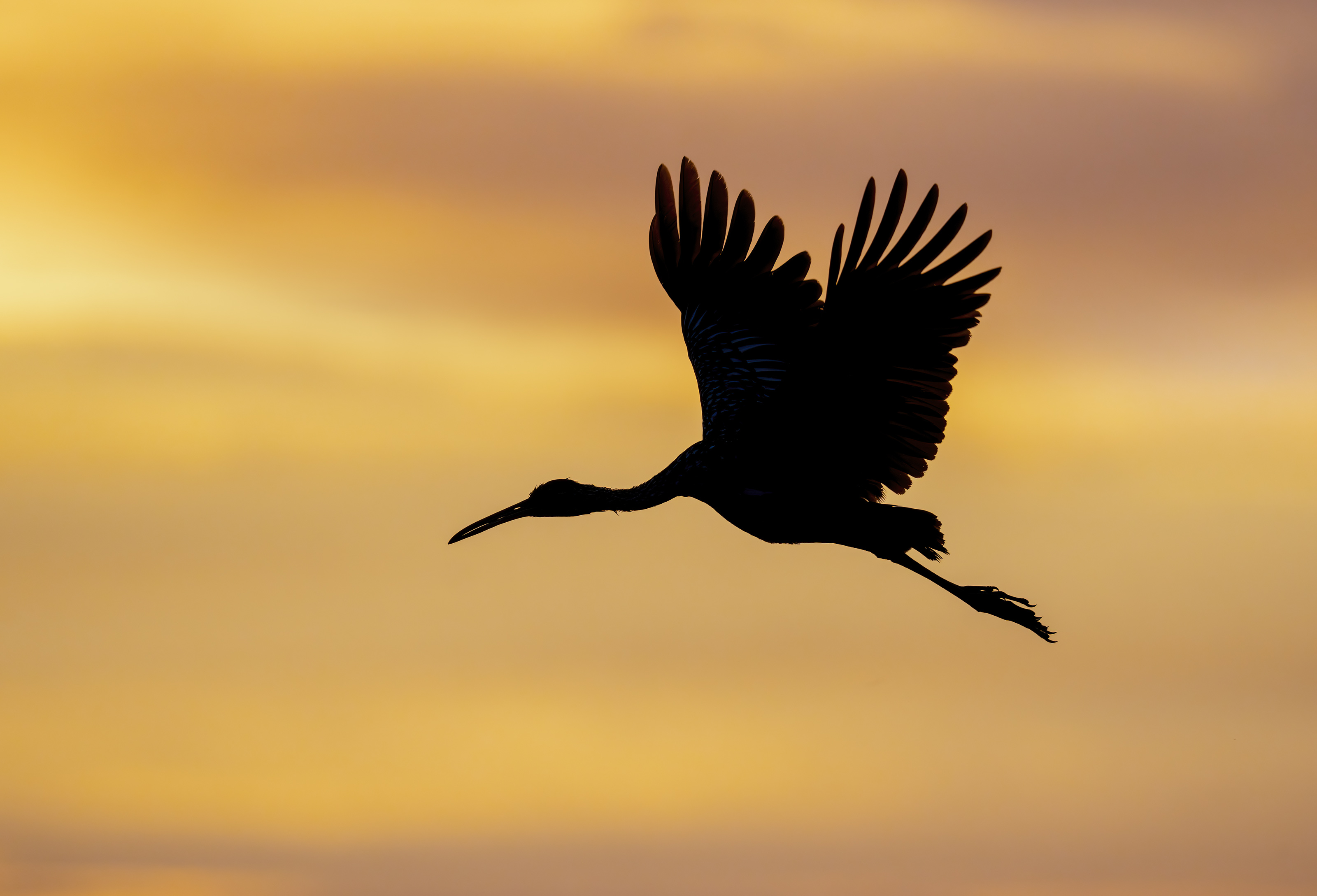
This image was created on 25 June 2026 from the pier at ILE. Standing at full height, I used the Robus RC-5570 Vantage Series 3 Carbon Fiber Tripod/Levered-Clamp FlexShooter Pro-mounted Sony FE 400-800mm f/6.3-8 G OSS lens (Sony E) (at 630mm) and The Latest Greatest Sony Flagship Body, the a1 II Mirrorless Camera (in APS-C crop mode). The exposure was determined by Zebras with Exposure Compensation (EC) on the thumb wheel. Multi Metering +1.0 stops. AUTO ISO set ISO 6400: 1/1600 second at f/8 (wide open) in Shutter Priority mode. AWB at 8:14:51pm on a partly cloudy evening. Wide/AF-C with Bird-Eye/Face Detection performed perfectly. Click on the image to enjoy the larger, inexplicably sharper high-res version. Image #4: Great Egret flying east at sunset |
React as Quickly As Possible
I saw this bird flying low into the color at the last second so I did not have enough time to get out of APS-C crop mode. Though I clipped the wings on many of them, I got the whole bird in on the strongest of the lot.
|
|
This image was created on 25 June 2026 from the pier at ILE. Standing at full height, I used the Robus RC-5570 Vantage Series 3 Carbon Fiber Tripod/Levered-Clamp FlexShooter Pro-mounted Sony FE 400-800mm f/6.3-8 G OSS lens (Sony E) (at 667mm) and The Latest Greatest Sony Flagship Body, the a1 II Mirrorless Camera. The exposure was determined by Zebras with Exposure Compensation (EC) on the thumb wheel. Multi Metering +1.0 stops. AUTO ISO set ISO 6400: 1/1600 second at f/8 (wide open) in Shutter Priority mode. AWB at 8:23:22pm on a partly cloudy evening. Wide/AF-C with Bird-Eye/Face Detection performed perfectly. Click on the image to enjoy the larger, inexplicably sharper high-res version. Image #5: Limpkin flying southeast at sunset |
A Northwest of the Pier Sunset Flight Image
I mentioned here just the other day that the Limpkins feeding north of the pier would often leave by flying to the south through the color just before sunset. With the sky lit up nicely last night, there was enough light to go sharp rather than to try for pleasing blurs. As the light levels were quite low, I hade gone to 1/500 second for the foraging birds. Working in shutter priority mode with AUTO ISO and EC on the Thumb Dial, all I needed to do was raise the shutter speed to a just fast enough 1/1600 second. The rest came out in the wash.
|
|
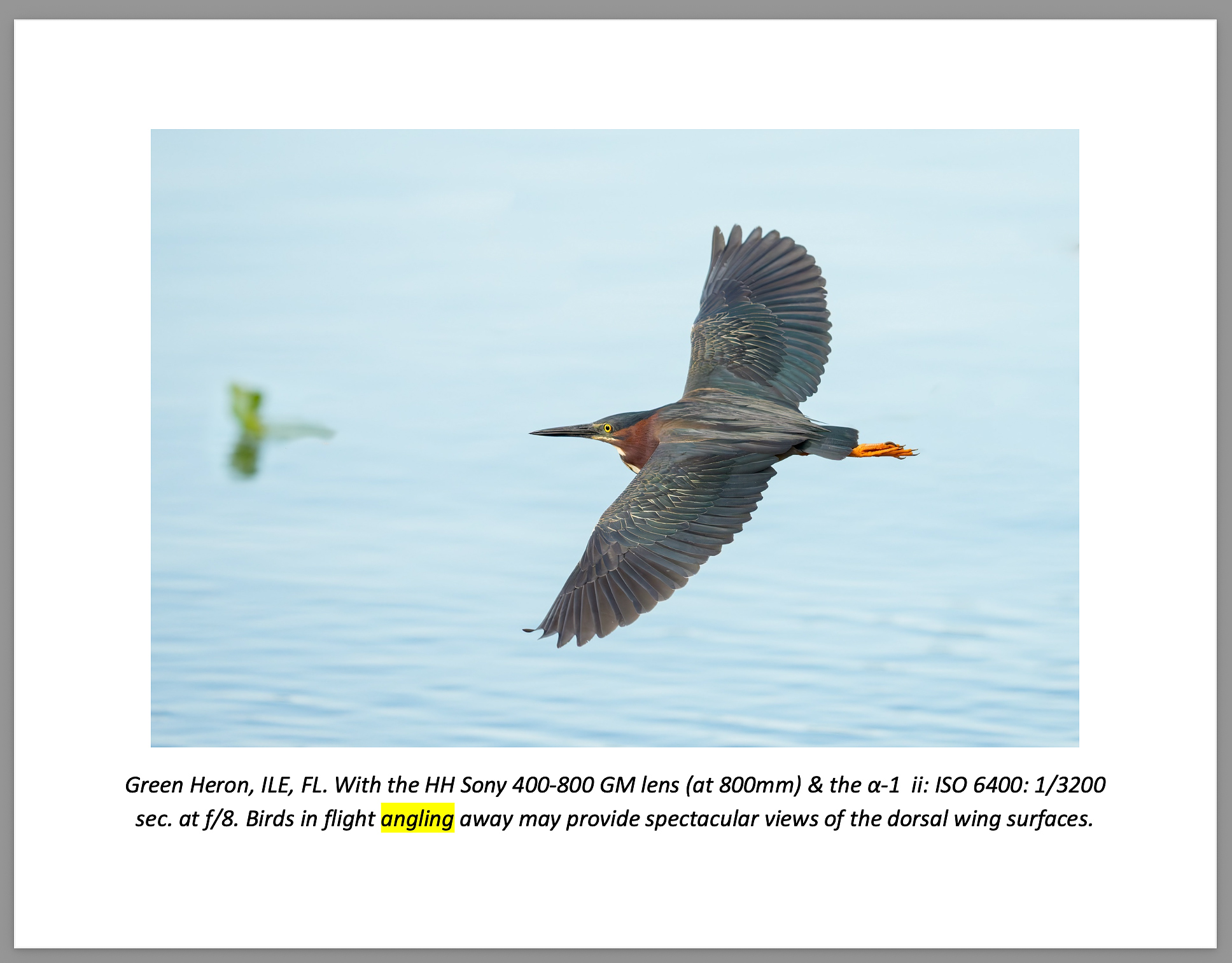
Sample Page #1. Image copyright 2024: Arthur Morris/BIRDS AS ART, the senior author. Page 254 of The Complete and Quintessential Guide to Photographing Birds in Flight |
Sample Page #1
Birds in flight that are flying away from you may at times provide spectacular views of the dorsal wing surfaces.
|
|
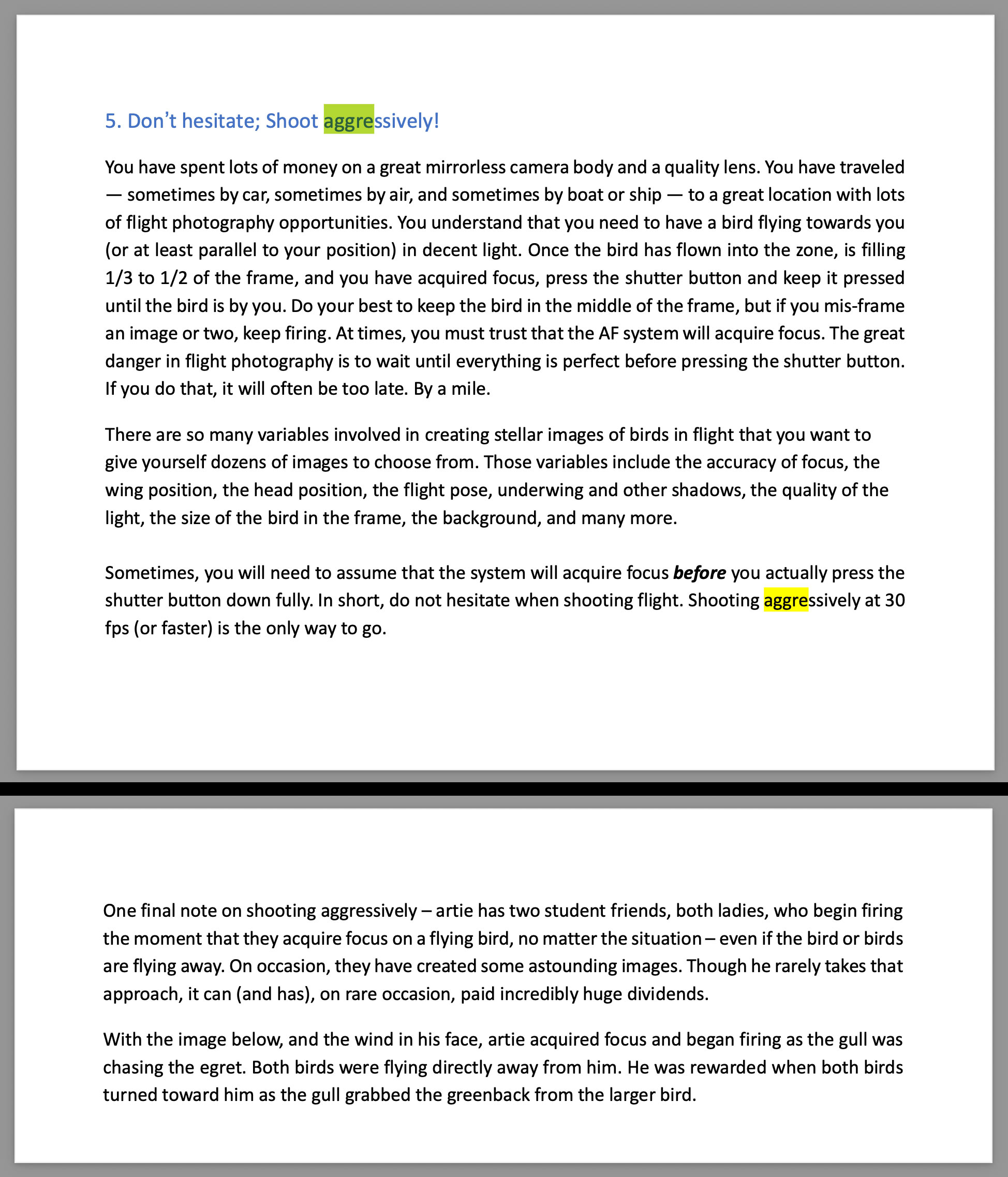
Image copyright 2024: Arthur Morris/BIRDS AS ART, the senior author. Sample pages #2 & 3. Pages 106 & 107 of The Complete and Quintessential Guide to Photographing Birds in Flight |
Sample pages #2 & 3
It is — for many reasons, imperative that you shoot aggressively when doing flight photography. If you wait for it to be perfect, you will usually wind up with nothing. That said, most of my flight sequences rarely consist or more than seven or eight frames; I do not blast away at specks and once the bird is past the light and flying away from me I quit shooting.
|
|
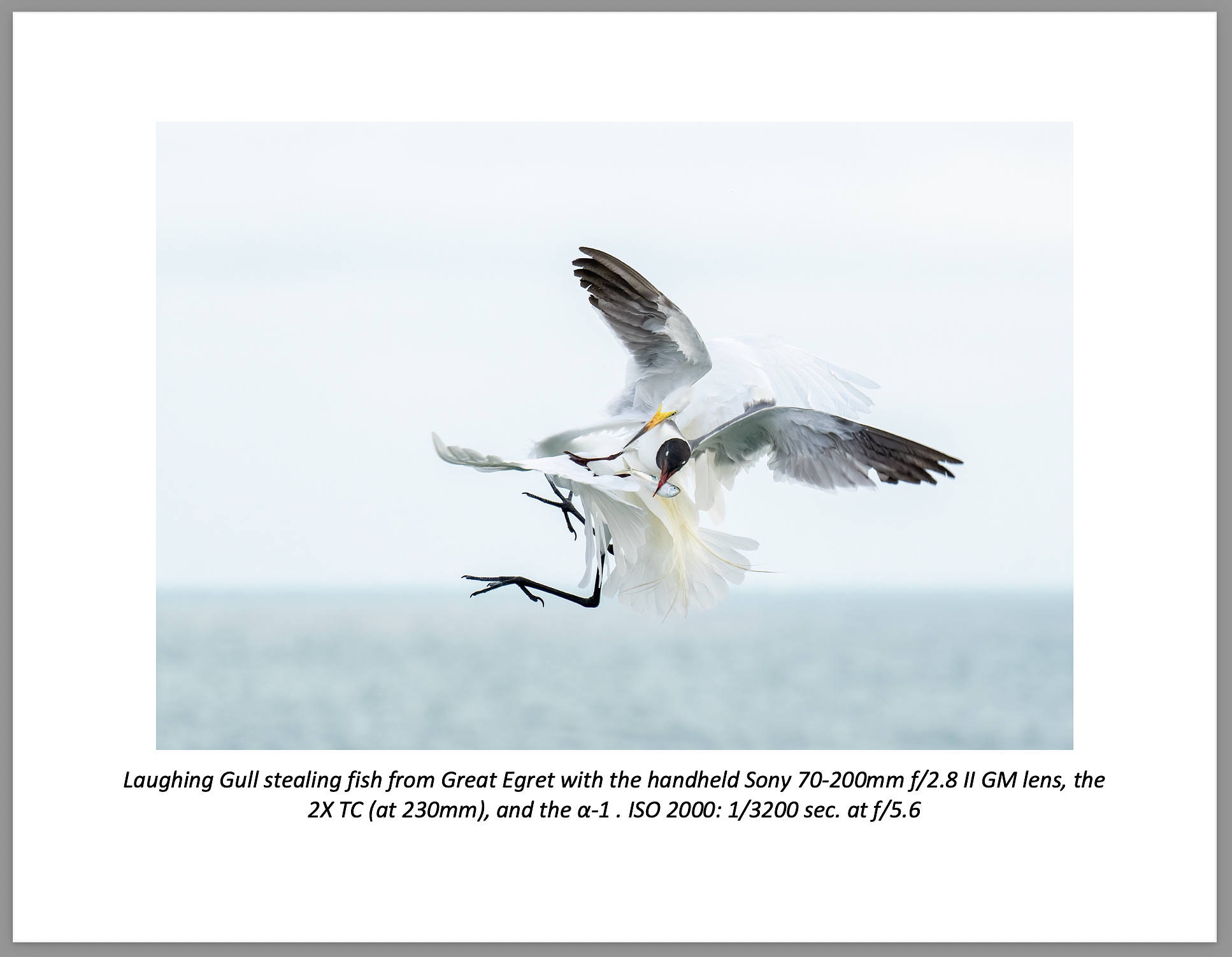
Image copyright 2024: Arthur Morris/BIRDS AS ART, the senior author. Sample page #4 Page 108 of The Complete and Quintessential Guide to Photographing Birds in Flight |
Sample page #4
Sometimes you need to press the shutter button and hold it down just in case the bird or birds turn back to look at you. The Great Egret above was flying directly away from me but turned abruptly when the gull grabbed the fish. Having learned from two lady photographer friends, I was right on this one!
Shooting flight aggressively can enable you to make images that on the surface, would seem impossible.
|
|
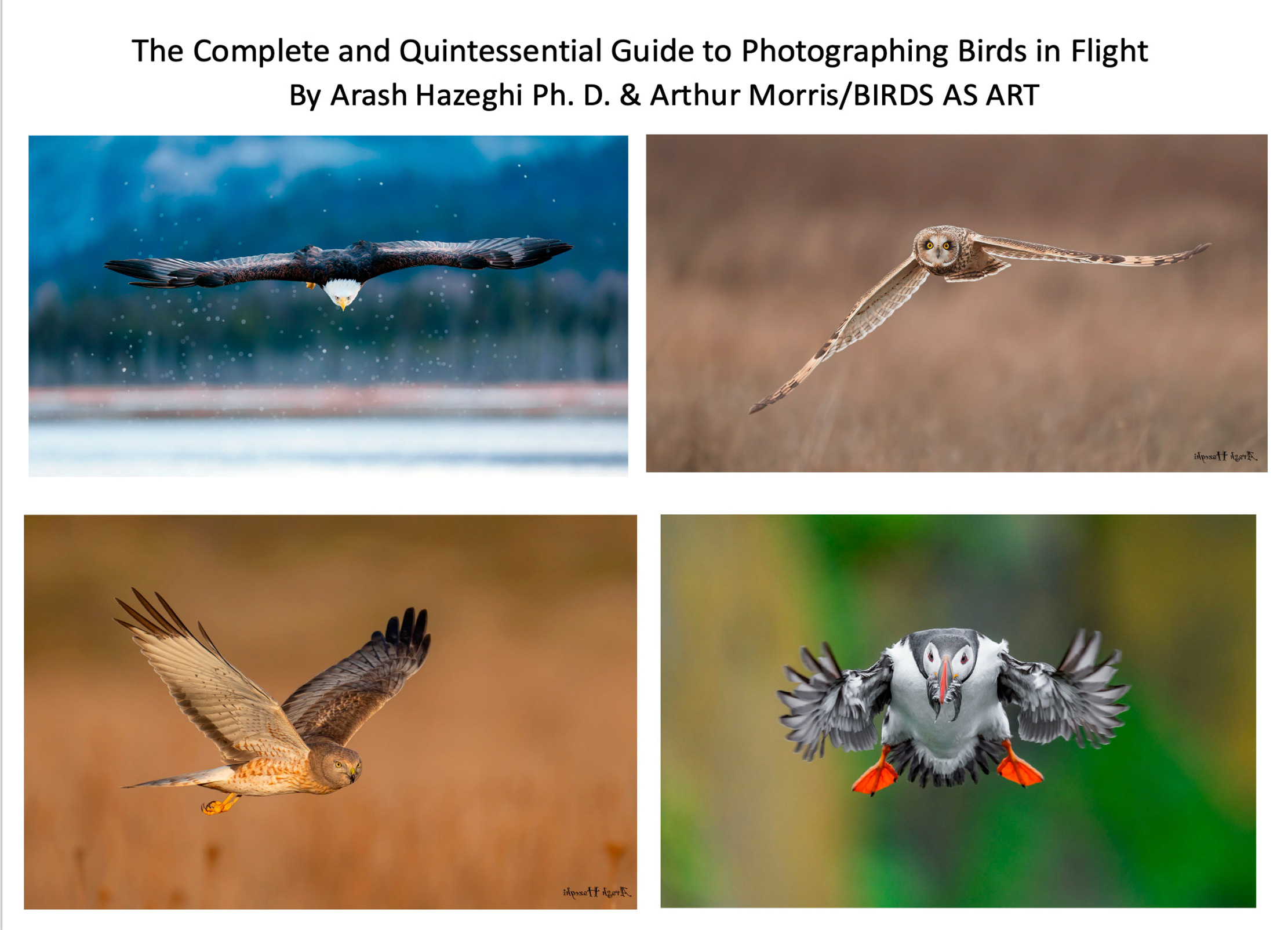
The title says it all. Purchase your copy here. The Complete and Quintessential Guide to Photographing Birds in Flight
|
The Complete and Quintessential Guide to Photographing Birds in Flight: $99.00
I had long dreamed of becoming a great flight photographer. When using dSLR gear, making sharp images was a huge problem. Most of the time, the camera bodies simply were not up to snuff. Things have changed dramatically with mirrorless technology. The high-end mirrorless camera bodies now feature science fiction-like autofocus systems and frame rates of 30, 40, and even 125 fps. Nowadays, getting the eye sharp is no longer a problem. The problem more often involves selecting the strongest image from a long series of sharp images.
The truth, however, is that there is a lot more than owning a Canon EOS R1, a Nikon Z9, or a Sony a-1 ii to consistently creating great photographs of birds in flight. Some of the biggest factors to success include gear choice, shooting strategies, and understanding the importance of sky conditions and wind speed and direction. Once you have the techniques and technical aspects down pat and can routinely create sharp images, learning the importance of flight poses, wing positions, backgrounds, and subject placement and image design enable you to create and then select superb flight images. And you guessed it, each of those topics and tons more are covered in detail in The Complete and Quintessential Guide to Photographing Birds in Flight.
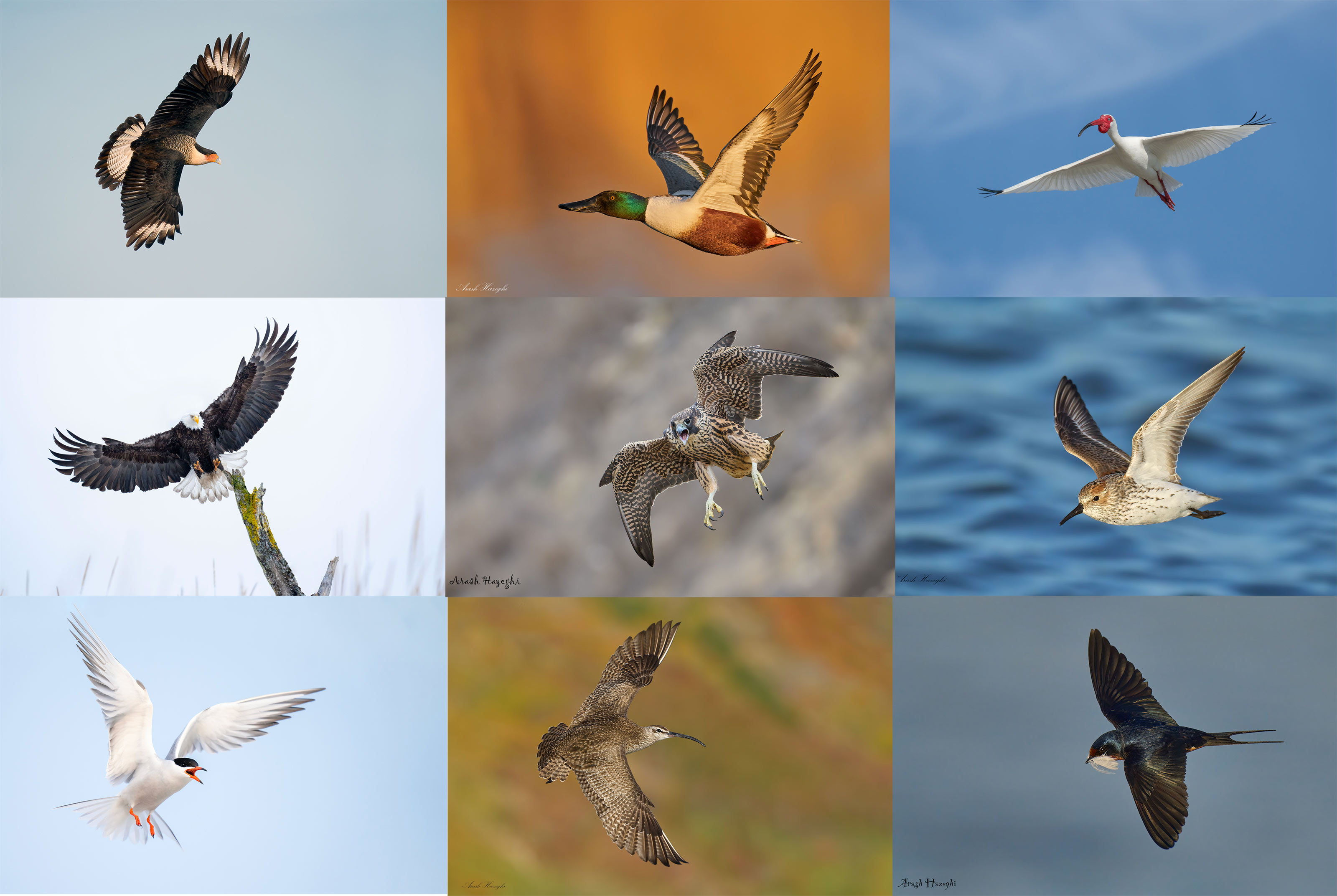
The guide consists of 267 pages and 21,013 words. There are 82 illustrative photos scattered throughout the text, two screen captures, and a 112-image gallery that includes examples created by Canon, Nikon, and mostly Sony gear. As seen above, each of the 194 inspirational photos is labeled with an educational caption.
You can purchase your copy here for $99.00.
Arash Hazeghi
Arash Hazeghi, Ph.D. is a principal electron device engineer. He received his Ph.D. degree in Electrical Engineering in 2011, from Stanford University, Stanford, California. His pioneering research on Carbon Nanotubes has been cited many times. In the past decade, Arash Hazeghi has been a major contributor to the research and the development of some of the most cutting-edge technologies introduced by Silicon Valley’s most reputable names including SanDisk, Intel and Apple.
More relevant here is that he is widely recognized as one of the world’s best birds in flight photographers. He specializes in raptors and the technical aspects of bird photography.
|
|
Flight photography is a skill that can be studied, practiced, and learned. Learn to get better in The Complete and Quintessential Guide to Photographing Birds in Flight |
The Complete and Quintessential Guide to Photographing Birds in Flight
By Arash Hazeghi Ph.D., and Arthur Morris/BIRDS AS ART
What you will learn (about):
-
1- Weight and handholding super-telephoto lenses.
2- Weight and handholding intermediate telephoto and telephotos zoom lenses.
3- Choosing the right flight photography lens or lenses for you.
4- The importance of focal length for flight photography.
5- The importance of lens speed (the maximum aperture for flight photography.
6- Choosing between fixed focal lengths and zoom lenses for flight photography.
7- The importance of AF speed and performance for flight photography.
8- Handholding tips and techniques.
9- Shooting flight off a tripod with the Levered-clamp FlexShooter Pro.
10- Flight poses and wing positions.
11- Why artie changed his mind about the 400mm f/2.8 lenses for flight and more.
12- The advantages and disadvantages of using teleconverters for flight photography.
13- Why to stay away from off-brand lenses.
14- Understanding the importance of wind direction and speed for flight photography.
15- The relationship between sky conditions and wind direction and how it affects flight photography.
16- Creating flight silhouettes in wind-against-sun conditions.
17- The importance of being on sun angle for flight photography (and avoiding harsh shadows).
18- Tips on doing flight photography in cloudy, foggy, or overcast conditions.
19- About the direction of light in cloudy, foggy, or overcast conditions and how it affects flight photography.
20- How your understanding of bird behavior can dramatically improve your flight photography.
21- Tips on attracting birds for flight photography.
22- What to do when your camera’s AF system is temporarily blind.
23- The vital importance of pre-focusing.
24- How Direct Manual Focus can help you with flight photography.
25- The importance of shooting aggressively when doing flight photography.
26- Everything that you need to know with regards to rest positions for flight photography.
27- The importance of getting low when doing flight in many situations.
28- Getting the right exposure when doing flight photography.
29_ Why to use Manual mode 95% of the time for flight.
30- Tips on finding the bird in the frame, acquiring focus, and tracking the bird in flight.
31- How to set and best utilize your lens’s image stabilization feature (and why).
32- Setting the focus range limiter switch on your flight lens or lenses.
33- To choose the best shutter speed for photographing birds in flight.
34- The vital importance of pre-focusing. And yes, this is so important that it is on the list twice.
You can purchase your copy here.
Typos
With all blog posts, feel free to e-mail or to leave a comment regarding any typos or errors.







Dear Art: I haven’t been able to access your blog since I’m on a cruise. But I had to tell you I love #1!
Hey artie, enjoyable video with lots of good info and images! I’m really digging the Brandt’s Cormoront head-on at 7:51. Of the five featured images the Limpkin has the wow factor for me.
Thanks a stack Dan! So when are you and Randy coming to FLA? Before I die I hope!
with love, artie
I like #2, great light on that duck not to mention the color!
Thanks, AA. Those ducks get me up early every morning!
with love, a
#1 and #3 for me on the featured images. They are tack sharp as usual and make me want to try harder and learn more. The video, hard choice but I think the kestrel with the spider. Kestrels are difficult to capture but one with a spider!! That’s really phenomenal skill and a beautiful action shot.
Thanks, Sandy. I lifted the 840 rig off the BLUBB when the kestrel took flight with the spider! I was surprised that I got a good one!
with love, and hope to see you at Nickerson.
ps: Carolyn Johnson signed up for a few days.
Beautiful and artistic and VERY sharp. A goal to push me further. BTW I got both but did not have time to watch until just now. Thanks for sharing this will all of us.
My absolute pleasure. I will see you in JAX soon!
with love, a
#1 and #3 are both darn special in my eyes. Haven’t watched your video yet.
Thanks Jeff. You will enjoy it!
with love, a
Saw both posts. Was too busy to watch the 1st post. I think repositioning the attacking bird of the whistling duck composite may show that action better. Great work.
Thanks J Marr. Hope that you got lots of work done.
with love, a
Inspiring work as always! Great to see what experience, skill and technological innovations can bring!
Thanks, Pugs! See you guys in Jax soon for the Royal Tern chicks!
with love, artie