
Summary
I worked with the new Sony FE 100-400mm f/4.5 GM OSS lens extensively for the past three mornings. The lens is indeed one to be reckoned with. It is small, relatively light and amazingly versatile. I was able to handhold it for hours with only a bit of fatigue coming on at the end of the sessions. Performance and sharpness with the 1.4X TC was excellent as expected. Amazingly, the same was true with the 2X TC in place. Learn more in the A Lens to Be Reckoned With item just below.
Note: Copy and technical editing, and formatting for this post assisted by Gemini AI. I have never and will never use Generative AI on my photographs.
Your Call?
Which two of today’s 12 featured images are your favorites? Please be so kind — if you are not too busy, to let us know why you made your choices. Note: including the time spent on the image optimizations and screen capture preps, this blog post took more than eight hours to prepare. I will share my top picks with you here in the next post.
What’s Up?
Mornings here at ILE have been sunny and still with temperatures rising well into the 90s. By 3pm or so the clouds take over followed by thunder, lightning, and rain. Photographically, Thursday, 2 July was pretty good. On Friday, conditions were close to perfect — sunny with a faint breeze from the northeast. Very few birds showed up and I struggled to make a very few good ones. On the Fourth of July, there were lots of reasons to celebrate as I created more than 3500 images including some amazingly good ones with the 2X TC.
Because of the heat, I have been doing my long walk — about 1 1/2 miles, well before sunrise to beat the heat. I’ve been watching every World Cup match and have begun working on my 2025 federal tax return. Today is Sunday 5 July. Though the forecast is calling for a light breeze from the SW, I will be heading down to the lake early with only the 100-400 f/4.5 GM lens (and both TCs). Whatever you opt to do, I hope that you too choose to have fun and enjoy life. Please remember that happiness is a choice — Byron Katie, The Work.Com
If an item — a Delkin flash card or reader, a Levered-clamp FlexShooter Pro, or a Wimberley lens plate or low foot — for example, that is available from B&H and/or Bedfords, is also available in the BAA Online Store, it would be great, and greatly appreciated, if you would opt to purchase from us. We will match or beat any price. Please remember also to use my B&H affiliate links or to earn 3% cash back at Bedford by using the BIRDSASART discount code at checkout for your major gear purchases. Doing either often earns you free guides and/or discounts. And always earns my great appreciation.
Gear Questions and Advice
Too many folks attending BAA IPTs and dozens of photographers whom I see in the field and on BirdPhotographer’s.Net, are — out of ignorance — using the wrong gear, especially when it comes to tripods and more especially, tripod heads. And the same is true in spades when ordering new camera bodies or lenses. My advice will often save you some serious money and may help you avoid making a seriously bad choice. Please know that I am always glad to answer your gear questions via e-mail. If you are desperate, you can try me on my cell at 863-221-2372. Please leave a message and shoot me a text if I do not pick up.
A Lens to Be Reckoned With
My conclusion after three days of extensive morning photography are that the Sony FE 100-400mm f/4.5 GM OSS lens is a lens to be reckoned with. It is small, light, and versatile and produces razor sharp images alone or with either TC.
When I am testing a new lens, it is the only one I take down to the lake. Why? Two reasons:
1- The new toy syndrome. Need I say more?
2- I want to test it to the limits in as short a time as possible so that I can get to work on the next BAA Lens Guide. That means that there will be times when I am not using the best possible lens for a given situation.
Everything has played out as expected but for the fact that I was shocked by the images I made at 800mm (f/9 wide open) with the 2X in place. So rather than the two lenses that I mentioned in the last blog post, the fact is that when you own this lens you are actually in possession of three different lenses:
1- A relatively fast 100-400mm super-telephoto zoom lens.
2- A lens with more reach, a 140-560mm f/6.3 that is sharper and lighter than the hugely popular Sony 200-600.
3- A lightweight, hand-holdable 200-800 f/9 lens that rivals the much heavier 400-800 GM. In exchange for 1/3-stop of light you save a considerable 1 1/2 pounds and lose a tripod …
My big problem now is deciding which if any of my lenses to sell. One lens that I will not be selling is the 300m f/2.8 GM. More on that in the next post.
After three days, my only wish is that the Tight setting was just a bit looser. Otherwise, the new lens is a dream.
JAX
I will be heading to Huguenot Memorial Park this Thursday for a week to photograph 7000 pairs of Royal Terns and 10,000 pairs of Laughing Gulls with chicks and young of all sizes. I can actually conceive of doing the entire trip with only the Sony FE 100-400mm f/4.5 GM OSS lens and the two TCs. No fuss, no muss, no tripod.
I have two very small groups for these invitation only, BAA Friends AirBnB IPTs. If you are local and would like to join us for a session or three, please get in touch via e-mail for rates and potential dates.
|
|
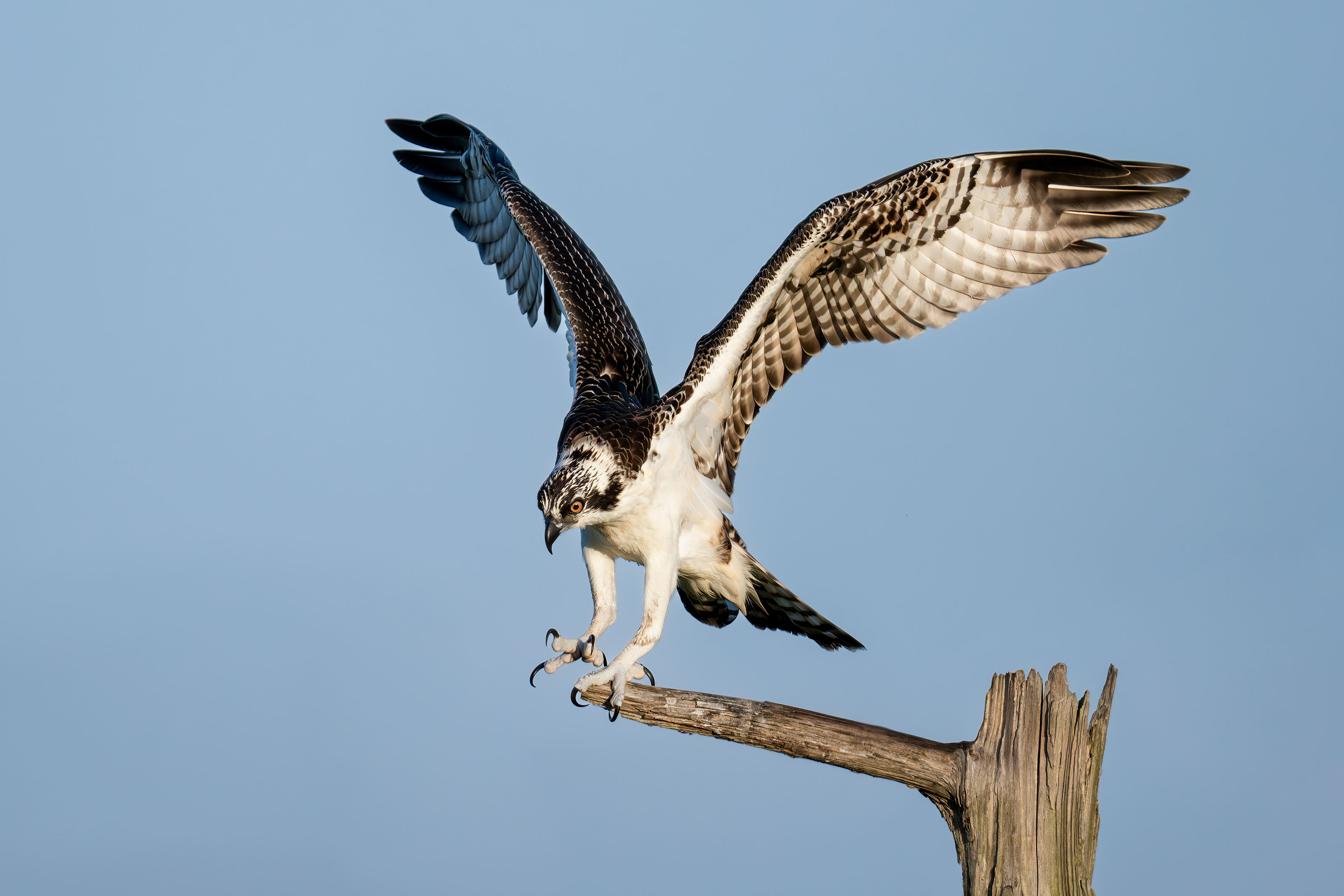
This image was created on 2 July by yours truly down by the lake near my home at Indian Lake Estates, FL. Seated in the front seat of my SUV, I used the handheld Sony FE 100-400mm f/4.5 GM OSS lens with the Sony FE 1.4x Teleconverter (at 560mm) and The Latest Greatest Sony Flagship Body, the a-1 II Mirrorless Camera (in APS-C crop mode). The exposure was determined by Zebras with ISO on the rear wheel. ISO 3200: 1/4000 second at f/6.3 (wide open) in Manual mode. AWB at 7:05:50am on sunny morning. Wide/AF-C with Bird-Eye/Face Detection performed perfectly. Click on the image to enjoy the larger high-res version. Image #1: Osprey — juvenile male with wings raised for balance on The Perch II |
Turn Around Please
Despite a gentle breeze from the NE, this young Osprey was facing to the SW 🙁 I was hoping that it would turn around, and it did. As it turned, it lost its balance and raised its wings to regain its footing, giving me a very good opportunity in the sweet morning light.
The Morning Routine/Route
I get down to the lake at about 6:30am or so. I drive to the left of the pier and put my milk crates (and pillows) in place in about 4 inches of water. Then I head north to check out the natural Osprey nest, checking The Perch II and Bob’ North Perch en route. Then I make my way to the South Peninsula to check on the V-Perch. If I spot anything neat along the way, I will of course stop and partake. If all the perches are empty, I head back to South of the Pier Bay and sit for an hour or two. When I am done, I pack up, take off my shirts, and do a Vitamin D walk on the pier, often with a lens in hand to try for railing head shots or for flight.
|
|
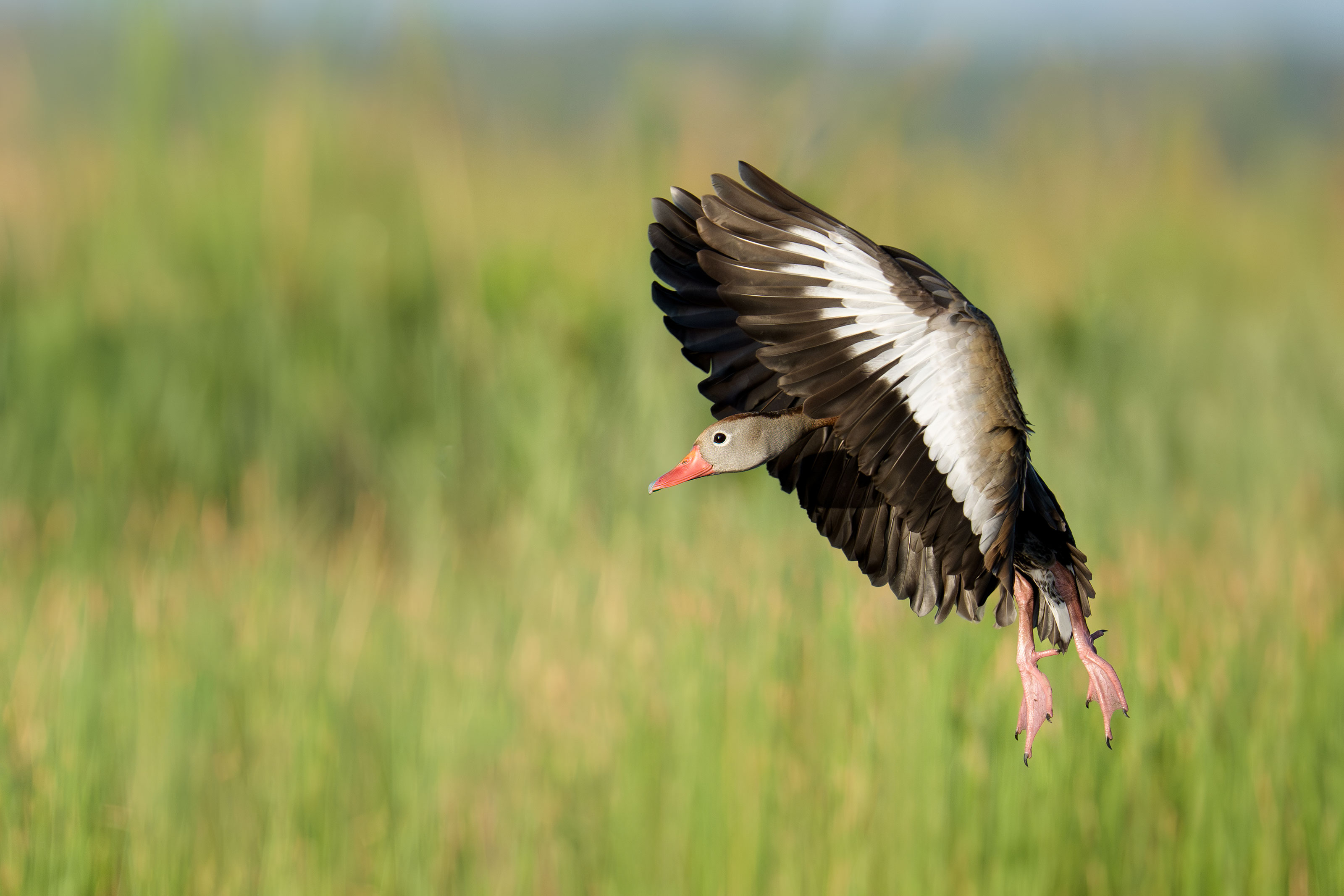
This image was created on 2 July by yours truly down by the lake near my home at Indian Lake Estates, FL. Seated on two pillows atop a sturdy milk crate, I used the handheld Sony FE 100-400mm f/4.5 GM OSS lens (at 400mm) and The Latest Greatest Sony Flagship Body, the a-1 II Mirrorless Camera (in APS-C crop mode). The exposure was determined by Zebras with ISO on the rear wheel. ISO 1600: 1/4000 second at f/4.5 (wide open) in Manual mode. AWB at 7:21:46am on sunny morning. Wide/AF-C with Bird-Eye/Face Detection performed perfectly. Click on the image to enjoy the larger high-res version. Image #2: Black-bellied Whistling Duck on final approach — side view of orchestra conductor pose |
One APS-C Advantage
Had I added the 1.4X TC here instead of going crop mode I would have needed to double the ISO to 3200. That is workable, but not my favorite thing to do unless absolutely necessary.
|
|
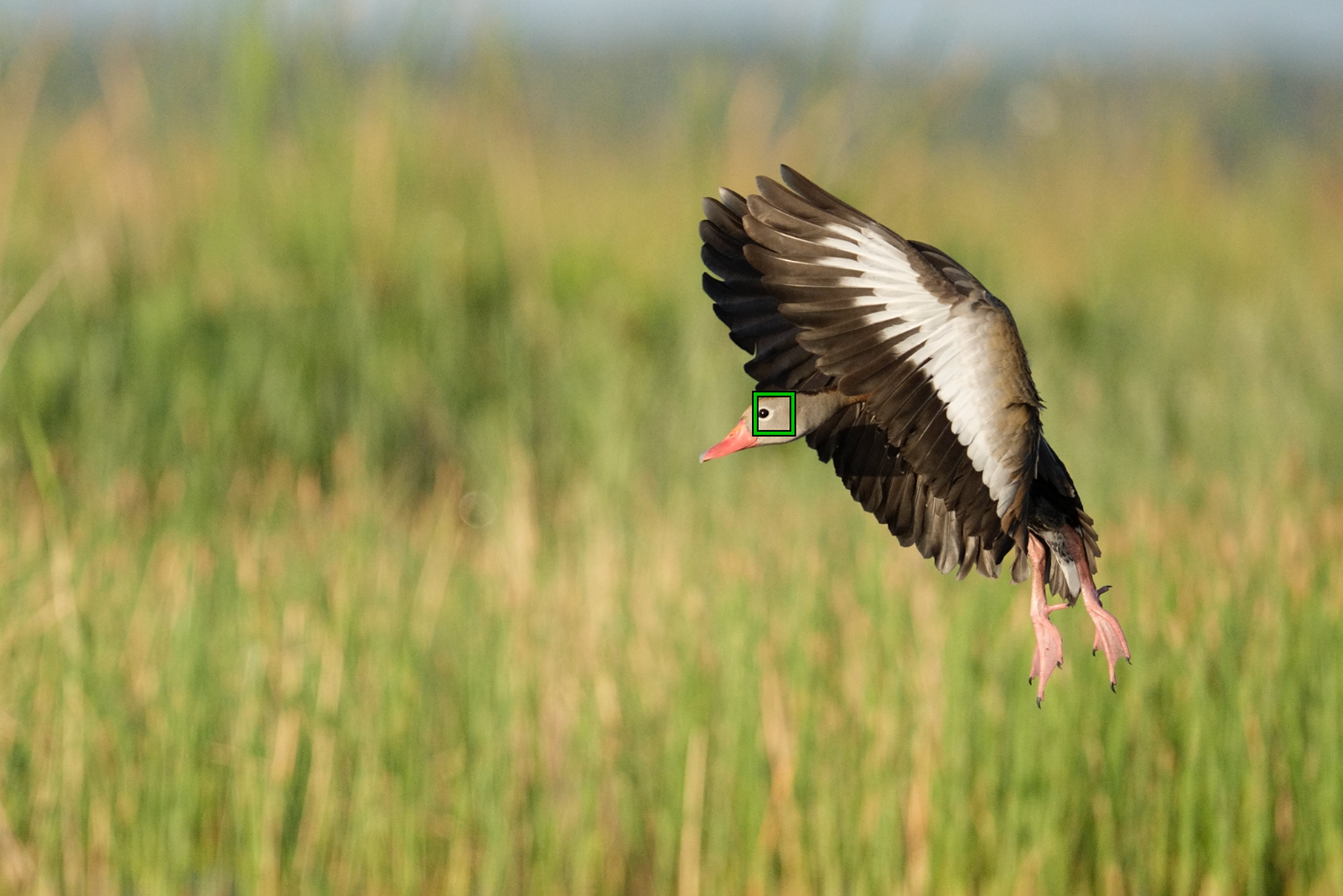
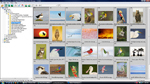
The small green box is the eye-tracking AF Focus Frame Display. Image #2A: Imaging Edge Desktop(IEDT)/Viewer screen capture for the Black-bellied Whistling Duck on final approach — side view of orchestra conductor pose image |
Astounding Eye AF
Flight poses like this present great challenges to even the best eye-tracking autofocus systems as many tend to grab some part of the wing. The a-1 ii does that on occasion but it nailed this one perfectly.

|
|
This image was created on 2 July by yours truly at Indian Lake Estates, FL. Standing in muck and working off the tilted rear screen, I used the Sony FE 100-400mm f/4.5 GM OSS lens (at xxxmm) and The Latest Greatest Sony Flagship Body, the a-1 II Mirrorless Camera (in APS-C crop mode). The exposure was determined by Zebras with ISO on the rear wheel. ISO 1000: 1/1000 second at f/9 (stopped down 2 stops) in Manual mode. AWB at 7:44:56pam on sunny morning. Tricking Zone/AF-C with Bird-Eye/Face Detection performed just fine. Click on the image to enjoy the larger high-res version. Image #3: Pickerelweed blossom |
Why Get Lower?
I was very careful tromping around in the muck without a tripod as I did not want to put my $11,000 rig in the drink. Once I got into a relatively stable position, I held the camera at waist level to move the background farther from the blossom. With my reading glasses on, I was easily able to work off the tilted rear monitor while maintaining my somewhat precarious balance. All for a good flower photo.
|
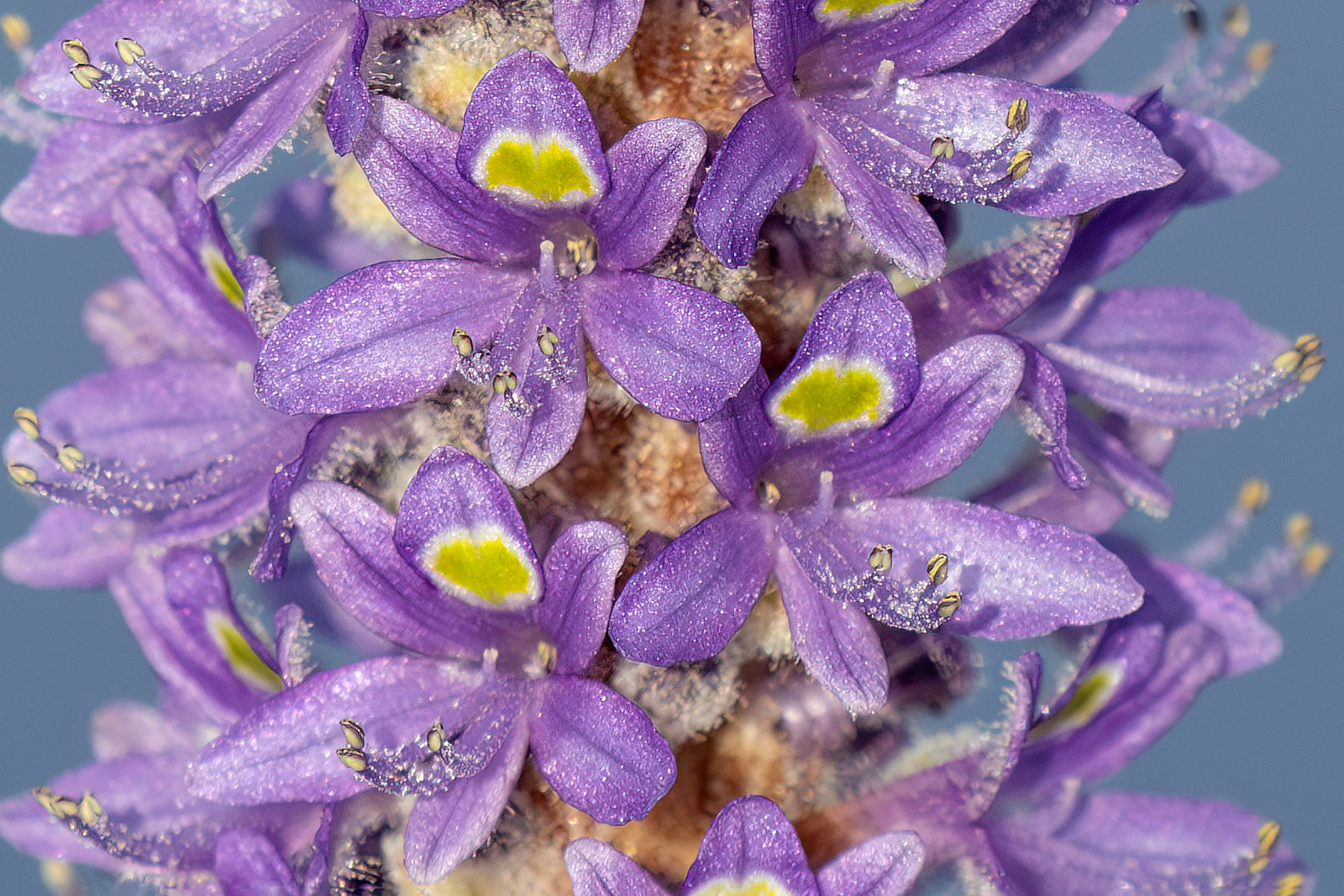
Image #3A: a 100% crop of the Pickerelweed blossom image |
Astounding Sharpness and Detail
Stopping down two stops here produced some amazingly sharp fine detail along with a bit of extra depth of field.
|
|
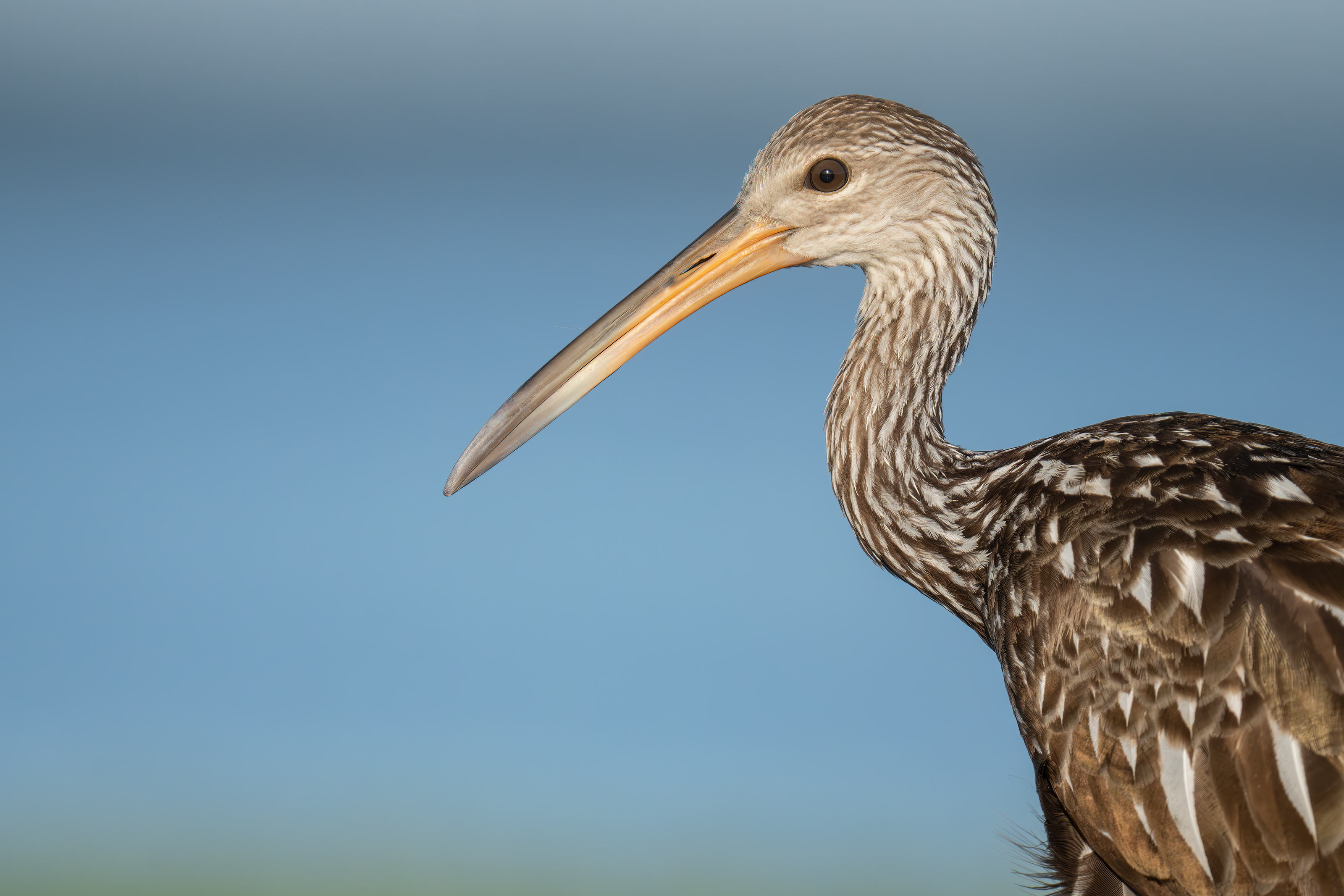
This image was created on 3 July by yours truly down by the lake near my home at Indian Lake Estates, FL. Standing on the pier, I used the handheld Sony FE 100-400mm f/4.5 GM OSS lens with the Sony FE 1.4x Teleconverter (at 560mm) and The Latest Greatest Sony Flagship Body, the a-1 II Mirrorless Camera (in APS-C crop mode). The exposure was determined by Zebras with ISO on the rear wheel. ISO 1250: 1/3200 second at f/6.3 (wide open) in Manual mode. AWB at 7:58:32am on sunny morning. Wide/AF-C with Bird-Eye/Face Detection performed perfectly. Click on the image to enjoy the larger high-res version. Image #4: Limpkin head and shoulders portrait |
Getting on Sun Angle for Better Pier Railing Head Shots
The pier runs east/west. It has a “T” section at the end. The sun is in the northeast. Best is when the birds sit on the south railing. Unless you move very slowly and get right on sun angle you will have the southern “T” section as your background. I am able to get a lot closer when I am not carrying a lens. That said, some of the birds let me get within nine or ten feet with my handheld gear.
|
|
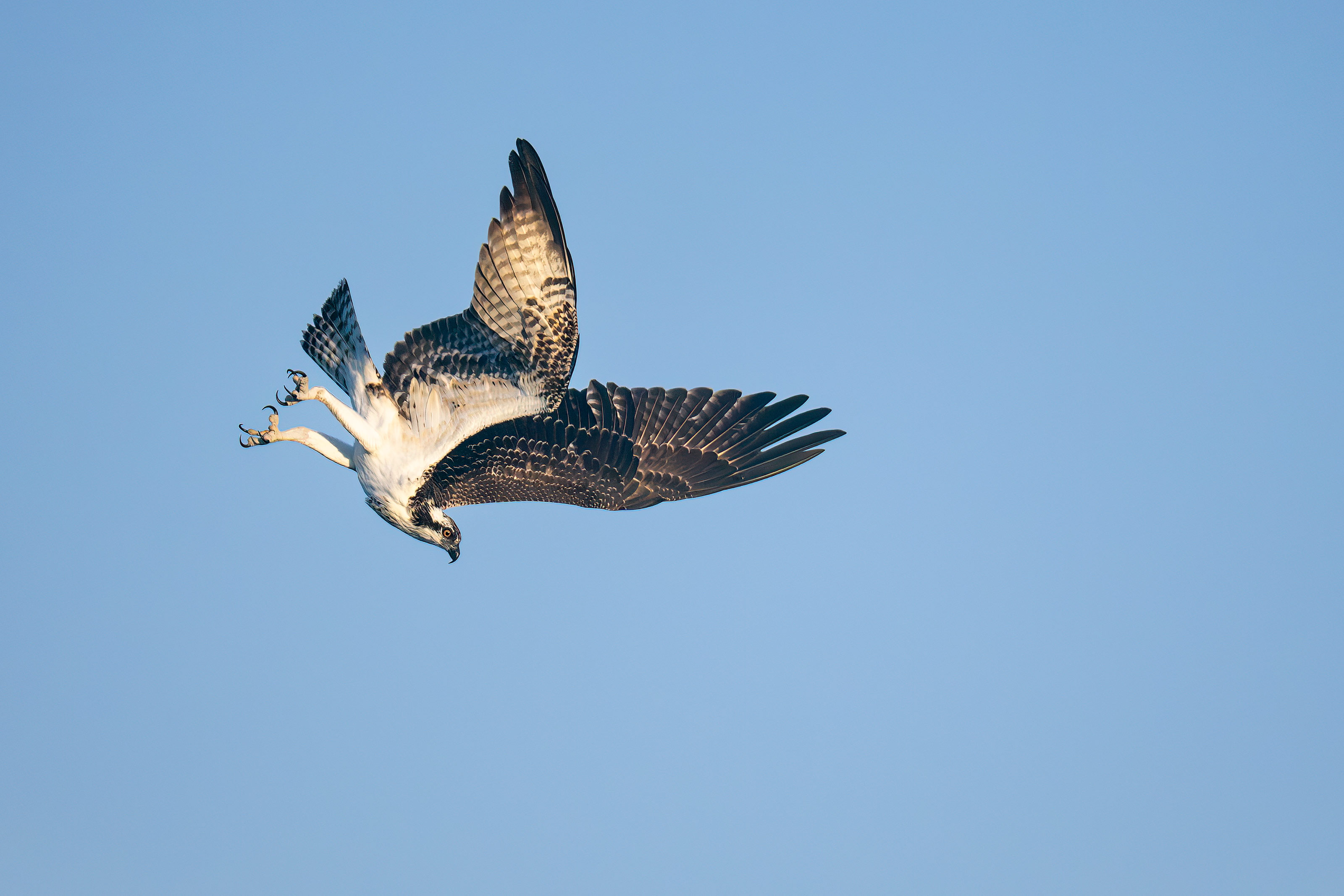
This image was created on 3 July by yours truly down by the lake near my home at Indian Lake Estates, FL. Seated on two pillows atop a sturdy milk crate, I used the handheld Sony FE 100-400mm f/4.5 GM OSS lens (at 400mm) and The Latest Greatest Sony Flagship Body, the a-1 II Mirrorless Camera (in APS-C crop mode). The exposure was determined by Zebras with ISO on the rear wheel. ISO 2500: 1/4000 second at f/4.5 (wide open) in Manual mode. AWB at 7:00:48am on very hazy sunny morning. Wide/AF-C with Bird-Eye/Face Detection performed perfectly. Click on the image to enjoy the larger high-res version. Image #5: Osprey juvenile beginning dive |
A Hot, Humid, Hazy Morning Tip
I keep a well-worn gray athletic shirt on the seat of my vehicle when photographing from my blind on wheels. I remember glancing at it as I headed for my milk crate on Friday morning and thinking, “Perhaps I should bring it along.” So, of course, five minutes after I got in place, I noticed that the front element of the FE 100-400mm f/4.5 had fogged up. 🙁
By pulling up my long-sleeved shirt, I managed to wipe down the front element with the bottom of the t-shirt I was wearing beneath it. But it was not easy. Note: ironically, my lens spent the night in the car in the garage, and I had not had condensation problems recently despite the heat and humidity.
Tip #1: Do not keep your lens in an air-conditioned room before heading out on a hot, humid morning. Condensation problems arrive when you go from cool to warm.
Tip #2: It never hurts to have an old t-shirt or a lens cleaning cloth on your person when you are afield.
|
|
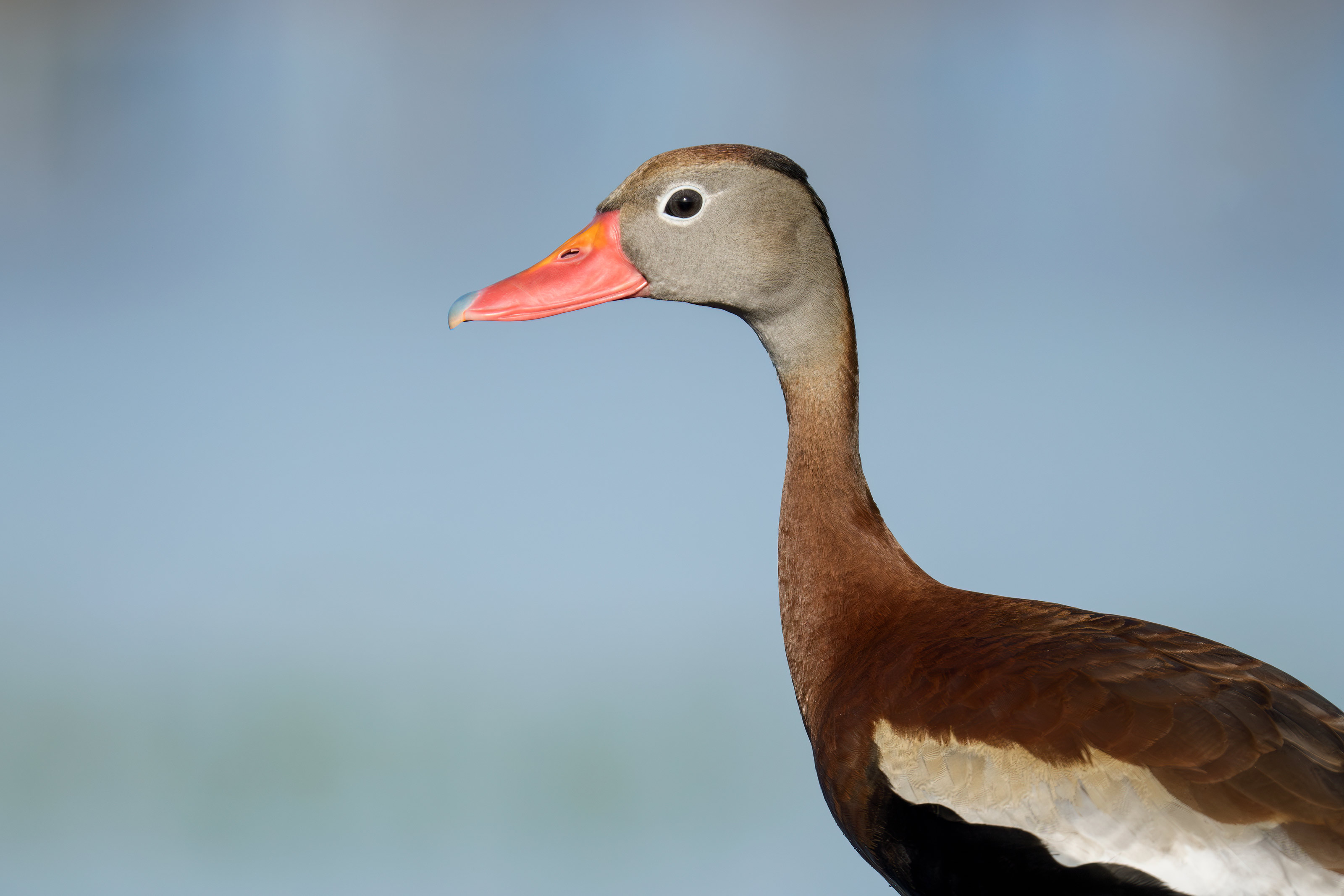
This image was created on 3 July by yours truly down by the lake near my home at Indian Lake Estates, FL. Seated in the front seat of my SUV, I used the handheld Sony FE 100-400mm f/4.5 GM OSS lens with the Sony FE 1.4x Teleconverter (at 560mm) and The Latest Greatest Sony Flagship Body, the a-1 II Mirrorless Camera (in APS-C crop mode). The exposure was determined by Zebras with ISO on the rear wheel. ISO 1250: 1/3200 second at f/6.3 (wide open) in Manual mode. AWB at 7:58:32am on sunny morning. Wide/AF-C with Bird-Eye/Face Detection performed perfectly. Click on the image to enjoy the larger high-res version. Image #6: Black-bellied Whistling Duck sitting on pier railing — head and shoulders portrait |
Almost …
You can just make out the out of focus pier pilings in the top of the frame because I was not quite able to get close enough to eliminate them. I needed another two steps. You can guess what happened when I took them.
|
|
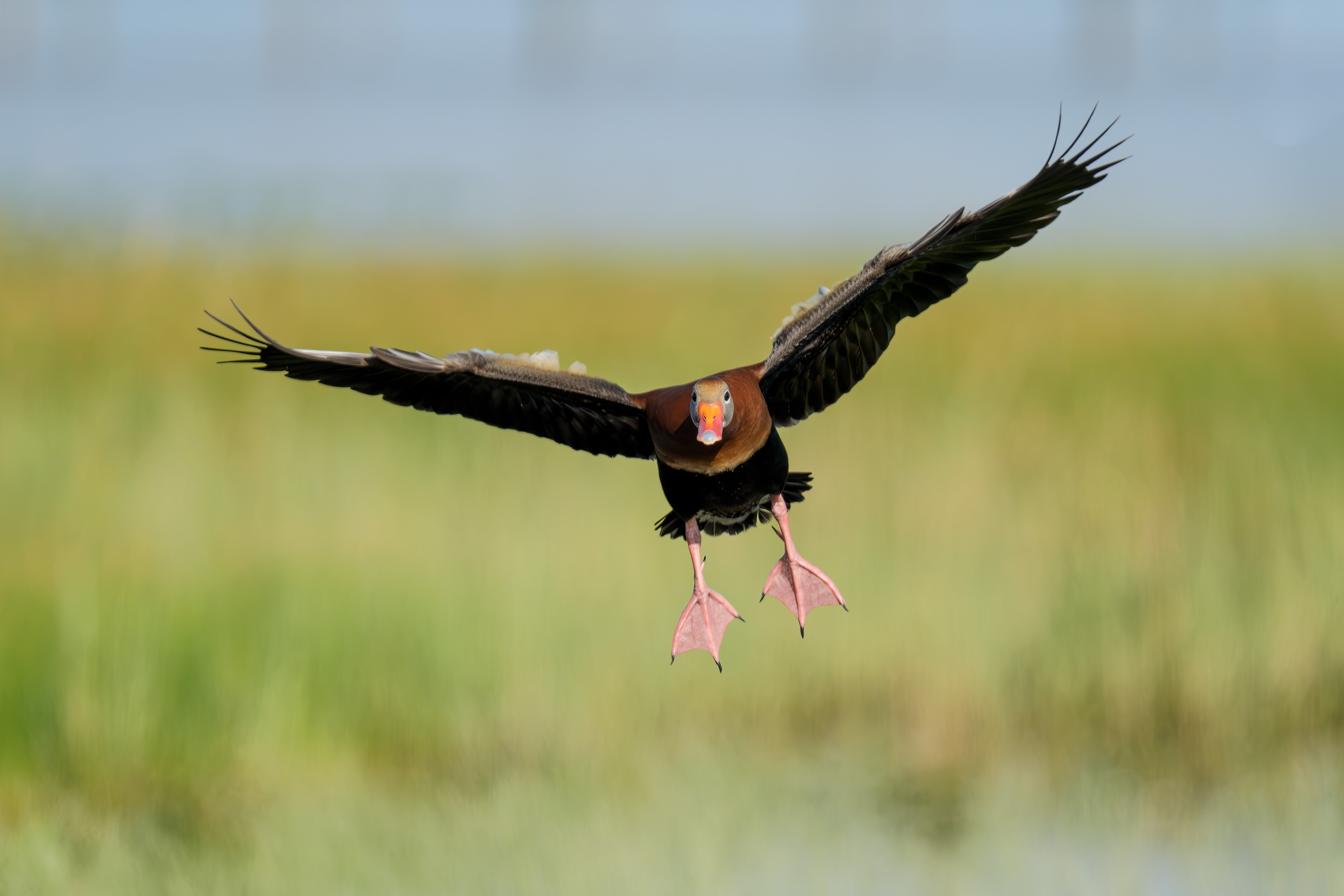
This image was created on 3 July by yours truly down by the lake near my home at Indian Lake Estates, FL. Working from the front seat of my SUV (!), I used the handheld Sony FE 100-400mm f/4.5 GM OSS lens with the Sony FE 1.4x Teleconverter (at 560mm) and The Latest Greatest Sony Flagship Body, the a-1 II Mirrorless Camera (in full frame mode). The exposure was determined by Zebras with ISO on the rear wheel. ISO 1250: 1/4000 second at f/6.3 (wide open) in Manual mode. AWB at 8:41:36am on sunny morning. Wide/AF-C with Bird-Eye/Face Detection performed perfectly. Click on the image to enjoy the larger high-res version. Image #7: Black-bellied Whistling Duck on final approach |
A Shooting from Your Vehicle Tip
Standard advice when using your car as a photographic blind is to shut off the engine to eliminate vibrations. On Friday, it was incredibly hot, and since I was handholding, I left the car running to enjoy the A/C. Bad move: when I viewed the images at 100%, it was obvious that I should have turned the car off. I had to resort to a bit of extra sharpening of the duck’s head when converting the RAW file in Adobe Camera Raw. And it is only early July!
|
|
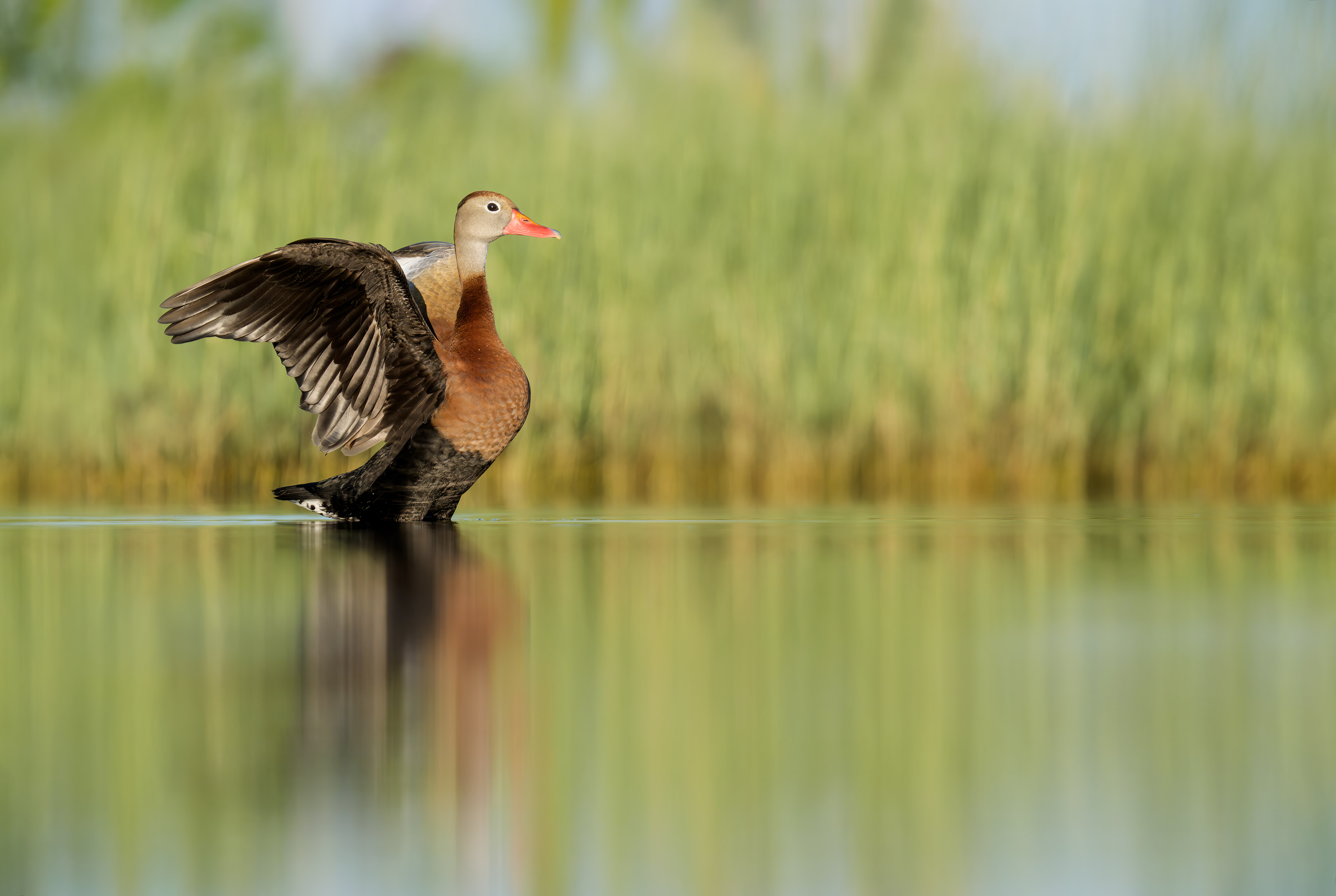
This image was created on 4 July by yours truly down by the lake near my home at Indian Lake Estates, FL. Seated on two pillows atop a sturdy milk crate, I used the handheld Sony FE 100-400mm f/4.5 GM OSS lens with the Sony FE 1.4x Teleconverter (at 560mm) and The Latest Greatest Sony Flagship Body, the a-1 II Mirrorless Camera (in full frame mode). The exposure was determined by Zebras with ISO on the rear wheel. ISO 2000: 1/4000 second at f/6.3 (wide open) in Manual mode. AWB at 7:33:06am on sunny morning. Wide/AF-C with Bird-Eye/Face Detection performed perfectly. Click on the image to enjoy the larger high-res version. Image #8: Black-bellied Whistling Duck flapping after bath |
A Dream Situation
The whistling ducks almost always hang out in pairs. When this single bird landed in clear water right in the slot between two grassy islands and right down sun angle, things were looking good for a water level shot. I opted not to shoot when it was splashing in fear of losing focus while holding the lens just above the water. I waited for the splash and the a-1 ii AF nailed the duck’s eye.
Speaking of water level shooting: while working with the new lens, the Sony FE 100-400mm f/4.5, I came up with a new (for me) solution to getting the lens just inches above the water. I will share this in the BAA Lens Guide — most likely with a short video — coming soon to a theater near you soon. If you have already used one of my affiliate links to purchase your copy and would like advance info on this technique, try me on my cell phone at 863-221-2372 and shoot me a text if I do not pick up.
|
|
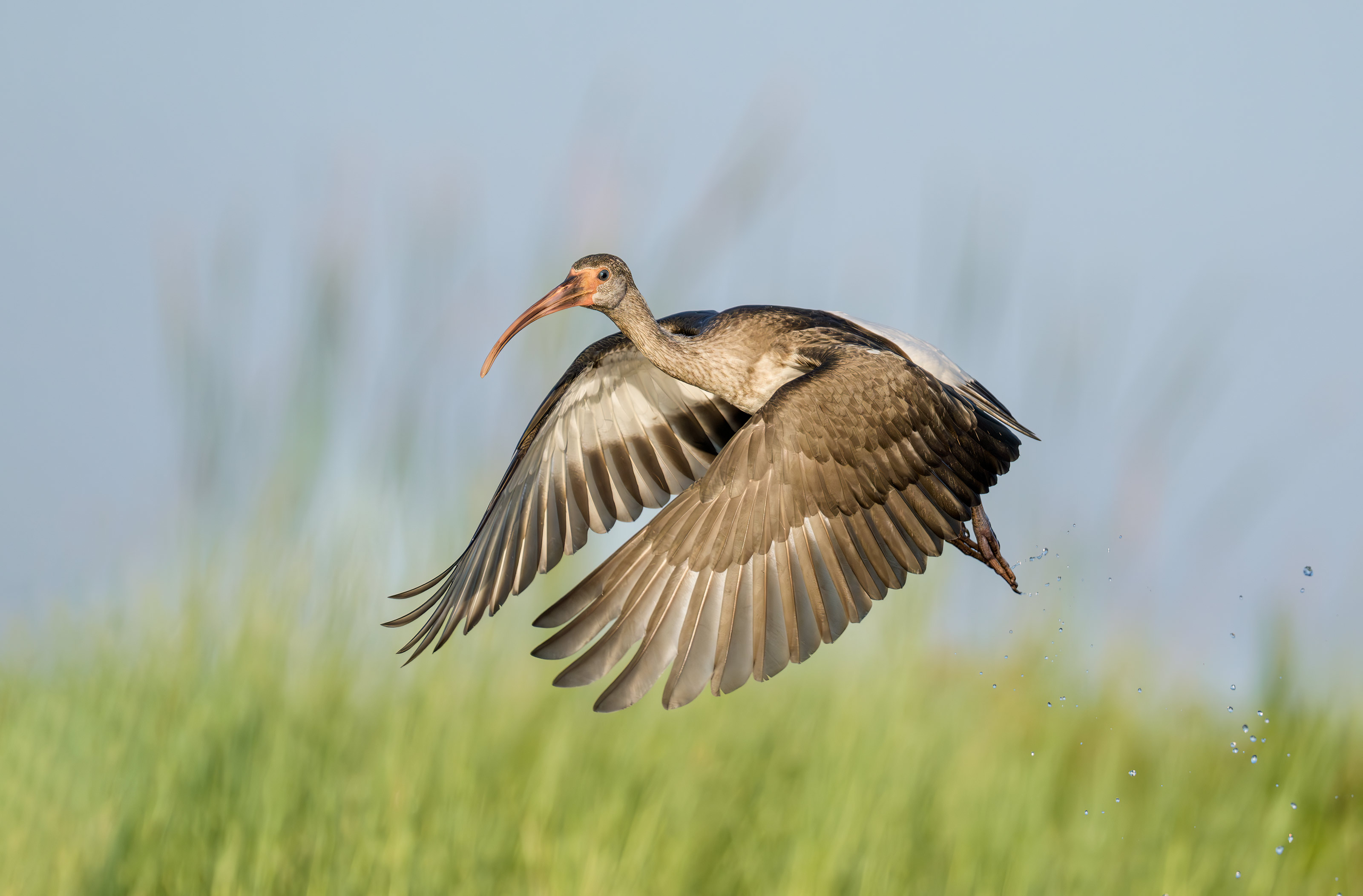
This image was created on 4 July by yours truly down by the lake near my home at Indian Lake Estates, FL. Seated on two pillows atop a sturdy milk crate, I used the handheld Sony FE 100-400mm f/4.5 GM OSS lens with the Sony FE 1.4x Teleconverter (at 399mm) and The Latest Greatest Sony Flagship Body, the a-1 II Mirrorless Camera (in full frame mode). The exposure was determined by Zebras with ISO on the rear wheel. ISO 1600: 1/4000 second at f/6.3 (wide open) in Manual mode. AWB at 7:37:55am on sunny morning. Wide/AF-C with Bird-Eye/Face Detection performed perfectly. Click on the image to enjoy the larger high-res version. Image #9: White Ibis juvenile taking flight |
Water Level Flight Shooting!
With the lens just inches above the surface of the shallow bay, flight photography is nearly impossible. Sensing that the birds were alarmed and about to take flight, I zoomed out from 560mm to 399mm, just enough to get the bird in the frame. All that possible only because of the Sony a-1 ii’s Wide AF pattern.
Why 1/6400 Second?
There was an adult White Ibis feeding next to the juvenile, so I raised the shutter speed two clicks to prevent toasting the highlights. When the young bird took flight, I struggled to keep it in the frame. Lowering the shutter speed for the darker subject never even crossed my mind — there simply wasn’t time. The birds exploded off the water, and I reacted as quickly and as well as I could.
|
|
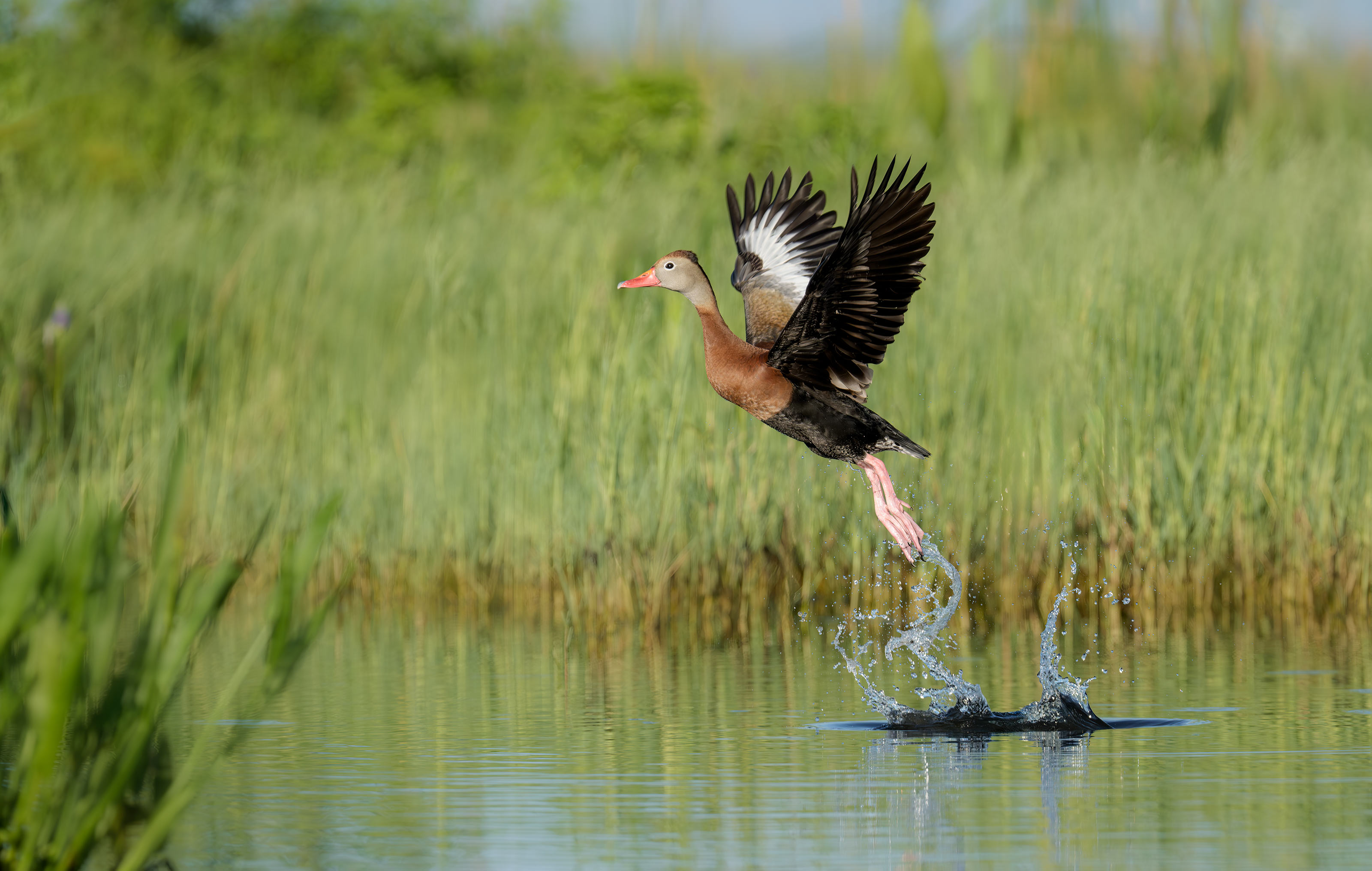
This image was created on 4 July by yours truly down by the lake near my home at Indian Lake Estates, FL. Seated on two pillows atop a sturdy milk crate, I used the handheld Sony FE 100-400mm f/4.5 GM OSS lens with the Sony FE 1.4x Teleconverter (at 560mm) and The Latest Greatest Sony Flagship Body, the a-1 II Mirrorless Camera (in full frame mode). The exposure was determined by Zebras with ISO on the rear wheel. ISO 2000: 1/6400 (!) second at f/6.3 (wide open) in Manual mode. AWB at 7:7:59:36am on sunny morning. Wide/AF-C with Bird-Eye/Face Detection performed perfectly. Click on the image to enjoy the larger high-res version. Image #10: Black-bellied Whistling Duck blasting off into flight |
Pre-Capture
If your camera does not have a Pre-Capture feature, you will be routinely missing images like this. Period. Full stop.
|
|
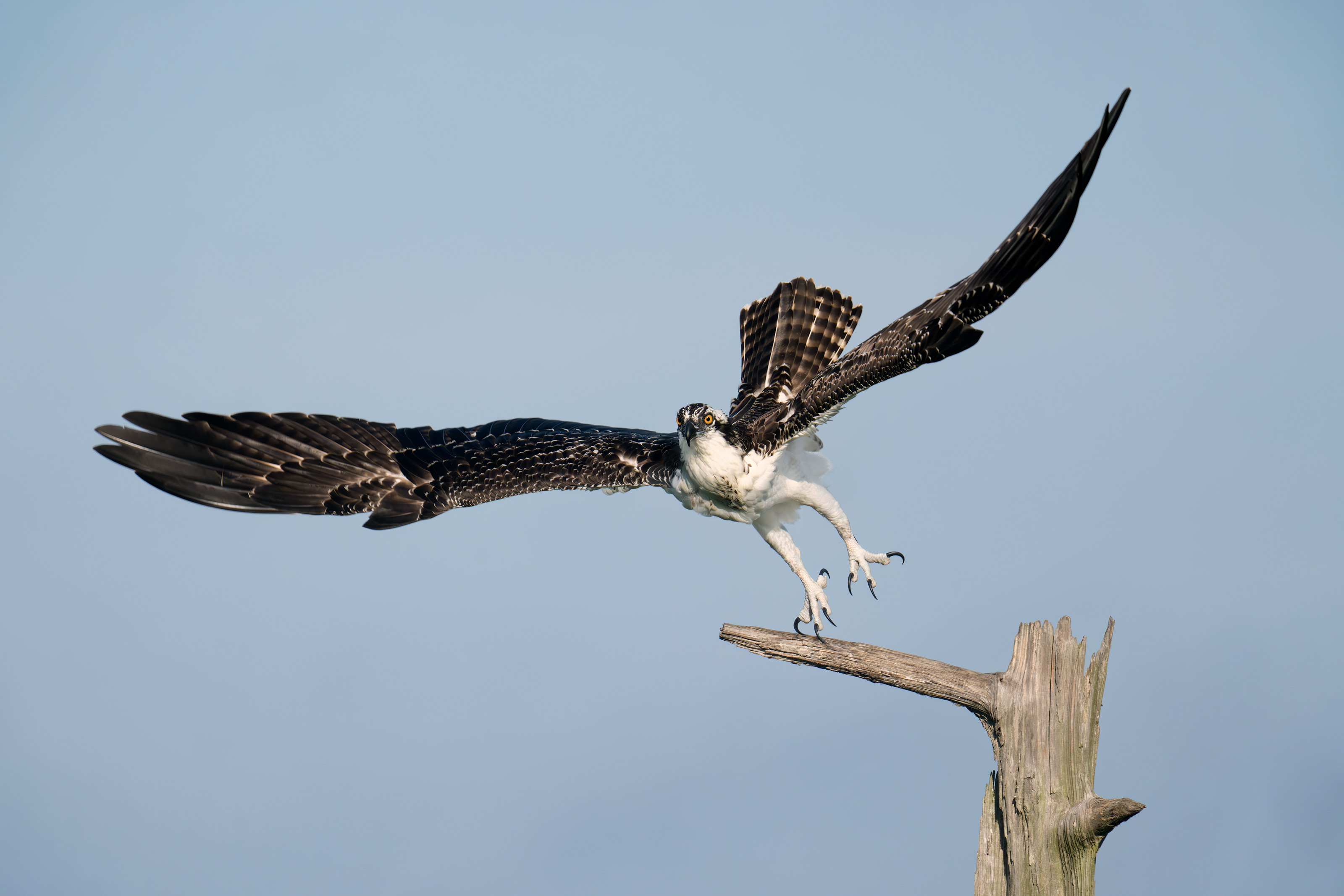
This image was created on 4 July by yours truly down by the lake near my home at Indian Lake Estates, FL. Working from the front seat of my SUV (!), I used the handheld Sony FE 100-400mm f/4.5 GM OSS lens with the Sony FE 2x Teleconverter (at 800mm) and The Latest Greatest Sony Flagship Body, the a-1 II Mirrorless Camera (in full frame mode). The exposure was determined by Zebras with ISO on the rear wheel. ISO 2000: 1/4000 second at f/9 (wide open) in Manual mode. AWB at 8:27:05am on sunny morning. Wide/AF-C with Bird-Eye/Face Detection performed perfectly. Click on the image to enjoy the larger high-res version. Image #11: Osprey juvenile taking flight from The Perch II |
Smart or Lucky?
When this bird leaned forward and defecated, I knew that it was about to take flight so I tapped the Trash Can button and toggled from APS-C crop mode to full frame. Though I have been using crop mode quite a bit recently, my mind has begun playing this tune when deciding APS-C or full frame: If there is any chance of unexpected action, you had better be shooting full frame. Note: if there is no action, you can always simply crop after the fact and wind up with the exact same shot.
Do not forget to thank Pre-Capture again.
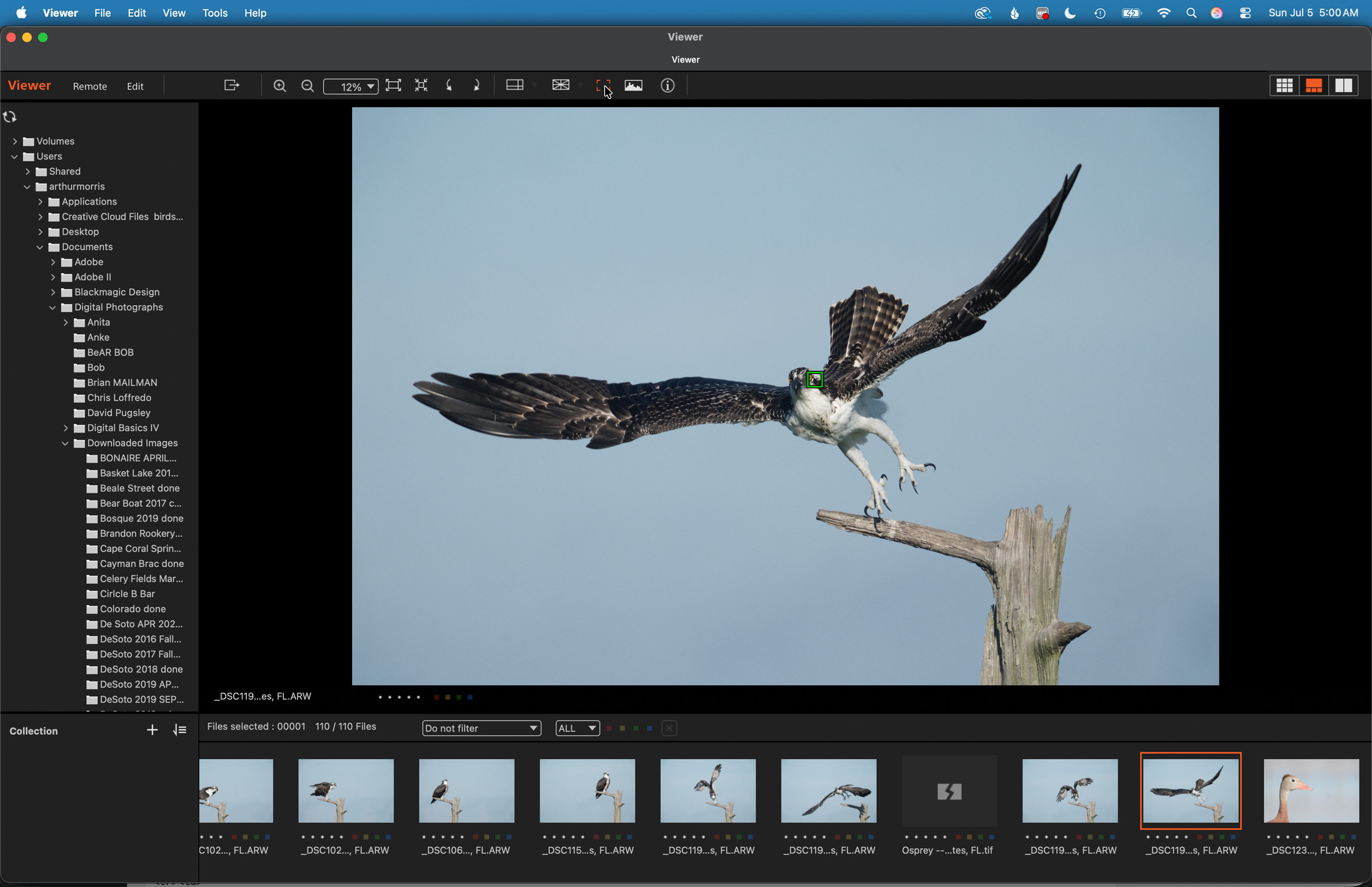
|
|
Be sure to enlarge the screen capture to see the small green box, the eye-tracking AF Focus Frame Display. Image #11: Imaging Edge Desktop(IEDT)/Viewer screen capture for the Osprey juvenile taking flight from The Perch II image |
Are You Kidding Me?
I did not expect superb face-eye tracking on the 100-400 f/4.5 GM with the 2X in place. But that is what I got. And it was consistently perfect for the entire take-off sequence. I can only assume that the combination of the a-1 ii and the new lens is something special.
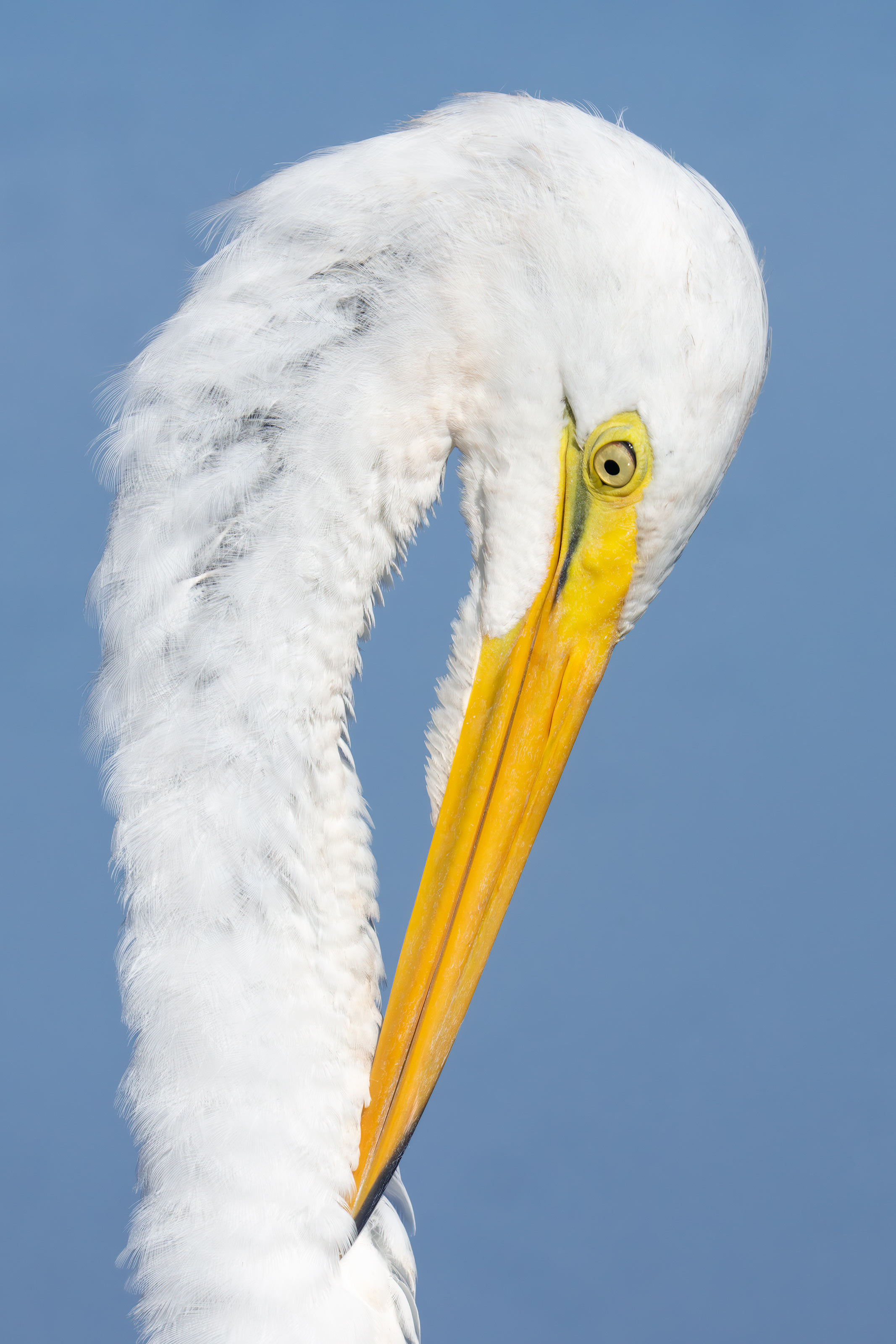
|
|
This image was created on 4 July by yours truly down by the lake near my home at Indian Lake Estates, FL. Standing on the pier and crouching a bit, I used the handheld Sony FE 100-400mm f/4.5 GM OSS lens with the Sony FE 2x Teleconverter (at 800mm) and The Latest Greatest Sony Flagship Body, the a-1 II Mirrorless Camera (in full frame mode). The exposure was determined by Zebras with ISO on the rear wheel. ISO 1600: 1/1250 second at f/16 (stopped down 1 2/3 stops) in Manual mode. AWB at 8:44:27am on sunny morning. Wide/AF-C with Bird-Eye/Face Detection performed perfectly. Click on the image to enjoy the larger high-res version. Image #12: Great Egret juvenile preening neck |
TC Cleaning Tip
If you are working wide open and your TC is dirty, the dust spots will usually be pretty much invisible, non-factors if you wish. If, however, you stop down a stop or two as with Image #12 above, you will need to spend some time dust spotting. It is best to make it a regular habit to clean both glass surfaces with a soft cloth to which some LensClens has been applied liberally. Note: never apply drops of LensClens directly to the surface of a lens; always moisten the cleaning cloth. And, while you are at it, it does not hurt to clean the contacts on the front and rear of the TC.
Typos
In all blog posts and Bulletins, feel free to e-mail or to leave a comment regarding any typos or errors. Just be right :).









Images 8,9 and 10 are all wonderful! Image #8 is my favorite; I love the soft reflection of the water, the pose, and the light. Image #10 with its take-off is excellent and might have been my first choice were it not for the OOF foliage on the left side. Image #9 is excellent in its wing positioning and water droplets, but I wish there were more canvas on the left side. Thanks for sharing the images and thoughts on the new lens.
Interesting comments. In #10, I actually like the leaves of the pickerelweed. With #9, I already added some canvas to the left side. Remember — I was trying flight from water level!
with love, artie
8 & 10 for me. Lovely poses.
Very popular choices. Thanks for commenting.
with love, a
#8 hands down my fav because of the shot angle, water reflection, background, and subject’s SHARP action. And #10 almost for the same reasons as #8…subject action, sharpness, and environment.
Lots of folks agreeing here. Thanks for your comment. Nobody has mentioned my first pick 🙂
wit love, artie
#8 immediately caught my attention. Love the super low perspective and the grassy background and reflection.
Thanks, Chris. I agree on #8! I am looking forward to seeing you in San Diego.
with love, artie
#10 is my favorite with the wing position at liftoff, water dripping from the bird as it takes flight and the surrounding colorful vegetation.
#8 is my second choice, with #9 a close second, because the image has a serene feel with the soft colors on the water and the background. The extension of the wings is icing on the cake for me.
Thanks for sharing.
I like image #10 and #2, in that order. I like the action and poses in both photos.
Great to see the new lens is performing above and beyond expectations!
For me it’s #s 9 and 10. Love the pose of the ibis and the delicate details of the background. The BBWD blasting off is a terrific environmental portrait.
Seems like everyone likes 8, 9, and 10. I expected the lens to be excellent but not with the 2X TC for flight!
See you guys at JAX at the end of this week.
with love, a
1. My favorite is image #10. Whistling Duck blasting off. I am partial to the action in any shot as the water droplets from the duck depict. Additionally I like the background, foreground that shows the environment of the duck. It all gives me the the “real life” view of the subject.
2. I must also say that being an early adapter (buyer) of the new Sony FE 100-400mm f/4.5 GM OSS lens, and am very happy and excited to read your evaluation of the lens. But as always it is up to me to capture the image correctly and skillfully. But that’s what gives me and my brain the challenge that I enjoy and NEED !
Looking forward to seeing you are and working with you at JAX. We will have fun.
much love, harry
What an amazing lens! My favorite image is #9, the juvenile white ibis because of the gorgeous, sharp detail on the wings. Second, is #4, the limpkin with the extremely sharp detail on the eye, head and neck.
Typos:
“is NOT a lens to be reckoned with”
“hand-holdable 200-800 f9 lens THE rivals”
“often with a len in hand O try”
Thanks, Pat. Choosing between this and the 300 is tough … Lots more on those two soon.
Great catches on the typos. They are all fixed. I did not run all of the text by Gemini 🙁 I was in a rush to get down to the lake.
with love, artie