
Your Call?
Which of today’s six featured images is your favorite? What do you like about it?
Summary
When you’re thirsty and you’ve got bags of lemons, think lemonade. When the only birds around are Black Vultures, get creative and make a variety of images. Use different lenses and focal lengths, work horizontally and vertically, utilize whatever light is available, and strive to come up with a series of photos that are totally different from each other.
|
BIRDS AS ART SONY A9 iii Images |
Sony a-9 iii Mirrorless Camera Body
Multiple IPT veteran, Used Gear Page regular, and dear student and friend Pat Fishburne is offering a Sony a9 iii Mirrorless camera in like-new condition for a ridiculously low $4,298.00. The sale includes the original product box, the body cap, the battery charger, one battery, the strap, and insured ground shipping via major courier to lower-48 US addresses only.
Your item will not ship until your check clears unless other arrangements are made.
Your purchase will also include my two a9 iii Set-up e-mails and any future updates.
Please contact Pat via e-mail.
At one point I loved my a9 iii so much for flight and action that I sold two a-1 bodies and purchased a second a9 iii. Working at 120fps gives you four times as many wing positions and flight poses as any other mirrorless camera body. Most every single image will be sharp on the eye. The raw files can stand up to decent crops and in addition, Topaz Gigapixel does a fabulous job of upsizing a9 iii TIF files. A new a9 iii sells at B&H for $$6,798.00. B&H has a single used one in stock in 9 condition for $5,219.50. KEH is offering one in slightly better condition for $5,145.00. If you have been dreaming of 120 fps for flight and action, grab Pat’s a9 iii right now and save $1,500.00 for Pat’s pretty much brand new one. artie artie
|
|
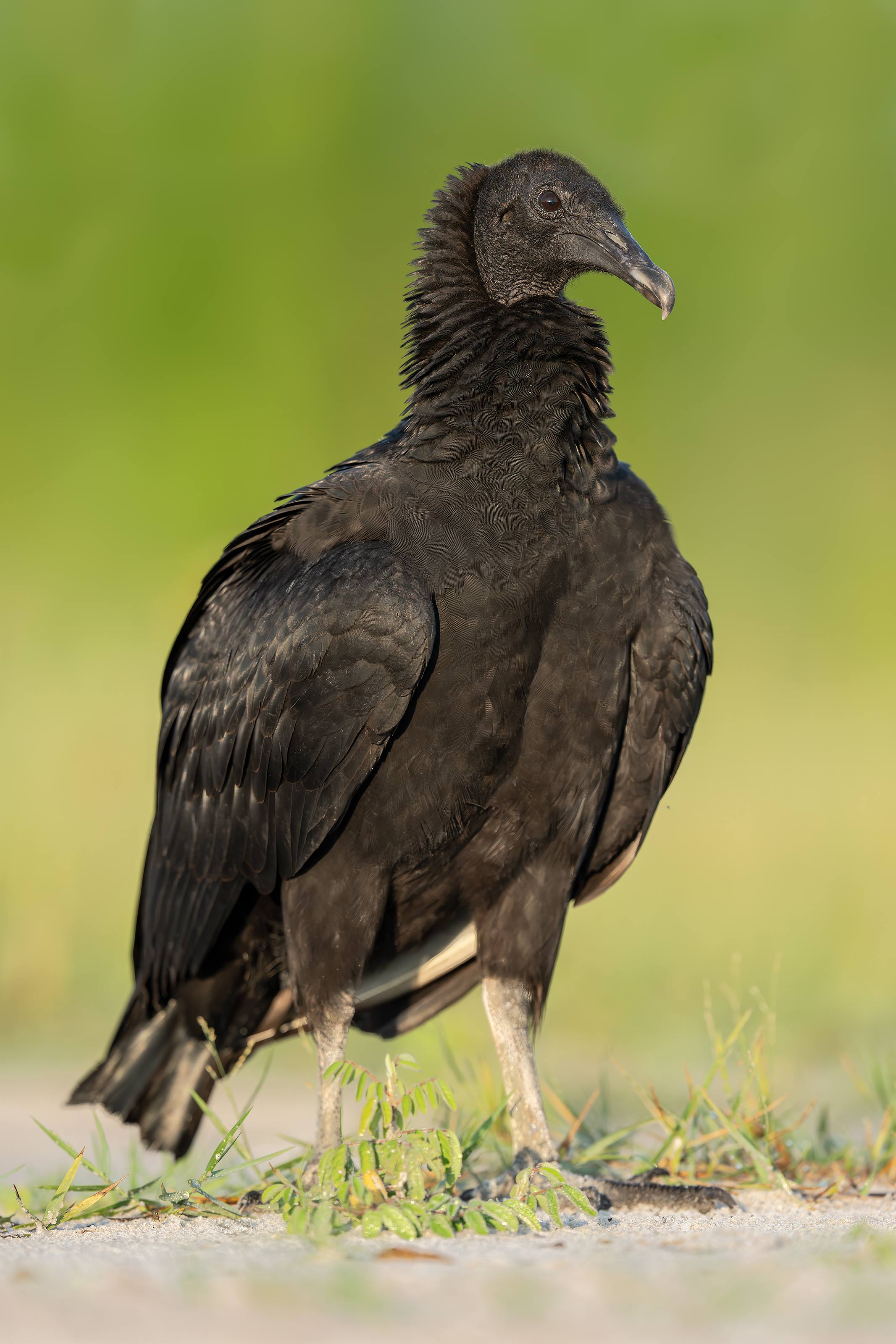
This image was created on 27 July 2026 by yours truly down by the lake near my home at Indian Lake Estates, FL. Seated on dry sand on the beach near South-of-the-Pier Bay I used the toe-pod technique with the handheld Sony FE 600mm f/4 GM OSS lens and The Latest Greatest Sony Flagship Body, the a1 II Mirrorless Camera (in full frame mode). The exposure was determined by Zebras with ISO on the rear wheel: ISO 1000: 1/1600 sec. at f/4.5 (stopped down 1/3 stop in error) in Manual mode. AWB at 9:27:55am on a sunny morning. Tracking: upper center Zone/AF-C with Bird-Eye/Face Detection performed perfectly. Click on the image to enjoy the larger, inexplicably sharper high-res version. Image #1: Black Vulture adult — vertical portrait |
Grabbed the Wrong Lens
As I pulled onto South-of-the-Pier Beach there was a Limpkin standing nicely away from the background vegetation so I grabbed the 600 and got down on the ground. The Limpkin walked away and nearly a dozen Black Vultures hopped toward the lake. When the handsome bird in Image #1 turned and faced me right down sun angle I flipped down the vertical rear screen, put the lens on my toes, and barely fit the bird into the frame. I wound up adding canvas above using Content Aware Crop.
The tilting vertical rear screen on the a-1 ii is one of the many important improvements as compared to the a-1. In addition to using it to create verticals when I am down on the ground, I use it often by simply holding the lens out in front of me at belt or knee level. I have created more than a few memorable vertical photos using the tilting rear monitor, images that simply were not possible with the a-1.
|
|
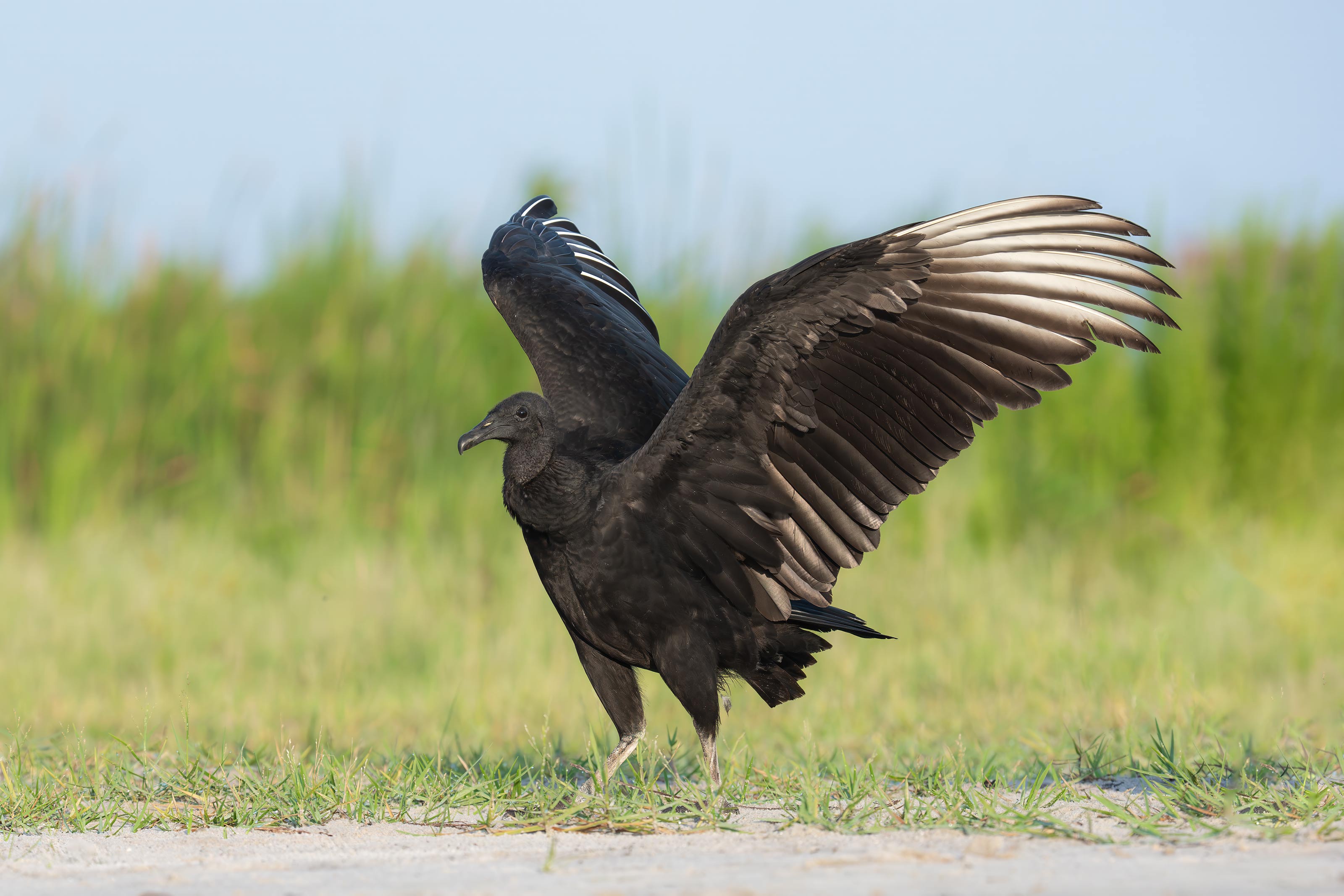
This image was also created on 27 July 2026 by your3 truly down by the lake near my home at Indian Lake Estates, FL. Seated on a Rubbermaid Roughneck Step-Stool I used the handheld Sony FE 100-400mm f/4.5 GM OSS lens (at 290mm) and The Latest Greatest Sony Flagship Body, the a-1 II Mirrorless Camera (in full frame mode). The exposure was determined by Zebras with ISO on the rear wheel. ISO 2000: 1/2500 second at f/6.3 (stopped down 1 stop in error) n Manual mode. AWB at 7:39:41am on a sunny morning. Wide/AF-C with Bird-Eye/Face Detection performed perfectly. Click on the image to enjoy the larger high-res version. Image #2: Black Vulture adult with wings raised
|
Switching to the Right Lens
I got low and made my way back to the car, grabbed the 100-400 f/4.5 and the step-stool, got back into position, and had several good chances on the vultures with their wings raised before they moved off to the south. This was my favorite. I removed a second vulture from behind the subject.
The Rubbermaid Roughneck Step-Stool has changed my life and added perhaps another decade of ground level photography for me, all while enabling me to keep my hands 100% sand free. You will be hearing more on this here soon.
|
|
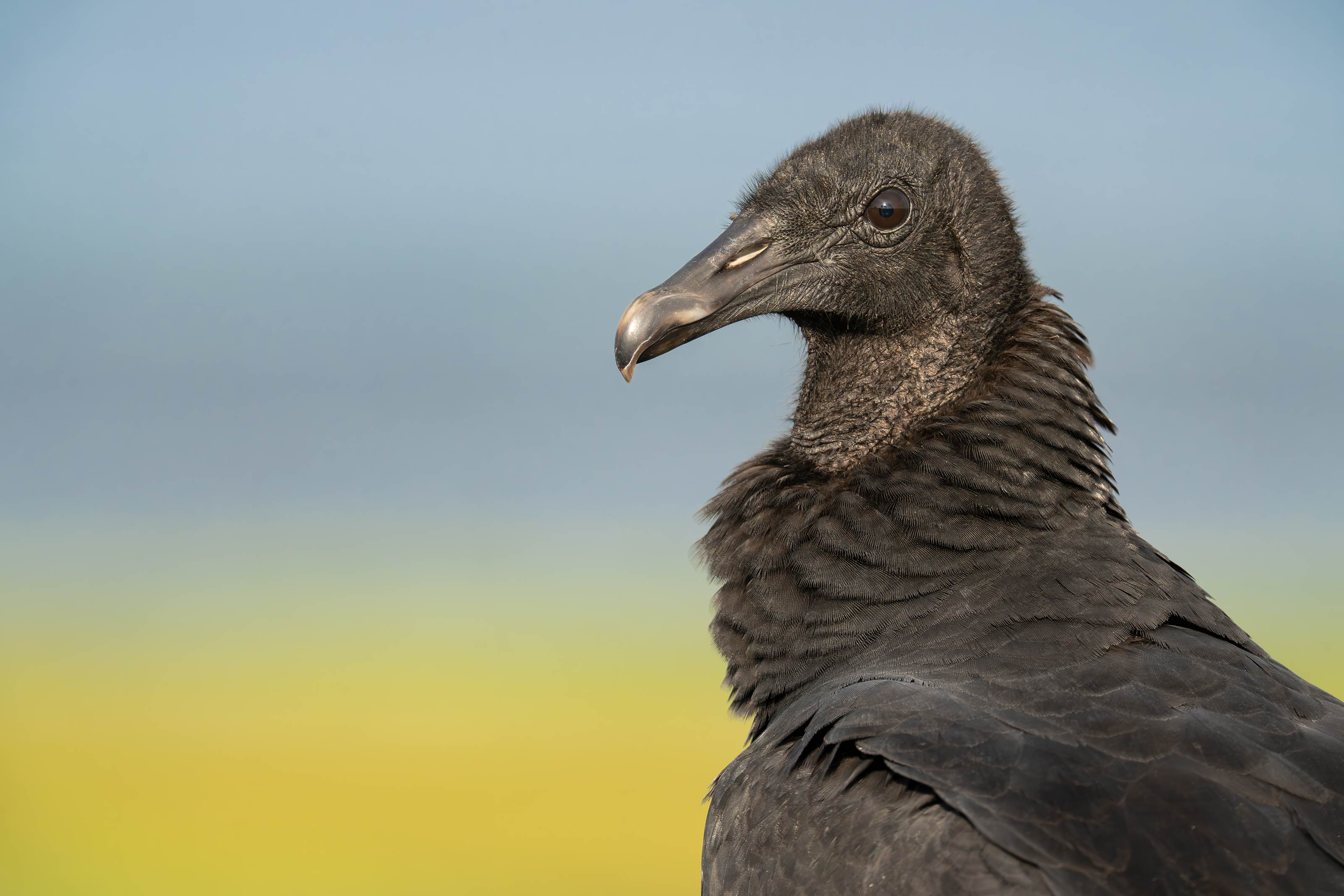
This image was also created on 27 July 2026 by yours truly down by the lake near my home at Indian Lake Estates, FL. Standing at full height on the pier, I used the handheld Sony FE 100-400mm f/4.5 GM OSS lens with the Sony FE 2x Teleconverter (at 502mm) and The Latest Greatest Sony Flagship Body, the a-1 II Mirrorless Camera (in full frame mode). The exposure was determined by Zebras with ISO on the rear wheel. ISO 2500: 1/1600 second at f/9 (wide open) in Manual mode. AWB at 8:26:35am on sunny morning. Wide/AF-C with Bird-Eye/Face Detection performed perfectly. Click on the image to enjoy the larger high-res version. Image #3: Black Vulture adult — frontlit head and shoulders portrait |
Controlling Layers of Color
In situations like this, you can move the layers higher or lower in the frame as needed by making yourself a bit taller or getting a bit closer, or by crouching. I did both of the former to get the three lovely layers — marsh vegetation, lake, and sky — right where I wanted them.
|
|
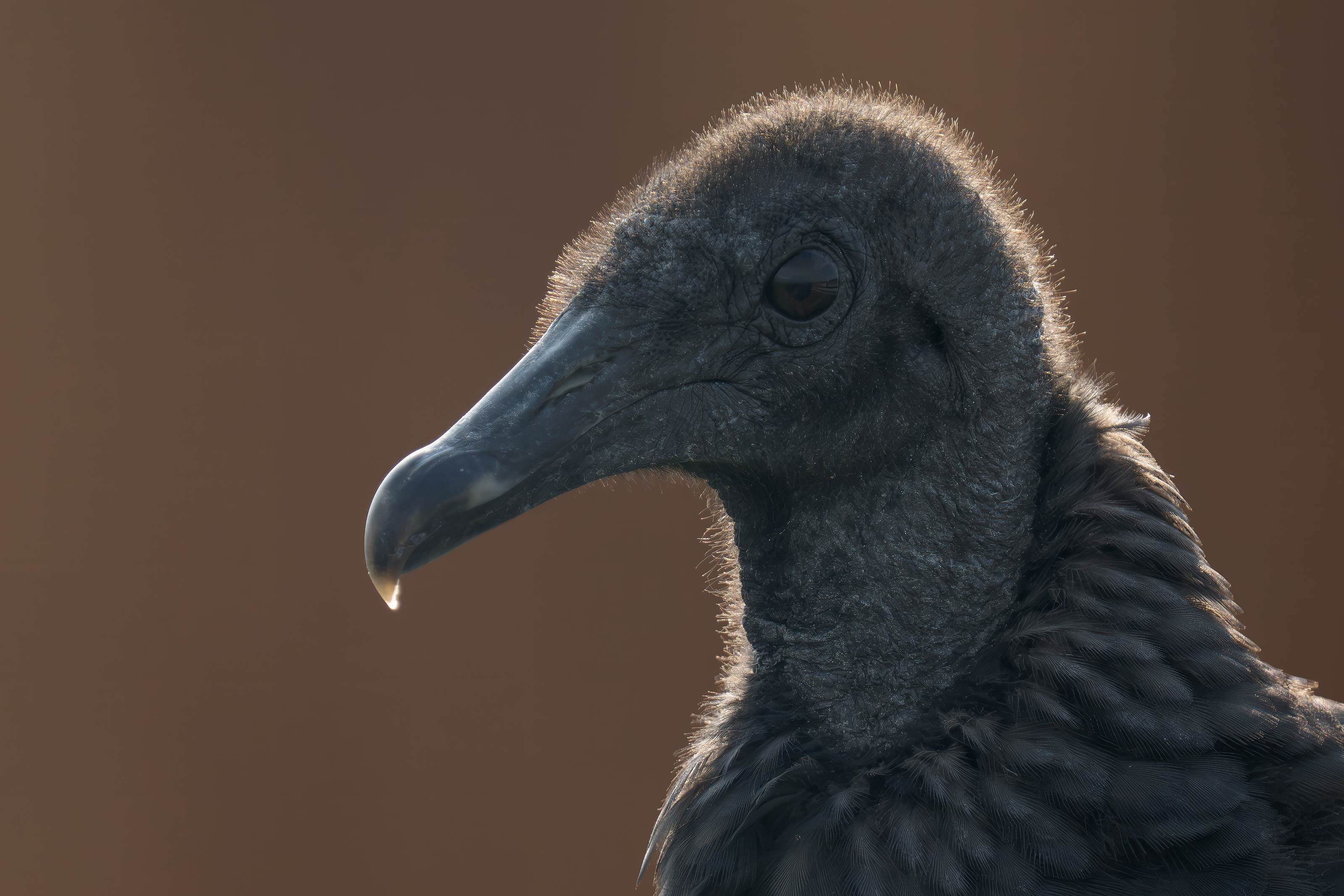
This image was also created on 27 July 2026 by yours truly down by the lake near my home at Indian Lake Estates, FL. Standing at full height on the pier, I used the handheld Sony FE 100-400mm f/4.5 GM OSS lens with the Sony FE 2x Teleconverter (at effective 1200mm) and The Latest Greatest Sony Flagship Body, the a-1 II Mirrorless Camera (in APS-C crop mode). The exposure was determined by Zebras with ISO on the rear wheel. ISO 1250: 1/1600 second at f/9 (wide open) in Manual mode. AWB at 8:46:46am on sunny morning. Tracking: Zone/AF-C with Bird-Eye/Face Detection performed perfectly. Click on the image to enjoy the larger high-res version. Image #4: Black Vulture — backlit head portrait |
From Front Light to Back Light
In the front-lit image immediately above, my lens was pointed SW with the sun coming over the top of my head from the NE. As I walked back to my SUV I saw the chance for a backlit photo with the shaded wood of the shed near the end of the pier as my dark background. For this one my lens was pointed to the NE to maximize the strength of the backlight. Sony Zebras enabled me to expose the rim light perfectly.
|
|
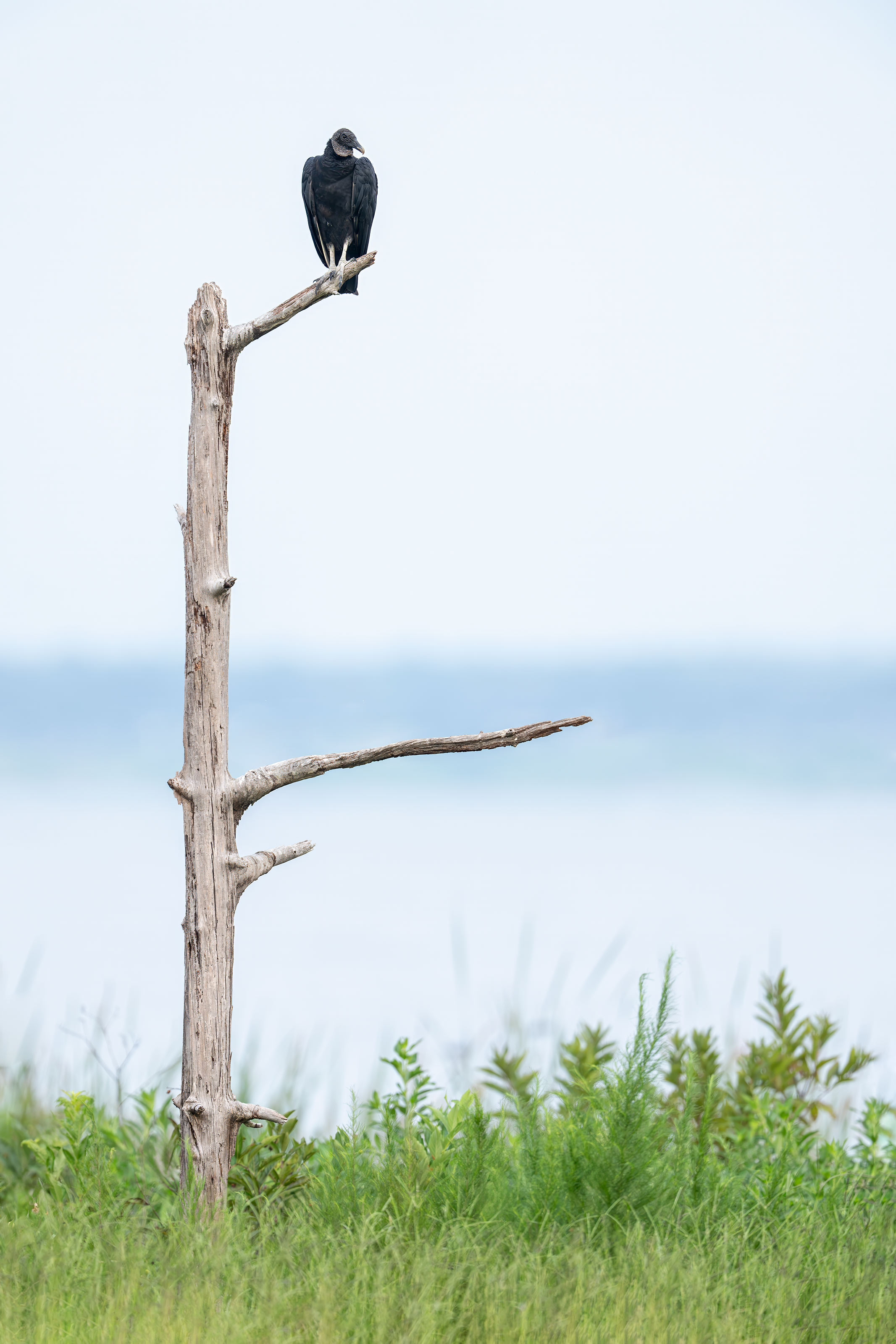
This image was created on 28 July 2026 by yours truly down by the lake near my home at Indian Lake Estates, FL. Seated in the driver’s seat of my X5, I used the BLUBB-supported Sony FE 600mm f/4 GM OSS lens with the Sony FE 1.4x Teleconverter, and The Latest Greatest Sony Flagship Body, the a1 II Mirrorless Camera. The exposure was determined by Zebras with ISO on the rear wheel. ISO 1250: 1/160 second at f/5.6 (wide open) in Manual mode. AWB at 7:12:44am on cloudy overcast morning. Tracking: upper left center Spot S/AF-C with Bird-Eye/Face Detection performed perfectly. Click on the image to enjoy the larger, inexplicably sharper high-res version. Image #5: Black Vulture adult on Bob’s New North Perch |
Small-in-the-Frame
With overcast conditions, I was able to get an uncluttered background in part because sun angle did not matter. Small-in-the-frame bird-scapes often work well with the subject near one of the four corners of the frame.
Note: even with small in the frame subjects head angle matters. This one is dead solid perfect.
|
|
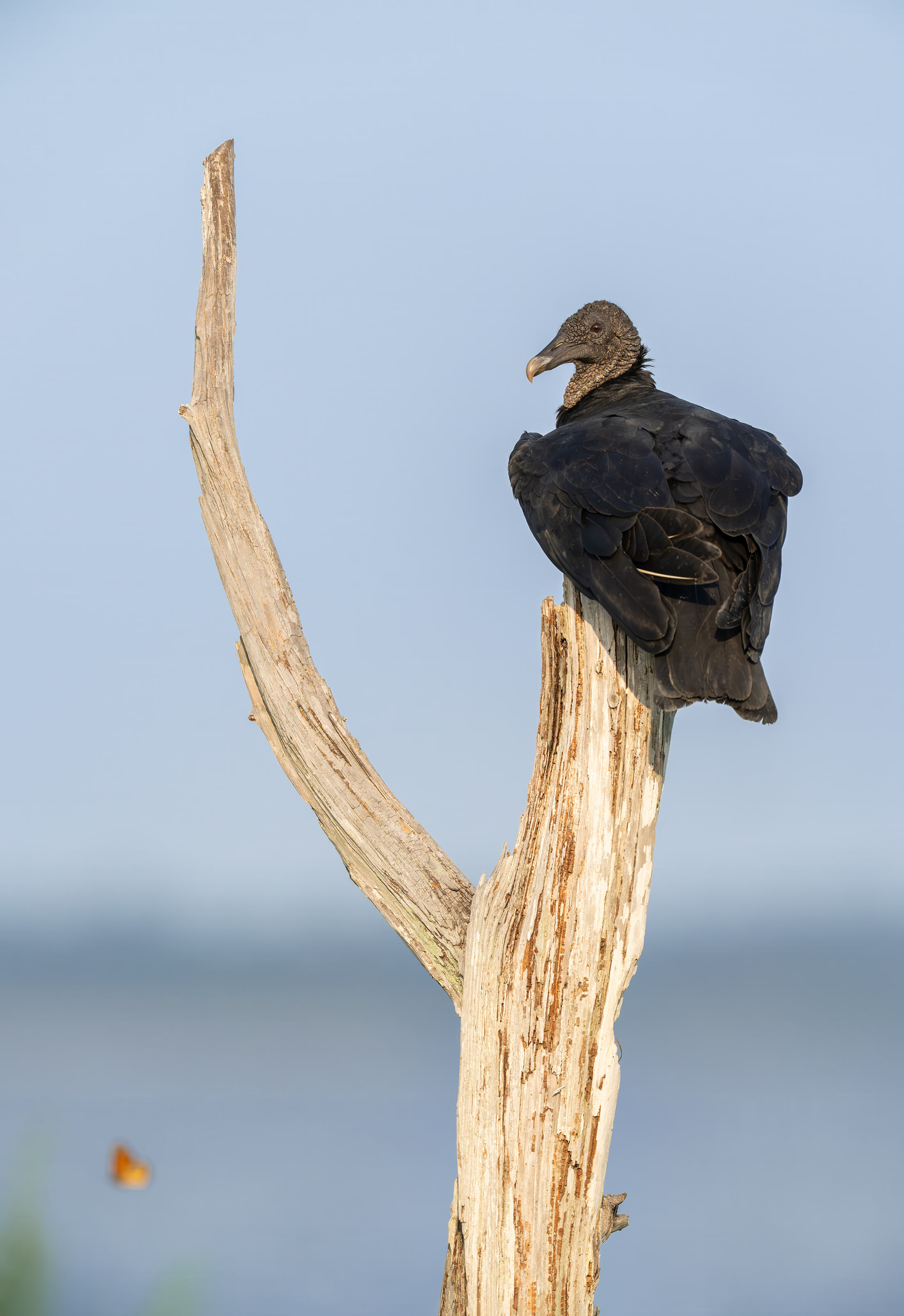
This image was created on 31 July 2026 by yours truly down by the lake near my home at Indian Lake Estates, FL. Seated in the driver’s seat of my X5, I used the BLUBB-supported Sony FE 600mm f/4 GM OSS lens with the Sony FE 1.4x Teleconverter, and The Latest Greatest Sony Flagship Body, the a1 II Mirrorless Camera. The exposure was determined by Zebras with ISO on the rear wheel. ISO 2000: 1/1600 second at f/8 (stopped down one stop) in Manual mode. AWB at 8:00:25am on sunny morning. Tracking: Spot S (moved with the Joystick to cover the bird’s head)/AF-C with Bird-Eye/Face Detection performed perfectly. Click on the image to enjoy the larger, inexplicably sharper high-res version. Image #6: Black Vulture adult on Bob’s V-Perch with orange butterfly accent |
Why Stop Down
With a southwest breeze this vulture was facing away from me. With over-the-shoulder poses it is generally recommended that you stop down a bit if you have enough light to render the whole bird sharp from the head though the back all the way to the tail (especially when working at close range). I might, however, have been far enough away to get the whole bird sharp without having been so smart 🙂
Note: the ideal head angle for an over-the-shoulder pose is square to the back of the camera. As above.
Note also: whenever possible, adding an orange butterfly to the motif of your flight photography will usually add interest.
|
|
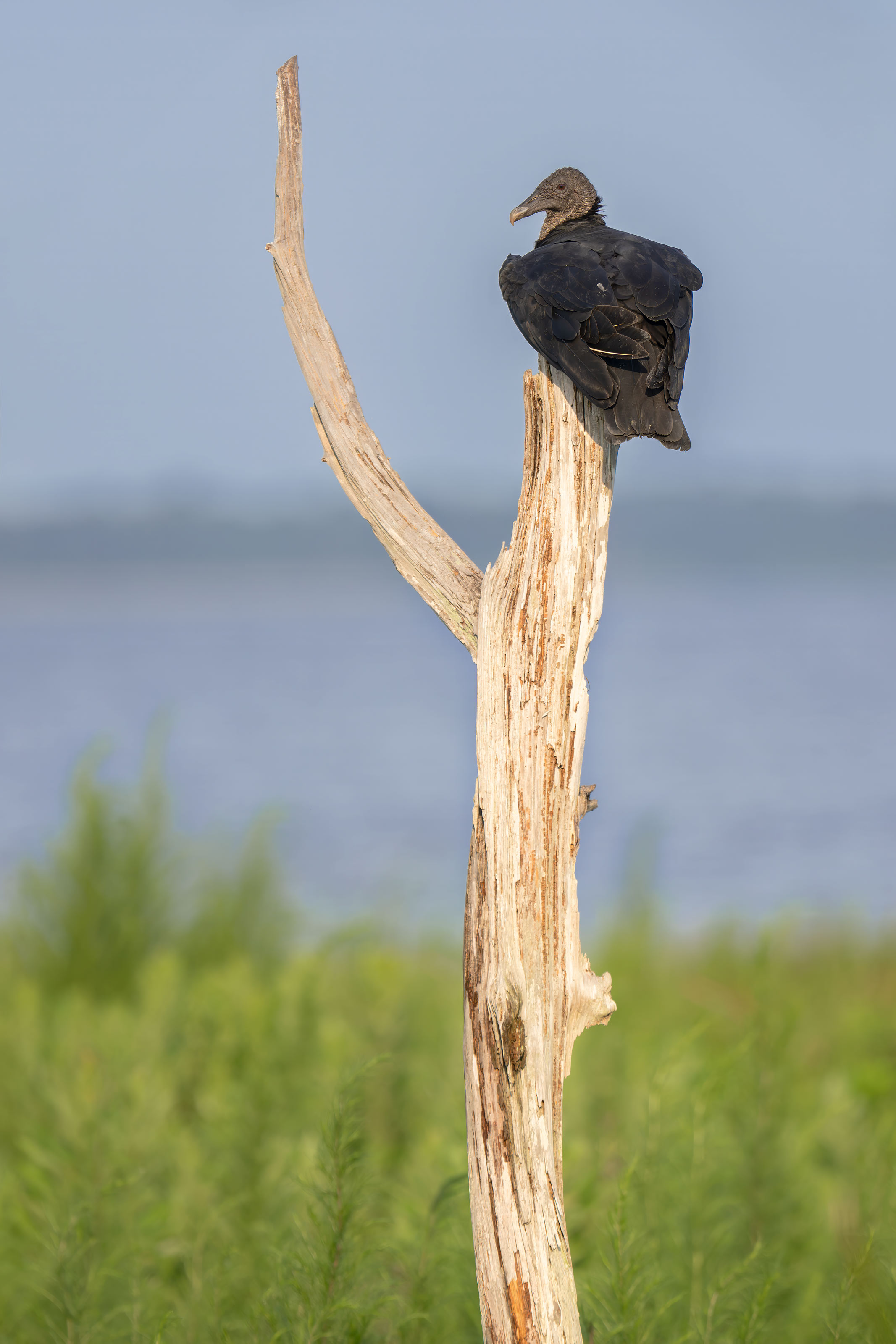
This image was created on 31 July 2026 by yours truly down by the lake near my home at Indian Lake Estates, FL. Seated in the driver’s seat of my X5, I used the BLUBB-supported Sony FE 100-400mm f/4.5 GM OSS lens with the Sony FE 1.4x Teleconverter (at 560mm) and The Latest Greatest Sony Flagship Body, the a-1 II Mirrorless Camera (in full frame mode). The exposure was determined by Zebras with ISO on the rear wheel. ISO 640: 1/800 second at f/6.3 (wide open) in Manual mode. AWB at 8:01:16am on a sunny morning. Tracking: Spot S (moved with the Joystick to cover the bird’s head)/AF-C with Bird-Eye/Face Detection performed perfectly. Click on the image to enjoy the larger, inexplicably sharper high-res version. Click on the image to enjoy the larger high-res version. Image #7: Black Vulture adult on Bob’s V-Perch WIDER version |
Same Bird, Same Perch — Wider View
I almost always have two or three lenses resting on a pillow on the passenger seat. After creating Image #6 above, I grabbed my new favorite lens, the 100-400 f/4.5 (constant aperture!) with the 1.4X so as to include some marsh vegetation.
Note from The Art of Bird Photography Two-Book Bundle: add green whenever possible.
|
Composite #1: All with the a-1 ii Mirrorless Camera body.
|
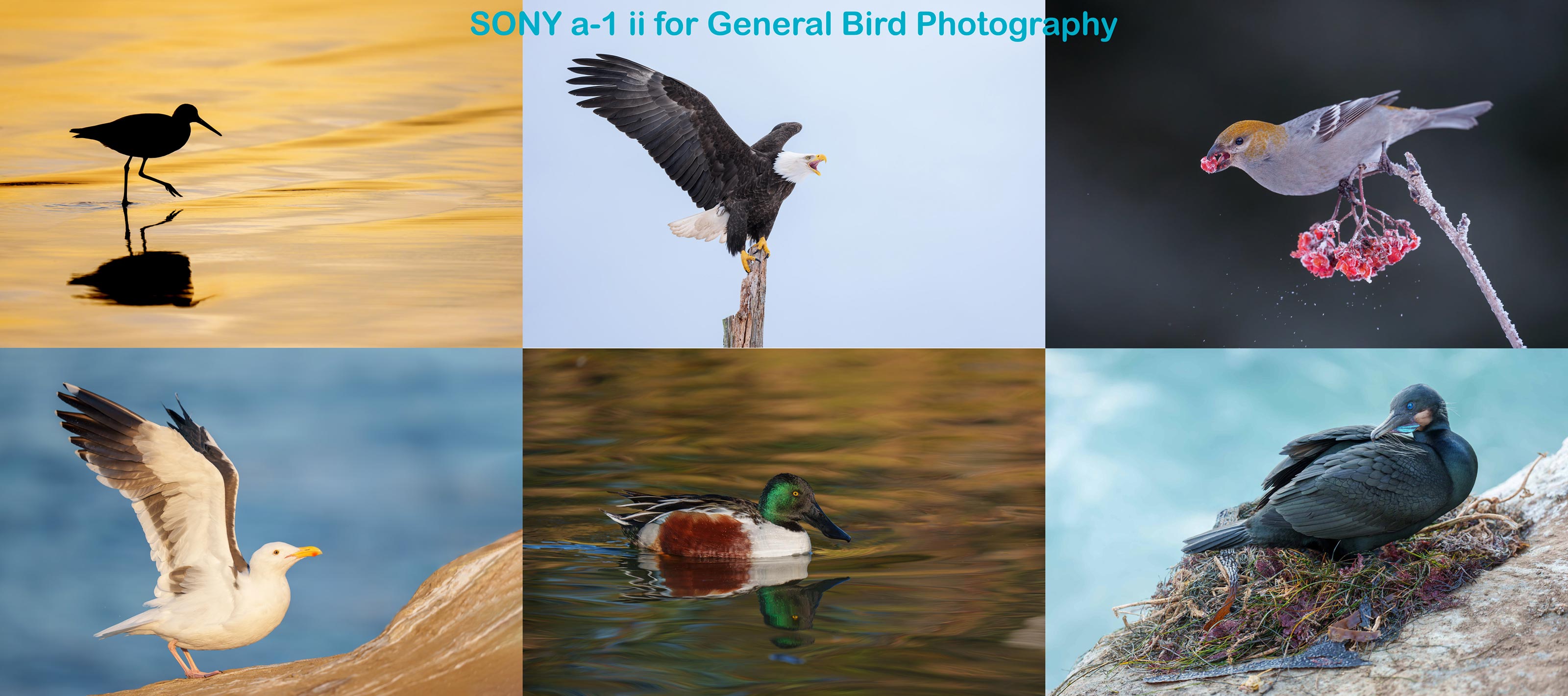
The a-1 ii for General Bird Photography
I have found that eye-tracking for general bird photography with the a-1 ii is far, far better than with the original Sony a-1. It grabs the eye and tracks it faster and far more consistently and focus is rarely lost, even with backgrounds other than sky.
|
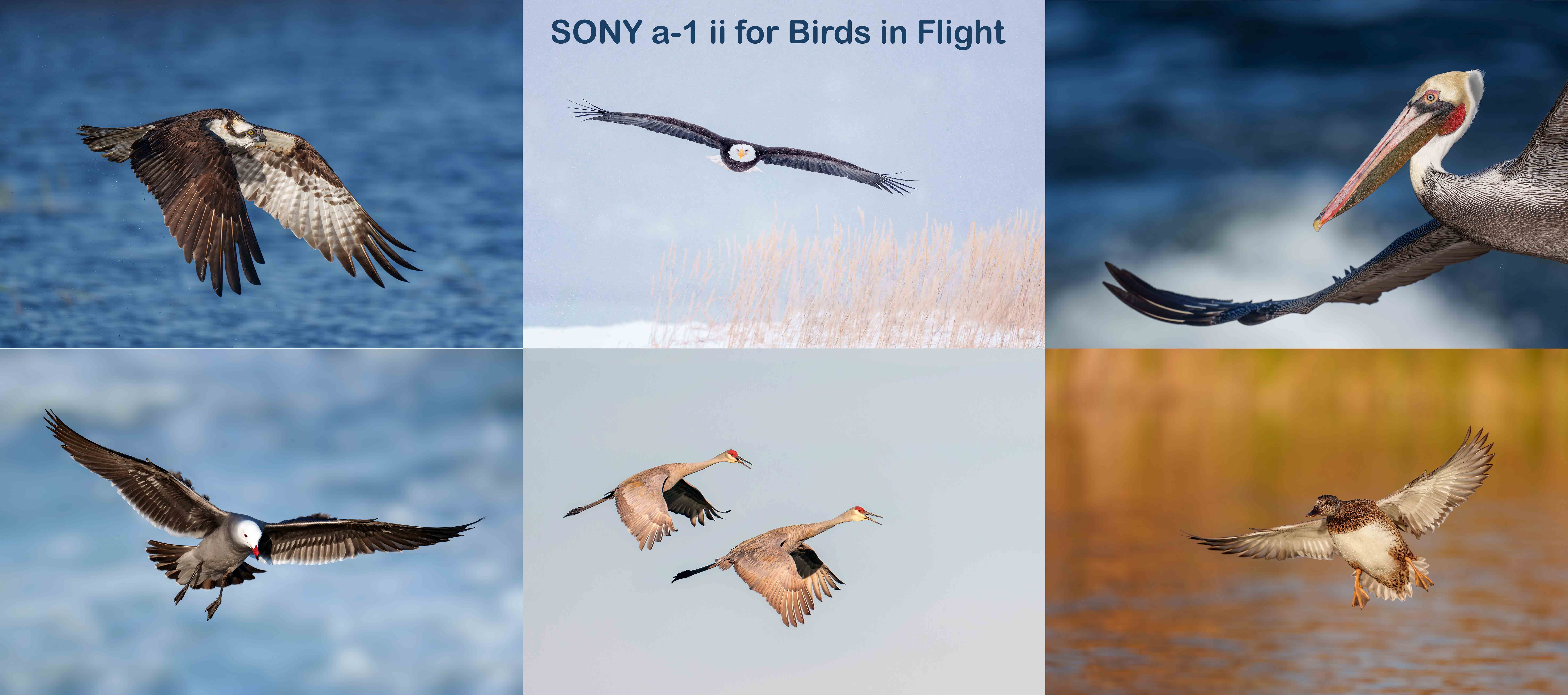
Composite #2: All with the a-1 ii Mirrorless Camera body.
|
The a-1 ii for Birds in Flight
For birds in flight, the a-1 ii Mirrorless Camera body has no equal. As Arash Hazeghi says, “It is better than the a-1.” When I am late getting on a bird in flight, I have consistently been amazed at how often the AF system of the a-1 ii finds and tracks the bird’s eye.
|
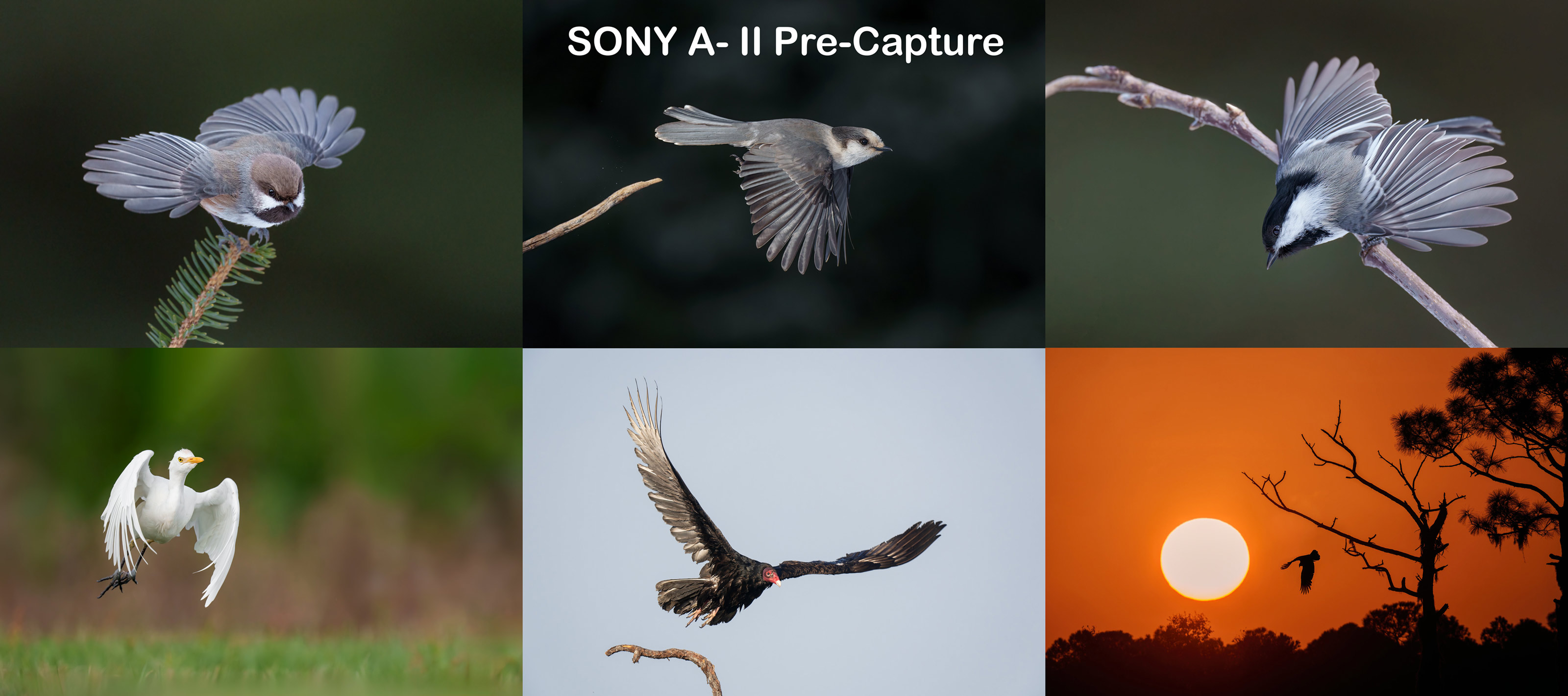
Composite #3: All the result of using Pre-Capture with the a-1 ii Mirrorless Camera body.
|
Pre-Capture with the Sony a-1 ii
When it comes to Pre-Capture with the a-1 ii Mirrorless Camera body, Arash and I agree 100%. And with my slower reflexes, Pre-Capture is more important for me than it is for Arash. Understand that in each of the images in Composite #3, I did not push the shutter button until after the bird took flight!
|
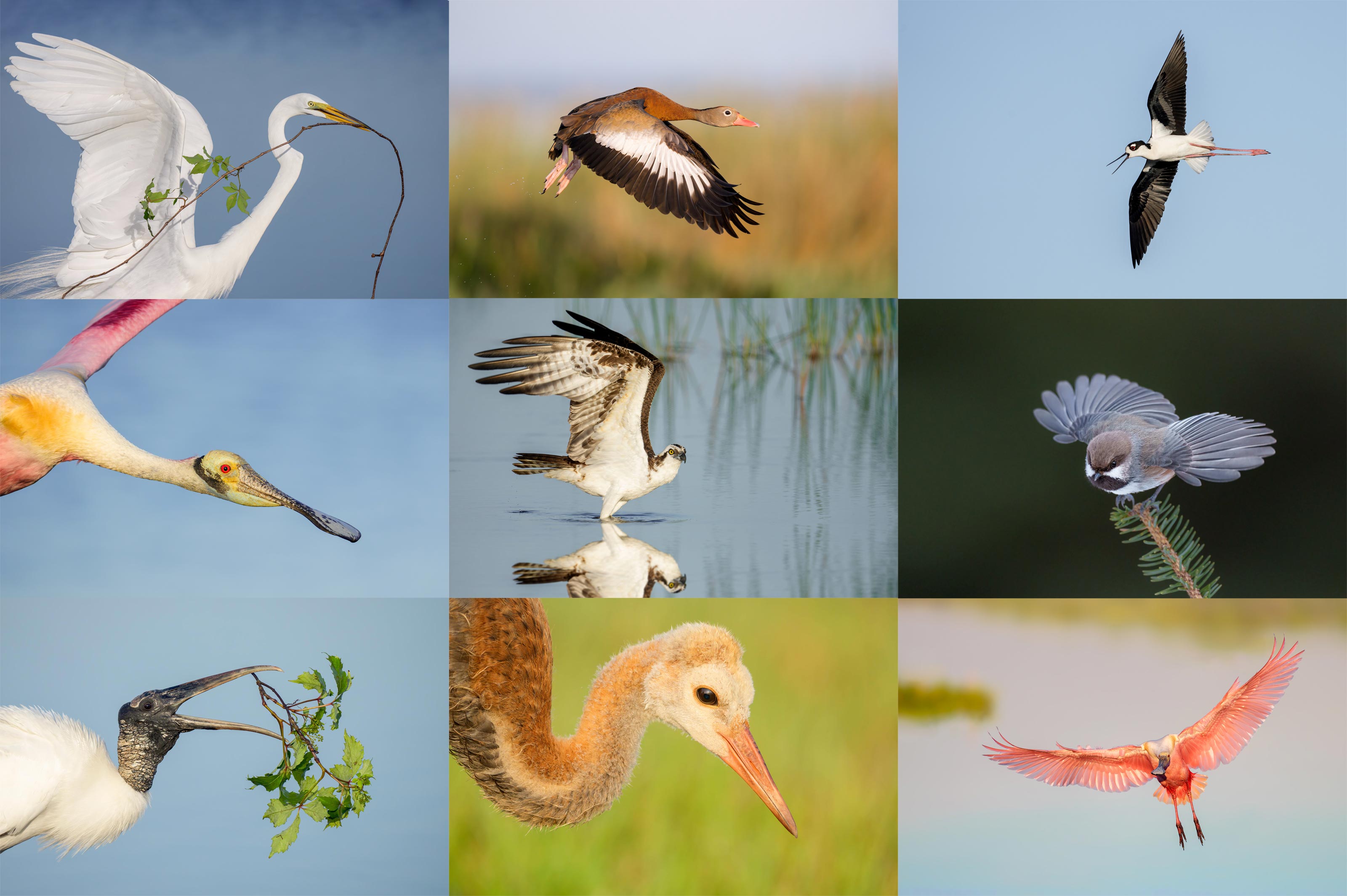
All with the a-1 ii Mirrorless Camera body.
|
Purchasing or Upgrading to a Sony a-1 ii
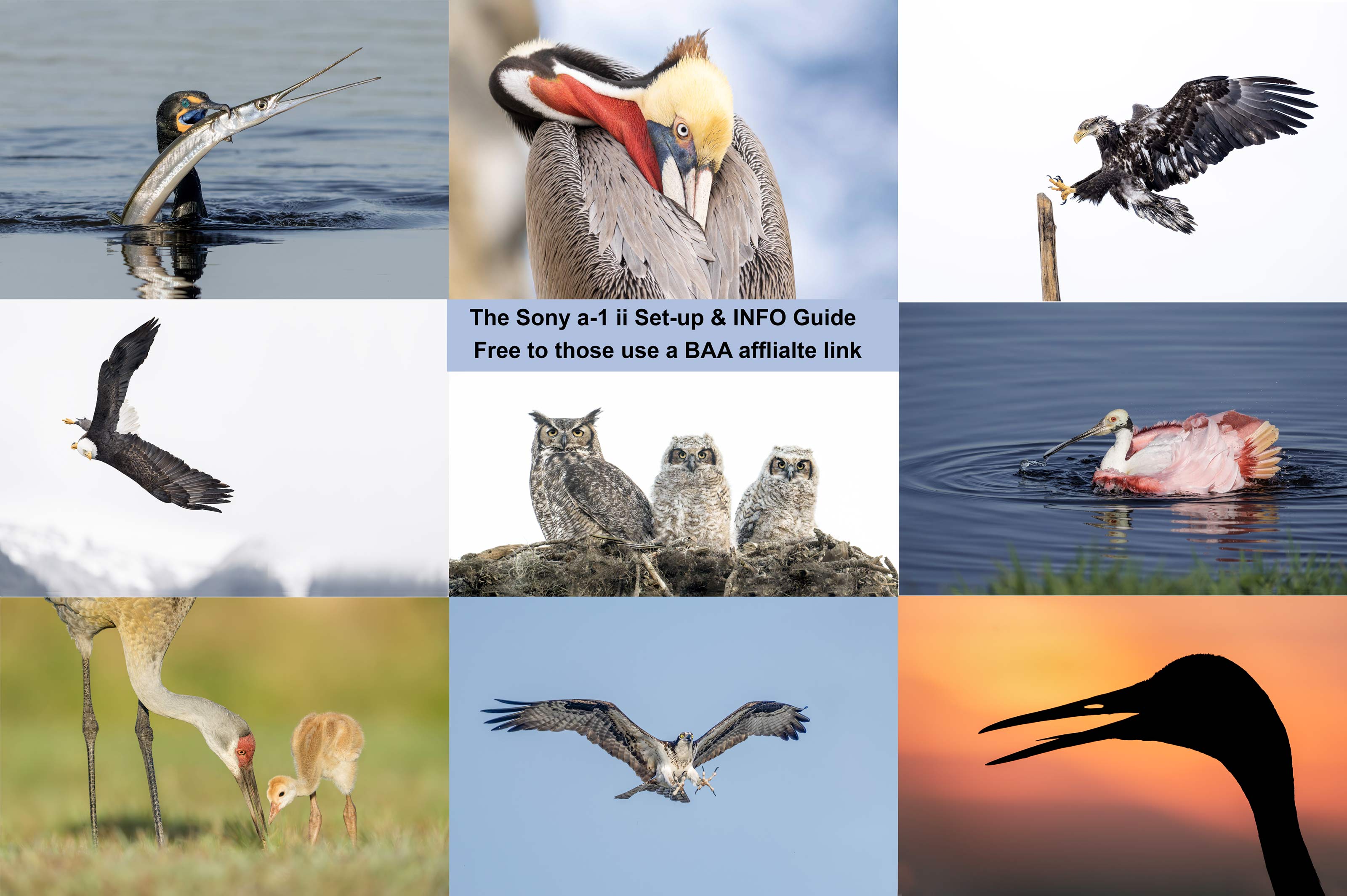
The Sony a-1 ii e-Mail Set-up and Info Guide
I now own and use two Sony a-1 ii bodies. Every day that I use them, the more I am amazed by speed and accuracy of the Bird Face-Eye tracking in AF-C and the overall performance of the camera.
Aside from the improved ergonomics as compared to the a-1, other nice features include the fact that the rear screen tilts both ways — the lack of a tilting rear screen on the original a-1 always ticked me off. Pre-capture has proven to be a huge plus almost exclusively for take-off flight images. In my opinion, the Speed Boost feature is a total waste for bird photography because you should always be utilizing the maximum frame rate. In addition, the resolution on the rear monitor has been improved dramatically. I must mention again that Bird Face-Eye tracking on the a-1 ii is vastly improved as compared to both the a-1 and the a9 iii and that the 51MP files are to die for.
So, the big question is, is the a-1 ii “worth” a gear upgrade. Remembering that I can never know whether or not something is worth it to you, I can say that I was not floored when first using my a-1 ii. The differences between the a-1 ii and the original a-1, seemed to be neither huge nor eye-opening. But over time, I have come to realize that I was 100% wrong. The huge difference between the new camera body and the a9 iii is, of course, the 51MP a-1 raw files (as compared to the 24MP files rendered by the a9 iii).
The price of a new a-1 is $5,898.00. The price of a new a-1 ii is $1,100.00 more: $6,998.00. As the a-1 ii is clearly far superior for bird photography to the original a-1, the choice for folks new to Sony or for those upgrading from lesser Sony camera bodies is an easy one. Prices for used a-1 bodies has not dropped drastically as I anticipated. At this point, a-1 folks who like showing flight and action and can afford an a-1 ii, are advised to purchase an a-1 ii. Please remember that life is short; we only get one ride on the merry-go-round.
|
All with the a-1 ii Mirrorless Camera body.
|
If you do purchase an a-1 ii, be sure to use one of my two affiliate links so that you will receive my a-1 ii settings (in the form of a CAMSEa1ii.DAT file), the Buttons and Dials Guide, and an Info Sheet for free. Using my links will never cost you one penny and may actually save you some money. Folks who do not purchase their new a-i using my B&H link or from Bedfords here and entering the BIRDSASART discount code at checkout will be able to purchase the a-1 ii guide for $244.93. If you are at all confused and do not want to screw up your order, please get in touch via e-mail. If you would like to chat about upgrading, shoot me a text to 863-221-2372 and LMK a good time to call you.
Typos
With all blog posts, feel free to e-mail or to leave a comment regarding any typos or errors.







I’d happily photograph vultures–turkey and black–any day of the week, and twice on Sundays.
Vultures beat nothing all to pieces!
with love, artie
ps: there is some good vulture stuff possible at Stick Marsh!
Dear Art: First, thanks for the nice write-up for my a9 iii. Second, my favorite image today is #3: such beautiful detail and lovely layers of color. Third, some typos (from the top — in order):
(1) description for image #1 – SEATING on dry sand, (2) description for image #2 – by YOUR truly, (3) you credited me with this image when it was done by yours truly, (4) I situations like this.
Thanks, Pat,
I will fix them now.
with love, artie
#4 is my favorite. Nice rim light that highlights the ivory bill tip.
Thank you J Marr!
with love, artie
Image #7 with the background colors in proportional 1/3rds; the light; and the overall balance of the image make it my favorite. Backlit image #4 with its rim light is a close second. Image #3 is also in the running. You can’t go wrong by picking any of these 3. Looks like a good mix of lemonade to me.
Thanks, Tom.
Sometimes less is more 🙂 Your erudite comments are always appreciated.
with love, artie