
Summary
Following up on the For Serious Bird Photographers Only: Raw & Real Culling — From 6,473 Photos to 192 Keepers in 50 Minutes! YouTube video featured in the blog post here, I present below my 12 favorite photos from that fabulous morning, all created with the new and amazingly versatile Sony FE 100-400mm f/4.5 GM OSS Lens, surely the Swiss Army Knife of telephoto lenses. Each image is accompanied by a legendary BAA educational caption that offers a tip to help you improve your bird photography.
Note: General information, copy editing, re-crafting, technical refinement, and formatting for this blog post were assisted by Gemini AI.
Your Calls
Which three of today’s 12 featured images are the strongest? Which is the weakest? Why for each?
In the Last Blog Post
Huge thanks for all the excellent comments at the last blog post. My two favorite flower images were #1, the Purple Coneflower photo, and #3, the Indian Blanket Flower, both because they best reflect my clean, tight, and graphic style of bird photography. I especially loved #3 because of the asymmetrical petals. I did like the inclusion of the red bud on the right side of the frame in the Cypress Vine flower photo. And finally, though Tom Redd gave it some love, I agree that #4 of the spent sunflower petals was the weakest of the group. A much smaller aperture would have helped that one.
What’s Up?
New friend Rob DeBartolo drove down from Connecticut for an afternoon of instruction on Saturday and a morning of instruction on Sunday, both at Nickerson Beach Park. Saturday afternoon was excellent. After many phone conversations, Rob trusted me, sold all his Canon gear, and used my links to purchase the new Sony FE 100-400mm f/4.5 GM OSS lens, a Sony a1 II Mirrorless Camera, and both teleconverters. We began working in Manual Mode with a lovely adult Lesser Black-backed Gull and several oystercatchers on the edge of the surf. Then, we got close to the skimmer flock and were able to isolate some young Black Skimmers on the sand. We ended the evening working multiple skimmer and tern blastoffs in Shutter Priority mode with AUTO ISO and Exposure Compensation on the Thumb Dial.
I had been dealing with some stomach distress for several days. On Saturday night, things got worse. Much worse. I was up most of the night retching. I finally fell asleep at 4:00am on Sunday morning, but the alarm rang much too soon at 5:30am, so I dressed, made some ginger tea, and hoped to get out in the field again with Rob. But once we got to the beach, I realized that it was imperative for me to be near a bathroom. So Anke kindly took Rob out and taught him while I sat in the car feeling lousy and sorry for myself. The rest of Sunday was one of the worst days of my life. I will spare you the gory details. Following the advice of my brilliant doctor friend, Cliff Oliver of San Diego, Anke kindly got me some grapefruit seed extract (a powerful natural antimicrobial) and a bag of chewable licorice to coat and soothe the stomach lining. Together, they are a classic, fast-acting combination for easing acute digestive inflammation. Oh, and I almost forgot the chicken broth to help keep me hydrated.
After one final, violent retching episode at about 8:00pm on Sunday night, I began to feel much better and somewhat surprisingly managed to get a decent night’s sleep. When I finish this blog post, I will head downstairs to make two poached eggs.
Today is Monday, September 7,2026. I will — of course — be taking it easy for the next few days while following up with Rob on the images he created this past weekend — I have all of his images from both sessions on my laptop. Whatever you opt to do, I hope that you choose to have fun and enjoy life. Please remember that happiness is a choice — Byron Katie – The Work.Com
If an item — a Delkin flash card or reader, a Levered-clamp FlexShooter Pro, or a Wimberley lens plate or low foot — for example, that is available from B&H and/or Bedfords, is also available in the BAA Online Store, it would be great, and greatly appreciated, if you would opt to purchase from us. We will match or beat any price. Please remember also to use my B&H affiliate links or to earn 3% cash back at Bedford by using the BIRDSASART discount code at checkout for your major gear purchases. Doing either often earns you free guides and/or discounts. And always earns my great appreciation.
Gear Questions and Advice
Too many folks attending BAA IPTs and dozens of photographers whom I see in the field and on BirdPhotographer’s.Net, are — out of ignorance — using the wrong gear, especially when it comes to tripods and more especially, tripod heads. And the same is true in spades when ordering new camera bodies or lenses. My advice will often save you some serious money and may help you avoid making a seriously bad choice. Please know that I am always glad to answer your gear questions via e-mail. If you are desperate, you can try me on my cell at 863-221-2372. Please leave a message and shoot me a text if I do not pick up.
|
|
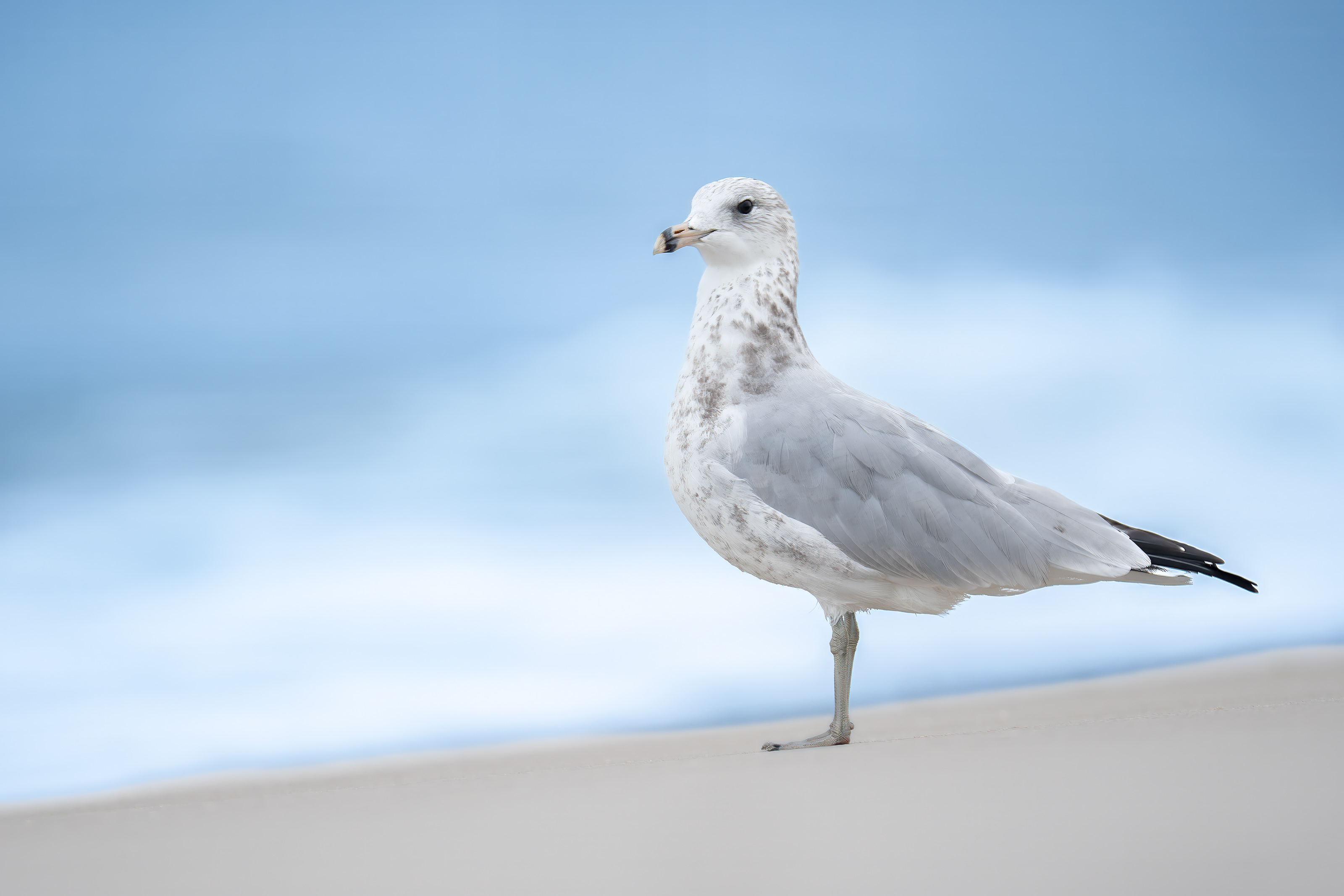
This image was created on 18 August 2026 by yours truly at Nickerson Beach Park, Lido Beach, NY. Seated on damp sand I used the handheld Sony FE 100-400mm f/4.5 GM OSS lens (at 400mm) and The Latest Greatest Sony Flagship Body, the a-1 II Mirrorless Camera. The exposure was determined by Zebras with Exposure Compensation (EC) on the Thumb Dial. Multi Metering +2.0 stops. AUTO ISO set ISO 160: 1/15 second at f/4.5 (wide open) in Shutter Priority mode. AWB at 6:27:40am on a cloudy morning. Tracking: Zone/AF-C with Bird-Eye/Face Detection performed perfectly. Click on the image to enjoy a larger high-res version. Image #1: Ring-billed Gull — basic plumage adult |
The Lens Hood on the Beach Trick
In predawn light, I often like to try to blur the waves at 1/15 second. To get the gull sharp, I place the lens hood on the beach for maximum stability. Once I have the image framed, I make lots of photos because not all will be sharp and not all will have a breaking wave in the background.
|
|
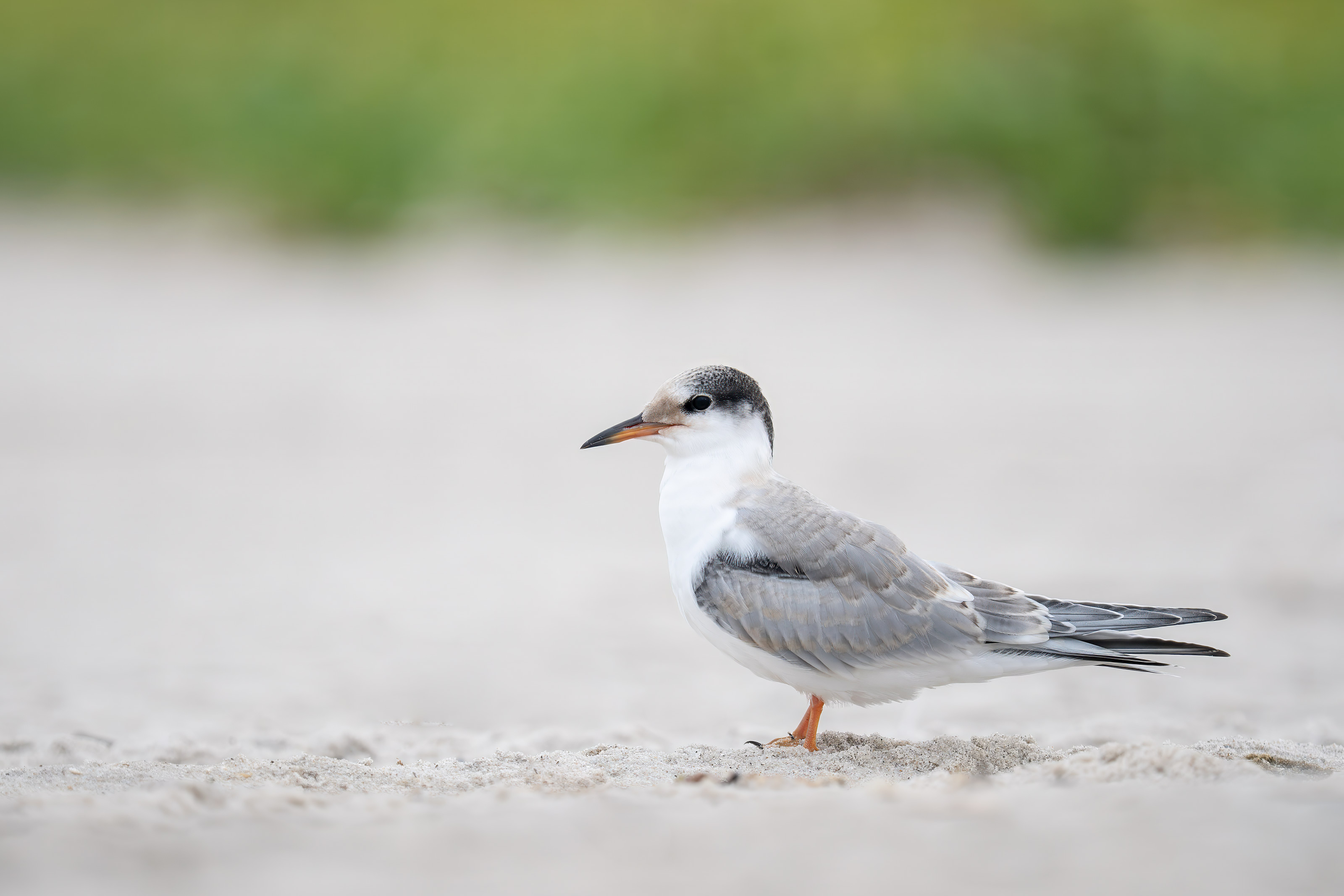
This image was also created on 18 August 2026 by yours truly at Nickerson Beach Park, Lido Beach, NY. Crouching on the beach below the berm, I used the handheld Sony FE 100-400mm f/4.5 GM OSS lens (at 400mm) and The Latest Greatest Sony Flagship Body, the a-1 II Mirrorless Camera. The exposure was determined by Zebras with ISO on the Thumb Dial. ISO 2000: 1/500 second at f/4.5 (wide open) in Manual mode. AWB at 6:39:59 am on a cloudy morning. Tracking: Zone/AF-C with Bird-Eye/Face Detection performed perfectly. Click on the image to enjoy a larger high-res version. Image #2: Common Tern, fresh juvenile plumage |
Below the Berm Trick
Most south-facing Long Island beaches are quite steep. So, on cloudy mornings, when sun angle is not an issue, you can stay down on the beach below the berm on the lower tides and crouch just a bit to get down to the bird’s eye level.
|
|
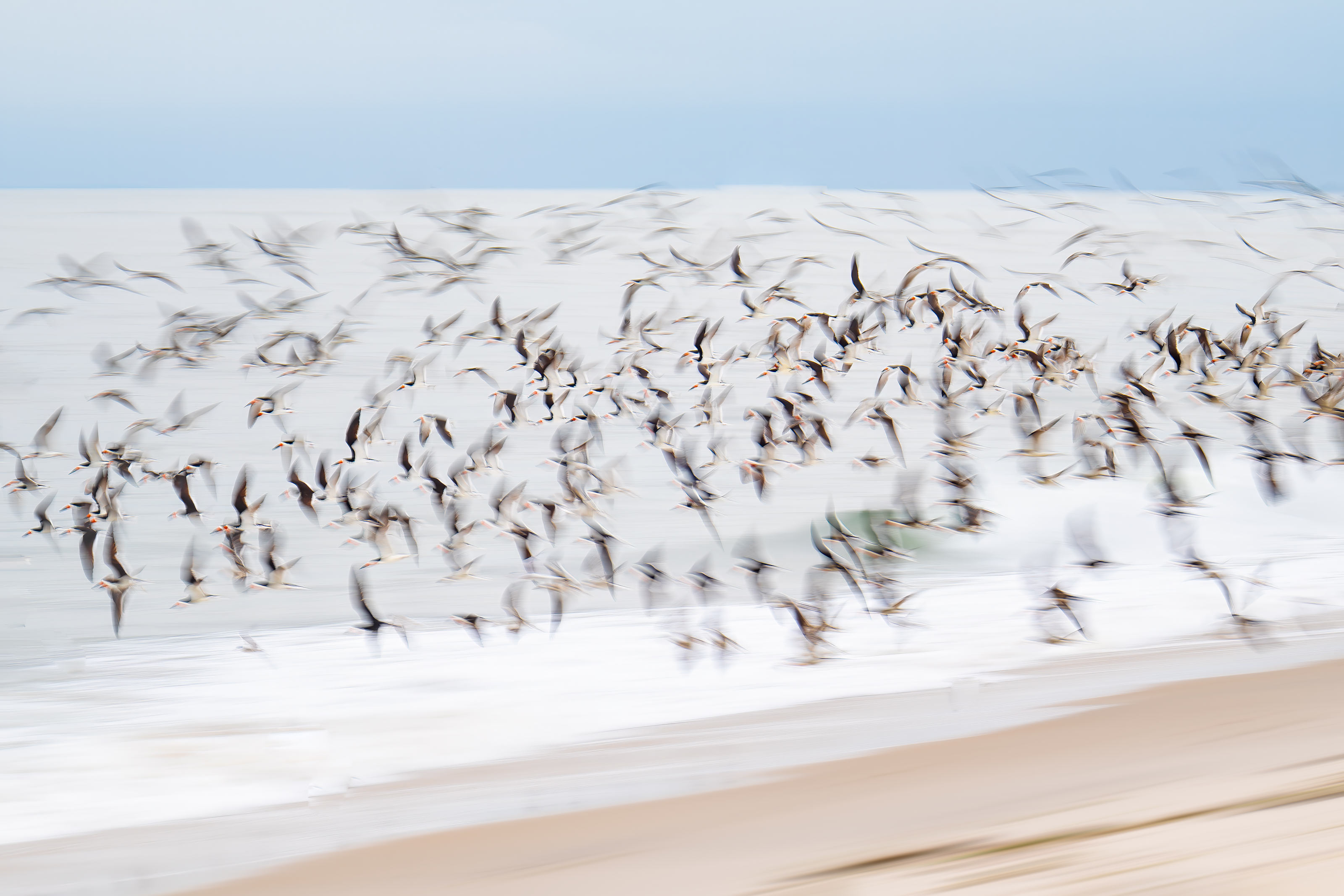
This image was also created on 18 August 2026 by yours truly at Nickerson Beach Park, Lido Beach, NY. Crouching on the beach below the berm, I used the handheld Sony FE 100-400mm f/4.5 GM OSS lens with the Sony FE 1.4x Teleconverter (at 176mm) and The Latest Greatest Sony Flagship Body, the a-1 II Mirrorless Camera. The exposure was determined by Zebras with ISO on the Thumb Dial. ISO 100: 1/20 second at f/6.3 (wide open) in Manual mode. AWB at 7:04:54 am on a cloudy morning. Tracking: Zone/AF-C with Bird-Eye/Face Detection performed perfectly. Click on the image to enjoy a larger high-res version. Image #3: Black Skimmer blastoff blur |
Panning Rate Trick
If you concentrate on matching your panning rate with the speed of the flock you can render the subjects relatively sharp even with very slow shutter speeds like 1/20 second.
|
|
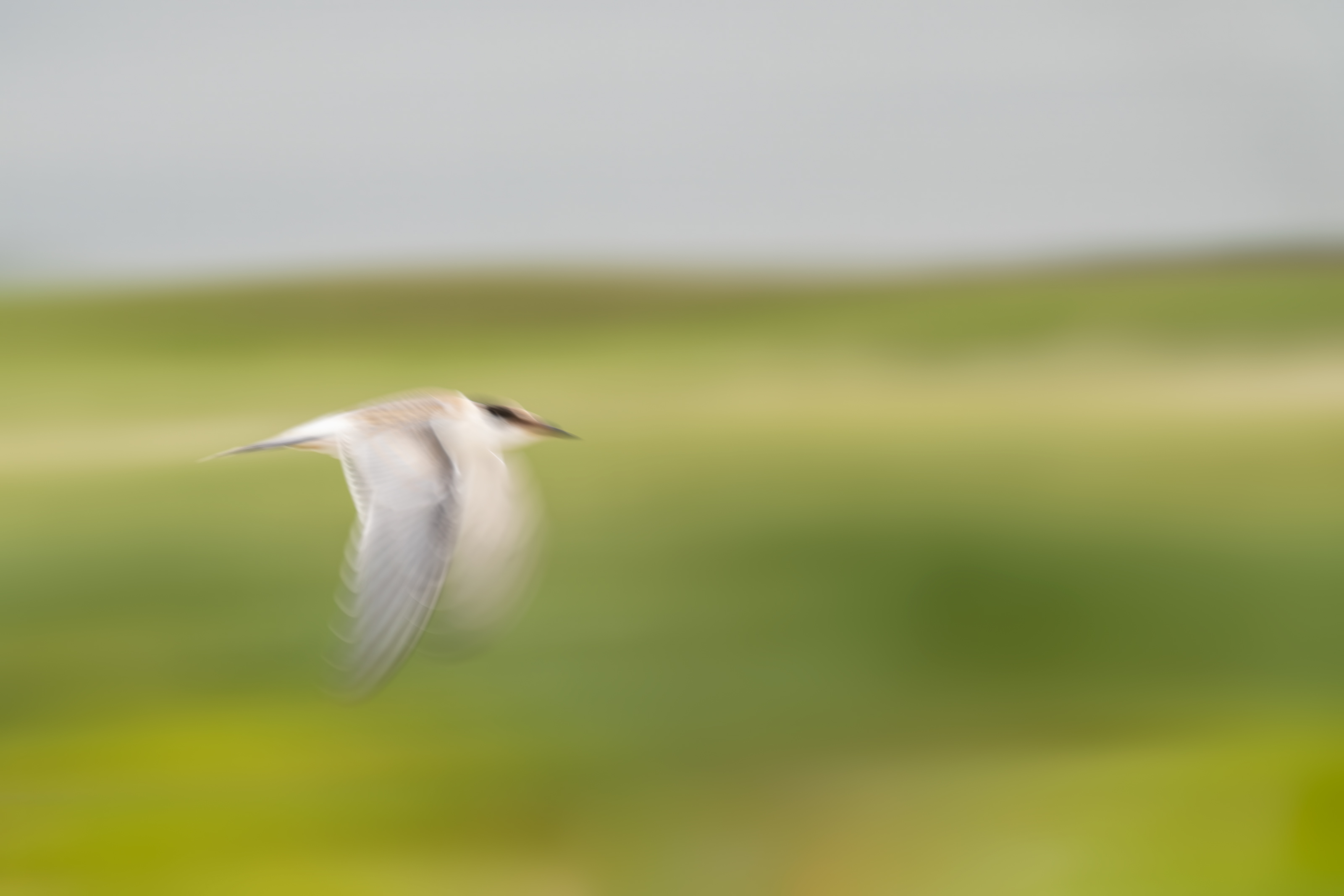
This image was also created on 18 August 2026 by yours truly at Nickerson Beach Park, Lido Beach, NY. Standing on the beach at full height, I used the handheld Sony FE 100-400mm f/4.5 GM OSS lens with the Sony FE 1.4x Teleconverter (at 258mm) and The Latest Greatest Sony Flagship Body, the a-1 II Mirrorless Camera. The exposure was determined by Zebras with ISO on the Thumb Dial. ISO 80: 1/20 second at f/6.3 (wide open) in Manual mode. AWB at 7:11:25am on a cloudy morning. Wide/AF-C with Bird-Eye/Face Detection performed perfectly. Click on the image to enjoy a larger high-res version. Image #4: Common Tern juvenile flight blur |
Manual Mode Blur Trick
Knowing that I wanted a green background, I switched from my usual blur mode, Shutter Priority with AUTO ISO and Exposure Compensation to Manual mode, set a good exposure for the terns, and went to work without having to worry about the relatively dark background causing over-exposure.
|
|
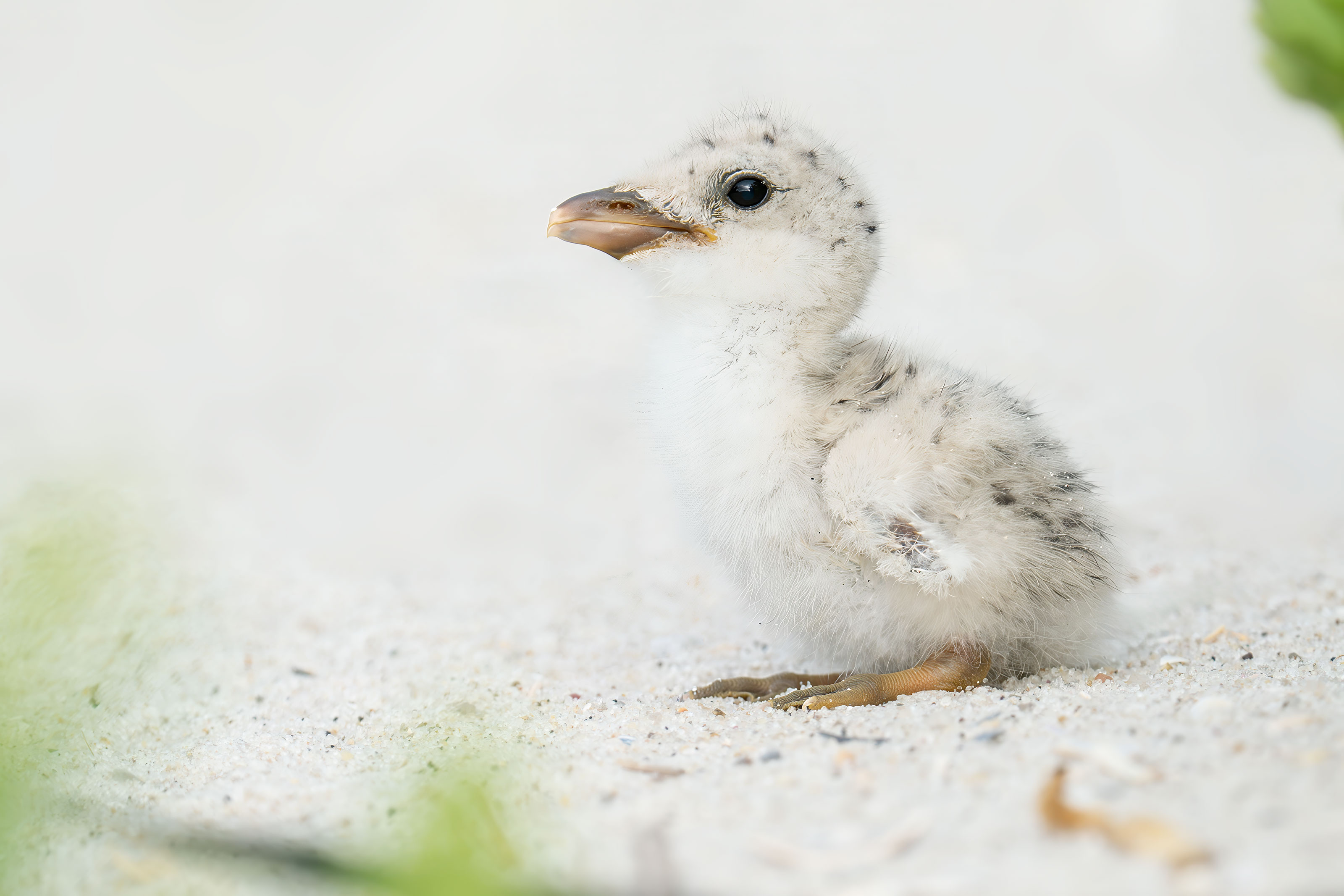
This image was also created on 18 August 2026 by yours truly at Nickerson Beach Park, Lido Beach, NY. Seated on dry sand, I used the handheld Sony FE 100-400mm f/4.5 GM OSS lens with the Sony FE 2x Teleconverter (at 800mm) and The Latest Greatest Sony Flagship Body, the a-1 II Mirrorless Camera (in APS-C Crop mode). The exposure was determined by Zebras with ISO on the Thumb Dial. ISO 2500: 1/500 second at f/9 (wide open) in Manual mode. AWB at 7:43:14am on a cloudy morning. Wide/AF-C with Bird-Eye/Face Detection performed perfectly. Click on the image to enjoy a larger high-res version. Image #5: Black Skimmer small chick near nest |
The 2X TC Plus Crop Mode Trick
Adding the 2X teleconverter to the 100-400 f/4.5 GM lens and activating APS-C Crop mode yielded an effective focal length of 1200mm. Nearly all of the images of this several-day-old chick were sharp at 1/500 second as I used the knee pod technique.
|
|
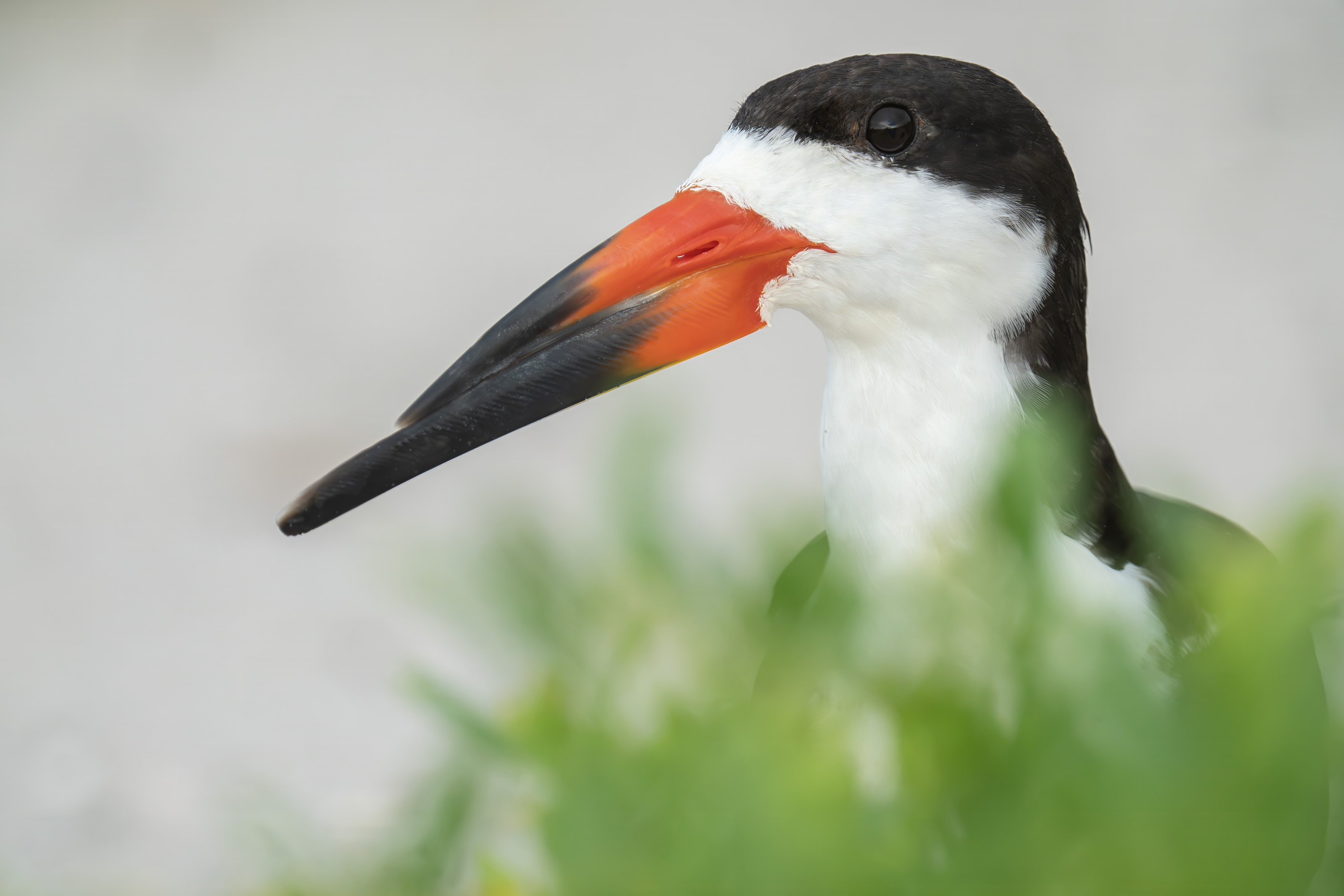
This image was also created on 18 August 2026 by yours truly at Nickerson Beach Park, Lido Beach, NY. Seated on dry sand, I used the handheld Sony FE 100-400mm f/4.5 GM OSS lens with the Sony FE 2x Teleconverter (at 800mm) and The Latest Greatest Sony Flagship Body, the a-1 II Mirrorless Camera. The exposure was determined by Zebras with ISO on the Thumb Dial. ISO 2500: 1/640 second at f/9 (wide open) in Manual mode. AWB at 7:44:13am on a cloudy morning. Tracking: Zone/AF-C with Bird-Eye/Face Detection performed perfectly. Click on the image to enjoy a larger high-res version. Image #6: Black Skimmer adult head portrait |
The Bird in Green Heaven Trick
Out of focus vegetation between you and the subject can be used to create a pleasing foreground.
|
|
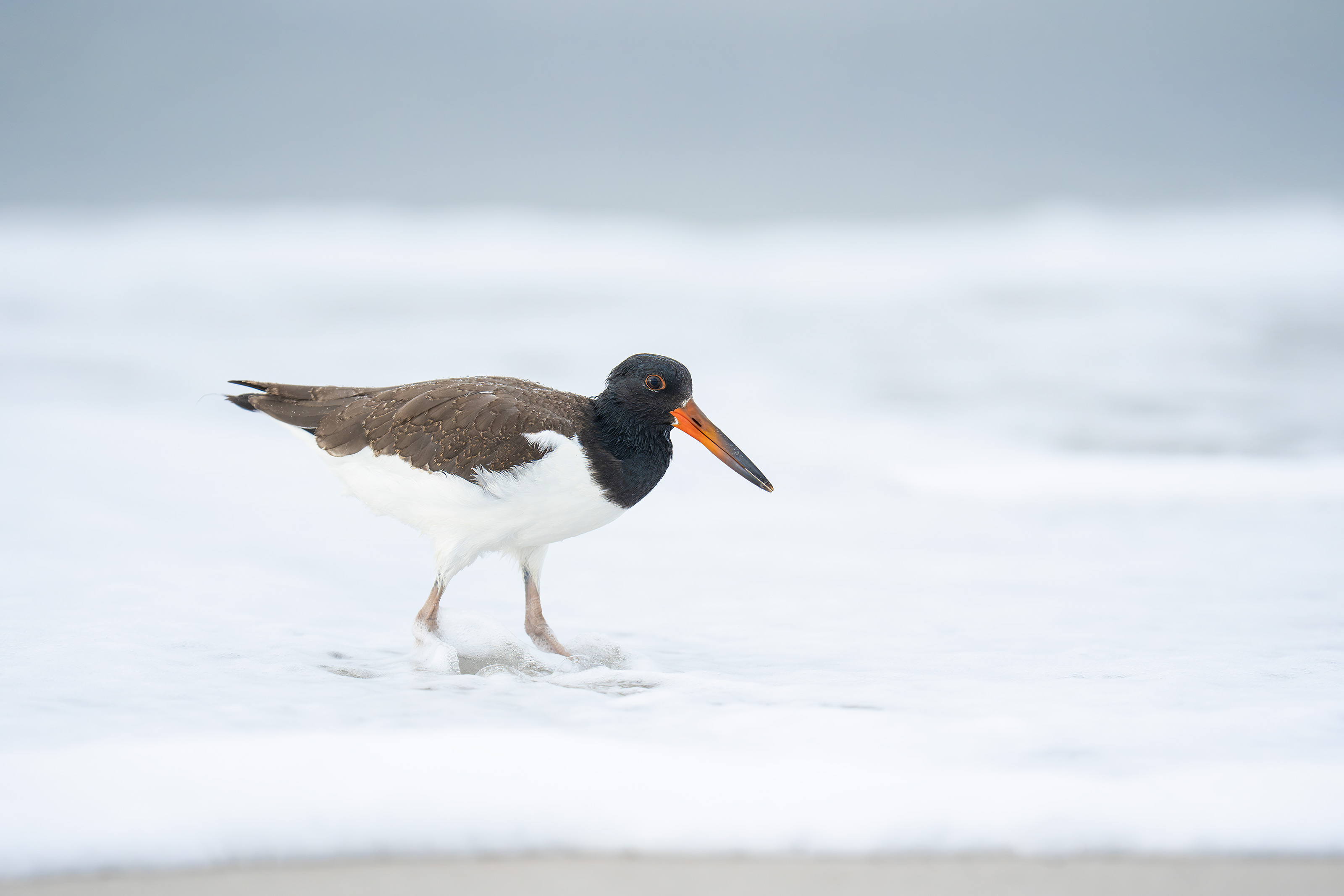
This image was created on 18 August 2026 by yours truly at Nickerson Beach Park, Lido Beach, NY. Seated on damp sand and working off the articulated rear monitor I used the handheld Sony FE 100-400mm f/4.5 GM OSS lens (at 400mm) and The Latest Greatest Sony Flagship Body, the a-1 II Mirrorless Camera. The exposure was determined by Zebras with Exposure Compensation (EC) on the Thumb Dial. Multi Metering +2.0 stops. AUTO ISO set ISO 2500: 1/2000 second at f/4.5 (wide open) in Shutter Priority mode. AWB at 8:23:40am on a cloudy morning. Tracking: Zone/AF-C with Bird-Eye/Face Detection performed perfectly. Click on the image to enjoy a larger high-res version. Image #7: American Oystercatcher juvenile in the wash of a broken wave |
The Instep-Pod Trick
Placing a telephoto lens between your insteps and working off the rear monitor enables you to shoot from a super-low perspective. I always wear my reading glasses so that I can better frame the image and check on AF performance. The pure white breaking wave background is a huge plus.
|
|
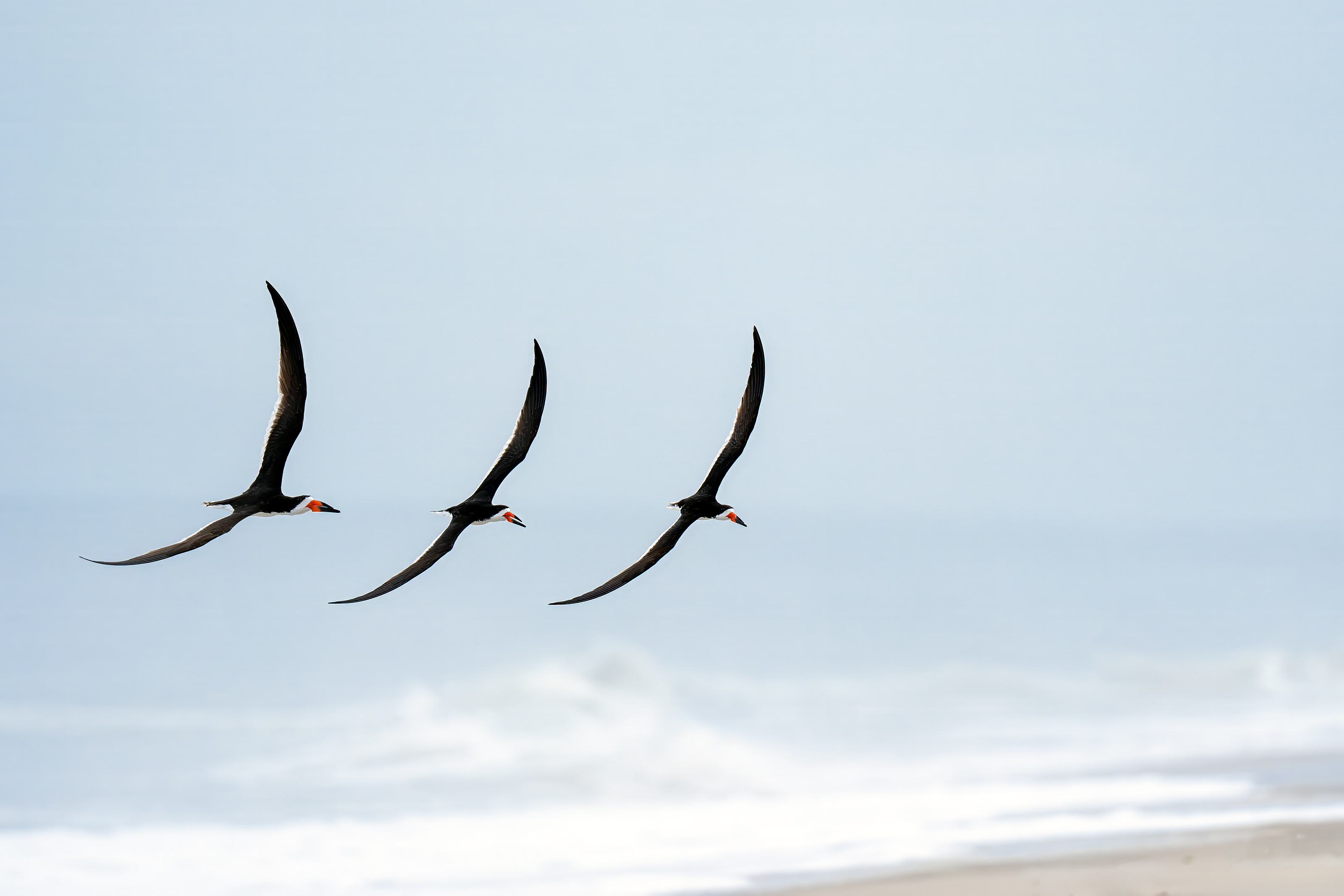
This image was created on 18 August 2026 by yours truly at Nickerson Beach Park, Lido Beach, NY. Standing at full height, I used the handheld Sony FE 100-400mm f/4.5 GM OSS lens (at 400mm) and The Latest Greatest Sony Flagship Body, the a-1 II Mirrorless Camera. The exposure was determined by Zebras with Exposure Compensation (EC) on the Thumb Dial. Multi Metering +2.0 stops. AUTO ISO set ISO 2500: 1/3200 second at f/4.5 (wide open) in Shutter Priority mode. AWB at 8:48:54am on a cloudy morning. Tracking: Zone/AF-C with Bird-Eye/Face Detection performed perfectly. Click on the image to enjoy a larger high-res version. Image #8: Black Skimmer trio in formation |
The Multiple Flight Subject Trick
When photographing birds in flight, if you have more than one bird in the frame, push the shutter button. If you wait for a perfect arrangement you will miss it. Fire away and hope for the best. Once in a while, you will get very lucky as I did with Image #8.
|
|
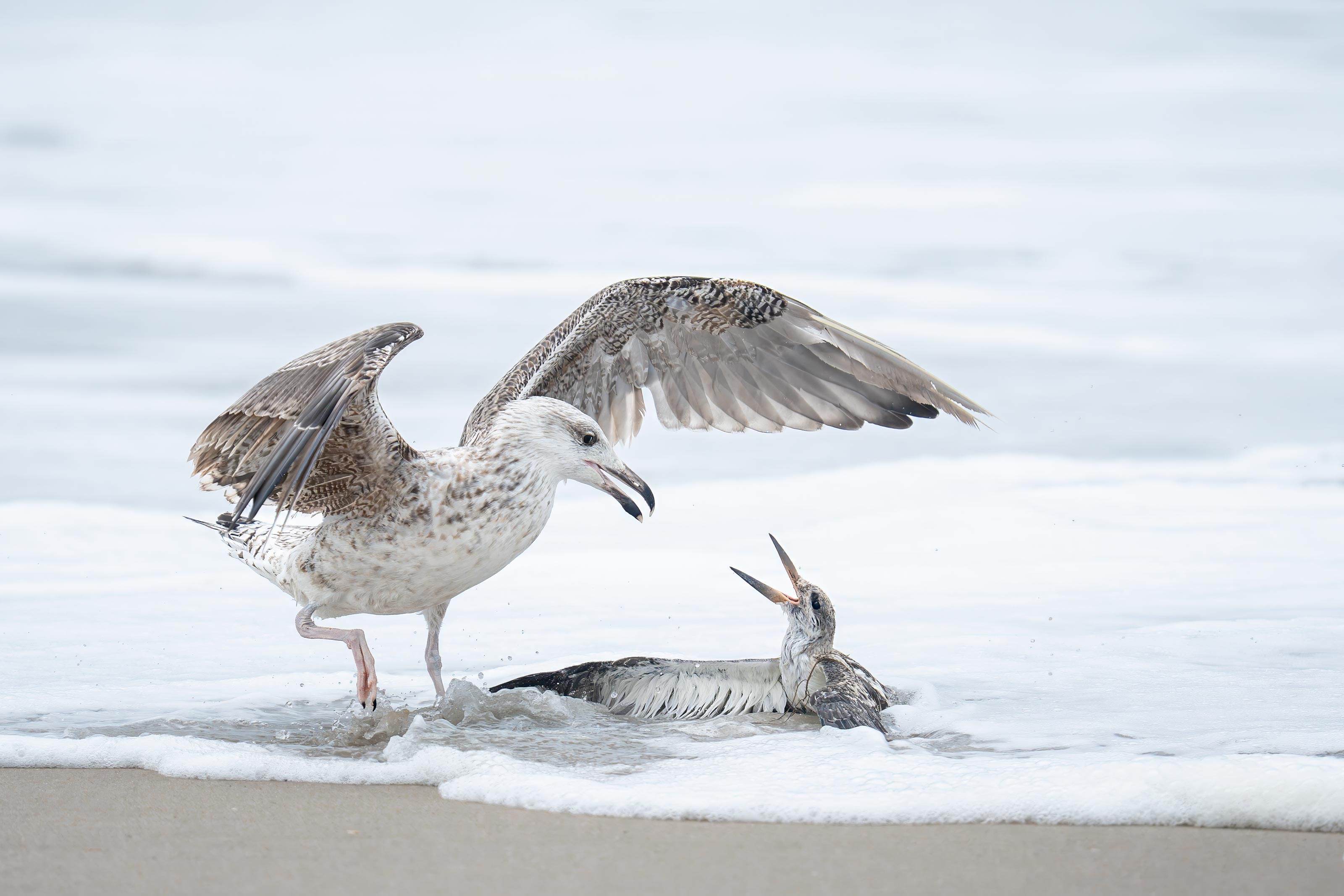
This image was created on 18 August 2026 by yours truly at Nickerson Beach Park, Lido Beach, NY. Standing at full height, I used the handheld Sony FE 100-400mm f/4.5 GM OSS lens (at 400mm) and The Latest Greatest Sony Flagship Body, the a-1 II Mirrorless Camera. The exposure was determined by Zebras with Exposure Compensation (EC) on the Thumb Dial. Multi Metering +2.0 stops. AUTO ISO set ISO 1250: 1/3200 second at f/4.5 (wide open) in Shutter Priority mode. AWB at 8:53:49am on a cloudy morning. Tracking: Zone/AF-C with Bird-Eye/Face Detection performed perfectly. Click on the image to enjoy a larger high-res version. Image #9: Great Black-backed Gull juvenile threatening juvenile Black Skimmer |
The Tracking: Zone Trick
With multiple subjects near the center of the frame, put the head of the bird that you want to be in focus in the center of the zone brackets, acquire focus on the eye, and then re-compose as needed.
|
|
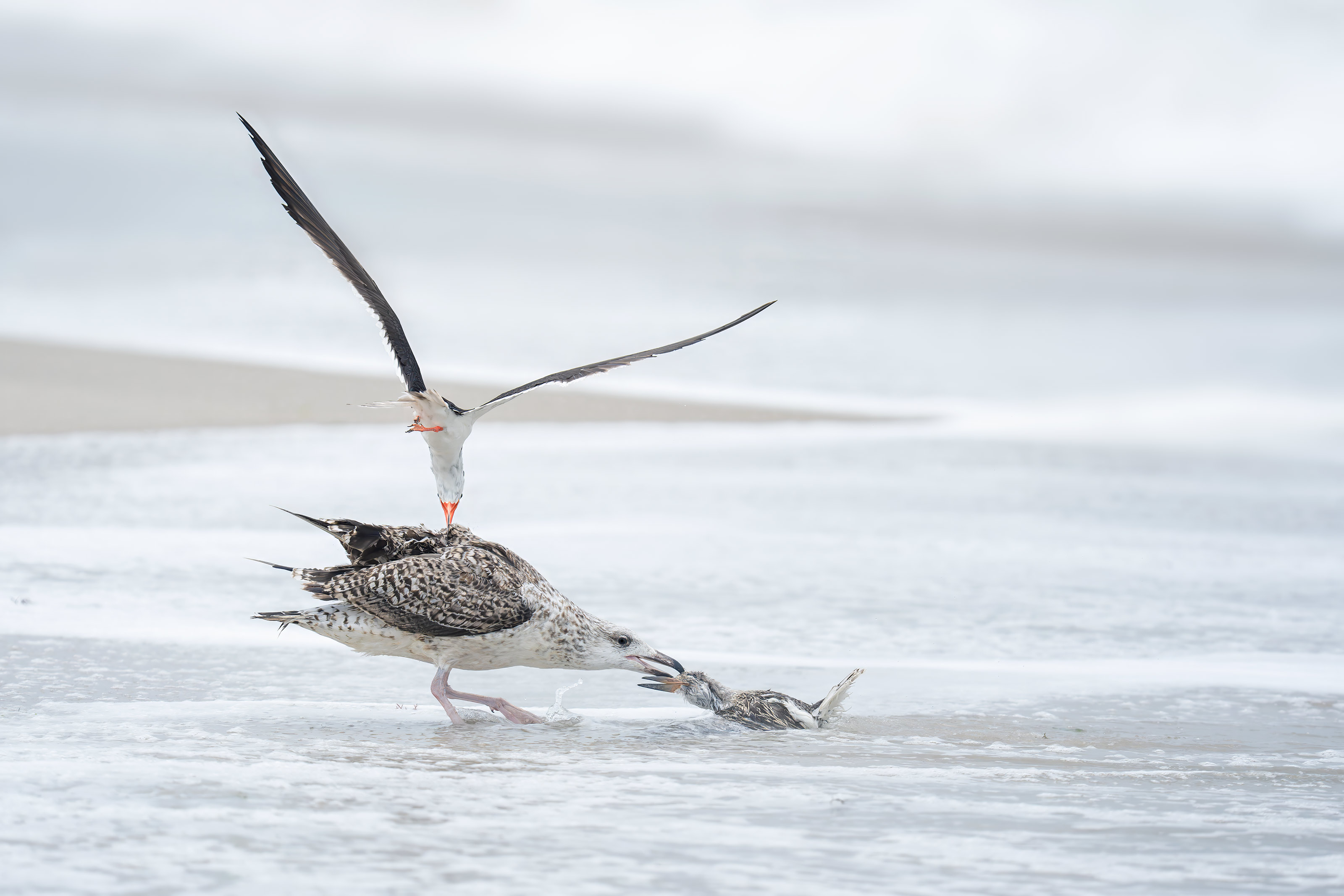
This image was created on 18 August 2026 by yours truly at Nickerson Beach Park, Lido Beach, NY. Standing at full height, I used the handheld Sony FE 100-400mm f/4.5 GM OSS lens (at 400mm) and The Latest Greatest Sony Flagship Body, the a-1 II Mirrorless Camera. The exposure was determined by Zebras with Exposure Compensation (EC) on the Thumb Dial. Multi Metering +2.0 stops. AUTO ISO set ISO 1250: 1/3200 second at f/4.5 (wide open) in Shutter Priority mode. AWB at 8:53:59am on a cloudy morning. Tracking: Zone/AF-C with Bird-Eye/Face Detection performed perfectly. Click on the image to enjoy a larger high-res version. Image #10: Black Skimmer adult attacking Great Black-backed Gull killing juvenile skimmer |
The Keep Your Eyes Open and Zoom Out for Action Trick
When I noticed the adult skimmer harassing the attacking gull, I zoomed out and was aggressive with the shutter button.
|
|
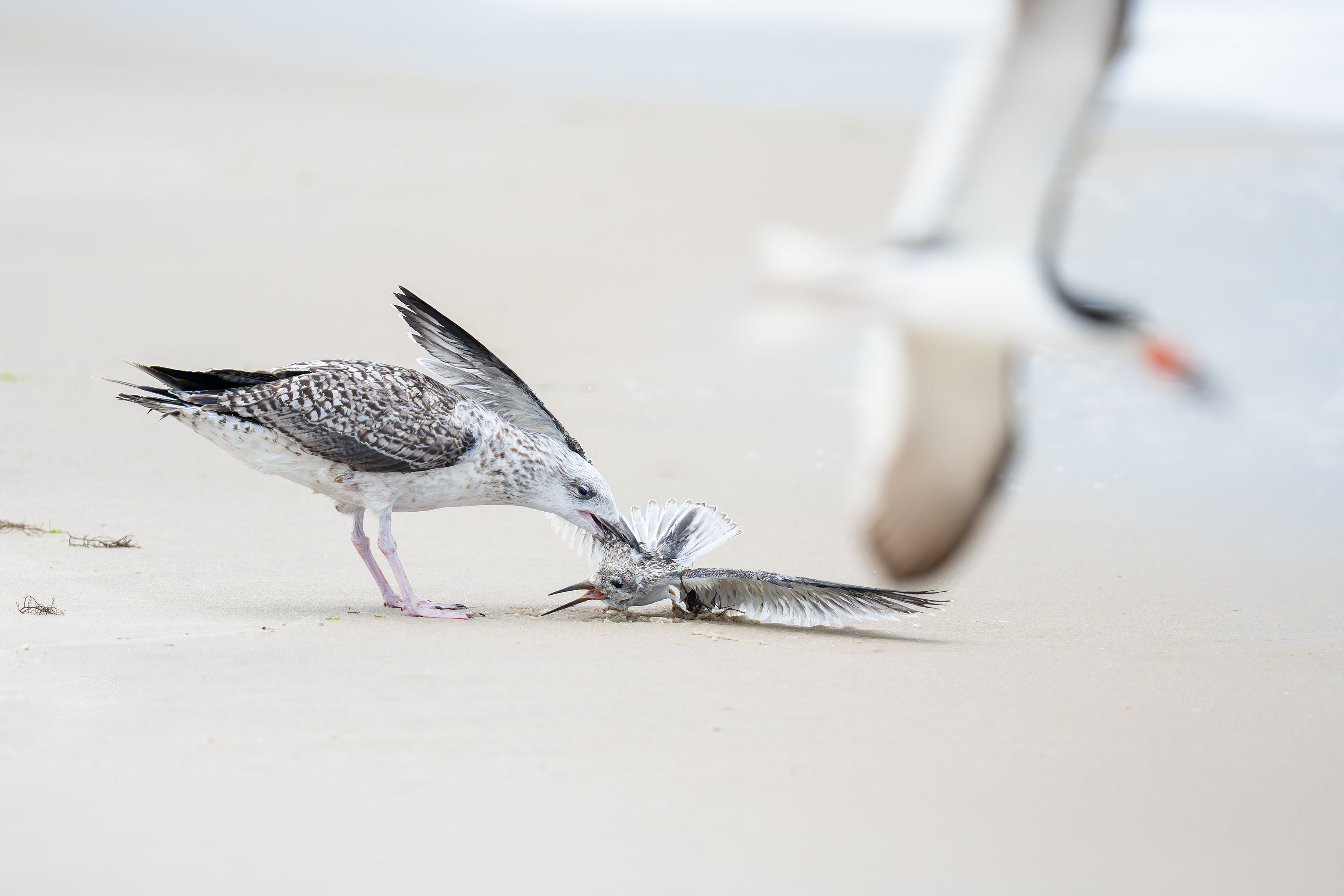
This image was created on 18 August 2026 by yours truly at Nickerson Beach Park, Lido Beach, NY. Standing at full height, I used the handheld Sony FE 100-400mm f/4.5 GM OSS lens (at 400mm) and The Latest Greatest Sony Flagship Body, the a-1 II Mirrorless Camera. The exposure was determined by Zebras with Exposure Compensation (EC) on the Thumb Dial. Multi Metering +2.0 stops. AUTO ISO set ISO 1250: 1/3200 second at f/4.5 (wide open) in Shutter Priority mode. AWB at 8:54:11am on a cloudy morning. Tracking: Zone/AF-C with Bird-Eye/Face Detection performed perfectly. Click on the image to enjoy a larger high-res version. Image #11: Great Black-backed Gull killing juvenile skimmer — the killing blow |
The When You’ve Got a Good Horse, Ride It Trick
When something exciting happens, take a deep breath to get in the moment and make lots of images. A zoom lens in such situations enables you to vary your framing. The new Sony FE 100-400mm f/4.5 GM OSS lens was perfect for this predation sequence.
|
|
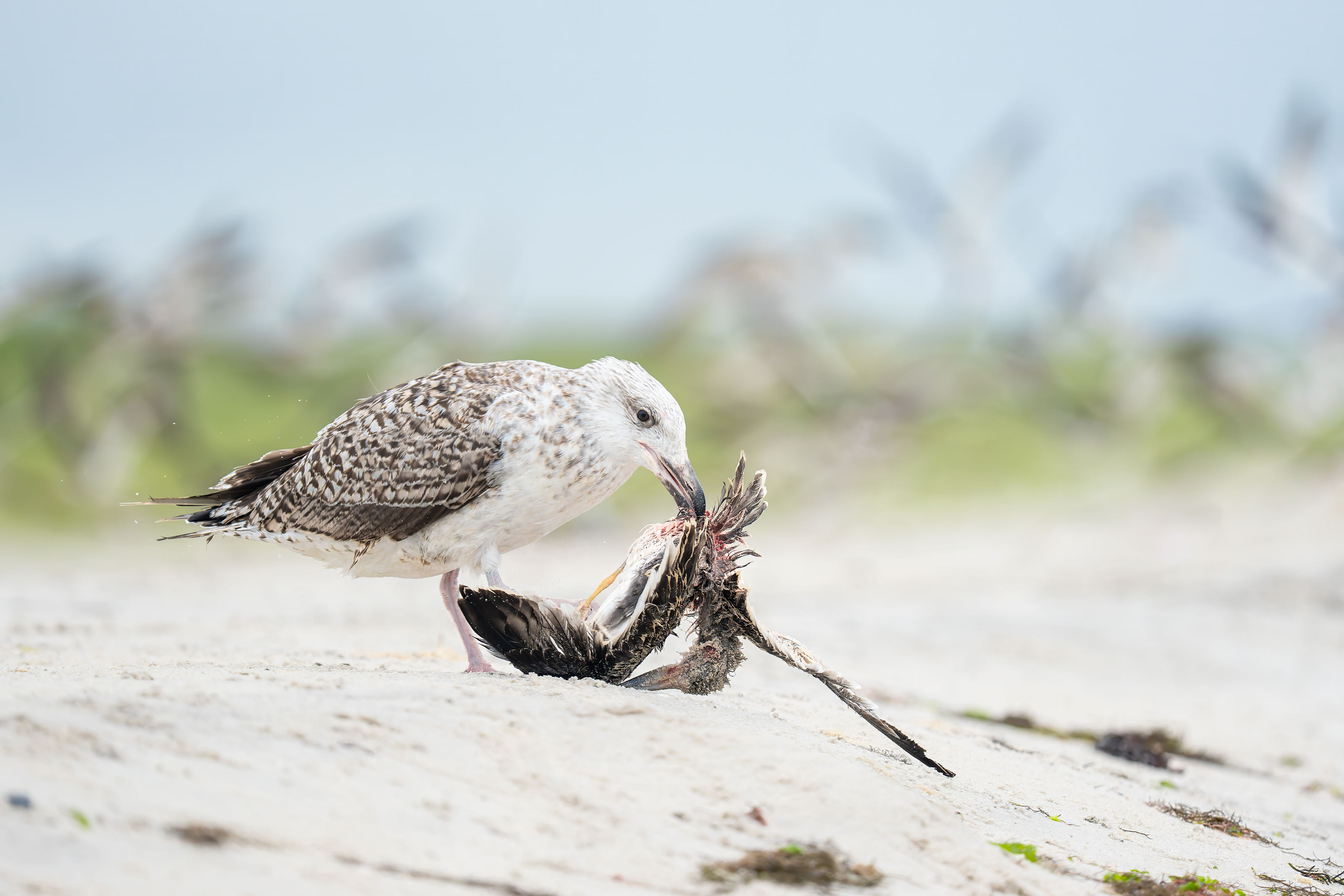
This image was created on 18 August 2026 by yours truly at Nickerson Beach Park, Lido Beach, NY. Standing at full height, I used the handheld Sony FE 100-400mm f/4.5 GM OSS lens (at 400mm) and The Latest Greatest Sony Flagship Body, the a-1 II Mirrorless Camera. The exposure was determined by Zebras with Exposure Compensation (EC) on the Thumb Dial. Multi Metering +2.0 stops. AUTO ISO set ISO 1600: 1/2500 second at f/4.5 (wide open) in Shutter Priority mode. AWB at 9:05:05am on a cloudy morning. Tracking: Zone/AF-C with Bird-Eye/Face Detection performed perfectly. Click on the image to enjoy a larger high-res version. Image #12: Great Black-backed Gull chowing down on juvenile skimmer |
The Add Less Light With a Darker Strip of Background Trick
Notice that with all the previous images with light-toned backgrounds that were created in Shutter Priority mode with AUTO ISO, I went with an Exposure Compensation (EC) of +2.0 stops. When the young gull dragged its prey up onto the beach, a darker strip of green vegetation fell into place so I reduced the positive EC to +1.7 stops to wind up with a perfect exposure. Sony Zebra technology works as well in Shutter Priority mode with AUTO ISO and EC on the Thumb Dial as it does in Manual mode with ISO on the Thumb Dial — simply raise the EC until you see a few Zebras on the highlights and you are good to go.
Typos
With all blog posts, feel free to e-mail or to leave a comment regarding any typos or errors.











Sorry Art but #4, despite the lovely bird, is still a blur! At least I’m consistent.
For me, the three strongest are images 4, 8, and tie with #9 and 10. I am not a huge intentional blur fan, but the colors in #4 grabbed me. I’m usually looking for sharp eyes in a blur, but this image is still beautiful. Image #8 for the choreography/synchronization. Images 9 and 10 for the drama.
My least favorite, image 2, while it is a technically fine image, there isn’t much in the way of uniqueness compared to the others.
I like #8. You don’t see that often
Thanks, AA. You never see it. All you gotta do is press the shutter button and get lucky!
a
#9 for me is the top photo, agree with comments about it telling a dramatic story. #1 is the weakest of the bunch.
Get well soon, I had that occur on a Bosque trip a few years ago and it is not fun being sick.
Thanks, Jim. Definitely not fun. In fact, thinking it over today, I realized that three of the ten worst days in my life were quite similar, with the food poisoning in Lafayette, LA being the worst. One other one was a bad kidney stone episode. And I cannot remember the other six 🙂
with love, artie
Typo: NY two favorite flowers
Strongest: #9 the gull with the skimmer chick — tells a dramatic story with the chick’s beak open as if it were begging. For me, #3, the blastoff, is the weakest because I don’t like blurs.
Thanks and fixed Pat. But what about #4?
a