
Summary
With the torrential rains continuing most afternoons and some evenings, driving on the fields at Indian Lake Estates is 100% unsafe — I’d get stuck for sure. So, I have been walking the pier every morning and doing quite well photographing birds on the railings: Great Egret, Green Heron, Black-belied Whistling Duck, Turkey Vulture, Boat-tailed Grackle, and Red-shouldered Hawk.
On Monday, dozens of migrating Barn Swallows were flying around the pier snatching gnats — there was a huge hatch the last two mornings — from the surface of Lake Weohyakapka (Lake Walk-in-Water). On Tuesday there were hundreds. I’ve learned a lot while using the Sony 400-800 GM lens to photograph the swallows in flight. Keep reading to learn about the near-impossible task of photographing swallow in flight. And while you are at it, learn about two new, amazing, ridiculously small and light, Sony f/6.3 super-telephoto lenses.
Note: General information, copy editing, re-crafting, technical refinement, and formatting for this blog post were assisted by Gemini AI.
Your Call?
Which of today’s three featured Barn Swallow flight shots is the strongest? Why did you make your choice?
In the Last Blog Post
In the last blog post only two folks left a comment 🙁 Both liked Image #1, the Least Sandpiper with the raised foot. My favorite was Image #2, the Least Sandpiper eyeing the fly. Why? It told the story of why the bird was hanging out on the pier railing.
What’s Up?
As above, bird photography on the pier at ILE has been both exciting and the only game in town.
Today is Wednesday 23 September 2026. I will of course be heading down to the lake a few minutes after sunrise to see if this trend continues. Whatever you opt to do, I hope that you choose to have fun and enjoy life. Please remember that happiness is a choice — Byron Katie – The Work.Com
If an item — a Delkin flash card or reader, a Levered-clamp FlexShooter Pro, or a Wimberley lens plate or low foot — for example, that is available from B&H and/or Bedfords, is also available in the BAA Online Store, it would be great, and greatly appreciated, if you would opt to purchase from us. We will match or beat any price. Please remember also to use my B&H affiliate links or to earn 3% cash back at Bedford by using the BIRDSASART discount code at checkout for your major gear purchases. Doing either often earns you free guides and/or discounts. And always earns my great appreciation.
Gear Questions and Advice
Too many folks attending BAA IPTs and dozens of photographers whom I see in the field and on BirdPhotographer’s.Net, are — out of ignorance — using the wrong gear, especially when it comes to tripods and more especially, tripod heads. And the same is true in spades when ordering new camera bodies or lenses. My advice will often save you some serious money and may help you avoid making a seriously bad choice. Please know that I am always glad to answer your gear questions via e-mail. If you are desperate, you can try me on my cell at 863-221-2372. Please leave a message and shoot me a text if I do not pick up.
|
|
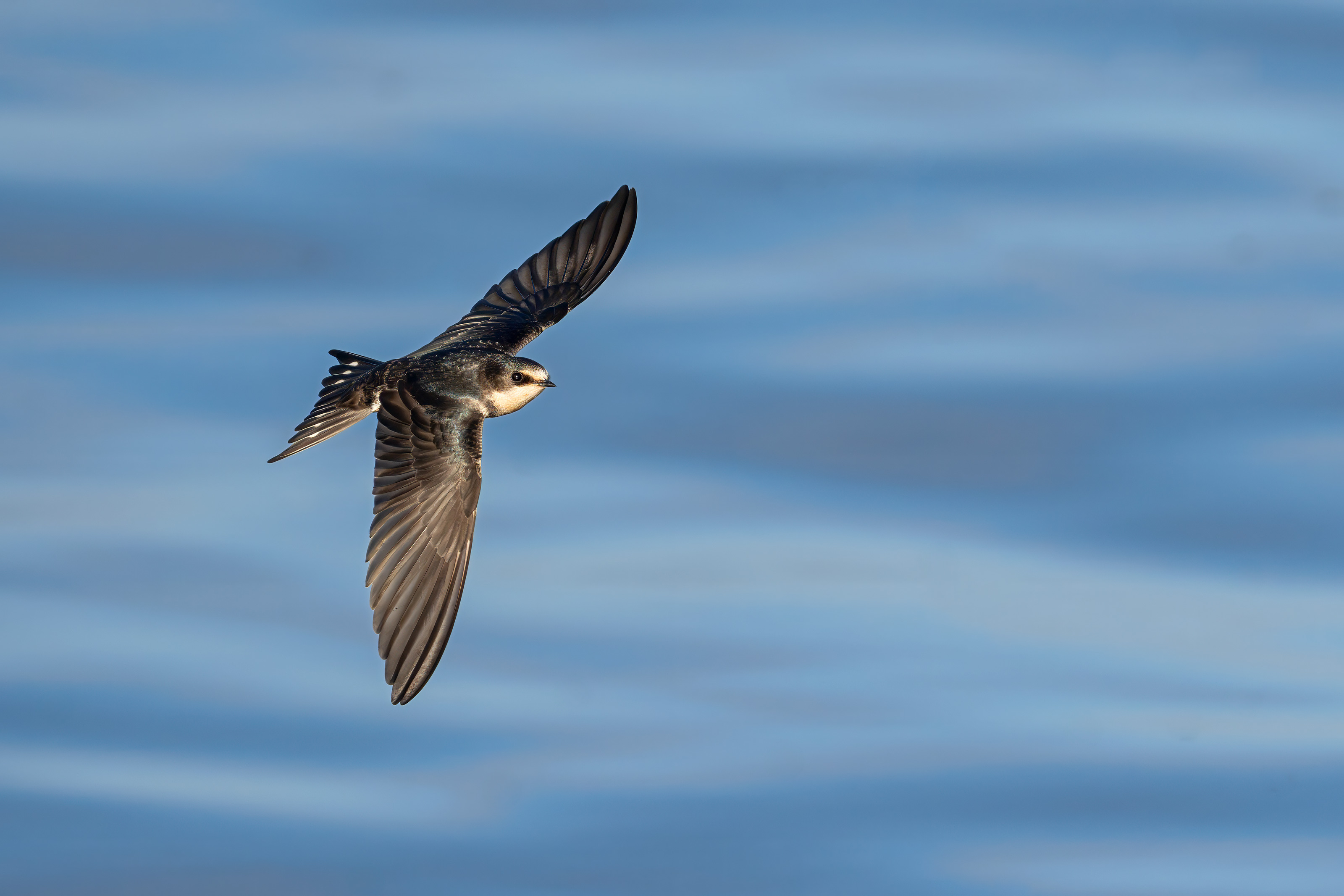
This image was created by yours truly on 21 September 2026 from the end of the pier at Indian Lake Estates. I used the handheld Sony FE 400-800mm f/6.3-8 G OSS lens (Sony E) (at 800mm) and The Latest Greatest Sony Flagship Body, the a1 II Mirrorless Camera. The exposure was determined by Zebras with ISO on the rear wheel. ISO 2500: 1/3200 second at f/9 (stopped down 1/3 stop in error) in Manual mode. AWB at 8:26:32am on sunny morning. Tracking: Zone/AF-C with Bird-Eye/Face Detection performed perfectly. Click on the image to enjoy the larger high-res version. Image #1: Barn Swallow — dorsal view of juvenile in flight |
Distance to Subject
When I tried to frame birds flying at close range — those filling at least a third of the frame — my success rate was zero. Their speed relative to my position was simply too fast and their flight paths far too erratic. I succeeded by working at 800mm in full frame mode, acquiring focus while the subjects were relatively distant, tracking them as they flew toward the pier, and then cropping after the fact.
Over the two mornings, I created more than 1,000 Barn Swallow images and kept just three. I consider each one a small miracle – a testament to sheer determination.
When handholding for small, fast, erratically flying subjects, it is far better to shoot in full-frame mode than in APS-C crop mode. Why? When working in crop mode, the bird appears larger in the viewfinder, making it much harder to keep centered in the frame as it darts about.
Note: The complete absence of orange feathers around the face identifies this bird as a juvenile.
|
|
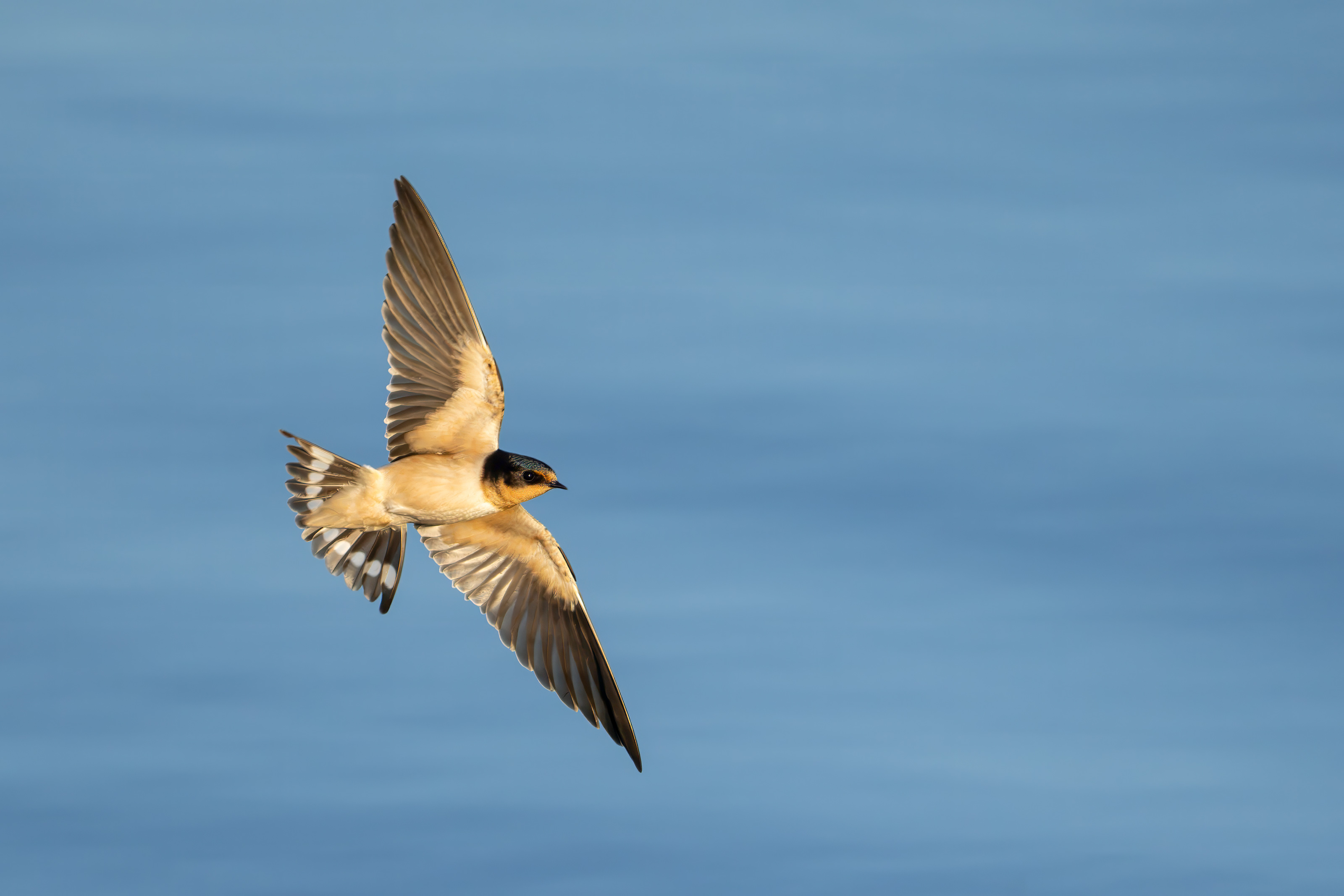
This image was created by yours truly on 22 September 2026 from the end of the pier at Indian Lake Estates. I used the handheld Sony FE 400-800mm f/6.3-8 G OSS lens (Sony E) (at 800mm) and The Latest Greatest Sony Flagship Body, the a1 II Mirrorless Camera. The exposure was determined by Zebras with ISO on the rear wheel. ISO 2500: 1/3200 second at f/8 (wide open) in Manual mode. AWB at 8:06:11am on sunny morning. Tracking: Zone/AF-C with Bird-Eye/Face Detection performed perfectly. Click on the image to enjoy the larger high-res version. Image #2: Barn Swallow adult headed north — flaring in flight |
Lens Choice
Most recently—especially on sunny days when f/8 is easily workable — I’ve had great success on the pier using the 400-800mm GM to photograph birds perched on the railings. The 100-400mm with the 1.4X TC gives me 560mm (at f/5.6) compared to 800mm (at f/8) with the 400-800mm. Because the size of the bird in the frame scales with the square of the focal length, a bird at the same distance will appear roughly twice as large in the frame at 800mm as it does at 560mm.
For small, fast flying subjects, however, the 400-800mm GM — though beautifully balanced toward the rear — is simply too heavy for me to handhold for extended, action-packed flight photography sessions. Even with frequent breaks every few minutes, fatigue quickly set in. As with so many challenges in my career, my persistence in a tough situation was the single biggest factor in earning those very few keepers.
Note: Many younger, stronger flight photographers would have no trouble handholding the 400-800mm for long shooting sessions.
|
|
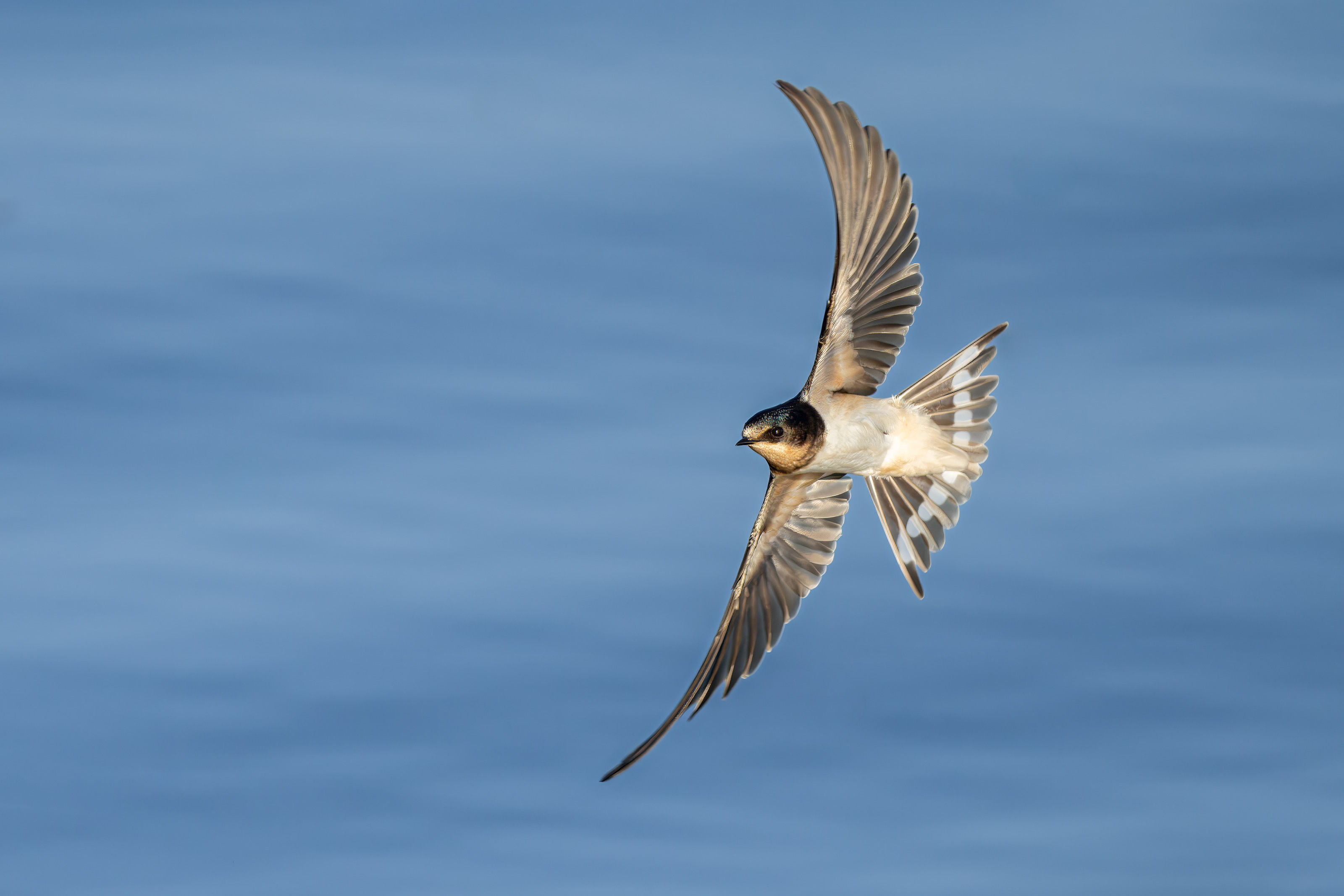
This image was created by yours truly on 22 September 2026 from the end of the pier at Indian Lake Estates. I used the handheld Sony FE 400-800mm f/6.3-8 G OSS lens (Sony E) (at 800mm) and The Latest Greatest Sony Flagship Body, the a1 II Mirrorless Camera. The exposure was determined by Zebras with ISO on the rear wheel. ISO 3200: 1/3200 second at f/8 (wide open) in Manual mode. AWB at 8:25:25am on a mostly sunny morning. Tracking: Zone/AF-C with Bird-Eye/Face Detection performed perfectly. Click on the image to enjoy the larger high-res version. Image #3: Barn Swallow adult headed south — flaring in flight |
The Solution to the Problem?
The 400-800mm GM lens weighs 5.45 pounds. The 100-400mm f/4.5 GM lens weighs about 4 pounds. Sony recently introduced a ridiculously light Sony FE 600mm f/6.3 GM OSS Lens (Sony E) that weighs only 2.2 pounds. This lens is an incredible 10.4 inches long and weighs fractionally less than the 70-200mm f/2.8 GM lens! The new 600mm f/6.3 will surely be the ideal flight lens for small, erratically flying birds.
To pre-order yours from B&H, you can use this affiliate link: Sony FE 600mm f/6.3 GM OSS Lens (Sony E). To get on a shorter wait list, pre-order yours from Bedfords by clicking here. Be sure to enter BIRDSASART in the coupon code box at checkout to enjoy a post-purchase, 3% off-statement credit (excluding taxes and shipping charges) on orders paid with a credit card along with free second day Fed-Ex shipping.
Is the new Sony FE 600mm f/6.3 GM OSS Lens (Sony E) right for you? The huge plusses include the extremely light weight and small size that make it eminently handholdable, while the main drawback is that many will be missing the versatility of a zoom lens … If you have any questions on this new lens, shoot me an e-mail and LMK what other lenses you own.
|
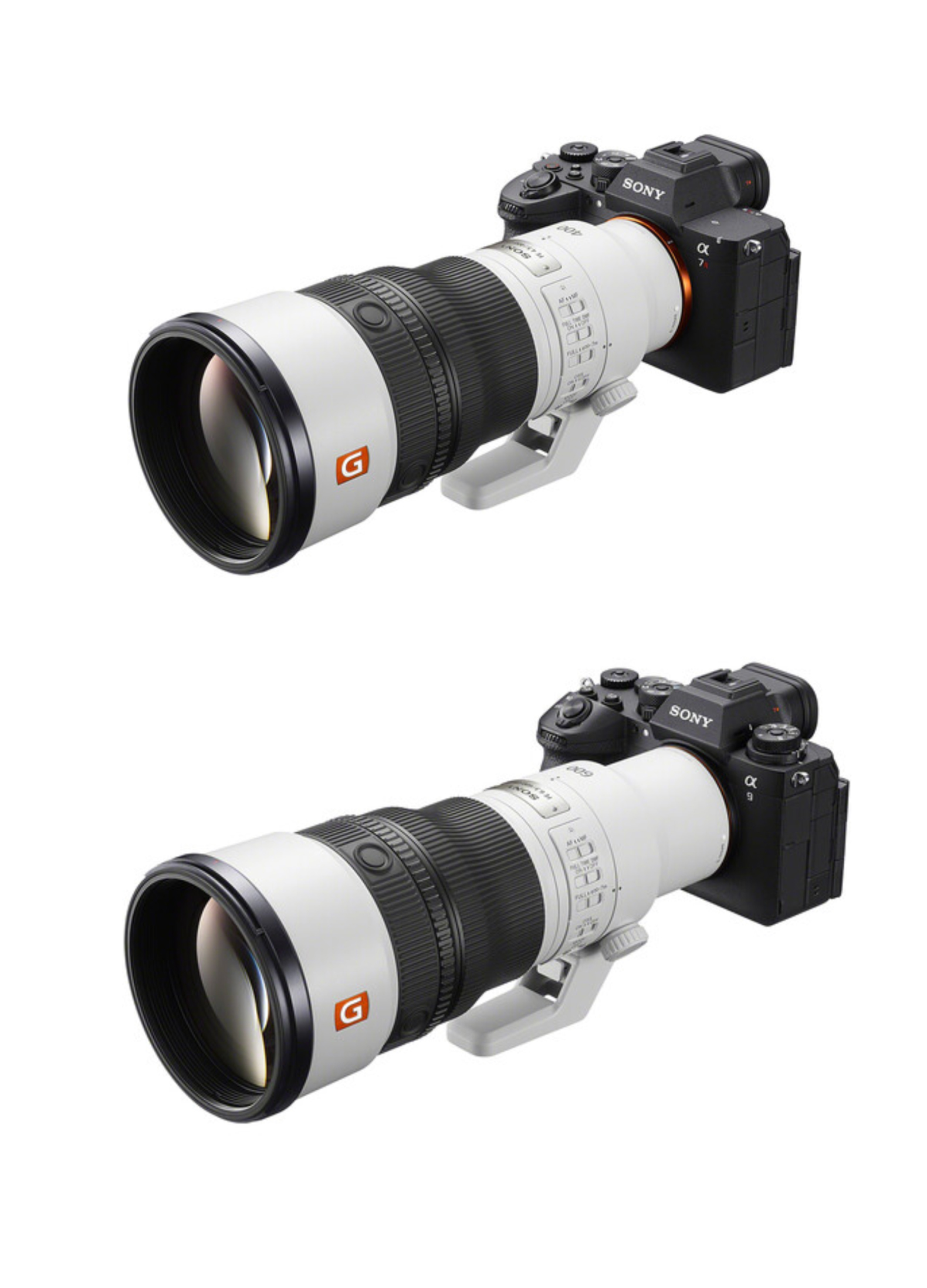
Top: Sony FE 400mm f/4.5 GM OSS Lens (Sony E) |
The Two New Sony f/6.3 Super-Telephoto Lenses
The new Sony f/6.3 lens, the Sony FE 400mm f/4.5 GM OSS Lens (Sony E) and the Sony FE 600mm f/6.3 GM OSS Lens (Sony E) are virtually identical in weight and length. I will surely borrow and probably wind up owning the 600mm f/6.3. For me, of the two new lenses, the 600mm focal length is much more useful for general bird photography. And might possibly be the all time swallow flight lens.
I will create a BAA lens guide for the 600mm f/6.3. And I cannot imagine doing a lens guide for the 400mm. Use either of my affiliate links to pre-order your new f/6.3 super-telephoto lens a you will earn a free copy of the BAA lens guide for the 600mm f/6.3. If you have any questions or are confused about using either of my links, please contact me via e-mail.
Typos
With all blog posts, feel free to e-mail or to leave a comment regarding any typos or errors.










I like #3. I guess being a novice, I have never seen the bent or curved wing so thought it was very unusual. (Also it is easy to type #3 as it is on the same key.). A bit of humor. But the wing did it for me.
I might also add that you seem to be dangling carrots too often with all these new Sony lenses. I have to realize it’s my eye and not the lens. Maybe why Im getting cataract surgery in a few days.
Thanks for chiming in, Red. I hope that you have enjoyed the retreat. You are right — it’s never the lens and its never the camera body 🙂
much love, a
Agree on #2 and 3, but have to put in a word for the water (sky?) in #1.
Thanks, Cliff. I agree, the water in #1 is way sweet. Thanks to ACR masking 🙂
with love, artie
Thanks, Bags. I agree. #3 is quite dynamic.
with love and see you in November!
a
I guess I’m in the minority. I like #2 for the beautiful warm morning light and the evenly lit under wings. Beautiful images of really tough subjects.
Thanks, Jim. I am torn between #3 and #2 after initially thinking that #2 was the cat’s meow.
with love, artie
ps: without #1, however, I would likely have quit trying — it was my first sharp one!
#3 due to the curve in the upper wing, full extension of both wings and the tail feathers fanned out. Anytime you can get sharp swallows in flight images it is a plus. Thanks for sharing.
My pleasure and thank you.
with love, artie
Capturing swallows successfully is definitely a challenge for any bird photographer, even the young flat-bellies. I found it impossible with my older Canon gear. With my Sony gear I have tried on numerous occasions over the past couple of years and walked away with only a few successful images at various focal lengths. I do not own the 400-800 (I always thought it to be too heavy), so my go to lens when chasing them is the 300mm 2.8 with extenders. I am truely impressed with your effort and feel your pain. My favorite of these would be # 3, like the wing position and the nice, ventral view. Good stuff again Artie.
Thanks. And yes, the 300 with TC is a lot lighter than the 400-800. But at ILE, the show of the pier in the early mornings is a factor.
a
>> …the near-impossible task of photographing swallow in flight. <<
I agree with this assessment. Over the summer I encountered these birds (I'm not sure if they were barn swallows or tree swallows) many times, and the only photographs I was able to make of them was when they were either perched, or just launching themselves off a perch. I was never able to pick them up in flight in my viewfinder. At my next opportunity I will try the technique you describe above: pick them up at a distance and track them as they get closer.
Thanks, Steve. Having the wind behind you helps. That said, there was very little wind on either day.
My late wife used to look me in the eye and say, “You know, your’e not easy.” To the swallows I would say, “You know, your’e not easy.”
with love, a
Artie: Count me also liking image #3 best for the reasons others have stated. I had a similar challenge in Wyoming last summer with nighthawks flying over a river. I didn’t do as well as you did with these swallows.
I have never had a good chance on nighthawks — you should have called me!
with love, artie
>> I cannot imagine doing a lens guide for the 400mm. <<
Everything I know about you, Artie, tells me that you meant to say you can't imagine NOT doing a guide for the 400mm lens.
Sorry, Steve, no, not ever. The 400 f/6.3 is too short and the 70-200 with the 2X is superb for flight and weighs on 1/10 pound more. In short, too much duplication.
with love, artie
I prefer the light on image #2 over image number three. However, I have to go with the previous comments and overall I choose image number three for the curvature of the wings and nice tail flare.
As noted elsewhere, 2 versus three is a tough call.
with love, artie
Swallows are such speedsters, I am amazed at your skill! Number 3 is the strongest for me. The light is perfect and the flare is timed just right. Apparently flying South was the best way to go;-)
Thanks, Sandy! Be amazed my my grit and determination as I do not have much skill.
#3 is pretty darned good.
with love, a
Agree totally with Steven.
Thanks for including me again, it’s been months and I missed your blogs!
Good to see you back, Maggi. The blog has been here eery third day for the past year. Recently I found that you and about 50 other folks who had subscribed needed to be added to the subscriber list …
with love, a
Artie, I like image #3 best. I like it because the upper wing is bent showing the forces these bird put on themselves as they bank and dip after insects. All three stands alone as excellent, but three is it for me.