
Support BIRDS AS ART with your Everyday Online Shopping
Using the BAA Tip Jar Costs You Nothing
If you are like me, you enjoy the convenience of shopping online at Amazon without having to drive into town. The prices are competitive, and you can return anything you purchase for any reason (as long as you have not wrecked it).
If you enjoy learning from the blog posts, the YouTube videos, and the Instagram posts, or simply love being inspired by the images, the simplest and easiest way to support my efforts at BIRDS AS ART at no cost to you, is to use my generic Amazon link:
Whenever you make your routine household purchases — from groceries and coffee to backup batteries, household supplies, or electronics, making it a habit to click on our link first helps keep things running smoothly here. And again, it never costs you one penny to help me out.
Click here or on the Great (Photographic Accessory) Stuff tab on the lower, orange-yellow menu bar at the top of each blog post to learn about my favorite photo accessories. And more.
This blog post took four plus hours to create not including the time spent photographing, picking my keepers, and optimizing the best images.
Important Note
As an Amazon Associate I earn a small percentage from qualifying purchases whenever you use my Amazon links. Please make it a habit. 🙂
Your Call?
Which two of today’s featured images are your favorites? Why did you make your choice?
In the Last Blog Post
In the recent White Skies or Phony Light-Blue Photoshop Skies? blog post here, my first pick was the originally post blue sky flight shot, Image 3A for the rich colors and, with the bird right on sun angle, the absence of shadows. Next up for me was the white sky vertical, Image #2A for the banking pose and the fabulous underwing detail.
Take a deep dive into the last blog post, see the originals, and check out the Anhinga as snake photo with the board removed in this 10 minute and change video.
Summary
In today’s post I share my two most important in-the-field accessories, the DDY Outdoor UPF50+ UV Draped Sun Protection Hat and the Lowepro Trekker Lite HP 100 Fanny Pack.
Note: General information, copy editing, re-crafting, technical refinement, and formatting for this blog post were assisted by Gemini AI.
What’s Up?
Morning photography here at ILE has been okay for the past few days. There have been more than a few Red-shouldered Hawks down by the lake and I’ve gotten some great take-off images thanks to my knowledge of wind direction and the a-1 ii’s Pre-Capture feature. New BAA friend Will Medilicott, a recent convert to Sony, flew from Tucson, AZ to Kissimmee Gateway Airport on Sunday afternoon. Right-hand man Jim Litzenberg picked him up on the way to work and ferried him to Indian Lake Estates.
Today is Monday, 12 October 2026. Will and I will be headed down to the lake early for a single morning session here at ILE and then driving to a nice AirBnB in St. Pete in the afternoon. We will be photographing twice a day at Fort DeSoto Park, a truly great teaching laboratory. DeSoto is one of the few bird photography spots that I know of that has the potential to be great every day of the year. Will heads home on Friday afternoon but I will be seeing him again soon to continue his education on the first San Diego IPT. Whatever you opt to do, I hope that you choose to have fun and enjoy life. Please remember that happiness is a choice — Byron Katie – The Work.Com
If an item — a Delkin flash card or reader, a Levered-clamp FlexShooter Pro, or a Wimberley lens plate or low foot — for example, that is available from B&H and/or Bedfords, is also available in the BAA Online Store, it would be great, and greatly appreciated, if you would opt to purchase from us. We will match or beat any price. Please remember also to use my B&H affiliate links or to earn 3% cash back at Bedford by using the BIRDSASART discount code at checkout for your major gear purchases. Doing either often earns you free guides and/or discounts. And always earns my great appreciation.
Gear Questions and Advice
Too many folks attending BAA IPTs and dozens of photographers whom I see in the field and on BirdPhotographer’s.Net, are — out of ignorance — using the wrong gear, especially when it comes to tripods and more especially, tripod heads. And the same is true in spades when ordering new camera bodies or lenses. My advice will often save you some serious money and may help you avoid making a seriously bad choice. Please know that I am always glad to answer your gear questions via e-mail. If you are desperate, you can try me on my cell at 863-221-2372. Please leave a message and shoot me a text if I do not pick up.
|
|
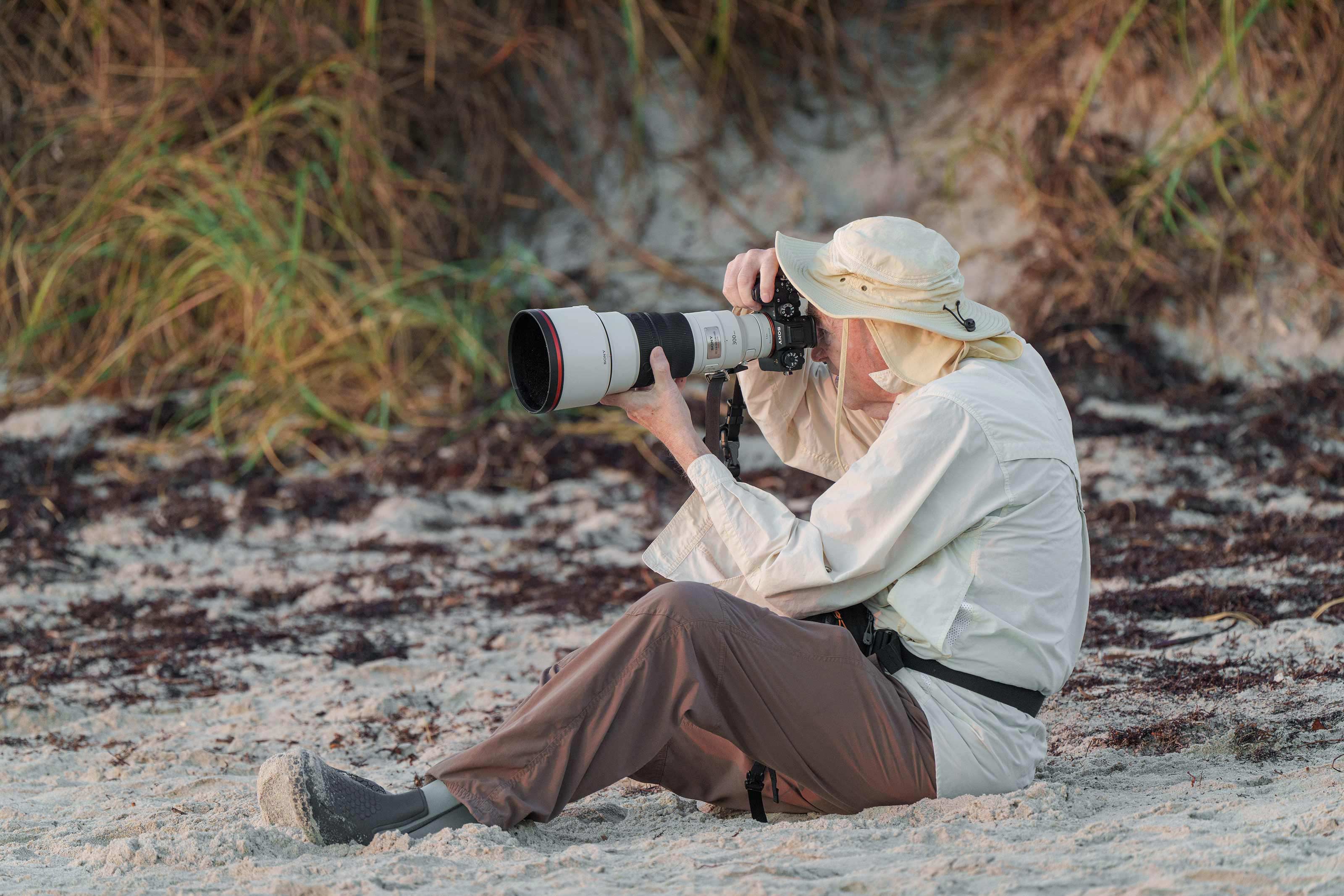
This image was created by BAA friend David Pugsley on 22 November 2025 at Sebastian Inlet State Park, FL. He used the handheld Sony FE 600mm f/4 GM OSS lens with the Sony FE 1.4x Teleconverter and the Sony a-1 (now replaced by The Latest Greatest Sony Flagship Body, the a1 II Mirrorless Camera). ISO 2500. The exposure was determined by Zebras with ISO on the thumb wheel: 1/125 second at f/5.6 (wide open) in Manual mode. AWB at 7:50:42am on a cloudy bright morning. Image #1: artie using the thigh-pod technique with the Sony 300mm f2.8 GM, the 1.4X TC, and a Sony a-1 ii. |
Do as I Do!
Looking at this image — thanks a ton, Pugs!, I realized that a better name for the “knee-pod” technique might actually be the thigh-pod technique, as my left elbow is resting on my left thigh rather than on my knee.
Anyhoo, you will rarely, if ever, see me on the beach without DDY Outdoor UPF50+ UV Draped Sun Protection Hat on my head and a Lowepro Trekker Lite HP 100 Fanny Pack around my waist. Keep reading to learn why I rely so heavily on both.
Notice, too, my Simms Surf Booties. They are a massive upgrade from the Neo-Sports I used previously.
|
|
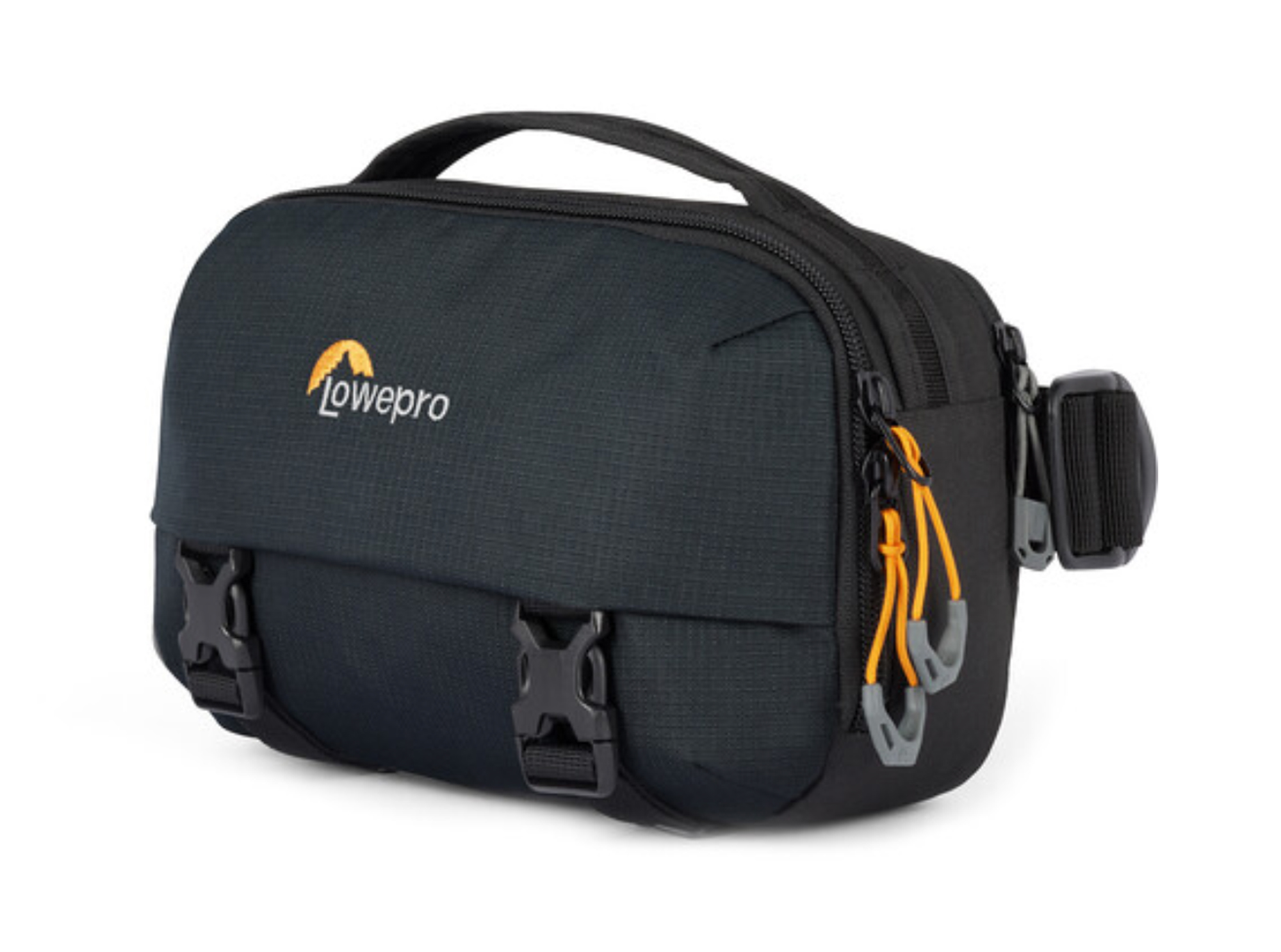
The Lowepro Trekker Lite HP 100 Hip Pack (Black) is roomy and offers protection against rain and sand as long as you remember to zip it up. |
Lowepro Trekker Lite HP 100 Hip Pack (Black): Where Have You Been All My Life?
For well over a decade, I relied on a cheap fanny pack to carry my teleconverters and a spare battery. About two years ago — with the bag in absolute tatters the main zipper finally gave up the ghost. I searched online, but trying to navigate fifty different options to figure out which one would work best in the field proved nearly impossible. I actually ordered two that looked promising, but neither worked out, so back they went.
In July 2024, when I went to see Billy Joel’s final show at Madison Square Garden, I drove into New York City early to make a quick stop at B&H in search of the perfect hip pack.
The moment I saw the Lowepro Trekker Lite HP 100 Hip Pack (Black) on the shelf, I fell in love with it. It’s large enough to hold both teleconverters, two extra camera batteries, my car keys, my iPhone 17+, a Vello Remote Release, a soft paintbrush, and assorted junk as needed. It is exceptionally well-built with rugged zippers and durable fabric, and there are two straps on the bottom that are perfect for carrying an extra shirt or a towel. On drizzly days, there’s even enough room to stuff a dry undershirt into the pack.
Best of all, it’s compact enough that it never gets in my way when I get down on the ground — or when I struggle to get back up. At age 80, the former is definitely a whole lot easier than the latter!
Sometimes it really pays to shop in person! But you don’t have to make a trip into the city—just click on the B&H logo link below.
Super-Convenient!
If I had a nickel for every time I asked someone in the field if they had their 1.4X teleconverter with them, only to hear, “It’s in the car,” I could buy a whole box of Hershey bars with almonds! Get yourself this outstanding hip pack, get in the habit of wearing it on every single outing, and you’ll always be prepared for whatever nature throws at you.
Because I almost always want both the 1.4X TC and the 2X TC with me at the beach, you’ll rarely catch me without a Lowepro Trekker Lite HP 100 Hip Pack (Black) around my waist.
|
|
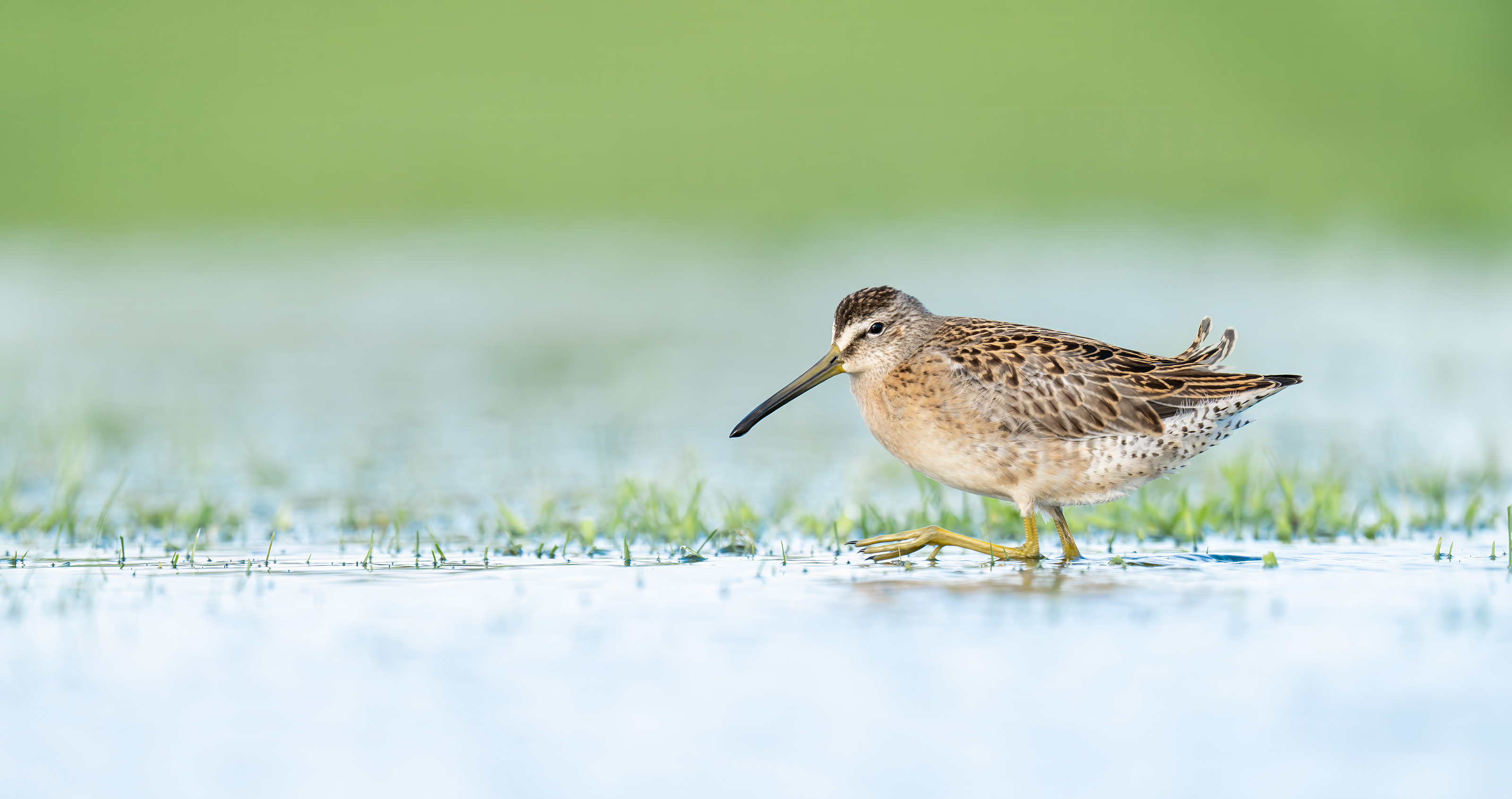
This image was created on 21 August 2026 at Nickerson Beach Park, Lido Beach, Long Island, NY. Seated on a Rubbermaid Roughneck Step-Stool behind a flattened Robus RC-5570 Vantage Series 3 Carbon Fiber Tripod/Levered-Clamp FlexShooter Pro-mounted Sony FE 600mm f/4 GM OSS lens with the Sony FE 1.4x Teleconverter and The Latest Greatest Sony Flagship Body, the a1 II Mirrorless Camera. ISO 2500. The exposure was determined by Zebras with ISO on the rear wheel: 1/1600 second at f/5.6 (wide open) in Manual mode. AWB at 8:01:23am on a partly sunny morning. Tracking: Zone/AF-C with Bird-Eye/Face Detection performed perfectly. Click on the image to enjoy the high-res version. Image #2: Short-billed Dowitcher juvenile foraging in rain puddle |
Changing Teleconverters in the Field
We chose the rain puddle with the most shorebirds and set up low and on sun angle. I started with the 2X teleconverter but when the birds kept getting closer and closer, I switched to the 1.4X TC. All that I had to do was reach into my Lowepro Trekker Lite HP 100 Fanny Pack and switch one for the other to make the change. Some folks never change TCs in the field in fear of sensor dust. Many others are hesitant. To me, that approach is totally nuts. Teleconverters allow you to get more pixels on the subject while cropping less.
If your camera allows you to close the shutter with power off — Sony does, I 100% recommend setting that function. If your camera does not have that feature, simply be sure to keep your back to the breeze when adding or switching TCs.
|
|
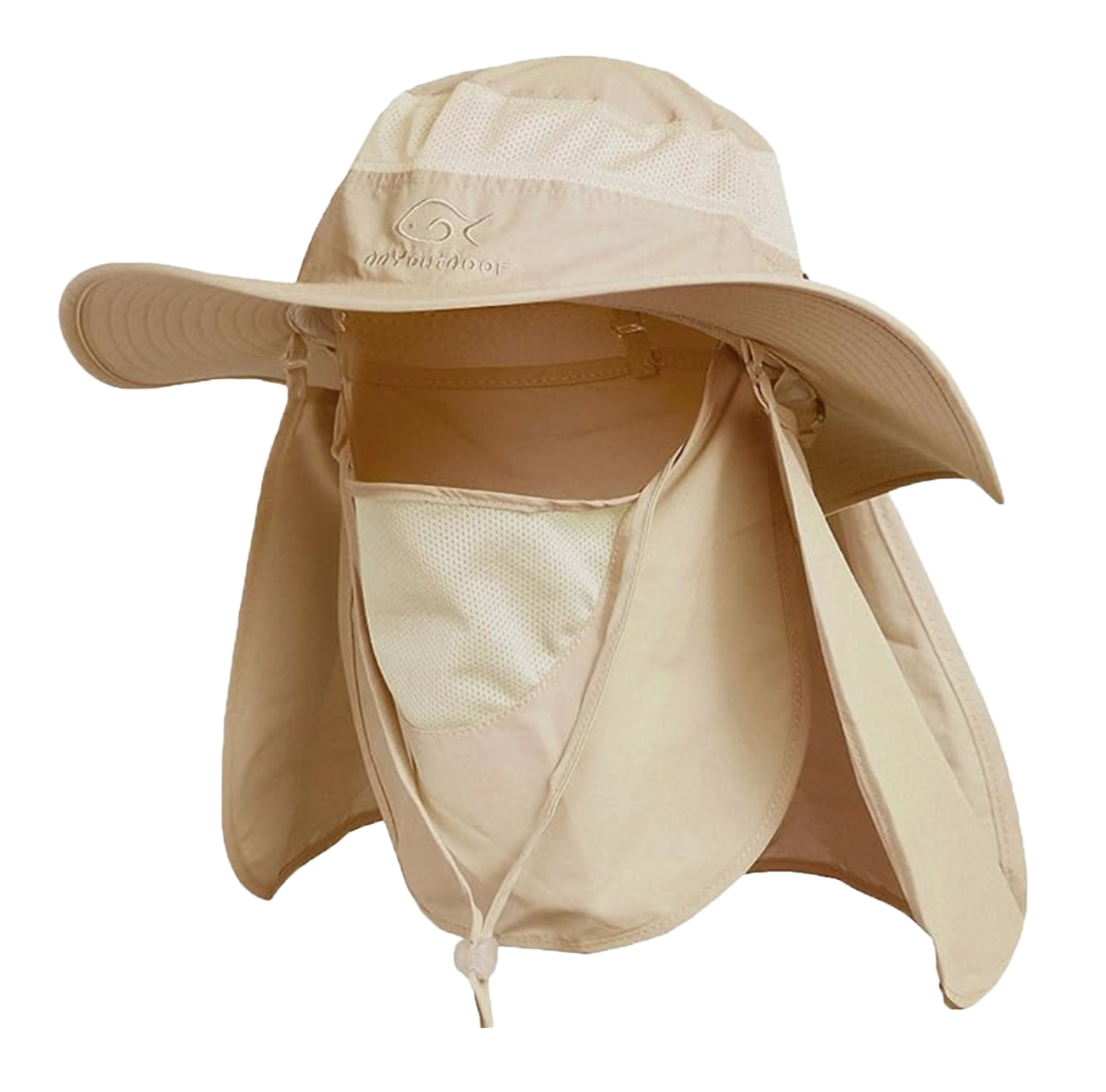
You will not see me in the field without a DDY Outdoor UPF50+ UV Draped Sun Protection Hat on my head. Ever. |
DDY Outdoor UPF50+ UV Draped Sun Protection Hat: Simple & Essential
When the sun hat given to me by Alfred Forns in the early aughts finally fell apart well more than a decade ago, I searched high and low for something to keep the sun off my face without restricting my photography. About four years ago, I found the DDY Outdoor UPF50+ UV Draped Sun Protection Hat for Men & Women on Amazon. I loved it so much that I immediately bought eight of them in case they ever stop making them!
The first thing I do is remove the detachable rear drape because it’s pretty much extraneous for my needs. When I’m walking with the sun behind me, the front drape and drawstring rest behind the hat. When heading into the sun, I put the front face-drape in place to protect the skin on my face and my lips as well. On windy days at the beach, I put the drawstring under my chin to keep from losing the hat altogether.
A hat with a soft brim is a 100% necessity for bird photography. When a flight shot opportunity comes flying your way, you can simply flip the soft front brim up with your thumb for instant, unobstructed access to the viewfinder. I never travel without at least two of these fabulous hats in my gear bag.
Inevitably, folks ask: “Artie, you walk on sunny days without a shirt — so why the sun hat?”
Studies show that, all things being equal, people with higher Vitamin D levels tend to live longer, healthier lives than those with low levels. The single best way to optimize your Vitamin D is to expose as much skin as safely possible to direct sunlight — without ever burning. Because of that, my bare-chested sun walks are fairly brief, rarely lasting more than 20 to 30 minutes.
So why the hat? When I was younger, I never wore a hat. As a result, the skin on my nose, lips, face, ears, and neck suffered significant sun damage over the decades. On top of that, I’ve dealt with Herpes Simplex cold sores on my lips for years — a virus that is directly triggered by excessive sun and wind exposure.
Protecting yourself against burning and UV damage with high-SPF clothing and a wide-brimmed hat is far better than relying on typical sunscreens and lotions, many of which contain chemical ingredients you don’t want on your skin. The only sunscreens widely recognized as truly safe and effective are mineral-based: non-nano Zinc Oxide and Titanium Dioxide.
After getting tired of undergoing Mohs surgery for every small basal or squamous cell skin lesion, I decided to try a different approach and successfully cleared two squamous cell lesions naturally — after surgery had been recommended for both. If you’re interested in learning more about the alternative protocols I used, feel free to reach out to me e-mail.
|
|
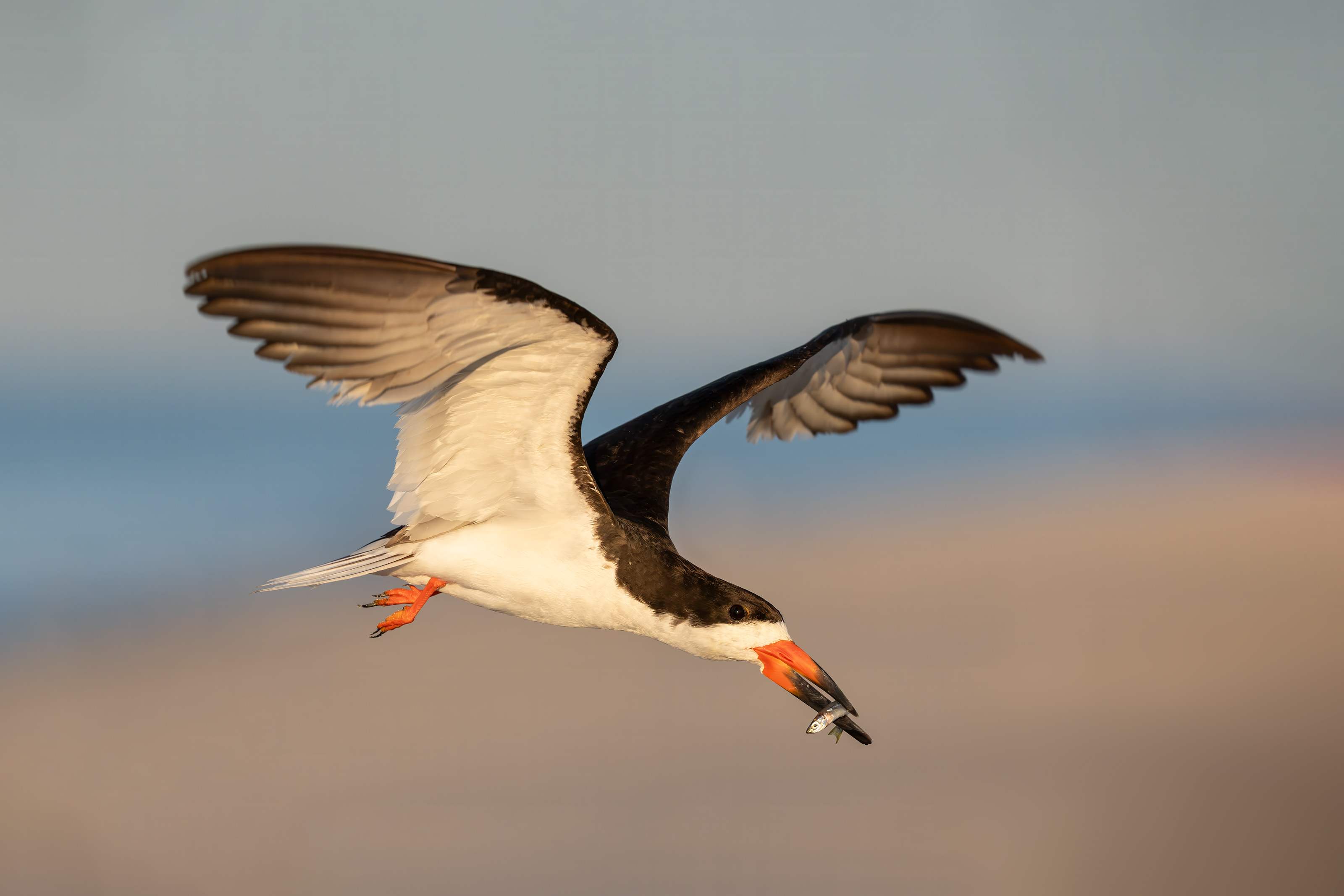
This image was created on 5 September 2026 at Nickerson Beach Park, Lido Beach, Long Island, NY. Seated on a Rubbermaid Roughneck Step-Stool, I used the handheld Sony FE 300mm f/2.8 GM OSS Lens (Sony E) with the Sony FE 2x Teleconverter and the Latest Greatest Sony Flagship Body, the a1 II Mirrorless Camera. ISO 800. Exposure determined via Zebras with ISO on the Thumb Wheel; 1/2500 sec. at f/8 (stopped down one stop) in Manual mode. AWB at 86:58:20am on a clear sunny morning. Wide/AF-C with Bird Eye/Face Detection enabled performed perfectly. Image #3: Black Skimmer adult with Atlantic Silversides (spearing) for chick |
My Beloved Sun Protection Headwear
On sunny days, I’d be lost without my DDY Outdoor UPF50+ UV Draped Sun Protection Hat. When the sun is behind me — as it usually is! :-), I keep the drape in the back. When I turn around and walk into the sun, or when the midges are thick on the pier, I flip the drape forward to cover my face.
Most people don’t realize that you can suffer sun damage even on overcast days — not to mention windburn on breezy mornings. That’s why I wear my DDY Outdoor UPF50+ UV Draped Sun Protection Hat even when photographing under cloudy skies. Plus, in a light drizzle, the brim keeps the rain off my face and eyes.
The Skimmer Flight Shot
For this skimmer flight shot, the drape was in the rear. The soft brim never gets in the way during general bird photography, but for flight shots with the sun behind me, I always flip the brim up to make viewing through the finder even easier.
The triangle of deep Atlantic blue water adds tremendously to the success of this image. How did that happen? With a steady breeze out of the northeast, I positioned myself low so that birds flying in to join the large flock on the beach would come straight toward me, right down the sun angle. With a chance for an ocean background. Had I been standing, the background would have been plain sand. Sometimes you make a plan and it works to absolute perfection. The baitfish in the bird’s bill was the cherry on top!
|
|
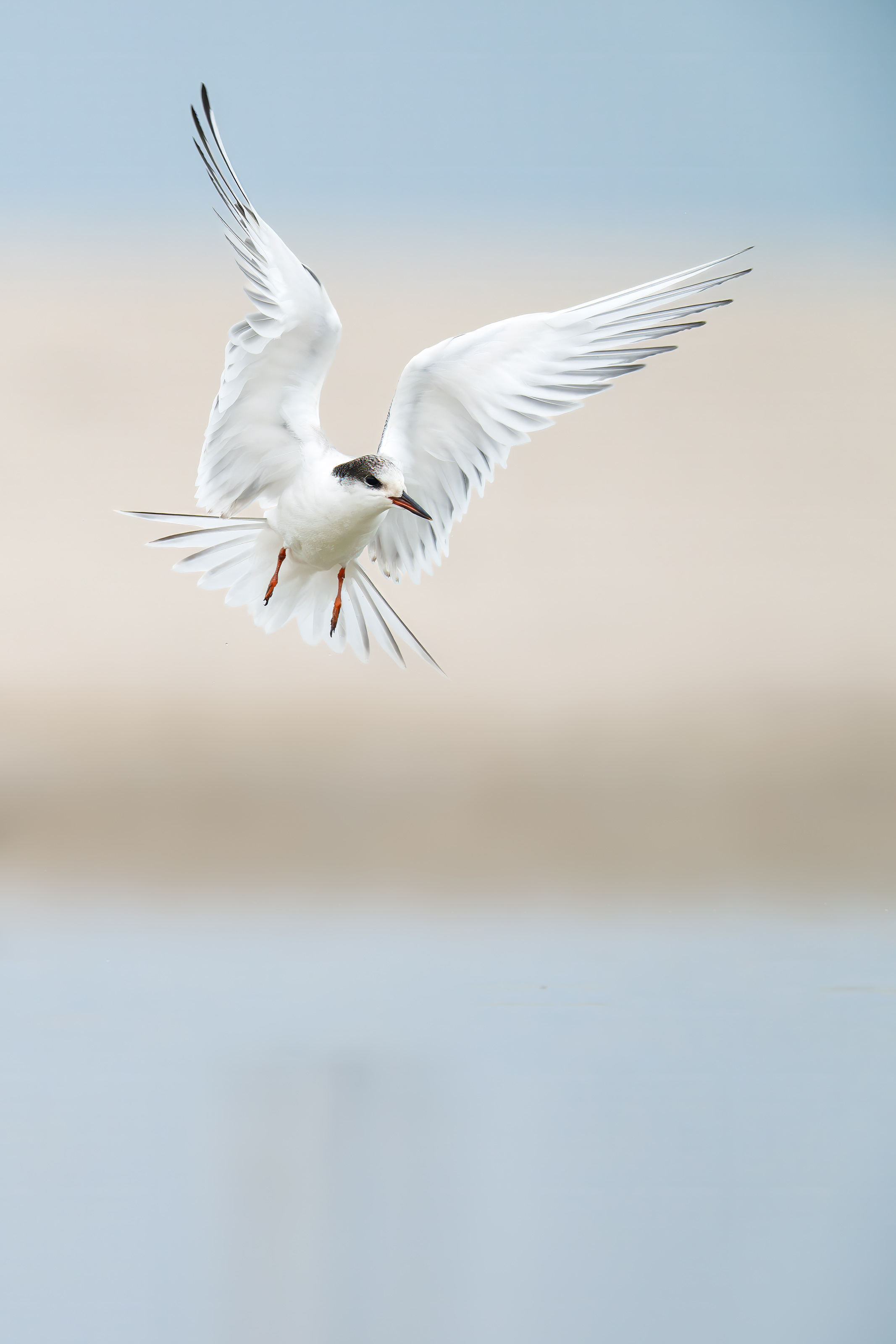
This image was created on 22 August 2026 at Nickerson Beach Park, Lido Beach, Long Island, NY. Seated on a Rubbermaid Roughneck Step-Stool behind a lowered Robus RC-5570 Vantage Series 3 Carbon Fiber Tripod/Levered-Clamp FlexShooter Pro-mounted Sony FE 600mm f/4 GM OSS lens with the Sony FE 1.4x Teleconverter and The Latest Greatest Sony Flagship Body, the a1 II Mirrorless Camera. ISO 2500. The exposure was determined by Zebras with ISO on the rear wheel: 1/2500 second at f/5.6 (wide open) in Manual mode. AWB at 9:07:40am on a cloudy morning. Wide/AF-C with Bird-Eye/Face Detection performed perfectly. Click on the image to enjoy the high-res version. Image #4: Common Tern juvenile taking flight after bath |
Flight off the Tripod
Handholding is generally best for flight photography because it’s much easier to acquire the subject, and track it while keeping it centered in the frame. However, if you need maximum reach and your lens is too heavy to handhold comfortably, working off a tripod is your only option. With practice — and a Levered-Clamp FlexShooter Pro atop a sturdy Robus tripod — you can achieve superb results.
With a gentle breeze out of the east and cloudy-bright conditions, I effortlessly worked the large rain puddle that was present at Nickerson Beach for just two brief days this past summer. I still have some very sweet juvenile Buff-breasted Sandpiper images created at that puddle that I need to process and share with you here!
|
|
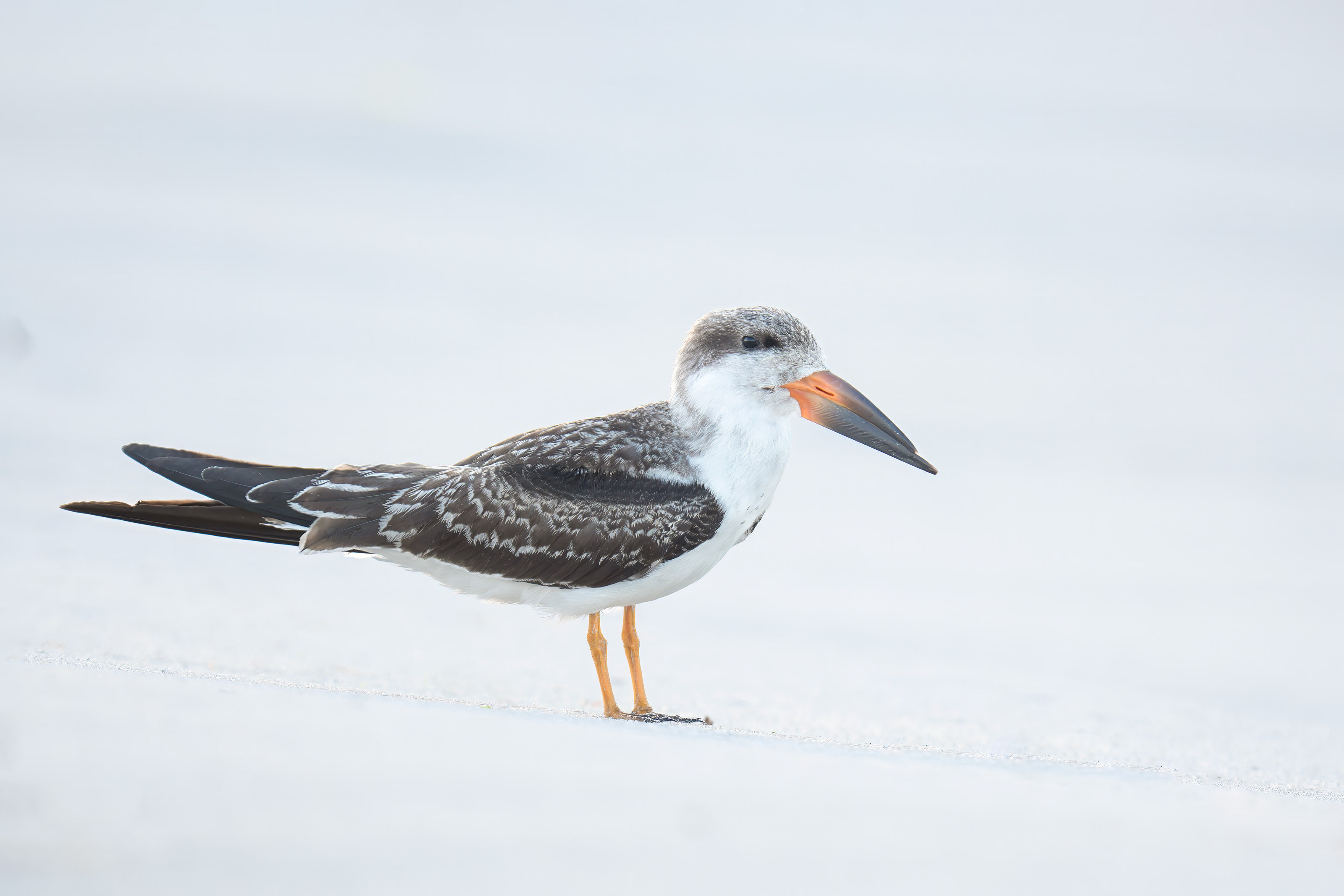
This image was created on 27 August 2026 at Nickerson Beach Park, Lido Beach, Long Island, NY. Seated on a Rubbermaid Roughneck Step-Stool, I used the heel-pod technique with the handheld Sony FE 100-400mm f/4.5 GM OSS lens with the Sony FE 1.4x Teleconverter (at 560mm) and The Latest Greatest Sony Flagship Body, the a-1 II Mirrorless Camera. The exposure was determined by Zebras with Exposure Compensation (EC) on the Thumb Dial. Multi Metering +2.0 stops. AUTO ISO set ISO 1250: 1/250 second at f/6.3 (wide open) in Shutter Priority mode. AWB at 6:56:37am on a cloudy morning. Image #5: Black Skimmer fledged juvenile on clean sand beach |
Nobody!
Nobody in bird photography has used teleconverters more than I have over the past four-plus decades. Why do I depend on them so heavily? I love images that are clean, tight, and graphic, and TCs complement that style perfectly. When you can’t get physically closer to your subject, teleconverters put more pixels on the bird. This gives you maximum detail and greater cropping flexibility when needed.
Most mornings when I head out, I’m simply looking for good or great opportunities as they unfold. But if you twisted my arm, I’d admit that knowing the tide was low and that the beach had been completely free of seaweed the day before, I had this exact image in mind as I walked toward the ocean on the morning of August 27th. The biggest keys to success? Getting the lens as low to the ground as possible—and then dialing in a ton of light.
|
|
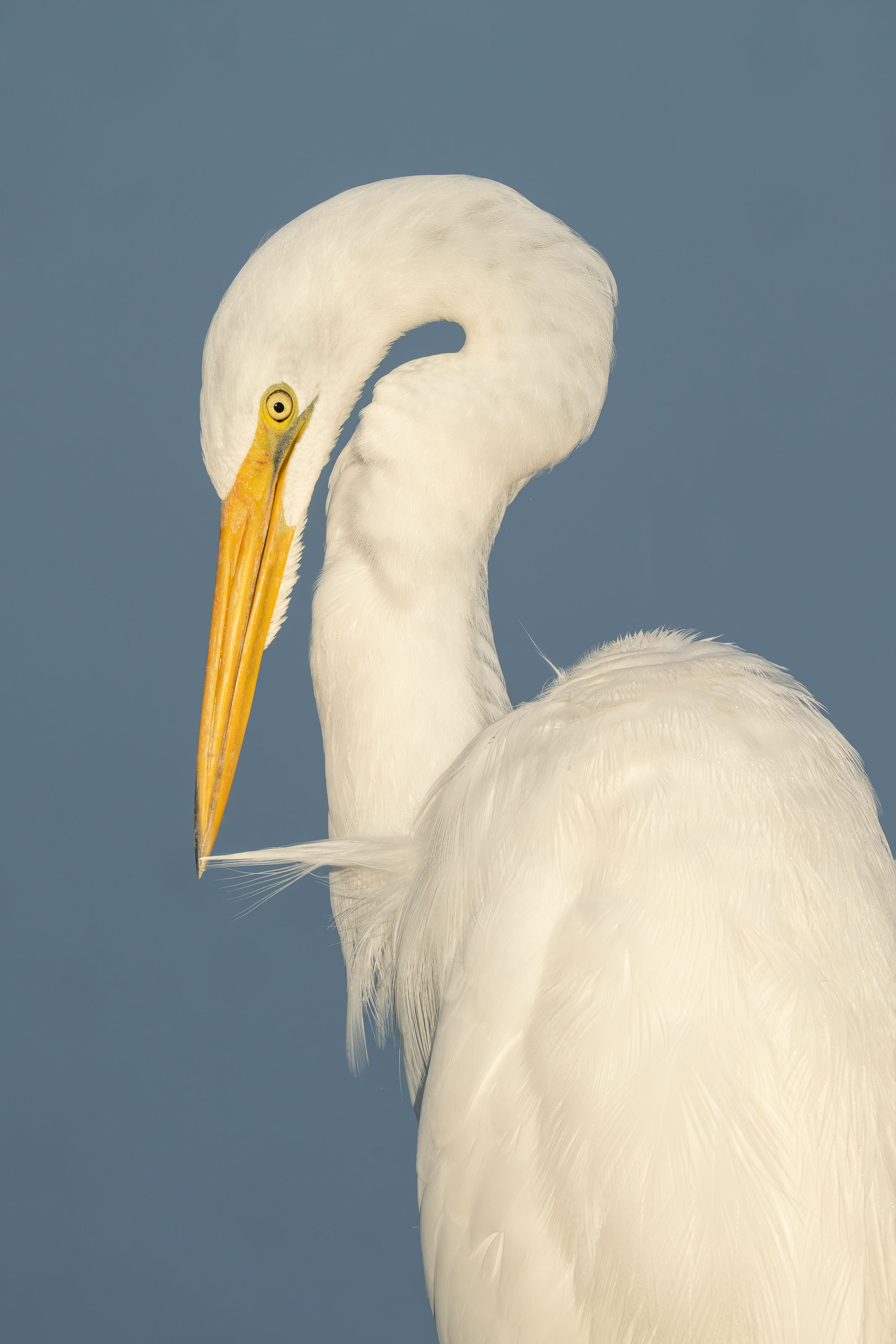
This image was created on 4 October 2026 down by the lake near my home at Indian Lake Estates, FL. Working from the drivers seat of my SUV I used the BLUBB-supported Sony FE 600mm f/4 GM OSS lens with the Sony FE 2x Teleconverter (at 1200mm) and The Latest Greatest Sony Flagship Body, the a-1 II Mirrorless Camera. ISO 1250. The exposure was determined by Zebras with ISO on the rear wheel: 1/1250 second at f/11 (stopped down one stop) in Manual mode. AWB at 8:01:33am on a sunny morning. Upper center Tracking: Zone/AF-C with Bird-Eye/Face Detection performed perfectly. Click on the image to enjoy the larger high-res version. Image #6: Great Egret juvenile preening neck on boat dock |
Great Egret on the Canal Dock
On my morning routes, I always check the small dock by the boat ramp for an Anhinga or a Great Egret. Even after positioning my SUV as close as possible, a TC with the 600 is needed to eliminate the dock and the pilings from the photo. The 2X TC is almost always my first choice at this location. Having my big lens (1200mm) on a BLUBB enables me to produce sharp images even when working at shutter speeds as low as 1/60 sec. Remember that if your lens has a Direct Manual Focus (DMF) switch, that you must remember to set it to the Off position when using a beanbag to prevent throwing off the focus as you recompose.
30 frames per second increased my chances of capturing the perfect moment when the bird had just the tip of the preened feather in its bill. I did.
|
|
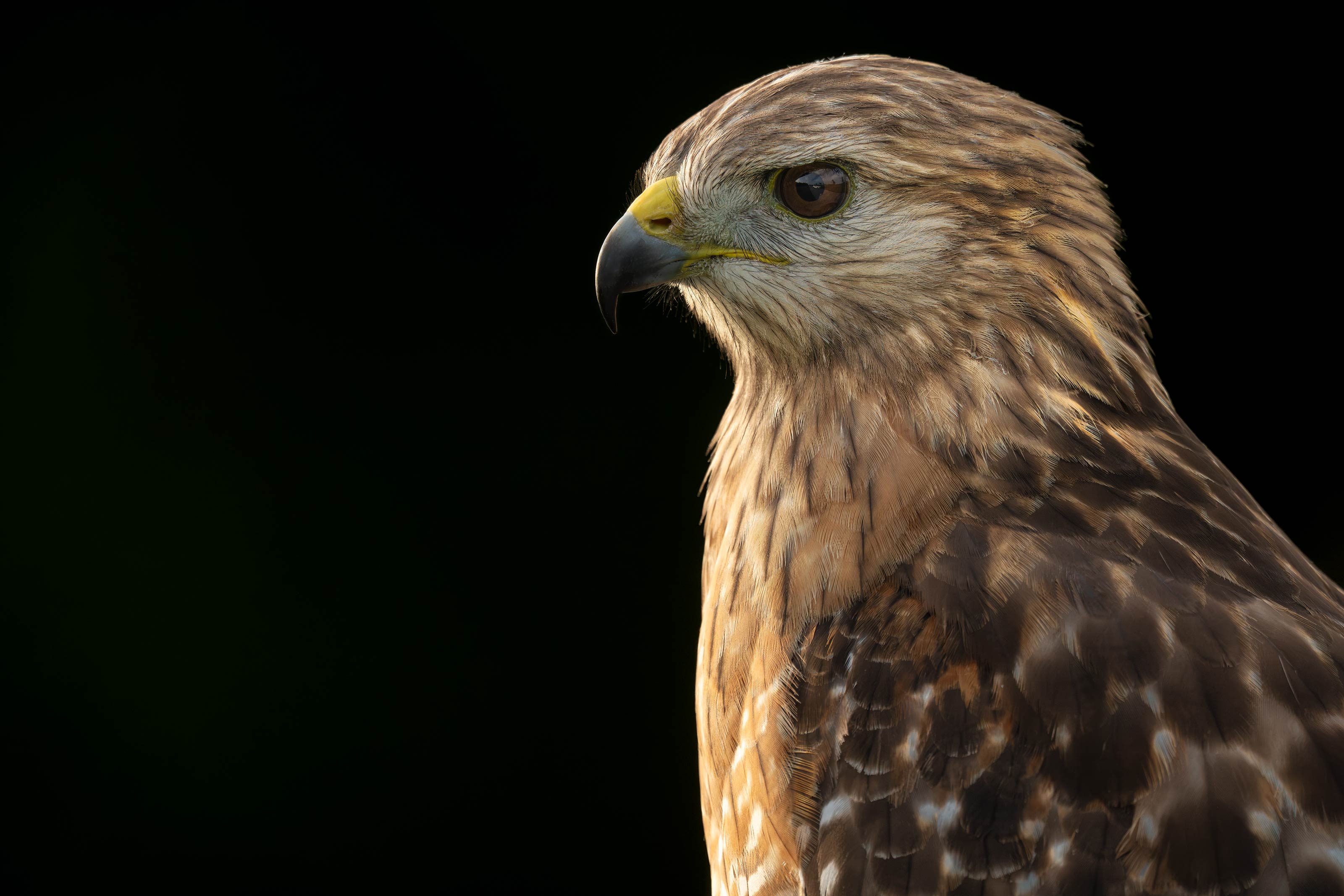
This image was created on 9 October 2026 down by the lake near my home at Indian Lake Estates, FL. Working from the drivers seat of my SUV I used the BLUBB-supported Sony FE 600mm f/4 GM OSS lens with the Sony FE 2x Teleconverter (at 1200mm) and The Latest Greatest Sony Flagship Body, the a-1 II Mirrorless Camera. The exposure was determined by Zebras with ISO on the rear wheel: 1/800 second at f/8 (wide open) in Manual mode. AWB at 8:19:26am on a partly sunny morning. Upper center Tracking: Zone/AF-C with Bird-Eye/Face Detection performed perfectly. Click on the image to enjoy the larger high-res version. Image #7: Red-shouldered Hawk backlit |
If At First You Don’t Keep Your Eyes Open …
Perched proudly on the mailbox at the southern dead-end of Banyan Drive, this bird had a habit of spooking. Several times over the past few days, I had driven up a bit too quickly to make my U-turn in the driveway and had inadvertently flushed the bird from its perch when I was within 12 feet of it! Realizing that I just needed to pay closer attention, I made a point of looking for the bird as I approached the end of the road. When I spotted it, I carefully positioned my vehicle so that the sun was behind the subject, backed by distant, shaded dark green vegetation across the canal.
By exposing for the rim-lit highlights, the background rendered a rich, deep black. In situations like this, Sony’s Zebra technology is especially valuable; it enables me to push the exposure to the right for maximum detail on the shaded side of the bird without blowing out the brightest highlights. Even with that care, the bird was still much too dark straight out of the camera. A series of targeted Adobe Camera Raw (ACR) masks performed almost magically to lift the shadows and properly illuminate the subject — all as detailed in The Digital Basics IV Video Series.
Typos
With all blog posts, feel free to e-mail or to leave a comment regarding any typos or errors.











Good morning, and thank you for another informative post.
Image #4 is my favorite – I love the pose with the wing position and fanned tail. Coupled with the soft background and colors, this one is awesome. I might have considered a square or landscape crop, but I still love it for the pose.
Image #3 is a very close second for the light and colors.
Best-
Tom
My two favorites are #1 because it makes me smile and smiling is important and #3 for the same reason. That detail on that tiny fish is amazing.