
Your Call
Which of today’s four featured images do you like best? Why did you make your choice?
In the Last Blog Post
Thanks for all the comments at the last blog post, Initial Impressions – A Short Afternoon w/the Sony A7R VI.
Most folks liked the Little Blue Heron sunset silhouette. Blog regular Tom Redd liked #2 best as it showed the amazing detail of sharp 68MP a7R VI files.
Thomas Brockmeyer, who liked the Great Egret pano crop, left this comment:
Artie, I think you’re underselling yourself in photo #1. You call it “pano crap!” I call it my favorite, a daring use of pano that I don’t believe I would have thought of. Nice work!
Not reading his comment carefully, I replied:
Thanks, Tom. Why do you think that I am underselling Image #1?
Dan Cadieux ‘splained it to me:
That’s because of your typo; you titled it “pano crap” (with an a), rather than “pano crop” (with an o).
Loving the silhouette best here. I appreciate little details like the thin open gap between the mandibles, plus the sharp nares.
So, another vote for the silhouette. My favorite by a country mile was the Great Egret pano crop for its uniqueness, and what Tom Brockmeyer said:
I call it my favorite, a daring use of pano that I don’t believe I would have thought of. Nice work!
Crap versus crop. It’s funny how important a single mis-typed letter can be.
Summary
With relentless north winds at ILE over the past few weeks, I was glad to see dark clouds covering the eastern sky last Wednesday. With the sun now rising well south of east, a north wind creates wind-against-sun conditions. The first thing I did on that dark morning was grab my fastest long lens, the Sony 300mm f/2.8 GM. My immediate focus was vulture flight. On what would otherwise have been a difficult morning, this super-fast, easily handheld lens was the ticket to success, allowing me to maintain fast shutter speeds for flight while keeping the ISOs reasonable. Had I used an f/4.5 lens for Images 1 & 2, I would have needed ISO 5000 — doable, but far from ideal.
What’s Up?
It’s been sunny most days recently with a brisk north wind. Nonetheless, I have been out every morning testing the new featherweight lens and my new Sony a7R VI Mirrorless Camera. The last three mornings have been pretty darned good,, as was sunset on Thursday. The a7R VI 68MP raw files continue to amaze me. In several weeks I will be offering my settings for the Sony a7R VI Mirrorless Camera along with a Buttons and Dials Guide and a detailed INFO sheet free to those who purchase this new camera using one of my two affiliate links. — two folks have already jumped on the a7R VI bandwagon. In the meantime, if you have used one of my links and already have the camera, shoot me your receipt if you would like my current CAMSET.DAT file. I am really liking the new camera body and will be sharing lots more on it here soon.
Today is Friday 30 October 2026. The forecast is calling partly cloudy with a NE breeze; that is much better than clear and sunny with a north wind. I will be heading down to the lake at about 7:45am. Whatever you opt to do today, I hope you choose to have fun and enjoy life. Please remember that happiness is a choice — Byron Katie – The Work.Com
I finished the BAA 600mm f/6.3 Lens Guide and sent the PDF yesterday to those who used one of my affiliate links and earned a free copy. My tips on dealing with temporary AF blindness with this lens are alone worth the price of admission.
If an item — a Delkin flash card or reader, a Levered-clamp FlexShooter Pro, or a Wimberley lens plate or low foot — for example, that is available from B&H and/or Bedfords, is also available in the BAA Online Store, it would be great, and greatly appreciated, if you would opt to purchase from us. We will match or beat any price. Please remember also to use my B&H affiliate links or to earn 3% cash back at Bedford by using the BIRDSASART discount code at checkout for your major gear purchases. Doing either often earns you free guides and/or discounts. And always earns my great appreciation.
Gear Questions and Advice
Too many folks attending BAA IPTs and dozens of photographers whom I see in the field and on BirdPhotographer’s.Net, are — out of ignorance — using the wrong gear, especially when it comes to tripods and more especially, tripod heads. And the same is true in spades when ordering new camera bodies or lenses. My advice will often save you some serious money and may help you avoid making a seriously bad choice. Please know that I am always glad to answer your gear questions via e-mail. If you are desperate, you can try me on my cell at 863-221-2372. Please leave a message and shoot me a text if I do not pick up.
Gemini
General information, copy editing, re-crafting, technical refinement, and formatting for this blog post were assisted by Gemini AI.
|
|
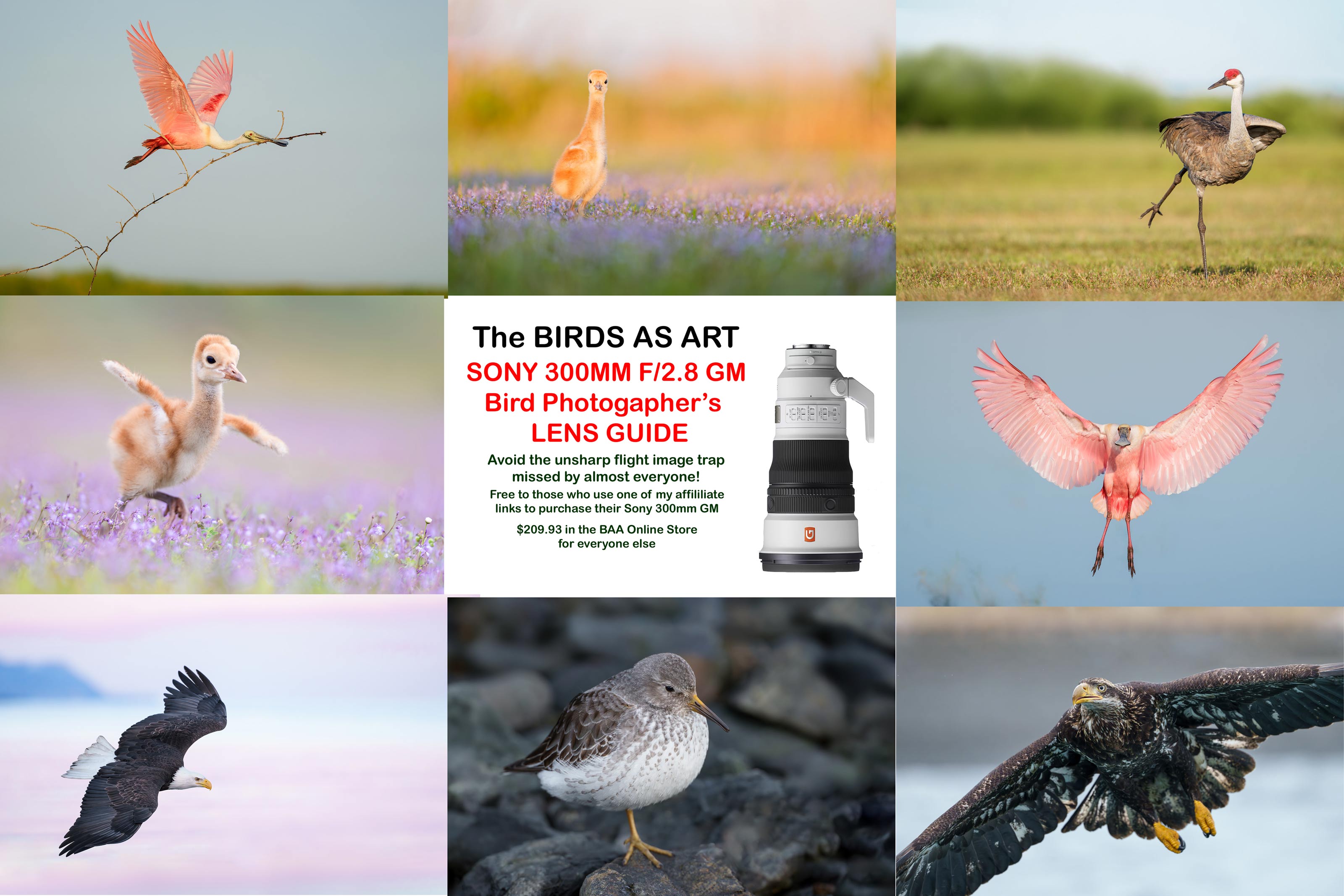
For those who did not use my link to purchase their Sony 300mm f/2.8 GM lens, you can order your a copy here for $209.93. Click on the image to enlarge and to be able to read the fine print. |
The BAA Sony 300mm f/2.8 Lens Guide
Impressed by my (or Pat’s) Sony FE 300mm f/2.8 GM OSS Lens (Sony E) images? Use either my Bedfords or B&H affiliate link to purchase your Sony 300mm f/2.8 GM lens and shoot me your receipt via e-mail and request a copy of the first-ever BAA Lens Guide. I thought that it would take only minutes to create this guide, but I was dead wrong. In the process of creating it, I learned a ton about the lens. And even better, I discovered a simple yet potentially fatal flaw that was resulting in sporadically unsharp flight images. The set-up fix is simple. Just be sure to use one of my affiliate links and get the guide for free.
If not, you can purchase a copy here for $209.93. Yes, it never hurts to use my links and it never costs you one penny more. And if you contact me via e-mail before you make a major purchase, I can often save you some money.
|
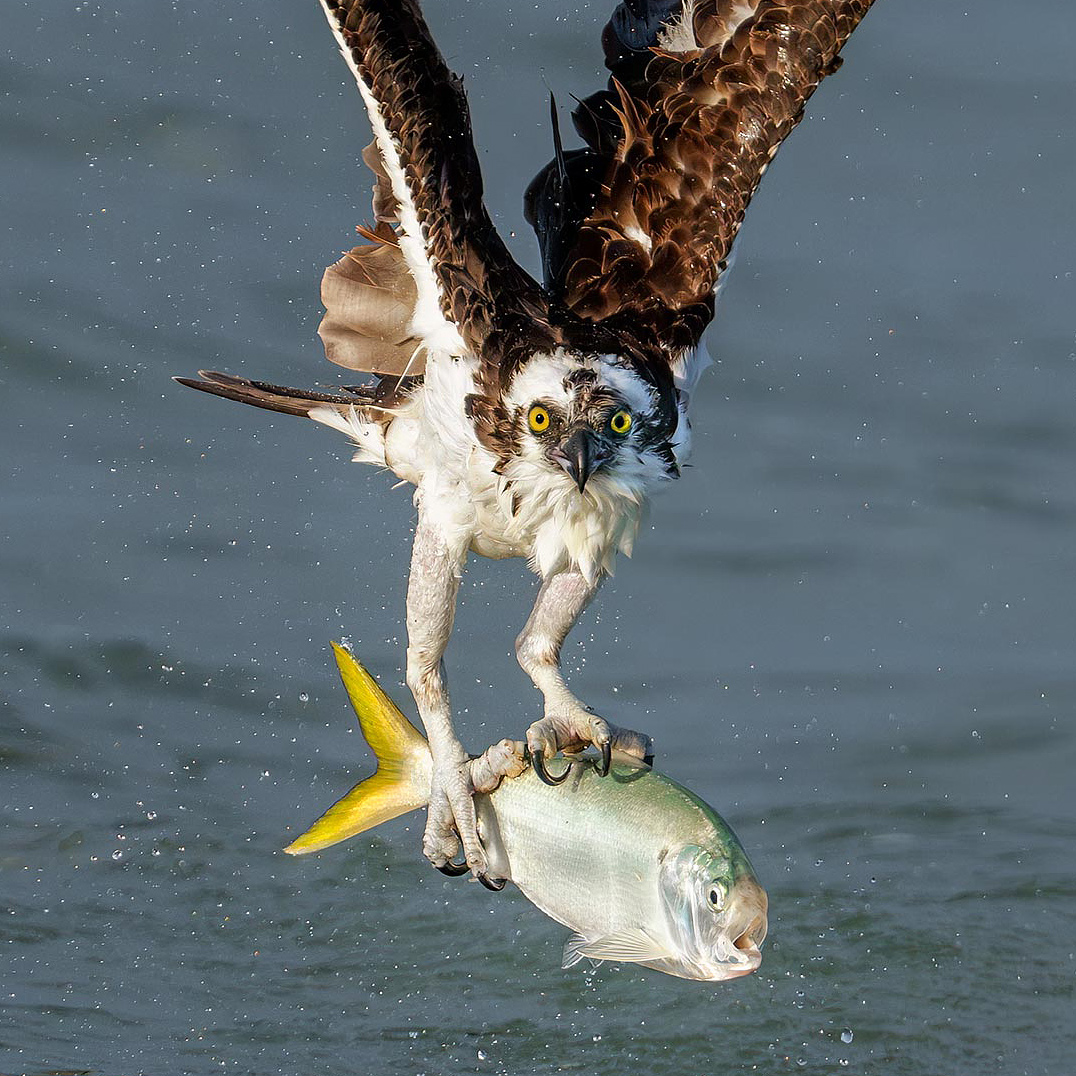
Osprey with Yellow-tailed Menhaden — one of my many family jewels created with the Sony a-1 |
Sony Alpha-1 Mirrorless Camera Body/with Extras!
BAA Record-low Price
Jerry Barrack is offering a Sony Alpha-1 Mirrorless Camera Body in near-mint to like-new condition for a BAA record-low $3198.00. The sale includes the
Sony VG-C4EM Vertical Grip (a $458.00 value), the original box, the front body cap, the camera strap, the charger, two Sony NP-FZ100 Batteries (one extra — an $88.00 values, and insured ground shipping via major courier to lower-48 US addresses only. Your item will not ship until your check clears unless other arrangements are made. Photos are available upon request.
Please contact Jerry via e-mail or by phone at 1-201-638-3510.
I used two a-1 bodies nearly every day for four years until I replaced them both last year with Sony a-1 ii bodies. The latter sells new right now for $6998.00. The AF system of the a-1 was and is superb, and the color and quality of the sharp 51MP raw files took my breath away. I created countless family jewels with my a-1 bodies as they put me on the road to becoming a better flight photographer. The a-1 is still being manufactured and sells new at B&H for $6,198.00. Astoundingly, B&H is offering a used a-1 in 9+ condition, almost as good as Jerry’s, for $4,462.50. That’s with no vertical grip and no extra battery. Doubt me: click here. If you are looking for a great Sony body look no further — save a big bundle by grabbing Jerry’s pretty much like new a-1 right now. Your savings: $1264.50 plus a free extra battery and the vertical battery grip! artie
|
|
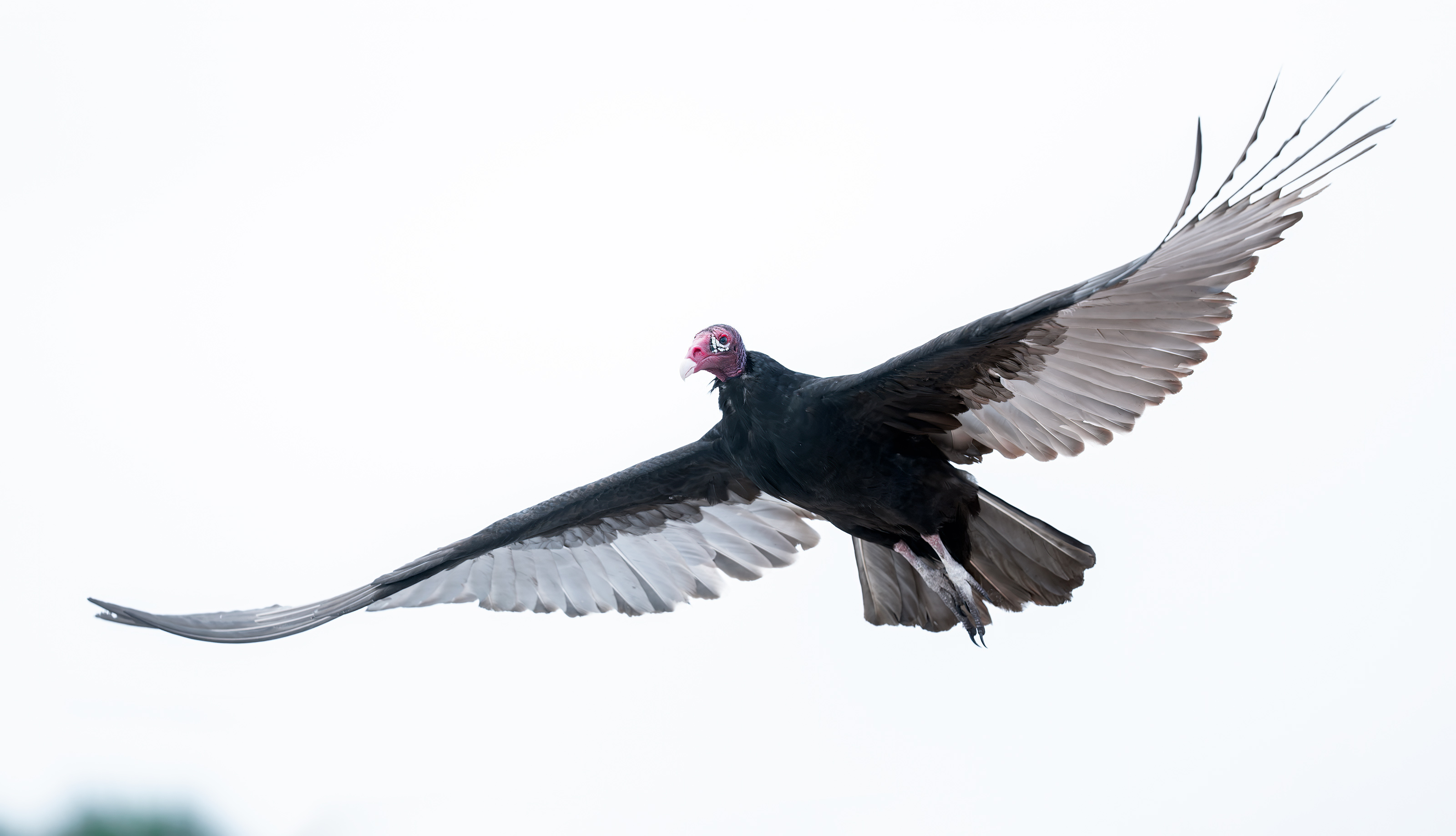
This image was created on 28 October 2026 down by the lake near my home. Standing at full height, I used the hand held Sony FE 300mm f/2.8 GM OSS Lens (Sony E) and The Latest Greatest Sony Flagship Body, the a1 II Mirrorless Camera. ISO 2000. Exposure determined via Zebras with ISO on the Thumb Wheel: 1/2500 sec. at f/2.8 (wide open) in Manual mode. AWB at 8:27:43am on a very cloudy morning. Wide/AF-C with Bird Eye/Face Detection enabled performed perfectly. Image #1: Turkey Vulture taking flight from the roof of the pavilion |
The Eye to the Viewfinder Approach Strikes Again
I first tried this technique about two weeks ago and mentioned it here on the blog, but it is worth repeating. If I walk toward a subject expecting it to take off, I am always far too slow to raise the lens and capture the launch. Instead, I try walking slowly and carefully toward a perched bird with my eye already at the viewfinder. If you try this, make sure you are on flat, even ground and take short, cautious steps to maintain your balance. Above all, keep reminding your brain to press the shutter button at the very first sign of movement.
Clouds Needed with a North Wind
Birds almost always take flight into a decent wind — say 10 mph or more — because they need lift to get airborne. In most cases, they will quickly turn away from an approaching human or vehicle. With the sun in the southeast, you are usually dead in the water because the birds end up sidelit from the rear. But when you pair a strong north wind with a heavily overcast (shadowless) morning, you can do quite well with a fast lens. The key is to position yourself with the wind directly at your back.
|
|
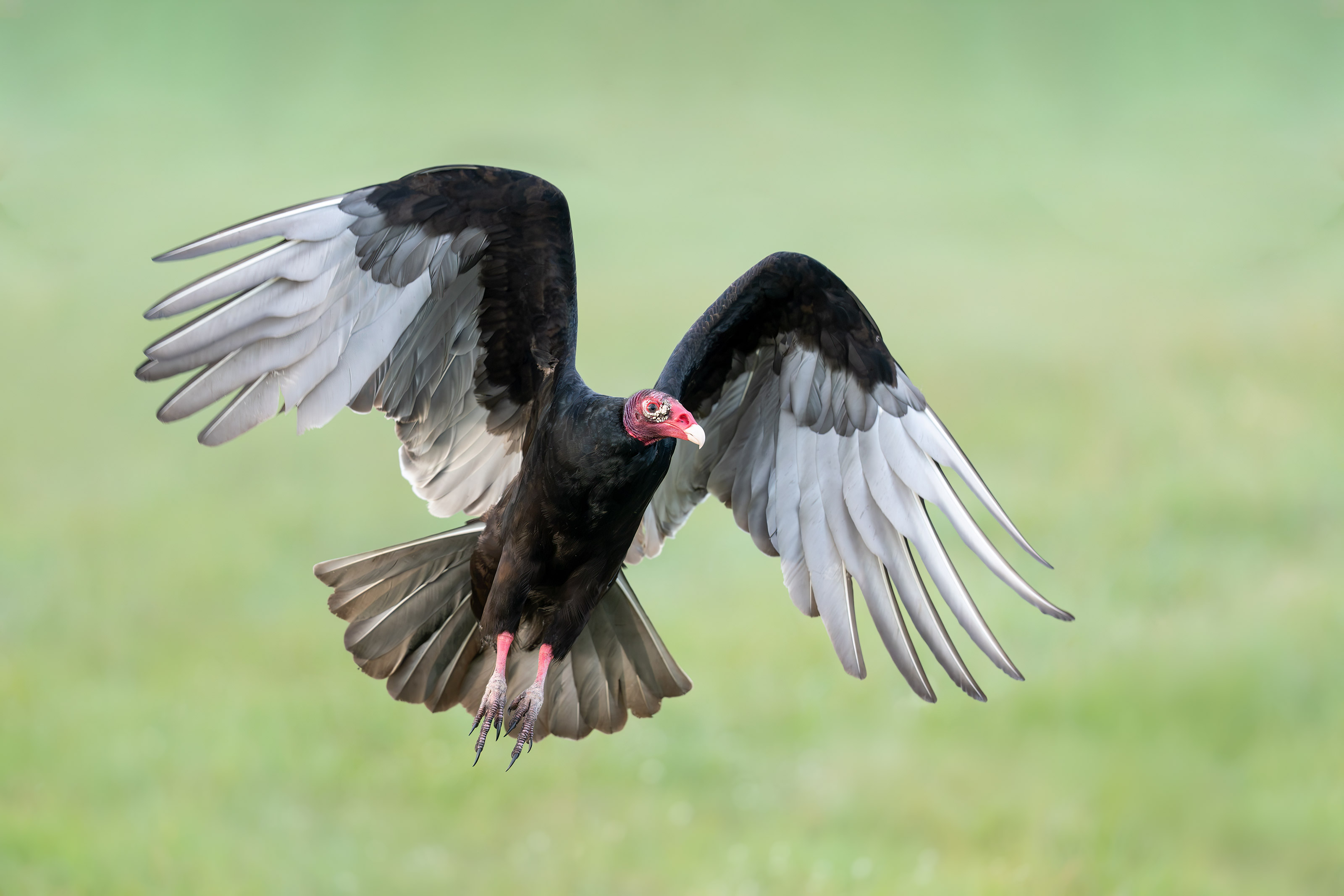
This image was also created on 28 October 2026 down by the lake near my home. Standing at full height, I used the hand held Sony FE 300mm f/2.8 GM OSS Lens (Sony E) and The Latest Greatest Sony Flagship Body, the a1 II Mirrorless Camera. ISO 2000. Exposure determined via Zebras with ISO on the Thumb Wheel: 1/2500 sec. at f/2.8 (wide open) in Manual mode. AWB at 8:31:36am on a very cloudy morning. Wide/AF-C with Bird Eye/Face Detection enabled performed perfectly. Image #2: Turkey Vulture taking flight from South Peninsula |
The Ethics of the Eye to the Viewfinder Approach
Readers might ask, “Why are you approaching birds knowing they will fly?”
I use this technique strictly in high-traffic areas such as along the pier or near the ILE pavilion — where birds are already accustomed to people passing by. Furthermore, I apply it only to abundant species, and I would never use it if another photographer is actively working the same subject.
I used this exact approach for image #2, moving slowly toward an isolated bird with the wind at my back and my eye at the viewfinder. Dozens of vultures were resting on the lawn, and every few minutes a car or golf cart—often with a barking dog — would pass by and flush them anyway. Under those conditions, working carefully for a clean flight shot is entirely reasonable.
|
|
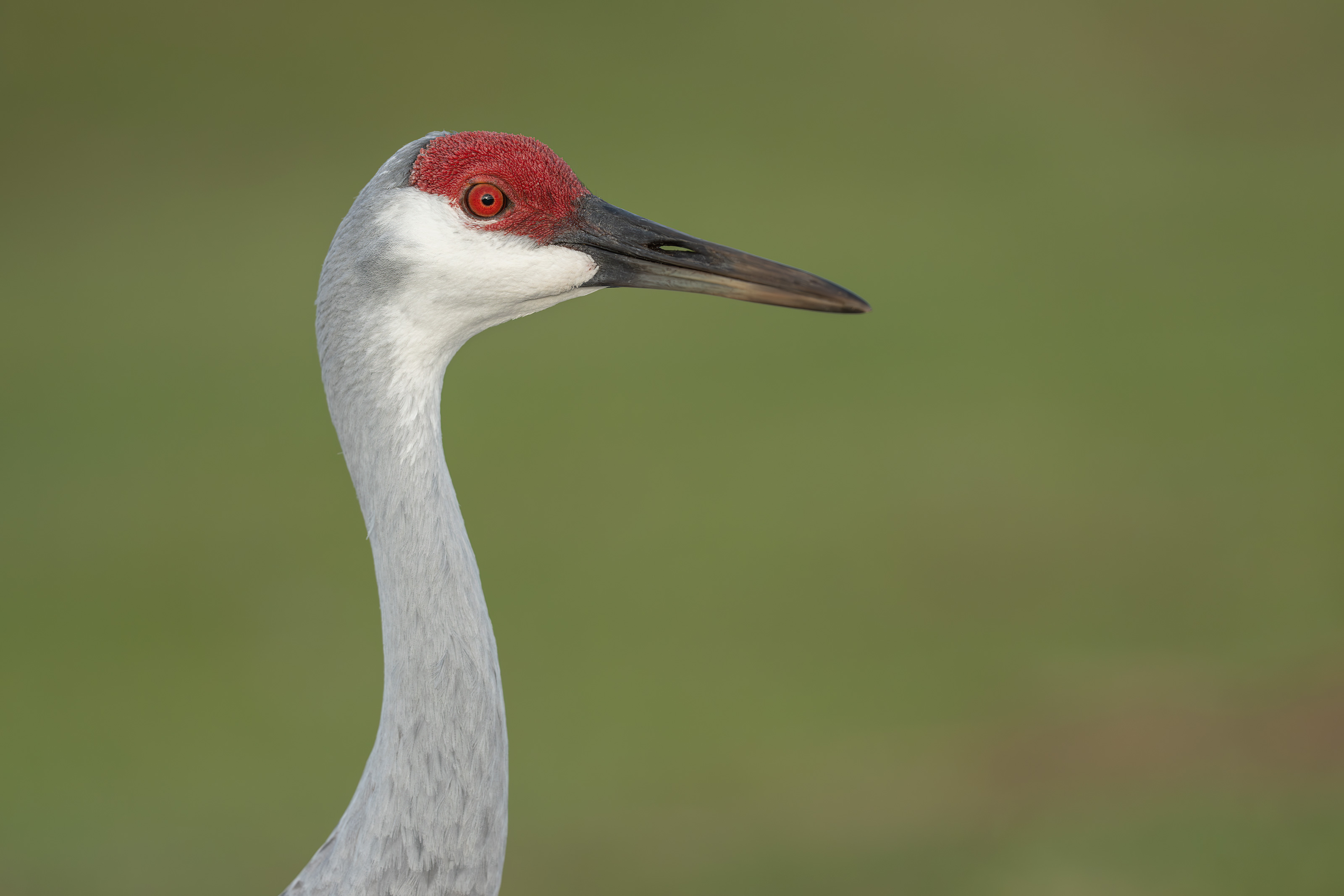
This image was also created on 28 October 2026 down by the lake near my home. Standing at full height on South of Pier Beach, I used the hand held Sony FE 300mm f/2.8 GM OSS Lens (Sony E) and The Latest Greatest Sony Flagship Body, the a1 II Mirrorless Camera. ISO 800. Exposure determined via Zebras with ISO on the Thumb Wheel: 1/2000 sec. at f/3.5 (stopped down 1/3-stop) in Manual mode. AWB at 8:34:44am on a then cloudy-bright morning. Wide/AF-C with Bird Eye/Face Detection enabled performed perfectly. Image #3: Sandhill Crane adult head and neck portrait |
300mm f/2.8 Bokeh
The quality of the background rendered by an f/2.8 lens is as soft and sweet as cake batter — provided the background is a good distance behind the subject. This adult Sandhill Crane is one of the parents of the two chicks I photographed in this exact spot last March. At times, the family still likes to hang out near their favorite corner of the marsh, right in the neighborhood where they nested.
|
|
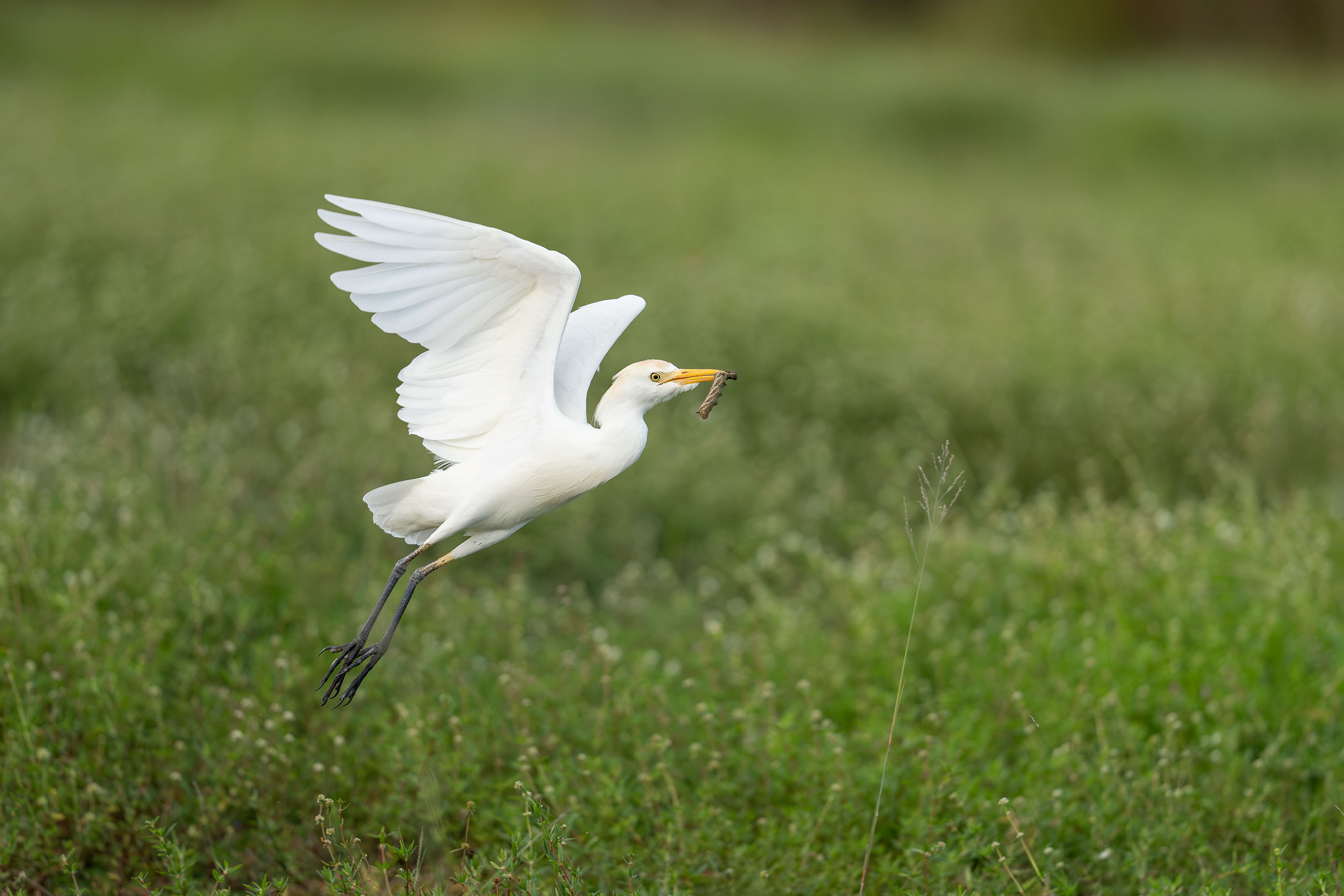
This image was also created on 28 October 2026 down by the lake near my home. Seated in the driver’s seat of my SUV with the BLUBB removed, I used the hand held Sony FE 300mm f/2.8 GM OSS Lens (Sony E) and The Latest Greatest Sony Flagship Body, the a1 II Mirrorless Camera. Exposure determined via Zebras with ISO on the Thumb Wheel. ISO 1250: 1/4000 sec. at f/2.8 (wide open) in Manual mode. AWB at 8:43:44am on a then cloudy morning. Wide/AF-C with Bird Eye/Face Detection enabled performed perfectly. Image #4: Cattle Egret taking flight with hornworm caterpillar in its bill |
North Wind From the Car
Whether in large or small flocks, foraging Cattle Egrets searching for insects in an ILE field will always relocate by flying directly into the wind. With a strong north wind, they naturally move from south to north in search of bugs. On Wednesday morning, I simply positioned my SUV well ahead of the flock with my X5 facing west. Photographing out the driver’s side window, I removed the BLUBB so that I could swing the lens freely in any direction without restriction. As the birds took flight into the wind, they flew straight toward me before turning away to avoid the vehicle. I made three sharp frames of this egret leaving the scene with a hornworm caterpillar; Image 4 had the strongest wing position.
Note: On a sunny morning with a strong north wind, this setup would not pay off because of the harsh, angled light.
Mayonnaise as a Main Food Group
I have loved mayonnaise since I was a kid. When I made a tuna fish sandwich back then, I used equal parts tuna and mayo! I can still remember my mom making me two tuna sandwiches to take fishing. On hot summer days, I’d ride my bike down Flatbush Avenue to the Marine Parkway Bridge — now the Gil Hodges Memorial Bridge. By the time I ate them, they were very warm, squished, and usually had a bit of sand on them. Appropriate, I guess, for a “sand”wich. I’d wash them down with a can of ice-cold Hawaiian Punch that had been frozen solid when I left home.
Now that I follow a keto diet, I can enjoy all the mayonnaise I want without a drop of guilt. My two long-time favorite brands were Hellmann’s Real Mayonnaise and, more recently, Duke’s Real Mayonnaise. Here, however, is the rub:
The standard recipes for both brands use soybean oil as their primary fat base, though canola oil appears in regional versions or specialty blends. Commercial canola and soybean oils are heavily refined, bleached, and deodorized using high heat. Furthermore, these highly processed seed oils contain elevated levels of omega-6 fatty acids, which can promote systemic inflammation when eaten in large quantities relative to omega-3s.
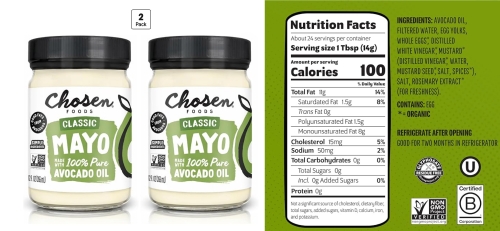
Noting these health concerns, I tried Chosen Foods 100% Avocado Oil Mayonnaise a few years ago and fell in love with it immediately. It tastes fantastic, contains zero net carbs, and uses unrefined avocado oil rather than heavily processed seed oils. You can order two jars on Amazon by clicking here or on the logo link above. Getting in the habit of using my Amazon links never costs you one penny and enables me to continue creating 100% free content on the blog, on Facebook, on Instagram, and on my YouTube channel.
Support BIRDS AS ART with your Everyday Online Shopping
Using the BAA Tip Jar Costs You Nothing
This You Tube video blog post took three hours to prepare not including the time spent photographing, picking my keepers, and optimizing the images. Consider using the BAA Tip Jar — it never costs you a single penny to help me out.
If you are like me, you enjoy the convenience of shopping online at Amazon without having to drive into town. The prices are competitive, and you can return anything you purchase for any reason (as long as you have not wrecked it).
If you enjoy learning from the blog posts, the YouTube videos, and the Instagram posts, or simply love being inspired by the images, the simplest and easiest way to support my efforts at BIRDS AS ART at no cost to you, is to use my generic Amazon link:
Whenever you make your routine household purchases — from groceries and coffee to backup batteries, household supplies, or electronics, making it a habit to click on our link first helps keep things running smoothly here. And again, it never costs you one penny to help me out.
Click here or on the Great (Photographic Accessory) Stuff tab on the lower, orange-yellow menu bar at the top of each blog post to learn about my favorite photo accessories. And more.
Typos
With all blog posts, feel free to e-mail or to leave a comment regarding any typos or errors.







Yes, like Tom, I wanted to chose the osprey with the fish and then realized it wasn’t one of the four we were to choose from. Like Tom, my favorite of the four is #2, because of the crisp detail and soft background.
Image #4 is my favorite among today’s photos. Perfect exposure, nice pose, and the egret with a prey item we don’t see too often.
>> Crap versus crop. It’s funny how important a single mis-typed letter can be. <<
Interesting that this comes up now — I've been enjoying a Facebook group called "Crap Bird Photography," which is pretty well described by its name. Users post their worst bird photos — bad crops, out of focus, bird hard to find in the frame, poor exposure, etc. — and the comments are hilarious!
P.S. One of the frequent types of shots posted are birds in the process of excreting — which I would call "Bird Crap Photography."
I love the osprey with the menhaden! Great image! But since it wasn’t a featured image, I’ll choose image #2 the vulture take-off shot for the wing position, fanned-tail, head angle, light and clean BG.