
This Just In
9:11am on Thursday 2 July. I just got back from the lake and am glad to report that the Smooth/Tight problem with the new 100-400 II that I mention (at length) below turned out to be pretty much a non-issue; I was able to zoom out easily from 400mm with the switch set to tight. My bad for speaking too soon.
Summary
Sony offers more than a few hand-holdable super-telephoto lenses suitable for bird photography. In today’s post we take a look at them, answer some questions about hand-holdability, check out some very fine old images made with the original Sony 100-400 variable aperture GM lens, and take a close look at the new Sony FE 100-400mm f/4.5 GM OSS lens.
Copy and technical editing, and formatting for this post assisted by Gemini AI. Note: I have never and will never use Generative AI on my photographs.
What’s Up?
The last two mornings I sat on my milk crate just left of the pier working mostly on water level Limpkins and a bit of flight. On a cloudy Tuesday morning I went with the 300 alone and on Wednesday, it was sunny enough to add the 1.4X TC. Yesterday evening I took the new constant aperture 100-400 for a test walk on the pier. Keep reading to learn more.
Congrats to the US Mens National Soccer Team for moving on last night to the World Cup Round of 16
Today is Thursday 2 July 2026. I will be heading down to the lake with my brand new Sony FE 100-400mm f/4.5 GM OSS lens , sitting on my milk crate, and looking for some flight and action. Whatever you opt to do, I hope that you too choose to have fun and enjoy life. Please remember that happiness is a choice — Byron Katie, The Work.Com
If an item — a Delkin flash card or reader, a Levered-clamp FlexShooter Pro, or a Wimberley lens plate or low foot — for example, that is available from B&H and/or Bedfords, is also available in the BAA Online Store, it would be great, and greatly appreciated, if you would opt to purchase from us. We will match or beat any price. Please remember also to use my B&H affiliate links or to earn 3% cash back at Bedford by using the BIRDSASART discount code at checkout for your major gear purchases. Doing either often earns you free guides and/or discounts. And always earns my great appreciation.
Gear Questions and Advice
Too many folks attending BAA IPTs and dozens of photographers whom I see in the field and on BirdPhotographer’s.Net, are — out of ignorance — using the wrong gear, especially when it comes to tripods and more especially, tripod heads. And the same is true in spades when ordering new camera bodies or lenses. My advice will often save you some serious money and may help you avoid making a seriously bad choice. Please know that I am always glad to answer your gear questions via e-mail. If you are desperate, you can try me on my cell at 863-221-2372. Please leave a message and shoot me a text if I do not pick up.
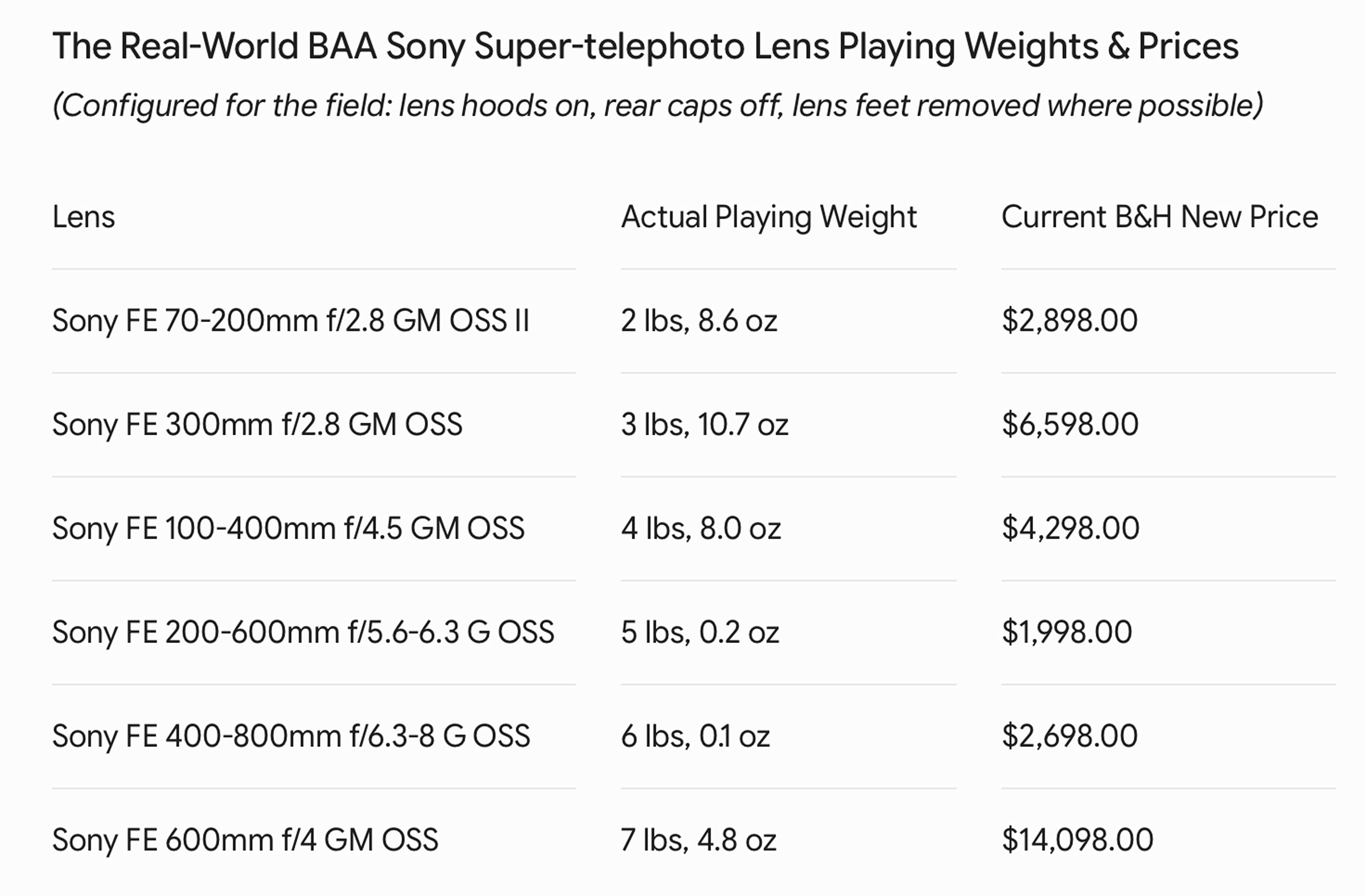
|
BIRDS AS ART Sony Super-telephoto Lens ChartGenerated by Gemini AI. |
A Blessed Plethora of Sony Lens Choices
Since I sold my 400mm f/2.8 GM a few months ago, I am down to the 600mm f/4 GM, the 400-800 G, the 200-600 G, the 300mm f/2.8 GM, and the 70-200mm GM II. And things will be getting worse. I received a brand new 100-400 f/4.5 GM yesterday. I can handhold the 600 and the 400-800 for short fight sessions but for general bird photography both of those need to be on a tripod for me. If I play hero by trying to handhold either of those big lenses while waiting for a takeoff I always wind up with pain in a shoulder, and elbow, or a wrist. Or all three.
The shorter zooms and the 300mm f/2.8 can be handheld by most folks. See the chart above to learn the precise playing weights of the lenses I own.
An e-Mail Exchange with 82-year old Carolyn Johnson
am: Hi Again CJ,
Re:
CJ: I just got back from Silver Salmon Coastal Brown Bear trip and I’m having a really hard time holding the 200-600. Are there any lighter options?
AM: Please confirm that you already own the 70-200mm f/2.8 Version II. (She does.) That one, Configured for hand-holding, weighs 2 lbs 8.6 oz with the hood in place and the lens foot removed.
The next lightest Sony super-telephoto lens option is the 300mm f/2.8 GM lens. It weighs 3 lbs, 10.7 oz with the hood in place and the lens foot removed.
The 200-600 weighs 5 lbs 0.2oz with the hood in place and the lens foot removed.
So, the 300 alone weighs 1 1/3 lbs less than the 200-600. The difference is significant; the 300, configured for hand-holding, is 26% lighter. In addition, the 300 is physically smaller and shorter and is much better balanced. I too have trouble hand holding the 200-600 for long sessions. I can hand hold the 300 f/2.8 for forever. It is likely that you will use the 300 with either teleconverter.
Note: The 1.4X weighs 5.9 oz without the caps. The 2X weighs 7.3 oz without the caps.
So the 300 will be noticeably easier to HH than the 200-600. You gain speed: 2 1/3 stops wide open, 1 1/3 stops at 420mm, and 1/3 stop at 600mm. What you lose is the incredible versatility of a zoom lens.
The only other lens worth considering is the brand new Sony FE 100-400mm f/4.5 GM OSS lens . It weighs 4 lbs 8oz with the hood in place so you would save right about 1/2 lb when compared to the 200-600. Though they are about the same length, the 100-400 II is better balanced with more of the weight to the rear so it should be much easier to handhold. I will share additional thoughts with you once I have some more real-world experience with the lens.
With love, artie
|
|
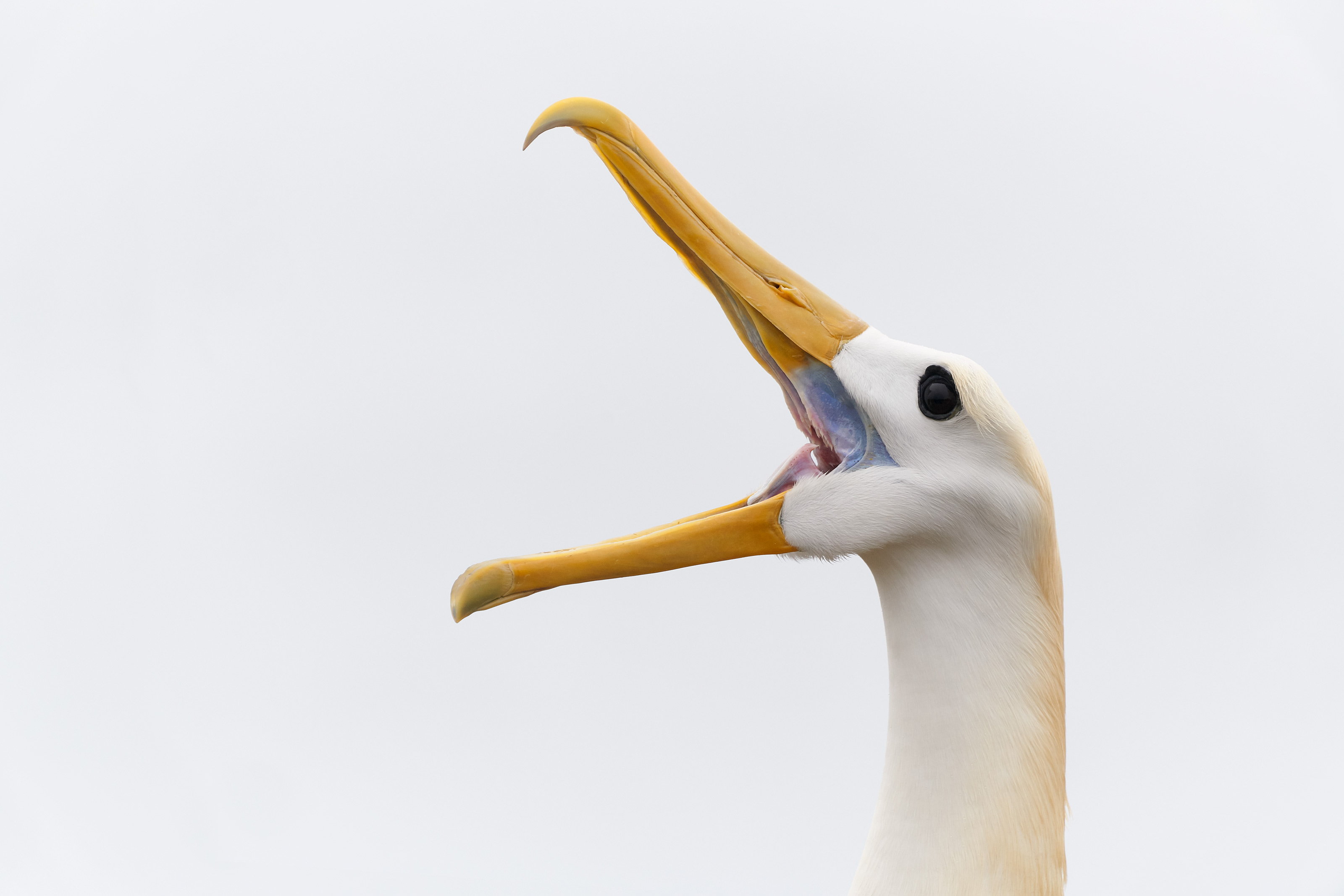
This image was created by yours truly on Punta-Suarez, Espanola (Hood-Island), Galapagos. Crouching a bit, I used the handheld Sony FE 100-400mm f/4.5-5.6 GM OSS lens with the Sony FE 1.4x teleconverter (at at 479mm) and the Sony Alpha 7M3 Mirrorless digital camera body. ISO 800. Exposure determined by Zebras with ISO on the rear dial: 1/800 sec. at f/9 (wide open) in Manual mode. AWB at 8:33:44am on a cloudy morning. Tracking Flexible Spot (M) AF-C was active at the moment of exposure. Image #1: Waved Albatross displaying |
The Original Sony 100-400
I owned the original Sony FE 100-400mm f/4.5-5.6 GM OSS lens for many years. It was dependable and — as today’s three featured photos show, an extremely versatile lens. It paired well with the 1.4X TC for bird photography. It served as my workhorse lens on my 2018 Galapagos Photo-Cruise.
|
|
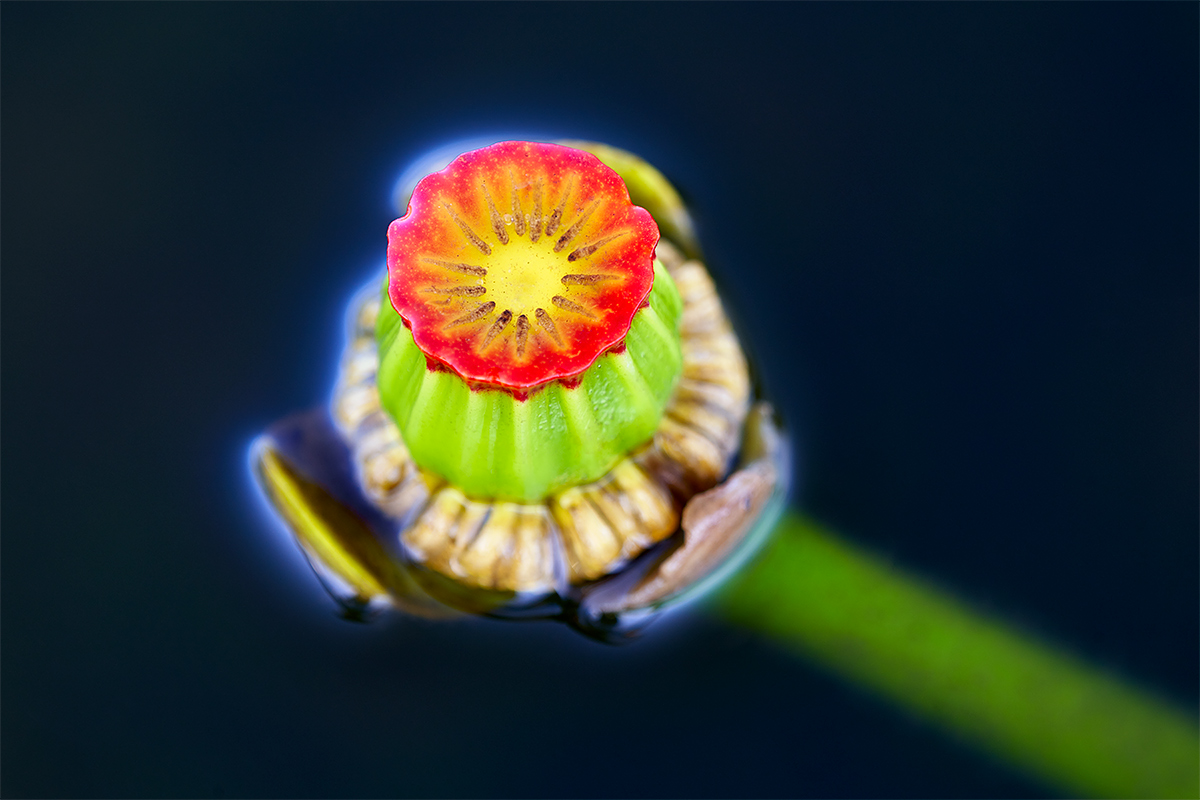
This image was created at Indian Lake Estates, FL on 18 JUNE 2020. I used the Induro GIT 404L/FlexShooter Pro-mounted Sony FE 100-400mm f/4.5-5.6 GM OSS lens with the Sony FE 1.4x teleconverter (at at 560mm) and the 61-mega-pixel monster, the Sony Alpha a7R IV Mirrorless digital camera body. ISO 400. Exposure determined by Zebras with ISO on the rear dial (and then bracketed): 1/6 sec. at f/8 (wide open) in Manual mode with 2-second timer. AWB at 7:33am on a partly-cloudy morning. Plamped in place. Manual focus using the Focus Magnifier and Manual Focus Toggle tips and techniques detailed in the SONY e-Guide. Image #2: Spatterdock bud/BLUER version |
Spatterdock — Nuphar advena
Spatterdock, or Yellow Pond-lily is an emergent perennial aquatic plant widespread in the eastern United States, but also occurring in southern Canada (Ontario). It commonly inhabits shallow freshwater ponds where its rhizome is anchored in a muddy bottom and, under favorable conditions, can produce numerous vegetative colonies. Its large (up to 16 inches long) dark-green leaves are mostly held slightly above the water surface or are found floating. It requires at least partial sunlight to flower. The yellow flowers are solitary, close for the night, and usually also emerge several inches from the water.
The fruit is an egg-shaped, green seed pod that grows on the plant. When ripe, the pod splits open to release many small seeds. The seeds are an important food for wildlife like ducks, while deer may graze on the plant’s leaves.
Adapted from the Washington State University Laboratory for Cellular Metabolism and Engineering website.
Stay Still Please …
Working at 1/6 second, I remember having to stand totally still for quite a while for the water to settle and then moving very slowly to press the shutter button without causing any ripples. Success!
|
|
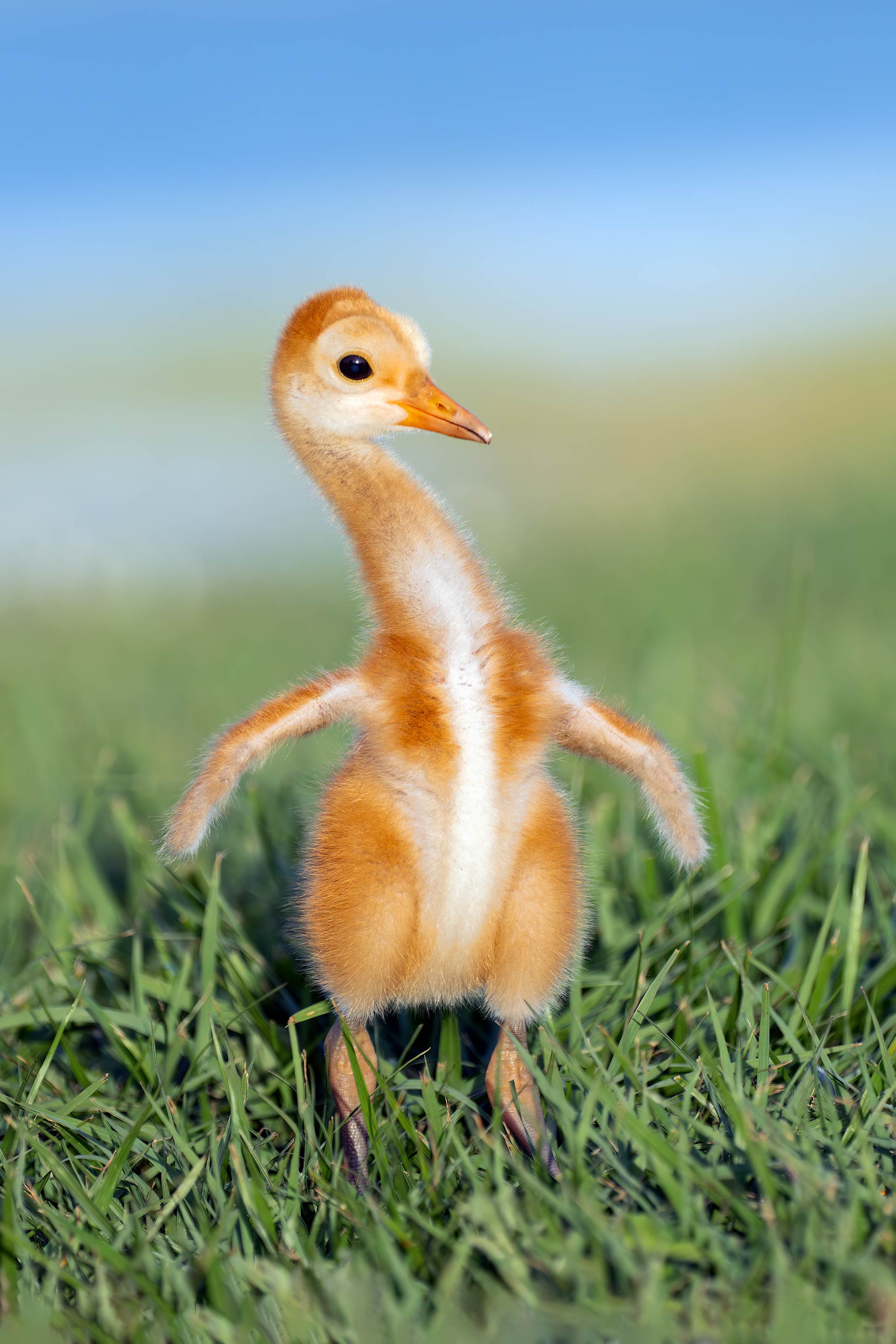
This image was created on 15 May 2020 at Indian Lake Estates, FL. Seated on the grass atop the small hill right of the parking circle, I used the handheld Sony FE 100-400mm f/4.5-5.6 GM OSS lens (at at 361mm) and the 61-mega-pixel monster, the Sony Alpha a7R IV Mirrorless Digital camera body. The exposure determined by Zebras with ISO on the rear dial. ISO 500: 1/640 sec. at f/6.3 (stopped down 1/3 stop) in Manual mode. AWB at 7:20:15am on a sunny afternoon. Tracking Flexible Spot (M) AF-C was active at the moment of exposure and performed perfectly. Image #1: Four-day old Sandhill Crane chick flapping its wing stubs |
One of My Favorite-ever Crane Chick Images
This Family Jewels image of one of the two Mother’s Day Sandhill Crane chicks has long been a huge favorite of mine. I re-optimized it for today’s blog post. I was made with the original) Sony 100-400mm GM lens that I wound up selling years ago.
The (original) Sony 100-400mm GM: The Pros and Cons
Adapted from the May 15, 2020 blog post here:
The positives: The 100-400mm’s small size, lightweight design, and outstanding sharpness—combined with an incredibly short minimum focusing distance and reach at the long end made it a must-own lens for me for years. Not to mention its excellence for flower photography!
The two negatives with the original SONY 100-400mm GM lens:
• The physical design: The lens changes length as you zoom in or out.
•. The zoom: The zoom mechanism is not at all smooth. Pretty much every Sony 100-400mm that I have handled stuck a bit at around 300mm. That made it very difficult to use when you are trying to shoot flight or create a zoom blur. And since the problem is inherent to the design of the lens, it cannot be fixed or repaired.
By contrast, the internal zoom mechanisms of the 70-200mm f/2.8 GM II, the 200-600mm G, the 400-800mm G, and the new 100-400mm f/4.5 are as smooth as butter.
Sony FE 100-400mm F4.5-.6 GM OSS Lens with Extras
Price reduced $200.00 on 30 June 2026
Used Gear Page regular, IPT Veteran, Used Gear Page regular, and BAA friend Dane Johnson is offering a Sony FE 100-400mm F4.5-5.6 GM OSS lens in like-new condition for $1695.00 (was $1,895.00). The sale includes the original product box, the owner’s manuals and all original paperwork, the lens hood, the front and rear lens caps, the lens case, a LensCoat (Realtree AP Snow), a $104 value, the Really Right Stuff LCF-101 Replacement Foot (Arca-Type Compatible Double Dovetail — a $120 value)., and insured ground shipping via major courier to lower-48 US addresses only. Your item will not ship until your check clears unless other arrangements are made.
Please contact Dane via e-mail or by phone at 559-593-0989 (Pacific Time
This lens, perfect for general nature photography, is still in production and sells new at BH for $2,698.98. Save $1003.00 plus the extras by grabbing Dane’s pretty much new lens right now. artie
Eventually …
When the vastly-improved-on-the-original Sony FE 70-200mm f/2.8 GM OSS II lens was released (3,098.00 new) I quickly realized that with either teleconverter in place the new lens rendered the original 100-400 obsolete. So, in short order, I sold mine.
Super-Telephoto Versatility
Targeting nature, flower, sports, wildlife, and action shooters, the FE 100-400mm f/4.5-5.6 GM OSS lens from Sony will satisfy many photographers and videographers who are looking for a bit of extra reach with their full-frame E-mount camera. As a member of the G Master line, it is designed with outstanding resolution and sharpness in mind, along with a relatively compact size, responsive autofocus, and Optical SteadyShot image stabilization for outstanding performance at all focal lengths. B&H and Sony
The New Kid on the Block
The Sony FE 100-400mm f/4.5 GM OSS Lens
The original 100-400mm GM lens, with all its foibles, has been the go-to choice for many nature photographers since its introduction in 2017. Similarly, the 200-600mm G lens has long been a highly popular and affordable super-telephoto zoom for many years.
My prediction is simple: those who can afford its $4,298.00 price tag may well be selling their original 100-400mm lenses (if they still have one) along with their 200-600mm zooms, and replacing them with the new Sony FE 100-400mm f/4.5 GM OSS lens . I was shocked by the size of the shipping and product boxes when the lens arrived yesterday but pleasing surprised as below in #1.
Here’s why I believe that this will become a very popular lens:
1. Weight and Balance: I just took the lens out of the box and was amazed by how light and well-balanced it feels.
2. Autofocus Speed: I mounted it to an a1 ii and was equally impressed with the blistering AF speed and responsiveness. I cannot wait to try it out this morning on the whistling ducks and the Limpkins.
3. Constant f/4.5 Aperture: The fixed f/4.5 aperture is a blessing for those who shoot in Manual mode. You no longer have to worry about accidentally overexposing your images just because you zoomed out.
4. Internal Zoom and Short Throw: The zoom mechanism is incredibly smooth with a 90° throw — a simple quarter-turn twist of the wrist gets you from 100mm to 400mm. And because it features an internal zoom, the lens barrel doesn’t change length as you soon in or out.
5. Two Lenses in One: When you purchase this lens, you are actually buying two distinct setups:
A: A relatively fast, constant f/4.5 100-400mm that is easily hand-holdable for most folks. The lens alone should kill for flight and action at relatively close range, for larger species, and as a walk-around songbird lens as well. Also, see #6 below.
B: Add the 1.4X teleconverter, and you instantly have a 140-560mm f/6.3 lens. This combination is about half a pound lighter and vastly better balanced (with more weight distributed to the rear) than the 200-600mm. Furthermore, I am betting that it will produce sharper images.
6. Impressive Close Focus: The minimum focusing distances are quite remarkable: 2.1 feet at 100mm and 4.9 feet at 400mm. This lens will be fantastic for flowers, dragonflies, butterflies, and the like. Not to mention tight face shots of tame birds.
7. Tripod Collar Click-Stops: Those who work from a tripod will appreciate the 90° click-stop settings on the rotating collar. This critical feature is absent on the 200-600mm.
8. The 2X TC Option: On bright, sunny days, photographers utilizing excellent sharpness techniques should be able to produce acceptably sharp images with the 2X TC in place. This gives you a 200-800mm f/9 outfit. For the best results with this setup, use a tripod.
What I Don’t Like About the Lens
The lens foot is not (easily) removable. This is borderline criminal for a lens that is designed to be eminently hand-holdable.
Oops!
After a decent session this morning, I am glad to report that the Smooth/Tight problem discussed below turned out to be pretty much of a non-issue; I was able to zoom out easily from 400mm with the switch set to tight. My bad for speaking too soon.
What I Really Did Not Like About the Lens …
Even though it was late and cloudy dark at 7pm last night, I grabbed the new lens for a pier-walk. There was not much around to shoot but I discovered what I perceived as a big negative. When I am walking around handholding a single lens, I have — for more the 42 years, held the lens by the camera body with the lens hanging down perpendicular to the ground. For standing flight photography, this is the standard rest position. Folks often ask if this stress the lens mounts. The answer is “No.” And that is true even with the 600mm f/4.
So, I began my walk with the lens zoomed out to 400mm. When an Osprey flew by I raised the lens and quickly realized that it had zoomed itself out to 100mm as I was walking. The lens behaved in the pretty much the same manner for my entire walk, at times zooming out only to 200mm. I looked for a loosey-tighty ring but came up empty. I came up with one solution: hold the lens horizontally by the lens foot so that it stays zoomed to 400mm. The problem there is that it takes longer to re-grip the camera body and raise the lens. At this point I am thinking, “This could be a deal breaker for me and for others.” Not to mention that the plan is to remove the foot to save a few ounces. In addition, this problem has never been a problem with either the 200-600 or the 400-800 so it seems a shame that Sony has taken a step back with the zoom mechanism on this lens. Please note that if you are sitting or on a tripod, this is not a problem at all.
Anyhoo, I called Sony Pro Support and spoke to the very nice Linda. It took her a few minutes but she found a solution. On the ring farthest from the camera, the one with the four buttons, there is a Smooth-Tight switch. It is sort of on the bottom right side of the lens barrel with the camera held horizontally. That’s the good news. The bad news is that when the switch is set to Tight, it is not at all easy to zoom out. And, the mechanism is not adjustable; it is either too loose or too tight. In addition, the switch is difficult to reach, impossible to reach while actively photographing.
The plan for this morning is to set the switch to Tight when I am walking around and then move it to Loose when I sit on my milk crate. I will try hard not to drop the lens in the lake.
Coming Soon: Real World Images
Because the proof is in the pudding — not in the spec sheets, I will be sharing images made with my new lens here over the next few weeks.
And here is the best news: anyone who uses one of my two affiliate links to purchase their new 100-400mm lens will earn a free copy of my instructional guide. If you are unfamiliar with the process of using a BAA link, please e-mail me for details.
Final Thought
Alvin “Red” Stevens and Carolyn Johnson, both have a tough decision to make: purchase the 300mm f/2.8 GM (speed and light weight) or the 100-400 (a bit heavier, a bit slower at first/4.5, but instantly versatile). Like me, Red and Carolyn are proud octogenarians. Both were over 80 when I first put a Sony rig in their hands and each began making some very good photos after five minutes of instruction! Actually, it took Red ten minutes 🙂
Typos
In all blog posts and Bulletins, feel free to e-mail or to leave a comment regarding any typos or errors. Just be right :).











Artie: my Canon RF 100-400 f/6.3-8 USM IS lens weighs 1.4 pounds. It’s a major reason I got a Canon mirrorless camera (R7). It’s very sharp and focuses very fast. It’s slow, of course, but the tradeoff was essential for me. I love the waved albatross.
I hear you, David.
much love, artie
Great chart and great early evaluation. Both are most helpful to a novice like me. But sometimes I want more than one and make the mistake that it is equipment and not the photographer that really matters. More $ spent on IPTs probably a better choice. Skill and not equipment is what you always say in your blog and that is probably true of anything learned in life.
Correct on all counts. When you were a dentist, was it the drill that made you great?
with love, a