
Your Calls?
Which Great Egret image do you like best, the tight one or the wide one? Why did you make your choice. Which of today’s five featured images is your favorite? Why did you make your choice? I have a clear choice on both questions.
My Calls as Promised
Thanks for all the comments at the last blog post. Images #8 and # 10 were mentioned most along with #9. #2 and #4 got single mentions. Nobody went with my top choice, #11, the young Osprey taking flight from The Perch II. Why? I love the take-off pose and the fact that the new lens with the 2X TC performed so well. That combo might very well be a game changer. My second picks were #8 for the low level flaps and #10,, for the Pre-Capture action
Summary
Regular readers know that I have recently been singing the praises of the incredibly versatile Sony FE 100-400mm f/4.5 GM OSS lens Yet, despite the obvious focal length overlap, there are specific situations where the f/2.8 speed of the Sony FE 300mm f/2.8 GM makes this lens utterly indispensable.
When? The short answer: in low-light situations where you need fast shutter speeds to freeze action and flight, but want to avoid using the super-high ISOs.
At Homer, the 300 f/2.8 is my most-deadly-by-far Bald Eagle weapon. And the same is true at Stick Marsh where it offers the perfect focal length for the incoming spoonbills and lets me shoot fast and sharp in the soft, low light of predawn. In addition, I’ve done quite well with it at Jacksonville and San Diego; at La Jolla, it is the perfect lens for the incoming Brandt’s Cormorants carrying nesting material.
And, as you will see below, it was — on a recent overcast and foggy morning at ILE, my ticket to success.
In case you missed this: An Old Man’s Take on the Sony 300mm f/2.8 GM & TCs
The Sony 300mm f/2.8 GM lens is the lightest and smallest in its class and is hand-holdable by most folks, including old codgers like me. It is fast and super-sharp, allows you to be mobile, is amazing for flight and action, and is easy to travel with. See what’s possible when this lens is used alone or combined with either the 1.4X or the 2X TC. As below, use one of my affiliate links to earn a free copy of the BIRDS AS ART Sony 300mm f/2.8 GM Lens Guide.
Great Question
At the YouTube Video here, @Jonathantuba wrote: Some great photos! One question, with your selection of lenses, what is your decision making process to decide which lens to take out?
@arthurmorris4932 replied:
Hi Jon (or do you prefer Jonathan?) Great question. It would almost take a book. I talk about those decisions a lot on my blog. You should 100% subscribe. I am blessed to own many big lenses. Since I sold my 400mm f/2.8 GM, I am down to the 600mm f/4 GM, the 400-800 G, the 200-600 G, the 300mm f/2.8 GM, and the 70-200mm GM II. And things will be getting worse. I just ordered the 100-400 f/4.5 GM! More choices. Each day I consider the light and the wind, the likely opportunities, the distance to the birds, tripod or handhold, and probably a dozen other factors. Then I try to make at least one good image. Way back when I would head into the field with two lenses, one on the tripod and a smaller one on my shoulder via a Black Rapid Strap. Those days are long gone: I am now a one-lens-in-the-field guy. (But all of them in my vehicle!)
What’s Up?
Though Sunday morning was a bit on the slow side, I had some good flight and water level chances that paid off. Monday morning may very well have been the official beginning of the summer doldrums. It started off cloudy so after setting out my milk crates, I headed back home to do some handheld flower photography with the handheld Sony FE 100-400mm f/4.5 GM OSS lens. I headed back to the pier and sat on my milk crate for an hour. Not a single whistling duck flew by and nothing swam into the slot. So, I left and found a very handsome young Osprey sitting on an ugly pole in the marina and worked that with the 2X on the 100-400 f/4.5. I wound up keeping five images and actually loved two of them. That surprising pair coming soon to the BAA blog.
I sold my souped up MacBook Pro M2 for $2500.00 to Krishna Prasad Kotti who attended an IPT a few decades ago. Two very serious cases of bank and Paypal fraud were recently settled in my favor. I will share the details here soon as the experience might very well help others in the same boat. Many might find the story hard to believe …
Today is Tuesday 7 July 2026. The forecast is quite similar to Monday mornings: partly cloudy with a faint breeze from the SW. I will surely do my early morning 1 1/2 mile walk as I missed yesterday while preparing a small claims court lawsuit against my Long Beach Long Island landlord last August. After my usually late breakfast, Jim and I head into town. Jim will run some errands while I am having my teeth cleaned. Whatever you opt to do, I hope that you too choose to have fun and enjoy life. Please remember that happiness is a choice — Byron Katie, The Work.Com
If an item — a Delkin flash card or reader, a Levered-clamp FlexShooter Pro, or a Wimberley lens plate or low foot — for example, that is available from B&H and/or Bedfords, is also available in the BAA Online Store, it would be great, and greatly appreciated, if you would opt to purchase from us. We will match or beat any price. Please remember also to use my B&H affiliate links or to earn 3% cash back at Bedford by using the BIRDSASART discount code at checkout for your major gear purchases. Doing either often earns you free guides and/or discounts. And always earns my great appreciation.
Gear Questions and Advice
Too many folks attending BAA IPTs and dozens of photographers whom I see in the field and on BirdPhotographer’s.Net, are — out of ignorance — using the wrong gear, especially when it comes to tripods and more especially, tripod heads. And the same is true in spades when ordering new camera bodies or lenses. My advice will often save you some serious money and may help you avoid making a seriously bad choice. Please know that I am always glad to answer your gear questions via e-mail. If you are desperate, you can try me on my cell at 863-221-2372. Please leave a message and shoot me a text if I do not pick up.
June 23rd
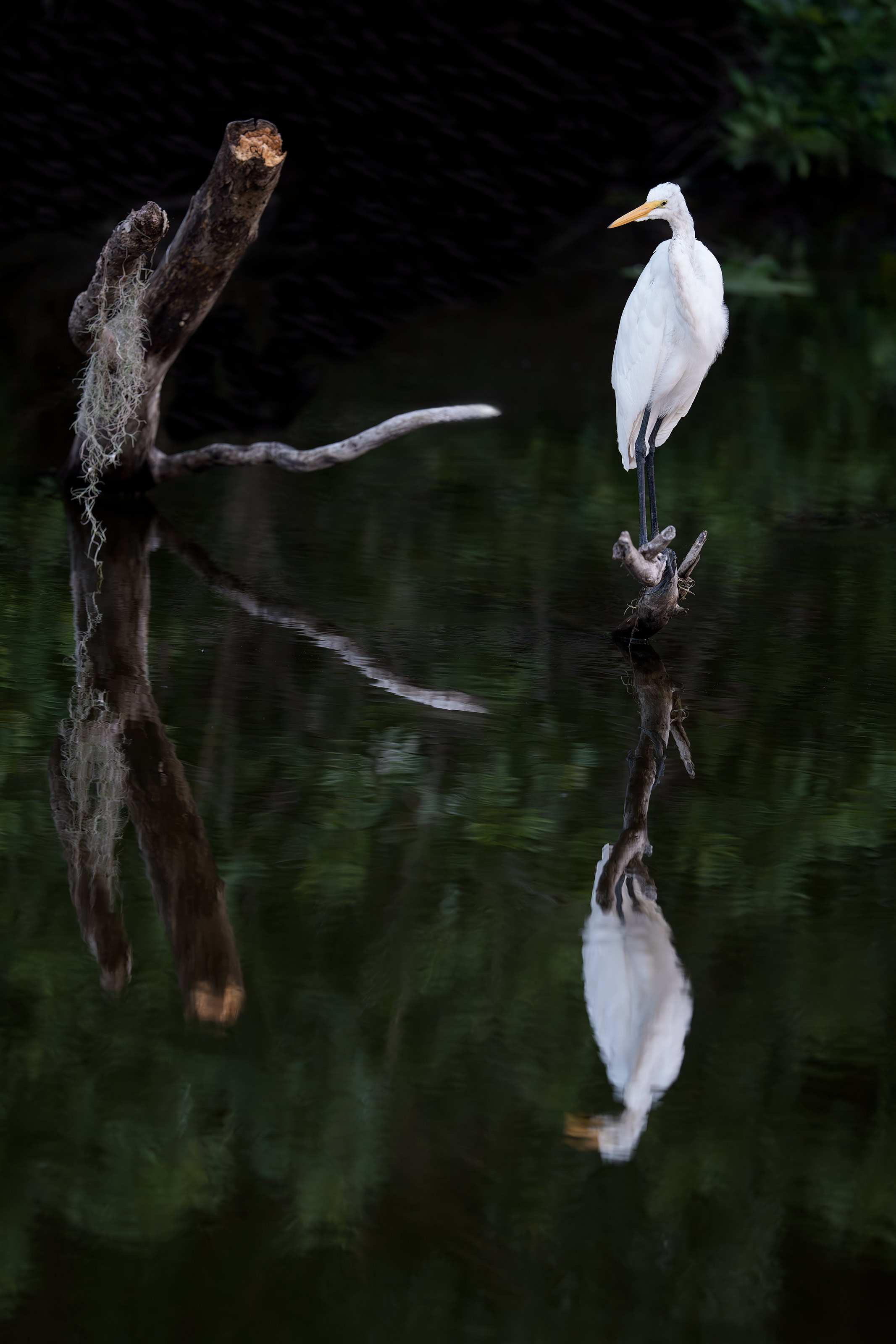
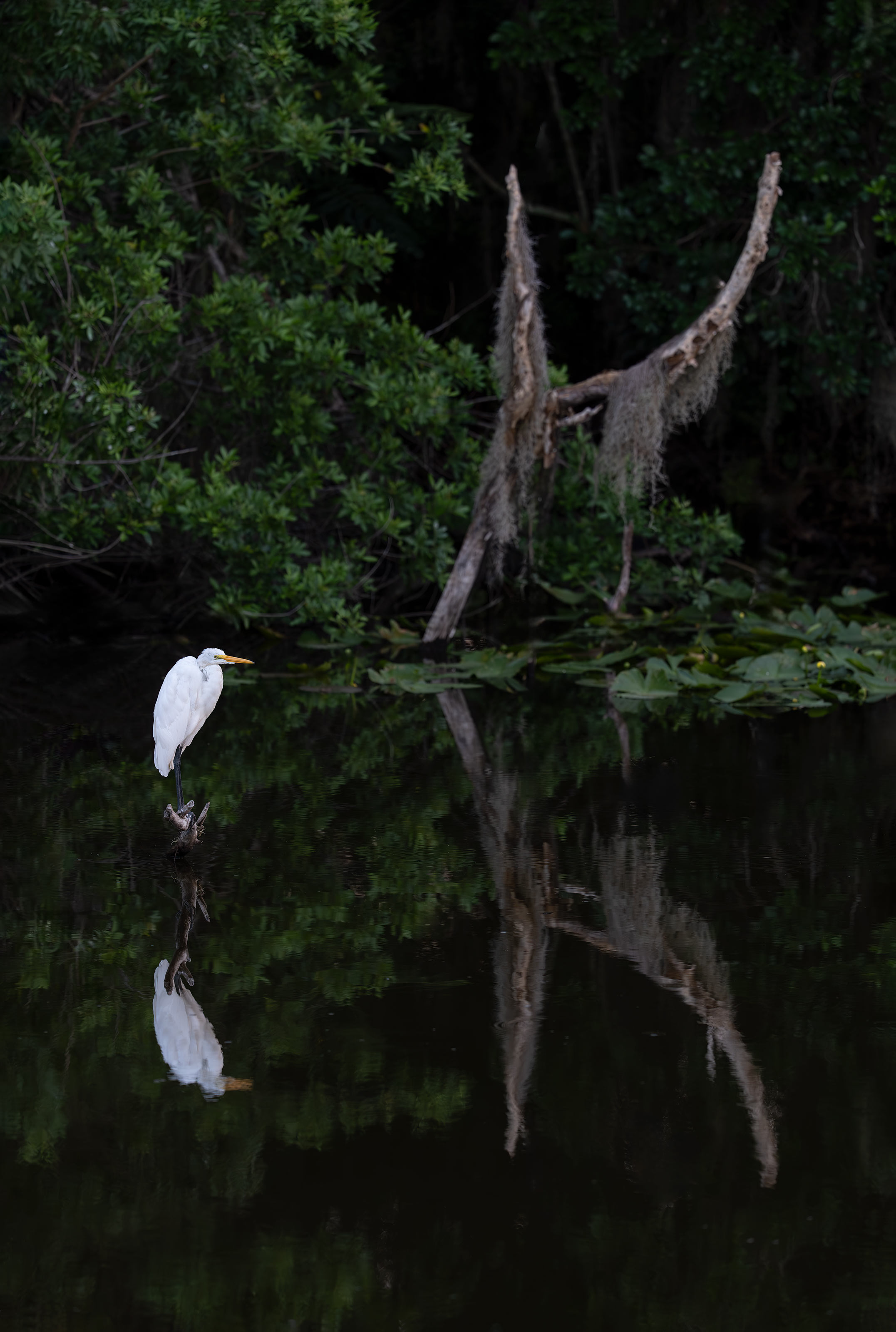
I spotted the Great Egret below on the far side of the canal when I pulled in to check on the natural Osprey nest by the tangerine house. Working from my X5, I grabbed the 600mm for Image #1, and then switched to the 300mm for the wider photo, #2. As I pulled up to the pier it was quite obvious that the clouds would prevail so going with the 300mm f/2.8 was the best and only choice. I had the 1.4 TC in my fanny pack in case the sun came out.
|
|
This image was created by yours truly on 30 June 2026 at Indian Lake Estates, FL. Seated in the front seat of my SUV, I used the BLUBB-supported Sony FE 600mm f/4 GM OSS lens and the Latest Greatest Sony Flagship Body, the a1 II Mirrorless Camera in full frame mode. The exposure was determined via Zebras with ISO on the Thumb Wheel. ISO 1250: 1/125 sec. at f/4 (wide open) in Manual mode. AWB at 6:47:32am in the shade on what would turn out to be a mostly cloudy morning. Tracking: Spot (S)//AF-C with Bird-Eye/Face Detection performed perfectly. Click on the image to enjoy a larger, inexplicably sharper high-res version. Image #1: Great Egret on perch in canal |
As Usual
As is almost always the case, I began with the tighter view, in this case, the framing offered by the relatively fast 600mm f/4 lens. Working on the BLUBB allowed me to make a sharp image at a relatively slow shutter speed.
|
|
This image of the same bird was also created by yours truly on 30 June 2026 at Indian Lake Estates, FL. Seated in the front seat of my SUV, I rested the hood of the lens on the BLUBB: Sony FE 300mm f/2.8 GM OSS Lens (Sony E) and The Latest Greatest Sony Flagship Body, the a1 II Mirrorless Camera. The exposure was determined via Zebras with ISO on the Thumb Wheel. ISO 1250: 1/00 sec. at f/4 (stopped down one stop) in Manual mode. AWB at 6:49:48am in the shade on what would turn out to be a mostly cloudy morning. Tracking: Spot (S)/AF-C with Bird Eye/Face Detection enabled performed perfectly. Image #2: Great Egret on perch in canal |
A Wider View
Going to the 300mm f/2.8 GM allowed for the wider view in Image #2. Which, if either, do you like better?
|
|
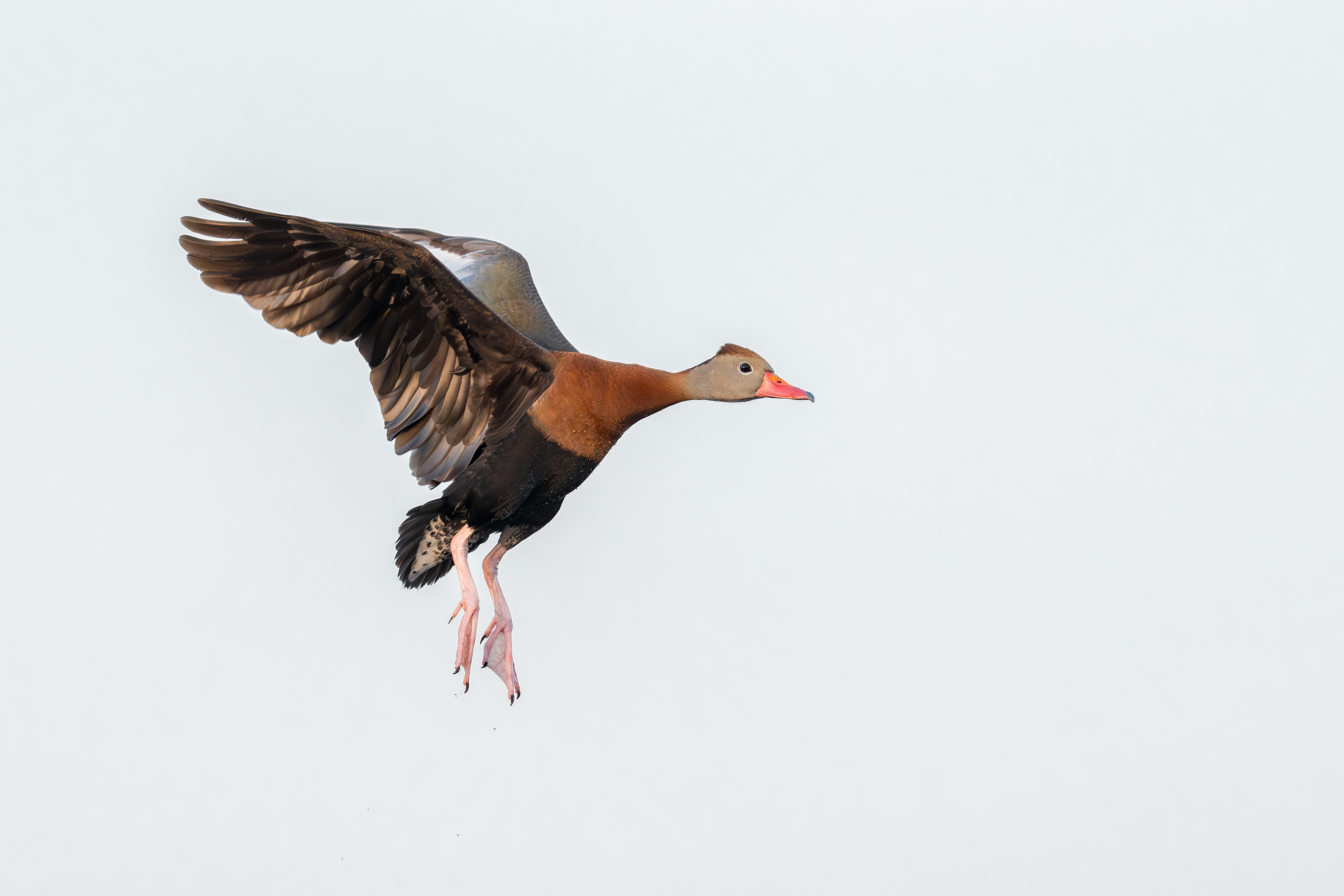
This image was also created by yours truly on 30 June 2026 at Indian Lake Estates, FL. Seated on two pillows atop a milk crate, I used the handheld Sony FE 300mm f/2.8 GM OSS Lens (Sony E) and The Latest Greatest Sony Flagship Body, the a1 II Mirrorless Camera in APS-C crop mode). The exposure was determined via Zebras with ISO on the Thumb Wheel. ISO 3200: 1/3200 sec. at f/2.8 (wide open) in Manual mode. AWB at 7:11:25am on then very cloudy morning. Wide/AF-C with Bird Eye/Face Detection enabled performed perfectly. Image #3: Black-bellied Whistling Duck flying to the pier railing |
Overcast White Sky Flight
Note that at 1/3200 second wide open at f/2.8 I still needed ISO 3200 to come up with a perfect exposure. Had I been working at f/4, I would have needed ISO 6400. And with the new lens, I would have needed ISO 8000. Q.E.D.
|
|
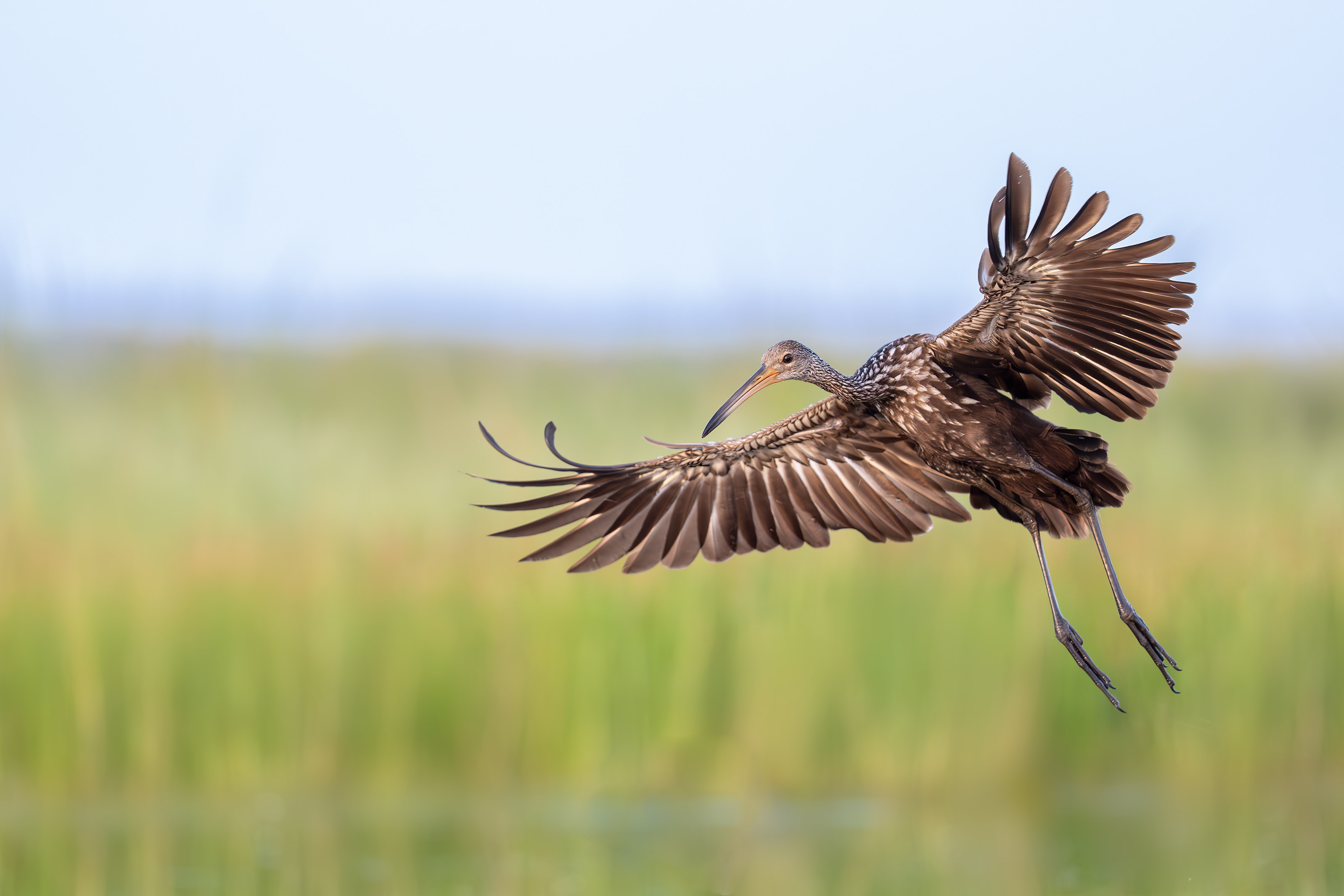
This image was also created by yours truly on 30 June 2026 at Indian Lake Estates, FL. Seated on two pillows atop a milk crate, I used the handheld Sony FE 300mm f/2.8 GM OSS Lens (Sony E) and The Latest Greatest Sony Flagship Body, the a1 II Mirrorless Camera in APS-C crop mode). The exposure was determined via Zebras with ISO on the Thumb Wheel. ISO 2500: 1/2500 sec. at f/2.8 (wide open) in Manual mode. AWB at 7:17:14am on a then very cloudy morning. Wide/AF-C with Bird Eye/Face Detection enabled performed perfectly. Image #4: Limpkin fly by |
A Little Bit Slower
I reduced the shutter speed to 1/2500 second and the ISO to 2500. In effect, it was the exact same exposure as was used with Image #4. Why? Limpkins generally flap a lot slower then the whistling ducks.
|
|
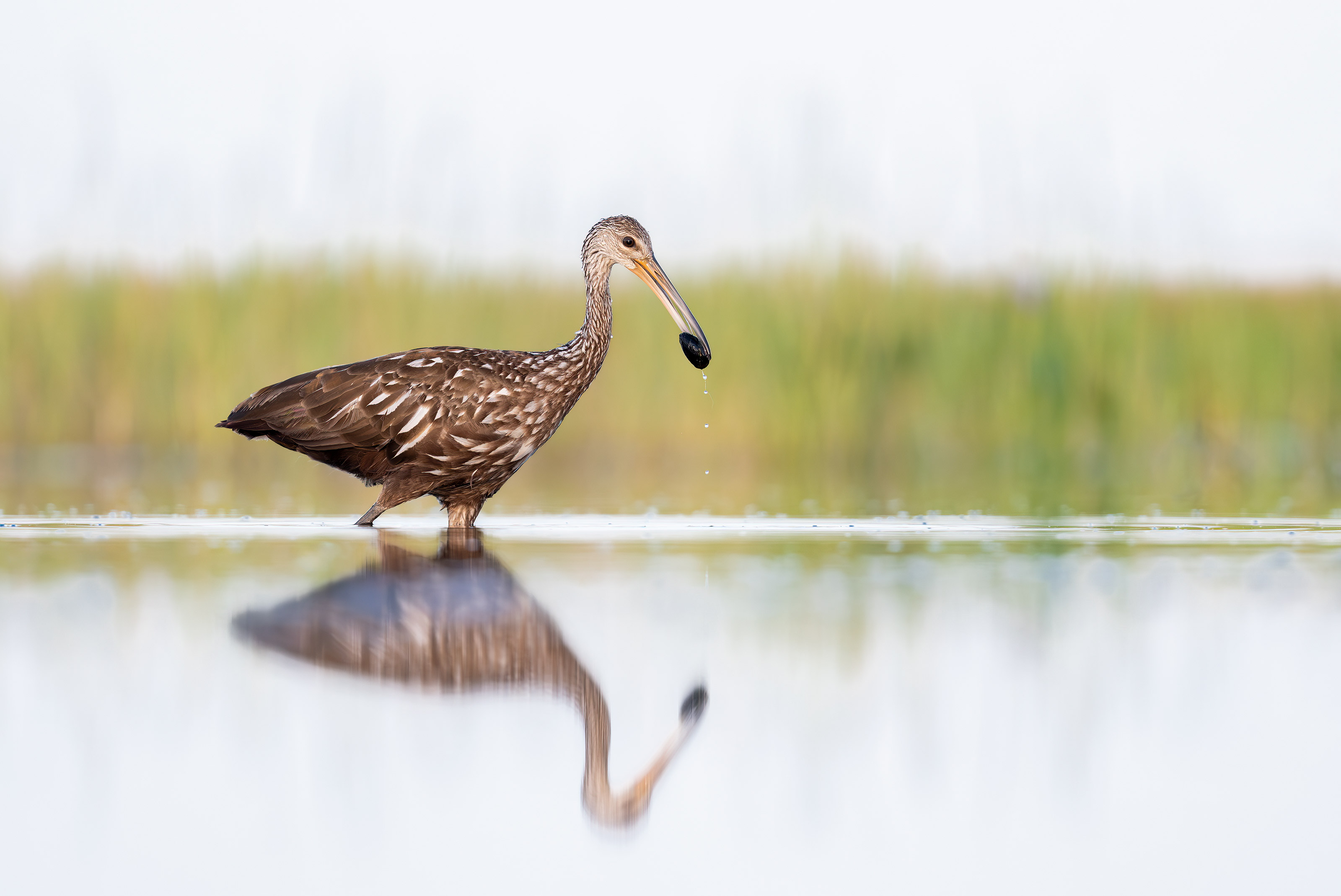
This image was also created by yours truly on 30 June 2026 at Indian Lake Estates, FL. Seated on two pillows atop a milk crate and working off the titled rear monitor, I used the handheld Sony FE 300mm f/2.8 GM OSS Lens (Sony E) and The Latest Greatest Sony Flagship Body, the a1 II Mirrorless Camera in APS-C crop mode). The exposure was determined via Zebras with ISO on the Thumb Wheel. ISO 2500: 1/2500 sec. at f/2.8 (wide open) in Manual mode. AWB at 7:19:12am on a then very cloudy morning. Tracking Zone/AF-C with Bird Eye/Face Detection enabled performed perfectly. Image #5: Limpkin with freshwater mussel |
Working Right at Water Level
Holding the lens at most two inches above the surface of the lake yielded an intimate view of the Limpkin with its breakfast. The small size and light weight of the 300 made this pretty darned easy.
|
|
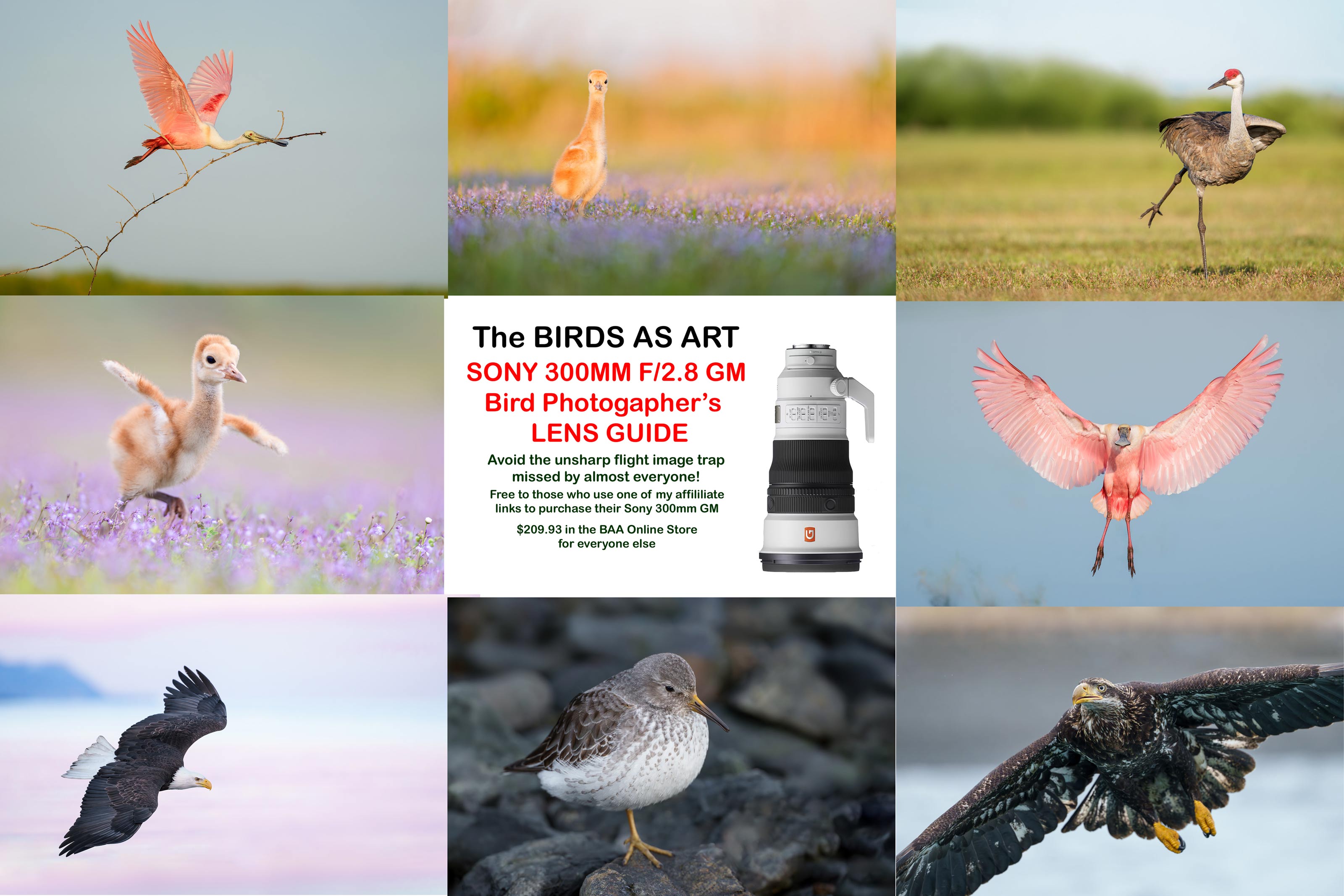
For those who did not use my link to purchase their Sony 300mm f/2.8 GM lens, you can order your a copy here for $237.93. Click on the image to enlarge and to be able to read the fine print. |
The BAA Sony 300mm f/2.8 Lens Guide
Impressed by my (or Pat’s) Sony FE 300mm f/2.8 GM OSS Lens (Sony E) images? Use either my Bedfords or B&H affiliate link to purchase your Sony 300mm f/2.8 GM lens and shoot me your receipt via e-mail and request a copy of the first-ever BAA Lens Guide. I thought that it would take only minutes to create this guide, but I was dead wrong. In the process of creating it, I learned a ton about the lens. And even better, I discovered a simple yet potentially fatal flaw that was resulting in sporadically unsharp flight images. The set-up fix is simple. Just be sure to use one of my affiliate links and get the guide for free.
If not, you can purchase a copy here for $237.93. Yes, it never hurts to use my links and it never costs you one penny more. And if you contact me via e-mail before you make a major purchase, I can often save you some money.
Typos
In all blog posts and Bulletins, feel free to e-mail or to leave a comment regarding any typos or errors. Just be right :).










#1 for me. I like the dark moodiness in the image.
Me too 🙂
with love, artie
When I first started scrolling I thought #1 must be the wide one, but nope #2 was. I like the tight wide #1! Why? Because there is just enough reflection of both the bird and branch. Not too much.
#5 probably my fav. Love the get down lows!
Ah, someone on the same page as me 🙂
with love, artie
Art: I prefer the #2 egret image because there the environment is shown to greater advantage.
My favorite image today is #4, the limpkin flying, because of the detail on the wings and the position of the feet.
Typos:
“do you REFER Jonathon”
“sat on my milk for”
“wound up KEEP five”
Thanks, Pat. Your comments are always appreciated though we seldom agree 🙂
You are getting great at the copy editing! Thanks for that too. All have been fixed.
with love, artie
I like #1 but I like it even more by cutting out the bottom half of the image with the reflection, making it a more horizontal composition. I also like #2, which has a haunting quality to it.
The crop you suggested is an option. But I like it as is.
Thanks for leaving a comment.
with love, artie
I prefer the wider egret shot because I prefer the secondary (empty) perch with the moss on it over the tighter image. In the tighter 600/4 image with the lighter, broken end of the larger perch, attracts my eye as a distraction.
Image number 4 is my favorite with the beautiful wing position, head angle and clean background.
Thanks as always, Tom. Your comments are always appreciated.
My thoughts in the next post 🙂
with love, artie