
Summary
In today’s post, the mystery is solved: I reveal which image was the real-deal capture and which was a composite. You’ll also see an additional, highly instructive frame from each sequence — along with the active AF point on the pelican photo. Plus, I am proud to share the behind-the-scenes creation details of the “Brown Pelican in Muted Sunball” image.
Note: Copy editing, re-crafting, technical refinement, and formatting for this blog post were assisted by Gemini AI. I have never used, and will never use, Generative AI on my photographs.
What’s Up?
Despite challenging wind-against-sun conditions every morning and most afternoons, Alvin “Red” Stevens, Jim Dolgin, and I, worked long and hard and everyone created more than a few excellent images. Jim loves his Sony 300mm f/2.8 GM lens and used it exclusively, almost always with the 1.4X TC. Red quickly fell in love with his brand new Sony 100-400mm f/4.5 GM OSS and used it every session at times with the 1.4X TC. I did the same but for three mornings when I went with the tripod mounted 600mm f/4 GM lens with the 1.4X TC for sunrise. As with the pelican in the sunball images below 🙂
On Thursday, we were back at our wonderful AirBnB by 9:00am and out by 10:30. Jim took I-95 all the way down to his home on PGA National in Palm Beach Gardens, Florida. I dropped Red at JAX for his flights back to Birmingham, AL and then headed home. Maps gave me two chances to avoid a big accident but ever-the-optimist, I figured that it would be cleared by the time I got there. Not! It will be the last time that I will make that mistake. I did not get home until 4:08pm. I caught up on the two World Cup games and hit the sack early.
I will be sharing some Jacksonville tern and Laughing Gull images with you here very soon.
Today is Friday 17 July 2026. After my walk in the dark I will be headed down to the lake early to try and defeat the summer bird photography doldrums here at ILE. Then I will be getting back to work on my 2025 taxes, catching up on e-mails, and optimizing a few images. Whatever you opt to do, I hope that you too choose to have fun and enjoy life. Please remember that happiness is a choice Byron Katie – The Work.Com
If an item — a Delkin flash card or reader, a Levered-clamp FlexShooter Pro, or a Wimberley lens plate or low foot — for example, that is available from B&H and/or Bedfords, is also available in the BAA Online Store, it would be great, and greatly appreciated, if you would opt to purchase from us. We will match or beat any price. Please remember also to use my B&H affiliate links or to earn 3% cash back at Bedford by using the BIRDSASART discount code at checkout for your major gear purchases. Doing either often earns you free guides and/or discounts. And always earns my great appreciation.
Gear Questions and Advice
Too many folks attending BAA IPTs and dozens of photographers whom I see in the field and on BirdPhotographer’s.Net, are — out of ignorance — using the wrong gear, especially when it comes to tripods and more especially, tripod heads. And the same is true in spades when ordering new camera bodies or lenses. My advice will often save you some serious money and may help you avoid making a seriously bad choice. Please know that I am always glad to answer your gear questions via e-mail. If you are desperate, you can try me on my cell at 863-221-2372. Please leave a message and shoot me a text if I do not pick up.
Canvas Prints
If you have a great place for making canvas prints, please shoot me an e-mail with a link to the website.
|
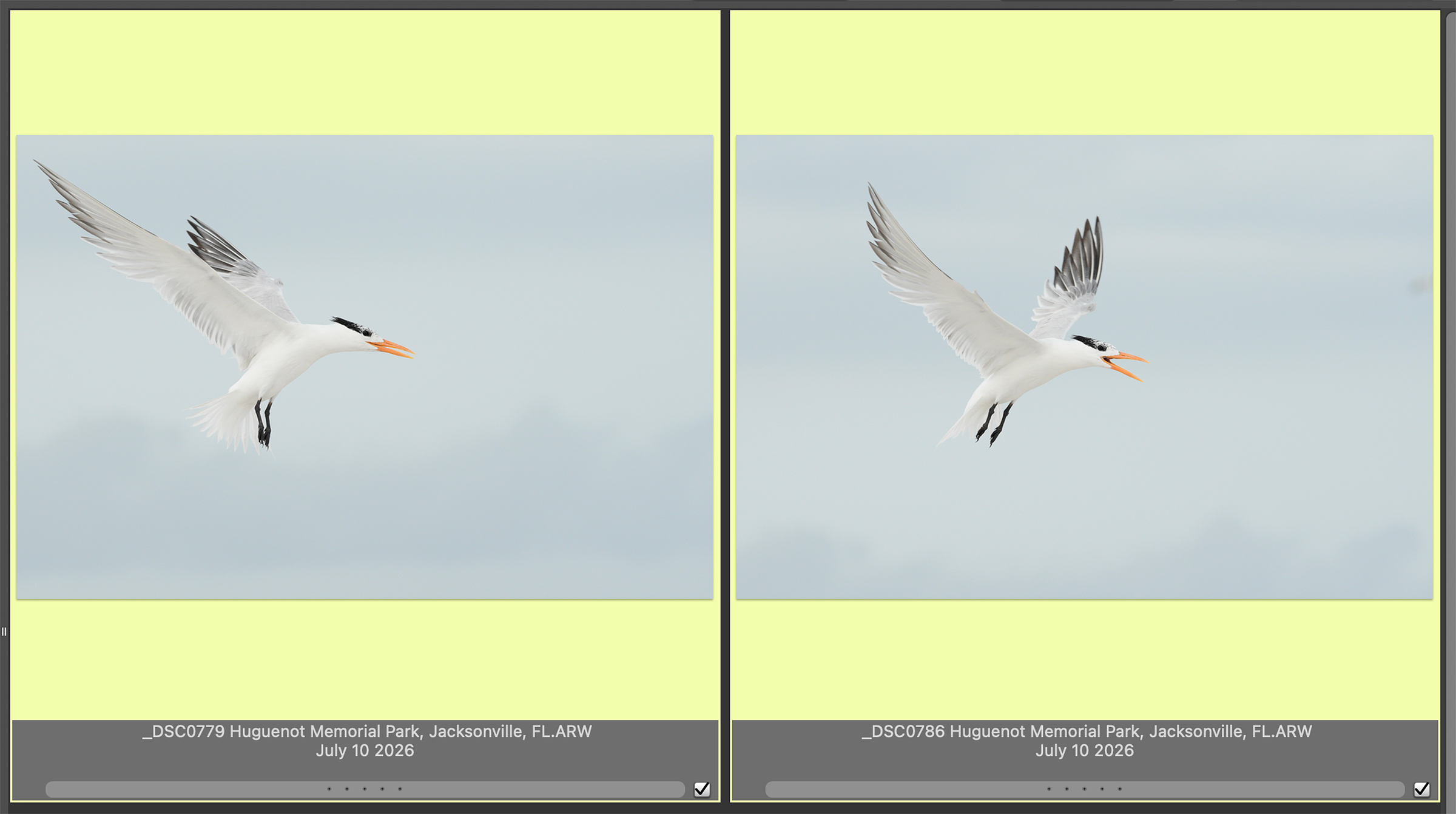
Screen Capture #1: Two frames (RAW files) of the same Royal Tern — seven frames apart image |
One Bad Head Angle, One Good Head Angle
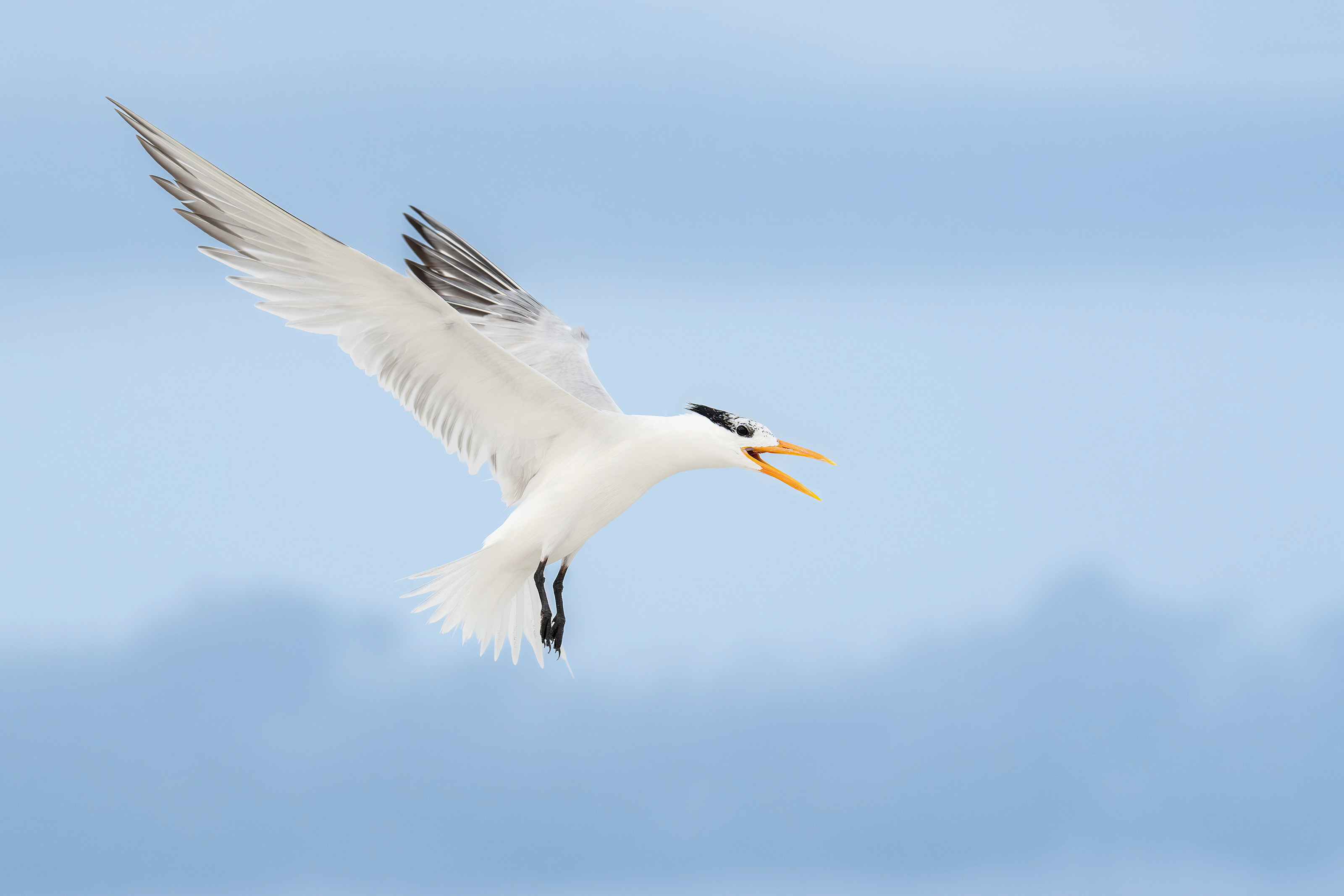
The bird in the first frame is facing away from the viewer. Eight frame later, the bird had turned its head toward me. So, to create the tern image featured in the last blog post, Image Creation and Optimization Ethics in Today’s World, I made of Quick Mask of the head of the tern in _DSC0786 and moved it roughly into place in _DSC0779. Working large, I positioned the replacement head perfectly, refined it with a Regular Layer Mask, and lightened the Quick Mask until the sky matched perfectly. Easy peasy.
|
|
The two frames for this photo illustration were created on 10 July 2026 by yours truly at Huguenot Memorial Park northeast of Jacksonville, FL. Standing at full height, I used the handheld Sony FE 100-400mm f/4.5 GM OSS lens (at 229mm/effective focal length: 343.5mm) and The Latest Greatest Sony Flagship Body, the a-1 II Mirrorless Camera (in APS-C mode). The exposure was determined by Zebras with ISO on the rear wheel. ISO 1600: 1/3200 second at f/5.6 (stopped down 2/3 stop in error) in Manual mode. AWB at 6:55:18pm on a mostly cloudy afternoon. Wide/AF-C with Bird-Eye/Face Detection performed perfectly. Click on the image to enjoy a larger high-res version. Image #1: Royal Tern calling above a creche of large chicks/head replaced |
This is the Phony Image
This is the first image that appeared in the last blog post here. It was — as noted above, created from two photographs. By any standard is not a photograph. In my book, it is a photo illustration.
|
|
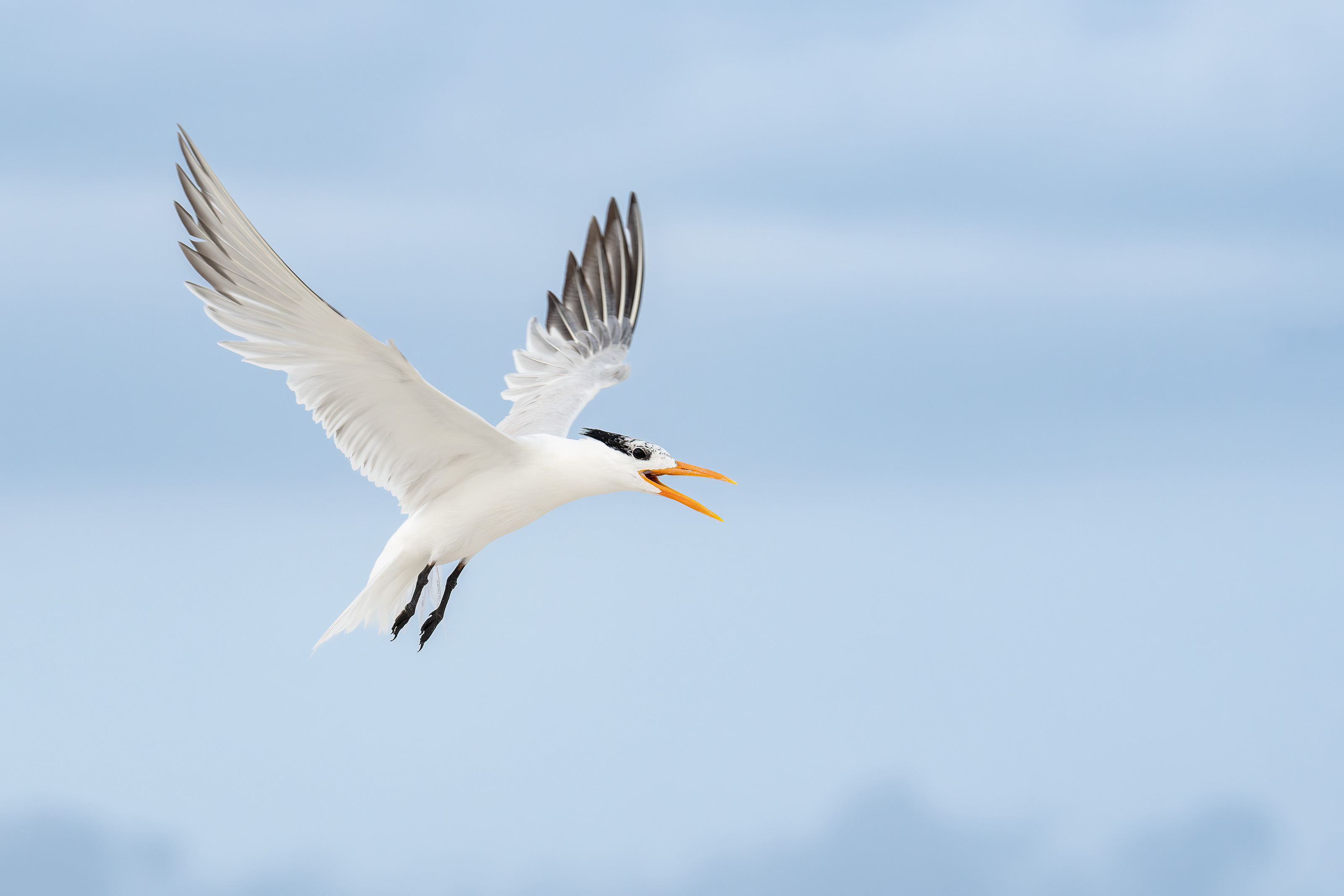
This photograph/photo illustration (?) was created on 10 July 2026 by yours truly at Huguenot Memorial Park northeast of Jacksonville, FL. Standing at full height, I used the handheld Sony FE 100-400mm f/4.5 GM OSS lens (at 229mm/effective focal length: 343.5mm) and The Latest Greatest Sony Flagship Body, the a-1 II Mirrorless Camera (in APS-C mode). The exposure was determined by Zebras with ISO on the rear wheel. ISO 1600: 1/3200 second at f/5.6 (stopped down 2/3 stop in error) in Manual mode. AWB at 6:55:18pm on a mostly cloudy afternoon. Wide/AF-C with Bird-Eye/Face Detection performed perfectly. Click on the image to enjoy a larger high-res version. Image #2: Royal Tern calling above a creche of large chicks |
This — 8 Frames Later, is the Real Deal
In this image, a photograph in my book, the bird is doing exactly what it was shown doing in the RAW file. I improved the sky by adjust the color, saturation, and tonality via a mask (Select Object Invert) in Adobe Camera Raw (ACR). I would not enter this image in a contest that allows only global adjustments. Do understand that with all of Ansel Adams famous images, the artist made selective adjustments. That is why I feel that such stringent “global adjustments only” rules should be changed. It is very likely that they are broken often in the biggest international contests.
All Things Considered
Which do you feel in the stronger final image, #1, the tern with the new head and head angle, or #2, the very similar but real photograph. Why?
|
|
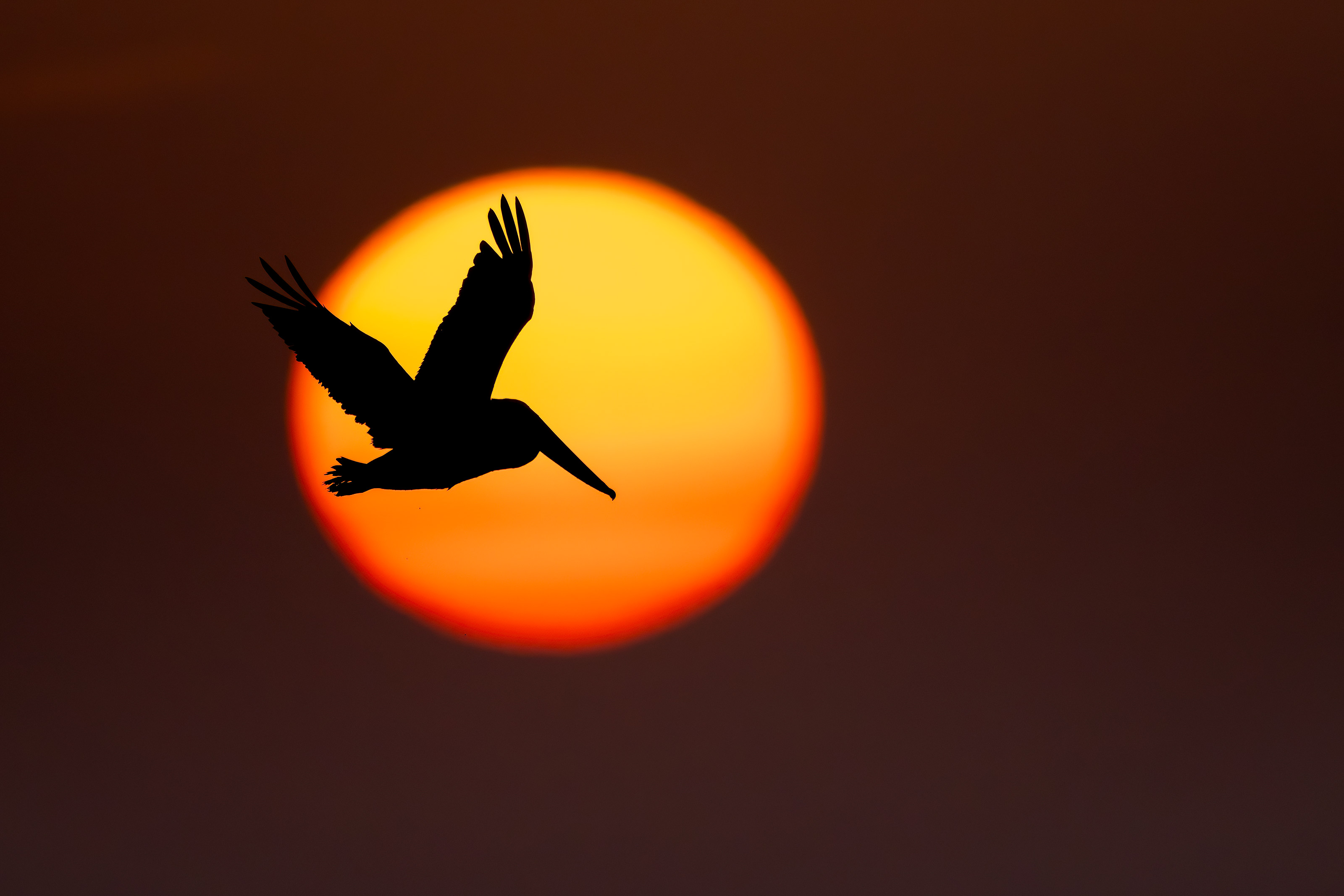
This (real) photograph was created on 11 July 2026 by yours truly at Huguenot Memorial Park east of Jacksonville, FL. Standing at full height, I used the Robus RC-5570 Vantage Series 3 Carbon Fiber Tripod/Levered-Clamp FlexShooter Pro-mounted Sony FE 600mm f/4 GM OSS lens with the Sony FE 1.4x Teleconverter, (840mm/effective focal length: 1260mm) and The Latest Greatest Sony Flagship Body, the a1 II Mirrorless Camera in APS-C crop mode. The exposure was determined by Zebras with Exposure Compensation (EC) on the thumb wheel. Multi Metering +0.3 stops. AUTO ISO set ISO 2500: 1/3200 second at f/5.6 (wide open) in Shutter Priority mode. AWB at 6:37:48am on hazy morning about five minutes after sunrise. Wide/AF-C with Bird-Eye/Face Detection performed perfectly. Click on the image to enjoy a larger high-res version. Image #3: Brown Pelican in muted sunball |
The “Obvious” Phony. Not!
As the very knowledgeable Cliff Beittel suggested, many folks would assume that Image #3, above, (Image #2 in the last blog post) was a digital composite. It is however, a real photograph created in camera. The white and back points as well as the color contrast, and saturation were adjusted globally during the raw conversion in ACR. The extraneous gull was eliminated with a modest crop.
FYI
Manipulating a photograph means changing an original picture by adding, removing, or reshaping its elements to create a new scene. (AI Overview).
That is exactly why I take issue with folks who would state the Images #2 and #3 were “manipulated.” They were optimized. All of the color and textures were contained in the RAW file and enhanced during processing. In nearly all of its varied uses, the word “manipulate” suggests an intent to deceive and/or a variety of other negative implications. Th only folks doing any deceiving are those who opt not to divulge how and image was created and what they did with the original. The optimization process itself is not manipulation, it is enhancement.
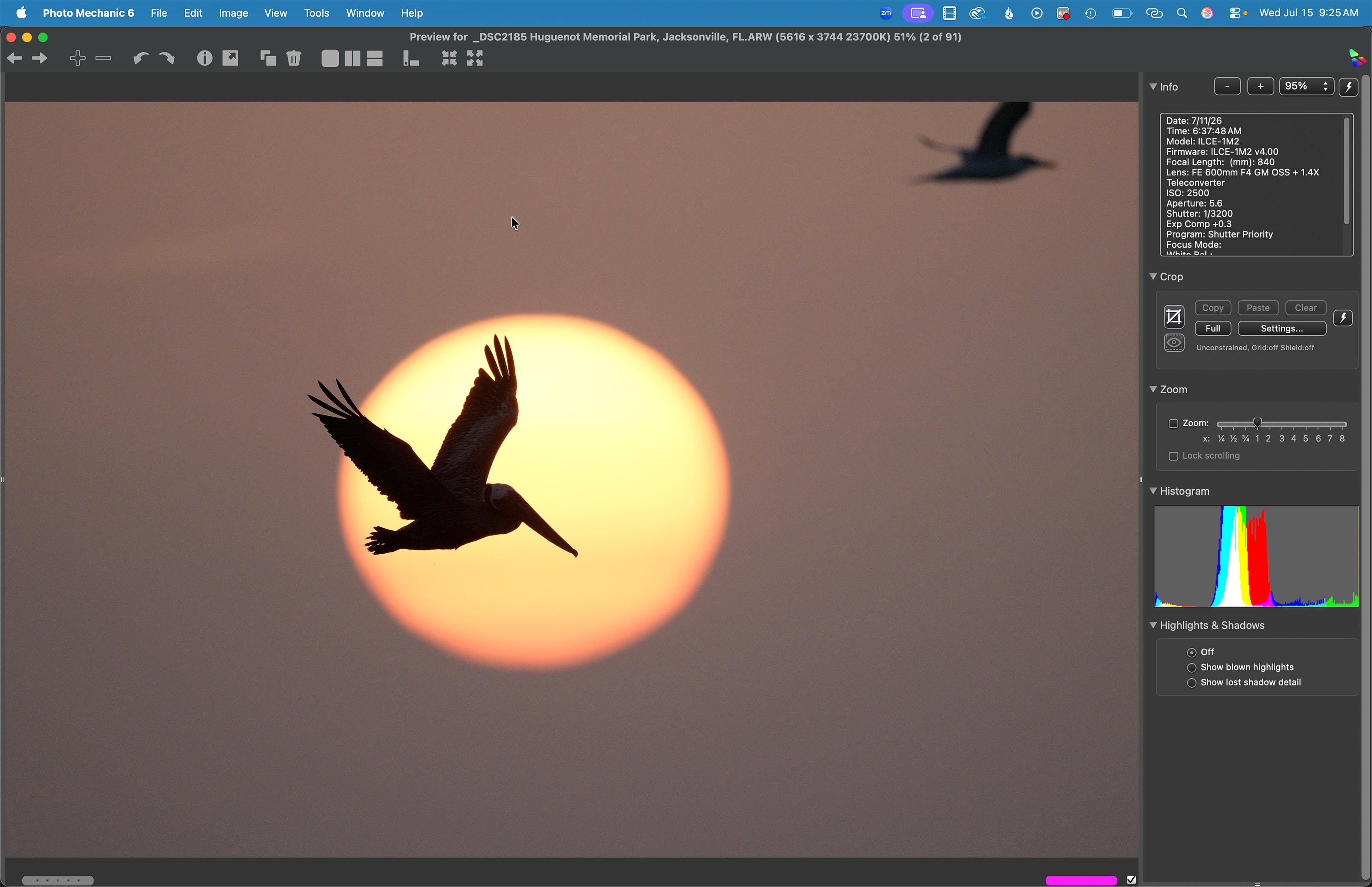
|
Screen Capture #2: The Photo Mechanic Screen Capture for the Brown Pelican in muted sunball image |
Exposing to the Right
As the sun fought through the haze it gained intensity so I kept reducing my Exposure Compensation to eliminate Zebras on the brightest part of the sunball. All that was left was having a pelican fly right through the sun. You cannot execute the shot unless you envision it 🙂 As noted in the previous blog post properly exposed to the right raw files will often appear flat and washed out, totally lacking color. The color, however, is there in spades in a digital file. It is the photographer’s job to bring such raw file to life. And some, like me, are quite passionate about it.
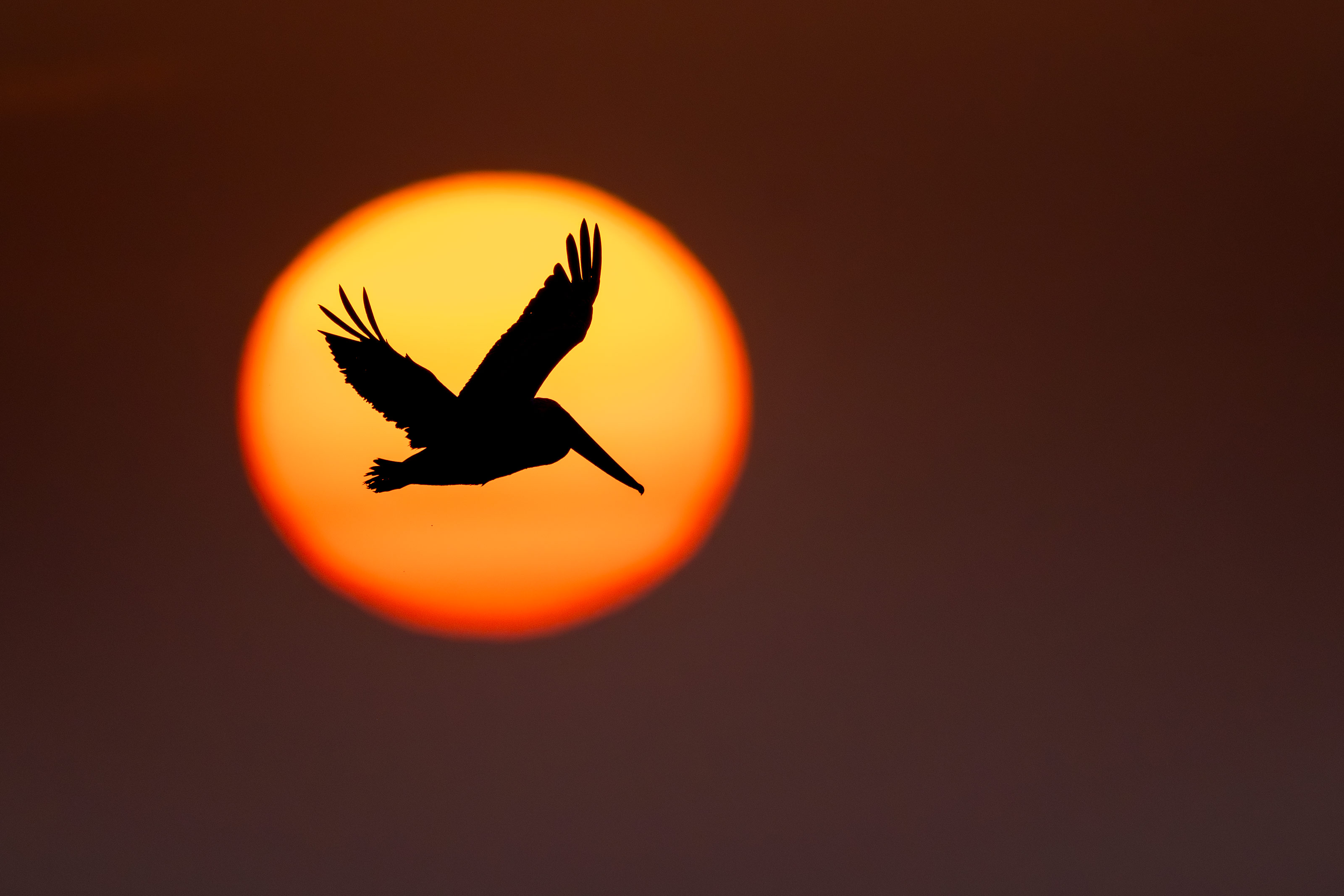
|
|
This (real) photograph was created on 11 July 2026 by yours truly at Huguenot Memorial Park east of Jacksonville, FL. Standing at full height, I used the Robus RC-5570 Vantage Series 3 Carbon Fiber Tripod/Levered-Clamp FlexShooter Pro-mounted Sony FE 600mm f/4 GM OSS lens with the Sony FE 1.4x Teleconverter, (840mm/effective focal length: 1260mm) and The Latest Greatest Sony Flagship Body, the a1 II Mirrorless Camera in APS-C crop mode. The exposure was determined by Zebras with Exposure Compensation (EC) on the thumb wheel. Multi Metering +0.3 stops. AUTO ISO set ISO 2500: 1/3200 second at f/5.6 (wide open) in Shutter Priority mode. AWB at 6:37:48am on hazy morning about five minutes after sunrise. Wide/AF-C with Bird-Eye/Face Detection performed perfectly. Click on the image to enjoy a larger high-res version. Image 4: The next frame: Brown Pelican centered in the muted sunball |
The Old Man and the Sunball
With a west wind on seven consecutive mornings, early morning silhouettes were on the menu often. Wind-against-sun conditions are terrible for traditional front-lit flight photography and this are ideal for creating strongly backlit images against richly colored skies. As you might have surmised above, I was looking for a bird to fly right through the sunball. Thirty seconds before I made the two images above, I called to David and Ray, “Did you see that. A pelican dove just past the sunball.” Then along came a second pelican flapping slowly right where I need it, right in my wheelhouse. Other than occasionally checking an exposure, I rarely chimp in the field. But I knew I had something good so I quickly reviewed the series and let out a happy yelp of joy when I saw this frame. David, seeing the handwriting on the wall, exclaimed, “I can’t believe it, the old man did it again.” That even before I shared the perfectly centered image with him and Ray on the back of my camera body.
We all thought that the centered image would be the bomb, but most folks who have seen both like the previous image in the series better. And that includes me. Which one do you like best, Image #3 or Image #4? Why?
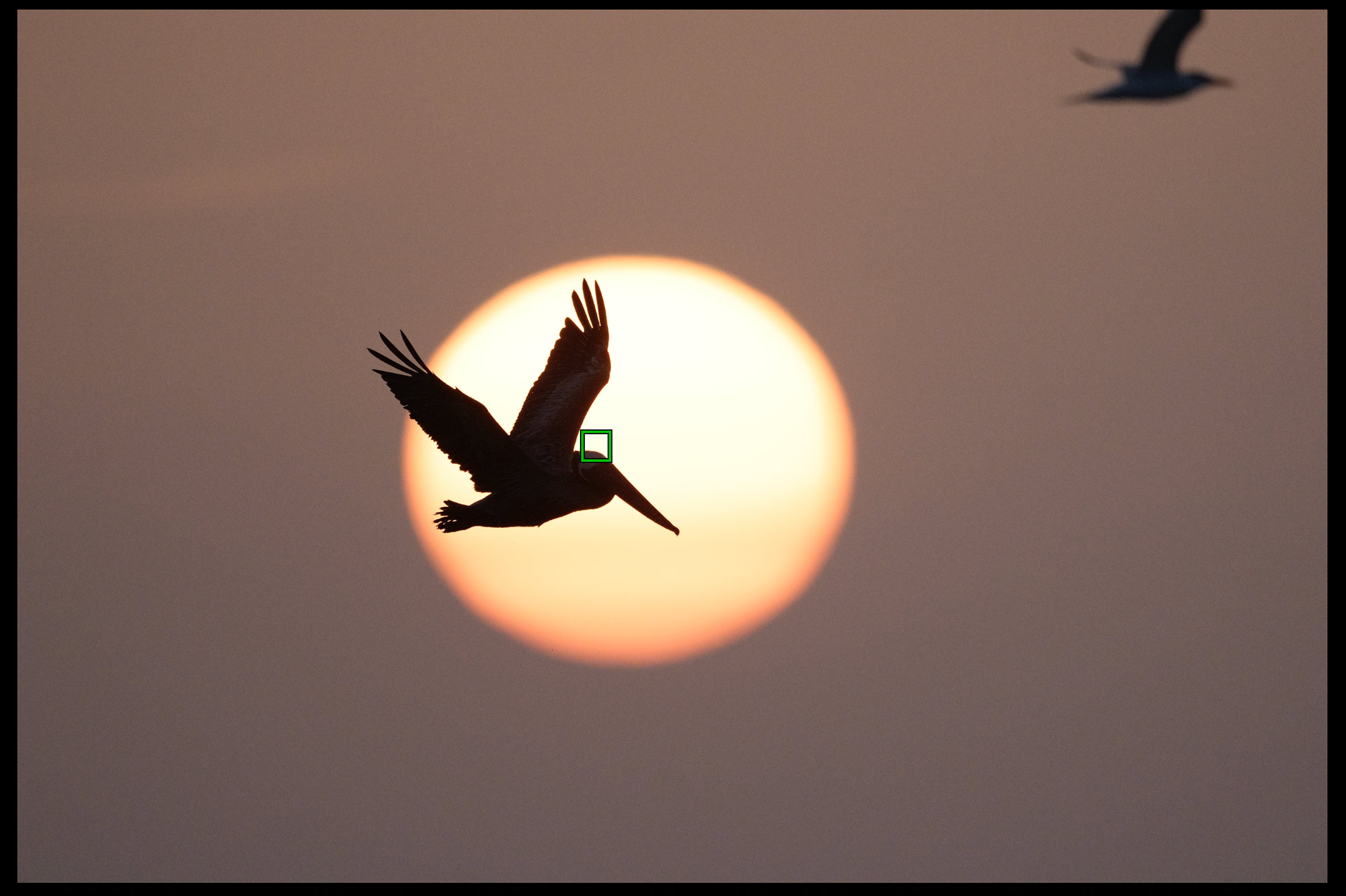
|
|
Note the position of the green AF box: not bad at all. Screen Capture #3: The IEDT Viewer Screen Capture for the Brown Pelican in muted sunball image |
For Steve
Steve left this comment (in part) at the last blog post:
It seems unlikely to me that even the miraculous Sony subject (sic: face/eye) detection AF was able to lock on to a “Bird-Eye/Face” while looking directly into the sun.
The truth of the matter is that the sun was quite muted by the fog; that allowed the AF system to gain and hold focus easily. That said, the Sony a-1 ii is the best camera I have ever used when it comes to acquiring and maintaining focus on birds set against the sun’s blasting highlights reflected off water. All of the other dSLR and mirrorless bodies that I have used over the years struggled so badly in the super-bright backlit situations that I often resorted to manual focus for static subjects. The a-1 ii gets it right nearly all of the time.
Typos
In all blog posts and Bulletins, feel free to e-mail or to leave a comment regarding any typos or errors. Just be right :).








Awe, you tricked us with the pelican half in the sun. If you showed us #4 above (the next frame) EVERYONE would say it’s fake. Nice headfake, lol
You stated “The optimization process itself is not manipulation, it is enhancement.”
I agree, just like developing film in the “dark”room.
1 and 4 for me. On #1, I like the elongated “greyhound” look of the tern and especially the splayed tailfeathers. And while I understand using the label “photo illustration,” the image doesn’t change natural history and I wouldn’t be upset if it wasn’t labeled. On #4, though the centered pelican may look more contrived, it’s also more BAA–the very reason one might be tempted to contrive it–and it’s nice for older eyes to to see both wings clearly.
You mention that you use Gemini Ai and you very emphatically state “I have never used, and will never use, Generative AI on my photographs.”
You obviously feel strongly about the statement, but would you mind sharing your reasons?
Murray
Murray,
My understanding is that Generative AI creates stuff that you tell it to create. That is not photography.
artie
Hi, Artie. I prefer images 2 and 4. The tern’s right wing seems too long in image 1, and more proportional in image 2. I can’t swear that I’m not influenced by knowing that images is a “real” photograph, though. On images 3 and 4, I get why some people like the sense of movement given by image 3, related to the idea of not putting a bird’s head in the middle of the frame of a portrait, instead giving it space in the direction it’s facing. But the framing in image 4 is so perfect that it makes the mage better for me.
I too prefer the image with the pelican left of center. It creates a much stronger impression of the bird moving left to right.
One question – do you compose the photo using the rear LCD to prevent damaging your eye?
Thanks, Bob. Me too. No need because the sun was really well muted. If it is a clear sunrise I know that it is not good to look at it through the lens — if the world looks purple you risk serious damage. And if you try that using the rear screen you may risk damaging the sensor.
In a word: don’t!
Also: in the first pelican image it seems that the bird is not facing away as much as in the second image …
Are you talking about DSLR here? In mirrorless cameras you can’t see through the lens because both rear LCD and viewfinder are kind of monitors located between your eye and the sun. Light passes directly onto the image sensor not your eye.
It was great to take part in that moment.
Thanks. Especially for me 🙂
with love, a