
Support BIRDS AS ART with your Everyday Online Shopping
Using the BAA Tip Jar Costs You Nothing
If you are like me, you enjoy the convenience of shopping online at Amazon without having to drive into town. The prices are competitive, and you can return anything you purchase for any reason (as long as you have not wrecked it).
If you enjoy learning from from the blog posts, the YouTube videos, and the Instagram posts, or simply love being inspired by the images, the simplest and easiest way to support my efforts at BIRDS AS ART at no cost to you, is to use my generic Amazon link:
Whenever you make your routine household purchases — from groceries and coffee to backup batteries, household supplies, or electronics, making it a habit to click on our link first helps keep things running smoothly here. And again, it never costs you one penny to help me out.
Click here or on the Great (Photographic Accessory) Stuff tab on the lower, orange-yellow menu bar at the top of each blog post to learn about my favorite photo accessories. And more.
This blog post took 3 1/3 hours to create not including the time spent photographing, picking my keepers, and optimizing the best images.
Important Note
As an Amazon Associate I earn a small percentage from qualifying purchases whenever you use my Amazon links. Please make it a habit. 🙂
Your Call?
Which two of today’s eight featured images are your favorites? Why did you make your choices? Both my first and my second picks are set in stone — for good reasons 🙂
In the Last Blog Post
Thanks to the very few folks who commented on the last blog post. They loved 1 (thanks, Sandy!), 3 — especially, 4 ,and 7. And so did I. Along with 2, 5, and 6. My top two picks were #6, the Great Egret preening a single feather — for its beauty and elegance, and #7, the backlit red-shouldered for the shaded side detail revealed by ACR masking, a life-changing technique.
What’s Up?
New BAA friend Will, a recent convert to Sony, flew from Tucson to Kissimmee Gateway Airport on Sunday afternoon. My right-hand man, Jim Litzenberg, picked him up on his way to work and ferried him to Indian Lake Estates. After dinner, Will and I walked the pier with our Sony FE 100-400mm f/4.5–5.6 GM lenses and enjoyed a few great motion-blur opportunities with flocks of grackles.
On Monday morning, we worked the local gentry — Crested Caracara, Turkey Vulture, Boat-tailed Grackle, and Sandhill Crane — while Will learned a ton of core fundamentals. That afternoon, we drove over to St. Pete and had a fantastic session at Fort De Soto, working with Sandwich Terns, a single Snowy Egret, and a variety of shorebird species. As the light softened, the photography got better and better.
Things were slow at North Beach on Tuesday morning, but my morning backup spot paid off handsomely with a tame Willet, a few Black-bellied Plovers, and a very cooperative juvenile dark-morph Reddish Egret — my first ever! That afternoon, we concentrated on Brown Pelicans in flight.
Wednesday was largely a repeat of Tuesday, with Will continuing to learn, absorb, and execute. In just three days, his images improved by leaps and bounds; I’ll be sharing a few of his photos here soon. Unfortunately, Will had to head home early Thursday morning due to a family emergency.
On Wednesday afternoon, Will kindly loaned me his Sony a7R VI — the alleged poor man’s Alpha 1 II. I was so impressed that I’m already in the process of ordering one so I can enjoy those 61 MP files and write a comprehensive user’s guide for it. I’ll share a few sample images and initial thoughts here shortly, followed by lots more after my own copy arrives.
Ironically, Thursday morning at North Beach was stellar —nthough I was nearly carried off by hordes of mosquitoes despite a healthy breeze out of the northeast!
Today is Friday, 16 October 2026. I’m heading back to North Beach early, then returning to the Airbnb for breakfast and a shower before making the drive back to Indian Lake Estates. Whatever you opt to do today, I hope you choose to have fun and enjoy life.
Please remember that happiness is a choice — Byron Katie – The Work.Com
If an item — a Delkin flash card or reader, a Levered-clamp FlexShooter Pro, or a Wimberley lens plate or low foot — for example, that is available from B&H and/or Bedfords, is also available in the BAA Online Store, it would be great, and greatly appreciated, if you would opt to purchase from us. We will match or beat any price. Please remember also to use my B&H affiliate links or to earn 3% cash back at Bedford by using the BIRDSASART discount code at checkout for your major gear purchases. Doing either often earns you free guides and/or discounts. And always earns my great appreciation.
Gear Questions and Advice
Too many folks attending BAA IPTs and dozens of photographers whom I see in the field and on BirdPhotographer’s.Net, are — out of ignorance — using the wrong gear, especially when it comes to tripods and more especially, tripod heads. And the same is true in spades when ordering new camera bodies or lenses. My advice will often save you some serious money and may help you avoid making a seriously bad choice. Please know that I am always glad to answer your gear questions via e-mail. If you are desperate, you can try me on my cell at 863-221-2372. Please leave a message and shoot me a text if I do not pick up.
Adobe Camera Raw Masking Note
One or more targeted Adobe Camera Raw (ACR) masks performed magically to improve Images 1, 2, 3, 4, 5, 6, and 8. All as detailed in The Digital Basics IV Video Series.
|
|
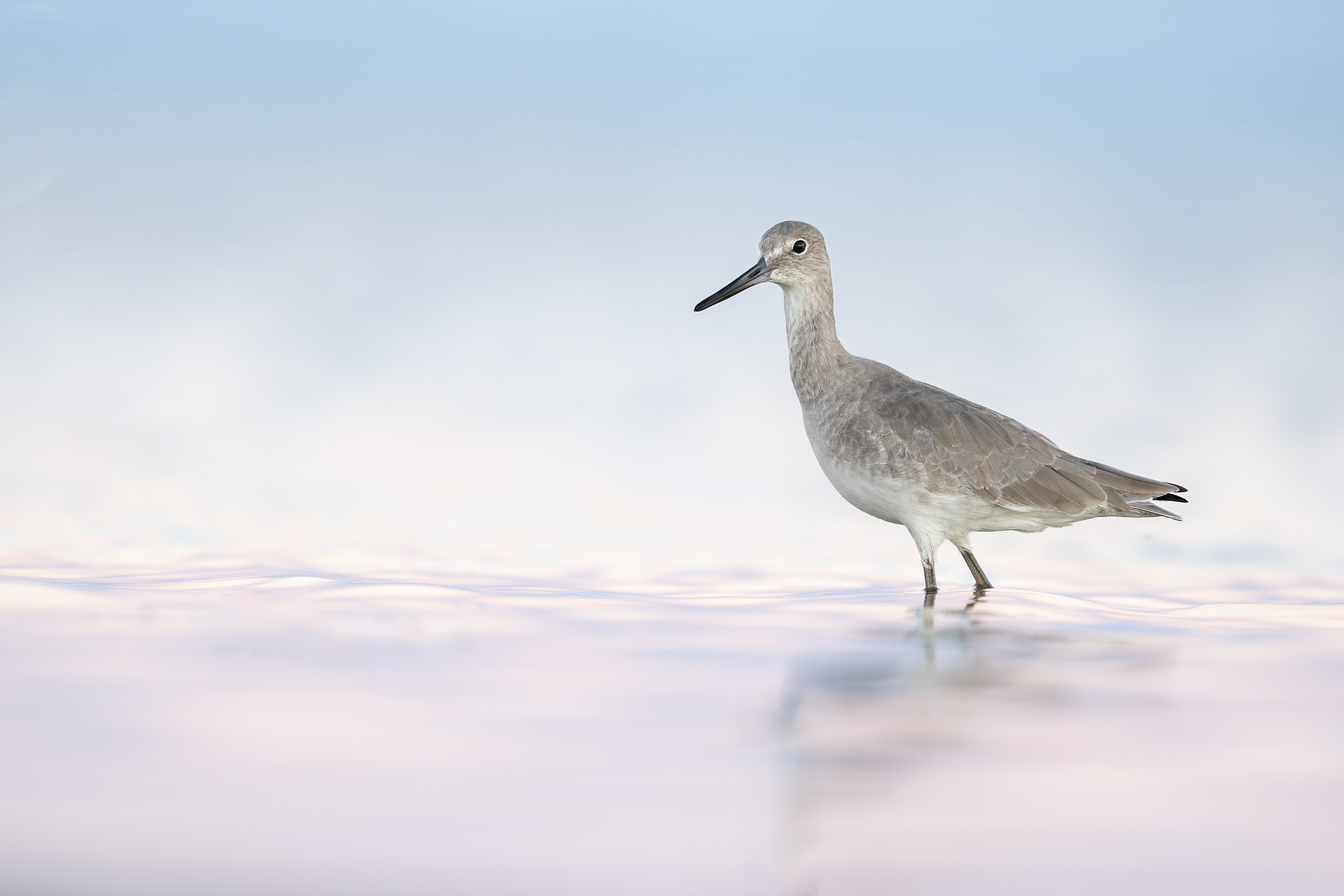
This image was created on 12 October 2026 by yours truly on a Fort DeSoto private In-the-Field session with new BAA friend Will from AZ. Seated on a Wide/AF-C with Bird-Eye/Face Detection performed perfectly. Click on the image to enjoy the larger, inexplicably sharper high-res version. Image #1: Willet in winter plumage |
Pretty Darned Good at +2 1/3 stops on the Analogue Scale!
Have you ever overexposed by 2 1/3 stops?
With faint Belt of Venus colors in the western sky and the birds shaded by the mangroves abutting the park road behind us, we had some lovely soft light to work with. Because the subject was lighter than a middle tone and set against a very bright background, adding 2 1/3 stops to the exposure suggested by the camera’s metering system resulted in a perfect exposure. A series of Adobe Camera Raw masks brought the image to life — I just love the pastel tones.
|
|
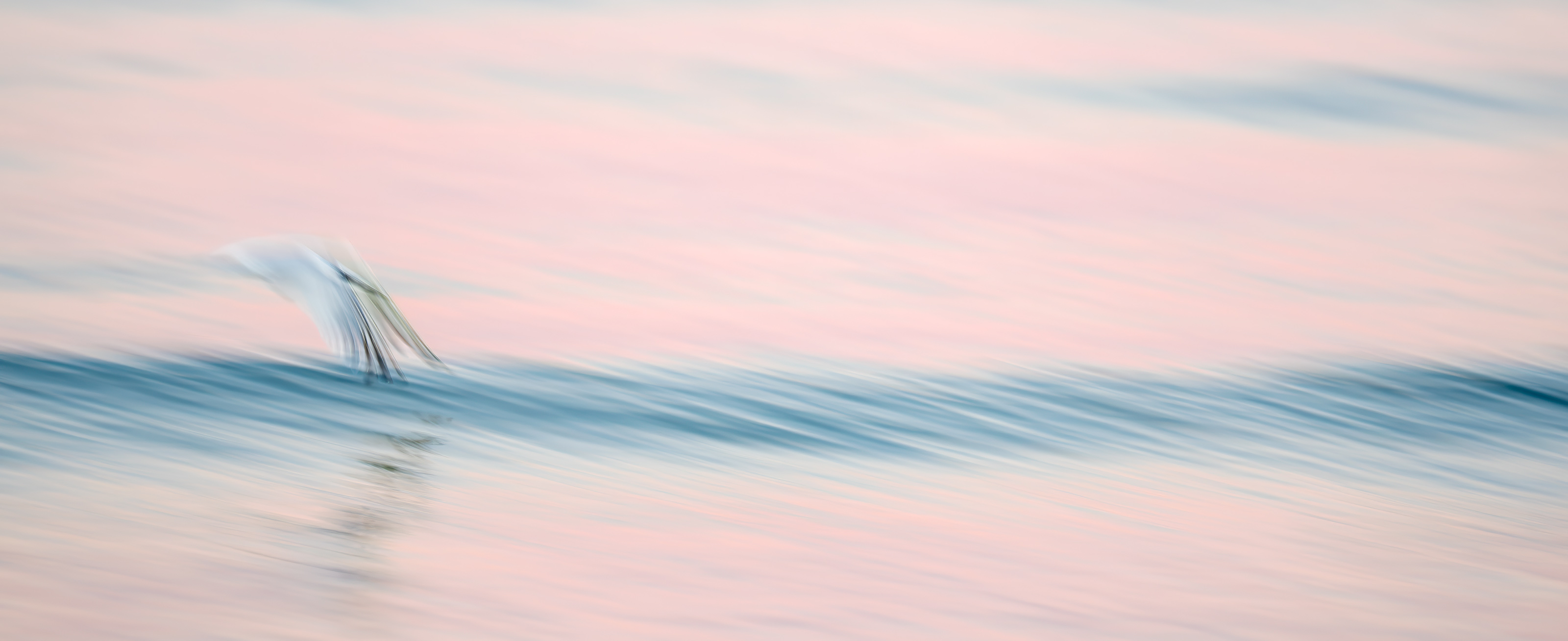
This image was created on 13 October 2026 by yours truly on a Fort DeSoto private In-the-Field session with new BAA friend Will from AZ. Standing at full height, I used the handheld Sony FE 100-400mm f/4.5 GM OSS lens (at 400mm) and The Latest Greatest Sony Flagship Body, the a-1 II Mirrorless Camera (in APS-C crop mode– effective focal length = 600mm). The exposure was determined by Zebras with Exposure Compensation (EC) on the Thumb Dial. Multi Metering +2.0 stops. AUTO ISO set ISO 320: 1/40 second at f/4,5 (wide open) in Shutter Priority mode. AWB at 7:29:40am on a clear morning Wide/AF-C with Bird-Eye/Face Detection performed perfectly. Click on the image to enjoy a larger high-res version. Image #2: Sandwich Tern blur |
Predawn Blurs in Shutter Priority Mode
Predawn Blurs in Shutter Priority Mode
If I’ve said it once, I’ve said it a thousand times: manual mode isn’t always best. When you’re at the beach during pre-dawn or at dusk, the entire world is pretty much light-toned. That makes Shutter Priority mode — paired with Auto ISO and Exposure Compensation (EC) on a convenient dial — the absolute best setup for creating pleasing motion blurs. And in a pinch, as with the next photo, you can simply bump your shutter speed up just a bit to create a sharp image of a static bird.
Belt of Venus Note
On both clear sunrises and sunsets, you will usually get some gorgeous pinks, purples, and blues in the sky opposite the sun — typically peaking 10 to 20 minutes before sunrise and 10 to 20 minutes after sunset.
|
|
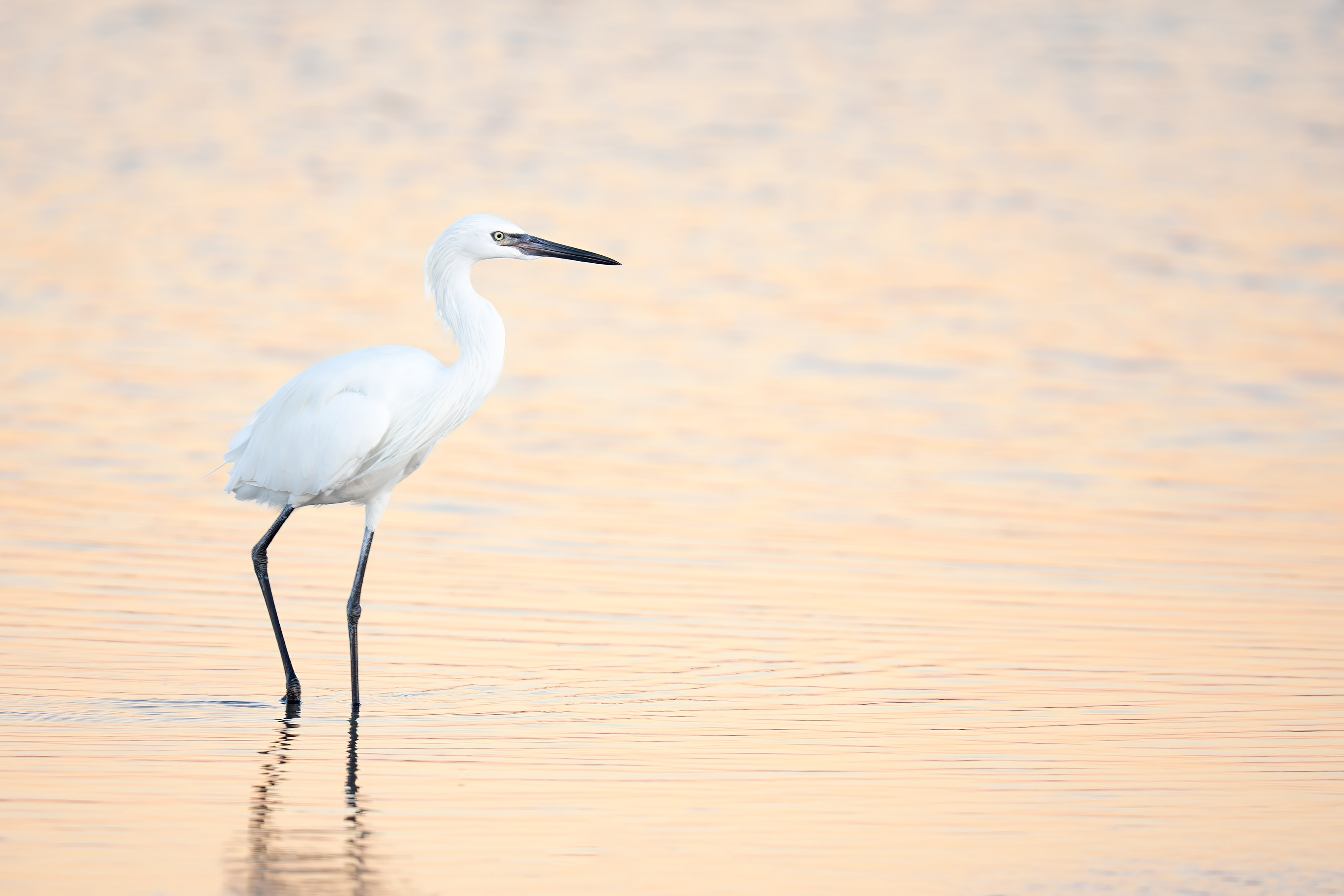
This image was also created on 13 October 2026 by yours truly on a Fort DeSoto private In-the-Field session with new BAA friend Will from AZ. Standing at full height, I used the handheld Sony FE 100-400mm f/4.5 GM OSS lens (at 400mm) and The Latest Greatest Sony Flagship Body, the a-1 II Mirrorless Camera (in APS-C crop mode– effective focal length = 600mm). The exposure was determined by Zebras with Exposure Compensation (EC) on the Thumb Dial. Multi Metering +2.0 stops. AUTO ISO set ISO 400: 1/100 second! at f/4,5 (wide open) in Shutter Priority mode. AWB at 7:36:15am on a clear morning before the sun cleared the mangroves. Wide/AF-C with Bird-Eye/Face Detection performed perfectly. Click on the image to enjoy a larger high-res version. Image #3: Reddish Egret white morph in pre-dawn light |
Creating Sharp Images in Blur Mode
Working in Shutter Priority mode with Auto ISO and Exposure Compensation (EC) on a convenient dial allows you to bump your shutter speed in a fraction of a second — making it infinitely more efficient than working in Manual mode. Why? You only need to change one parameter: the shutter speed. The camera takes care of the ISO. In Manual mode, you would have to change two parameters (shutter speed and ISO), which takes twice as long.
With this image, I thought I had raised the shutter speed to 1/125 sec., and I was thrilled when I checked the file and saw a razor-sharp eye at only 1/100 second at 400mm — due in large part to Sony’s superb Optical Stabilization (OSS) and In-Body Image Stabilization (IBIS) systems working together.
|
|
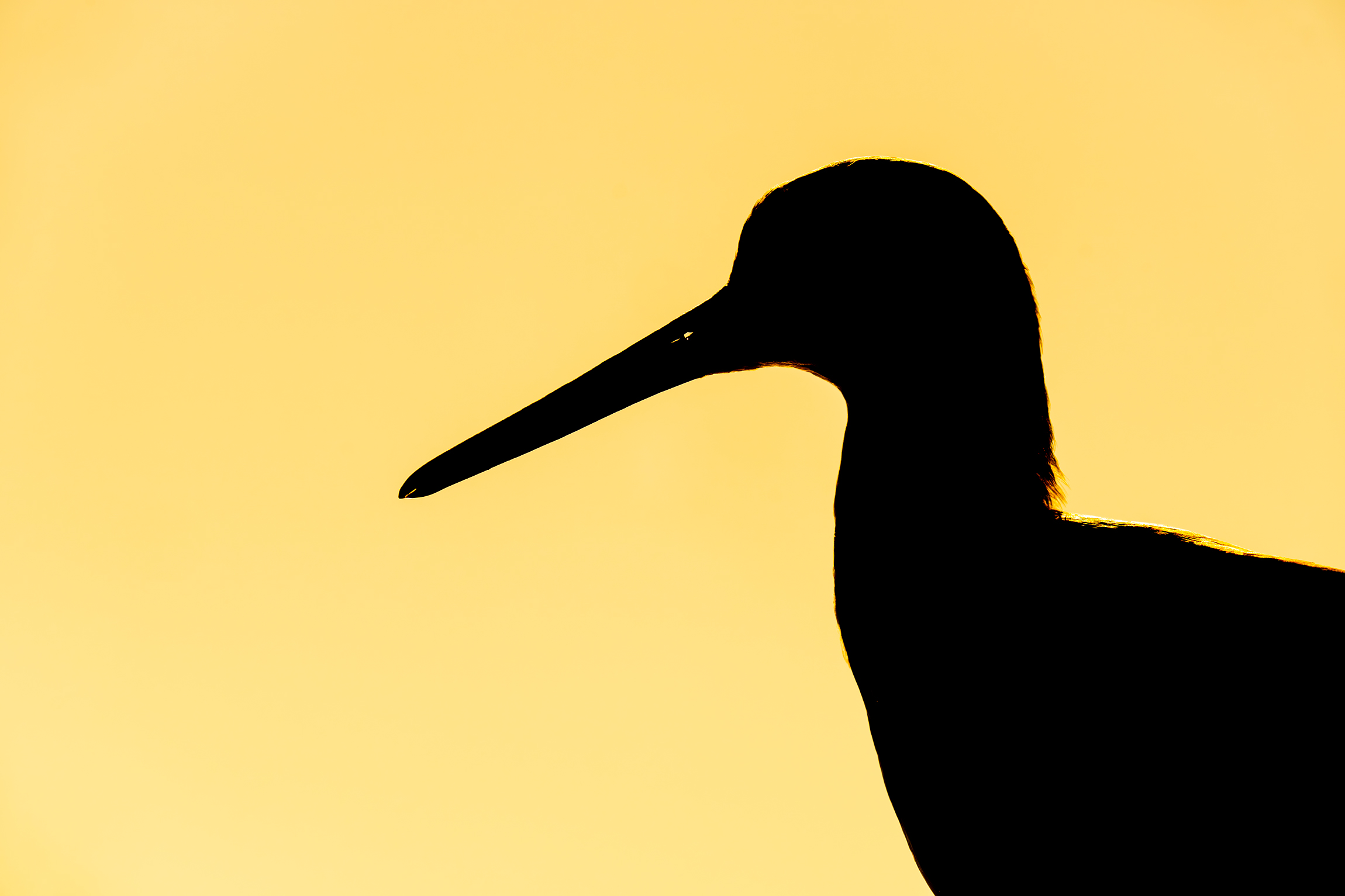
This image was also created on 13 October 2026 by yours truly on a Fort DeSoto private In-the-Field session with new BAA friend Will from AZ. Crouching a bit, I used the handheld Sony FE 100-400mm f/4.5 GM OSS lens with the Sony FE 1.4x Teleconverter (at 560mm) and The Latest Greatest Sony Flagship Body, the a-1 II Mirrorless Camera. The exposure was determined by Zebras with ISO on the rear wheel: ISO 800: 1/2500 sec. at f/9 (stopped down one stop) in Manual mode. AWB at 8:51:59am with some faint clouds by the sun. Wide/AF-C with Bird-Eye/Face Detection performed perfectly. Click on the image to enjoy a larger high-res version. Image #4: Willet — bright sky head portrait silhouette |
Sunny Morning White Sky Silhouettes
As mentioned here previously, the trick to bright-sky silhouettes is choosing your perspective so that the subject is lined up with the bright sky near the sun — without getting too near the sun or actually having the sun in the frame. When you properly expose to the right, the sky in the RAW file will appear completely white, but there is gold (or yellow) in them thar hills! You can easily bring that color back and make the sky pop using the Color Mixer, or better yet, via an Adobe Camera Raw (ACR) mask.
|
|
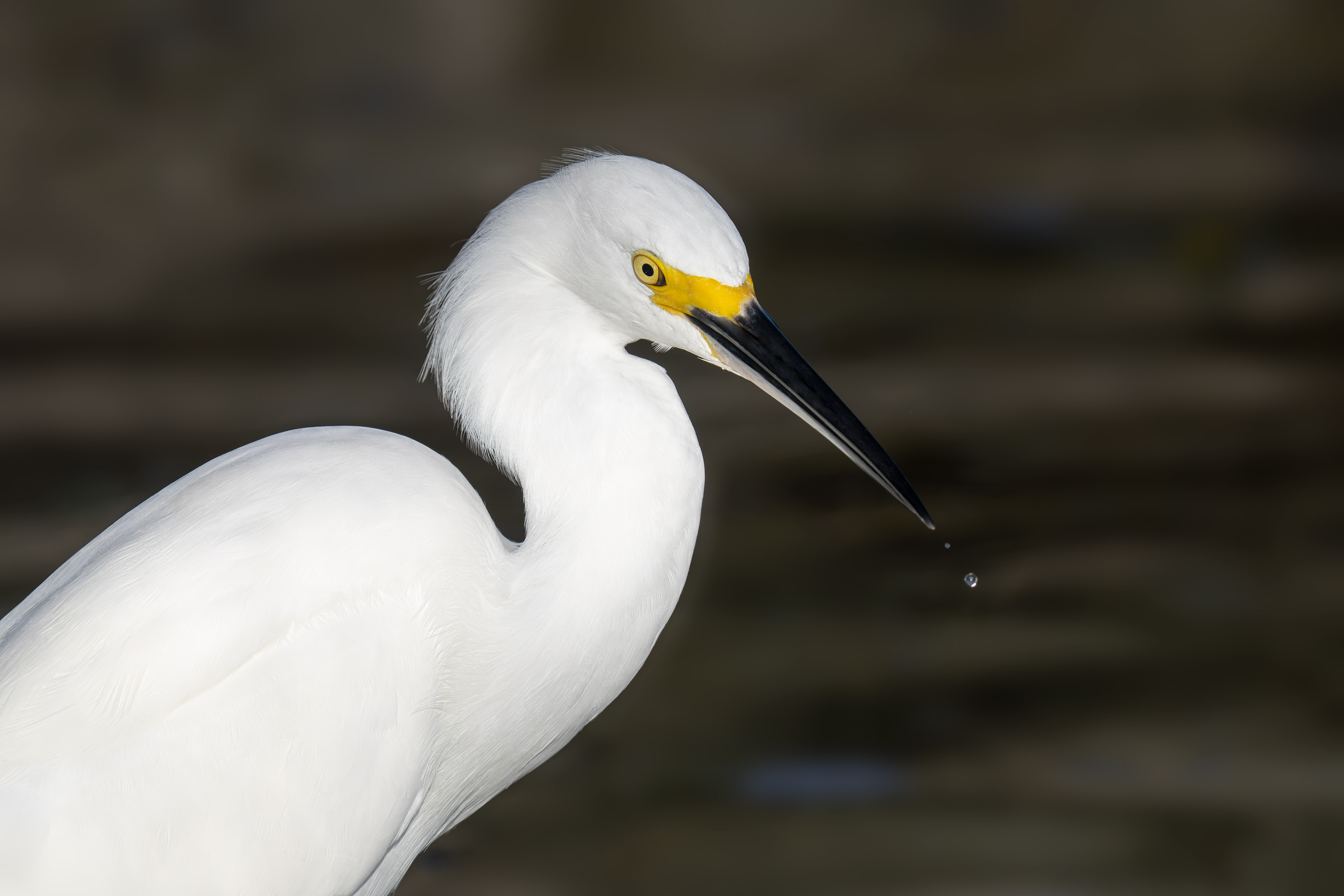
This image was also created on 13 October 2026 by yours truly on a Fort DeSoto private In-the-Field session with new BAA friend Will from AZ. Sitting on a jetty rock, I used the handheld Sony FE 100-400mm f/4.5 GM OSS lens with the Sony FE 1.4x Teleconverter (at 560mm) and The Latest Greatest Sony Flagship Body, the a-1 II Mirrorless Camera. AWB oat 9:05:26am on a clear sunny morning. Wide/AF-C with Bird-Eye/Face Detection performed perfectly. Click on the image to enjoy a larger high-res version. Image #5: Snowy Egret with water droplet falling from bill |
Finding the Dark Background
As is usually the case, there were plenty of Snowy Egrets hanging out by the small L-shaped jetty at my favorite morning backup spot. With the shallow Gulf waters sitting in the lee of the jetty and reflecting those dark rocks, I noticed a pocket of nearly smooth, black water. So, I picked a good rock to sit on and went to work. Being only about seven to ten feet from the birds and having plenty of light to work with, I stopped down two full stops for additional depth of field — without having to worry much about bringing up any unwanted background detail.
|
|
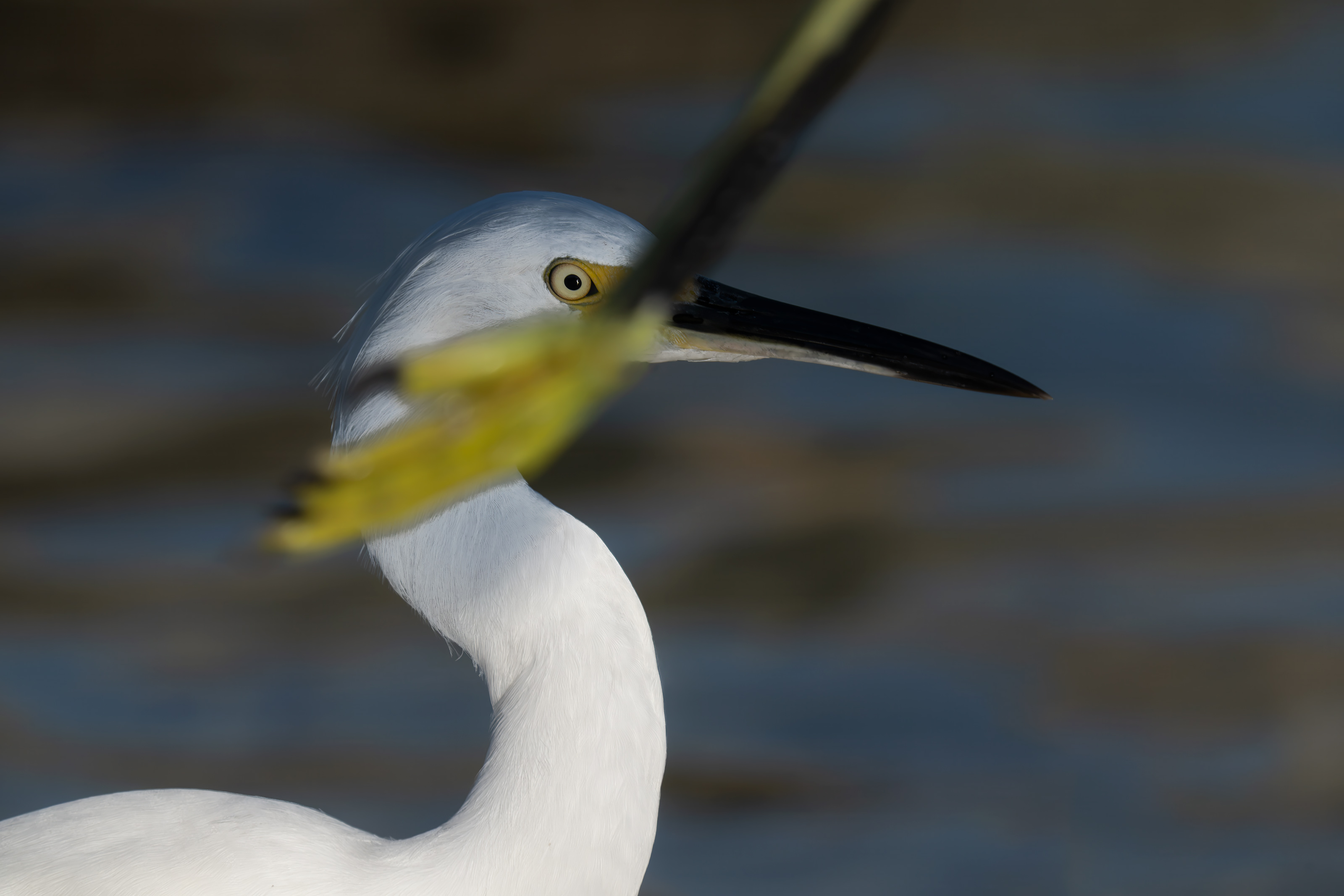
This image was also created on 13 October 2026 by yours truly on a Fort DeSoto private In-the-Field session with new BAA friend Will from AZ. Sitting on a jetty rock, I used the handheld Sony FE 100-400mm f/4.5 GM OSS lens with the Sony FE 1.4x Teleconverter (at 560mm) and The Latest Greatest Sony Flagship Body, the a-1 II Mirrorless Camera. The exposure was determined by Zebras with ISO on the rear wheel: ISO 800: 1/1600 sec. at f/13 (stopped down two stops) in Manual mode. AWB at 9:07:45am on a clear sunny morning. Wide/AF-C with Bird-Eye/Face Detection performed perfectly. Click on the image to enjoy a larger high-res version. Image #6: Snowy Egret with foot in face |
Lucky at 1/1600
A shutter speed of 1/1600 second is relatively slow for a bird flying past at close range, so I got lucky that the foot of the Snowy Egret that photo-bombed me was rendered reasonably sharp.
AF Settings
I have always configured my Sony bodies to stay “locked on” should another subject pass between me and the bird I’m tracking. Even so, I was somewhat amazed that the a-1 ii’s autofocus system stayed glued right to the egret’s eye.
Dealing with the Shadow
I used an Adobe Camera Raw Range > Color Range Mask to bring out the shadow detail on the subject egret.
Question
Should I have taken the blue out of the whites that were in shadow? What do you think?
|
|
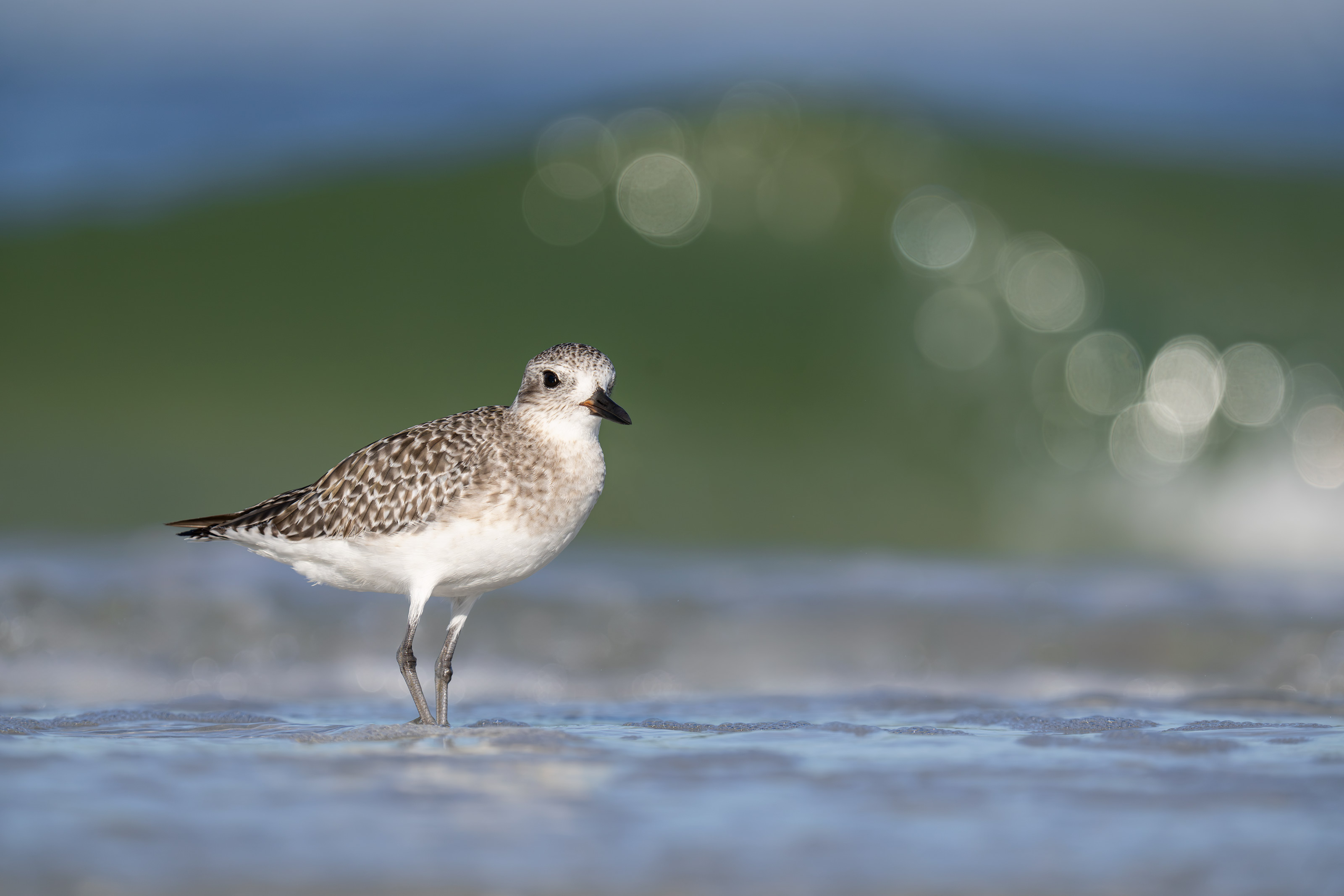
This image was also created on 13 October 2026 by yours truly on a Fort DeSoto private In-the-Field session with new BAA friend Will from AZ. Seated on a Wide/AF-C with Bird-Eye/Face Detection performed perfectly. Click on the image to enjoy a larger high-res version. Image #7: Black-bellied Plover basic plumage with breaking wave background |
You Could Not Have Planned (or Painted) This Any Better
This image illustrates precisely why I keep my cameras set to 30 fps for everything except macro work. Once I had the basic image design established with the bird in the lower-left corner of the frame — Wide AF-C made that effortless — I simply fired away whenever a wave broke behind the subject. For my money, the position of that breaking wave and its specular highlights could not be improved upon.
Why Manual Exposure Mode?
While I do work in Shutter Priority mode with Auto ISO and EC on certain occasions — most often for predawn blurs or sunset silhouettes — this image shows exactly why we should be working in Manual mode for nearly all of our bird photography. I used Zebra technology to set the correct exposure for the subject manually, dialing it in so I saw just a few zebras on the brightest feathers of the near flank. After that, the changing background didn’t matter at all because it had zero effect on the exposure. The exposure on the bird remained exactly the same whether the background was the dark face of a breaking wave or the brilliant white foam of a broken one. By the way, one of those white background frames was my second favorite; I’ll be sharing it in the YouTube deep-dive video for this blog post coming in a few days.
|
|
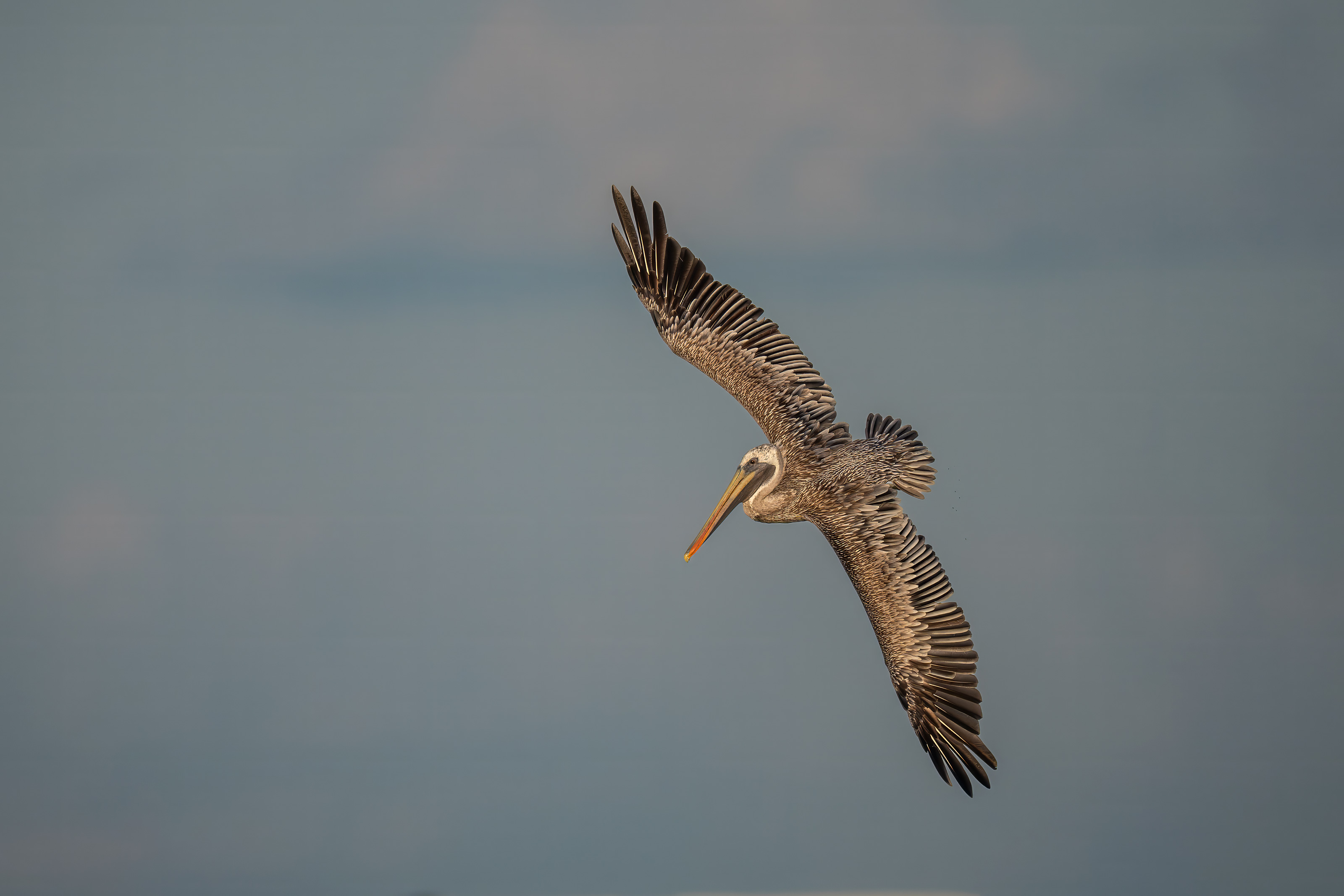
This image was created on 13 October 2026 by yours truly on a Fort DeSoto private In-the-Field session with new BAA friend Will from AZ. Standing at full height I used the Robus RC-5570 Vantage Series 3 Carbon Fiber Tripod/Levered-Clamp FlexShooter Pro-mounted Sony FE 600mm f/4 GM OSS lens with the Sony FE 1.4x Teleconverter and The Latest Greatest Sony Flagship Body, the a1 II Mirrorless Camera Win APS-C crop mode — effective focal length 1260mm). The exposure was determined by Zebras with ISO on the rear wheel: ISO 1000: 1/4000 sec. at f/5.6 (wide open) in Manual mode. AWB at 6:24:43pm after the sun dropped behind he mangroves on a clear afternoon. Wide/AF-C with Bird-Eye/Face Detection performed perfectly. Click on the image to enjoy the larger, inexplicably sharper high-res version. Image #8: Brown Pelican banking to dive |
APS-C Crop Mode for Distant Subjects
The pelicans were flying and diving far offshore, seemingly halfway to the Skyway Bridge. So, rather than reach for the 2X teleconverter and lose a full stop of light, I stuck with the 1.4X converter and hit my custom button to toggle on APS-C Crop Mode. Autofocus performed flawlessly with the subject larger in the frame.
Typos
With all blog posts, feel free to e-mail or to leave a comment regarding any typos or errors.









Leave a Reply