
Summary
This is the first-ever five line blog post title. Why? There is so much I have to share and so, so much to learn. Interested? Keep reading.
Your Calls?
First off, thanks for the many complimentary comments at the last blog post, nearly all from folks who have attended a BIRDS AS ART IPT and learned from me. In today’s post, please leave a comment noting the two most extraordinary images along with the two that you think are most ordinary.
Note: Copy editing, re-crafting, technical refinement, and formatting for this blog post were assisted by Gemini AI.
My Calls
Most everyone agreed that the work of the four student/friends featured in the last blog post were quite excellent. Here — in no particular order — are my very favorites:
1- David Pugsley’s tern sunrise silhouette with wave for its dramatic lighting and image design.
2- Raymond C. Murray’s Royal Tern with chick vertical for its cuteness factor.
3- Alvin “Red” Stevens’ Royal Tern large checkerboard chick with foot raised staring because I loved the checkerboard chicks and the stare down the lens barrel.
4- Jim Dolgin’s Laughing Gull pre-dawn red/purple silhouette because I am envious. I was there and did not make anything similar 🙂
What’s Up?
Carolyn Johnson brought some great weather luck to Long Island, and she is absolutely loving both her new Sony FE 100-400mm f/4.5 GM OSS lens and APS-C crop mode. Our first two mornings brought perfect conditions: sunny skies with a breeze out of the northeast. I will be sharing some of CJ’s best work with you here soon.
Thursday morning was forecasted to be sunny with a stiff southwest wind — a terrible combination — and that’s exactly how it looked at 6:30 AM. But a sky full of foggy clouds materialized out of nowhere and saved the morning. We also did well on Tuesday afternoon, particularly at sunset. With dark, threatening clouds building to the west on Wednesday, we opted for an early night after a fabulous thank-you dinner at Wild Ginger in Rockville Centre earlier that afternoon. We had a second long and wonderful dinner at Wild Ginger on Thursday and got lots of work done with Carolyn’s images in lieu of an early evening photo session.
Carolyn had signed up for four day of instruction, Tuesday through Friday. On Wednesday evening, she sent me this text:
Hey, I was able to change my flight to Friday so let’s bag the Friday morning outing too. That works better for me and having you one-on-one for three days was absolutely worth the price!! See you at 5:30am.
My schedule is open from now through the end of the month. Though the skimmers did not have a great breeding year, I discovered more than a few very photographable nests with eggs on Thursday morning. In addition, the Common Terns have been fishing for Mole Crabs in the wash and providing lots of action.
Today is Friday 7 August, 2026. As I purchased my first telephoto lens — the Canon FD 400mm f/4.5 on 7 August 1983. Today marks 43 years of bird photography for me. And guess what? I cannot wait to get out early and make some more wonderful images. I guess it took me 37 years to find my path 🙂 With wind against sun forecast for this morning, I will be heading out with the 400-800 and the monopod after using only the Sony FE 100-400mm f/4.5 GM OSS lens for three straight days. Whatever you opt to do, I hope that you choose to have fun and enjoy life. Please remember that happiness is a choice — Byron Katie – The Work.Com
If an item — a Delkin flash card or reader, a Levered-clamp FlexShooter Pro, or a Wimberley lens plate or low foot — for example, that is available from B&H and/or Bedfords, is also available in the BAA Online Store, it would be great, and greatly appreciated, if you would opt to purchase from us. We will match or beat any price. Please remember also to use my B&H affiliate links or to earn 3% cash back at Bedford by using the BIRDSASART discount code at checkout for your major gear purchases. Doing either often earns you free guides and/or discounts. And always earns my great appreciation.
Gear Questions and Advice
Too many folks attending BAA IPTs and dozens of photographers whom I see in the field and on BirdPhotographer’s.Net, are — out of ignorance — using the wrong gear, especially when it comes to tripods and more especially, tripod heads. And the same is true in spades when ordering new camera bodies or lenses. My advice will often save you some serious money and may help you avoid making a seriously bad choice. Please know that I am always glad to answer your gear questions via e-mail. If you are desperate, you can try me on my cell at 863-221-2372. Please leave a message and shoot me a text if I do not pick up.
|
|
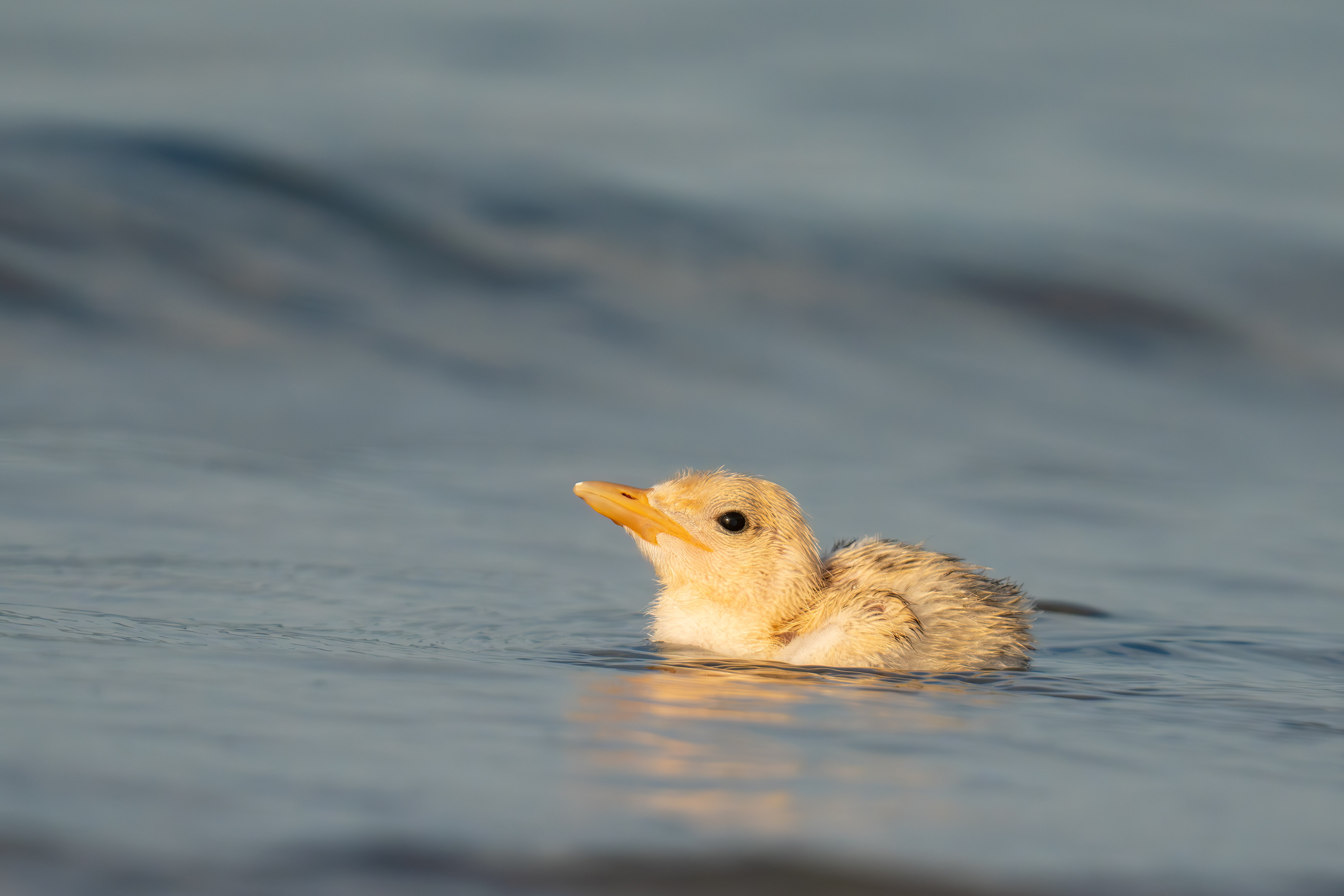
This image was created on 10 July 2026 by yours truly on the 2026 BAA Jacksonville Friends IPT. Crouching a bit, I used the handheld Sony FE 100-400mm f/4.5 GM OSS lens with the Sony FE 2x Teleconverter (at effective 1200mm) and The Latest Greatest Sony Flagship Body, the a-1 II Mirrorless Camera (in APS-C crop mode). The exposure was determined by Zebras with Exposure Compensation (EC) on the Thumb Dial. Multi Metering +0.7 stops. AUTO ISO set ISO 2000: 1/1600 sec. at f/9. AWB at 7:43:10pm on sunny afternoon. Tracking; Zone/AF-C with Bird-Eye/Face Detection performed perfectly. Click on the image to enjoy the larger high-res version. Image #1: Royal Tern — golden chick swimming |
Why Shutter Priority and What Difference Does It Make?
I can’t for the life of me remember why I was in Shutter Priority mode. Here is the bottom line: as long as your background is even-toned and your subject stays roughly the same size in the frame, tweaking your EC enables you to make consistently perfect exposures. It makes zero difference if you are in Manual mode at ISO 2000: 1/1600 sec. at f/9 or in Shutter Priority mode at ISO 2000: 1/1600 sec. at f/9 — both approaches will yield identical results.
However, the moment your background tonality changes as you pan with the bird — or your light or dark subject becomes larger or small in the frame — consistent exposures go out the window. If you’re shooting in an auto mode like Shutter Priority or Aperture Priority without fully grasping this, stop what you’re doing, get yourself a copy of the original The Art of Bird Photography, and study the section on Exposure Theory. Note: <em>Aperture Priority is rarely if ever recommended for bird photography)
Please Understand This
If you shoot in an automatic exposure mode with Auto ISO and EC while tracking a subject across changing background tonalities, any good exposure you get is due to pure luck. That approach is completely flawed.
|
|
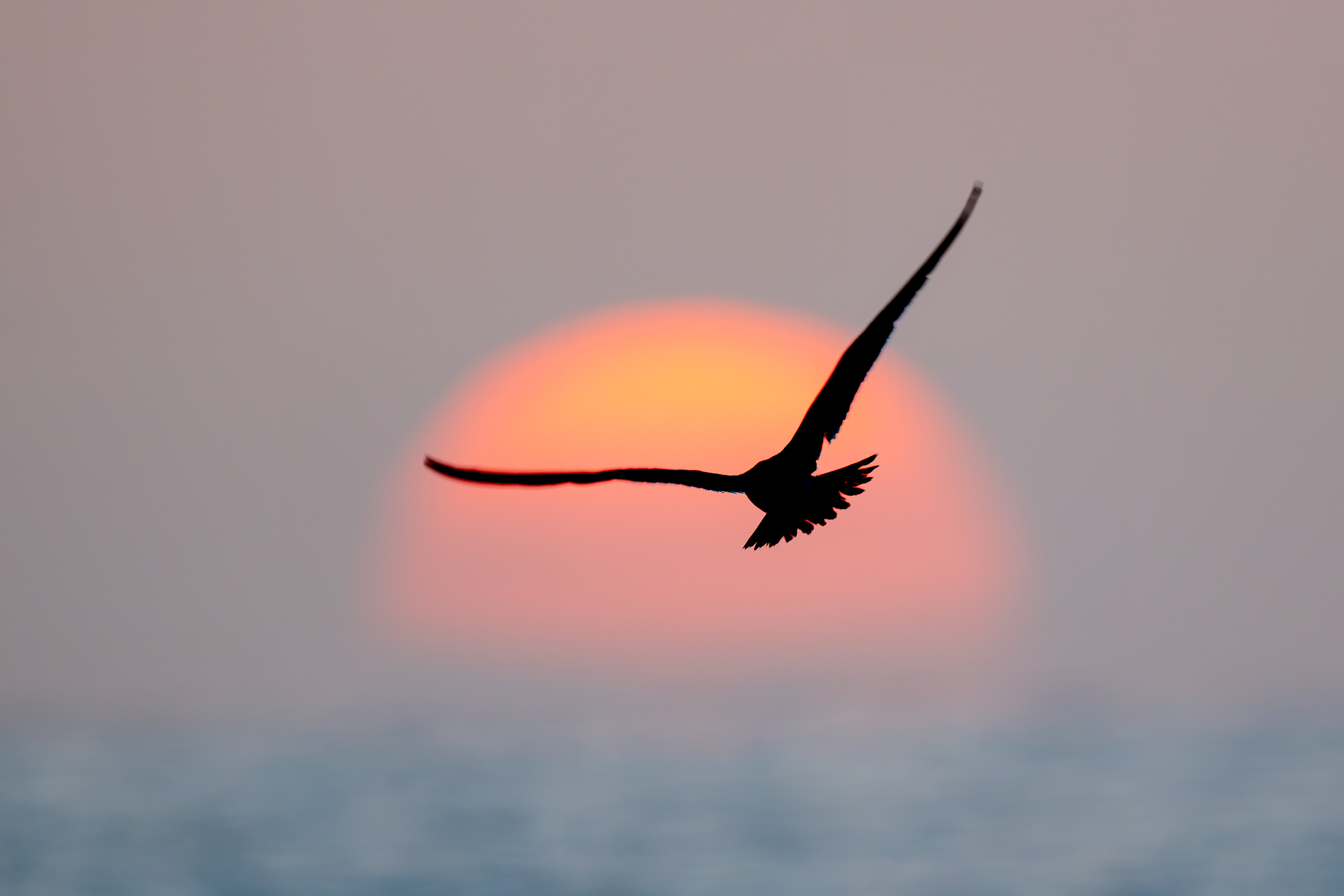
This image was created on 10 July 2026 by yours truly on the 2026 BAA Jacksonville Friends IPT. Standing at full height on the beach, I used the Robus RC-5570 Vantage Series 3 Carbon Fiber Tripod/Levered-Clamp FlexShooter Pro-mounted Sony FE 600mm f/4 GM OSS lens with the Sony FE 1.4x Teleconverter, and The Latest Greatest Sony Flagship Body, the a1 II Mirrorless Camera. The exposure was determined by Zebras with Exposure Compensation (EC) on the Thumb Dial. Multi Metering +2.0 stops. AUTO ISO set ISO 1250: 1/200 sec. at f/5.6 (wide open). AWB at 76:34:17am just minutes after sunrise. Wide/AF-C with Bird-Eye/Face Detection performed perfectly. Click on the image to enjoy the larger, inexplicably sharper high-res version. Image #2: Laughing Gull in the muted sunball |
A Plan Gone Wrong Turns Out to be Right
I chose an intermediate shutter speed in hopes of creating some pleasing blurs of gulls breaking to land. While that did not quite work out as planned, I love this sharp image of the Laughing Gull flying through the very muted sunball.
Though it might look to some folks as if the bird is flying away, it was actually flying toward me. Knowing that, the lack of the gull’s head does not both me. Does it bother you?
|
|
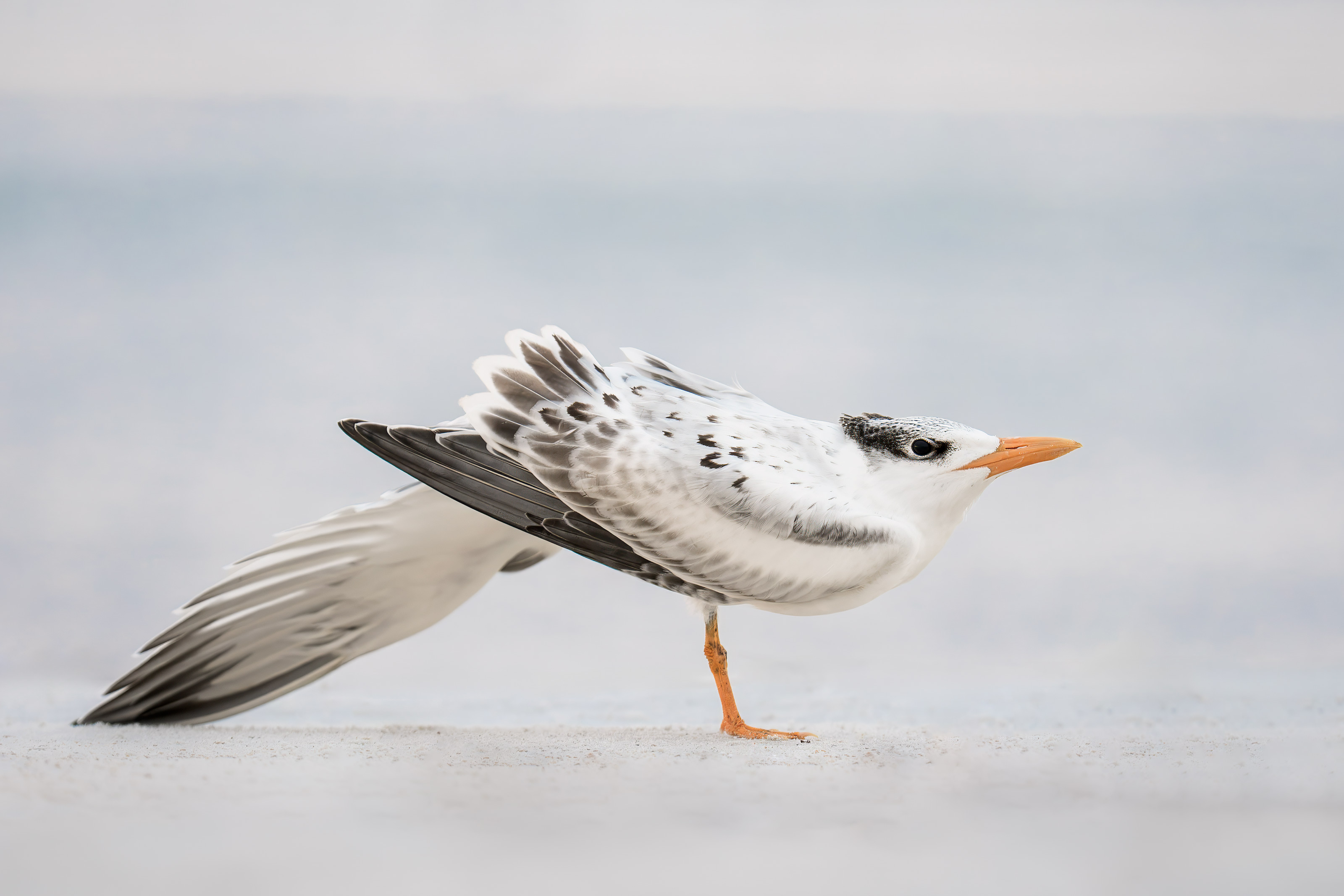
This image was created on 13 July 2026 by yours truly at Huguenot Memorial Park northeast of Jacksonville, FL. Seated on day sand, I used the handheld Sony FE 100-400mm f/4.5 GM OSS lens (at 558mm effective focal length) and The Latest Greatest Sony Flagship Body, the a-1 II Mirrorless Camera (in APS-C crop mode). The exposure was determined by Zebras with ISO on the rear wheel. ISO 2500: 1/200 second at f/4.5 (wide open) in Manual mode. AWB at 6:50:46am on a cloudy morning Wide/AF-C with Bird-Eye/Face Detection performed perfectly. Click on the image to enjoy a larger high-res version. Image #3: Royal Tern large chick stretching far wing |
I Did My Best
The beach was a huge mess with too much dark beach wrack. How do you think that I did with the clean-up? My thoughts in the next blog post.
|
|
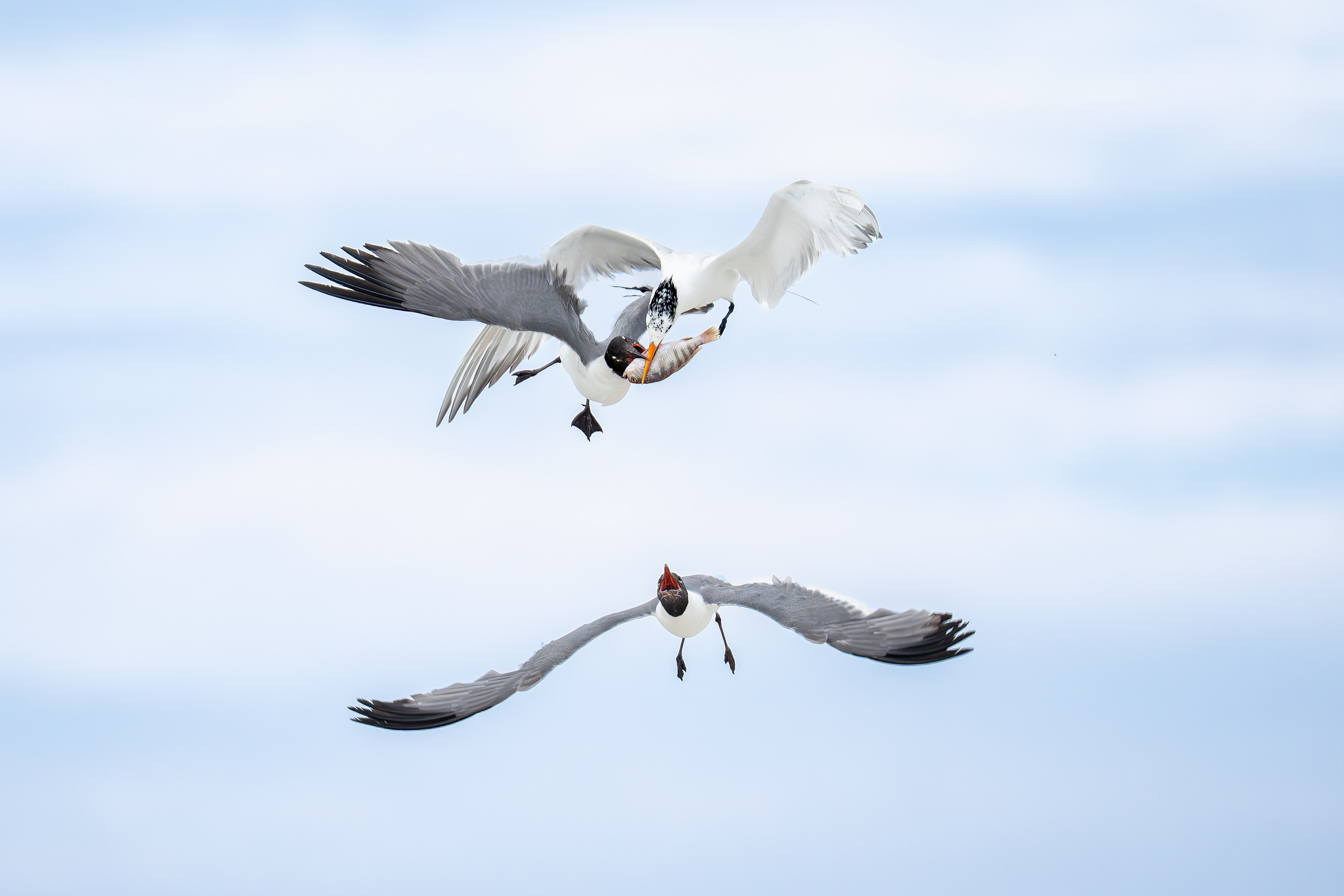
This image was also created on 13 July 2026 by yours truly at Huguenot Memorial Park northeast of Jacksonville, FL. Standing at full height, I used the handheld Sony FE 100-400mm f/4.5 GM OSS lens (at 600mm effective focal length) and The Latest Greatest Sony Flagship Body, the a-1 II Mirrorless Camera (in APS-C crop mode). The exposure was determined by Zebras with ISO on the rear wheel. ISO 2500: 1/3200 second at f/4.5 (wide open) in Manual mode. AWB at 8:20:32am on a partly sunny morning. Wide/AF-C with Bird-Eye/Face Detection performed perfectly. Click on the image to enjoy a larger high-res version. Image #4: Laughing Gulls stealing fish from Royal Tern |
Midair Fight Shooting Advice
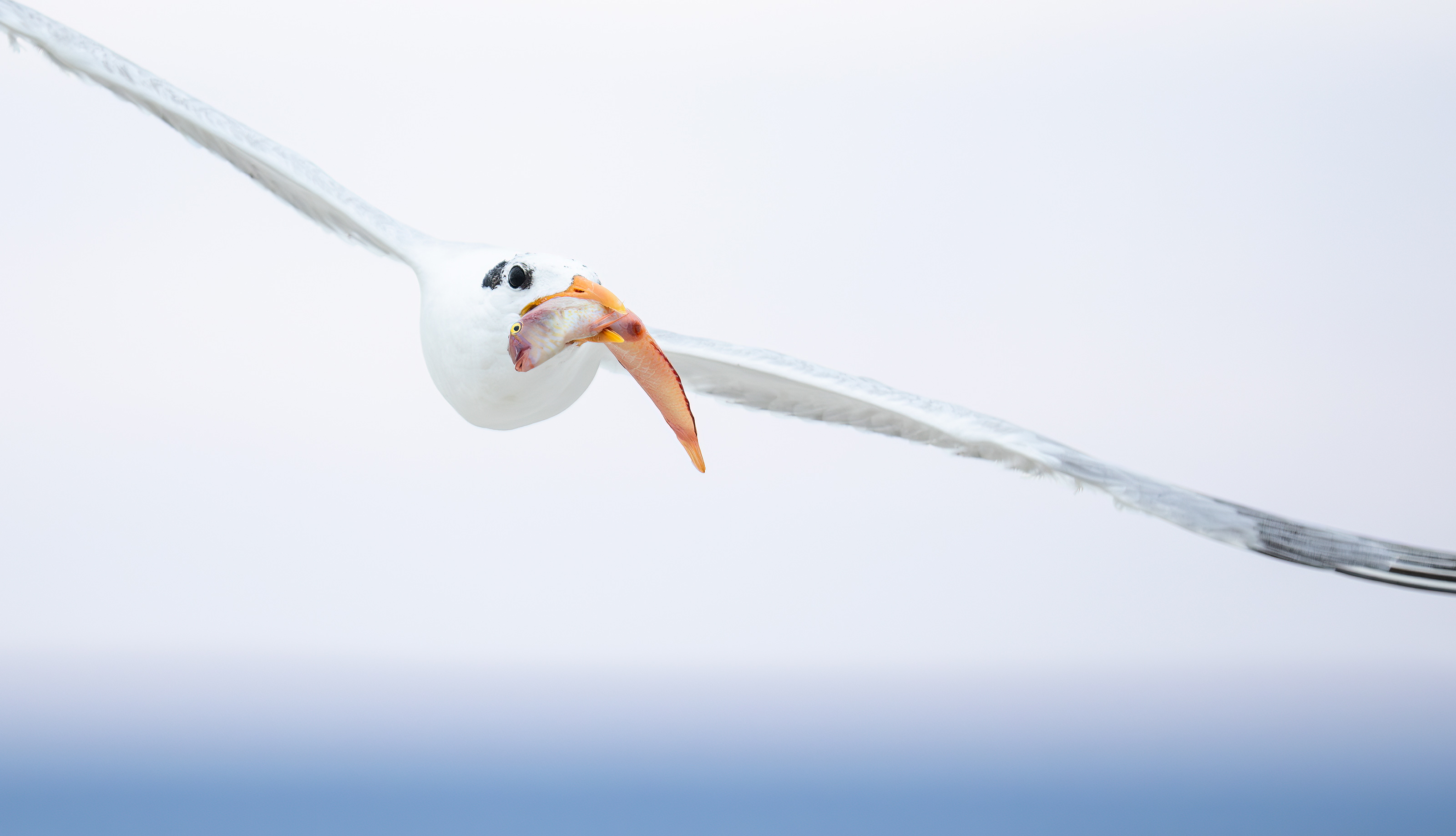
Midair fights are often over in a second or two. I can hear myself calling out to the group. “If you see a midair squabble, frame the shot and begin firing while assuming that the system will acquire focus and hammer away..” That is exactly what I did above and was rewarded with more than a few excellent frames.
|
|
This image was also created on 13 July 2026 by yours truly at Huguenot Memorial Park northeast of Jacksonville, FL. Standing at full height, I used the handheld Sony FE 100-400mm f/4.5 GM OSS lens (at 600mm effective focal length) and The Latest Greatest Sony Flagship Body, the a-1 II Mirrorless Camera (in APS-C crop mode). The exposure was determined by Zebras with ISO on the rear wheel. ISO 2500: 1/3200 second at f/4.5 (wide open) in Manual mode. AWB at 8:20:32am on a partly sunny morning. Wide/AF-C with Bird-Eye/Face Detection performed perfectly. Click on the image to enjoy a larger high-res version. Image #5: Royal Tern in flight with Pearly Razor Fish |
Tight Flight Crops
Here is a case where APS-C crop mode almost bit me in the butt. But a tight flight crop that put the bird’s head near the upper left rule of thirds spot saved the image that was in fact, even stronger with the great look at the very strange fish. Thanks to Dr. Fish, blog regular and multiple IPT veteran David Policansky, for the fish ID.
|
|
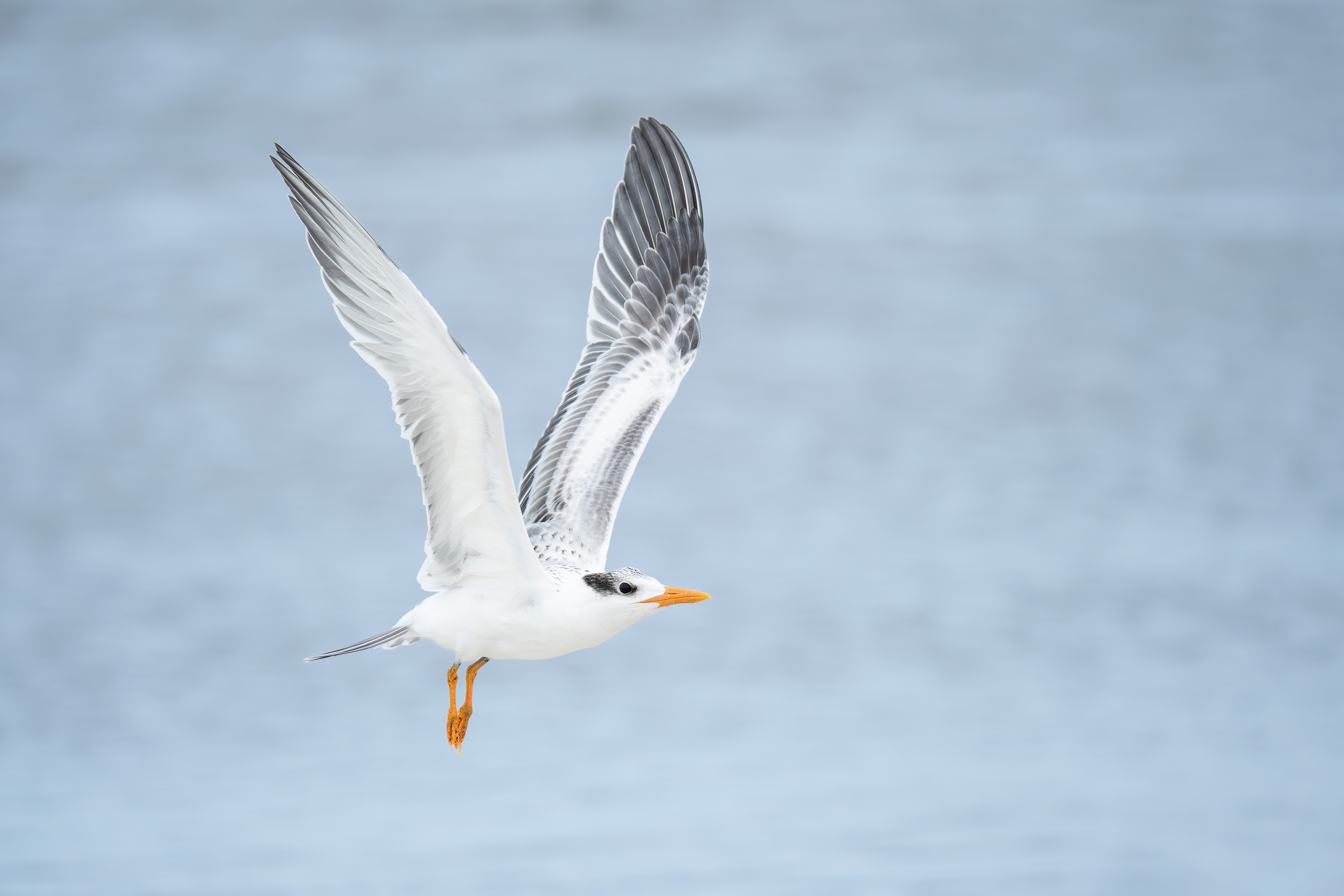
This image was also created on 13 July 2026 by yours truly at Huguenot Memorial Park northeast of Jacksonville, FL. Standing at full height, I used the handheld Sony FE 100-400mm f/4.5 GM OSS lens (at 600mm effective focal length) and The Latest Greatest Sony Flagship Body, the a-1 II Mirrorless Camera (in APS-C crop mode). The exposure was determined by Zebras with ISO on the rear wheel. ISO 1600: 1/4000 second at f/4.5 (wide open) in Manual mode. AWB at 6:01:54pm on a cloudy afternoon. Wide/AF-C with Bird-Eye/Face Detection performed perfectly. Click on the image to enjoy a larger high-res version. Image #6: Royal Tern — recently fledged juvenile in flight |
Watching and Observing
There were more than a few recently fledged young Royal Terns standing along the edge of a very large tidal pool– about 40 yards wide. The wind was from the south at close to 15 mph. We approached slowly and waited for a bird to take flight just to our right. Careful observation combined with my knowledge of sky conditions and wind direction allowed me to create several nice take-off sequences. Pre-capture helped. Image #6 with the wings fully raised flight pose was my favorite.
|
|
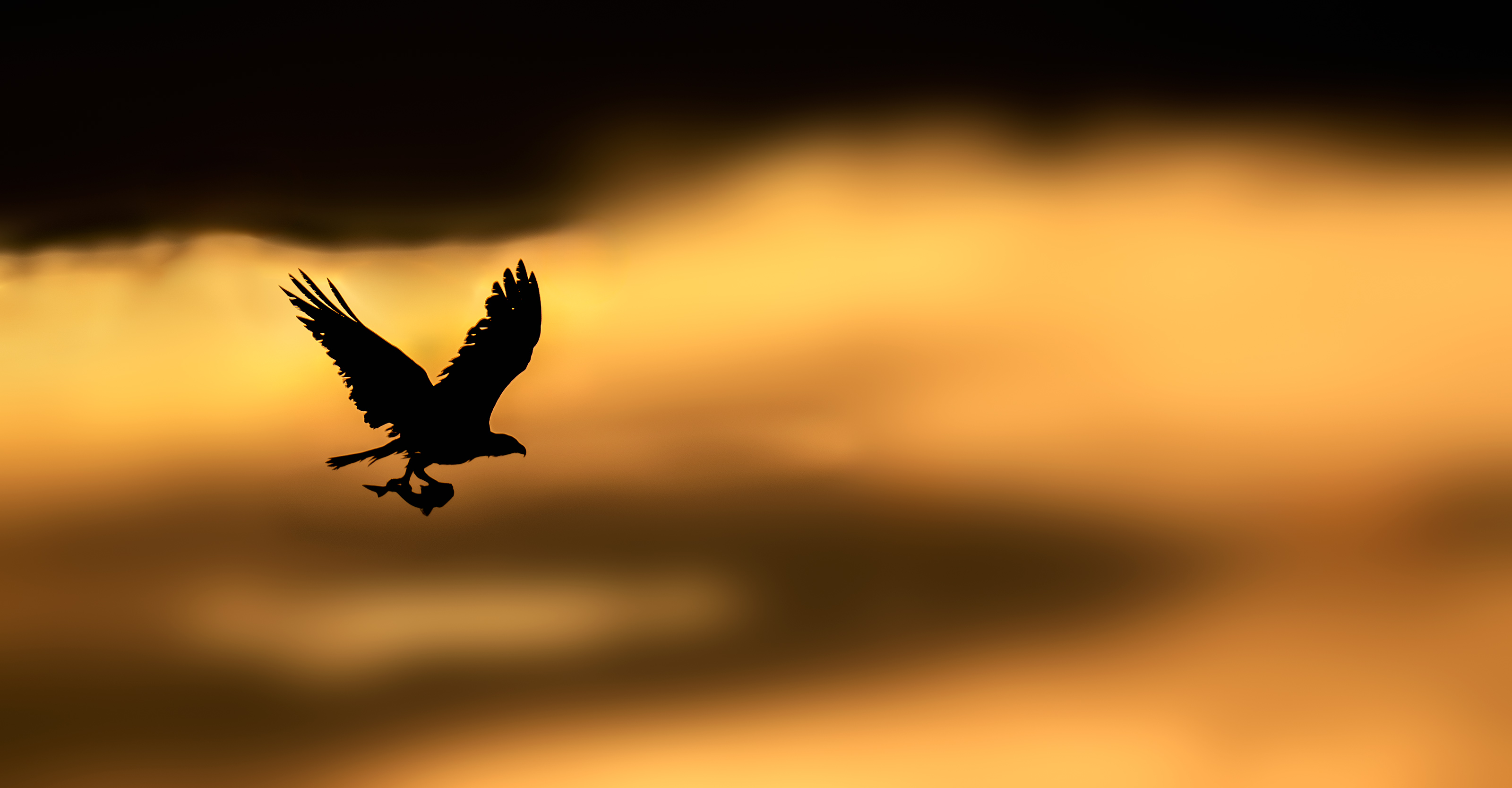
This image was created on 14 July 2026 by yours truly at Huguenot Memorial Park northeast of Jacksonville, FL. Crouching a bit, I used the handheld Sony FE 100-400mm f/4.5 GM OSS lens and the Sony FE 1.4x Teleconverter (at 840mm effective focal length) and The Latest Greatest Sony Flagship Body, the a-1 II Mirrorless Camera (in APS-C crop mode). The exposure was determined by Zebras with Exposure Compensation (EC) on the Thumb Dial. Multi Metering +1.7 stops. AUTO ISO set ISO 1000: 1/2000 sec. at f/6.3. AWB at 6:55:26am about 25 minutes after sunrise with some clouds to the east. Wide/AF-C with Bird-Eye/Face Detection performed perfectly. Click on the image to enjoy a larger high-res version. Image #7: Osprey in flight with fish |
APS-C Crop Mode + Topaz Gigapixel for Distant Subjects
This bird was so far enough away that I was thinking of not pressing the shutter button. But I am glad that I did. With somewhat or a pano crop followed by Topaz Gigapixel, I am positive that the image quality of the master file will be more than good enough for Getty Images to accept it. I am thinking that the very item is a Gafftopsail Catfish.
Gafftopsail Catfish (Bagre marinus)
Gafftopsail Catfish are named for the dorsal fin that rises from their back like a sail. A close look reveals the sharp spines that support both the dorsal and the pectoral fins. These spines are not only sharp, they are coated with toxic slime.
|
|
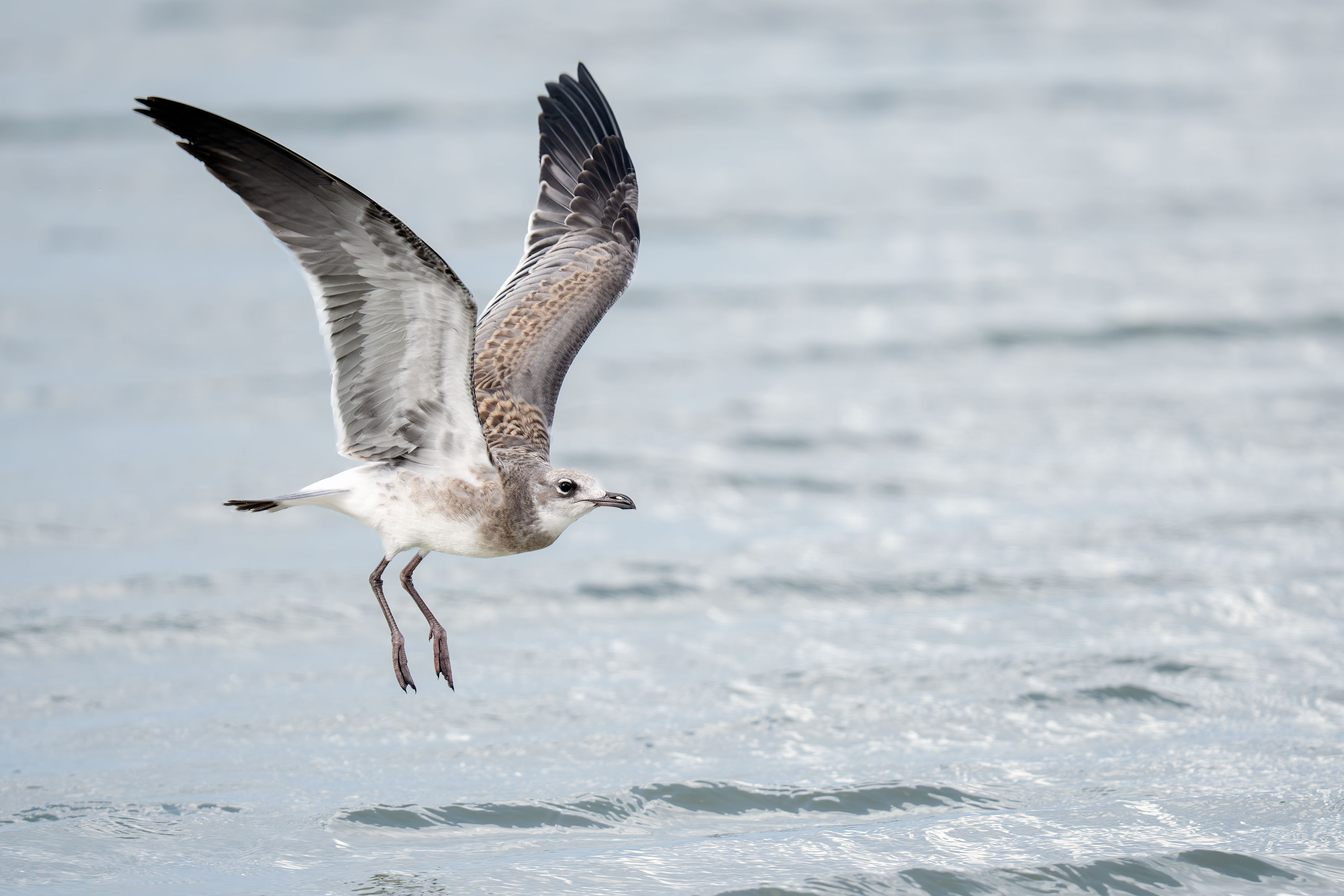
This image was also created on 14 July 2026 by yours truly at Huguenot Memorial Park northeast of Jacksonville, FL. Standing at full height, I used the handheld Sony FE 100-400mm f/4.5 GM OSS lens (at 600mm effective focal length) and The Latest Greatest Sony Flagship Body, the a-1 II Mirrorless Camera (in APS-C crop mode). The exposure was determined by Zebras with ISO on the rear wheel. ISO 1600: 1/2000 second at f/4.5 (wide open) in Manual mode. AWB at 6:05:03am on a mostly cloudy afternoon. Wide/AF-C with Bird-Eye/Face Detection performed perfectly. Click on the image to enjoy a larger high-res version. Image #8: Laughing Gull — recently fledged juvenile in flight |
Next Day, Same Situation, Different Subject
The day after I created Image #6, there were lots of young Laughing Gulls taking flight from the very same tidal pool. As the young Laughing Gulls are not nearly as white as the young royals, I went for a slower shutter speed in similar lighting conditions to properly expose the young gulls to the right. Again, the south wind had the bird taking flight just to our right.
|
|
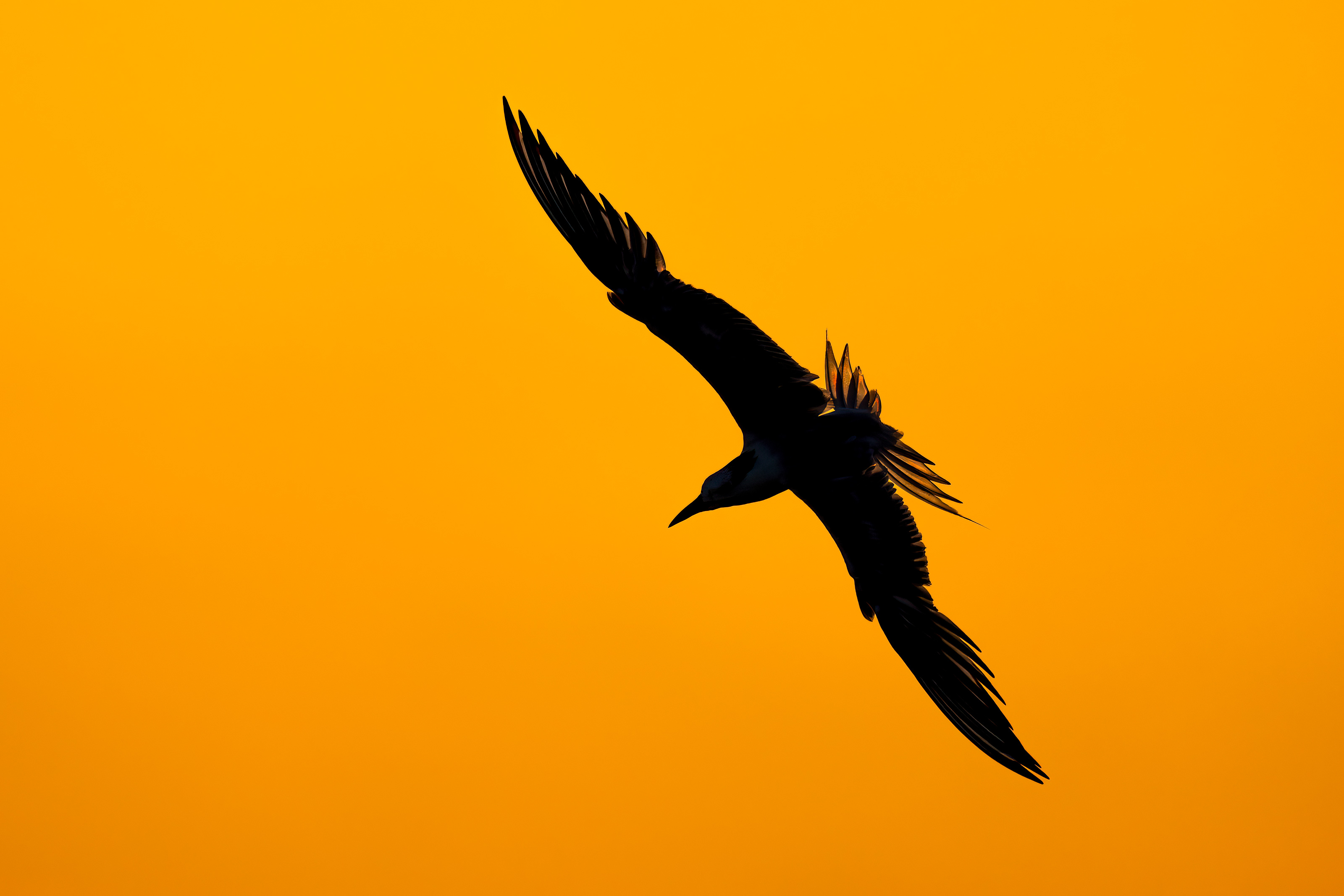
This image was created on 15 July 2026 by yours truly on the 2026 BAA Jacksonville Friends IPT. Standing at full height on the beach, I used the Robus RC-5570 Vantage Series 3 Carbon Fiber Tripod/Levered-Clamp FlexShooter Pro-mounted Sony FE 600mm f/4 GM OSS lens with the Sony FE 1.4x Teleconverter, and The Latest Greatest Sony Flagship Body, the a1 II Mirrorless Camera. The exposure was determined by Zebras with Exposure Compensation (EC) on the Thumb Dial. Multi Metering -1.0 stops. AUTO ISO set ISO 320: 1/3200 sec. at f/5.6 (wide open). AWB at 6:47:40am about 8 minutes after sunrise. Wide/AF-C with Bird-Eye/Face Detection performed perfectly. Click on the image to enjoy the larger, inexplicably sharper high-res version. Image #9: Royal Tern sunrise silhouette |
Another Plan Gone Awry That Turned Out Well
There is only one possible reason that I was at -1 full stop for this image: I was trying for another bird-in-the-sunball shot, this one with the sun fairly bright, i.e., not well muted. Though RawDigger showed that the raw file was more than 3 1/3 stops under-exposed, it was pretty much child’s play to create something pleasing.
|
|
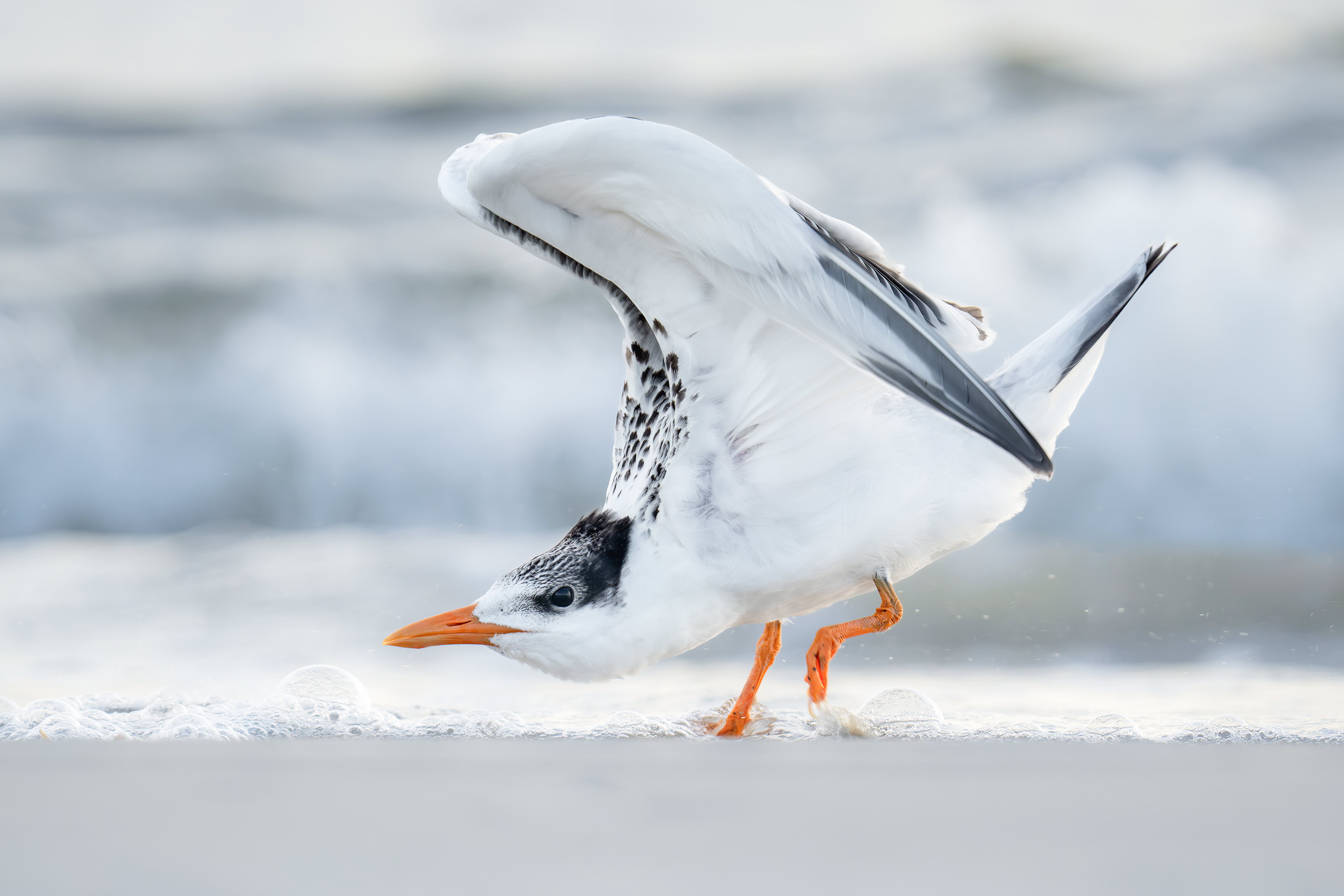
This image was created on 15 July 2026 by yours truly at Huguenot Memorial Park northeast of Jacksonville, FL. Seated on dry sand, I used the toe-pod technique with the handheld Sony FE 100-400mm f/4.5 GM OSS lens and the Sony FE 1.4x Teleconverter (at 840mm effective focal length) and The Latest Greatest Sony Flagship Body, the a-1 II Mirrorless Camera (in APS-C crop mode). The exposure was determined by Zebras with ISO on the rear wheel. ISO 1600: 1/800 second at f/6.3 (wide open) in Manual mode. AWB at 7:37:35am on a very cloudy morning. Wide/AF-C with Bird-Eye/Face Detection performed beyond perfectly. Click on the image to enjoy a larger high-res version. Image #10: Royal Tern — recently fledged juvenile — double overhead wingstretch |
Somewhat Amazed By a-1 ii Eye-tracking AF
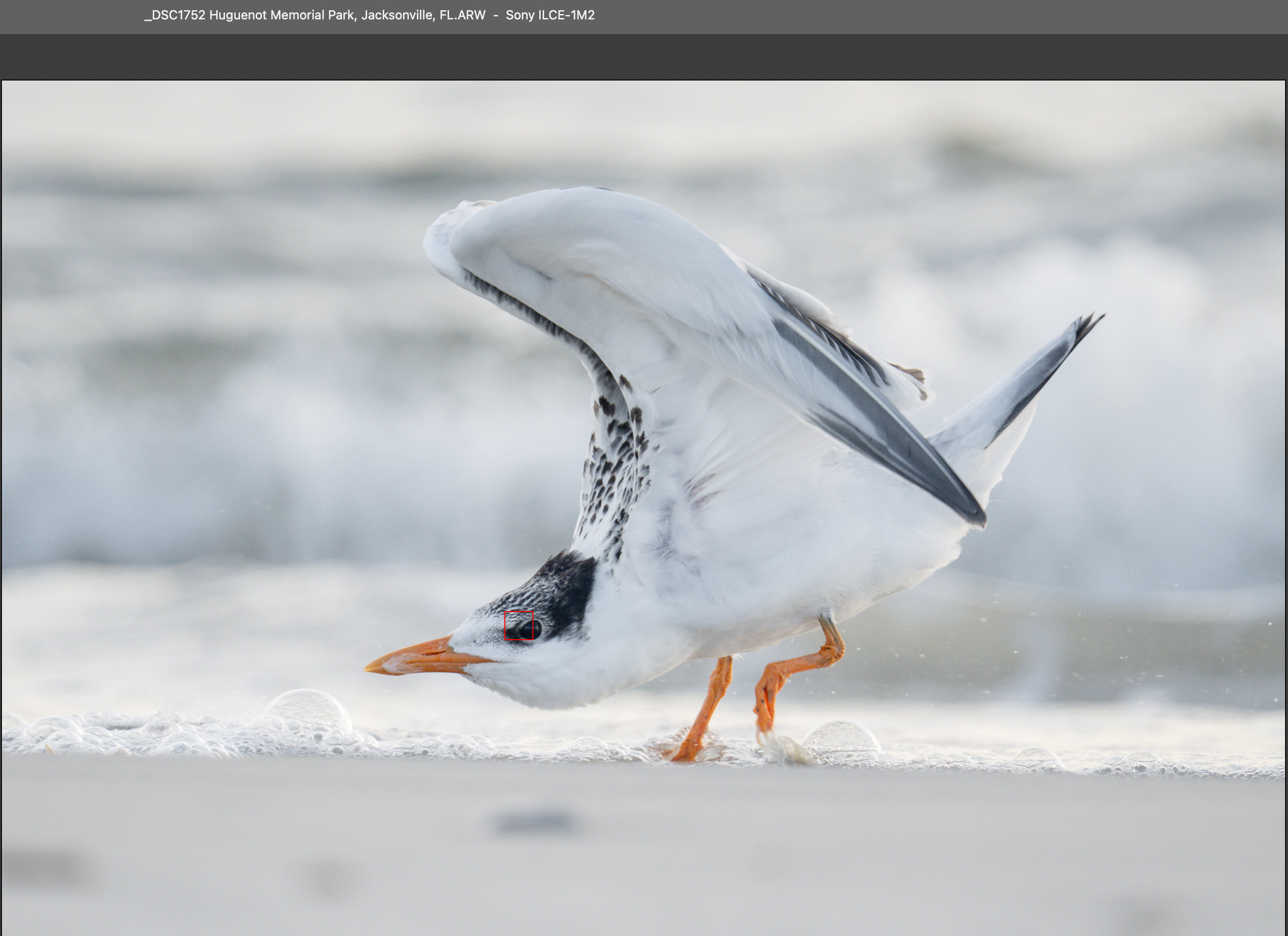
As this was a morning image, it was somewhat backlit. With the thick clouds to the east and a few Adobe Camera Raw masks, I was able to create a bright, evenly lit image. I remember being amazed watching as the AF point tracked the bird’s eye perfectly when the young tern leaned forward to do a double-overhead wingstretch! See why below.
|
|
Click on the screen capture to see the red square right on the young tern’s eye. ACR AF point for the Royal Tern — recently fledged juvenile — double overhead wingstretch image |
Seeing the AF Point in Adobe Camera Raw (ACR)
Thanks again to blog regular and IPT veteran Dane Johnson who alerted me to the fact that the latest version of ACR — July 2026 (version 18.4.1), can now superimpose your camera’s autofocus points directly on the photo preview for supported Canon, Nikon, and Sony raw files. After updating, open a raw file in ACR, place the cursor on the image, then Control + click and Select “Show Autofocus Points” from the dropdown menu. You can repeat to hide the AF point or just leave it. It will not appear on the converted image.
Seeing the original above, how would you compare the beach clean-up in this one with the beach clean-up in Image #3?
Typos
With all blog posts, feel free to e-mail or to leave a comment regarding any typos or errors.









I think that the two silhouettes are extraordinary (#2 and #9). None are ordinary!
Wow, great post Artie!
Thanks, AA. I agree.
with love, artie
>> I chose an intermediate shutter speed in hopes of creating some pleasing blurs of gulls breaking to land. <<
Did you mean braking, as in slowing down?
Thanks. Brain damage 🙂
a
First, congratulations and thank you for your many years of contributions to the craft.
As for my picks for extraordinary, image numbers 2 and 4 are extraordinary. The silhouette with those colors and subject positioning is gorgeous. Image #4 and its action is second. As for most ordinary, I’d select images 6 and 8.
Thanks, Tom,
I agree on 2 and 4 but would need to add the Pearly Razorfish image as well. 6 was not one of my ordinary ones 🙂 I’d go with 8 and 9 as most ordinary but 9 might be too good for that 🙂
with love, artie
I think about it; I’ve never seen a tern chick swimming at that young an age. Perhaps I haven’t been around long enough. To me, that is extraordinary. I thought perhaps it was wading and got caught in a wave. Regardless, it might be the most extraordinary image of today’s group since I don’t think it’s common.
Artie, Your energy level and commitment are truly amazing! Like the Energizer Bunny!
Thanks, John, I agree. Every night I thank God for the rejuvenative powers of sleep 🙂
a