
Your Call?
Which three of Steve Baglione’s 20 images do you like best? Please be so kind as to share your reasons for each of your choices.
Summary
Bob Eastman and I got back to ILE yesterday. Longtime Canon shooter Steve Baglione hired me for 12 days of BIRDS AS ART In-the-Field (IPT) Instruction. I spent most of each day teaching him about the Sony system, bird photography, picking your keepers, and image optimization. We shot 12 out of 12 mornings and 9 of 11 afternoons. Afterward, we’d head back to review our images. I optimized 20 of his images and created 8 Camtasia screen recording videos detailing the processing of 14 of his photos for him to save, bring home, and study. In his own Boston-accented words, he said, “I had a wonderful time and learned more than I could have imagined.”
See for yourself by checking out 20 examples of Steve’s best work below.
Please don’t get me wrong — there are great bird photographers out there using Canon and Nikon gear who are making world-class images every day. With a bit of proper instruction and your mirrorless camera set up properly, however, it is 100 times easier to learn and to improve by using the lighter Sony gear with Zebra technology. When Steve would revert to his Canon gear, he was pretty much lost when it came to getting the right exposure. With his a-1 ii and his 100-400mm f/5.6 GM lens in his hands, however, he nailed every exposure and moved seamlessly from Shutter Priority to Manual mode as the situation demanded. Just the facts, ma’am.
Gemini
General information, copy editing, re-crafting, technical refinement, and formatting for this blog post were as usual assisted by Gemini AI.
What’s Up?
Though conditions at Sebastian Inlet were difficult at best and the diving Osprey action was overall the worst in years, all three of us made some wonderful photographs. The wind and sky conditions were against us pretty much every day, but we worked hard. Getting to the South Jetty required a grueling 1.6-mile round trip walk along the beach. Using my decades of experience and deep knowledge of wind and weather, I worked tirelessly to put us in the exact right spot for nearly two weeks. The resulting images speak eloquently of my skill and persistence when it comes to conquering tough conditions.
Today is Tuesday 17 November 2026. The forecast for ILE is calling for rain until Friday. :-). Bob and I will be headed down to the lake as soon as it is light enough to work. Why go down when it is raining? I haven’t missed a single day morning in the field since returning from Long Island on Sunday, September 13 and plan to continue that streak until I leave for two weeks in Africa on 7 December.
I need to finish unpacking and get to work on the A7R VI Buttons and Dials Guide and the INFO sheet. I used my new camera about 95% of the time at Sebastian. Whatever you opt to do today, we hope that you choose to have fun and enjoy life. Please remember that happiness is a choice — Byron Katie – The Work.Com
The forecast for the weekend mornings are death on bird photography: a NW wind with clear skies. Our plan is to wake early on Saturday and drive over to Indian Lake Estates for two mornings of Sandhill Crane and vulture photography. We will head back to Steve’s place in Sebastian, photograph on Monday morning — Steve’s last instruction session. Then Bob and I will head back to ILE.
If an item — a Delkin flash card or reader, a Levered-clamp FlexShooter Pro, or a Wimberley lens plate or low foot — for example, that is available from B&H and/or Bedfords, is also available in the BAA Online Store, it would be great, and greatly appreciated, if you would opt to purchase from us. We will match or beat any price. Please remember also to use my B&H affiliate links or to earn 3% cash back at Bedford by using the BIRDSASART discount code at checkout for your major gear purchases. Doing either often earns you free guides and/or discounts. And always earns my great appreciation.
Gear Questions and Advice
Too many folks attending BAA IPTs and dozens of photographers whom I see in the field and on BirdPhotographer’s.Net, are — out of ignorance — using the wrong gear, especially when it comes to tripods and more especially, tripod heads. And the same is true in spades when ordering new camera bodies or lenses. My advice will often save you some serious money and may help you avoid making a seriously bad choice. Please know that I am always glad to answer your gear questions via e-mail. If you are desperate, you can try me on my cell at 863-221-2372. Please leave a message and shoot me a text if I do not pick up.
|
|
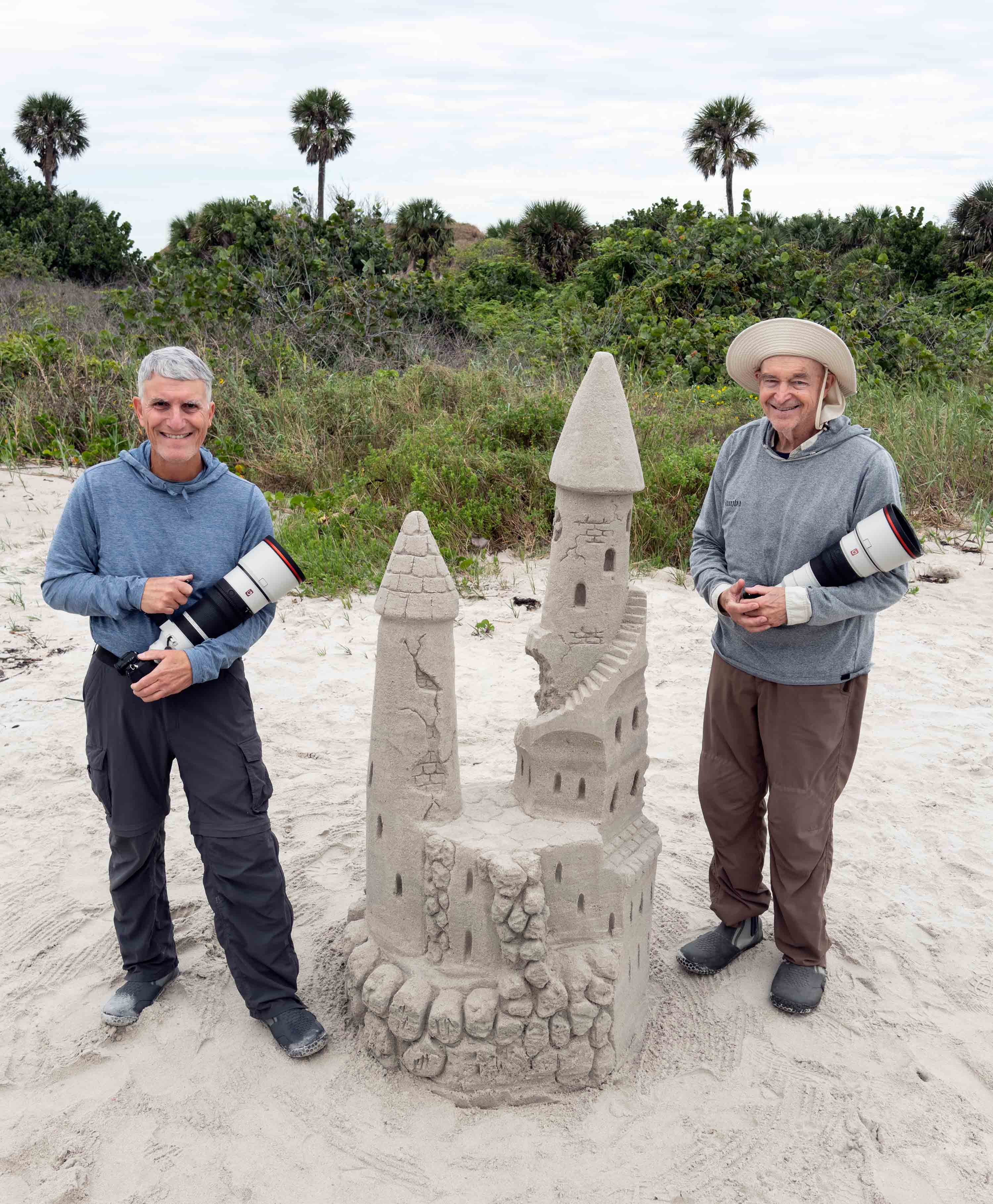
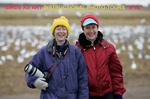
This iPhone image was created by Bob Eastman on 11/13/26. He used the iPhone 17 Pro Max triple camera/focal length 6.8mm. ISO 100: 1/400 sec. at f/1.8. Image #1: Steve Baglione and Arthur Morris |
Kings of the Castle
Steve had lots to smile about after switching from Canon to Sony. (Note: we did not build the beautiful sand castle.)
Steve “Bags” Baglione first got in touch with me via e-mail in mid-July of this year. An intermediate bird photographer, he wanted to improve. I told him frankly that he had come to the right place.
Bags was born in Hull, Massachusetts. A natural athlete with a lifelong interest in hunting and fishing, he got his first gun — a Ruger 10/22—when he was 16. After borrowing a shotgun from a friend to shoot clay targets, he bought his own shotgun at 18, and by 20 he was competing in skeet shooting. When he was 24, he moved to Quincy, Massachusetts, with his girlfriend, Janet. They have now been married for 39 years and have two children, a boy and a girl.
By age 53, Steve had picked up trap shooting. A former executive for a major commercial flooring company, he and his family moved to Swanville, Maine, in 2020. By age 63, he had progressed to sporting clays and now enters 10 to 12 tournaments annually. Between Massachusetts and Maine, he has amassed 12 open state championships.
Though he has been photographing birds with long lenses since the mid-1980s, now that he is fully rigged out with Sony gear, he should quickly become a top-tier flight photographer!
|
|
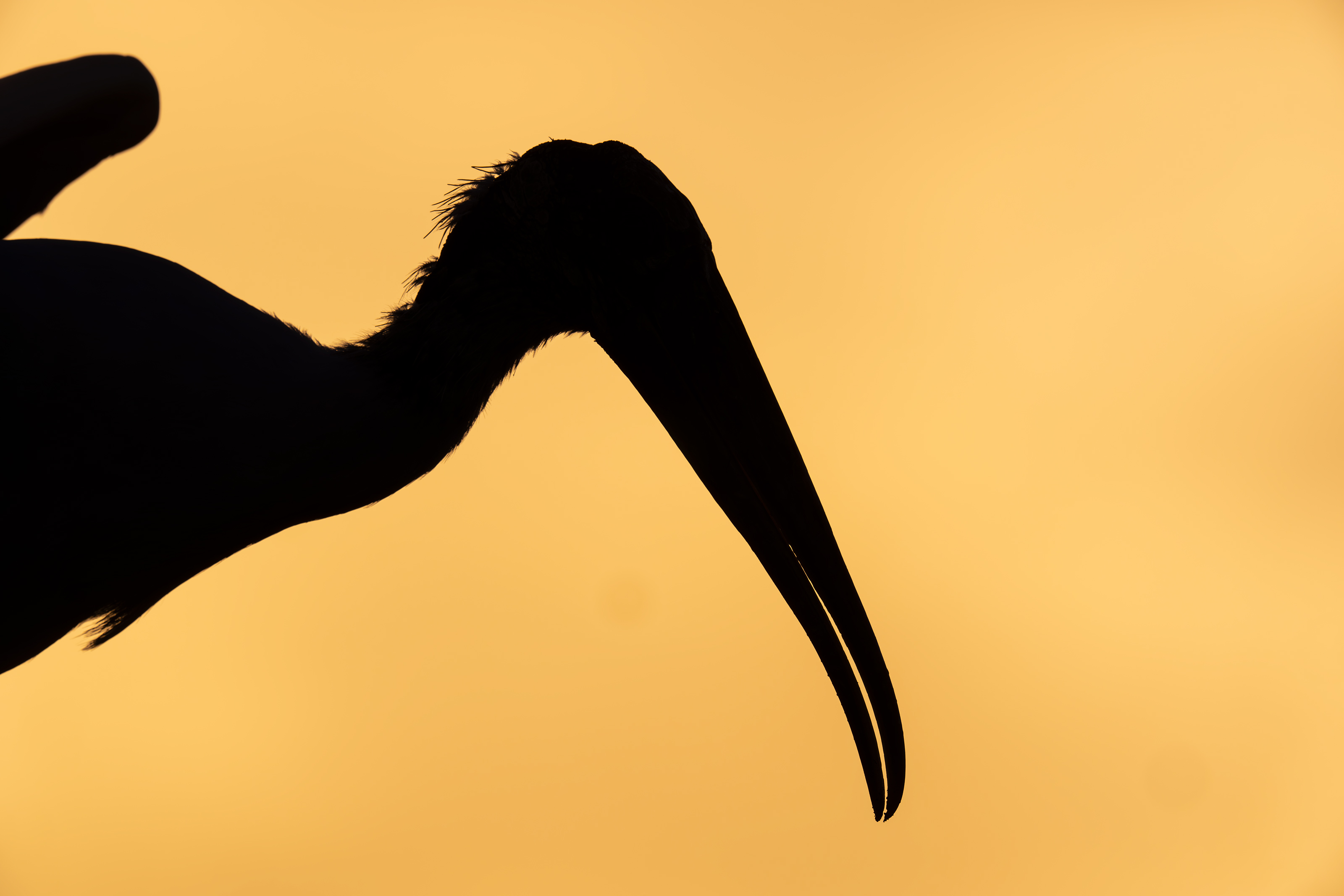
This image was created on 6 November 2026 by your truly at Sebastian Inlet State Park with Steve Baglione. Bags flew down from Maine for two weeks of private In-the-Field Instructional sessions. Standing at full height, I used the Robus RC-5570 Vantage Series 3 Carbon Fiber Tripod/Levered-Clamp FlexShooter Pro-mounted Sony FE 600mm f/4 GM OSS Lens with the Sony FE 1.4x Teleconverter (at 840mm) and the alleged poor man’s a-1 ii, the Sony a7R VI Mirrorless Camera. The exposure was determined by Zebras with Exposure Compensation (EC) on the Thumb Dial. Multi Metering +0.3 stops. AUTO ISO set ISO 100: 1/500 second at f/11 (stopped down two stops) in Shutter Priority mode! AWB at 6:58:02am on a partly cloudy morning (with clouds just in the right place!) Wide/AF-C with Bird-Eye/Face Detection performed perfectly. Click on the image to enjoy the larger, inexplicably sharper high-res version. Image #2: Wood Stork silhouette |
My Patented Pre-dawn, Sunrise & Sunset Formula
You’ve heard it here before — with consistently toned backgrounds, my go-to methodology involves Shutter Priority mode with AUTO ISO and Exposure Compensation on a convenient dial. A thorough knowledge of exposure theory enables you to consistently create good or perfect exposures. Sony’s Zebra technology helps, too, though I usually do not push backlit exposures as far to the right as I do when shooting with the sun behind me.
This approach is great at the beach pre-dawn or on cloudy mornings when the sand, the sky, and the water are all white or light-toned. I can shoot blurs or sharp images almost always at +2 stops or so of EC. Things work out brilliantly with sunrise and sunset color as well.
Steve had expressed an interest in Sony gear, so on our first morning together at Sebastian — November 5, I loaned him my Sony 100-400mm f/4.5 GM lens, a 1.4X TC, and an a-1 ii. He took to Sony like a duck to water. I taught him the AF system as we drove to the beach and Zebras once we were out on the sand. And since we were out so early and it was cloudy, his first Sony experience was in Shutter Priority mode. He did quite well.
Like Kevin Hice before him and so many others, Steve marveled at the AF eye tracking and the ease of making spot-on exposures. “This is better by a mile,” he said by 9:00 AM. By 11:00 AM that morning, he had ordered his first Sony kit using both my B&H and my Bedford’s affiliate links.
At sunrise on our second morning together, I went with my tripod-mounted 600mm f/4 with the 1.4X TC and the a7R VI. Working in Shutter Priority mode, I created Image #2 above.
|
|
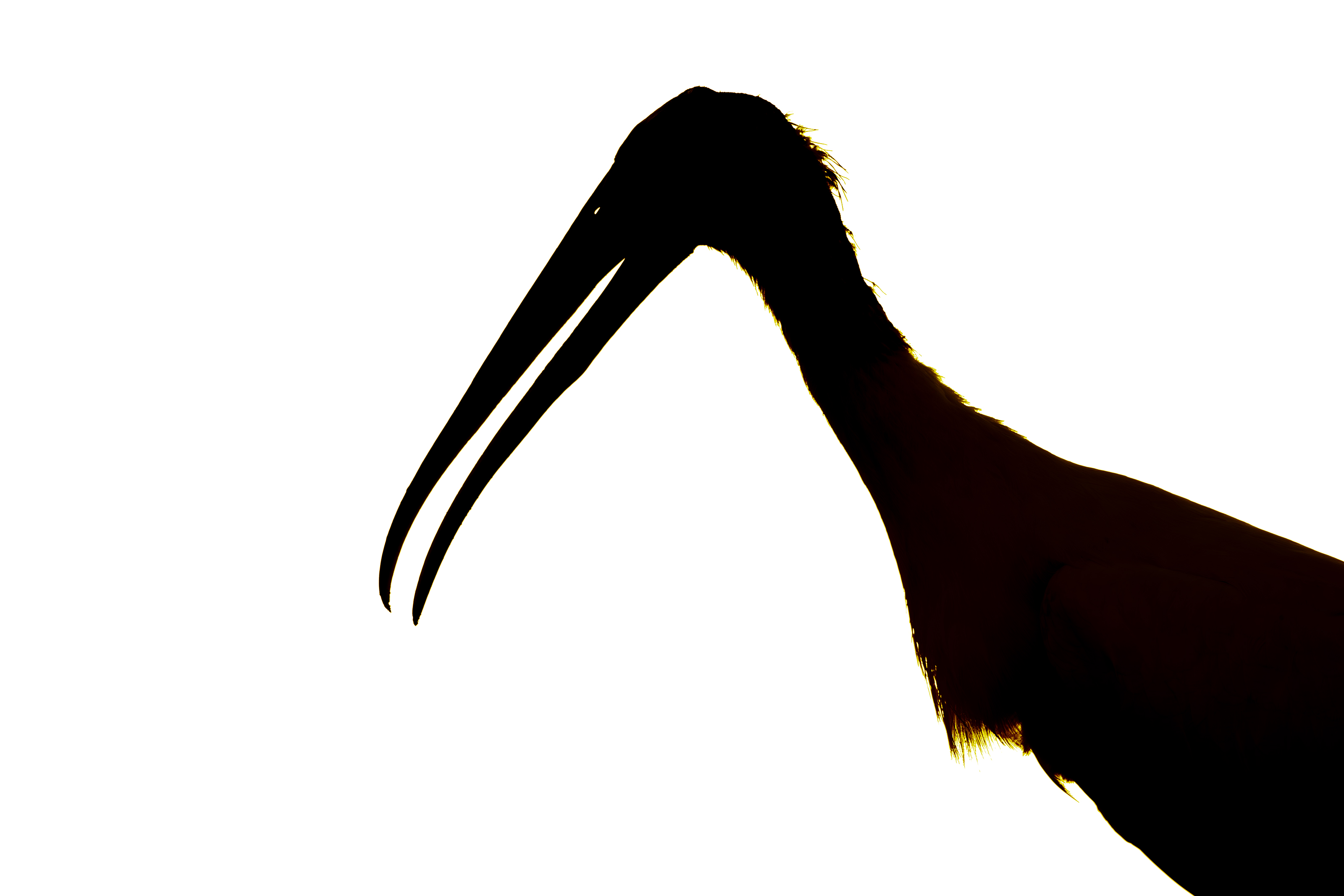
This image was created on 6 November 2026 by Steve Baglione at Sebastian Inlet State Park on a private BAA In-the-Field Instructional session. He used the tripod-mounted Canon RF 600mm f/4 L IS USM Lens with the Canon Extender RF 1.4x and the Canon EOS R5 Mark II Mirrorless Camera. ISO 320: 1/320 second at f/5.6 (wide open) in Manual mode. on a partly cloudy morning (with clouds just in the right place!) Click on the image to enjoy a larger high-res version. Image #3: Wood Stork silhouette salvaged from over-exposed RAW file |
Steve’s RF Canon 600mm f/4 Lens
When a Wood Stork landed on the railing with a colorful eastern sky behind it, I said to Steve, “Let’s go. Grab your tripod and don’t drop your lens.” We quickly got into position, and we both had some good chances. Without Zebra technology, Steve struggled and wound up overexposing all of his images. I was able to salvage the best one (above) with some fancy Photoshop footwork.
If you are interested in purchasing Steve’s RF 600mm lens in mint condition and saving a bundle compared to a used one at B&H or elsewhere, please get in touch via e-mail.
|
|
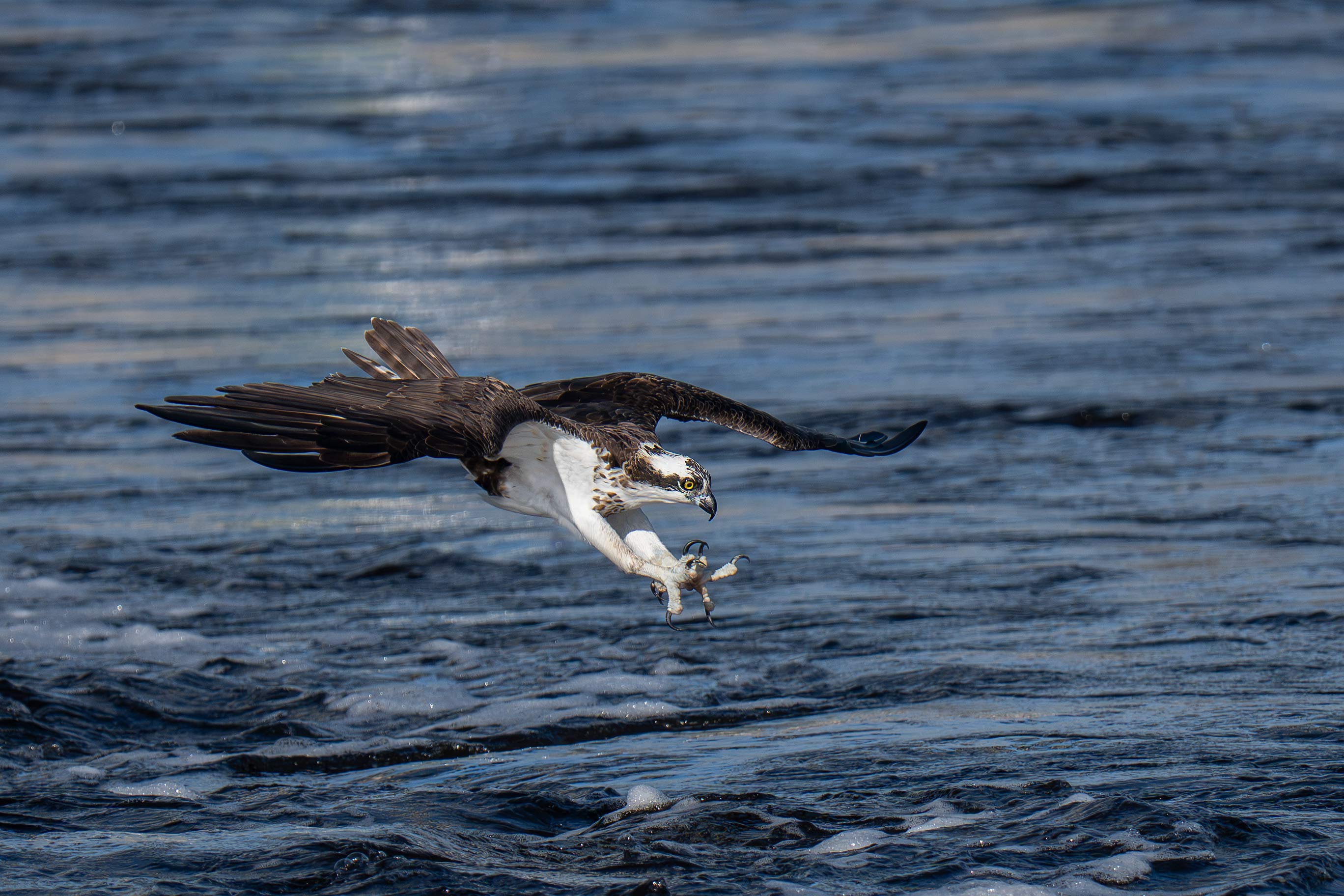
This image was created on 5 November 2026 by Steve Baglione at Sebastian Inlet State Park on a private BAA In-the-Field Instructional session. He used the handheld Sony FE 100-400mm f/4.5 GM OSS lens (at 400mm) and The Latest Greatest Sony Flagship Body, the a-1 II Mirrorless Camera (in APS-C crop mode — effective focal length 600mm). The exposure was determined by Zebras with ISO on the rear wheel. ISO 640: 1/6400 second at f/4.5 (wide open) in Manual mode. AWB at 9:01:20am on a sunny morning Tracking: Zone/AF-C with Bird-Eye/Face Detection performed perfectly. Click on the image to enjoy a larger high-res version. Image #4: Osprey with talons extended |
Basic Lesson for Steve and for You
If you are working backlit pre-dawn and sunrise color, remember to switch to Manual mode when the sun comes up — and then turn around, keep the sun at your back, and point your shadow at the bird. Steve did just that to create this fine image of an Osprey about to hit the water. This is a large crop. With lots of light, Steve would have been much better off adding the 1.4X TC (as I believe I had suggested previously).
|
|
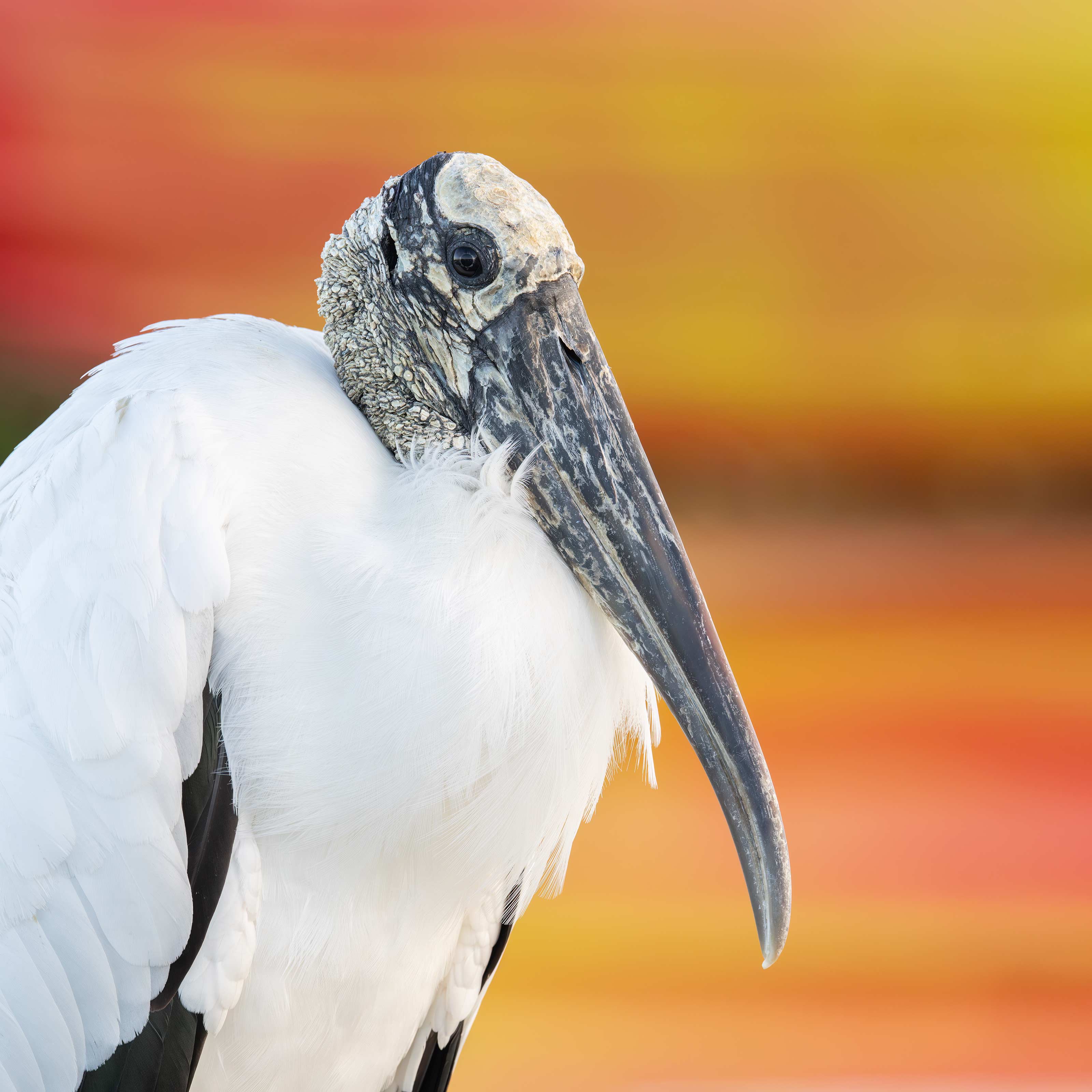
This image was created on 6 November 2026 by Steve Baglione at Sebastian Inlet State Park on a private BAA In-the-Field Instructional session. He used the Click on the image to enjoy a larger high-res version. Image 5: Wood Stork against kayak background |
Thanks Again To Bob Eastman!
It was Bob who pointed out that with the cloudy skies, we could easily juxtapose the Wood Stork with the kayak-colored background. That was only doable because the cloudy skies allowed us to work well off sun angle.
Steve was feeling a bit nostalgic at the thought of going all in on Sony, so for a very few days, he continued to use his Canon 100-500/R5 II rig. The Sony 100-400 f/4.5 GM is better in a thousand ways.
|
|
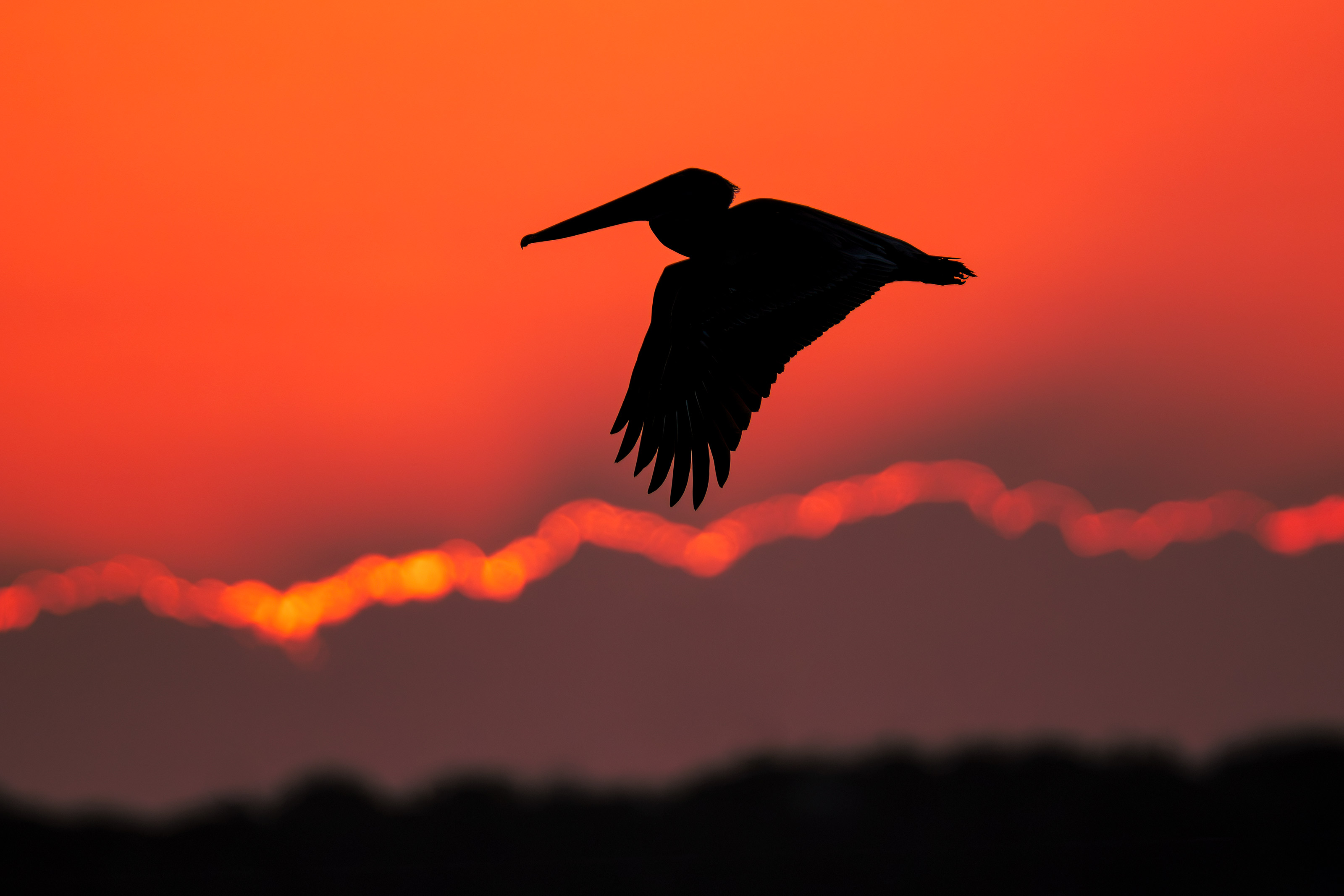
This image was created on 5 November 2026 by Steve Baglione at Sebastian Inlet State Park on a private BAA In-the-Field Instructional session. He used the handheld Sony FE 100-400mm f/4.5 GM OSS lens with the Sony FE 1.4x Teleconverter (at 560mm) and the a-1 II Mirrorless Camera (in APS-C crop mode/effective focal length = 840mm). The exposure was determined by Zebras with Exposure Compensation (EC) on the Thumb Dial. Multi Metering +1 stop. AUTO ISO set ISO 2000: 1/4000 second at f/6.3 (wide open) in Shutter Priority mode. AWB at 5:54:30pm on a partly cloudy afternoon. Tracking: Zone/AF-C with Bird-Eye/Face Detection performed perfectly. Click on the image to enjoy the larger, inexplicably sharper high-res version. Image #6: Brown Pelican sunset silhouette |
Another Plus for Sony
After an original a-1 firmware update several years ago, getting from Manual to Shutter Priority mode was greatly simplified. After a few days, Steve had it down pat.
|
|
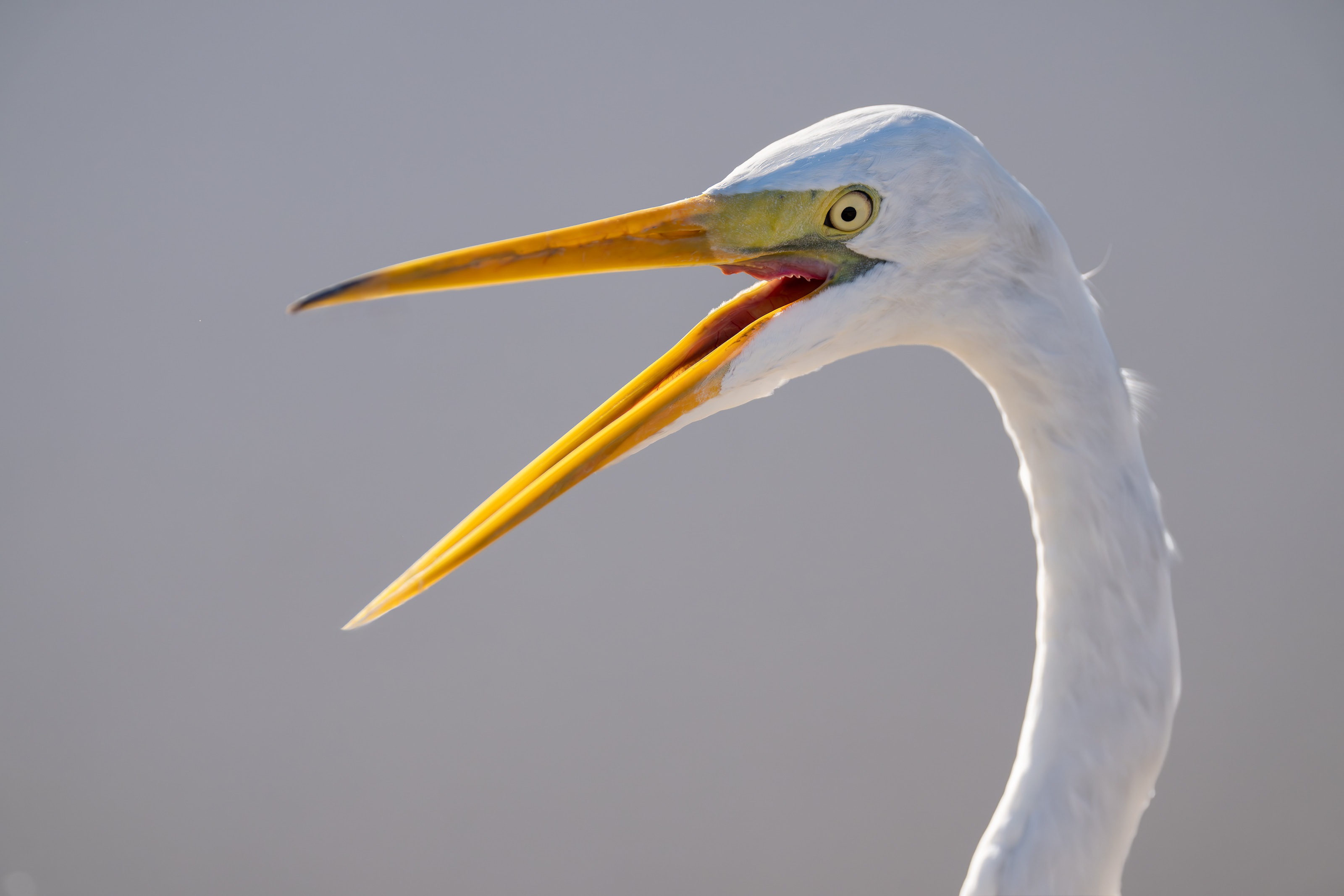
This image was created on 8 November 2026 by Steve Baglione at Sebastian Inlet State Park on a private BAA In-the-Field Instructional session. He used the handheld Sony FE 100-400mm f/4.5 GM OSS lens with the Sony FE 1.4x Teleconverter (at 560mm) and the a-1 II Mirrorless Camera. The exposure was determined by Zebras with ISO on the rear wheel. ISO 1600: 1/4000 second at f/6.3 (wide open) in Manual mode. AWB at 9:01:20am on a sunny morning Tracking: Zone/AF-C with Bird-Eye/Face Detection performed perfectly. Click on the image to enjoy the larger, inexplicably sharper high-res version. Image #7: Great Egret juvenile laughing |
Being Prepared is a Huge Plus When You Are in the Right Spot
It was not long until Bags was nailing every exposure thanks to Zebra technology. And he mastered the AF system in about three minutes flat. Unlike me, he prefers Tracking: Zone over Wide for most of his bird photography. With the basics down pat, he was in just the right spot when this young Great Egret appeared to note something funny. I was to his right, and thus the bird was angled away from me. Score another one for the student.
|
|
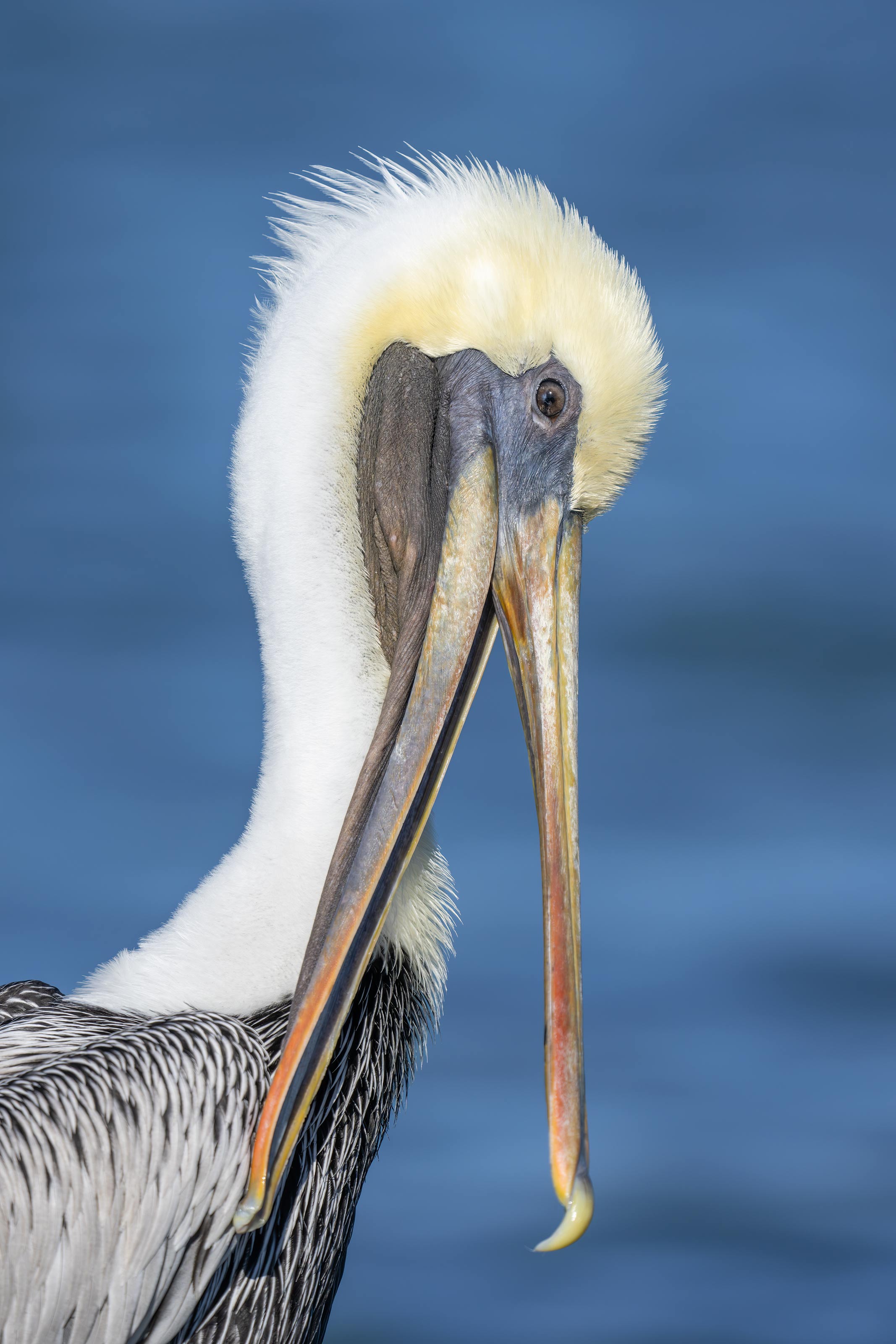
This image was created on 8 November 2026 by Steve Baglione at Sebastian Inlet State Park on a private BAA In-the-Field Instructional session. He used the Robus RC-5570 Vantage Series 3 Carbon Fiber Tripod/Levered-Clamp FlexShooter Pro-mounted Sony FE 600mm f/4 GM OSS Lens with the Sony FE 2x Teleconverter (a 1200mm) and the alleged poor man’s a-1 ii, the Sony a7R VI Mirrorless Camera. Exposure determined via Zebras with ISO on the Thumb Wheel: ISO 640: 1/2000 sec. at f/8 (wide open) in Manual mode. AWB at 9:26:25am on a sunny morning. Wide/AF-C with Bird Eye/Face Detection enabled performed perfectly. Be sure to click on the image to see the larger, inexplicably sharper high-res version. Image #8:Brown Pelican adult scissors preening |
Sony at 1200mm
Steve does not even own an RF 2X TC, and he had never before used a 2X TC for bird photography. When he asked me about using the 2X, and I responded by stating that no one in history has used, depended on, and succeeded with 2X teleconverters more than I have.
I had been creating lots of head portraits of this rather handsome adult pelican in pretty decent light, so I decided to let Bags put a card in my rig so that he could get an idea of the proper 1200mm technique and the incredible sharpness possible at that focal length (even at the wide-open aperture)!
My luck: with Steve at the viewfinder, the bird began to preen its upper breast feathers. 🙁
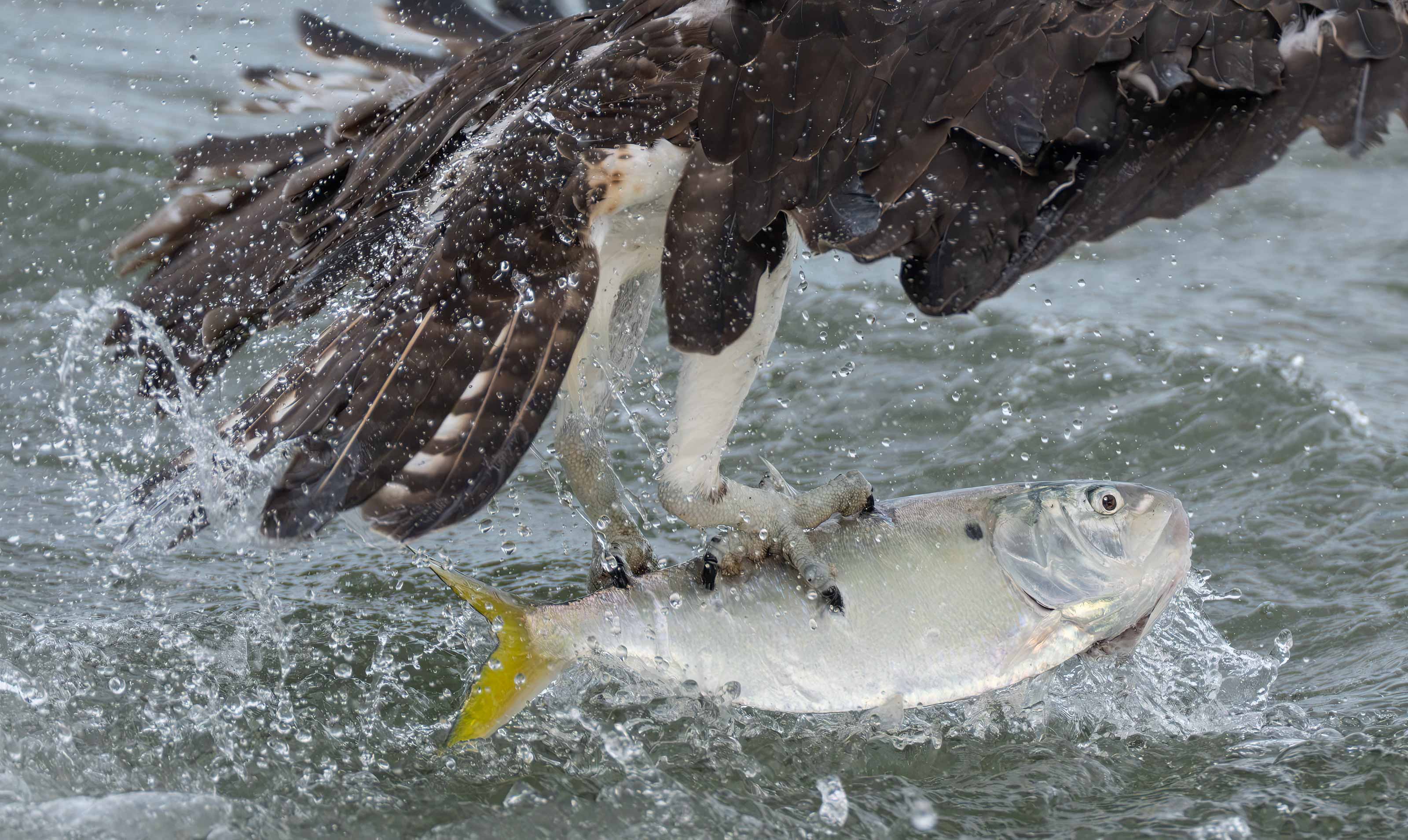
|
|
This image was created on 10 November 2026 by Steve Baglione at Sebastian Inlet State Park on a private BAA In-the-Field Instructional session. He used the handheld Sony FE 100-400mm f/4.5 GM OSS lens with the Sony FE 1.4x Teleconverter (at 528mm) and the a-1 II Mirrorless Camera. The exposure was determined by Zebras with ISO on the rear wheel. ISO 3200: 1/2500 second at f/6.3 (wide open) in Manual mode. AWB at 7:21:05am on a cloudy morning Tracking: Zone/AF-C with Bird-Eye/Face Detection performed perfectly. Click on the image to enjoy the larger, inexplicably sharper high-res version. Image #9: Osprey with Yellowfin Menhaden in its talons |
Bird Photography is Like a Box of Chocolates …
Bob, Jim Dolgin, and I enjoyed a strong southeast wind on November 4, the day before Steve flew down from Maine. From the 5th onwards, we have not seen a shred of a morning wind with any south in it. One morning with tons of action the wind was supposed to be from the southwest, but the breeze turned out to be from the west with a bit of north in it. So, even on our best fishing Osprey days, very few if any of the birds were flying toward us. With almost constant wind-against-sun conditions, my advice to Steve was: “If one dives close to us, fire away—you never know what you’re gonna get.”
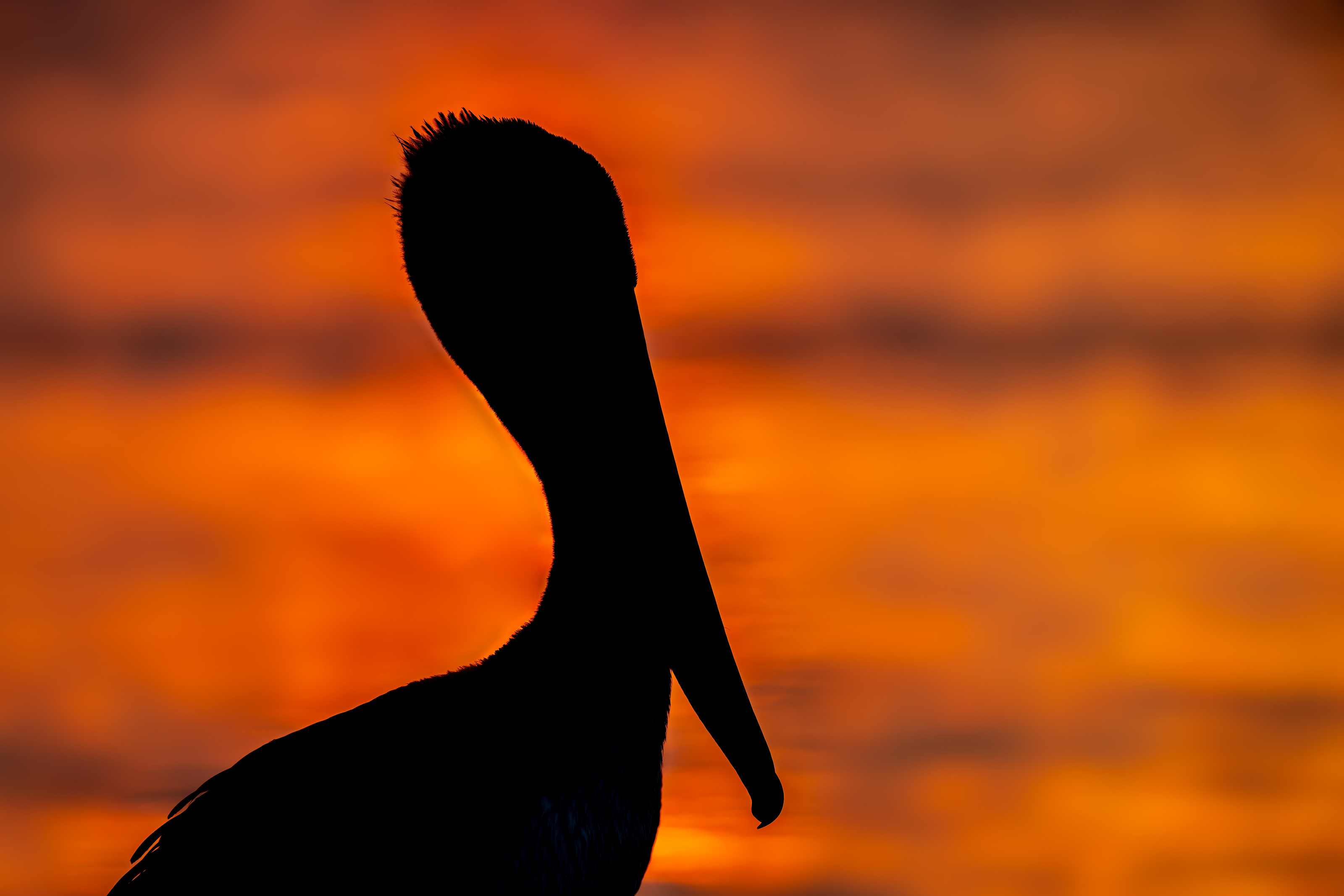
|
|
This image was created on 10 November 2026 by Steve Baglione at Sebastian Inlet State Park on a private BAA In-the-Field Instructional session. He used the handheld Sony FE 100-400mm f/4.5 GM OSS lens with the Sony FE 1.4x Teleconverter (at 528mm) and the a-1 II Mirrorless Camera. The exposure was determined by Zebras with Exposure Compensation (EC) on the Thumb Dial. Multi Metering +2 stops. AUTO ISO set ISO 4000: 1/320 second at f/6.3 (wide open) in Shutter Priority mode. AWB at 4:58:06pm — about 30 minutes before sunset on a partly cloudy afternoon. Tracking: Zone/AF-C with Bird-Eye/Face Detection performed perfectly. Click on the image to enjoy the larger, inexplicably sharper high-res version. Image #10: Brown Pelican sunset silhouette |
Living Vicariously Through My Student
We were at The Bench, our usual wind-against-sun sunset spot. I decided to take a short walk to the jetty to see if there were any silhouette opportunities. There was a pelican posing on the end of the jetty with richly colored water behind it. The problem for me was that I needed to get further to my right in order to line things up. In fear of falling, I was not going to risk walking out onto the rocks. So I yelled, “Hey, Steve!” And the rest was history.
One of the most important things to learn when you are in the field with me is seeing the shot — being able to consider the subject and the light, and then being able to put yourself here or there while envisioning what might be possible. Many folks whom I work with do not appreciate the importance of mastering this skill.
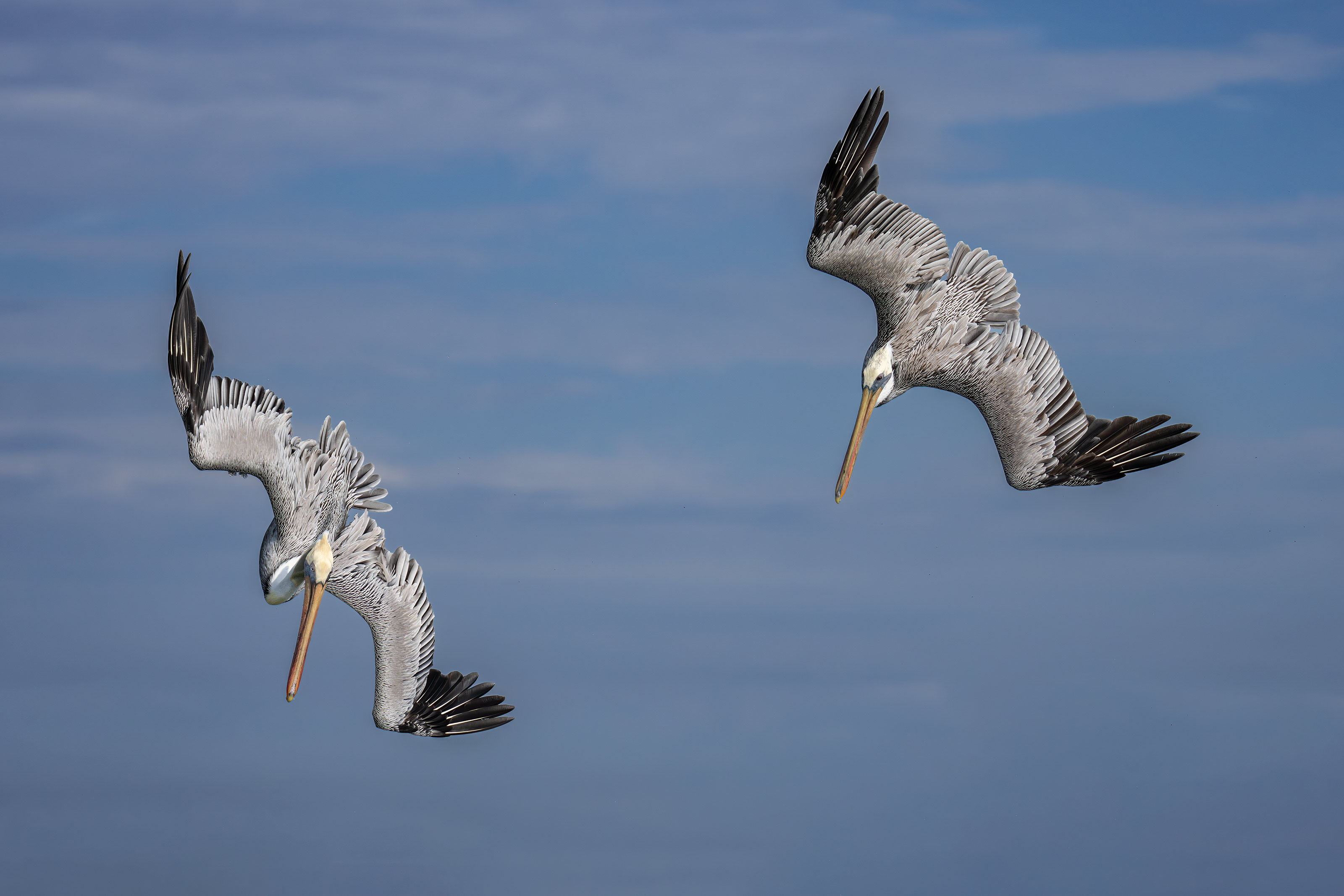
|
|
This image was created on 11 November 2026 by Steve Baglione at Sebastian Inlet State Park on a private BAA In-the-Field Instructional session. He used the handheld Sony FE 100-400mm f/4.5 GM OSS lens (at 200mm!) and The Latest Greatest Sony Flagship Body, the a-1 II Mirrorless Camera. The exposure was determined by Zebras with ISO on the rear wheel. ISO 800: 1/8000 second at f/4.5 (wide open) in Manual mode. AWB at 8:36:45am on a sunny morning Tracking: Zone/AF-C with Bird-Eye/Face Detection performed perfectly. Click on the image to enjoy a larger high-res version. Image #11: Brown Pelican adults — synchronous diving |
Our Best Morning
On the morning of the 11th, the Ospreys were diving and catching fish right in front of us for nearly 90 minutes. But with the wind from the west, they would hit the water, turn away from us, and leave the scene. When the Osprey action died down a bit, the pelicans went nuts. We made our way to the end of the South Jetty and enjoyed an hourlong feeding and diving frenzy. By zooming out here, Steve had more than enough depth of field to render both birds sharp. Heck, they were pretty much on the same plane anyway.
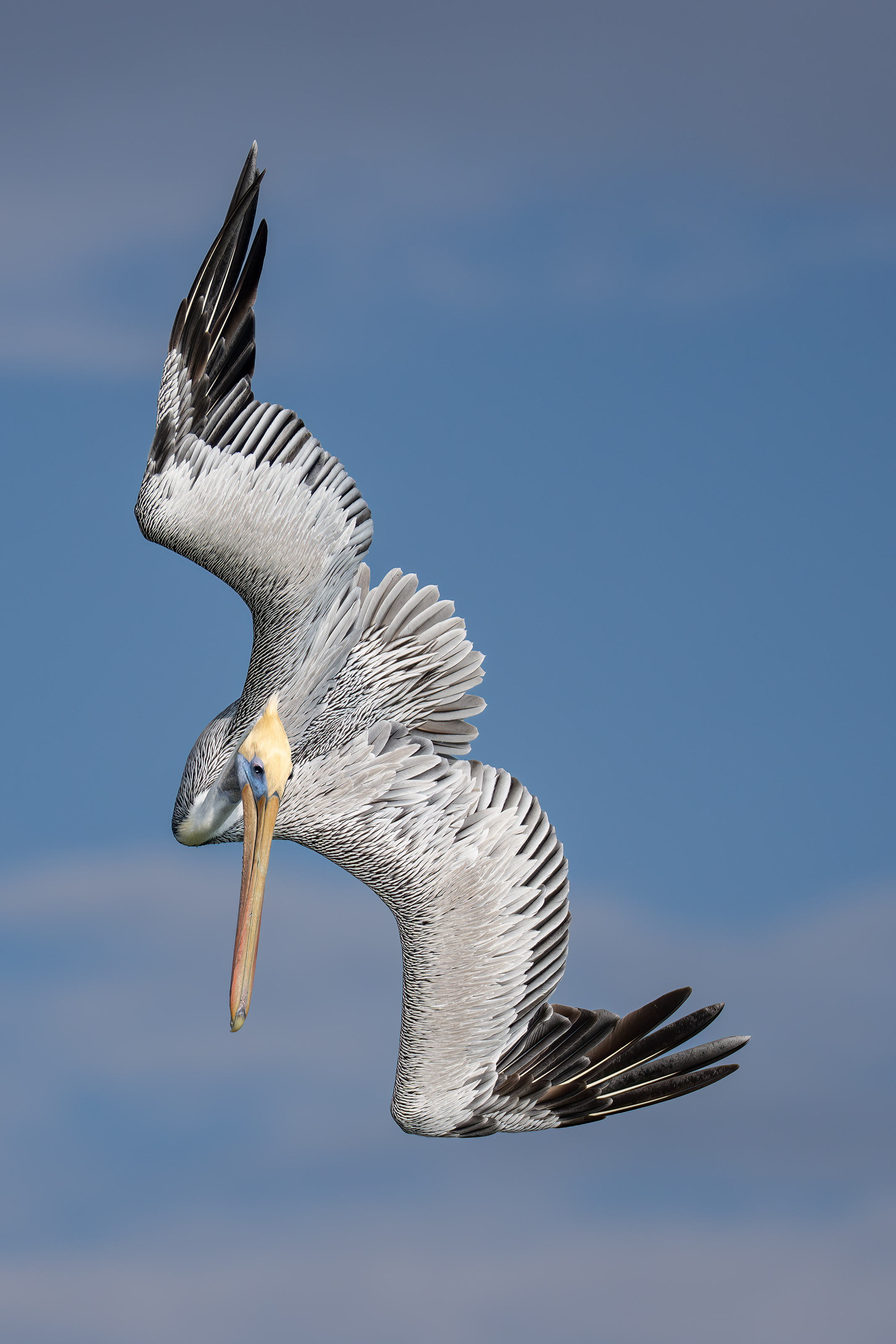
|
|
This image was created on 11 November 2026 by Steve Baglione at Sebastian Inlet State Park on a private BAA In-the-Field Instructional session. He used the handheld Sony FE 100-400mm f/4.5 GM OSS lens (at 344mm) and The Latest Greatest Sony Flagship Body, the a-1 II Mirrorless Camera. The exposure was determined by Zebras with ISO on the rear wheel. ISO 800: 1/8000 second at f/4.5 (wide open) in Manual mode. AWB at : 8:41:34am on a sunny morning Tracking: Zone/AF-C with Bird-Eye/Face Detection performed perfectly. Click on the image to enjoy a larger high-res version. Image #12: Brown Pelican adult diving |
A Diving Pelican Secret
Most folks do not realize that when the wind is in your face, diving pelicans twist around completely during their dives, offering unique poses and flight postures. As we were often a bit off sun angle, using Adobe Camera Raw masks to brighten the shaded side of the big birds’ faces was instrumental in evening out the exposures and reducing contrast. This fine image was cropped from a horizontal original.
Learn about Adobe Camera Raw masking in the Digital Basics IV Video Series by clicking here.
|
|
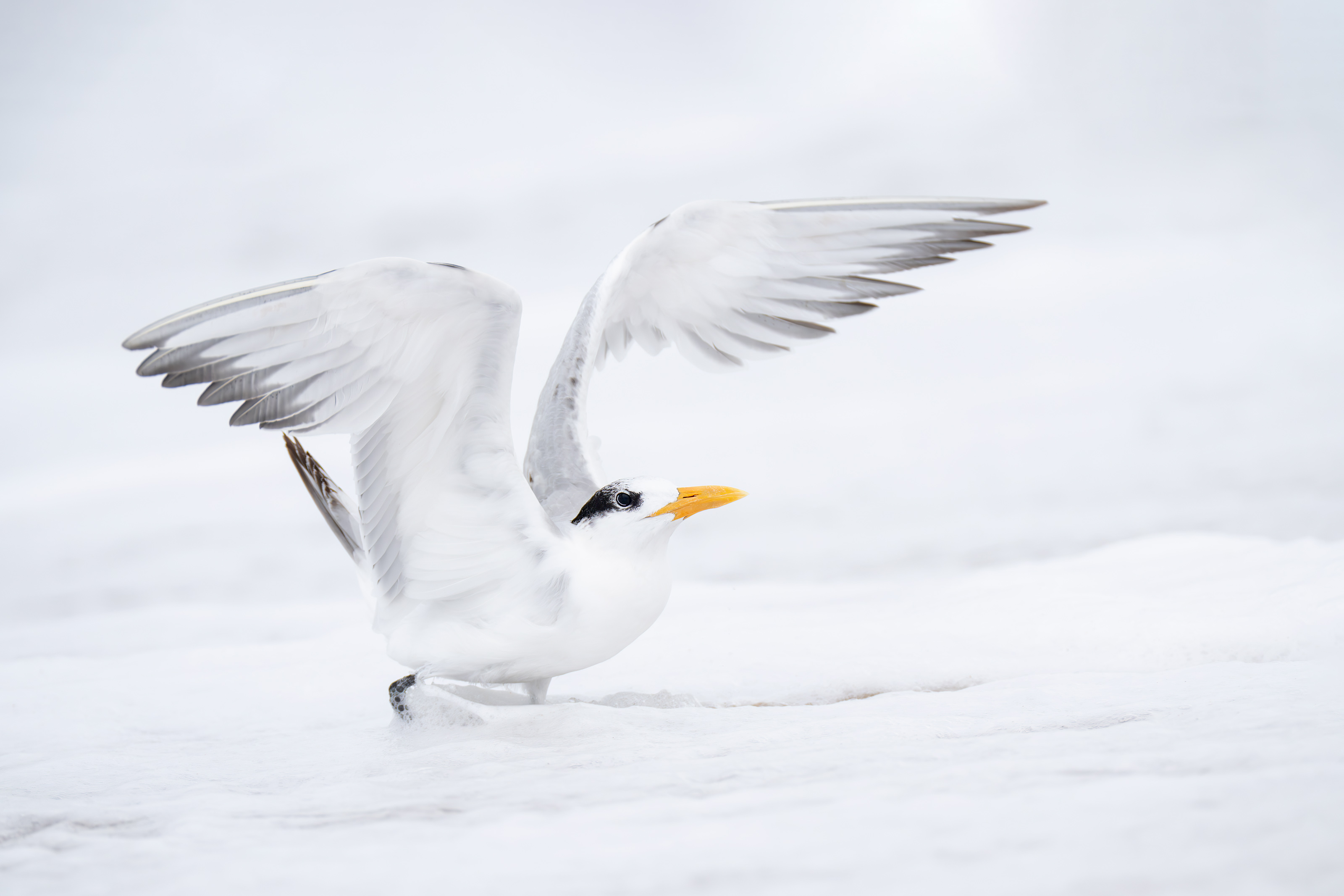
This image was created on 12 November 2026 by Steve Baglione at Sebastian Inlet State Park on a private BAA In-the-Field Instructional session. Seated on the beach next to me, he used the handheld Sony FE 100-400mm f/4.5 GM OSS lens with the Sony FE 1.4x Teleconverter (at 462mm) and the a-1 II Mirrorless Camera. The exposure was determined by Zebras with ISO on the rear wheel. ISO 3200: 1/2500 second at f/6.3 (wide open) in Manual mode. AWB at 8:18:26am on a cloudy morning Tracking: Zone/AF-C with Bird-Eye/Face Detection performed perfectly. Click on the image to enjoy the larger, inexplicably sharper high-res version. Image #13: Royal Tern in the wash after bath with wings raised |
Kill Me Why Don’t You?
With a fairly low tide, a NW breeze, and a Royal Tern flock on the beach on the morning of the 12th, I had a chance to work with Bags on getting on the ground and sitting on the flock with the wind behind us in hopes of photographing incoming terns. The best opportunities, however, turned out to be with the birds that ventured down the beach onto the clean, wave-washed sand. A very few made their way into the gentle surf. Both with our 100-400s with the 1.4X TC in place, we were in perfect position to get some images of this bird rising up out of the foamy wash of a broken wave. Steve zoomed out enough to fit the whole bird in the frame and create the glorious image that I had envisioned. I did not and clipped the tern’s wings. And cried. 🙂
|
|
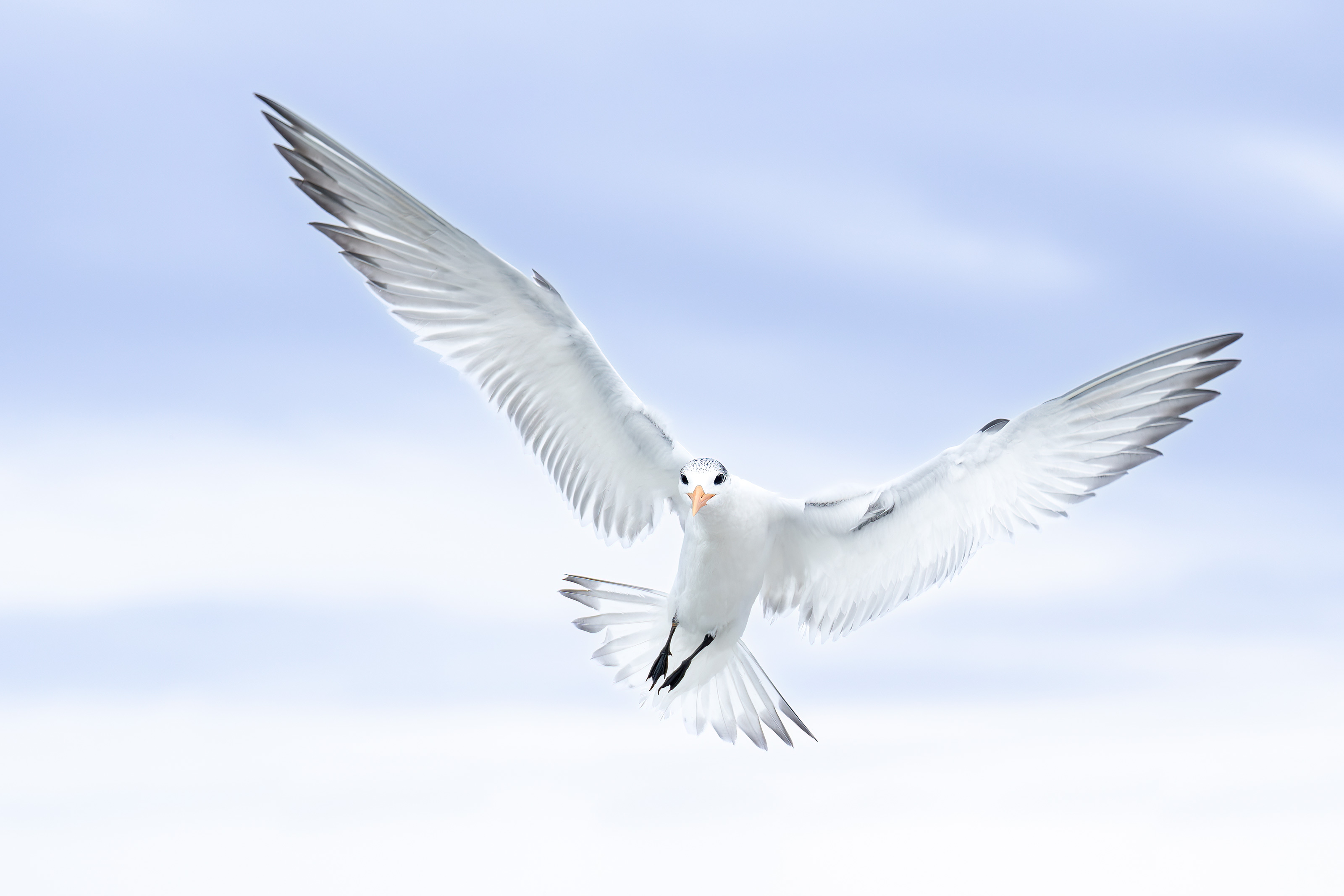
This image was created on 12 November 2026 by Steve Baglione at Sebastian Inlet State Park on a private BAA In-the-Field Instructional session. Standing at full hight, he used the handheld Sony FE 100-400mm f/4.5 GM OSS lens (at 143mm!) and The Latest Greatest Sony Flagship Body, the a-1 II Mirrorless Camera. The exposure was determined by Zebras with ISO on the rear wheel. ISO 2500: 1/3200 second at f/4.5 (wide open) in Manual mode. AWB at 9:01:14am on a sunny morning Tracking: Zone/AF-C with Bird-Eye/Face Detection performed perfectly. Click on the image to enjoy a larger high-res version. Image #14: Royal Tern landing |
The Good News and the Bad News
After all the terns flew off, we made our way back onto the base of the North Jetty. There were terns fishing on both sides. The jetty itself had been closed again for several weeks due to a near-drowning incident. There is a tall, spiked metal gate that is locked that prevents folks from getting out onto the main section of the jetty.
One intrepid tern kept landing on the spiked tippy-top of the northern-most fencepost. I cozied up to a friendly fisherman, zoomed out a bit to 300mm, and made some really nice images when the bird returned to its unusual perch scout the surf. I alerted Steve to the opportunity and told him to make sure to zoom out as he would be working at point blank range. He followed my advice to the letter and wound up zooming out to much. The result? Image #14 required a large crop that involved losing lots of pixels on the subject.
The really bad new is that the complete NE quadrant of the park including the entire North jetty will be 100% closed to visitors for 1 1/2 years beginning on 1 January 2027 to repair the jetty. Again 🙁
|
|
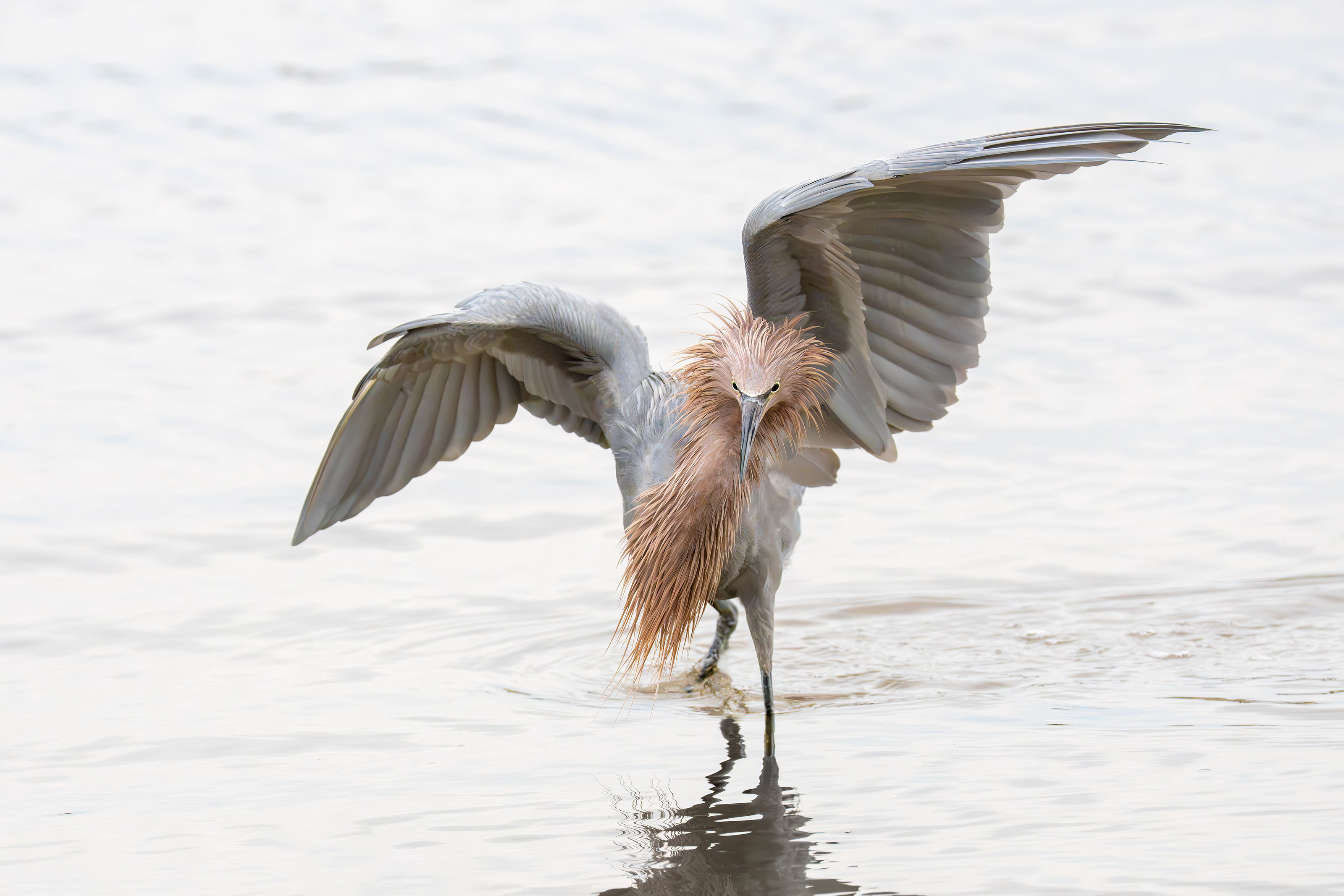
This image was created on 13 November 2026 by Steve Baglione at Sebastian Inlet State Park on a private BAA In-the-Field Instructional session. Seated on the ground, he used the handheld Sony FE 100-400mm f/4.5 GM OSS lens (at 143mm!) and The Latest Greatest Sony Flagship Body, the a-1 II Mirrorless Camera. The exposure was determined by Zebras with ISO on the rear wheel. ISO 20,000! (not a typo): 1/2000 second at f/4.5 (wide open) in Manual mode. AWB at 3:39:39am on a cloudy afternoon. Tracking: Zone/AF-C with Bird-Eye/Face Detection performed perfectly. Click on the image to enjoy a larger high-res version. Image #15: Reddish Egret on the hunt |
ISO 20,000: Not a Typo!
I say it often — if you want to make a sharp image, pay no attention to high ISO settings. Bags properly exposed to the right by raising the ISO to 20,000. The result was a very fine, sharp photo showing a decent amount of fine feather detail and zero noise. I used my double noise reduction technique to clean this one up acceptably.
|
|
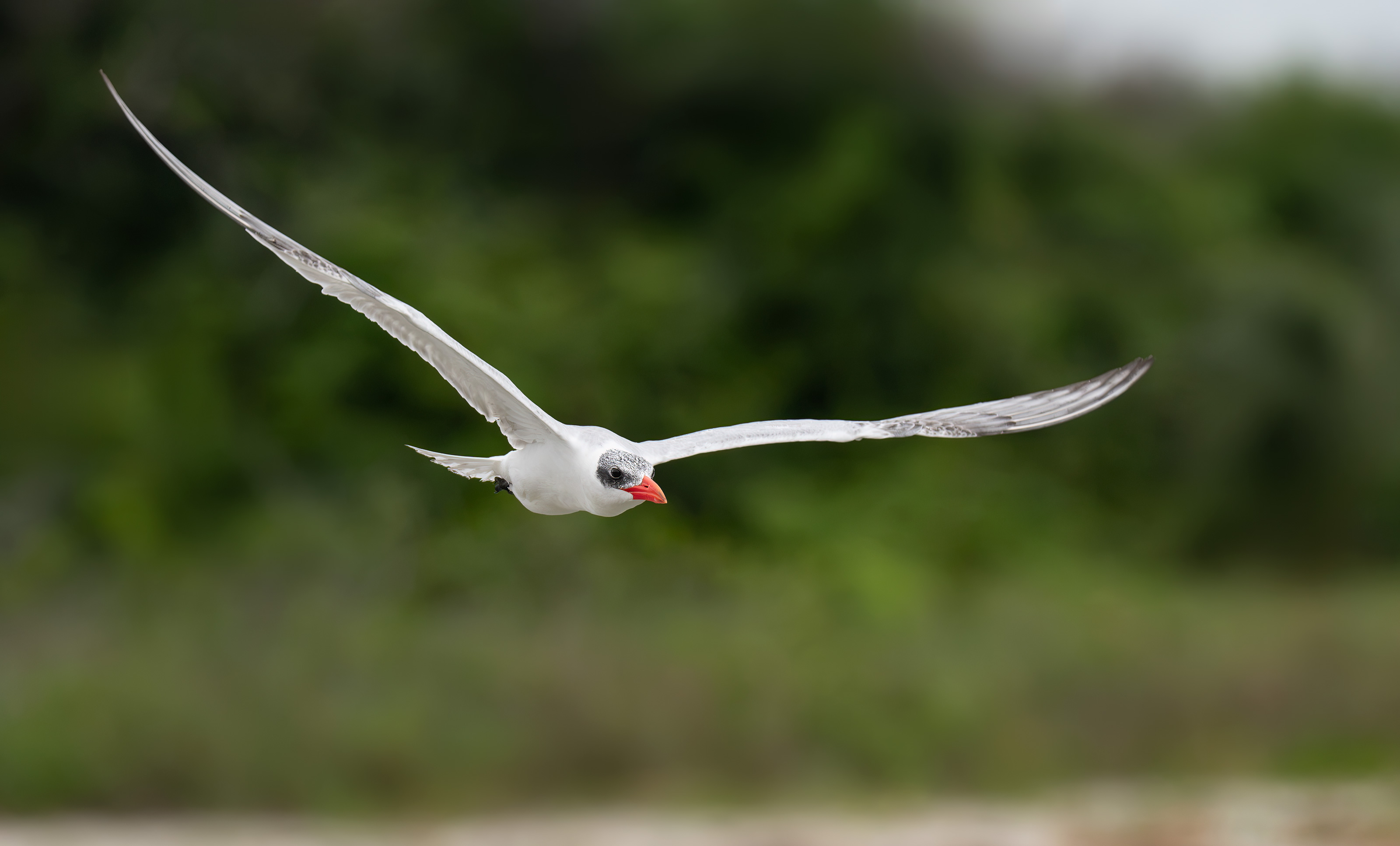
This image was created on 13 November 2026 by Steve Baglione at Sebastian Inlet State Park on a private BAA In-the-Field Instructional session. Standing at full height, he used the handheld Sony FE 100-400mm f/4.5 GM OSS lens (at 400mm) and The Latest Greatest Sony Flagship Body, the a-1 II Mirrorless Camera. The exposure was determined by Zebras with ISO on the rear wheel. ISO 2000: 1/2500 second at f/6.3 (in error) in Manual mode. AWB at 8:51:00am on a cloudy morning. Tracking: Zone/AF-C with Bird-Eye/Face Detection performed perfectly. Click on the image to enjoy a larger high-res version. Image #16: Caspian Tern in flight |
Nice Background Steve!
Getting a dark green background for a tern in flight is not something that you do every day at Sebastian or anywhere else. Kudos to Steve and his new Sony rig for nailing accurate focus and a perfect exposure with Image #16.
|
|
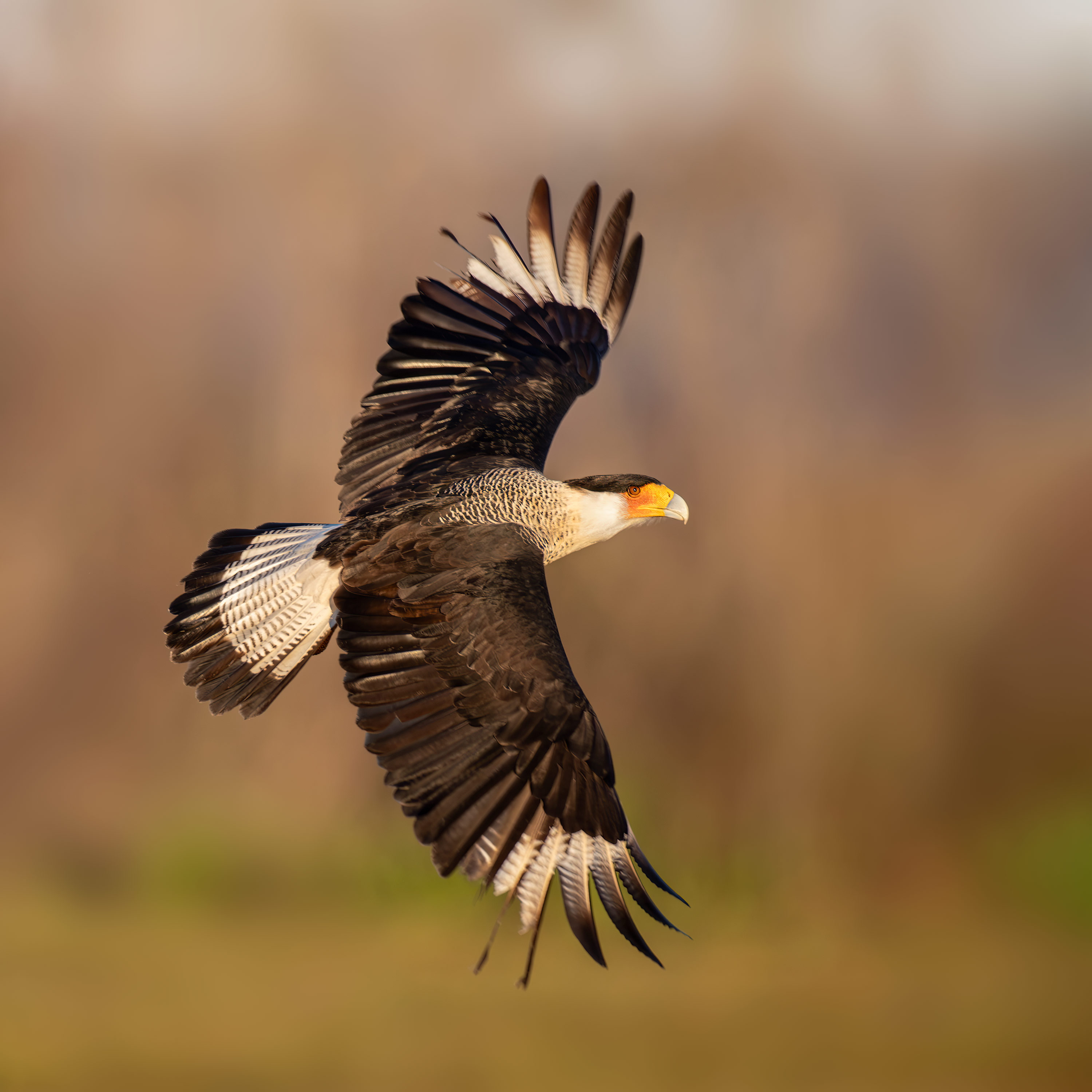
This image was created on 14 November 2026 by Steve Baglione at Indian Lake Estates, FL during a private BAA In-the-Field Instructional session. Seated behind me in my SUV he lifted his rig off the BLUBB and handheld the BLUBB supported Canon RF 600mm f/4 L IS USM Lens with the Canon Extender RF 1.4x and the Canon EOS R5 Mark II Mirrorless Camera. Evaluative Metering at zero. ISO 1250: 1/2000 second at f/5.6 (wide open)in Shutter Priority mode! AWB at 8:25:13am on a sunny morning. Click on the image to enjoy a larger high-res version. Image #17: Crested Caracara taking flight |
A Weekend at Indian Lake Estates
With clear skies and a NW wind forecast for the weekend, I suggested to Steve that we drive over to Indian Lake Estates early on Saturday morning, sleep at my place that evening, and then drive back to his place on Sunday afternoon after a second morning session. The plan turned out to be a brilliant one. Steve got to experience the ridiculously tame ILE Sandhill Cranes, and we had some really good bonus chances as well. A few weeks ago, I found the head of a 10- or 12-pound Largemouth Bass near a boat dock. I stuck it in the fridge, and we put it out by the caracara house both mornings and had some great chances.
Steve did a great job of lifting his big lens off the BLUBB, handholding the heavy rig, and getting on the bird when it took flight unexpectedly. I did not even get to lift my lens! There was a bit of motion blur on the head that was eliminated with Topaz Photo > Sharpen > Motion Blur.
Neither Steve nor I have any idea why he was in Shutter Priority mode with the sun out at full strength and right behind us. Steve had been unable to get to AUTO ISO or figure out how to assign Exposure Compensation to a dial or wheel. So, you might ask, how did he wind up with a pretty good exposure? Pure luck. As I wrote in the last blog post, you need two things to work successfully in an automatic exposure mode like Tv or Av: evenly toned backgrounds and a working knowledge of exposure theory. To that I would add a constant subject size.
Like it or not, this is 100% true: using AUTO ISO will never help you if you have not mastered exposure theory. On average, the meter in your camera will suggest an incorrect exposure more than 90% of the time. If you are not a lot smarter than your camera’s meter, the only good exposures that you make will be due to luck.
That is why we are now offering the softcover edition of The Art of Bird Photography. Yes, 50% off the classic bible of modern-day bird photography! Was $40.00, now $20.00 plus shipping. Order yours in the next two weeks, and I will be glad to sign and personalize your copy just for you. Studying and mastering the principles covered in the Exposure chapter will change your life—and improve your images.
|
|
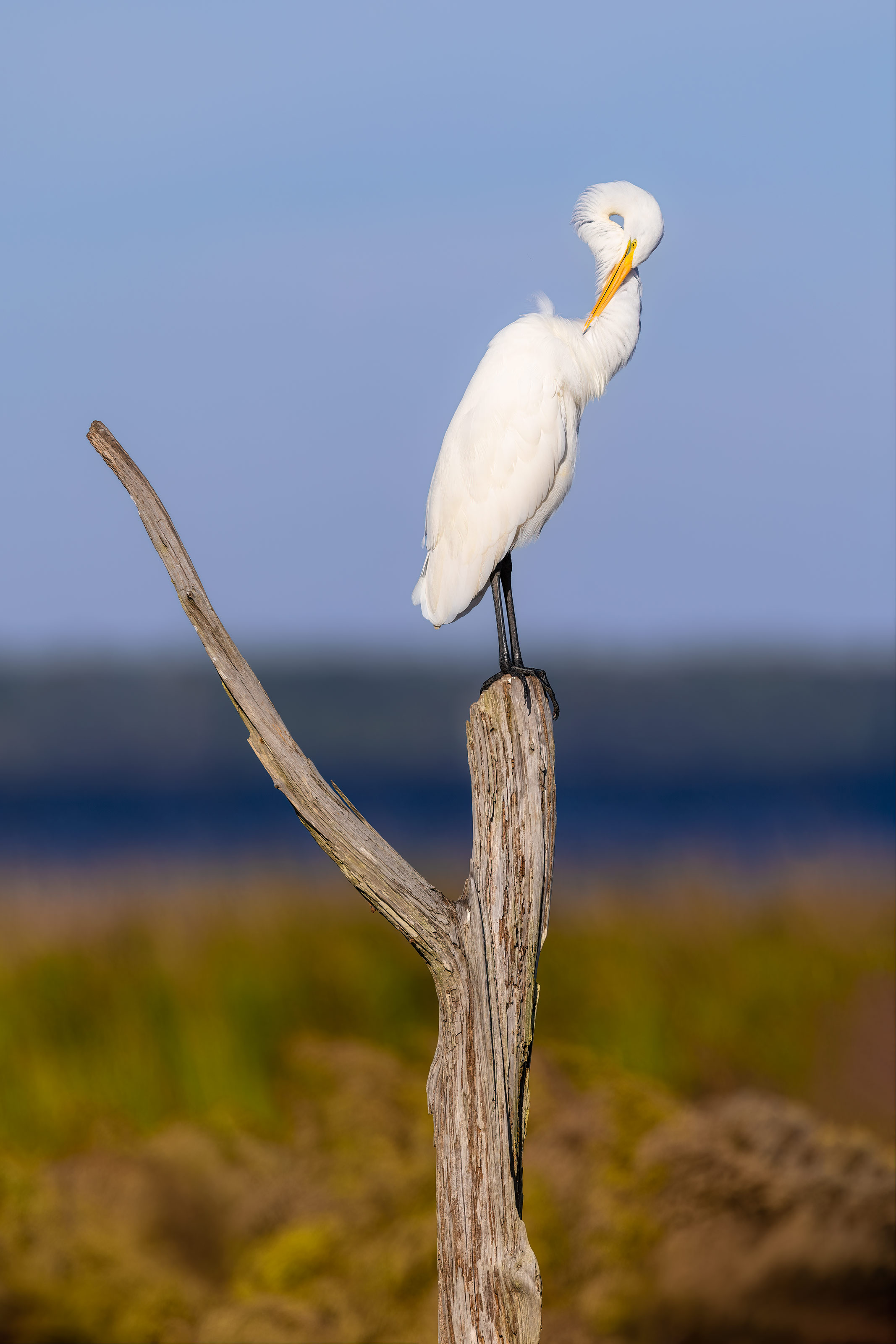
This image was created on 14 November 2026 by Steve Baglione at Indian Lake Estates, FL during a private BAA In-the-Field Instructional session. Seated behind me in my SUV he used the BLUBB supported Canon RF 600mm f/4 L IS USM Lens and the Canon EOS R5 Mark II Mirrorless Camera. Evaluative Metering at zero. ISO 250: 1/4000 second at f/5.6 (stopped down one stop)in Manual mode. 10:15:11am on a sunny morning. Click on the image to enjoy a larger high-res version. Image #18: Great Egret on Bob Eastman’s V-perch. |
You Cannot Make Nice Images After 9:00am on Sunny Mornings
If you fall for this commonly held belief, you will be missing lots of decent opportunities. The trick is to work right on sun angle to eliminate any harsh shadows. And then raise the color temperature as the first step in the optimization process.
|
|
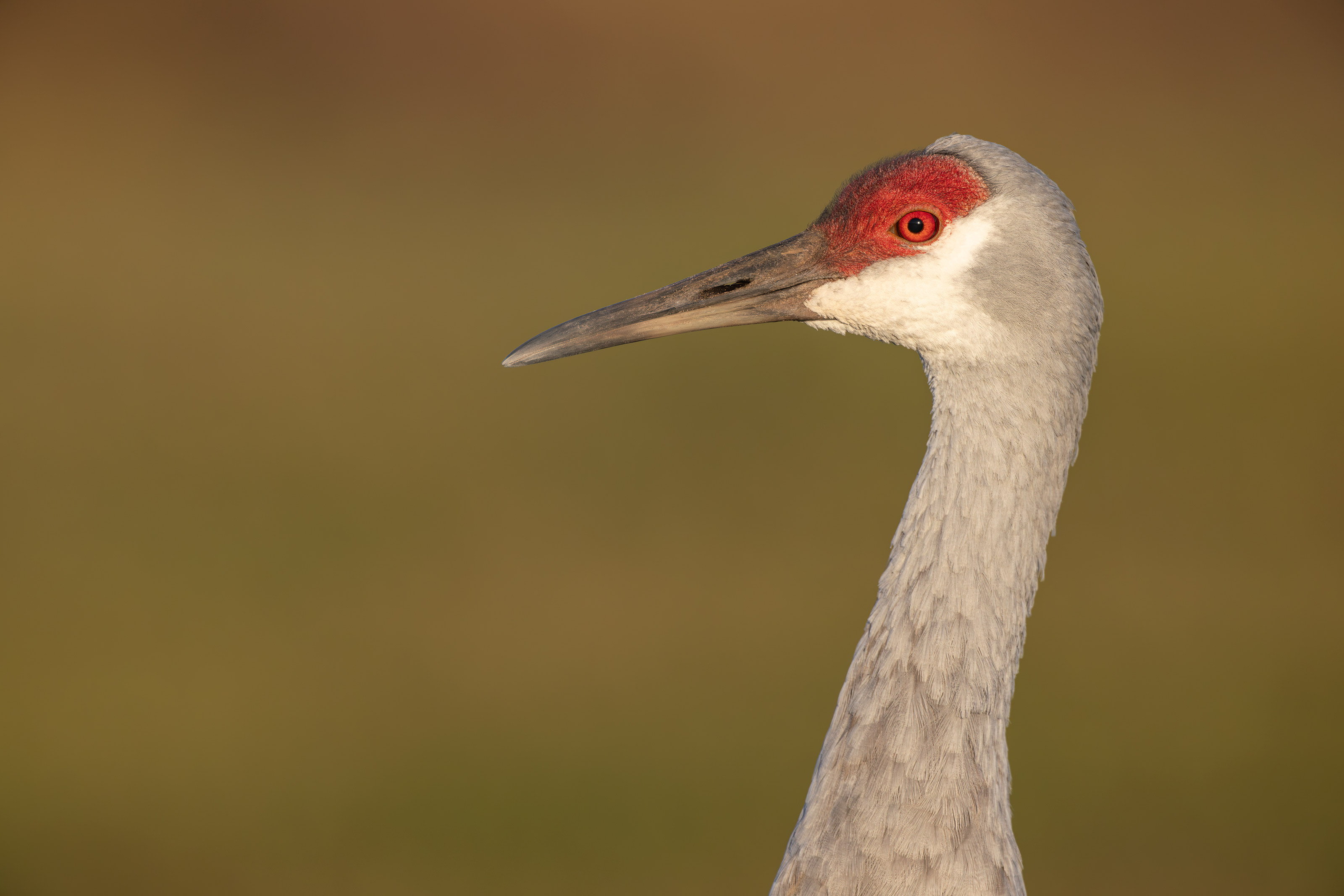
This image was created on 15 November 2026 by Steve Baglione at Indian Lake Estates, FL during a private BAA In-the-Field Instructional session. Seated behind me in my SUV he used the BLUBB-supported Canon RF 600mm f/4 L IS USM Lens with the Canon Extender RF 1.4x and the Canon EOS R5 Mark II Mirrorless Camera. ISO 1000: 1/2500 second at f/6.3 (stopped down 1/3 stop) in Manual mode! AWB at 7:20:38 am on a sunny morning. Click on the image to enjoy a larger high-res version. Image #19: Sandhill Crane adult head portrait |
Steve Baglione Makes a Perfect Photograph
As I explain to all of my students who wish to improve — and to anyone who is willing to listen, the key to becoming a good photographer is to master the process:
1-Visualize the image that you wish to create. Be sure to check your background. Distant backgrounds are often ideal.
2- Pick an appropriate shutter speed.
3- Work at the wide-open aperture unless you can verbalize a reason for stopping down.
4- Set a good exposure by adjusting the ISO.
5- Pick the AF pattern that will best enable you to create a pleasing image design.
Only by mastering the steps above will you be able to consistently make images that make you and others happy. As Steve’s crane images were all over the place with regard to exposure and image design (the former only when he was using his Canon gear), he needs to work on his consistency.
And here is the best news: once you master the process you will be confident and ready when something amazing unfolds right in front of you.
|
|
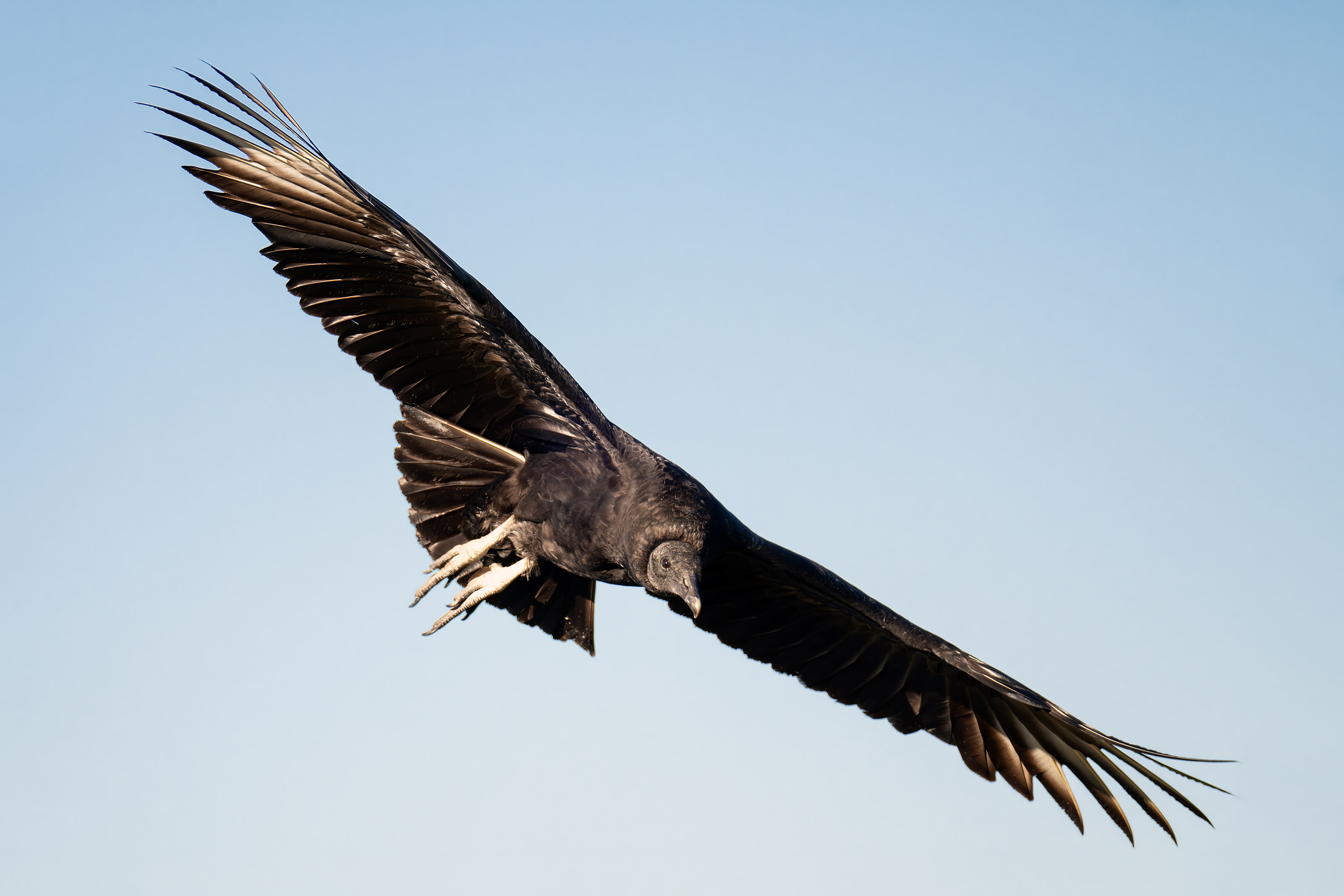
This image was created on 15 November 2026 by Steve Baglione at Indian Lake Estates, FL during a private BAA In-the-Field Instructional session. Seated on a kitchen step stool, he used the handheld Sony FE 100-400mm f/4.5 GM OSS lens with the Sony FE 1.4x Teleconverter (at 560mm) and the a-1 II Mirrorless Camera. The exposure was determined by Zebras with ISO on the rear wheel. ISO 2500: 1/4000 second at f/6.3 (wide open) in Manual mode. AWB at 8:45:42am on a sunny morning Tracking: Zone/AF-C with Bird-Eye/Face Detection performed perfectly. Click on the image to enjoy the larger, inexplicably sharper high-res version. Image #20: Black Vulture on final approach |
No Shock
It should not come as a big surprise that a champion skeet and trap shooter will likely excel at flight photography. With a north wind on Sunday morning, we had only one vulture flying right at us. Steve paid it off nicely while just fitting this bird into the original frame without clipping a feather.
Support BIRDS AS ART with your Everyday Online Shopping
Using the BAA Tip Jar Costs You Nothing
This You Tube video blog post took three hours to prepare not including the time spent photographing, picking my keepers, and optimizing the images. Consider using the BAA Tip Jar — it never costs you a single penny to help me out.
If you are like me, you enjoy the convenience of shopping online at Amazon without having to drive into town. The prices are competitive, and you can return anything you purchase for any reason (as long as you have not wrecked it).
If you enjoy learning from the blog posts, the YouTube videos, and the Instagram posts, or simply love being inspired by the images, the simplest and easiest way to support my efforts at BIRDS AS ART at no cost to you, is to use my generic Amazon link:
Whenever you make your routine household purchases — from groceries and coffee to backup batteries, household supplies, or electronics, making it a habit to click on our link first helps keep things running smoothly here. And again, it never costs you one penny to help me out.
Click here or on the Great (Photographic Accessory) Stuff tab on the lower, orange-yellow menu bar at the top of each blog post to learn about my favorite photo accessories. And more.
Typos
With all blog posts, feel free to e-mail or to leave a comment regarding any typos or errors.








#6 love the fire line of the mountains in the background + great composition, #9 obviously not what Steve intended, but sometimes those throw aways ARE the keepers, #14 really dreamy shot, not to mention sharpness. #12 runnerup. Probably cropped, but crazy detail. Almost too perfect!
I’m ordinarily not a fan of pelican photos, but I really like #6 and #12! #6 would be a nice, albeit ordinary, silhouette shot, but the bright irregular cloud line is like a lightning bolt and adds excitement! In #12, I like the color, the texture, the detail, and the pose.
12, 6, and 14
Yes, Steve‘s flight shots are excellent!
Thanks, Tom. Your comments are always appreciated.
with love, artie