
Your Call
Which three of today’s featured images do you like best? Why for each?
My Call
Thanks to those who commented on the last blog post. I really liked each and every image. I thought that the backlit one was pretty neat, and I even liked the overcast wide shot of the vulture on Bob’s North Perch. As well as the wider one of the bird facing away with lots of marsh. And the layered head portrait, #3. Know that on rare occasion someone on a trip will say something like, “But we already photographed Great Blue Heron,” I shake my head in wonder …
Summary
The current state of affairs is as follows: very few folks sign up for BAA IPTs and In-the-Field Sessions. I try to understand why, and have quite a few ideas. I will be at the fabulous Nickerson Beach till the end of the month and have been offering extremely inexpensive sessions there for more than a month. Only Carolyn Johnson has signed up — for four days. I will be in San Diego for two weeks in January. There is one spot left on the second Homer IPT. And I will be teaching at Stick Marsh in March for three weeks.
As noted here previously and often, every day that I am afield is see folks with $5K, $10K, $20K, and even $30K or more worth of photography gear. The sad fact is that 90% of them have no clue as to how to make a good photograph. Boys and girls, I am available to help if you need me.
Anyhoo, today’s post features a nice array of images created by the four folks who joined me in mid-July at Jacksonville.
Anyhoo, today’s post features a nice array of images created by the four folks who joined me in mid-July at Jacksonville. I saw my financial guy in June when I was on Long Island for hand surgery and learned that if I never have another client to teach, I will be just fine as far as money goes. So, my plan for Nickerson is to go out most mornings and evenings, make some good images, and enjoy myself to the max. Here is something strange about me: ask most professional nature photographers if they would rather work by themselves on a desolate beach or have a few folks tagging along asking them for help, 99% of them would opt for the former. I, on the other hand, make up that 1%.
Note: Copy editing, re-crafting, technical refinement, and formatting for this blog post were assisted by Gemini AI.
What’s Up
On Saturday past, I began my blessedly uneventful trip on the AMTRAK AUTO Train from Sanford, FL to Lorton, VA. With traffic and rest stops the four hour-trip to my hotel in Staten Island, NY on Sunday took more than seven hours. I moved into my Freeport AirBnB at 4pm on Monday afternoon.
Today is Monday 4 August 2026. We will be meeting Carolyn Johnson at 5:30am at Nickerson Beach. I am doing four days of instruction with her and her new 100-400 f/4.5 (fixed aperture) lens and her new a-1 ii. I will be using the exact same gear for all four days to maximize CJ’s learning opportunities. Whatever you opt to do, I hope that you choose to have fun and enjoy life. Please remember that happiness is a choice — Byron Katie – The Work.Com
If an item — a Delkin flash card or reader, a Levered-clamp FlexShooter Pro, or a Wimberley lens plate or low foot — for example, that is available from B&H and/or Bedfords, is also available in the BAA Online Store, it would be great, and greatly appreciated, if you would opt to purchase from us. We will match or beat any price. Please remember also to use my B&H affiliate links or to earn 3% cash back at Bedford by using the BIRDSASART discount code at checkout for your major gear purchases. Doing either often earns you free guides and/or discounts. And always earns my great appreciation.
Gear Questions and Advice
Too many folks attending BAA IPTs and dozens of photographers whom I see in the field and on BirdPhotographer’s.Net, are — out of ignorance — using the wrong gear, especially when it comes to tripods and more especially, tripod heads. And the same is true in spades when ordering new camera bodies or lenses. My advice will often save you some serious money and may help you avoid making a seriously bad choice. Please know that I am always glad to answer your gear questions via e-mail. If you are desperate, you can try me on my cell at 863-221-2372. Please leave a message and shoot me a text if I do not pick up.
|
|
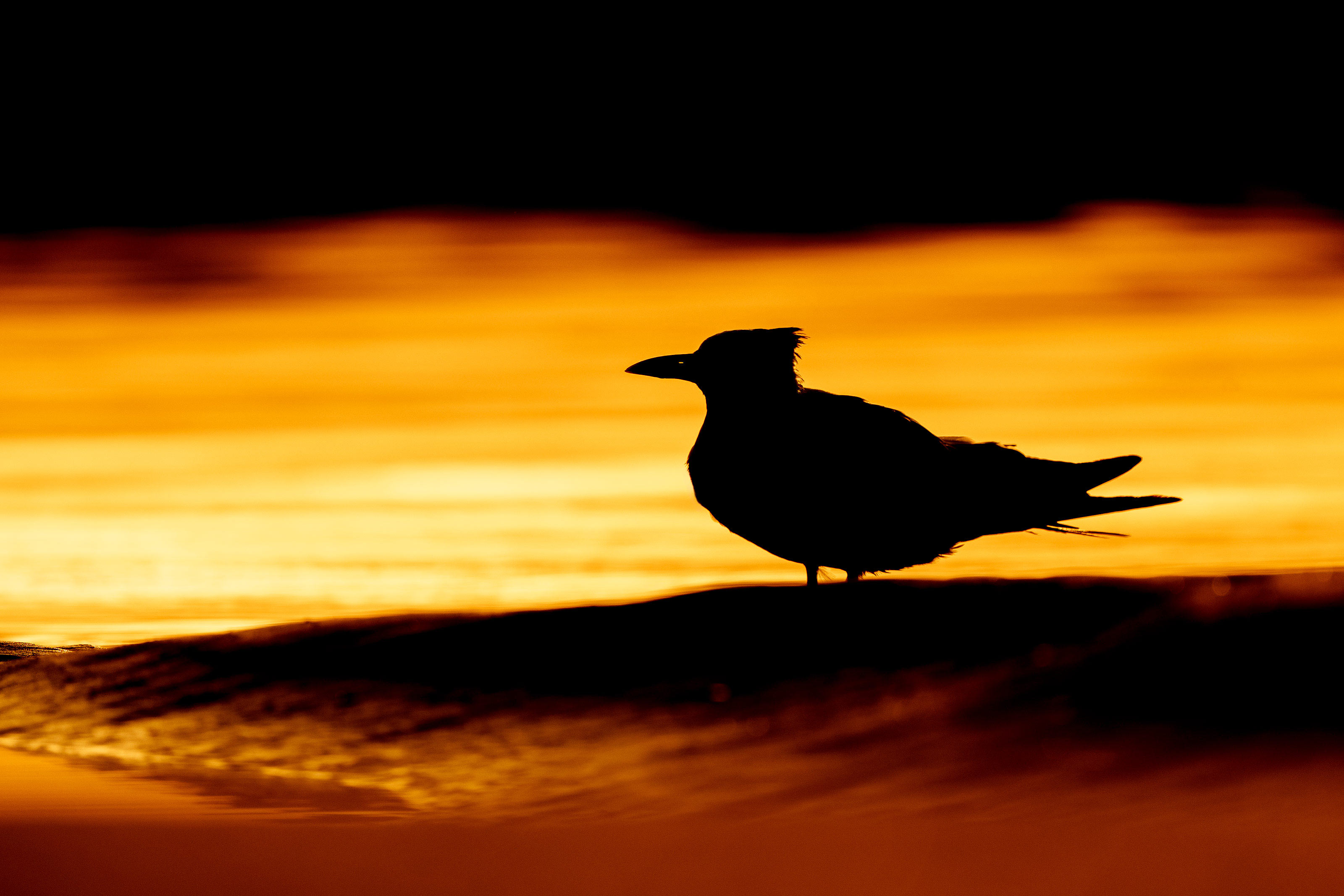
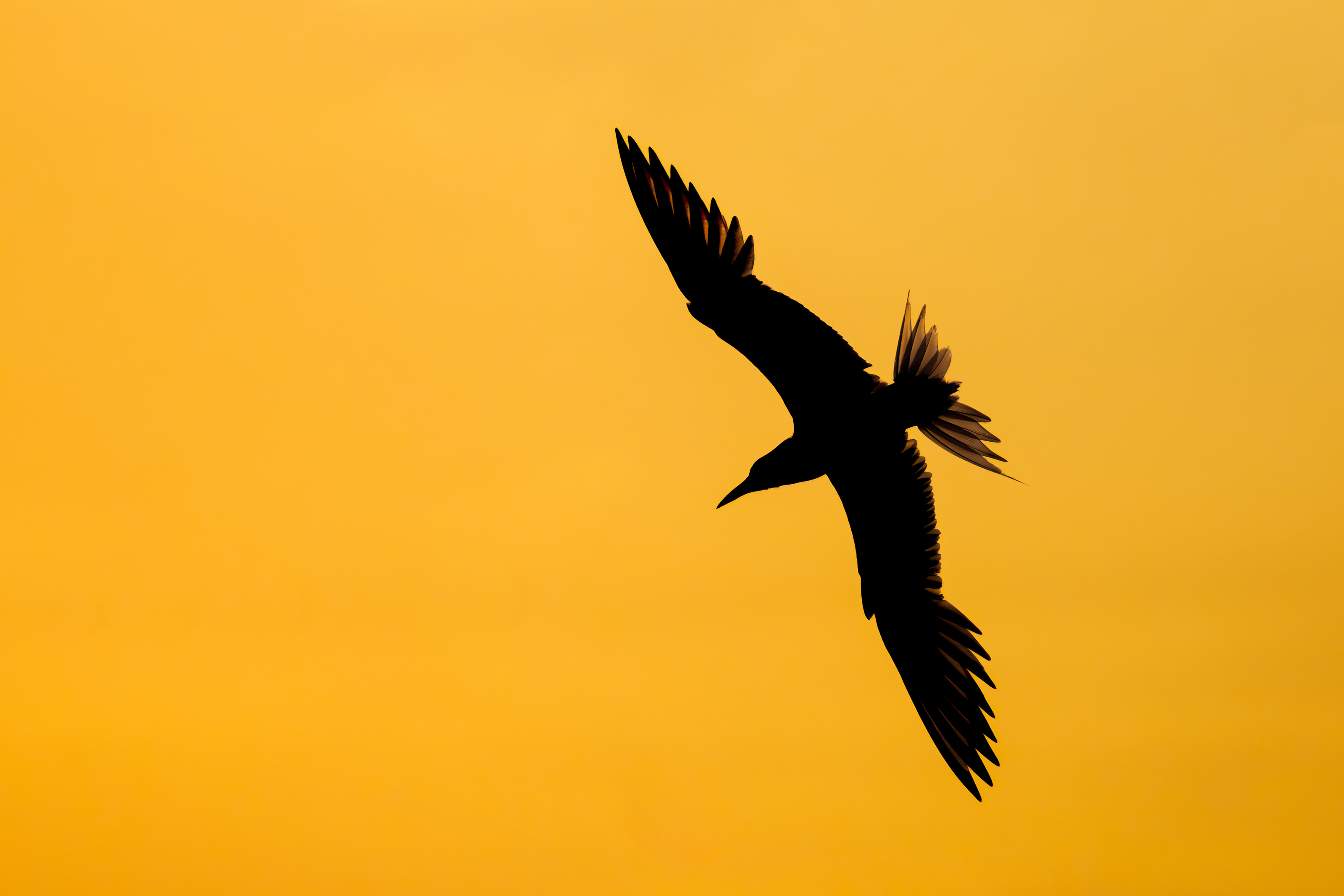
This image was created on 10 July 2026 at Huguenot Memorial Park, Jacksonville, FL by friend and student David Pugsley on the 2026 JAX BAA Friends IPT. While crouching, he used the handheld Sony FE 600mm f/4 GM OSS lens and The One, the Sony Alpha 1 Mirrorless digital camera. ISO 250. Exposure was determined via Zebras with ISO on the Thumb Wheel. ISO 250: 1/2500 sec. at f/4 (wide open). AWB at 7:03:12am, about 31 minutes after sunrise with some clouds in the east. Zone/AF-C was active at the moment of exposure and performed perfectly. Be sure to click on the image to enjoy the larger version. Image #1: Royal Tern sunrise silhouette
|
My Experience
I get you out early and put you in the right spot at the right time for maximum success on every shoot. Throughout each session, I’m constantly scanning the scene and alerting you to the best possibilities so you never miss a moment.
|
|
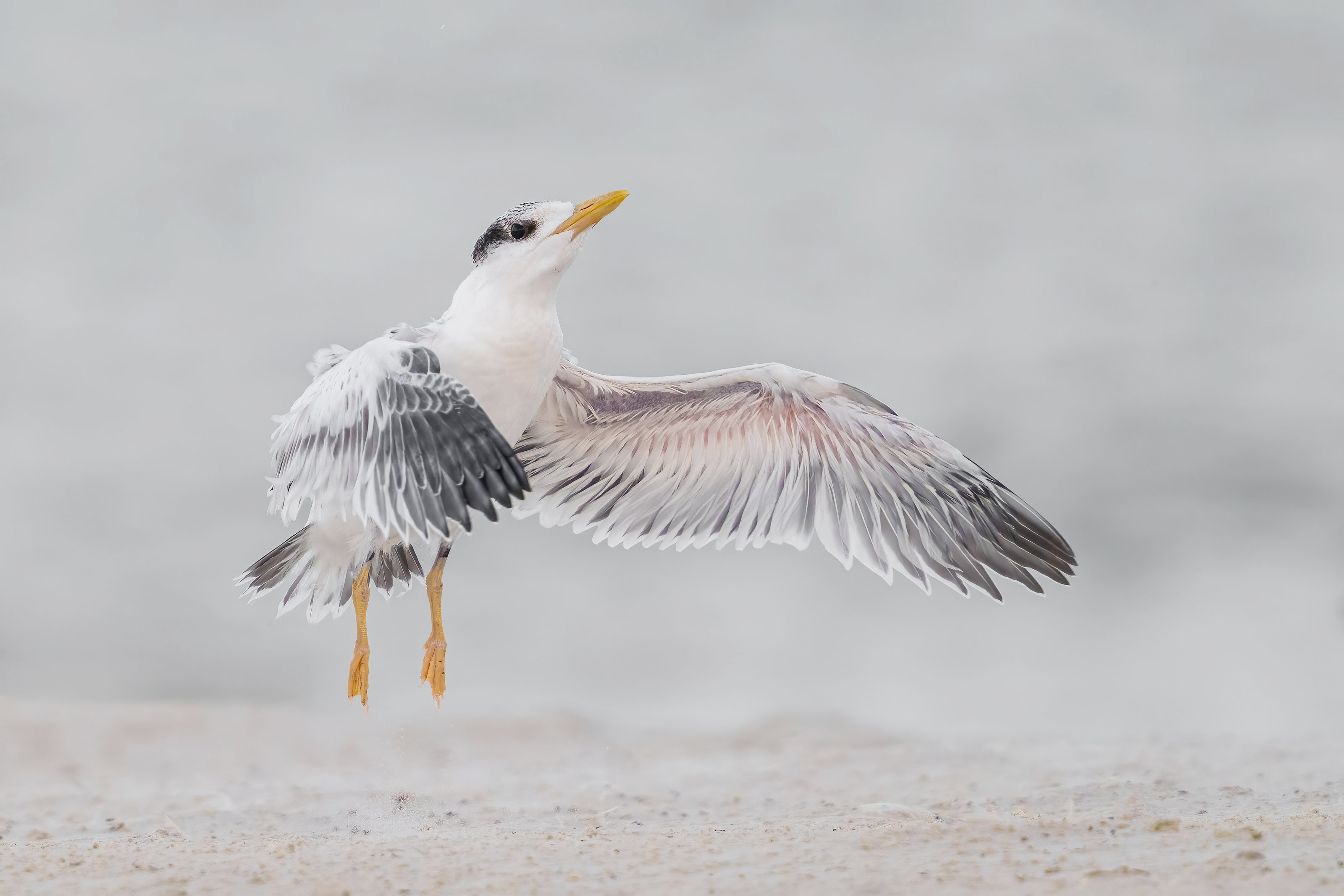
This image was also created on 10 July 2026 at Huguenot Memorial Park, Jacksonville, FL by friend and student David Pugsley on the 2026 JAX BAA Friends IPT. Seated on dry sand, he used the handheld Sony FE 300mm f/2.8 GM OSS Lens (Sony E) with the Sony FE 2x Teleconverter and the Sony Alpha 1 (now replaced by the Latest Greatest Sony Flagship Body, the a1 II Mirrorless Camera. The exposure was determined via Zebras with ISO on the Thumb Wheel. ISO 2500: 1/2500 sec. at f/5.6 (wide open) in Manual mode. AWB at 7:00:51pm on a cloudy afternoon. Tracking: Zone/AF-C with Bird Eye/Face Detection enabled performed perfectly. Image #2: Royal Tern fledging jumping to strengthen its wings |
I Am Generous
When David mentioned he was looking for an auxiliary lens and had his eye on the 300mm f/2.8 GM, I loaned him mine for a test drive. He loved it so much that shortly thereafter, he purchased Pat Fishburne’s barely used copy for a great price. Just one big happy family 🙂
|
|
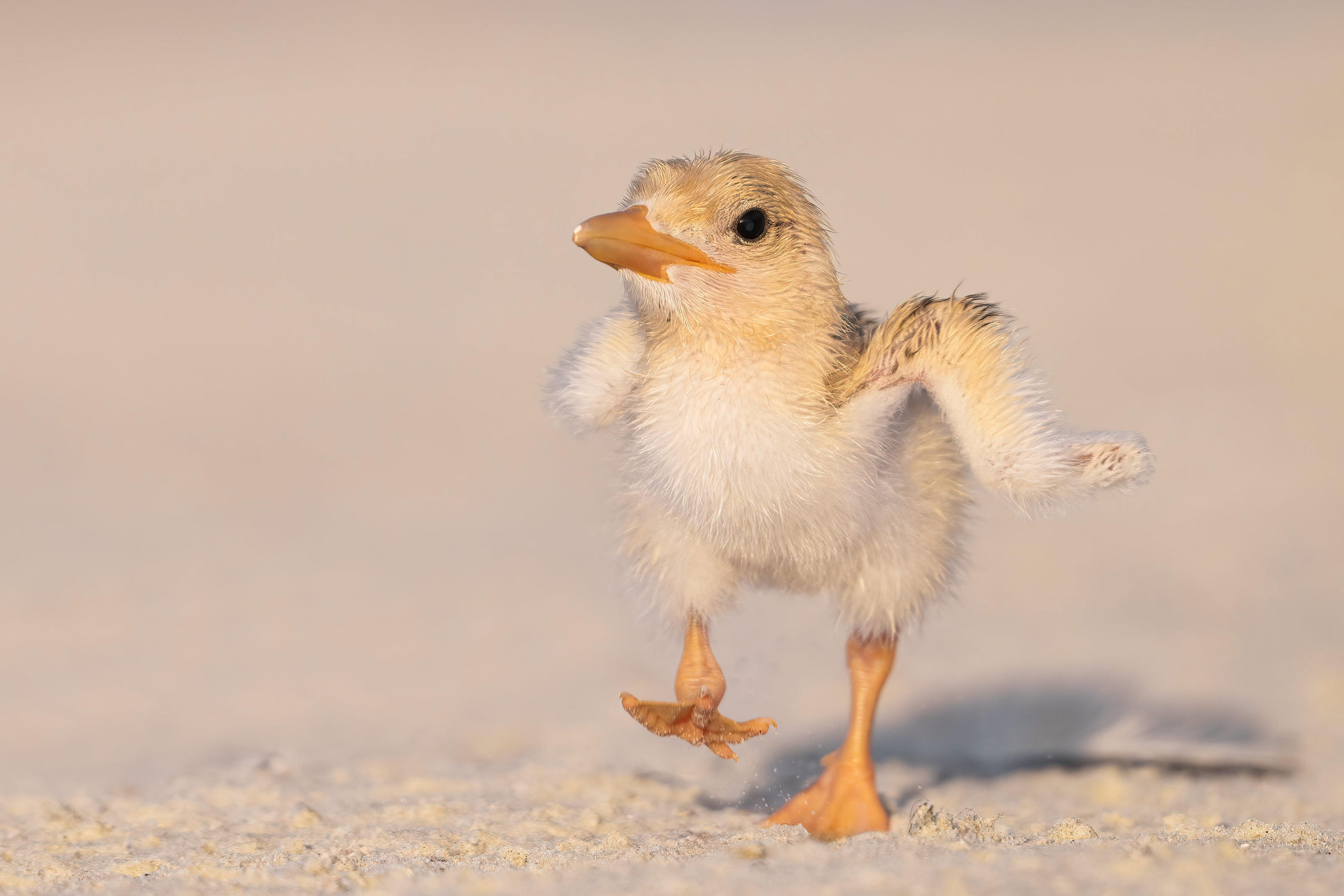
This image was also created on 10 July 2026 at Huguenot Memorial Park, Jacksonville, FL by friend and student David Pugsley on the 2026 JAX BAA Friends IPT. Lying flat on dry sand, he used the handheld Sony FE 300mm f/2.8 GM OSS Lens (Sony E) with the Sony FE 2x Teleconverter and the Sony Alpha 1 (now replaced by the Latest Greatest Sony Flagship Body, the a1 II Mirrorless Camera. The exposure was determined via Zebras with ISO on the Thumb Wheel. ISO 640: 1/1600 sec. at f/5.6 (wide open) in Manual mode. AWB at 7:32:35pm on a sunny afternoon. Tracking: Zone/AF-C with Bird Eye/Face Detection enabled performed perfectly. Image #3: Royal Tern small golden chick running |
I Am Often Beyond Helpful
After realizing I had left my Rubbermaid Roughneck Step-Stool down by the ocean, I backtracked to pick it up. On the way back to the group, I noticed a tiny golden chick on the wide-open beach. I zigged and zagged very slowly as the chick made its way up the beach back toward the colony, herding it right to David, perfectly down light-angle. The chick got within three feet of the end of his lens before turning and heading north. David was giddy!
|
|
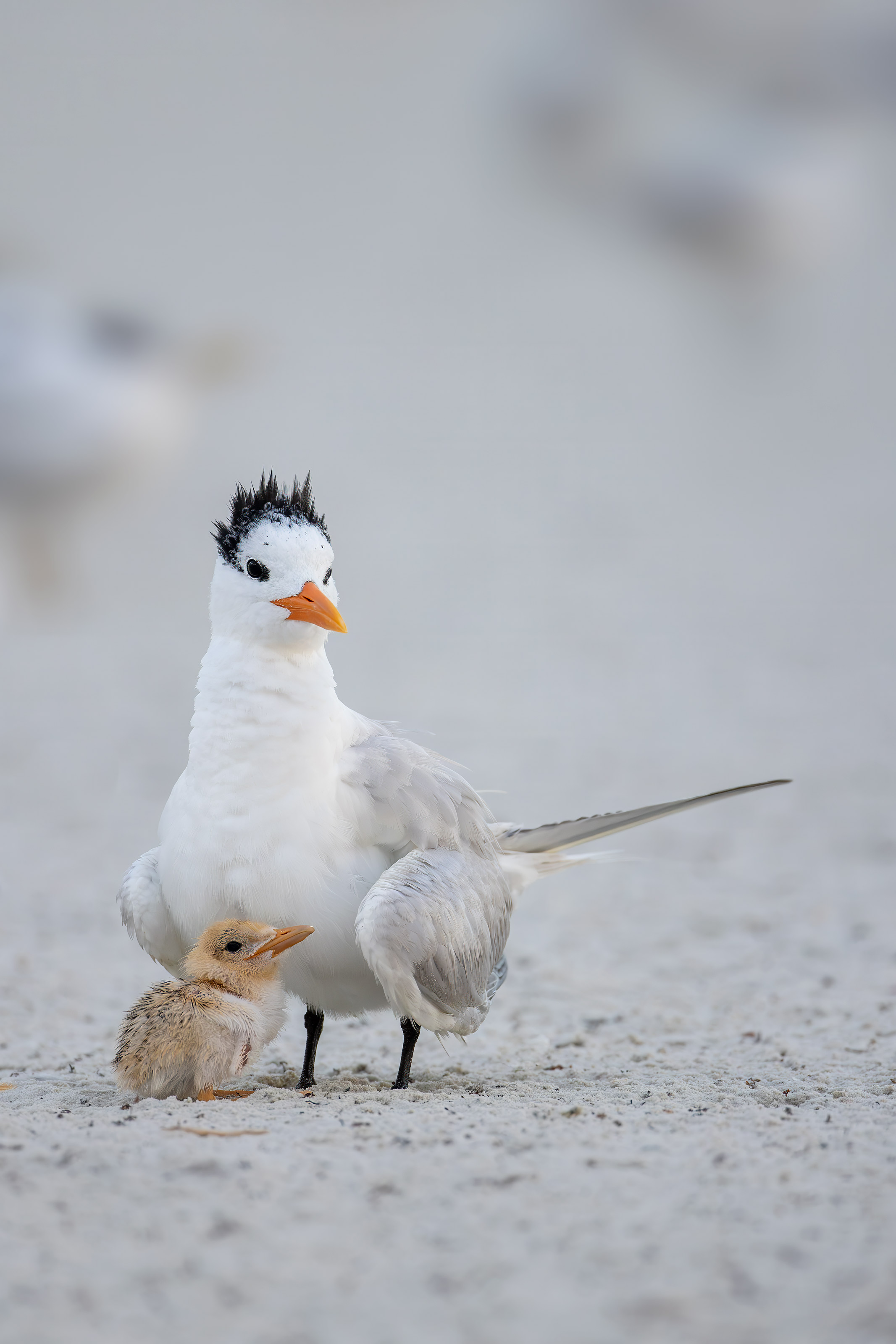
This image was created on 11 July 2026 at Huguenot Memorial Park, Jacksonville, FL by Raymon C. Murray on the 2026 JAX BAA Friends IPT. He used the tripod mounted Canon EF500mm f/4L IS USM and the EF 1.4x III teleconverter with the EOS R5; ISO 2500: 1/2000 sec. at f/5.6 (wide open). AWB at 7:06:13am on a cloudy morning. Image #4: Royal Tern with chick |
I Can Help You With Exposure No Matter Your System
Ray and David are good friends, but this was my first time working with Ray in the field. When I noticed he was struggling with exposure, I gave him a quick histogram lesson on exposing to the right without blowing out the highlights. I also suggested he look into switching to Sony, and he’s now giving it serious thought!
Why Switch Now?
with the recent introduction of the Sony FE 100-400mm f/4.5 GM OSS lens, APS-C crop mode, and Topaz Gigapixel, photographers can enjoy a lightweight, handholdable 100–1200mm equivalent setup. Paired with a used a-1 or the new a-1 II, selling off heavy gear and making the leap to Sony has never been more compelling.
|
|
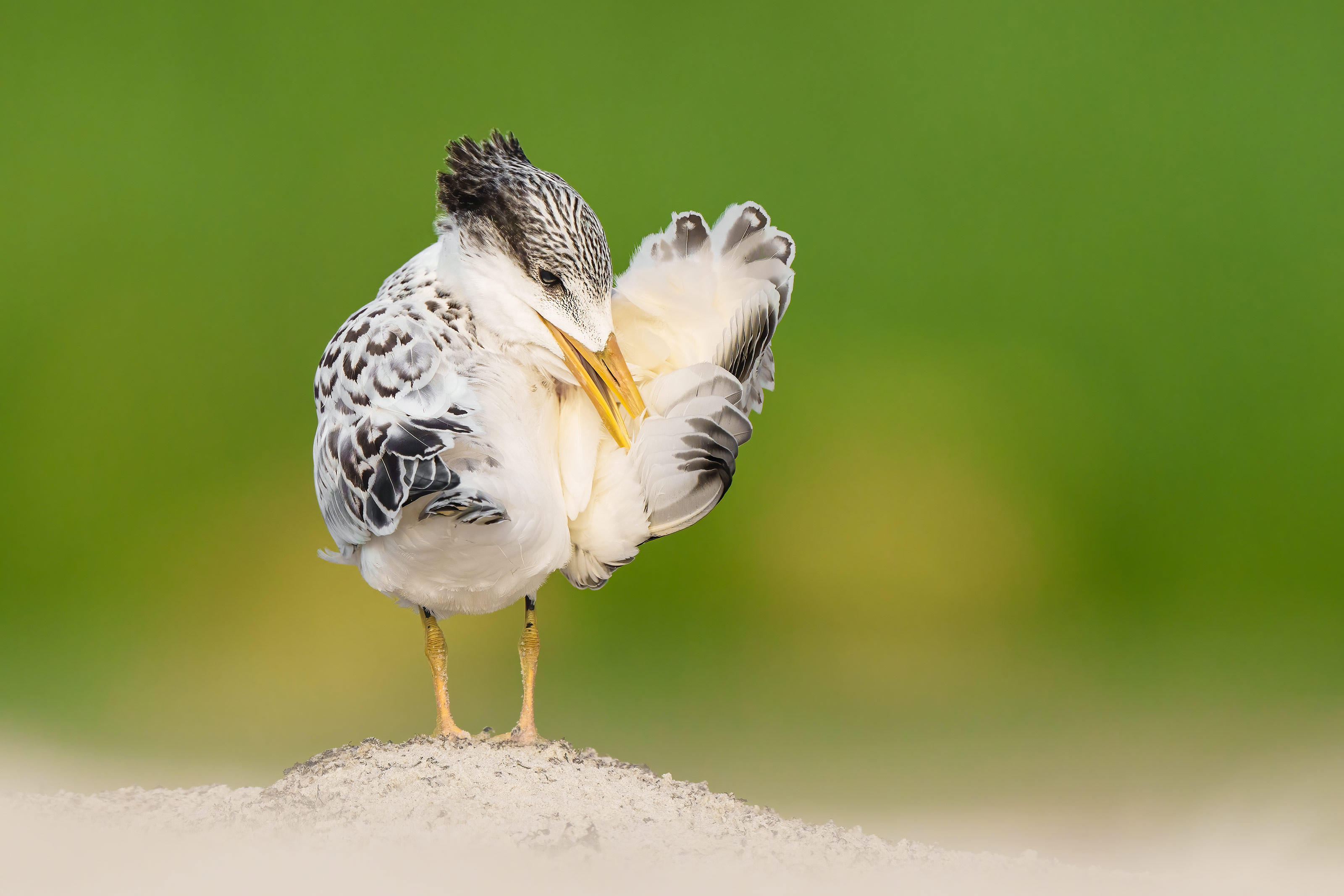
This image was created on 12 July 2026 at Huguenot Memorial Park, Jacksonville, FL by friend and student David Pugsley on the 2026 JAX BAA Friends IPT. Lying flat on dry sand he used the handheld Sony FE 600mm f/4 GM OSS lens with the Sony FE 1.4x Teleconverter and The One, the Sony Alpha 1 Mirrorless digital camera. ISO 250. Exposure was determined via Zebras with ISO on the Thumb Dial. ISO 1250: 1/2000 sec. at f/5.6 (wide open). AWB at 7:21:45am on a sunny morning. Zone/AF-C was active at the moment of exposure and performed perfectly. Be sure to click on the image to enjoy the larger version. Image #5: Royal Tern — large chick preening underwing
|
I Am Not Overbearing
I am more than happy to give experienced shooters free rein. In fact, I often find myself wishing I had tagged along after them!
|
|
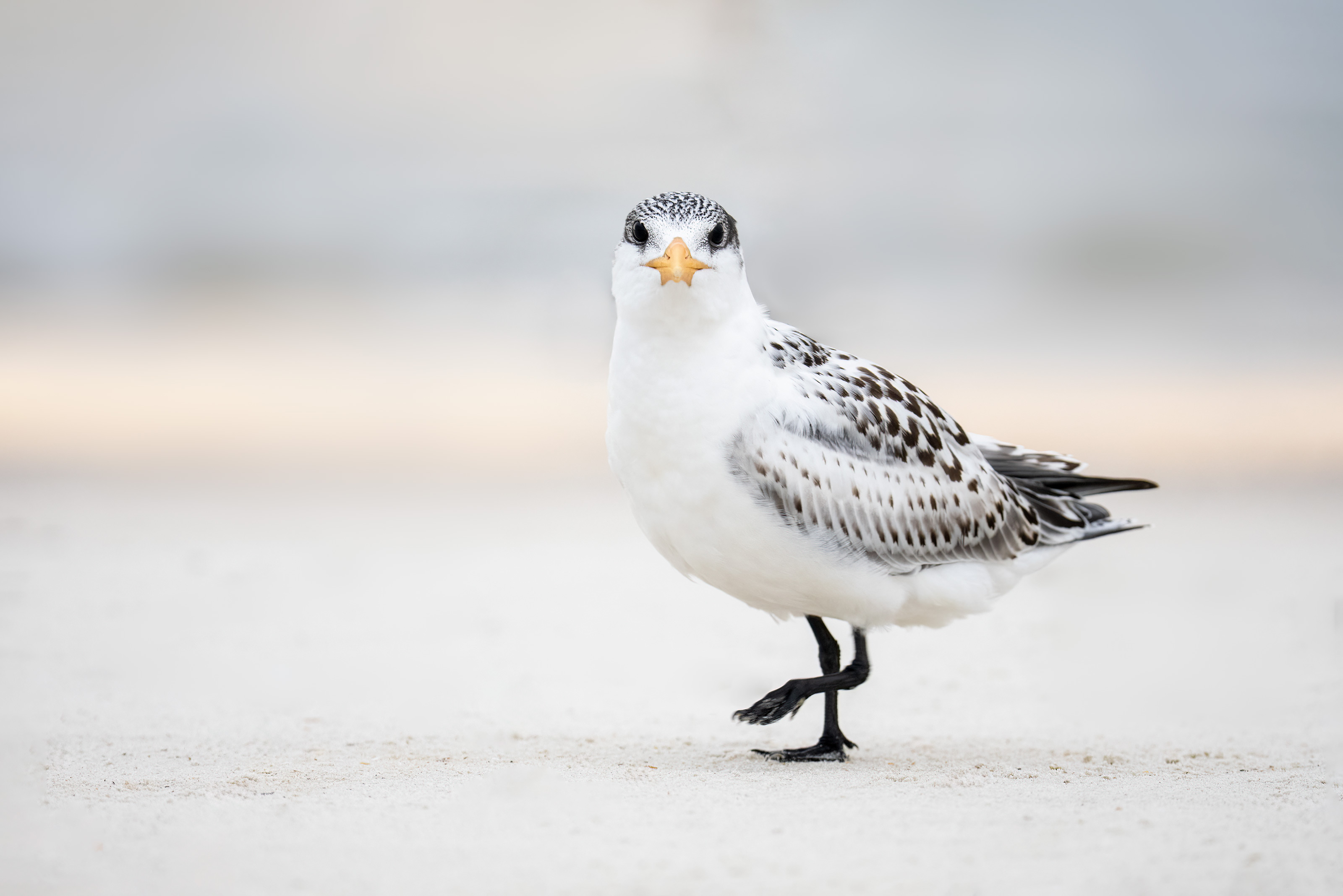
This image was created on 13 July 2026 at Huguenot Memorial Park, Jacksonville, FL by my good friend and student, multiple IPT veteran Alvin “Red” Stevens on the 2026 JAX BAA Friends IPT. Seated on dry sand — Red, now 81, is in great shape physically –he used the handheld Sony FE 100-400mm f/4.5 GM OSS lens (at 400/effective focal length: 600mm) and The Latest Greatest Sony Flagship Body, the a-1 II Mirrorless Camera (in APS-C crop mode). The exposure was determined by Zebras with ISO on the Thumb Dial. ISO 2000: 1/500 second at f/4.5 (wide open) in Manual mode. AWB at 7:17:30am on a cloudy morning Wide/AF-C with Bird-Eye/Face Detection performed perfectly. Click on the image to enjoy a larger high-res version. Image #6: Royal Tern large checkerboard chick with foot raised staring |
I Am Great With Beginners. Even Old Folks
Just over a year ago, Alvin “Red” Stevens emailed me asking for advice on a camera and lens for an upcoming Antarctica trip. Red listened to my advice, purchased a Sony a1 II, the 70–200mm f/2.8 GM II, and both teleconverters, then joined me at Sebastian. He began making some very fine images that very first afternoon.
He recently added the Sony FE 100-400mm f/4.5 GM OSS zoom lens and his progress continues. Though he has quickly become a competent photographer proficient at capturing and optimizing quality photographs, he works hard every day to get even better. Kudos to my friend Red!
One key reason Red decided to take a crack at bird photography was his doctor’s advice: one of the best ways for older folks to keep their minds sharp is by challenging their brains with new, complex tasks and hobbies. Bird photography certainly fits that bill!
|
|
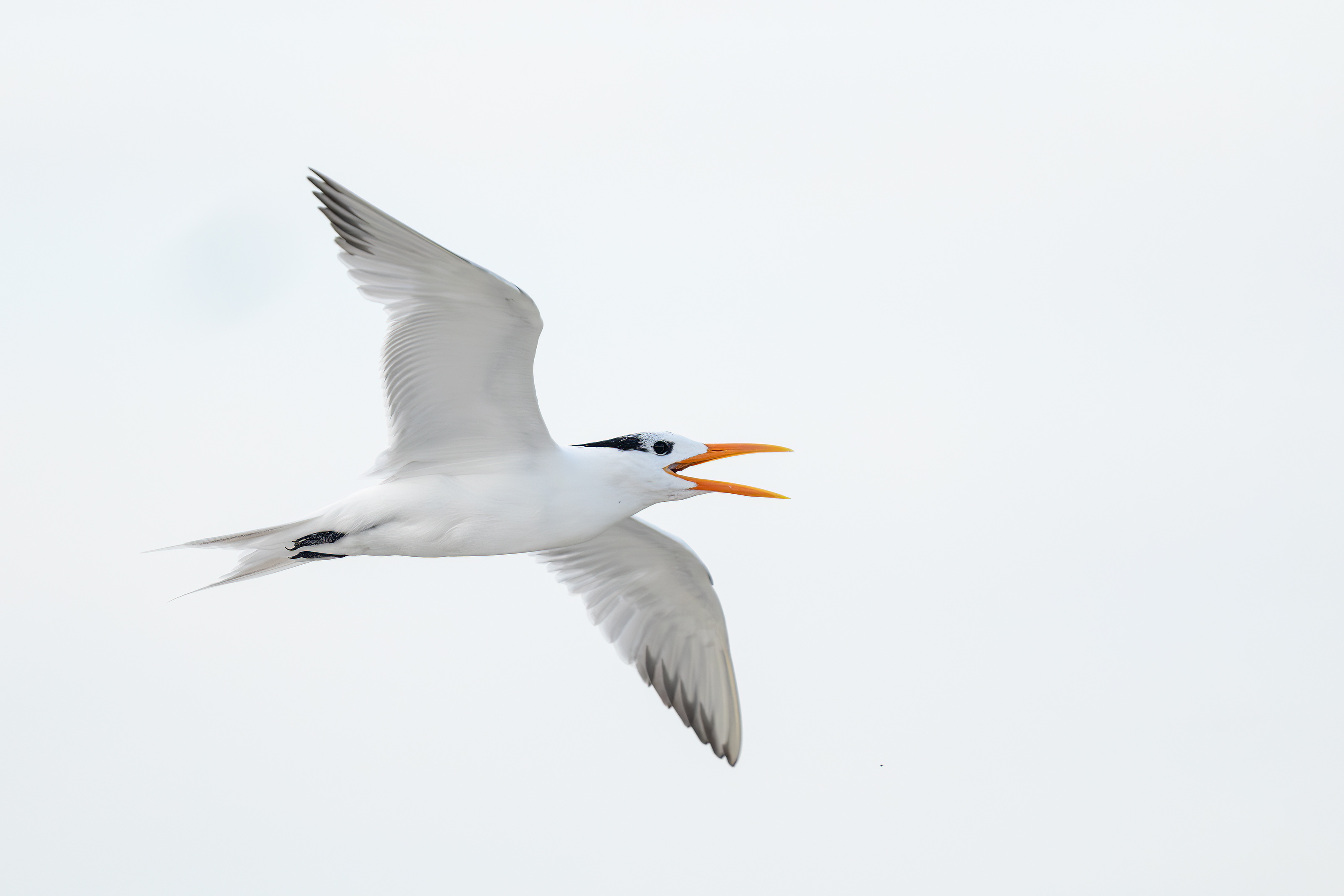
This image was created on 13 July 2026 at Huguenot Memorial Park, Jacksonville, FL by my good friend and student Alvin “Red” Stevens on the 2026 JAX BAA Friends IPT. He used the handheld Sony FE 300mm f/2.8 GM OSS and the Sony FE 1.4x Teleconverter (at 420mm) and The Latest Greatest Sony Flagship Body, the a-1 II Mirrorless Camera (in full frame mode). The exposure was determined by Zebras with ISO on the Thumb Dial. ISO 2500: 1/4000 second at f/4 (wide open) in Manual mode. AWB at 7:49:59am on a cloudy morning Wide/AF-C with Bird-Eye/Face Detection performed perfectly. Click on the image to enjoy a larger high-res version. Image #7: Royal Tern adult in flight |
I Will Work With You Until You Get It Right
Red was having trouble with the terns in flight, as they are fast and somewhat erratic fliers. So, I spent an entire morning standing right next to him, showing him how to recognize the best opportunities. Even though conditions were tough with wind against the sun, he stuck with it and made some very good flight shots!
|
|
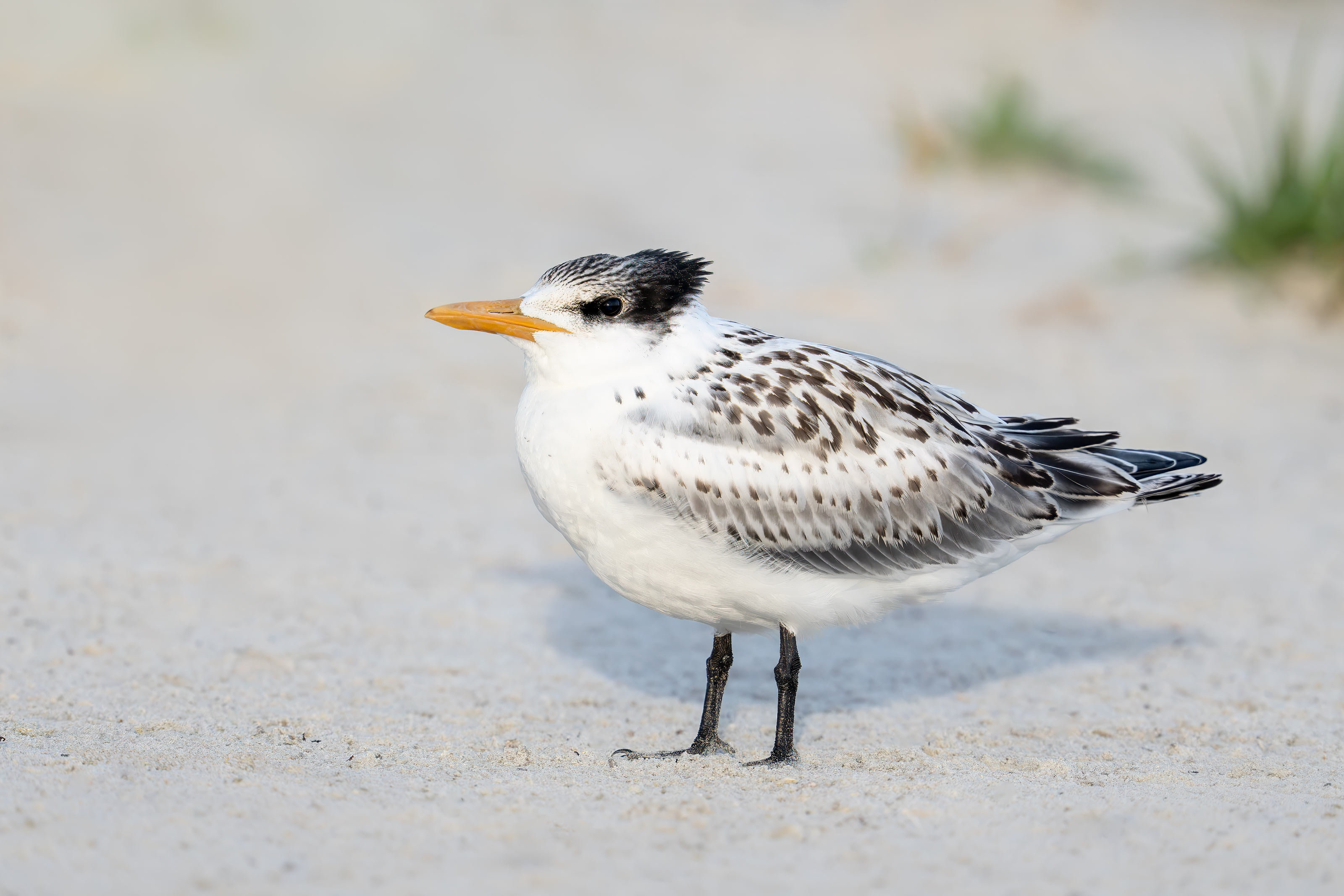
This image was created on 13 July 2026 at Huguenot Memorial Park, Jacksonville, FL by good friend and student Jim Dolgin on the 2026 JAX BAA Friends IPT. He used the handheld Sony FE 300mm f/2.8 GM OSS and the Sony FE 1.4x Teleconverter (at 420mm) and The Latest Greatest Sony Flagship Body, the a-1 II Mirrorless Camera (in full frame mode). The exposure was determined by Zebras with ISO on the Thumb Dial. ISO 3200: 1/3200 second at f/4 (wide open) in Manual mode. AWB at 7:6:25:05am on a cloudy morning Wide/AF-C with Bird-Eye/Face Detection performed perfectly. Click on the image to enjoy a larger high-res version. Image #8: Royal Tern checkerboard juvenile |
Image Optimization Videos
On each IPT, I optimize a few of each participant’s images while creating a Camtasia screen-capture video so that they can follow along, study, and learn after the trip. This image was improved with extensive beach cleanup and the judicious refinement of a Gaussian Blur layer using an Inverse (Black) Layer Mask.
|
|
This image was created on 15 July 2026 at Huguenot Memorial Park, Jacksonville, FL by my good friend and student Alvin “Red” Stevens on the 2026 JAX BAA Friends IPT. Standing at full height on the beach at South-of-the-Pier Bay, he used the handheld Sony FE 100-400mm f/4.5 GM OSS lens with the Sony FE 1.4x Teleconverter (at effective 840mm) and The Latest Greatest Sony Flagship Body, the a-1 II Mirrorless Camera (in APS-C crop mode). The exposure was determined by Zebras with Exposure Compensation (EC) on the Thumb Dial. Multi Metering +2.0 stops. AUTO ISO set ISO 3200: 1/2500 second at f/6.3 (wide open) in Shutter Priority mode. AWB at 6::47:01am 13 minutes after sunrise. Upper center Tracking: Zone/AF-C with Bird-Eye/Face Detection performed perfectly. Click on the image to enjoy the larger high-res version. Image #9: Royal Tern adult in flight at sunrise |
I Share Everything
On pretty much every IPT, I get to share my Shutter Priority/AUTO ISO technique for working with sunrise or sunset colors. With both the a-1 and the a-1 II, switching from Manual exposure mode to Shutter Priority with Exposure Compensation set on the thumb dial takes about four seconds — as long as you know the steps. After several trips with me, Red has completely mastered silhouette photography!
No matter the situation, I willingly share my 43 years of bird photography experience with everyone present.
|
|
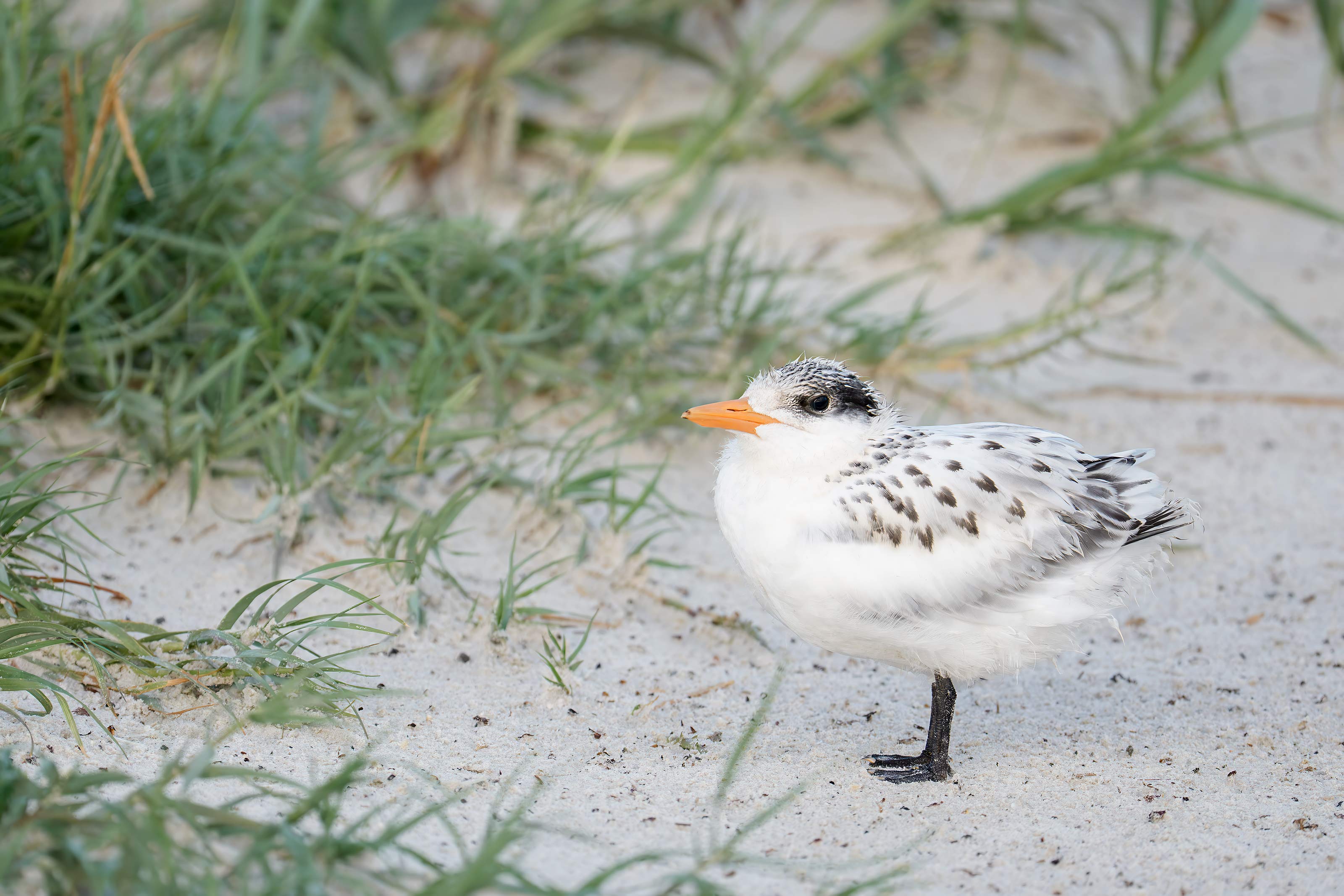
This image was created on 15 July 2026 at Huguenot Memorial Park, Jacksonville, FL by my good friend and student Alvin “Red” Stevens on the 2026 JAX BAA Friends IPT. He used the handheld Sony FE 100-400mm f/4.5 GM OSS lens (at 400/effective focal length: 600mm) and The Latest Greatest Sony Flagship Body, the a-1 II Mirrorless Camera (in APS-C crop mode). The exposure was determined by Zebras with ISO on the Thumb Dial. ISO 1250: 1/1600 second at f/4.5 (wide open) in Manual mode. AWB at 7:26:51am on a cloudy morning Wide/AF-C with Bird-Eye/Face Detection performed perfectly. Click on the image to enjoy a larger high-res version. Image #10: Royal Tern small chick on dune |
Pre- and Post-IPT Help (and Encouragement)
I email or speak with Red often. He was recently feeling a bit frustrated with the pace of his improvement. I asked him about dental school. He told me, “Five days a week for a year, and then six and a half days a week for three more years.”
I asked him, “How long and how often have you been photographing birds?” He got my point immediately: to improve at anything, you must practice, practice, and practice some more.
|
|
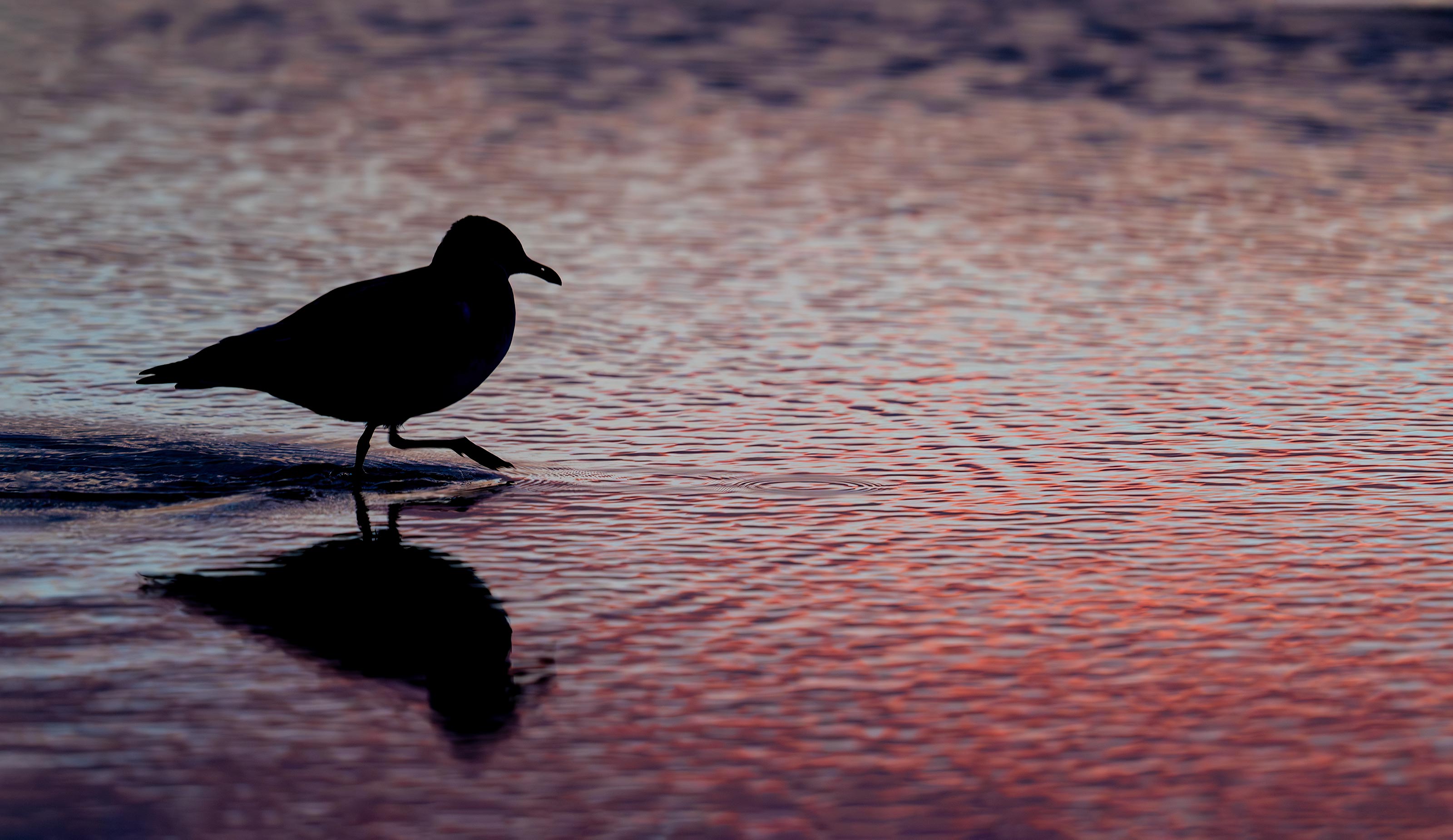
This image was created on 13 July 2026 at Huguenot Memorial Park, Jacksonville, FL by good friend and student Jim Dolgin on the 2026 JAX BAA Friends IPT. He used the handheld Sony FE 300mm f/2.8 GM OSS and the Sony FE 1.4x Teleconverter (at 420mm) and The Latest Greatest Sony Flagship Body, the a-1 II Mirrorless Camera (in full frame mode). The exposure was determined by Zebras with Exposure Compensation (EC) on the Thumb Dial. Multi Metering -1.7 stops. AUTO ISO set ISO 400: 1/250 second at f/4 (wide open) in Shutter Priority mode. AWB at 6::27:18am just before sunrise. Wide/AF-C with Bird-Eye/Face Detection performed perfectly. Click on the image to enjoy a larger high-res version. Image #11: Laughing Gull pre-dawn red/purple silhouette |
In-the-Field Image Design and Autofocus Advice
I can still hear myself calling out in the field: “Use Wide AF to move the bird back in the frame! Put the bird’s head in the center of the frame to start and then be sure to recompose and leave more room in front of the bird than behind.” And so on, and so forth..
|
|
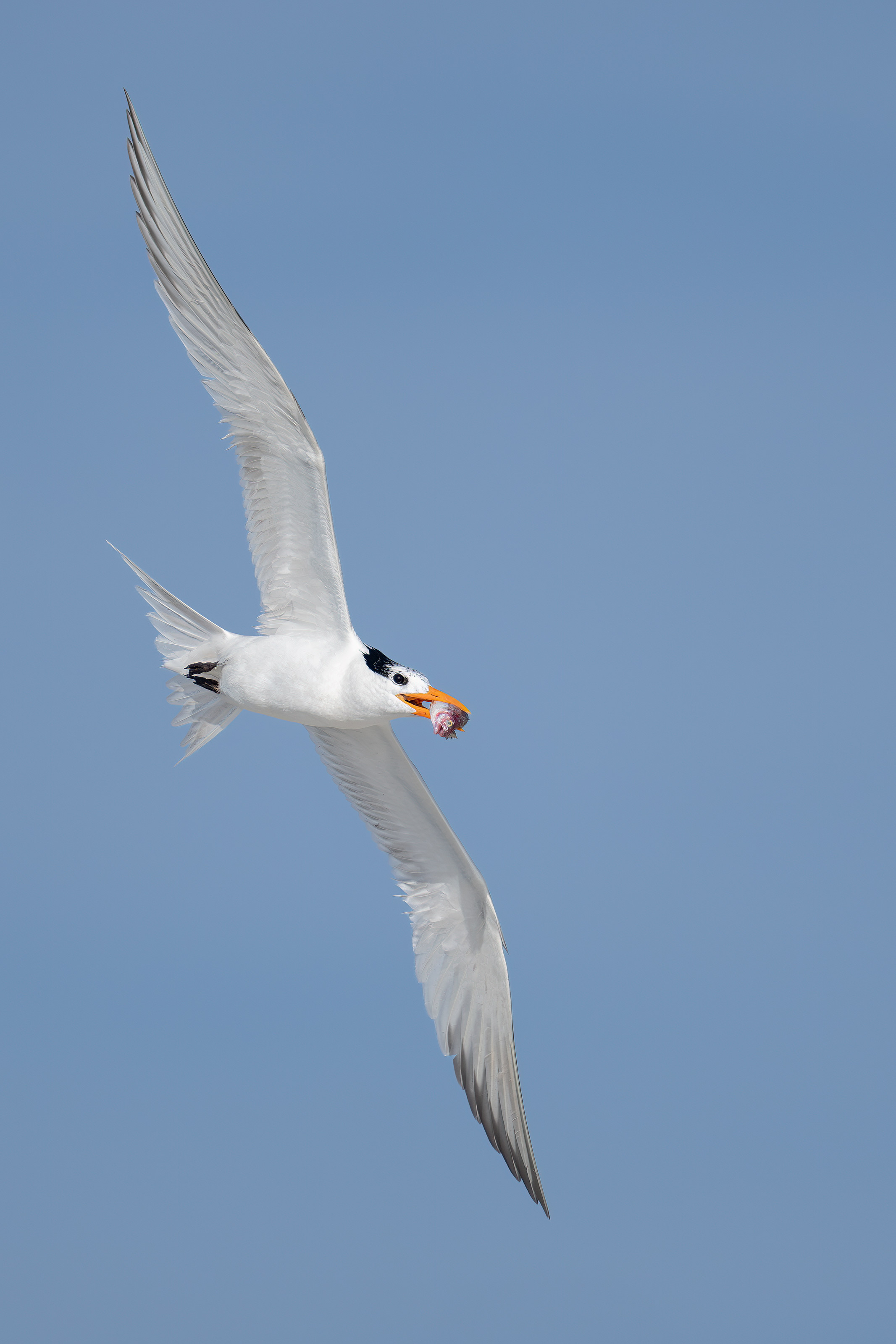
This image was created on 15 July 2026 at Huguenot Memorial Park, Jacksonville, FL by good friend and student Jim Dolgin on the 2026 JAX BAA Friends IPT. He used the handheld Sony FE 300mm f/2.8 GM OSS and the Sony FE 1.4x Teleconverter (at 420mm) and The Latest Greatest Sony Flagship Body, the a-1 II Mirrorless Camera (in full frame mode). The exposure was determined via Zebras with ISO on the Thumb Dial. ISO 400: 1/5000 sec. at f/4 (wide open) in Manual mode. AWB at 7:57:49am on a sunny morning. Wide/AF-C with Bird-Eye/Face Detection performed perfectly. Click on the image to enjoy a larger high-res version. Image #12: Royal Tern vertical bank from a horizontal origial |
On Lens Preferences
Choosing between the new 100–400mm f/4.5 zoom and the fixed 300mm f/2.8 GM presents a real dilemma. Neither Jim nor Red owns — or will ever own—a 600mm f/4. Jim opted for (and loves) the 300mm f/2.8, usually paired with the 1.4X TC, in part because he visits Stick Marsh often. After trying both lenses, Red decided on the 100–400mm for its versatility and reach.
I am blessed to own all three of the lenses mentioned above. At age 80, I have come to realize that if I could own only a single lens, it would be the new 100–400mm f/4.5 (paired with both TCs and an a1 II).
Typos
With all blog posts, feel free to e-mail or to leave a comment regarding any typos or errors.








Great student images, but my favorite is #3, David Pugsley’s very animated royal tern chick.
I am sure David will love my 300mm Sony lens.
I think #11 wins the day. All are great, but you have to “kind of step back” and say which one is most impactful. I usually go for the close ups with the most detail, but sometimes art prevails.
Since some of the photos are mine I hesitate to pick one but if I had to it would be #4. I’m a Hallmark movie kind of guy and that really seems to resonate with me. I would also say that I personally have a long way to go but that is a big part of the journey. I think you need to throw away your ego and realize you know nothing at the beginning. Then my challange was learning more slowly than when I was in college or dental school. Then comes what may be the most important and that is the artistic ability. Somewhere Artie talks about picturing what you want to create. You already have that in some form. Finally comes the technical ability to use your camera and lenses. For me Artie has all the above and one IPT isn’t enough. It takes time and lots of work and practice but I am excited to move forward ( sometimes backwards ). For every halfway decent shot I get I have tons of them in the trash. I hope to get better and better and for me Artie is my way. Thanks to you who commented on my photographs and credit goes to Artie and the IPTs. Can’t wait for Homer.
Thanks Red,
August 8, in three days, will mark 43 years of bird photography for me. And I am still learning everyday and still making rookie mistakes everyday! For every halfway decent shot I get, I have hundreds that wind up in the trash bin 🙂
much love, artie
I fully agree with you Artie. I highly recommend an IPT. For today’s assignment, the heart of the batting order called out to me…that’s positions 3-4-5. Yes, the chicks are so cute and are all showing some behavior. #3 put a smile of my face, so that my favorite.
Thanks a stack, Chris. I will see you in San Diego next JAN.
with love, artie
Really love them all but have got to say Red’s # 6 especially. Saw Red last week and he has really learned a lot! I assured him he’ll love Homer.
For sure. Nickerson has been great. If I remember correctly, you were there with me once a very long time ago …
with love, a
Number 1 gets my vote for favorite with the colorful, 3 dimensional silhouette. Number 3 of the running chick comes in a close second. Great images from everyone. B
Really an impressive collection! I would be very happy if any were mine; but # 3 is beyond cute and is my favorite, followed closely by #5 and #6 for the interesting poses.
Thanks, Warren. Hope that my favorite fighter pilot and his wife are doing well.
with love, a
My favorite would be #5. Guess I love the green, wonderfully out of focus background. The bird is placed nicely in the frame and love the bird’s position. All nicely done, but this is wonderfully “soft” with the out of focus foreground left and right.
David, some 30 years younger than me, can easily lie flat while photographing. Advantage to the young.
a
27 years, but who’s counting? 🙂
>> I am doing four days of instruction with her and her new 100-400 foot/4.5 (fixed aperture) lens <<
While a 100-400 foot focal length would be impressive, I don't think the lens would be hand-holdable.
My bad. It is actually a 100-400 yard/4.5 lens. It is really big! And heavy!
thanks with love, artie
All great images. #6 is my fav because of the direct looking had, uncluttered bg, and the star that the bill makes.
I thank you and Red thanks you.
with love, artie
Congrats to all for making such a fine collection of images, each of them have great qualities . I love images #1,3 and 4. The layers and especially the foreground in image #1 provide more depth than many silhouettes. Love it! Image #4 for the moment captured including both subjects with eye contact. Image #3 for the cuteness, detail and sharpness. I have to mention image 6, it’s for its pose, head on eye contact, and clean background.
Thanks, Tom. You are a mensch. I am mot sure if that is sand or a wave in the foreground but it really makes the image. As for 3 & 4, it is hard to beat those little golden chicks.
And Red thanks you for mentioning #6 🙂
with love, artie
Tell Red, he’s killing it! He must be an incredible guy if he’s a dentist named Red. I might know; even if he spells “Redd” wrong with only one “d”!
To answer the question re #1, foreground to background is as follows:
water – sand – bird – water – sand
Thank you, David. That was exactly my guess, but what I know (and not guess) is that it’s a fine image. Congrats!