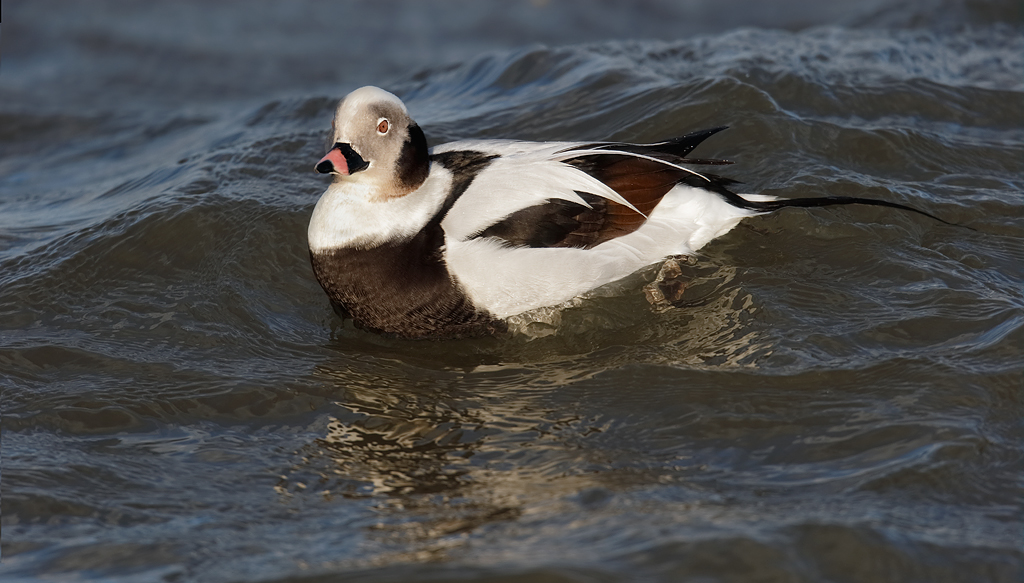
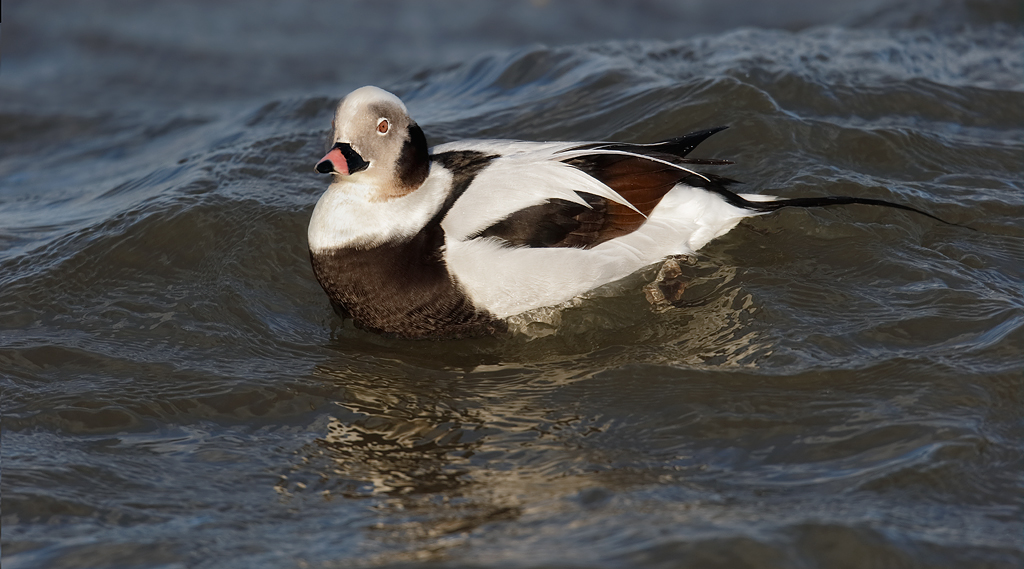
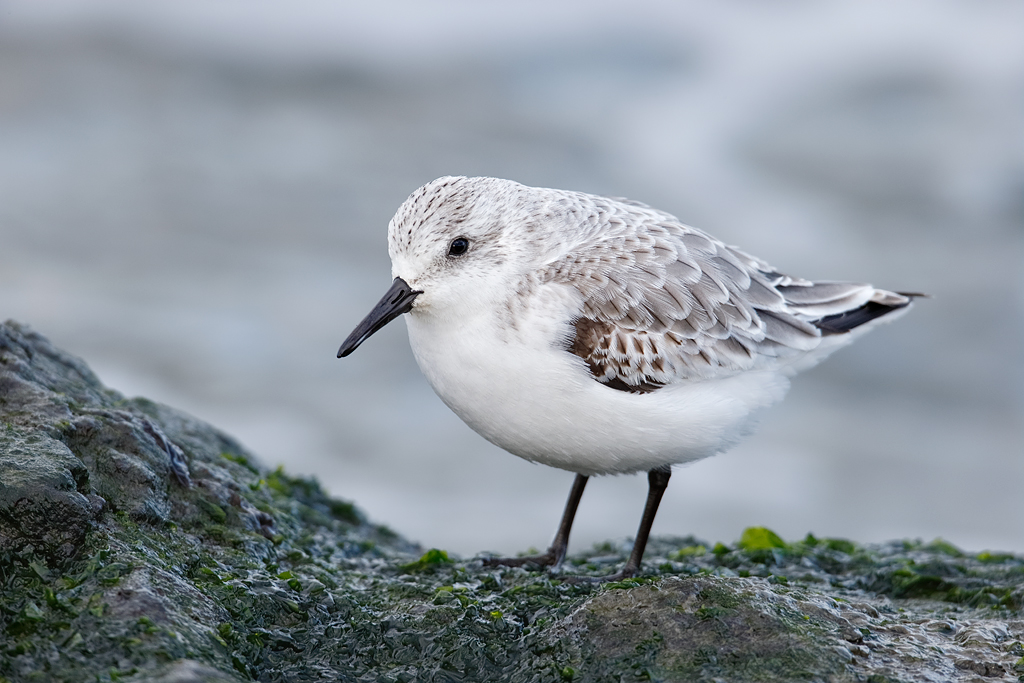
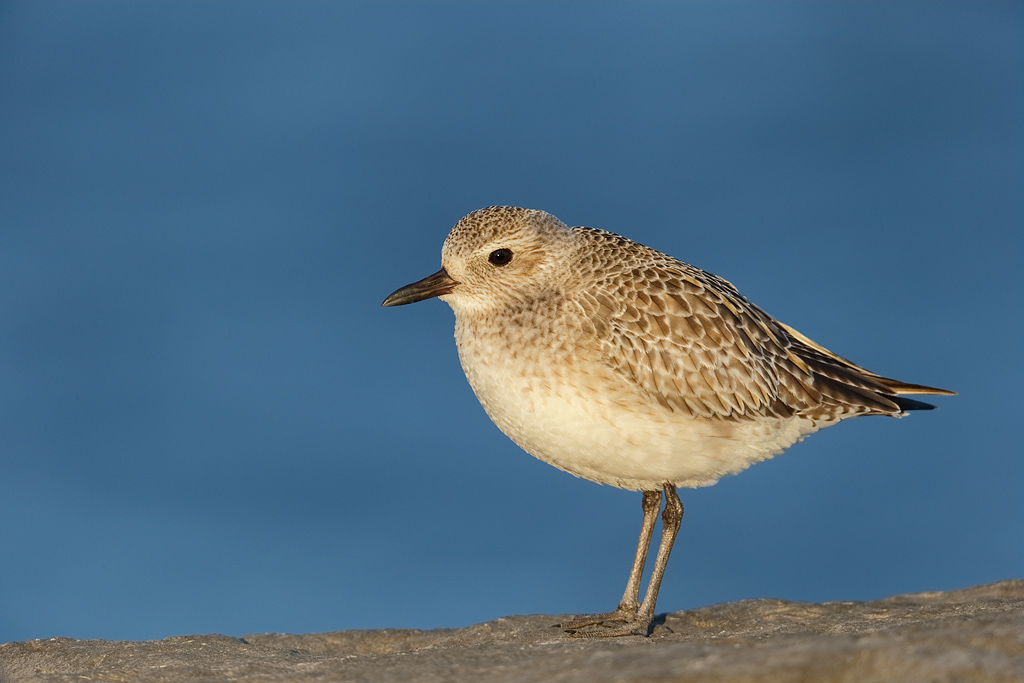
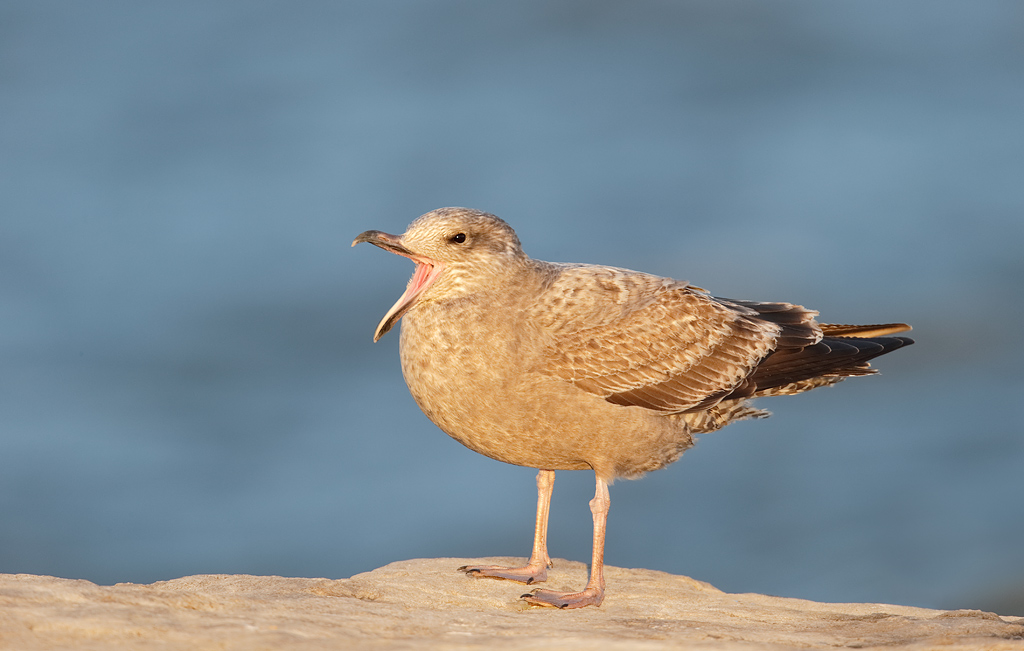
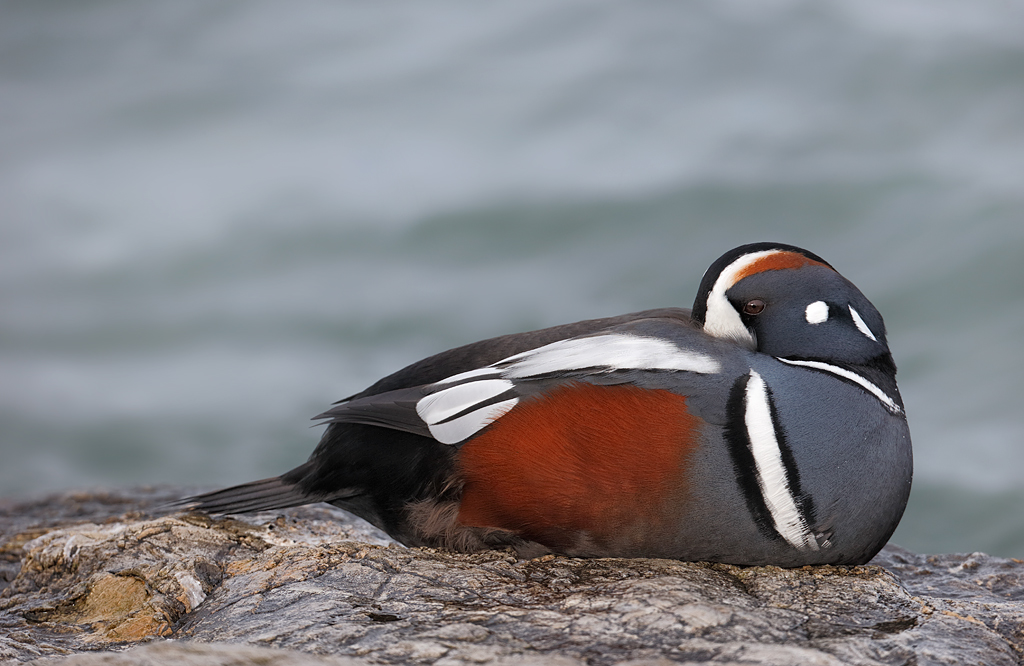
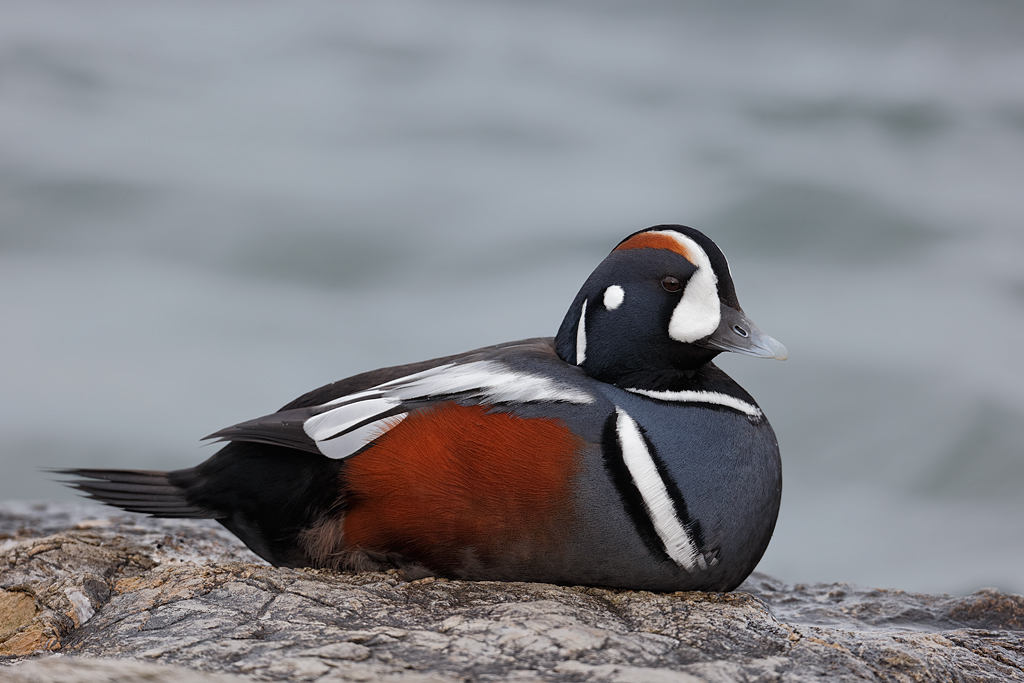
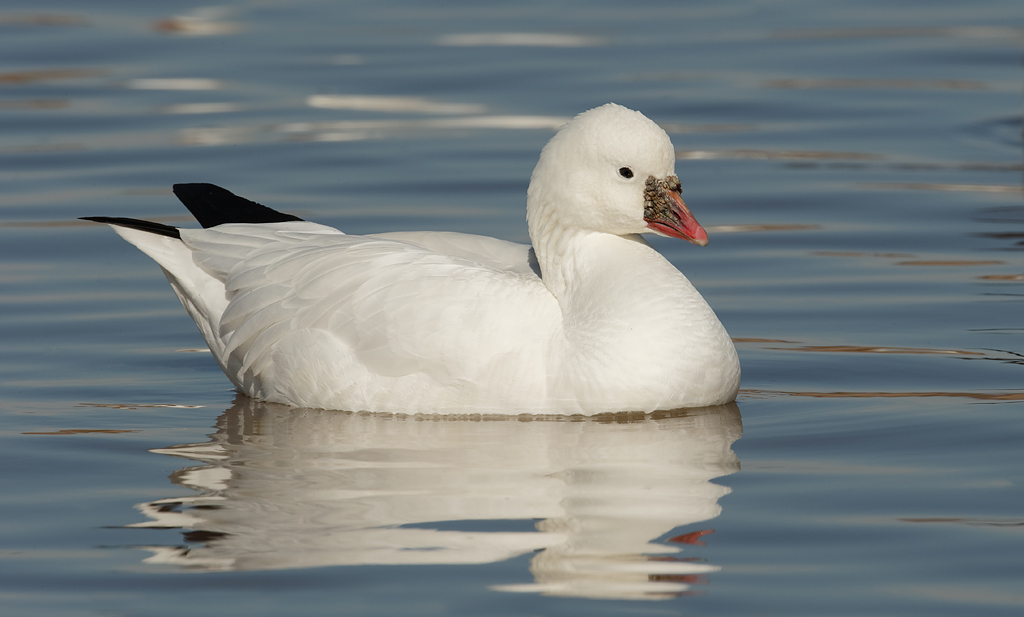
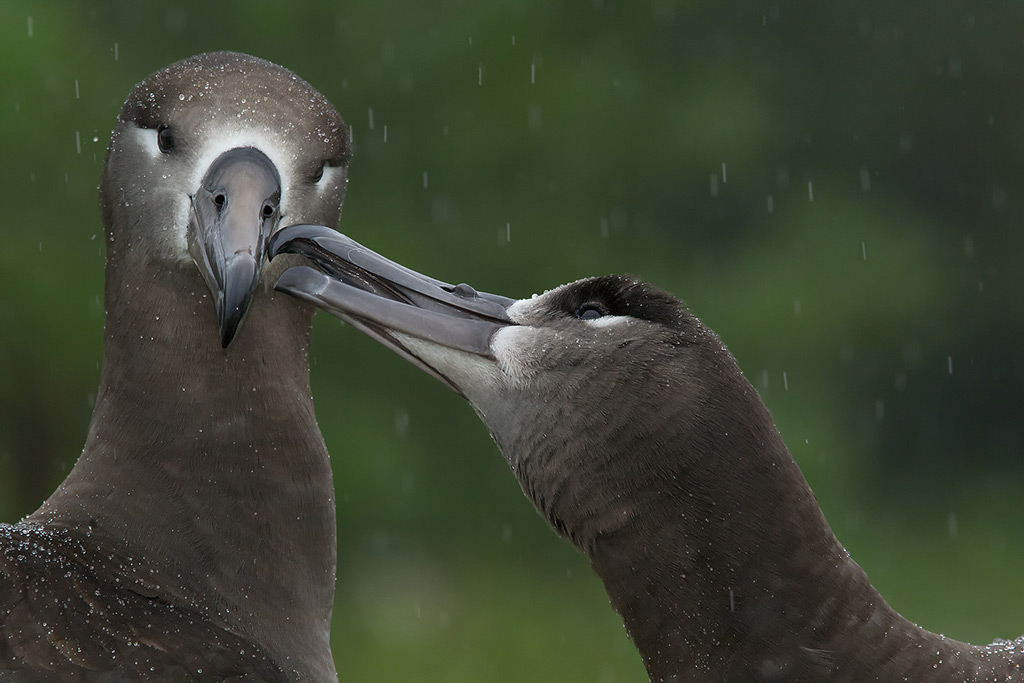
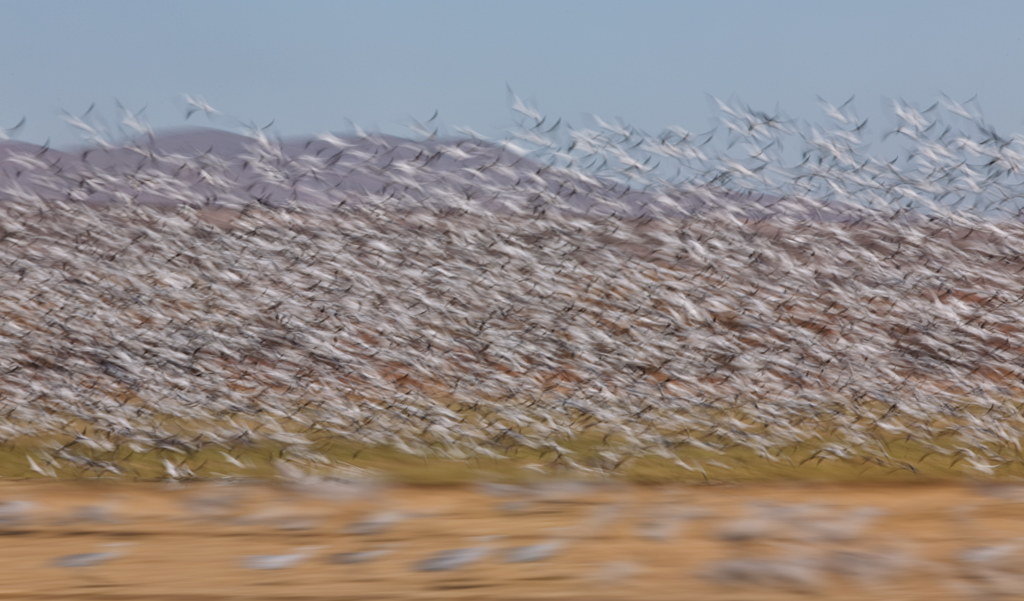
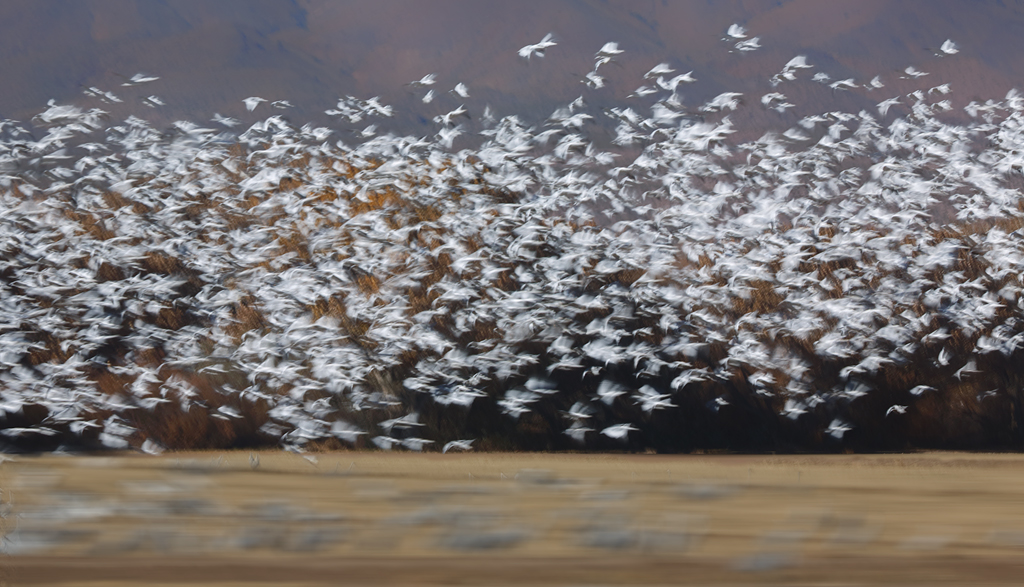
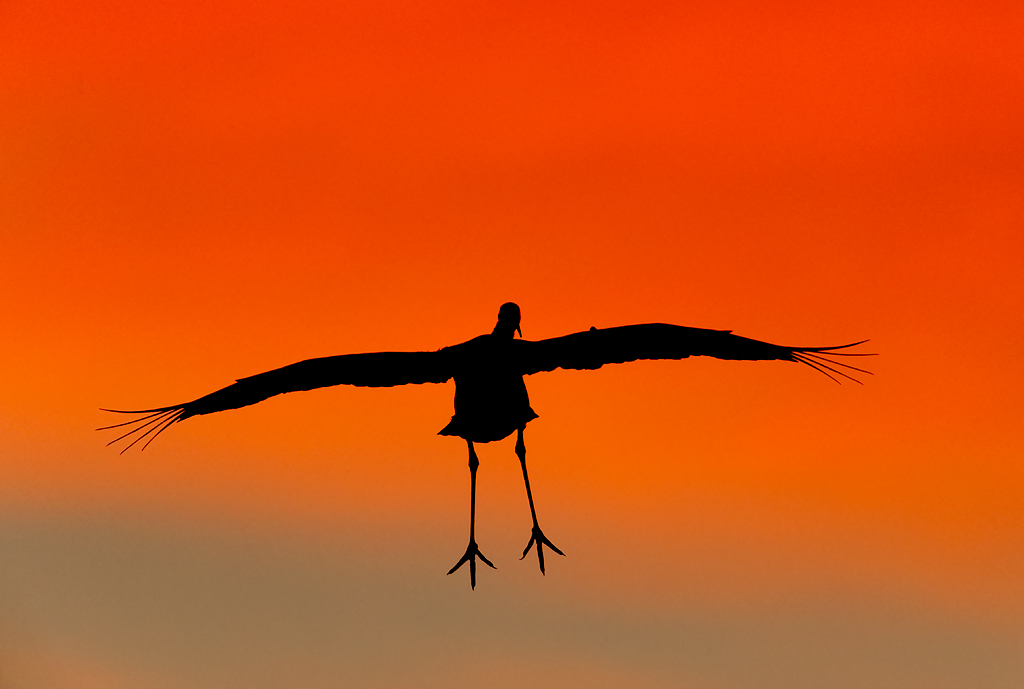
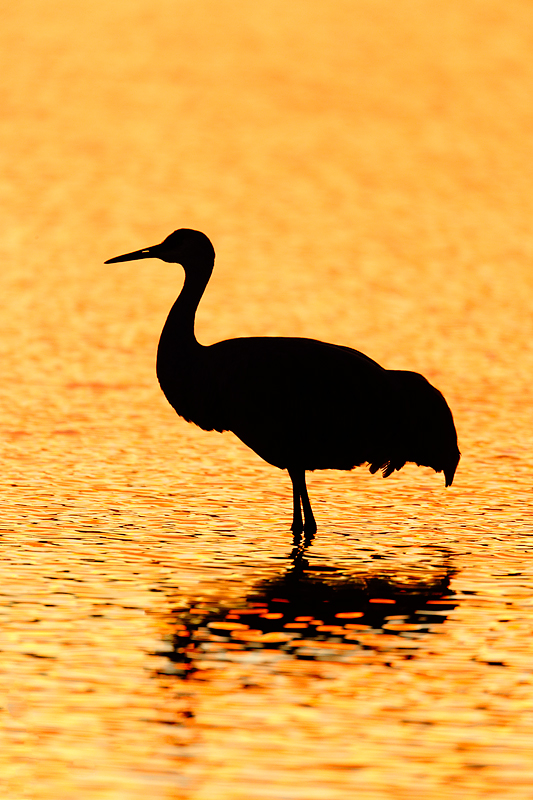
Central sensor (by necessity)/AI Servo Expand/Rear Focus AF active at the moment of exposure. The AF sensor was on the water below the side of the bird’s breast where the black meets the white; don’t ask me why the eye is sharp…. Click here if you missed the Rear Focus Tutorial. Click on the image to see a larger version.
Happy New Year!
All here at BAA–Jim Litzenberg, my right-hand man, daughter/CEO/BAA accountant Jennifer Morris, and I would like to wish all of you a happy and healthy 2013 filled with family, friends, travel, wonderful images, and of course, good health. Thanks to all who have made this another great year for all of us.
Free Photoshop Tutorial Video: I How Did That!
Eagle-eyed viewers might note that the image above is actually a slight improvement as compared to the optimized image posted on Saturday in How Did I Get From A to B? . Click on the link to see the original image. As I was preparing the video tutorial below I noticed that I had carelessly cropped a bit too much off the bottom and lost the top of the wave in the center that I had wanted to include in the frame. I repaired the optimized TIFF to create the image above.
So how did I get from A to B? Nick Clayton gave an excellent but incomplete answer as he failed to address how to make the reflection below the bird smaller. All are invited to click on the play video triangle below and enjoy the free video tutorial below.
You can watch the video as it pops up or click on the opposite facing diagonal arrows in the lower right corner to view it full screen. You can adjust the volume with the horizontal thermometer next to the speaker symbol. Enjoy, and let us know if you learned anything.
As you watch the video remember that the goal was to create a bit more room above the bird’s head while keeping it looking natural and to reduce the size of the reflection below the bird while keeping that looking natural. All in the name of improving the compositional balance. One final thought: the tools that you need to accomplish this task are all described in detail in Digital Basics yet only a single person came close to figuring out what to do. As you become more proficient at using the basic tools you will–over time–become more proficient at solving seemingly complex problems using these same basic tools. The video tutorials are designed to help you learn to solve these more complex problems with the tools that you have already mastered in Digital Basics.
MP4 Photoshop Tutorial Videos
The first of what will become many MP4 screen-capture Photoshop Tutorial videos was “King Penguin Image Clean-up.” We decided to go to screen capture video tutorials because many folks have expressed a desire to see me at work in Photoshop doing all the great stuff described in detail in Digital Basics and to hear my voice as I work at my laptop and explain each step along the way. The topics covered in this first video include the use of the Patch Tool, the Spot Healing Brush, Content Aware Fill, and the basics of creating and using both Quick Masks and Layer Masks. This 16 minute, 50 second MP4 video will be sent to your e-mail address via YouSendIt. Save it to your computer and then simply click and play. We have long thought about creating Apps but they are quite costly and you need something special to play them on. MP4 videos are ideal for us and likely for you. If you learn best by seeing and doing this series will really help you to improve your Photoshop skills.
To see the original capture and learn more, see “A Rare Side-lit Image…” here.
Here is the first comment that we received (via e-mail from John Mostert):
Hi Arthur, I have just watched your first MP4 Video–King Penguin Clean-up–and was blown away. I am looking forward to many more in the same style.
Regards, John
King Penguin Image Clean-up MP4 Photoshop Tutorial Video
If you learned a lot from the free tutorial above consider order a copy of the King Penguin Image Clean-up MP4 Photoshop Tutorial Video. It is still available for the ridiculously low introductory price of $3.00. To order yours through the BAA store, click here. Or call Jim weekdays between 9am and 5pm (3pm on Fridays) at 863-692-0906 with your credit card in hand. Or send us a Paypal for $3.00 to birdsasart@verizon.net with the words King Penguin Image Clean-up in the e-mail. For some reason most folks used Paypal to order their King Penguin Clean-up MP4.
Coming Soon
By the end of this week I hope to have two more video tutorials to offer. The first will be “Digital Eye Doctor” by yours truly. The second will be “Creative Multiple Exposures” by Denise Ippolito. Details will follow soon. Right now it is looking as if each will sell for $4.00.
Join Denise Ippolito and me on the weekend of February 23-24 on the outskirts of Tampa, FL for a great weekend of fun and learning. Learn to improve your photography skills, your skill at designing images in the field, your creative vision, and your image optimization skills. Sunday critiquing session. Click here for additional details and the complete schedule.
Best to register soon as the seminar is filling up nicely.
Support the BAA Blog. Support the BAA Bulletins
We want and need to keep providing you with the latest free information, photography and Photoshop lessons, and all manner of related information. Show your appreciation by making your purchases immediately after clicking on any of our B&H (or Amazon.com) Affiliate links in this blog post. Remember, B&H ain’t just photography!
Shop Amazon
Consider doing all of your Amazon.com shopping using the search link below. You’ll be getting the same low prices and great service that you are accustomed to and at the same time, supporting my efforts in the Bulletins and on the Blog to bring you great images, timely product news and info, and tons of free educational articles on an almost daily (and sometimes almost back-breaking) basis 🙂 Just type your search in the little white box and hit Go.
You can find other types of Muck Boots by simply typing “muck boots” in the little white box below and hitting Go. Thanks!
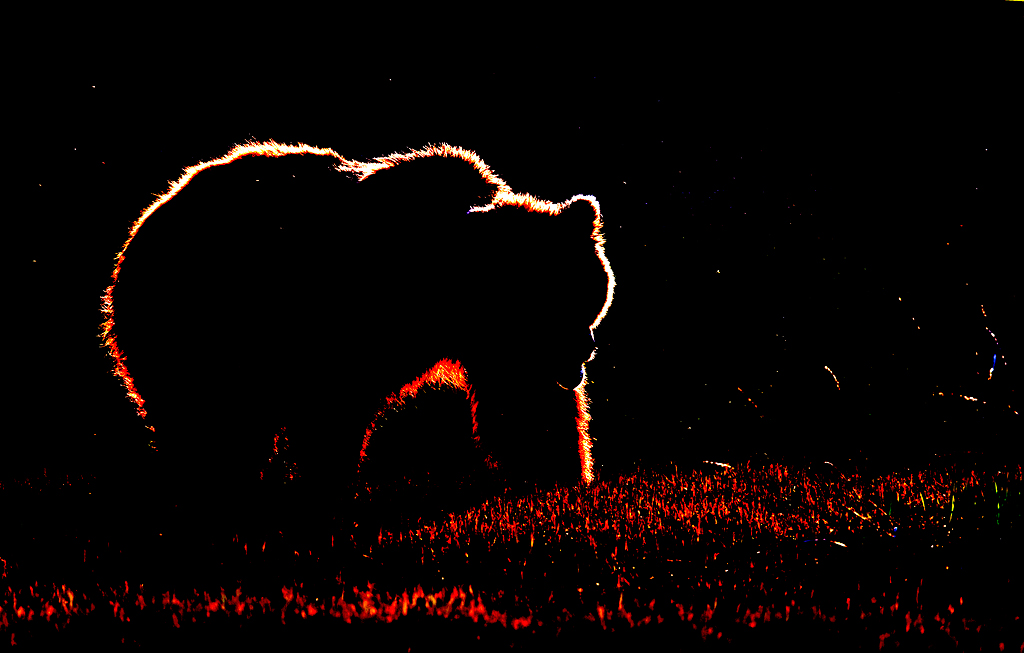
Central sensor (by necessity)/AI Servo/Rear Focus AF on the rim light and re-compose. Click here if you missed the Rear Focus Tutorial. Click on the image to see a larger version.
Blacklight
I came across the image above while reviewing some old image files. I never thought much of it before yesterday but today I am really liking it. I’d love to hear your thoughts. Do you like it? Why? Do you hate it? Why? Somewhere in between? Why? Anything you would have done differently? Why?
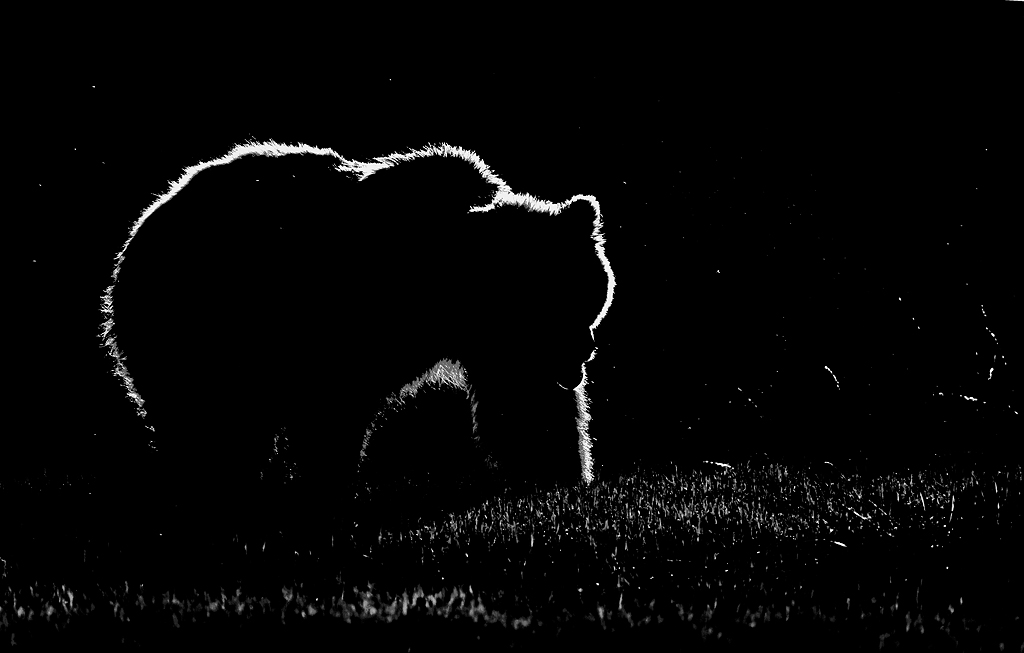
Do let me know which version you prefer, the original above or the black and white version below. The B&W version was created in NIK Silver Efex Pro with the Soft Skin pre-set. I gotta be honest, it took me about 15 minutes in Silver Efex Pro trying to decide which preset looked best. I tried several of my faves, Neutral, High Structure, several of the High Contrast Color Filters, and Wet Rocks. All but the latter looked great. Then I tried some of the funkier pre-sets including Darken Contrast Vignette, Soft Skin, Holga, Overexpose EV +1, Infrared Film Soft, and several others. Each of those looked great and each was slightly different. I wound going with the Soft Skin look below.
This is the version that I created using the Soft Skin preset in NIK Silver Efex Pro.
Creativity
For years I have been saying that one of the very best ways to improve your creativity is to look at as many great images as you can in books, on line at websites like BPN, and at slide programs and seminars. I practice what I preach. The first time I saw the words blacklight and blacklit they were used in Andy Rouse’s fine book, Concepts in Nature. My Sally Lightfoot/breaking wave/black lava rock image that was honored in a recent Nature’s Best contest and made the finals of a BBC contest was inspired by a film image from that book. And Andy’s blacklit lion image planted the seed for the bear image presented here.
At one time we carried Concepts in Nature in the BAA On-line store but if you would like to get inspired you will need to get your copy by clicking on the link below.
Note: many if not all of the books that come up below the main choice when you click on the link above will inspire you greatly.
NIK 15% Discount
As regular readers know, Color Efex Pro has drastically changed my digital workflow and little by little I have begun using Viveza to solve sticky image optimization problems and Silver Efex Pro fo fast, dramatic B&W conversions. You can save 15% on all NIK products (including Color Efex Pro, Silver Efex Pro, and Viveza) by clicking here and entering BAA in the Promo Code box at check-out. Then hit Apply to see your savings. You can download a trial copy that will work for 15 days and allow you to create full sized images.
Bear Boat/Bears Catching Salmon IPT: September 2-9, 2013 from Kodiak, AK: $6699. Happy campers only! Maximum 6 + two leaders: Arthur Morris and Denise Ippolito.
Limit: 6. Openings: 1
I have room for just one male photographer who likes bears and/or an interested female photographer who likes bears and who might consider limited lodging options on the boat, i.e., learn about the rabbit hole. If either of the above describes you, please e-mail. The rabbit hole is not that bad. I have stayed in it myself. There are already two women on this trip, plus Denise.
It is mandatory that you be in Kodiak no later than the late afternoon of September 1 to avoid missing the float plane(s) to the boat on the morning of September 2. With air travel in AK being what it is, with the chance of fog or other bad weather–being on Kodiak on August 31 is an even better plan). I will take the group out to dinner in Kodiak on the evening of September 1. Denise and I will plan on being on Kodiak on August 31 to avoid any potential disaster. We will take one or more float planes to the boat mid-morning on September 2. We will photograph bears that afternoon and every day for the next six days (weather permitting of course). We should have bears catching salmon every day. In addition, we will get some nice stuff on Mew Gull and Glaucous-winged Gulls dining on roe and the remains of predated salmon. we may–depending on where the concentrations of bears are–get to photograph Harbor seals and some hauled out Steller’s Sea Lions (an endangered species). Halibut fishing (license required) is optional. On September 9, our last morning on the boat, we will photograph in the early morning and then return to Kodiak via float plane. The eight days will consist of six full days (Sept 3, 4, 5, 6, 7, & 8) of photography featuring lots of Coastal Brown Bears catching salmon as above plus a variety of other natural history subjects plus some nice scenic photography that I forgot to mention above. Plus the first afternoon and the last morning.
What’s included? 8 DAYS/7 NIGHTS on the boat as above. All meals on the boat. (The food is quite excellent.) National Park fees. One night’s double occupancy lodging on Kodiak; arrive: Sept 1/depart: Sept 2. The thank-you-in-advance dinner on Sept 1. In-the-field photo tips, instruction, and guidance. An insight into the minds of two top professionals; we will constantly let you know what we are thinking, what we are doing, and why we are doing it. Small group image review, image sharing, and Photoshop instruction on the boat. Denise’s creativity will amaze you.
What’s not included: Your round trip airfare to and from Kodiak, AK (almost surely through Anchorage). All necessary lodging other than the cost of your double occupancy room on the night of August 31 should you opt to arrive early–we can arrange that in advance for you. We will let you know the cost of a single supplement if so desired. The cost of the round-trip float plane to the boat on September 2 and back to Kodiak on September 9. The cost of a round trip this year was $500. The suggested crew tip of $210.
Is this an expensive trip? Yes, of course. But with 6 full and two half days, a wealth of great subjects, and the fact that you will be walking with the bears it will be one of the great experiences of your life. (See the comments below.) Most folks who take part in a Bear Boat IPT wind up coming back for more. A $2,000 per person non-refundable deposit by check only made out to “Arthur Morris” is required to hold your spot. Please click here and then scroll down and read our cancellation policies. Then please print, read, and sign the necessary paperwork here and send it to us with your deposit check. Deposit due immediately. That leaves a balance of $4499. The first payment of $2499 is due January 15, 2013. The final payment of $2000 is due on April 15, 2013. This trip is a go. Note: most similar but cheaper trips are only 7 DAYS/6 NIGHTS. Please e-mail for photos.
Arctic Pro Muck Boots
On my first trip to the Southern Oceans in 2007, I ordered a pair of Arctic Pro Muck Boots on the advice of many. I returned them and went with too-large and too-heavy neoprene waders. For my two 2012 trips I ordered a pair of Arctic Pro Muck Boots. I got them large enough to wear with one pair of heavy socks and one pair of regular socks. Wow! My feet were always dry and always warm. They were tall enough for all the wet landings, even those in heavy surf. This year I wore them at Bosque. My always cold feet were never cold. Last week I wore them on the Barnegat Jetty. Never cold at all. They enabled me to stand in the saltwater pools next to the jetty on the crazy wind-driven high tides that we encountered. And on the jetty, they provided firm footing at all times. (Warning: unless you have ice creepers, never walk on black, dark green, slimy jetty rocks….)
I can enthusiastically and unequivocally recommend a pair of Arctic Pro Muck Boots for all cold weather situations (wet or dry!). You can order yours using the link above and help support our efforts on the blog and in the Bulletins.
Join Denise Ippolito and me on the weekend of February 23-24 on the outskirts of Tampa, FL for a great weekend of fun and learning. Learn to improve your photography skills, your skill at designing images in the field, your creative vision, and your image optimization skills. Sunday critiquing session. Click here for additional details and the complete schedule.
Best to register soon as the seminar is filling up nicely.
Support the BAA Blog. Support the BAA Bulletins
We want and need to keep providing you with the latest free information, photography and Photoshop lessons, and all manner of related information. Show your appreciation by making your purchases immediately after clicking on any of our B&H (or Amazon.com) Affiliate links in this blog post. Remember, B&H ain’t just photography!
Shop Amazon
Consider doing all of your Amazon.com shopping using the search link below. You’ll be getting the same low prices and great service that you are accustomed to and at the same time, supporting my efforts in the Bulletins and on the Blog to bring you great images, timely product news and info, and tons of free educational articles on an almost daily (and sometimes almost back-breaking) basis 🙂 Just type your search in the little white box and hit Go.
You can find other types of Muck Boots by simply typing “muck boots” in the little white box below and hitting Go. Thanks!
After a pretty good night’s sleep on the Auto Train we pulled into Sanford, FL this morning an hour early. I was way-lucky when my SUV was one of the first off the train. After stops at Publix and Junior’s Fish Market in Lake Wales I arrived at my home in Indian Lake Estates, FL at about noon, just in time for a nap. I am still feeling a bit under the weather but nothing too serious.
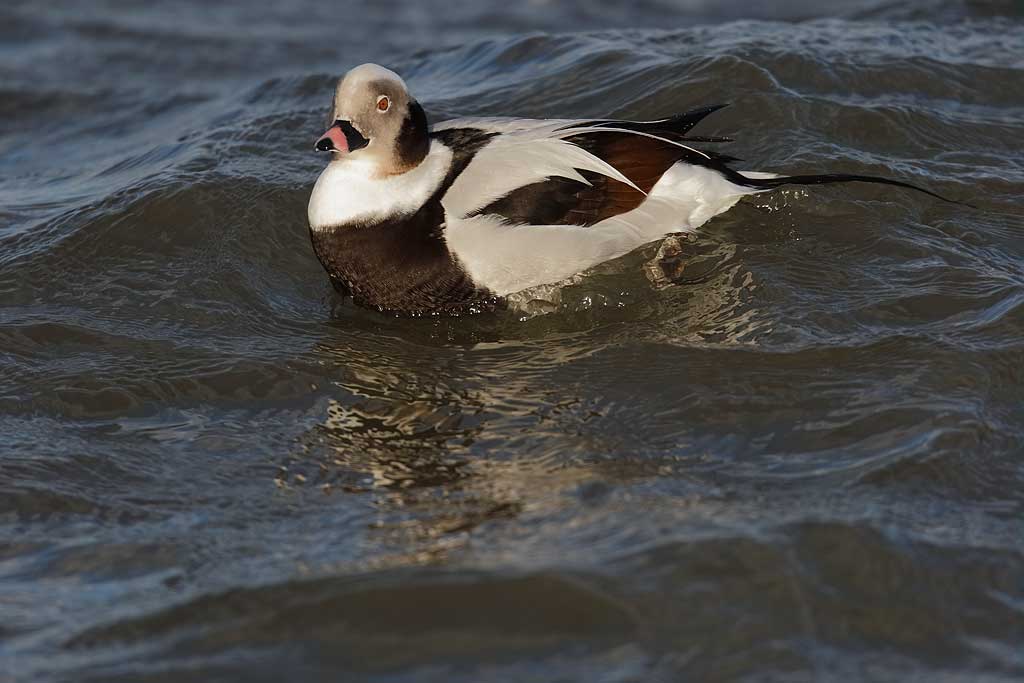
Central sensor (by necessity)/AI Servo Expand/Rear Focus AF active at the moment of exposure. The AF sensor was on the water below the side of the bird’s breast where the black meets the white; don’t ask me why the eye is sharp…. Click here if you missed the Rear Focus Tutorial. Click on the image to see a larger version.
This is the optimized image.
How Did I Get From A to B?
Dealing with choppy water and fierce winds with gusts up to 50mph made it difficult to avoid getting knocked on your butt on the jetty. Trying to get the AF sensor squarely on the bird with the bird anywhere in the frame was a great challenge. Photographing swimming sea ducks is often difficult on windless days…..
I was happy with the pose and the sharpness of the original image (see below) but the bird was way too high in the frame. In addition, I screwed up the exposure a bit when the sun broke through the gloom just as I pressed the shutter button. I saved the WHITEs in Canon Digital Photo Professional as described in detail in the DPP Conversion Guide that I wrote with Arash Hazeghi. I had to move the Highlights Slider all the way to the left and in addition, I had to lower the exposure. As a result, the white feathers on the wings came out grey rather than white. Lots to do. We will talk more about the image optimization and clean-up process in the follow-up post. On to the question of the day.
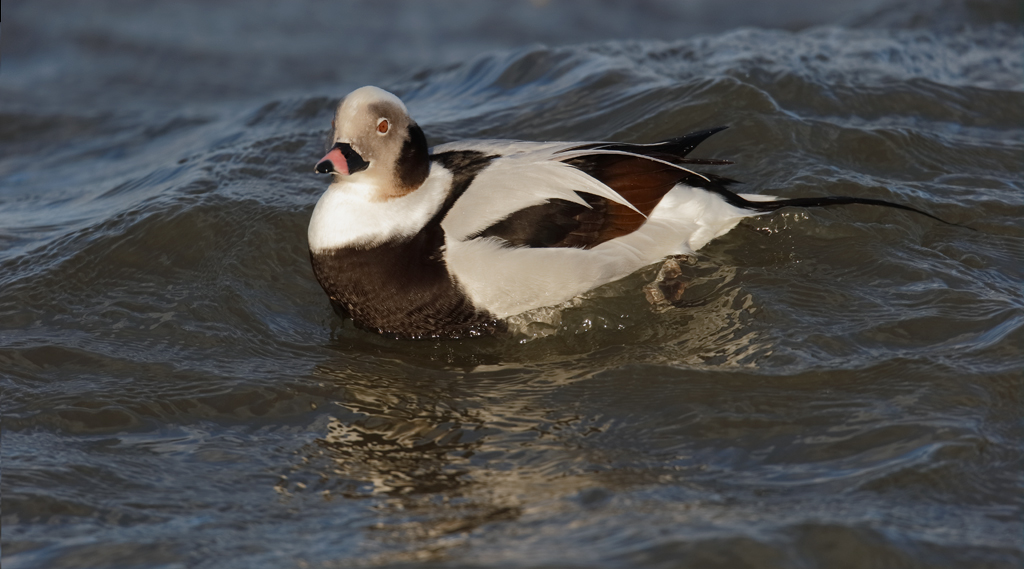
This is Image A, the original image.
It is easy to see in the original image immediately above, Image A, that the duck is way too high in the frame. I needed to add a bit of canvas and water above and subtract a bit of canvas below the bird while keeping the whole reflection…..
What to do?
This is Image B, the image after I improved the composition but before I completed the image optimization process. I will share an animated GIF showing all the differences when I reveal the technique that I used.
In the image immediately above, Image B, it is obvious that I added a bit of canvas and water above the bird and subtracted some canvas below the bird while avoiding cropping the reflection.
How did I get from A to B? I used a technique that I have mentioned briefly either here or on BPN in recent months. Take a moment to put your thinking cap on, try to figure out how I improved the composition, and leave a comment below. I will withhold my comments until the technique that I used is revealed, probably on Monday or Tuesday. Have fun and good luck. Clue: I did not use Content Aware Fill.
Arctic Pro Muck Boots
On my first trip to the Southern Oceans in 2007, I ordered a pair of Arctic Pro Muck Boots on the advice of many. I returned them and went with too-large and too-heavy neoprene waders. For my two 2012 trips I ordered a pair of Arctic Pro Muck Boots. I got them large enough to wear with one pair of heavy socks and one pair of regular socks. Wow! My feet were always dry and always warm. They were tall enough for all the wet landings, even those in heavy surf. This year I wore them at Bosque. My always cold feet were never cold. Last week I wore them on the Barnegat Jetty. Never cold at all. They enabled me to stand in the saltwater pools next to the jetty on the crazy wind-driven high tides that we encountered. And on the jetty, they provided firm footing at all times. (Warning: unless you have ice creepers, never walk on black, dark green, slimy jetty rocks….)
I can enthusiastically and unequivocally recommend a pair of Arctic Pro Muck Boots for all cold weather situations (wet or dry!). You can order yours using the link above and help support our efforts on the blog and in the Bulletins.
Join Denise Ippolito and me on the weekend of February 23-24 on the outskirts of Tampa, FL for a great weekend of fun and learning. Learn to improve your photography skills, your skill at designing images in the field, your creative vision, and your image optimization skills. Sunday critiquing session. Click here for additional details and the complete schedule.
Best to register soon as the seminar is filling up nicely.
Support the BAA Blog. Support the BAA Bulletins
We want and need to keep providing you with the latest free information, photography and Photoshop lessons, and all manner of related information. Show your appreciation by making your purchases immediately after clicking on any of our B&H (or Amazon.com) Affiliate links in this blog post. Remember, B&H ain’t just photography!
Shop Amazon
Consider doing all of your Amazon.com shopping using the search link below. You’ll be getting the same low prices and great service that you are accustomed to and at the same time, supporting my efforts in the Bulletins and on the Blog to bring you great images, timely product news and info, and tons of free educational articles on an almost daily (and sometimes almost back-breaking) basis 🙂 Just type your search in the little white box and hit Go.
You can find other types of Muck Boots by simply typing “muck boots” in the little white box below and hitting Go. Thanks!
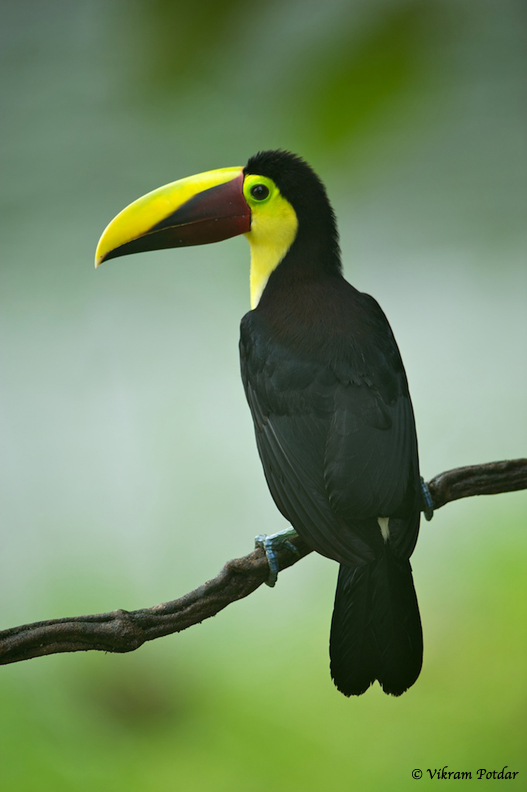
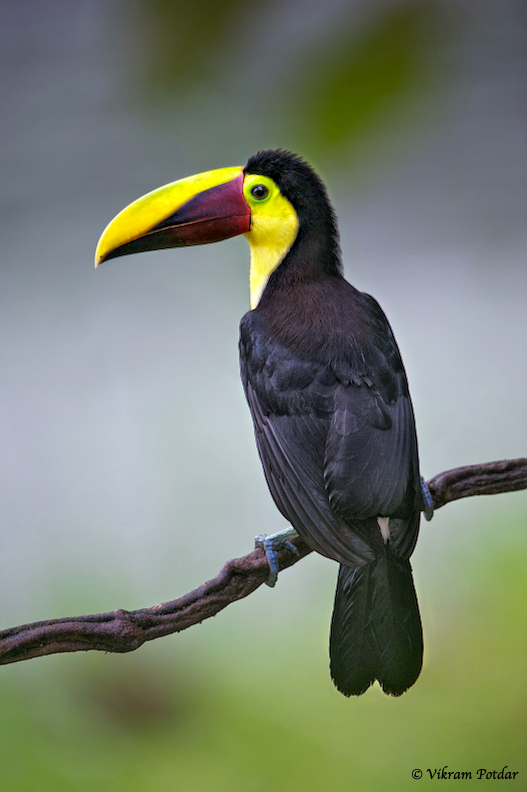
Image courtesy of and copyright 2012: Vikram Potdar.
Chestnut-mandibled Toucan Magic
Having been home only six days since October 16 and having been swamped with travel, teaching, photography, image optimization, and writing (as in the blog and the Bulletins) it has been great to have had a bit more time to be active on BPN (Bird Photographer’s.Net) lately. I came across the image above here in the Avian forum on the evening of December 24th.
It was created by BPN member Vikram Potdar of Pune, Maharashtra, India. It is published here with his permission.
The following is adapted from my comments:
Welcome Vikram, This is actually a fine image that needed better processing and some tender loving care. I love the pose and the bird and perch and the background. There seems to have been some foliage between you and the bird’s tail and the face could have been a tad sharper–you may have focused on the toucan’s back. Subtracting light in this situation seems to be an error; zero or even some plus compensation would have pushed the histogram to the right where it should have been. In addition, a minimum of ISO 400 or even ISO 800 would have given you some valuable depth of field.
This is my repost. You can see it in Pane #5 here.
For the repost I corrected the huge green cast with (about) a 75% average blur color balance, ran NIK Color Efex Pro Detail Extractor (at about 40% with a Quick Selection Tool selection) and Tonal Contrast (at about 33% via a Hide All Mask) on the bird only, did a bit of bill clean-up, lightened the face with a Tim Grey Dodge and Burn, and sharpened the face with a Quick Mask and a 15/65/0 Contrast Mask.
All of the above as described in detail in Digital Basics which includes my complete digital workflow, dozens of great Photoshop tips, all of my keyboard shortcuts, “Layer Masking for Dummies,” and NIK Color Efex Pro basics. This PDF which is sent via e-mail will be the best $25 that you ever spent on photography.
NIK 15% Discount
After the color balance was corrected, the judicious use of Detail Extractor on the toucan image here was the key to improving the photograph. As regular readers know, Color Efex Pro has drastically changed my digital workflow and lately I have begun using Viveza to solve sticky image optimization problems. You can save 15% on all NIK products (including Color Efex Pro, Silver Efex Pro, and Viveza) by clicking here and entering BAA in the Promo Code box at check-out. Then hit Apply to see your savings. You can download a trial copy that will work for 15 days and allow you to create full sized images.
The animated GIF above clearly shows the improvements that were made in the repost. Note especially the detail on the back that was there the whole time and revealed with the judicious use of Detail Extractor.
Arctic Pro Muck Boots
On my first trip to the Southern Oceans in 2007, I ordered a pair of Arctic Pro Muck Boots on the advice of many. I returned them and went with too-large and too-heavy neoprene waders. For my two 2012 trips I ordered a pair of Arctic Pro Muck Boots. I got them large enough to wear with one pair of heavy socks and one pair of regular socks. Wow! My feet were always dry and always warm. They were tall enough for all the wet landings, even those in heavy surf. This year I wore them at Bosque. My always cold feet were never cold. Last week I wore them on the Barnegat Jetty. Never cold at all. They enabled me to stand in the saltwater pools next to the jetty on the crazy wind-driven high tides that we encountered. And on the jetty, they provided firm footing at all times. (Warning: unless you have ice creepers, never walk on black, dark green, slimy jetty rocks….)
I can enthusiastically and unequivocally recommend a pair of Arctic Pro Muck Boots for all cold weather situations (wet or dry!). You can order yours using the link above and help support our efforts on the blog and in the Bulletins.
Join Denise Ippolito and Arthur Morris on the weekend of February 23-24 on the outskirts of Tampa, FL for two days of fun and learning. Learn to improve your photographic skills, your skill at designing images in the field, your creative vision, and your image optimization skills. Sunday critiquing session. Click here for additional details and the complete schedule. Best to register soon as the seminar is filling up nicely.
Support the BAA Blog. Support the BAA Bulletins
We want and need to keep providing you with the latest free information, photography and Photoshop lessons, and all manner of related information. Show your appreciation by making your purchases immediately after clicking on any of our B&H (or Amazon.com) Affiliate links in this blog post. Remember, B&H ain’t just photography!
Shop Amazon
Consider doing all of your Amazon.com shopping using the search link below. You’ll be getting the same low prices and great service that you are accustomed to and at the same time, supporting my efforts in the Bulletins and on the Blog to bring you great images, timely product news and info, and tons of free educational articles on an almost daily (and sometimes almost back-breaking) basis 🙂 Just type your search in the little white box and hit Go.
You can find other types of Muck Boots by simply typing “muck boots” in the little white box below and hitting Go. Thanks!
I left my Mom’s in Holbrook, Long Island, NY at 9:39 am this morning, hursday, 12/27/13. Google Maps showed 5 hours 1 minute in current traffic to the Amtrak Station in Lorton, VA where I will board the Auto Train tomorrow. I hope. The close-in LIE was a bit crowded and traffic slowed at the LIE/BQE merge. Then not too bad after than over the Verazzano and the Goethal’s Bridges onto the New Jersey Turnpike South. I stopped for lunch at a rest area in building traffic. In the past hour I have gone exactly 2.3 miles. It is now 1:30 and I am online in the car and typing this blog post. Really!
I will get off at exit 8 and try to head south on local highways to hook up with 295 and then rejoin 95 south at some point.
Man, you gotta love it. Oh, I forgot to mention: I finally caught Denise Ippolito’s cold. My nose has been dripping like a sieve since yesterday.
Sympathetic comments welcome.
4:00pm Update
The worst of it was over at 2:39pm: 5 hours, only 112 miles. A whopping 22.4 mph. But I was actually having a good day. The accident: two tractor trailers, two passenger cars: 3 fatalities. Stopped at the Delaware Welcome Center at 4 o’clock with 189 miles under my belt. Probably about 125 miles to go to Lorton…. More later.
6:40pm Update: Safe in front of the Comfort Inn in Lorton, VA. Had some nasty traffic on the Baltimore–Washington Parkway. Total time: Exactly 9 hours, 1 minute. All in all 4 hours of traffic delays most due to the tragedy on the New Jersey Turnpike. Total miles: 512.
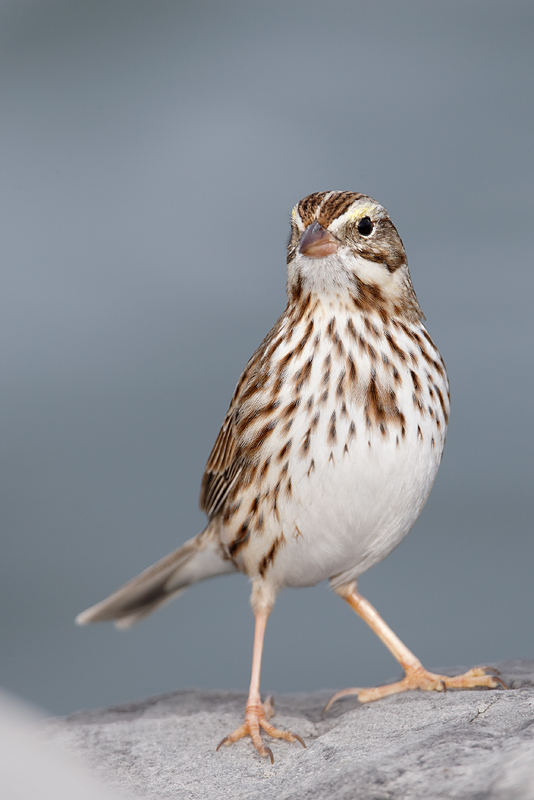
Central sensor (by necessity)/AI Servo Expand/Rear Focus AF on the center of the bird’s breast active at the moment of exposure. (Cropped from a horizontal original.) Click here if you missed the Rear Focus Tutorial. Click on the image to see a larger version.
Eager to get a frame of this hard to find, hard to photograph race of Savannah Sparrow, I stopped down 2/3 stop to f/10 and was happy to get the AF sensor anywhere on this fidgety subject. The bird posed spraddle-legged for about two one-hundredth of a second. I made three images, all sharp, and all with a less-than-ideal head angle. Seeing just a sliver of the bird’s right eye really bugs me. Staring either right or left of right down the lens barrel would have been great but it is what is way. 🙂 The head angle above is neither here nor there…. Even 45 degrees would have been a huge improvement.
Note that this bird was on the jetty and I was off the jetty. A big lens with a teleconverter brought the relatively small subject within range even though I was using a full frame camera body.
Why the Biggest Gun?
While commenting on the Barnegat Miracle blog post, Quazi Ahmed Hussain asked, “Artie, most of the time u r using ur biggest gun, the 800mm, and sometimes with extenders. Are the birds you photograph always far away from u? So far as we know, in your region getting close to the birds is not very difficult. So, do u mind letting us know the reason? Thanks in advance. Quazi
My Reply
That is a good question Quazi. Thanks for asking it and inspiring this blog post.
First off, while the birds in Florida are often very tame, the birds in New Jersey are–like the sparrow in the image above–typically quite skittish. Now on to the question, “Why am I almost always using my longest lens?” There are many, many good answers to that question so here goes.
1-Most recently I have gone to full frame camera bodies, two EOS-1D X bodies and one EOS-5D Mark III. With a full frame body and the 800 lens my effective focal length is 800mm. Someone with a 500mm lens, a 1.4X TC, and a Mark IV (with its 1.3X crop factor) actually has me out-gunned 910mm to 800mm.
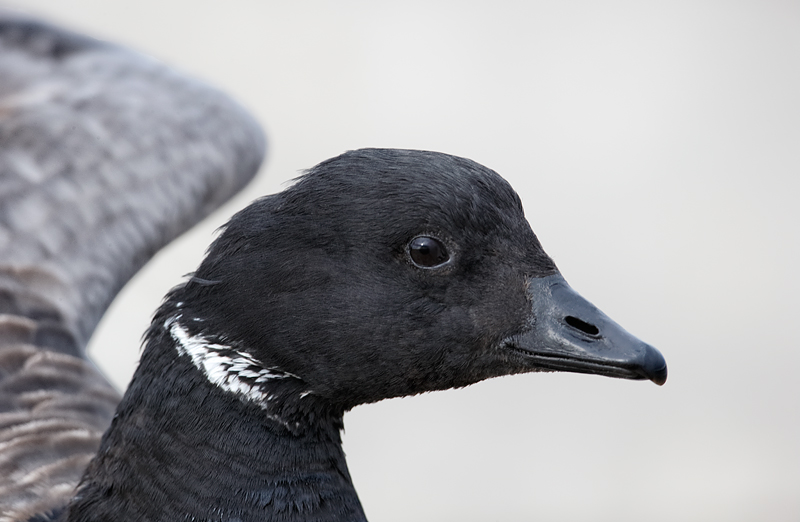
Central sensor (by necessity)/AI Servo Expand/Rear Focus AF on the center of the bird’s face active at the moment of exposure. Click here if you missed the Rear Focus Tutorial. Click on the image to see a larger version.
I was a bit lucky here on two counts: 1-I was able to keep the sensor on the bird’s face and maintain accurate focus even though the bird was flapping. 2-the resulting image was sharp at 1/320 sec., a relatively slow shutter speed for a moving subject. I did employ some excellent stalking techniques to get close to this usually shy species.
2-Long focal lengths fit my style–tight and graphic with clean backgrounds. With tame birds, a long lens gives me the ability to to create head portraits (see the Brant image immediately above_ and tight body parts close-ups. In addition, with their narrow angles of view, long lenses do a great job of eliminating background clutter and using them at wide apertures softens those clean backgrounds up rather nicely.
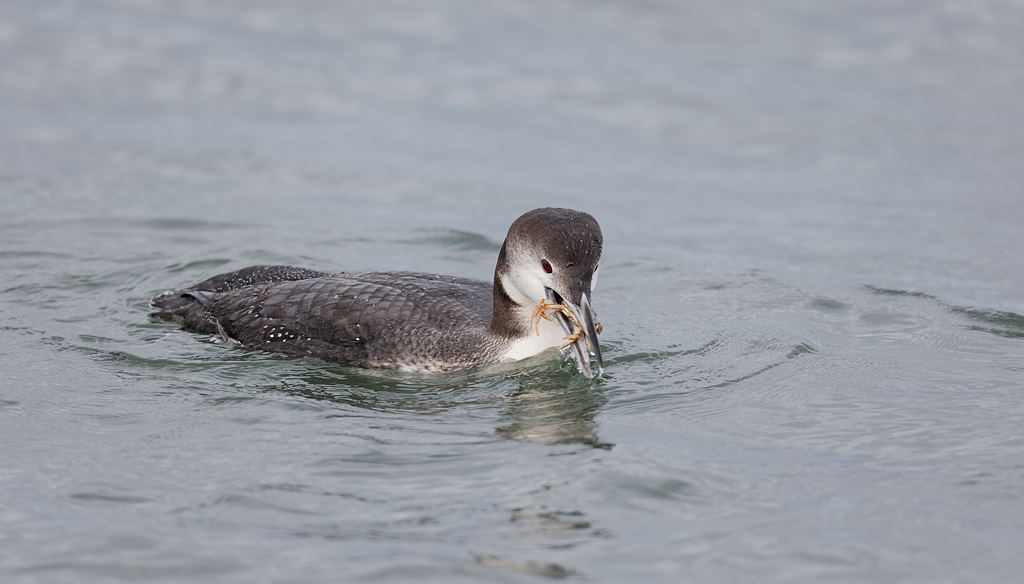
This Common Loon with a crab was also photographed on the just-concluded Barnegat Jetty IPT. I used the tripod-mounted Canon EF 800mm f/5.6L IS USM Autofocus lens and the Canon EOS-1D X digital SLR . ISO 800. Evaluative metering +1 stop: 1/640 sec. at f/7.1 in Manual mode. Central sensor/AI Servo Surround/Rear Focus AF active at the moment of exposure. Click here if you missed the Rear Focus Tutorial. Click on the image to enjoy a larger version.
3-As above, long focal length lenses allow you to photograph interesting behaviors while minimizing or eliminating the risk of disturbing the bird and possibly causing it to lose a meal.
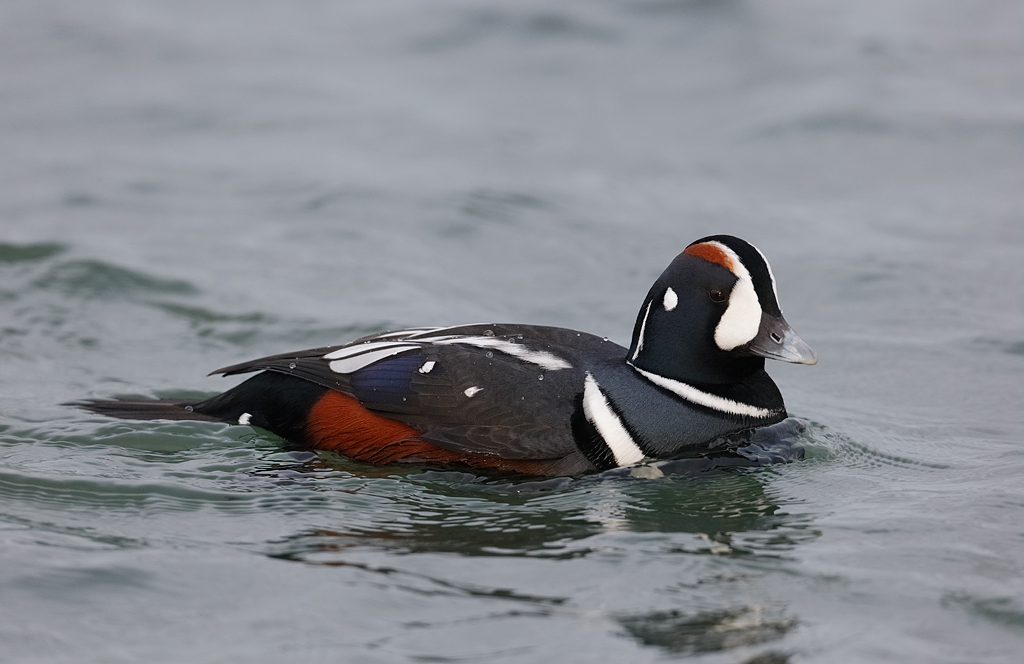
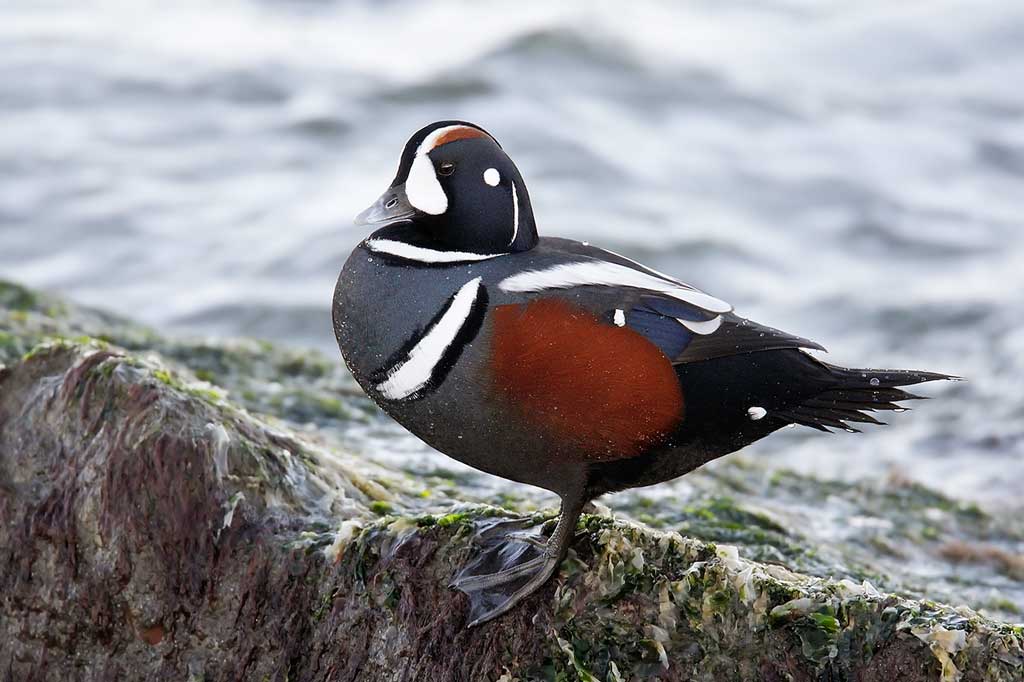
This swimming drake Harlequin Duck image was created at the Barnegat Jetty with the tripod-mounted Canon EF 800mm f/5.6L IS USM Autofocus lens and the Canon EOS-1D X digital SLR . ISO 1600. Evaluative metering +1/3 stop: 1/500 sec. at f/9 in Manual mode. One row down and two to the right of the central sensor/AI Servo Surround/Rear Focus AF active at the moment of exposure. Click here if you missed the Rear Focus Tutorial. Click on the image to enjoy a larger version.
4-Working with long lenses reduces the angle of declination when photographing birds below your position and reduces the angle of inclination when photographing birds that are above you enabling you to create more intimate images than if you had been using a shorter effective focal length. Adding a TC to a long telephoto lens when appropriate–you will need to move back–heightens these effects. I was sitting on the jetty behind my lowered tripod for the image above but because I was using a long lens it looks as if I were just above the water level.
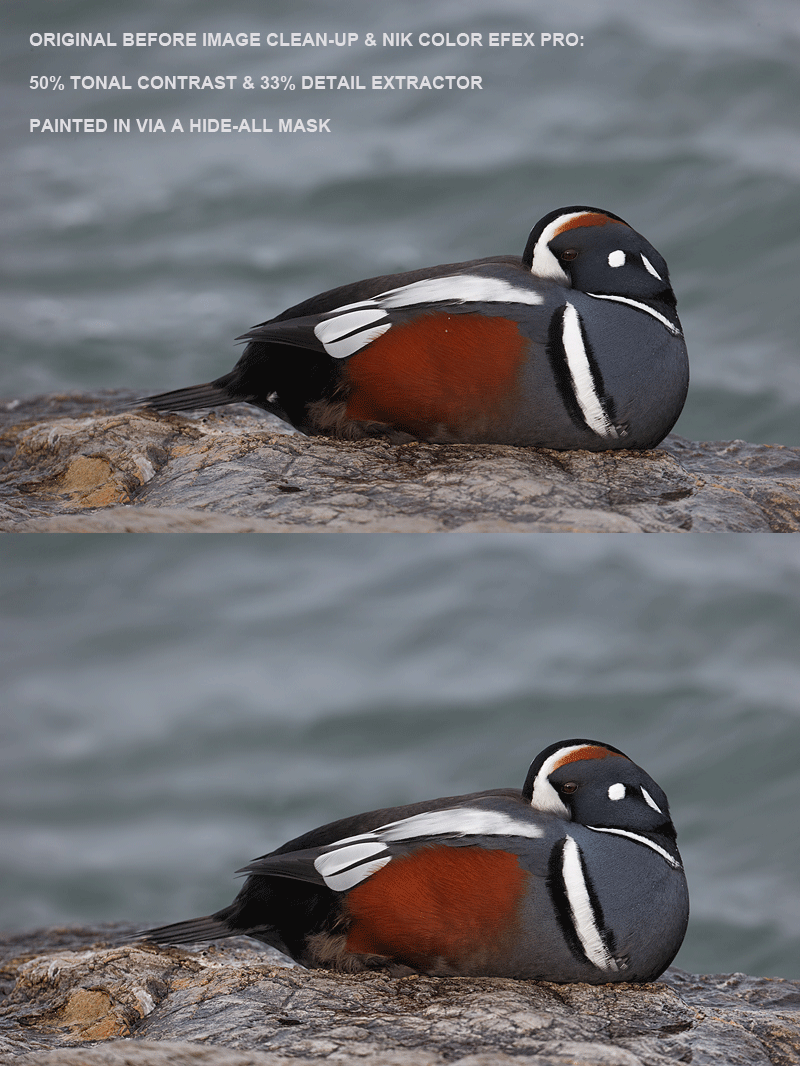
Small doses of NIK Color Efex Pro’s Tonal Contrast and Detail Extractor on the bird only using a Hide-All mask brought enhanced the plumage of the male duck immediately above. For my complete digital workflow, dozens of great Photoshop tips, all of my keyboard shortcuts, “Layer Masking for Dummies,” and NIK Color Efex Pro basics, get yourself a copy of our Digital Basics File, a PDF that is sent via e-mail. It will be the best $25 that you ever spent on photography.
NIK 15% Discount
On the Brant head portrait I used Color Efex Pro’s Tonal Contrast on the bird only and lightened the background using Control Point technology in Viveza. As regular readers know, Color Efex Pro has drastically changed my digital workflow and little by little I have begun using Viveza to solve sticky image optimization problems. You can save 15% on all NIK products (including Color Efex Pro, Silver Efex Pro, and Viveza) by clicking here and entering BAA in the Promo Code box at check-out. Then hit Apply to see your savings. You can download a trial copy that will work for 15 days and allow you to create full sized images.
Central sensor (by necessity)/AI Servo Expand/Rear Focus AF on the bird’s eye and recompose. Click here if you missed the Rear Focus Tutorial. Click on the image to see a larger version.
The 800 f/5.6L IS has 4-stop IS. This, plus excellent sharpness technique on my part, enabled me to create a sharp image practically in the dark at a shutter speed of 1/40 sec. To learn advanced sharpness techniques get yourself a copy of “The Art of Bird Photography II,” the all-new 916 page e-Book (on CD) that is the digital follow-up/continuation of the classic “The Art of Bird Photography.”
Summing Up
The image above reinforces many of the principles outlined above: long lenses provide great magnification even with full frame camera bodies, they can be used with teleconverters to bring small shy subjects into range without disturbing them, and they offer low angles of inclination even when you are standing at full height as I was when I created the image above.
Thanks again Quazi for your excellent question. Do note that I am often afield with either the 300 f/2.8L IS lens or the 70-200 f/2.8L IS zoom lens either on my shoulder via a Black Rapid RS-7 Strap or in the large rear pocket of my Xtrahand vest. And most days I have the 24-105 in my vest as well. Very often, the 800 is not the best tool for the job at hand.
Your Favorite?
Which of the above images is your favorite? Be sure to let us know why you like your pick.
It is interesting to note that all of the images above were created on a single day, December 20, 2012.
Support the BAA Blog. Support the BAA Bulletins
We want and need to keep providing you with the latest free information, photography and Photoshop lessons, and all manner of related information. Show your appreciation by making your purchases immediately after clicking on any of the links above. Remember, B&H ain’t just photography!
Shop Amazon
Consider doing all of your Amazon.com shopping using the search link below. You’ll be getting the same low prices and great service that you are accustomed to and at the same time, supporting my efforts in the Bulletins and on the Blog to bring you great images, timely product news and info, and tons of free educational articles on an almost daily (and sometimes almost back-breaking) basis 🙂 Just type your search in the little white box and hit Go.
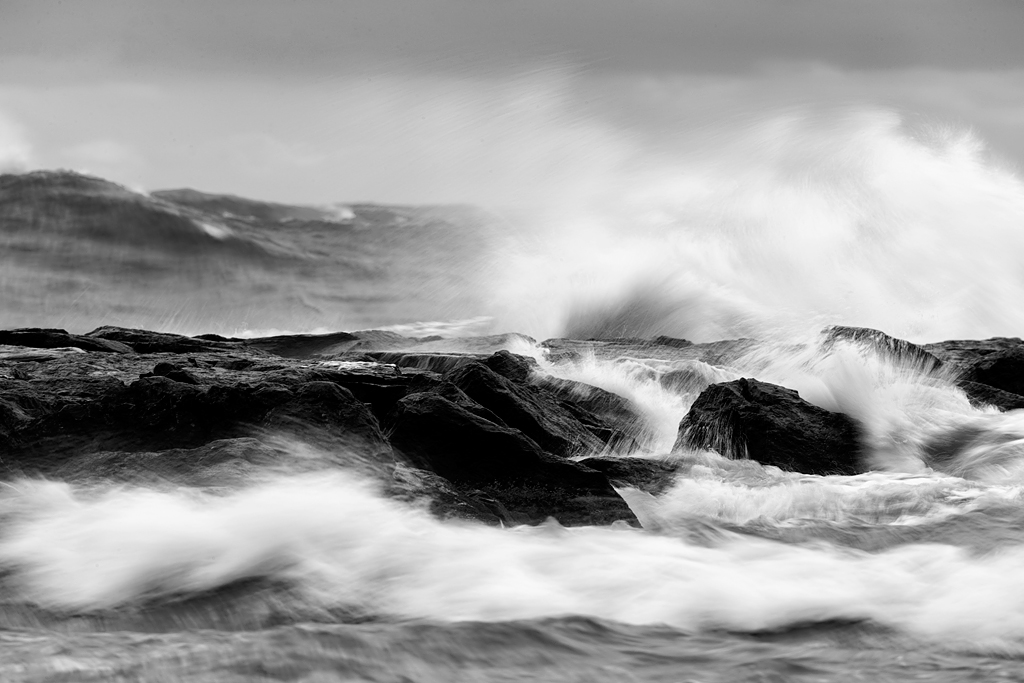
As I have been saying, it was a bit windy at the Barnegat Jetty on Friday and Saturday. This image was created with the tiipod-mounted Canon EF 800mm f/5.6L IS USM Autofocus lens and the Canon EOS-1D X digital SLR . ISO 50. Evaluative metering +1 2/3 stops as framed: 1/10 sec. at f/14 in Manual mode. Central sensor/AI Servo Surround/Rear Focus AF on the nearest rock on our left and re-compose. Click here if you missed the Rear Focus Tutorial. Click on the image to see a larger version.
Malicious Attack
Yesterday was a rough day at BIRDS AS ART. Unbeknownst to us, all BIRDS AS ART sites including the blog and the website were the target of a malicious hacker attack that commenced on Sunday, 23 DEC at 6:10pm. With Peter Kes being Johnny on the spot and with great help from our web hosts, the folks from Empowering Media, everything was under control by midday on Christmas Eve.
Those of you who were mis-directed or received error or virus warnings can click here to safely view yesterday’s post, “Barnegat Miracle.” Apologies to all who were inconvenienced in any way.
Seasons Greetings
Seasons greetings to all from Jennifer, Jim, Peter, and me. Enjoy family and friends, get out and make a few images, and don’t eat too much! Please accept our best wishes for a happy, healthy, and prosperous 2013.
NIK 15% Discount
The image above was optimized with the High Contrast Red Filter in NIK’s Silver Efex Pro and with both Tonal Contrast and a small dose of Detail Extractor from NIK Color Efex Pro. As regular readers here know, Color Efex Pro has drastically changed my digital workflow and little by little I have begun using Viveza to solve sticky image optimization problems. You can save 15% on all NIK products (including Color Efex Pro, Silver Efex Pro, and Viveza) by clicking here and entering BAA in the Promo Code box at check-out. Then hit Apply to see your savings. You can download a trial copy that will work for 15 days and allow you to create full sized images.
Support the BAA Blog. Support the BAA Bulletins.
We want and need to keep providing you with the latest free information, photography and Photoshop lessons, and all manner of related information. Show your appreciation by making your purchases immediately after clicking on any of the links above. Remember, B&H ain’t just photography!
Shop Amazon
Consider doing all of your Amazon.com shopping using the search link below. You’ll be getting the same low prices and great service that you are accustomed to and at the same time, supporting my efforts in the Bulletins and on the Blog to bring you great images, timely product news and info, and tons of free educational articles on an almost daily (and sometimes almost back-breaking) basis 🙂 Just type your search in the little white box and hit Go.
Despite high winds on Friday and Saturday, gusts of more than 50mph, water washing over the jetty, and waves of 40 feet in the inlet, a great time was had by all on the Barnegat Jetty IPT. All four of us: Denise and I and Bill Wingfield from South Carolina and David Policansky from the Washington, D.C. area. As David had left after lunch the leaders had the participant out-numbered two to one that afternoon. We said goodbye to Bill at about 4:30pm on Saturday.
As is my custom I removed my Delkin 700X 64gb PRO CF card from my 1D X and placed it in my left hand front pocket with the key card to the motel room. When Denise and I got back to the hotel in Weehawkin I stuck my hand into the same left hand front pocket and came up empty. I searched the room. I went down to the car and searched around and behind it. It was cold and still very windy. I searched in the parking lot and the motel lobby. And in the hallway leading to the room. All without success. As we had had a rather productive afternoon despite the fierce winds I was having some problem loving what is. But then I realized that there are a lot worse things that could happen than losing a compact flash card.
I decided to head back to the state park and look for the card on the ground. Denise volunteered to make the ride with me. Twenty-five minutes later I made a u-turn at the end of the road buoyed by the fact that two street lights illuminated the parking area outside the gates. (Note: never park in the lot in the afternoon as they lock folks in promptly at 4pm.)
I swung the Sequoia around and pointed my headlights in the vicinity of what I thought was my parking spot. As I stopped the car I spotted something on the ground. “That could be it.” I exited quickly, bent down, picked up my precious flash card, held it over my head and let out a whoop of joy as I leaped about as high into the air as I have in recent decades. It was then that I realized that the card had been soaked in salt spray by the vicious west wind.
But back in the room the card downloaded perfectly. Sometimes you just gotta love being lucky.
ps: I did the exact same thing at Bosque last year. With help from Jim Heupel I found the then missing card in the pitch dark at 5:15am in the parking lot at Harry’s Crane Pool.
Moral: it is a lot harder to lose a card that has been safely placed in a Delkin CF Memory Card Tote. Only $9.99 here.
Four Reasons to be Happy
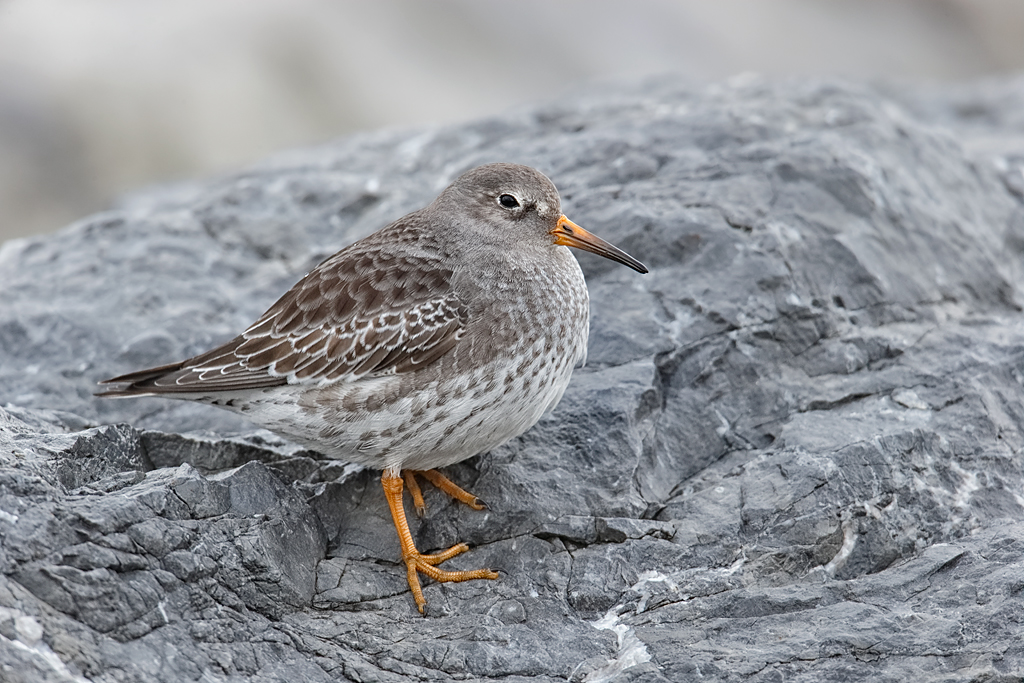
This first-winter Purple Sandpiper was photographed on the just-concluded Barnegat Jetty IPT with the tripod-mounted Canon EF 800mm f/5.6L IS USM Autofocus lens and the Canon EOS-1D X digital SLR . ISO 400. Evaluative metering +1 stop: 1/400 sec. at f/5.6 in Manual mode. Central sensor/AI Servo Surround/Rear Focus AF and re-compose. Click here if you missed the Rear Focus Tutorial. Click on the image to see a larger version.
For unknown reasons, the young bird above perched atop the rock and posed for more than two minutes despite the high wind. When the sun came out I went to a darker exposure but failed to check the histogram. The result? About 20 toasted frames of this lovely shorebird.
Central sensor (by necessity)/AI Servo Expand/Rear Focus AF active at the moment of exposure. Click here if you missed the Rear Focus Tutorial. Click on the image to see a larger version.
Those of you who are mystified by the term “first winter plumage” should get themselves a copy of my “Shorebirds: Beautiful Beachcombers.” You will learn that ageing shorebirds is often easier than identifying them as to species.
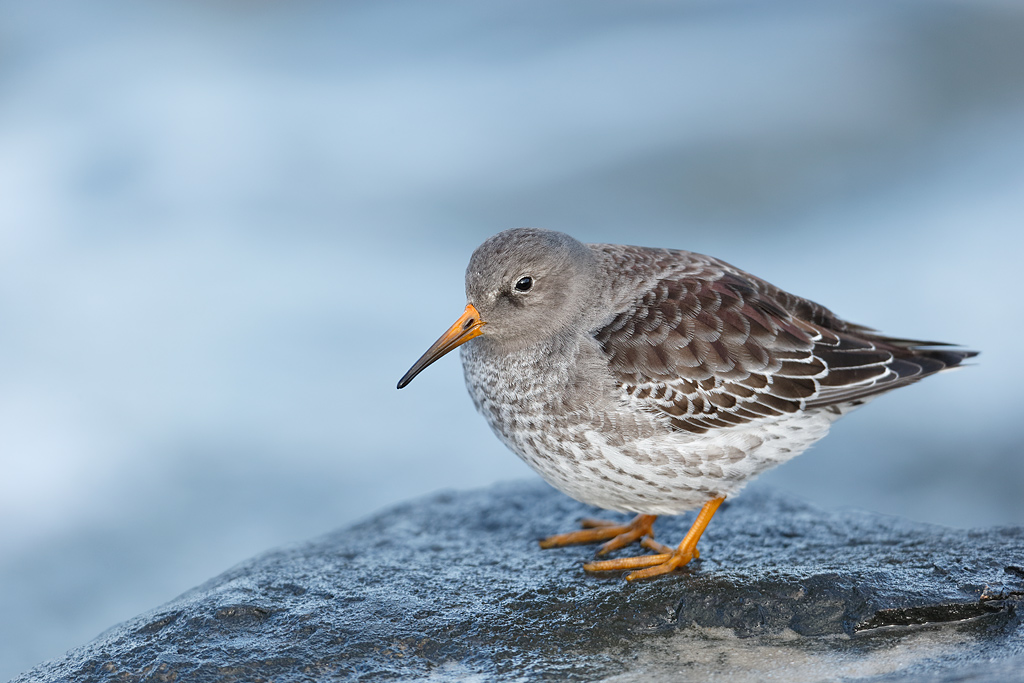
Central sensor (by necessity)/AI Servo Expand/Rear Focus AF on the bird’s eye and recompose. Click here if you missed the Rear Focus Tutorial. Click on the image to see a larger version.
How’s that for sweet light and a killer background. Lesson for beginners: the farther the background from the subject the softer it will appear. Here the inlet lit be gorgeous late afternoon light was at least 100 yards past the shorebird.
Central sensor (by necessity)/AI Servo Expand/Rear Focus AF on the bird’s eye and recompose. Click here if you missed the Rear Focus Tutorial. Click on the image to see a larger version.
Image optimization tip: with the light so warm I went to Hue/Saturation and decreased the saturation of the REDs and the YELLOWs about 20 points.
Easy Quiz Question
Why were all the birds facing to the left?
Which is Your Favorite, and Why?
Take a moment to let us know which of the above images is your favorite. And be sure to let us know why.
Shop Amazon
Consider doing all of your Amazon.com shopping using the search link below. You’ll be getting the same low prices and great service that you are accustomed to and at the same time, supporting my efforts in the Bulletins and on the Blog to bring you great images, timely product news and info, and tons of free educational articles on an almost daily (and sometimes almost back-breaking) basis 🙂 Just type your search in the little white box and hit Go.
Join Denise Ippolito and me on the weekend of February 23-24 on the outskirts of Tampa, FL for a great weekend of fun and learning. Learn to improve your photography skills, your skill at designing images in the field, your creative vision, and your image optimization skills. Sunday critiquing session. Click here for additional details and the complete schedule.
Shopper’s Guide
Thanks a stack to all who have used our B&H affiliate links to purchase their gear as a thank you for all the free information that we bring you on the Blog and in the Bulletins. Before you purchase anything be sure to check out the advice in our Shopper’s Guide.
Shop B&H
Support the BAA Blog. Support the BAA Bulletins. We want and need to keep providing you with the latest free information, photography and Photoshop lessons, and all manner of related information. Show your appreciation by making your purchases immediately after clicking on any of the links above. Remember, B&H ain’t just photography!
And from the BAA On-line Store:
LensCoats. I have a LensCoat on each of my big lenses to protect them from nicks and thus increase their re-sales value. All my big lens LensCoat stuff is in Hardwood Snow pattern. LegCoat Tripod Leg Covers. I have four tripods active and each has a Hardwood Snow LegCoat on it to help prevent further damage to my tender shoulders 🙂 And you will love them in mega-cold weather…. Gizo GT3532 LS CF Tripod. This one replaces the GT3530LS Tripod and will last you a lifetime. Learn more about this great tripod here. Mongoose M3.6 Tripod Head. Right now this is the best tripod head around for use with lenses that weigh less than 9 pounds. For heavier lenses, check out the Wimberley V2 head. Double Bubble Level. You will find one in my camera’s hot shoe whenever I am not using flash. The Lens Align Mark II. I use the Lens Align Mark II pretty much religiously to micro-adjust all of my gear an average of once a month and always before a major trip. Enjoy our free comprehensive tutorial here. BreezeBrowser. I do not see how any digital photographer can exist without this program. Delkin Flash Cards. I use and depend on Delkin compact Flash Cards and card readers most every day. Learn more about their great 700X and 1000X cards here or about my favorite Delkin card here.
This image was created on the Barnegat Jetty IPT (things are going great) with the tripod-mounted Canon EF 800mm f/5.6L IS USM Autofocus lens and the Canon EOS-1D X digital SLR . ISO 400. Evaluative metering +1/3 stop: 1/320 sec. at f/10 in Manual mode. Central sensor/AI Servo Rear Focus AF on the bird’s eye and re-compose. Click here if you missed the Rear Focus Tutorial. Click on the image to see a larger version.
Two Drake Harlequin Duck Images; So Many Lessons
This (and a young male harlequin) were the first birds that we encountered on our first afternoon at jetty. A really nice guy named Jim (from 2 hours away in NJ, with Canon gear) was already on the birds so we were very careful as we joined him. He was quite gracious filling us on the on the latest Barnegat info. I spoke very softly. The handsome bird slept peacefully for about five minutes until a second adult male swan up to the rock vocalizing and woke the gorgeous adult above up. It posed for a minute or so and then the original two hopped off the rock into the inlet. Party over.
Note the effective use of rear focus in the image above. I focused on the eye and recomposed placing the bird will on the right side of the image while making sure to get the complete yellow chunk of rock in the frame on the lower left.
This image was also created on the Barnegat Jetty IPT (things are going great) with the tripod-mounted Canon EF 800mm f/5.6L IS USM Autofocus lens and the Canon EOS-1D X digital SLR . ISO 400. Evaluative metering +2/3 stop: 1/2o0 sec. at f/8 in Manual mode. Central sensor/AI Servo Rear Focus AF on the bird’s eye and re-compose. Click here if you missed the Rear Focus Tutorial. Click on the image to see a larger version.
A cloud covered the already somewhat muted sun so I opened up from f/10 to f/8 and dropped the shutter speed from 1/320 to 1/200 sec. and checked the histogram; it was perfect with just a few blinkies on the bright white markings. By living with a few easily recovered highlights I ensured lots of detail in the darker feather tracts. Next I focused on the eye and recomposed, this time with the bird on the left side of the frame giving it room to look and see into its world. Note that with the sleeping bird I placed the subject on the right side of the frame again with lots of room to look and see into its world.
Note the pretty much perfect head angle with the drake’s head turned about 4 degrees towards us.
Image Clean-Up & NIK
Image clean-up as usual with the Spot Healing Brush, the Patch Tool, and a small Quick Mask or too, all as described in detail in Digital Basics, the best $20 you’ll ever spend on photography. Digital Basics is a PDF that is sent via e-mail. It contains my complete digital workflow, dozens of great Photoshop tips, all of my customized Keyboard Shortcuts, and free updates.
Tonal Contrast and Detail Extractor on separate layers and then painted in on the bird and the rocks as desired using a Hide-All mask. See “Layer Masking for Dummies” in Digital Basics.
Viveza
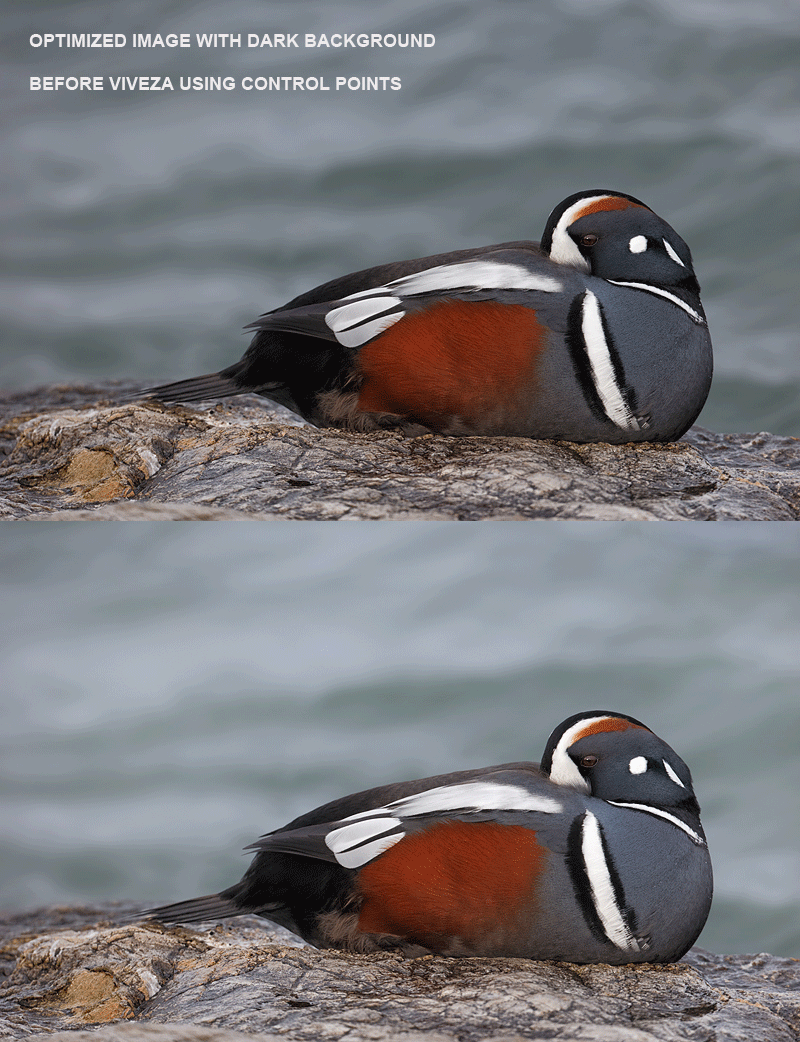
When I compared the two images of the same duck, I noticed that the background of the sleeping duck was much darker than the background of the duck after it woke up. I was puzzled as to how to lighten the background only without doing lots of masking. I asked Denise Ippolito who answered immediately, “Viveza.” Brilliant. Denise has an incredible mind for solving image optimization problems.
I brought the image into Viveza, opened a control point in the upper left part of the image, sized it, and slid the Brightness slider to the right and the Structure slider to the left. Then I duplicated the control point (Control D), re-sized it after moving it to the right, and repeated that process until the entire background was covered nicely. Voila! You can note the lighter softer final version in the animated GIF above.
NIK 15% Discount
As regular readers here know, NIK Color Efex Pro has drastically changed my digital workflow and little by little I have begun using Viveza to solve sticky image optimization problems. You can save 15% on all NIK products (including Color Efex Pro and Viveza) by clicking here and entering BAA in the Promo Code box at check-out. Then hit Apply to see your savings. You can download a trial copy that will work for 15 days and allow you to create full sized images.
Suggested Holiday Shopping
Shop Amazon
Consider doing all of your Amazon.com shopping using the search link below. You’ll be getting the same low prices and great service that you are accustomed to and at the same time, supporting my efforts in the Bulletins and on the Blog to bring you great images, timely product news and info, and tons of free educational articles on an almost daily (and sometimes almost back-breaking) basis 🙂 Just type your search in the little white box and hit Go.
Tim Laman’s Amazing Birds of Paradise book
Lens Clens
[Not a valid template]
Great for your all your gear cleaning needs from the front elements of your lenses, filters, the outer surfaces of your lenses and camera bodies, and even your laptop and computers screens.
“The Photographer’s Guide to Attracting Birds”
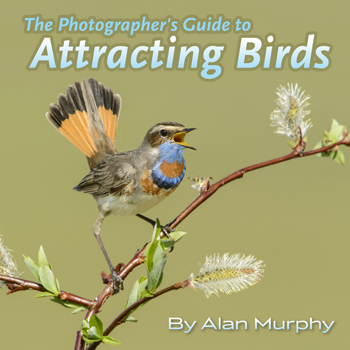
Alan Murphy taught the world to create killer images at backyard set-ups in his 106 page eBook, “Guide to Songbird Set-Up Photography.” In his latest effort, “The Photographer’s Guide to Attracting Birds,” he has out-done himself. As I proofread this new e-Book for readability, I was amazed not only by the images, but by Alan’s innovative and creative techniques. Heck, in many cases, I was stunned by his cleverness. Click on the logo-link below to get your copy. (PayPal payments accepted.)
Join Denise Ippolito and me on the weekend of February 23-24 on the outskirts of Tampa, FL for a great weekend of fun and learning. Learn to improve your photography skills, your skill at designing images in the field, your creative vision, and your image optimization skills. Sunday critiquing session. Click here for additional details and the complete schedule.
Shopper’s Guide
Thanks a stack to all who have used our B&H affiliate links to purchase their gear as a thank you for all the free information that we bring you on the Blog and in the Bulletins. Before you purchase anything be sure to check out the advice in our Shopper’s Guide.
Shop B&H
Support the BAA Blog. Support the BAA Bulletins. We want and need to keep providing you with the latest free information, photography and Photoshop lessons, and all manner of related information. Show your appreciation by making your purchases immediately after clicking on any of the links above. Remember, B&H ain’t just photography!
And from the BAA On-line Store:
LensCoats. I have a LensCoat on each of my big lenses to protect them from nicks and thus increase their re-sales value. All my big lens LensCoat stuff is in Hardwood Snow pattern. LegCoat Tripod Leg Covers. I have four tripods active and each has a Hardwood Snow LegCoat on it to help prevent further damage to my tender shoulders 🙂 And you will love them in mega-cold weather…. Gizo GT3532 LS CF Tripod. This one replaces the GT3530LS Tripod and will last you a lifetime. Learn more about this great tripod here. Mongoose M3.6 Tripod Head. Right now this is the best tripod head around for use with lenses that weigh less than 9 pounds. For heavier lenses, check out the Wimberley V2 head. Double Bubble Level. You will find one in my camera’s hot shoe whenever I am not using flash. The Lens Align Mark II. I use the Lens Align Mark II pretty much religiously to micro-adjust all of my gear an average of once a month and always before a major trip. Enjoy our free comprehensive tutorial here. BreezeBrowser. I do not see how any digital photographer can exist without this program. Delkin Flash Cards. I use and depend on Delkin compact Flash Cards and card readers most every day. Learn more about their great 700X and 1000X cards here or about my favorite Delkin card here.
This image was created with the tripod-mounted Canon EF 800mm f/5.6L IS USM Autofocus lens and the Canon EOS-1D X digital SLR . ISO 400. Evaluative metering +1 stop off the low sky: 1/1250 sec. at f/7.1 in Manual mode. Central sensor/AI Servo Surround/Rear Focus AF active at the moment of exposure. Click here if you missed the Rear Focus Tutorial. Click on the image to see a larger version.
The image created at 3:51pm was my very favorite.
Catching Up/Working in reverse order
Is the Lethal Canon EOS-1D X Unfair to Flying Cranes?
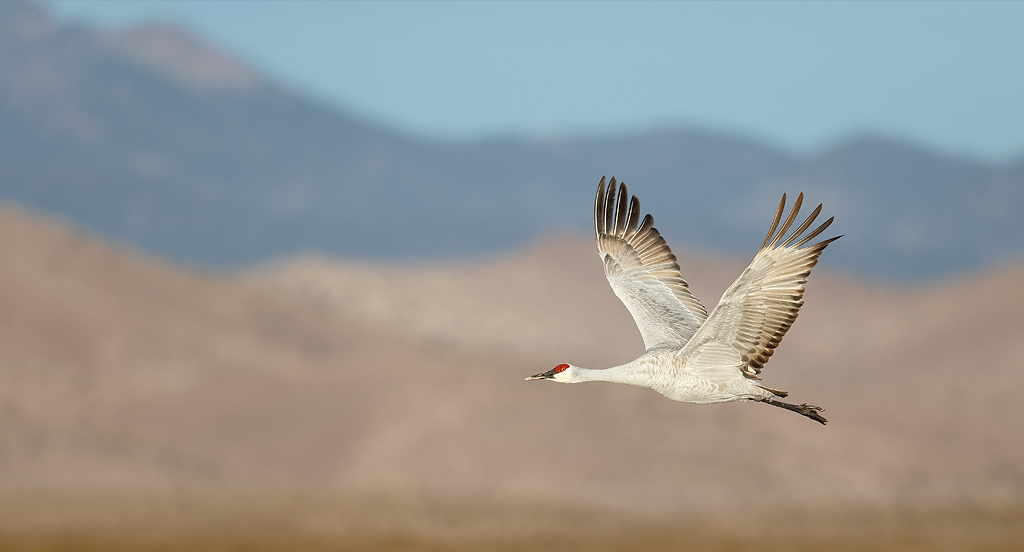
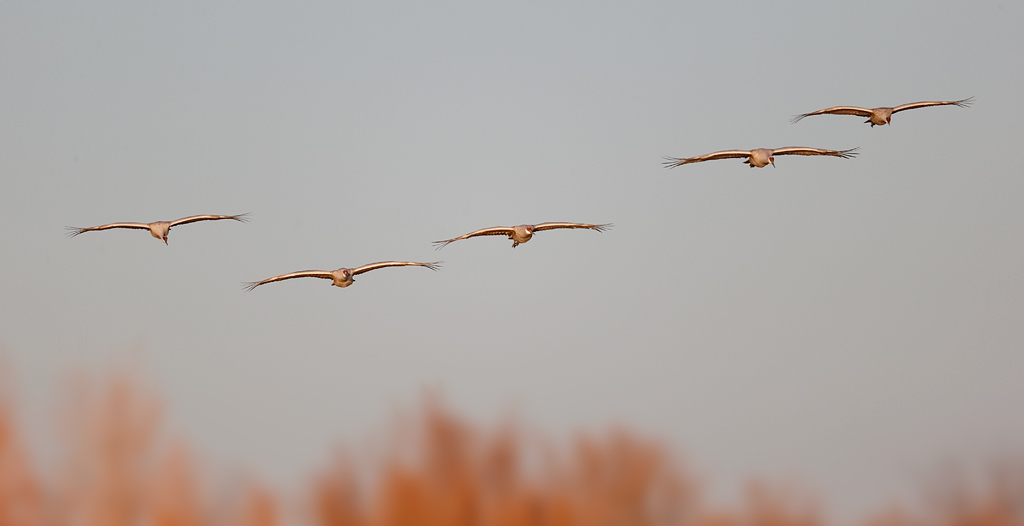
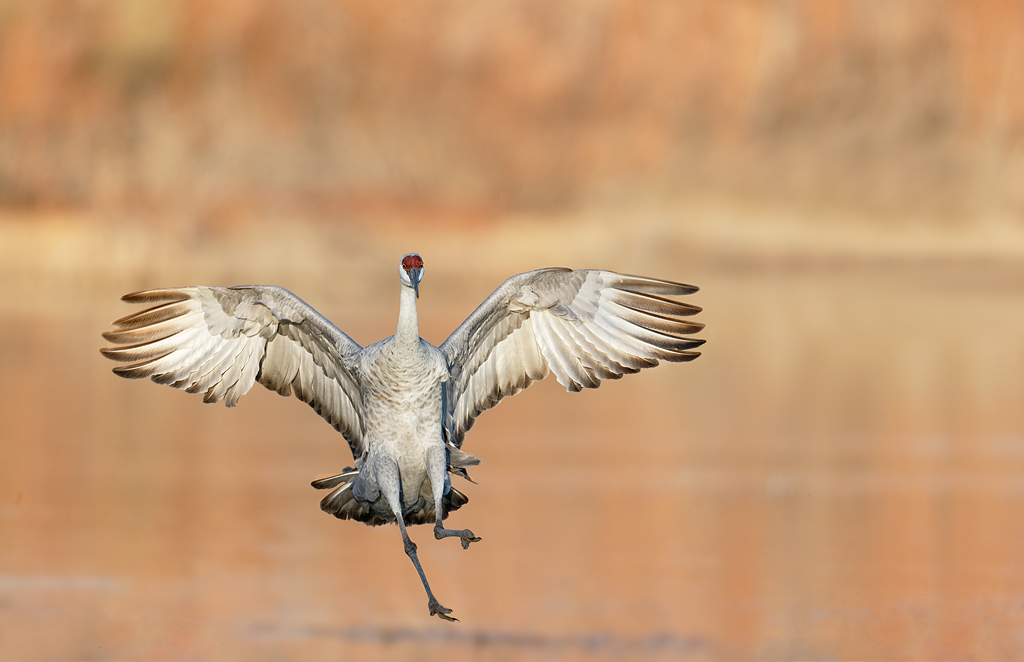
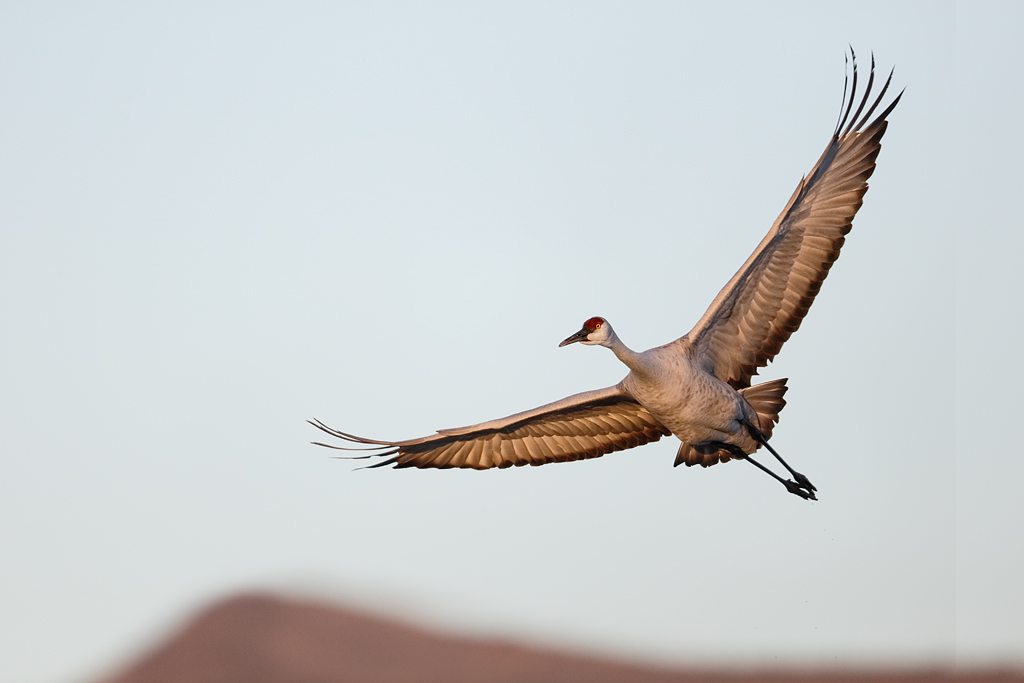
With regards to “Is the Lethal Canon EOS-1D X Unfair to Flying Cranes?”: My favorites Sandhill Crane flight images, with my top pick first, were the dramatic 3:51, the small against the mountains 7:40, the landing pano-crop 4:01, and the moody 7:34am. Thanks to all who commented. As of 7:20pm eastern time on Tuesday I have responded to all of the comments.
Image copyright 2012 and courtesy of Gaurav Mittal.
Thanks Gaurav for sharing the very fine image above with us. I like it as much as any of mine. Gaurav is a serious student who travels regularly from India to join IPTs and study with me. He was quite skilled when he showed up for the Morro Bay IPT but he has worked hard, is very determined, and keeps on getting better and better. All that after a big name pro saw one of his images and told him to give up bird photograph! He took that and used it as motivation.
1- I liked the sliver of tree that I left on left frame edge; I felt that it balanced the dark area of bushes on the right nicely.
2- In my humble opinion, the large dark area of mud on the lower right was ugly. That is why I eliminated it. Several folks referred to it as “dreck.” I agree.
From the Free Dictionary: dreck: Slang chiefly US for rubbish, trash. [From the Yiddish: drek = filth, dregs]
3-As far as the chevron pattern in the right corner, I am not sure if anyone would have commented had they not seen the original. Note, however, that there are some similar patterns on the right side of the image in the original….
4-A far as the “over-punched colors” I gotta say that in both the original and the optimized version that the colors look pretty accurate to me. It was a spectacular sunrise.
5-Yes to leveling the image and cleaning up birds that intersected with the frame edge.
6-Yes to a small crop and to a small increase in contrast (via NIK Tonal Contrast at about 33%).
7-As for the two birds top center that I removed, for me, they wrecked the compositional balance by being in the middle.
8: Good on Julian for realizing that I blackened the blacks–with a simple Levels adjustment.
9-You are all welcome and yes, good on me for getting you all to think.
Dressed to Kill
In “Dressed to Kill,” thanks to Doug Schurman for suggesting with regards to the who has more hair question that “Rick has more coverage but Artie has more volume.” I am of course bald up front like my late Dad was but there is a lot of hair in that big pony tail. I was 66 last June.
I achieved the slow shutter speed by having the Hoya 77mm Warming Circular Polarizer Glass Filter set to dark and screwed onto the front of my 70-200 II. See the original post for details on “set to dark.”
With correct exposure for the WHITEs set manually I did not need to worry about changing the compensation when the birds flew in front of the dark distant mountain.
With many of the B&H items below the prices are so low that they cannot be advertised; you need to add the item to your shopping cart in order to see the super-low holiday sale price.
Canon 70-200mm f/2.8L IS lens
My favorite intermediate telephoto lens: fast and versatile. I use it often with either the 1.4X III and the 2X III tele-converter. Right now for the first time ever less than $2,000 in your B&H shopping cart. You will only see the super-low price when you add the item to your cart.
[Not a valid template]
Canon Powershot S-100 Point and Shoot
An amazingly low price on this popular point and shoot camera: $249 in your cart!
[Not a valid template]
Canon EF 16-35mm f/2.8L II USM Autofocus lens
The premier wide-angle zoom lens for landscape and wildlife: an amazingly low $1399 in your cart!
[Not a valid template]
Sigma 50-500mm f/4.5-6.3 DG OS HSM APO Autofocus lenses
Killer deals on both Sigma 50-500s. Save a ton: in the cart for only $1299. This is an amazing value for one of the most versatile lenses on the planet.
As regular readers know the Sigma 50-500mm f/4.5-6.3 DG OS HSM APO Autofocus lenses for both Canon and Nikon mounts offer amazing focal length coverage and are razor sharp when used at f/8. Clemens van der Werf used the Canon mount model with fabulous results on the Cheesemans’ Ecology Safaris Southern Ocean expedition this past October and Robert O’Toole and Robert Amoruso have has been using the Nikon and Canon mount models (repectively) with great great success for years. Be sure to pick the proper mount lens for your system.
[Not a valid template]
Suggested Stocking Stuffers
Shop Amazon
Consider doing all of your Amazon.com shopping using the search link below. You’ll be getting the same low prices and great service that you are accustomed to and at the same time, supporting my efforts in the Bulletins and on the Blog to bring you great images, timely product news and info, and tons of free educational articles on an almost daily (and sometimes almost back-breaking) basis 🙂 Just type your search in the little white box and hit Go.
Tim Laman’s Amazing Birds of Paradise book
Lens Clens
[Not a valid template]
Great for your all your gear cleaning needs from the front elements of your lenses, filter, the surfaces of your lenses and camera body, and even your laptop and computers screens
“The Photographer’s Guide to Attracting Birds”
Alan Murphy taught the world to create killer images at backyard set-ups in his 106 page eBook, “Guide to Songbird Set-Up Photography.” In his latest effort, “The Photographer’s Guide to Attracting Birds,” he has out-done himself. As I proofread this new e-Book for readability, I was amazed not only by the images, but by Alan’s innovative and creative techniques. Heck, in many cases, I was stunned by his cleverness. Click on the logo-link below to get your copy. (PayPal payments accepted.)
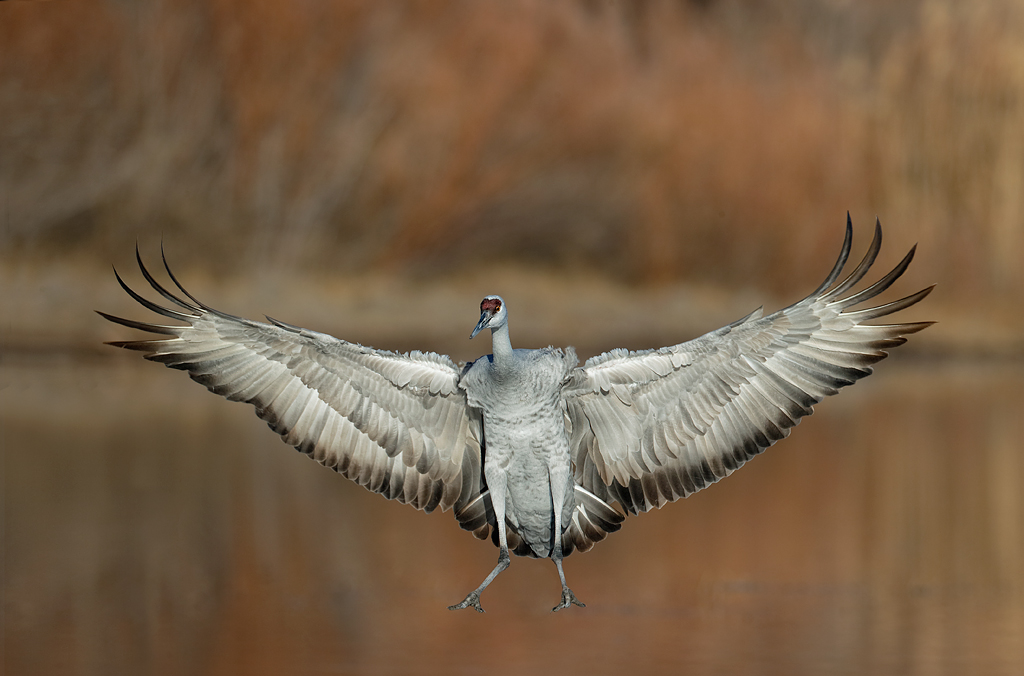
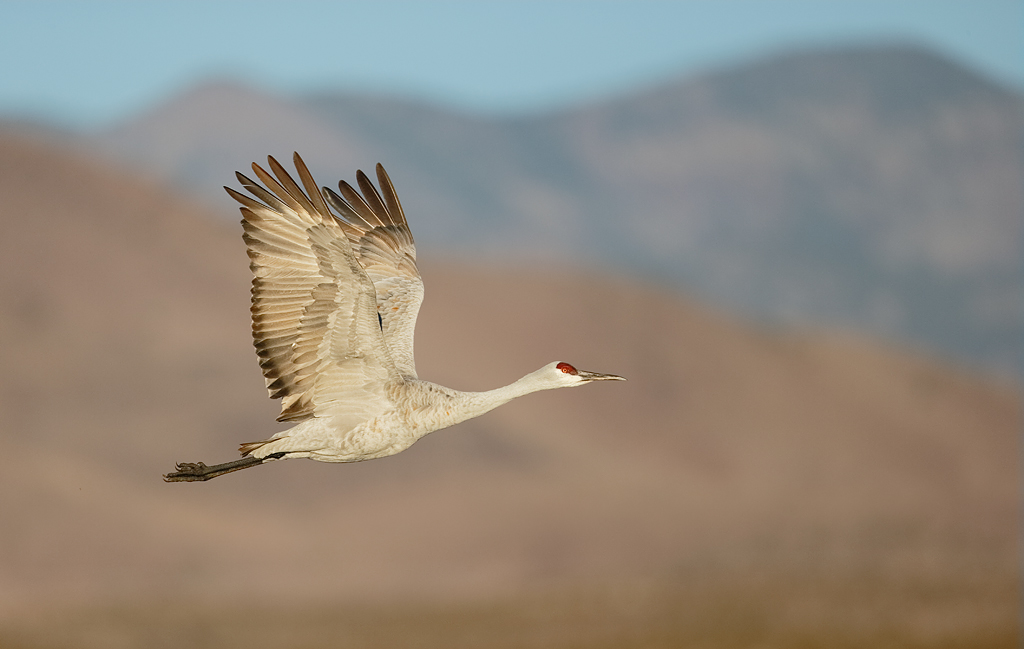
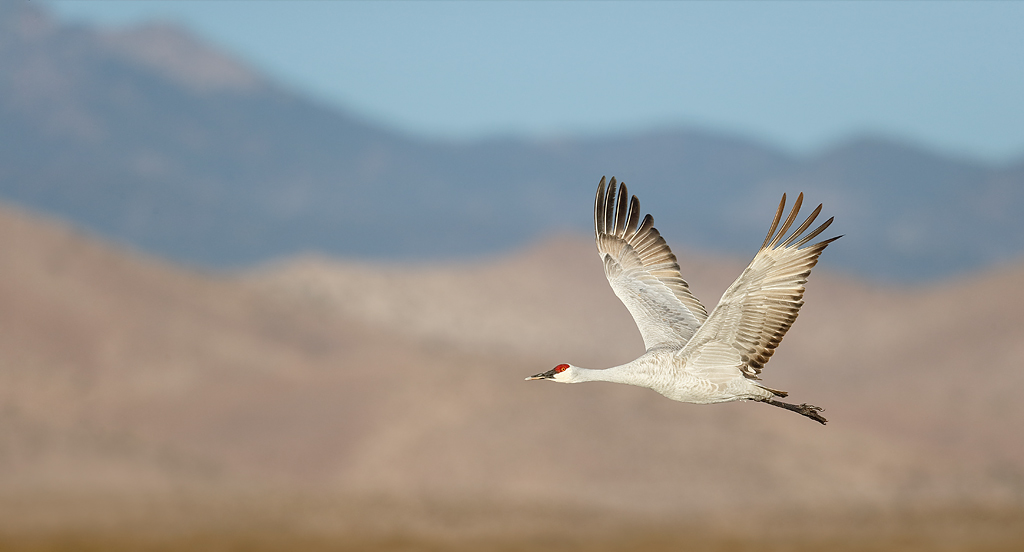
This image was created with the tripod-mounted Canon EF 800mm f/5.6L IS USM Autofocus lens and the Canon EOS-1D X digital SLR . ISO 800. Evaluative metering +1 stop off the low sky: 1/3200 sec. at f/6.3 in Manual mode. Central sensor/AI Servo Surround/Rear Focus AF active at the moment of exposure. Click here if you missed the Rear Focus Tutorial. Click on the image to see a spectacular larger version.
The wing position in this image, with the bird’s wings fully up, is ideal. Note that I was working 99.99% right down sun angle. The tiny shadow of the bend of the near wing on the dorsal surface of the far wing indicates that I was off by .01%. 🙂
7:18am.
We Go With One/Barnegat Jetty IPT Late Registration Discount Offered
BIRDS AS ART/A Creative Adventure Barnegat Jetty IPT, Barnegat Light, NJ: 2 1/2 DAYS. Thursday DEC 20 (1:30pm) through Saturday, DEC 22, 2012: $999. Limit 6/Openings: 5. Includes 5 photo-sessions, both lunches, introductory slide program (DEC 20), Photoshop session (DEC 21), and image sharing at lunch DEC 22.
Many folks who run photographic tours take deposits only to cancel the event at the last minute by sending an e-mail to this effect: We are sorry. We are forced to cancel this workshop as we only signed up five participants and we will not make enough money if we run the trip. My policy for the past two decades has been to run BIRDS AS ART Instructional Photo-Tours with as few as one participant. Why? If someone arranges to get time off from work, to purchase plane tickets, and to book a hotel room and rent a car, it seems downright unconscionable and disrespectful to cancel.
Right now the Barnegat Jetty IPT that I am co-leading with Denise Ippolito has a single registrant. We are looking forward to working with Bill Wingfield who is flying from Charleston, South Carolina and meeting us in Manahawkin, NJ this coming Thursday for lunch and our first afternoon photo session. Bill seems like the happiest of campers. Click here and scroll down for additional info and images. And feel free to call me on my cell at 863-221-2372 from 9am to 9pm for late registration discount information. Please leave a message with a callback number if I do not pick up. As my late Dad used to say, “I don’t here such good anymore.”
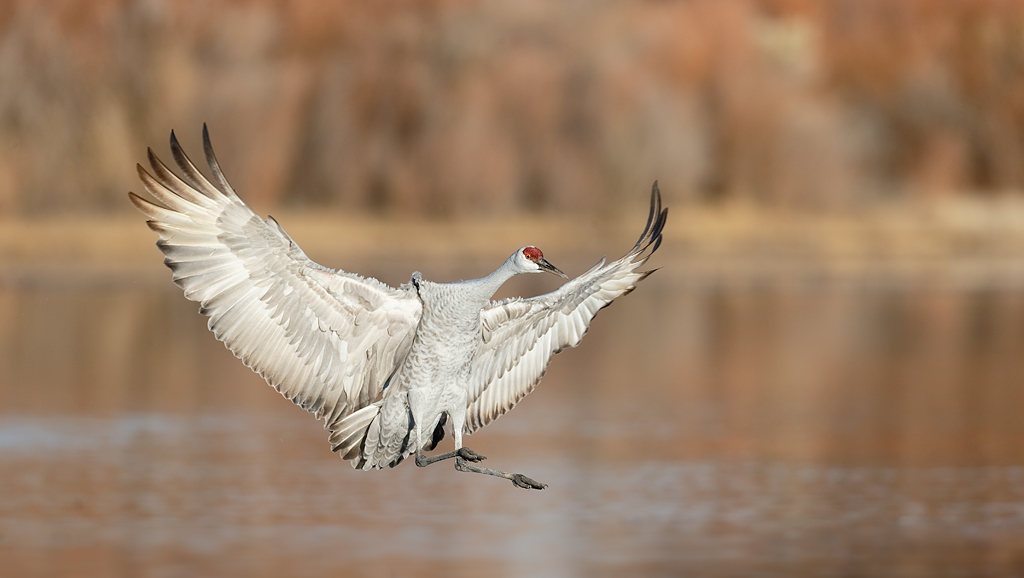
This image was created with the tripod-mounted Canon EF 800mm f/5.6L IS USM Autofocus lens and the Canon EOS-1D X digital SLR . ISO 400. Evaluative metering +1 stop off the low sky: 1/1250 sec. at f/7.1 in Manual mode. Central sensor/AI Servo Surround/Rear Focus AF active at the moment of exposure. Click here if you missed the Rear Focus Tutorial. Click on the image to see a larger version.
4:01pm.
Is the Lethal Canon EOS-1D X Unfair to Flying Cranes?
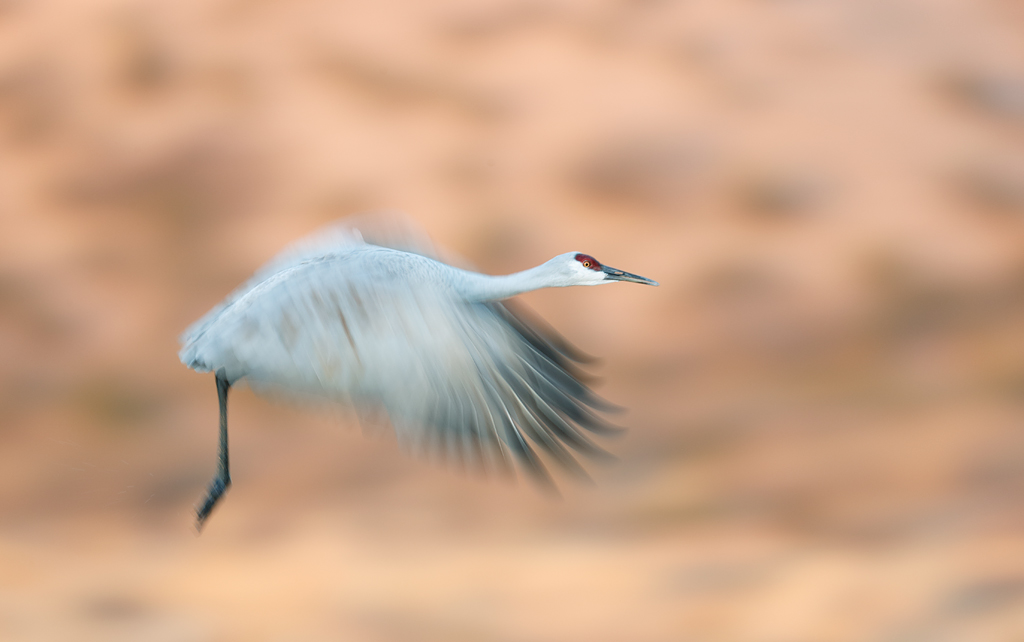
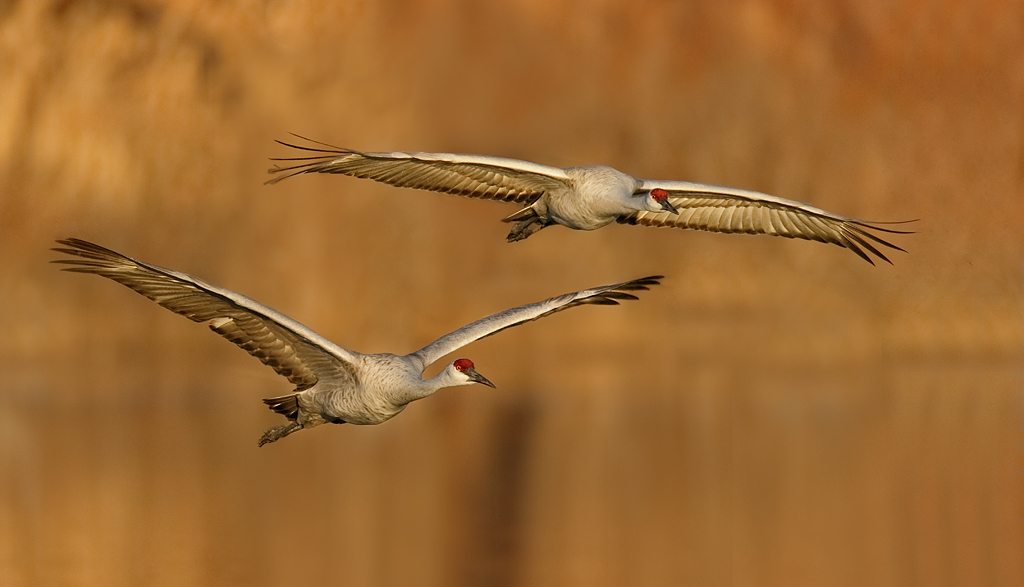
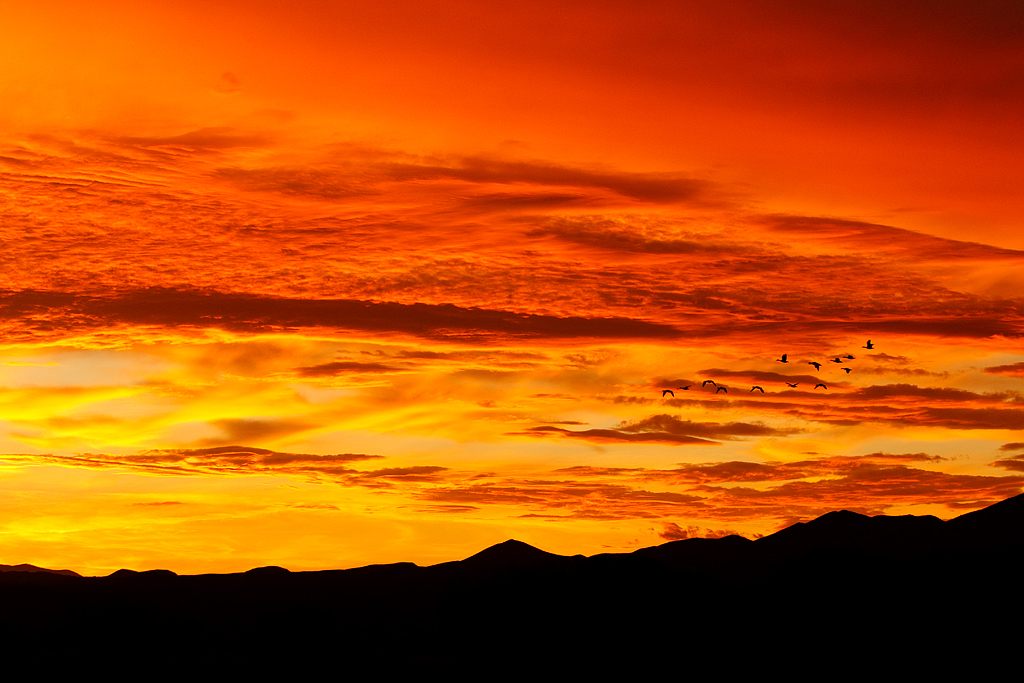
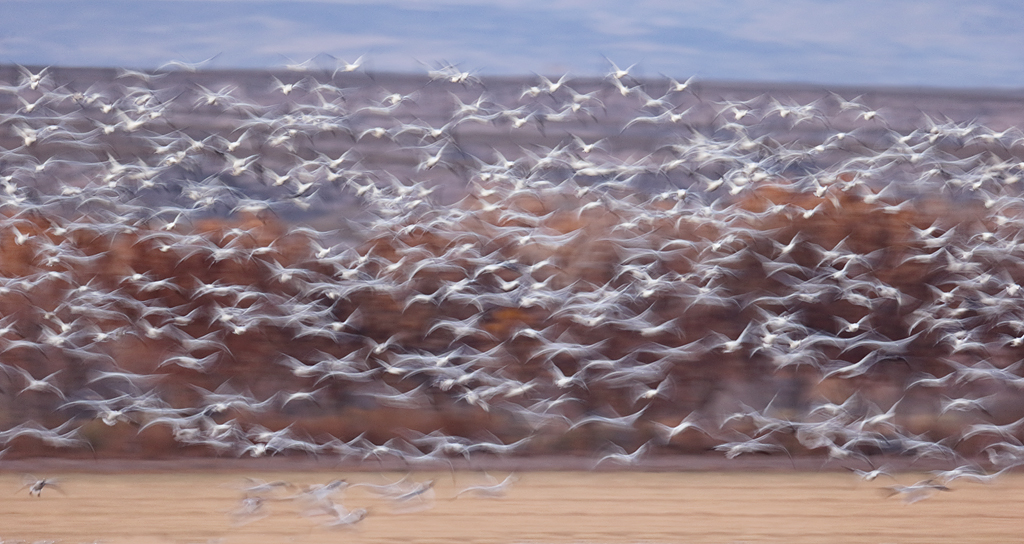
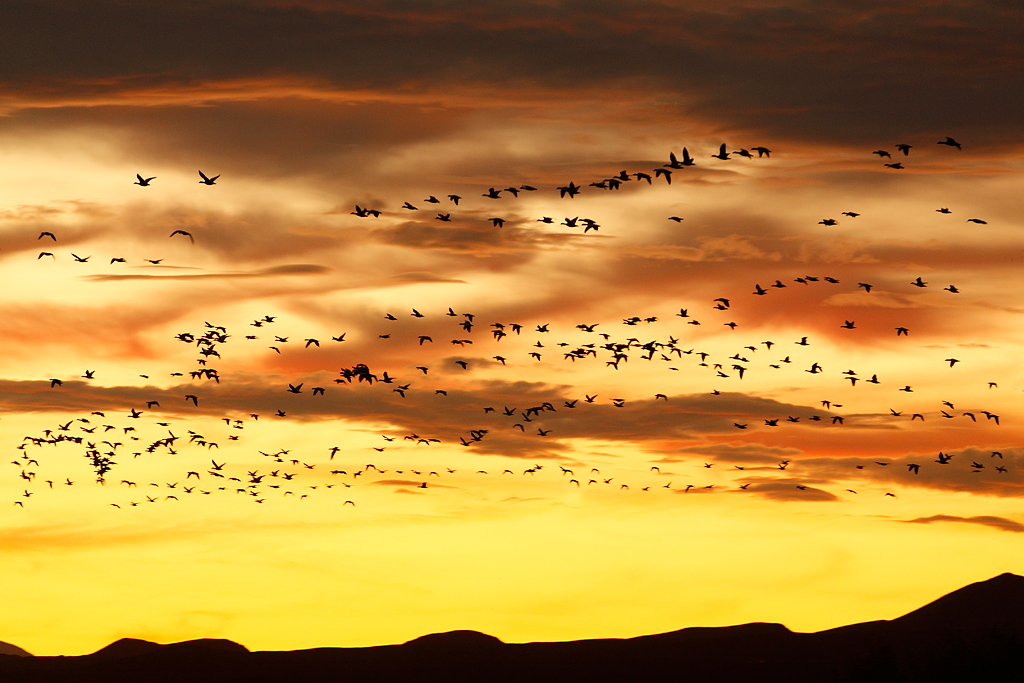
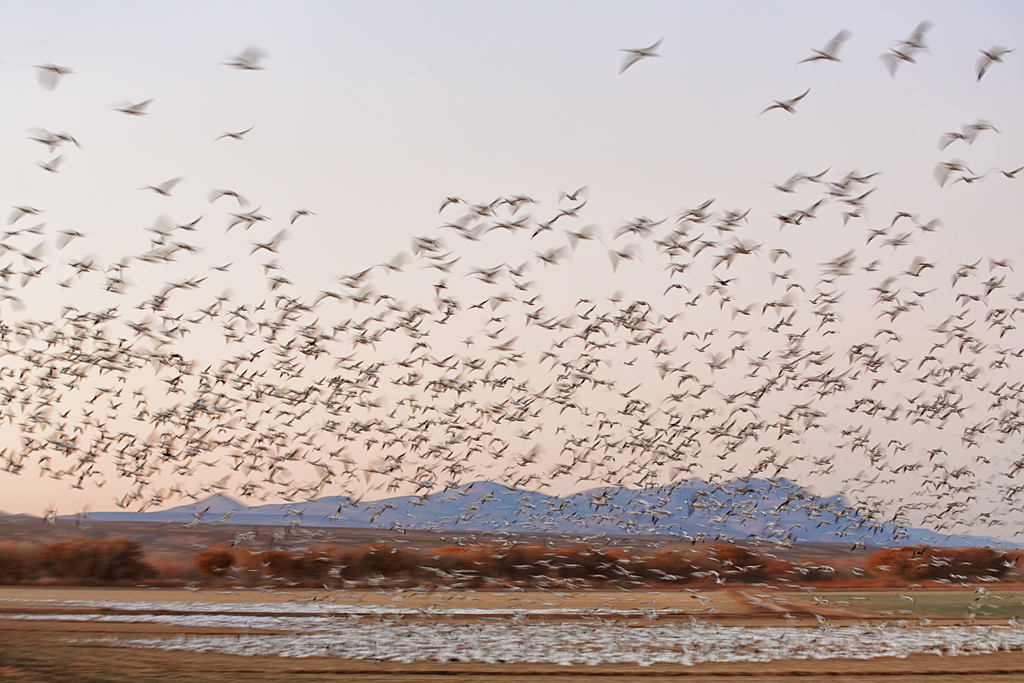
The short answer is “Yes.” Be sure to click on each image to see the spectacular larger and sharper version. I just noticed that the color on some of the enlarged images is more pleasant than on the smaller images that appear in the blog itself. I am not sure if it is a color space issue or a Word Press issue. IAC, the images in the blog are more red and the larger images are more pleasingly and properly yellow. Today is the first time I have noticed that.
On the recently concluded Bosque del Apache IPT I used the Canon 800mm f/5.6L IS lens with the amazing EOS-1D X professional digital camera body for all of my photography of Sandhill Cranes in flight during both our morning and afternoon sessions. The results blew me away. I wound up deleting 100s of perfectly sharp flight images with good wing positions. Why? So that “I’d have room on my hard drives for the really spectacular images like those above and below.
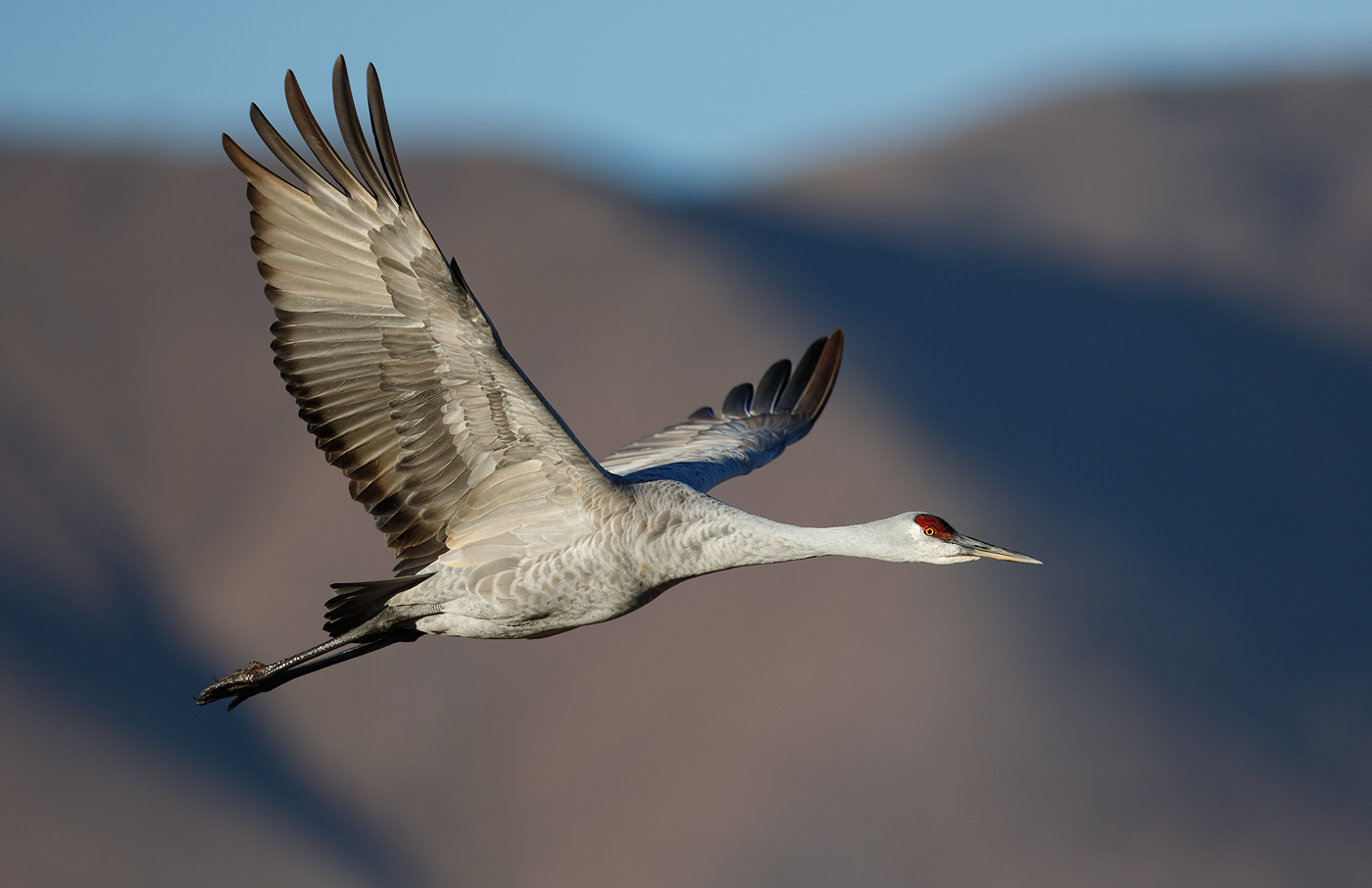
This image was created with the tripod-mounted Canon EF 800mm f/5.6L IS USM Autofocus lens and the Canon EOS-1D X digital SLR . ISO 400. Evaluative metering +2/3 stop off the sky just above the mountains: 1/1650 sec. at f/7.1 in Manual mode. Central sensor/AI Servo Surround/Rear Focus AF active at the moment of exposure. Click here if you missed the Rear Focus Tutorial. Click on the image to see a larger version.
7:34am.
When I am teaching at Bosque, I am constantly reminding folks that the most dramatic images are made when the birds are just below r just above the Chupadera Mountains in the background. In the image above, the early morning light and the shadows on the mountains add to that drama.
This image was created with the tripod-mounted Canon EF 800mm f/5.6L IS USM Autofocus lens and the Canon EOS-1D X digital SLR . ISO 400. Evaluative metering +1 1/3 stops off the sky just above the mountains: 1/1000 sec. at f/5.6 in Manual mode. Central sensor/AI Servo Surround/Rear Focus AF active at the moment of exposure. Click here if you missed the Rear Focus Tutorial. Click on the image to see a larger version.
7:04am.
Why ISO 800 and +1 1/3 stops for the image above? The image was made at 7:03am not long after sunrise. The softer the light the dumber the meter. In full sun I’d make a similar image at only +1/3 off the much bluer sky. Note one of my two favorite wing positions: wings fully down.
This image was created with the tripod-mounted Canon EF 800mm f/5.6L IS USM Autofocus lens and the Canon EOS-1D X digital SLR . ISO 800. Evaluative metering +2/3 stop off the sky just above the mountains: 1/2500 sec. at f/7.1 in Manual mode. Three sensors right of central sensor/AI Servo Surround/Rear Focus AF active at the moment of exposure. Click here if you missed the Rear Focus Tutorial. Click on the image to see a larger version.
7:40am.
South winds are rare at the crane pools in the morning. Understanding the relationship between wind and light direction and bird behavior is hugely important to those wishing to become good bird photographers. Note my other favorite wing positions: wings full up. Note that once it gets to be about 7:30am or so on clear days I switch the exposure to only +2/3 stop off the sky; as the meter gets smarter as the sun gets brighter. But the meter is never as smart as a competent photographer who understands exposure. See the section on Exposure Theory in the original The Art of Bird Photography and Exposure Simplified in ABP II. Save $10 by purchasing the two book bundle. Learn more about each book and about Digital Basics in “98.6 Per Cent” here.
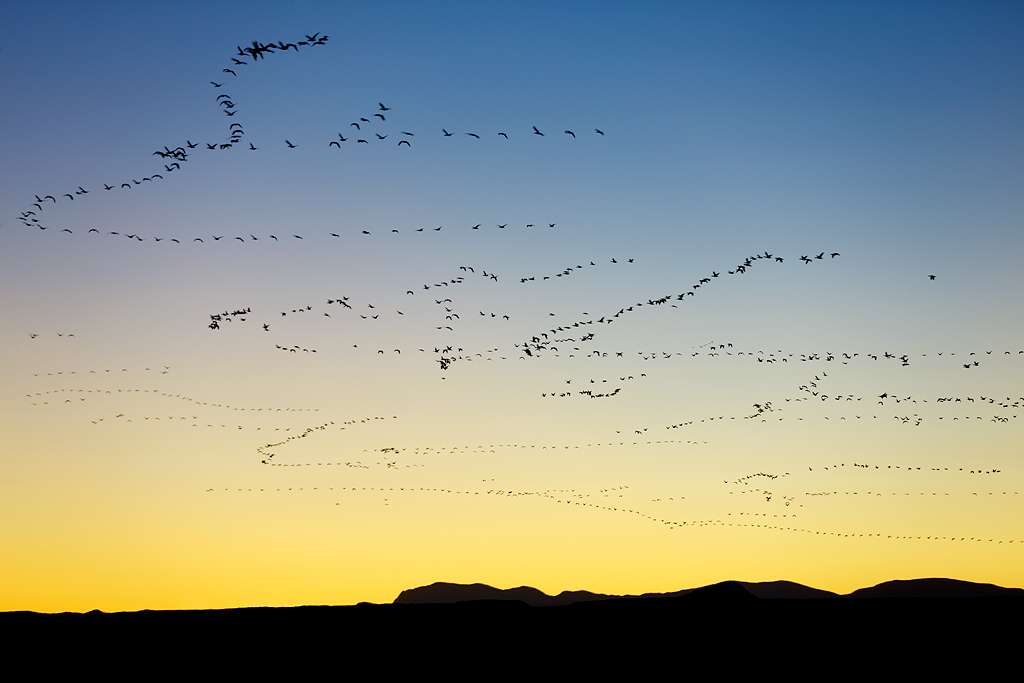
This image was created with the tripod-mounted Canon EF 800mm f/5.6L IS USM Autofocus lens and the Canon EOS-1D X digital SLR . ISO 800. Evaluative metering +1 stop off the low sky: 1/2000 sec. at f/5.6 in Manual mode. Central sensor/AI Servo Surround/Rear Focus AF active at the moment of exposure. Click here if you missed the Rear Focus Tutorial. Click on the image to see a spectacular larger version.
4:39pm..
When you see a group of cranes fling in over the cottonwoods in the afternoon the trick is to watch them carefully and train your long lens on a bird that separates from the group to avoid merges and clipped wings as they come in to land….
This image was created with the tripod-mounted Canon EF 800mm f/5.6L IS USM Autofocus lens and the Canon EOS-1D X digital SLR . ISO 400. Evaluative metering +1 stop off the low sky: 1/1250 sec. at f/6.3 in Manual mode. Two sensors left of central sensor/AI Servo Surround/Rear Focus AF active at the moment of exposure. Click here if you missed the Rear Focus Tutorial. Click on the image to see a larger version.
4:22pm.
The image above was created with in the afternoon as the cranes were returning to their evening roost in the main impoundment. Moving the active sensor with both the 1D X and the 5D Mark III is a snap. You can learn everything that I know about the great AF system of the 1D X in the 1D X AF Guide and everything that I know about the 5D III in the 5D Mark III User’s Guide.
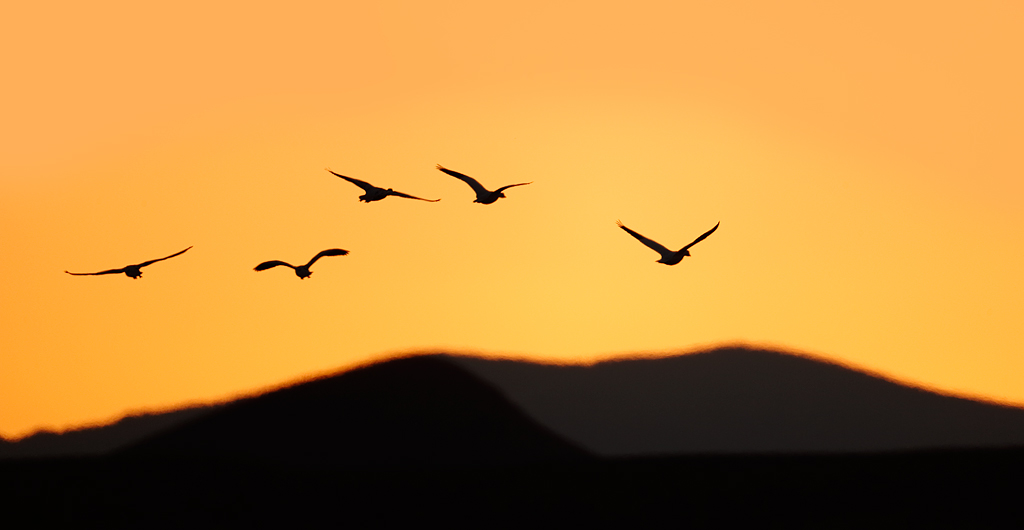
This image was created with the tripod-mounted Canon EF 800mm f/5.6L IS USM Autofocus lens and the Canon EOS-1D X digital SLR . ISO 1600. Evaluative metering +2/3 stop off the low sky: 1/1250 sec. at f/9 in Manual mode. Central sensor/AI Servo Surround/Rear Focus AF active at the moment of exposure. Click here if you missed the Rear Focus Tutorial. Click on the image to see a larger version.
7:03am.
Here I needed to set a high ISO and add lots of light because a thin layer of clouds had obscured the sun. Image files at the higher ISOs with the 1D X are so clean as to be barely believable.
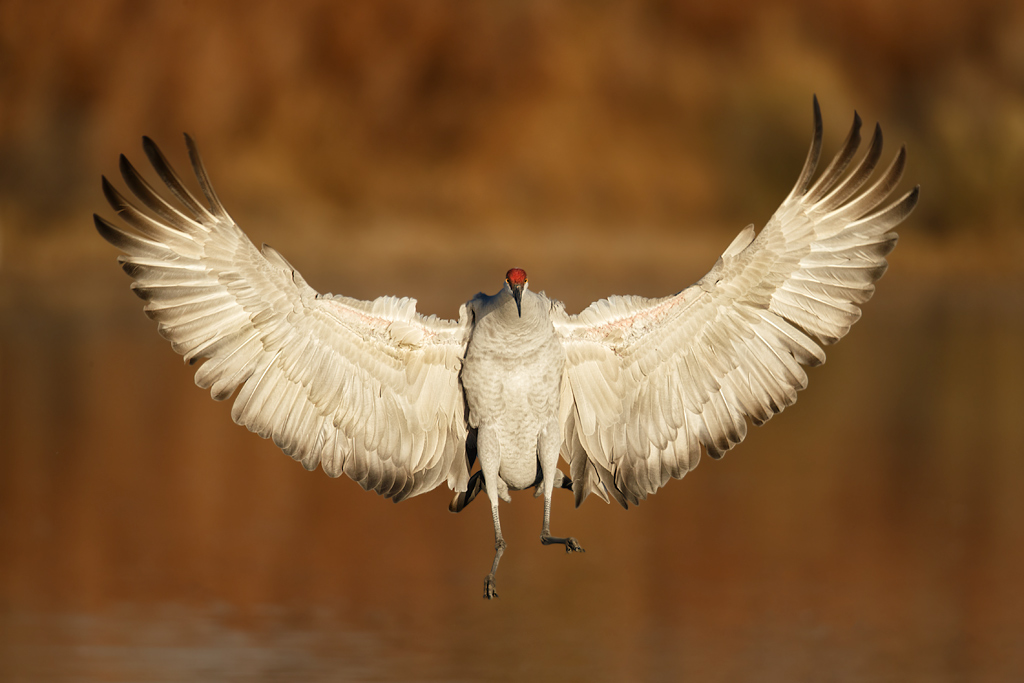
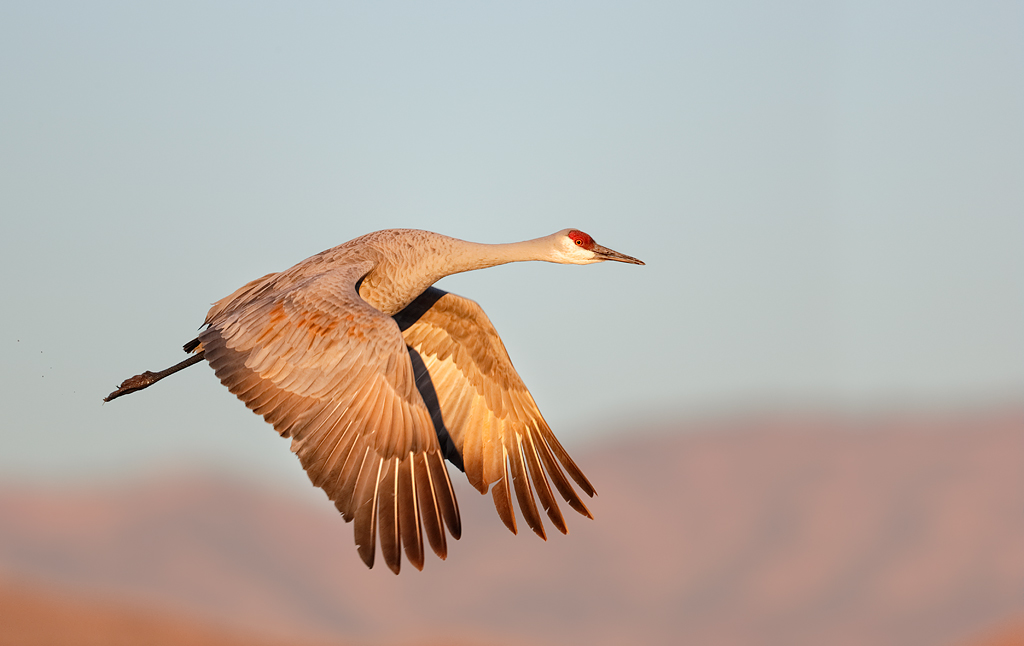
This image was created with the tripod-mounted Canon EF 800mm f/5.6L IS USM Autofocus lens and the Canon EOS-1D X digital SLR . ISO 400. Evaluative metering +1 stop off the low sky: 1/1250 sec. at f/7.1 in Manual mode. Central sensor/AI Servo Surround/Rear Focus AF active at the moment of exposure. Click here if you missed the Rear Focus Tutorial. Click on the image to see a larger version.
3:51pm.
A healthy dose of NIK Color Efex Pro got this image to sing. Here I used one of my custom recipes: 80% Tonal Contrast/33% Detail Extractor. After I ran this combo I reduced the opacity in Photoshop to about 50%.
NIK 15% Discount
As regular readers here know, NIK Color Efex Pro has drastically changed my digital workflow. You can save 15% on all NIK products by clicking here and entering BAA in the Promo Code box at check-out. Then hit Apply to see your savings. You can download a trial copy that will work for 15 days and allow you to create full sized images.
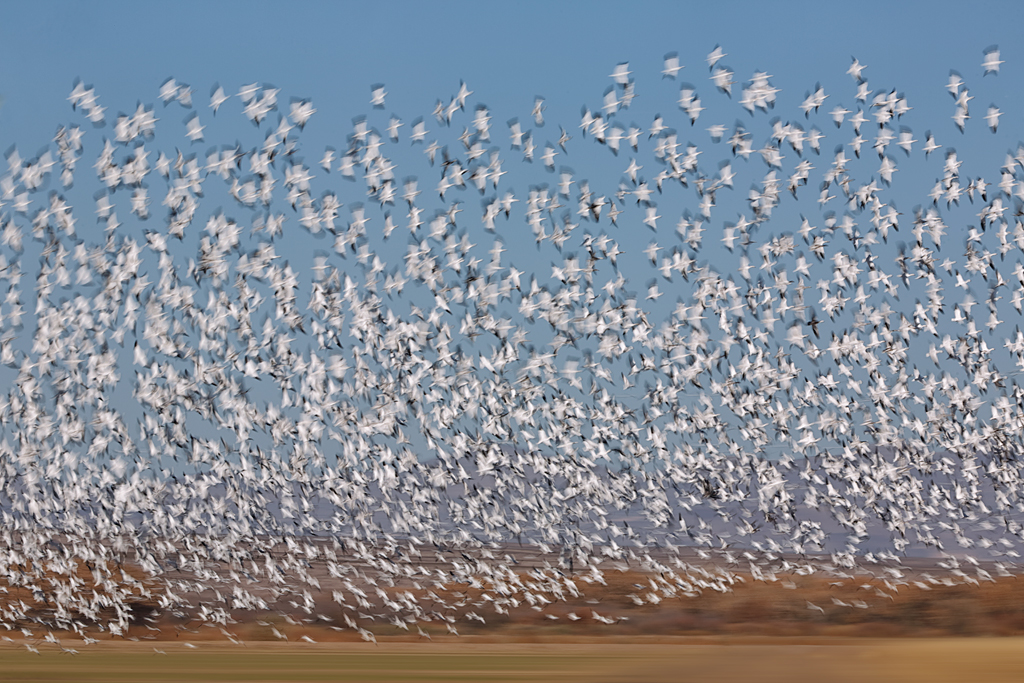
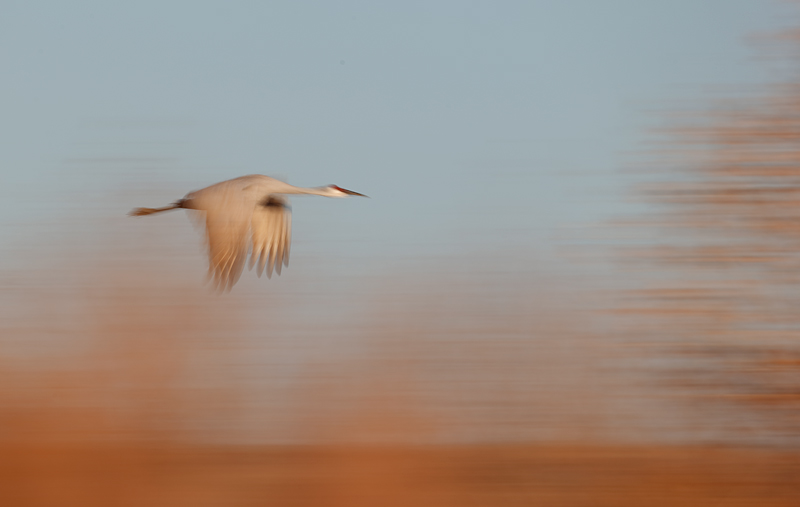
This image was created with the tripod-mounted Canon EF 800mm f/5.6L IS USM Autofocus lens and the Canon EOS-1D X digital SLR . ISO 400. Evaluative metering +1 1/3 stops off the sky above the mountains in very early morning light: 1/60 sec. at f/6.3 in Manual mode. Central sensor/AI Servo Surround/Rear Focus AF active at the moment of exposure. Click here if you missed the Rear Focus Tutorial. Click on the image to see a larger version.
6:58am.
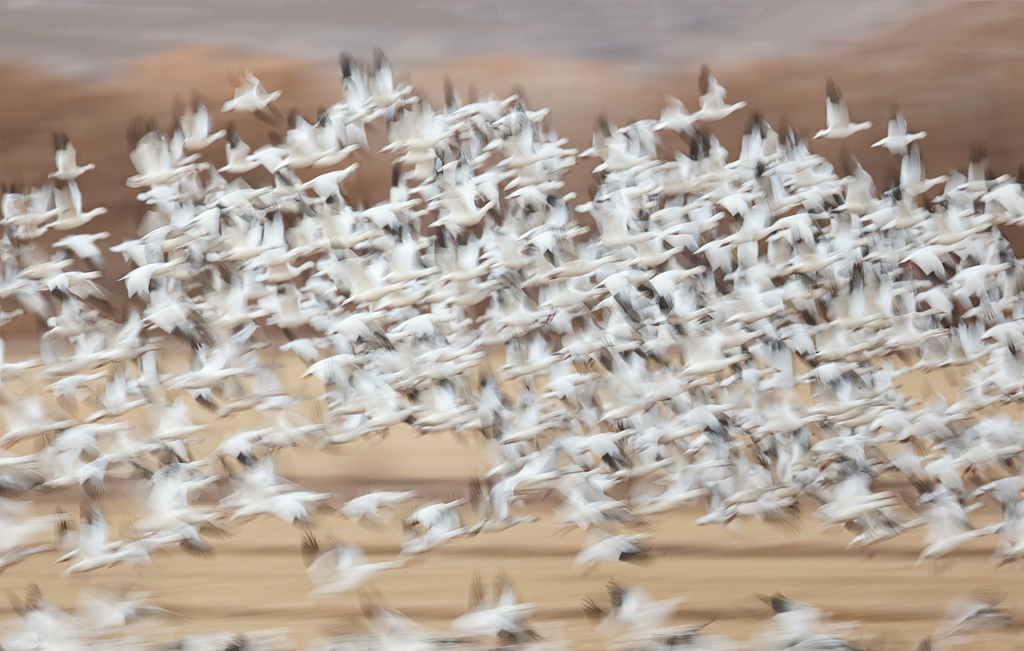
Getting the eye sharp when creating pan blurs requires you to match your panning speed with the speed of the bird in flight. The older I get the more difficult it becomes to do that. Want to learn more? Get yourself a copy of A Guide to Pleasing Blurs by Denise Ippolito and yours truly.
Central sensor (by necessity)/AI Servo Expand/Rear Focus AF active at the moment of exposure. Click here if you missed the Rear Focus Tutorial. Click on the image to see a larger version.
As regular readers know I purchased a second 1D X after wrecking my first in South Georgia (along with my new 500 f/4L IS II). I was aghast at first when the new 1D X would not AF with the 1.4X TC…. See “1D X Detective” below for the whole story.
On the afternoon of November 27, the birds were landing farther away than usual so I added the 1.4X III TC and went to ISO 800.
Which are Your Favorites, and Why?
Take a moment to let us know which of the above images above are your favorites, and be sure to let us know why. For the sake of simplicity, please use the time of capture when referring to an image.
Amazing Sigma Lens Prices
As regular readers know the Sigma 50-500mm f/4.5-6.3 DG OS HSM APO Autofocus lenses for both Canon and Nikon mounts offer amazing focal length coverage and are razor sharp when used at f/8. Clemens van der Werf used the Canon mount model with fabulous results on the Cheesemans’ Ecology Safaris Southern Ocean expedition this past October and Robert O’Toole has been using the Nikon mount model with great great success for years.
Now here is the amazing news: each of the lenses below sells regularly for $1659.00. Though there is no indication on the B&H page for each item, when you place the item in your cart the price drops to $1299.00. This is an amazing value for one of the most versatile lenses on the planet.
Click on the left-hand icon for the Canon mount or click on the right hand icon for the Nikon mount.
You can enjoy similar savings on the Sigma 24-70 lenses (for both mounts) by clicking here and putting the selected model in your cart.
Join Denise Ippolito and me on the weekend of February 23-24 on the outskirts of Tampa, FL for a great weekend of fun and learning. Learn to improve your photography skills, your skill at designing images in the field, your creative vision, and your image optimization skills. Sunday critiquing session. Click here for additional details and the complete schedule.
Shopper’s Guide
Thanks a stack to all who have used our B&H affiliate links to purchase their gear as a thank you for all the free information that we bring you on the Blog and in the Bulletins. Before you purchase anything be sure to check out the advice in our Shopper’s Guide.
Shop B&H
Support the BAA Blog. Support the BAA Bulletins. We want and need to keep providing you with the latest free information, photography and Photoshop lessons, and all manner of related information. Show your appreciation by making your purchases immediately after clicking on any of the links above. Remember, B&H ain’t just photography!
And from the BAA On-line Store:
LensCoats. I have a LensCoat on each of my big lenses to protect them from nicks and thus increase their re-sales value. All my big lens LensCoat stuff is in Hardwood Snow pattern. LegCoat Tripod Leg Covers. I have four tripods active and each has a Hardwood Snow LegCoat on it to help prevent further damage to my tender shoulders 🙂 And you will love them in mega-cold weather…. Gizo GT3532 LS CF Tripod. This one replaces the GT3530LS Tripod and will last you a lifetime. Learn more about this great tripod here. Mongoose M3.6 Tripod Head. Right now this is the best tripod head around for use with lenses that weigh less than 9 pounds. For heavier lenses, check out the Wimberley V2 head. Double Bubble Level. You will find one in my camera’s hot shoe whenever I am not using flash. The Lens Align Mark II. I use the Lens Align Mark II pretty much religiously to micro-adjust all of my gear an average of once a month and always before a major trip. Enjoy our free comprehensive tutorial here. BreezeBrowser. I do not see how any digital photographer can exist without this program. Delkin Flash Cards. I use and depend on Delkin compact Flash Cards and card readers most every day. Learn more about their great 700X and 1000X cards here or about my favorite Delkin card here.
Join Denise Ippolito and me on the weekend of February 23-24 on the outskirts of Tampa, FL for a great weekend of fun and learning. Learn to improve your photography skills, your skill at designing images in the field, your creative vision, and your image optimization skills. Sunday critiquing session–see below for details. Limited to the first 50 registrants.
To Register
To register for the seminar you can call Jim or Jennifer between 9am and 3pm weekdays at 863-692-0906 with your credit card in hand. You can send a PayPal to us at birdsasart@verizon.net or to birdsasart@att.net. Or you can send a check made out to “Arthur Morris” for the full amount in US dollars to us here: Arthur Morris/BIRDS AS ART, PO Box 7245, Indian Lake Estates, FL 33855; be sure to include a note with your clearly written e-mail address and phone number on it and print the words “Tampa Seminar” on your check. You will receive a confirmation letter approximately 3 weeks before the seminar.
Terms
Payment in full is due upon registration. Limit 50. We will keep a waiting list. Cancel before January 23 and receive a complete refund less a $20 processing fee. Cancel less than one month before the seminar and forfeit your registration fee unless the event sells out in which case you will receive a full refund less a $20 processing fee.
Seminar Schedule
Based on our experience at the highly successful NYC seminar we have fine-tuned the schedule to maximize teaching and learning opportunities.
Saturday: 9:00am-5:00pm (Doors open at 8:00am)
9:00am: artie/slides: Tools of the Trade/Choosing and using lenses for bird and wildlife photography
10:30 am: break
10:45am: denise/slides: Blooming Ideas/Creating new and different images of flowers and trees
noon-1:30pm: lunch
1:30pm: artie: Basic Image Design
2:15pm: artie and denise: Pro Gear Handling Tips: Live demos: tripod, lens handling, flight photography, stalking, & packing tips. Vest info & lots more.
3:00pm: break
3:15: artie: Photoshop Tips, Tricks, and Techniques
5:00pm: the end
Sunday: 8:30am-5:00pm (Doors open at 8:00am)
8:30am: It’s easier than you think: How to clean your sensor without fear or trepidation/Live Demo
9:00am: denise & artie/slides: Creating Pleasing Blurs/Using slow shutter speeds, panning, camera movement, & more. Prestigious contests are now awarding prizes to creatively blurred images.
10:30am: break
10:45: artie and denise: Refining your photographic vision.
noon-1:30pm: lunch
1:30pm: denise/Creative Filters and Effects includes live Photoshop demo
2:45pm: break
3:00pm: Image Critiques. Submit no more than three 1400 X 1050 sharpened JPEGs via e-mail
before February 9. A selection of the submitted images will be chosen for critiquing.
4:00: artie: Getting the Right Exposure with Digital: It’s as easy as pie. If you have ten seconds with the subject there is no excuse for not getting the right exposure every time with digital.
4:30: Door Prizes
5:00pm: the end
Best Western Brandon Hotel & Conference Center, 9331 East Adamo Drive, Tampa, FL.
813-621-5555
Mention the seminar: $65/night + tax. Regular rate: $109.95.
10 minutes from Tampa–40 minutes from St. Petersburg–less than an hour from Sarasota
1 hr 15 minutes from Orlando–less than 2 hours from Fort Myers
NYC Seminar Kudos
By e-mail from Sharon Hallowell:
I just wanted to take a minute to say “Thank you very much for last weekend!” I had a great time, and I learned an awful lot. It was a nice way to spend my birthday weekend, and you topped it off nicely by picking my number for the Think Tank Airstream rolling bag door prize; it’s something I’ve been wanting badly! I just finished transcribing my notes from the seminar days and can’t believe how much new info I garnered. I am anxious to put it to use. The day spent in the field, despite the foggy and wet conditions, were a big help to me. I really appreciated the individual attention you both provided. You are both masters in the field and it was a privilege to be able to spend time with you. Thanks also for the great lunch on Monday! Wishing you both a wonderful holiday. I hope that our paths cross again in the future. Thanks again for Everything! Sharon
By e-mail from Debbie Zilli:
Thank you both so much, Artie and Denise, for a wonderful weekend! It was great to meet you and I learned so much. Now I need to find the time to put all I learned to use; that is easier said than done!
By e-mail from BPN member Rachel Hollander:
Denise & Artie- I just wanted to drop you a note and say how much I enjoyed meeting you both and getting a glimpse into your extremely creative minds, your thought processes, and your workflows. I signed up for the B&H workshops in hopes that I’ll be able to sneak away from the office for a couple of hours. I hope to see you then. Thanks again for all the tips, tricks and wisdom.
By e-mail from Gerry Matteo:
Dear Art & Denise, I attended your Staten Island seminar and really learned tons. Thank you both for sharing your knowledge. I also purchased Denise’s book and can’t wait to use some of the filters. I feel that I am well on my way to making better pictures. Thanks again!
By e-mail from Jeff Friedhoffer
Artie & Denise, I wanted to thank you for a great weekend. I got a lot out of the two days of classes and the morning of shooting in Howard Beach was great despite the fog and rain. In just a weekend I learned so much that I would never have thought of by myself. It reinforced what I have read in Artie’s two books. Once again, thank you! I hope to see you both again soon.
Adapted from a Mark Hendricks e-mail:
I wanted to sincerely thank you again for the excellent seminar that you and Denise put on in Staten Island. It was very inspiring, educational, and informative and I received so much from the experience. I also wanted to thank you for the evening of friendship you showed to Carolina and me on Saturday after the seminar. I never dreamed in my lifetime that I would have dinner with a personal hero of mine and that that time would be filled with laughter and great conversation. What you have contributed to nature photography is nothing short of legendary as you are one of the best to ever pick up a camera. You’re an excellent photographer but what is more important is that you are a hell of a dude and a great man. I hope one day to convince you to have an IPT at Assateague Island and Blackwater! Either way you gotta come hang one day and have some of Carolina’s paella! I plan to make some images to make you proud. Again, my sincerest thanks to you brother. Mark
By e-mail from Sherb Naulty:
Hi Denise and Artie, Wow! I am still trying to process all that we went over in those two days at the NY Seminar and feel incredibly lucky to have been able to attend! You both bring such positive energy, amazing insights, and a world of experience to share with those who participate in your workshops. I am just in awe at the amount of information that we covered and have already begun to review my notes while they are still fresh. Artie said on the first day that thankfully he hadn’t built a business solely on stock photography world but on education; we are the lucky ones! Attending your workshops is a must a for anyone who is inspired by photography ….Your passion for the art/craft is contagious and evident each minute of the time we were there You both complement each others’ strengths and are downright superstars. I just loved these weekend and can’t wait to put some of the new info and techniques to use. I am especially eager to play with some of the software. And yes, CS6 is downloaded already.
In addition, I am tickled too that I won a tripod!! Thank you and thanks to your generous sponsors. Denise, I have already put on the head that I won at the Sunflower shoot. It will be my go-to set-up for macro work! I will let you know within a day or two about your Longwood Gardens workshop; I just have to see about a couple of things. Thank you very much. My very best, Sherb
BAA Bulletin #425 is on-line and can be viewed here.
Bosque IPT & Canon Digital Learning Center Trip Report
“Birds of Paradise” by Tim Laman and Edwin Scholes
West Nyack, NY Event: Triple Header
Used Camera Gear (including some great new listings!)
BIRDS AS ART/A Creative Adventure Barnegat Jetty IPT
The Barnegat Jetty Site Guide
Barnegat Jetty Site Guide Kudos
B&H (Free) Event Space Events!
West Nyack, NY Event: Triple Header
If you live in the NY metropolitan area be sure to see the information on the Triple Header program this Saturday either in BAA Bulletin #425 or here in item 1. We hope to see you there. It’s super-cheap: only $10. And you can pay at the door by check. Or click here to register on-line.
Note that with a distant flock a shutter speed of 1/60 sec. the birds in flight were rendered relatively sharp. I used the technique for low-light shooting that is described in detail in the hugely popular eBook, “A Guide to Pleasing Blurs” by Denise Ippolito and yours truly.
Image Transformation Questions
The image above was the lead image in BAA Bulletin #425. As noted in the caption, it was created in Photoshop from the original capture immediately below.
This was the original capture from which the optimized image above was created.
The Questions
#1: What did I do in Photoshop? I used at least 5 different major techniques. There are lots of clues. List as many as you can. I will post a response in a new blog post on Sunday.
#2: Do you like the inclusion of the fine tree branches on the left frame-edge? Why or why not?
#3: What would you have done differently? And why?
Shopper’s Guide
Thanks a stack to all who have used our B&H affiliate links to purchase their gear as a thank you for all the free information that we bring you on the Blog and in the Bulletins. Before you purchase anything be sure to check out the advice in our Shopper’s Guide.
Shop B&H
Support the BAA Blog. Support the BAA Bulletins. We want and need to keep providing you with the latest free information, photography and Photoshop lessons, and all manner of related information. Show your appreciation by making your purchases immediately after clicking on any of the links above. Remember, B&H ain’t just photography!
And from the BAA On-line Store:
LensCoats. I have a LensCoat on each of my big lenses to protect them from nicks and thus increase their re-sales value. All my big lens LensCoat stuff is in Hardwood Snow pattern. LegCoat Tripod Leg Covers. I have four tripods active and each has a Hardwood Snow LegCoat on it to help prevent further damage to my tender shoulders 🙂 And you will love them in mega-cold weather…. Gizo GT3532 LS CF Tripod. This one replaces the GT3530LS Tripod and will last you a lifetime. Learn more about this great tripod here. Mongoose M3.6 Tripod Head. Right now this is the best tripod head around for use with lenses that weigh less than 9 pounds. For heavier lenses, check out the Wimberley V2 head. Double Bubble Level. You will find one in my camera’s hot shoe whenever I am not using flash. The Lens Align Mark II. I use the Lens Align Mark II pretty much religiously to micro-adjust all of my gear an average of once a month and always before a major trip. Enjoy our free comprehensive tutorial here. BreezeBrowser. I do not see how any digital photographer can exist without this program. Delkin Flash Cards. I use and depend on Delkin compact Flash Cards and card readers most every day. Learn more about their great 700X and 1000X cards here or about my favorite Delkin card here.
Central sensor (by necessity)/AI Servo Expand/Rear Focus AF active at the moment of exposure. Click here if you missed the Rear Focus Tutorial. Click on the image to see a larger version.
As regular readers know I purchased a second 1D X after wrecking my first in South Georgia (along with my new 500 f/4L IS II). I was aghast at first when the new 1D X would not AF with the 1.4X TC…. See “1D X Detective” below for the whole story.
West Nyack, NY Event/Triple Header: Art Morris, Robert O’Toole & Denise Ippolito
Each of the three talented photographers above will each present a unique program on Saturday, December 15, 2012 (10:00 am to 5:00 pm) at the Palisades Center Mall, 1000 Palisades Center Dr, West Nyack, NY.
Arthur Morris (Canon Explorer of Light/sponsored by Canon USA):
Arthur Morris is a free-lance nature photographer, teacher and writer specializing in birds. He is widely recognized as one of the world’s premier bird photographers and photographic educators. His images, published the world over, are noted for both their artistic design and their technical excellence. His fitting credit line: BIRDS AS ART. His book, “The Art of Bird Photography” is the classic How-to work on the subject. The all new follow-up, The Art of Bird Photography II (916 pages of CD only) was released in 2006 to rave reviews. Artie, one of the original “Explorers of Light,” has been a Canon contract photographer for the past fifteen years and continues in that role today. He is a co-founding publisher of BirdPhotographers.net A popular speaker, he has conducted more than 500 slide programs and seminars over the past two decades. He currently travels, photographs, teaches and speaks his way across North America and the world while leading BIRDS AS ART/Instructional Photo-tours and Photo-Cruises each year. Art will talk about and show you “What Makes a Good Nature Photograph.
Robert O’Toole:
Robert, a professional photographer for more than a decade, now specializes in wildlife and nature. He is an accomplished photographic instructor; he got his start co-leading BIRDS AS ART/Instructional Photo-Tours with Art Morris. He has written two Photoshop tutorials and a Nikon camera User’s Guide for BIRDS AS ART Books. In his presentation, Robert will share the inspiration, the passion and the creative vision that drives his photography. Robert will share some of his favorite images,equipment,and techniques and the stories behind them.
Denise Ippolito
Denise Ippolito is a freelance photographer, artist and writer living in NJ. She is a moderator in the Out of the Box Forum at BirdPhotographers.net. Denise has co-led several BIRDS AS ART Instructional Photo-Tours with Arthur Morris/BIRDS AS ART. Denise offers her own workshops featuring avian, flower and HDR photography. As a former award winning floral designer and garden center owner, Denise has worked extensively with flowers; her most recent eBook “Bloomin Ideas” reflects her love for flowers and art.
Denise Ippolito and Arthur Morris co-authored the hugely popular eBook, “A Guide to Pleasing Blurs.” Her program will cover the great variety of techniques that can be used to create pleasingly blurred images in the field, and at times, during post-processing. Topics that will be discussed and illustrated include pan blurs, zoom blurs, camera movement blurs including flame- and jiggle-blurs, subject movement blurs including moving water blurs, long exposure blurs, the need for accurate focusing, managing your ISO settings, in-camera multiple exposures, subject to film plane orientation, choice of shutter speeds, and how subject to sensor distance affects the degree of blurring.
With the advent of digital photography and the popularity of intentionally blurred images in prestigious nature photography competitions, more and more people are enjoying the challenges and rewards of creating pleasing blurs. Whether you photograph wildlife, flowers, people, street scenes or landscapes, this is one program that you will not want to miss if you would like to learn to unleash your creativity.
A Great Opportunity
Triple Header represents a great opportunity for all levels of photographers to learn and enjoy. The programs will run from 10:00 a.m. until 5:00 p.m. with several breaks including a lunch break. Thee vent will be be held in the Adler Room, 4th floor, on the Macy’s side of the mall (by the Ice Rink). There is plenty of available parking at the mall which is conveniently located right off a major highway. Join us to learn from three outstanding photographers and lecturers in a relaxed atmosphere.
Approximate schedule:
10:00 a.m. – 11:30 a.m. Robert O’Toole, A Passion for Photography
11:30 a.m. – 1:00 p.m. Denise Ippolito, How to Create Pleasing Blurs
1:00 p.m. – 2:00 p.m. Lunch
2:00 p.m. – 4:00 p.m. Art Morris, What Makes a Good Nature Photograph
The mall has a large food court or you can bring your own. Price: $10.00/per person. For more info or to sign-up, click here. The event is a Ridgewood Camera Club Meetup Group program.
Central sensor (by necessity)/AI Servo Expand/Rear Focus AF active at the moment of exposure. Click here if you missed the Rear Focus Tutorial. Click on the image to see a larger version.
Having AF at f/8 with the 800mm f/5.6/1D X is hugely important to me….
1D X Detective
As regular readers know I purchased a second 1D X after wrecking my first in South Georgia (along with my new 500 f/4L IS II–see “Wrecked and Loving It!“). I was aghast at first when the new 1D X would not AF with the 1.4X TC. I checked the new camera to see that the firmware was indeed 1.1.1. It was. I e-mailed and called Chuck Westfall at Canon for his thoughts. At some point that morning as he was investigating I remembered that I had a copy of the 1.1.1. firmware on my desktop. What the heck? It couldn’t hurt to load it onto the camera. Voila! After re-installing the firmware the camera autofocused at f/8 with the 1.4X III TC on the 800 f/5.6L IS. Hooray! I called Chuck back and let him know of my findings. He asked for a few days to check things out.
As it turns out, I was right. See the Canon USA Product Advisory here.
I was pleased to be able to help and pleased to get the e-mail below from Chuck:
Hi Artie,
Thanks again for the heads-up on the 1D X! You were the first to catch it, and we jumped on it immediately and got Tokyo involved. Glad to see that they took it seriously and fixed the problem!
Chuck Westfall
Advisor, Technical Information
Canon U.S.A., Inc.
Shopper’s Guide
Thanks a stack to all who have used our B&H affiliate links to purchase their gear as a thank you for all the free information that we bring you on the Blog and in the Bulletins. Before you purchase anything be sure to check out the advice in our Shopper’s Guide.
Shop B&H
Support the BAA Blog. Support the BAA Bulletins. We want and need to keep providing you with the latest free information, photography and Photoshop lessons, and all manner of related information. Show your appreciation by making your purchases immediately after clicking on any of the links above. Remember, B&H ain’t just photography!
And from the BAA On-line Store:
LensCoats. I have a LensCoat on each of my big lenses to protect them from nicks and thus increase their re-sales value. All my big lens LensCoat stuff is in Hardwood Snow pattern. LegCoat Tripod Leg Covers. I have four tripods active and each has a Hardwood Snow LegCoat on it to help prevent further damage to my tender shoulders 🙂 And you will love them in mega-cold weather…. Gizo GT3532 LS CF Tripod. This one replaces the GT3530LS Tripod and will last you a lifetime. Learn more about this great tripod here. Mongoose M3.6 Tripod Head. Right now this is the best tripod head around for use with lenses that weigh less than 9 pounds. For heavier lenses, check out the Wimberley V2 head. Double Bubble Level. You will find one in my camera’s hot shoe whenever I am not using flash. The Lens Align Mark II. I use the Lens Align Mark II pretty much religiously to micro-adjust all of my gear an average of once a month and always before a major trip. Enjoy our free comprehensive tutorial here. BreezeBrowser. I do not see how any digital photographer can exist without this program. Delkin Flash Cards. I use and depend on Delkin compact Flash Cards and card readers most every day. Learn more about their great 700X and 1000X cards here or about my favorite Delkin card here.
This image, “Seductive blue diamond orchid,” was created by Denise Ippolito with the Canon 100mm macro lens and the EOS-5D. ISO 400. Evaluative metering +2/3 stop: 1/200 sec. at f/4.5 Click on the image to enjoy a larger version.
Denise will open the proceedings at 9am on Saturday with her “Blooming Ideas/Creating new and different images of flowers and trees” segment. Don’t miss it.
The gear above has been replaced by the following:
What Does WIW Mean?
WIW stands for Walk-Ins Welcome. Walk-ins are indeed welcome at the NYC Seminar. You can bring a check, cash, or a credit card with your driver’s licence. When? This coming weekend at the Hilton Garden Inn on Staten Island. Alternatively, you can call Jim today before 5pm or Friday before noon and register by phone. Click here for more info, for the complete schedule, and to learn about the valuable registration incentives that include a free copy of Digital Basics. On Saturday we will teach you how to capture great images in the field and on Sunday how to evaluate and process (optimize) those images. Throughout the weekend we will be working hard to help you become more creative both in the field and at the computer.
It is 8:47 am on December 6, 2012. I am sitting on the Amtrak Auto Train going at about 70mph headed towards Lorton, VA. My laptop is plugged in and I am on line via a tethered wireless connection courtesy of my Verizon Android Razr 48 cell phone. Man, what an amazing world we live in.
I just finished working on my “Tools of the Trade/Choosing and using lenses for bird and wildlife photography” segment and am excited about presenting it on Saturday at 11am. It is truly amazing how often the longest lens in your arsenal is the worst in your bag for a given situation. This afternoon I will be working on the “Seeing the Situation” segment where Denise and I will teach you to see and think like a pro.
This image was created with the tripod-mounted Canon EF 800mm f/5.6L IS USM Autofocus lens and the Canon EOS-1D X digital SLR . ISO 400. Evaluative metering +1 1/3 stops off the sky above the mountains in very early morning light: 1/60 sec. at f/6.3 in Manual mode. Central sensor/AI Servo Surround/Rear Focus AF active at the moment of exposure. Click here if you missed the Rear Focus Tutorial. Click on the image to see a larger version.
Once it gets to be 7:45 am I switch the exposure to only +2/3 stop off the sky as the meter gets smarter as the sun gets brighter on clear days. But the meter is never as smart as a competent photographer who understands exposure. See the section on Exposure Theory in the original The Art of Bird Photography and Exposure Simplified in ABP II. Save $10 by purchasing the two book bundle. Learn more about each book and about Digital Basics in “98.6 Per Cent” here.
The seminar “Creating Pleasing Blurs/Using slow shutter speeds, panning, camera movement, and more” segment is scheduled for Saturday at 3:15pm. Do consider joining us.
Pet Peeve
Regular readers know that one of my pet peeves is folks who have 3,000, $5000, $10,000, heck, even $20,000 or more worth of great gear and assume that their purchases will make them better photographers. Study? Learn? Practice? No way. They believe that as long as they spend lots of money on great lenses and camera bodies that their skills will improve. Not! If you live within a few hours of Staten Island and wish to become a better photographer make plans, as above, to join denise and me this weekend for tons of learning and fun. Not to mentions zillions of great images.
Shopper’s Guide
Thanks a stack to all who have used our B&H affiliate links to purchase their gear as a thank you for all the free information that we bring you on the Blog and in the Bulletins. Before you purchase anything be sure to check out the advice in our Shopper’s Guide.
Shop B&H
Support the BAA Blog. Support the BAA Bulletins. We want and need to keep providing you with the latest free information, photography and Photoshop lessons, and all manner of related information. Show your appreciation by making your purchases immediately after clicking on any of the links above. Remember, B&H ain’t just photography!
And from the BAA On-line Store:
LensCoats. I have a LensCoat on each of my big lenses to protect them from nicks and thus increase their re-sales value. All my big lens LensCoat stuff is in Hardwood Snow pattern. LegCoat Tripod Leg Covers. I have four tripods active and each has a Hardwood Snow LegCoat on it to help prevent further damage to my tender shoulders 🙂 And you will love them in mega-cold weather…. Gizo GT3532 LS CF Tripod. This one replaces the GT3530LS Tripod and will last you a lifetime. Learn more about this great tripod here. Mongoose M3.6 Tripod Head. Right now this is the best tripod head around for use with lenses that weigh less than 9 pounds. For heavier lenses, check out the Wimberley V2 head. Double Bubble Level. You will find one in my camera’s hot shoe whenever I am not using flash. The Lens Align Mark II. I use the Lens Align Mark II pretty much religiously to micro-adjust all of my gear an average of once a month and always before a major trip. Enjoy our free comprehensive tutorial here. BreezeBrowser. I do not see how any digital photographer can exist without this program. Delkin Flash Cards. I use and depend on Delkin compact Flash Cards and card readers most every day. Learn more about their great 700X and 1000X cards here or about my favorite Delkin card here.
I ran into fellow Canon Explorer of Light Rick Sammon at the EdKranePool on my last morning at Bosque: Sunday, December 2. We posed for a fun image that was kindly created by Juan Pons who often works closely with Rick. Denise and I and Rick and Juan had fun connecting that night during happy hour at the Socorro Springs Brewing Company. I did not have any margaritas but I did steal a few chips and some salsa from Rick and Juan.
Rick wrote, “Here’s a shot (taken by Juan Pons) of fellow Canon Explorer of Light Arthur Morris and me on location at Bosque Del Apache, New Mexico. It looks like we are having fun, but we were actually having “The Battle of My lens is Bigger Than Your Lens.” About the red jackets: they are our sunrise and sunset camouflage jackets; we like to blend in with the nice light!”
You can check out Rick’s work here. Be sure to visit his Apps page. Thanks to Juan Pons for the image. You can learn more about Juan here or check out his educational blog.
Quiz Questions:
#1: Who has more hair, Rick or artie?
#2: Who’s older by how much? Guess both ages please.
#3: Whose lens was bigger? Identify each lens.
This image was created with the tripod-mounted Canon EF 800mm f/5.6L IS USM Autofocus lens and the Canon EOS-1D X digital SLR . ISO 800. Evaluative metering +1 stop off the sky above the mountains in early morning light: 1/2500 sec. at f/7.1 in Manual mode. Well right of Central sensor/AI Servo Surround/Rear Focus AF active at the moment of exposure. Click here if you missed the Rear Focus Tutorial. Click on the image to see a larger version.
Once it gets to be 7:45 am I switch the exposure to only +2/3 stop off the sky as the meter gets smarter as the sun gets brighter on clear days. But the meter is never as smart as a competent photographer who understands exposure. See the section on Exposure Theory in the original The Art of Bird Photography and Exposure Simplified in ABP II. Save $10 by purchasing the two book bundle. Learn more about each book and about Digital Basics in “98.6 Per Cent” here.
Click on the image to see an impressive larger version.
800/1D X and a Great New Photoshop Technique
As I have said before, the Canon 800 f/5.6L IS with the Canon EOS-1D X is deadly on cranes in flight. Stay tuned for a post with tons of such images, all razor sharp. For the image above, I cropped to a pano. On both the IPT and the CDLC workshops I advised all to acquire focus while the crane was set against the uglier brushy, splotchier hillside background and to begin making images when the bird was just below or just above the Chupadera Mountains. Surround AF Expand AF Area Selection mode makes that easier to do than with any previous Canon body.
John Haedo, on his first IPT, taught the group a great trick for filling in expanded canvas after leveling an image. After I receive his permission to share it–it is killer good, I will do so here and add it to the next free update of Digital Basics.
1D X AF Guide
Not getting the sharp flight shots that you expected? In the EOS-1D X Guide I share everything that I know about the great new 1D X AF system and share my custom Case for flight photography. Learn more or purchase (only $25) here. If you own a 5D Mark III you will surely want to learn how to use it like a pro by studying our 5D Mark III User’s Guide.
Coming Soon
Stay tuned for a 5D Mark III blog post on the in-camera multiple exposure and HDR features.
5D III/24-105 Combo
As you have been seeing here lately the 5D Mark III/24-105 combo is a deadly one in many situations ranging from bird-scapes to overhead flock shots to quasi-macro to B-roll stuff. (B-roll stuff is folks birding, locations, restaurant shots; in short, any type of miscellaneous general interest material.)
NYC Seminar & Door Prize Info
Do consider joining Denise Ippolito and me in Staten Island in December for a great weekend filled with learning, fun, and great door prizes.
It’s getting late. Call 863-692-0906 soon to register.
Harlequin Duck, drake, Barnegat Jetty, NJ. Canon 800mm f/5.6L IS with the 1.4X II TC and the EOS-1D Mark IV. ISO 800: 1/250 sec. at f/8. Image copyright 2012 Arthur Morris/BIRDS AS ART.
This is one of the target species on the Barnegat Jetty IPT. Just one sign-up so far so consider joining denise and me for practically private instruction.
BIRDS AS ART/A Creative Adventure Barnegat Jetty IPT, Barnegat Light, NJ: 2 1/2 DAYS. DEC 20 (1:30pm), 21, and 22, 2012: $999. Limit 6/Openings 4. Includes 5 photo-sessions, both lunches, introductory slide program (DEC 20), Photoshop session (DEC 21), and image sharing at lunch DEC 22.
Join Arthur Morris and Denise Ippolito for a 2 1/2 Day Instructional Photo-Tour at the infamous Barnegat Jetty in Barnegat Light, New Jersey. Artie and Denise will teach you how to get close to the ducks and shorebirds that frequent this famed winter birding and photography hotspot, how to get the right exposure every time, and how to see, understand, and tackle a variety of photographic situations. Each will conduct a killer Photoshop session. We should have some excellent chances with Harlequin Duck and Purple Sandpiper, the two headliner species. With any luck we should get to photograph most of these species: Long-tailed Duck (formerly Oldsquaw), Common Loon, Red-throated Loon, Red-breasted Merganser, Surf Scoter, Black Scoter, Common Eider, Brant, Dunlin, Ruddy Turnstone, Black-bellied Plover, and Sanderling . Great Black-backed, Herring, and Ring-billed Gulls are also likely. Sunning Harbor Seals are possible. With the right winds we may have some good flight photography also.
Having at least a 500mm f/4 lens with a 1.4X teleconverter is recommended. Participants should be in good physical condition with a good sense of balance. Payment in full is due now.
Shopper’s Guide
Thanks a stack to all who have used our B&H affiliate links to purchase their gear as a thank you for all the free information that we bring you on the Blog and in the Bulletins. Before you purchase anything be sure to check out the advice in our Shopper’s Guide.
Shop B&H
Support the BAA Blog. Support the BAA Bulletins. We want and need to keep providing you with the latest free information, photography and Photoshop lessons, and all manner of related information. Show your appreciation by making your purchases immediately after clicking on any of the links above. Remember, B&H ain’t just photography!
And from the BAA On-line Store:
LensCoats. I have a LensCoat on each of my big lenses to protect them from nicks and thus increase their re-sales value. All my big lens LensCoat stuff is in Hardwood Snow pattern. LegCoat Tripod Leg Covers. I have four tripods active and each has a Hardwood Snow LegCoat on it to help prevent further damage to my tender shoulders 🙂 And you will love them in mega-cold weather…. Gizo GT3532 LS CF Tripod. This one replaces the GT3530LS Tripod and will last you a lifetime. Learn more about this great tripod here. Mongoose M3.6 Tripod Head. Right now this is the best tripod head around for use with lenses that weigh less than 9 pounds. For heavier lenses, check out the Wimberley V2 head. Double Bubble Level. You will find one in my camera’s hot shoe whenever I am not using flash. The Lens Align Mark II. I use the Lens Align Mark II pretty much religiously to micro-adjust all of my gear an average of once a month and always before a major trip. Enjoy our free comprehensive tutorial here. BreezeBrowser. I do not see how any digital photographer can exist without this program. Delkin Flash Cards. I use and depend on Delkin compact Flash Cards and card readers most every day. Learn more about their great 700X and 1000X cards here or about my favorite Delkin card here.
After 3 days off and an overnight trip to White Sands National Monument Denise and I co-led a Canon Digital Learning Center weekend workshop at Bosque. In mid-morning I said to the group, “In some years with south winds the birds will blast off and fly behind us. With zoom lenses that get out to the 400mm range you can photograph single birds and small groups by pointing the lens almost directly overhead while being careful to keep the sun out of the frame. You will want to be about 10-15 degrees away from the sun; the goal is to have the birds strongly backlit. If you see hazy flare do not press the shutter button; wait for the flare to disappear so that you have a blue sky background (with or without clouds).
Remember, it pays to look up and a bit behind you at Bosque. But be careful not to fall over backwards when photographing individual birds.
Important note: Denise and I make an incredible leader team. On both the IPT and the Canon DLC event I made sure that the group was in the right place at the right time, provided general shooting advice, and answered questions while Denise provided hands on help to pretty much everyone in the group who desired it by checking their camera settings and histograms. Do consider joining us on the Barnegat Jetty IPT; see the info below.
It took some guts to bring the Canon group to a location with zero birds. But bird behavior is often repetitive and within minutes of our arrival large groups began arriving. Most days the first group had been a huge one made up of more than 10,000 swirling geese. On this day they arrived in groups of about a hundred every few minutes for nearly an hour. Large groups were still coming in when we headed back to Socorro for lunch.
Be sure to check out the amazing before and after animated GIF below.
The Bosque Site Guide Current Conditions Update
If you are at Bosque right now or are heading to the refuge in the next week or two and you own a copy of the Bosque Site Guide, you are invited to e-mail and request a copy of the Bosque Site Guide Current Conditions Update. You will receive a short e-mail describing other current strategies and letting you know exactly where to be in the pre-dawn. If you would like to receive this update, please cut and paste the words “Bosque Site Guide Current Conditions Update” into the subject line and be sure to include proof of purchase. The simplest thing to do is to include a screen capture of the first page of the guide. No updates will be sent unless you include some sort of proof of purchase. Please do not call or e-mail Jim as he knows nothing about this :).
Great year or poor year, the priceless information in the Bosque Site Guide will help you learn to be in the right spot at the right time. I followed my own advice to a tee yesterday morning and had a small group of friends and early-arriving IPT folks in the right locations all morning. Why waste time driving around trying to figure out where to be on this wind or in these lighting conditions? As I have written before, heading to Bosque without the Bosque Site Guide on your laptop is downright foolish. Why? You simply do not know as much about Bosque as I do. 🙂
Learn about all of our Site and Set-up eGuides here.
As the three geese in the image above were flying higher than the single bird in the first image I zoomed wider to create an image of the small group. All of the images above benefited greatly from my application of various filters in NIK Color Efex Pro. Those include Tonal Contrast and White Neutralizer on all three images and a small dose of Detail Extractor on the image of the single goose. All at varying degrees of opacity and refined by a regular Layer Mask.
Your Favorite
Take a moment to let us know which of the three Snow Geese images above is your favorite, and be sure to let us know why.
Coming Soon
Stay tuned for a 5D Mark III blog post on the in-camera multiple exposure and HDR features.
Image Optimization Animated GIF
To create the optimized TIF file from the original image I did some edge clean-up with Content Aware Fill. In NIK Color Efex Pro I ran Tonal and White Neutralizer both at reduced opacity. All that I can say is “Wow!” Here’s a pro tip: with images with bright WHITEs move the Highlight slider in Tonal Contrast all the way to the left.
NIK 15% Discount
As regular readers here know, NIK Color Efex Pro has drastically changed my digital workflow. You can save 15% on all NIK products by clicking here and entering BAA in the Promo Code box at check-out. Then hit Apply to see your savings. You can download a trial copy that will work for 15 days and allow you to create full sized images.
Digital Basics
The most recent update Digital Basics (the updates are free) includes the basics of using NIK Color Efex Pro, Layer Masking for Dummies, the basics of Quick Masking, all of my keyboard shortcuts including customized ones, BreezeBrowser info and preferences, dozens of great Photoshop tips, and my complete digital workflow. Learn more or order here.
Visit Bosque on Facebook here and bookmark the page. It’s a great way to keep up on current events and refuge conditions.
NYC Seminar & Door Prize Info
Do consider joining Denise Ippolito and me in Staten Island in December for a great weekend filled with learning, fun, and great door prizes.
NYC Seminar Door Prize Info
Wow! We have put together a killer collection of door prizes for the NYC Seminar. If you live in the northeast and are not yet registered click here to join us and have a chance at winning some of the great and valuable loot below.
From ThinkTank: an Airport AirStream™ Rolling Camera Bag; meets all International carry- on regulations. A $324.75 value.
From LensCoat: a Standard LensCoat® RainCoat. A $79.99 value. Manfrotto/Gitzo will be contributing one or more items.
From Delkin: a 32 gb 700X Compact Flash Card plus give-aways. The card is a $134.99 value.
NIK has sent a gift certificate for one copy of NIK Color Efex Pro, the Photoshop filter plug-in that has changed my digital workflow. Enter the code BAA at checkout to save 15%.
Topaz is sending a gift certificate for their black and white effects filter program.
Micheal Tapes at RAW Workflow has chipped in with a Lens Align Mark II. A $79.95 value.
You might also win a copy of The Art of Bird Photography II by Arthur Morris or a copy of A Guide to Pleasing Blurs by Arthur Morris and Denise Ipplito.
Thanks a stack to all of our generous sponsors.
Join denise (images above) and artie (below) in Staten Island to learn get inspired, give your creativity a big boost, and improve both your in-the-field techniques and your image optimization skills.
Harlequin Duck, drake, Barnegat Jetty, NJ. Canon 800mm f/5.6L IS with the 1.4X II TC and the EOS-1D Mark IV. ISO 800: 1/250 sec. at f/8. Image copyright 2012 Arthur Morris/BIRDS AS ART.
This is one of the target species on the Barnegat Jetty IPT> Just one sign-up so far so consider joining denise and me for practically private instruction.
BIRDS AS ART/A Creative Adventure Barnegat Jetty IPT, Barnegat Light, NJ: 2 1/2 DAYS. DEC 20 (1:30pm), 21, and 22, 2012: $999. Limit 6/Openings 4. Includes 5 photo-sessions, both lunches, introductory slide program (DEC 20), Photoshop session (DEC 21), and image sharing at lunch DEC 22.
Join Arthur Morris and Denise Ippolito for a 2 1/2 Day Instructional Photo-Tour at the infamous Barnegat Jetty in Barnegat Light, New Jersey. Artie and Denise will teach you how to get close to the ducks and shorebirds that frequent this famed winter birding and photography hotspot, how to get the right exposure every time, and how to see, understand, and tackle a variety of photographic situations. Each will conduct a killer Photoshop session. We should have some excellent chances with Harlequin Duck and Purple Sandpiper, the two headliner species. With any luck we should get to photograph most of these species: Long-tailed Duck (formerly Oldsquaw), Common Loon, Red-throated Loon, Red-breasted Merganser, Surf Scoter, Black Scoter, Common Eider, Brant, Dunlin, Ruddy Turnstone, Black-bellied Plover, and Sanderling . Great Black-backed, Herring, and Ring-billed Gulls are also likely. Sunning Harbor Seals are possible. With the right winds we may have some good flight photography also.
Having at least a 500mm f/4 lens with a 1.4X teleconverter is recommended. Participants should be in good physical condition with a good sense of balance. Payment in full is due now.
Shopper’s Guide
Thanks a stack to all who have used our B&H affiliate links to purchase their gear as a thank you for all the free information that we bring you on the Blog and in the Bulletins. Before you purchase anything be sure to check out the advice in our Shopper’s Guide.
Shop B&H
Support the BAA Blog. Support the BAA Bulletins. We want and need to keep providing you with the latest free information, photography and Photoshop lessons, and all manner of related information. Show your appreciation by making your purchases immediately after clicking on any of the links above. Remember, B&H ain’t just photography!
And from the BAA On-line Store:
LensCoats. I have a LensCoat on each of my big lenses to protect them from nicks and thus increase their re-sales value. All my big lens LensCoat stuff is in Hardwood Snow pattern. LegCoat Tripod Leg Covers. I have four tripods active and each has a Hardwood Snow LegCoat on it to help prevent further damage to my tender shoulders 🙂 And you will love them in mega-cold weather…. Gizo GT3532 LS CF Tripod. This one replaces the GT3530LS Tripod and will last you a lifetime. Learn more about this great tripod here. Mongoose M3.6 Tripod Head. Right now this is the best tripod head around for use with lenses that weigh less than 9 pounds. For heavier lenses, check out the Wimberley V2 head. Double Bubble Level. You will find one in my camera’s hot shoe whenever I am not using flash. The Lens Align Mark II. I use the Lens Align Mark II pretty much religiously to micro-adjust all of my gear an average of once a month and always before a major trip. Enjoy our free comprehensive tutorial here. BreezeBrowser. I do not see how any digital photographer can exist without this program. Delkin Flash Cards. I use and depend on Delkin compact Flash Cards and card readers most every day. Learn more about their great 700X and 1000X cards here or about my favorite Delkin card here.
“Hair Wash,” male African Lion: Highly Honored in African Wildlife. Canon EOS 1D Mark IV, Canon EF 600mm f4 L USM IS +1.4x TC, 1/125 sec, f.5.6, ISO 4,000, bean bag. Image copyright and courtesy of Paul Mckenzie. ISO 4,000 is not a typo.
Nature’s Best Honored Photographers on the CES Southern Oceans Expedition
Amazingly, with about 70 folks on the Cheesemans’ Southern Ocean Expedition, there were four photographers (including yours truly) with a total of five images honored in the 2012 Nature’s Best Windland Smith Rice International Awards Contest. The winning and honored images were selected from nearly 20,000 images submitted by photographers in 46 countries.
Enjoy the images and feel free to leave a comment.
Black-Footed Albatrosses interacting, Highly Honored in Endangered Species category. Canon EOS-1D Mark IV, Canon EF 300mm f2.8 L IS USM + 1.4x TC, ISO 2,000. 1/640sec, f9, Canon 550 EX speedlight fill flash at -2ev, hand held, lying on the ground. Image copyright and courtesy of Paul Mckenzie.
Good friend and mutliple IPT particpant Paul Mckenzie led the way with the two honored images above. You can see more of his amazing work here.
Coastal Brown Bear family: Highly Honored in Wildlife. Canon EOS 5D, Canon EF 600mm f4 L USM IS +1.4x TC, 1/500 sec, f.8 in Program mode. Image copyright and courtesy of Hank Perry.
It was nice meeting new friends Hank and Karen Perry on the South Georgia/Falklands trip; they were always smiling. You can see more of Hank’s fine work here.
Coastal Brown Bear relaxing: Highly Honored in Animal Antics. Canon EOS-1D MkIV, EF 800mm f5.6, Gitzo L3541xls, Mongoose 3.6 head: 1/500 sec at f5.6, ISO 1250. Kukak Bay, Katmai National Park, Alaska. Image courtesy of and copyright 2012: Clemens van der Werf.
Regular readers are familiar with Clemens’ wonderful imagery. Photographing nature only for about two years, Clemens has attended most IPTs during that time. You can see more of his excellent work here.
Red-crowned Cranes courtship squabbling. Highly Honored in Endangered Species. Canon 800mm f/5.6L IS with the EOS-1D Mark IV. ISO 400: 1/1600 sec. at f/5.6. Tsurui Itoh Sanctuary, Hokkaido, Japan.
Image copyright 2012 Arthur Morris/BIRDS AS ART.
If you are interested in photographing Japan in winter in February 2012, please shoot me an e-mail.
Harlequin Duck, drake, Barnegat Jetty, NJ. Canon 800mm f/5.6L IS with the 1.4X II TC and the EOS-1D Mark IV. ISO 800: 1/250 sec. at f/8. Image copyright 2012 Arthur Morris/BIRDS AS ART.
This is one of the target species on the Barnegat Jetty IPT. Just two sign-upz so far so consider joining denise and me for practically private instruction.
BIRDS AS ART/A Creative Adventure Barnegat Jetty IPT, Barnegat Light, NJ: 2 1/2 DAYS. DEC 20 (1:30pm), 21, and 22, 2012: $999. Limit 6/Openings 5. Includes 5 photo-sessions, both lunches, introductory slide program (DEC 20), Photoshop session (DEC 21), and image sharing at lunch DEC 22.
Join Arthur Morris and Denise Ippolito for a 2 1/2 Day Instructional Photo-Tour at the infamous Barnegat Jetty in Barnegat Light, New Jersey. Artie and Denise will teach you how to get close to the ducks and shorebirds that frequent this famed winter birding and photography hotspot, how to get the right exposure every time, and how to see, understand, and tackle a variety of photographic situations. Each will conduct a killer Photoshop session. We should have some excellent chances with Harlequin Duck and Purple Sandpiper, the two headliner species. With any luck we should get to photograph most of these species: Long-tailed Duck (formerly Oldsquaw), Common Loon, Red-throated Loon, Red-breasted Merganser, Surf Scoter, Black Scoter, Common Eider, Brant, Dunlin, Ruddy Turnstone, Black-bellied Plover, and Sanderling . Great Black-backed, Herring, and Ring-billed Gulls are also likely. Sunning Harbor Seals are possible. With the right winds we may have some good flight photography also.
Having at least a 500mm f/4 lens with a 1.4X teleconverter is recommended. Participants should be in good physical condition with a good sense of balance. Payment in full is due now.
NYC Seminar & Door Prize Info
Do consider joining Denise Ippolito and me in Staten Island in December for a great weekend filled with learning, fun, and great door prizes.
NYC Seminar Door Prize Info
Wow! We have put together a killer collection of door prizes for the NYC Seminar. If you live in the northeast and are not yet registered click here to join us and have a chance at winning some of the great and valuable loot below.
From ThinkTank: an Airport AirStream™ Rolling Camera Bag; meets all International carry- on regulations. A $324.75 value.
From LensCoat: a Standard LensCoat® RainCoat. A $79.99 value. Manfrotto/Gitzo will be contributing one or more items.
From Delkin: a 32 gb 700X Compact Flash Card plus give-aways. The card is a $134.99 value.
NIK has sent a gift certificate for one copy of NIK Color Efex Pro, the Photoshop filter plug-in that has changed my digital workflow. Enter the code BAA at checkout to save 15%.
Topaz is sending a gift certificate for their black and white effects filter program.
Micheal Tapes at RAW Workflow has chipped in with a Lens Align Mark II. A $79.95 value.
You might also win a copy of The Art of Bird Photography II by Arthur Morris or a copy of A Guide to Pleasing Blurs by Arthur Morris and Denise Ipplito.
Thanks a stack to all of our generous sponsors.
Join denise (images above) and artie (below) in Staten Island to learn get inspired, give your creativity a big boost, and improve both your in-the-field techniques and your image optimization skills.
Shopper’s Guide
Thanks a stack to all who have used our B&H affiliate links to purchase their gear as a thank you for all the free information that we bring you on the Blog and in the Bulletins. Before you purchase anything be sure to check out the advice in our Shopper’s Guide.
Shop B&H
Support the BAA Blog. Support the BAA Bulletins. We want and need to keep providing you with the latest free information, photography and Photoshop lessons, and all manner of related information. Show your appreciation by making your purchases immediately after clicking on any of the links above. Remember, B&H ain’t just photography!
Here I moved the lens down a bit while panning with the flock to create the unusual blurred effect.
Finally Blasting…
Though Bosque has been great, the huge mid-morning blast-offs had been missing. Until the last morning of the IPT. There was a big group of birds in the cornfield just past the Farm Deck. Then we saw a huge blast-off way to the north and were thrilled when all of those birds joined the birds in the cornfield to form a swirling seething mass of avian life. Within minutes they blasted off, flew around in circles right in front of us for a few minutes, and then landed in the next field to the west.
In the image above, I was panning with the birds flying left to right which blurred the foreground cranes that were facing to the northeast. Denise Ippolito was jumping up and down doing vertical snow angels while most of the IPT group was left with their jaws dropping. It was a huge series of blasts.
With correct exposure for the WHITEs set manually I did not need to worry about changing the compensation when the birds flew in front of the dark distant mountain.
The 77mm Circular Warming Polarizer
Once you have screwed on the circular polarizer, put the camera in Av mode and point it 90 degrees to the sun. Then rotate the polarizer slowly and watch the shutter speeds. When the shutter speed is at its lowest, the polarizer will be at its maximum darkening effect. Leave it set to the darkest setting. You will be able to set a shutter speed 2 to 3 stops slower than if you were using the lens alone. In addition, this filter warms the images up nicely. As long as you are working on sun angle it turns harsh light into sweet light. Even at 9:45am.
With correct exposure for the WHITEs set manually I did not need to worry about changing the compensation when the birds flew in front of the dark distant mountain.
NIK Color Efex Pro
On the first and last images above I ran a new Color Efex Pro recipe: 33% Tonal Contrast, 50% White Neutralizer, and 50% Detail Extractor. White Neutralizer really brought the BLUEs to life.
NIK 15% Discount
As regular readers here know, NIK Color Efex Pro has drastically changed my digital workflow. You can save 15% on all NIK products by clicking here and entering BAA in the Promo Code box at check-out. Then hit Apply to see your savings. You can download a trial copy that will work for 15 days and allow you to create full sized images.
Great year or poor year, the priceless information in the Bosque Site Guide will help you learn to be in the right spot at the right time. I followed my own advice to a tee yesterday morning and had a small group of friends and early-arriving IPT folks in the right locations all morning. Why waste time driving around trying to figure out where to be on this wind or in these lighting conditions? As I have written before, heading to Bosque without the Bosque Site Guide on your laptop is downright foolish. Why? You simply do not know as much about Bosque as I do. 🙂
Learn about all of our Site and Set-up eGuides here.
Your Favorite
Take a moment to let us know which of the four images above is your favorite, and be sure to let us know why.
NYC Seminar & Door Prize Info
Do consider joining Denise Ippolito and me in Staten Island in December for a great weekend filled with learning, fun, and great door prizes.
NYC Seminar Door Prize Info
Wow! We have put together a killer collection of door prizes for the NYC Seminar. If you live in the northeast and are not yet registered click here to join us and have a chance at winning some of the great and valuable loot below.
From ThinkTank: an Airport AirStream™ Rolling Camera Bag; meets all International carry- on regulations. A $324.75 value.
From LensCoat: a Standard LensCoat® RainCoat. A $79.99 value. Manfrotto/Gitzo will be contributing one or more items.
From Delkin: a 32 gb 700X Compact Flash Card plus give-aways. The card is a $134.99 value.
NIK has sent a gift certificate for one copy of NIK Color Efex Pro, the Photoshop filter plug-in that has changed my digital workflow. Enter the code BAA at checkout to save 15%.
Topaz is sending a gift certificate for their black and white effects filter program.
Micheal Tapes at RAW Workflow has chipped in with a Lens Align Mark II. A $79.95 value.
You might also win a copy of The Art of Bird Photography II by Arthur Morris or a copy of A Guide to Pleasing Blurs by Arthur Morris and Denise Ipplito.
Thanks a stack to all of our generous sponsors.
Join denise (images above) and artie (below) in Staten Island to learn get inspired, give your creativity a big boost, and improve both your in-the-field techniques and your image optimization skills.
Shopper’s Guide
Thanks a stack to all who have used our B&H affiliate links to purchase their gear as a thank you for all the free information that we bring you on the Blog and in the Bulletins. Before you purchase anything be sure to check out the advice in our Shopper’s Guide.
Shop B&H
Support the BAA Blog. Support the BAA Bulletins. We want and need to keep providing you with the latest free information, photography and Photoshop lessons, and all manner of related information. Show your appreciation by making your purchases immediately after clicking on any of the links above. Remember, B&H ain’t just photography!
And from the BAA On-line Store:
LensCoats. I have a LensCoat on each of my big lenses to protect them from nicks and thus increase their re-sales value. All my big lens LensCoat stuff is in Hardwood Snow pattern. LegCoat Tripod Leg Covers. I have four tripods active and each has a Hardwood Snow LegCoat on it to help prevent further damage to my tender shoulders 🙂 And you will love them in mega-cold weather…. Gizo GT3532 LS CF Tripod. This one replaces the GT3530LS Tripod and will last you a lifetime. Learn more about this great tripod here. Mongoose M3.6 Tripod Head. Right now this is the best tripod head around for use with lenses that weigh less than 9 pounds. For heavier lenses, check out the Wimberley V2 head. Double Bubble Level. You will find one in my camera’s hot shoe whenever I am not using flash. The Lens Align Mark II. I use the Lens Align Mark II pretty much religiously to micro-adjust all of my gear an average of once a month and always before a major trip. Enjoy our free comprehensive tutorial here. BreezeBrowser. I do not see how any digital photographer can exist without this program. Delkin Flash Cards. I use and depend on Delkin compact Flash Cards and card readers most every day. Learn more about their great 700X and 1000X cards here or about my favorite Delkin card here.
Central sensor (by necessity)/AI Servo Expand/Rear Focus AF active at the moment of exposure. Click here if you missed the Rear Focus Tutorial. Click on the image to see a larger version.
Bosque Sunset Spots
The bird in the image above was flying towards me. If you think it is flying away it is an optical illusion. In hopes of having folks realize that the bird was actually flying towards me, I created a Quick Mask of the bill (which was lined up with the silhouetted head and thus unseen) and rotated it to the side using a Quick Mask and the Transform Tool. This made the bill visible.
Central sensor (by necessity)/AI Servo Expand/Rear Focus AF and re-compose. Click here if you missed the Rear Focus Tutorial. Click on the image to see a larger version.
If you are at all familiar with Bosque, you will know exactly where I created the two sunset images above. But….
This dramatic Snow Goose sunset image was create with the Canon EF 70-200mm f/2.8L IS II USM Telephoto zoom lens hand held at 85mm with the unfortunately discontinued ESO-1D Mark IV. ISO 800. Evaluative metering +1/3 stop: 1/1250 sec. at f/4 in Av mode. Central sensor/AI Servo Surround/Rear Focus AF active at the moment of exposure. Click here if you missed the Rear Focus Tutorial. Click on the image to see a larger version.
The 70-200 II is one of my most used lenses at Bosque.
Like many folks, you are probably scratching your head trying to figure out exactly where I create this image. I can tell you that my group has been at this location alone for three of our first five sunsets….
This image was created at the same spot with the tripod-mounted Canon EF 800mm f/5.6L IS USM Autofocus lens and the Canon EOS-1D X digital SLR . ISO 800 (via ISO safety shift). Evaluative metering +1 stop: 1/8 sec. at f/5.6 in Tv mode. Central sensor/AI Servo Surround/Rear Focus AF active at the moment of exposure. Click here if you missed the Rear Focus Tutorial. Click on the image to see a larger version.
I used the technique for low-light shooting that is described in detail in the hugely popular eBook, “A Guide to Pleasing Blurs” by Denise Ippolito and yours truly.
I can also tell you that most folks in the general vicinity were–for a variety of reasons–in the wrong location. And none had any idea where to point there lenses.
You guessed it. Same location. Folks often ask why I have a tele-converter in place and wind up using a focal length covered by the lens alone. Why? Because in a given situation I often feel that I made need the extra reach.
This Snow Goose blast off image was created with the tripod-mounted Canon EF 800mm f/5.6L IS USM Autofocus lens and the Canon EOS-1D X digital SLR . ISO 400 (via ISO safety shift). Evaluative metering +1 2/3 stops: 1/20 sec. at f/5.6 in Tv mode. Central sensor/AI Servo Surround/Rear Focus AF active at the moment of exposure. Click here if you missed the Rear Focus Tutorial. Click on the image to see a larger version.
Again, I used the technique for low-light shooting that are described in detail in the hugely popular eBook, “A Guide to Pleasing Blurs” by Denise Ippolito and yours truly.
By being in the exact right location at sunset you can photograph two different blast-offs and the birds over the mountains in color without moving much if at all.
This Sandhill Crane through the cottonwoods image was created with the tripod-mounted Canon EF 800mm f/5.6L IS USM Autofocus lens and the Canon EOS-1D X digital SLR . ISO 50. Evaluative metering +1 2/3 stops: 1/20 sec. at f/9 in Manual mode. Left of Central sensor/AI Servo Surround/Rear Focus AF active at the moment of exposure. Click here if you missed the Rear Focus Tutorial. Click on the image to see a larger version.
I know that it will be hard to believe, but this is the same exact spot.
These Snow Geese heading to roost were photographed with the tripod-mounted Canon EF 800mm f/5.6L IS USM Autofocus lens and the Canon EOS-1D X digital SLR . ISO 400. Evaluative metering +2/3 stop: 1/1000 sec. at f/5.6 in Manual mode. Central sensor/AI Servo Surround/Rear Focus AF active at the moment of exposure. Click here if you missed the Rear Focus Tutorial. Click on the image to see a larger version.
Find the triangle mountain and you will have located my favorite Bosque sunset location.
Even on clear evenings you will have some nice color on the western horizon. The key is knowing where to be….
Only Two…
There are only two consistently excellent sunset locations at Bosque del Apache NWR. Learn them both, learn the wind and sky conditions that determine in advance which is likely to be more productive, and learn everything that I know about photographing the geese and cranes at this great location in the Bosque Site Guide.
Great year or poor year, the priceless information in the Bosque Site Guide will help you learn to be in the right spot at the right time. I followed my own advice to a tee yesterday morning and had a small group of friends and early-arriving IPT folks in the right locations all morning. Why waste time driving around trying to figure out where to be on this wind or in these lighting conditions? As I have written before, heading to Bosque without the Bosque Site Guide on your laptop is downright foolish. Why? You simply do not know as much about Bosque as I do. 🙂
Learn about all of our Site and Set-up eGuides here.
Your Favorite
Take a moment to let us know which of the ten images above is your favorite, and be sure to let us know why.
NYC Seminar & Door Prize Info
Do consider joining Denise Ippolito and me in Staten Island in December for a great weekend filled with learning, fun, and great door prizes.
NYC Seminar Door Prize Info
Wow! We have put together a killer collection of door prizes for the NYC Seminar. If you live in the northeast and are not yet registered click here to join us and have a chance at winning some of the great and valuable loot below.
From ThinkTank: an Airport AirStream™ Rolling Camera Bag; meets all International carry- on regulations. A $324.75 value.
From LensCoat: a Standard LensCoat® RainCoat. A $79.99 value. Manfrotto/Gitzo will be contributing one or more items.
From Delkin: a 32 gb 700X Compact Flash Card plus give-aways. The card is a $134.99 value.
NIK has sent a gift certificate for one copy of NIK Color Efex Pro, the Photoshop filter plug-in that has changed my digital workflow. Enter the code BAA at checkout to save 15%.
Topaz is sending a gift certificate for their black and white effects filter program.
Micheal Tapes at RAW Workflow has chipped in with a Lens Align Mark II. A $79.95 value.
You might also win a copy of The Art of Bird Photography II by Arthur Morris or a copy of A Guide to Pleasing Blurs by Arthur Morris and Denise Ipplito.
Thanks a stack to all of our generous sponsors.
Join denise (images above) and artie (below) in Staten Island to learn get inspired, give your creativity a big boost, and improve both your in-the-field techniques and your image optimization skills.
Shopper’s Guide
Thanks a stack to all who have used our B&H affiliate links to purchase their gear as a thank you for all the free information that we bring you on the Blog and in the Bulletins. Before you purchase anything be sure to check out the advice in our Shopper’s Guide.
Shop B&H
Support the BAA Blog. Support the BAA Bulletins. We want and need to keep providing you with the latest free information, photography and Photoshop lessons, and all manner of related information. Show your appreciation by making your purchases immediately after clicking on any of the links above. Remember, B&H ain’t just photography!
And from the BAA On-line Store:
LensCoats. I have a LensCoat on each of my big lenses to protect them from nicks and thus increase their re-sales value. All my big lens LensCoat stuff is in Hardwood Snow pattern. LegCoat Tripod Leg Covers. I have four tripods active and each has a Hardwood Snow LegCoat on it to help prevent further damage to my tender shoulders 🙂 And you will love them in mega-cold weather…. Gizo GT3532 LS CF Tripod. This one replaces the GT3530LS Tripod and will last you a lifetime. Learn more about this great tripod here. Mongoose M3.6 Tripod Head. Right now this is the best tripod head around for use with lenses that weigh less than 9 pounds. For heavier lenses, check out the Wimberley V2 head. Double Bubble Level. You will find one in my camera’s hot shoe whenever I am not using flash. The Lens Align Mark II. I use the Lens Align Mark II pretty much religiously to micro-adjust all of my gear an average of once a month and always before a major trip. Enjoy our free comprehensive tutorial here. BreezeBrowser. I do not see how any digital photographer can exist without this program. Delkin Flash Cards. I use and depend on Delkin compact Flash Cards and card readers most every day. Learn more about their great 700X and 1000X cards here or about my favorite Delkin card here.